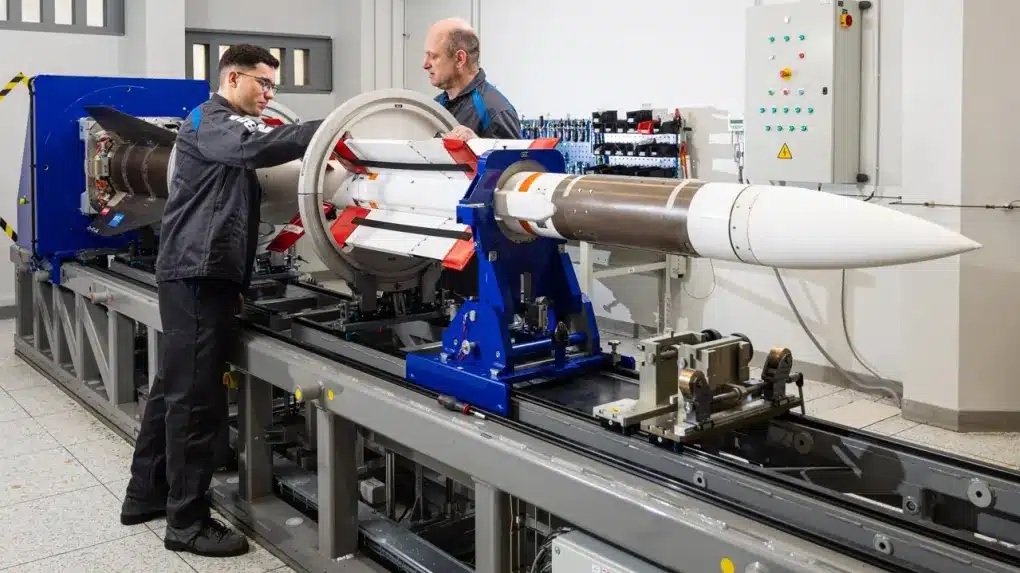
NEW DELHI — May 19, 2026 : The Indian Navy has awarded Bengaluru-based defence technology company Tonbo Imaging a contract for the integration and commissioning of a High Power Microwave (HPM) system for naval platforms under the ADITI 3.0 innovation framework. The programme is supported by the Ministry of Defence’s Innovations for Defence Excellence (iDEX) initiative and the Defence Innovation Organisation (DIO).
Under the agreement, Tonbo Imaging will carry out system integration and commissioning activities for the HPM system. Following successful development, validation, and operational acceptance, the company will supply multiple production units to the Indian Navy.
High Power Microwave systems are a class of directed-energy weapons that use concentrated electromagnetic energy to disable or disrupt electronic systems, sensors, communications equipment, and unmanned platforms. Unlike conventional kinetic weapons, HPM systems operate without physical projectiles or explosive warheads.
The Indian Navy’s focus on HPM technology reflects growing interest in non-kinetic countermeasures for emerging maritime threats, including drone swarms and unmanned systems. Directed-energy systems are increasingly being explored for their potential role in electronic warfare and layered naval defence operations.
A major factor in Tonbo Imaging’s selection is its indigenous capability in vacuum tube technologies, which are used as the primary power sources in operational HPM systems. According to the company, vacuum tube-based sources remain necessary for generating the extremely high peak power and pulse energy levels required for effective HPM applications.
Arvind Lakshmikumar, Managing Director and CEO of Tonbo Imaging India Limited, said the company has invested for several years in developing indigenous HPM technologies and critical sub-systems. He stated that while solid-state radio frequency systems are widely used in many applications, they currently cannot achieve the required power output within the size, weight, and efficiency limitations needed for operational naval platforms.
The contract marks an expansion of Tonbo Imaging’s role beyond electro-optics and imaging systems into advanced defence electronics, embedded systems, directed-energy technologies, and integrated mission systems.
The ADITI (Advanced Defence Technology Incubation) framework was established to support the development, integration, and validation of advanced defence technologies before induction into military service. The programme is part of broader government efforts to strengthen indigenous defence manufacturing and increase private sector participation in strategic technology development.
The development follows earlier indigenous work in directed-energy systems by the Defence Research and Development Organisation (DRDO) and its Microwave Tube Research and Development Centre (MTRDC), which in January 2026 unveiled a prototype High Power Microwave system designed to disable small quadcopters and unmanned aerial systems.
Further technical specifications, deployment timelines, and operational details related to the Indian Navy’s HPM programme were not disclosed.
——— End of Article ———