BERLIN — May 18, 2026 : European aerospace company Destinus and German defense contractor Rheinmetall have accelerated the joint development of the RUTA Block 3 long-range precision strike missile, a system designed to engage targets at distances of up to 2,000 kilometers. Flight testing is scheduled to begin in Ukraine in 2027 as part of a broader European effort to expand industrial-scale production of deep precision strike weapons.
The program is intended to strengthen Europe’s long-range strike capabilities while reducing reliance on limited stockpiles through sustained manufacturing capacity. According to the companies, the initiative focuses on combining sovereign European design authority with scalable production across multiple industrial sites.
RUTA Block 3 Designed for Long-Range Precision Strike
The RUTA Block 3 missile is being developed as the newest member of the RUTA strike missile family, extending the operational architecture already validated through earlier variants. The system is designed for operations in contested environments and incorporates a standard ISO containerized launch configuration, allowing deployment from land-based launchers, maritime platforms, and fixed-site installations.
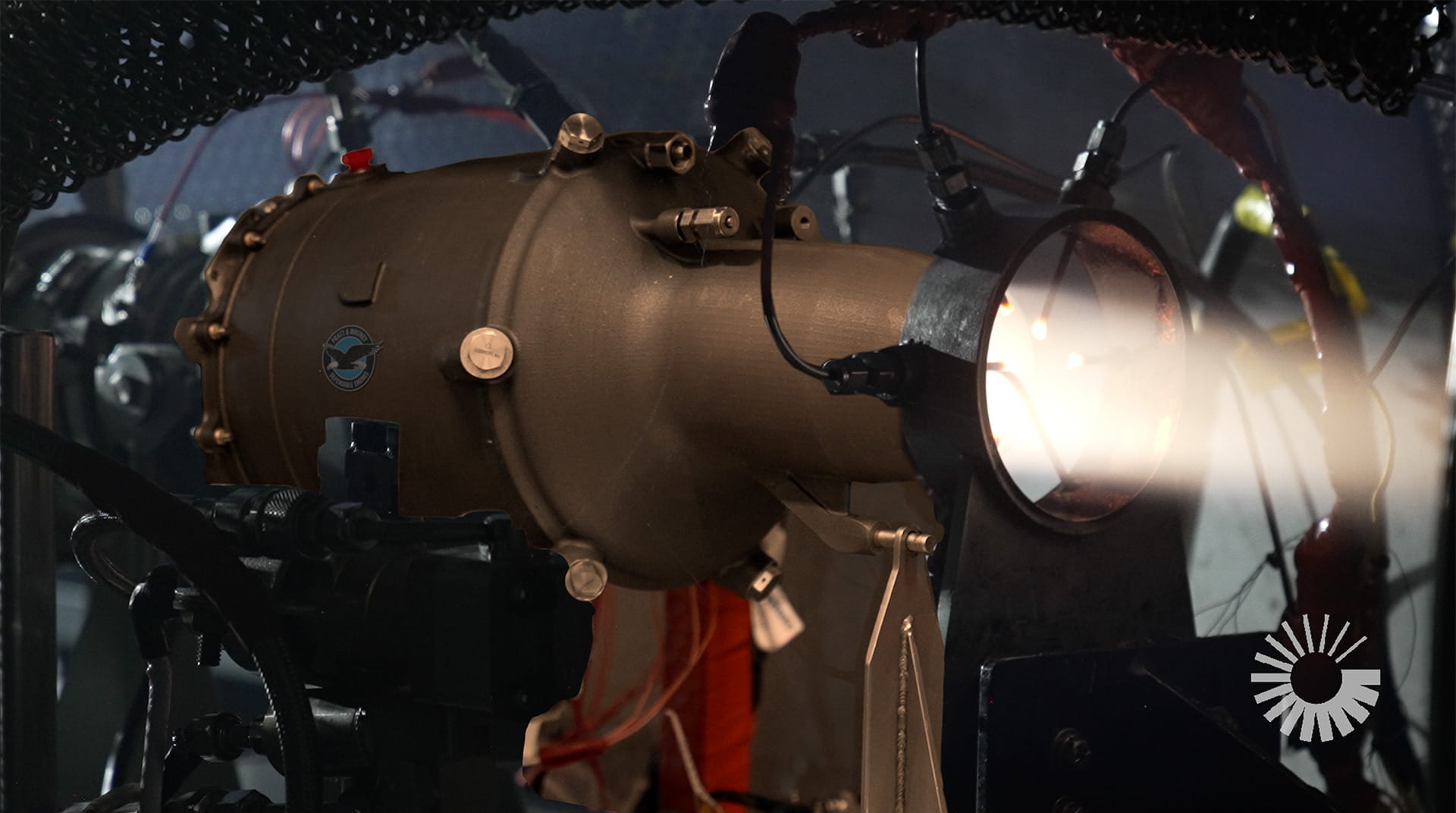
The missile will be powered by a next-generation turbojet engine derived from an enlarged version of the Destinus T220 engine currently under development. It is expected to carry a 250-kilogram-class payload and will incorporate advanced autonomous navigation systems optimized for operations in GNSS-denied or degraded environments.
In addition to autonomous navigation, the missile will include terminal sensing and target detection systems intended to improve strike accuracy during the final engagement phase. Flight-test campaigns for the Block 3 system are planned to begin in Ukraine in 2027.
Evolution of the RUTA Missile Family
The RUTA missile family has progressed through several development stages, moving from operational validation to serial production.
RUTA Block 1, the baseline variant, is currently in mass serial production in the Netherlands. Destinus has continued expanding annual production capacity for the missile family across its European industrial network.
The second variant, RUTA Block 2, was developed with support from Ukraine’s Brave1 defense technology platform. The missile is designed as an extended-range cruise system capable of striking targets at distances exceeding 700 kilometers while carrying a 250-kilogram payload.
Block 2 incorporates low-altitude terrain-following flight capability and is currently undergoing flight testing in Ukraine ahead of a planned production ramp-up in 2026. Earlier program details released by the companies indicated that the missile also features folding wings, an in-line booster, and a containerized launch architecture similar to the Block 3 configuration.
The newly announced Block 3 variant is intended to provide long-range deep strike capability while maintaining compatibility with the broader RUTA production and deployment architecture.
Distributed European Production Structure
To support industrial-scale manufacturing, the RUTA program is organized across three primary European hubs located in the Netherlands, Ukraine, and Germany.
The Netherlands serves as the main engineering, design, and manufacturing authority for the RUTA family, where large-scale production is already underway.
Ukraine will support development activities and operational flight testing for the Block 3 variant while also producing selected essential missile components locally.
Germany will host the planned joint venture Rheinmetall Destinus Strike Systems, which will manage high-rate mass production, qualification, certification, and final system integration for the Bundeswehr and additional European institutional customers.
The joint venture was announced in April 2026 and is expected to be formally established later this year following regulatory approvals. Rheinmetall is expected to hold a 51 percent stake in the partnership, while Destinus will retain the remaining 49 percent.
Production Timeline and Industrial Expansion
Production at Rheinmetall’s Unterlüß facility in Germany is scheduled to begin with RUTA Block 1 and Block 2 systems during the 2026–2027 timeframe, complementing existing serial production operations in the Netherlands.
Manufacturing of the RUTA Block 3 missile at the Unterlüß facility is planned to begin following completion of flight testing and certification activities. Rheinmetall executives stated that the accelerated establishment of the joint venture is intended to support the planned production schedule and expand European manufacturing capacity for long-range precision strike systems.
European Control and Regulatory Compliance
Destinus representatives stated that the partnership is intended to transition Europe’s long-range strike capability toward sustainable industrial-scale production while maintaining full European control over development and manufacturing activities.
Both companies confirmed that all development, production, and export operations related to the RUTA program will comply with applicable national and European legislation, export control regulations, and required government approvals.
The collaboration combines Destinus’ missile architecture and aerospace system development capabilities with Rheinmetall’s experience in defense manufacturing, qualification, and large-scale industrial production.
——— End of Article ———