WASHINGTON / EL SEGUNDO, Calif., — May 31, 2026 : The U.S. Space Force has awarded SpaceX a $4.16 billion contract to develop a satellite-based system designed to detect and track airborne threats from orbit under the Space-Based Airborne Moving Target Indicator (SB-AMTI) program.
The contract, announced by Space Systems Command on May 29, is intended to accelerate deployment of an initial satellite constellation by 2028. The program aims to establish a persistent airborne target tracking capability from space and improve surveillance across large geographic areas.
For decades, the U.S. military has relied on aircraft such as the E-3 Sentry Airborne Warning and Control System (AWACS) and the E-7 Wedgetail for airborne surveillance. However, operating such aircraft in regions protected by advanced anti-access and area-denial (A2/AD) systems has become increasingly difficult due to long-range air defenses, electronic warfare, and other threats.
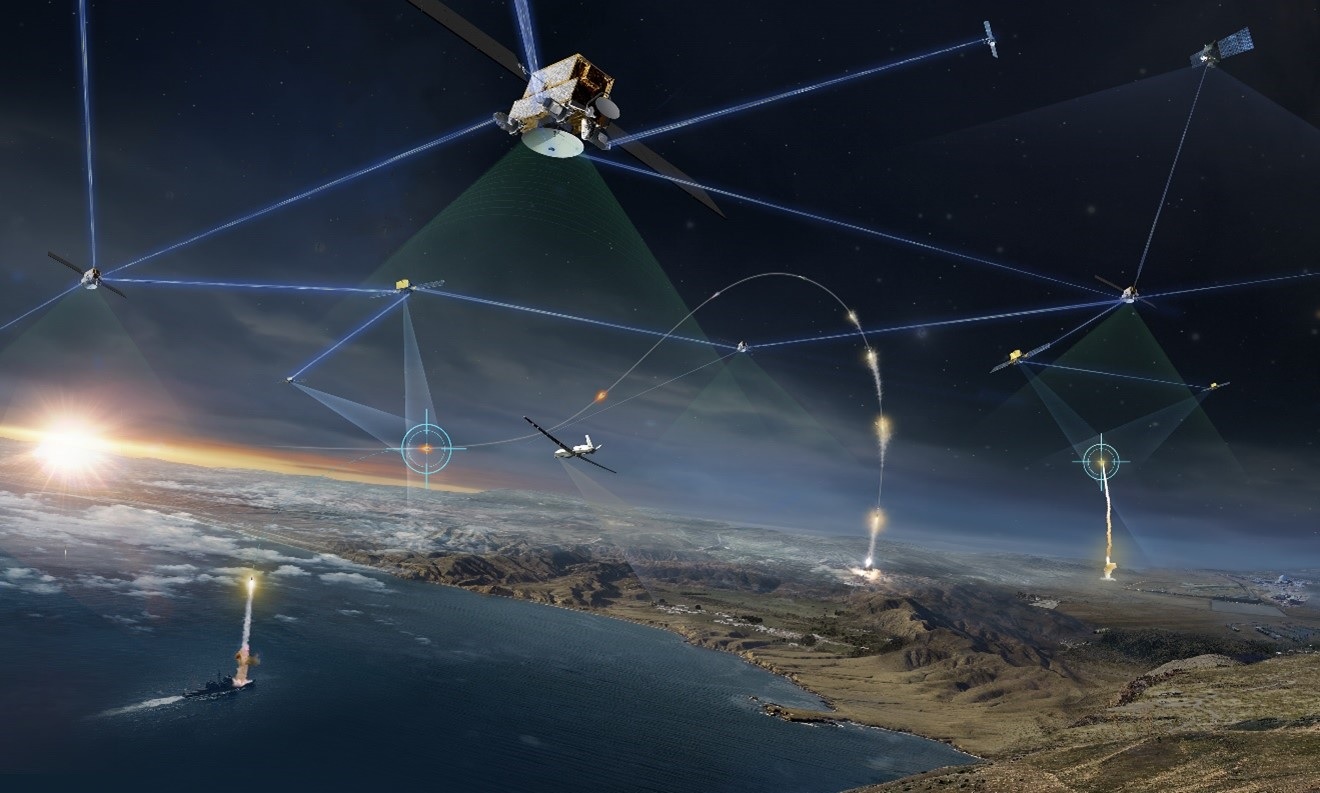
The SB-AMTI program is designed to complement existing airborne surveillance systems by moving initial detection and tracking missions into orbit. The architecture combines advanced space-based sensors, secure communication links, and AI-enabled ground processing to provide persistent awareness of contested airspace.
According to the Space Force, traditional airborne early warning aircraft will continue to support command, control, battle management, and tactical coordination roles, while space-based tracking is expected to improve monitoring of aircraft, cruise missiles, and drones and reduce surveillance gaps.
The system is expected to support operations across regions including the Indo-Pacific, Europe, the Arctic, and the Middle East by improving tracking over large areas where airborne monitoring is operationally challenging.
Before awarding the contract, the Space Force and the National Reconnaissance Office (NRO) tested prototype systems to demonstrate that airborne moving target tracking from orbit is technically viable.
The agreement was awarded through a competitive Other Transaction Authority (OTA) process overseen by Col. Ryan Frazier, acting U.S. Space Force Portfolio Acquisition Executive for Space-Based Sensing and Targeting. Space Systems Command said the program will follow a layered acquisition strategy that combines commercial technologies from traditional and non-traditional defense firms.
Although SpaceX received the largest contract under SB-AMTI, the Space Force said additional awards are expected over the coming year to maintain competition and avoid reliance on a single provider.
The SB-AMTI program is part of the broader Golden Dome missile defense initiative, whose estimated cost has increased to approximately $185 billion as investments in space-based sensing and tracking systems expand. In its fiscal year 2027 budget request, the Space Force is seeking $7.06 billion for the program to expand coverage.
The contract follows another recent Space Force award to SpaceX worth $2.29 billion for the Space Data Network Backbone, a secure military communications system. Combined, the two contracts total approximately $6.45 billion.
Development work on SB-AMTI is expected to begin immediately, with the initial satellite constellation scheduled for deployment by 2028. Traditional airborne surveillance aircraft are expected to remain in service alongside the new space-based tracking architecture.
——— End of Article ———