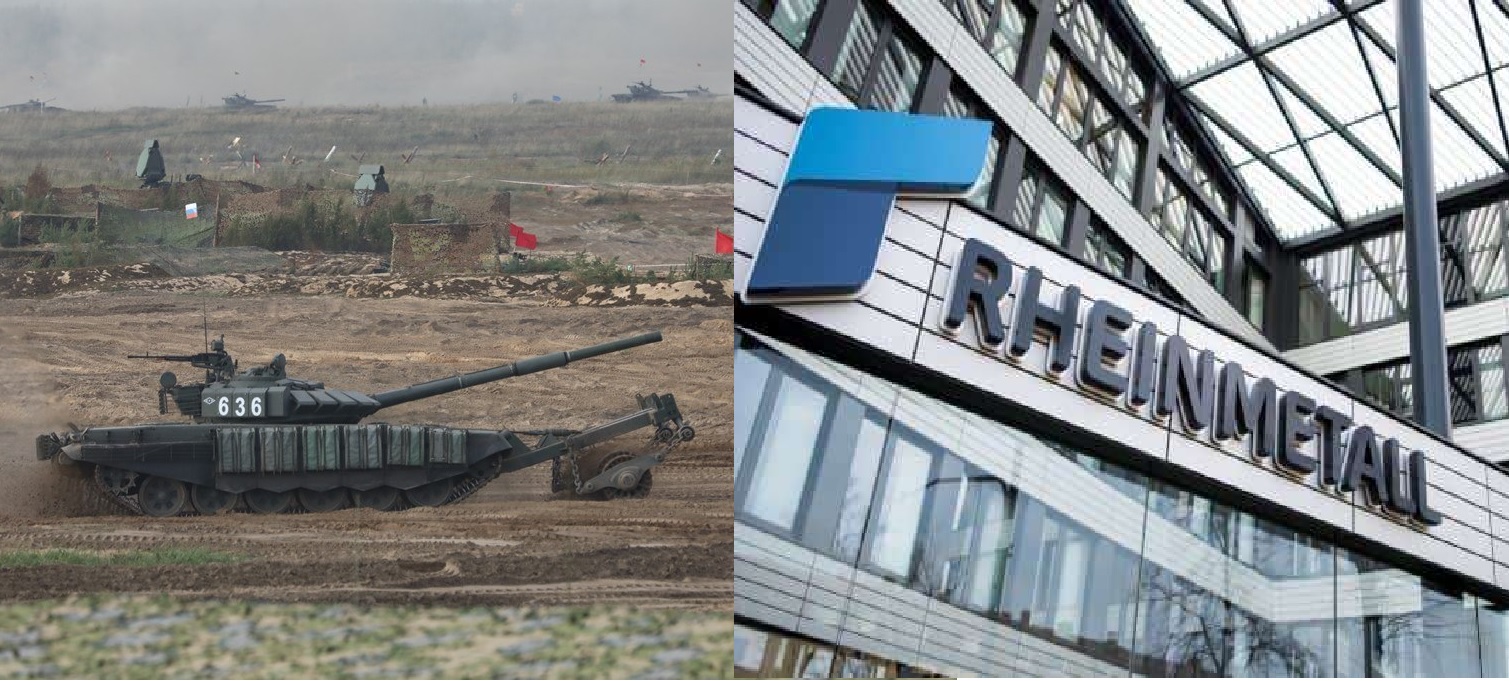
MOSCOW — June 06, 2026 : Russia’s military prosecutor’s office and Garrison JSC, a company subordinate to the Russian Defense Ministry, have filed a lawsuit against German defense manufacturer Rheinmetall, seeking €47.2 million in damages related to a military training center project that was halted following Russia’s annexation of Crimea in 2014.
According to a report published by Russian news outlet RBC on June 3, the plaintiffs have asked the Moscow Arbitration Court to formally recognize the termination of the contract and award financial compensation. Court proceedings are being conducted behind closed doors.
Dispute Linked to Mulino Training Center Project
The legal dispute stems from a 2011 agreement between Rheinmetall and Oboronservis, a former Russian state-owned defense services company later reorganized under structures controlled by the Russian Defense Ministry.
Under the contract, valued at approximately €100 million to €120 million, Rheinmetall was tasked with designing, building, and equipping a modern combat training center for the Russian Ground Forces in Mulino, located in Russia’s Nizhny Novgorod region. The facility was intended to become one of the country’s most advanced military training sites and was scheduled for completion by mid-2014.
As part of the agreement, Rheinmetall was expected to provide system engineering, quality control services, and a comprehensive live training system incorporating German laser-based firing simulators. Russian military planners intended for the center to train up to 30,000 personnel annually in realistic battlefield scenarios, including infantry combat and tactical exercises.
Project Halted After Crimea Annexation
The project was interrupted in 2014 after Russia annexed Crimea, prompting Germany to suspend defense-related exports to Russia. Berlin subsequently revoked Rheinmetall’s export licenses and permissions associated with the Mulino project, citing the changed political and security situation following developments in Ukraine.
As a result, Rheinmetall ended its participation in the program and the planned delivery of German-made training equipment was canceled.
In response, the Russian Defense Ministry announced that domestic alternatives would be used to complete the facility. The Mulino training center, also known as the 333rd Combat Training Center, was later finished with Russian-developed simulation systems and entered service without German involvement.
Previous Claims Unsuccessful
This is not the first attempt by Russian authorities to recover funds linked to the canceled project. Russia’s Defense Ministry previously pursued legal action against Rheinmetall in Switzerland, but the claims were rejected by the court.
Following the unsuccessful effort abroad, Russian authorities have turned to the domestic legal system. The current lawsuit seeks compensation based on what plaintiffs describe as unjust enrichment under Russian civil law and aims to formally establish the termination of the original contract as part of the financial claim.
Enforcement Challenges Remain
Despite the new legal action, Russian legal experts have acknowledged that collecting compensation from Rheinmetall would be highly unlikely. Even if the Moscow Arbitration Court rules in favor of the plaintiffs, any judgment would have limited legal effect outside Russia and would not automatically be enforceable in European jurisdictions.
As a result, Rheinmetall’s assets in Europe would remain protected from seizure under such a ruling.
Rheinmetall has not publicly commented on the latest proceedings in available reports.
Part of Broader Legal Trend
The case reflects a broader pattern of legal disputes involving Western companies whose operations or contracts in Russia were affected by sanctions and export restrictions imposed after 2014 and expanded following the outbreak of the Russia-Ukraine war.
Russian courts have issued several large financial judgments against foreign corporations in recent years. Earlier in 2026, Russia’s Supreme Court upheld a ruling ordering Google to pay 91.5 quintillion rubles in a dispute related to blocked Russian media channels on YouTube, a figure widely viewed as symbolic and unenforceable outside Russia.
More than a decade after the original agreement was signed, the Mulino training center remains one of the Russian Ground Forces’ key training facilities, underscoring the long-term significance of a project that became entangled in the geopolitical consequences of the Crimea crisis and subsequent international sanctions.
——— End of Article ———