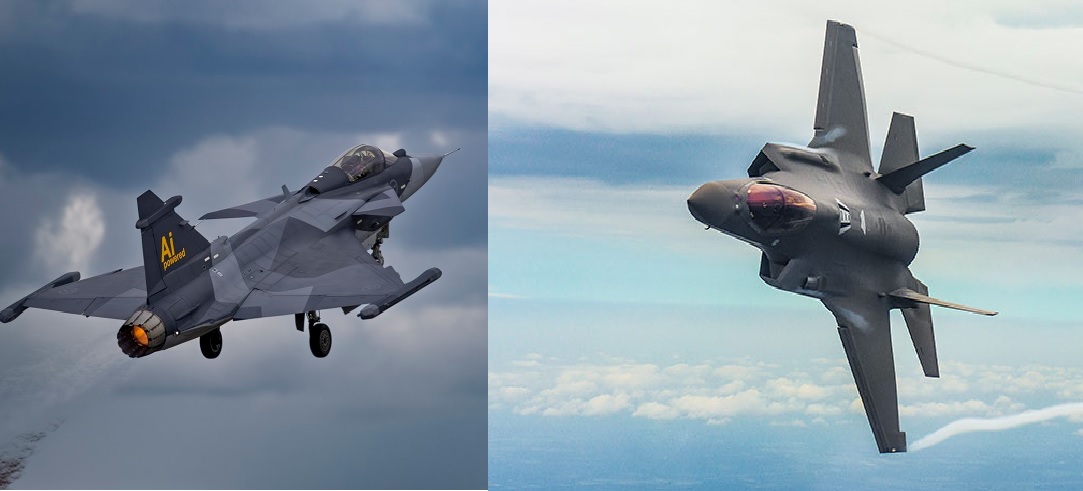
OTTAWA — June 01, 2026 : The Canadian government is advancing a revised fighter aircraft procurement strategy for the Royal Canadian Air Force (RCAF), moving toward a mixed fleet of approximately 30 Lockheed Martin F-35 Lightning II stealth fighters and around 60 Saab JAS 39 Gripen aircraft as part of efforts to modernize Canada’s air force while reducing dependence on a single defence supplier.
The proposal, led by Prime Minister Mark Carney’s government, marks a significant change from Canada’s previous plan to acquire a sole fleet of 88 F-35 fighter jets. The revised approach is intended to diversify military procurement, strengthen domestic industrial participation, and balance operational requirements with long-term economic considerations.
Review of Canada’s Fighter Procurement Strategy
Canada originally selected the F-35 programme in 2022 to replace the aging CF-18 Hornet fleet. In early 2023, Ottawa signed a contract valued at approximately C$19 billion for the acquisition of 88 F-35 aircraft. Canada remains committed to the first 16 aircraft already in production, with deliveries scheduled to begin in 2026.
However, Prime Minister Carney initiated a procurement review in March 2025 to examine alternatives to exclusive reliance on United States defence suppliers. The reassessment follows broader discussions surrounding defence diversification and trade-related tensions with Washington.
The review includes options to reduce the size of the planned F-35 purchase while supplementing the fleet with European-made aircraft, particularly the Swedish Saab Gripen.
Proposed Mixed Fleet Structure
Under the proposed procurement model, Canada would retain approximately 30 F-35 aircraft to preserve fifth-generation stealth capabilities and maintain interoperability with the United States and NATO allies.
Defence planners view the F-35 as essential for fulfilling North American Aerospace Defense Command (NORAD) responsibilities and participating in joint operations requiring advanced stealth, intelligence gathering, and strike capabilities.
At the same time, Ottawa is considering the purchase of around 60 Saab Gripen fighters, which are regarded as a lower-cost multirole platform with simplified maintenance requirements and lower operating expenses compared to the F-35.
The Gripen is designed to operate from shorter and dispersed runways, including improvised airstrips, giving it flexibility in remote and harsh operating environments such as northern Canada and Arctic regions.
Saab’s Manufacturing Proposal in Canada
A central part of Saab’s proposal is a commitment to establish a manufacturing and assembly facility in Canada if the Gripen programme is approved.
The facility would assemble all Gripen aircraft intended for the RCAF while also supporting long-term maintenance, lifecycle upgrades, and sustainment operations. Saab has proposed technology transfer and intellectual property sharing to strengthen Canada’s domestic aerospace capabilities and allow greater sovereign control over fleet maintenance.
Economic projections linked to the proposal estimate that the programme could create up to 9,000 direct and indirect jobs across Canada’s aerospace and defence industries during the life of the programme.
Earlier Saab submissions suggested total employment benefits could exceed 12,600 positions when including related programmes such as production support for GlobalEye airborne surveillance aircraft.
Potential Support for Ukraine
Saab’s proposal also includes using Canadian production facilities to manufacture additional Gripen aircraft intended for Ukraine under future European defence support arrangements.
Sweden has committed to supporting future Gripen transfers to Ukraine, with plans involving up to 20 Gripen E/F aircraft through European Union-backed financing mechanisms.
Saab Deputy Chief Executive Officer Anders Carp has stated that Canada could serve as a production and export hub for Gripen aircraft designated for Ukraine if Ottawa proceeds with the programme.
The Gripen is considered particularly valuable by Ukrainian defence officials due to its ability to operate from dispersed, short, or improvised runways, an operational requirement shaped by continued attacks on conventional airbases during the ongoing conflict.
Saab has previously implemented similar domestic production and technology transfer arrangements in Brazil, where local assembly facilities were established for the country’s Gripen fleet.
Strategic and Operational Considerations
The proposed mixed-fleet structure reflects a broader strategic adjustment by the Carney government aimed at balancing operational effectiveness, industrial benefits, and defence independence.
By maintaining a smaller F-35 fleet, Canada would preserve advanced stealth capabilities required for high-end combat operations while ensuring compatibility with NORAD and NATO systems.
Meanwhile, a larger fleet of domestically assembled Gripens could reduce operating costs and provide Canada with greater control over aircraft maintenance, spare parts, upgrades, and supply chains.
Supporters of the proposal argue that domestic manufacturing would strengthen industrial sovereignty and expand long-term aerospace employment opportunities within Canada.
However, some defence analysts have raised concerns regarding the operational complexity of maintaining two separate fighter platforms. Critics argue that a mixed fleet may create additional logistical demands, training requirements, and sustainment costs because of separate maintenance systems and supply chains.
Questions have also been raised about the potential impact of reducing Canada’s F-35 fleet on defence integration within NORAD and broader continental defence planning.
Decision Timeline
Defence Minister David McGuinty confirmed in April 2026 that the government’s procurement review remains active, though no final timeline has been announced for a decision.
Government officials and defence stakeholders are expected to assess cost projections, production schedules, industrial benefits, and operational requirements in the coming weeks before any formal contracts are finalized.
Prime Minister Carney has stated that Canada’s defence procurement policy must support both national security requirements and domestic economic interests. The final decision is expected to shape the Royal Canadian Air Force’s modernization programme and Canada’s defence partnerships for decades.
——— End of Article ———