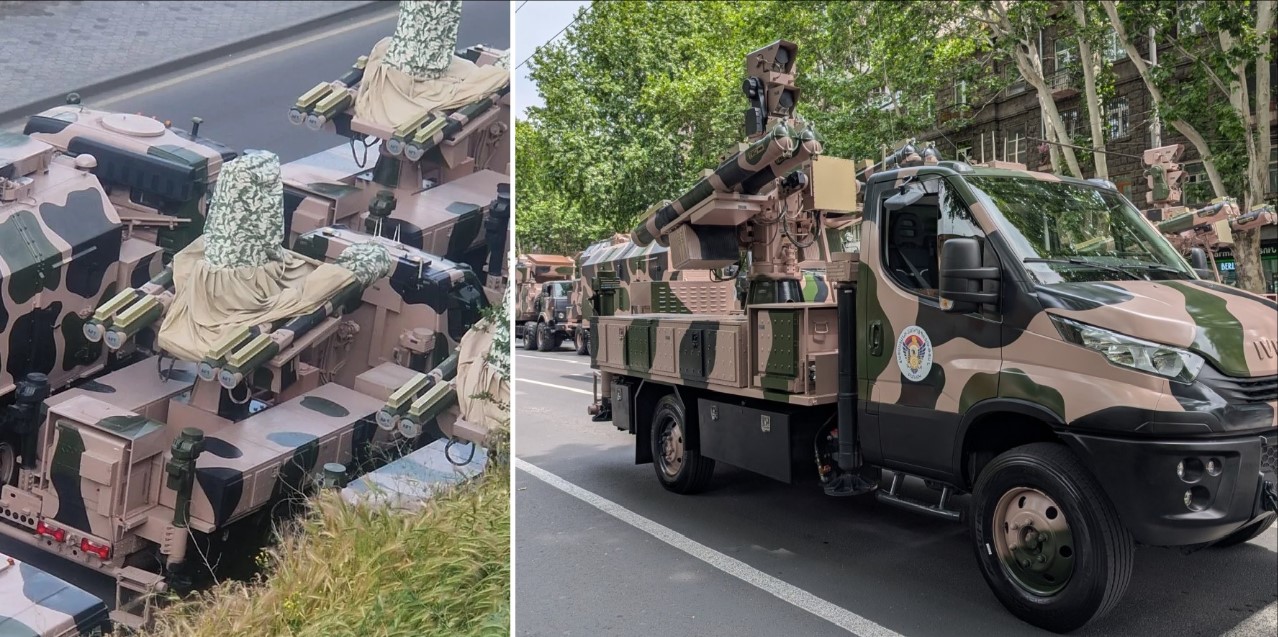
YEREVAN, Armenia — May 28, 2026 : Armenia marked Republic Day on May 28 with its first military parade in a decade, publicly displaying a significantly modernized military inventory acquired from multiple international suppliers. Held in Republic Square in Yerevan roughly a week before parliamentary elections, the parade featured the first public appearance of Iranian-made Majid AD-08 short-range air defense systems and Chinese-made CH-4 Rainbow reconnaissance and strike drones.
During a speech lasting more than two hours, Prime Minister Nikol Pashinyan said Republic Day was being observed in a new historical context, emphasizing that after nearly 35 years of conflict, Armenia and Azerbaijan initialed a peace agreement in Washington in August 2025, although the document still awaits formal signing. Pashinyan described the military display as a report to the Armenian public, presenting an Armed Forces equipped with new systems and operating under a revised military doctrine.
The Iranian Majid AD-08 Air Defense System
The public display confirmed Armenia as the first known foreign operator of the Iranian-made Majid AD-08 short-range air defense system. Open-source analysts initially identified around four units during parade rehearsals in Republic Square on May 25, days before the official event. The systems are reportedly part of an estimated $500 million arms agreement reached between Tehran and Yerevan in the summer of 2024.
The Armenian configuration differs from Iran’s domestic version. While Iranian forces deploy the Majid system on locally produced Aras 2 pickup trucks, Armenia mounted the launchers on Italian-made Iveco Daily light commercial vehicles. The modification improves maintenance accessibility, spare parts availability, and compatibility with European logistics networks that Armenia has increasingly integrated into its military support structure.
Developed by Iran’s Defense Industries Organization and first publicly introduced in 2021, the Majid AD-08 is designed to defend military bases, administrative facilities, and critical infrastructure from unmanned aerial vehicles (UAVs), cruise missiles, and low-flying helicopters. Unlike radar-based systems, the Majid relies entirely on a passive architecture, using electro-optical and thermal targeting systems without radar emissions for detection or missile guidance.
The system’s electro-optical sensor suite can reportedly detect aerial targets at distances of up to 15 kilometers. Each launcher carries four ready-to-fire AD-08 missiles equipped with imaging infrared seekers and proximity fuzes, allowing missiles to track thermal signatures and detonate near targets to produce fragmentation effects without requiring a direct impact. The missile has an engagement range of up to 8 kilometers, an altitude ceiling of 6 kilometers, measures approximately 2.67 meters in length, weighs around 75 kilograms, and reaches speeds approaching Mach 2.
The Majid system is also reported to support 360-degree coverage and multi-target tracking, with some reports suggesting integration of electro-optical components similar to L3Harris Wescam MX-series systems. Because the platform does not emit detectable electromagnetic signals, it is considered less vulnerable to conventional electronic warfare jamming than radar-dependent systems.
Iranian sources have claimed that Majid batteries damaged a U.S. F-35 fighter during military operations earlier in 2026 by exploiting infrared emissions from the aircraft’s propulsion system. However, the claim remains independently unverified. Western reporting confirmed that an F-35 sustained damage from ground fire during the conflict, though no public evidence has linked the incident specifically to the Majid system.
Chinese CH-4 Rainbow Strike Drones
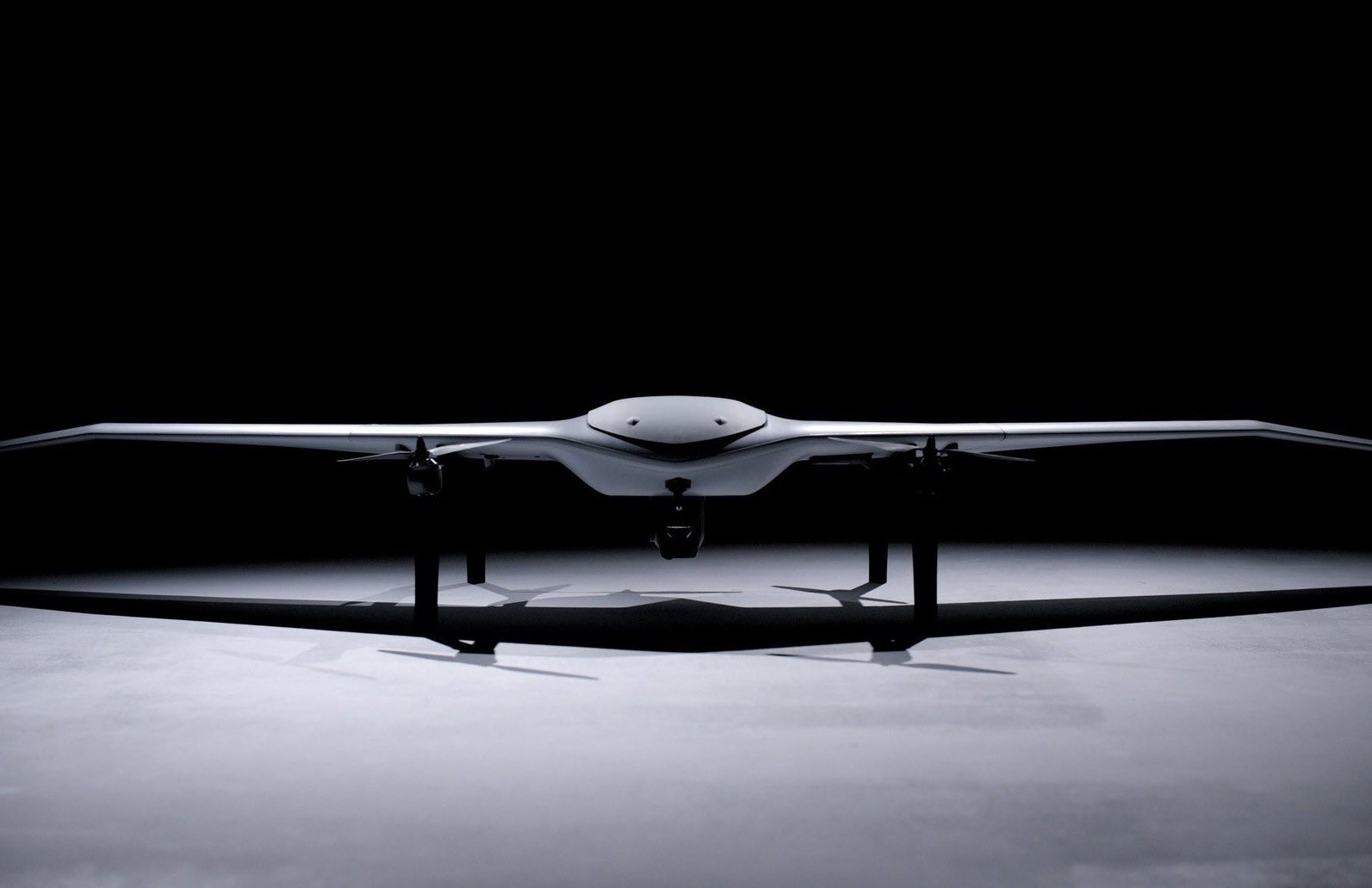
Armenia also officially confirmed the acquisition of Chinese-made CH-4 Rainbow medium-altitude long-endurance reconnaissance and strike drones, addressing operational gaps identified during the 2020 Nagorno-Karabakh conflict.
Comparable in operational role to the U.S. MQ-9 Reaper, the CH-4 supports both surveillance and precision strike missions and operates using beyond-line-of-sight satellite communications (SATCOM). Prior to the parade, satellite imagery reportedly identified two CH-4 airframes and six 40-foot logistical containers at Russia’s 102nd Military Base in Gyumri, indicating the presence of an operational support, maintenance, and sustainment network.
In its armed CH-4B configuration, the drone can remain airborne for between 30 and 40 hours and carry up to 345 kilograms of precision-guided weapons, including AR-1 missiles and laser-guided bombs.
Procurement Diversification And Strategic Shift
The procurement of passive Majid air defense systems and CH-4 strike drones directly reflects lessons from the 44-day war in 2020, during which Armenian forces faced Azerbaijani drone operations involving Israeli-made Harop loitering munitions and Turkish Bayraktar TB2 drones. The newly acquired systems are intended to strengthen both short-range air defense and offensive unmanned strike capabilities that were identified as vulnerabilities during the conflict.
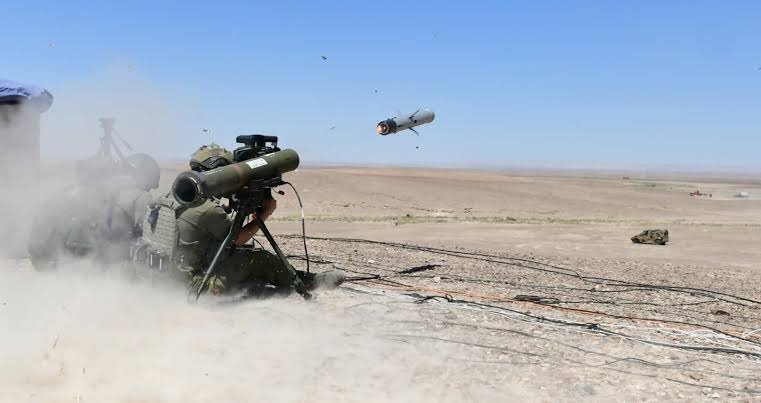
The Republic Day parade featured military equipment acquired from seven countries since 2022, underscoring Yerevan’s broader defense procurement strategy aimed at reducing dependence on a single supplier. Alongside Iranian and Chinese systems, Armenia has expanded acquisitions to include Caesar self-propelled howitzers from France, Pinaka multi-barrel rocket launchers from India, and Aster 30 surface-to-air missile systems obtained through Greece under a NATO-linked framework.
Armenian authorities did not provide additional official details regarding procurement contracts or delivery timelines during the parade.
——— End of Article ———