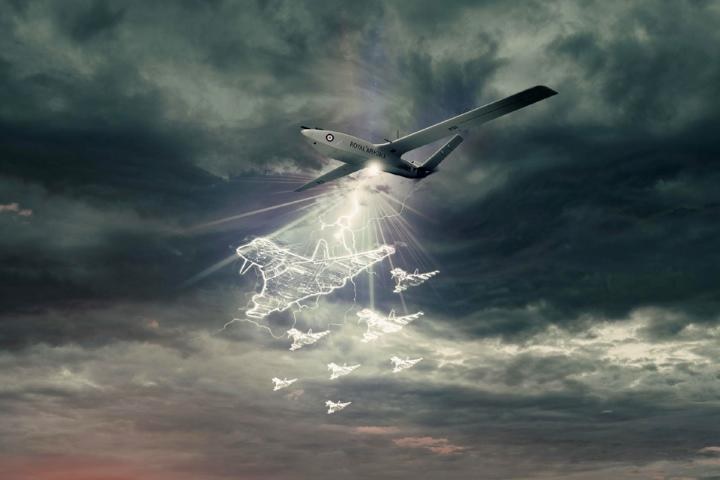
LONDON, — May 26, 2026 : The United Kingdom’s Royal Air Force (RAF) is continuing to strengthen its electronic warfare and suppression capabilities through the operational integration of the StormShroud unmanned aerial vehicle (UAV), the first platform in a new family of Autonomous Collaborative Platforms (ACP). Designed to operate alongside crewed combat aircraft including the F-35B Lightning and Eurofighter Typhoon, StormShroud carries Leonardo UK’s BriteStorm electronic warfare payload to support operations in contested environments and enhance aircraft survivability.
The platform is intended to support Suppression of Enemy Air Defences (SEAD) missions by disrupting hostile radar systems and degrading an adversary’s ability to detect, track and engage allied aircraft. Operating ahead of high-value crewed platforms, StormShroud is designed to suppress enemy air defence networks and provide greater operational freedom for RAF fighter aircraft operating in high-threat airspace.
StormShroud Platform and Technical Specifications
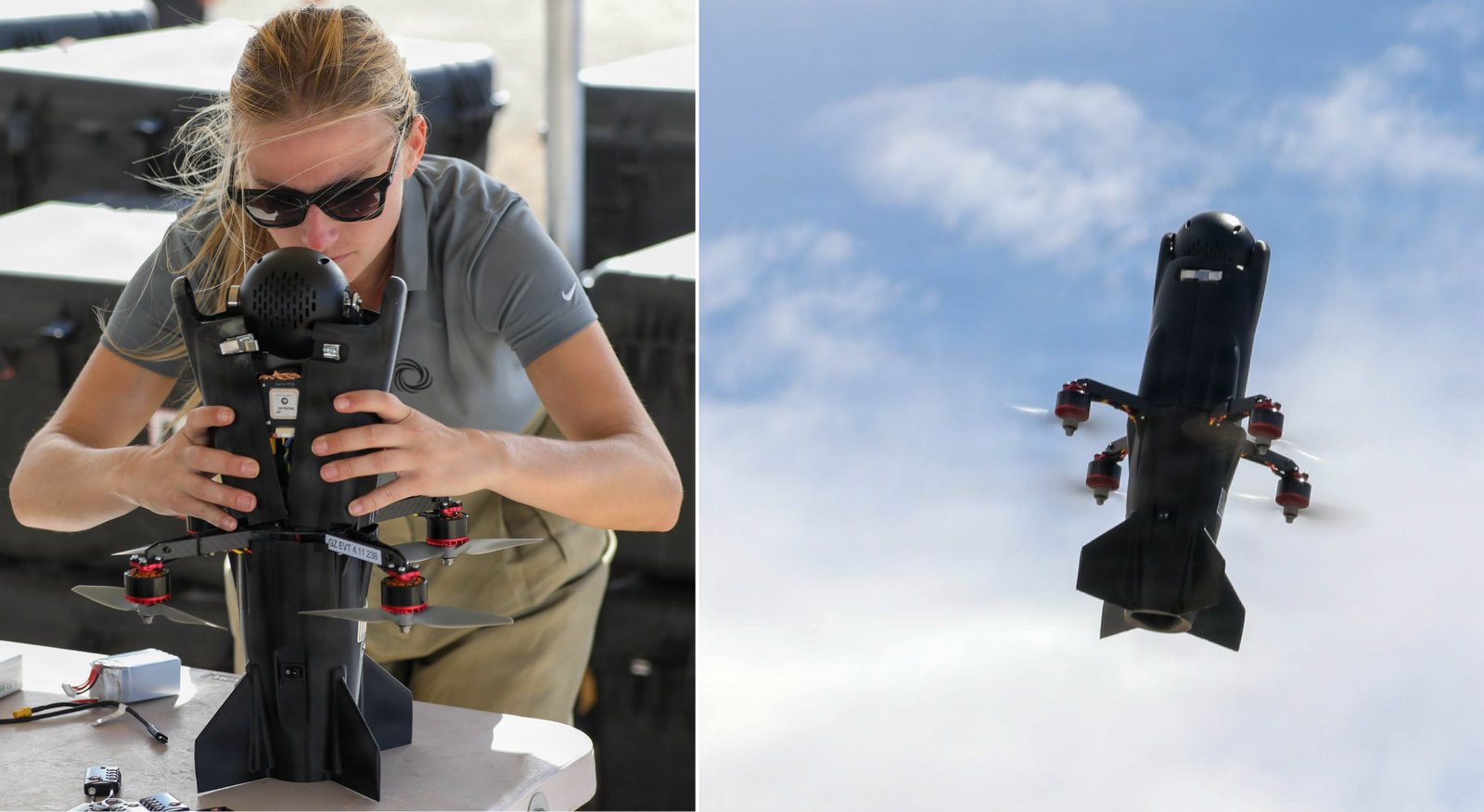
StormShroud is based on the Tekever AR3 tactical uncrewed aerial system, a lightweight platform featuring a wingspan of 3.5 metres, a length of 1.9 metres and a payload capacity of approximately four kilograms. The system supports both vertical take-off and landing (VTOL) and fixed-wing configurations, allowing operational flexibility depending on mission requirements.
In fixed-wing mode, the UAV can remain airborne for up to 16 hours and operate at a service ceiling of around 3,600 metres above mean sea level. The platform’s endurance and deployable configuration enable persistent operations in support of RAF strike packages and electronic warfare missions.
BriteStorm Electronic Warfare Payload
At the core of StormShroud’s mission capability is Leonardo UK’s BriteStorm payload, a low Size, Weight and Power (SWaP) stand-in jammer weighing approximately 2.5 kilograms. Derived from Leonardo’s BriteCloud countermeasure technology, the payload employs Digital Radio Frequency Memory (DRFM) technology to detect, record and manipulate hostile radar signals in real time.
The system is designed to suppress and deceive integrated air defence systems (IADS) by generating false radar returns and disrupting radar tracking functions through digital jamming techniques. BriteStorm can create deceptive “ghost” targets on enemy radar systems while interfering with surveillance, early warning and target-tracking radars operating across A–J frequency bands.
Integrated onto uncrewed platforms and launched effects, BriteStorm is intended to provide stand-in jamming support ahead of crewed aircraft, helping RAF combat aircraft maintain operational freedom in contested electromagnetic environments.
Operational Role and RAF Integration
StormShroud entered operational service with the RAF on May 2, 2025, becoming the first operational system within the service’s Autonomous Collaborative Platforms family. The capability is operated by RAF 216 Squadron with support from the RAF Regiment and personnel drawn from the Regular RAF, the Royal Auxiliary Air Force and specialist reservists with industry expertise.
The system is designed with an open software architecture that enables operators to rapidly update mission software and electronic countermeasure packages between sorties using newly gathered intelligence, allowing adaptation to evolving threat systems.
The RAF classifies StormShroud as an “attritable” platform, meaning the system is considered expendable within acceptable operational limits if its deployment helps protect higher-value crewed aircraft and contributes to mission success.
Development and Industry Collaboration
Development of StormShroud progressed rapidly from an Urgent Capability Requirement (UCR) to operational deployment within approximately one year. The accelerated timeline reflected lessons observed from the conflict in Ukraine, where uncrewed systems and electronic warfare capabilities have demonstrated increasing battlefield importance.
The programme was developed through collaboration between the RAF Rapid Capabilities Office, the Defence Equipment & Support (DE&S) organisation, the Defence Science and Technology Laboratory (Dstl), Tekever and Leonardo UK.
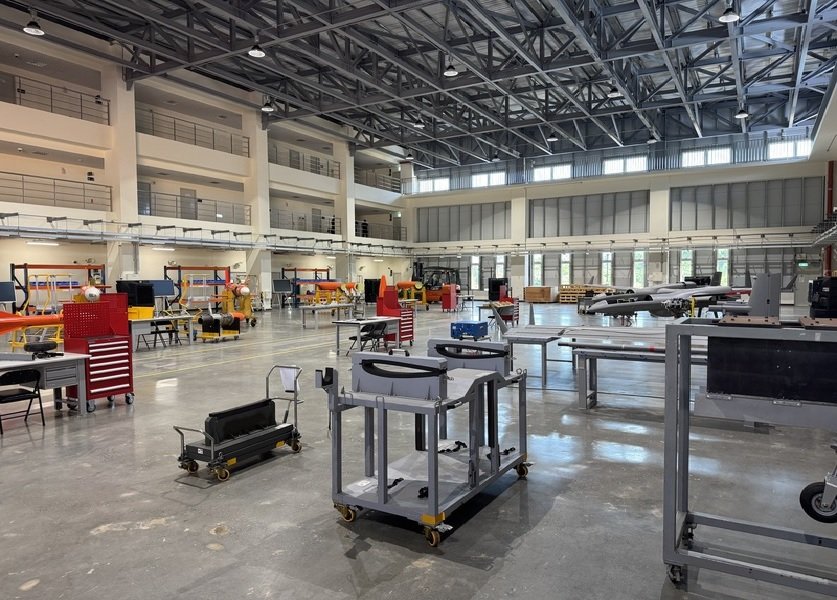
Although Tekever is headquartered in Portugal, the AR3 air vehicles used for StormShroud are manufactured in West Wales and Southampton in the United Kingdom. Leonardo UK produces the BriteStorm payload at its facility in Luton.
Prior to RAF adoption, the Tekever AR3 platform accumulated more than 10,000 operational flight hours supporting Ukrainian operations, contributing to the system’s operational maturity.
Testing, Exercises and Capability Development
Following its introduction into RAF service, StormShroud has undergone continued operational testing and integration activities. During late 2025 and early 2026, RAF 216 Squadron conducted dynamic exercises at training locations including RAF Spadeadam and Salisbury Plain, demonstrating coordinated operations involving multiple StormShroud platforms and validating integration alongside wider RAF operational concepts.
The RAF plans additional domestic and international exercises throughout 2026 as the service continues refining the capability and expanding operational experience with autonomous collaborative systems integrated into crewed combat operations.
——— End of Article ———