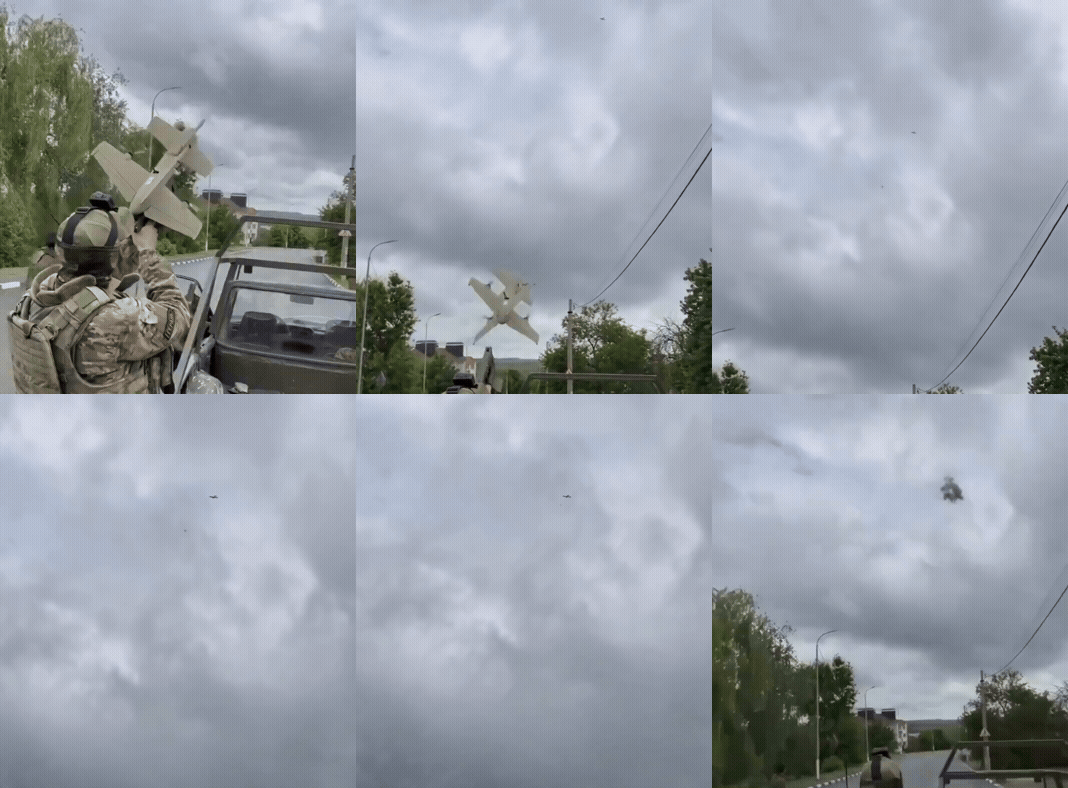
Moscow - May 31, 2026 : New footage circulating online appears to show Russian forces deploying the handheld “Yolka” interceptor drone system in combat, indicating a wider operational rollout of the low-cost anti-drone platform designed to counter reconnaissance and first-person view (FPV) drones on the battlefield.
The videos show Russian soldiers launching the compact interceptor using a pistol-style handheld launcher. After launch, the drone autonomously tracks and intercepts aerial targets, reflecting expanded battlefield use across frontline and border areas.
The Yolka, meaning “fir tree” in Russian, was first publicly noticed during Russia’s Victory Day military parade in May 2025. Since then, the interceptor has entered mass production in Moscow and is reported to be actively deployed in the special military operation zone and border regions. Russian military-linked sources describe it as a portable “fire-and-forget” anti-drone system for frontline and point-defense missions.
Designed as a kinetic interceptor, the Yolka destroys hostile unmanned aerial vehicles (UAVs) through direct collision instead of an explosive warhead. The absence of explosives reduces the risk of collateral damage, allowing use near roads, infrastructure, and populated areas.
The interceptor features a cylindrical body, two sets of X-shaped wings, and four electric motors mounted at the rear. The drone weighs approximately 1.3 kilograms, while the complete launcher system weighs around 6 kilograms, making it portable for operation by a single soldier.
The Yolka can reportedly reach speeds of up to 230 km/h with an operational range of 3 to 4 kilometres and an operating altitude of up to 800 metres.
The system uses a bi-spectral guidance system combining thermal and optical tracking with an onboard artificial intelligence (AI) module. After target lock, the interceptor transitions to autonomous flight, allowing pursuit without continuous operator control. Its AI-assisted guidance is intended to improve resistance to electronic warfare (EW) interference and jamming.
According to reported specifications, the Yolka is designed to engage FPV drones, bomber UAVs ranging from 30 centimetres to two metres, and fixed-wing drones with wingspans between two and five metres. Russian operators identified heavy Ukrainian hexacopters known as “Baba Yaga”, along with strike UAVs such as Lyuty and Bober, among its targets.
Russian frontline air-defense teams are reportedly integrating the interceptor into mobile anti-drone operations. A commander from a Russian anti-aircraft battery under the “Center” grouping, identified by the callsign “Tiger34”, stated the system has shown effectiveness against reconnaissance platforms and fixed-wing strike drones. Air observation posts also deploy the Yolka alongside thermal-imaging-equipped small arms to counter increased nighttime drone activity.
Russian military-linked reporting has claimed the interceptor is achieving hit rates of up to 90 percent and is in regular use among mobile fire teams. Recent footage has also shown the Yolka operating with a dedicated launcher and radar system, indicating expansion toward semi-automated point-defense missions.
The increasing deployment of the Yolka appears to be affecting battlefield drone tactics. According to a Ukrainian UAV countermeasures commander using the callsign “Kot”, Ukrainian drone operators have altered flight profiles due to the threat posed by kinetic interceptors. Ukrainian drones that reportedly operated at 150 to 200 metres in 2023 are now said to fly between 900 and 1,200 metres in some sectors to reduce interception risks.
At the same time, Ukrainian defense advisor Serhii Beskrestnov stated that the system has operational limitations, including daylight-only operation, restrictions during rainfall, and reduced effectiveness in wind conditions above eight metres per second.
With an estimated cost of approximately $500 per interceptor, the Yolka provides a lower-cost method of countering commercially available drones and reconnaissance UAVs, reducing the need to use more expensive Man-Portable Air-Defense Systems (MANPADS) against low-cost aerial threats. The system has also been observed with Vladimir Putin’s security detail during Victory Day events, indicating its use may extend beyond battlefield operations to high-priority protection roles.
——— End of Article ———