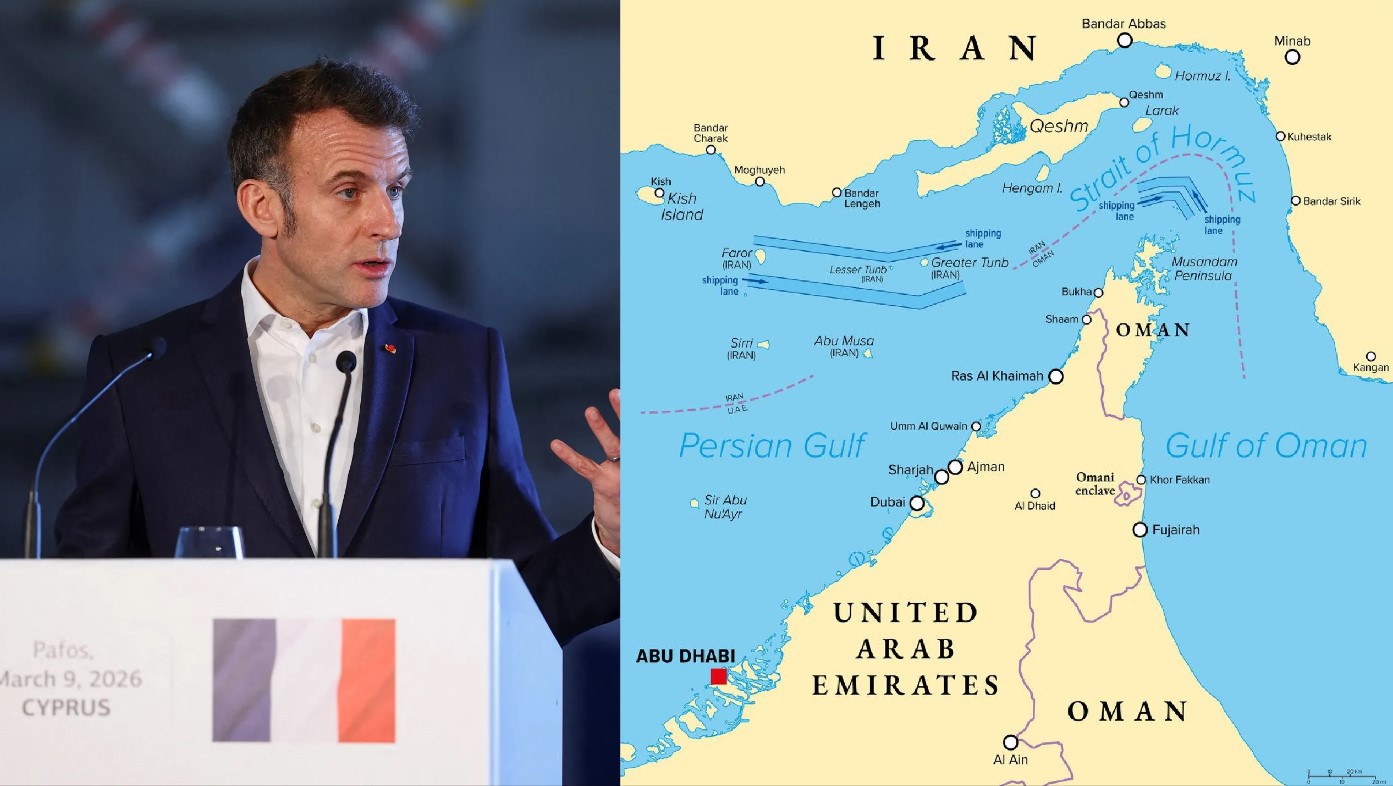
PARIS, — May 23, 2026 : France has prepared a draft resolution for the United Nations Security Council aimed at establishing an international mission to restore freedom of navigation in the Strait of Hormuz, as diplomatic efforts intensify to address maritime insecurity in one of the world’s most critical shipping corridors.
The French Foreign Ministry confirmed on May 21 that the draft text could be introduced to the Security Council when diplomatic conditions are considered favourable. The proposal comes as a separate draft resolution co-sponsored by the United States and Bahrain continues to face delays due to expected opposition from Russia and China.
French Foreign Ministry spokesman Pascal Confavreux confirmed that Paris is working on an international mission focused on restoring maritime movement and protecting commercial shipping in the Strait of Hormuz. He stated that France, as a permanent member of the Security Council, has prepared a draft resolution that may be discussed when conditions are appropriate.
French President Emmanuel Macron announced that Paris will soon propose a Franco-British led initiative at the United Nations for an international maritime mission intended to reopen the strait once the security situation permits. According to French officials, the initiative follows consultations with Washington and Tehran and is designed to remain separate from parties directly involved in the conflict.
French-Led Defensive Maritime Mission
The proposed mission is intended to operate as a strictly defensive and multinational force focused on restoring safe maritime transit through the Strait of Hormuz. French and British officials stated that the mission would prioritize the protection of merchant vessels, escort commercial shipping, and conduct mine-clearance operations in accordance with international law.
Military planning is currently being coordinated between France, the United Kingdom, and potential partner countries. Officials said deployment would only take place after a sustainable ceasefire or when security conditions allow for safe operations in the region.
France and the United Kingdom had earlier reinforced their plans during a mid-April international summit on the Strait of Hormuz attended by representatives from more than 50 countries. A joint statement issued after the meeting confirmed preparations for an independent multinational mission aimed at ensuring safe passage for merchant shipping.
Separate US-Bahrain Resolution Faces Diplomatic Delays
France’s proposal remains separate from an ongoing United States-Bahrain draft resolution currently under discussion at the Security Council. The US-Bahraini text, operating under Chapter VII of the UN Charter, calls on Iran to immediately cease attacks and threats against merchant vessels, halt the laying of naval mines, and disclose mine locations to assist international clearance operations.
Although the United States reportedly secured support from nearly 140 co-sponsoring countries, repeated delays have prevented a vote from taking place. Russia and China have indicated that they may veto the proposal, arguing that the text unfairly targets Tehran and lacks diplomatic balance.
Paris has not formally endorsed the US-Bahraini draft, despite previously supporting related maritime security measures. In April 2026, France voted in favour of an earlier Bahrain-led Security Council resolution on maritime security in the Strait of Hormuz. However, that proposal failed after vetoes from Russia and China.
France’s Permanent Representative to the United Nations, Jérôme Bonnafont, defended France’s position at the time, stating that freedom of navigation and maritime security in the Strait of Hormuz remain essential for regional stability in the Middle East and global international security.
Iran Rejects US-Bahraini Proposal
Iran has strongly criticized the US-Bahraini draft resolution. Iranian Foreign Minister Abbas Araghchi sent letters to the United Nations Secretary-General and member states urging them to reject the proposal, describing it as “one-sided and provocative.”
Iran argued that the draft overlooks the broader causes of regional instability, including recent military actions by the United States and Israel. Tehran warned that adopting the resolution could damage the credibility of the Security Council and stated that normal maritime transit could resume if hostilities decline and sanctions are eased.
Maritime and Economic Impact
The diplomatic negotiations are unfolding against the backdrop of a three-month regional conflict involving the United States, Israel, and Iran, which has significantly disrupted maritime activity in the Strait of Hormuz.
The strategic waterway remains a vital route for global energy supplies and international trade, and insecurity in the region has disrupted merchant shipping, fertilizer transport, and humanitarian deliveries. Ongoing disruptions have also contributed to rising global oil prices and increased concerns over international supply chain stability.
Ongoing Diplomatic Coordination
France continues to coordinate with the United Kingdom and international partners regarding preparations for a defensive multinational mission aimed at restoring maritime security and freedom of navigation in the Strait of Hormuz. French officials stated that no timeline has yet been set for formally presenting the draft Security Council resolution, with diplomatic consultations expected to continue as regional conditions evolve.
——— End of Article ———