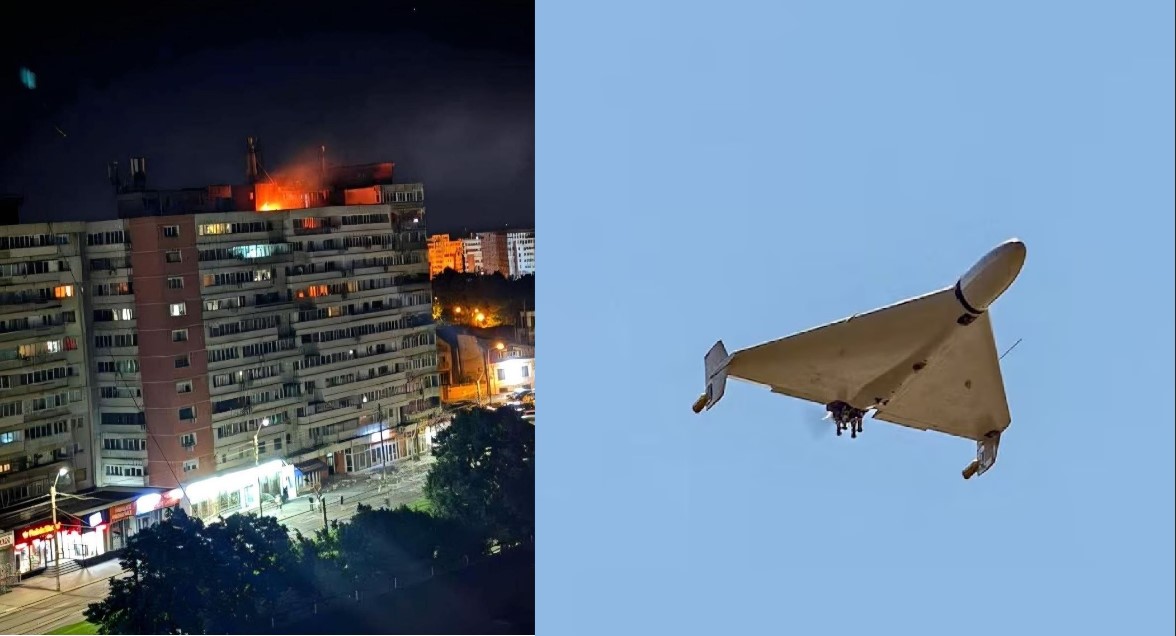
GALAȚI, ROMANIA — May 29, 2026 : A Russian Geran-2 drone struck a residential apartment building in the southeastern Romanian city of Galați during the early hours of May 29, injuring two civilians and marking the first reported incident in which the war in neighboring Ukraine has caused casualties inside a NATO member state.
Romanian authorities said the drone crossed into national airspace during a wider Russian overnight attack targeting Ukrainian civilian infrastructure near the Danube River ports of Izmail and Reni, located close to Romania’s border. Galați is situated approximately 13 kilometers (8 miles) from Ukraine.
The drone, identified as a Russian Geran-2 loitering munition — the Russian version of the Iranian-designed Shahed-136 — struck the roof of a 10-story apartment building, where its explosive payload detonated and triggered a fire. Emergency services evacuated residents shortly after impact. A 14-year-old boy and a 53-year-old woman sustained injuries and received medical treatment, authorities confirmed.
Military Response and Interception Challenges
Romanian military radar tracked the drone after it breached national airspace and remained inside Romania for approximately four minutes while flying at low altitude. In response, the Romanian Air Force scrambled two F-16 Fighting Falcon aircraft and an IAR 330 SOCAT helicopter, while emergency warning alerts were issued to nearby residents.
Although military commanders were authorized to engage the drone, Romanian officials said interception was ultimately ruled out because of operational and civilian safety concerns. Brigadier General Gheorghe Maxim, acting commander of Romania’s joint staff, stated that the aircraft’s low altitude made radar tracking difficult and reduced the time available for a safe engagement.
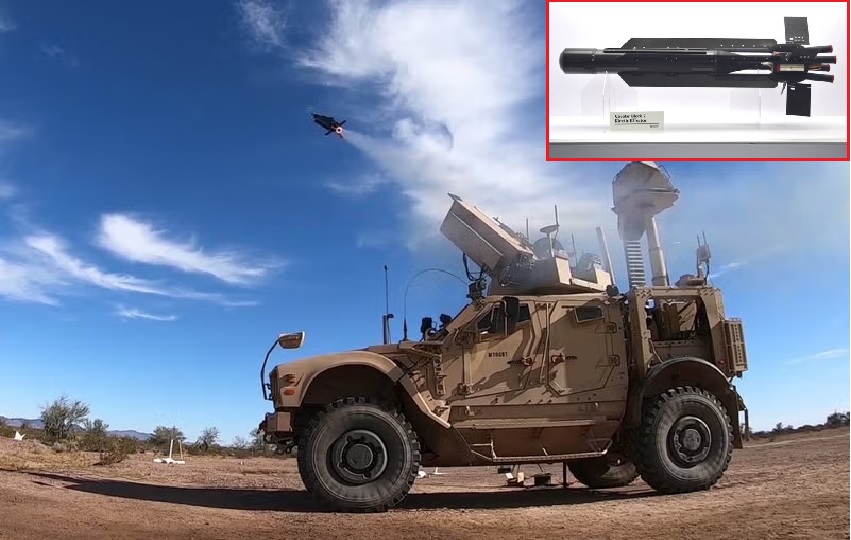
Romanian officials also confirmed that a U.S.-supplied Merops Counter-UAS system, designed to intercept hostile drones, was operational in the area but was not activated due to concerns that debris could fall over a densely populated urban zone.
Diplomatic Measures and Security Response
The incident prompted an immediate response from Bucharest. Romanian President Nicușor Dan convened an emergency meeting of the Supreme Council of National Defense, describing the event as the most serious security incident affecting Romanian territory since Russia launched its full-scale invasion of Ukraine in 2022.
Romania’s Ministry of National Defense condemned the strike, stating that such actions undermine regional stability in the Black Sea region, violate international norms, and endanger both Romanian citizens and NATO’s collective security framework.
In response, Romania declared the Russian consul general in the Black Sea city of Constanța persona non grata and announced the closure of the Russian consulate there. Romanian authorities also formally requested NATO to accelerate the transfer of additional anti-drone and air defense systems to strengthen protection against future incursions.
International Reaction
The incident drew swift condemnation from NATO and European leaders. NATO Secretary-General Mark Rutte reaffirmed the alliance’s solidarity with Romania, stating that NATO remains committed to defending allied territory against reckless actions threatening regional security.
European Commission President Ursula von der Leyen said Russia had “crossed yet another line” and confirmed that the European Union is preparing a 21st sanctions package targeting Moscow. Moldovan President Maia Sandu also condemned the strike, warning that repeated military incidents near borders increase risks to regional security.
Russian Response
Russian officials rejected the criticism and downplayed the diplomatic backlash. Foreign Ministry spokeswoman Maria Zakharova dismissed international concern surrounding the incident and warned that retaliatory measures would follow Romania’s expulsion of a Russian diplomat.
Former Russian President Dmitry Medvedev also questioned responsibility for the strike, claiming ambiguity remained regarding the drone’s origin. Romanian authorities rejected those claims, citing radar tracking data and forensic identification linking the drone to a Russian Geran-2 platform.
Rising Concerns Over Cross-Border Drone Incidents
Romanian defense officials said the Galați strike marked the 29th reported breach of national airspace by Russian drones since attacks on Ukrainian Danube River infrastructure intensified. Previous incidents involved drone fragments or debris falling in sparsely populated areas without causing civilian injuries.
Officials noted that such incursions are frequently linked to technical failures or electronic warfare measures, including GPS jamming and spoofing, which can disrupt drone navigation systems.
A similar incident occurred on May 19, when a Ukrainian drone entered Estonian airspace after reportedly being affected by Russian electronic warfare activity. Romanian F-16 aircraft deployed in Lithuania under NATO’s Baltic Air Policing mission participated in the response, while Ukraine later issued a public apology and described the incident as unintended.
Romania’s Ministry of National Defense said air defense readiness along the Ukrainian border has since been reinforced as authorities continue monitoring the security situation near the frontier.
——— End of Article ———