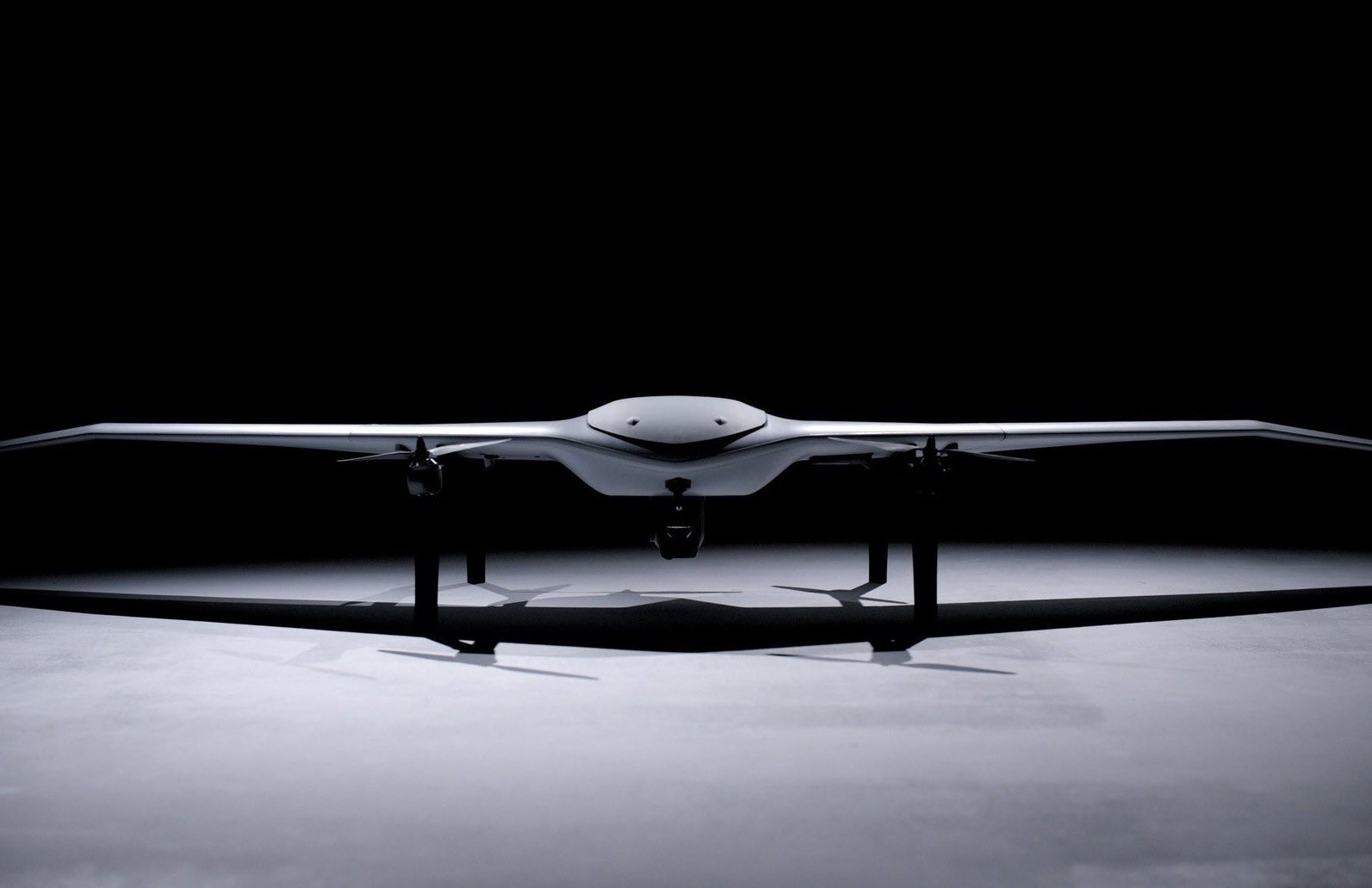
EDWARDS AIR FORCE BASE, California — May 7, 2026 : Northrop Grumman has officially commenced flight testing of the XRQ-73 SHEPARD hybrid-electric uncrewed aircraft at Edwards Air Force Base, marking a significant milestone in the Defense Advanced Research Projects Agency’s (DARPA) Series Hybrid Electric Propulsion AiRcraft Demonstration (SHEPARD) programme.
The programme is being conducted in collaboration with the Air Force Research Laboratory (AFRL) and is intended to evaluate hybrid-electric propulsion technologies integrated with autonomous mission systems for future lightweight military aircraft.
First Flight and Flight Test Campaign
According to Northrop Grumman, the first flight of the XRQ-73 took place in April 2026. The aircraft is currently undergoing a broader flight test campaign at Edwards Air Force Base to assess propulsion performance, aircraft handling, efficiency, and autonomous operational capabilities.
Recent flights were remotely piloted by Dr. Mike McLean, a test pilot from Scaled Composites, the Northrop Grumman subsidiary responsible for aircraft prototyping, construction, and research flight testing.
The XRQ-73 was designed and developed primarily by Northrop Grumman and Scaled Composites under DARPA’s X-Prime rapid prototyping framework, which focuses on reducing integration risks and accelerating development of mission-specific aircraft concepts through iterative demonstrations.
Aircraft Design and Configuration
The XRQ-73 is classified as a Group 3 Uncrewed Aircraft System (UAS) and features a tailless flying-wing design intended to support efficient aerodynamic performance and reduced detectability.
The aircraft weighs approximately 1,250 pounds (567–570 kilograms) and is designed to operate at altitudes up to approximately 18,000 feet (5,500 meters). Reported performance figures indicate operational speeds ranging from roughly 111 mph to 285 mph (180 km/h to 460 km/h), or up to approximately 250 knots depending on mission profile and flight configuration.
Initial test aircraft have also been observed with wingtip vertical surfaces integrated into the flying-wing configuration during early-stage flight evaluations.
Hybrid-Electric Propulsion Architecture
The defining feature of the XRQ-73 is its series hybrid-electric propulsion system, which differs significantly from conventional aircraft propulsion arrangements.
Rather than mechanically driving the propulsion system directly, the aircraft uses a small internal combustion gas turbine engine solely as an onboard electrical generator. The turbine burns liquid hydrocarbon fuels such as gasoline or diesel to produce electricity, which charges onboard battery systems.
Electric motors powered by those batteries then drive the aircraft’s ducted fan propulsors.
This architecture is intended to combine the endurance and energy density advantages of liquid fuels with the operational benefits of electric propulsion technologies.
Operational Advantages
Northrop Grumman and DARPA have identified several operational advantages associated with the XRQ-73’s propulsion system.
One of the primary benefits is reduced acoustic signature. Because the aircraft’s propulsion fans are powered by electric motors rather than directly by a combustion engine, the system operates significantly more quietly than traditional propulsion arrangements. This lower acoustic profile could improve survivability and reduce detectability during Intelligence, Surveillance, and Reconnaissance (ISR) missions.
The propulsion architecture is also designed to improve fuel efficiency and reduce emissions. Since the gas turbine functions exclusively as a generator, it can operate continuously at an optimized low RPM rather than repeatedly changing power settings to generate thrust. This allows more efficient fuel consumption and more stable power generation.
Another major advantage is extended operational endurance. Fully battery-powered aircraft are typically constrained by limited energy storage capacity and short endurance. The XRQ-73 addresses this limitation through its onboard turbine-powered generation system, which acts as a range extender while preserving many of the advantages associated with electric propulsion.
SHEPARD Programme Background
The SHEPARD programme builds upon earlier hybrid-electric aviation research efforts conducted by DARPA, AFRL, and the Intelligence Advanced Research Projects Activity (IARPA).
The XRQ-73 is a direct successor to the earlier XRQ-72 Great Horned Owl (GHO) experimental aircraft programme. Technologies initially developed under the GHO effort have been scaled and integrated into the larger XRQ-73 platform with an operationally representative fuel fraction and mission system architecture.
DARPA’s X-Prime framework, under which SHEPARD is being executed, is specifically intended to accelerate development of advanced aerospace concepts through rapid prototyping and early flight validation.
Industry Partners and Development Team
Although Northrop Grumman Aeronautics Systems serves as the programme’s prime contractor, the XRQ-73 development effort involves multiple specialized industry partners.
Scaled Composites is responsible for aircraft prototyping, construction, and flight test support. Additional participating companies include:
- Cornerstone Research Group
- Brayton Energy
- PC Krause and Associates
- EaglePicher Technologies
These firms contribute technologies and subsystems related to energy storage, propulsion integration, thermal management, and aircraft systems engineering.
Strategic and Operational Significance
The primary objective of the current flight test campaign is to demonstrate the military utility of hybrid-electric propulsion systems for autonomous aircraft operations.
According to Northrop Grumman, the XRQ-73 programme is intended to expand the operational possibilities of future uncrewed air systems by combining low-signature electric propulsion with the range and endurance advantages of liquid-fuel-powered energy generation.
The company stated that technologies evaluated through the SHEPARD programme could support entirely new mission profiles and improve operational flexibility for future U.S. Department of Defense autonomous aviation programmes.
The flight test campaign also contributes to Northrop Grumman’s broader autonomous aviation portfolio. The company reports accumulating more than 500,000 autonomous flight test hours over seven decades of unmanned and autonomous aerospace development programmes.
Data gathered during ongoing testing at Edwards Air Force Base is expected to inform future hybrid-electric aircraft designs and the continued evolution of lightweight autonomous military aviation systems.
——— End of Article ———