MINSK, — May 18, 2026 : Belarus and Russia have launched joint military exercises involving units trained in the combat use and logistical support of tactical nuclear weapons, the Belarusian Defense Ministry announced on Monday.
The drills are being conducted under the command of the Chief of the General Staff of the Belarusian Armed Forces, who also serves as First Deputy Minister of Defense. Missile forces and aviation units from both countries are participating in the exercises, which focus on operational coordination, deployment readiness, and the handling of nuclear-capable systems.
Focus on Nuclear Support and Deployment Operations
According to the Belarusian Defense Ministry, the exercises are designed to evaluate personnel training and improve the operational readiness of forces equipped with modern weapons systems, including special munitions.
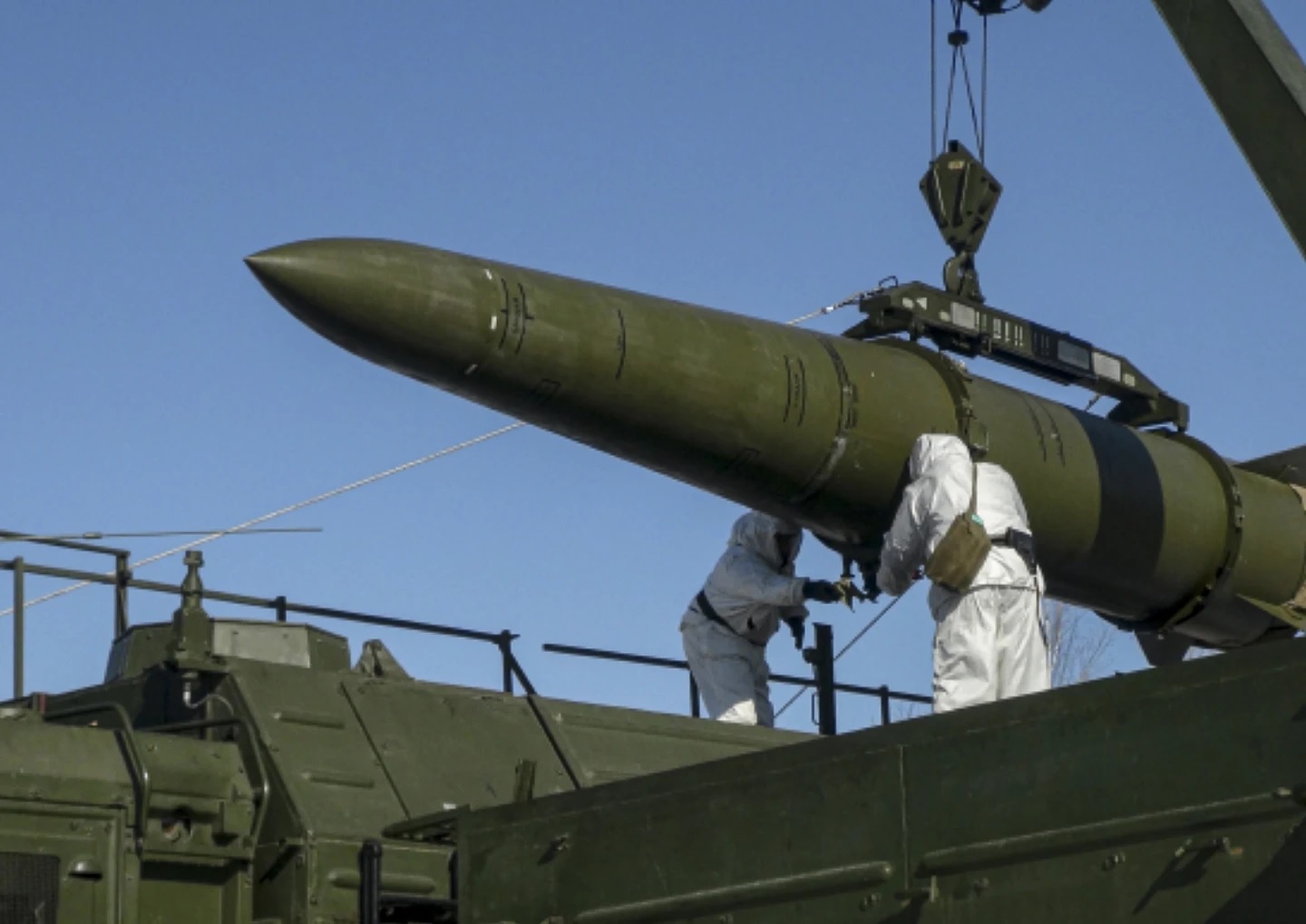
In coordination with Russian military personnel, participating units are practicing the transport and delivery of nuclear warheads, as well as procedures related to their preparation for potential operational use. The drills also include coordination between missile forces, aviation units, and logistical support structures responsible for handling nuclear munitions.
Military officials stated that one of the primary objectives of the training is to test the ability of units to conduct combat operations from temporary and unprepared positions across Belarusian territory.
The exercises place particular emphasis on:
- Rapid redeployment of troops and equipment over long distances
- Concealed and coordinated troop movements
- Deployment from temporary operational sites
- Maintaining combat readiness during mobile operations
- Coordination of missile and aircraft systems capable of carrying tactical nuclear weapons
Belarusian officials described the activities as routine and planned exercises conducted within the framework of the Russia-Belarus Union State. The Defense Ministry stated that the drills are not directed against third countries and do not pose a threat to regional security.
Expansion of Russia-Belarus Nuclear Cooperation
The exercises are part of a broader expansion of military and nuclear cooperation between Moscow and Minsk that has accelerated since the beginning of Russia’s full-scale invasion of Ukraine.
In May 2023, Russia announced the deployment of tactical nuclear weapons to Belarus, marking the first deployment of Russian nuclear weapons outside Russian territory since the collapse of the Soviet Union. On May 25, 2023, the two countries signed agreements regulating the storage, deployment, and operational procedures governing the weapons.
Belarus later confirmed that the transfer process had been completed by the end of 2023. Under the agreements, Russia retains full control over the nuclear weapons stationed in Belarus and maintains authority over any decision regarding their potential use.
Since then, Belarusian military units have undergone extensive training related to the operation of nuclear-capable delivery systems and support infrastructure.
Missile Systems and Nuclear-Capable Platforms
Several strategic weapons systems are linked to the current exercises and Belarus’ ongoing military modernization efforts.
Belarus has already deployed Russian-made Iskander-M and Iskander-K short-range ballistic missile systems, which are capable of carrying tactical nuclear warheads. In August 2023, the Belarusian Defense Ministry released photographs showing Belarusian troops operating Iskander systems during military exercises.
The drills also involve upgraded military aircraft adapted for nuclear delivery missions. Aviation units from both Belarus and Russia are participating in the current maneuvers.
In 2025, Russia reportedly deployed the Oreshnik hypersonic ballistic missile system to Belarusian territory as part of expanded strategic cooperation between the two countries.
Belarus is also continuing development of its domestically produced Polonez multiple rocket launcher system. According to defense officials, Russian specialists are assisting efforts to modify the system for compatibility with nuclear warheads.
Regional Security Developments
The latest exercises are taking place amid broader changes in the international security environment and growing regional tensions in Eastern Europe.
The New START arms control treaty between Russia and the United States formally expired in February 2026, ending the last remaining bilateral restrictions on the deployment of strategic nuclear arsenals by the two countries.
Regional security concerns have also increased along Belarus’ borders. On May 15, Ukrainian President Volodymyr Zelenskyy stated that Russia continues attempts to draw Belarus more directly into the conflict in Ukraine.
Following those statements, Ukrainian authorities ordered additional reinforcements to defensive positions along the northern border with Belarus, particularly in areas connected to the Chernihiv and Kyiv directions and regions bordering NATO member states.
Continuing Joint Nuclear Training
Belarusian and Russian forces have conducted multiple joint exercises involving tactical nuclear scenarios in recent years. Previous drills included operations involving missile forces, aviation units, and logistical support personnel responsible for transporting and preparing special munitions.
The current exercises continue that pattern, with a focus on operational deployment, mobility, and coordination between Belarusian and Russian military units.
The Belarusian Defense Ministry has not announced a timeline for the completion of the exercises.
——— End of Article ———