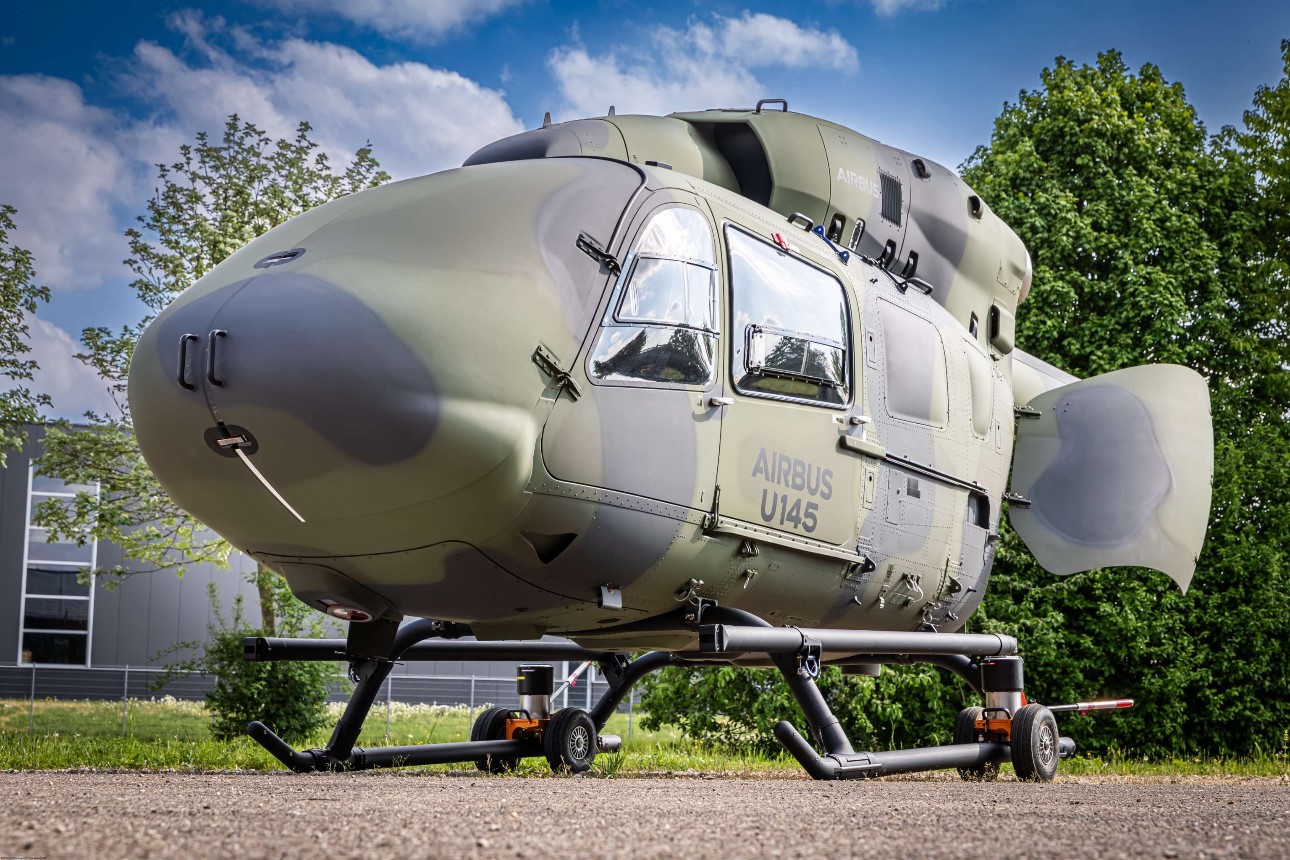
BERLIN, — June 08, 2026 : Airbus Helicopters has officially unveiled the U145, an autonomous and uncrewed version of its widely used H145 twin-engine helicopter, at the ILA Berlin Air Show, marking a significant expansion of the company’s activities in the uncrewed aerial systems (UAS) sector.
Displayed as a full-scale mock-up at the exhibition, the U145 combines the proven performance of the H145 platform with advanced autonomy technologies, offering a new option for military and civilian operators seeking uncrewed logistics and multi-mission capabilities.
First Flight Planned for 2026
Airbus said the U145 is designed to bridge the gap between traditional crewed helicopter operations and future autonomous missions. The company plans to conduct the aircraft’s maiden flight with a safety pilot on board by the end of 2026, while operational service entry is targeted for the early 2030s.
According to Airbus Helicopters Chief Executive Officer Matthieu Louvot, the new platform combines the proven airframe, power and payload capacity of the H145 with the autonomy capabilities of a modern UAS.
Louvot also stated that Airbus intends to collaborate with leading autonomous mission partners to further develop the European uncrewed aviation ecosystem and expand the aircraft’s future operational capabilities.
Major Design Changes for Autonomous Operations
To convert the crewed H145 into the U145, Airbus removed the traditional cockpit and integrated a specialized sensor suite alongside an artificial intelligence-based flight control system capable of supporting fully autonomous operations.
The redesign also introduced several modifications aimed at improving cargo-handling efficiency. These include:
- An integrated nose cargo door for front-loading operations.
- A foldable loading table.
- A reinforced and dedicated cargo floor.
The U145 has a maximum take-off weight of 3,800 kilograms and has been optimized primarily for high-volume logistics and resupply missions.
Built on the Proven H145 Platform
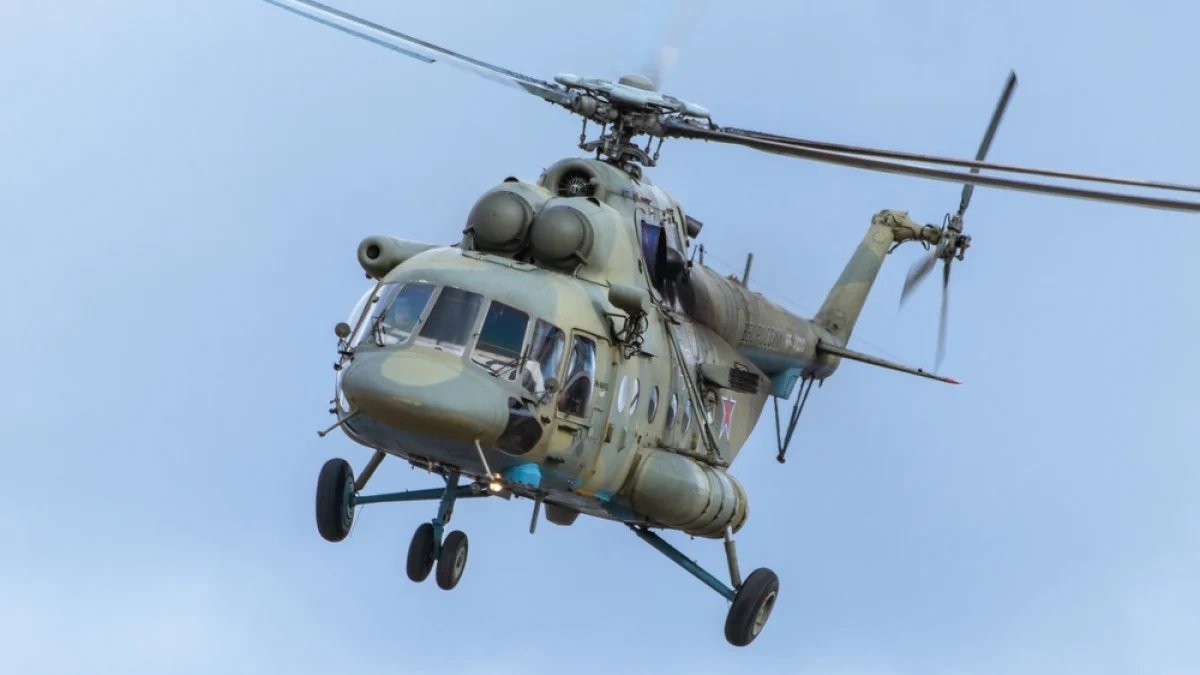
The U145 benefits from the operational experience of the H145 family, one of Airbus’ most successful helicopter programs.
More than 1,800 H145-family helicopters are currently in service worldwide across civil, parapublic, emergency medical, law enforcement and military sectors. The global fleet has accumulated over 8.5 million flight hours.
The H145 is powered by two Safran Arriel 2E engines equipped with Full Authority Digital Engine Control (FADEC) systems. Airbus states that the platform offers one of the lowest acoustic footprints and lowest CO₂ emission levels in its helicopter category.
The U145 also represents the second Airbus helicopter adapted for uncrewed operations, following the VSR700, which was developed from the Cabri G2 light helicopter.
Designed for Multiple Mission Types
Although logistics and cargo transport are expected to be the aircraft’s primary roles, Airbus emphasized that the U145 has been designed as a modular platform capable of supporting a wide range of future missions.
Potential applications include:
- Disaster management and emergency response
- Firefighting support operations
- Surveillance and reconnaissance missions
- Armed scouting operations
- Crewed-uncrewed teaming missions
- Autonomous cargo resupply operations
The company said the aircraft’s flexible architecture will allow operators to adapt it for different operational requirements as autonomous technologies continue to evolve.
Airbus and MBDA Exploring Drone Mothership Role
Airbus is also studying the use of the U145 as a “drone mothership” capable of deploying air-launched effects (ALE) during military operations.
To support this capability, Airbus is working with European missile manufacturer MBDA to develop systems that would enable the helicopter to launch and manage small uncrewed assets in support of networked battlefield operations.
The concept reflects growing interest among military forces in integrating crewed and uncrewed systems to extend surveillance coverage, improve situational awareness and enhance operational flexibility.
Parallel Development Underway in the United States
At the same time, Airbus U.S. Space & Defense is advancing a separate autonomous helicopter program for the U.S. Marine Corps.
Known as the MQ-72C Lakota Connector, the aircraft is based on the UH-72B Lakota, which is itself derived from the H145 family. The platform is being developed under the Marine Corps’ Aerial Logistics Connector program.
Airbus has partnered with several technology companies for the project:
- Shield AI, which provides the Hivemind autonomy software.
- L3Harris Technologies, responsible for digital communications systems.
- Parry Labs, supplying edge-computing and autonomy software infrastructure.
The development team recently completed its fourth autonomous flight-test campaign in Texas. During the trials, the aircraft successfully demonstrated autonomous landing-zone assessments, obstacle detection, route planning and dynamic rerouting to alternate landing sites without direct pilot input.
Expanding Airbus’ Autonomous Aviation Portfolio
The introduction of the U145 at the ILA Berlin Air Show highlights Airbus’ broader strategy of integrating autonomous technologies into proven helicopter platforms.
By combining the reliability and global support network of the H145 family with advanced artificial intelligence and autonomous flight systems, Airbus aims to provide operators with a flexible platform capable of supporting logistics, emergency response, surveillance and future multi-domain military operations.
As development and testing continue through the remainder of the decade, the U145 is expected to become a key element of Airbus’ expanding portfolio of autonomous aviation systems for both defense and civilian markets.
——— End of Article ———