CHIAYI COUNTY, Taiwan — Taiwan President Lai Ching-te on Monday led a ceremony in Chiayi County to open a new campus of the National Chung-Shan Institute of Science and Technology (NCSIST) and break ground for the Minxiong Aerospace and UAV Industrial Park.
The projects are aimed at expanding Taiwan’s domestic drone industry and developing a supply chain that does not rely on Chinese components. National Security Council Secretary-General Joseph Wu, Defense Minister Wellington Koo, Minister of Economic Affairs Kung Ming-hsin, NCSIST President Lee Shih-chiang, Chiayi County Magistrate Weng Chang-liang and legislators also attended the ceremony.
NCSIST Minxiong campus
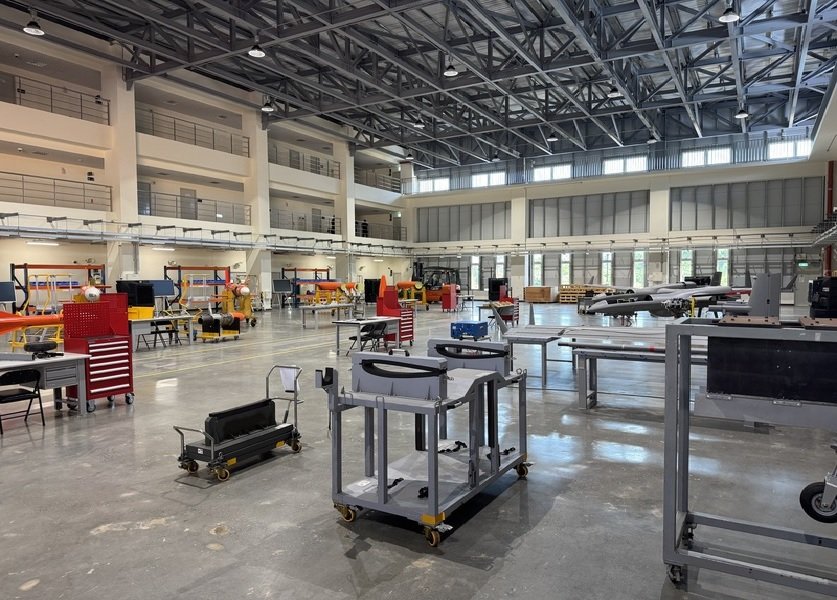
The NCSIST Minxiong campus on the eastern side of the site was built over nearly three years. Construction began on December 5, 2023, with NCSIST investing NT$1.11 billion to develop the 5.12-hectare facility.
The campus includes a research building, hangars, laboratories and system-integration testing areas. It is designed to support the development, testing, verification and production of military-specification drones, covering areas such as airframes, propulsion and flight-control systems.
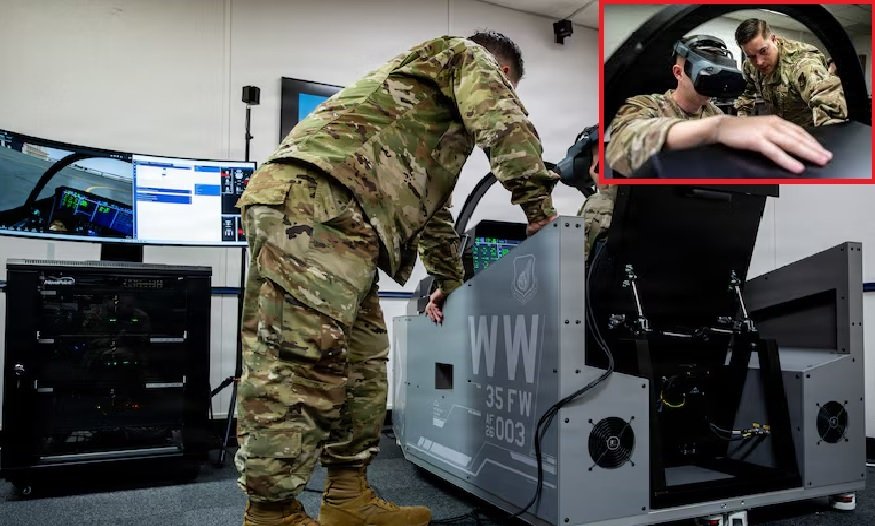
The facility uses digital-twin technology, artificial intelligence and virtual reality for simulation before physical flight testing. It also has equipment for laser tracking, ultrasonic inspection and aircraft vibration testing.
Minxiong Aerospace and UAV Industrial Park
On the western side, Taiwan broke ground for the Minxiong Aerospace and UAV Industrial Park. The Executive Yuan has allocated NT$6.859 billion in public construction funding, with completion scheduled for 2028.
The park will include production plants, experimental equipment, a flight-testing field and research facilities. It is expected to accommodate about 100 companies, create around 1,200 jobs and generate annual output of about NT$8 billion.
Manufacturers, government agencies, universities and researchers will be able to share computing resources and digital engineering tools. NCSIST describes the goal as creating a “non-red supply chain” using components and systems not sourced from China. The park will also work with the National Center for High-Performance Computing and international partners, including Dassault Systèmes, on digital engineering.
Taiwan's growing drone industry
Taiwan's drone output reached NT$12.9 billion in 2025, about 2.5 times the previous year's figure, according to the Ministry of Economic Affairs. Finished-drone exports reached NT$2.95 billion, while more than 267 companies are involved in unmanned-system integration and key component manufacturing.
In October 2025, the Executive Yuan launched a six-year NT$44.2 billion program for the uncrewed-vehicle sector, targeting annual drone output of more than NT$40 billion by 2030.
Taiwan accelerated its domestic drone efforts following Russia's full-scale invasion of Ukraine in 2022 and has required drones purchased by public agencies to use non-Chinese sources.
Chiayi drone cluster
The Minxiong projects build on the Asia UAV AI Innovation Application R&D Center, which opened in August 2022 in nearby Puzi City. The center now hosts more than 50 drone companies and institutions, with demand exceeding available space.
Chiayi has been developing its drone industry since 2020 and is building a connected cluster involving the Puzi center, the Minxiong campus, testing facilities and the new industrial park.
Taiwan's broader drone strategy has three levels: larger military systems procured from the United States, mid-sized military drones developed by NCSIST, and smaller dual-use drones supplied by Taiwanese private companies. The Minxiong campus is intended to connect NCSIST's military research and testing with private-sector manufacturing.
President Lai said Taiwan's strengths in semiconductors, information and communications technology and precision manufacturing could help it become a center for democratic drone supply chains in Asia. He also called on the Legislative Yuan to support additional defense procurement funding proposed by the Ministry of National Defense.
The Minxiong developments will expand Taiwan's drone research, production and testing capacity while linking government agencies, the military, research institutions and private companies.
——— End of Article ———