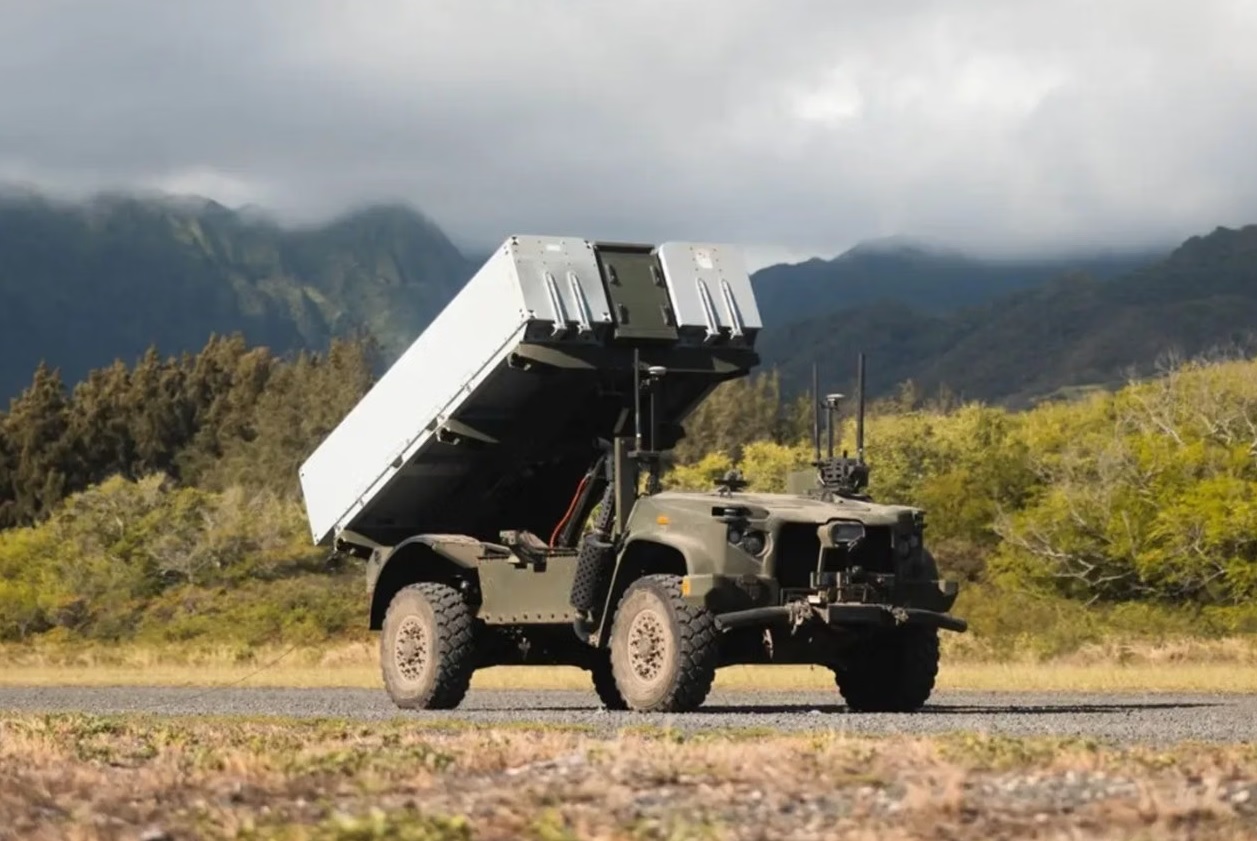
OSHKOSH, Wis. — May 30, 2026 : The U.S. Marine Corps has awarded Oshkosh Defense a $70.6 million contract for the production of additional Remotely Operated Ground Unit for Expeditionary Fires (ROGUE-Fires) carriers, extending procurement of the unmanned launch platform central to the Navy/Marine Expeditionary Ship Interdiction System (NMESIS). The award, announced on May 30, 2026, was issued by Marine Corps Systems Command (MARCORSYSCOM) on a sole-source basis and funded through Fiscal Year 2025 and Fiscal Year 2026 Marine Corps procurement appropriations.
Under the contract, Oshkosh Defense will continue production of ROGUE-Fires vehicles through September 2028. While the exact number of launch platforms included in the award has not been publicly disclosed, production will primarily take place in Oshkosh, Wisconsin, with additional supporting work conducted in Virginia, Maryland, and Pennsylvania. The procurement reflects continued Marine Corps investment in unmanned long-range strike systems intended to support distributed maritime operations in contested environments.
Contract Supports Expansion of NMESIS Capability
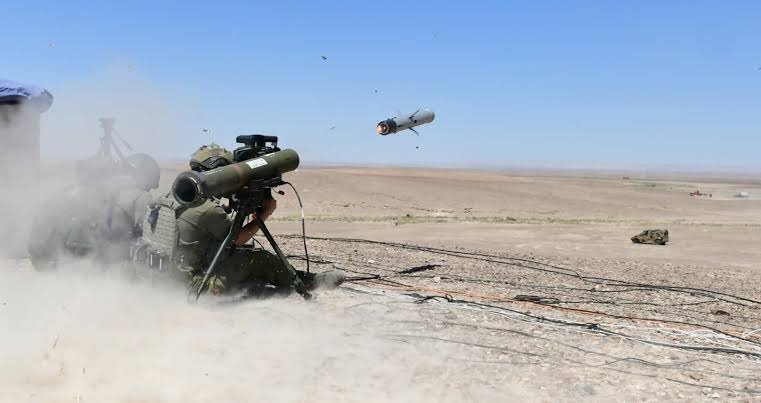
ROGUE-Fires serves as the launch platform for NMESIS, a ground-based maritime strike system designed to provide the Marine Corps with a remotely operated anti-ship capability. The system combines the Naval Strike Missile (NSM) with an unmanned mobile launcher, enabling Marines to engage hostile surface vessels from dispersed coastal positions while minimizing direct exposure of personnel to enemy fire.
The continued procurement of additional carriers supports the Marine Corps’ broader transition toward distributed anti-access and area-denial operations, particularly in maritime regions where mobile and survivable missile forces are considered essential. By relying on unmanned launch vehicles, the Marine Corps aims to establish harder-to-target expeditionary strike networks capable of operating inside contested areas while rapidly relocating after launch.
ROGUE-Fires Built on JLTV Platform
The ROGUE-Fires carrier is derived from Oshkosh Defense’s Joint Light Tactical Vehicle (JLTV), adapting an existing tactical platform into an autonomous launch system capable of operating without an onboard crew. The vehicle retains the JLTV’s independent suspension, expeditionary mobility, and off-road performance while integrating robotic control systems and remote-driving technologies.
Autonomous architecture for the vehicle has been developed in partnership with Forterra, a company specializing in autonomous ground mobility systems. Demonstrated configurations incorporate autonomous navigation capabilities, secure communications, and launcher assemblies capable of carrying two ready-to-fire Naval Strike Missiles. The system is intended to operate across austere terrain and expeditionary environments where conventional missile systems may face deployment limitations.
Naval Strike Missile Provides Long-Range Precision Fires
At the center of NMESIS is the Naval Strike Missile, a fifth-generation anti-ship missile developed by Kongsberg Defence & Aerospace and integrated for U.S. production through Raytheon. The missile has a range exceeding 185 kilometers and is designed to strike hostile surface combatants operating in contested maritime environments.
The NSM employs a sea-skimming flight profile, imaging infrared seeker, autonomous target-recognition capability, and terrain-reference navigation. Unlike missile systems dependent primarily on radar guidance, the NSM is designed to maintain effectiveness in environments where electronic warfare or electromagnetic disruption may degrade conventional targeting systems.
Role in Marine Corps Expeditionary Strategy
The procurement of additional ROGUE-Fires carriers is closely linked to the Marine Corps’ Expeditionary Advanced Base Operations (EABO) concept. Under this operational framework, small Marine units deploy across islands and coastal regions to establish temporary firing positions capable of controlling maritime chokepoints and strategic sea lanes.
The concept emphasizes mobility, survivability, and rapid repositioning. Following missile launches, NMESIS-equipped units are expected to relocate quickly to reduce vulnerability to enemy surveillance and counterfire systems. In geographically fragmented operating areas such as the Indo-Pacific, dispersed launch positions could establish overlapping anti-ship engagement zones intended to complicate hostile naval movement.
Marine Corps planners view the system as an important component of maritime denial operations, particularly in regions where adversary naval and missile forces continue to expand.
Operational Testing and Exercise Integration
The Marine Corps has tested NMESIS during multiple operational demonstrations and large-scale exercises across the Pacific. Previous exercises, including Sink at Sea Live Fire Training Exercises (SINKEX) in Hawaii and broader maritime strike demonstrations, validated the system’s ability to conduct engagements using targeting data received from external platforms.
Testing confirmed that NMESIS can receive targeting information from aircraft, naval vessels, intelligence systems, and networked sensors, enabling missile launches beyond the direct line of sight of the launch platform. Earlier demonstrations also marked one of the first operational uses of an unmanned, ground-based anti-ship missile system within U.S. military service.
Industrial Cooperation and Program Structure
The NMESIS program relies on cooperation among several defense companies supporting different aspects of the system. Oshkosh Defense manufactures the launch platform, Forterra provides autonomous driving technologies, Kongsberg supplies the Naval Strike Missile, and Raytheon supports U.S.-based missile production and integration.
Oshkosh Defense recently showcased the ROGUE-Fires platform during the Modern Day Marine 2026 exposition in Washington, D.C., highlighting its role in supporting distributed maritime operations and expeditionary precision fires.
The latest $70.6 million contract reflects the Marine Corps’ continued effort to expand distributed precision-strike networks and unmanned expeditionary capabilities. As the service advances force modernization efforts, additional ROGUE-Fires carriers are expected to strengthen the operational reach of Marine Littoral Regiments and broader maritime deterrence requirements in contested regions, particularly across the Indo-Pacific.
——— End of Article ———