
U.S
WASHINGTON — U.S. President Donald Trump has rejected Iran’s proposal for a seven-day ceasefire and has privately told aides that he expects U.S. bombing of Iran to resume after the November midterm elections, according to U.S. officials cited by The Wall Street Journal. Iran’s Seven-Day Ceasefire Proposal Iran conveyed the proposal through Qatari mediators during the United Nations General Assembly in New York. The plan called for a temporary halt to hostilities, including across fronts such as Lebanon. Under the proposal, Tehran would reopen the Strait of Hormuz after a seven-day process and resume negotiations over its nuclear program. Iranian Foreign Minister Abbas Araghchi said the initial U.S. steps would take four to five days, the strait would reopen on the sixth day and nuclear talks would begin on the seventh. In return, Iran requested the lifting of the U.S. naval blockade on Iranian ports, easing of sanctions on Iranian oil exports and the release of frozen Iranian assets, reported in some accounts as at least $12 billion. Iranian President Masoud Pezeshkian said Tehran would meet its commitments if Washington accepted the proposal and would allow U.N. nuclear inspectors under negotiated arrangements. Trump Rejects the Proposal The proposal was similar to a memorandum of understanding reached between the two countries in June. That agreement later collapsed following disagreements over maritime routes and the naval blockade. Trump has publicly said Iran is facing economic pressure and is seeking a deal after the midterm elections. However, U.S. officials said he remains skeptical that Tehran would meet Washington’s demands, particularly over its nuclear program and the free passage of shipping through the Strait of Hormuz. The United States has reportedly informed Iran and mediators that Trump does not intend to end the blockade, viewing continued economic pressure as a way to push Tehran toward accepting U.S. demands. U.S. Warships Move Into the Arabian Sea The conflict has also affected U.S. military positioning in the region. Several U.S. Navy warships have moved farther from Iranian waters into the Arabian Sea, placing some vessels outside the reported range of Iranian missiles while maintaining a U.S. naval presence in the region. The Strait of Hormuz remains a major point of contention because roughly one-fifth of global oil and gas shipments normally pass through the waterway. Conflict and Diplomatic Efforts Continue The conflict began with U.S. and Israeli strikes on Iran in late February 2026 and has continued for about seven months, with periods of fighting, pauses and unsuccessful diplomatic efforts. The June memorandum was one of the major attempts to reduce tensions, but it eventually collapsed. Iran has since continued to seek negotiations through intermediaries. Indirect talks on issues including Iran’s nuclear program are still continuing, with U.S. officials describing some discussions as positive and constructive. Iran has said it is awaiting an official U.S. response to its seven-day proposal. For now, the timing and scale of any future U.S. military action remain unclear, and officials said Trump’s position could change in the coming weeks, including in response to developments surrounding the November midterm elections.
Read More → Posted on 2026-09-26 11:53:00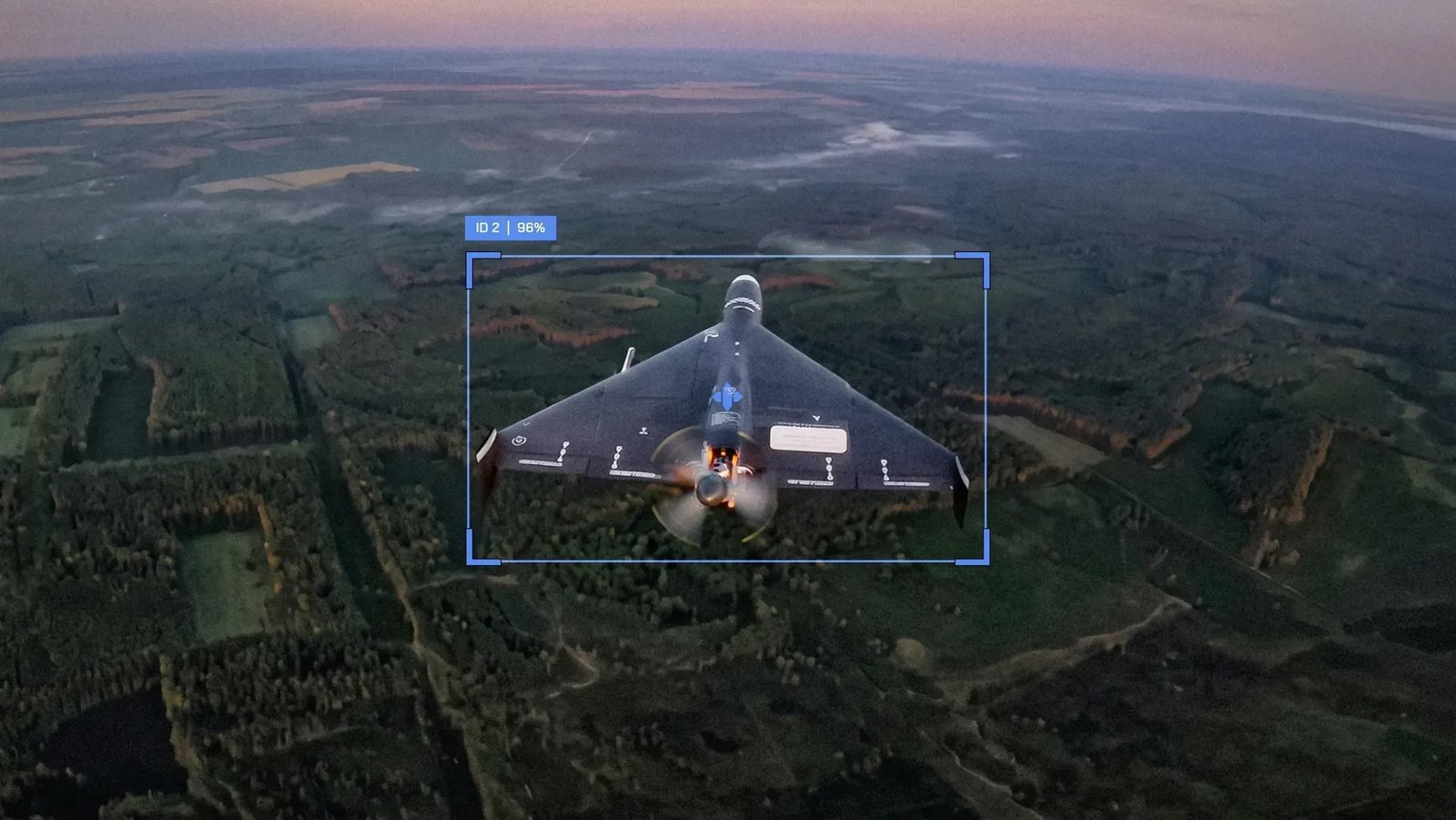
Europe
LONDON/KYIV — The United Kingdom has become the first international partner whose defence companies will gain access to Ukraine’s Avengers Labs, an artificial intelligence platform that uses real battlefield data to train and test AI models for unmanned systems. Up to 12 British defence companies will be selected for the programme. They will work inside the secure Avengers Labs environment and will not be allowed to download or directly extract the dataset. AI Development for Drone Swarms The first UK-Ukraine competition will focus on AI models for swarms of unmanned systems. The models are intended to help drones work together, detect threats and identify targets, including when communication with human operators is limited or global navigation systems are unavailable. The UK Ministry of Defence’s Rapid AI Delivery Taskforce (RAID) is leading the selection process. Companies must submit proposals by 11:59 p.m. BST on October 22, 2026, with selected companies expected to be notified by November 6. Phase 1 access is planned for about three months, from late November 2026 to late February 2027. Companies must also complete Ukrainian export-control procedures before receiving access. More Than 5 Million Battlefield Frames Avengers Labs is built around an annotated dataset of more than 5 million battlefield frames. Most of the data comes from unmanned systems through Ukraine’s DELTA combat system. The dataset includes information on tanks, artillery, air defence systems, infantry, Shahed-type UAVs and reconnaissance drones. The data is continuously updated, while information provided through DELTA is anonymised and delayed to reduce risks to military personnel during ongoing operations. More than 30 Ukrainian defence companies are already using Avengers Labs to train AI models, and three products developed through the platform are already deployed on the battlefield. Ukraine's Ministry of Defence has reported that AI integration can reduce the time analysts spend searching images and video for enemy targets by up to 90 percent. An AI system trained using Avengers Labs data processes more than 100,000 drone video streams each month and identifies about 70 percent of enemy military targets in real time, according to the Ukrainian ministry. UK-Ukraine AI Partnership The cooperation follows an Artificial Intelligence Partnership signed in Kyiv on August 24, 2026, by Ukrainian President Volodymyr Zelenskyy and UK Prime Minister Andy Burnham. It forms part of the wider UK-Ukraine 100-Year Partnership. The agreement covers joint AI model development, secure data channels, computing resources and AI reliability, as well as defence-industry cooperation and academic research into autonomy, AI reliability, cybersecurity and synthetic data. The programme will combine Ukraine’s combat-derived data and operational experience with expertise from British universities, researchers and technology companies to develop AI capabilities for unmanned systems and other defence applications.
Read More → Posted on 2026-09-26 12:15:24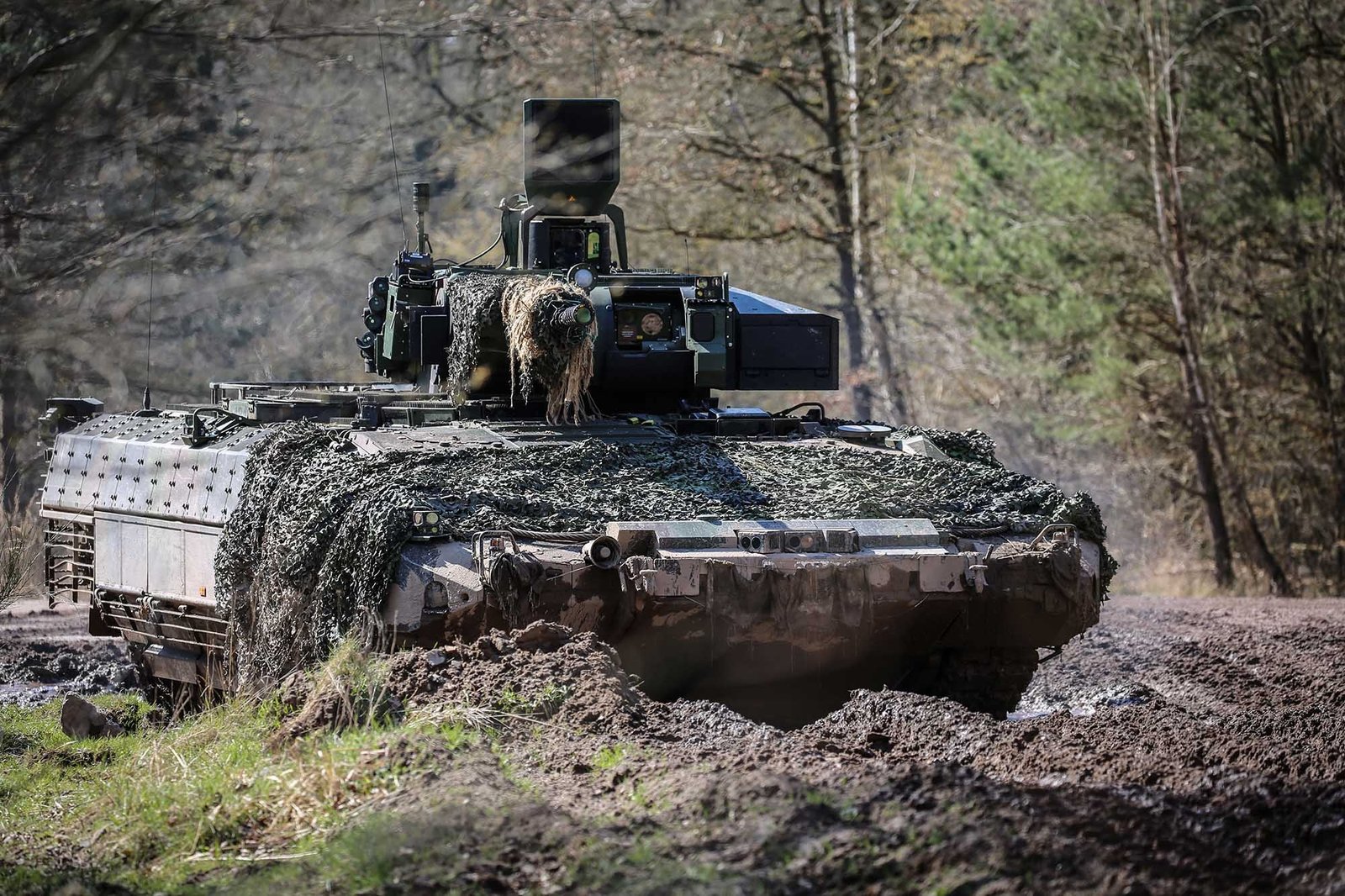
Europe
BERLIN, — Germany’s Bundeswehr has received the first Puma infantry fighting vehicle (IFV) from its second production batch, supporting the modernization of its armored infantry units and the gradual replacement of the older Marder IFVs. Projekt System Management GmbH (PSM), a joint venture between KNDS Deutschland and Rheinmetall that manages the Puma programme, announced the handover of the first S1-configured Puma on August 28, 2026. The government contractor officially accepted the first two vehicles from the batch on August 27 and September 3, 2026. These vehicles will undergo further technical trials at the WTD 81 and WTD 91 military-technical centres before entering service. 50 vehicles ordered in second batch The second production batch began with a May 2023 framework agreement between the Federal Office of Bundeswehr Equipment, Information Technology and In-Service Support (BAAINBw) and PSM for 50 new Puma IFVs. The procurement is being carried out alongside the modernization of existing Puma vehicles to the common S1 standard. The Bundeswehr intends to introduce the S1 configuration across its Puma-equipped armored infantry units and training establishments. Puma S1 capabilities The Puma has a three-person crew and can carry six infantry soldiers. Its remotely controlled unmanned turret is equipped with a stabilized 30 mm MK30-2/ABM automatic cannon, a coaxial 5.56 mm MG4 machine gun, and, in the S1 and VJTF configurations, the MELLS anti-tank guided missile system with Spike LR missiles. The 30 mm cannon has an effective range of up to 3 kilometers. The vehicle has an 800 kW engine, a maximum road speed of 70 km/h, and a combat weight of up to 43 metric tons in its highest protection configuration. The S1 standard adds digital communications and command systems, improved observation equipment and 360-degree surveillance combining daytime cameras with thermal imaging. Its modular protection system is designed to protect against mines, improvised explosive devices, shaped-charge munitions and anti-tank guided missiles. Germany orders another 200 Pumas Germany is continuing to expand the fleet. In December 2025, the Bundeswehr ordered another 200 Puma IFVs from PSM through an amendment to the existing framework agreement. The order is valued at approximately €4.2 billion and is divided equally between KNDS Deutschland and Rheinmetall. First deliveries are scheduled to begin in mid-2028. The agreement also covers corresponding protection modules and storage containers, while a further amendment for an S2 configuration is planned. Together with the original production batch of 350 Puma vehicles, the second-batch procurement and the modernization of existing vehicles to the S1 standard form part of Germany’s long-term effort to equip its mechanized infantry forces with the Puma.
Read More → Posted on 2026-09-26 12:22:23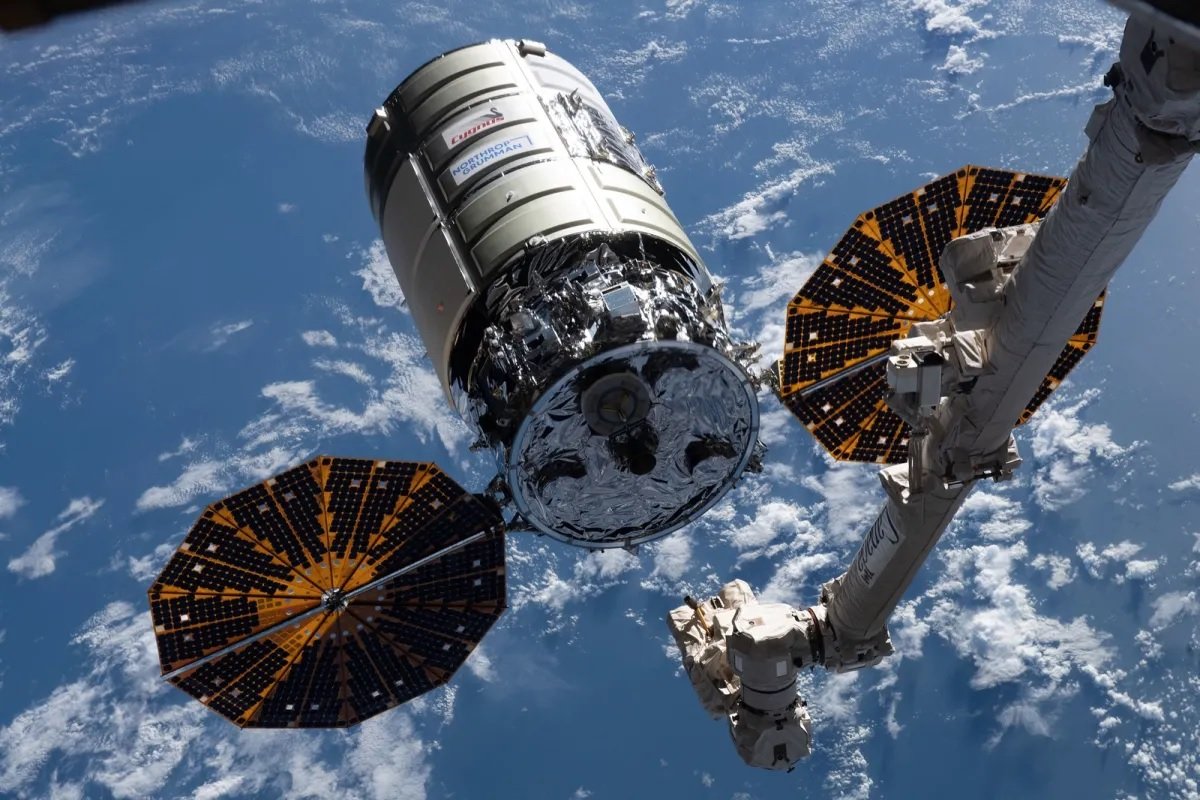
Space & Technology
CAPE CANAVERAL, FLORIDA — Northrop Grumman’s Cygnus XL cargo spacecraft has raised the orbit of the International Space Station (ISS) ahead of the planned arrival of NASA’s SpaceX Crew-13 mission. The uncrewed spacecraft, which remains berthed to the station’s Unity module, fired its gimbaled delta-velocity engine for 18 minutes on September 25. The maneuver increased the ISS orbital altitude by about 1.5 miles at apogee, the highest point of its orbit, and about 0.8 miles at perigee, the lowest point. Following the maneuver, the station was placed into an orbit measuring approximately 265.5 by 256.8 miles above Earth. Cygnus XL Performs ISS Reboost The Cygnus XL was attached to the Earth-facing port of the ISS Unity module when its engines were fired. The spacecraft’s thrust moved the combined station and cargo vehicle, allowing Cygnus XL to perform the orbital reboost. The maneuver serves two purposes: countering the gradual loss of station altitude caused by atmospheric drag in low Earth orbit and adjusting the ISS orbit for upcoming spacecraft traffic. Using a visiting spacecraft for reboosts also allows the station to reduce its reliance on its own onboard propellant for some orbital maintenance activities. The Cygnus spacecraft has previously performed similar maneuvers. The same Cygnus XL conducted another reboost on August 27, 2026, with an engine burn lasting 20 minutes and 43 seconds. That maneuver adjusted the station for the arrival of the Progress 96 cargo spacecraft. Cygnus XL Delivered More Than 11,000 Pounds of Cargo The Cygnus XL arrived at the ISS on April 13, 2026, as part of NASA’s Northrop Grumman Commercial Resupply Services-24 (CRS-24) mission. The spacecraft launched two days earlier aboard a SpaceX Falcon 9 rocket from Space Launch Complex 40 at Cape Canaveral Space Force Station, Florida. Named S.S. Steven R. Nagel, the spacecraft delivered more than 11,000 pounds of scientific research, hardware, experiments, crew supplies and other cargo to the orbital laboratory. Beyond its cargo-delivery role, the expanded Cygnus XL is capable of performing orbital reboost operations while berthed to the ISS. This provides another option for maintaining the station’s orbit during its mission. Reboost Supports Crew-13 Arrival The latest maneuver also adjusted the ISS orbital phasing for the upcoming SpaceX Crew-13 mission. Crew-13 is currently targeted to launch no earlier than October 1, 2026, aboard a Crew Dragon spacecraft launched by a Falcon 9 rocket from Space Launch Complex 40 in Florida. The four-person Crew-13 crew consists of: Jessica Watkins (NASA) — Commander Luke Delaney (NASA) — Pilot Joshua Kutryk (Canadian Space Agency) — Mission Specialist Sergey Teteryatnikov (Roscosmos) — Mission Specialist After arriving at the ISS, the crew will join Expedition 75. Cygnus XL Scheduled to Leave ISS in October The Cygnus XL is scheduled to remain attached to the ISS until October. After the Crew-13 mission arrives, the station crew will load the spacecraft with disposal materials. The spacecraft will then be unberthed from the ISS using the station’s robotic arm. It will subsequently be placed on a trajectory for destructive reentry into Earth’s atmosphere, where it will burn up. The September 25 reboost demonstrates the additional role of Cygnus XL in ISS operations beyond cargo delivery, allowing the spacecraft to contribute to station orbit maintenance while it remains attached to the orbital laboratory.
Read More → Posted on 2026-09-26 12:30:39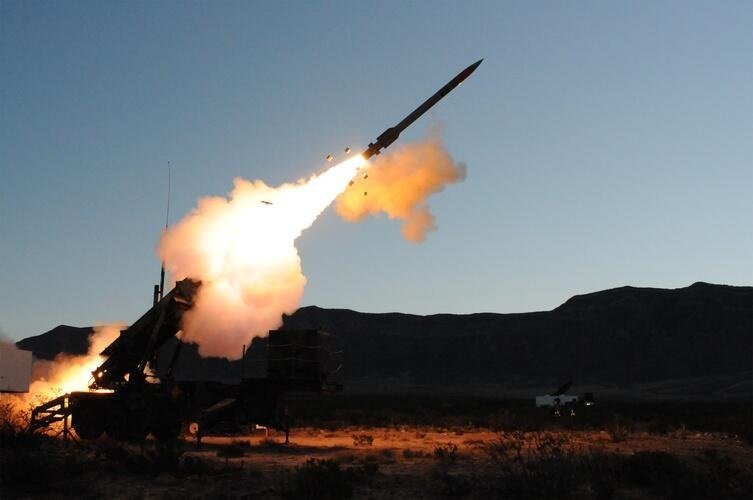
U.S
WASHINGTON — The U.S. Army has selected 30 finalists in its xTech|Apex Intercept competition to develop lower-cost interceptor technologies that could complement the Patriot air defense system. The competition is managed by the Army’s FUZE xTech program in partnership with the Capability Program Executive for Defensive Fires. It seeks technologies for countering aircraft and drones, cruise missiles, and close-range and short-range ballistic missiles. Each finalist will receive $25,000 and demonstrate its technology to Army and Department of War experts and end users between October 1 and November 30. The Army plans to select up to 18 winners by December 31. The competition has a prize pool of up to $8 million, including $7.25 million for the final round, making it the largest xTech competition to date. Related program documents have referenced a target of less than $1 million for a complete all-up interceptor, although the Army has not published a specific target price. Four Technology Categories Topic 1 – Complete Interceptors:Ten finalists are competing for prizes of up to $1 million each: RTX, Anduril Industries, AeroVironment, QinetiQ, UDD Tech, Wardstone, Greenjets, Furientis, AEON Industries, and AirX Robotics. AirX Robotics entered its Katana interceptor, while Greenjets proposed its Kestrel interceptor. RTX is the manufacturer of the Patriot system. Demonstrations are planned at White Sands Missile Range, New Mexico, in October. Topic 2 – Low-Cost Solid Rocket Motors:Seven companies are competing: Northrop Grumman, L3Harris, General Dynamics Ordnance and Tactical Systems, Ursa Major, X-Bow Systems, Australia’s DefendTex, and the United Kingdom’s Cambridge Aerospace. Topic 3 – Low-Cost Seekers:Six finalists are developing lower-cost interceptor seekers: Leonardo DRS (DRS Network & Imaging Systems), Toyon, Technology Service Corporation, Sensitic Technologies, Space ER, and Cherrill Consulting Group. Cherrill Consulting Group submitted a radio-frequency design carrying the Israel Aerospace Industries logo. Topic 4 – Fire Control and Flight Guidance:Seven finalists are competing in this category: Australia’s Advanced Navigation, Persistent Systems, Australia’s Rocket Fast Drones, Expression Networks, GuideTech, Hyperian Aerospace, and NYX Industries. Advanced Navigation proposed guidance designed to operate independently of GPS. Winners in the three component categories can receive up to $750,000 each. Demonstrations for those categories will take place in October and November at locations selected by participants. The competition was open to small, medium and large businesses from the United States and allied countries. Applicants submitted white papers of up to five pages between July 7 and July 24, along with an optional five-minute video. Beyond the prize money, the Army said finalists and winners may receive opportunities for follow-on prototype agreements, direct research-and-development contracts and other transaction authorities. The initiative is part of the Army’s broader effort to develop more affordable interceptor options that can be produced at scale and integrated with existing air and missile defense systems.
Read More → Posted on 2026-09-26 14:14:27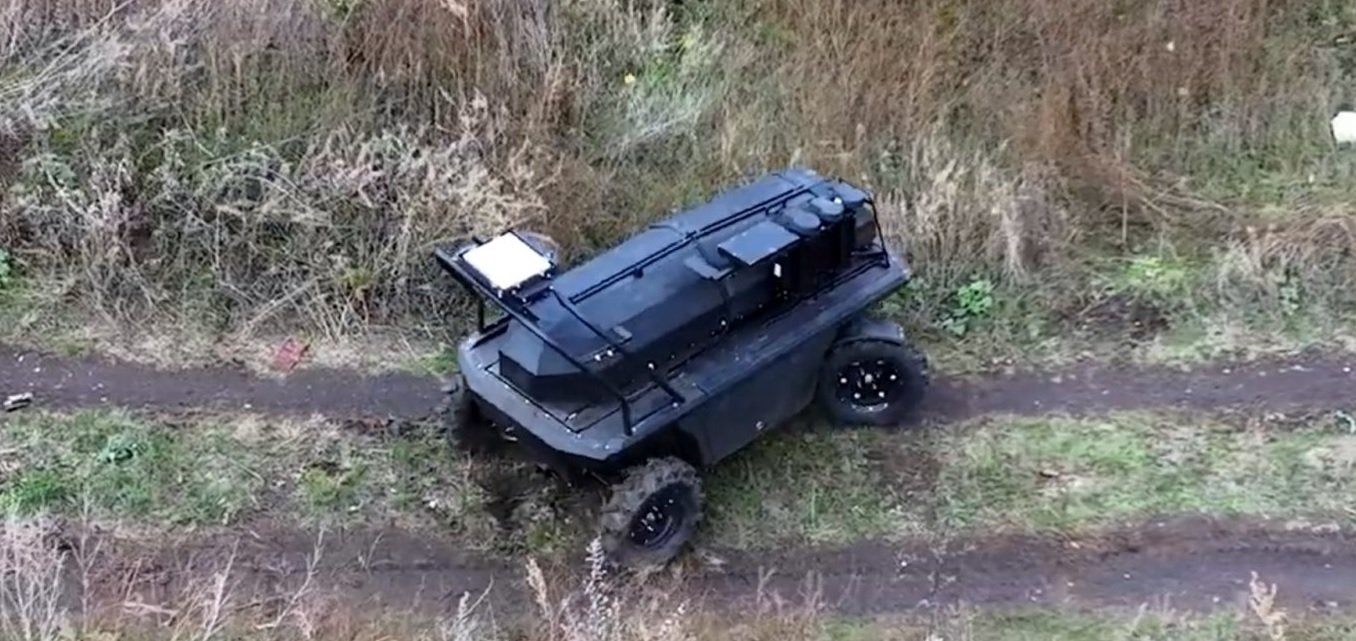
World
KYIV, UKRAINE — Ukrainian developers of the MAUL unmanned ground vehicle (UGV) say that direct feedback from frontline medics and soldiers has driven the platform’s most important improvements, rather than artificial intelligence. MAUL is a remotely controlled or partly autonomous vehicle designed to evacuate wounded soldiers from areas where Russian drones, mines and artillery make conventional medical evacuation dangerous. Kostyantyn Hushcha, chief executive of AIDronesUA, said battlefield users provide feedback that can quickly lead to design changes, particularly in vehicle movement, casualty protection, system arrangement and field repair. “These details may look less impressive than a new AI feature, but they are what determine whether an evacuation can actually be completed,” Hushcha said. AIDronesUA is continuing to examine AI and greater autonomy, but says new technology must improve reliability, patient safety and evacuation performance. MAUL Specifications and Combat Use The four-wheel-drive MAUL uses an internal-combustion engine and carries a wounded soldier inside an armored capsule secured with three straps. An internal camera allows operators to monitor the casualty. The vehicle is about 2.3 meters long, 1.45 meters wide and 0.62 meters high, with 200 mm of ground clearance. It has an operating weight of about 420 kg, a gross weight of 620 kg and a payload capacity of up to 200 kg. It uses airless metal wheels designed for difficult terrain and mine resistance. The 1st Separate Medical Battalion reports a maximum road speed of 70 km/h. Reported range figures include up to 110 km on roads and 100 km off-road, with a tactical operating radius of about 50 km. Continuous operation can last up to five hours, while standby time can reach 48 hours. The vehicle has multiple communication links, daylight and infrared cameras, and can also be used for logistics and remote weapon stations. MAUL was originally developed by Ukraine’s 1st Separate Medical Battalion. Ukrainian manufacturer DevDroid later obtained a license to produce it, with early units costing about $19,000. Recent versions have been reported at $22,600 to $33,900, depending on configuration. In November 2025, the 1st Medical Battalion used MAUL to rescue a wounded soldier who had spent 33 days behind Russian lines. The six-hour mission covered about 64 km. The vehicle drove over an anti-personnel mine that damaged a wheel and was later hit by a Russian drone, but it completed the evacuation and delivered the soldier to Ukrainian medical personnel. Six earlier attempts using other systems had failed. The unit has also reported additional MAUL evacuation missions, including six evacuations in one day in early 2026 by two vehicles that together covered about 300 km. Company and unit statements have reported roughly 100 or more evacuation missions and more than 150 people evacuated. Production Expands to Sweden At Eurosatory 2026 in June, AIDronesUA signed a strategic partnership memorandum with Swedish autonomous-systems company NJORD Technology to establish MAUL production in Sweden. The project targets production of 400 to 500 vehicles annually, primarily for Ukraine’s armed forces. The Swedish facility is intended to provide a production location outside the range of certain Russian strike drones. AIDronesUA remains responsible for development and battlefield-driven upgrades, while NJORD is providing manufacturing and engineering support. Ukrainian combat medics have also taken MAUL to Sweden to demonstrate the system to the Swedish Armed Forces’ Life Guards. It was the platform’s first deployment outside Ukraine and allowed Swedish personnel to examine its use in casualty evacuation. In August 2026, AIDronesUA also signed an agreement with U.S.-based Empery Digital Inc. to explore a strategic investment, with due diligence underway. AIDronesUA says MAUL continues to be refined mainly through direct feedback from the personnel using it in frontline evacuation missions, while AI and autonomous functions remain areas under development.
Read More → Posted on 2026-09-26 14:41:07
U.S
WASHINGTON — The U.S. Army Reserve is assessing the availability of medical, engineering, military police and logistics units for a possible deployment to U.S. Southern Command (SOUTHCOM) within the next 90 to 120 days, according to an internal Army message reviewed by CBS News. Multiple U.S. officials told CBS News that the assessment is connected to ongoing contingency planning focused on Cuba, although the Army document itself does not name Cuba. The message asks subordinate commands to report on the availability of six types of formations, with September 25 set as the deadline for responses to Army Reserve headquarters. The formations include a combat sustainment support battalion for transportation, maintenance, fuel and supplies; an engineer battalion; and an expeditionary sustainment command for theater-wide logistics. The request also includes a medical brigade, a forward resuscitative and surgical detachment for emergency surgery and trauma care, and a military police brigade responsible for capabilities such as security, detention and law-enforcement support. The document does not specify the number of troops required, possible deployment locations or the operation the units would support. There is also no indication that any of the formations have received deployment orders. The assessment therefore represents contingency planning rather than an announced deployment. SOUTHCOM declined to discuss specific operational movements or deployment timelines. The command said it continuously coordinates with the Joint Force to assess potential requirements across its area of responsibility. Earlier Military Planning The latest assessment follows earlier reports of U.S. military preparations involving Cuba. CBS News reported that U.S. forces conducted reconnaissance around Cuba’s seabed and maritime approaches. U.S. airpower components were also placed on heightened readiness and personnel were directed to pre-stage for a possible deployment, although those preparations were not carried out. In July, CBS News reported that U.S. military planners had examined several possible scenarios involving Cuba, including an Army-led air assault involving thousands of U.S. soldiers. Such planning does not itself confirm that an operation has been ordered. Rising U.S.-Cuba Tensions The military planning comes as the Trump administration has increased political and economic pressure on Havana. On September 17, the State Department announced sanctions against 11 Cuban individuals and entities, including four state-run enterprises linked to Cuba’s nickel industry, military organizations involved in research, weapons systems and naval capabilities, and three military officials. During his September 22 United Nations General Assembly speech, President Donald Trump described Cuba as an “absolutely failed state” and said his administration was seeking “fundamental change” and that “freedom will be coming to Cuba.” The Cuban delegation walked out during his remarks. Cuban Foreign Minister Bruno Rodríguez has said U.S. measures have severely affected fuel supplies and contributed to prolonged power outages. Havana has stated that there are currently no negotiations with Washington, while saying it remains willing to maintain contact. The Army Reserve assessment adds to the broader U.S. military planning in the region, but the available document does not establish a deployment, identify a specific operation or confirm that military action against Cuba has been ordered. Source : TOI
Read More → Posted on 2026-09-26 15:50:22Search
Top Trending in 24 Hours
-
 US Army Reserve Assessing Support Units for Southern Command Amid Cuba-Focused Planning
-
 Trump Rejects Iran’s Seven-Day Ceasefire Proposal, Expects Strikes to Resume After Midterms
-
 Northrop Grumman’s Cygnus XL Raises International Space Station Altitude by 1.5 Miles Ahead of Crew-13
-
 UK Becomes First International Partner to Access Ukraine’s Avengers Labs AI Platform
-
 Ukraine’s MAUL Evacuation Robot Gets Key Upgrades From Frontline Feedback, Not AI
-
 Germany’s Bundeswehr Receives First S1 Puma Infantry Fighting Vehicle from Second Production Batch
-
 U.S. Army Selects 30 Finalists in $8 Million Competition for Low-Cost Patriot Interceptor Technologies
Top Trending in 4 Days
-
 China’s Secretive Shenlong Spaceplane Repeatedly Releases and Recaptures Satellite
-
 From Lab to Battlefield: U.S. Military Confirms Use of Laser Weapons Against Drones in the Strait of Hormuz and Along Southern Border
-
 UK Air Force Hawk T2 Trainer Aircraft Crashes Near Valley After Takeoff, Both Pilots Eject Safely
-
 U.S. Space Force Awards Impulse Space $28 Million Contract for 2029 Orbital Surveillance Mission
-
 US and Australia Investigate F-35 Components Diverted to Hong Kong
-
 France to Send Troops, Radars and Defence Systems to Protect Saudi Arabia’s Yanbu Oil Terminal
-
 Russia Aerospace Forces Receives New Batch of Su-57 Fighters With Updated Technical Configuration
-
 U.S. Approves Patriot Missile Production License for Ukraine Following Trump-Zelensky Meeting