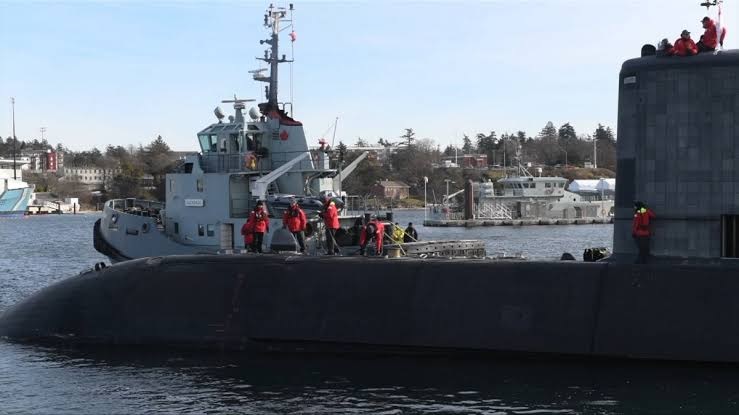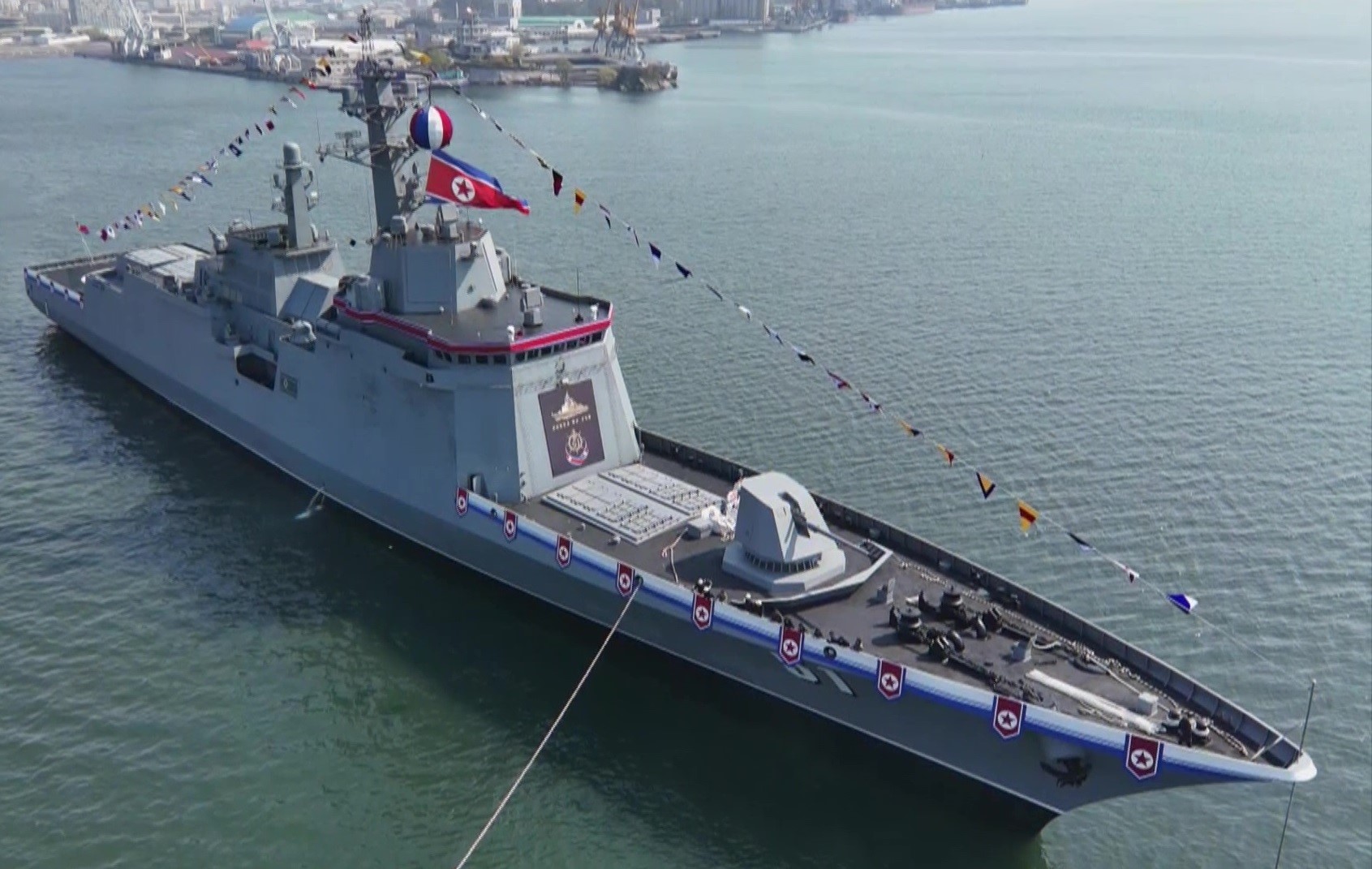
PYONGYANG — June 06, 2026 : North Korea has commenced sea trials of its second Choe Hyon-class guided-missile destroyer, the Kang Kon, marking another milestone in the country's ongoing naval modernization program. State media confirmed on June 6, 2026, that the 5,000-ton warship had begun its maiden sea trials following navigation and performance tests supervised by Kim Jong Un on June 4.
Kim Jong Un, accompanied by his daughter Kim Ju Ae, boarded the destroyer during the trials to inspect its maneuverability, navigation systems, and combat capabilities. During the visit, he reiterated plans to strengthen the Korean People's Army Navy (KPAN) under a broader five-year national defense strategy and outlined ambitions to develop new underwater weapons systems and larger surface combatants, including future 10,000-ton destroyers.
North Korea's First Indigenous Destroyer Program
The Choe Hyon class represents North Korea’s first domestically designed and built destroyer class. The lead ship, Choe Hyon (Hull No. 51), was launched at the Nampo Shipyard in April 2025 and completed its pre-commissioning trials in March 2026.
Those trials included maneuverability assessments, combat system evaluations, and live-fire missile launches from the vessel’s vertical launch system (VLS). North Korean officials stated that the tests validated the ship’s operational capabilities ahead of entry into service.
The second vessel, Kang Kon (Hull No. 52), was constructed at the Chongjin Shipyard and is expected to enter service alongside the lead ship following completion of sea trials.
Plan to Field 12 Destroyers by 2032
According to Kim Jong Un, North Korea aims to field a fleet of 12 destroyers by 2032. Meeting that target would require the construction of approximately two destroyers per year, an ambitious pace that would place North Korea’s destroyer production rate ahead of the current U.S. output of roughly 1.6 destroyers annually.
If achieved, a 12-ship destroyer fleet would surpass the current destroyer inventories of several established naval powers, including India (11 destroyers), France (10), Russia (9), and the United Kingdom (6) in terms of numbers.
Defense analysts, however, note that while the new North Korean warships are significantly more capable than many older Russian and European vessels, they remain less advanced than the latest destroyers operated by the United States, China, Japan, and South Korea.
Heavily Armed Surface Combatants
The Choe Hyon-class destroyers displace approximately 5,000 tons, measure around 144–145 meters in length, and feature a beam of about 16 meters. The vessels are equipped with a helicopter flight deck and are designed to perform anti-aircraft, anti-ship, anti-submarine, and land-attack missions.
One of the class's most notable features is its extensive missile armament. The Kang Kon is equipped with approximately 74 vertical launch system (VLS) cells, including:
- 32 small cells
- 12 medium cells
- 20 large cells
- 10 very large cells
These launchers are capable of deploying a variety of guided cruise missiles and ballistic missiles.
For comparison:
- Arleigh Burke-class (United States) – 96 VLS cells
- Zumwalt-class (United States) – 80 VLS cells
- Type 052D (China) – 64 VLS cells
- Udaloy-class (Russia) – 64 VLS cells
Additional onboard systems include phased-array radars, four countermeasure launchers, a 127 mm or 130 mm naval gun, Pantsir-ME close-in weapon systems (CIWS), two AK-630 CIWS mounts, and torpedo launchers. North Korean sources have also indicated that some of the missiles deployed by the class may have nuclear-capable variants.
Analysts have further noted that the Kang Kon appears to feature a previously unseen rocket launcher system, which may be intended for anti-drone or anti-frogman defense operations.
North Korean officials have reportedly questioned the utility of large naval guns on modern destroyers. As a result, future ships built after the Kang Kon may have their primary gun removed to make room for additional VLS cells, increasing missile capacity.
From Launch Accident to Sea Trials
The destroyer’s journey to sea trials followed a major setback during construction.
Built at the Hambuk Shipyard in Chongjin, the vessel suffered a partial capsize during its launch ceremony on May 21, 2025, resulting in hull damage and raising concerns about the future of the project.
Kim Jong Un, who witnessed the incident, described it as a result of serious negligence and irresponsibility. The accident led to the arrest of four shipyard officials, including senior engineering and construction personnel.
Despite concerns that the vessel could be a total loss, North Korean engineers successfully refloated the ship. It was subsequently towed to the Rajin Shipyard on June 8, 2025, where it underwent extensive repair work in dry dock.
Following repairs, the destroyer was officially relaunched on June 12, 2025, during a ceremony attended by Kim Jong Un and Kim Ju Ae.
The vessel was named Kang Kon in honor of the first Chief of the General Staff of the Korean People's Army, who was killed during the Korean War.
Commissioning Planned After Successful Trials
Following the successful navigation tests, Kim Jong Un directed that both the Choe Hyon and Kang Kon be commissioned into active naval service as soon as possible.
The two destroyers are expected to form the foundation of North Korea’s expanding surface fleet as the country continues efforts to strengthen its maritime capabilities, missile forces, and naval deterrence posture under its long-term military modernization strategy.
——— End of Article ———