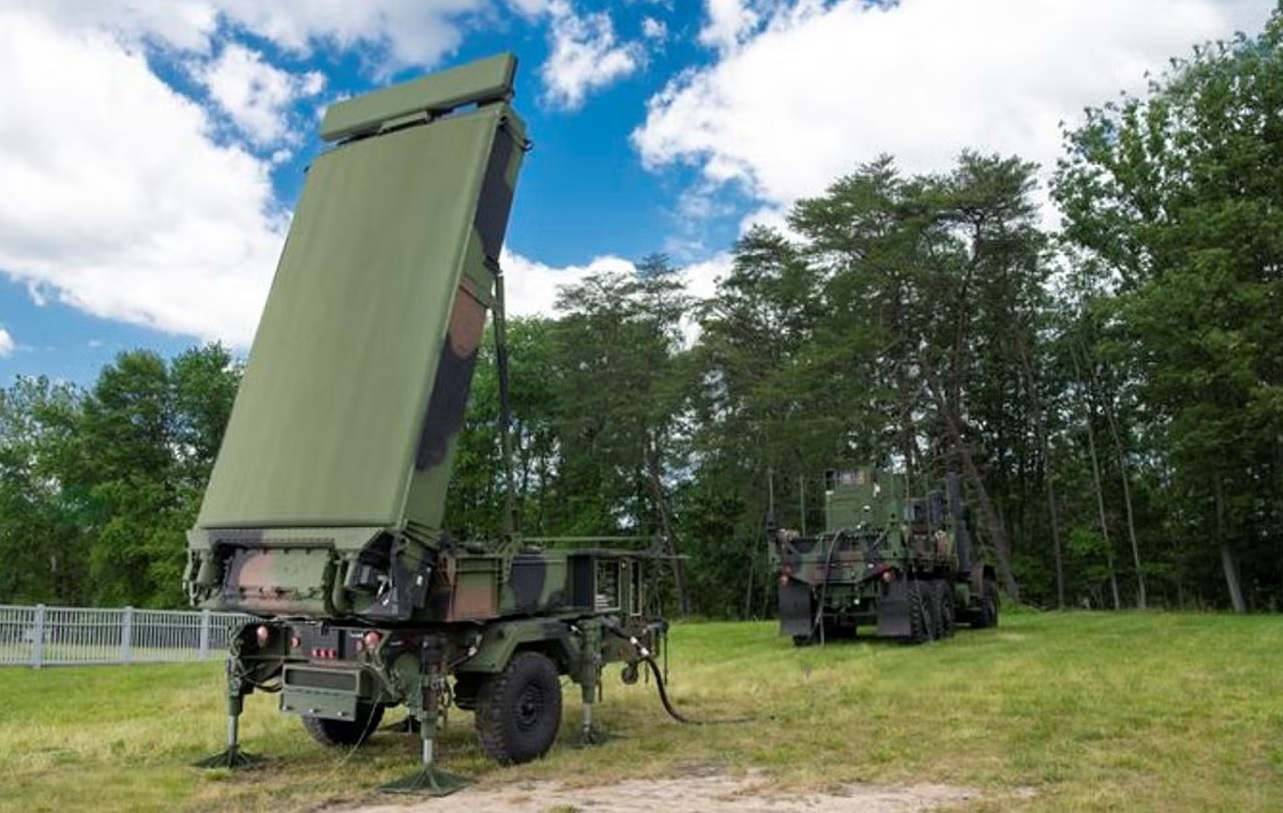
WASHINGTON — June 04, 2026 : Northrop Grumman is expanding production and international marketing efforts for its AN/TPS-80 Ground/Air Task-Oriented Radar (G/ATOR) as demand increases for mobile, multi-mission air defense sensors capable of countering drones, cruise missiles, aircraft, artillery projectiles, and other aerial threats.
The company announced on June 4, 2026, that more than 40 G/ATOR systems have already been delivered and are operational with the U.S. Marine Corps and U.S. Air Force. Under existing contracts, Northrop Grumman is scheduled to deliver a total of 60 systems by 2029 and stated that its production lines are operating at full-rate production capacity, with the ability to support additional international orders.
The G/ATOR program represents a major modernization effort for U.S. military ground-based radar capabilities, replacing multiple legacy radar systems with a single platform capable of performing several missions simultaneously while reducing logistical requirements for deployed forces.
Multi-Mission Radar Replacing Legacy Systems
A defining feature of the AN/TPS-80 G/ATOR is its ability to consolidate the functions of five separate radar systems into a single mobile platform operating in the S-band frequency range.
The radar is capable of conducting air surveillance, air defense, target tracking, fire control support, counter-battery operations, and short-range threat detection at the same time. This allows military units to reduce the number of radar systems, operators, maintenance personnel, spare parts inventories, and communications infrastructure required in operational areas.
For the U.S. Marine Corps, the system is replacing aging radar assets, including the AN/TPS-59 long-range surveillance radar and the AN/MPQ-62 Sentinel, providing a unified solution for multiple battlefield missions.
By consolidating these capabilities into one platform, military forces can simplify deployments, reduce logistical burdens, and improve operational flexibility, particularly during expeditionary operations where mobility and rapid deployment are critical.
Advanced AESA Radar Technology
At the core of G/ATOR is an Active Electronically Scanned Array (AESA) radar architecture equipped with advanced Gallium Nitride (GaN) transmit and receive modules.
Unlike conventional mechanically scanned radars that rely on rotating antennas, the AESA system electronically steers radar beams within milliseconds, enabling continuous 360-degree surveillance without interruption. This design allows the radar to conduct surveillance, target tracking, and fire control tasks simultaneously.
Northrop Grumman states that the radar can track more than 500 targets simultaneously, including artillery rounds, drones, helicopters, cruise missiles, and fast-moving aircraft. The system can also perform immediate fire-control calculations for identified threats while maintaining broad-area surveillance.
The radar offers a detection range exceeding 160 kilometers (100 miles) against aerial targets, providing commanders with early warning and engagement opportunities across a wide operational area.
The GaN-based AESA architecture also enhances survivability in contested electromagnetic environments. Through rapid frequency changes and adaptive beam management, the system is designed to resist electronic jamming, suppression attempts, and other electronic warfare threats that can degrade older radar systems.
Designed for Mobility and Rapid Deployment
Mobility and survivability were key design priorities during the development of G/ATOR.
The system is divided into three transportable components: the Radar Equipment Group (REG), Communications Equipment Group (CEG), and Power Equipment Group (PEG). This modular design allows the radar to be rapidly transported and deployed in expeditionary environments.
The complete system can be airlifted by a single C-130 Hercules transport aircraft, three CH-53E Super Stallion helicopters, or MV-22B Osprey tilt-rotor aircraft. It can also be towed using standard Medium Tactical Vehicle Replacement (MTVR) trucks.
According to Northrop Grumman, trained personnel can unpack, assemble, and begin operations in less than 45 minutes after arriving at a deployment site.
The emphasis on mobility reflects lessons observed in recent conflicts, where stationary radar systems have become increasingly vulnerable to long-range precision weapons, cruise missiles, loitering munitions, and anti-radiation missiles. Modern military doctrine increasingly favors mobile air defense assets capable of relocating frequently to reduce the risk of detection and targeting.
Expanding Role in Counter-Drone Operations
The growing use of unmanned aerial systems (UAS) has increased the importance of radar systems capable of detecting small, low-flying targets.
Northrop Grumman says G/ATOR incorporates advanced digital signal processing and filtering technologies that enable the radar to detect and track small drones operating in complex environments. The system is designed to distinguish legitimate aerial threats from terrain, buildings, vegetation, wildlife, and other sources of radar clutter that often generate false alarms for older radar systems.
This capability allows operators to maintain awareness of both conventional air threats and emerging drone threats using a single sensor network.
Recent conflicts have demonstrated the widespread use of small reconnaissance drones, first-person-view (FPV) attack drones, loitering munitions, and other unmanned systems, increasing demand for radar platforms capable of supporting both traditional air defense missions and counter-drone operations simultaneously.
Integration with Air Defense Networks
Both the U.S. Marine Corps and U.S. Air Force have integrated G/ATOR into broader air and missile defense architectures.
The radar provides tracking and targeting data directly to interceptor networks, including the National Advanced Surface-to-Air Missile System (NASAMS), as well as other short-range and medium-range air defense systems.
The system also supports integration with joint command-and-control networks, allowing military commanders to build a common operational picture by combining information from multiple sensors and weapons systems across the battlefield.
This networked approach enables faster threat detection, improved target tracking, and more effective coordination between air defense units.
International Expansion Efforts
With more than 40 systems already fielded, 60 systems under contract through 2029, and production operating at full rate, Northrop Grumman is positioning G/ATOR as a mature and readily available solution for international customers.
The company is actively pursuing export opportunities among countries seeking modern radar capabilities without the delays often associated with developmental programs.
Potential customers include NATO members that have accelerated investments in air defense since 2022, as well as Indo-Pacific nations seeking improved surveillance and air defense capabilities amid evolving regional security challenges.
Growing demand for integrated air and missile defense networks has increased interest in radar systems capable of detecting and tracking a wide range of threats from a single platform. The ability to counter drones, cruise missiles, aircraft, artillery projectiles, and other aerial threats while maintaining high mobility is expected to remain a key factor driving international interest in the AN/TPS-80 G/ATOR radar system.
——— End of Article ———