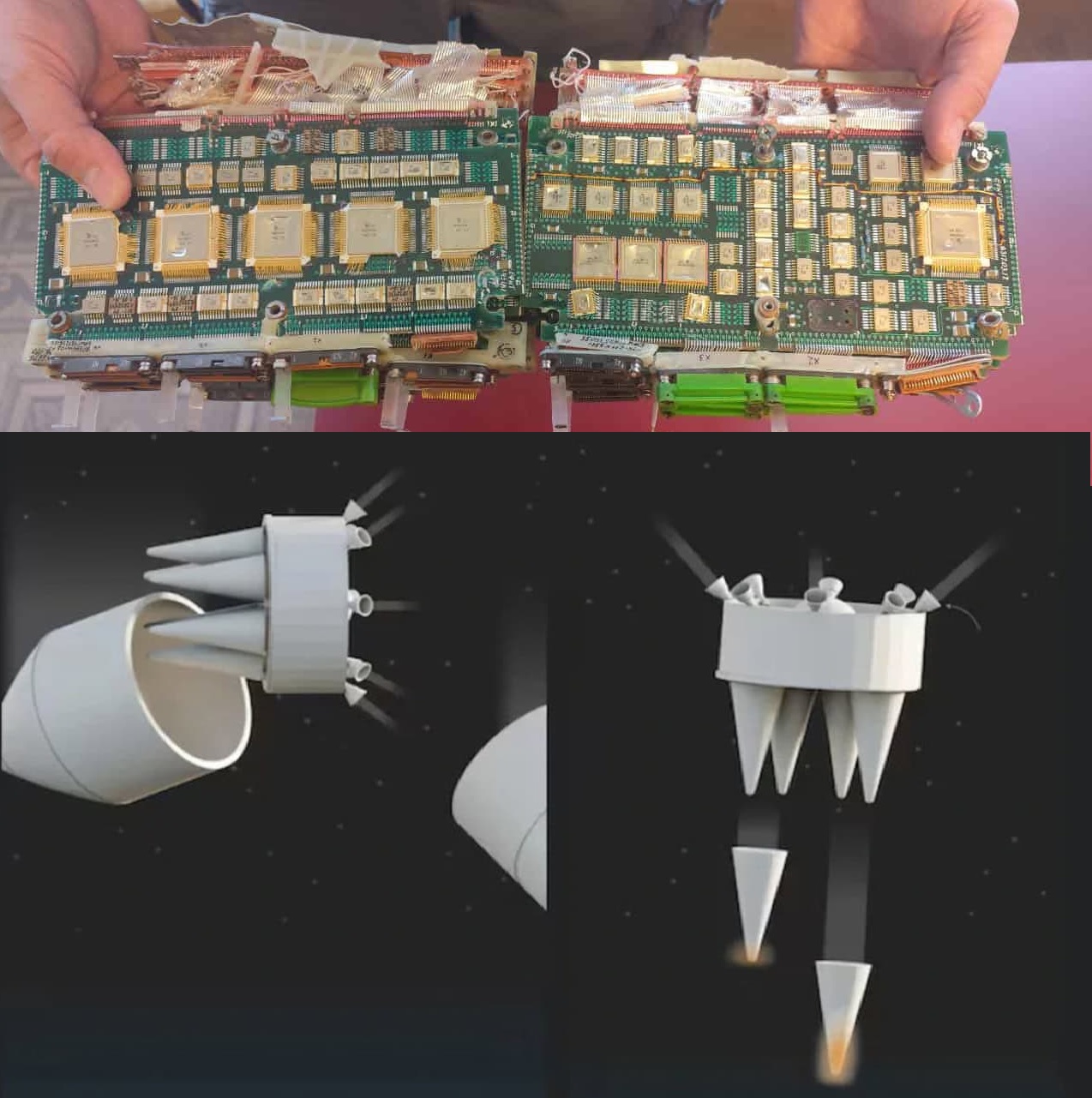
KYIV, Ukraine — May 29, 2026 : Ukrainian specialists have completed a detailed technical assessment of debris recovered from a Russian Oreshnik medium-range ballistic missile, concluding that the system relies entirely on Russian and Belarusian electronic components manufactured before 2017. The findings were presented during a briefing in Kyiv and later shared with European ambassadors following missile strikes on the Lviv region on the night of January 8–9, 2026, and a subsequent attack on Bila Tserkva.
Missile Debris Analysis
According to Ukrainian experts, a section of the missile body detached during flight and did not completely burn up, enabling specialists to recover and examine internal systems. Investigators studied surviving fragments of the processor unit and the main onboard computer board, which are responsible for controlling flight operations and transmitting signals to the missile’s engines and aerodynamic control surfaces.
Technical examination found that all printed circuit boards and microchips in the processor unit were manufactured between 2014 and 2016, leading specialists to conclude that the missile itself was assembled no later than 2017. Officials stated that the recovered components provide insight into the missile’s technological origin and production timeline.
Belarusian and Russian Components Identified
The investigation found no modern American, Chinese, or European-made electronic components from 2024 or 2025 in the recovered sections of the missile. Ukrainian specialists noted that this differs from Russian drones and some precision-guided systems where foreign electronics have previously been identified.
Instead, analysts reported that all recovered electronics were of Russian and Belarusian origin. Components manufactured by the Minsk-based Integral plant were identified on multiple circuit boards recovered from the missile. Integral is one of Eastern Europe’s largest producers of integrated circuits, semiconductor devices, and electronic components used in telecommunications and military systems.
According to investigators, the majority of the missile’s electronic component base originated from industrial facilities located in Moscow and the surrounding Moscow region, indicating continued reliance on domestic production chains for critical missile electronics.
Modernization of Existing Missile Systems
Based on the technical findings, Ukrainian experts assessed that the Oreshnik represents a significant modernization of existing Soviet or Russian missile systems rather than a fundamentally new technological development. Specialists stated that the missile appears to incorporate modifications and updated configurations built around older technological foundations instead of newly developed electronic frameworks.
The assessment also contradicts Russian claims describing the Oreshnik as an entirely new missile platform, with Ukrainian analysts arguing that the recovered electronics indicate an adaptation of pre-existing technologies.
Missile Characteristics and Guidance System
The Oreshnik is classified as a medium-range strategic ballistic missile with an estimated operational range of between 3,000 and 5,000 kilometers. Ukrainian specialists stated that the missile was originally designed as a carrier for nuclear payloads and therefore exhibits guidance characteristics commonly associated with strategic ballistic systems.
The missile uses a fully passive inertial navigation system based on a gyroscopic guidance module and does not rely on active satellite navigation networks such as GPS. According to experts, coordinates are preloaded into the onboard computer before launch, allowing the missile to autonomously navigate during flight and toward its designated target area.
MIRV Capability and Warhead Configuration
Technical analysis showed that the missile is equipped with a separable warhead bus capable of MIRV (Multiple Independently Targetable Reentry Vehicle) deployment. Ukrainian experts stated that the system can release up to six guidance units, each carrying six submunitions, creating a total of 36 individual elements intended for simultaneous delivery.
In non-nuclear variants, these submunitions are inert cast-iron dummies weighing between 50 and 100 kilograms. Specialists stated that, in the absence of explosive payloads, the system’s destructive effect is limited primarily to kinetic impact against specific targets.
Data gathered from recent attacks showed different deployment methods. During the January strike on the Lviv region, the missile’s warhead reportedly separated at an altitude of approximately five to six kilometers, causing wide dispersal of submunitions. During the later attack on Bila Tserkva, separation occurred at a significantly lower altitude, concentrating impacts in a smaller area, including a cluster of garages.
Interception Challenges
Military specialists stated that the Oreshnik presents significant interception difficulties because of its ballistic trajectory, high speed, and MIRV configuration involving multiple descending elements. Ukrainian experts assessed that conventional air defense systems, including Patriot PAC-3 batteries, would face difficulty intercepting the missile once the warhead separates.
According to the assessment presented in Kyiv, even specialized high-altitude missile defense systems such as THAAD are not considered capable of reliably neutralizing a MIRV-configured missile carrying dozens of independently descending reentry elements. Ukrainian officials said the findings were shared with European diplomats to highlight the role of Belarusian-produced components in supporting Russia’s missile manufacturing supply chain.
——— End of Article ———