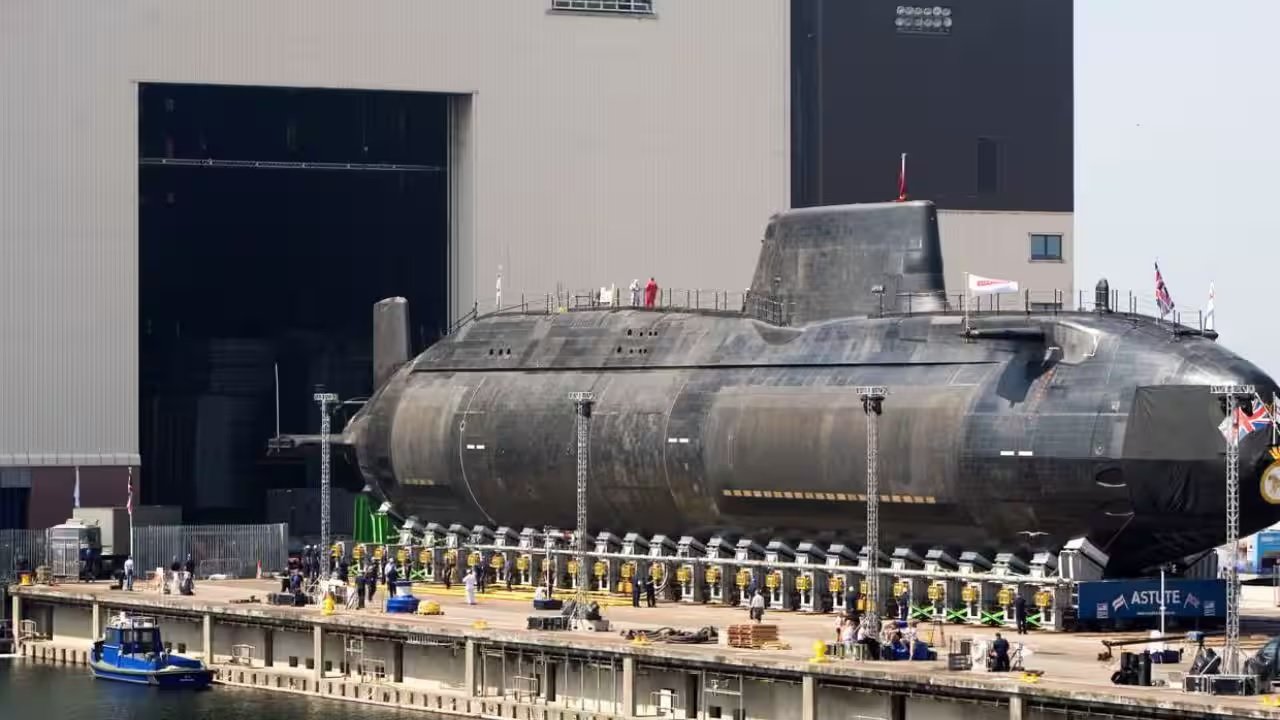
WASHINGTON — May 12, 2026 : The United States Department of the Navy has officially confirmed that its future Trump-class battleships will utilize nuclear propulsion systems, according to the Navy’s newly released annual 30-year shipbuilding plan. The decision formally redesignates the project as a new class of nuclear-powered guided-missile battleships under the hull classification BBGN.
The development, first reported by USNI News and further detailed by The War Zone, represents the first official confirmation that the Trump-class vessels will incorporate nuclear reactors as part of the administration’s broader “Golden Fleet” naval expansion initiative announced in late 2025.
Procurement Timeline and Fleet Expansion
Under the current procurement schedule, the lead vessel of the class, USS Defiant (BBG-1), is expected to be ordered during fiscal year 2028, with commissioning projected for 2036.
The Navy plans to acquire a total of 15 Trump-class battleships between fiscal years 2028 and 2055. Current construction planning anticipates the production of approximately one vessel every two years, although procurement pauses are expected during fiscal years 2030 and 2031.
Naval officials have stated that the Trump-class will serve as a core component of the Navy’s long-term fleet expansion strategy and will operate alongside aircraft carrier strike groups rather than replace existing destroyers.
Cost and Industrial Requirements
The Trump-class program is projected to become the most expensive surface combatant effort in U.S. naval history. Preliminary estimates place the cost of each vessel at approximately $17 billion due to the integration of nuclear propulsion systems, hypersonic missile launch capability, electromagnetic weapons, and advanced directed-energy combat systems.
By comparison, construction costs for Gerald R. Ford-class aircraft carrier vessels generally range between $13 billion and $15 billion per ship.
The project is also expected to place considerable strain on the United States naval industrial base. Currently, Newport News Shipbuilding remains the only U.S. shipyard capable of constructing nuclear-powered surface warships.
The shipyard is already heavily committed to the construction of Ford-class aircraft carriers as well as Columbia-class submarine and Virginia-class submarine programs, raising concerns regarding production capacity for the future 35,000-ton battleships.
Design and Technical Specifications
According to specifications included in the shipbuilding plan, the Trump-class battleships will displace approximately 35,000 tons, making them nearly three times larger than modern Arleigh Burke-class destroyer Flight III destroyers.
The ships are expected to measure between 256 and 268 meters in length, or approximately 840 to 880 feet, while maintaining speeds exceeding 30 knots to enable operations alongside carrier strike groups.
The class will also include expanded aviation facilities capable of supporting aircraft such as the Bell Boeing V-22 Osprey and future vertical lift helicopter platforms.
Weapons and Combat Systems
The Trump-class battleships are designed primarily as long-range strike platforms equipped for conventional, nuclear, and hypersonic warfare missions.
The ships’ primary strike capability will center on a 128-cell universal vertical-launch system capable of deploying conventional cruise missiles, nuclear-capable weapons, and hypersonic missile systems. Planned armaments include the Conventional Prompt Strike (CPS) hypersonic missile system and the Surface-Launched Cruise Missile-Nuclear (SLCM-N).
Secondary weapons systems are expected to include a 32-megajoule electromagnetic railgun, two 127-millimeter naval artillery mounts, and advanced directed-energy combat lasers designed to intercept drones, cruise missiles, and aerial threats.
Naval command officials have stated that the BBGN class will function not only as a strike platform but also as a decentralized command center capable of autonomous deployment during open-ocean operations. Advanced communications and electronic warfare systems are expected to support distributed naval warfare operations across large maritime regions.
Nuclear Propulsion Decision
The Navy’s decision to adopt nuclear propulsion was driven primarily by the significant electrical demands generated by the ship’s onboard combat systems.
Officials concluded that conventional propulsion systems would not provide sufficient sustained electrical output for electromagnetic railguns, high-powered combat lasers, and advanced electronic warfare suites.
The use of nuclear reactors is also expected to support continuous operation of directed-energy defenses, allowing the fleet to reduce reliance on expensive interceptor missiles during large-scale drone or cruise missile attacks.
The final approval for nuclear propulsion followed leadership changes within the Department of the Navy, including the departure of former Navy Secretary John Fallon, who had previously described the nuclear option as unlikely because of cost and industrial limitations.
Despite earlier internal concerns regarding technical complexity and long-term expense, the administration directed the Navy to pursue maximum technological capability for the Trump-class program as part of broader fleet modernization efforts.
——— End of Article ———