ISTANBUL, — May 24, 2026 : A Turkish defense research startup led by researcher Yunus İnce has developed a spray-applicable radar-absorbing material (RAM) named Kürşat 3.0, aimed at reducing the radar visibility of drones and other aircraft by absorbing electromagnetic signals instead of reflecting them back to radar systems.
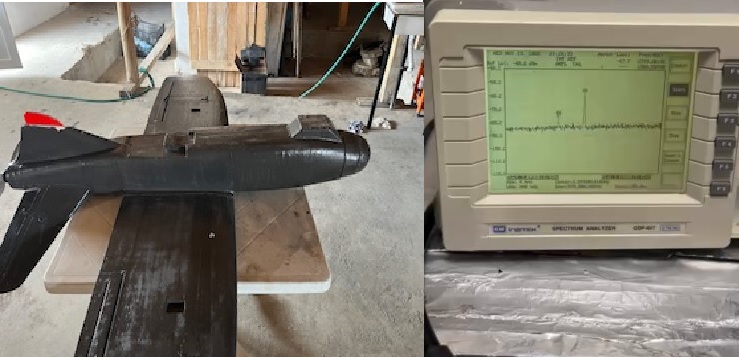
The material, developed over a seven-year period, was recently presented to The Defence Blog through technical specifications and test footage. Unlike traditional stealth coatings that require engineered composite panels bonded to aircraft structures, Kürşat 3.0 is designed to be sprayed directly onto aircraft surfaces, functioning similarly to paint while offering radar-absorption properties.
Development Focused on Practical Stealth Application
Modern stealth aircraft reduce radar cross-section (RCS) through a combination of specialized geometry and radar-absorbing materials. Platforms such as the F-117 Nighthawk, F-35 Lightning II, and B-21 Raider are engineered to redirect radar waves away from detection systems while absorbing residual electromagnetic energy through advanced coatings.
Conventional radar-absorbing materials are generally manufactured as precision composite panels that must be carefully integrated into aircraft structures. These systems involve extensive maintenance, inspection requirements, and high production costs, making them difficult to adapt for smaller unmanned platforms.
Kürşat 3.0 seeks to address this limitation by eliminating the need for bonded composite materials. According to the developer, the spray-on coating conforms to curved and irregular airframe geometries without seams or gaps that could reduce absorption performance. The material also reportedly adds negligible weight and does not require structural modification of the platform.
Material Composition and Radar Absorption Claims
According to İnce, Kürşat 3.0 uses microscopic pore structures derived from naturally occurring volcanic materials, particularly basalt and pumice. These materials are engineered to trap incoming electromagnetic waves and convert them into thermal energy rather than reflecting them toward radar receivers.
Basalt and pumice are inexpensive and widely available materials that have drawn academic interest in recent years because of their electromagnetic absorption properties. Their porous structure may support broadband radar-wave attenuation when engineered for defense-related applications.
Recent testing footage shared by the startup reportedly demonstrated an attenuation level of 43.2 decibels (dB), indicating the amount of radar energy absorbed by the coating. If independently verified across operational radar frequency bands, the result would place Kürşat 3.0 above many radar-absorbing coatings documented in academic literature, where attenuation figures between 20 and 30 dB are commonly reported under standardized conditions.
However, no independent third-party testing or publicly available verification of the reported performance figures has yet been released.
Relevance to Modern Drone Warfare
The emergence of low-cost drones in modern conflict has increased interest in technologies that reduce detection and improve survivability. The ongoing conflict in Ukraine demonstrated how commercially accessible unmanned aerial systems can support reconnaissance missions, attack logistics networks, and place sustained pressure on armored formations and supply routes.
In response, militaries have expanded radar-based detection systems, electronic warfare networks, signal-jamming capabilities, and layered interception methods, including kinetic interceptors, laser systems, microwave-based defenses, and other counter-drone technologies.
Defense specialists note that a radar-absorbing coating alone does not create full stealth capability, particularly for quadcopters and commercially available drones that feature exposed rotor systems and airframes not optimized to deflect radar signals. However, reducing radar returns may shorten detection ranges and complicate tracking, potentially improving survivability in contested environments.
Turkey’s Expanding Defense Technology Ecosystem
The development of Kürşat 3.0 emerges within a growing Turkish defense industry that has increasingly focused on unmanned technologies and indigenous defense manufacturing.
Turkey gained international recognition through the operational deployment and export success of the Bayraktar TB2 unmanned combat aircraft. Meanwhile, the Bayraktar Kızılelma, which entered service with the Turkish Armed Forces in 2025, incorporates radar-absorbing technologies directly into its airframe design.
Turkey’s defense exports reached $7.1 billion in 2024, reflecting continued government investment in domestic defense capabilities and creating opportunities for smaller firms developing enabling technologies for unmanned systems and aerospace applications.
——— End of Article ———