
U.S
WASHINGTON, — U.S. intelligence agencies have identified Alice Huang, also known as Huang Le, a senior executive at Singapore-based data center company Megaspeed, as a suspected Chinese intelligence asset who maintained a close relationship with Nvidia CEO Jensen Huang, according to The New York Times. The findings emerge as Megaspeed faces a U.S. investigation into the alleged diversion of restricted AI chips to China. Alice Huang, a Chinese citizen, was reportedly monitored by U.S. intelligence agencies for approximately a year. Officials concluded that she was passing information to Beijing. Her relationship with Jensen Huang raised concerns about possible access to Nvidia’s business plans and discussions concerning U.S. chip export policies. The two are not related. Megaspeed Faces U.S. Chip Export Investigation Megaspeed purchases Nvidia-powered computing equipment and rents data center capacity to businesses, including China’s Alibaba. Its Malaysian sister company purchased at least $4.8 billion worth of advanced AI equipment containing Nvidia technology between June 2024 and February 2026, according to trade records. The investigation began in late 2024 after a U.S. Commerce Department official visited a Megaspeed-operated data center in Malaysia and found Nvidia equipment still packed in boxes, raising suspicions of possible unauthorized shipments. Singaporean authorities questioned Alice Huang in 2025 before releasing her. Earlier in 2026, the Commerce Department transferred the investigation to the U.S. Justice Department. Investigators are examining whether chips or computing capacity reached China in violation of export restrictions. Trump Briefed on Intelligence Findings President Donald Trump was briefed on the intelligence findings in 2025 but reportedly took no direct action. Officials were concerned about disrupting Nvidia’s business operations and complicating trade relations with China. U.S. authorities reportedly did not provide Jensen Huang with a defensive briefing, a warning issued to Americans believed to be targets of foreign intelligence operations. Officials assessed that the Nvidia CEO was unaware of Alice Huang’s alleged activities. Surveillance of Alice Huang has continued, while companies affiliated with Megaspeed have continued purchasing Nvidia products. Nvidia and Megaspeed Respond Nvidia spokesperson John Rizzo said Jensen Huang’s interactions with Alice Huang were normal business engagements, noting that the CEO speaks with thousands of customer executives annually. Rizzo said Megaspeed receives ordinary business information, not sensitive trade secrets or information relevant to national security. Nvidia also stated that allegations of Megaspeed diverting chips to China were investigated and debunked the previous year. The company continues to list Megaspeed as a cloud partner. Megaspeed said it takes the allegations seriously, has retained outside legal counsel to conduct an internal investigation and will cooperate with the U.S. government. The Chinese government rejected the espionage allegations. Liu Chang, a spokesperson for the Chinese Embassy in Washington, described them as "groundless smears and slanders." Investigation Continues Photographs and accounts from industry events reportedly show Alice Huang and Jensen Huang attending the same gatherings, including a Taipei bar in June 2024 and business dinners in the region. Alice Huang previously held positions connected to Chinese state media and investment firms before joining Megaspeed, which was spun out of a Chinese gaming company in 2023. The intelligence findings are based on information from people briefed on the matter. No public evidence has been presented that Jensen Huang shared classified or sensitive national security information, and Nvidia has denied any improper disclosure. The Justice Department investigation remains ongoing.
Read More → Posted on 2026-10-29 17:03:04
U.S
HONOLULU, — Gen. Xavier Brunson, commander of United Nations Command, Combined Forces Command and U.S. Forces Korea (USFK), has warned that traditional military communication networks could fail within 48 hours of a conflict on the Korean Peninsula if they rely on uninterrupted satellite communications, unlimited bandwidth and fiber-optic infrastructure. Speaking at the AFCEA TechNet Indo-Pacific 2026 conference in Honolulu, Hawaii, on October 27, Brunson described the peninsula as one of the world's most heavily contested electromagnetic environments, where U.S. and allied forces face daily electronic attacks. “Our adversaries practice electronic attack daily. They jam GPS in the West Sea. They attempt to blind our servers, our sensors, and our networks,” Brunson said. He highlighted the threat from North Korea, which considers South Korea its principal enemy, and noted that China also possesses advanced electronic attack capabilities in the region. U.S. Military Develops Resilient Communication Networks Brunson said communication systems dependent on uninterrupted satellite links, unlimited bandwidth and fiber-optic connections would not survive 48 hours on the peninsula during a conflict. To address these vulnerabilities, the U.S. military is deploying proliferated low-Earth-orbit (LEO) satellite networks, high-frequency (HF) radio systems and terrestrial mesh networks. The layered approach is designed to maintain command and control when primary communication links are jammed or disrupted. He stressed that information must move at the “speed of relevance,” measured in milliseconds rather than minutes or hours, leaving no 10-minute buffer to troubleshoot communication failures during a crisis. Data-Centric Security and Faster Information Sharing Brunson called for a shift from network-centric security to data-centric security, explaining that military systems must “tag the payload and not the pipe.” Under this approach, information from allied sensors can be verified and shared across combined networks without creating new secure communication pathways for every exchange. Brunson said a South Korean radar detecting an incoming missile should have its track verified and transmitted to a coalition fires network within milliseconds. He also called for lightweight, jam-resistant waveforms with low probability of intercept (LPI) and low probability of detection (LPD), open application programming interfaces (APIs), and edge sensors that integrate with joint mission networks without vendor lock-in. Defense Industry Urged to Design for Combined Operations Brunson urged defense technology companies to visit the Korean Peninsula to understand its operational environment. He stressed that systems must be designed for combined U.S. and allied operations from the beginning rather than adding partner interfaces after contracts are signed. “We can no longer design exquisite systems for pure US enclaves and then try to bolt on partner interface after the contract is signed. We must design combined from the first line of code,” he said. Addressing artificial intelligence and decision-making, Brunson said adversaries are counting on bureaucratic policies, classification silos and proprietary architectures to slow down U.S. and allied forces. The command seeks to accelerate the kill chain, improve decision-making and keep humans involved in military operations. He also compared defense innovation with Vlasic pickles, explaining that the company recognised the need for sliced pickles that fit on burgers rather than selling only whole pickles. Brunson challenged defense companies to develop their own “sliced pickle” technologies designed for the demanding conditions of the battlefield. The remarks highlight the growing importance of electronic warfare, jam-resistant communications and resilient command-and-control networks in the Indo-Pacific, where maintaining reliable information exchange has become a daily operational requirement.
Read More → Posted on 2026-10-29 15:57:03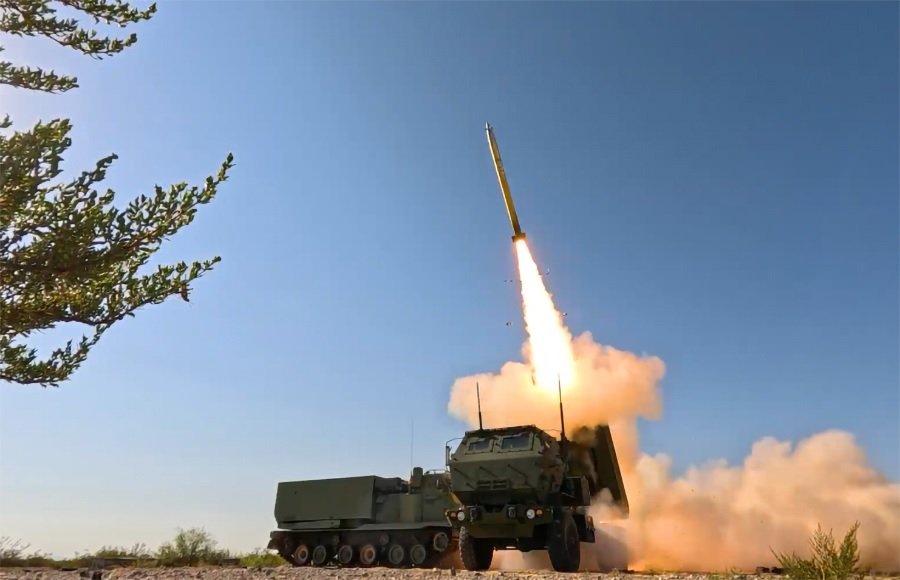
U.S
WHITE SANDS, N.M., — Lockheed Martin and the U.S. Army have successfully demonstrated the ability to redirect a Guided Multiple Launch Rocket System (GMLRS) rocket while it is in flight, allowing it to strike and destroy a moving target. The live-fire test at White Sands Missile Range, New Mexico, marked the first in-program demonstration of the capability. The test showed that target coordinates can be updated after launch, giving military commanders greater flexibility to respond when battlefield conditions change. GMLRS Receives Target Updates During Flight During the demonstration, a GMLRS rocket was launched from an M142 High Mobility Artillery Rocket System (HIMARS). While the rocket was airborne, engineers used Lockheed Martin’s Strigo datalink and Remote Interceptor Guidance-360 (RIG-360) system to transmit updated target coordinates. The rocket received the new information, adjusted its trajectory and successfully destroyed the moving target. The integration was funded internally by Lockheed Martin. The capability allows the existing GMLRS inventory to receive updated targeting information without requiring fundamental design changes to the rocket. By connecting existing sensors, launchers and targeting systems, the Army can improve coordination between different elements of its precision fires network. Randy Crites, vice president of Lockheed Martin Advanced Programs, said integrating GMLRS, RIG-360 and Strigo provides commanders with more flexible options and supports faster, more effective responses on the modern battlefield. Capability Could Extend to ER-GMLRS and PrSM Lockheed Martin stated that the datalink package is also applicable to other precision-fire systems, including the Extended-Range GMLRS (ER-GMLRS) and the Precision Strike Missile (PrSM). This could extend networked targeting capabilities across multiple rocket and missile systems, allowing target information to be updated during flight. GMLRS Platform and Operational Capabilities The GMLRS is a surface-to-surface precision-guided rocket artillery system that uses GPS-aided inertial navigation. It can be launched from two primary platforms: M142 HIMARS: A wheeled launcher carrying one pod of up to six rockets. M270 MLRS: A tracked launcher carrying two pods with a total capacity of 12 rockets. The standard GMLRS has a maximum range exceeding 70 kilometers (43.5 miles), while the ER-GMLRS is designed to reach approximately 150 kilometers (93 miles). Current GMLRS variants include the M30/M30E1 Alternative Warhead, which uses preformed tungsten fragments for area effects, and the M31 Unitary variant, equipped with a 200-pound (90-kilogram) high-explosive warhead for precision strikes against point targets. Recent Testing and Production The in-flight retargeting demonstration follows two ER-GMLRS operational tests conducted at White Sands Missile Range in late September and early October 2026. Those trials evaluated alternative and unitary warhead variants launched from an upgraded M270A2 tracked launcher and supported the Army’s Milestone C decision for production and fielding. In June 2026, Lockheed Martin secured a $3 billion contract under the fiscal year 2026 procurement cycle to continue manufacturing standard and extended-range GMLRS rockets. The contract supports ongoing production, capacity expansion and munitions readiness. The rockets are manufactured and assembled at Lockheed Martin’s facility in Camden, Arkansas, where defense contractor L3Harris also produces the solid rocket motors used by the system. The latest demonstration builds on earlier development work, including a 2023 captive-carry test of the RIG-360 uplinker prototype at White Sands. That demonstration provided target updates to a datalink on an aircraft simulating a GMLRS trajectory. The successful live-fire test supports the Army’s development of networked precision fires, connecting sensors, launchers and targeting systems to provide greater flexibility against changing battlefield threats.
Read More → Posted on 2026-10-29 14:16:16
U.S
WASHINGTON, — The U.S. Space Force plans to award Boeing a sole-source contract worth up to $945.9 million to sustain and modernize military satellite communications systems. The decision follows Boeing’s exclusive ownership of the proprietary technical data and software required to maintain the satellites and their ground control systems. The Space Systems Command (SSC) published a presolicitation notice on SAM.gov on October 27, 2026, for the Wideband and Narrowband Global SATCOM Sustainment (WNGSS) programme. The planned indefinite-delivery, indefinite-quantity (IDIQ) contract includes a five-year base ordering period valued at approximately $480.6 million and a 10-year extension option worth about $465.3 million. The total potential value is $945.9 million if the option is exercised. Boeing's Proprietary Data Rights Prevent Competition Boeing is the original equipment manufacturer for the Wideband Global SATCOM (WGS) and Ultra High Frequency Follow-On (UFO) satellite constellations and critical components of their ground control systems. According to the procurement notice, Boeing owns proprietary technical data, software and specialised infrastructure, including design documentation for its 702HP and 702MP satellite platforms, flight software source code, high-fidelity satellite simulators and ground control software. The Space Force does not have sufficient data license rights to allow another contractor to perform the work. Boeing has repeatedly declined government requests to sell those rights. Space Systems Command concluded that using another contractor would cause substantial duplication of costs, unacceptable delays and additional risks to operational satellites. Market research identified Boeing as the only company capable of meeting the full requirement without a break in service. Satellite Sustainment and Modernization Work The contract will cover life-cycle engineering, sustainment, cybersecurity, modernization and operational support for the WGS and UFO satellite networks. Boeing will provide 24/7 monitoring, real-time anomaly analysis, fault isolation and recovery, factory engineering support, telemetry trending, orbital analysis, maneuver planning, collision avoidance and end-of-life disposal planning. The work also includes software maintenance for satellite flight systems, simulators, operational databases and the Global SATCOM Configuration and Control Element ground system. Boeing will support the integration of new space vehicles and hosted payloads, including WGS-11, WGS-12 and the Protected Tactical SATCOM Prototype payload. WGS Satellites Support U.S. and Allied Forces The WGS constellation provides wideband satellite communications for U.S. military forces, allied militaries and NATO. Ten WGS satellites were launched between 2007 and 2019. Boeing is currently building WGS-11 under a previous contract, while WGS-12 is projected for launch no earlier than 2028. The Space Force assumed responsibility for WGS and related satellite communications systems from the U.S. Army in 2022. Earlier this fiscal year, it also took control of the Wideband Satellite Communications Operational Management System to centralize satellite planning and payload control. The planned contract is being pursued under statutory authority permitting sole-source awards when only one responsible contractor can meet the government's requirements. Responses to the procurement notice are due by November 17, 2026. The $945.9 million figure represents the maximum contract ceiling over its potential 15-year period, rather than a fixed upfront payment.
Read More → Posted on 2026-10-29 14:03:40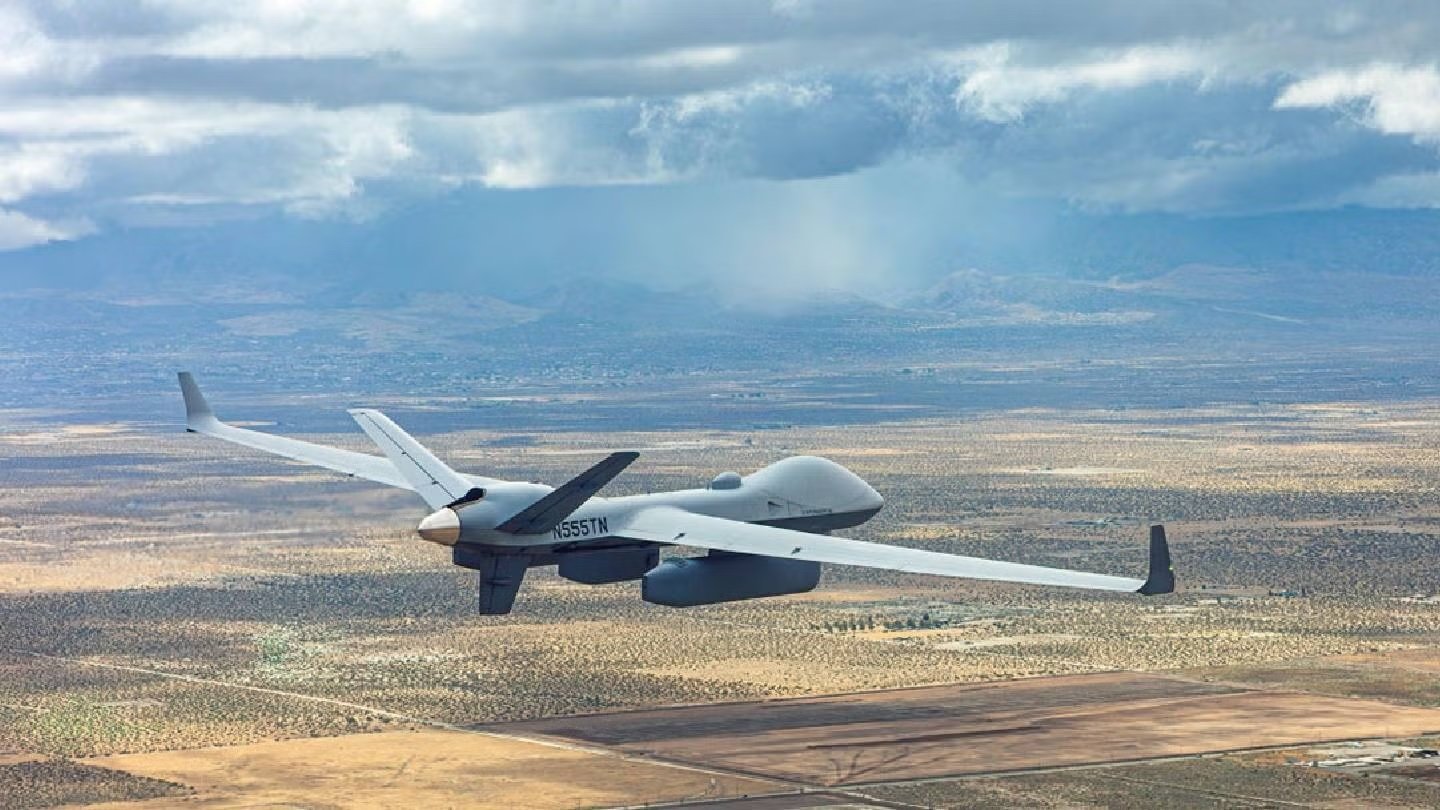
U.S
SAN DIEGO, — General Atomics Aeronautical Systems, Inc. (GA-ASI) and Swedish defense company Saab have successfully completed advanced flight tests of an Airborne Early Warning (AEW) system integrated onto the MQ-9B uncrewed aircraft. The tests used Saab’s LoyalEye radar and were conducted at GA-ASI’s Desert Horizon flight operations facility in Southern California. The flight evaluations demonstrated the system’s ability to detect, track and classify multiple airborne and maritime targets over long distances. The MQ-9B simultaneously tracked commercial aircraft and instrumented red fighter jets simulating adversary aircraft. Stakeholders observed the capability in real time during a representative operational scenario. The testing follows the system’s first flight on May 19, 2026. The partnership between GA-ASI and Saab was announced in June 2025, with plans to demonstrate the uncrewed AEW capability during 2026. MQ-9B Gains Airborne Early Warning Capability The LoyalEye radar is installed in external payload pods, allowing the MQ-9B to carry the system without permanent structural modifications. The integration combines the drone’s long endurance with Saab’s radar technology to provide persistent air and maritime surveillance. Airborne early warning operations have traditionally relied on large crewed aircraft. The uncrewed MQ-9B configuration offers an alternative for monitoring large areas while reducing aircrew exposure in high-risk environments. According to Saab, the system can operate independently or alongside existing crewed AEW&C platforms, including Saab’s GlobalEye aircraft. It is designed to support Battle Management Command and Control (BMC2) from ground stations, ships or other aircraft using existing network infrastructure. MQ-9B Variants and Potential Customers The MQ-9B is a medium-altitude, long-endurance uncrewed aircraft offering more than 40 hours of endurance, all-weather performance and type certification. The AEW capability is intended for GA-ASI’s MQ-9B family, including the SkyGuardian, SeaGuardian, UK Protector and STOL versions. The STOL variant is under development for naval aircraft carrier operations. GA-ASI President David R. Alexander said the flight test was one of the company’s most highly anticipated evaluations, adding that international customer interest in the MQ-9B AEW capability was extremely high. Carl-Johan Bergholm, head of Saab’s Surveillance business area, said LoyalEye adds flexibility, extends surveillance reach and enables more efficient use of resources in demanding environments. GA-ASI confirmed that it is discussing the uncrewed AEW capability with several international customers. The UK Royal Navy has been identified as a potential candidate as it seeks a replacement for its ageing Crowsnest helicopter radar systems, which are expected to retire at the end of 2029. However, no specific customer, production contract or operational service-entry date has been announced. The new system is intended to complement existing crewed airborne early warning aircraft while providing persistent surveillance and allowing human aircrews to remain outside the aircraft during missions.
Read More → Posted on 2026-10-29 13:55:22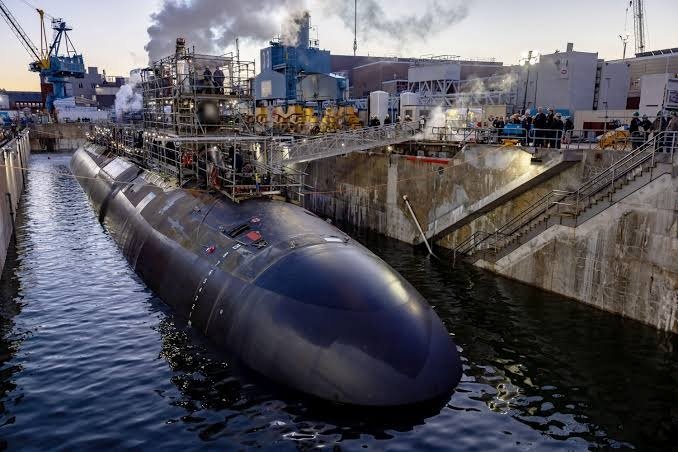
U.S
KITTERY, Maine, — The U.S. Navy’s Virginia-class attack submarine USS Washington (SSN 787) undocked on schedule at Portsmouth Naval Shipyard in Maine on October 27, 2026, completing the drydock phase of its scheduled maintenance and modernization period. The submarine will now proceed to the next stage of operational testing. USS Washington arrived at the shipyard on September 27, 2024, for an extensive overhaul involving structural inspections, mechanical and electrical system upgrades, and routine maintenance. Shipyard personnel used traditional repair methods alongside modern manufacturing techniques, including additive manufacturing, to support the work. In March 2026, Portsmouth Naval Shipyard completed a significant milestone by inspecting, testing, and installing the first welded additively manufactured copper-nickel flange on an in-service U.S. Navy submarine. The component was welded at a public shipyard for the first time and installed aboard USS Washington. The initiative supports the Navy’s efforts to expand additive manufacturing for submarine components and address supply requirements. Portsmouth Naval Shipyard Commander Capt. Jesse Nice highlighted the coordinated efforts of the shipyard workforce in completing the undocking on schedule. “Washington’s undocking is an achievement that represents a coordinated effort across the shipyard to return a renewed and combat-ready submarine back to the fleet,” Nice said. He also credited the shipyard’s workforce for overcoming challenges through traditional shipyard expertise and modern technical innovations. USS Washington Commanding Officer Cmdr. Keith Turnbull also praised the collaboration between the submarine’s crew and the civilian shipyard workforce. “I’m proud of the incredible work done between our crew and the project team, whose exceptional collaboration and vigilance led us to this undocking on time,” Turnbull said. He added that the collective effort is laying the groundwork for returning the submarine as a fully mission-capable platform operated by a skilled crew. USS Washington Submarine: Capabilities and Specifications USS Washington is a Block III Virginia-class nuclear-powered attack submarine commissioned on October 7, 2017, at Naval Station Norfolk, Virginia, which remains its homeport. The submarine measures approximately 377 feet in length and 34 feet in beam, with a displacement of roughly 7,800 to 7,900 tons. It is the 14th Virginia-class submarine and the third U.S. Navy ship named after the state of Washington. As a Block III submarine, USS Washington features two large-diameter Virginia Payload Tubes that replaced the earlier vertical launch arrangement. Each tube can accommodate up to six Tomahawk cruise missiles, providing the submarine with a total capacity of up to 12 missiles in these tubes. Next Steps Toward Fleet Operations The completion of the docking phase marks an important step toward restoring USS Washington to operational service. The submarine must now proceed through the next stage of testing before returning to fleet operations. The U.S. Navy has not announced an official return-to-service date for the submarine. Portsmouth Naval Shipyard is a primary U.S. Navy facility responsible for the maintenance, repair, and modernization of attack submarines. The work on USS Washington supports the Navy’s broader efforts to maintain undersea fleet readiness and improve the operational availability of its submarine force.
Read More → Posted on 2026-10-29 13:47:34
U.S
Washington, D.C., — The U.S. Defense Intelligence Agency (DIA) has warned that Russia is developing a satellite designed to carry a nuclear weapon into orbit, potentially threatening thousands of military, commercial, and civilian satellites worldwide. The assessment appears in the agency's latest unclassified report, Challenges to Security in Space 2026, released on October 26. The report is the third in the DIA's series of space threat assessments and covers information current as of July 2026. According to the report, Russia is pursuing the capability despite its obligations under the 1967 Outer Space Treaty, which prohibits placing nuclear weapons and other weapons of mass destruction in orbit around Earth. Nuclear Detonation Could Damage Thousands of Satellites The DIA assessment warns that a nuclear explosion in space could cause widespread electromagnetic disruptions and create artificial radiation belts. These high-energy radiation zones could persist for years, progressively damaging or destroying satellites even after the initial explosion. The effects would extend beyond military spacecraft to civilian and commercial satellite networks supporting GPS navigation, telecommunications, weather forecasting, financial transactions, scientific activities, and national security services. The report notes that a nuclear anti-satellite (ASAT) weapon could cause the rapid loss or degradation of thousands of satellites operated by countries and companies worldwide. However, the DIA has not confirmed that Russia has deployed a nuclear weapon into orbit. The system remains under development. Russia's Space-Based Nuclear Weapon Development The report also discusses Russia's Cosmos 2553 satellite, launched in February 2022. Moscow described the satellite as a platform for testing the effects of space radiation on electronic components. U.S. officials have previously linked related Russian activities to research and development for a potential nuclear anti-satellite capability. The DIA assessment also highlights the growing importance of commercial satellite communications during the Russia-Ukraine conflict. The effectiveness of commercial satellite networks supporting Ukrainian forces has contributed to Moscow's view that commercial space infrastructure can be a legitimate military target. A nuclear ASAT capability could potentially threaten large constellations of commercial satellites that would be difficult to destroy individually using conventional missiles. DIA Assessment on China's Space Weapons The report also examines China's space capabilities, stating that there is no indication that China plans to actively test or develop a nuclear anti-satellite weapon for use in space. China is also a party to the Outer Space Treaty. The broader assessment examines the space and counterspace strategies of China, Russia, Iran, and North Korea. It highlights the expansion of dual-use space capabilities, growing cooperation among these countries, the increasing role of commercial satellites in national security, and hazards such as orbital debris. The DIA warns that introducing a nuclear weapon into orbit would create a serious challenge for the safety and sustainability of international space operations, particularly as the number of active satellites continues to increase.
Read More → Posted on 2026-10-28 16:01:57
U.S
FORT KNOX, Kentucky, — The U.S. Defense Advanced Research Projects Agency (DARPA) successfully demonstrated four autonomous ground vehicles at Fort Knox’s St. Vith Range on October 15, showcasing their ability to navigate complex terrain, detect potential threats, and coordinate simulated battlefield operations. Observed by approximately two dozen military and government representatives, the exercise marked the first end-to-end demonstration by DARPA’s Robotic Autonomy in Complex Environments with Resiliency (RACER) program linking satellite imagery directly to tactical ground operations. During the demonstration, a human operator identified a simulated threat using satellite imagery and dispatched the four unmanned vehicles to investigate. The lead vehicle, carrying a drone in an enclosed box, climbed a hill and used onboard sensors to scan the terrain. After detecting a potential target, it stopped and waited for further instructions. Two other vehicles advanced along the road to provide simulated cover and support, while the fourth moved forward as the lead vehicle approached the hilltop. The sequence concluded with a simulated rocket strike against a target on an adjacent hill approximately 300 yards away. Autonomous Vehicles and Drone Integration The vehicles were developed under DARPA’s RACER program, which has spent approximately five years developing software for high-speed autonomous movement across difficult off-road terrain, targeting performance comparable to human drivers. The demonstration used autonomous ground vehicles developed by Overland AI, integrated with one-way attack drones developed by defense technology company Anduril. Three of the four vehicles carried drone payloads. The drones could potentially inspect targets at close range or conduct strikes if equipped with munitions. However, the demonstration involved simulated strikes. The RACER vehicles use onboard sensors and autonomous software to navigate terrain, assess environmental conditions, and coordinate movements. The software is designed to operate across different platforms equipped with suitable sensors and does not rely solely on GPS or pre-mapped routes. Human Control and Military Applications Despite their autonomous navigation and coordination capabilities, human operators retain authority over all engagements. Detected targets are transmitted to mission commanders for review, and explicit human approval is required before an attack can be initiated. DARPA technical adviser Jason Gregory said the demonstration marked the first successful connection between satellite imagery and tactical ground operations. He emphasized that vehicle movement and target detection were autonomous, but the systems could not initiate attacks without human authorization. The test followed a request from U.S. European Command (EUCOM) to examine how robotic systems could operate ahead of friendly troop lines to detect threats early. Fort Knox was selected because its terrain represents conditions similar to the European theater. The modular RACER vehicles can carry weapons, drones, rockets, and other payloads. Potential missions include reconnaissance, food and ammunition delivery, and casualty evacuation. Their operational effectiveness will depend on payload capacity, endurance, and reliability, which were not fully evaluated under combat conditions during this demonstration. Follow-Up Test Planned for December DARPA plans to conduct a follow-up demonstration in December 2026, bringing in soldiers to operate and evaluate the systems. Gregory said soldiers are valuable evaluators because they can provide direct feedback on how the technology could be used in operational environments. The upcoming test will help assess the systems' practical military applications and identify improvements based on soldier feedback.
Read More → Posted on 2026-10-28 15:24:29
U.S
Bethesda, Maryland, — Lockheed Martin is working with the U.S. military to modernize the F-22 Raptor with new sensors, data links, and communication capabilities, aiming to bring the fighter to a “fifth-generation-plus” level. The initiative was outlined by Chief Executive Jim Taiclet during the company's third-quarter 2026 earnings call on October 22. The F-22 modernization, further development of the F-35, and introduction of autonomous combat aircraft are the three main elements of Lockheed Martin's strategy to increase air combat capabilities for the United States and its allies. F-22 Modernization at Skunk Works The F-22 upgrade program is underway at Lockheed Martin's Skunk Works advanced development division in partnership with the U.S. military. The modernization focuses on adding capabilities that were not included in the original F-22 design, including a distributed aperture system, advanced sensors, data links, and beyond-line-of-sight communications. Taiclet said the upgrades are intended to take the aircraft to a fifth-generation-plus capability level. Lockheed Martin is integrating technologies developed across its business divisions, including a new sensor from its Missiles and Fire Control business. The company has not disclosed the modernization contract value, detailed system names, or a fielding timeline. Lockheed Martin aims to introduce incremental mission improvements across its platforms every three to six months, although a specific schedule for the F-22 was not provided. F-35 Development and Vectis Autonomous Combat Drone Lockheed Martin is also planning to integrate sixth-generation technologies into the F-35. Taiclet said the approach aims to deliver approximately 80 percent of the capability of a newly designed sixth-generation fighter at half the overall cost. Another major part of the strategy is Vectis, an autonomous combat aircraft being developed with internal company funding ahead of formal government requirements. Lockheed Martin has increased its investment to build five Vectis aircraft, with initial flight demonstrations scheduled for 2027. The drone is designed for air-to-air combat and strike missions, with its development focused on anticipated requirements for range, payload, and survivability. The company's experience with the F-22 and F-35 is also informing how crewed fighters will connect and coordinate with autonomous aircraft such as Vectis. Third-Quarter Financial Results Lockheed Martin reported third-quarter 2026 sales of $20.7 billion, an 11 percent increase compared with the same period last year. The company also reported a record order backlog of $292 billion. The F-35 program remained a major contributor to the company's financial performance, recording a $710 million increase in sales during the quarter due to higher production and sustainment volumes. Together, the F-22 modernization, F-35 technology integration, and Vectis development represent Lockheed Martin's broader effort to increase combat capabilities while controlling the cost of future air combat systems.
Read More → Posted on 2026-10-28 15:02:43
U.S
LAS VEGAS, — The U.S. Air Force is moving forward with plans to construct a $1.057 billion F-47 Future Campus at Nellis Air Force Base, Nevada, dedicated to supporting the operational testing of Boeing's sixth-generation F-47 fighter. A presolicitation notice published on October 22 outlines a design-and-build project seeking up to four qualified contractors. The Air Force plans to make an initial contract award by February 2027, with the main facilities targeted for completion in early March 2031. The project will use a progressive design-build approach under an Other Transaction Agreement. F-47 Campus Facilities and Construction Timeline The campus will be located primarily on the east side of Nellis Air Force Base. The initial construction phase includes a 117,000-square-foot combined operations and maintenance facility, a specialized systems-reprogramming laboratory of approximately 39,200 square feet, and a simulator facility covering nearly 41,000 square feet. The project will also include an aircraft apron with sunshades covering approximately 1.15 million square feet, along with supporting utilities and infrastructure. The planned schedule provides approximately nine months for design and preconstruction work, followed by around 40 months of construction. Potential subsequent phases extending through 2032 could add up to six additional facilities, including hangars for fuel-system maintenance, specialized facilities for stealth coating application and repair, weapons-loading training areas, maintenance training facilities, a consolidated maintenance facility, and a dining facility. The Air Force's fiscal 2027 budget request includes $730 million for F-47 hangars and supporting infrastructure, identifying Nellis as the aircraft's operational testing hub. The $1.057 billion campus estimate includes construction, design, security, contingency, and other applicable project costs. Boeing F-47 Fighter and Testing Plans The Boeing F-47 is being developed under the Next Generation Air Dominance (NGAD) program. The U.S. Air Force awarded Boeing the engineering and manufacturing development contract on March 21, 2025. The crewed fighter is intended to gradually replace the F-22 Raptor fleet during the 2030s. Its planned capabilities include advanced stealth, data sharing, electronic warfare systems, and the ability to coordinate semi-autonomous Collaborative Combat Aircraft (CCA). Former Air Force Chief of Staff Gen. David Allvin stated in 2025 that the F-47 would have a combat radius exceeding 1,000 nautical miles and a maximum speed above Mach 2. These capabilities are intended to support operations across long distances, including the Indo-Pacific region. Experimental testing for the program has been underway since 2020. The first official F-47 test aircraft is under construction, with its maiden flight planned for 2028. Initial flight testing is expected to take place at Edwards Air Force Base, while Nellis will focus on operational testing and integration. The Air Force aims to bring the aircraft into operational service by 2029, with plans to acquire at least 185 aircraft. The new campus will provide the facilities required to support the F-47's operational testing, maintenance, training, and integration as the aircraft progresses toward service entry.
Read More → Posted on 2026-10-28 14:20:45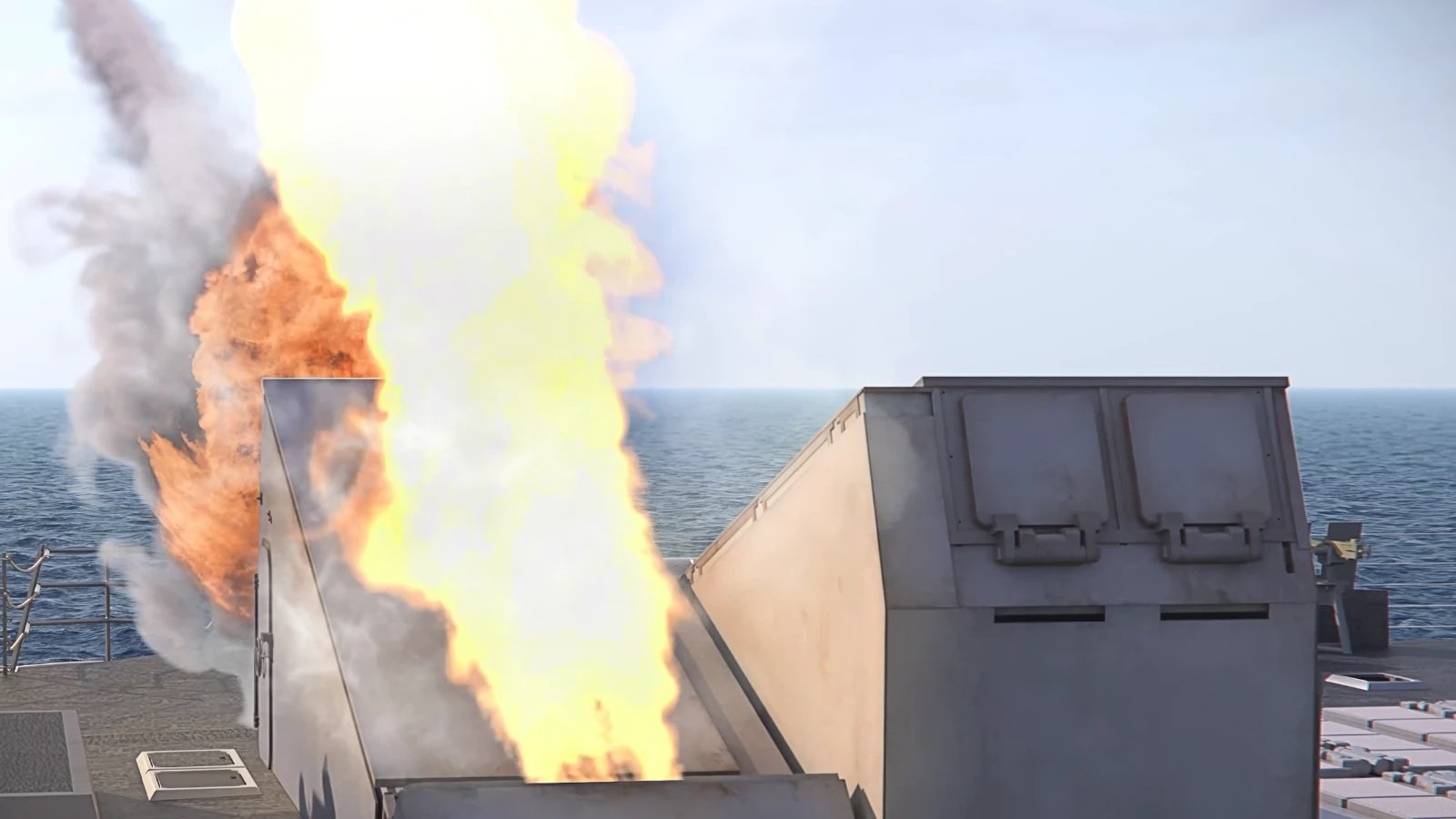
U.S
California, — BAE Systems has successfully completed the first live-fire test of its Adaptable Deck Launcher (ADL), a deck-mounted missile launching system designed to improve combat capabilities and operational flexibility for the U.S. Navy and allied fleets. Developed under a U.S. Department of War contract for the NATO Seasparrow Project Office (NSPO), the ADL is designed to provide capabilities similar to a traditional Vertical Launching System (VLS) while using the existing Mk 41 VLS logistics and electronics suite to simplify operations and reduce costs. A key feature of the system is its ability to support rapid reloading at sea using standard shipboard equipment. This allows vessels to replenish their missile stocks without returning to port, helping sustain combat operations during extended deployments. Jason Casciotti, vice president of Weapons Systems at BAE Systems, said the successful demonstration is a major milestone in improving the Navy's combat effectiveness and readiness. He added that the ADL complements the Mk 41 VLS by providing rapid replenishment and greater flexibility in sustaining combat loads at sea. Compatible With ESSM Missile Canisters BAE Systems engineered the ADL as the mechanical design agent for the Mk 41 VLS family. The launcher is fully compatible with Evolved SeaSparrow Missile (ESSM) Mk 25 Quad-Pack canisters, each holding four missiles. The ESSM provides surface-to-air defense against supersonic anti-ship missiles, aircraft, and other incoming aerial threats. The ADL supports air defense and maritime operations across aircraft carriers, amphibious ships, and surface combatants. Its compact configuration also makes it suitable for medium unmanned surface vessels, supporting future unmanned warfare operations. Deck-Mounted Design and Modular Configuration Unlike traditional below-deck VLS installations that require deep hull wells, the ADL uses fixed-angle, low-elevation canisters mounted on the ship's deck. This allows installation on a wider range of vessels without major structural modifications. The launcher features a protective enclosure that helps manage radar signature, supports maintenance, and shields the missile canisters. It is designed to meet shipboard marinization and survivability requirements, including armored protection against ballistic threats. Its modular design allows different numbers of launcher cells to be configured according to operational requirements. Although the current focus is on ESSM, the design incorporates interfaces compatible with the broader Mk 41 family. Earlier proof-of-concept work demonstrated the successful launch of an ESSM from an enclosed Mk 25 Quad-Pack canister, confirming missile egress, gas management, structural support, and compatibility with modified Mk 41 launch-control systems. Development and Future Deployment In 2023, BAE Systems received a contract valued at approximately $37 million to develop prototype deck launchers for the NATO Seasparrow Project Office based on the ADL concept. The company has not disclosed the number of missiles fired during the latest test, the specific ESSM variant used, or a timeline for production and fleet introduction. The ADL is intended to complement existing Mk 41 systems rather than replace them. Its deck-mounted design could provide VLS-like capabilities to vessels that cannot accommodate traditional installations, while rapid at-sea reloading would allow ships to sustain missile capacity during prolonged operations. The system is designed to expand missile-launching options across manned and unmanned naval platforms, giving fleets greater flexibility in distributing and replenishing their missile capabilities.
Read More → Posted on 2026-10-28 14:07:13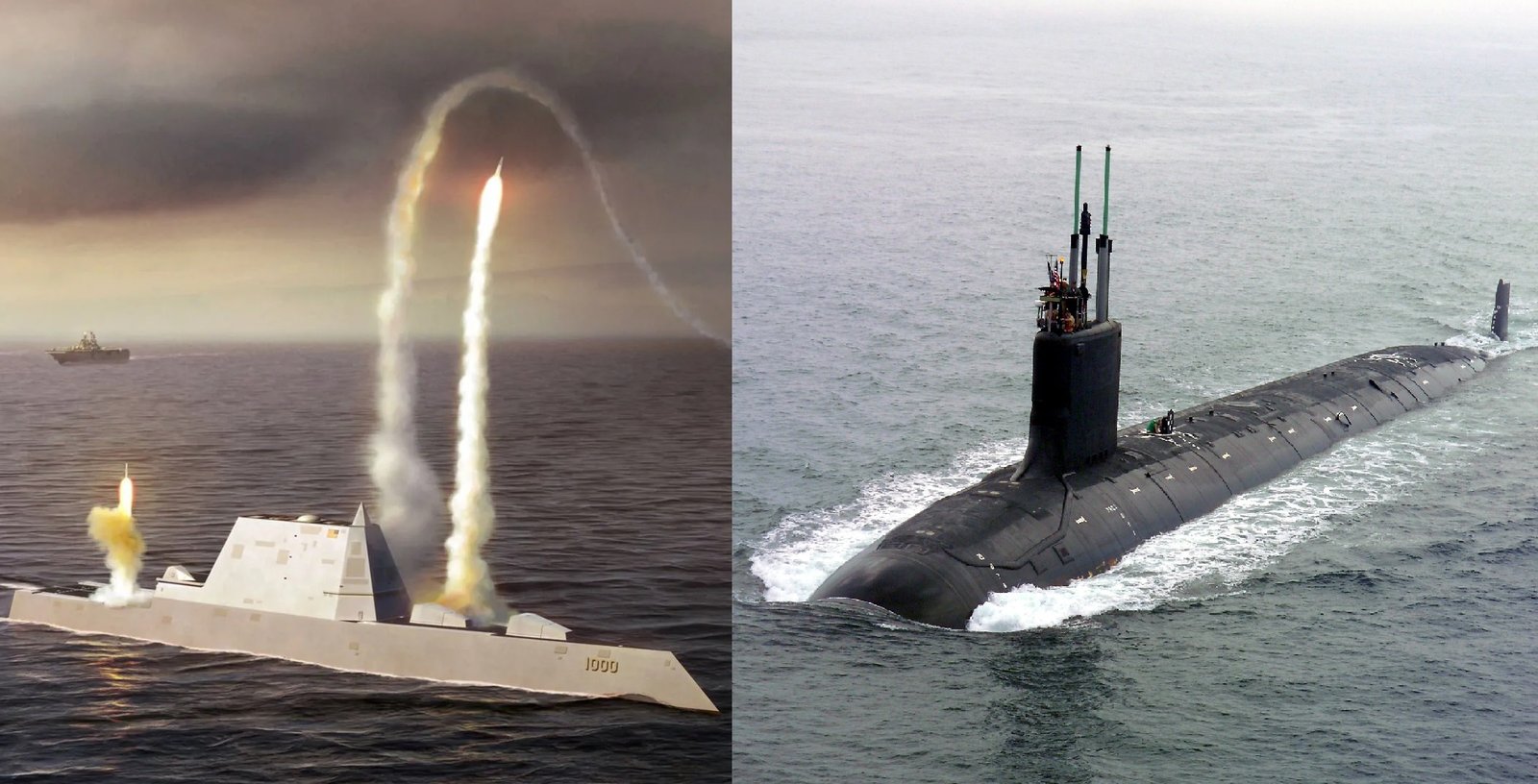
U.S
YORKTOWN, Va. — The U.S. Navy is planning a specialised hypersonic missile storage and maintenance facility at Naval Weapons Station (NWS) Yorktown, Virginia, to support its Conventional Prompt Strike (CPS) weapon system. The Naval Facilities Engineering Systems Command (NAVFAC) Mid-Atlantic has released project requirements for the facility, which will support CPS-equipped Zumwalt-class destroyers and Block V and Block VI Virginia-class submarines. The CPS is a conventional boost-glide hypersonic weapon. Its larger size and diameter require specialised storage, handling equipment and temperature- and humidity-controlled conditions that existing Navy magazines cannot adequately provide. Yorktown's location north of Newport News Shipbuilding and the Naval Station Norfolk complex will support CPS-equipped vessels operating in the Atlantic. It also aligns with the expected basing of Virginia Payload Module (VPM)-equipped submarines near Norfolk and the possibility of a Zumwalt-class destroyer moving its home port to the East Coast. Facility Design and Construction The project combines two efforts: P-1417, a Containerized Long Weapons Storage Magazine, also called Containerized Large Weapons Storage (CLWS), and P-1418, a CPS Weapons Maintenance and Storage Facility. A sources-sought notice published in late October 2026 under solicitation N4008527R0019 estimates construction costs at $100 million to $250 million. Responses are due by November 6, 2026, with a contract award anticipated around April 2027. P-1417 includes a two-bay, earth-covered magazine designed to store up to 28 CPS All-Up Rounds (AURs) in shipping canisters. Each bay will have a 25-ton overhead bridge crane, while two mechanical buildings will provide climate control and electricity. A dedicated emergency generator facility will provide backup power. P-1418 includes a high-bay maintenance and storage building with reinforced mat foundations, structural steel framing, a 50-ton bridge crane, compressed-air systems and a photovoltaic system. The projects also include reinforced concrete structures and loading aprons where specified, ordnance bonding and grounding, lightning protection, cybersecurity, physical security, Department of Defense antiterrorism measures, ground improvements, civil and utility infrastructure, and Low Impact Development practices. Zumwalt-Class Destroyer Modernisation All three Zumwalt-class destroyers must undergo modernisation before carrying CPS missiles. The work involves removing their Advanced Gun System (AGS) mounts and installing Advanced Payload Modules for the hypersonic weapons. A July 2026 Government Accountability Office (GAO) report stated that DDG-1000 programme modernisation costs had increased by approximately $200 million to around $2 billion. Unplanned work and specialised equipment requirements have contributed to delays. USS Zumwalt (DDG-1000) faces a 10-month delay and is expected to return to service later in 2026. The first CPS flight test from a Zumwalt-class destroyer is planned for 2027, about two years later than originally scheduled. USS Lyndon B. Johnson (DDG-1002) is expected to complete its Mission Systems Activation period in the fourth quarter of fiscal year 2028, following a 12-to-15-month delay. USS Michael Monsoor (DDG-1001) is scheduled to begin conversion in early 2027 and return to service in the third quarter of fiscal year 2029. Virginia-Class Submarine Integration The Navy will also deploy CPS on Block V and Block VI Virginia-class submarines equipped with the Virginia Payload Module (VPM). The module adds an 84-foot mid-body section containing four large-diameter vertical-launch canisters. Each canister can hold seven standard Tomahawk cruise missiles or three CPS rounds, providing a total capacity of 12 hypersonic missiles per submarine. VPM-equipped submarines have been redesignated as nuclear-powered guided-missile submarines (SSGNs) to reflect their expanded conventional strike capability. The Navy views the Zumwalt conversions as a risk-reduction step because the surface and submarine payload modules share significant design commonality. Recent photographs showed the first VPM structure being transported to General Dynamics Electric Boat's facility in Groton, Connecticut, for final assembly. The Navy plans to induct the first of nine VPM-equipped Block V submarines in 2028. The first Block V boat, USS Oklahoma (SSN-802), will not receive the module. The future USS Arizona (SSN-803) will be the first VPM-equipped submarine and is expected to be commissioned in 2029. The Navy plans to operate 19 VPM-equipped Virginia-class submarines, comprising nine Block V and ten Block VI boats. The Yorktown facility will provide the specialised storage, maintenance and handling infrastructure needed to support CPS deployment across the Navy's surface and submarine fleets.
Read More → Posted on 2026-10-27 16:28:05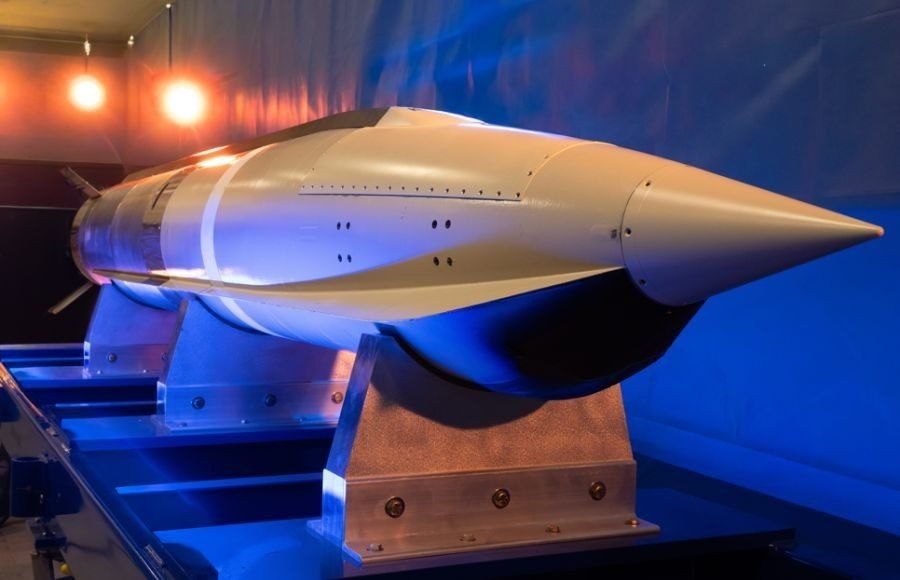
U.S
WASHINGTON, — Lockheed Martin has been selected to develop and test prototypes for the U.S. Army’s Precision Strike Missile (PrSM) Increment 4, a next-generation missile designed to strike targets at least 1,000 kilometres (621 miles) away. The company is developing a ramjet-powered version intended to roughly double the range of the baseline PrSM. The Increment 4 variant is being designed to engage both moving maritime targets, including warships, and relocatable land targets. Its extended range could give the U.S. Army additional options for striking targets from greater distances. Compatibility with Existing Launchers A key feature of Lockheed Martin’s design is its compatibility with existing Army launch systems. The missile is designed to use the same transport container and fire-control interface as earlier PrSM variants. This would allow it to be launched from the M142 High Mobility Artillery Rocket System (HIMARS) and the M270A2 Multiple Launch Rocket System (MLRS) without requiring new launch platforms. The approach is intended to simplify integration with existing Army equipment and reduce the need for additional launcher-related changes. It could also support deployment from dispersed coastal positions for missions against maritime targets. Ramjet Propulsion and L3Harris Partnership To achieve the targeted range of 1,000 kilometres, Lockheed Martin is incorporating an advanced air-breathing ramjet propulsion system supplied by L3Harris. A ramjet uses the missile’s forward motion to compress incoming air, supporting sustained high-speed flight during the powered phase. The technology is intended to provide the propulsion performance needed for the extended-range missile. In June 2026, Lockheed Martin and L3Harris successfully demonstrated a booster-to-ramjet handoff during advanced ground testing at a specialised high-speed propulsion facility. This test addressed the transition between the booster phase and ramjet-powered flight. Lockheed Martin Invests in Development and Production Lockheed Martin is competing for the final PrSM Increment 4 production contract against a joint team formed by Raytheon and Northrop Grumman. To advance its proposal, Lockheed Martin has invested more than $300 million, alongside industry partners, to mature the missile’s propulsion system, sensor suite and manufacturing technologies. The company is also developing the factory capacity required to support future production. The investment is intended to advance the technologies needed for prototype development and demonstrate the missile’s readiness for the Army’s evaluation process. Flight Tests Planned for 2027 and 2028 The U.S. Army plans to evaluate the competing designs through flight tests and fly-off competitions scheduled for 2027 and 2028. These evaluations will help determine which design progresses towards the final production contract. Randy Crites, vice president of Lockheed Martin Advanced Programs, said the company was combining an established missile foundation with its industrial base to develop and demonstrate prototypes. “Warfighters need precision strike capabilities that can reach farther and give them more options when the mission demands it,” Crites said. He added that Lockheed Martin was working to develop and demonstrate prototypes that meet the Army’s requirements. The PrSM Increment 4 programme aims to extend the missile’s reach while retaining compatibility with existing launch systems. The upcoming competitions will assess the competing designs before the Army makes its production decision.
Read More → Posted on 2026-10-27 16:12:56
U.S
WASHINGTON, — U.S. Representative Jamie Raskin (D-Md.), the top Democrat on the House Judiciary Committee, has warned American oil companies that purchasing Russian diesel could expose them to civil and criminal penalties despite sanctions relief granted by President Donald Trump’s administration. In a letter dated October 26, Raskin warned the American Petroleum Institute (API), the American Fuel & Petrochemical Manufacturers (AFPM) and the U.S. Chamber of Commerce that importing Russian fuel could violate the Ending Importation of Russian Oil Act of 2022. “Those who choose to act in this way proceed at their own risk and will undoubtedly be held accountable to the fullest extent of the law, whether in this Administration—or the next,” Raskin wrote. Dispute Over Russian Energy Sanctions The warning follows an arrangement announced by Trump earlier in October to allow Russian diesel supplies to reach the United States and global markets to help reduce fuel prices. The plan calls for more than 300,000 metric tons of diesel in October, another 500,000 metric tons in November, and a further 1 million metric tons afterward. The U.S. Treasury Department’s Office of Foreign Assets Control issued a general licence providing sanctions relief for related transactions. Raskin argued that the administration’s action cannot override the 2022 law, which prohibits Russian energy imports unless specified conditions are met. These include Russia ending hostilities and withdrawing its forces from Ukraine, no longer posing an immediate military threat to NATO members, and recognising Ukrainians’ right to choose their government. He said the required conditions had not been met. Three Tankers En Route to the United States Russia has confirmed that three tankers carrying diesel are currently en route to the United States, with a fourth expected to depart on October 28, according to Russian Deputy Prime Minister Alexander Novak. The first reported shipment, carrying approximately 40,000 metric tons of diesel, departed Russia’s Baltic port of Primorsk on October 22 and is expected to arrive in New York around November 7. Shipping reports indicate that three tankers carrying approximately 140,000 tonnes of Russian diesel are scheduled to arrive at U.S. ports in November. The shipments are part of the arrangement between Trump and Russian President Vladimir Putin. The first cargo would mark the return of direct Russian diesel imports to the United States following the 2022 ban. Potential Legal Penalties Raskin warned that companies violating the congressional ban could face criminal fines of up to $1 million, civil penalties of up to twice the transaction’s value, and prison sentences of up to 20 years for individuals involved. The law carries a 10-year statute of limitations, potentially allowing legal action after the current administration ends. The White House maintains that the arrangement complies with applicable laws and is intended to ease fuel costs. However, the conflicting positions of Congress and the executive branch have raised concerns for oil companies, shipping operators and financial institutions involved in the trade. The three industry organisations had not issued formal public responses to Raskin’s letter at the time of reporting. Separate warnings have also been directed at banks and port authorities over their potential involvement in Russian diesel shipments. Market analysts have cautioned that the additional supplies may have a limited effect on U.S. fuel prices because of Russian production constraints and continuing global supply pressures. The legal dispute remains unresolved as the tankers continue their journeys to the United States.
Read More → Posted on 2026-10-27 16:06:49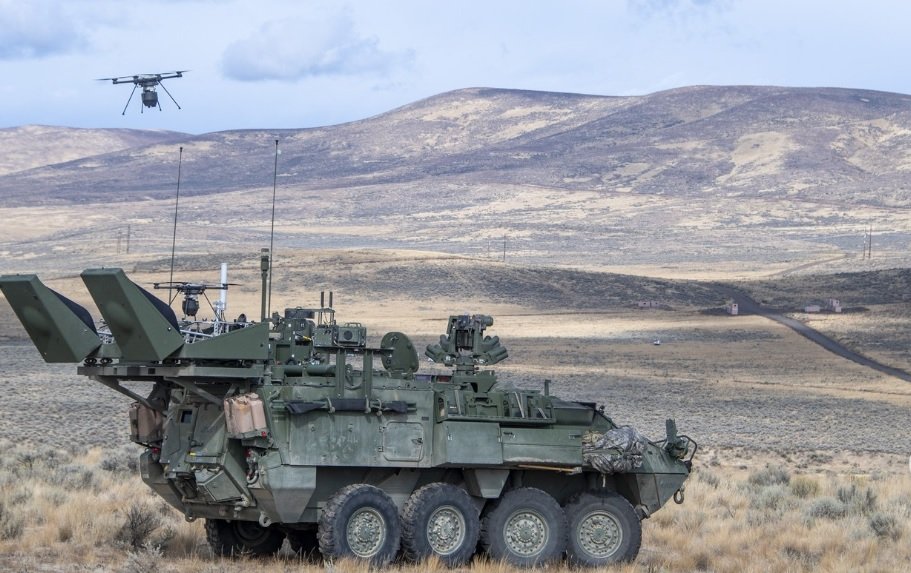
U.S
BOSTON, — Teledyne FLIR Defense, a subsidiary of Teledyne Technologies Incorporated, has received a $48 million contract from the U.S. Army to supply Nuclear, Biological and Chemical Reconnaissance Vehicle (NBCRV) Sensor Suite Upgrades for Bulgaria’s incoming fleet of Stryker armored vehicles. The contract was awarded by the U.S. Army Contracting Command at Aberdeen Proving Ground, Maryland, under the Foreign Military Sales (FMS) programme. It supports Bulgaria’s military modernization efforts, which include acquiring nearly 200 U.S.-made Stryker vehicles to replace its aging Soviet-era tactical fleet and improve interoperability with NATO forces. Ten Stryker vehicles will receive the upgraded NBCRV sensor suites. Advanced CBRN Detection Capabilities Teledyne FLIR Defense serves as the lead integrator for modernizing the U.S. Army’s NBCRV systems. The upgraded sensor suites are designed to detect chemical, biological, radiological and nuclear (CBRN) threats from a distance, helping reduce risks to personnel and providing commanders with information to support operational decisions. The technology package includes the FLIR Defense R80D SkyRaider drone, equipped with a MUVE B330 biological detection payload designed for small unmanned aerial systems. A specialized command-and-control system developed by Teledyne FLIR connects the sensors and platforms, using sensor fusion and automation to reduce the workload on vehicle crews and support decision-making. After completing development and testing, the company began delivering the upgraded sensor suites to U.S. Army units in 2025. Earlier Contract for Bulgarian Stryker Fleet The new agreement follows a separate contract announced in January 2026, valued at up to $32 million, for thermal imaging sights and radar systems for Bulgaria’s Stryker vehicles. That equipment is designed to improve crew situational awareness through 360-degree visibility and long-range threat detection. Dr. JihFen Lei, President of Teledyne Defense and Aerospace Group and Senior Vice President of Teledyne Technologies, said the upgraded Strykers would provide Bulgaria with the most advanced mounted CBRN reconnaissance capabilities available in Europe. She also highlighted the company’s ability to supply sensor technologies that help NATO allies identify and respond to battlefield threats. Since 2024, Teledyne FLIR Defense has secured more than $240 million in contracts related to the broader Sensor Suite upgrade programme. Production and Installation Through 2028 Manufacturing and integration work for the Bulgarian programme will take place at multiple Teledyne FLIR facilities in the United States and is expected to continue through 2028. The final installation of the NBCRV sensor suites will be completed in Bulgaria after the Stryker vehicles arrive. The broader Bulgarian Stryker procurement covers 183 vehicles across several variants, including 10 M1135 NBCRV configurations, along with related support equipment. Deliveries under the wider Stryker package are planned to continue into 2028.
Read More → Posted on 2026-10-27 15:29:29Search
Top Trending in 24 Hours
-
 U.S. Intelligence Identifies Suspected Chinese Asset with Ties to Nvidia CEO, Report Says
-
 Iran Uses Network of 5,000 Defense-Linked Agencies to Import Billions in Military Hardware
-
 U.S. Army and Air Force Conduct Joint Counter-Drone Training in Germany with Rapidly Deployable SUADS
-
 Iran Claims Capture of US MQM-170 Drone Over Strait of Hormuz; US Denies Report
-
 Chinese Researchers Develop Catalyst to Convert Mars Carbon Dioxide into Methanol Fuel
-
 U.S. Startup Rendezvous Robotics Raises $20 Million to Develop Self-Assembling Spacecraft in Orbit
-
 U.S. Army and Lockheed Martin Successfully Reroute GMLRS Rocket Mid-Flight to Strike Moving Target
-
 European HYDEF Consortium Completes First Phase of Hypersonic Interceptor Project, Expands Membership
Top Trending in 4 Days
-
 Pentagon Launches FORTRESS Initiative to Make Major U.S. Bases Self-Sufficient for 90 Days
-
 Saudi Arabia, Pakistan and Turkey Hold High-Level Security Talks with Iran in Tehran Amid Reports of Potential Iranian Integration
-
 SpaceX Secures $40 Billion in Debt Financing for AI Chips as Musk Predicts Industry Consolidation
-
U.S. Intelligence Identifies Suspected Chinese Asset with Ties to Nvidia CEO, Report Says
-
 Ethiopia Receives Early Delivery of First 12 Su-35 Fighter Jets from Russia, to Get Four S-400 Systems
-
 U.S. Air Force Plans $1.057 Billion Campus at Nellis to Test F-47 Fighter
-
 Pentagon Report Says Russia Developing Satellite to Carry Nuclear Weapon Into Orbit
-
 China Tests Unprecedented Uncrewed Semi-Submersible Arsenal Ship With Trimaran Design