WASHINGTON — May 9, 2026 : The U.S. Air Force is moving forward with plans to procure more than 150 Collaborative Combat Aircraft (CCA) before fiscal year 2031, marking a major shift from experimental autonomous aviation programs toward operational deployment alongside crewed fighter aircraft.
The procurement objective was outlined during congressional budget testimony delivered on April 29, 2026, as the Department of the Air Force presented its fiscal year 2027 budget request. Air Force leadership identified the CCA program and the future Boeing F-47 as the service’s two primary modernization priorities.
The Department of the Air Force requested a record $338.8 billion budget for fiscal year 2027. Within the proposal, funding for the CCA program would increase from $891 million enacted in fiscal year 2026 to $1.431 billion in fiscal year 2027. The request includes approximately $996.5 million in procurement funding for Increment 1 production aircraft and an additional $150 million in advance procurement funding for fiscal year 2028.
Pentagon budget documents indicate the total CCA-related request reaches roughly $2.37 billion when procurement, research, development, testing, and evaluation funding are combined. Officials stated that the planned “150-plus” aircraft inventory will include low-rate production platforms, operational experimentation fleets, training aircraft, and initial operational squadrons under the Future Years Defense Program through 2031.
Autonomous Aircraft to Support Crewed Fighters
The Air Force plans to integrate CCAs with frontline fighter aircraft including the Lockheed Martin F-35 Lightning II, Lockheed Martin F-22 Raptor, Boeing F-15EX Eagle II, and the future F-47.
Rather than replacing crewed fighters, the autonomous aircraft are intended to function as missile carriers, intelligence, surveillance and reconnaissance platforms, electronic warfare systems, passive targeting nodes, and decoys. The Air Force stated that the concept is designed to provide additional combat capacity without requiring proportional increases in pilot numbers or sustainment costs.
The initiative also reflects growing Pentagon concerns regarding pilot shortages, industrial production rates, missile expenditure, and maintaining tactical aircraft inventories during a prolonged conflict against peer adversaries such as China.
Unlike the Northrop Grumman B-21 Raider, which remains in low-rate production, and the F-47, which is still in engineering and manufacturing development, CCA prototypes are already undergoing flight testing and operational experimentation.
Increment 1 Aircraft Under Development
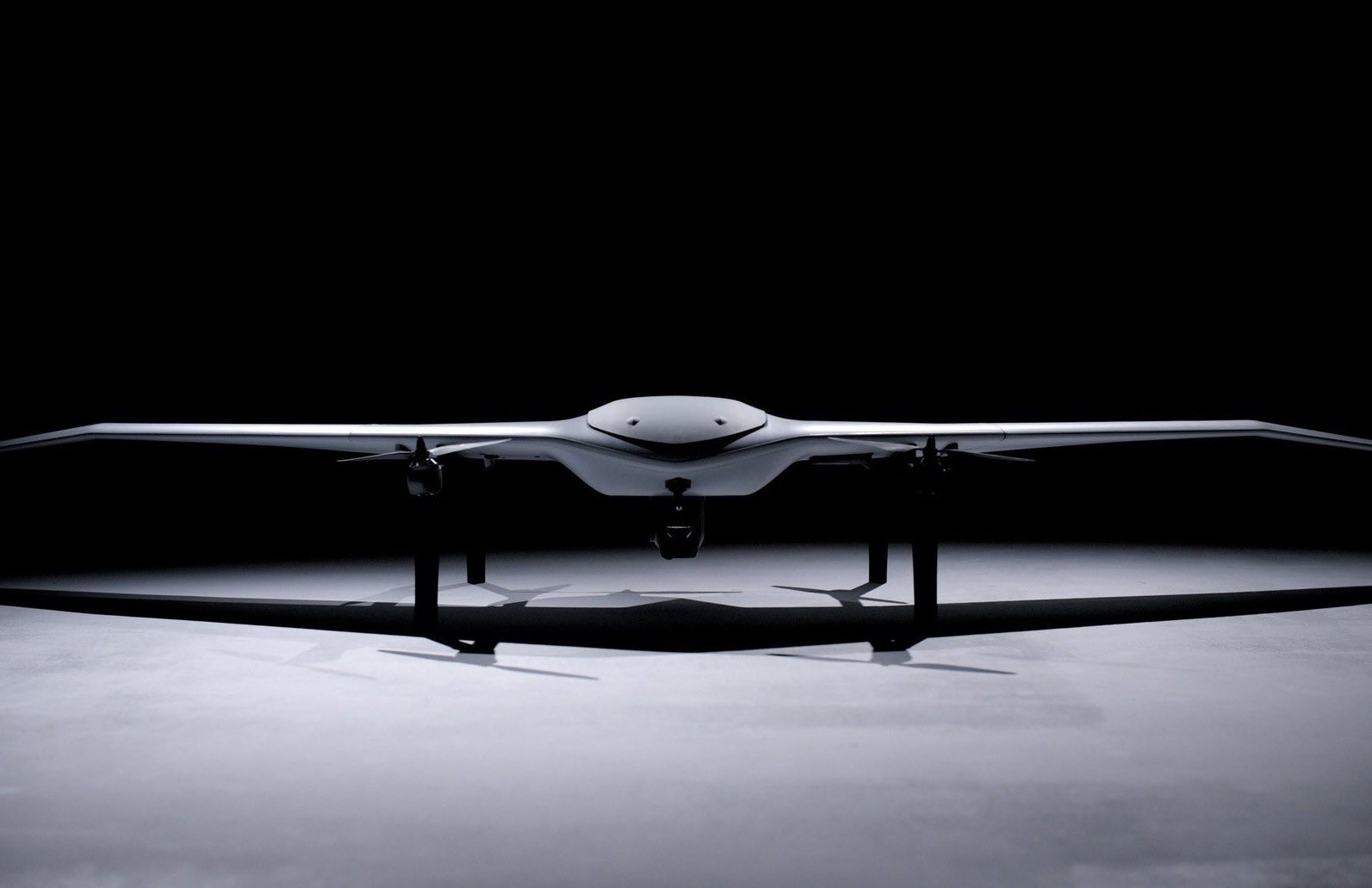
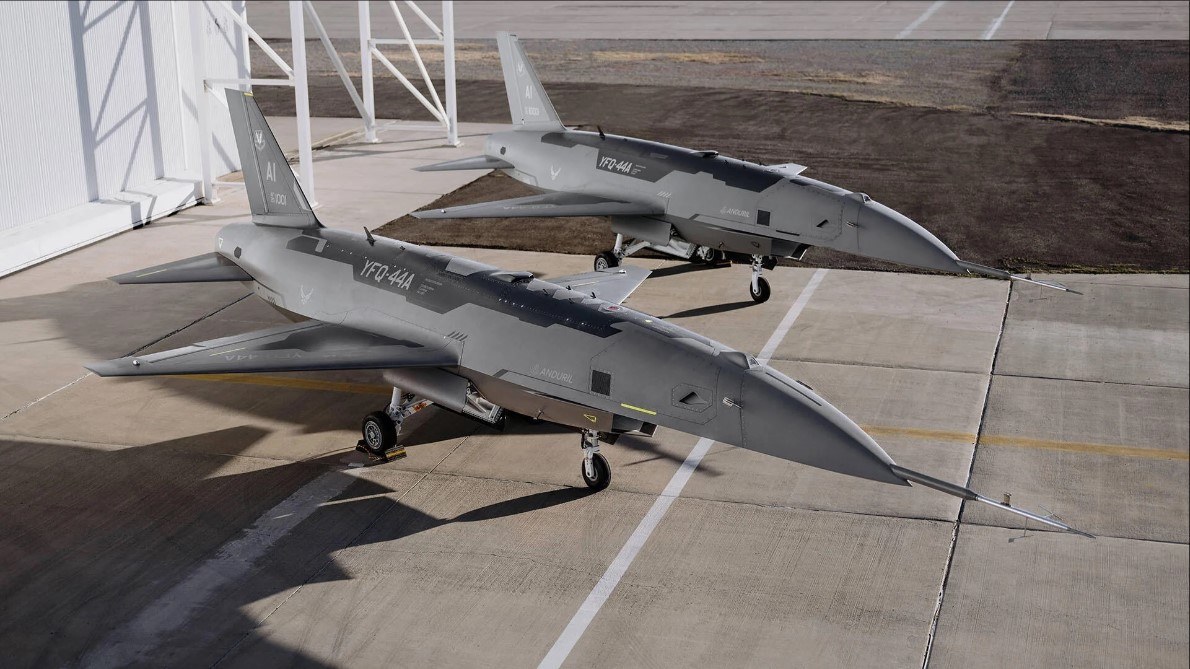
Two aircraft have been selected for Increment 1 of the program: the General Atomics YFQ-42A Dark Merlin developed by General Atomics Aeronautical Systems and the Anduril YFQ-44A Fury produced by Anduril Industries.
The YFQ-42A Dark Merlin evolved from the XQ-67A Off-Board Sensing Station program and uses a modular “common chassis” design intended to simplify production and mission adaptation. The aircraft emphasizes endurance, persistence, and low-observable performance through a long fuselage, dorsal intake configuration, and internal payload bay.
The platform is optimized for ISR, electronic warfare, passive targeting, and stand-off missile support missions. Air Force and industry officials estimate the aircraft’s combat radius exceeds 1,300 kilometers during subsonic operations. The aircraft supports internal carriage of AIM-120 AMRAAM missiles and sensor payloads. Developmental testing is currently underway in California, while operational experimentation activities continue at Nellis Air Force Base.
The YFQ-44A Fury originated from Blue Force Technologies before the company was acquired by Anduril Industries. The aircraft is powered by a Williams FJ44-4M turbofan engine producing approximately 17.8 kilonewtons of thrust and is designed for tactical responsiveness and close integration with crewed fighters.
Reported performance figures include speeds approaching Mach 0.95, sustained maneuvering at 4.5 g, peak maneuvering up to 9 g, and operational altitudes reaching 15,200 meters. Unlike the Dark Merlin, the Fury carries weapons on external hardpoints. Flight testing with inert AIM-120 Captive Air Training Missiles has already begun as the platform progresses toward escort, interception, and electronic warfare support missions.
Anduril confirmed that production activities for the aircraft have started at the company’s Arsenal-1 manufacturing facility.
Operational Testing at Nellis Air Force Base
Operational experimentation is being conducted through the Experimental Operations Unit (EOU) at Nellis Air Force Base under Air Combat Command.
Activated in June 2025, the EOU serves as both a testing organization and doctrinal development center for autonomous aviation. Current activities include evaluating distributed targeting, sensor fusion, communications resilience, pilot workload management, and human-machine teaming procedures in electronically contested environments.
Lt. Col. Matthew Jensen, commander of the EOU, stated that operational personnel rather than engineers are directly flying and evaluating the aircraft during experimentation activities.
The Air Force is also studying how many autonomous aircraft a single pilot can supervise effectively and determining acceptable levels of autonomous authority during communications disruptions or electronic warfare conditions.
To support future deployment of advanced aircraft at Nellis Air Force Base, the Air Force requested approximately $730 million in fiscal year 2027 military construction funding for new hangars and support infrastructure associated with the F-47 program, which is expected to conduct its first flight in 2028.
International Participation Expands
The CCA initiative is also expanding through international cooperation. On April 23, 2026, the U.S. Department of the Air Force and the Netherlands Ministry of Defence formalized an agreement integrating the Netherlands into Increment 1 experimentation activities.
Under the agreement, the Netherlands will finance two prototype aircraft assigned to the EOU while Dutch personnel participate directly in operational testing, autonomy development, and command-and-control experimentation alongside U.S. forces. The aircraft will remain U.S.-owned assets.
The partnership supports interoperability with the Netherlands’ F-35A fleet and reflects broader NATO interest in autonomous force multiplication concepts for smaller fighter fleets.
Air Force leadership stated that affordability, industrial scalability, modular systems, supply chain resilience, and open architecture development remain the principal challenges to fielding hundreds of survivable autonomous combat aircraft over the coming decade.
——— End of Article ———