FORT CARSON, Colo. — May 13, 2026 : The U.S. Army has completed operational evaluations of the CX2 Wraith autonomous electronic warfare drone during Exercise Ivy Mass at Fort Carson, Colorado, testing the platform’s ability to detect and identify hostile electronic emitters in contested electromagnetic environments.
The evaluation was conducted in May 2026 by Apache Company’s Electronic Warfare Platoon, 4-10 Cavalry, 3rd Armored Brigade Combat Team, 4th Infantry Division, in support of the division’s Next Generation Command and Control (NGC2) modernization initiative. The program is intended to improve battlefield sensor integration and operational data-sharing capabilities ahead of larger Army Project Convergence exercises.
Autonomous Missions Conducted by Army Personnel
During the two-week exercise, the 4-10 Cavalry Electronic Warfare Platoon executed nearly a dozen planned autonomous missions using the Wraith platform. Army personnel conducted the sorties independently without contractor assistance, successfully delivering radio frequency threat geolocation and target confirmation data to ground commanders.
The exercise provided electronic warfare soldiers operational experience with a system designed to address a key capability gap within brigade-level formations: the ability to autonomously detect, classify, and visually confirm hostile electronic emitters in GPS-denied environments.
According to Army evaluation data, the Wraith supported battlefield operations by locating enemy electronic activity and enabling commanders to identify and fix opposing force positions while maintaining freedom of maneuver for adjacent units.
Wraith Combines RF Detection and EO/IR Target Confirmation
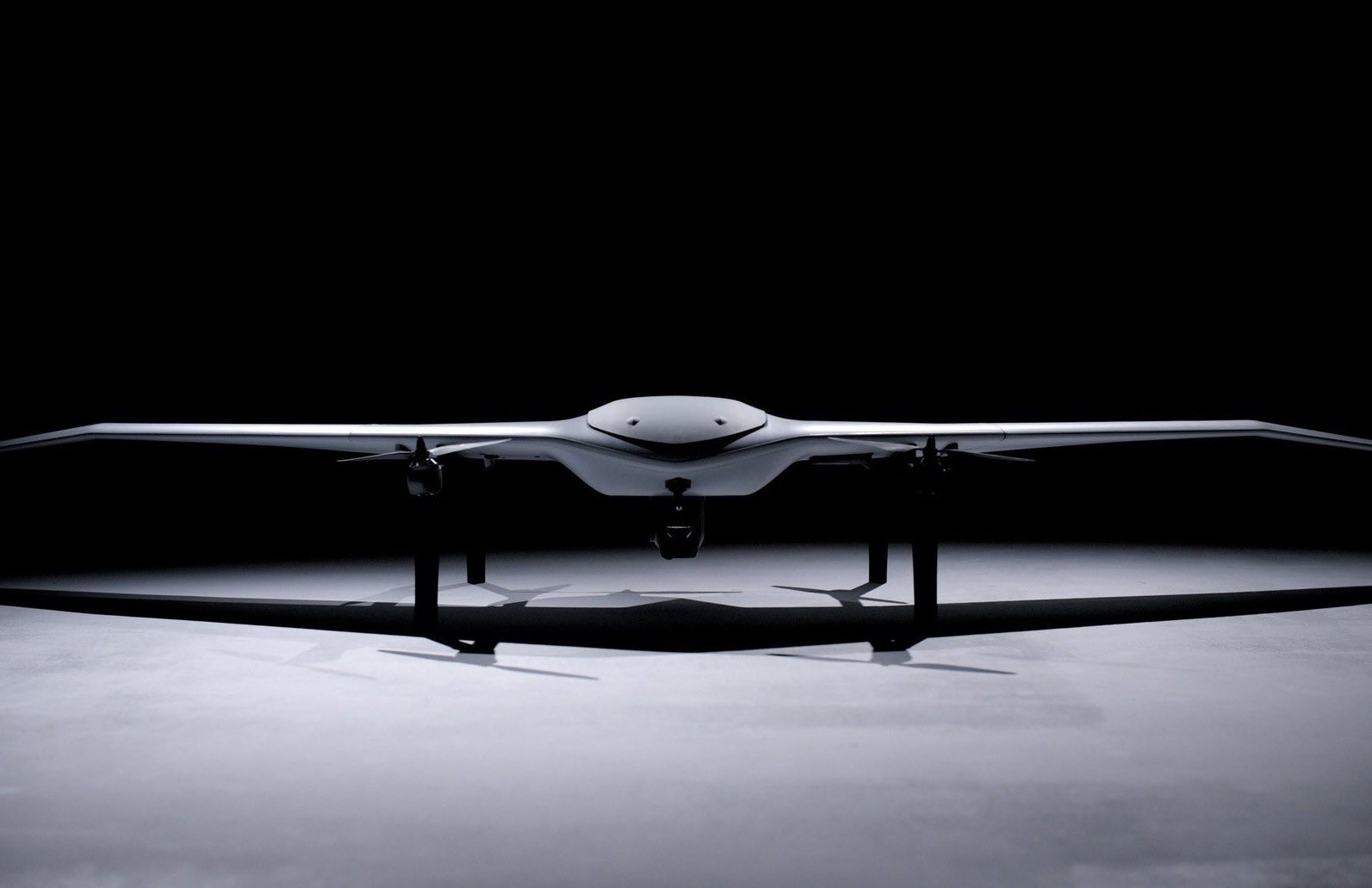
The CX2 Wraith is a quadrotor unmanned aerial vehicle designed for autonomous airborne electronic warfare missions. The platform folds to compact transport dimensions of approximately 15 by 48.5 by 20 inches and weighs about 32 pounds, allowing rapid deployment and transport by tactical units. The system has an operational endurance of roughly 45 minutes.
The drone integrates radio frequency sensors with electro-optical and infrared gimballed optics into a single airborne package. This sensor fusion architecture enables the aircraft to perform multiple functions during one autonomous sortie.
The system first detects an electronic emitter through its radio frequency signature, then characterizes the signal type before optically confirming the target using its EO/IR payload. Army evaluators tested the drone against simulated battlefield emitters, including radar systems, jammers, communications arrays, and drone control links operating in dense electromagnetic conditions.
By combining RF detection, signal classification, and optical confirmation into a single autonomous platform, the Wraith consolidates functions that traditionally require multiple intelligence, surveillance, reconnaissance, and ground-based electronic warfare assets operating together.
Designed for GPS-Denied Operations
A primary focus of the evaluation was the Wraith’s ability to operate in electronically contested environments where GPS signals are degraded, spoofed, or jammed.
The platform uses CX2’s proprietary Pathfinder navigation software together with hardened Global Navigation Satellite System protections and layered non-GPS navigation architecture. Instead of relying primarily on satellite navigation links, the system uses onboard processing and autonomous navigation protocols to maintain operational capability under electronic attack conditions.
This capability is considered increasingly important for modern battlefield operations, where adversary electronic warfare systems are expected to target GPS-dependent platforms and communications networks.
The Wraith also incorporates resilient communications architecture intended to continue transmitting operational data in degraded electromagnetic environments.
Onboard Processing Supports Threat Classification
During Exercise Ivy Mass, the Wraith’s onboard processing engine matched detected emissions against known electronic signature databases to classify threats in real time.
According to the evaluation, the platform successfully differentiated between multiple signal types in crowded electromagnetic conditions where numerous emitters were active simultaneously. The resulting intelligence data was transmitted directly to ground commanders to support targeting and battlefield maneuver decisions.
The Army stated that the platform enabled rapid geolocation and confirmation of enemy electronic positions across the exercise area without requiring external specialist support.
Part of Broader Army Electronic Warfare Modernization
Exercise Ivy Mass served as the 4th Infantry Division’s culminating training event integrating air, ground, and sustainment operations through the Army’s Next Generation Command and Control framework.
The evaluation forms part of broader Army efforts to restore and modernize electronic warfare capabilities at brigade level and below following lessons identified in recent conflicts, particularly the growing importance of electromagnetic spectrum operations in high-intensity warfare.
Military planners have increasingly emphasized the need for autonomous systems capable of identifying hostile radars, jammers, and communications systems before friendly forces are detected, especially in environments where traditional GPS-based navigation and communications cannot be relied upon.
CX2, based in El Segundo, launched the Wraith platform in December 2025. The company develops artificial intelligence-enabled hardware and software systems focused on electromagnetic warfare operations and contested-environment sensing technologies for military applications.
——— End of Article ———