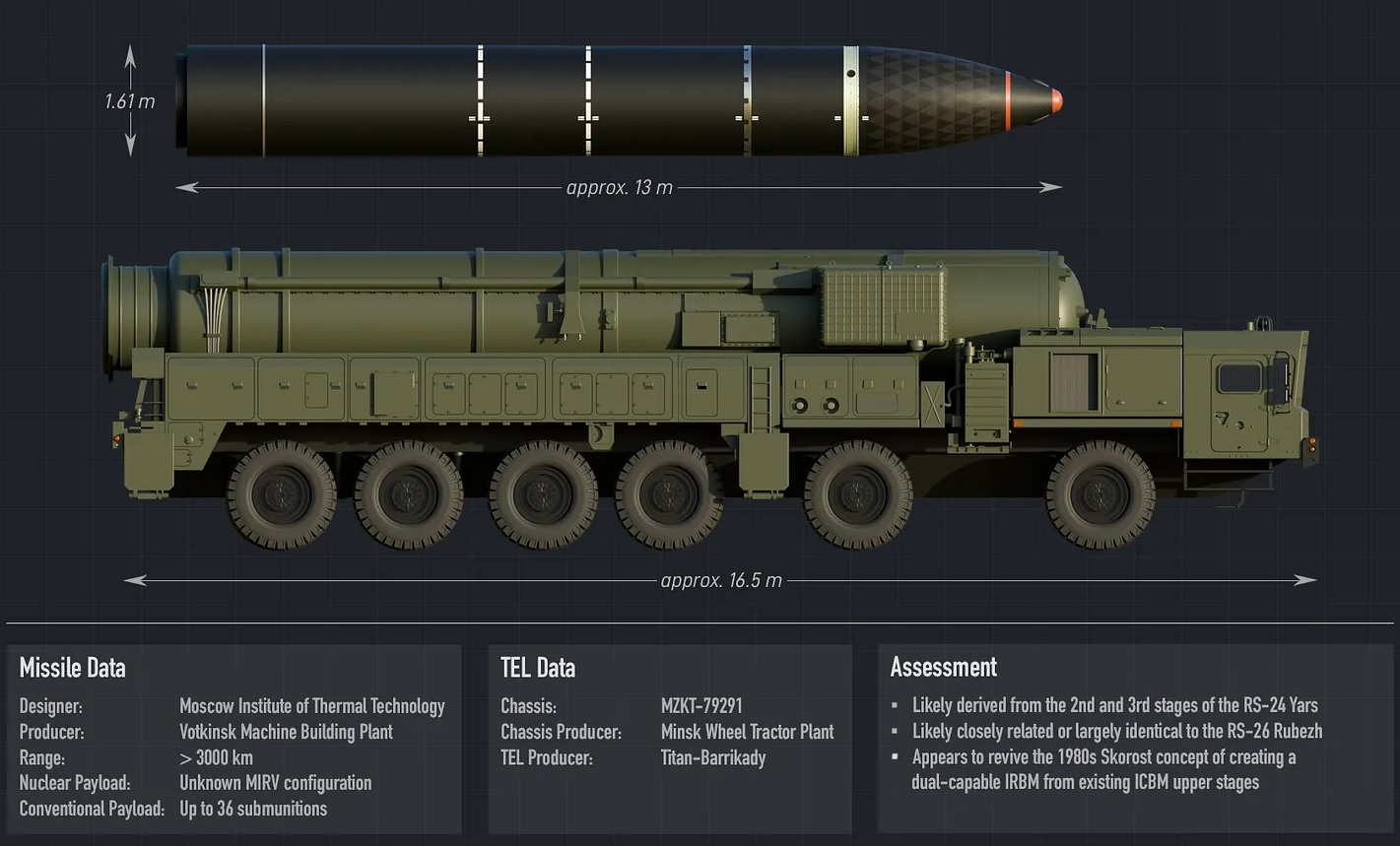
KYIV — June 04, 2026 : A new open-source intelligence assessment has provided the clearest picture yet of Russia’s Oreshnik medium-range ballistic missile, concluding that the weapon was likely developed using key stages of the RS-24 Yars intercontinental ballistic missile (ICBM). The findings, published by the LUFTLAGE project following a detailed examination of missile debris recovered in Ukraine, shed new light on a system that has remained largely undocumented since its first combat use in late 2024.
Since its debut during a strike on the Ukrainian city of Dnipro in November 2024, the Oreshnik has been one of Russia’s most closely guarded missile programs. Russian authorities have not publicly displayed the missile or its launcher, leaving analysts to rely on recovered wreckage, official statements, and open-source intelligence to understand the system’s design and capabilities.
Debris Analysis Points to Yars-Derived Design
According to the LUFTLAGE project, comparative analysis of recovered missile components indicates that the Oreshnik was developed using the second and third stages of the RS-24 Yars ICBM. The conclusion reinforces earlier assessments linking the missile to Russia’s existing strategic missile programs.
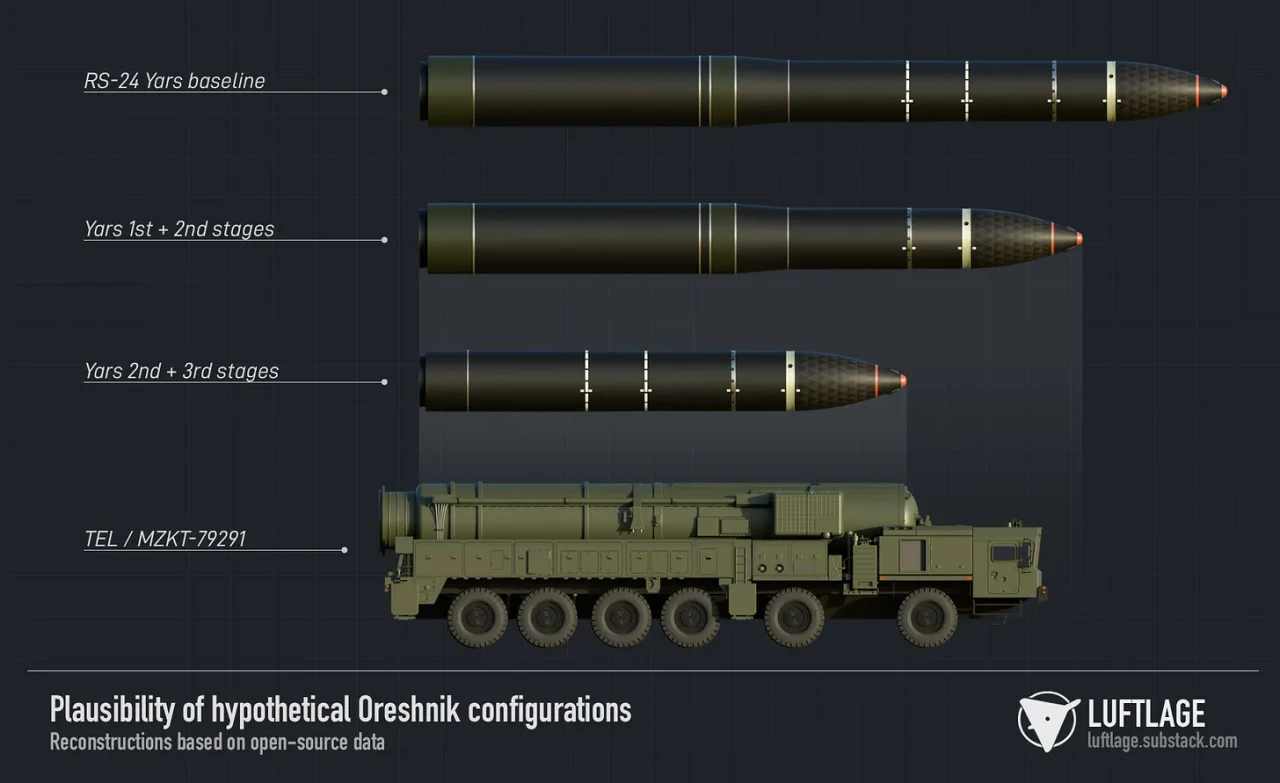
Shortly after the Oreshnik’s first operational use in 2024, the Pentagon described it as an experimental intermediate-range ballistic missile derived from the RS-26 Rubezh. The Rubezh itself had previously been linked to the Yars program. Russian Strategic Missile Forces officials stated in 2013 that the RS-26 was developed on the basis of the RS-24 Yars while incorporating a lower launch mass and modified characteristics.
Additional evidence supporting this connection emerged in 2026 when footage from a forward deployment area in Belarus showed combat support vehicles accompanying Oreshnik units. Analysts noted that these vehicles were identical to those used by RS-24 Yars missile formations, further strengthening the assessment that the three missile programs share a common technological foundation.
The latest findings suggest that Russia adapted existing strategic missile technology to create a medium-range system capable of employing hypersonic reentry vehicles while reducing development costs and timelines through the reuse of proven components.
Recovered Components Reveal Internal Architecture
The examination of missile debris recovered from multiple strike locations across Ukraine has provided significant insight into the Oreshnik’s internal structure.
Among the recovered fragments were components associated with the missile’s booster-stage control system. Analysts believe the missile employs a continuous-operation solid-fuel gas generator that supplies gas to valve-controlled steering engines responsible for maintaining stability and flight control during powered flight.
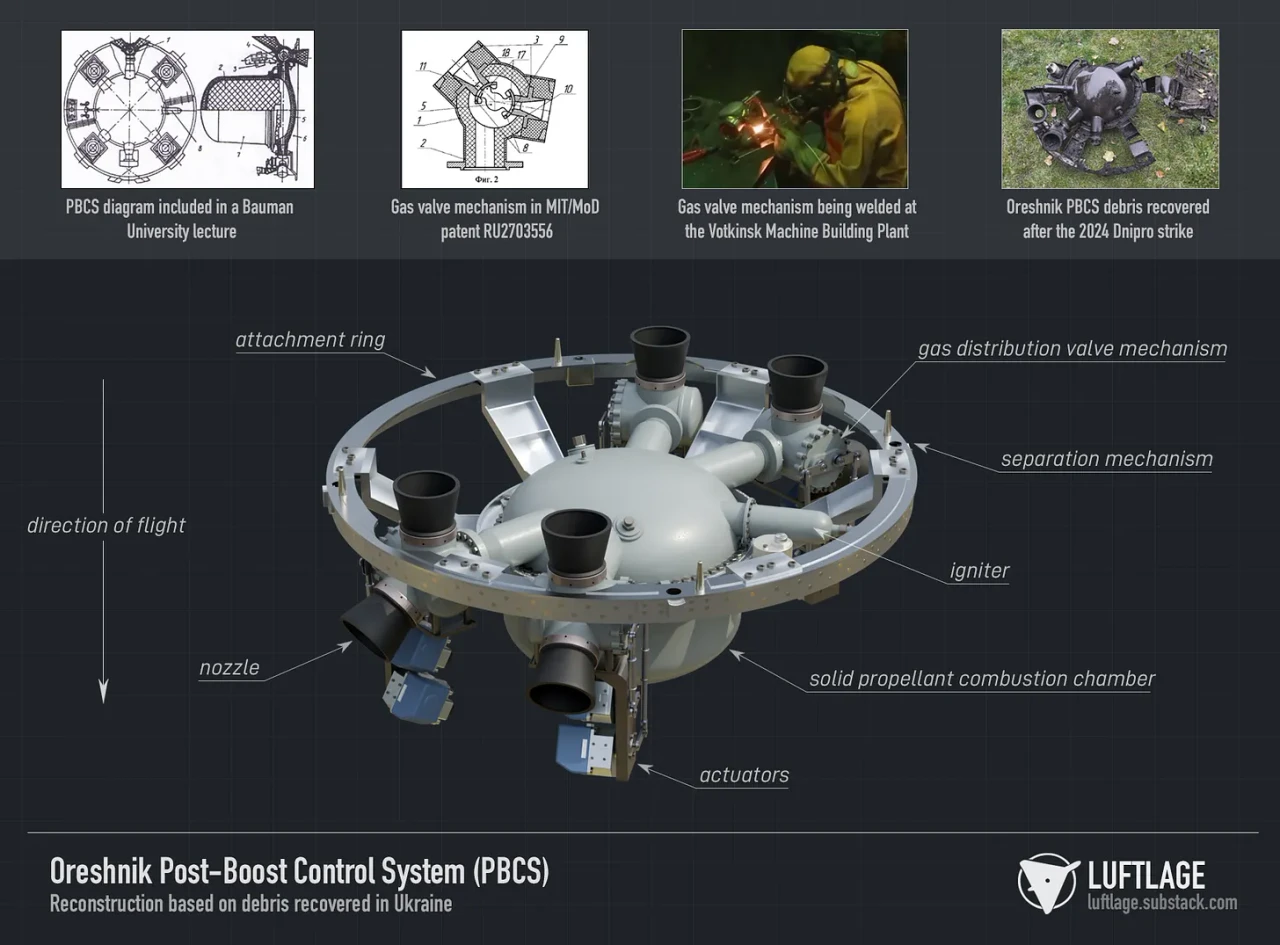
Researchers also identified a pressurized instrument compartment designed to house navigation, guidance, and flight-control equipment. This sealed section protects sensitive electronics during high-speed flight and enables the missile to maintain its trajectory while traveling at hypersonic velocities before deploying its payload.
The Oreshnik is assessed to be a road-mobile, solid-fueled ballistic missile with an estimated range of between 3,500 and 5,500 kilometers. Such a range would allow the system to engage targets across much of Europe. Analysts also estimate that the missile can achieve speeds exceeding Mach 10 during the terminal phase of flight.
Evidence Suggests MIRV Payload Configuration
While researchers have gained a clearer understanding of the missile’s propulsion and guidance systems, the warhead section remains one of the least documented aspects of the Oreshnik.
New evidence emerged following the missile strike on Bila Tserkva on May 24, 2026. Video footage from the attack showed 36 luminous objects descending toward the target area in six distinct groups.
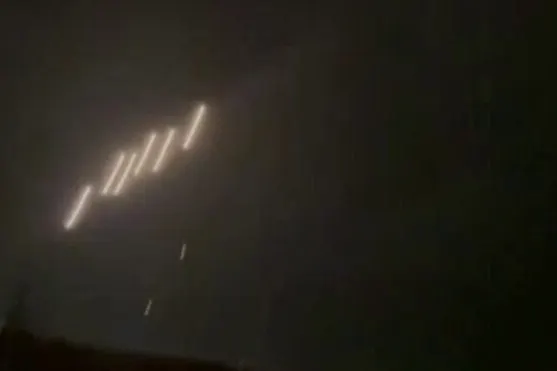
Based on the observed flight pattern, analysts assess that the missile employs a Multiple Independently Targetable Reentry Vehicle (MIRV) configuration consisting of six warhead blocks. Each warhead block is believed to release six submunitions during atmospheric reentry, resulting in a total of 36 individual striking elements.
Researchers attempting to reconstruct the missile’s payload section noted significant internal space limitations. As a result, they estimate that each submunition measures no more than 10 to 13 centimeters in diameter. Ukrainian defense specialists further estimate that each projectile weighs approximately 50 kilograms.
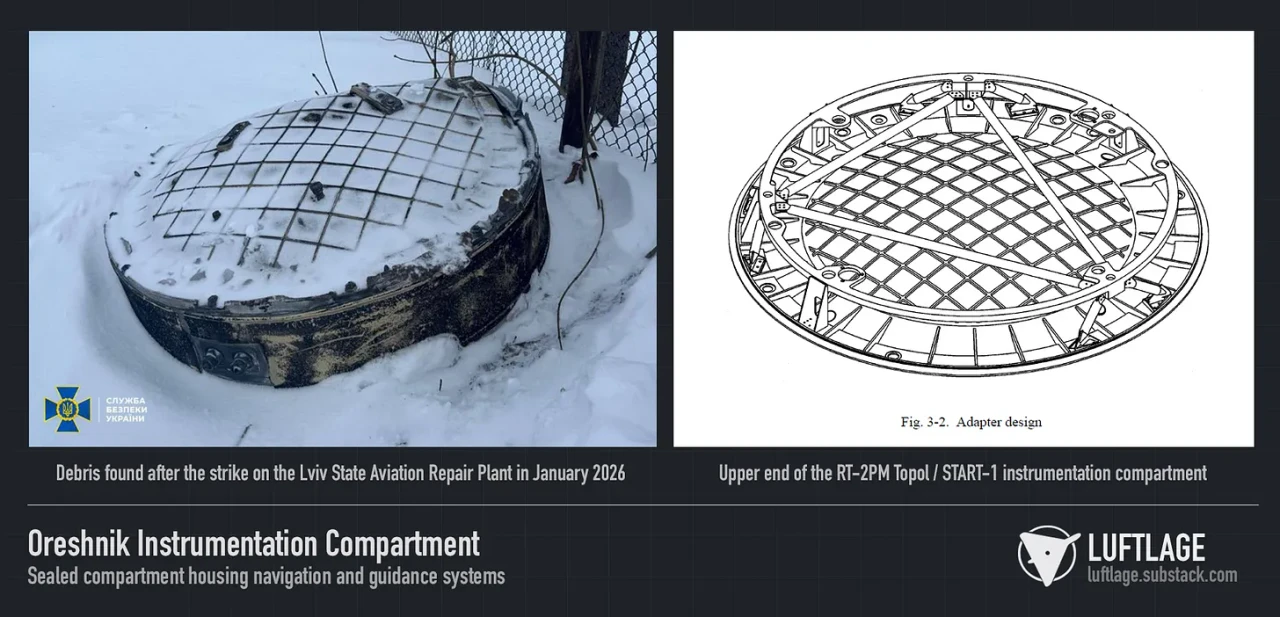
According to a Ukrainian Ministry of Defense expert, the submunitions are not conventional explosive warheads. Instead, they appear to consist of solid cast-iron striking elements, described as simple metal ingots designed to inflict damage through kinetic energy generated by extremely high impact speeds.
Analysts also note that neither the warhead blocks nor the individual submunitions appear to possess independent terminal guidance systems. After separation, the projectiles are believed to follow pre-programmed trajectories toward their designated target area.
Operational Use Highlights Current Limitations
The Oreshnik has reportedly been employed at least three times during the conflict in Ukraine. The first known strike occurred against Dnipro in November 2024, followed by another launch in January 2026 and the most recent documented use against Bila Tserkva in May 2026.
Observations from these attacks have provided important clues regarding the missile’s effectiveness in its current conventional configuration. Despite the extreme speeds involved—estimated to exceed Mach 10 during terminal descent—the strikes have produced relatively limited physical destruction compared with conventional ballistic missile warheads carrying high-explosive payloads.
During the Bila Tserkva strike, several storage facilities were reportedly damaged or destroyed. However, analysts noted the absence of significant blast effects or large impact craters typically associated with conventional explosive warheads. The damage pattern was instead consistent with impacts generated primarily through kinetic energy.
Military observers therefore assess that the current version of the Oreshnik relies heavily on high-speed impact effects rather than explosive force. Some analysts argue that without a dedicated conventional explosive warhead, the missile’s destructive capability remains restricted despite its advanced delivery system and hypersonic performance.
Production Expansion and Future Development
The Oreshnik is believed to be nuclear-capable and is launched from road-mobile platforms similar to those used by other Russian strategic missile systems. The weapon is also understood to have been developed within the design tradition of the Moscow Institute of Thermal Technology, the organization responsible for several of Russia’s strategic missile programs, including the Yars.
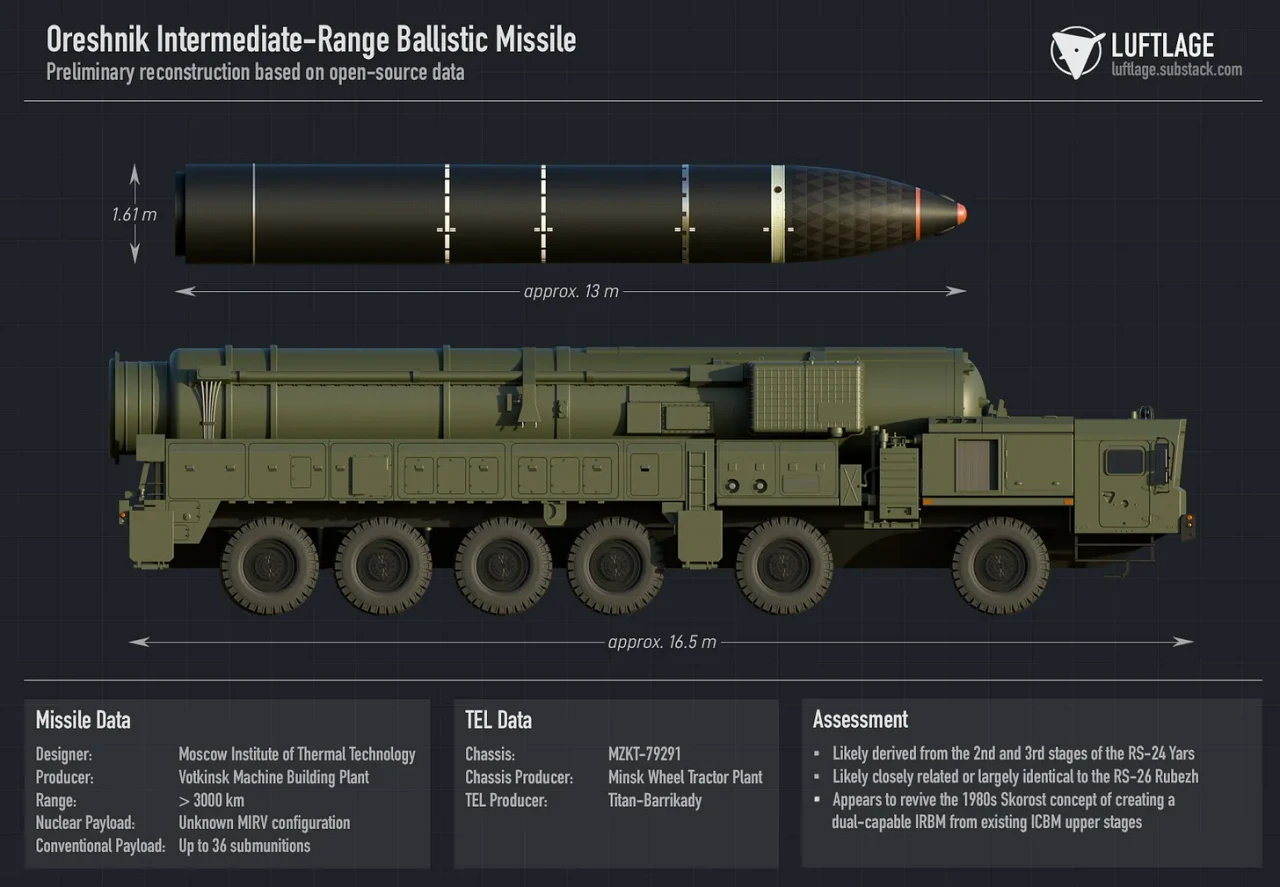
Russian officials have indicated plans to expand serial production of the missile and continue modernization efforts. Potential upgrades could include improvements to the warhead section and other performance enhancements intended to increase the system’s operational effectiveness.
Reports indicate that more than 50 enterprises are currently involved in the missile’s production and supply chain, reflecting the scale of Russia’s effort to field and further develop the system.
New Findings Offer Clearer Picture of Oreshnik Program
The LUFTLAGE project’s latest assessment provides the most detailed public examination of the Oreshnik missile to date. By linking the system directly to the RS-24 Yars and RS-26 Rubezh programs, the analysis offers new insight into the missile’s origins, architecture, guidance systems, and payload configuration.
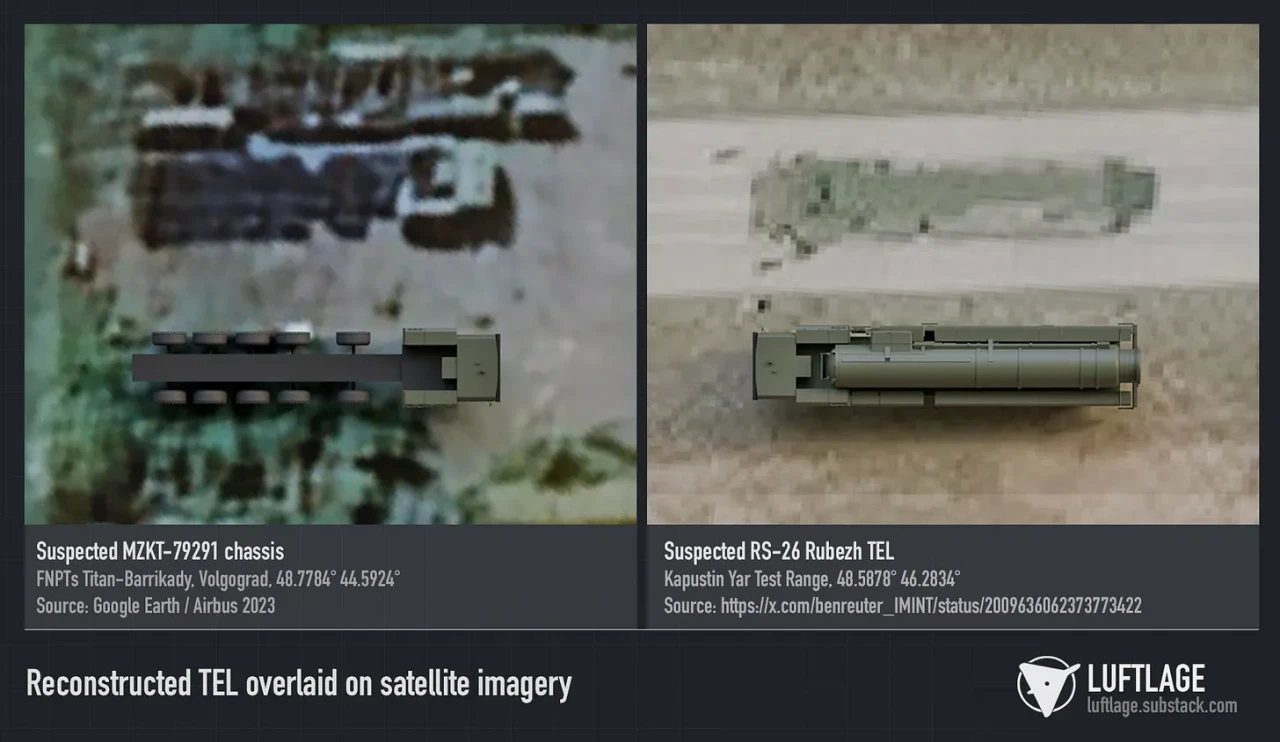
While several aspects of the weapon remain unclear, particularly regarding its warhead technology and future upgrades, the recovered debris has allowed researchers to build a more comprehensive understanding of a missile system that continues to play a role in Russia’s ongoing military operations. Further deployments and additional recovered components are expected to provide greater clarity regarding the Oreshnik’s capabilities and future development path.
——— End of Article ———