BEIJING — May 7, 2026 : The Chinese People’s Liberation Army (PLA) Ground Force has formally integrated the Z-20T assault helicopter into its operational air-ground coordination training cycle, reflecting an ongoing expansion of the PLA’s heliborne assault and rapid-response capabilities.
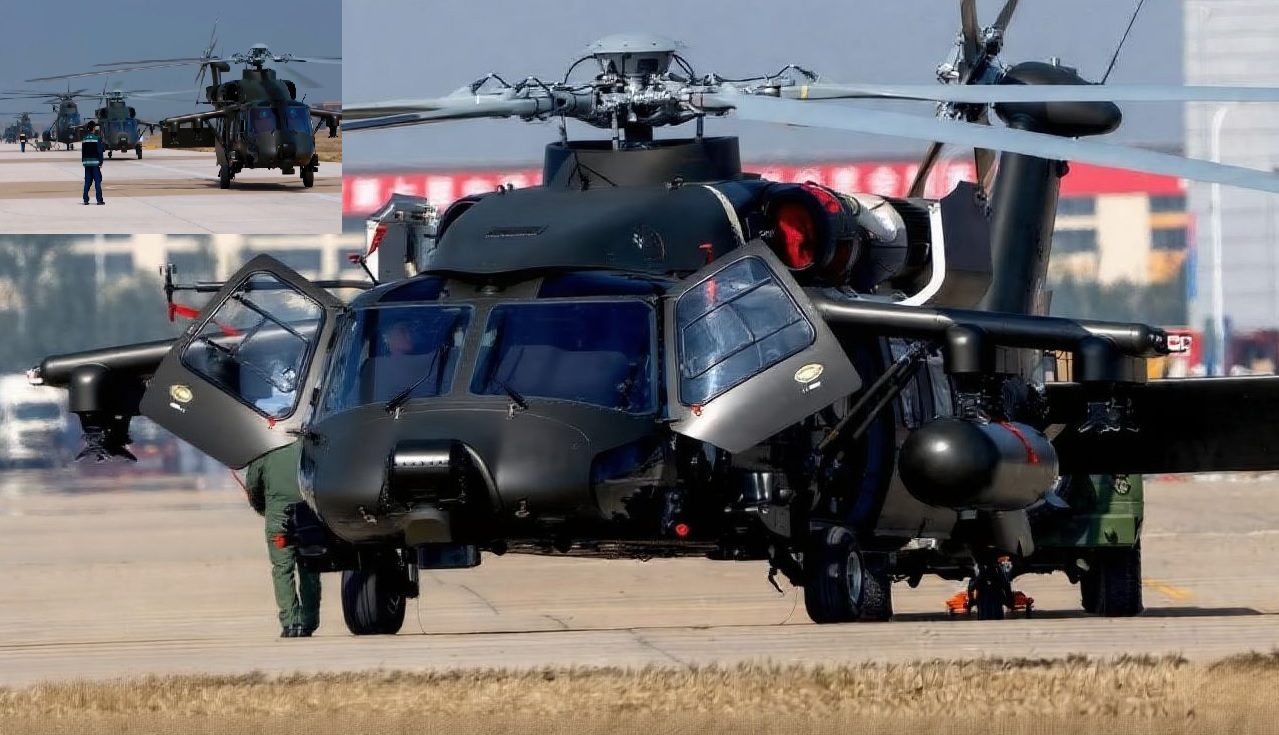
Recent imagery and military reports confirmed the deployment of the Z-20T alongside Z-10 attack helicopters during large-scale exercises conducted in early April 2026 by a brigade under the Northern Theater Command. The drills focused on rapid deployment procedures, low-altitude penetration flights, and fast-roping insertion techniques designed to support high-tempo air assault operations.
The integration marks a significant step in the operational development of the Z-20T, which combines medium-lift transport functions with integrated fire support capabilities in a single platform. The helicopter was developed as an armed variant of the Z-20 utility helicopter, which entered PLA service in 2019, and represents the PLA’s first heavyweight combat helicopter type capable of simultaneously conducting troop transport and offensive strike missions.
Combined Airlift and Fire Support Capability
The Z-20T first appeared publicly during a military parade in Beijing on September 3, 2025. Unlike dedicated attack helicopters designed exclusively for strike operations, the aircraft was developed to provide a multi-role capability that integrates tactical airlift functions with direct fire support.
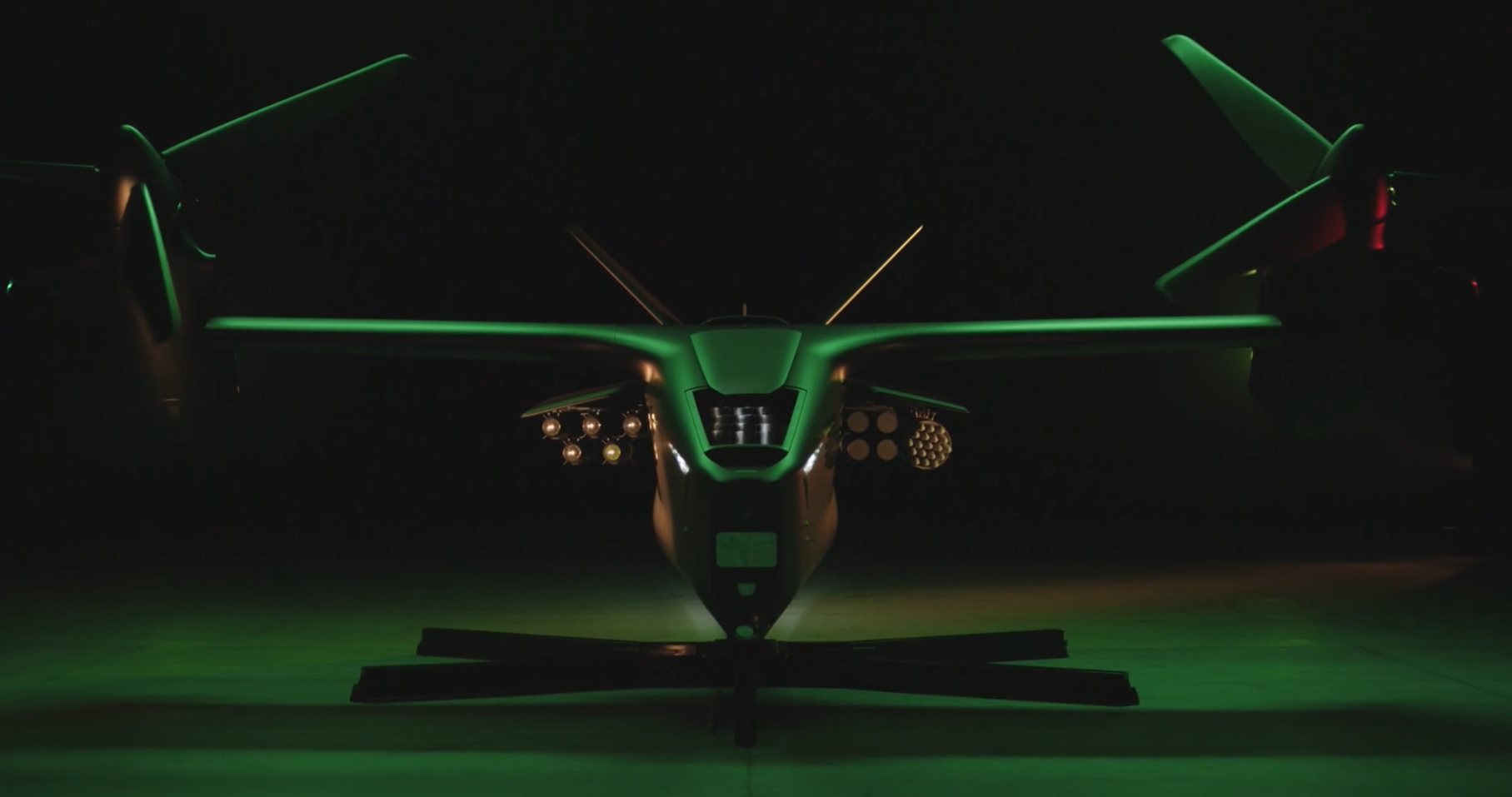
The helicopter is equipped with detachable external stores support system (ESSS) stub wings fitted with multiple hardpoints capable of carrying rocket launchers, anti-tank guided missiles, and other air-to-ground munitions, including the AKD-10 missile. The platform also incorporates an electro-optical and infrared targeting turret beneath the nose to support reconnaissance and precision targeting operations.
Defensive systems integrated into the aircraft include missile approach warning sensors, radar warning receivers, and a directional infrared countermeasures (DIRCM) suite intended to improve survivability during low-altitude combat operations.
According to Zhu Minfeng, deputy chief designer at the China Helicopter Research and Development Institute, the Z-20T is intended to complement existing attack helicopter assets rather than replace them.
“If the mission solely involves attack tasks, the Z-10 attack helicopter is the optimal choice,” Zhu stated. “If there is a need to conduct airlift operations and troop transport in addition to attack tasks, the Z-20T, which combines transport capacity with air-to-ground capabilities, can be employed.”
Zhu further described the platform as achieving “multi-functionality with one aircraft,” allowing it to transport troops while independently conducting fire strikes without relying entirely on escort aircraft for protection.
Operational Characteristics and Payload
The Z-20T retains the transport capabilities of the baseline Z-20 platform while integrating additional combat systems. The aircraft can reportedly carry approximately 12 to 15 troops internally, transport up to 1,500 kilograms of internal cargo, or carry approximately 4,000 kilograms externally as sling-loaded cargo.
Although the aircraft is less heavily armored than dedicated attack helicopters such as the AH-64 Apache or the Mi-28, the Z-20T offers greater flexibility for combined transport and strike operations. Its role has been compared to the U.S. MH-60L Direct Action Penetrator configuration, though the Chinese platform retains full troop transport capability while armed.
The aircraft is powered by two WZ-10 turboshaft engines rated at approximately 1,600 kilowatts each and incorporates fly-by-wire flight controls together with a five-bladed main rotor system. The propulsion system is designed to improve high-altitude performance and enable operations at elevations reaching approximately 6,000 meters.
Current estimates indicate that roughly 40 Z-20T helicopters are presently in service with PLA Ground Force Aviation units.
April 2026 Air-Ground Coordination Exercises
The April training cycle rehearsed a complete air assault sequence involving force generation, embarkation, tactical insertion, maneuver operations, and coordinated close air support under compressed operational timelines.
PLA aviation units practiced low-altitude penetration profiles designed to exploit terrain masking in order to reduce radar exposure and shorten adversary reaction times. These tactics were combined with the aircraft’s onboard electronic warfare and defensive systems to improve survivability during contested operations.
The exercises also highlighted coordinated operations between the Z-20T and the Z-10 attack helicopter. In the paired configuration used during the drills, the Z-10 served as a dedicated armed escort platform responsible for suppressing hostile ground positions and providing close air support to infantry after insertion. Simultaneously, the Z-20T conducted troop transport missions while retaining the ability to carry out localized fire support tasks independently.
Military analysts view this operational pairing as part of the PLA’s broader effort to improve rapid deployment and air-mobile assault capabilities for short-notice contingency operations.
Strategic and Regional Implications
The growing emphasis on low-altitude rapid insertion operations follows increased global attention on helicopter-based special operations and air assault missions. Chinese military commentary has referenced the importance of rapid-response helicopter operations following the January 3, 2026 U.S. helicopter mission in Venezuela that resulted in the extraction of President Nicolás Maduro.
The PLA’s continued development of heliborne assault doctrine is also closely linked to evolving operational requirements across multiple regional theaters. These include the South China Sea, where the PLA Navy is expanding deployments of Type 075 amphibious assault ships and helicopter carriers; the Korean Peninsula, where China maintains defense treaty obligations involving North Korea; and the Taiwan Strait, which remains a central focus of regional military planning and security competition.
The operational integration of the Z-20T indicates that the PLA is increasingly preparing airborne and heliborne units for missions involving rapid reinforcement, seizure of key terrain, and expeditionary support operations under contested conditions.
Future PLA Rotary-Wing Development
The PLA’s rotary-wing modernization program is expected to continue with the future introduction of the Z-21 heavyweight attack helicopter. First observed in prototype form in March 2024, the Z-21 is projected to enter service near the end of the decade.
The aircraft is expected to feature heavier armor protection and a greater weapons payload capacity than the current Z-10 fleet, though it will not possess the troop transport capabilities of the Z-20T.
With the Z-20T now entering routine operational training, the PLA Ground Force appears to be transitioning toward a more integrated helicopter assault doctrine that combines transport, fire support, and rapid maneuver functions within coordinated aviation formations.
——— End of Article ———