KYOTO, Japan — Researchers from Kyoto University and Hiroshima University have successfully developed and experimentally demonstrated a method to identify a complex form of quantum entanglement known as the “W state” using a single measurement process, overcoming a major experimental limitation that has persisted in quantum physics for more than 25 years.
The research, led by Shigeki Takeuchi and published in Science Advances, introduces a stable three-photon optical quantum circuit capable of directly distinguishing multipartite entangled W states without relying on conventional quantum state tomography, a process traditionally used to reconstruct quantum states through repeated measurements.
The achievement is considered an important step for practical quantum information systems, particularly in the fields of quantum communication, quantum networking and photonic quantum computing, where efficient measurement of entangled states remains a major technical challenge.
Long-Standing Measurement Problem in Quantum Physics
Quantum entanglement is a physical phenomenon in which multiple particles become linked so that the state of one particle is directly connected to the state of another, even across large distances. Among multipartite entangled systems, W states are regarded as especially important because they distribute entanglement symmetrically among multiple particles and retain partial entanglement even when one particle is lost or measured.
For a three-qubit system, a W state is represented as:

In this configuration, measuring one particle does not completely destroy the entanglement among the remaining particles. This characteristic distinguishes W states from Greenberger-Horne-Zeilinger (GHZ) states, where measurement of one particle collapses the entire entangled system.
Because of this robustness, W states are considered valuable for distributed quantum systems, quantum communication protocols and fault-tolerant quantum networking.
Despite their importance, experimentally verifying W states has remained difficult for decades. Researchers have traditionally relied on quantum state tomography, a method that reconstructs a quantum state through a large number of repeated measurements on identical quantum systems.
However, tomography is computationally expensive, slow and difficult to scale. As the number of photons or qubits increases, the number of required measurements grows exponentially, creating a major bottleneck for larger quantum systems.
The process also introduces another limitation: quantum measurements typically destroy the original quantum state. Extensive measurement procedures therefore consume large numbers of usable entangled states, reducing efficiency for practical applications.
Development of a Single-Measurement Technique
To overcome these limitations, the Japanese research team developed an entangled measurement method capable of identifying W states through a deterministic one-shot process.
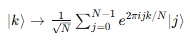
The researchers exploited a mathematical property known as cyclic shift symmetry, which is naturally present in W states. Using this symmetry, the team designed a three-mode discrete Fourier transform optical circuit that projects incoming photons onto specific W-state configurations.
The transformation applied inside the circuit is based on the quantum Fourier transform:
The experimental setup was implemented using a displaced-Sagnac interferometer architecture combined with hybrid beam splitters. According to the researchers, the optical quantum circuit remains stable for extended periods without requiring active stabilization or continuous adjustment, an important feature for future scalable quantum systems.
During the experiment, three single photons with carefully prepared polarization states were injected into the optical circuit. The system then analyzed the resulting non-classical correlations between the photons and successfully distinguished multiple types of three-photon W states.
The circuit achieved a measurement discrimination fidelity of 0.871 ± 0.039, indicating a high probability of correctly identifying pure W-state inputs.
The researchers described the system as a direct entangled measurement approach that eliminates the need for full quantum tomography and extensive post-processing.
First Practical Entangled Measurement for Photonic W States
The study represents the first experimental realization of entangled measurements for W states in photonic systems.
Earlier theoretical and experimental work on entangled measurements primarily focused on GHZ states, which were first proposed more than two decades ago. However, practical measurement methods capable of directly identifying W states had not previously been demonstrated in stable photonic quantum systems.
The research team included first author Geobae Park, theoretical physicist Holger F. Hofmann and quantum optics researcher Ryo Okamoto, who contributed to both the theoretical framework and experimental implementation.
According to the researchers, the work builds upon earlier stable optical quantum circuits previously developed for other photonic quantum information tasks.
Implications for Quantum Networks and Computing
The ability to directly measure W states is expected to support several emerging quantum technologies.
In quantum teleportation systems, multipartite entanglement can be used to transfer quantum information between distant nodes without physically transporting the particles carrying that information.
In secure quantum communication systems, entangled states can create cryptographic channels that are resistant to interception because any attempt to observe the system alters the quantum correlations and becomes detectable.
The findings are also relevant to development of the quantum internet, a proposed communication infrastructure designed to transmit quantum states and entanglement between distributed quantum processors, sensors and communication nodes.
Photonic quantum computing may also benefit from the research. Measurement-based quantum computing architectures rely heavily on controlled measurements of entangled resource states rather than conventional transistor-based computational logic. Efficient entangled measurements are therefore considered essential for scaling photonic quantum processors.
Researchers said the circuit’s stability and modular structure could allow future expansion to larger multipartite systems involving greater numbers of photons and more generalized entangled states.
Future Research and On-Chip Quantum Circuits
Following the successful three-photon demonstration, the research team plans to extend the technique to larger-scale multi-photon entangled systems.
Future objectives include development of integrated on-chip photonic quantum circuits capable of performing practical entangled measurements in compact and scalable architectures. Such systems could improve long-term operational stability while reducing the size and complexity of photonic quantum devices.
The researchers believe these advances could contribute to the development of scalable quantum communication networks and improve the performance of future photonic quantum processors.
The study was funded through Japanese research programs and published in Science Advances (2025, Vol. 11, Issue 37, DOI: 10.1126/sciadv.adx4180).
The results provide a verified experimental method for direct measurement of W states in photonic systems, addressing a long-standing challenge in quantum information science and advancing efforts toward scalable quantum technologies.
——— End of Article ———