VIENNA/NEW DELHI, — June 01, 2026 : Austrian unmanned systems manufacturer Schiebel Group has announced that its CAMCOPTER S-300 unmanned aerial system (UAS) has been selected as the airborne platform for the European Union-funded SWORD program, a major defence initiative focused on developing next-generation stand-off anti-submarine warfare (ASW) capabilities for European naval forces.
The project, formally titled Stand-off Anti-Submarine Warfare Operations by Remote Deployment (SWORD), is a 36-month research effort operating under the European Defence Fund (EDF) with a budget of approximately €20 million. Led by German naval systems manufacturer TKMS ATLAS ELEKTRONIK, the multinational initiative seeks to build an integrated “sensor-to-shooter” operational chain capable of detecting, tracking, classifying, and neutralizing underwater threats while reducing risks to crewed naval platforms.
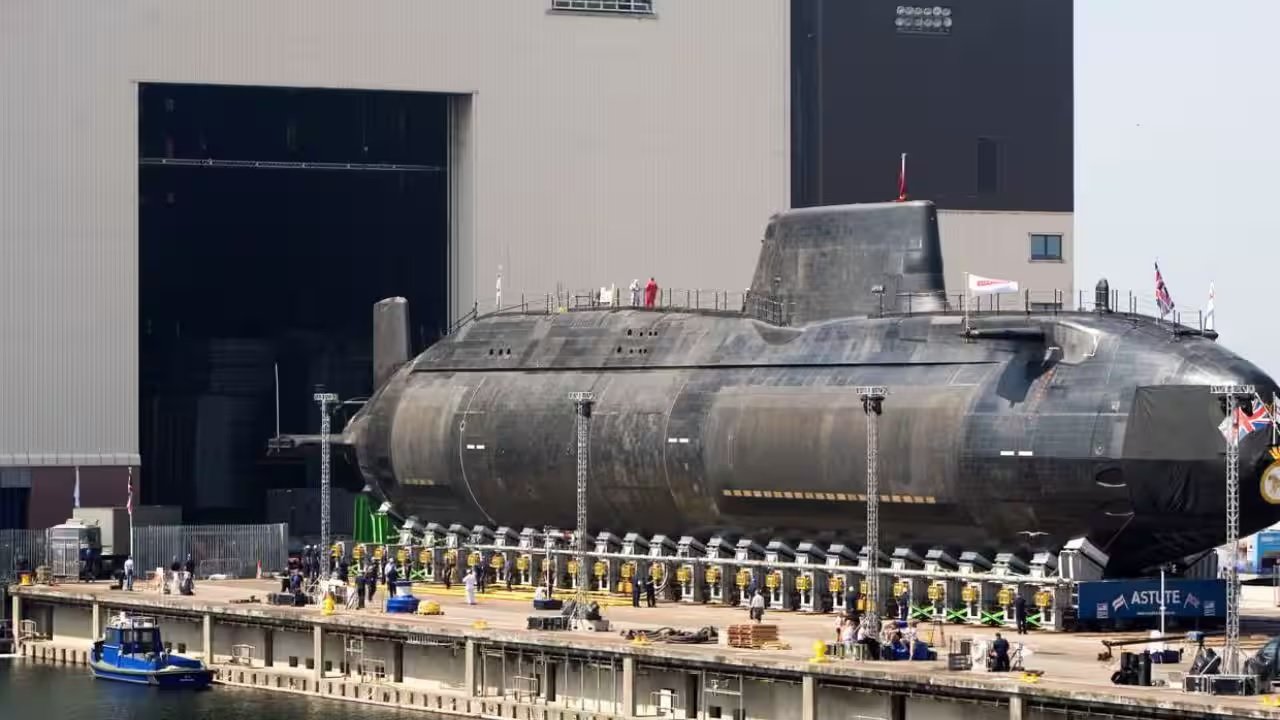
At the centre of the project is a shift in how anti-submarine operations are conducted. Traditionally, naval vessels hunting submarines must move close to suspected underwater contacts to deploy sonar systems and confirm detections. This process often places surface ships within the potential engagement range of hostile submarines. SWORD aims to reduce this risk by using remotely deployed sensors carried by unmanned platforms, enabling naval forces to monitor and respond to submarine threats from safer distances of at least 40 nautical miles.
Growing Focus on Undersea Security
The program comes amid increasing attention to undersea security in Europe. Over the past decade, Russia and China have modernized and expanded their submarine fleets, introducing quieter and more capable platforms designed for intelligence gathering, surveillance, and strategic operations across maritime regions including the North Atlantic, Arctic, and Mediterranean.
As submarines become harder to detect, naval planners are placing greater emphasis on stand-off anti-submarine concepts that combine manned and unmanned systems to improve surveillance coverage and operational response times. SWORD is intended to create a system-of-systems architecture that allows remote deployment of sensors while maintaining continuous situational awareness over large maritime areas.
Why the CAMCOPTER S-300 Was Selected
Schiebel’s CAMCOPTER S-300 was selected due to a combination of payload capacity, endurance, and shipborne operational flexibility that aligns closely with SWORD’s requirements.
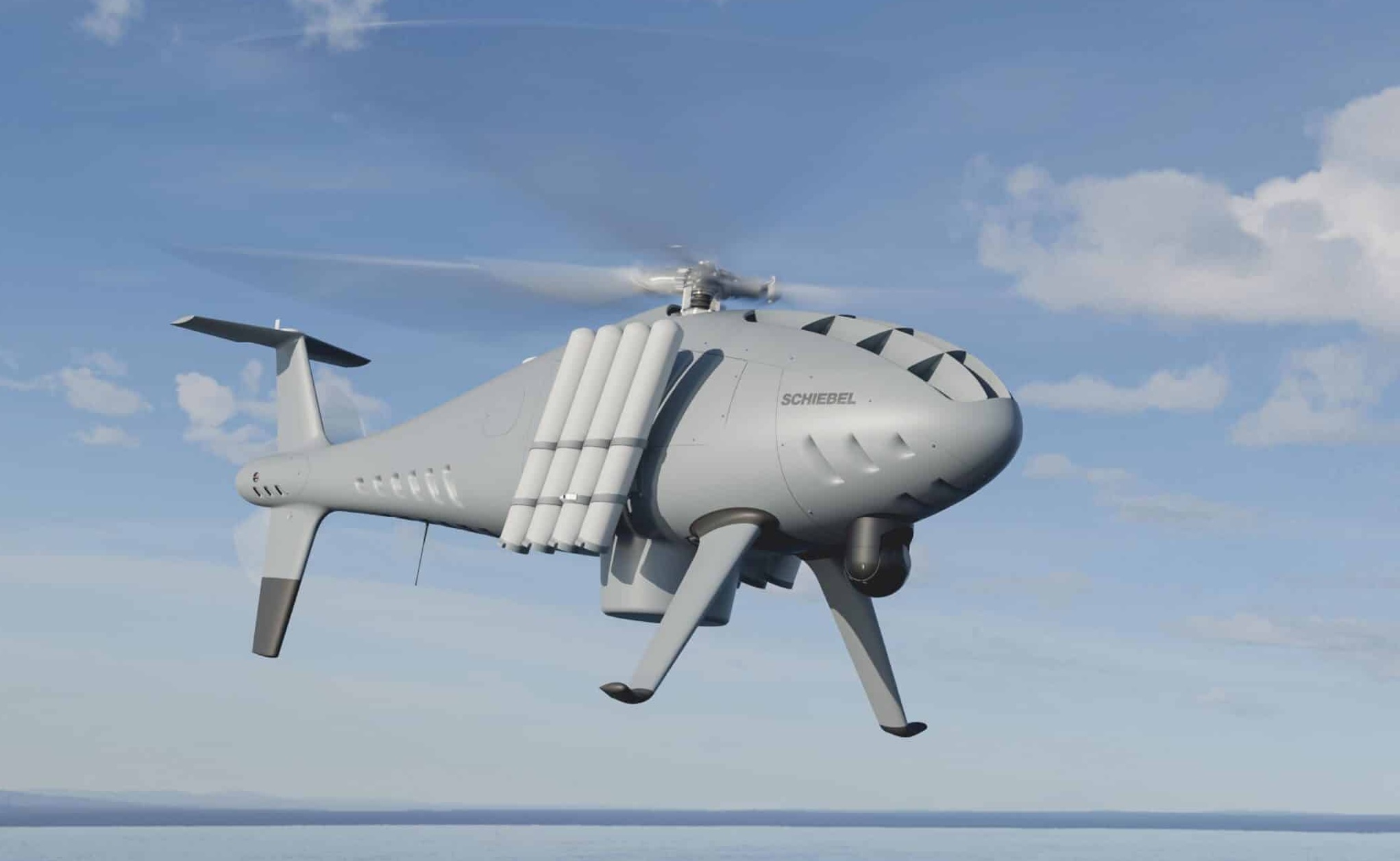
The heavy-lift vertical take-off and landing (VTOL) drone can operate from the flight decks of standard naval vessels without requiring a runway. Its three-bladed foldable rotor system allows it to be stored within existing ship hangars, making it suitable for deployment aboard ships with limited onboard space.
The platform is capable of carrying substantial mission payloads required for anti-submarine warfare. According to Schiebel, the S-300 has a maximum takeoff weight of approximately 700 kilograms (1,545 pounds), an empty weight of around 320 kilograms (705 pounds), and payload capacity of up to 350 kilograms (772 pounds), including fuel.
This capacity enables the aircraft to transport sonar equipment, multiple sonobuoys—including NATO-standard A-size and G-size variants—and additional surveillance systems used to establish acoustic detection fields over wide maritime zones. These systems can help naval operators search for submerged contacts without moving crewed ships directly into potentially contested areas.
Another key advantage is endurance. The S-300 can reportedly remain airborne for up to 24 hours with lighter payload configurations of around 50 kilograms, while missions involving heavier payloads of roughly 250 kilograms generally allow flight durations of around six hours. Such endurance supports persistent monitoring, an important requirement in anti-submarine warfare where maintaining continuous contact with a suspected submarine can be operationally significant.
In terms of performance, the platform measures approximately 4.85 meters in length, stands 1.89 meters high, and uses a main rotor diameter of 5.3 meters. It offers a dash speed of up to 120 knots, a cruise speed of around 55 knots optimized for endurance, a service ceiling reaching 21,000 feet, and a data-link range of up to 200 kilometers.
Building on an Existing Naval Ecosystem
The S-300 also benefits from compatibility with Schiebel’s smaller and widely operated CAMCOPTER S-100 platform. Both systems use the same ground control station, allowing military operators already familiar with the S-100 to transition to the larger aircraft without major retraining or new operational infrastructure.
The S-100 platform has accumulated extensive operational experience with naval and defence users in countries including Germany, France, Italy, and the United Arab Emirates. According to Schiebel, the S-300 builds upon this operational foundation while expanding payload and endurance capabilities for more demanding missions.
The aircraft has undergone testing campaigns in France and surpassed 100 flight hours during evaluation programs, supporting its maturation for operational use.
European Defence Cooperation
The SWORD initiative reflects broader European efforts to strengthen defence cooperation and reduce duplication across national military research programs. Supported through the European Defence Fund, the project brings together companies, research institutions, and universities from several countries including Germany, Denmark, Greece, Cyprus, Italy, the Netherlands, and Poland.
Among the contributors is Poland’s Military University of Technology (WAT), which is involved in work related to multi-platform effectors and rapid-response operational networks. Additional partners include defence and research organizations such as MBDA Deutschland, Fraunhofer-Gesellschaft, and TNO in the Netherlands.
TKMS ATLAS ELEKTRONIK, which leads the project, contributes expertise in naval combat systems, underwater detection technologies, and submarine-related operations. As part of thyssenkrupp Marine Systems, one of Europe’s principal submarine builders, the company brings technical understanding of submarine operating behaviour, tracking requirements, and underwater detection challenges.
“We are proud that the CAMCOPTER S-300 has been selected for this important European Defence initiative,” Hans Georg Schiebel, Chairman of the Schiebel Group, said in a statement. He described SWORD as an example of European cooperation in a strategically relevant maritime defence area and said the selection highlights the S-300’s ability to support future unmanned anti-submarine warfare concepts.
With operational facilities in Austria, France, the United States, Australia, and the UAE, Schiebel said participation in SWORD represents an important step in advancing heavy-lift unmanned systems for maritime defence missions.
Development under the SWORD program will continue over the next three years, with participating organizations expected to focus on technology integration, operational testing, and demonstrations as Europe advances stand-off anti-submarine warfare capabilities for future naval operations.
——— End of Article ———