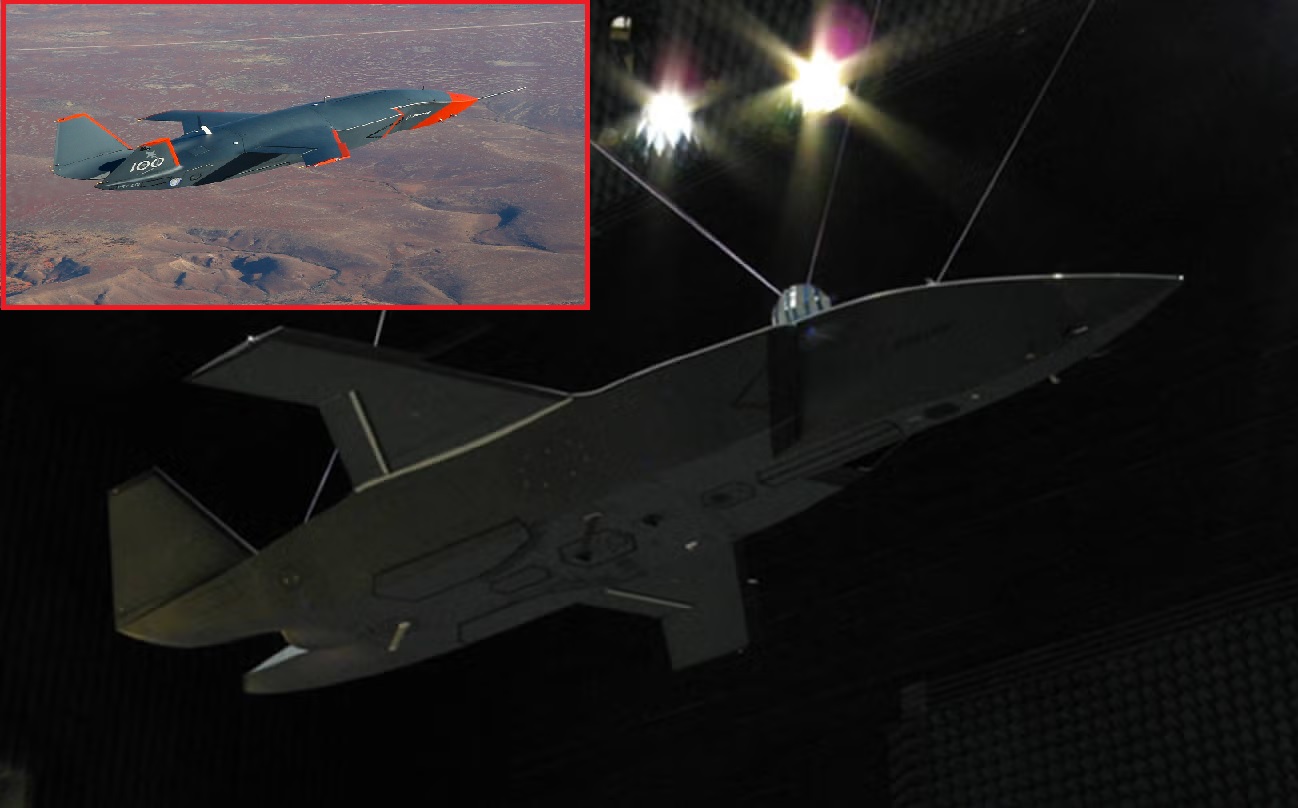
WASHINGTON — June 02, 2026 : Boeing has validated the stealth performance of its MQ-28 Ghost Bat Collaborative Combat Aircraft (CCA) through Radar Cross Section (RCS) testing, a milestone announced on June 1, 2026, that further advances the autonomous aircraft program and supports future certification, procurement, and export efforts.
The announcement comes shortly after Boeing confirmed that the MQ-28 had completed its first operational flights outside Australia, conducting test missions in California to validate autonomous operations in an allied environment.
Stealth Performance Validation
Boeing conducted the RCS assessments to measure the MQ-28 Ghost Bat’s radar detectability and evaluate the effectiveness of its low-observable design. Radar Cross Section (RCS) refers to the amount of radar energy reflected back toward a receiver from a target. Aircraft with lower RCS values are more difficult to detect, track, and engage by enemy radar systems.
The tests were carried out inside a specialized anechoic chamber designed to measure radar signatures under controlled conditions. Boeing assessed the aircraft from multiple angles, including elevation, azimuth (nose-to-tail), and roll, generating repeatable and objective data regarding survivability and detection risks.
According to Boeing, the results validated the aircraft’s stealth-oriented design, production methods, and material choices intended to reduce radar visibility. Lower radar detectability reduces the engagement range of hostile radar systems and improves survivability during operations in contested airspace.
Brad Thompson, Director of Phantom Works Australia, stated that the combination of stealth characteristics, advanced autonomy, artificial intelligence, and a capable operational platform enhances mission effectiveness and flexibility for military operators. He added that the collected data will support procurement decisions, certification activities, and tactical development.
What Radar Cross Section Means
Radar Cross Section (RCS) is a critical measurement used to evaluate stealth performance in military aircraft. Rather than representing the physical size of an aircraft, RCS measures how effectively an object reflects radar energy back toward the radar source.
A lower RCS reduces the range at which radar systems can identify and track an aircraft, improving survivability in contested environments. Boeing stated that the MQ-28 primarily relies on its airframe shape and design features to reduce detectability, with testing helping verify and refine those characteristics.
First Operational Flights Outside Australia
The stealth validation announcement followed Boeing’s confirmation that the MQ-28 recently conducted three flight tests over the Point Mugu Sea Range at U.S. Naval Base Ventura County in California, marking the first time the aircraft has flown outside Australia.
The deployment was intended to validate autonomous operations in a different airspace environment, test integration with foreign command-and-control systems, and demonstrate the aircraft’s ability to be rapidly deployed and sustained from an allied operating location.
The California deployment is also viewed as an important step in demonstrating export readiness, particularly for allied nations in the Indo-Pacific region and the United States.
Although Boeing did not disclose the exact dates of the California missions, at least one MQ-28 had previously been observed in video footage during a December 2025 visit by U.S. Secretary of Defense Pete Hegseth to the Ventura County installation.
Additional footage released by Boeing in May 2026 showed an MQ-28 featuring a two-tone gray livery and an integrated Infrared Search and Track (IRST) sensor mounted in the nose section, indicating that multiple test configurations are currently operating in the United States.
MQ-28 Ghost Bat Program Overview
Originally developed as the Boeing Airpower Teaming System, the MQ-28 Ghost Bat was designed and manufactured by Boeing Defence Australia in partnership with the Royal Australian Air Force (RAAF) as an autonomous aircraft intended to operate alongside crewed combat and support aircraft.
Development of the program began around 2013, followed by the unveiling of the prototype in 2019 and the aircraft’s maiden flight in February 2021. Boeing states that the MQ-28 test fleet has completed more than 150 flights.
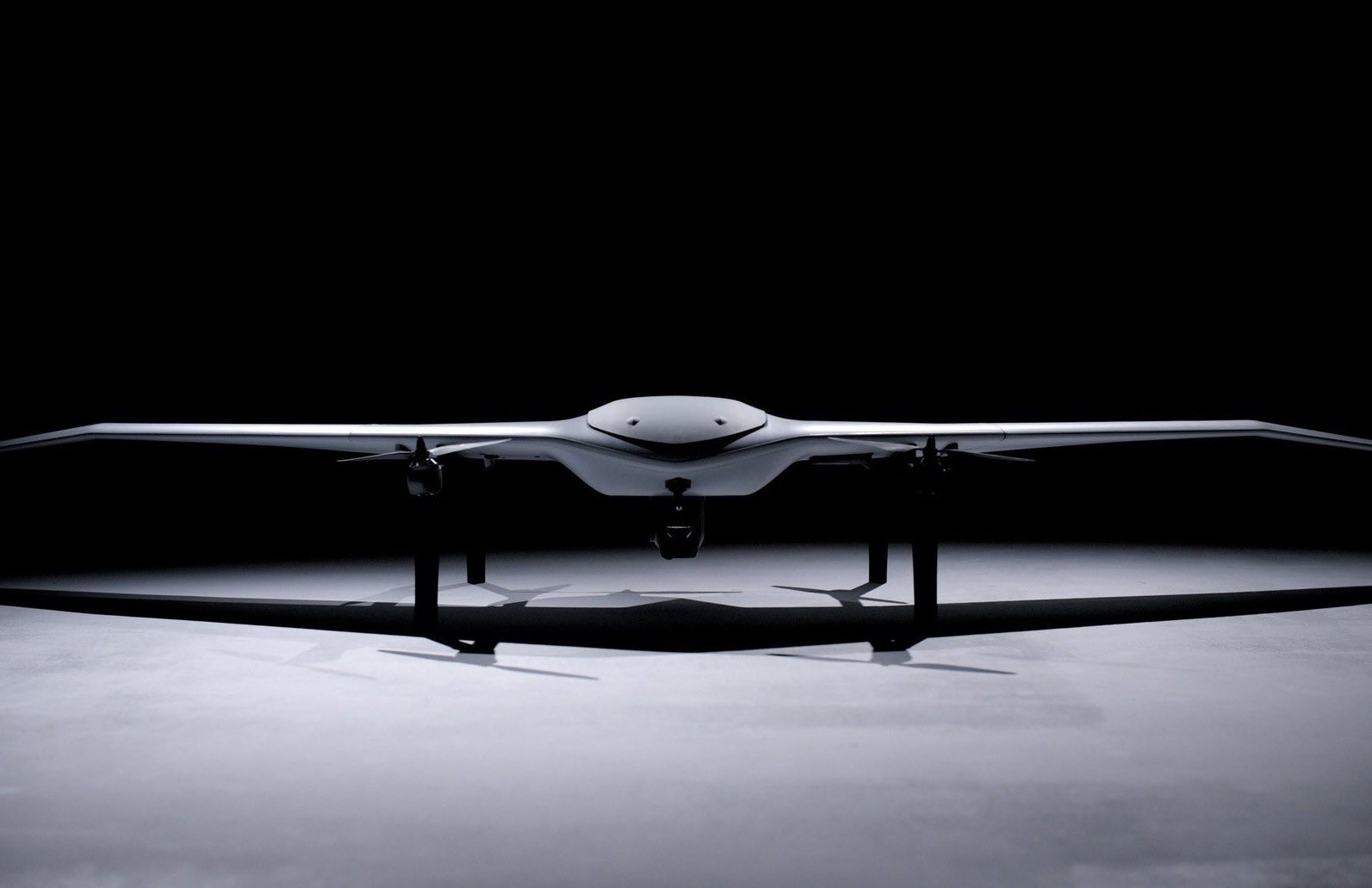
The aircraft is comparable in size to a light fighter and incorporates cranked-kite wings, canted V-tail stabilizers, and side-mounted air intakes that contribute to aerodynamic performance and reduced radar visibility.
The MQ-28 has a range approaching 3,200 kilometers, while some specifications indicate endurance exceeding 2,000 nautical miles (approximately 3,700 kilometers) depending on mission configuration. The platform is capable of speeds up to Mach 0.9 and can operate at altitudes exceeding 40,000 feet.
Payloads and Mission Flexibility
A key feature of the Ghost Bat is its modular 1.5-cubic-meter nose section, which enables operators to rapidly swap mission payloads based on operational requirements.
The aircraft can be configured for Intelligence, Surveillance, and Reconnaissance (ISR) missions, Electronic Warfare (EW), Electronic Intelligence (ELINT) operations to locate or disrupt enemy radar systems, Infrared Search and Track (IRST), and air-to-air attack missions.
The MQ-28 uses artificial intelligence and autonomous systems to fly independently while receiving mission-level direction from human operators.
Loyal Wingman and Teaming Concept
The Ghost Bat was developed under the “loyal wingman” concept, enabling the aircraft to operate alongside crewed military platforms as part of a Manned-Unmanned Teaming (MUM-T) structure.
In a typical mission, a ground-based launch and recovery operator manages takeoff and landing before control is transferred to a crewed platform, which assigns mission tasks to the aircraft.
Compatible platforms include the E-7A Wedgetail, F-35A, F-15EX, and F/A-18F Super Hornet. Missions may be conducted in close formation or with the MQ-28 operating dozens of kilometers away from crewed aircraft while receiving mission instructions.
Operational Milestones and Combat Testing
The MQ-28 program has recorded several operational milestones over the past year.
In June 2025, an E-7 Wedgetail successfully controlled two MQ-28 aircraft during a mission involving a simulated airborne target, demonstrating the aircraft’s teaming capability.
Later, in December 2025, Boeing and the Royal Australian Air Force conducted the platform’s first live-fire exercise. During the test, the MQ-28 launched an AIM-120 Advanced Medium-Range Air-to-Air Missile (AMRAAM) against an aerial target while operating alongside an E-7 Wedgetail and an F/A-18F Super Hornet.
In that demonstration, the Ghost Bat functioned as an off-board weapons release platform, receiving targeting information from crewed aircraft and engaging the target using relayed data.
The MQ-28 program has also involved participation from more than 55 Australian companies and continues to receive government support, with Block 2 aircraft expected to achieve initial operational capability in 2028 with the Royal Australian Air Force.
The successful completion of Radar Cross Section testing represents another development milestone for the MQ-28 Ghost Bat program as Boeing continues work toward operational deployment and potential international customers.
——— End of Article ———