NEW DELHI — June 05, 2026 : The Government of India is moving ahead with plans to strengthen the Indian Navy’s underwater fleet by expanding Project 75(I) from the originally planned six submarines to a total of nine diesel-electric submarines. The move is aimed at addressing future fleet shortages, enhancing maritime security, and increasing indigenous defence production.
The contract for the first six submarines under Project 75(I) is in the final stages and is expected to be signed later this year.
MDL-TKMS Partnership for Project 75(I)
Under the programme, Mazagon Dock Shipbuilders Limited (MDL) will build six advanced conventional submarines in partnership with Germany’s Thyssenkrupp Marine Systems (TKMS).
The submarines will be equipped with hydrogen fuel cell-based Air Independent Propulsion (AIP) systems, enabling them to remain submerged and operate silently for up to 14 days without surfacing.
The first submarine is expected to be delivered seven years after contract signing, with indigenous content beginning at 45 percent and increasing to 60 percent by the sixth submarine. Subsequent vessels are planned to be delivered annually.
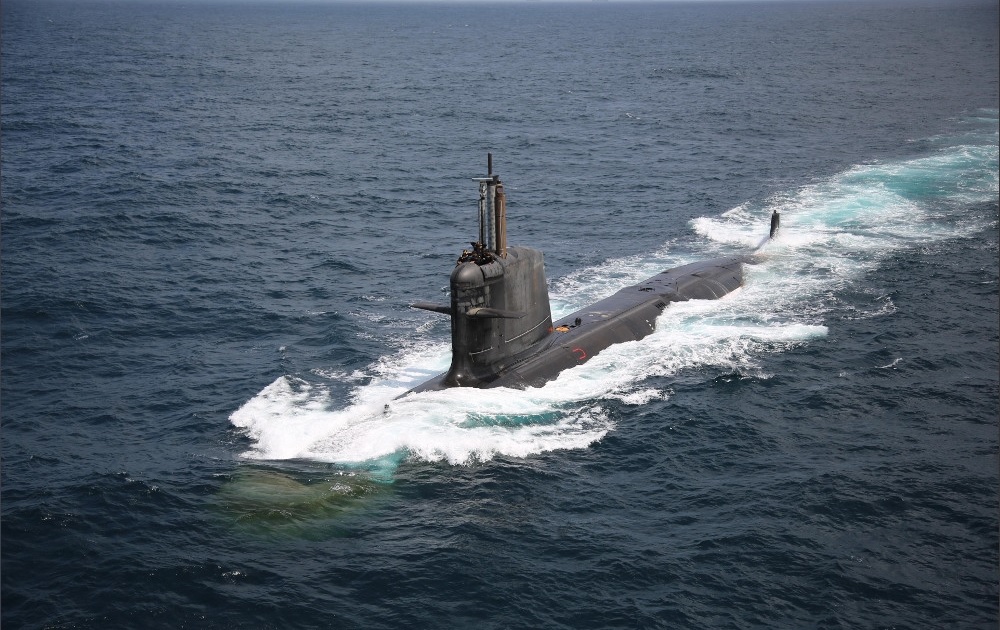
Following the signing of the main contract, the government intends to proceed with the acquisition of three additional submarines. A final decision has not yet been made on whether these will be follow-on TKMS submarines or upgraded Scorpene-class submarines built by the MDL-Naval Group partnership.
Debate Over Additional Submarines
The Indian Navy had earlier proposed acquiring three additional Scorpene-class submarines to address near-term force requirements.
The proposal underwent lengthy negotiations, with the estimated cost reportedly reduced from over ₹50,000 crore to approximately ₹36,000 crore.
France and Naval Group have argued that expanding the Scorpene fleet to nine boats would simplify logistics and maintenance. The proposed upgraded submarines would feature 60 percent indigenous content, increased endurance, larger fuel and sanitary reserves, and more than double the weapon-carrying capacity of the existing fleet.
However, defence planners have raised concerns that the current six Scorpene submarines contain less than 20 percent indigenous content and continue to depend on France for critical spare parts.
As a result, the TKMS-MDL partnership currently holds an advantage, as the technology transfer and industrial ecosystem created under Project 75(I) are expected to support India's future indigenous submarine programmes.
Project 76 to Focus on Indigenous Design
Following Project 75(I), India plans to launch Project 76, which will involve the construction of at least six next-generation conventional submarines designed entirely in India by the Indian Navy’s Warship Design Bureau and the Defence Research and Development Organisation (DRDO).
The submarines, expected to displace around 3,000 tonnes, will incorporate indigenous weapon control systems, lithium-ion batteries, and an upgraded domestic AIP system.
Indigenous content is projected to range between 70 and 90 percent, with imports limited to select specialised components.
Driven by Regional Maritime Developments
India’s submarine expansion plans come as regional naval competition continues to grow.
The Indian Navy currently operates 19 conventional and nuclear submarines, but several ageing vessels are expected to begin retiring from the late 2030s.
In comparison, China operates an estimated 65 submarines and continues to expand its fleet. Pakistan is also strengthening its underwater capabilities and is expected to induct eight Chinese-origin Hangor-class submarines in the coming years.
To maintain operational capability in the Indian Ocean Region, the government plans to build nearly two dozen new submarines over the next two decades, including conventional attack submarines, nuclear-powered attack submarines (SSNs), and ballistic missile submarines (SSBNs).
The expansion of Project 75(I) and the development of Project 76 are expected to play a central role in modernising the Indian Navy’s submarine force while advancing India's long-term goal of defence self-reliance.
——— End of Article ———