WEST LAFAYETTE, Indiana — May 21, 2026 : L3Harris Technologies has completed a self-funded testing campaign for two advanced Rotating Detonation Engines (RDEs), marking a significant milestone in the company’s effort to develop next-generation propulsion systems for future missile applications.
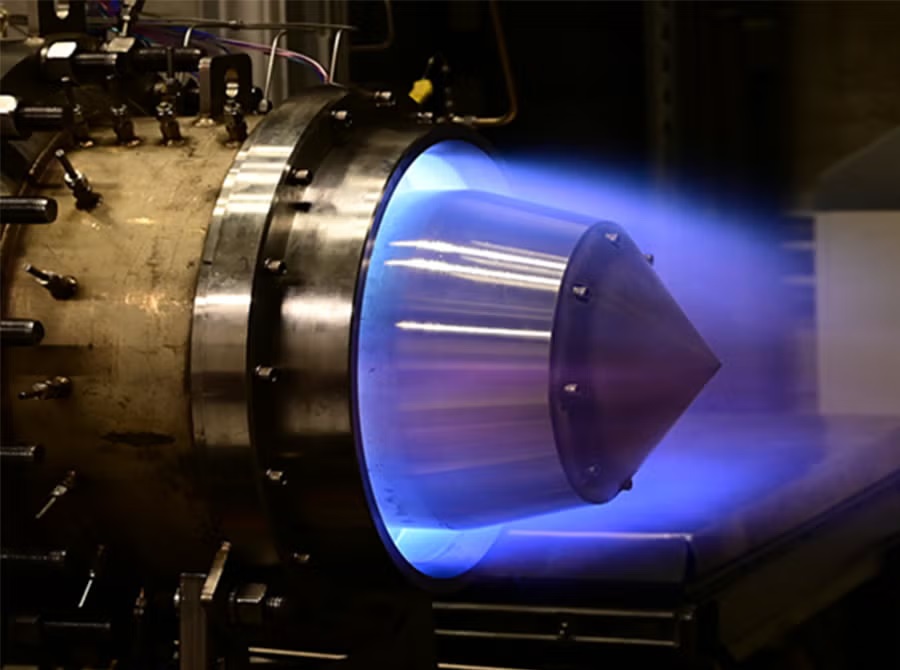
The tests were conducted at Purdue University’s Zucrow Laboratories and focused on validating both the operational physics and full-scale performance of the propulsion technology. According to the company, the campaign consisted of two separate testing phases designed to examine sustained engine operation and mission-representative performance across a simulated flight profile.
Long-Duration Testing Validates Core Engine Physics
The first phase of testing focused on long-duration engine runs intended to validate the fundamental physics governing rotating detonation engine operability. Engineers evaluated how the propulsion system behaved during extended operation and identified the conditions under which the technology performs most effectively under continuous thermal and mechanical stress.
L3Harris stated that the test series provided important data regarding combustion stability, operational consistency, and overall engine behavior during prolonged operation.
Full-Scale Engine Demonstrates Mission-Range Operation
The second phase involved a full-scale rotating detonation engine operating in a test stand environment. During this series, the engine successfully demonstrated the ability to function across the complete simulated flight range associated with a relevant defense mission profile.
According to the company, the testing confirmed that the propulsion system could maintain reliable operation throughout different phases of simulated mission conditions, providing data that will support future integration into operational flight systems.
Scott Alexander, President of Missile Propulsion at L3Harris, stated that completing two successful rotating detonation engine test campaigns within a single year highlights the company’s expanding propulsion development capabilities.
Alexander noted that L3Harris continues to develop a broad propulsion portfolio that includes solid rocket motors, highly loaded grains, ramjets, dual-mode ramjets, and advanced-cycle propulsion technologies intended to improve the range, speed, and operational capability of future defense systems for the United States and allied nations.
Rotating Detonation Engines Offer Efficiency Advantages
Rotating Detonation Engines represent an advanced form of air-breathing propulsion technology that differs significantly from conventional combustion systems. Unlike traditional engines that rely on subsonic deflagration combustion, RDEs use continuous detonation waves traveling around an enclosed combustion chamber.
This detonation-based process is being studied across the aerospace and defense sector because of its potential thermodynamic efficiency advantages over conventional propulsion methods. The technology could allow future missile systems to achieve greater operational range and higher speed while reducing propulsion system complexity.
L3Harris stated that RDE architectures generally require fewer moving components than traditional turbofan or ramjet systems, which could simplify manufacturing and maintenance requirements.
Additive Manufacturing Used in Engine Production
As part of the development effort, L3Harris utilized additive manufacturing techniques, including 3D printing, to produce critical engine components used during the testing campaign.
The company stated that additive manufacturing helped reduce production timelines and lower manufacturing costs while allowing engineers to rapidly develop and test propulsion hardware during the research phase.
More Than a Decade of Internal Development
The propulsion effort was conducted under L3Harris’ Advanced Missile Propulsion Technology division and represents more than a decade of internal research and development investment focused on rotating detonation ramjet technology.
George Thum, Director of Advanced Missile Propulsion Technology at L3Harris, stated that data collected during the Purdue University testing campaign will support future system integration efforts and help define operating requirements for next-generation RDE-powered systems.
According to Thum, the tests provided valuable feedback regarding how the propulsion system can be adapted for near-term operational applications while also helping engineers expand the operating envelope of future RDE-powered platforms.
Future Integration Efforts Continue
L3Harris has not released detailed performance figures, thrust data, or timelines for future flight demonstrations. The company also did not identify which missile platforms or defense programs may eventually integrate the propulsion technology.
However, with both the fundamental physics and full-scale operational characteristics now validated through testing, the company stated that it is continuing efforts to transition rotating detonation engine technology toward future flight-ready systems intended for high-speed and extended-range defense missions.
——— End of Article ———