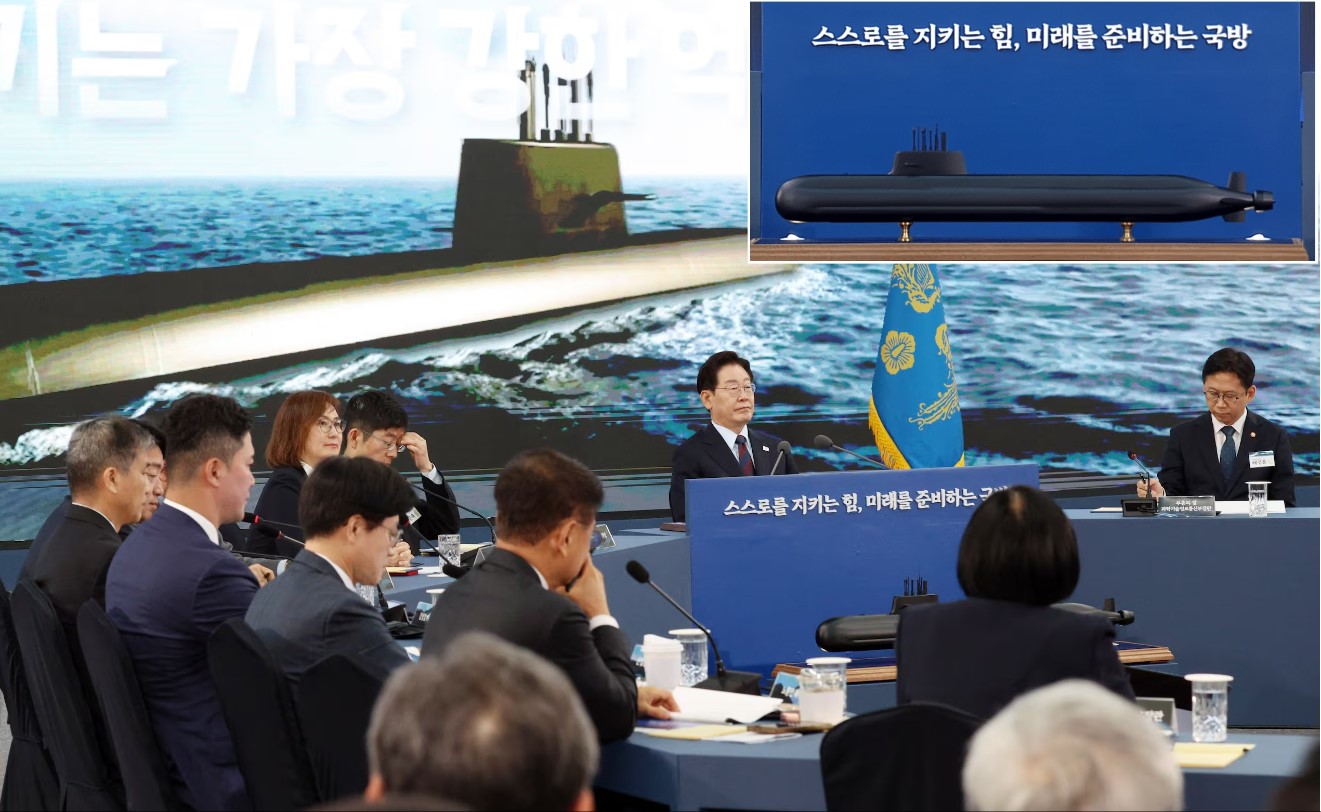
SEOUL — May 26, 2026 : South Korea’s Ministry of National Defense on Tuesday announced the “Basic Plan for the Development of the Republic of Korea Nuclear-Powered Submarine,” formally outlining the country’s first long-term roadmap for the systematic development of domestically built nuclear-powered submarines. The initiative, officially designated as the Jangbogo-N Project, aims to launch the lead submarine in the mid-2030s, with operational commissioning planned after the late 2030s.
The announcement was made during the inaugural Future Defense Strategy Committee meeting held at the naval submarine command in Jinhae, South Gyeongsang Province. The meeting was attended by President Lee Jae-myung, while Defense Minister Ahn Gyu-back presented the development plan.
According to the Ministry of National Defense, the document establishes a framework for both domestic and international understanding of the direction of South Korea’s nuclear-powered submarine development. Officials described the effort as a national strategic project intended to strengthen maritime deterrence and improve the Republic of Korea Navy’s ability to respond to North Korea’s growing submarine-based nuclear and missile threats.
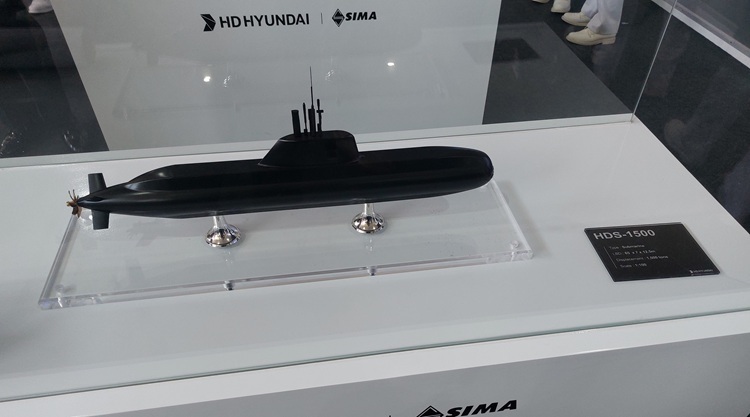
The planned submarines are expected to displace approximately 5,000 tons and will provide significantly greater endurance and operational flexibility compared with the navy’s existing diesel-electric fleet. Unlike conventional submarines that must periodically surface or snorkel, nuclear-powered submarines can remain submerged for extended periods while sustaining higher mobility and longer operational reach.
Development Framework Based on Five Principles
The Defense Ministry stated that the submarine program will be developed systematically and in phases under five key principles intended to ensure operational reliability, domestic self-reliance, safety, and long-term sustainability.
First, the propulsion reactor will use low-enriched uranium fuel and will be designed for long-cycle operation to minimize the need for nuclear fuel replacement during service. Officials said the decision reflects South Korea’s intention to maintain compliance with international non-proliferation norms while developing an operationally sustainable propulsion system.
Second, the submarines will be designed, built, maintained, and sustained within South Korea to strengthen autonomy in force acquisition, logistics, maintenance, and long-term operational support. Authorities stated that domestic production will reduce external dependency and secure stability in future naval operations.
Third, the submarine platform and propulsion system will incorporate technologies accumulated through South Korea’s civilian nuclear energy and shipbuilding sectors. The government said extensive industrial experience gained over decades in commercial shipbuilding and reactor technologies will be actively utilized to ensure a high level of safety, reliability, and technical maturity.
Fourth, the program will be managed under a total life-cycle system covering every phase of the submarine’s service, including design, construction, operation, maintenance, nuclear fuel management, dismantlement, and radioactive waste treatment. Officials said this approach is intended to secure sustainable and stable operation over several decades.
Fifth, the government reaffirmed that all development milestones will remain aligned with its current schedule, targeting the launch of the first submarine in the mid-2030s and entry into active naval service after the late 2030s.
Non-Proliferation Commitments and Nuclear Safety
South Korea also emphasized that the submarine program will proceed within strict international non-proliferation obligations. The Ministry reiterated the government’s position that the country neither possesses nuclear weapons nor intends to develop them in any form.
Officials stressed that the nuclear-powered submarines will rely exclusively on nuclear propulsion and not nuclear armament. The procurement, management, and safeguarding of low-enriched uranium fuel will be conducted transparently and in close coordination with the United States to maintain compliance with international nuclear standards.
In addition, Seoul announced plans to establish a safeguards system jointly with the International Atomic Energy Agency to oversee fuel management and ensure adherence to high-level non-proliferation commitments. The government also stated that all radioactive waste generated by nuclear-powered submarines will be safely and systematically managed in accordance with relevant domestic laws and international safety regulations.
Industrial and Economic Significance
The Defense Ministry described the submarine initiative as a national industrial development program expected to extend over more than 40 years, including roughly ten years of construction and more than three decades of operational service.
Authorities said the project will connect South Korea’s defense, nuclear energy, and shipbuilding industries, while contributing to industrial expansion, technological development, and infrastructure growth. Technologies accumulated during submarine construction are expected to spread into related industrial sectors and support broader advancements in national manufacturing capabilities.
The government estimates that the program could generate more than 40,000 stable, high-quality jobs while strengthening regional industrial competitiveness and long-term economic growth potential.
Legacy of the Jangbogo-N Project
Officials confirmed that the nuclear-powered submarine initiative will be promoted under the name Jangbogo-N Project, inheriting the legacy of the Republic of Korea Navy’s first submarine, ROKS Jang Bogo (SS-061), which entered service in 1992 before later being decommissioned.
The designation is intended to preserve the symbolic heritage of the original submarine while introducing a next-generation naval platform integrating nuclear propulsion and advanced technologies for future maritime operations.
The Republic of Korea Navy currently operates a submarine force consisting of nine Jang Bogo-class Type 209/1200 diesel-electric submarines, seven Son Won Il-class Type 214 submarines equipped with air-independent propulsion systems, and the Dosan Ahn Changho-class KSS-III hybrid diesel-electric and fuel-cell-powered submarines.
The Ministry of National Defense stated that national resources will continue to be concentrated to ensure the successful implementation of the nuclear-powered submarine project as part of South Korea’s long-term maritime security planning.
——— End of Article ———