ANDOVER, Massachusetts — June 03, 2026 : The U.S. Navy has awarded Raytheon, an RTX business, a contract modification valued at approximately $515.8 million to continue integration, testing, production support, and modernization efforts for the AN/SPY-6(V) family of naval radars. The contract is a follow-on to a June 2025 agreement and will support the radar program through May 2027.
The award ensures continued engineering, software development, testing, ship installation support, and technical improvements for the Navy’s next-generation radar system as it expands across the fleet. The contract also supports the ongoing installation of the SPY-6(V)4 variant aboard Flight IIA Arleigh Burke-class destroyers, extending advanced air and missile defense capabilities to existing warships.
Key Sensor for Air and Missile Defense
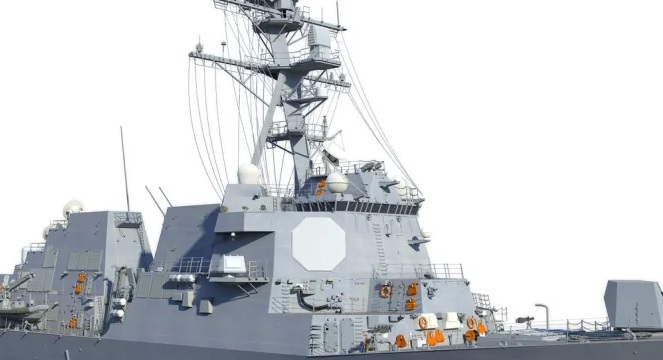
The AN/SPY-6(V) radar family has been developed to replace the legacy AN/SPY-1 radar system and serves as the primary sensor for integrated air and missile defense operations aboard modern U.S. Navy surface combatants. The radar is designed to detect, track, and discriminate a wide range of threats, including ballistic missiles, hypersonic weapons, cruise missiles, aircraft, unmanned systems, and surface targets.
Built using gallium nitride (GaN) semiconductor technology, the radar delivers significantly greater sensitivity and efficiency compared with previous-generation systems. According to the Navy, the SPY-6 can detect smaller objects at greater distances while simultaneously tracking multiple threats in complex operational environments.
The radar utilizes a modular architecture based on Radar Modular Assemblies (RMAs), self-contained radar units housed in 2-foot-by-2-foot-by-2-foot modules. These building blocks can be combined in different configurations to meet the requirements of various ship classes, making the SPY-6 the Navy’s first scalable radar system.
Supporting Fleet Modernization
The SPY-6(V)1 variant serves as the primary radar aboard Flight III Arleigh Burke-class destroyers, while the SPY-6(V)4 version is being integrated onto upgraded Flight IIA destroyers. Variants of the radar are also planned for additional naval platforms as part of the Navy’s broader modernization strategy.
More than 15 SPY-6 radars have been delivered to date. The system is currently operational aboard commissioned U.S. Navy vessels, including the Flight III destroyer USS Jack H. Lucas, while additional ships equipped with the radar are undergoing testing and construction. Over the coming decade, the Department of Defense expects the SPY-6 family to be deployed on more than 50 U.S. Navy ships, with long-term plans covering at least 60 vessels across multiple ship classes.
The radar is integrated with the Aegis Combat System, providing enhanced target detection and tracking capabilities that support long-range missile engagements and multi-domain operations.
Production Expansion and Industrial Investment
To support growing demand for the SPY-6 program, Raytheon recently completed an $800 million investment in its radar manufacturing infrastructure. The modernization effort includes upgrades to production facilities and the establishment of a 30,000-square-foot Radar Development Facility in Andover, Massachusetts, featuring an in-house gallium nitride semiconductor foundry.
According to Raytheon, the expanded manufacturing capacity is expected to double SPY-6 production output by 2028.
Barbara Borgonovi, president of Naval Power at Raytheon, stated that the radar has demonstrated operational success over more than a decade of development and testing, providing advanced sensing capabilities and multi-mission readiness for the U.S. Navy.
International Participation
Approximately 26 percent of the contract value is allocated to Foreign Military Sales (FMS) activities. Germany is identified as a participant under the agreement after selecting the SPY-6(V)1 radar for its future F127-class frigates.
The selection marks the first international adoption of the SPY-6 system and is intended to enhance interoperability between German and NATO naval forces. The contract structure allows additional allied nations to participate in future procurements as demand for integrated air and missile defense systems continues to grow.
Work Locations and Funding
Contract work will be performed across multiple locations in the United States. The largest share, approximately 54 percent, will take place at Raytheon’s facilities in Marlborough, Massachusetts, which serves as the primary center for software development, systems engineering, and program management.
Additional work will be conducted in Pascagoula, Mississippi (14 percent), near Huntington Ingalls Industries' shipyard where SPY-6-equipped destroyers are under construction, and Moorestown, New Jersey (9 percent), a key location for radar development and Aegis combat system integration.
Other activities will be carried out in Newport News and Chesapeake, Virginia; Kauai, Hawaii; Wallops Island, Virginia; Bath, Maine; Portsmouth, Rhode Island; Aurora, Colorado; and San Diego, California.
Funding for the contract comes from a combination of Navy appropriations spanning fiscal years 2017 through 2026, including shipbuilding and conversion accounts, research and development funding, operations and maintenance budgets, and other procurement programs. Of the total award, approximately $17.5 million in fiscal year 2026 operations and maintenance funding is required to be obligated before the end of the current fiscal year.
The contract is managed by the Naval Sea Systems Command (NAVSEA) in Washington, D.C., which oversees the Navy’s shipbuilding, combat systems, and fleet modernization programs.
Long-Term Strategic Role
The SPY-6 radar is a central component of the Navy’s effort to enhance maritime air and missile defense capabilities against increasingly advanced threats. Its active electronically scanned array design and digital beamforming technology provide substantially greater sensitivity than earlier radar systems, enabling improved detection ranges and target discrimination.
The latest contract ensures continued integration, testing, software upgrades, and sustainment support as the SPY-6 enters broader operational service across the U.S. fleet and among allied navies, supporting the long-term modernization of naval air and missile defense capabilities.
——— End of Article ———