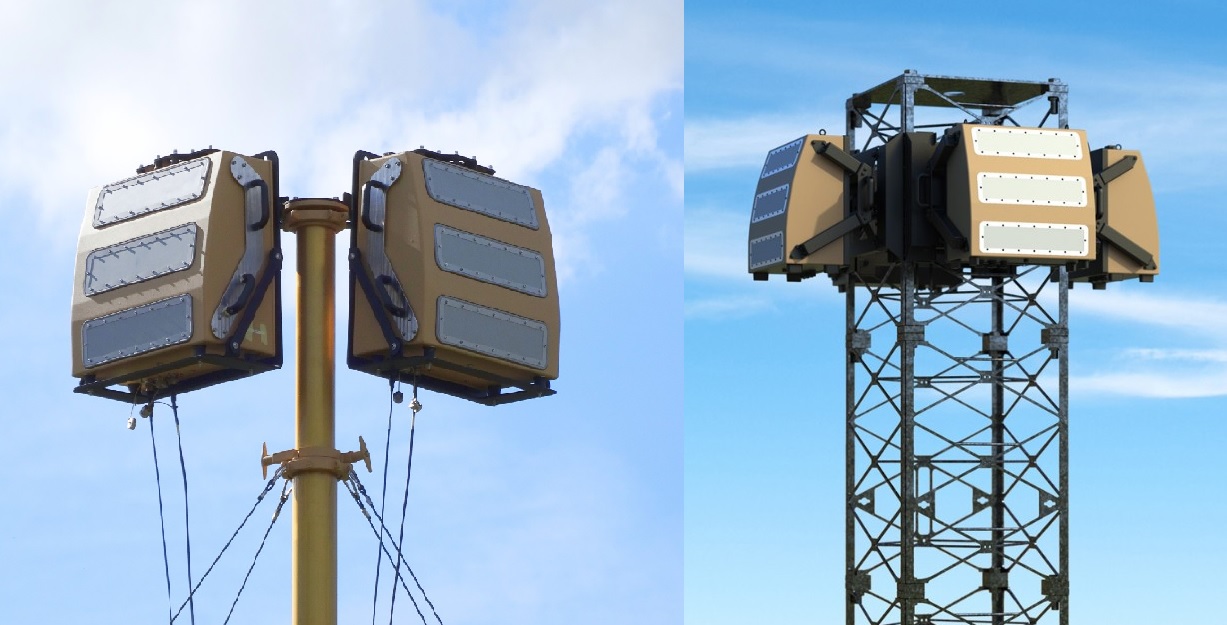
CAMBRIDGE, United Kingdom — June 04, 2026 : UK-based radar manufacturer Blighter Surveillance Systems has secured a follow-on contract from an undisclosed Eastern European army for the supply of its A800 Mk2 4D multi-mode radars, further strengthening the military's border surveillance and counter-drone capabilities.
The agreement covers the deployment of the A800 Mk2 radar systems at fixed border locations as well as their integration onto army reconnaissance vehicles. The latest order follows an earlier contract with the same customer and reflects continued efforts to enhance protection against ground incursions and increasingly sophisticated unmanned aerial threats.
Addressing the Challenge of Low-Altitude Drone Threats
The procurement comes amid growing concerns over the use of small, low-flying drones in modern conflicts. Such systems often operate close to terrain, possess a low radar cross-section (RCS), and can evade detection by conventional air surveillance radars.
According to the company, the Eastern European military selected the A800 Mk2 because of its ability to detect, classify, and track a wide range of aerial and ground threats simultaneously. The radar is specifically designed to counter targets that are difficult to identify using traditional surveillance systems, including first-person-view (FPV) drones, fibre-optic-guided drones, and Shahed-type one-way attack drones.
The radar utilizes an electronic-scanning array (ESA) design with no moving parts, combining Ku-Band sensing technology, micro-Doppler signature analysis, and AI-assisted target classification. These technologies allow the system to distinguish genuine threats from birds, wildlife, and environmental clutter while maintaining reliable detection performance.
Advanced Detection and Tracking Capabilities
The A800 Mk2 is capable of simultaneously detecting, classifying, and tracking ground, sea, and air targets at distances of up to 20 kilometers. The radar can also monitor fast-moving objects travelling at speeds of up to Mach 1, making it suitable for a wide range of operational scenarios.
Key technical features of the system include:
- 4D target measurement, providing range, azimuth, elevation, and Doppler velocity data.
- Fully electronic scanning in azimuth with multi-beam monopulse elevation measurement.
- Instrumented ranges of 3.5 km, 10 km, or 20 km.
- Fast scan rates, with a minimum scan time of 0.25 seconds in spotlight mode.
- Automatic rain mitigation for all-weather operations.
- Low Size, Weight and Power (SWaP) design suitable for both fixed and mobile deployments.
- Gigabit Ethernet connectivity supporting secure and encrypted data transfer.
The radar is also capable of detecting nano-quadcopter drones at ranges of up to 3 km, Class 2 winged drones at distances of up to 7 km, and walking personnel at ranges reaching 5 km.
In addition, the system supports simultaneous multi-mode operation for air, ground, and coastline surveillance and can process more than 500 targets per scan, enabling effective monitoring of complex operational environments.
BlighterNexus Software to Enhance Command and Control
Beyond the radar hardware, the contract includes the delivery of BlighterNexus, the company's integrated software platform designed to connect radar systems directly into military command-and-control (C2) networks.
The software links the radars with operator interfaces and third-party sensors, creating a unified Common Operating Picture (COP) across multiple border regions. This allows military personnel to receive consolidated situational awareness data from various surveillance assets through a single operational framework.
BlighterNexus also serves as a multi-sensor connectivity and processing platform, incorporating AI-assisted capabilities to improve target identification and information management.
Company Highlights Operational Advantages
Commenting on the contract award, James Long, Chief Executive Officer of Blighter, said the company was pleased to receive the follow-on order from the military customer.
He stated that the radars would provide 24/7 all-weather protection against both ground incursions and the increasing threat posed by low-altitude drones, which have become a significant feature of recent conflicts.
Long noted that the company's ground-based radar technology is particularly effective in detecting low-and-fast targets, including FPV drones, fibre-optic-guided drones, and fixed-wing unmanned aircraft. He added that the A800 Mk2 is among a limited number of radar systems available at a price below US$1 million that can detect targets travelling at speeds of up to Mach 1.
Global Deployment and Operational Experience
Blighter's radar systems have established a broad operational footprint in both military and civilian applications. The company's technology is currently deployed for counter-unmanned aerial system (C-UAS) missions, border security, and critical infrastructure protection worldwide.
According to the company, its radars are used for drone detection at international airports, by the United States Air Force, at multinational forward-operating bases in the Middle East, and across various government national security projects.
More than 800 Blighter radar units have been fielded globally for applications including border surveillance, critical infrastructure protection, counter-drone operations, and military reconnaissance missions. The A800 Mk2 builds upon the company's earlier A400 and A800 series radar platforms, which have also been supplied to NATO customers for tactical surveillance and border security roles.
Growing Demand for Counter-Drone Surveillance Systems
The latest contract underscores the increasing demand for cost-effective, high-performance ground-based radar systems capable of addressing modern threats from small unmanned aircraft and ground-based incursions. As military forces continue to strengthen border security and counter-drone defenses, advanced surveillance solutions such as the A800 Mk2 are expected to play an increasingly important role in protecting critical operational areas.
The company did not disclose the value of the contract, the number of radar systems ordered, or the delivery schedule.
——— End of Article ———