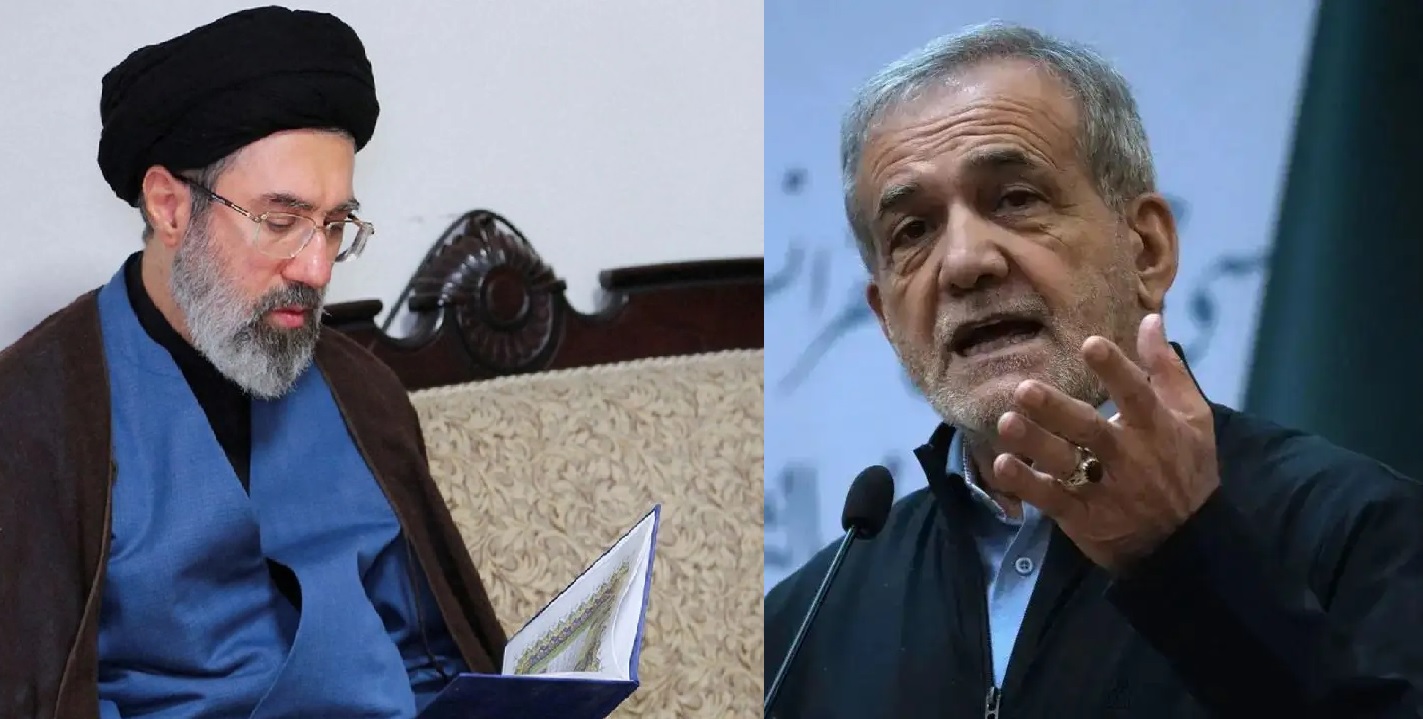
TEHRAN — June 1, 2026: Iranian President Masoud Pezeshkian has reportedly submitted a resignation letter to the office of Supreme Leader Mojtaba Khamenei, according to multiple international media reports citing unnamed sources. The reports claim the president raised concerns over his administration’s exclusion from major state decision-making and the growing role of hardline factions within the Islamic Revolutionary Guard Corps (IRGC). Iranian officials, however, have firmly rejected the reports and described them as false.
According to a report by Fox News citing sources from the London-based media outlet Iran International, Pezeshkian allegedly submitted a letter requesting to step down from office immediately. The reported letter stated that his administration had become increasingly sidelined from important government decisions, preventing him from effectively carrying out his constitutional and executive responsibilities.
The reported resignation letter allegedly claimed that hardline elements within the IRGC had assumed control over key national affairs, leaving the elected administration unable to function independently. Pezeshkian reportedly wrote that under such conditions he could no longer govern effectively or fulfill his legal obligations as president.
Iran International reported that the letter was sent to the office of Supreme Leader Mojtaba Khamenei on May 31, though there has been no confirmation from Iranian authorities regarding its existence or authenticity. The outlet claimed that Pezeshkian warned in the letter that the structure of government had deviated from official processes and that key parts of the administration were under the control of a particular political spectrum.
The reported development comes amid ongoing concerns regarding tensions between Iran’s civilian leadership and the IRGC, which holds significant authority in national security, military affairs, and regional policy. Independent reports have pointed to differences between civilian institutions and military commanders over the management of recent conflicts and their economic impact on Iranian citizens.
One reported area of disagreement concerns the management of shipping through the Strait of Hormuz, a strategically important maritime route. According to reports, Iran’s foreign ministry and civilian government have sought to maintain commercial shipping access for selected partner countries, including India, while IRGC units have at times acted independently in maritime operations involving commercial vessels.
Reports have also suggested communication challenges between the civilian administration and the country’s highest leadership. Following his succession earlier this year, Supreme Leader Mojtaba Khamenei is reportedly operating from a secure undisclosed location, with communication allegedly taking place through intermediary channels. According to these accounts, IRGC officials have reportedly acted as intermediaries between the president’s office and the Supreme Leader, contributing to reported institutional difficulties within the government structure.
Iranian authorities moved quickly to reject the resignation claims. Seyed Mehdi Tabatabaei, Deputy for Communications and Information Dissemination in the President’s Office, described the reports as baseless and rejected suggestions that President Pezeshkian intended to leave office.
Tabatabaei stated that statements regarding the president’s position should not be taken seriously and characterized the reports as “childish behaviors of a few misguided elements.” He also said that Iran has many capable young people who are prepared to contribute to governance and leadership responsibilities.
He further described the reports as “rumor-mongering by a disreputable foreign network” and said they represented a continuation of what he called previous media campaigns aimed at promoting inaccurate narratives about Iran’s political system.
Separately, an informed government source cited by Tasnim News Agency dismissed Iran International’s report and denied that President Pezeshkian had submitted a resignation letter to Supreme Leader Mojtaba Khamenei. The source described Iran International as a “factory of fabrications” and claimed the outlet was affiliated with Mossad.
“The president has not resigned. He worked today and his future plans will proceed as usual,” the source said.
According to the source, the spread of such reports is intended to collect intelligence for Mossad and the CIA and to create division and weaken social cohesion inside Iran.
Tabatabaei emphasized that President Pezeshkian remains committed to his responsibilities and will continue serving the country. He also rejected claims of political deadlock between the civilian government and military institutions, stating that the administration continues to carry out its daily executive operations without interruption.
Masoud Pezeshkian, considered a reformist-leaning political figure, assumed office as president in 2024. His administration has overseen a period marked by regional tensions, economic challenges, and continuing debate over the balance of authority between elected institutions and influential security organizations such as the IRGC.
As of June 1, there has been no official confirmation from the office of the Supreme Leader regarding the reported resignation letter, and President Pezeshkian continues to perform his official duties.
——— End of Article ———