ATHENS, Greece — May 17, 2026 : The Greek government is reassessing its €55 million acquisition of four Safran Patroller unmanned aerial vehicles (UAVs) following France’s decision to terminate the Patroller program, a move that has raised concerns in Athens over the long-term operational and industrial viability of the platform.
The contract, signed in June 2023 through the NATO Support and Procurement Agency (NSPA), was intended to modernize the Hellenic Army’s tactical UAV fleet by replacing the aging Sperwer drones, which have been in service since the early 2000s. The Patroller systems were expected to expand Greece’s intelligence, surveillance and reconnaissance (ISR) capabilities over the Aegean Sea and the Thrace region.
France formally cancelled the Patroller program in April 2026 as part of a revised military programming law that also ended the multinational Eurodrone project. French defense officials concluded that traditional Medium-Altitude Long-Endurance (MALE) UAVs have become increasingly vulnerable in modern combat environments shaped by advanced air defense systems, electronic warfare and the growing use of low-cost tactical drones in conflicts such as Ukraine and the Middle East.
According to French military assessments, the Patroller platform was considered too slow, too large and too easily detectable for future operational requirements. The cancellation effectively removed the system’s primary domestic customer, creating uncertainty regarding long-term support, maintenance and production continuity.
The French Patroller program was originally awarded to Safran Electronics & Defense in 2016 under a contract valued at approximately €330 million. France initially planned to procure 28 aircraft before reducing the requirement to 14 systems prior to the complete termination of the program. The first aircraft was delivered to the French Army’s 61st Artillery Regiment in May 2024 after several years of delays, including a 2019 crash linked to a faulty U.S.-made flight control computer.
Greek defense officials are now evaluating whether continuing with the procurement would expose the Hellenic Armed Forces to unacceptable operational and logistical risks. Concerns have reportedly focused on future spare parts availability, software support, maintenance infrastructure and the overall sustainability of a platform no longer backed by its home country.
The procurement has also faced technical complications related to interoperability requirements. Greek military authorities had requested the integration of the NATO-standard Link-16 tactical data link to ensure compatibility with allied command-and-control systems. However, defense sources reported repeated delays in integrating the capability into the Patroller platform. By the end of 2025, only one prototype aircraft associated with the Greek order had reportedly completed flight testing.
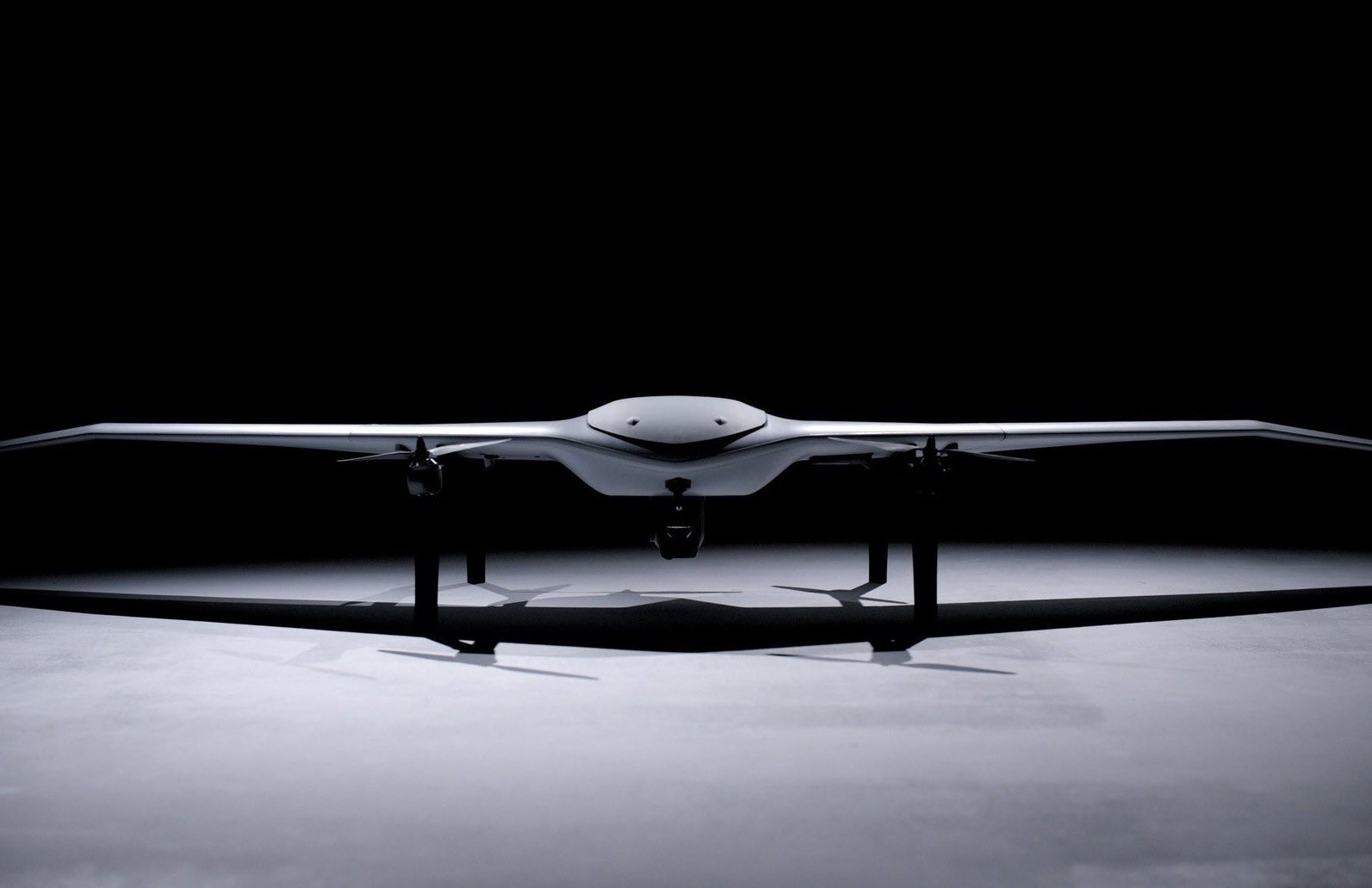
The Safran Patroller is a medium-altitude tactical UAV derived from a motor-glider airframe. The aircraft has an 18-meter wingspan, a length of approximately 8.5 meters and a maximum takeoff weight ranging between 1,050 and 1,500 kilograms depending on configuration. It is designed to carry payloads of up to 210–250 kilograms, including electro-optical and infrared sensors, synthetic aperture radar, communications intelligence and signal intelligence systems.
Equipped with Safran’s Euroflir 410 sensor suite, the drone was designed for long-duration ISR operations with an endurance ranging from 15 to 30 hours depending on payload configuration. The aircraft can operate at altitudes of up to 16,000 feet and cruise at relatively low speeds compared to newer tactical UAV designs now entering service internationally.
Additional political concerns have emerged in Athens following Safran Electronics & Defense’s recent strategic partnership with Turkish drone manufacturer Baykar. Under the agreement, Safran will provide navigation systems and Euroflir optronic technologies for Turkish unmanned platforms. The cooperation has attracted attention within Greek defense circles given the broader geopolitical tensions between Greece and Turkey in the Eastern Mediterranean.
Although the Greek procurement has not been formally cancelled, defense sources indicate that the likelihood of proceeding with the acquisition has narrowed considerably since France withdrew from the program. The Greek Ministry of National Defence and the Hellenic Army General Staff are now reviewing alternative UAV platforms available on the international market that can meet Greece’s ISR requirements while ensuring long-term logistical support, NATO interoperability and stable industrial backing.
The Greek government has not yet announced a final decision regarding the future of the Patroller acquisition program.
——— End of Article ———