U.S. Central Command Area of Responsibility, — May 22, 2026 : The United States Air Force has confirmed that A-10C Thunderbolt II attack aircraft operating in the Middle East are now equipped with two major capability upgrades: a newly developed Probe Refueling Adapter and the advanced “Angry Kitten” electronic warfare (EW) pod.
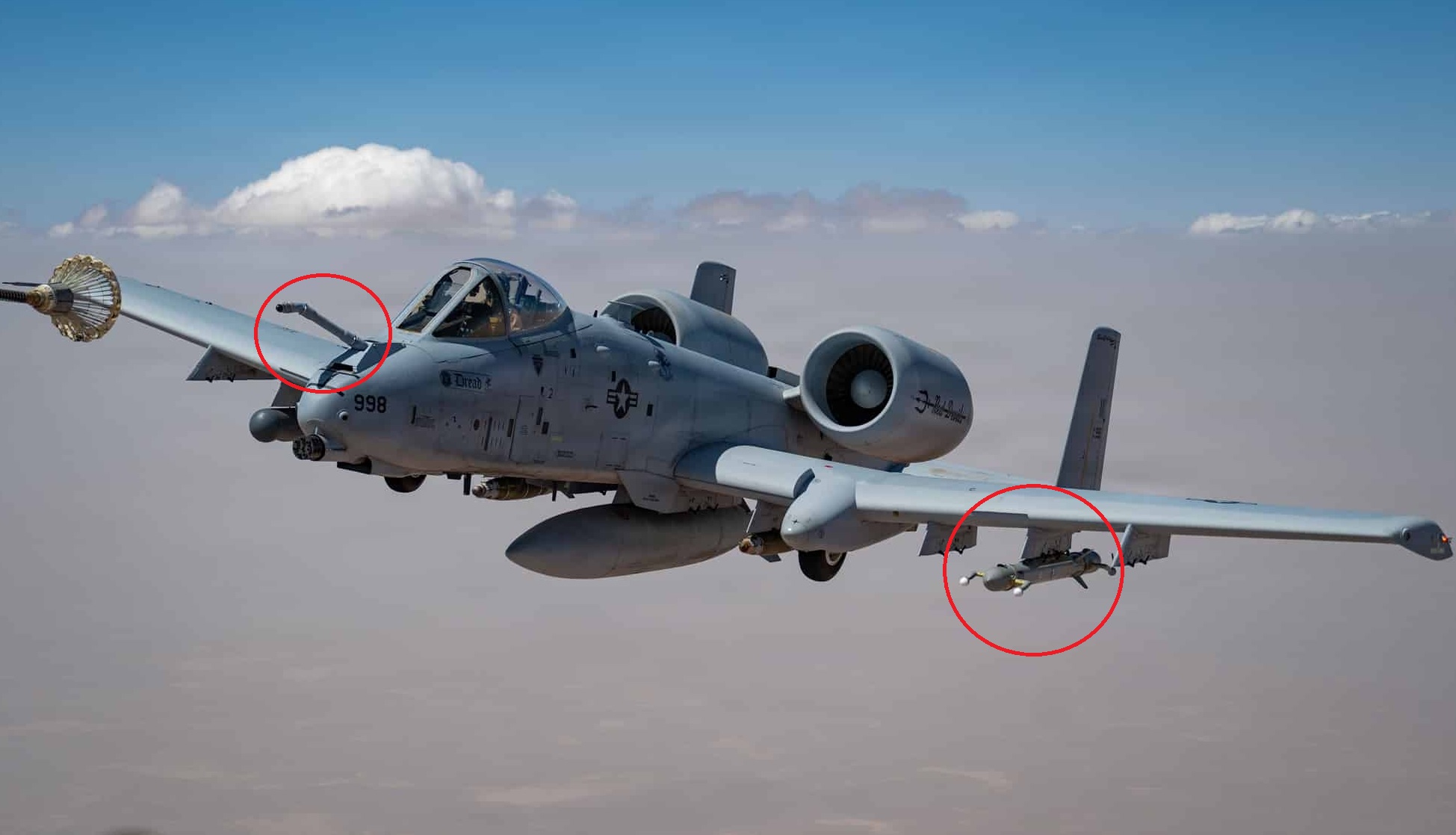
Photographs released by the U.S. Air Force on May 21, documenting operations conducted on May 9, show A-10Cs assigned to the Michigan Air National Guard’s 107th Fighter Squadron receiving fuel from an HC-130J Combat King II aircraft using the new adapter system. The images also confirmed the first publicly observed operational deployment of the Angry Kitten pod on the A-10C in a forward operational theater.
The 107th Fighter Squadron, based at Selfridge Air National Guard Base, Michigan, deployed to the Middle East in early April 2026. Additional footage released on May 20 showed A-10Cs from Moody Air Force Base, Georgia, conducting the first operational employment of the adapter with an HC-130J on May 19.
Probe Refueling Adapter Expands A-10C Tanker Compatibility
The newly fielded Probe Refueling Adapter was developed to address an urgent aerial refueling limitation affecting A-10C operations in the region. The aircraft has traditionally relied on the KC-135 Stratotanker following the retirement of the KC-10 Extender fleet, while certification for refueling from the KC-46 Pegasus remains incomplete.
Testing revealed that the A-10C’s comparatively low refueling speed created compatibility problems with the KC-46’s hydraulic boom system. The A-10C typically refuels at approximately 200 knots, significantly slower than the roughly 300 knots used by most U.S. fighter aircraft. The lower speed prevents the aircraft from maintaining sufficient aerodynamic stability with the KC-46’s boom, forcing the tanker to operate at unusually low speeds and altitudes while heavily loaded with fuel.
To resolve the issue, the Air National Guard Air Force Reserve Command Test Center (AATC), in coordination with ARCWERX and industry partners, rapidly developed the Probe Refueling Adapter as a field-configurable solution.
The adapter fits directly into the aircraft’s existing nose-mounted refueling receptacle, converting the A-10C from a boom-refueling configuration to a probe-and-drogue system. This allows the aircraft to refuel from C-130-based tankers, including the HC-130J, MC-130J, and KC-130J, which operate more effectively at lower speeds and altitudes compatible with the A-10C’s flight profile.
The system completed its first successful test on April 2, 2026, following approval from the Air Refueling Certification Authority with support from the 418th Flight Test Squadron. According to the Air Force, operational flight line crews can install or remove the adapter within hours without requiring depot-level maintenance, enabling squadrons to switch between boom and probe refueling capability depending on mission requirements and tanker availability.
Angry Kitten Pod Adds Modern Electronic Warfare Capability
The released photographs also confirmed operational deployment of the Angry Kitten electronic warfare pod aboard A-10C aircraft in the Middle East.
Originally developed in 2013 by the Georgia Tech Research Institute (GTRI) as a threat-emulation system for pilot training, the pod has evolved into a combat-capable Digital Radio Frequency Memory (DRFM)-based electronic warfare platform derived from the AN/ALQ-167 system.
Unlike traditional jamming systems, Angry Kitten can detect, classify, record, manipulate, and retransmit hostile radio frequency signals in order to confuse enemy radar systems and generate false targets. The pod uses a cognitive electronic warfare architecture built around its “Technique Description Language”, combining high-speed processing hardware with adaptive software capable of selecting tailored responses against evolving threats.
A key feature of the system is its rapid reprogrammability. Engineers and government operators can update jamming techniques and threat libraries in near real-time without returning the hardware to a contractor facility, allowing faster adaptation to unfamiliar or changing air defense systems.
Before its operational deployment on the A-10C, the pod had been tested on multiple platforms, including the MQ-9 Reaper, F/A-18 Hornet, and C-130 Hercules. Its first documented combat employment occurred aboard F-16CJ Block 52 aircraft during Suppression of Enemy Air Defenses (SEAD) missions conducted as part of Operation Epic Fury.
Enhanced Survivability for Operations in Contested Environments
The integration of the Probe Refueling Adapter and Angry Kitten pod significantly expands the operational flexibility and survivability of the A-10C fleet in the U.S. Central Command theater.
By enabling compatibility with additional tanker aircraft and providing advanced electronic countermeasures against modern radar-guided threats, the upgrades improve the aircraft’s ability to conduct close air support, combat support, maritime patrol, and other low-altitude missions in contested operational environments.
——— End of Article ———