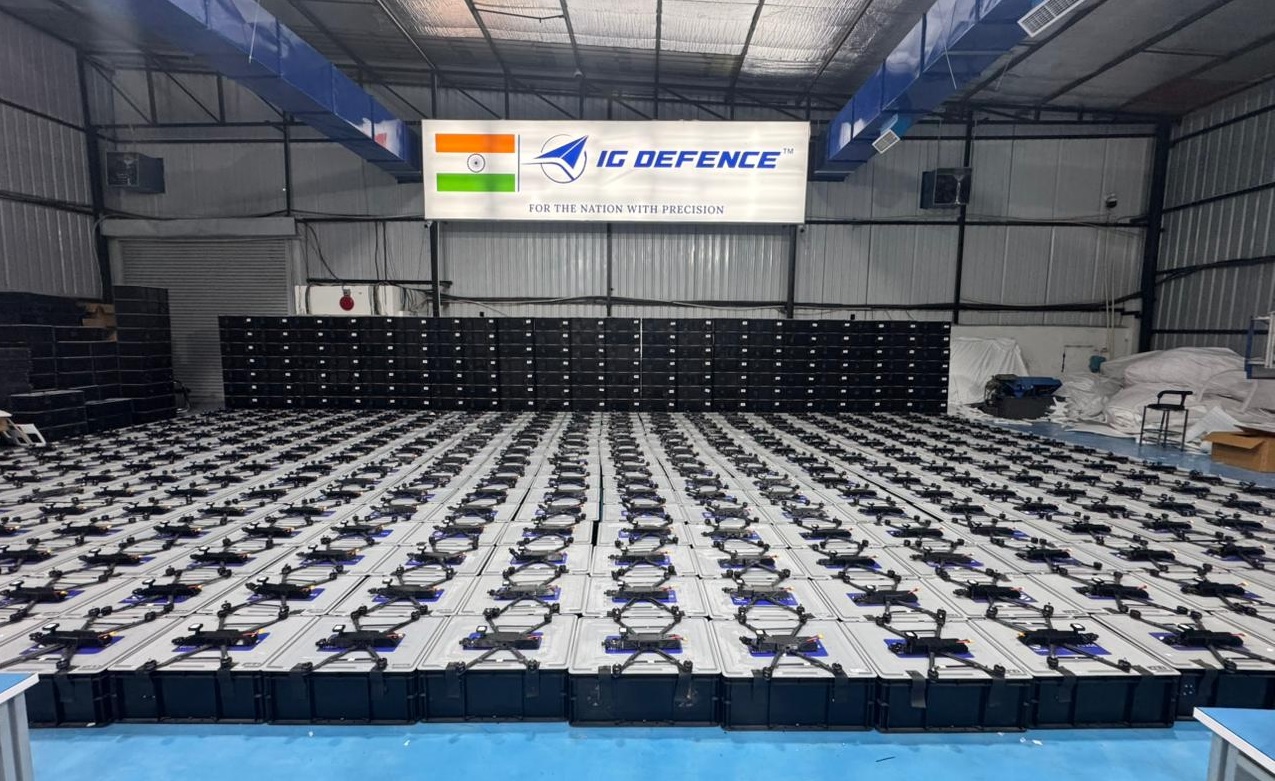
NEW DELHI — May 7, 2026 : India’s transition toward large-scale unmanned warfare capabilities is accelerating as indigenous defence technology company IG Defence increases production of First-Person View (FPV) kamikaze drones to 200 units per day, amid growing military emphasis on volume-led combat preparedness and rapid deployment capabilities.
The expansion reflects a broader shift within the Indian armed forces toward high-volume unmanned systems designed for precision strike, surveillance, and tactical battlefield operations across sensitive theatres including the Line of Actual Control (LAC) and the Line of Control (LoC).
Military Leadership Highlights Need for Large-Scale Drone Capacity
Senior military leadership has repeatedly underscored the importance of industrial-scale drone manufacturing in future warfare scenarios.
Former Chief of Army Staff General Manoj Mukund Naravane recently stated that India must develop the capability to manufacture as many as 40,000 drones per month during future contingencies. He noted that modern conflicts increasingly depend on industrial adaptability and rapid production scalability rather than solely on conventional platforms.
Army Chief General Upendra Dwivedi has similarly outlined operational requirements for unmanned systems, stating that each Army corps may require between 8,000 and 10,000 UAVs, including FPV drones, to maintain tactical dominance in contested airspace and support frontline operations.
The Indian Army has subsequently accelerated efforts to integrate indigenous FPV and loitering munition platforms into operational formations, while also restructuring units to incorporate dedicated unmanned aerial vehicle (UAV) capabilities.
Operation Sindoor Accelerated Indigenous Drone Deployment
IG Defence’s manufacturing expansion follows the operational deployment of its FPV kamikaze drones during Operation Sindoor in May 2025.
The operation was launched following the Pahalgam terror attack and involved the use of multiple indigenous systems for surveillance, reconnaissance, mapping, and precision strike missions. FPV kamikaze drones supplied by IG Defence were deployed alongside other domestically developed platforms during the operation.
Following Operation Sindoor, the Government of India acknowledged the company’s contribution through an official Press Information Bureau (PIB) release recognising the operational role played by indigenous drone systems.
Over the past financial year, IG Defence has supplied thousands of FPV kamikaze drones to the Indian Army as part of the military’s expanding unmanned warfare inventory.
IG FPV Striker Designed for Precision Strike Operations
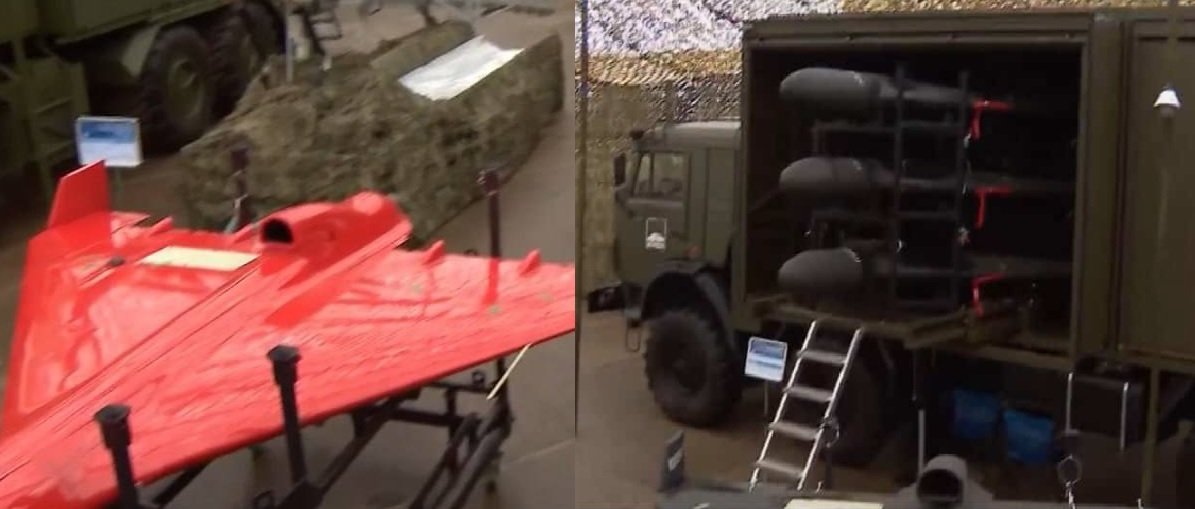
The company’s primary platform, the IG FPV Striker, is an indigenous loitering munition designed for precision engagement missions in contested environments.
The system combines real-time targeting capability, high manoeuvrability, rapid-response deployment, and cost-efficient strike functionality. FPV kamikaze drones are increasingly being viewed as critical battlefield tools in asymmetric and dynamic combat environments where low-cost precision systems can provide tactical advantages.
Modern FPV drones are capable of high-speed manoeuvres and can reportedly reach speeds of up to 180 kilometres per hour. The systems are also being integrated with modular warhead configurations and emerging AI-enabled swarm capabilities intended to support coordinated multi-target operations.
Military planners increasingly regard FPV strike systems as cost-effective alternatives for tactical missions against fortified positions, logistical infrastructure, and moving battlefield targets.
Production Expansion Linked to UP Defence Corridor
To support long-term production requirements, IG Defence has expanded its industrial infrastructure through a memorandum of understanding signed with the Government of Uttar Pradesh.
The agreement covers the establishment of an advanced drone manufacturing and research and development facility within the Uttar Pradesh Defence Corridor. The facility is intended to support mass production of FPV striker drones and related unmanned systems.
The company stated that scaling domestic manufacturing capacity remains essential to meeting the Indian armed forces’ future operational requirements.
Warfare Transitioning Toward Systems-Driven Operations
Maj. Gen. R.C. Padhi (Retd.), Senior Vice President at IG Defence, said modern warfare is rapidly shifting from traditional platform-centric models toward systems-driven and volume-led operations.
“The character of warfare is changing faster than ever before. We are witnessing a transition from platform-centric warfare to systems-driven, volume-led engagements. FPV Kamikaze Drones enable tactical dominance at a fraction of traditional costs, and their large-scale deployment will be central to future combat readiness,” he said.
He added that indigenous production capability and rapid scalability are becoming increasingly important components of national security preparedness.
Indigenous Drone Ecosystem Expanding Under Atmanirbhar Bharat
Alongside FPV strike systems, IG Defence is also developing counter-UAS platforms, intelligence, surveillance and reconnaissance (ISR) systems, logistics drone swarms, and combat training solutions aligned with the armed forces’ growing unmanned operational requirements.
The broader expansion of domestic drone production aligns with the Government of India’s Atmanirbhar Bharat initiative, which aims to reduce dependence on foreign defence imports while strengthening indigenous defence manufacturing capabilities.
Increased participation from private industry, defence start-ups, and MSMEs has contributed to the rapid growth of India’s unmanned systems sector, particularly following operational lessons drawn from Operation Sindoor and recent international conflicts where loitering munitions and drone swarms have played a significant tactical role.
As global militaries continue adapting to drone-centric operational models, India’s emphasis on scalable indigenous production reflects an evolving defence doctrine in which the ability to rapidly manufacture and deploy large numbers of unmanned systems is becoming a core operational requirement.
——— End of Article ———