U.S
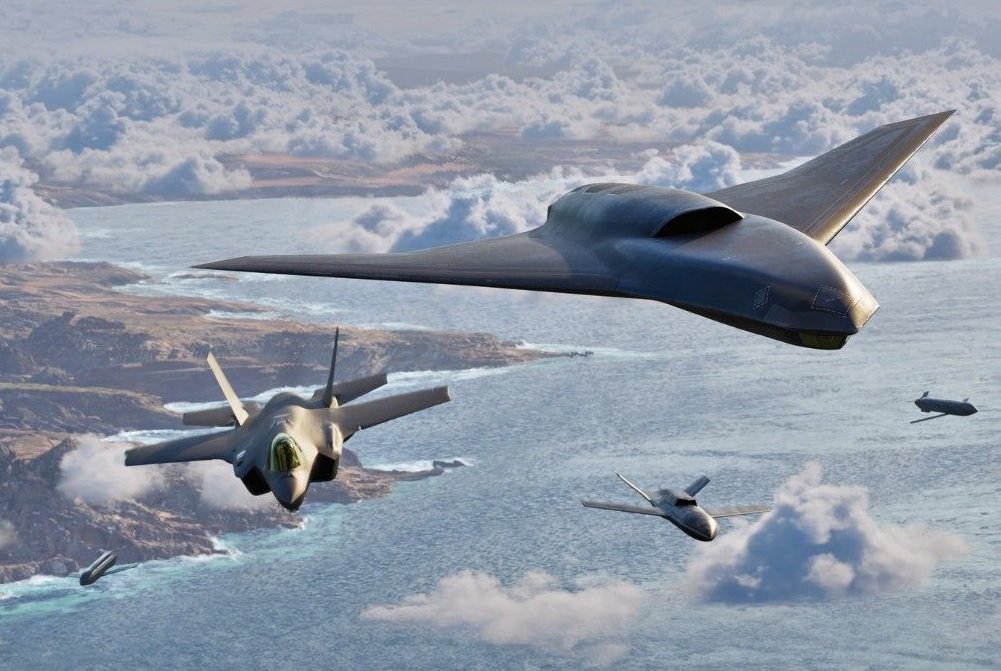
BRUSSELS — Lockheed Martin is advancing its Vectis collaborative combat aircraft (CCA), an uncrewed platform designed to operate independently or alongside crewed fighters such as the F-35 and future next-generation aircraft. Developed by the company’s Skunk Works division, Vectis was unveiled in September 2025 as a Group 5 survivable and lethal unmanned aircraft for U.S. and allied militaries. Lockheed Martin says the platform is designed around crewed-uncrewed teaming, survivability, autonomy and an adaptable open architecture. Vectis is designed for precision strikes, intelligence, surveillance and reconnaissance (ISR) targeting, electronic warfare, and offensive and defensive counter-air missions. It can perform these missions independently or in coordination with crewed aircraft, with endurance intended for operations in the Indo-Pacific, Europe and U.S. Central Command areas. The aircraft uses a tailless lambda-wing design, top-mounted air intake, shovel-like nose and conformal antennas, reflecting its low-observable design approach. Its exact dimensions remain undisclosed, but Lockheed Martin officials have described it as smaller than an F-16 and larger than the company’s Common Multi-Mission Truck platforms. The current design is runway-dependent. F-35 Integration and Open Architecture Lockheed Martin has conducted classified simulated operational analyses involving Vectis with the F-35 and F-22. The company says pilots in crewed aircraft will be able to control the drones through wide-area touchscreen displays. The aircraft incorporates the Multi-Domain Combat System (MDCX) for autonomous control and multi-domain connectivity. Its development also uses Skunk Works’ Agile Drone Framework, emphasizing modularity, open mission systems and government reference architectures. Lockheed Martin says this approach is intended to prevent vendor lock-in and allow payloads and software to be upgraded as requirements change. Development and Engine Skunk Works is internally funding the program, with components already ordered and a development team working on the aircraft. Lockheed Martin initially set a goal of designing, building and flying Vectis within two years of its September 2025 unveiling, targeting a first flight in 2027. The prototype will use a Williams International FJ44-4 turbofan, which produces more than 3,600 pounds of thrust and features a compact twin-spool design. Company officials have said operational analysis does not indicate a requirement for supersonic speed. Lockheed Martin is using digital engineering and advanced manufacturing methods to pursue an accelerated development schedule and a CCA-level price point. European Interest Lockheed Martin displayed a scale model of Vectis at the Brussels European Defence Exhibition (BEDEX) from March 12 to 14, 2026. The company promoted the aircraft to European customers, including the Belgian Air Component, as a potential “loyal wingman” capability. The company is also discussing the platform with other European countries interested in collaborative combat aircraft. Vectis is intended to complement crewed fifth-generation fighters while retaining the ability to conduct independent missions. Lockheed Martin Vice President and Skunk Works General Manager O.J. Sanchez said the Vectis concept is based on a highly capable, customizable and affordable agile drone framework designed for the future battlespace.
Read More → Posted on 2026-08-21 16:10:38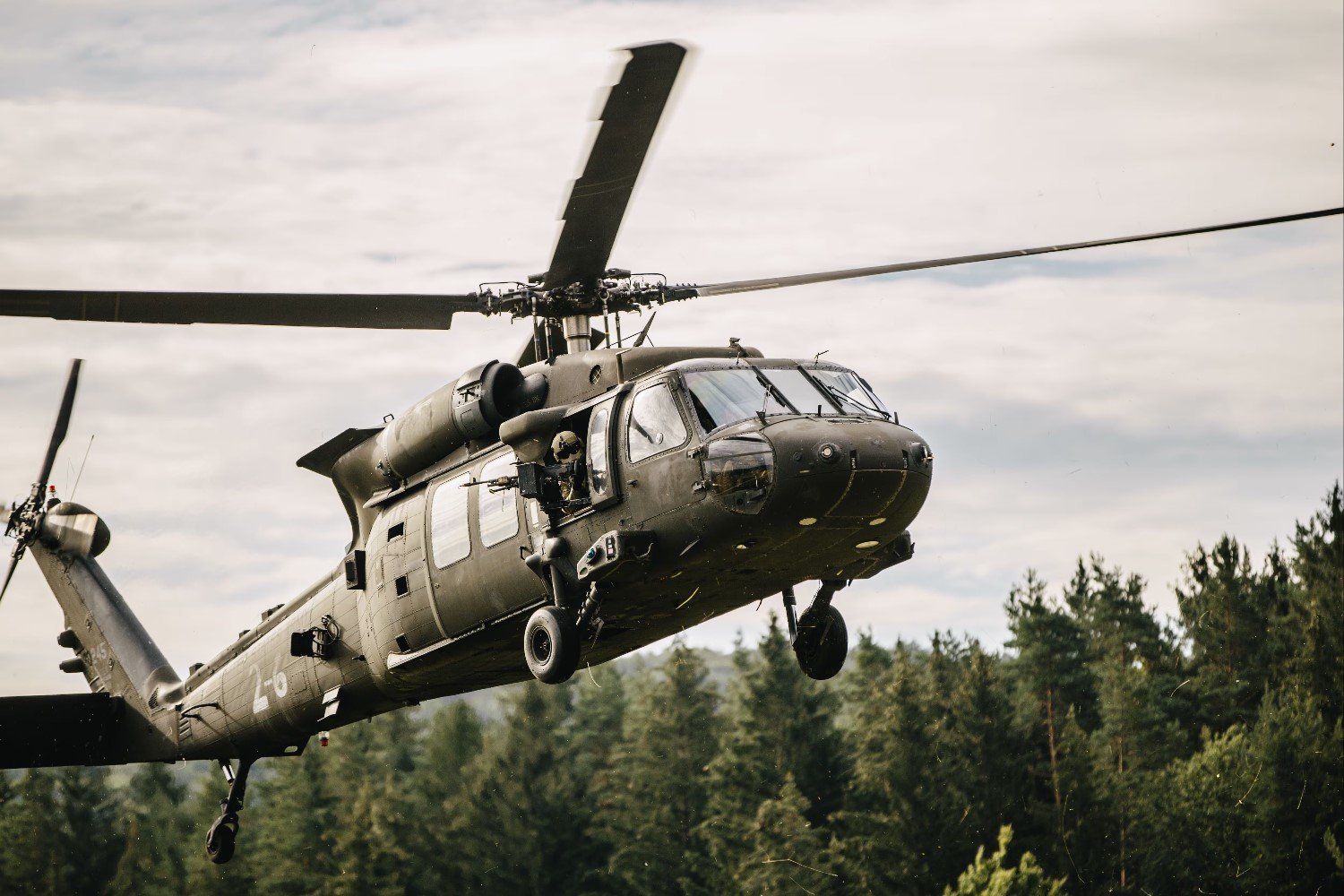
U.S
WASHINGTON, D.C. — The U.S. Department of State has approved a potential Foreign Military Sale to Norway for 21 UH-60M Black Hawk multirole helicopters and related equipment, with a maximum estimated value of $2.3 billion. The approval was announced on August 21, 2026, but does not represent a final Norwegian order. The deal remains subject to an intergovernmental Letter of Offer and Acceptance. According to the Defense Security Cooperation Agency (DSCA), Norway has requested 21 UH-60M helicopters, 46 T700-GE-701D engines, 25 AN/AAR-57 Common Missile Warning Systems, 25 Common Infrared Countermeasure systems, 25 AN/APR-39E(V)2 Radar Warning Receivers, 50 EAGLE-M+429 Embedded GPS/Inertial Navigation Systems, 100 AN/ARC-231A RT-1987 VHF/UHF/line-of-sight satellite communication radios and 18 M240H machine guns. The package also includes laser warning systems, identification-friend-or-foe transponders and cryptographic equipment, navigation and radio systems, radar altimeters, electro-optical/infrared sensors with laser designators, ballistic armor, internal auxiliary fuel tanks, fast-rope insertion and extraction systems, rescue hoists, dual patient litter systems, external stores support and weather radar. It also covers training devices, spare and repair parts, support equipment, tools, technical data, publications, personnel training, and U.S. government and contractor engineering, technical and logistics support. Four of the 46 engines are identified as spare engines. If the agreement proceeds, Lockheed Martin's Sikorsky unit, based in Stratford, Connecticut, would be the principal contractor. Around 15 U.S. government and 15 contractor representatives would travel to Norway for equipment fielding, system checkout, training and support. Part of Norway's Helicopter Modernization The proposed UH-60M acquisition follows Norway's decision in June 2026 to suspend a project for up to nine HH-60W Jolly Green II combat rescue helicopters, which had initially been valued at $2.6 billion. Norway said further decisions on helicopter fleet modernization would follow, but it has not officially confirmed a connection between the suspended HH-60W project and the UH-60M request. The Black Hawk proposal could also provide an option for replacing Norway's Bell 412 helicopters, which support Army and Special Operations Forces missions. Some of the existing Bell 412s have undergone or are undergoing upgrades to extend their service life. If completed, the purchase would expand the UH-60M's European customer base. Sweden, Latvia, Lithuania and Austria already operate the Black Hawk, while Greece has also ordered the helicopter, with deliveries expected to begin soon. Norway has separately ordered six MH-60R Seahawk maritime helicopters, with deliveries expected to begin within the next several months and all six anticipated by 2027. They are intended primarily for maritime and coast guard roles, replacing previously operated NH90 helicopters. The U.S. State Department said the proposed sale would strengthen Norway's ability to address current and future threats, improve interoperability with U.S. and allied forces, and provide the Norwegian Army and Special Operations Forces with a common rotary-wing platform. The U.S. assessment states that Norway should have no difficulty absorbing the equipment and services, while the sale would not alter the basic military balance in the region or adversely affect U.S. defense readiness. No offset agreement has been identified at this stage, with any such arrangement to be determined during negotiations. The U.S. Congress has been notified of the proposed sale. As a NATO ally, Norway is subject to a 15-day congressional review period.
Read More → Posted on 2026-08-22 11:30:50
U.S
Washington, D.C., — The United States is advancing bipartisan legislation that would require the Netherlands and other key allies to further restrict ASML’s semiconductor manufacturing equipment sales and services to China. The Multilateral Alignment of Technology Controls on Hardware (MATCH) Act, introduced in April 2026, would give allied countries 150 days to align their export controls with U.S. rules. If they fail to do so, Washington could expand use of the Foreign Direct Product Rule (FDPR) to restrict foreign-made equipment containing U.S. technology, software or components. Targeting DUV Equipment and Services The legislation mainly targets deep ultraviolet (DUV) immersion lithography machines that ASML can still sell to China under current Dutch regulations. The Netherlands and the United States have already restricted China’s access to ASML’s most advanced extreme ultraviolet (EUV) systems and certain higher-end DUV equipment. The MATCH Act would also restrict installation, maintenance, spare parts, remote software updates and technical support for covered machines already operating in China. Major Chinese companies named for tighter restrictions include SMIC, Huawei, Hua Hong, CXMT and YMTC. U.S. lawmakers argue that existing gaps allow Chinese chipmakers to use older lithography equipment and multi-patterning techniques to produce advanced semiconductors, including chips used for artificial intelligence. ASML and Dutch Concerns China accounted for about 33% of ASML’s sales in 2025, making it the company's largest market that year. ASML has projected that China's share could fall to around 20% in 2026 as existing restrictions take greater effect. ASML is Europe’s most valuable listed company and depends on U.S. suppliers for important technology and components, including light sources produced by its U.S. subsidiary Cymer. This gives Washington significant leverage over the Dutch company. The proposed legislation has created friction between Washington and The Hague. Dutch Trade Minister Sjoerd Sjoerdsma has described forced cooperation as “undesirable” and has traveled to Washington to meet U.S. Commerce Secretary Howard Lutnick and members of Congress. The Dutch government has argued that export-control decisions affecting Dutch companies should remain under Dutch control and has opposed the bill’s extraterritorial provisions. Legislative Status The MATCH Act has bipartisan support and lawmakers have sought to attach it to the annual National Defense Authorization Act (NDAA). The broader NDAA temporarily stalled in the Senate on July 14, 2026, amid unrelated political disagreements over military funding connected to Iran. As of mid-August 2026, the MATCH Act remained under consideration and had not become law. Its proposed restrictions would expand existing U.S.-led controls by targeting remaining DUV equipment sales to China as well as servicing and technical support for machines already installed there.
Read More → Posted on 2026-08-22 11:38:10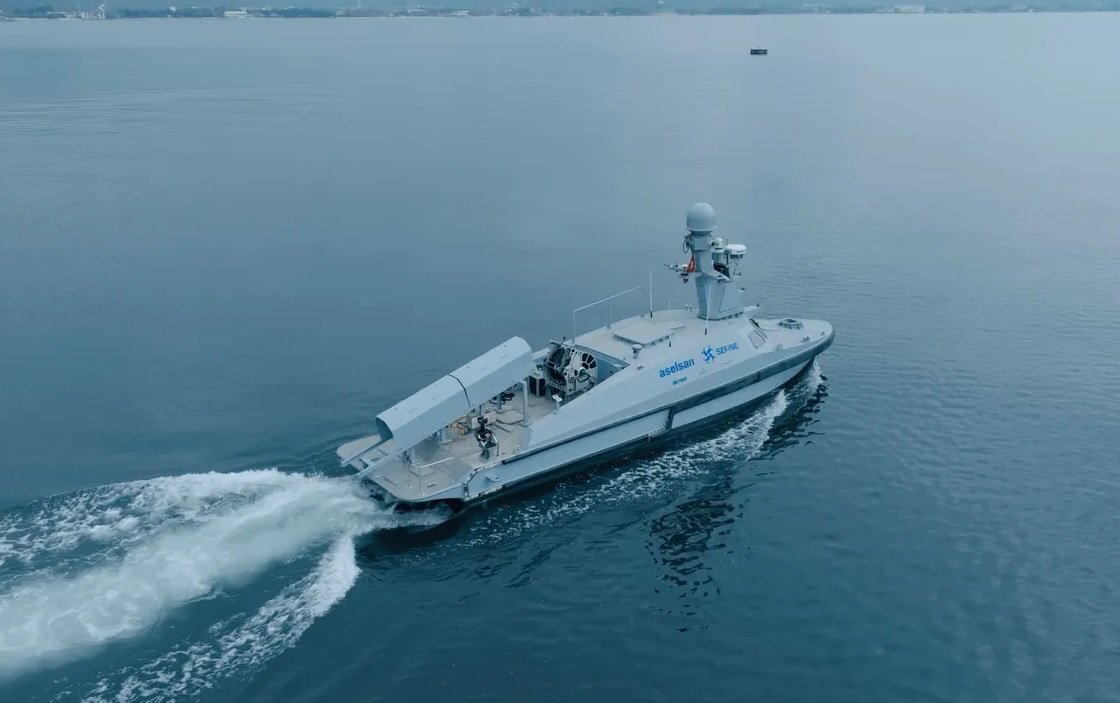
World
ANKARA, Türkiye — Türkiye’s MARLIN unmanned surface vessel (USV) has successfully completed mine-laying trials using the domestically developed MALAMAN smart bottom mine, adding a new mine-warfare capability to the Turkish Navy’s first operational unmanned naval platform. The trials, reported by Türkiye’s state-owned Anadolu Agency on August 17, 2026, involved deploying MALAMAN mines in both remotely controlled and fully autonomous modes. The work included the design and production of a dedicated mine carriage and release mechanism, along with mission-planning interfaces and algorithms for autonomous mine-laying. Validation and testing were conducted at Sefine Shipyard using training versions of the MALAMAN mine. MARLIN USV MARLIN was developed by Sefine Shipyard and ASELSAN under the coordination of Türkiye’s Presidency of Defence Industries (SSB). It entered Turkish Naval Forces service in January 2024 as Türkiye’s first USV in the naval inventory. The 15-metre platform has a beam of about 3.85 metres, a displacement of around 21 tonnes and a payload capacity of at least four tonnes. It can reach speeds of at least 35 knots and has an endurance of up to 72 hours. Its modular architecture allows different sensors, weapons and electronic-warfare equipment to be integrated. MARLIN has previously been tested and configured for anti-surface warfare, anti-submarine warfare and electronic warfare missions, and has also conducted missile-firing trials. MALAMAN Smart Mine MALAMAN is a Turkish-developed smart sea-bottom mine intended for deployment from surface vessels, submarines, aircraft and unmanned platforms. Its development involved KoçSavunma, MKE and TÜBİTAK SAGE. The mine uses pressure, magnetic and acoustic data for target detection and classification. It is designed for water depths of 5 to 100 metres and uses a pressure-resistant composite casing designed to blend with the seabed. MALAMAN has a diameter of 533 mm, making it compatible with submarine torpedo tubes. It is approximately 1.8 metres long and weighs about 600 kg, including around 400 kg of insensitive underwater explosive. The system entered Turkish Naval Forces inventory in 2026, while earlier work included fit checks with Türkiye’s REIS-class submarines and integration work for use from Turkish Navy landing ships. New Unmanned Mine-Laying Capability The integration gives MALAMAN another deployment option while allowing mine-laying missions to be conducted without exposing a crewed vessel. The successful remote-controlled and autonomous trials demonstrate different levels of operator involvement. The demonstration also expands MARLIN’s mission set into mine warfare alongside its existing surface warfare, anti-submarine warfare, electronic-warfare and other tested roles. It represents the first reported pairing of MARLIN with the MALAMAN smart bottom mine.
Read More → Posted on 2026-08-22 11:45:40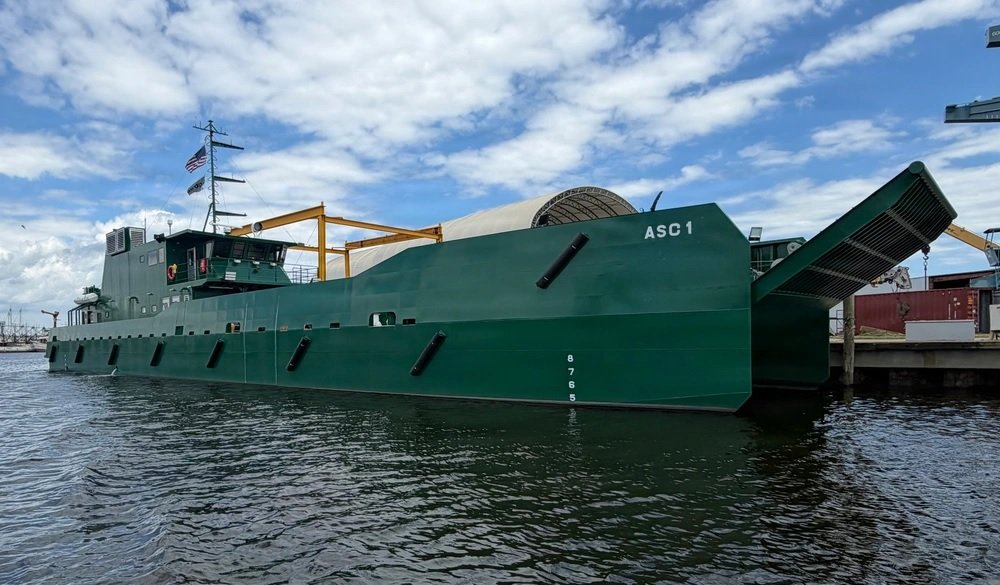
U.S
QUANTICO, Va. — The U.S. Marine Corps Warfighting Laboratory (MCWL) has completed technical acceptance of its first Ancillary Surface Craft (ASC) prototype, moving the approximately 150-foot vessel into limited technical assessments at Quantico, Virginia. The ASC is a roll-on/roll-off landing craft designed to transport personnel, equipment and fuel directly to unimproved shorelines, providing what the Marine Corps calls the “last tactical mile” of logistics support. It can carry up to 46 tons of cargo and 40 combat-loaded Marines. The shallow-draft craft is designed to operate in Sea State 5 and survive conditions up to Sea State 7. It has forward-looking sonar for navigating uncharted shallow waters, detecting submerged obstacles and assessing beach gradients before landing. It also has a fuel delivery and transfer system for vessel-to-vessel and vessel-to-shore operations. Birdon describes the vessel, also known as the Ancillary Surface Craft-Medium, as approximately 150 feet long, 30 feet wide and with a draft of about 4.9 feet. Earlier company material listed cargo capacity of up to 54 tons, while Marine Corps technical acceptance validated 46 tons. Supporting Distributed Marine Operations The ASC is intended to support the Marine Corps' Expeditionary Advanced Base Operations (EABO) concept, which calls for small, mobile forces to operate from temporary positions in contested maritime areas without relying on fixed ports, piers or causeways. The craft is intended to complement the larger Medium Landing Ship (LSM) being developed by the Navy and Marine Corps. With the LSM program facing delays, the Marine Corps has described the ASC and similar smaller surface craft as a bridging capability for sustaining distributed forces in the Pacific. The ASC is optimized for moving medium and light tactical vehicles and other supplies between shorelines that larger vessels may not be able to reach. “This prototype allows MCWL to immediately execute hands-on experimentation, test tactical concepts, and put real hardware in the hands of Marines,” said Col. Kenny Jones, Science and Technology Division Director at MCWL. He said testing the ASC's traditional bow-first beaching approach alongside other experimental platforms will help reduce programmatic risk and refine requirements for future naval forces. Prototype Construction and Testing The Marine Corps awarded Birdon America, the U.S. subsidiary of Australian maritime company Birdon, a contract for two ASC prototypes in 2024. Birdon partnered with C&C Marine and Repair in Belle Chasse, Louisiana, where construction began in 2025. The companies used automation-driven production methods intended to shorten construction time. The first ASC will initially operate with a hybrid crew of Marines and contracted mariners, with Birdon America craft masters and engineers and Australian Army crewing support working under MCWL oversight. The arrangement will also support Marine training for independent operation of small surface craft. Upcoming testing will examine the vessel's force-protection and self-defense configurations, while its primary mission remains logistics and maneuver. A Distinguished Visitor Day involving the ASC was held in Bayou La Batre, Alabama, on August 12, 2026, where Marine Corps personnel, industry partners and others observed the vessel. With technical acceptance complete, MCWL will now conduct hands-on testing to assess the ASC's performance and support the development of future requirements for small surface craft.
Read More → Posted on 2026-08-22 11:52:48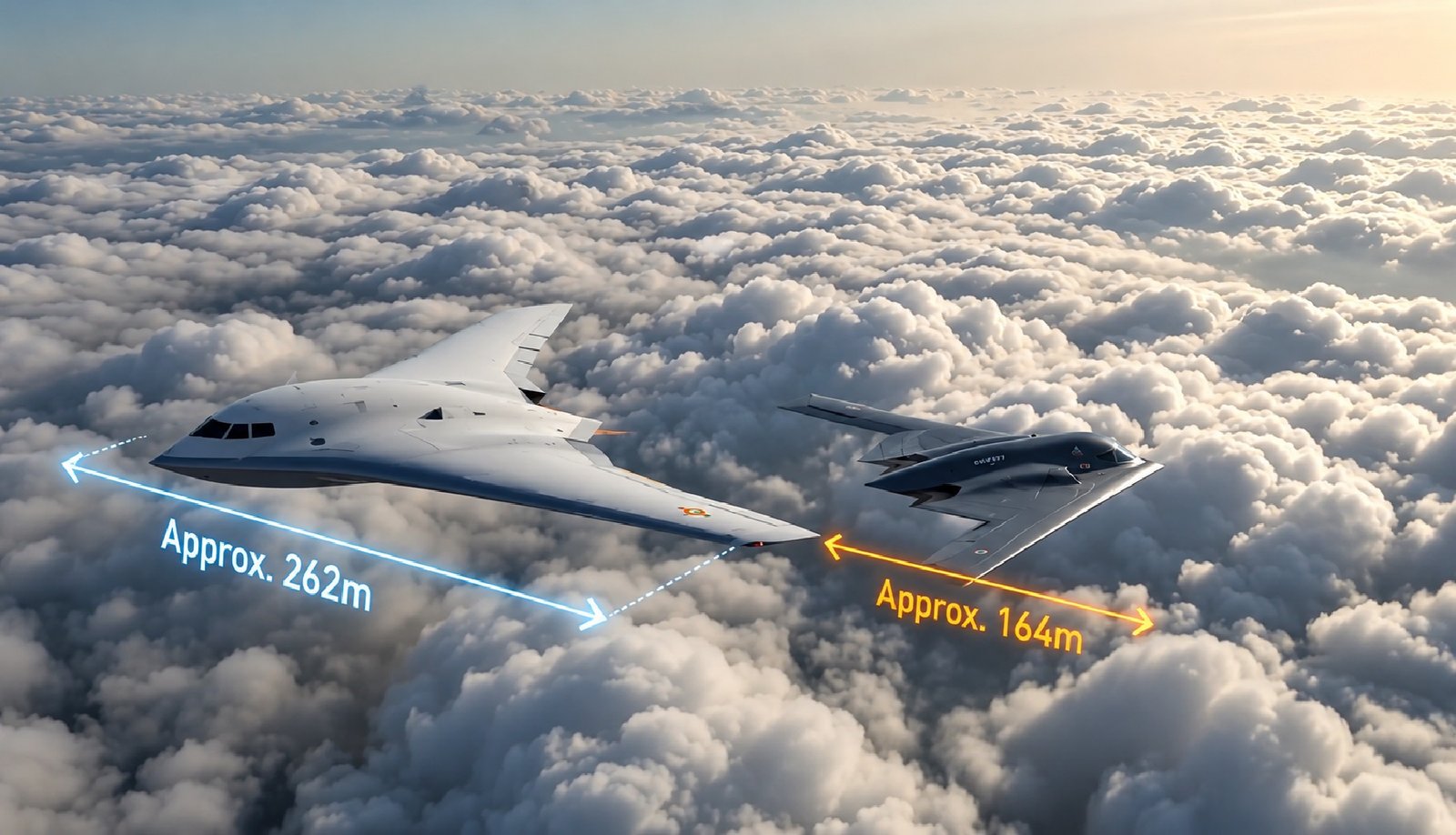
World
China — A research team from the China Aerodynamics Research and Development Centre (CARDC) has developed an aerodynamic model for a large flying-wing passenger aircraft designed to carry more than 800 passengers. The concept is part of China’s broader research into large commercial aircraft and alternative airliner configurations. Technical details of the design were published in the Chinese-language Journal of Aerospace Power in June. Flying-Wing Design Unlike conventional passenger aircraft, which have a separate fuselage, wings and tail, the flying-wing configuration combines much of the aircraft into a single lifting structure. The proposed aircraft has a wingspan of 85 metres (280 feet) and a length of 43 metres. It has a reference wing area of about 1,395 square metres (15,015 square feet), with a 37-degree leading-edge sweep and a 28-degree trailing-edge sweep. The target cruise speed is Mach 0.8, while the planned passenger capacity is more than 800. The wingspan would be approximately 1.6 times that of the U.S. B-2 Spirit, another aircraft that uses a flying-wing configuration. However, unlike the B-2, the Chinese design is intended for civil aviation. For comparison, the Airbus A380, currently the largest passenger aircraft in commercial service, typically accommodates about 555 passengers. Development by CARDC The project was developed by CARDC, a national aerodynamics research institute that has contributed to major Chinese aviation programmes, including the C919 narrowbody passenger aircraft and the Y-20 military transport aircraft. The research team, led by aerodynamics researcher Li Yonghong, described the high-aspect-ratio flying-wing configuration as having aerodynamic advantages, including a high lift-to-drag ratio and low induced drag. These characteristics are being studied for their potential to reduce energy consumption and support longer-range operations. The design was initially developed as a 250-seat aircraft comparable in capacity to aircraft such as the Airbus A330 and Boeing 767. It was later expanded into the 800-passenger class as part of research connected with China's efforts to develop large twin-aisle widebody aircraft. Wind Tunnel Testing A full-scale aircraft has not been built. The research has so far focused on a 1:52 stainless-steel scale model. The model measures approximately 0.8 metres in length and has a wingspan of 1.6 metres. It was tested in CARDC’s 2.4-metre transonic wind tunnel at speeds between Mach 0.4 and Mach 0.8. Researchers examined the model’s aerodynamic performance, boundary-layer transition, measurement accuracy, lateral and longitudinal stability, and structural deformation. The team reported a maximum lift-to-drag ratio of about 20 at speeds below Mach 0.7. At Mach 0.8, the lift-to-drag ratio was reported at 17.6. According to the researchers, the test results demonstrated strong aerodynamic performance and allowed the model to serve as a benchmark for research into large, slender flying-wing configurations. The data will also support further research into flow mechanisms, aeroelasticity and wind-tunnel testing methods. Part of China's Wider Commercial Aviation Programme The flying-wing project is being developed alongside other Chinese commercial aviation programmes. China’s C919 narrowbody passenger aircraft is already in commercial service, while development of the C929 long-range widebody aircraft is continuing. The C929 is designed for around 280 passengers and is targeted for a first flight around 2030. China is also studying the C949 supersonic passenger aircraft concept. The flying-wing passenger aircraft remains at the research and testing stage and does not yet have a public name. No full-scale prototype has been built. The current work is focused on aerodynamic research and testing, providing data for further studies of the configuration rather than representing a completed commercial aircraft. China’s R&D Investment The project is also part of a wider increase in Chinese investment in research and development. OECD data show that China spent about $1.028 trillion on R&D in 2024, compared with $1.009 trillion by the United States, giving China a reported $19 billion lead in total R&D spending that year. For the flying-wing project, however, the immediate focus remains aerodynamic research. The wind-tunnel results are expected to provide a technical basis for continued studies of the aircraft configuration and its aerodynamic and structural characteristics. The proposed 800-plus-passenger aircraft therefore remains a research concept rather than an aircraft ready for commercial operation.
Read More → Posted on 2026-08-22 12:10:38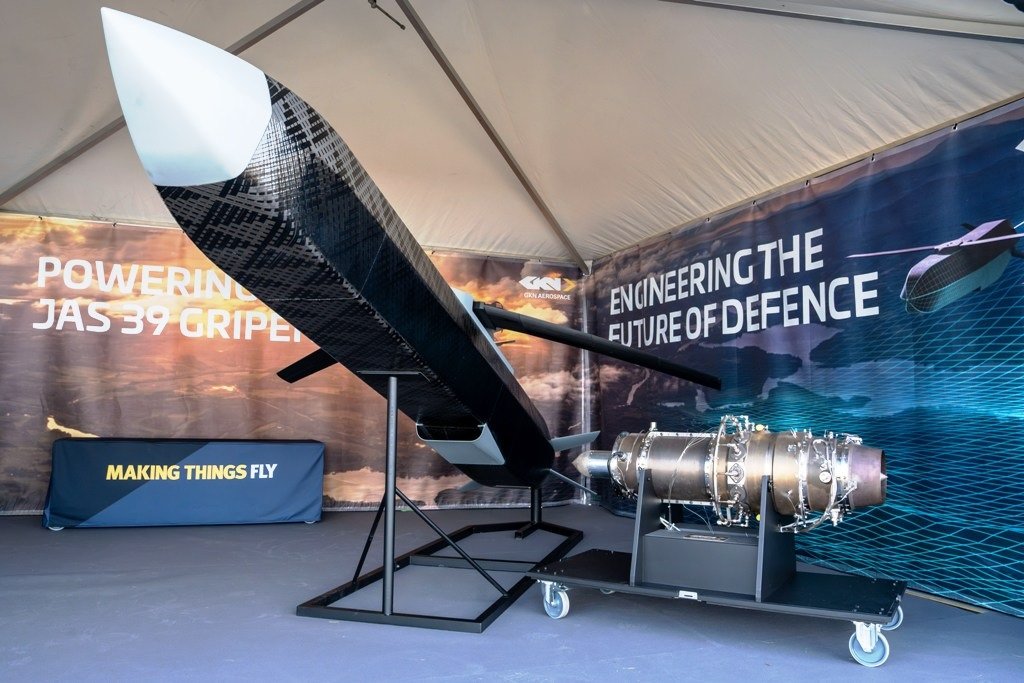
Europe
Trollhättan, Sweden — GKN Aerospace has unveiled its new uncrewed aerial vehicle (UAV) demonstrator less than a year after beginning a collaborative programme with the Swedish Defence Materiel Administration (FMV). The full-scale UAV mock-up and its newly developed dedicated turbojet engine were displayed on August 21 at Malmen Air Base in Linköping during The Armed Forces Air Venture 2026, held as part of celebrations for the Swedish Air Force’s centenary. The programme began in November 2025, when FMV awarded GKN Aerospace a contract worth approximately 150 million Swedish kronor (around £12 million). The 18-month programme covers the development of a clean-sheet UAV demonstrator, including its airframe, onboard systems and dedicated turbojet engine. The project is designed to explore rapid capability development, scalable production and future uncrewed aviation technologies. The UAV will serve as a flexible technology and process demonstrator, allowing the end customer to determine final capability priorities as the programme develops. The programme brings together GKN Aerospace teams in Sweden, the Netherlands and the UK. Programme leadership and engine development are based mainly at GKN Aerospace’s Trollhättan site in Sweden, while airframe development is centred in the Netherlands, with systems-integration support from the UK. GKN Aerospace is also examining additive manufacturing, or industrial 3D printing, for different parts of the system, including engine components. The dedicated turbojet is a clean-sheet design and has reached a startup milestone, with most of its development carried out in Trollhättan. Joakim Andersson, President Engines at GKN Aerospace, said the unveiling represents the first tangible result of work that began as an idea and ambition about a year ago. He credited the close cooperation between FMV, the Swedish Armed Forces and GKN Aerospace teams. Sara Eklöf, Senior Vice President Government Solutions at GKN Aerospace, said the milestone demonstrates what can be achieved through cooperation between engineering, manufacturing and customer teams, adding that the experience gained will be valuable for the programme’s next phase. The initiative builds on GKN Aerospace’s long-standing relationship with FMV and the Swedish Armed Forces. The company is the licensed original equipment manufacturer for the RM12 engine used by Saab Gripen aircraft and has extensive military-engine experience in Sweden. The programme is now moving toward further ground testing of the fuselage and onboard systems, along with preparations for flight testing. The planned 18-month programme is intended to culminate in flying demonstrations to validate overall system performance. The UAV is currently a technology and process demonstrator rather than a finished operational system. The programme is also expected to provide experience relevant to future Swedish fighter-system development and faster methods of developing military capabilities.
Read More → Posted on 2026-08-22 12:47:43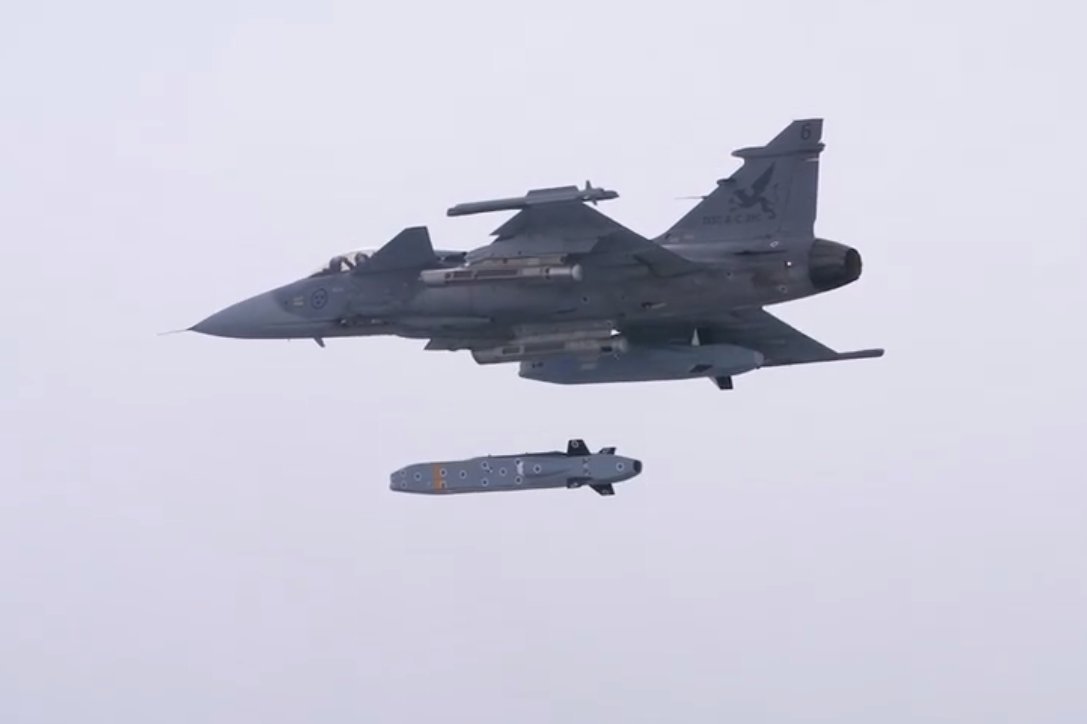
Europe
Vidsel, Norrbotten, Sweden — The Swedish Air Force has conducted the first launch of a Taurus KEPD 350 cruise missile from a Saab JAS 39 Gripen fighter aircraft, marking a new stage in Sweden’s integration of the long-range weapon. The test was conducted on August 21, 2026, at the Vidsel Test Range in Norrbotten, northern Sweden. The Swedish Air Force, known as Flygvapnet, announced the launch the same day, stating that a Taurus KEPD 350 had been launched from a Swedish JAS 39 Gripen for the first time. The service described Taurus as a long-range cruise missile that introduces a new deep-strike capability. Images and video released with the announcement and credited to the Swedish Defence Materiel Administration (FMV) show a Gripen C releasing the missile. The Taurus used during the test had a yellow marking associated with a live round. A second Taurus was also visible under the aircraft. No further details about the specific test profile, target or results have been released by Swedish authorities. Taurus KEPD 350 Capabilities The Taurus KEPD 350 is an air-launched stand-off cruise missile developed by Taurus Systems GmbH, a German-Swedish joint venture involving MBDA Deutschland and Saab. According to MBDA, the missile has a range of more than 500 kilometres, a mass of about 1,400 kilograms and a length of approximately five metres. It carries a roughly 480-kilogram MEPHISTO warhead designed for precision strikes against hardened and high-value targets. The missile uses a navigation system combining inertial navigation with GPS, terrain-reference navigation and image-based navigation. MBDA says Taurus is designed for very-low-level terrain-following flight and for operations against hardened and deeply buried targets. The MEPHISTO warhead uses a dual-stage design intended to provide penetration capability against hardened targets as well as effects against area targets. Its programmable fuze can determine the detonation point within a target structure. Sweden’s Gripen Integration Sweden announced in February 2025 that it would acquire and integrate the Taurus KEPD 350 with its Gripen fleet. The initial integration is focused on the Gripen C/D, with the Gripen E planned for a later stage. Public plans have pointed to operational introduction around 2028. The August 21 launch therefore represents an important flight-test milestone for Sweden’s Taurus integration programme. The test demonstrates that the weapon has progressed from integration work to an actual launch from a Swedish Gripen C. Sweden is also upgrading part of its Gripen C/D fleet. FMV plans have included upgrades for 60 Gripen C/D aircraft, with the aircraft continuing to operate alongside the newer Gripen E/F fleet. The Taurus capability is associated with the upgraded Gripen C/D configuration. Vidsel Test Range The launch was conducted at the Vidsel Test Range in Norrbotten. The facility is operated by the Swedish Defence Materiel Administration and provides a large restricted area for weapons and military system testing. The location has previously been used for Taurus development and flight testing. Saab records show that Taurus KEPD 350 test flights were conducted at Vidsel during the missile’s development programme. The latest launch is part of Sweden’s continuing work to introduce the Taurus KEPD 350 as a long-range stand-off weapon for the Gripen fleet. The Taurus KEPD 350 is already operated by the armed forces of Germany, Spain and South Korea. Its integration with the Swedish Gripen adds another national operator while expanding the range of air-launched strike capabilities available to the Swedish Air Force.
Read More → Posted on 2026-08-22 12:53:36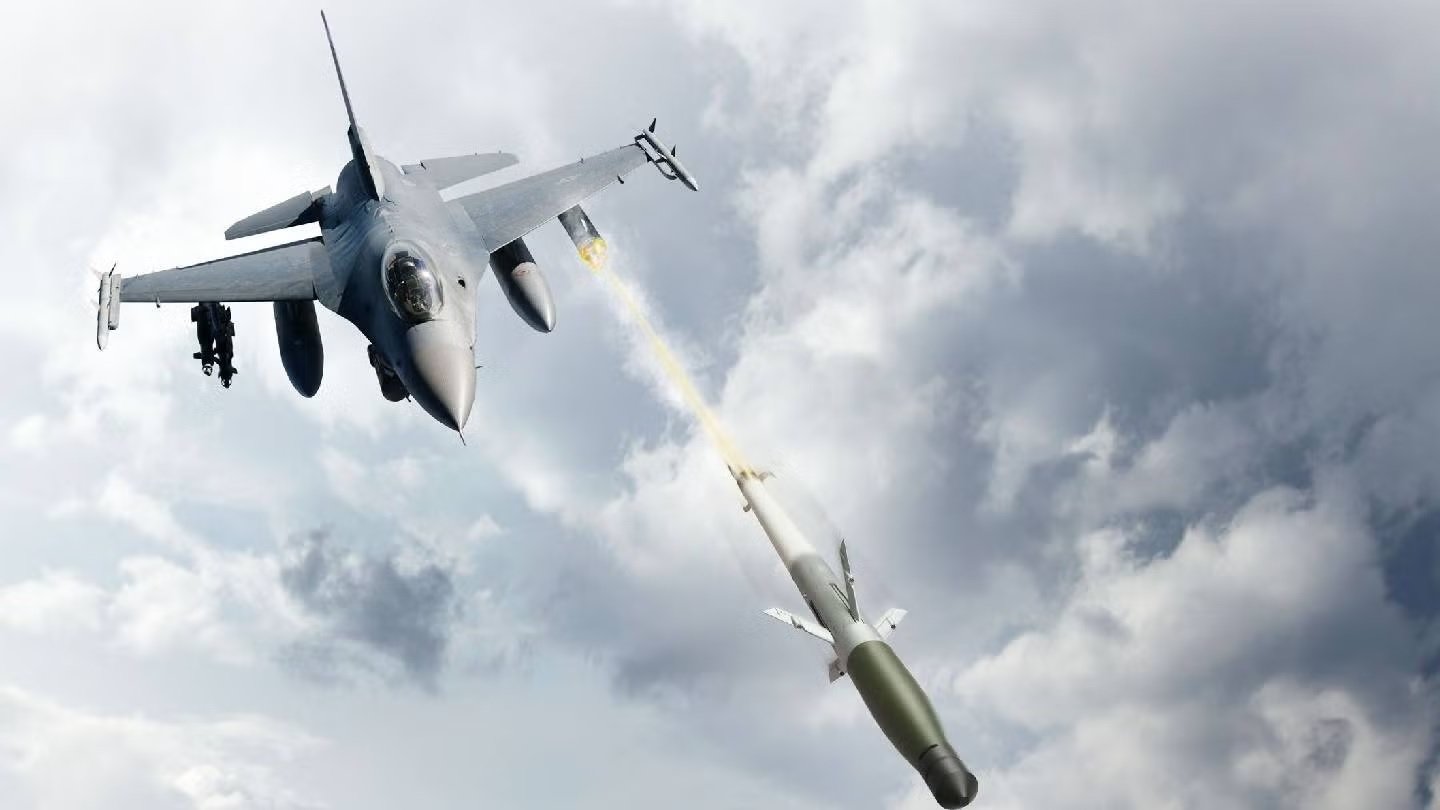
U.S
WASHINGTON — The U.S. Department of State has approved a possible $364 million Foreign Military Sale to Italy for the air-to-air variant of the Advanced Precision Kill Weapon System-II (APKWS-II). The Defense Security Cooperation Agency (DSCA) announced the approval on August 21, 2026, under Transmittal No. 26-92. Italy has requested 5,031 WGU-59B/B Single Variant Air-to-Air Guidance Sections, along with associated launchers, warheads, rocket motors, proximity fuzes, training equipment and support services. Package Details The proposed package includes: 5,031 WGU-59B/B APKWS-II guidance sections LAU-131 A/A 7-round rocket launchers Mk-152 high-explosive warheads MK66 solid-fuel rocket motors and inert training motors Proximity fuzes WTU-1/B practice warheads Other support equipment Publications and technical documentation Transportation U.S. Government and contractor engineering, technical and logistics support BAE Systems of Nashua, New Hampshire, is the principal contractor. The U.S. government said it is not currently aware of any proposed offset agreement. Any such agreement would be negotiated between Italy and the contractor. APKWS-II Air-to-Air System APKWS-II is a laser-guidance kit that converts standard 70mm (2.75-inch) Hydra 70 unguided rockets into precision-guided weapons. The guidance section is installed between the warhead and rocket motor. In the air-to-air configuration, laser receivers are positioned on the leading edges of the deployable wings, while proximity fuzes and optimized software support engagements against drones and other slow-moving aerial targets. The system can also be carried in multi-round launcher pods, allowing several guided rockets to be carried on a single launcher. Strengthening Italy's Air Defense The U.S. State Department said the proposed sale would strengthen Italy's homeland defense, improve its ability to address current and future threats, and enhance its contribution to NATO integrated air and missile defense. It would also support the protection of Italy and allied land forces. The U.S. government said Italy can absorb the equipment and services into its armed forces, while the sale would not alter the basic military balance in the region. Implementation would not require additional U.S. Government or contractor personnel to be assigned to Italy, and the proposed sale would have no adverse impact on U.S. defense readiness. The approval is for a potential sale, not a completed contract. Final quantities, configuration and costs would be determined through negotiations and contracting if Italy proceeds with the purchase.
Read More → Posted on 2026-08-22 13:06:18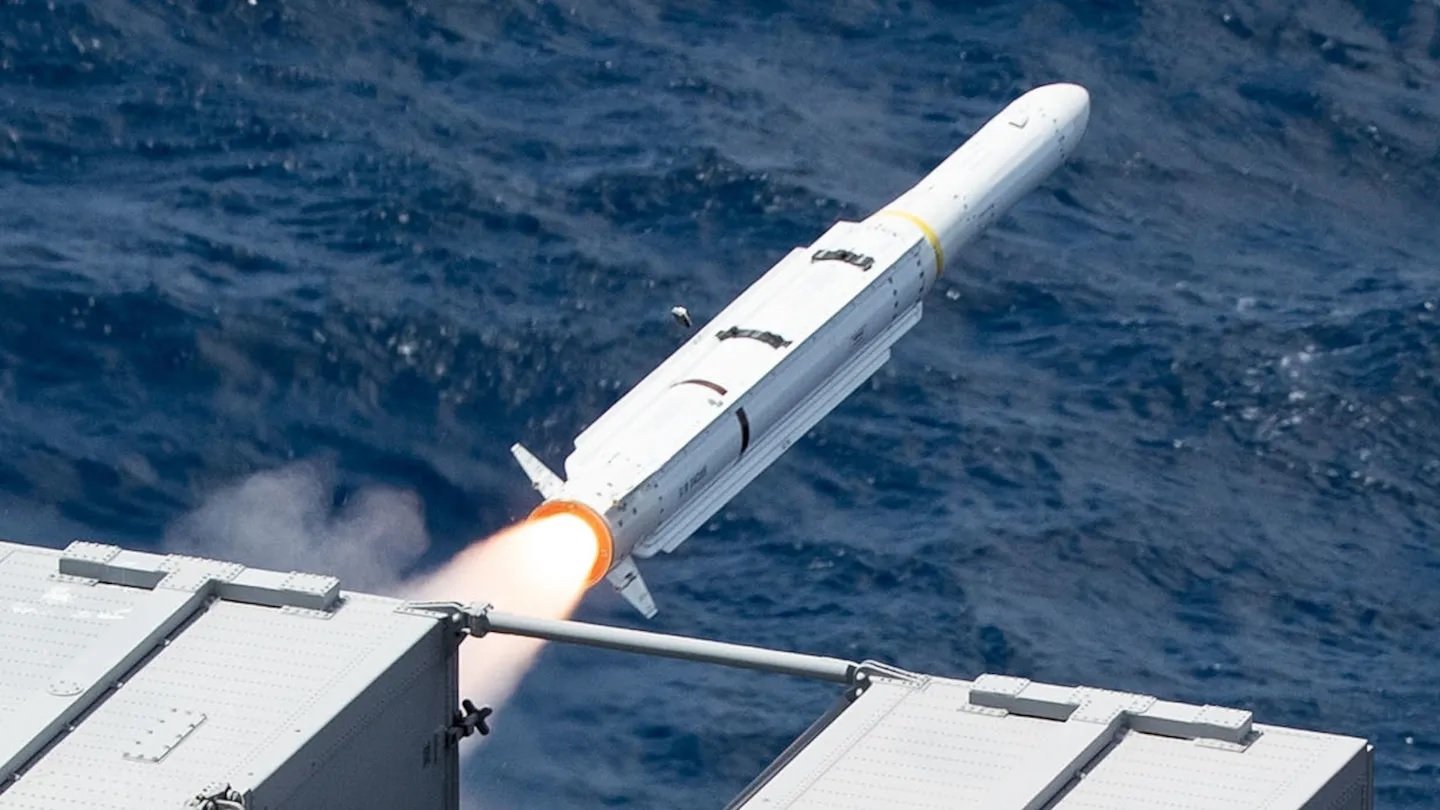
U.S
WASHINGTON — The U.S. Navy is seeking industry concepts for a potential new version of the Evolved SeaSparrow Missile (ESSM) as NATO partners look to develop a Next Significant Variant (NSV) with improved capabilities against evolving aerial threats. Naval Sea Systems Command (NAVSEA) issued a sources-sought notice on August 20, 2026, seeking companies able to design, build and support the NSV. Responses are due October 19, 2026. The notice is for market research only, carries no funding commitment and does not guarantee a future contract or prototype award. The ESSM is used by a 12-nation NATO consortium comprising Australia, Belgium, Canada, Denmark, Germany, Greece, the Netherlands, Norway, Portugal, Spain, Türkiye and the United States. The NATO SEASPARROW Project Office manages the program and is transitioning from Program Executive Office Integrated Warfare Systems 12.0 to Program Acquisition Executive Munitions NSPO. 10-Inch Missile and Mk 41 Compatibility The Navy wants the NSV to retain the current 10-inch diameter of ESSM Block 2. This is important because the missile can be quad-packed in Mk 41 Vertical Launching System cells, allowing four interceptors to be carried in one cell. The existing ESSM Block 2 uses the larger 10-inch body compared with the 8-inch Block 1, providing space for its dual-mode X-band radar seeker. The Navy wants the new variant to retain this physical limit so existing ship launcher and magazine arrangements do not require redesign. ESSM Block 2 has a stated range of about 50 kilometers (31 miles) and a speed exceeding Mach 4. Its dual-mode seeker can use the missile's onboard radar or rely on a launching ship's illumination radar. Wider Threat Requirements NAVSEA wants the NSV to handle targets with different speeds, altitudes and maneuverability, including low-speed to high-speed, sea-skimming to high-diving and non-maneuvering to high-G targets. The missile must also be able to track and discriminate between closely spaced targets and operate in contested environments involving radar, electro-optical and infrared countermeasures, as well as enemy jamming and decoys. Companies can submit complete missile designs or proposals for individual components such as seekers, propulsion systems, guidance electronics or warheads. Open Architecture and Technology Rights The proposed missile must use a Modular Open Systems Approach (MOSA), allowing adaptable and interoperable systems based on severable, standards-based components. The U.S. government is seeking at least Government Purpose Rights to technical data, source code and design documentation. The requirement is intended to provide the consortium with greater flexibility to support, upgrade or manufacture the missile without being dependent on a single supplier. All proposed technologies and data must be legally releasable to all 12 consortium members. Companies must also explain compliance with U.S. export controls, including ITAR, and domestic sourcing requirements such as the Buy American Act. Firms requesting detailed ESSM requirements must sign a non-disclosure agreement. Current ESSM Production and NSV Development Raytheon, an RTX business, is the prime contractor and design agent for ESSM Block 2. The company delivered its 500th Block 2 missile to the U.S. Navy in October 2025 and has increased production to more than 350 missiles annually, with plans to roughly double production again by mid-2026. The NATO SEASPARROW Project Office held an NSV industry day in January 2026 and previously sought industry information on a releasable seeker assembly for the same 10-inch missile body. Official program material identifies a goal of reaching Milestone B by September 2029, with modeling and simulation, model-based systems engineering and other studies continuing. The ESSM program has been a multinational NATO weapons effort for more than five decades. NAVSEA has not yet announced a formal follow-on solicitation timeline, estimated program cost, or whether the NSV will replace ESSM Block 2 or operate alongside it. The current notice may or may not lead to a future Federal Acquisition Regulation-based contract or prototype award under Other Transaction authority.
Read More → Posted on 2026-08-22 13:23:56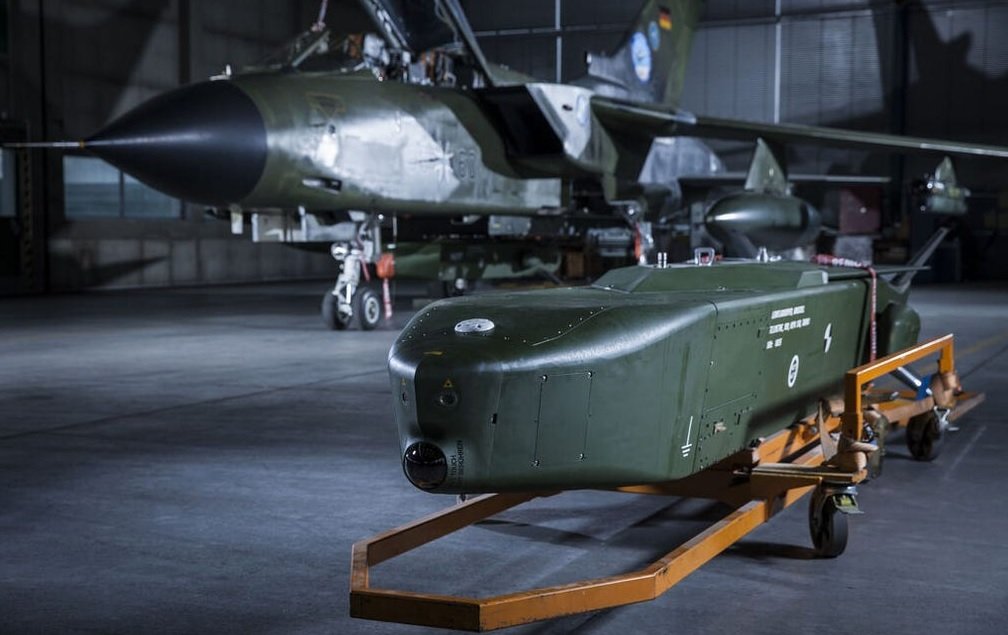
Europe
BERLIN — Germany plans to spend almost €12 billion to build a new long-range weapons arsenal aimed at strengthening deterrence against Russia, according to internal Defence Ministry documents seen by POLITICO. The planned weapons would allow German forces to strike targets hundreds or thousands of kilometres behind enemy lines, including command centres, airfields, missile launchers and supply hubs. The programme is described as a priority for Germany and NATO and is intended to provide conventional strike capabilities below the nuclear threshold. The funding has not yet been approved. The costs have been included in the government’s budget planning process, but the measures remain subject to approval by the German Bundestag. The Defence Ministry has said it can comment further only after parliament considers the proposals. Four-Part Long-Range Strike Plan Low-Cost Missiles From 2027 The first part of the plan is a cost-efficient, mass-producible cruise missile that Germany wants to begin fielding in 2027. The approach draws on lessons from the war in Ukraine, where missiles and drones have been used against targets deep behind the front line and mass attacks can place pressure on air-defence systems. Three candidates are identified: Anthem, produced by U.S.-Israeli startup Covenant Industries; BARS, developed by a Ukrainian company; and the FP-5 Flamingo, developed by Ukrainian company Fire Point. The Flamingo has a reported range of about 3,000 kilometres and an estimated cost of around $500,000 per missile, roughly one-fifth the reported cost of a Tomahawk. Germany is in contract talks with two suppliers and aims to receive missiles for qualification next year, with framework contracts for later mass production also being prepared. U.S. Tomahawk and Typhon Systems The second part involves U.S. systems. Chancellor Friedrich Merz said in July that Germany had reached an agreement with the United States to acquire Tomahawk cruise missiles and Typhon launchers. German planning calls for an initial capability using Typhon launchers armed with Tomahawks by the end of the decade. The U.S. systems are intended to fill Germany’s long-range strike capability gap while European alternatives are developed. Advanced German-British Weapons The final two parts involve Germany-UK cooperation under the Trinity House Agreement. The two countries are developing a next-generation stealth cruise missile and a hypersonic glide weapon, with planned ranges exceeding 2,000 kilometres. Initial capability is targeted for the middle of the next decade. These systems represent the longer-term European element of Germany’s deep-strike plans. Nearly €12 Billion Programme Internal planning documents allocate nearly €9 billion for development and procurement of the advanced systems, plus €182 million for keeping them in service. Another €1.8 billion is allocated for cruise-missile development and procurement, with €97 million for maintenance. These figures total around €11 billion, while separate Defence Ministry planning material puts the overall requirement at almost €12 billion. The programme reflects Germany’s shift toward a layered long-range strike capability, combining cheaper mass-producible weapons available sooner, U.S. systems for the interim period and more advanced European weapons for the longer term. The urgency is linked to the changing security situation in Europe, including Russia’s deployment of Iskander missile systems in Kaliningrad and medium-range weapons in Belarus, which have reduced warning times for European countries.
Read More → Posted on 2026-08-22 13:33:57
World
Kyiv, Ukraine — North Korea has deployed a new contingent of military personnel to Russia, including around 400 drone operators, according to Major General Vadym Skibitskyi, deputy head of Ukraine’s Defence Intelligence (HUR). The deployment is part of the expanding military cooperation between Moscow and Pyongyang. Skibitskyi said around 8,500 North Korean personnel are currently deployed in Russia, mainly in the Kursk region. The contingent includes approximately 1,000 engineers and deminers and at least 400 UAV operators. According to Ukrainian intelligence, the drone operators are expected to conduct both reconnaissance and strike missions against targets in Ukraine. The North Korean troops are not expected to fight directly inside Ukrainian territory. Instead, they are being used to reinforce Russian rear positions and border areas, potentially allowing Russian forces to be used for operations inside Ukraine. The latest deployment follows the arrival of the first major North Korean contingent in Russia’s Kursk region in October 2024, when North Korean forces were sent to support Russian operations against Ukraine’s cross-border offensive. North Korea publicly confirmed its soldiers’ participation in the conflict in April 2025. Ukraine first reported North Korean forces using attack drones against its territory in October 2025. Ukrainian intelligence estimates that around 25,000 North Korean personnel have been deployed or rotated through Russian forces since the cooperation began. Ballistic Missile Support North Korea has also supplied Russia with ballistic missiles. Skibitskyi said that by August 2025, Pyongyang had delivered at least 150 KN-23 and KN-24 ballistic missiles. Another 120 missiles were reportedly promised, with around 40 already delivered by early August 2026. Ukrainian officials linked two of the newly delivered missiles to a strike near Kryvyi Rih on July 30, 2026, which killed several civilians, including children from one family. A separate North Korean missile unit of around 90 personnel has reportedly begun deploying to Russia’s Voronezh region under the 112th Missile Brigade. Plans reportedly include up to six launchers and 120 ballistic missiles, including KN-23, KN-24 and upgraded KN-30 variants. Ukrainian intelligence says these systems could reach targets in the Sumy, Kharkiv, Chernihiv, Poltava, Kyiv, Dnipropetrovsk and Zaporizhzhia regions. Possible Further Deployment Russia and North Korea signed a comprehensive strategic partnership treaty with mutual defence provisions in 2024. Skibitskyi said Russian President Vladimir Putin could request up to 50,000 additional North Korean troops when he meets North Korean leader Kim Jong Un in September 2026. North Korean officials have rejected claims about a large additional deployment, with Kim Yo Jong recently describing such reports as unfounded. North Korea has also provided artillery shells and workers for Russian drone-production facilities, while Russian technical support has reportedly contributed to North Korean drone development and missile improvements. The reported deployment of 400 drone operators represents another expansion of the military cooperation between Russia and North Korea, which now involves personnel, drones, missiles, artillery ammunition and technical assistance.
Read More → Posted on 2026-08-22 14:33:16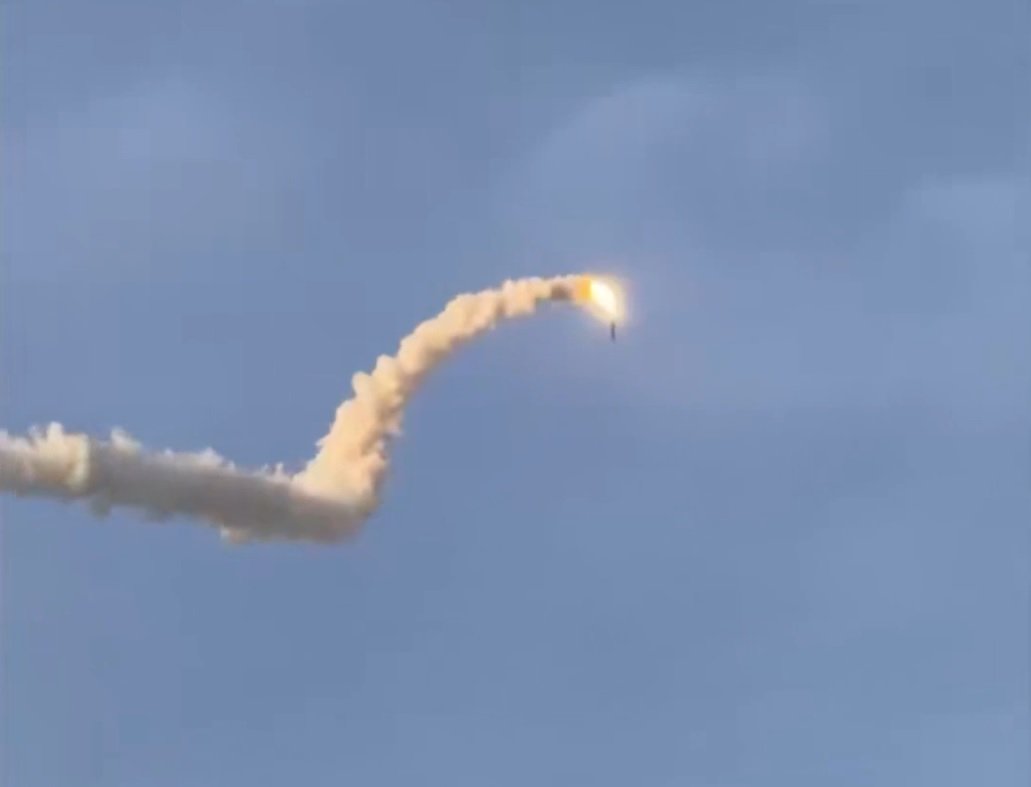
Space & Technology
Pingtung County, Taiwan — Taiwan’s first domestically developed satellite launch vehicle failed during its maiden flight test on Wednesday, August 19, 2026, after veering off course shortly after liftoff. The solid-fuel rocket, developed by the National Chung-Shan Institute of Science and Technology (NCSIST), was launched from the Jiupeng Base in Pingtung County at around 6:00 a.m. local time. NCSIST said the rocket developed a trajectory anomaly during the initial stage of flight. Ground telemetry detected abnormal rotation and a deviation from the planned flight path, prompting operators to activate the vehicle’s pre-planned self-destruct system. The rocket and debris fell in an uninhabited mountainous area within the designated safety control zone. No injuries or property damage were reported. Before the launch, authorities had established a safety exclusion zone covering a radius of 20 nautical miles (about 37 km) and extending to an altitude of 100,000 feet (about 30.48 km). NCSIST had also issued notices for sea and air firing activities at Jiupeng from August 19 to 21, 2026, including artillery and uncrewed aircraft system operations. Residents near the base reported seeing the rocket briefly climb before turning away from the sea toward the mountains. Some initially believed they were seeing a missile. Videos shared online showed the vehicle changing direction before falling, with smoke rising from the hillside. The Pingtung County Government called for further launch tests to be suspended and asked NCSIST to conduct a thorough review of its procedures. It also requested that future flight paths avoid Indigenous villages and other residential areas. NCSIST has sent personnel to the county government and the Mudan and Manzhou township offices to explain the safety measures and hear local concerns. NCSIST said engineers will analyse the telemetry collected during the brief flight to determine the cause of the failure and make necessary design changes. Possible areas under investigation include the propulsion or gyroscope systems and weight distribution, although the exact cause has not yet been confirmed. The project is a scientific research effort to develop a solid-fuel rocket capable of placing satellites into low Earth orbit. Project lead Lai Yu-hsuan said the work builds on NCSIST’s solid-rocket technology and has no other purpose. The program is separate from TASA’s liquid-fuel rocket program. No satellite was carried during the test. The objective was to collect flight data and validate the vehicle’s systems. This was the first flight test of Taiwan’s domestically developed launch vehicle. Taiwan has previously relied on foreign launch services for its satellites. Separately, the Taiwan Space Agency (TASA) is working toward domestic orbital launch capability, including plans for a rocket capable of carrying a 200-kilogram satellite into orbit by around 2034 and the establishment of a dedicated launch facility in Pingtung. NCSIST said it will use the data from the August 19, 2026 flight to refine the vehicle before any further tests.
Read More → Posted on 2026-08-22 14:55:51
Science
NANJING, CHINA — Researchers from Nanjing University, in collaboration with the National University of Singapore, have developed LightTok, an ultra-low-power vision sensor chip that converts light directly into AI-ready tokens inside the sensor. The findings were published this week in the journal Nature Sensors. Direct AI Tokenization at the Sensor Conventional vision systems capture light, convert analog signals into digital data, buffer and transfer the data, and then divide images into patches and embed them before producing tokens for Transformer models. These steps involve moving large amounts of often redundant data and consume significant energy, particularly in power-constrained edge devices. LightTok performs this process directly in the physical domain. Its photosensitive memory array uses single-layer molybdenum disulfide (MoS₂) floating-gate phototransistors along with peripheral addressing circuits. Each pixel can sense light, store information as non-volatile charge and perform analog computing. Peripheral circuits select regions of the array and divide the image into blocks. Voltage sequences then allow the stored optical information to perform multiply-add operations in the analog domain, with the resulting current becoming the output token. These tokens can be sent directly to a Transformer encoder for image recognition. Liang Shijun, a professor at Nanjing University, described the approach as eliminating data movement that contributes significantly to energy consumption, with light entering the sensor and tokens being produced directly. 14.3-Fold Energy Reduction In tests, LightTok achieved 87.3 percent accuracy on image-recognition tasks, close to conventional software baselines. The research reported that energy efficiency during tokenization improved by more than 10 times compared with traditional digital methods. In a standard Vision Transformer pipeline using the CIFAR-10 dataset, the physical tokenizer achieved a 14.3-fold reduction in energy use compared with a digital tokenizer. 32 × 32-Pixel Prototype The current prototype has a 32 × 32-pixel resolution, providing 1,024 photosensitive pixels. This is smaller than sensors used in smartphones and industrial cameras. Miao Feng, director of Nanjing University's Institute of Brain-Inspired Intelligence and a co-leader of the research, said the technology is compatible with standard CMOS manufacturing processes and can be scaled. The researchers said wafer-level growth of molybdenum disulfide could eventually allow LightTok to reach resolutions comparable to existing imaging devices. The design is inspired by the human retina, which performs early visual processing before sending information to the brain. Potential Applications The researchers identified potential uses in drones, autonomous satellites for remote sensing, and small embodied-AI systems that require continuous visual processing under tight power constraints. By generating AI-ready tokens directly at the sensing stage, LightTok is intended to reduce the energy required to acquire and tokenize visual information for edge AI and physical AI systems.
Read More → Posted on 2026-08-22 15:21:28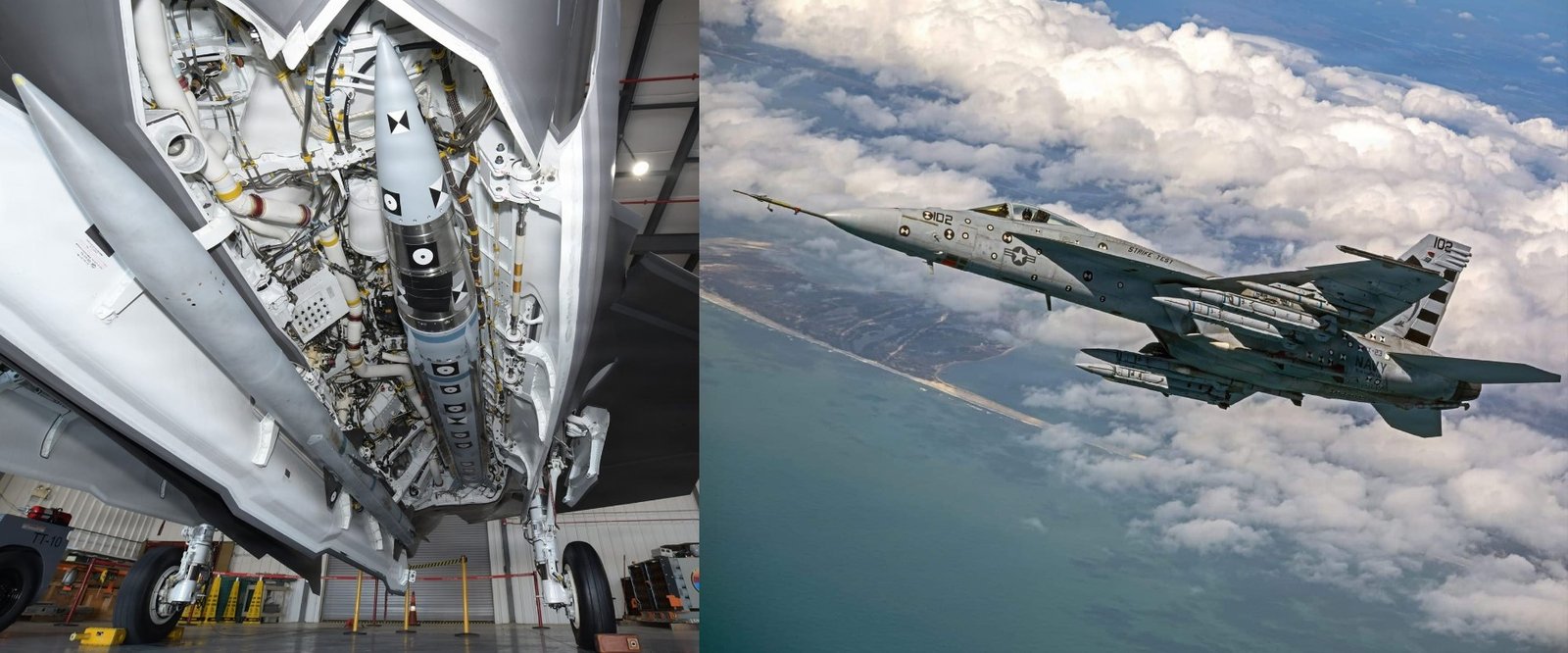
U.S
Reno, Nevada — The U.S. Navy has officially revealed the AIM-424 Long Range Air-to-Air Missile (LRAAM), also known as “Malice,” at the Tailhook Symposium in Reno, Nevada, on August 22, 2026. The Navy also added the missile to its official Fact Files, releasing its first public specifications and photographs. The weapon is being developed by Raytheon, an RTX company, and is already undergoing flight testing. The AIM-424 is designed to strengthen fleet defense against advanced long-range aerial threats and support the Navy’s “first look, first shot, first kill” approach by providing greater reach, survivability and tactical flexibility. The missile is intended for fourth-, fifth- and sixth-generation aircraft, including the F/A-18E/F Super Hornet, F-35C Lightning II and future F/A-XX fighter. AIM-424 Specifications The Navy lists the missile at 13.5 feet (4.11 meters) long, with a 13.5-inch (0.34-meter) diameter and a 26.2-inch (0.67-meter) wingspan. It weighs 1,500 pounds (680.4 kg) and uses a solid-propellant rocket motor with a blast-fragmentation warhead. Its stated range is in excess of 250 nautical miles (463 km). Aviation Week reported that the AIM-424 is a two-stage missile and is significantly larger than the AIM-120 AMRAAM. The released imagery shows the missile is also comparable in overall size to the AIM-174B, although the AIM-424 is shorter and has a narrower wingspan. Testing and Aircraft Integration Navy photographs show the AIM-424 being carried externally by an F/A-18E Super Hornet, including a configuration from April 2026 showing four missiles. Other imagery shows the missile installed inside the F-35C’s internal weapons bay, with an AIM-120 positioned on the bay door. Captive-carry and weapons-bay fit checks have also been documented. The missile's development traces back to the Long Range Engagement Weapon (LREW) concept publicly discussed in 2017. That earlier concept involved a two-stage air-to-air missile designed for internal carriage by a stealth aircraft. The AIM-424 is now being developed alongside the AIM-260 Joint Advanced Tactical Missile (JATM). Raytheon President Phil Jasper said the company's Advanced Technology team developed the AIM-424 to strengthen fleet defense and maintain air superiority against emerging long-range air threats. He said the missile provides increased range, lethality and combat effectiveness for naval forces. The Navy has not announced an initial operational capability or full deployment timeline for the AIM-424. Detailed performance information also remains classified. The missile's publicly stated range of more than 250 nautical miles is intended to give carrier aviation a longer engagement envelope against high-value aerial threats, including aircraft capable of carrying long-range anti-ship weapons. The Navy has also indicated that the AIM-424 has greater range and speed than the AIM-174B while retaining maneuverability despite its size.
Read More → Posted on 2026-08-23 11:15:55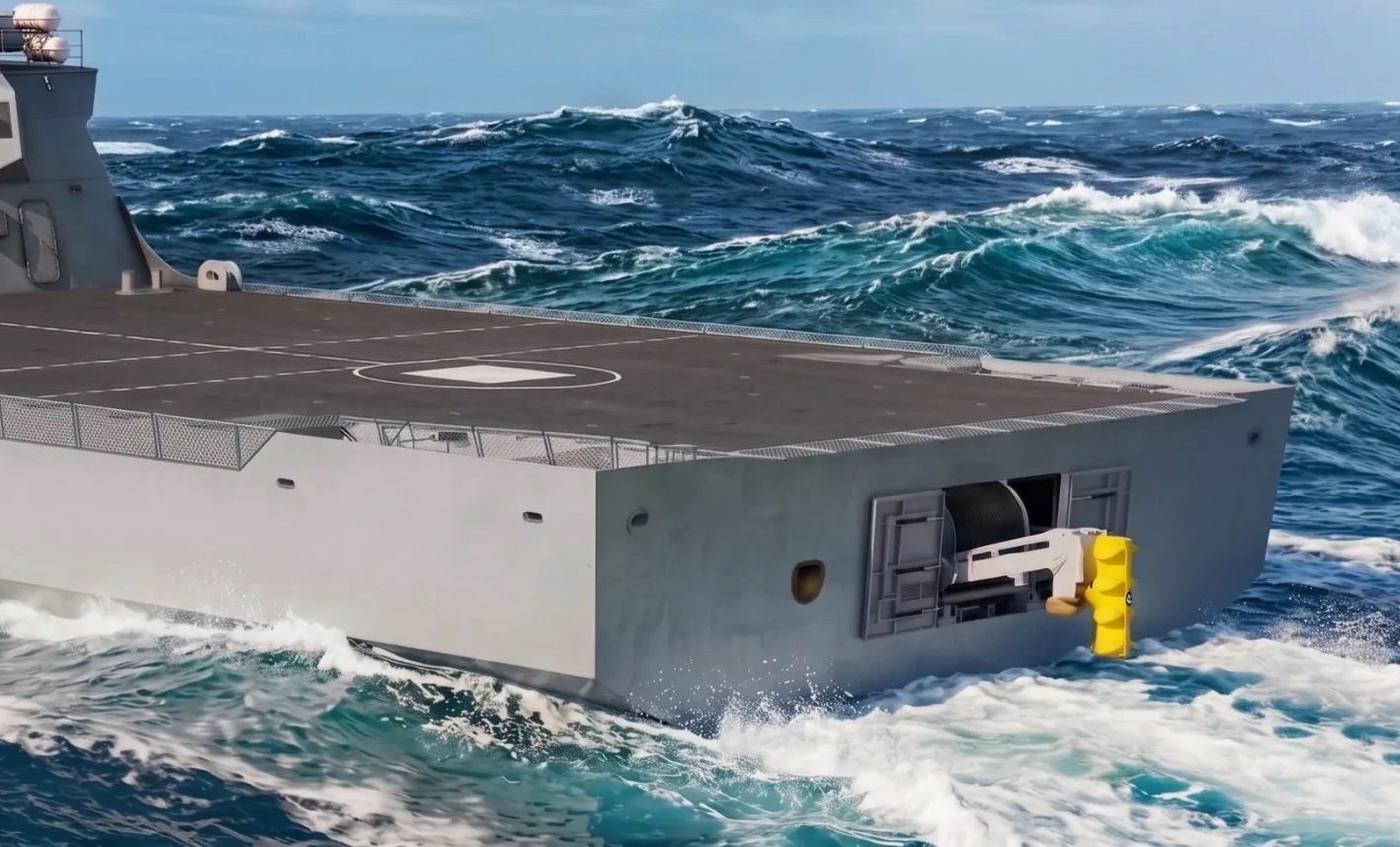
Europe
London — Britain is considering the use of portable fibre-optic sonar systems on civilian and commercial ships to expand underwater surveillance and detect Russian submarines and warships. The technology, developed by Dutch company Optics11, is known as OptiArray. It uses a fibre-optic cable fitted with underwater acoustic receivers that can be towed behind a vessel. The system has been tested by the Royal Navy and is being developed for operational use by the Dutch military. Optics11 says OptiArray can detect an oil tanker at around 100 km (62 miles) and a frigate at about 50 km. Some unmanned surface vessels can be detected at ranges of tens of kilometres. The Dutch Ministry of Defence says the system provides higher sensitivity than traditional arrays. Unlike conventional electronic towed arrays, the fibre-optic system uses light to detect acoustic signals and does not emit a detectable electromagnetic signal. It is also immune to electromagnetic interference. The technology can provide a richer acoustic profile for identifying underwater targets. The system can be packed into a portable container roughly 10 feet long, allowing it to be carried on the deck of ships capable of handling sea containers. Optics11 chief executive Paul Heiden said the system could be installed on civilian cargo ships as well as naval vessels, describing it as “anti-submarine warfare in a box.” Traditional towed-array sonar has generally been installed on specialist anti-submarine warfare ships, including Royal Navy Type 23 frigates. The portable design could allow a wider range of crewed and uncrewed platforms to carry underwater surveillance equipment. The Dutch Ministry of Defence awarded Optics11 a contract in July 2026 under its ASWINABO (Anti-Submarine Warfare in a Box) programme to deliver operational containerised systems. Earlier trials included testing a prototype aboard the Dutch submarine HNLMS Dolfijn. The system can also be deployed from land and placed on the seabed to monitor critical underwater infrastructure. Britain's interest comes amid increased Russian naval activity around UK waters and growing concern over subsea infrastructure. In April 2026, British and allied forces tracked a Russian Akula-class attack submarine and two specialist vessels associated with Russia's Main Directorate of Deep-Sea Research (GUGI) for more than a month in and around UK waters. Sonobuoys were deployed during the operation, and no damage to cables or pipelines was confirmed. The UK government has said the number of Russian vessels operating near UK waters has risen by about 30 per cent in recent years. More than 99 per cent of international data traffic travels through subsea fibre-optic cables, making their protection an important part of Britain's maritime security efforts. The Royal Navy's surface fleet has also faced pressure as older Type 23 frigates retire while newer vessels enter service. Portable sonar systems could therefore provide additional surveillance coverage without requiring every sensor to be permanently installed on a specialist warship. However, no formal UK procurement decision to equip civilian ships with OptiArray has been announced. The technology is currently being developed for operational use in the Netherlands while Britain examines its potential for expanding underwater surveillance. Source : Telegraph
Read More → Posted on 2026-08-23 11:32:05
World
London — Hackers affiliated with the Iranian government reportedly shut down a small UK power plant for four days in July, marking what is believed to be the first known cyberattack to successfully take a British energy facility offline. The incident, first reported by The Telegraph, affected a relatively small generator. UK officials have not identified the facility for security reasons. Staff worked for four days to restore its systems and bring it back online. The shutdown had no impact on the wider UK electricity network or national energy generation. A government source said its generating capacity was “less than a rounding error compared to grid capacity.” The Department for Energy Security and Net Zero (DESNZ) confirmed that the incident involved a small-scale energy generator and said there was no risk to the wider energy system. The government described the UK energy system as highly resilient and said it was working closely with the energy sector to protect critical infrastructure. The incident was reported to the National Cyber Security Centre (NCSC), part of GCHQ. The government subsequently briefed chief executives of major power companies and issued cybersecurity guidance to businesses. Officials said the affected generator was below the threshold requiring larger generators to formally report cyber incidents. Possible Iranian Cyber Operation Officials believe the attack may have been intended as a proof of concept, demonstrating that Iran-linked hackers, including actors associated with the Islamic Revolutionary Guard Corps (IRGC), have the capability to penetrate and disrupt sensitive Western infrastructure. The UK attack occurred around the same time as a series of cyberattacks against water infrastructure across 12 US states, including Minnesota, Michigan, Georgia, South Dakota and New Jersey. Some attacks caused operational problems such as localized flooding, reduced water pressure and boil-water advisories. US authorities initially described those responsible as “malicious cyber actors,” while later government sources linked the campaign to Iran. US agencies have not publicly attributed every incident to Iran. UK Warns of Growing Infrastructure Threat The incident follows previous warnings from UK and US intelligence agencies about cyber threats from state actors, including Russia, China, Iran and North Korea, against critical infrastructure. NCSC Chief Executive Dr Richard Horne said hostile states accounted for around three-quarters of more than 200 cyber incidents affecting UK critical national infrastructure and related systems in the year to May 2026. He also said the NCSC handles about four nationally significant incidents each week, with most linked to state actors. A UK Cabinet Office risk assessment published a month before the power-plant incident estimated the likelihood of cyberattacks against domestic infrastructure at between 5% and 25%. It also warned that artificial intelligence could help automate attacks and make them faster to conduct. In March, NCSC Director for National Resilience Jonathan Ellison warned UK organisations to remain alert to cyber risks linked to rapidly changing geopolitical events in the Middle East. The incident also follows a wider pattern of cyber threats against European infrastructure. In September 2025, UK authorities arrested a suspect in connection with a major cyberattack that disrupted passenger check-in and boarding systems at London Heathrow and several other European airports. The UK government is updating cybersecurity regulations for the energy sector and developing a new energy resilience strategy expected later this year. No further operational details about the affected plant or the specific methods used in the attack have been publicly released.
Read More → Posted on 2026-08-23 11:43:40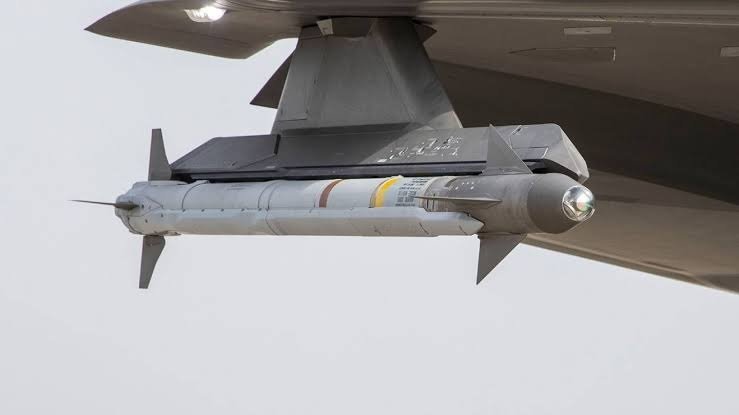
U.S
Washington, — The U.S. State Department has approved a potential $125 million Foreign Military Sale to South Korea for AIM-9X Sidewinder Block II tactical missiles and related equipment. The Defense Security Cooperation Agency (DSCA) has delivered the required certification to Congress, and the proposed sale still requires congressional notification and review before a final agreement can be concluded. South Korea has requested 103 AIM-9X Sidewinder Block II missiles and 10 AIM-9X Block II Tactical Guidance Units. The package also includes active optical target detectors, spare parts, training equipment, training aids and devices, weapon system support, and U.S. government and contractor engineering, technical and logistics support services. The principal contractor is RTX Corporation, formerly Raytheon Technologies, based in Arlington, Virginia. The U.S. government said it is not aware of any proposed offset agreement. Any offset arrangement would be determined through negotiations between South Korea and RTX. The implementation is not expected to require additional U.S. government or contractor personnel to be permanently assigned to South Korea. U.S. Cites Regional Security and Interoperability The State Department said the proposed sale supports U.S. foreign policy and national security objectives by strengthening the security of a major Indo-Pacific ally. It would expand South Korea's air defense capability, help deter aggression and maintain interoperability with U.S. forces. The U.S. assessment says South Korea should have no difficulty integrating the equipment into its armed forces. The sale is not expected to alter the basic military balance in the Indo-Pacific or negatively affect U.S. defense readiness. AIM-9X Sidewinder Block II The AIM-9X Block II is a short-range, infrared-guided air-to-air missile developed by Raytheon, now part of RTX. It is approximately 3 meters long, has a 0.13-meter diameter, a wingspan of about 0.35–0.45 meters, and a launch weight of roughly 84–85 kg, including a 9.4-kg high-explosive fragmentation warhead. The missile uses a solid-fuel rocket motor and can reach around Mach 2.5. Open-source reports cite an engagement range of up to approximately 35 km, although exact operational performance figures remain classified. The Block II variant uses a 128×128-pixel infrared imaging seeker, along with improved resistance to thermal countermeasures and electronic warfare. It also features a two-way data link and lock-on-after-launch capability, allowing the missile to receive information from the launching aircraft before its onboard seeker acquires the target. South Korea Already Operates AIM-9X South Korea has operated the AIM-9X since 2011, initially acquiring it for its F-15K Slam Eagle fighters. The F-15K was equipped with the Joint Helmet Mounted Cueing System (JHMCS), allowing pilots to cue missiles by turning their heads toward targets. The missile was later integrated with other Republic of Korea Air Force aircraft and, as of 2023, was in service with the F-15K, KF-16 Fighting Falcon and F-35A Lightning II. For the KF-21 Boramae, South Korea selected the German-made IRIS-T as its short-range air-to-air missile. Some reports have also indicated that AIM-9X Block II is being considered for integration on the KF-21 alongside IRIS-T. The proposed AIM-9X sale is therefore intended to add further missiles and support equipment to South Korea's existing inventory while maintaining compatibility with its U.S.-origin fighter fleet.
Read More → Posted on 2026-08-23 11:58:58
World
TEHRAN — Iranian state television has broadcast footage showing senior military officials visiting an underground weapons manufacturing facility, offering a public look at Iran’s underground defense-production infrastructure. The visit took place on August 22 during Iran’s Defense Industry Day. Major General Ali Abdollahi, Chief of Staff of the Armed Forces, and Acting Defense Minister Brigadier General Seyyed Majid Ebn al-Reza inspected the facility, which Iranian reports described as one of several underground production lines operated by the Ministry of Defense. Iranian officials said the facility produces ballistic missiles and other defensive weapons. Abdollahi said military equipment production had increased in both quantity and quality over the past year, with newer systems offering improved capabilities compared with earlier versions. Iranian state media also reported that production capacity for attack drones had tripled since late February. pic.twitter.com/QseVTNKDfg — August 22, 2026 Almas Missile Production Line The broadcast showed an active production line for the Almas family of anti-tank guided missiles (ATGMs). Analysts examining the footage identified Almas-series missiles and launch tubes, while a planetary mixer used in solid-fuel production was visible in the background. Some portions of the broadcast were archival footage. The Almas is an Iranian-developed non-line-of-sight (NLOS) anti-tank missile with a man-in-the-loop guidance system, allowing an operator to guide the missile during flight. The system was developed through reverse engineering of Israeli Spike missiles captured by Hezbollah during the 2006 Lebanon conflict and later transferred to Iran. Serial production of the Almas family began around 2021. The missiles are in service with the Iranian Army and the Islamic Revolutionary Guard Corps (IRGC) and have also been supplied to regional groups, including Hezbollah. The family includes several variants, with reported ranges from about 4 kilometers for earlier models to longer distances for later versions. The missiles use tandem warheads and are designed for top-attack profiles against armored vehicles and fortifications. Iran’s Underground Defense Facilities Iran has previously displayed underground facilities, sometimes referred to as “missile cities,” used for storing and supporting ballistic missiles, drones and related systems. The latest broadcast focused on an active production facility rather than storage alone. Iran has long used underground infrastructure for sensitive military activities, including missile-related facilities, aircraft shelters and weapons production. The latest footage was presented by Iranian officials as evidence that domestic defense production continues despite recent regional conflicts and international sanctions. The broadcast comes amid continued regional military tensions and follows earlier conflicts involving Iran. Iranian officials used the visit to highlight the continued operation and expansion of the country's domestic military-production capabilities.
Read More → Posted on 2026-08-23 12:24:41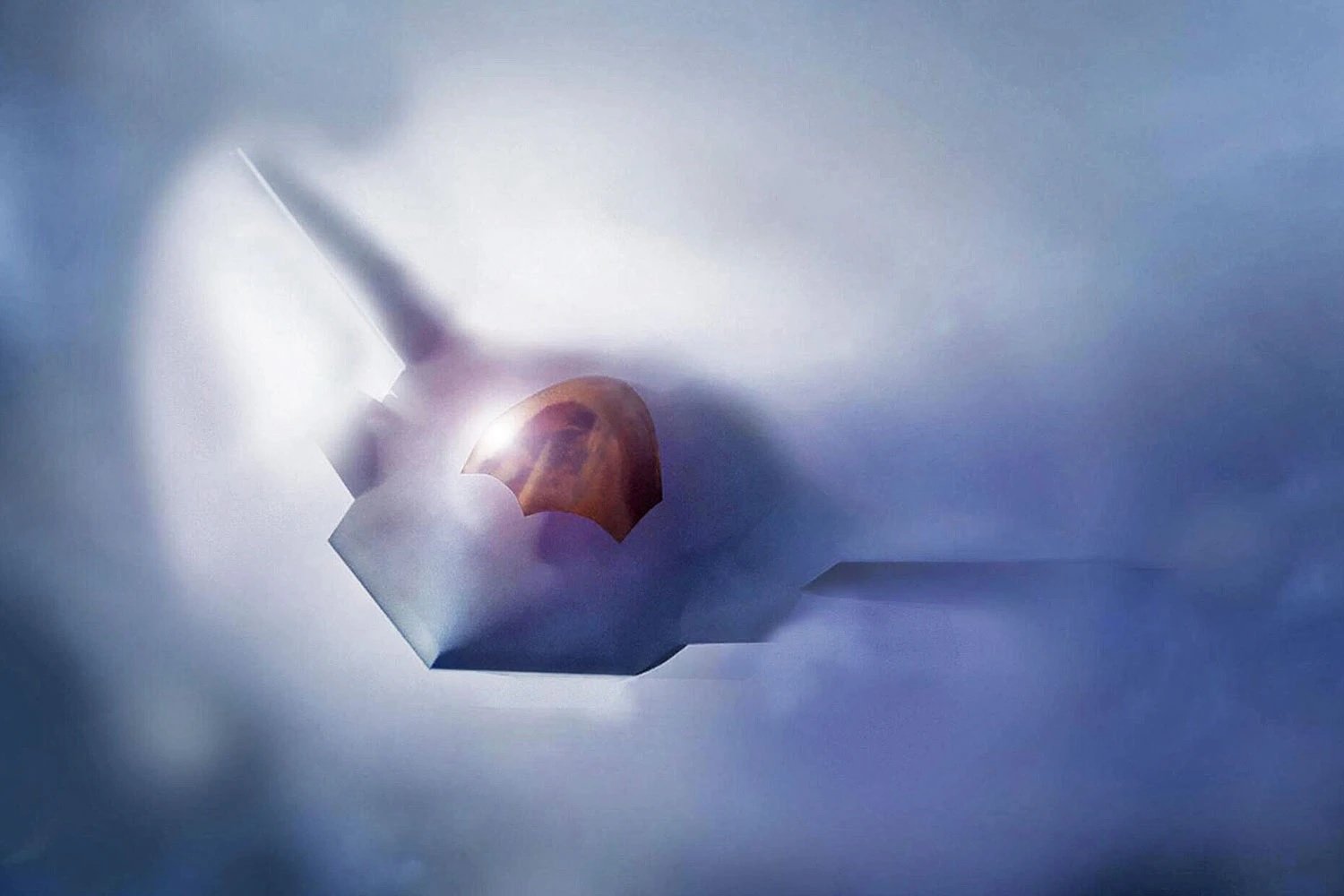
World
Tel Aviv, Israel — Israel is preparing to request information from the United States on Boeing’s F-47 sixth-generation fighter as it examines whether the aircraft could eventually become an option for the Israeli Air Force. The review is preliminary, and no procurement decision or formal acquisition process has been reported. According to Walla, subsequently reported by The Jerusalem Post, Israel’s Defense Ministry and Israel Defense Forces (IDF) plan to seek information on the F-47 and its capabilities. The inquiry comes alongside ongoing procurement of F-35 and F-15 fighter jets and amid regional diplomatic developments, including reported Israeli inquiries connected to discussions involving Iran. Israel Examines U.S. Export Policy The United States has historically refused to export the F-22 Raptor to foreign countries to protect its air-superiority technology. Israel is now examining whether the F-47 could face similar restrictions. The issue has gained attention after senior U.S. officials indicated that Japan could potentially participate in the F-47 program. Israeli officials are assessing whether this represents a genuine change in U.S. policy toward allied participation or was primarily a diplomatic signal related to tensions with China. There has been no official confirmation from the Israeli Ministry of Defense, the IDF or the U.S. government of formal discussions over an Israeli F-47 acquisition. F-47 Development and Capabilities Boeing is developing the F-47 under the U.S. Air Force’s Next Generation Air Dominance (NGAD) program. Boeing was selected for the Engineering and Manufacturing Development contract in March 2025. The aircraft is intended to succeed the F-22 and operate as part of a broader family of systems that includes Collaborative Combat Aircraft. Public U.S. Air Force information indicates that the F-47 is planned to have a combat radius of more than 1,000 nautical miles, or about 1,850 kilometers, and a top speed above Mach 2. The U.S. Air Force plans to acquire at least 185 aircraft. The aircraft is being developed under strict secrecy and is expected to use a new engine designed to provide high efficiency and extended range. Reports have described demanding engine requirements and development challenges. One report referring to the ability to generate thrust without fuel may be a translation issue or a reference to efficient high-speed cruise; sustained thrust without fuel is not physically possible. The F-47 is also expected to carry significantly more weapons than the F-35. Its range has particular relevance to Israel because a combat radius of more than 1,000 nautical miles covers distances associated with potential operations involving Iran, Iraq and Houthi-controlled areas of Yemen. AI, UAVs and Stealth The F-47 is being developed with advanced artificial intelligence, extensive connectivity and the ability to operate alongside unmanned systems. Reports indicate that it could control robotic systems and UAVs carried by the aircraft, while some experts have suggested that certain configurations could potentially support remote operation. The aircraft is also designed to connect with military systems across the air, land, sea and space domains. Its aerodynamic design and stealth characteristics are intended to support the U.S. Air Force’s future air-superiority requirements. The United States is also seeking to keep F-47 maintenance and operating costs below those of the F-22 and F-35. The eventual aircraft price will depend on the size of the U.S. order and whether Washington allows participation by additional countries. Development Timeline Experimental NGAD demonstrators had already completed hundreds of hours of flight testing before Boeing received the F-47 contract. The first production-representative F-47 flight is expected in 2028, while manufacturing of the first airframe has already begun. The aircraft remains years away from operational service. When the F-47 program was publicly announced in March 2025, then-President Donald Trump said allied countries had expressed interest and suggested that versions with reduced capabilities could potentially be offered. Japan has been mentioned in this context, but the extent of any foreign participation remains unclear. For Israel, the current step is therefore an information-gathering and policy assessment rather than a purchase decision. Israel continues to pursue its existing F-35I Adir and F-15IA procurement programs while examining whether the F-47 could become a future option.
Read More → Posted on 2026-08-23 13:09:14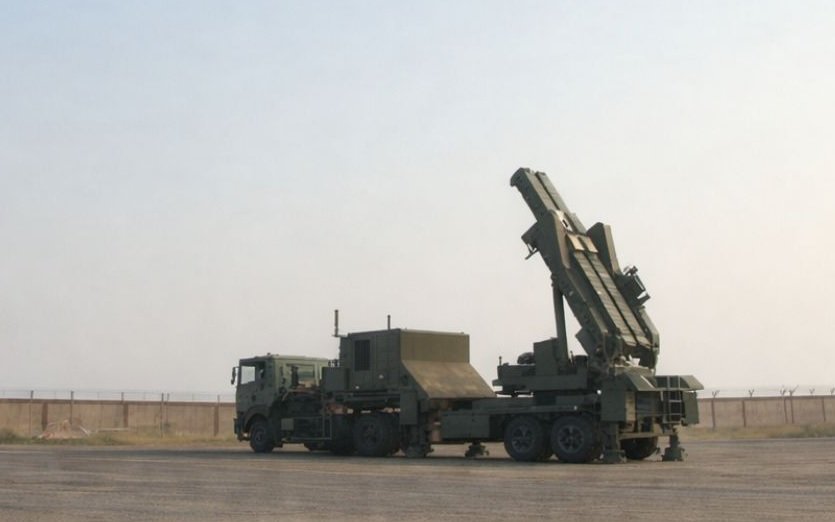
India
New Delhi — India is moving toward large-scale production of indigenous surface-to-air missiles, with around 2,000 QRSAM and Akash-NG missiles potentially entering domestic production if both proposed procurements proceed. The Indian Armed Forces could order around 1,000 QRSAM missiles from Bharat Dynamics Limited (BDL) under a contract estimated at ₹11,000–12,000 crore, forming part of a wider QRSAM programme worth around ₹30,000 crore. Bharat Electronics Limited (BEL) is the lead integrator, while L&T is involved with 8x8 launchers and Apollo Micro Systems supplies several subsystems. The DAC granted Acceptance of Necessity on July 3, 2025, while final CCS clearance remains pending. BEL expects a decision by September 2026. QRSAM has a reported range of 25–30 km and altitude coverage of around 6–10 km. Initial deliveries are expected over seven to eight years, with subsequent orders potentially taking three to four years once production is established. BEL is also preparing a 75-hectare production complex at Chitrakoot in the Uttar Pradesh Defence Industrial Corridor. The Ministry of Defence is also examining a requirement for around 1,000 Akash-NG missiles. Akash-NG completed final user evaluation trials in December 2025 and features a dual-pulse motor, active radar seeker, canisterised launch system and smaller ground footprint. Its demonstrated range is around 30 km, with further extensions reported toward 50–70/80 km depending on configuration. A major order could still be at least three years away. Meanwhile, Apollo Micro Systems is expanding into complete defence-system development. It agreed in July 2026 to acquire a 41.33% controlling stake in Premier Explosives for about ₹1,550 crore, while SEBI approved an open offer for another 26% stake at ₹698 per share. On August 21, AMS also subscribed to a 34% stake in ShauryAstra Defence Systems, which will focus on indigenous weapon systems, long-range strike platforms, unmanned systems, GNC, seekers, sensors, datalinks and mission software under the guidance of Dr. V. K. Saraswat. The developments could expand India's domestic air-defence manufacturing capacity, while export orders could help sustain production lines after domestic requirements are met.
Read More → Posted on 2026-08-23 13:57:06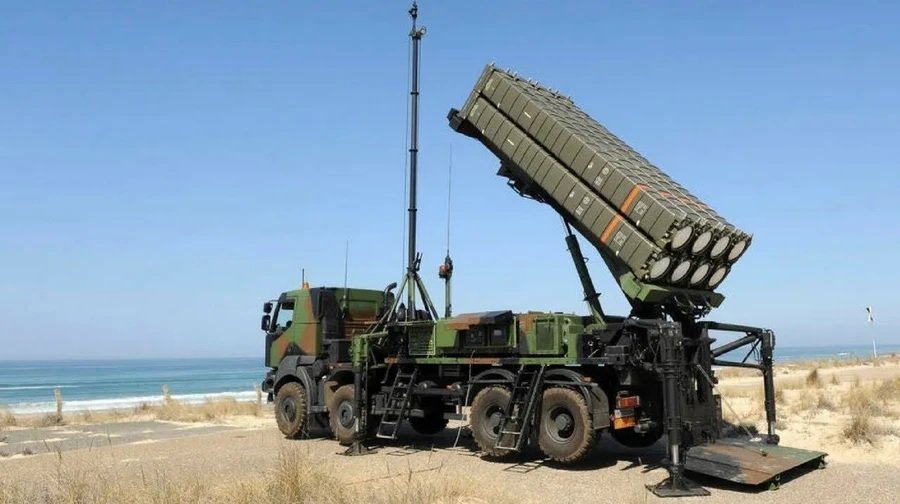
World
Paris / Kyiv — Ukraine expects to receive new air-defense radars and one French SAMP/T air-defense system this autumn, President Volodymyr Zelenskyy said on Sunday after a nearly two-hour conversation with French President Emmanuel Macron. Zelenskyy said France is expected to deliver new radars in the fall along with one SAMP/T system. A second SAMP/T system could also be delivered, depending on production rates. Ukraine has previously ordered four newer SAMP/T NG systems, while France is temporarily providing current-generation systems as the newer batteries are produced. Funding is linked to European support loans. A major challenge remains the limited supply of Aster 30 interceptor missiles used by SAMP/T. Zelenskyy said Ukraine has a contract for additional Aster 30 production, which will be financed through a European loan. Contracts for additional missiles are expected to be signed in September. He compared the shortage with the limited availability of interceptors for Patriot systems. Ukraine also expects licenses this year to produce three types of French weapons domestically. Zelenskyy thanked Macron and France for their readiness to support the cooperation. FREYJA Anti-Ballistic Missile Project Zelenskyy said the European FREYJA anti-ballistic air-defense project has moved from political discussions to technical-level work, with participating companies beginning practical cooperation. Ukraine is counting on the joint European program to strengthen its air and missile defense capabilities. Patriot Missile Cooperation Ukraine is also working with U.S. defense company Raytheon on a Ukrainian missile for Patriot systems. Raytheon has selected Ukrainian company Fire Point as its partner. The first technical meeting has already taken place, and Ukraine expects information on the project’s timeline and feasibility in the coming weeks. Zelenskyy also said he agreed with German Chancellor Friedrich Merz on the delivery of 600 PAC-2 missiles in 2027–2028. These missiles can intercept ballistic targets, although Ukraine needs larger quantities. Kyiv is also negotiating with the United States, which plans to increase Patriot missile production from the second half of 2027 and beyond. Ukraine’s Domestic Ballistic Missiles Two Ukrainian companies are currently developing domestic ballistic missiles, according to Zelenskyy. Mass production has not yet started because of technical issues that the companies are working to resolve. The latest French commitments follow agreements reached in July 2026, when France pledged to accelerate Aster 30 deliveries, support licensed production of Aster, SCALP and other munitions, and advance cooperation on SAMP/T systems as part of wider European air and missile defense efforts.
Read More → Posted on 2026-08-23 14:19:47
World
DUBAI, UAE — The United Arab Emirates has completed the installation of large steel-and-mesh protective structures over critical fuel storage tanks near Dubai International Airport (DXB), adding a passive defense layer against one-way attack drones. According to satellite imagery and footage published by OSINT researcher Egypt’s Intel Observer, construction at the Dubai fuel farm at 25°14'05.70"N, 55°23'10.49"E began in May 2026 and was largely completed by August 20. Similar structures have also been installed around strategic infrastructure in Abu Dhabi. The work follows a March 16, 2026 drone strike in which an Iranian one-way attack drone hit one of the approximately 10 fuel tanks at the Dubai airport fuel farm, located between Terminal A and the VIP Royal Air Wing terminal. The strike caused a major fire and a large smoke plume, temporarily disrupted airport operations and led to some flights being diverted to Al Maktoum International Airport. Civil Defence teams contained the fire, and no injuries were reported. Massive anti-drone frameworks have been erected over oil storage tanks in Abu Dhabi, UAE, after strikes by Iranian Shahed-136 kamikaze drones. pic.twitter.com/q0umDUcTZv — The Defense News (@TheDefenseNews) August 23, 2026 Large-Scale Protective Framework Unlike protective metal structures commonly placed around individual tanks, the UAE has constructed a large steel framework over the entire tank farm at the Dubai site. The framework uses heavy steel structures and mesh positioned above and around the tanks. The design creates greater distance between an incoming drone and the fuel tanks. If a one-way attack drone detonates against the mesh or before reaching the tank, the additional separation can reduce the effect of its explosive payload. The arrangement is particularly intended to provide protection against drones such as the Iranian Shahed-136. The structures are a passive layer and are not designed to stop ballistic or cruise missiles. They provide an additional barrier when active air-defense systems are dealing with repeated or large numbers of incoming drones. Wider UAE Air-Defense Measures The new structures come amid continued attacks on UAE infrastructure during the conflict that began in February 2026. According to UAE Ministry of Defence figures, its air-defense forces have engaged 2,265 drones, 551 ballistic missiles and 29 cruise missiles launched by Iran. Energy infrastructure, including facilities at the Port of Fujairah and the Habshan natural gas facility, has also faced attacks. The March 16 strike near Dubai International Airport highlighted the vulnerability of fixed fuel storage to one-way attack drones. The completed steel-and-mesh structures at Dubai and Abu Dhabi therefore provide a physical, passive layer of protection for critical fuel infrastructure alongside the UAE's existing active air-defense systems.
Read More → Posted on 2026-08-23 14:42:54
World
KYIV, Ukraine — Ukrainian President Volodymyr Zelenskyy said Russia currently has around 600–630 ballistic missiles and could potentially produce up to 1,300 ballistic missiles a year. Speaking to journalists, Zelenskyy said Russia is targeting a production rate of about 100 ballistic missiles per month, but has not yet reached that level. He said Ukraine has a clear understanding of Russia’s expected production volume through the end of winter and considers the potential figure of 1,300 missiles a year particularly concerning. Zelenskyy said Ukrainian forces are working to reduce Russia’s military-industrial capabilities by striking facilities connected to missile production and carrying out other operations aimed at disrupting ballistic missile output. He also said Ukraine has become more effective at intercepting Russian cruise missiles, with combat aviation, IRIS-T and Hawk air-defence systems contributing to the improvement. However, he said ballistic missiles remain more difficult to counter. Ukraine is also conducting operations intended to disrupt preparations for large-scale Russian missile attacks. Zelenskyy said Russia recently planned a strike that was not carried out, adding that this was not a coincidence and that Ukrainian operations are being used to prevent massive missile attacks. He described these as separate and complex operations that are beginning to show initial results. Zelenskyy further confirmed that Ukrainian forces had struck a Russian Iskander missile launcher near the Ukrainian border. He did not provide the exact date or location because of the sensitivity of the operation. He said the action is part of a separate effort to locate and target nearby Russian launch systems, particularly because Ukraine has limited supplies of anti-ballistic interceptors. Ukraine is therefore combining improved air defence with operations against Russian missile production facilities and launch systems to reduce the threat posed by Russia’s growing ballistic missile capability.
Read More → Posted on 2026-08-23 16:09:19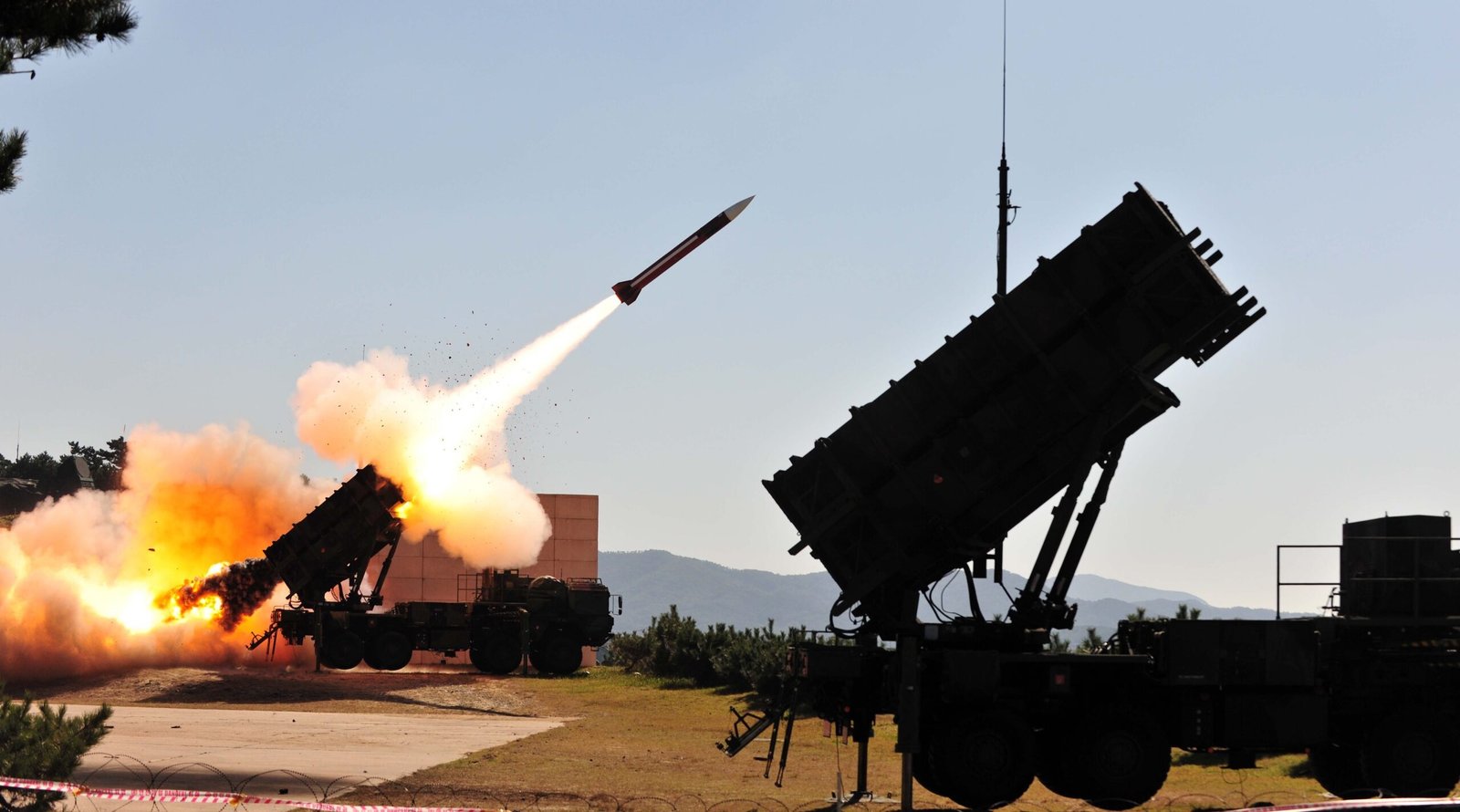
World
Brussels, — The European Commission has approved €6.1 billion (approximately $7.1 billion) in new defense procurement funding for Ukraine. The package will support the purchase of air and missile defense systems, missiles, ammunition and radars. The approval was announced on Ukraine’s Independence Day and comes as Russia has increased its use of ballistic missiles and jet-powered drones. The European Commission said Ukraine recorded 376 missile strikes in July alone. European Commission President Ursula von der Leyen said Europe’s support for Ukraine remains concrete and that the new funding will help the country protect its people and defend its skies. EU Commissioner for Defence and Space Andrius Kubilius said the funding will allow Ukraine to procure the missiles and air-defense systems needed to protect its population and defend its sovereignty. Procurement and Delivery Most of the equipment will be sourced from European Union defense companies. The Commission has called for faster deliveries by releasing existing stocks, reprioritising current orders and increasing factory production. The latest €6.1 billion approval adds to €16 billion in procurement programmes already authorised under the initiative. Of that amount, €8.35 billion has already been disbursed. Part of €90 Billion Ukraine Support Loan The funding comes from the broader €90 billion Ukraine Support Loan for 2026 and 2027. The program allocates €60 billion for defense and €30 billion for general budgetary assistance. The European Parliament and the Council established the loan through a regulation adopted in February 2026, while Ukraine submitted its financing strategy in March. On April 23, 2026, the Council approved up to €45 billion for 2026, including €16.7 billion in budget support and €28.3 billion for defense industrial capacity. Contract Review and Oversight Ukraine can request payments after submitting signed contracts with defense companies. The European Commission will review each contract before releasing funds to ensure that purchases match plans agreed by Ukraine and EU Member States and that the money is used only for approved military equipment. All funding decisions remain subject to agreed conditions and ongoing monitoring. The defense component of the loan also supports the reconstruction and modernisation of Ukraine’s technological and industrial base, including its gradual integration into the European Defence Technological and Industrial Base. Since 2022, the EU and its Member States have provided €220.2 billion in overall financial, humanitarian and military support to Ukraine. This total includes €3.8 billion generated from the proceeds of immobilised Russian assets.
Read More → Posted on 2026-08-24 11:33:17
World
SEOUL — South Korean President Lee Jae Myung has ordered the Defense Ministry to accelerate development of the Jangbogo-N nuclear-powered attack submarine (SSN) program while reaffirming plans to complete the transfer of wartime operational control (OPCON) of South Korean forces from the United States before his term ends. Lee issued the instructions on August 18, shortly after U.S. President Donald Trump ordered a significant reduction in the annual Ulchi Freedom Shield exercise. Trump cited his relationship with North Korean leader Kim Jong Un and South Korea’s refusal to participate in potential U.S. military actions related to Iran. Seoul and Washington subsequently shortened the exercise and reduced some field-training activities. Lee said stronger South Korean defense capabilities would strengthen, rather than weaken, the U.S.-South Korea alliance. He also called for improved training for officers in integrated conventional, cyber and other military operations. Jangbogo-N Program South Korea formally launched the Jangbogo-N project on May 26, 2026, following a bilateral understanding reached after the October 29, 2025, summit in Gyeongju. The United States agreed to support the project, including efforts related to nuclear fuel. The program calls for three to four conventionally armed nuclear-powered submarines of about 8,000 tons. The first submarine is planned for launch in the mid-2030s and entry into service in the late 2030s. The submarines will use low-enriched uranium enriched below 20 percent. Nuclear propulsion is intended to provide long submerged endurance and sustained speeds above 25 knots. The submarines will carry conventional weapons, with detailed final weapons specifications yet to be publicly confirmed. The program is planned around a roughly 40-year lifecycle, covering development, construction, operations, maintenance, fuel management and eventual decommissioning. South Korean officials expect it to create more than 40,000 jobs. Domestic Construction South Korea plans to build the submarines domestically, with Hanwha Ocean and HD Hyundai Heavy Industries expected to play major roles alongside the country's nuclear sector and defense research organizations. Trump had previously suggested that the submarines could be built at Hanwha’s Philadelphia shipyard. However, South Korea has chosen a domestic construction approach because the U.S. facility does not have the specialized nuclear-submarine infrastructure required for SSN construction. The Defense Ministry issued a draft special law on August 11 covering the acquisition, operation and nuclear-safety management of nuclear-powered submarines. Seoul aims to establish the necessary legal framework during 2026, while dedicated project teams have also been created within the Defense Ministry and Defense Acquisition Program Administration. Nuclear Fuel Issues The existing 2015 U.S.-South Korea civil nuclear cooperation agreement does not fully cover military naval propulsion. A separate arrangement is therefore required for issues including fuel supply, enrichment, fabrication, transportation, loading, safeguards and spent-fuel management. South Korea has stated that it will remain within the Nuclear Non-Proliferation Treaty and cooperate with the International Atomic Energy Agency (IAEA) on safeguards. The country previously examined a nuclear-submarine project in 2003 under Project 362, including reactors using higher-enrichment uranium. The effort was abandoned after undeclared enrichment experiments attracted IAEA scrutiny and U.S. concerns. Washington subsequently opposed South Korean nuclear-submarine ambitions for more than two decades because of proliferation concerns. That position changed after the 2025 Trump-Lee summit. Current Submarine Fleet Until Jangbogo-N enters service, South Korea will continue operating about 21 conventional submarines: nine 1,290-ton KSS-I Jang Bogo-class, nine 1,860-ton KSS-II Son Won-il-class submarines equipped with air-independent propulsion, and three 3,750-ton KSS-III Dosan Ahn Chang-ho-class submarines equipped with vertical-launch missile cells and lithium-ion batteries. To maintain capability during the transition, Seoul launched a 468.9 billion won modernization program in November 2025 for selected KSS-II submarines. The program includes upgrades to combat systems and sonar and is scheduled to continue through 2033. The Jangbogo-N program is being pursued alongside the planned OPCON transfer and broader efforts to strengthen South Korea’s ability to conduct independent military operations while maintaining its defense alliance with the United States.
Read More → Posted on 2026-08-24 11:50:01
World
Moscow — Russian forces have demonstrated a portable laser system designed to neutralize mines and other explosive devices by burning through their casings and igniting the explosives inside without causing a detonation. The system was recently shown during tests featured on the Russian television program Military Acceptance on Zvezda. A related higher-powered laser has also been integrated with the Courier-2 (Kurier-2) ground-based robotic complex, which is designed to remotely destroy anti-tank and anti-personnel mines, grenade launchers and other explosive objects without detonating them. Russia has demonstrated a 1-kilowatt portable laser system designed to neutralize mines by burning through their casings without detonating them.The system can engage targets from 50–100 meters and is integrated with the Courier-2 unmanned ground vehicle for explosive clearance pic.twitter.com/TOQhVeX4P9 — The Defense News (@TheDefenseNews) August 24, 2026 Portable Laser System The portable version has a power output of 1 kilowatt, with its energy source carried in a backpack worn by the operator. The laser operates silently and can be controlled manually or remotely. According to a plant representative identified by the call sign “Lis,” the system allows sappers to engage targets from 50 to 100 meters away. This distance is particularly useful against mines equipped with sensors that detect nearby people or equipment, including vibration or magnetic-field detectors. Keeping the operator farther away from such devices can reduce the risk associated with approaching them. During the tests, the portable laser was first used in handheld mode against simple targets, including an old laptop battery, which ignited quickly. The system was then tested against a plastic-cased anti-personnel mine. The effect was slower when the laser was held manually, so the unit was fixed to a tripod. Stabilizing the laser allowed the beam to remain concentrated on a single point for about one to two seconds. The mine casing then ignited and the explosive material burned rather than detonating. Representatives involved in the demonstration said the portable systems shown were production-ready models that had entered manufacturing rather than experimental prototypes. Courier-2 Robotic Laser System The same basic principle has been applied to a higher-powered laser mounted on the Courier-2 unmanned ground vehicle. The stationary laser installation on the robot has approximately twice the power of the portable system and is heavier. The Courier-2 is a tracked ground-based robotic complex capable of remotely engaging anti-tank and anti-personnel mines, grenade launchers and other explosive objects without detonating them. During testing, the robot directed its laser at an un camouflaged anti-tank mine. The beam was first aimed at tree bark as part of the calibration process. It was then directed at the mine's fuse element. The laser entered the fuse and caused the simulated explosive material to burn without detonating. Thermal imaging during the demonstration recorded temperatures of around 1,000 degrees Celsius. After the fuse was disabled, the laser was directed at the mine's casing. The casing used in that demonstration was a 3D-printed model. The explosive material ignited after about four seconds. Once combustion began, the laser no longer needed to remain on the target, and the mine burned out completely within approximately two to four minutes. Laser Can Engage Targets Over Obstacles Another test involved a smaller target described as a “drop” at a range of 60 meters. A car was deliberately positioned between the Courier-2 and the target to obstruct the laser's direct path. The robotic vehicle is equipped with a lifting mechanism that can raise the laser to a height of 1.5 meters. This allowed the system to raise the laser above the vehicle and engage the target. According to the developers, from this elevated position the system can engage targets at distances of up to 500 meters. A smoke screen was also used during the demonstration. The laser was still able to ignite the target through the smoke used in the test. Representatives explained that the wavelength used by the system is not significantly affected by the particle size of the smoke employed in the demonstration. However, they also noted that denser aerosol systems can block laser beams more effectively. The Tucha protection system used on tanks was cited as an example of a system capable of providing greater obstruction to laser radiation. Straight-Line Laser Engagement Unlike conventional projectile weapons, the laser travels directly toward the selected point and does not follow a ballistic trajectory. Therefore, the system does not require a ballistic computer for the laser's engagement. The operator selects the aiming point and activates the laser emission. The beam operates outside the visible spectrum and is therefore invisible to the naked eye under normal conditions, although its path can become visible when passing through smoke. The system's operating principle allows explosive objects to be neutralized by heating and burning the explosive material rather than initiating a conventional explosion. Designed to Increase Stand-Off Distance The portable system and the Courier-2 robotic version are intended to allow explosive hazards to be engaged from a greater distance. This capability is particularly relevant when dealing with mines equipped with proximity or other sensors that could respond to the movement or presence of personnel and equipment. The systems are also intended for situations in which a conventional explosion could create additional hazards, including populated areas or other locations where surrounding structures and people could be at risk. The Courier-2 platform itself is a tracked unmanned ground vehicle capable of performing other tasks, including ammunition delivery, casualty evacuation and fire support. The laser-equipped configuration has undergone military testing for remotely clearing discovered explosive objects. The portable backpack-powered laser and the Courier-2-mounted system therefore provide two configurations of the same basic technology: a mobile system operated by personnel at a distance and a robotic system that allows the operator to remain away from the immediate area of the explosive hazard.
Read More → Posted on 2026-08-24 12:15:53
Europe
SZOLNOK, HUNGARY — A Hungarian Air Force Saab JAS 39 Gripen fighter jet crashed near Szolnok on Monday morning. The pilot ejected safely and survived without serious injury. No other injuries or damage to civilian infrastructure were reported. The crash occurred near the Hungarian Defence Forces’ military helicopter base outside Szolnok, around 100 kilometers southeast of Budapest. Szolnok Mayor Mihály Győrfi said the aircraft had taken off from Kecskemét and that the pilot was likely conducting a routine training flight. Defence Minister Romulusz Ruszin-Szendi said the pilot was alive and uninjured. He said the pilot had done everything possible to keep the aircraft over military property before ejecting. The pilot was taken to hospital for observation and was reported to be in stable condition. The defence minister and Chief of the General Staff also traveled to the crash site. The cause of the crash remains unknown and is under investigation. Reports of a possible hydraulic-system problem and a landing-gear malfunction have circulated in local media, but Hungarian authorities have not officially confirmed those details. The aircraft was carrying weapons, including missiles and cannon ammunition, according to the defence minister. Firefighters responded to the crash site and extinguished the fire. Hungary’s Gripen Fleet Hungary operates JAS 39 Gripen C/D fighters. Fourteen aircraft were acquired through a lease-purchase program launched in 2001, while four additional Gripen Cs were ordered in 2024 and delivered in 2026. The deliveries brought the fleet to 18 aircraft before Monday’s crash. Hungary has operated the Gripen since 2006, with the aircraft based primarily at Kecskemét Air Base. Following the loss of Monday’s aircraft, the fleet stands at 17 aircraft. Hungary also experienced a Gripen accident in 2015 at Kecskemét. The pilot ejected safely after an unsuccessful landing attempt, although that pilot sustained injuries. The investigation into the August 24 crash is continuing, and the official cause has not yet been announced.
Read More → Posted on 2026-08-24 12:42:54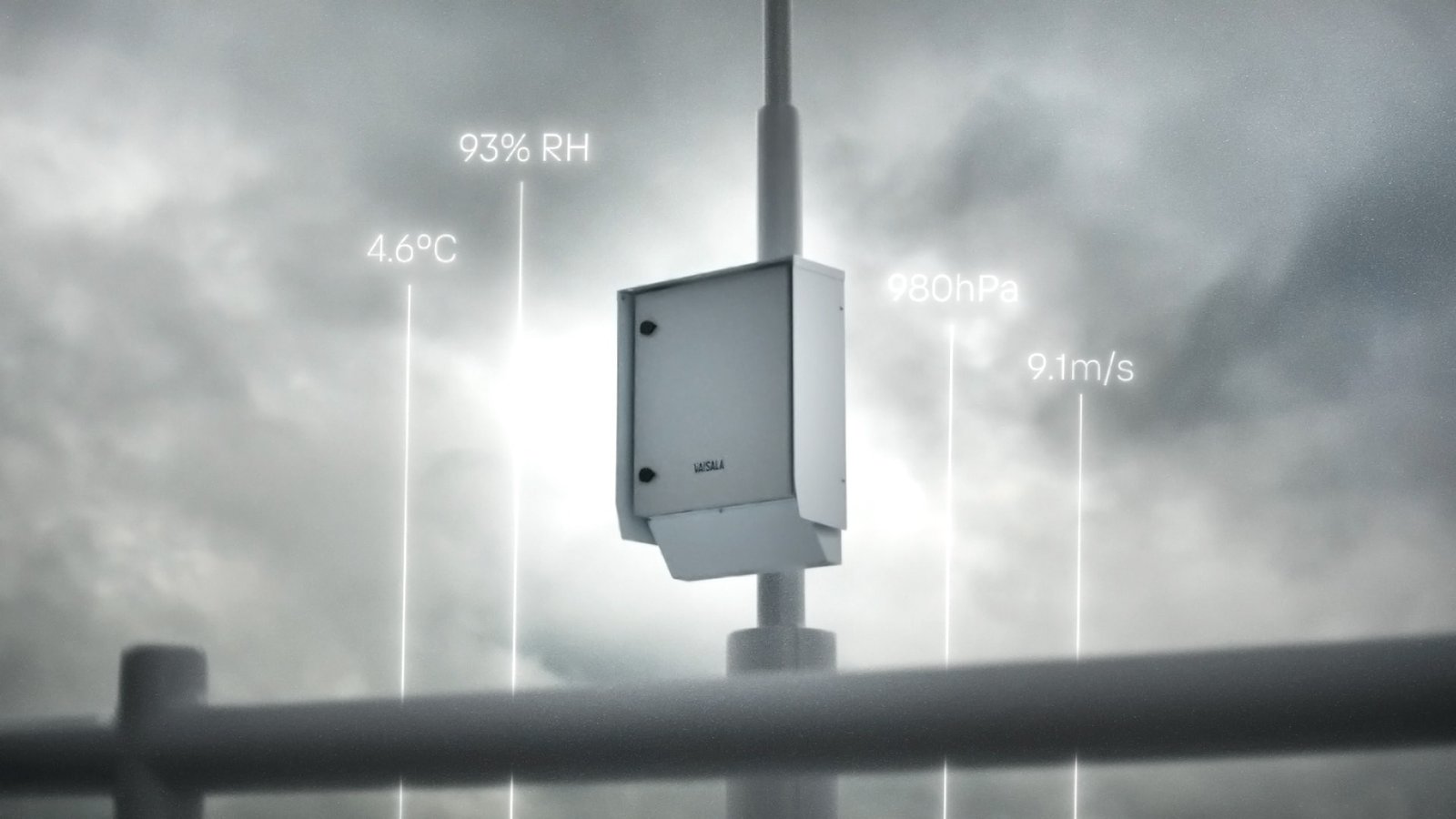
Europe
Helsinki, — Vaisala has launched the Maritime Automatic Weather Station AWS830, a modular system designed to provide real-time meteorological, oceanographic, environmental and motion data for naval, coast guard, research, offshore energy and icebreaking vessels, as well as offshore platforms operating in demanding marine and polar environments. Vaisala launched the AWS830 on April 9, 2026, with deliveries beginning in June 2026. The system succeeds the AWS430, which has been used on vessels and offshore structures for more than a decade. The AWS830 is designed to withstand shock, vibration, corrosion, high humidity, salinity and extreme temperatures, with demonstrated operation down to –50°C. It is available as an outdoor on-deck unit for exposed installations and a 19-inch server-rack version for protected equipment rooms. The system measures wind speed and direction, barometric pressure, air temperature, relative humidity, visibility, cloud base height and helideck motion. It can also be expanded with sensors for wave height, currents and sea surface temperature. Through Vaisala Elements Helideck Monitoring Software, operators can access remote wind profiling, lightning detection and weather forecasts. Cybersecurity and Modular Architecture Cybersecurity is a core part of the AWS830 design. The system is built around Vaisala's DMU801 Data Management Unit, which incorporates secure boot, signed firmware authentication and end-to-end encrypted communications. It also includes a configurable firewall to restrict exposed network services. Vaisala developed the system using a secure lifecycle aligned with IEC 62443 principles, including threat modelling and systematic security testing. Testing included simulated denial-of-service attacks and network storms, while the architecture applies zero-trust principles by requiring authentication at interfaces and protecting critical communications. The AWS830 supports both Vaisala and selected third-party sensors, allowing it to connect with existing ship navigation, automation and platform control systems. Its modular architecture allows additional capabilities to be added as operational requirements or regulations change. The system also uses Kaiku Designer, a visual configuration tool that allows operators to view data flows from sensors to processing functions and helps reduce configuration errors during commissioning. For aviation operations, the AWS830 supports Environmental and Helideck Monitoring Systems and meets relevant IEC and Civil Aviation Authority requirements, including CAP 437. Combined with Vaisala Elements software, it provides wind, weather and platform stability information needed for offshore helicopter operations. In naval applications, the collected data can support the coordination of supply vessels, helicopters, drones and other support traffic, while also providing information for safety procedures and aviation operations. Automated diagnostics and data validation continuously monitor system condition and data quality, helping maintain system availability and reduce unnecessary maintenance. Vaisala says the AWS830 builds on its maritime and aviation measurement experience while providing a cybersecure and scalable platform for offshore, naval, research and polar operations. Source : navalnews
Read More → Posted on 2026-08-24 13:01:55
World
Adelaide — Australia has laid the keel of NUSHIP Hunter, the first Hunter-class frigate, at the Osborne Naval Shipyard in South Australia, marking a major milestone in the construction of the Royal Australian Navy’s next-generation anti-submarine warfare fleet. The ceremony on August 24 followed naval tradition, with Defence Industry Minister Pat Conroy and Chief of Navy Vice Admiral Matthew Buckley joining BAE Systems shipbuilders to place a coin beneath two structural blocks forming part of the ship’s keel. The two sections will now be joined with additional blocks to form the ship’s base. BAE Systems Maritime Australia is delivering the program under Australia’s continuous naval shipbuilding policy. Construction is currently under way on 20 of NUSHIP Hunter’s 22 primary blocks. The first steel was cut in June 2024, while work on the second ship, NUSHIP Flinders, is preparing to move into fabrication. Delivery of the Hunter class to the Royal Australian Navy is scheduled for the early 2030s. Australia plans to build six Hunter-class frigates, with contracts signed for the first three. The vessels will replace the Anzac-class frigates. The program was originally planned for nine ships but was later reduced to six following schedule delays and a projected A$15 billion cost increase. Type 26-Based Australian Frigate The Hunter class is based on BAE Systems’ Type 26 Global Combat Ship design but incorporates major modifications for Australian requirements. The Australian variant has a displacement of approximately 10,500 tonnes and combines Australian CEAFAR2 phased-array radar technology with advanced U.S. combat-system elements, including the Aegis combat system with an Australian interface developed by Saab Australia. The frigates are primarily designed for anti-submarine warfare and will be able to operate with allies and partners in complex maritime environments. They will also feature a modular mission bay, providing flexibility for missions beyond their primary submarine-hunting role. Deputy Prime Minister Richard Marles said the keel-laying demonstrates tangible progress toward a more capable and resilient surface combatant fleet and said the Hunter class will provide a “world-class anti-submarine warfare capability.” BAE Systems Australia – Surface Ships Managing Director David Shepherd said the ships’ weapons, sensors and modular mission bay will allow them to perform a wide range of missions. He also said the Hunter program has established foundations for a continuous naval shipbuilding and sustainment capability in Australia. Jobs and Industrial Impact The Hunter-class program directly supports more than 2,500 jobs, mainly in South Australia, with another 5,000 positions across the national supply chain. BAE Systems has almost 600 tradespeople assigned to the project at Osborne, including young workers trained through technical colleges. South Australian Premier Peter Malinauskas highlighted the program’s local employment impact, while Pat Conroy said the project is supporting thousands of high-skilled and well-paid jobs and demonstrates Australia’s skilled workforce capability for complex naval programs. The keel-laying therefore represents both the start of a major assembly stage for NUSHIP Hunter and continued development of Australia’s domestic naval shipbuilding capability at Osborne.
Read More → Posted on 2026-08-24 13:12:58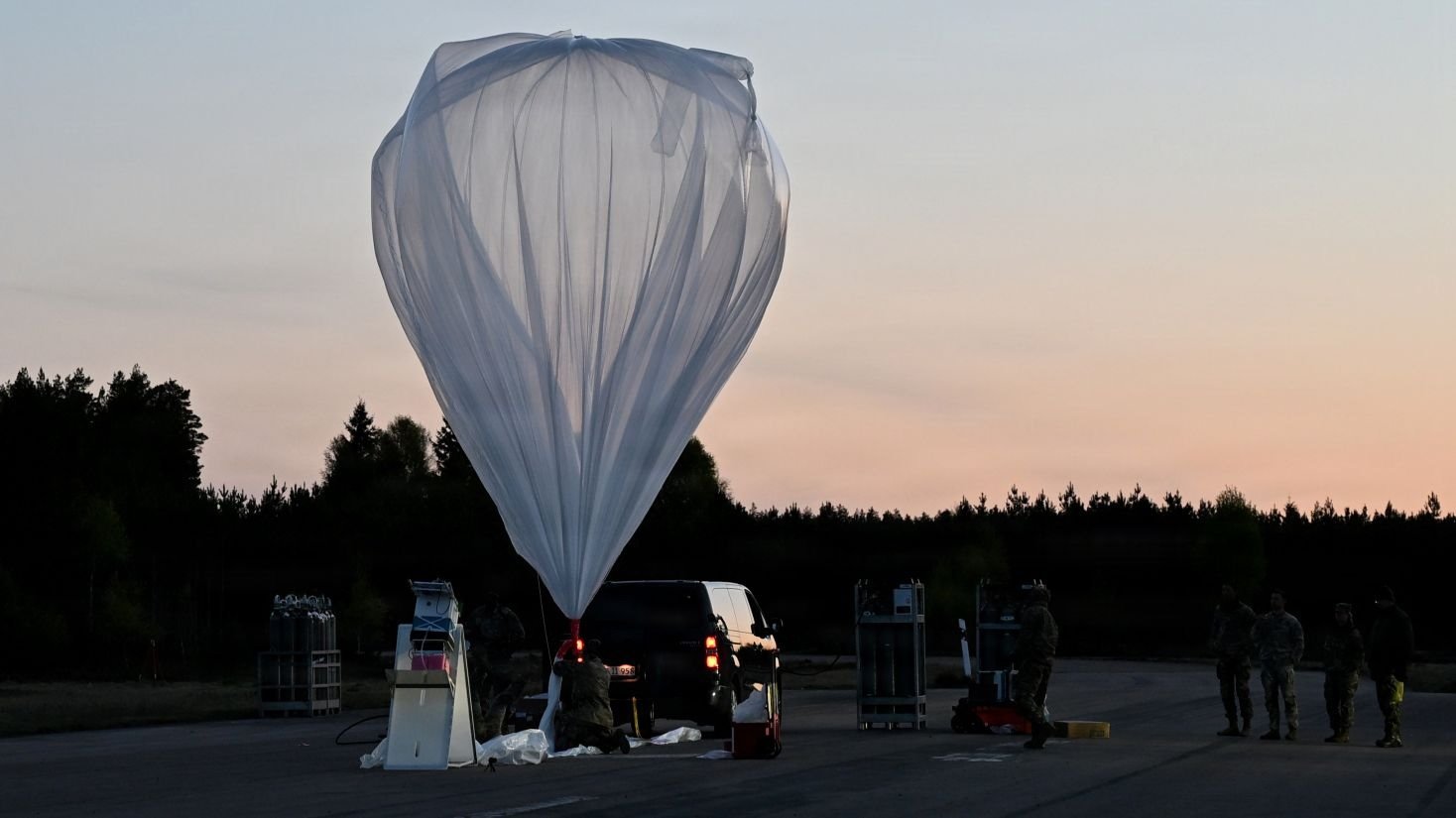
U.S
POWIDZ, Poland — The U.S. Army has completed a series of micro high-altitude balloon tests in Poland during Exercise Cold Raptor, evaluating the platforms for intelligence, surveillance and reconnaissance (ISR), communications relay and electronic warfare support. Launched from Powidz, a major U.S. military logistics and aviation hub in western Poland, the balloons traveled about 305 kilometers (190 miles) before being recovered near the Baltic Sea town of Ustka. Flying in the stratosphere at 18–21 kilometers (60,000–70,000 feet), the balloons operate above commercial airliners and weather systems. Each balloon stands about 10 meters (33 feet) when inflated and can carry payloads weighing 9–20 kilograms (20–45 pounds). The payloads include ISR sensors, communications equipment and navigation warfare technologies, while some Cold Raptor flights carried experimental systems for communications extension and domain awareness. According to Multi-Domain Command-Europe (MDC-E), the balloons provide "organic coverage and dynamic augmentation" as a cost-effective, launch-on-demand capability that can quickly strengthen battlefield sensing and communications when traditional networks face disruption. The exercise also tested decentralized operations, with launch teams in Powidz and separate crews remotely monitoring and controlling flight paths while maintaining continuous communications. U.S. and Polish soldiers jointly conducted recovery operations, while coordination with host-nation authorities and civilian aviation agencies ensured safe flights across Europe's tightly managed airspace. Cold Raptor supports NATO's Eastern Flank Deterrence Initiative and is part of a broader Army program that has completed more than 50 stratospheric balloon launches over the past year, including tests in California and launches from Sweden during Exercises Sword 26 and Aurora 26. The Army will now evaluate the Poland test data to guide future equipment development and procurement decisions, as it continues integrating high-altitude balloons with drones and electronic warfare systems in multi-domain operations.
Read More → Posted on 2026-08-24 13:32:02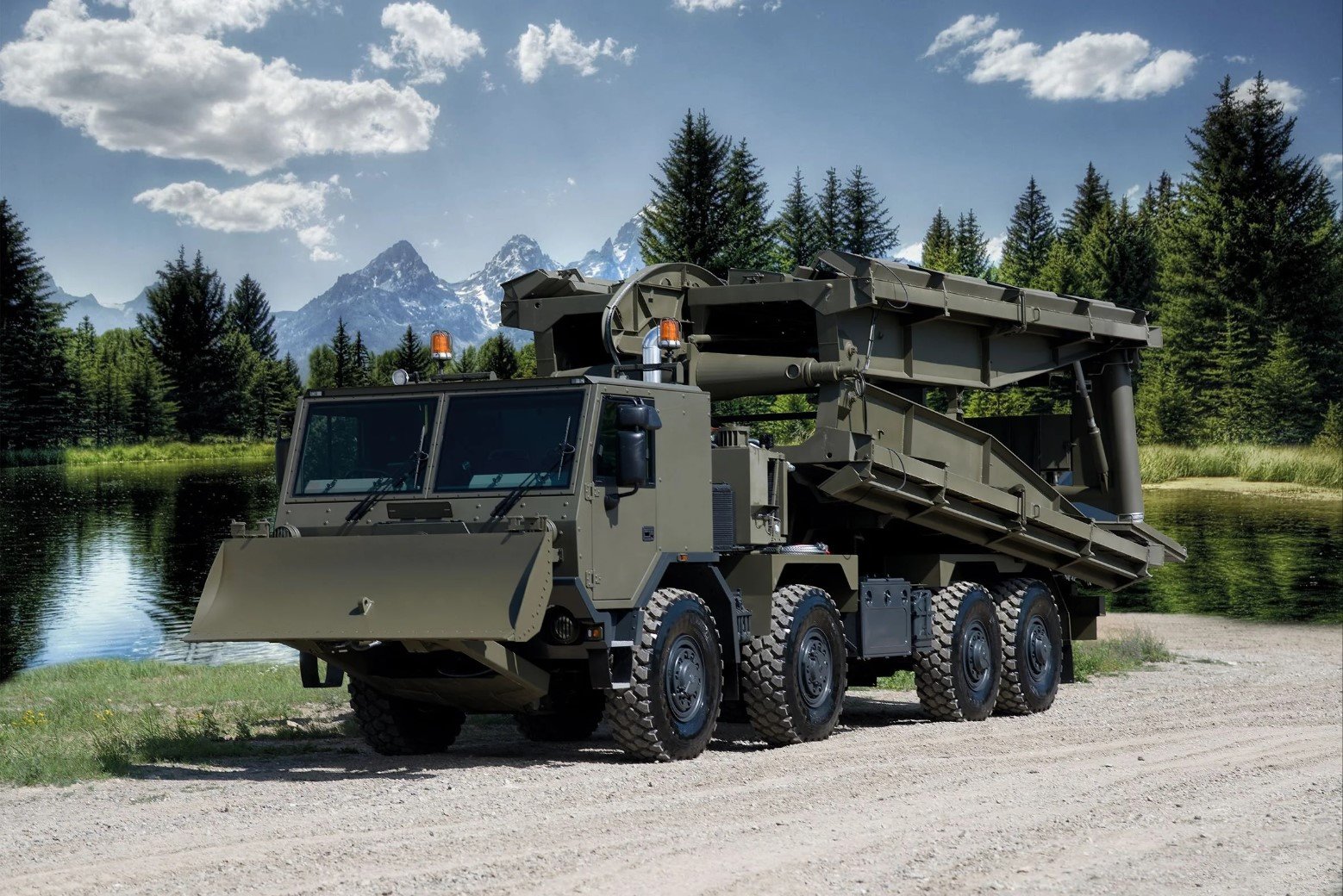
Europe
Prague, Czech Republic — Industrial-technology group Czechoslovak Group (CSG) has signed several contracts worth more than $50 million for the supply of bridge-laying vehicles to five customers in Europe, the Middle East and Southeast Asia. The contracts cover dozens of vehicles from the AM-70 and AM-50 series. Deliveries will be handled by Excalibur Army, a CSG company specialising in the development, production and modernisation of land-based military equipment. The orders are for specialised engineering vehicles designed to help military units and equipment cross watercourses, trenches and other natural or man-made obstacles. CSG said the contracts reflect continued international demand for engineering and support vehicles that provide mobility in difficult terrain and operating conditions. AM-70 EX Designed for Rapid Gap Crossing The AM-70 EX is designed for rapid deployment across both dry and wet gaps. According to Excalibur Army, a three-person crew can deploy a 13.5-metre bridge section within minutes. Individual bridge sections can be connected to create longer crossings. Up to eight sections can be linked to span gaps of up to 106 metres, while the system's supports can reach into trenches up to six metres deep. The modular design allows several vehicles and bridge sections to be used together when a longer crossing is required. AM-50 EX and AM-70 EX Load Classifications The two bridge-laying vehicle series provide different load capacities. The AM-50 EX has an MLC 50 load classification, while the AM-70 EX has an MLC 70 classification under STANAG 2021. These classifications allow the systems to support the movement of heavy military equipment. Both vehicles use a TATRA 8×8 chassis and have a stated top speed of 90 km/h. The chassis is intended to provide mobility over rough and difficult terrain. The AM-70 EX also uses a four-girder, scissor-type bridge construction. Excalibur Army states that its bridge sections are compatible with earlier AM-50, AM-50 EX and AM-50 B generations, allowing the newer system to operate alongside older bridge equipment. Depending on customer requirements, the vehicle cabin can be fitted with ballistic protection of up to Level 2 under STANAG 4569. CSG Sees Continued International Demand Richard Kuběna, Sales Director of the CSG Defence Systems division, said customers value the vehicles' combination of off-road mobility, rapid deployment and the ability to create longer crossings according to operational requirements. He also pointed to contracts across Europe, the Middle East and Southeast Asia as evidence of demand for the company's engineering and support vehicles in different climatic and operating conditions. Bridge-laying vehicles are part of CSG's broader land-systems portfolio, which also includes specialised logistics vehicles, artillery systems and armoured vehicles. The new contracts expand the group's order book in the engineering and support vehicle segment. The AM-70 EX has also been used for civilian emergency-response activities. Excalibur Army has supplied the system to the Czech Fire and Rescue Service, where the vehicle has been used to provide temporary bridge capability during emergency operations. The company also identifies civil rescue, construction and forestry applications for the system when equipped with a full bridge deck and curbs. The latest contracts add to Excalibur Army's international business in specialised engineering vehicles while expanding CSG's presence in the military mobility and support vehicle market.
Read More → Posted on 2026-08-24 13:53:11
World
KYIV, Ukraine — Ukraine marked its 35th Independence Day with a military display featuring ground, naval and aerial unmanned systems. Organizers described it as the world’s first military parade made up entirely of unmanned platforms rather than traditional formations of troops and manned vehicles. Dozens of ground robotic systems moved along Khreshchatyk Street, including the Rys Pro and TerMIT platforms. The systems are designed for frontline tasks such as logistics, reconnaissance and combat, with some displayed configurations equipped with machine guns and multiple rocket-launch systems. Ukrainian forces also use robotic platforms for supply transport, medical evacuation and fire support. #WATCH On the occasion of the 35th anniversary of Ukraine’s independence, Ukrainian ground robotic complexes drove down Khreshchatyk, maritime drones sailed down the Dnipro, and military aircraft and combat UAVs flew across the sky — along with many other drones. pic.twitter.com/RwqCU7PTAV — August 24, 2026 The display continued on the Dnipro River, where unmanned surface vessels including Magura and Sea Baby were shown. The lineup included kamikaze, reconnaissance and vessels equipped with anti-aircraft missiles. Magura and Sea Baby systems have been used in operations against Russia’s Black Sea Fleet. In the air, Ukraine displayed interceptor drones designed to counter incoming aerial threats, along with reconnaissance and strike drones. French Mirage 2000s and F-16 fighter aircraft also appeared during the aerial demonstration. The event was shown during an online broadcast of Independence Day ceremonies, according to the Office of the President. President Volodymyr Zelenskyy highlighted Ukraine’s domestic unmanned-systems capabilities, saying the country has the technology and resources needed to defend its independence. He also pointed to maritime drones’ role in attacks against Russian military targets and ships and said Ukraine could become a security partner for allies by sharing experience and technology developed during the war. The parade follows Ukraine’s creation of the Unmanned Systems Forces as a dedicated military branch. Zelenskyy ordered work on establishing the branch in February 2024 and formally established it as a separate type of force in June 2024. Ukrainian officials have described Ukraine as the first country to create a military branch focused specifically on unmanned systems across air, land and sea domains. A grouping of the forces was formed on June 11, 2025, and in June 2026 Zelenskyy designated June 11 as the annual Day of the Unmanned Systems Forces. Independence Day commemorates Ukraine’s declaration of independence adopted by the Verkhovna Rada in 1991. The 2026 observance was the fifth since Russia’s full-scale invasion began in February 2022 and the 12th since Russian operations began in Crimea and Donbas in 2014. Ukraine has not held a conventional military parade on Independence Day since 2021. In the years following the full-scale invasion, Khreshchatyk Street was instead used to display destroyed Russian military equipment. This year’s event focused on Ukrainian-developed and operated unmanned systems already being used by the Defense Forces for combat, reconnaissance, logistics and evacuation missions. The systems displayed came from platforms already in active use on the front line and at sea, while the aerial demonstration also included certain foreign aircraft. On Independence Day, Unmanned Systems Forces commander Major Robert Brovdi also reported that Ukrainian drone units had struck 66 military and logistical targets deep inside Russian territory overnight.
Read More → Posted on 2026-08-24 14:08:40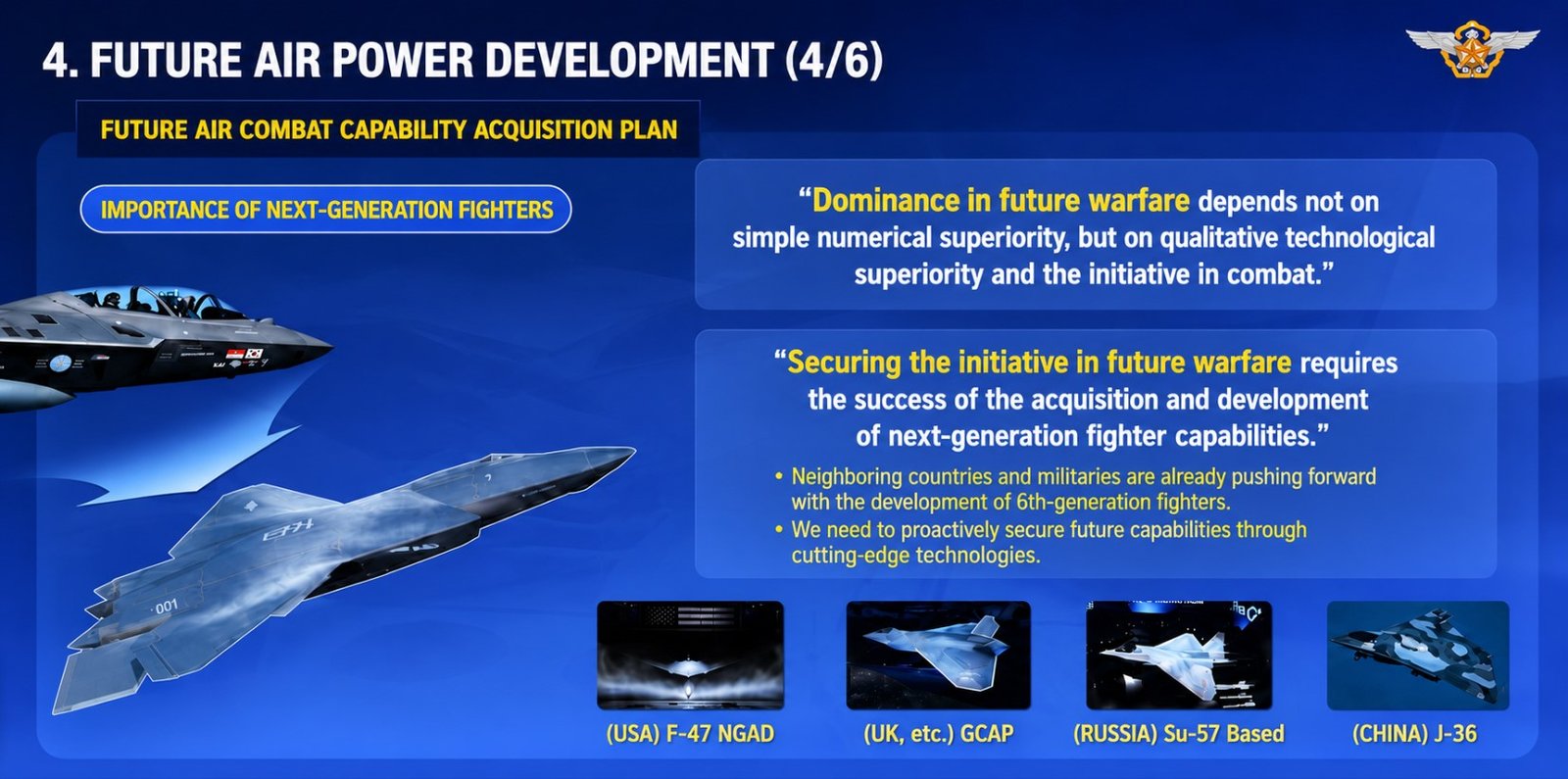
World
Seoul, — South Korea has launched a conceptual study for a next-generation fighter, with the Defense Acquisition Program Administration (DAPA) and Republic of Korea Air Force (ROKAF) issuing a tender on August 21, 2026. The study has a budget of KRW 900 million and will run for 14 months. It aims to define the operational concept and proposed Required Operational Capability (ROC) for a next-generation fighter by late 2027. The work will include aircraft configuration design and analysis, mission-effectiveness analysis and the establishment of a baseline fighter configuration. It will also develop short-, mid- and long-term technology acquisition roadmaps linked to defense technology planning. The study focuses on a future fighter based on manned-unmanned teaming (MUM-T), broadband stealth and artificial intelligence (AI). It will identify an aircraft configuration capable of meeting the proposed requirements. The resulting operational concepts, performance requirements and configuration proposals are expected to support future requirement proposals, preliminary studies and feasibility reviews. Stealth Technology Development The conceptual study will run alongside the Agency for Defense Development (ADD)’s Stealth Bridge Program, which is developing a full-scale testbed for integrating and demonstrating next-generation fighter structures, materials and sensor technologies. The Stealth Bridge Program covers stealth airframe structure design and core-area verification, aviation multifunctional composites and low-observable sensor technology, and technology for integrated radar cross-section control. Each element is planned to run for about 48 months, with the overall effort intended to support later fighter development through technology transfer to industry. Building on KF-21 Development South Korea's current fighter program, the KF-21 Boramae, provides the foundation for the next stage of fighter development. The 4.5-generation aircraft completed system development in 2026 and is entering ROKAF service, with initial Block I aircraft focused on air-to-air missions. Future KF-21 blocks are planned to add air-to-ground and other capabilities, while longer-term development includes stealth improvements, AI and MUM-T. The new conceptual study and Stealth Bridge Program are aimed at the step beyond the KF-21 toward a dedicated next-generation fighter design. The tender seeks qualified bidders to conduct the conceptual work under the stated budget and schedule. Its results are expected to provide foundational data for subsequent planning and development decisions on South Korea's next-generation fighter.
Read More → Posted on 2026-08-24 14:15:08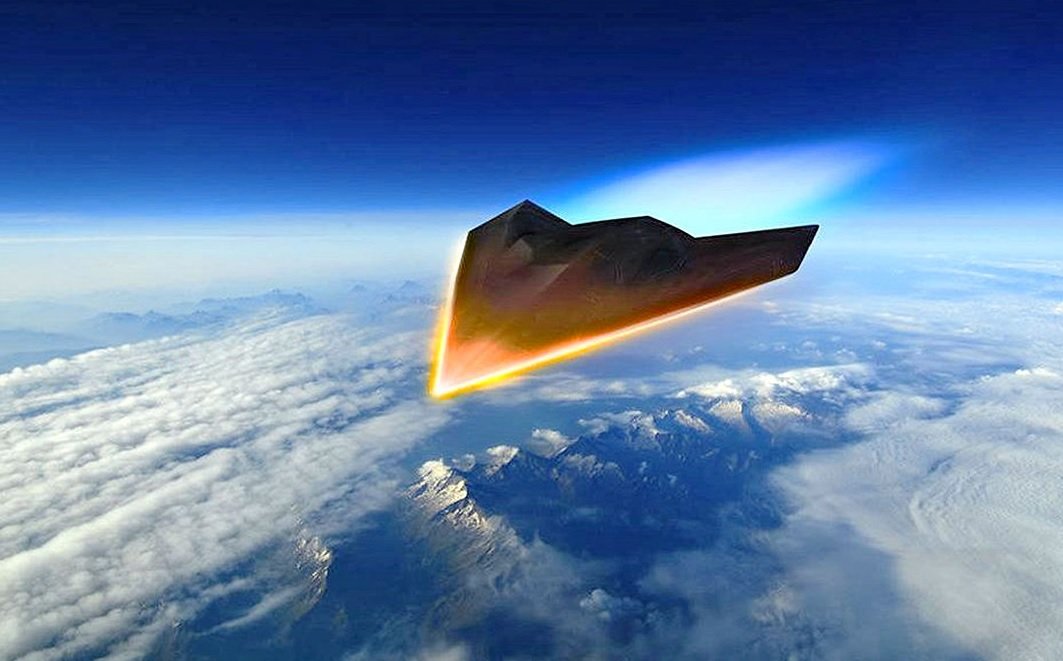
World
Beijing, — China has developed hypersonic glide vehicles (HGVs) capable of releasing air-to-air weapons during flight, according to a Bloomberg News report published on August 24. The reported capability is intended to target high-value airborne assets, including AWACS aircraft, aerial refueling tankers and command aircraft, at distances potentially measured in thousands of miles. The concept would allow China to threaten aircraft that support long-range U.S. and allied air operations without requiring Chinese fighters to enter contested airspace. These support aircraft normally operate farther from the front line because of their importance and vulnerability. Capability Builds on 2021 Test The development is linked to a July 2021 Chinese hypersonic weapons test over the South China Sea. During that test, a hypersonic vehicle reportedly released a secondary projectile while traveling at least five times the speed of sound. The Financial Times, citing U.S. intelligence sources, reported that the vehicle fired a separate missile as it approached its target. Some U.S. analysts assessed the projectile could have been an air-to-air missile, while others considered it a possible countermeasure. The test drew attention because the mid-flight release of a separate projectile from a hypersonic vehicle had not previously been publicly demonstrated under similar conditions. PL-17 and Hypersonic Reach China already operates the long-range PL-17 air-to-air missile, also referred to as the PL-20. Public assessments generally place its range in the 300–500 km class, and the weapon is intended primarily to engage high-value airborne targets rather than highly maneuverable fighters. The PL-17 has been associated with aircraft such as the J-16. An HGV-launched air-to-air weapon would move the launch point much farther from the target area than a conventional fighter-launched missile. China also fields the DF-17, a missile system designed to carry a hypersonic glide vehicle. The Pentagon has identified the DF-17 as an HGV-capable medium-range ballistic missile system. Hypersonic glide vehicles are boosted to high speed and altitude before gliding through the atmosphere at speeds above Mach 5 while retaining maneuverability. This combination can reduce defenders' reaction time and complicate interception. Broader Missile Modernization The reported development forms part of China's wider effort to expand the roles of its large missile inventory. Pentagon estimates cited in the Bloomberg report indicate that China had at least 3,150 ballistic missiles and 300 ground-launched cruise missiles in 2024. For the United States and its allies, the reported capability could increase the challenge of protecting AWACS aircraft, tankers and other airborne support platforms during operations across the Pacific. However, important details of the reported system remain undisclosed. China has not publicly released the exact range, guidance method, type of air-to-air weapon released, or operational status of the HGV-based system. The available information therefore confirms the reported development and its connection to China's earlier hypersonic testing, but does not establish the precise performance or deployment status of the new capability.
Read More → Posted on 2026-08-24 14:45:07
World
KYIV — Ukraine has integrated interceptor drones onto a Mi-8 multi-purpose helicopter to engage Russian unmanned aerial vehicles (UAVs). Footage of the modified helicopter was released during President Volodymyr Zelenskyy’s Independence Day address on August 24. The footage shows an interceptor drone being launched from a hardpoint beneath the helicopter’s external suspension assembly. The launchers use metal guide rails, with at least three mounted on each side of the Mi-8, giving the helicopter a capacity for up to six interceptor drones. The aircraft also appears to have an optical station for detecting and tracking aerial targets. Reports have suggested that the interceptors could be controlled from the helicopter or remotely through a Starlink connection, although the exact control arrangement has not been officially confirmed. Some reports have identified the interceptor as the F7 LITAVR produced by Ukrainian company F-Drones, but this identification has also not been officially confirmed. На український гелікоптер Ми-8 інтегрували дрони-перехоплювачі для збиття російських безпілотників.Джерело: Офіс Президента pic.twitter.com/fZgeSnDOSH — Владислав (@Vladislav110528) August 24, 2026 Similar System Used on An-28 The Mi-8 configuration follows Ukraine’s earlier use of a converted civilian An-28 aircraft as a dedicated Shahed hunter. The aircraft carries at least three interceptor launch points under each wing, allowing up to six drones to be carried, and is equipped with an optical system for locating targets. By May 2026, the An-28 crew had reported destroying 213 enemy drones. The aircraft has also been associated with P1-SUN interceptor drones, developed by Ukrainian company SkyFall. Ukrainian Mi-8 crews have previously engaged Shahed-type drones using machine guns, including 7.62 mm PKT weapons and, in some cases, U.S.-supplied M134 miniguns. The addition of interceptor drones gives the helicopter another method of engaging UAVs. The specific Ukrainian unit operating the modified Mi-8 and the exact date when the system entered service have not been publicly confirmed.
Read More → Posted on 2026-08-24 15:21:12
U.S
SAN DIEGO, — Kratos Defense & Security Solutions, Inc. is allocating part of its expanded Spartan engine production capacity to supply TDI-J85 turbojet engines for Boeing’s Joint Direct Attack Munition Long Range (JDAM LR) production program. Earlier this month, the U.S. Air Force awarded Boeing a $75 million Undefinitized Contract Action (UCA) to acquire the BSU-111/B Payload Delivery Unit (PDU) for JDAM LR. The weapon can travel more than 300 nautical miles (555 km) while carrying a 500-pound-class (226-kg) payload. JDAM LR combines the existing JDAM guidance kit with a wing kit and a compact turbojet engine. It is designed for precision conventional land strike, naval strike and maritime aerial-mining missions. The system is intended for aircraft already certified to carry conventional JDAM weapons, including the F/A-18 Super Hornet, F-15E, certain bombers and the MQ-9A Reaper. Boeing has invested nearly $100 million of its own funds in the program. During flight testing in early April 2026, a U.S. Navy F/A-18 Super Hornet launched JDAM LR off the California coast, with the test successfully demonstrating engine start, cruise and guided flight over nearly 200 nautical miles. Kratos J85 Engine The JDAM LR is powered by Kratos’ TDI-J85, part of the company’s Spartan family of low-cost, compact military turbojet engines developed for uncrewed aerial systems and tactical missiles. The J85 produces up to 200 pounds of thrust at sea-level static conditions. It is approximately 8.5 inches in diameter and 14.3 inches long, weighs about 30 pounds, and can operate at up to 40,000 feet and Mach 0.90. The engine includes an integral generator providing up to 1.5 kW of continuous electrical power. It can use JP-10, JP-8, JP-5, Jet-A and Jet-A1 fuels and supports pyrotechnic, windmill and electric starting methods. Kratos says the engines are 100 percent designed and produced in the United States. Production Expansion Production is taking place at Kratos’ 22,500-square-foot Propulsion Manufacturing Facility in Auburn Hills, Michigan. The facility is fully operational and configured for sustained full-rate production. It can manufacture all four engines in the Spartan family concurrently, covering thrust levels from about 30 to more than 200 pounds, with production capacity exceeding 50,000 engines per year. The facility opened in late 2025 and includes manufacturing, assembly and multi-station testing capabilities. Kratos has begun procuring long-lead components for Spartan engines to support a large production run for multiple customers and applications in 2027. The Boeing JDAM LR program is a key application, with the J85 originally designed with this use in mind. The company is also implementing a three-phase manufacturing infrastructure plan to further increase production capacity. Broader plans call for approximately 3,000 Spartan engines in 2027 and 5,000 in 2028 for missile, loitering-munition and related programs. Kratos Unmanned Systems President Steve Fendley said the company’s internally funded supply-chain investments are intended to support affordable mass production and resilient domestic supply chains. Kratos TDI Senior Vice President Joseph Kovasity said the Auburn Hills facility’s operational readiness marks the transition from engineering development to high-rate tactical manufacturing and provides a scalable, domestically sourced propulsion solution for JDAM LR. Kratos and Boeing first formalized cooperation on the powered JDAM concept through a 2023 memorandum of understanding. The current production support builds on that cooperation and Kratos’ investment in U.S.-based Spartan engine manufacturing.
Read More → Posted on 2026-08-24 15:30:27
U.S
WASHINGTON — U.S. President Donald Trump has announced that tariffs on all Canadian cars, trucks, automotive parts and steel will rise to 50% from January 1, 2027, escalating the trade dispute after U.S.-Canada negotiations collapsed over the weekend. In a Truth Social post, Trump accused Canada of “ripping off” the United States for years, citing Canadian tariffs on American agricultural products. He said these policies had contributed to a $60 billion U.S.-Canada trade deficit and called the situation unsustainable. Trump also said U.S.-built vehicles would face zero tariffs and argued that Canada depends heavily on the American market. The announcement follows the introduction on Saturday of 50% U.S. tariffs on about $20 billion of Canadian goods, including wine, dairy, cement, clothing, furniture and hockey equipment. The tariffs were imposed under Section 338 of the Tariff Act of 1930 and affect about 5% of Canadian exports to the United States. Energy, potash, fish and certain critical minerals were excluded. The United States currently applies a 25% tariff on Canadian automobiles, with adjustments for U.S. content under the USMCA, while steel tariffs are already at 50%. The planned 2027 measure would increase the auto rate and apply the 50% rate more broadly to automotive parts. Trade Talks Collapse Canadian Prime Minister Mark Carney suspended negotiations, saying last-minute U.S. demands were “unfair” and “uneconomic.” The United States had sought measures including a 4-million-ton quota on Canadian steel exports, changes to Canada's dairy supply-management licensing system and automotive rules under which only American-made content would qualify for tariff exemptions. The talks had appeared close to a possible agreement earlier in the week after Washington temporarily paused the $20 billion tariff package. However, the two sides failed to finalize a deal, and no new round of talks is currently scheduled. Canada Prepares Retaliation Canada plans to impose dollar-for-dollar retaliatory tariffs on U.S. goods from September 8. The measures are expected to target steel, dairy products, appliances, agricultural equipment, pulp and paper, and electronics, although the final details are still being prepared. The Canadian Federation of Independent Business estimates that 40% of small Canadian exporters will be directly affected by the initial U.S. tariffs, with nearly one-third expecting their revenues to fall by half or more. U.S. lawmakers from border states have also warned that the dispute could increase consumer prices and disrupt supply chains. The North American automotive industry is particularly exposed because manufacturers operate on both sides of the U.S.-Canada border. Industry observers have noted that previous major tariff announcements have sometimes been modified or delayed, but the announced January 2027 measures remain the current policy. Canada is one of the largest sources of U.S. imports, with bilateral goods trade worth hundreds of billions of dollars annually. The latest measures add to sector-specific U.S. tariffs that have been in place since 2025 and further increase pressure on both governments to reach a new trade agreement.
Read More → Posted on 2026-08-24 15:42:42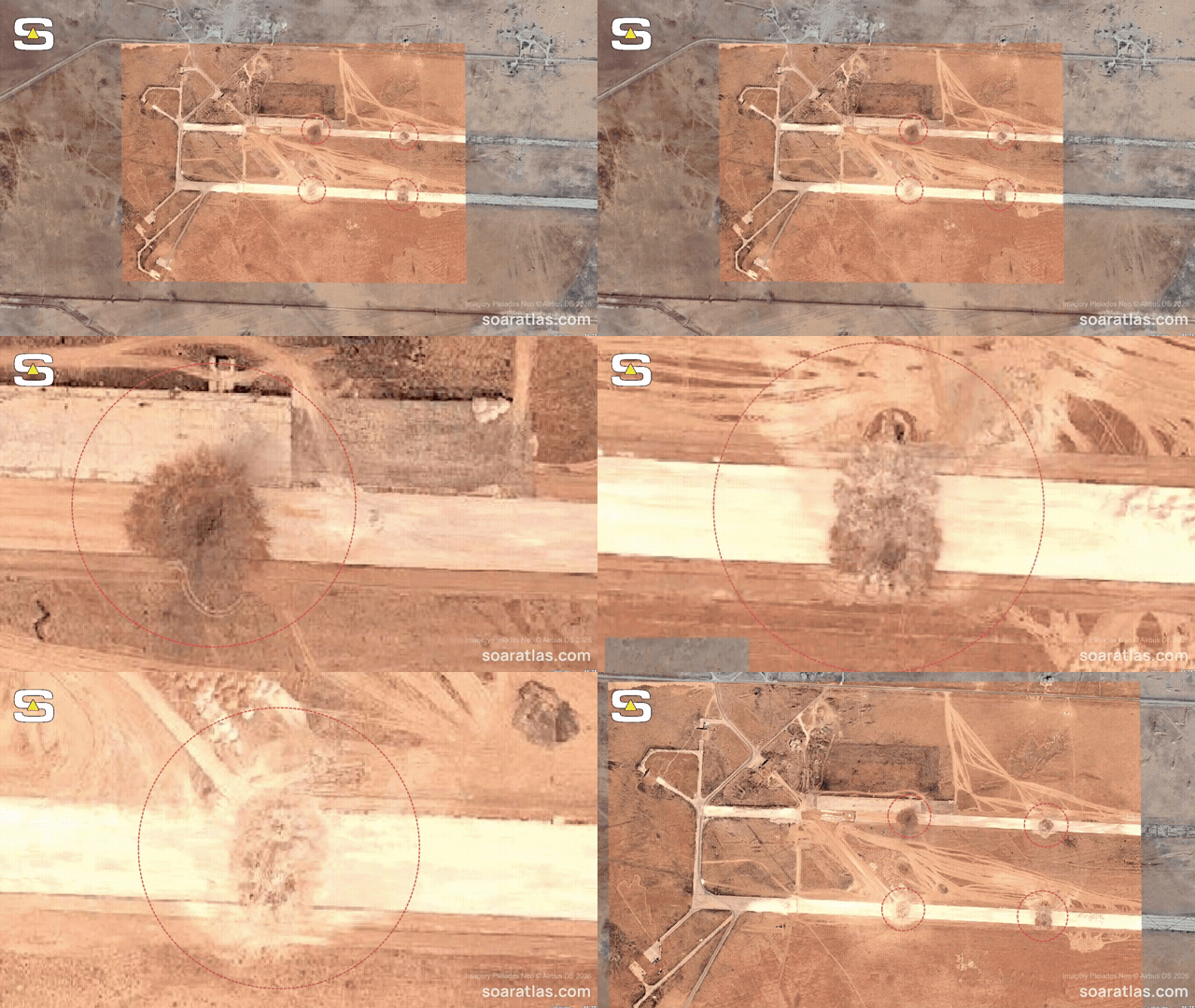
World
Idlib, Syria — High-resolution Airbus satellite imagery published by Soar Atlas shows damage caused by Israeli airstrikes on Syria’s Abu al-Duhur Military Airbase in northwestern Syria. The imagery shows several impact points along the recently renovated runway, confirming that the airfield infrastructure was among the main targets. The strikes took place in the early hours of August 18, when Syrian state media, citing a military source, reported eight separate Israeli attacks targeting the runway and storage facilities. No casualties were reported by Syrian military sources or residents living nearby. The base is located at approximately 35.734°N, 37.102°E in Idlib province, about 70 kilometers from the Turkish border and roughly 45 kilometers east of Idlib city. Satellite imagery shows at least five impact points on the runway, while some hangars, warehouses and other structures appeared intact. The facility had been out of service as a dedicated military airfield since around 2013, after changing hands several times during Syria’s civil war. Following the fall of Bashar al-Assad’s government in late 2024, Syrian authorities began rehabilitating the airfield and using it as a training centre. Israel Links Strikes to Turkish Military Plans Israel later confirmed that it carried out the strikes. Prime Minister Benjamin Netanyahu’s office said Syria was “on the verge of breaching” an agreed security status quo by allowing Turkish troops to deploy at an airbase near Aleppo. Israel said it had repeatedly warned Syria that such a deployment would threaten its security. Israeli officials said the operation was intended to prevent a planned Turkish military presence at the facility. Reports had indicated possible Turkish plans involving troops, radar systems or air-defense equipment. Netanyahu later said Israel’s message to Syria was clear: it should not allow a Turkish military presence there. Syria rejected Israel’s justification. Foreign Minister Asaad al-Shaibani told Axios that Damascus had assured Israel there were no plans for a Turkish military base or permanent Turkish forces at Abu al-Duhur. He said rehabilitation work was limited to restoring the airfield and facilities damaged during the war for use by the Syrian Air Force. Al-Shaibani confirmed that Turkish military officers had visited the base for training and military cooperation, but said the facility remained largely empty and was not fully operational. Turkey and U.S. Respond Turkey condemned the strikes as a violation of Syrian sovereignty and territorial integrity. The Turkish Foreign Ministry called for international action against what it described as Israel’s escalating aggression. Turkey’s Defense Ministry also said no Turkish military delegation was present at the base before or during the attack. Ankara has supported Syria’s efforts to rebuild its military capabilities since the fall of Assad’s government and has expanded military cooperation with the new Syrian authorities. U.S. special envoy for Syria and Iraq Tom Barrack, who also serves as ambassador to Turkey, described the Israeli operation as an “unnecessary escalation that does not advance regional stability.” He said the Syrian government under President Ahmed al-Sharaa had indicated a preference for de-escalation with Israel. Washington has been supporting regional dialogue and deconfliction efforts involving Israel, Syria and Turkey. The airstrikes were the first reported Israeli attack on Syrian government assets since March 2026. They have further increased tensions between Israel and Turkey, which both maintain significant security interests in Syria. Israel continues to maintain a security presence near its border with Syria, while Turkey maintains influence and military cooperation with the new Syrian authorities in the north.
Read More → Posted on 2026-08-24 15:56:44
World
Kyiv / London — The United Kingdom and Ukraine have signed a new bilateral defence agreement giving Britain access to Ukraine’s Avengers AI Labs, making the UK the first international partner to gain access to the platform. The agreement was signed in Kyiv on August 24 by UK Prime Minister Andy Burnham and Ukrainian President Volodymyr Zelenskyy. It forms part of the broader UK-Ukraine 100 Year Partnership and initially focuses on defence and national security. The agreement will establish a joint AI cell bringing together engineers, academics, technology companies and military specialists from both countries. Britain will provide access to its universities, researchers and AI technology ecosystem, while Ukraine will contribute battlefield experience and operational datasets. Ukraine’s Battlefield AI Data Avengers AI Labs is built around Ukraine’s DELTA combat system and includes an annotated dataset of about 5 million real-world battlefield images. Data is collected by thousands of daylight cameras, acoustic sensors and infrared sensors operating across Ukraine’s battlefield. The system records and categorises objects including tanks, artillery, infantry, air defence systems, Shahed drones and reconnaissance aircraft. According to Ukraine’s Defence Ministry, AI models trained on the data support an automated target-detection system that analyses more than 100,000 drone video feeds each month and identifies about 70 percent of enemy targets in real time. British AI Projects Three British start-ups — Bristol-based Sintela, Oxford-based Mind Foundry and London-based Skyral — are already involved in pilot projects. One project is due to be deployed at a UK defence site. It combines Ukrainian data with British fibre-optic sensing technology to turn buried fibre-optic cables into an AI-enabled sensor network. The initial system is intended to help protect defence facilities from protesters and hostile actors seeking intelligence, with potential applications at airports, prisons, railways and energy facilities. A second project will focus on developing low-power AI chips for drones, robotics and autonomous systems. If successful, the technology could allow these systems to operate for longer and respond more quickly in difficult environments. SCALP Missile Production The UK government has also allowed defence company MBDA to release classified information on British-made components used in the SCALP long-range cruise missile. The decision supports plans to establish SCALP assembly lines in Ukraine. Burnham said the agreement would combine Ukraine’s operational experience with Britain’s AI expertise to develop technologies for battlefield and domestic security applications. Defence Secretary Wes Streeting said cooperation between British scientists, engineers and technology companies and Ukraine’s battlefield experience and data would strengthen both countries’ defence and security. AI Minister Kanishka Narayan described the partnership as “AI sovereignty in practice”, with frontline experience being used to develop systems for armed forces and critical infrastructure. Burnham’s Kyiv visit was his first overseas trip as prime minister. He also held talks with Zelenskyy and co-chaired a meeting of the Coalition of the Willing. The partnership covers government cooperation, industry projects linked to operational requirements and academic research into autonomy, AI assurance and cybersecurity. The declaration of intent is not legally binding, and further arrangements and additional areas of cooperation are expected in the coming months.
Read More → Posted on 2026-08-25 11:29:04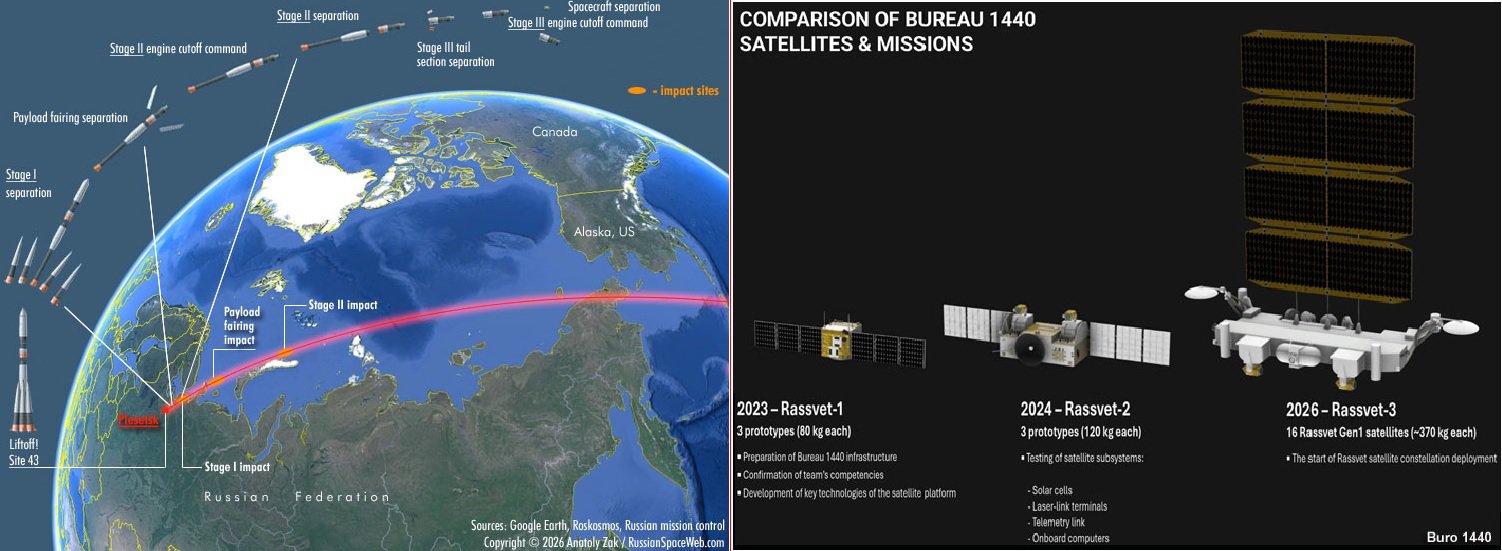
World
Moscow — Two satellites from Russia’s second Rassvet broadband constellation group are heading toward atmospheric reentry after failing to perform orbit-raising maneuvers, according to tracking data analyzed by Anatoly Zak of RussianSpaceWeb. The two satellites had fallen below 300 kilometers by late August and appear to be undergoing natural orbital decay caused by atmospheric drag. The development is another setback for Bureau 1440, the Russian company developing the Rassvet low Earth orbit (LEO) broadband network, which Russian officials have promoted as a domestic alternative to SpaceX’s Starlink. The affected spacecraft are part of 16 Rassvet-3 satellites launched on July 19 at approximately 17:51 UTC from the Plesetsk Cosmodrome aboard a Soyuz-2.1b rocket. The U.S. Space Force catalogued 17 objects from the mission — the 16 satellites and the rocket’s upper stage — in an initial orbit of about 289 by 327 kilometers with an inclination of 82.3 degrees. Bureau 1440 said on July 20 that all satellites had separated from the upper stage and established contact with mission control. The company said they would begin transferring to their target orbit after subsystem checks and activation. Neither Roscosmos nor Russia’s Ministry of Defense publicly acknowledged the July 19 launch. Tracking data showed that nine of the 16 satellites began orbit-raising maneuvers between late July and early August. By August 5, 11 satellites were climbing. However, by late August, three of those satellites had stopped maneuvering and began slowly losing altitude between 310 and 330 kilometers. None of the 16 satellites from the July batch had risen above 360 kilometers. Their altitudes were about 200 kilometers lower than those reached by surviving satellites from the March batch at a comparable point. The July group’s orbital plane is also more than 100 degrees different from that of the March group, based on their right ascension of the ascending node. The latest problem follows the loss of Object 4 from the first Rassvet batch. Launched on March 23, the satellite never performed an orbit-raising maneuver and reentered the atmosphere on June 6, after spending about 75 days in orbit. Rassvet is intended to provide Russia with an independent satellite broadband network. Bureau 1440 has stated plans to deploy about 250 satellites by 2027, when commercial service is planned to begin, and eventually expand the constellation to as many as 900 satellites by 2035. Other reports have cited a target of 292 satellites by the end of 2027. Each Rassvet-3 satellite has a mass of about 370 kilograms and is designed for near-polar orbits. The first Rassvet group is already providing limited coverage over Ukraine, according to Ukrainian satellite communications analysts. Volodymyr Stepanets told Militarnyi that the satellites provide at least two daily communications windows over Ukrainian territory, with each lasting more than an hour. Ukrainian adviser Serhii Beskrestnov, known as Flash, has estimated that Russia would need 200 to 250 satellites for stable, continuous coverage. The satellite problems have also coincided with security concerns around Plesetsk. Roscosmos Director General Dmitry Bakanov previously said Ukrainian forces attempted a drone attack on the facility during preparations for the March launch. Ukrainian drones were again detected in the surrounding Arkhangelsk region on August 23, one day before another classified Russian military satellite was launched from Plesetsk on August 24. As of August 25, Roscosmos, the Russian military and Bureau 1440 had not issued an official update on the status of the underperforming satellites from the July Rassvet launch.
Read More → Posted on 2026-08-25 12:05:42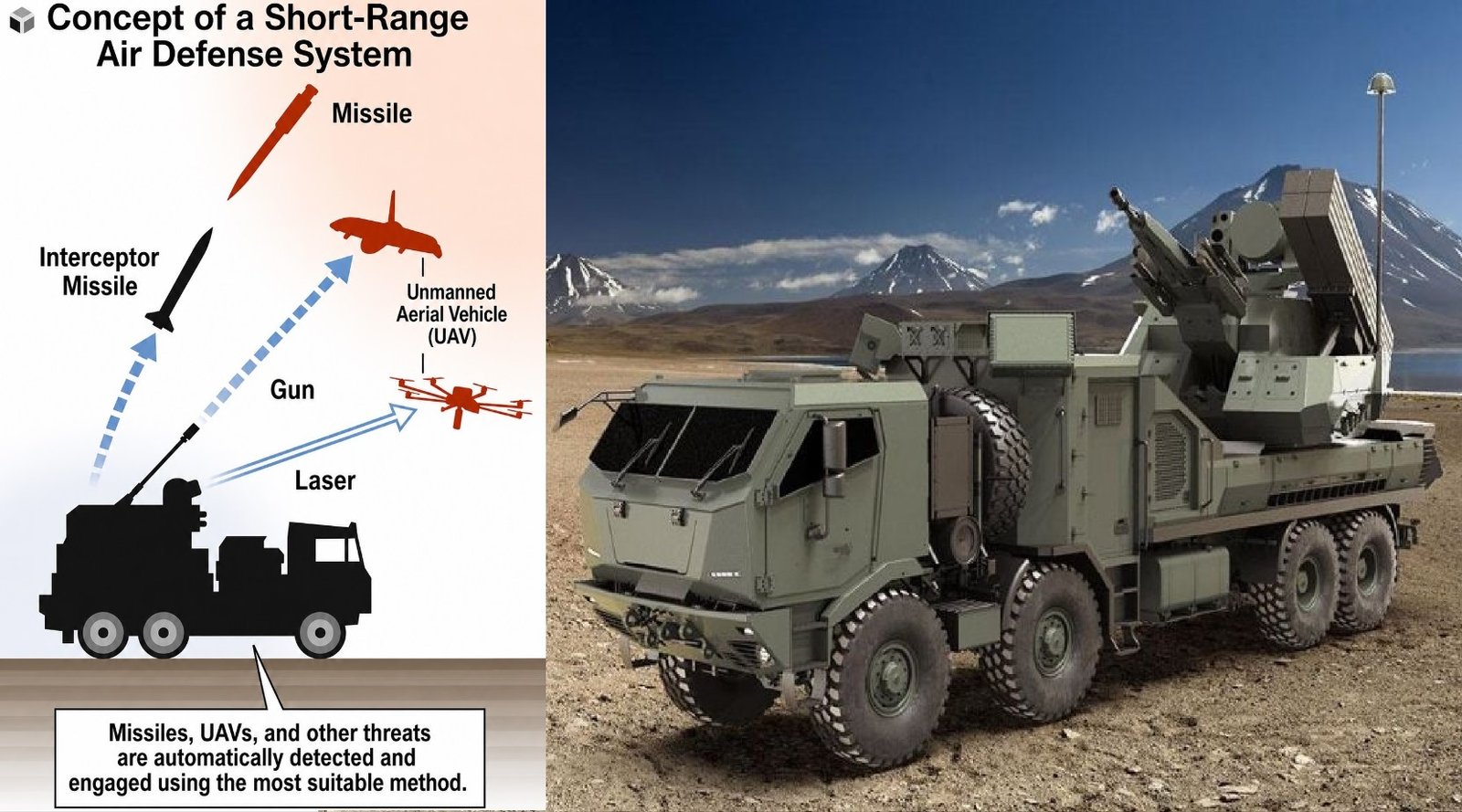
World
Tokyo — Japan’s Ministry of Defense has started planning a new close-range air defense system called the Close Range Air Defense System (CRADS) to counter large numbers of small drones and other airborne threats. According to a Ministry of Defense document reported by the Yomiuri Shimbun , CRADS will combine interceptor missiles, an automatic cannon and a laser weapon on a single self-propelled wheeled platform. The system is planned for the Japan Ground Self-Defense Force (JGSDF). The Ministry of Defense plans to include CRADS in its fiscal 2027 budget request as a “matter request,” meaning the specific funding amount has not yet been fixed. CRADS is designed to automatically identify incoming targets and select the most suitable weapon. Missiles would provide longer-range interception but are expensive and limited in number. The automatic cannon would provide a cheaper option with a larger ammunition supply but a shorter range. The laser would have an even shorter engagement range but would not require conventional ammunition, provided sufficient power is available. The combination is intended to help counter drone swarms and saturation attacks involving many missiles launched almost simultaneously, while reducing the use of expensive missiles against low-cost targets. The wheeled platform is intended to give CRADS greater mobility so it can move with ground forces. It is expected to initially complement the existing Type 93 short-range air defense system, which uses missiles based on the Type 91 MANPADS and is mounted on high-mobility vehicles. CRADS is part of Japan’s wider effort to modernize its short-range air defense. In parallel, the Ministry of Defense is developing another wheeled air defense system intended to eventually replace the Type 93. That program involves a surface-to-air missile based on an existing air-to-air missile design, with contracts awarded to Mitsubishi Heavy Industries and Toshiba. Available information points to the AAM-5 family as the likely basis, although the specific missile has not been officially identified in the information provided. Japan is also developing directed-energy weapons. The Ministry of Defense plans a fiscal 2027 demonstration project for a high-power microwave system designed to disrupt the electronic control systems of drones. Japan has also been developing vehicle-mounted high-power laser systems. Together, these programs are intended to provide the JGSDF with additional mobile and layered options against small drones, drone swarms and large-scale missile attacks.
Read More → Posted on 2026-08-25 12:25:10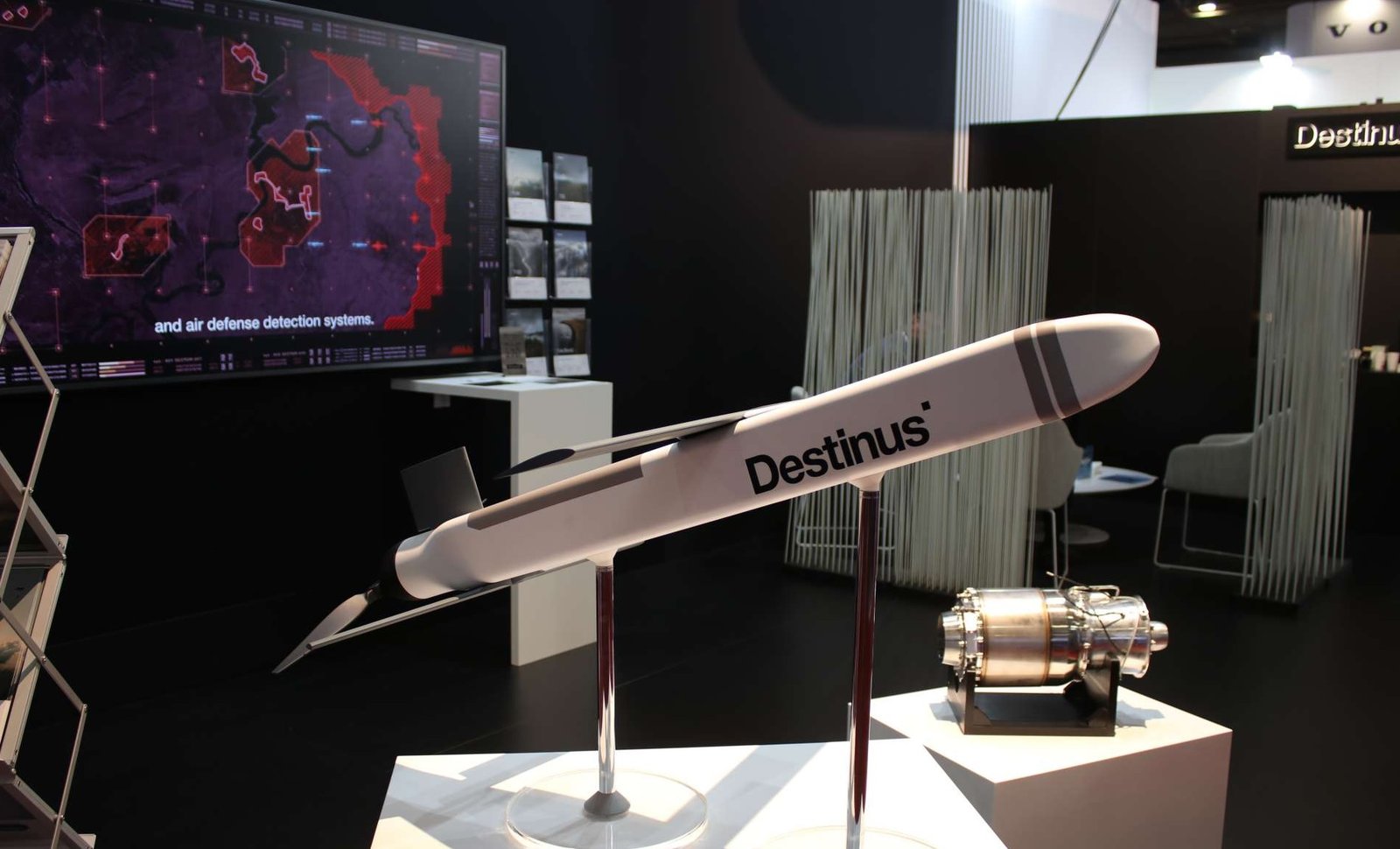
Europe
The Hague, Netherlands, — The Netherlands Ministry of Defence and aerospace company Destinus signed a Concept Development & Evaluation (CD&E) contract on August 24, 2026, to develop a kinetic counter-unmanned aerial system (C-UAS) capability for the Royal Netherlands Navy. The programme, led by the Ministry’s Materiel and IT Command (COMMIT), will integrate the Hornet B2 interceptor onto several Dutch Navy warships and is scheduled for completion in the second quarter of 2027. The contract covers the delivery of Hornet B2 interceptor systems, ship integration and Integrated Logistics Support activities. The programme is intended to move the capability towards a possible initial operating capability. According to the Dutch Ministry of Defence, the threat from medium-range drones is increasing based on operational analyses and the current maritime threat picture. The Hornet B2 will provide an additional defensive layer alongside existing shipborne weapons, particularly against lower-cost aerial threats that can arrive in volume. It is not intended to replace high-end naval air-defence systems. Hornet B2 Counter-Drone Interceptor The Hornet B2 is stored in a sealed canister and launched using a rocket booster. After launch, it deploys folding wings and switches to electric-powered cruise flight. The design combines missile-like launch readiness with aircraft-like cruise flight and is intended to reduce the cost per engagement compared with traditional interceptor missiles. Destinus states that the Hornet B2 has a range exceeding 150 kilometres, carries a 3-kilogram payload, and can engage drones, loitering munitions and helicopters. It is designed to counter subsonic targets and uses electro-optical and infrared sensors, with AI-based processing during the terminal phase. Engagement decisions remain under human command in accordance with applicable rules of engagement. The system consists of a base station and launch platform and can be deployed from a platform compatible with a standard 20-foot ISO-container footprint. Destinus also states that the system can operate as part of a swarm. The earlier Hornet B1 is already in serial production. Naval Integration Royal Netherlands Navy operators will participate directly in the CD&E programme, providing operational input and helping define capability requirements and system specifications for maritime use. The work will cover ship integration, logistics, operator requirements, support arrangements and operating procedures, alongside development and testing of the land-based design for naval operations. Destinus CEO Mikhail Kokorich said the Hornet B2 addresses the cost challenge of using expensive air-defence missiles against low-cost aerial threats arriving in large numbers. Destinus has previously demonstrated a Hornet interceptor launched from a Spanish Navy frigate. In August 2026, the company also signed a memorandum of understanding with CUBEDIN and OMT to develop modular, containerised naval versions of the Hornet system using 10-foot or 20-foot mission modules. The programme supports the Netherlands’ requirement for a maritime kinetic counter-UAS capability across its fleet and is scheduled to run through Q2 2027.
Read More → Posted on 2026-08-25 12:39:46
World
JERUSALEM — Israel is preparing a multiyear expansion of its military space capabilities, including upgraded satellite intelligence, resilient communications and the development of offensive space systems. The proposed plan includes systems to protect Israeli satellites from hostile spacecraft and concepts for striking targets on Earth from orbit. Defense Minister Israel Katz has said Israel aims to develop a true space-to-ground attack capability and become one of the world's leading space powers. Israel is considering roughly 16 billion shekels ($5.4 billion) over the next decade for space-related capabilities, although the funding has not yet been secured. The plan is part of wider discussions over increasing the defense budget, with the Finance Ministry raising questions about available resources. The program covers expanded intelligence collection through multiple satellite layers, continuous and resilient communications, highly encrypted links, cyber capabilities and contributions to missile defense. Planning involves the Directorate of Defense Research and Development (MAFAT), Israel Defense Forces (IDF) and Israeli defense industries. Offensive Space Systems The offensive element has two main objectives: developing weapons to defend Israeli satellites against hostile spacecraft and systems capable of striking targets on Earth. One concept under discussion is based on the theoretical U.S. “Rods from God” idea, in which satellites release large tungsten rods that strike the ground at extreme speed, using kinetic energy rather than nuclear explosives. The concept remains under study, with payload weight, launch costs and overall effectiveness among the major challenges. Concrete systems and development timelines have not yet been established. Katz has also discussed developing space-based laser capabilities for operations above Earth. Israel already operates ground-based laser systems, including Iron Beam. Satellite Intelligence The push has been accelerated by Operation Roaring Lion, during which Israeli forces expanded their use of satellites for intelligence collection and target development. Israeli satellites captured tens of thousands of images of relevant areas, providing day-and-night coverage. Avi Berger, head of the Defense Ministry's Space Directorate, described the operation as a major step forward in Israel's operational use of space. He received the Israel Defense Prize for technological projects connected with the Ofek 13 and Ofek 19 satellite programs. Ofek 13 and Ofek 19 use synthetic aperture radar (SAR) technology. Unlike electro-optical satellites that depend on sunlight, SAR satellites transmit electromagnetic energy toward the ground and use the returning signal to create imagery. This allows imaging during both day and night and through clouds, while providing additional high-resolution intelligence capabilities. Ofek 19, launched in September 2025, joined Israel's operational satellite constellation and supports Unit 9900. The proposed program is intended to provide Israel with a stronger and more continuous space-based intelligence, communications and defense network. Israeli officials have stressed that achieving security superiority in space is increasingly important for maintaining freedom of action for the IDF and defense establishment. The plans remain in the development and budgeting stage, with specific systems, timelines and final funding allocations still under discussion.
Read More → Posted on 2026-08-25 12:45:43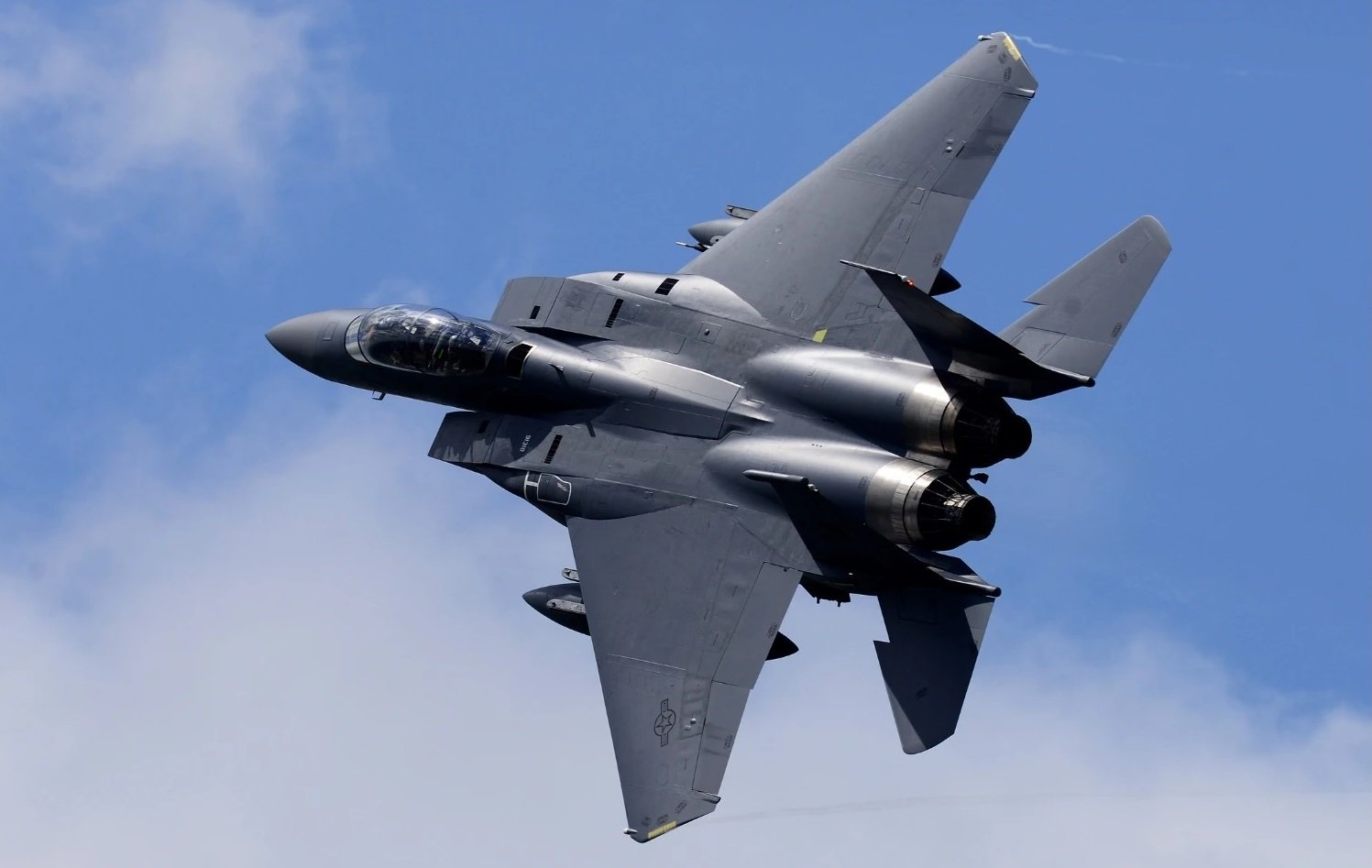
U.S
St. Louis, Missouri — The U.S. Department of War has awarded Boeing an indefinite-delivery/indefinite-quantity (IDIQ) contract with a ceiling value of $131.23 billion for the F-15 Eagle Crest program. The agreement covers F-15 aircraft production, systems integration, modernization, upgrades, retrofits, sustainment and the establishment of organic depot maintenance capabilities. The contract supports F-15 operations for the U.S. Air Force, Air National Guard and other Department of War customers. It also provides a framework for Foreign Military Sales to Japan, Israel, Saudi Arabia, South Korea, Singapore, Indonesia and Poland. Contract Structure The $131.23 billion figure is the maximum potential value of the IDIQ contract and does not represent an immediate payment or a single aircraft order. Individual orders can be placed as requirements arise during the contract period. At the time of award, $343,740 in fiscal 2026 research, development, test and evaluation funds was obligated. The contract was awarded on a sole-source basis. The initial ordering period runs through August 24, 2031, with an option to extend ordering through August 24, 2036. Work is expected to continue through August 2037, with the primary work location in St. Louis, Missouri. The Air Force Life Cycle Management Center at Wright-Patterson Air Force Base, Ohio, is the contracting activity. F-15 Production and Modernization The framework covers capabilities associated with the F-15 Eagle Weapon System, including production of new aircraft, systems integration, modernization, upgrades, retrofits and sustainment. It also includes the establishment of organic depot maintenance capabilities for F-15 aircraft. For the United States, the agreement provides a mechanism for additional F-15 procurement and modernization beyond the previously planned fleet of about 100 F-15EX aircraft. The F-15EX Eagle II is intended to support the replacement of aging F-15E Strike Eagles as the U.S. Air Force continues to maintain its heavy strike capability. Foreign Military Sales The Eagle Crest framework also supports potential Foreign Military Sales involving Japan, Israel, Saudi Arabia, South Korea, Singapore, Indonesia and Poland. Existing F-15 operators can use the framework for new aircraft or upgrades to aircraft already in service. Boeing already has a production contract for F-15EX Eagle II aircraft for Israel and continues to market the aircraft to other potential customers, including Saudi Arabia. Indonesia has discussed acquiring up to 36 F-15EX fighters, which have been associated with the F-15IDN designation. However, a government-to-government Letter of Offer and Acceptance has not yet been approved. Poland has also been identified as a potential customer for 36 aircraft. Warsaw has not made an official commitment, and the U.S. State Department has not announced approval of a possible Polish request. The Eagle Crest contract therefore establishes a long-term framework through which the United States and eligible international customers can order new F-15 aircraft, modernization packages and other F-15 support as requirements are approved.
Read More → Posted on 2026-08-25 13:00:50
U.S
WASHINGTON — The United States has formally removed Syria from its list of State Sponsors of Terrorism, ending a designation that had been in place since 1979 and removing a major U.S. policy barrier to investment and economic activity in the country. U.S. Secretary of State Marco Rubio authorized the formal rescission on August 24 after the mandatory 45-day congressional review period ended without lawmakers blocking the decision. President Donald Trump had notified Congress on July 8 of his administration’s intention to remove Syria from the list following his meeting with Syrian President Ahmed al-Sharaa in Ankara. Rubio said the decision was taken in recognition of actions and further commitments by the Syrian government under al-Sharaa to distance Syria from international terrorism. He also cited Syria’s counterterrorism activities, including its cooperation against ISIS and other militant networks. HTS designation also revoked The State Department also revoked the designation of al-Nusrah Front, also known as Hay’at Tahrir al-Sham (HTS), as a Specially Designated Global Terrorist organization. The Treasury Department’s Office of Foreign Assets Control (OFAC) separately removed HTS from the Specially Designated Nationals and Blocked Persons List. The move follows the State Department’s July 2025 decision to revoke HTS’s designation as a Foreign Terrorist Organization. Treasury Secretary Scott Bessent said the latest action fulfills President Trump’s commitment to provide sanctions relief to Syria and said it would help encourage additional investment and support political and economic stability. Impact on financial and economic activity Syria’s State Sponsor of Terrorism designation had imposed restrictions involving U.S. foreign assistance, defense sales and exports, as well as certain dual-use goods. The designation also created additional compliance requirements for companies considering business activity in the country. The latest action removes Syria from the prohibitions under the U.S. Terrorism List Governments Sanctions Regulations. U.S. financial institutions can provide services involving Syrian banks and process related payments when no sanctioned parties are involved. The U.S. administration has already taken several steps to reduce restrictions on Syria. These include the June 2025 executive order that terminated the broader Syria sanctions program and related national emergency, as well as earlier measures concerning HTS and al-Sharaa. Congress has also taken action to lift sanctions under the Caesar Syria Civilian Protection Act. The Commerce Department is expected to review export-control rules connected to Syria. However, the timing of any new guidance remains unclear. Syria seeks investment for reconstruction The decision comes as Syria seeks international investment and financial support for reconstruction after more than 13 years of conflict. The World Bank estimates Syria’s reconstruction costs at about $216 billion, based on its assessment of damage to infrastructure and buildings between 2011 and 2024. The assessment found direct physical damage of about $108 billion, with infrastructure accounting for the largest share. Syrian officials have welcomed the U.S. decision, describing it as an important step toward reconnecting the country with international financial and economic systems and attracting foreign investment. The move also follows growing engagement between Washington and Damascus since the fall of Bashar al-Assad’s government in December 2024. The Trump administration has cited Syria’s counterterrorism cooperation and commitments regarding future support for international terrorism as factors in its decision to remove the designation. Three countries remain on U.S. list With Syria’s removal, the U.S. State Sponsors of Terrorism list now contains Cuba, Iran and North Korea. The removal of Syria from the list does not mean that all U.S. sanctions or restrictions concerning Syrian individuals and entities have ended. Treasury has stated that sanctions can continue to apply to individuals, organizations and activities that remain subject to separate U.S. authorities. The decision represents a further change in U.S. policy toward Syria and removes one of the major restrictions that had complicated international investment and financial activity involving the country.
Read More → Posted on 2026-08-25 13:10:03
World
LONDON/KYIV — Russia has warned that British factories producing drones and missile-related components for Ukraine could face attacks from “unknown sources” after the UK agreed to share classified blueprints for British-made components of the Storm Shadow cruise missile with Kyiv. British Prime Minister Andy Burnham announced the decision during his first official international trip as prime minister. He visited Kyiv on August 24 to mark Ukraine’s 35th Independence Day, met President Volodymyr Zelenskyy and chaired a meeting of the Coalition of the Willing with French President Emmanuel Macron and German Chancellor Friedrich Merz. The UK has agreed to provide technical information on British-made components of the SCALP missile, the French version of Storm Shadow. The transfer removes a remaining restriction on UK components made by MBDA and is intended to support Ukraine’s plans to establish domestic production of the long-range missile with France. The Storm Shadow/SCALP family has a range of about 250–560 km depending on the variant and has been used by Ukraine against targets in occupied territories and inside Russia. Russia Issues Warning Andrei Fedorov, a former Russian deputy foreign minister and current Kremlin adviser, told BBC Newsnight that Moscow could not completely rule out a “semi-military” response against Britain. Asked what this could involve, Fedorov said British enterprises and factories producing drones or other components for Ukraine could be attacked. He said such action could come from “unknown sources” rather than directly from Russia and also referred to possible cyberattacks. Kremlin spokesman Dmitry Peskov separately criticised the British decision, accusing London of adding “fuel to the fire.” He said Russia was gathering information on missile production facilities so they could be targeted. Burnham rejected the criticism, responding to Peskov by asking: “Who started the fire?” Ukraine Seeks More Air Defence The dispute comes as Ukraine faces continuing pressure on its air-defence capabilities ahead of winter. Zelenskyy has said Kyiv wants to secure around 300 US-made Patriot interceptor missiles to protect critical infrastructure and the energy system. Ukraine has also sought the ability to manufacture Patriot interceptors domestically. US President Donald Trump previously discussed the possibility but later said no agreement had been reached, stressing that the technology required careful consideration. At the Kyiv meeting, Burnham, Macron and Merz said strengthening Ukraine’s air defences was an urgent priority. They also pledged continued support for Ukraine, further sanctions against Russia and measures targeting Russia’s shadow fleet. Burnham said he would travel to the United States next month with European leaders to discuss Ukraine’s defence requirements with Trump. Wider UK-Ukraine Defence Cooperation The UK and Ukraine are also expanding cooperation in defence technology. During the visit, Britain secured access for its researchers to Ukraine’s Avengers AI Labs, which uses battlefield data from cameras and sensors to develop artificial-intelligence systems. The UK and France hope to establish production lines for the SCALP/Storm Shadow family in Ukraine by the end of the year, although the exact timeline for full domestic production remains unclear. The latest agreement moves Britain beyond supplying finished weapons by helping Ukraine develop its own long-range missile production capability, while the Russian warnings have raised concerns over possible attacks or other forms of disruption involving British defence facilities.
Read More → Posted on 2026-08-25 13:57:34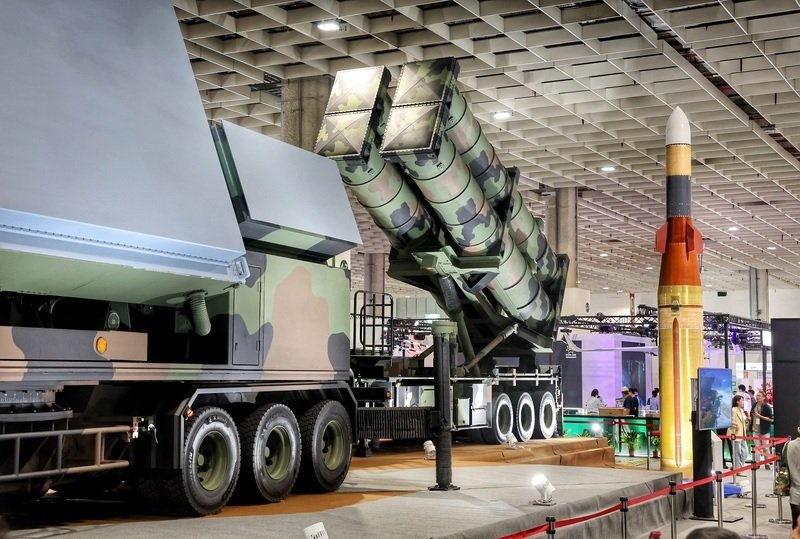
World
TAIPEI — Taiwan’s National Chung-Shan Institute of Science and Technology (NCSIST) has published new details on its domestically developed Strong Bow air defense missile system, also known as Chiang Kung or Sky Bow IV (Tien Kung IV). The land-based system is designed as a mid-tier interceptor against tactical ballistic missiles. NCSIST says the system is intended to intercept incoming tactical ballistic missiles at medium altitudes and operate with lower-layer air defense systems to create a layered defense network. Two-stage missile with thrust-vector control According to NCSIST, the Strong Bow missile uses a two-stage solid-fuel rocket motor and can reach hypersonic speeds. Its guidance system uses inertial navigation with radar uplink corrections during the midcourse phase before switching to an active seeker during the terminal phase. The missile also uses thrust-vector control during the terminal phase. NCSIST says this provides maneuverability in the thin atmosphere. The interceptor is equipped with precision guidance and a directional warhead, while its integrated composite rocket motor is intended to improve ease of production. The system has a reported interception altitude of about 70 kilometers. Taiwanese reporting has described this as a higher interception layer than the existing Sky Bow III system, which has a reported altitude of about 45 kilometers. AESA radar and mobile launch system The Strong Bow system includes the missile, a mobile vertical-launch transporter erector vehicle, tactical command vehicle and vehicle-mounted AESA radar. Each launcher can carry four missile canisters. NCSIST says the radar provides target classification and identification, high-precision tracking, electronic counter-countermeasures and the ability to engage multiple tactical ballistic-missile targets. The missile canister is about 7.61 meters long, compared with approximately 5.49 meters for the Sky Bow III canister, according to published details on the system. NCSIST’s seeker information also states that the Strong Bow seeker can actively search for and track targets and provide target information for missile guidance during interception. Planned deployment Taiwan plans to procure at least 128 Strong Bow interceptors. A funding proposal reported for the program includes about NT$36.1 billion for two systems and 128 missiles. The Strong Bow is planned as part of Taiwan’s T-Dome layered air defense network, operating alongside the existing Sky Bow III and U.S.-supplied Patriot Advanced Capability-3 (PAC-3) interceptors. Taiwan’s Ministry of National Defense has described the combination as providing multilayered defense against missile and aircraft threats. The Strong Bow system was publicly displayed at the 2025 Taipei Aerospace and Defense Technology Exhibition, after development and operational evaluation work had progressed. Taiwan’s NCSIST subsequently confirmed that the system had entered mass production. The latest NCSIST information provides further details of the missile’s propulsion, guidance, launcher and radar architecture, giving a clearer picture of how Strong Bow is intended to serve as a mid-tier component of Taiwan’s integrated air and missile defense network.
Read More → Posted on 2026-08-25 14:03:34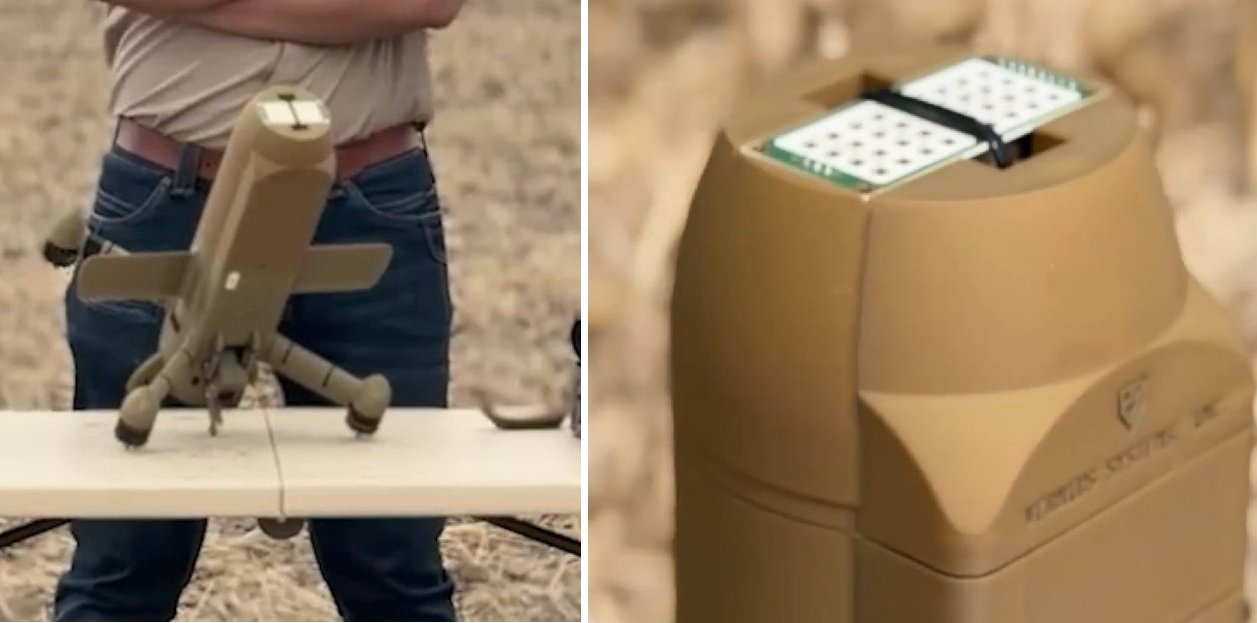
World
San Francisco — U.S. technology company Vernius Systems has unveiled the Archimedes 1A, an active radar seeker designed for unmanned aerial vehicle (UAV) interceptors. The company demonstrated the guidance head integrated with the STING interceptor UAV, developed by Ukrainian manufacturer Wild Hornets. The Archimedes 1A is an 80 mm active radar seeker operating at 24 GHz with a fixed beam. Vernius lists a 25° × 14° field of view and says it can detect Shahed-class targets at ranges exceeding 1 kilometre. The stated range is based on targets with a radar cross-section of approximately 0 dBsm. The unit costs around $4,000. The seeker is designed to support automated interception and operation in fog, smoke, rain and darkness. It has two operating modes. In fully autonomous interception, the interceptor receives a cue from a command-and-control network, uses radar for midcourse guidance beyond visual range, and then transfers to autonomous vision-based terminal guidance. In operator-assisted mode, the seeker provides live target range and bearing information to the pilot, allowing the target to be acquired before it becomes visible. Vernius Systems unveils the Archimedes 1A, an 80 mm, 24 GHz active radar seeker for UAV interceptors. Integrated with Ukraine’s STING, it detects Shahed-class targets beyond 1 km and costs around $4,000. pic.twitter.com/VwWOsE24H4 — The Defense News (@TheDefenseNews) August 25, 2026 Vernius says the system is designed to adapt to existing interceptor platforms and can also be integrated with jet-powered interceptor UAVs, including the Alexa Spatium system. The company says this could support automated guidance against faster jet-powered attack drones such as the Geran-3, Geran-4 and Geran-5. According to Vernius, more than 50 percent of Shahed-type attack drones operating over Ukraine are now jet-powered, making manual interception more difficult because of their higher speed and the limited reaction time available to operators. The company states that manual interception currently has a 20–50 percent kill probability, which it expects to decline further in poor visibility. Vernius Systems is based in San Francisco and develops low-cost radar seekers for counter-UAS applications. It was spun out of the volunteer nonprofit Defense Tech for Ukraine and is backed by Y Combinator. Its team includes personnel with experience in RF PCB engineering, software for the U.S. Navy's Tomahawk missile fleet, satellite systems and FPV hardware used by frontline operators. The company says its early investors include former U.S. National Security Advisor Lt. Gen. H.R. McMaster, Austin Howard, who is identified as the chief engineer behind VBAT, and Ukrainian military analyst Rob Lee. Vernius says it has secured $500 million in letters of intent for 2027 from defense manufacturers and military units across the United States, European Union and Ukraine. The company describes its broader objective as using compact radar technology to turn drones into autonomous interceptors and says its approach could reduce the cost per kill from around $4 million for Patriot-class missiles to less than $4,000. The STING interceptor, developed by Wild Hornets, is a Ukrainian FPV system used against Shahed-type and related drones. It has been used in operational conditions and can, in some cases, be controlled through the Hornet Vision system for remote operation over extended distances.
Read More → Posted on 2026-08-25 14:12:03
Europe
Stavanger, Norway — Kongsberg has launched Aegir SSA (Subsea Situational Awareness), a new family of sonar systems designed to provide continuous underwater awareness for maritime security, safety and navigation. The system was unveiled at the ONS 2026 conference in Stavanger and is aimed at ports, critical infrastructure, coastal areas and offshore assets. Aegir SSA builds on more than 80 years of Kongsberg sonar experience and combines acoustic technology with compact designs and scalable deployment options. The systems can be installed on small uncrewed surface vessels (USVs), buoys, fixed offshore sites and larger maritime platforms. The system is designed to detect, classify and track underwater objects and activity, while supporting navigation and operational decision-making. Kongsberg also offers an AI-powered virtual sonar operator that can support continuous operation without constant human supervision. Customers can configure the AI for specific missions, while their own operators can train the system to retain and apply mission-specific operational knowledge. Kongsberg said underwater monitoring is becoming increasingly important as maritime infrastructure supports energy security, global transportation, offshore operations and national resilience. Ports and coastal areas can present challenges because of dense traffic, shallow waters, drifting objects and unauthorised activity that may not be detected by conventional surface monitoring systems. One system in the family, Aegir57, is a compact 57 kHz omnidirectional sonar providing 360-degree coverage and a detection range of up to 2,000 metres, depending on acoustic conditions. It is intended for applications including port and harbour security, offshore asset monitoring, obstacle detection and autonomous vessel operations. Before the commercial launch, Kongsberg partnered with Fugro to test Aegir SSA in real-world conditions. The system was integrated with Fugro’s SEAWATCH buoy platform and connected to the Oslofjord Testbed. Visitors at ONS 2026 can view a live data feed from the Oslofjord installation, demonstrating persistent monitoring, real-time data delivery and subsea sensing. Helge Andre Sundt, Vice President of Subsea Awareness at Kongsberg, said the underwater domain has become a critical operational environment for commercial and government operators and that Aegir SSA is designed to improve security, safety and operational awareness. Hompe Heijmerink, Fugro’s Director of Maritime Security and Surveillance for Europe and Africa, said combining the Aegir SSA sonar with the SEAWATCH buoy provides an “always-on” monitoring solution and actionable real-time intelligence for protecting critical maritime assets. Kongsberg also highlighted two major contracts announced earlier this year. One covers surveillance of Princess Elisabeth Island in the North Sea, including drone detection radar and vessel traffic services. The second involves underwater surveillance and protection for an undisclosed international customer. With Aegir SSA, Kongsberg is adding a dedicated subsea surveillance layer to its wider maritime portfolio for persistent detection, classification and tracking around ports, offshore assets and other critical maritime sites.
Read More → Posted on 2026-08-25 15:18:38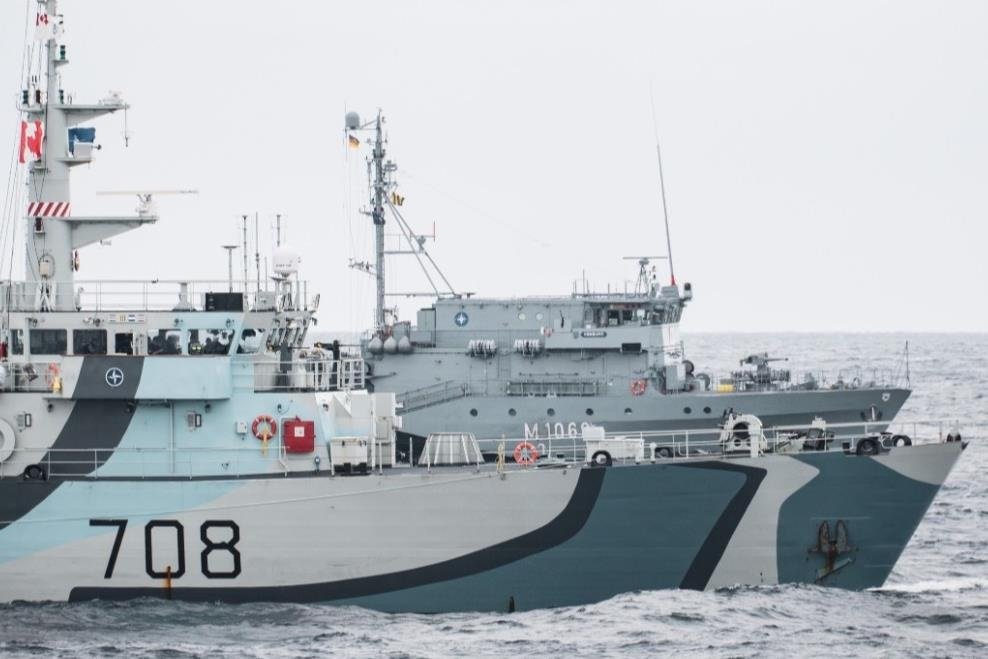
Europe
Reykjavik, Iceland — NATO naval and air forces are participating in Exercise Northern Viking 26 in and around Iceland to strengthen the defense of Iceland and key maritime routes across the North Atlantic. The U.S.-led exercise began on August 22 and will run until September 3. The biennial exercise is hosted by Iceland and led by the U.S. Sixth Fleet. It forms part of NATO’s broader Arctic Sentry activity and focuses on the Greenland-Iceland-United Kingdom (GIUK) Gap, a key maritime corridor connecting North America and Europe. The exercise is intended to improve Allied readiness, interoperability and multinational planning in the High North. The United States and Iceland are joined by forces from Belgium, Canada, Denmark, Finland, France, Germany, Lithuania, Norway and Poland. Around 1,200 personnel from participating nations are involved. Northern Viking 26 combines air and maritime capabilities and includes training in anti-submarine warfare, mine countermeasures, search and rescue and other joint operations. The exercise also supports the protection of critical national and Alliance infrastructure in the region. NATO Mine Countermeasures Forces Participate Standing NATO Mine Countermeasures Group One (SNMCMG1) is participating under the command of Lithuanian Navy Commander Donatas Gečas, alongside Standing NATO Maritime Group One (SNMG1). SNMCMG1 includes minehunters from Canada, Germany, Lithuania and Poland, supported by a Danish Mine Countermeasures team and a Portuguese Explosive Ordnance Disposal team. The forces are conducting training across surface, subsurface and mine countermeasure operations while improving their ability to keep maritime routes open. “By training together in a demanding operational environment, we strengthen interoperability, share operational experience and improve our readiness to contribute to the security of the North Atlantic,” Gečas said. The difficult North Atlantic environment, including cold waters, challenging weather and long distances between support facilities, provides an operational setting for Allied forces to develop their capabilities and coordination. SNMG1 and SNMCMG1 are two of NATO’s four Standing Naval Forces and are maintained at high readiness to provide maritime security, support freedom of navigation and respond to emerging requirements. Northern Viking 26 also coincides with the 75th anniversary of the 1951 Bilateral Defense Agreement between Iceland and the United States. The exercise is intended to strengthen NATO’s ability to operate together across the GIUK Gap while supporting the defense of Iceland and the wider North Atlantic.
Read More → Posted on 2026-08-25 15:27:02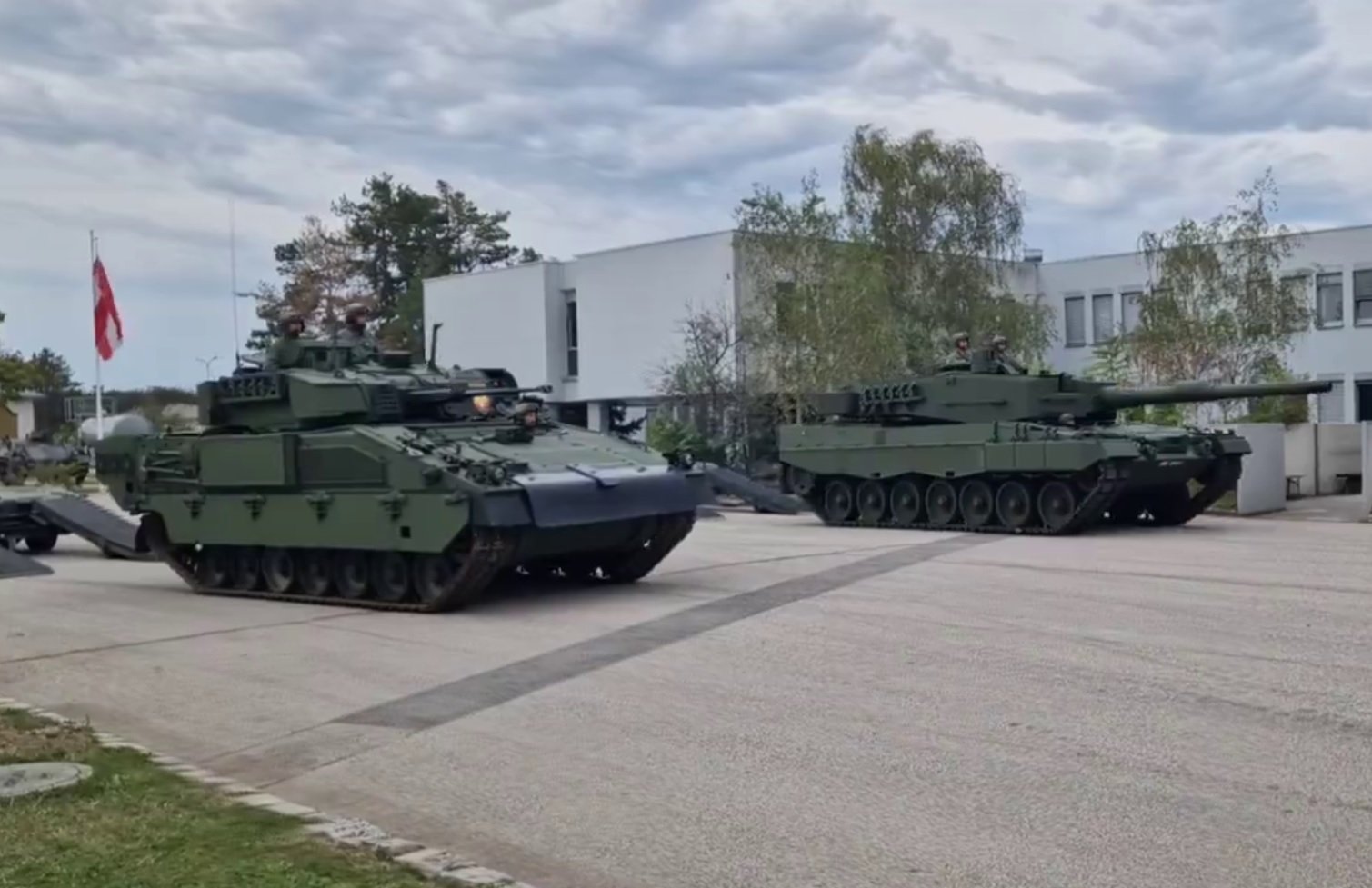
World
Großmittel, Austria — The Austrian Armed Forces (Bundesheer) have received their first modernized Leopard 2A4Ö main battle tank and Ulan NV infantry fighting vehicle (IFV). The handover ceremony was held at Jansa Barracks in Großmittel, Lower Austria, and was attended by Defense Minister Klaudia Tanner, Chief of Defense Procurement Lieutenant General Harald Vodosek, Colonel Michael Lex, commander of Panzergrenadier Battalion 35, and military and industry representatives. The vehicles are part of the “Mech Package”, a modernization program under Austria’s broader Aufbauplan ÖBH 2032+ force-development plan. The program began in 2023 and covers 170 tracked vehicles, including 58 Leopard 2A4 tanks and 112 Ulan IFVs. The total investment is about €765 million, including around €305 million for the Leopard modernization and €460 million for the Ulan program. Completion of the full fleet is planned for around 2029–2030. Leopard 2A4Ö Modernization The 58 Leopard 2A4 tanks are being modernized by KNDS Deutschland, formerly Krauss-Maffei Wegmann. Austria selected the upgrade program instead of purchasing new tanks because of budget considerations. The modernization brings the turret to a level comparable to the Leopard 2A7 standard. It includes new digital surveillance and sighting systems for the commander, gunner and driver, an updated electronic architecture, improved reconnaissance, night-fighting and fire-control capabilities, and replacement of the hydraulic turret drives with electric systems for improved aiming precision. The tank’s external appearance, armor protection and 120 mm L/44 main gun remain at the original A4 standard. Outdated components are replaced, while night-fighting capability is restored. The upgraded tanks will first go to the Army Logistics Center for final adaptation before entering full service. The package is intended to extend the fleet’s service life while retaining existing logistics support. Ulan NV Modernization Austria is modernizing all 112 Ulan (ASCOD) IFVs through a €460 million program conducted by GDELS-Steyr at its Vienna-Simmering facility. The Ulan NV service-life extension includes an overhaul of the electrical system, renewed optics and electronic components, replacement of drivetrain parts, updated turret-drive components, new driver-vision systems, an updated heating unit and a more advanced main sighting system. The rear stowage bin has also been reconfigured to increase capacity, while some vehicles receive improved air-conditioning and related systems. The first upgraded Ulan vehicles are being delivered directly to active troop units. The Leopard 2A4 remains Austria’s primary tank weapon system, while the Ulan is used by armored infantry. The Ulan is designed to operate alongside the Leopard, carrying a 30 mm cannon, an infantry squad and its crew. Austria considers the combination of tanks and armored infantry a central part of its conventional military defense. Defense Minister Tanner said the modernized tank fleet strengthens Austrian military capabilities for national defense and makes the objectives of the 2032+ development plan visible. The modernization program allows Austria to extend the service life of its existing heavy armored forces instead of replacing the vehicles with entirely new platforms. The vehicles are being modernized in stages, with Leopard tanks sent to the manufacturer in Munich and Ulan vehicles to Vienna. Austrian officials have also said that the Leopard upgrade package has attracted interest from other operators of similar vehicles.
Read More → Posted on 2026-08-25 15:33:35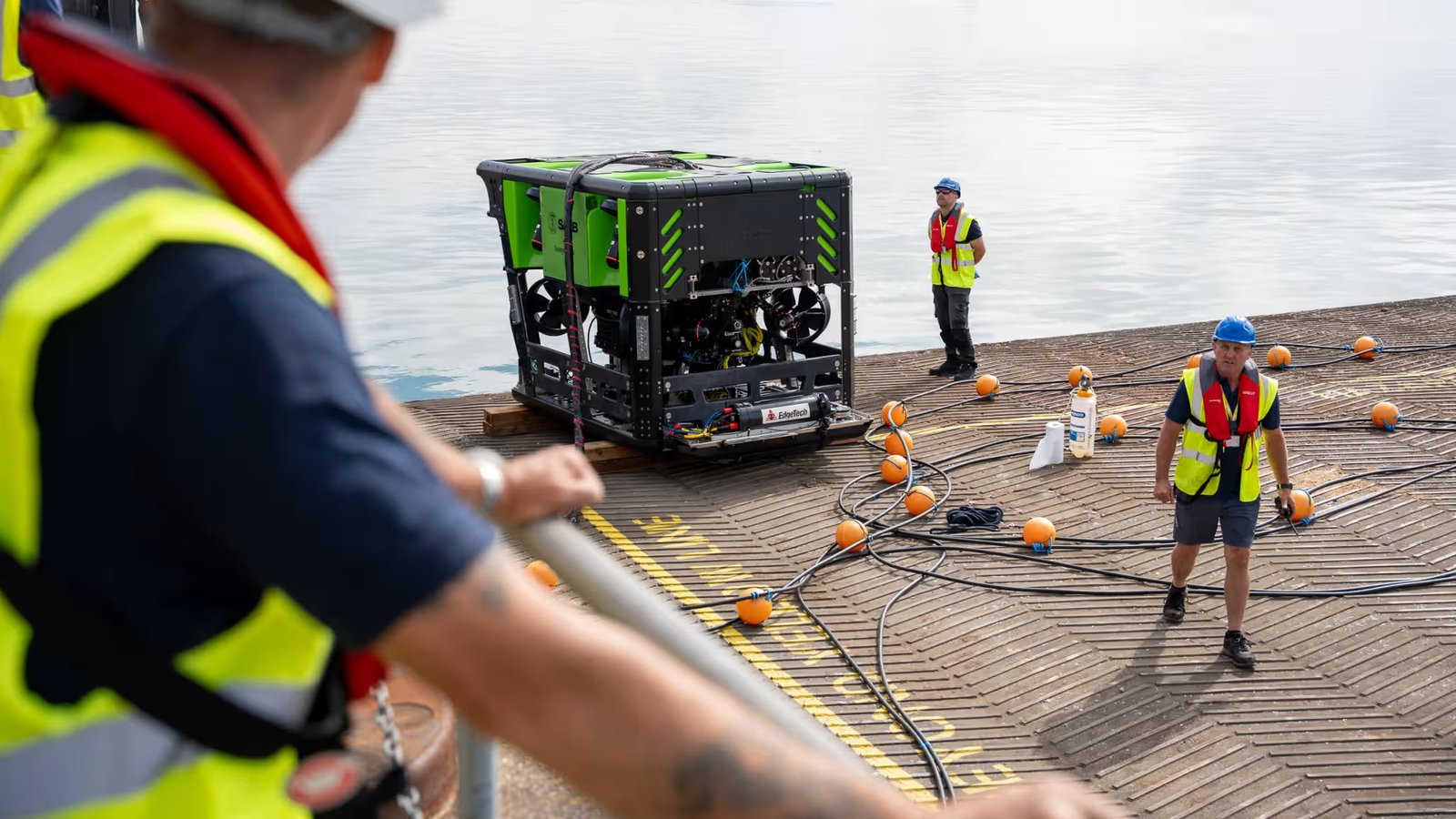
Europe
Fareham, UK — Saab UK’s Seaeye SR20 eWROV, a next-generation all-electric work-class remotely operated vehicle (ROV), has completed a comprehensive programme of inland water trials as part of its ongoing development. The trials formed a key part of the SR20’s verification and validation programme. Saab said the testing assessed the vehicle against its specification requirements, measured its performance and subjected the ROV to conditions designed to evaluate it as a complete, integrated system. During the trials, the SR20 demonstrated manoeuvrability, precise pilot control and stable operation. The results provided further validation of its fully electric architecture and integrated control systems. The SR20 is a full-sized IMCA Class III B ROV system. Saab has developed the platform with electric thrusters and electric manipulators, while using limited oil compared with traditional hydraulic systems. The company states that its overall power and performance exceed those of a 200 HP hydraulic equivalent. The vehicle is being developed for a range of subsea operations, including survey, inspection, maintenance and repair, construction, drill support and decommissioning. Its design also supports both resident and remote operational concepts. The SR20 builds on Saab Seaeye’s four decades of experience in underwater robotics. Saab said its Seaeye ROVs have supported subsea operations across a range of applications for 40 years. The company’s current underwater systems portfolio includes remotely operated vehicles, autonomous underwater vehicles and hybrid systems for commercial, scientific and defence applications. Jon Robertson, Seaeye Managing Director at Saab UK, said the successful water trials bring the company closer to delivering the platform to the subsea industry. “These successful water trials bring us another step closer to delivering a new platform for the subsea industry,” Robertson said. “The SR20 combines the performance and reliability operators expect from Seaeye systems, with a fully electric architecture designed to support a range of operational requirements, including resident and remote operations.” The SR20’s fully electric architecture is a central part of its design. Saab has previously highlighted the use of electric systems and limited oil as features intended to provide an alternative to conventional hydraulic work-class ROV systems. Saab’s earlier development information also described the platform as incorporating automation and remote-control capabilities. The SR20 programme will now move into its next phase of testing following completion of the inland water trials. Saab will continue development and capability assessments as the vehicle progresses towards planned delivery and operational deployment.
Read More → Posted on 2026-08-25 15:42:17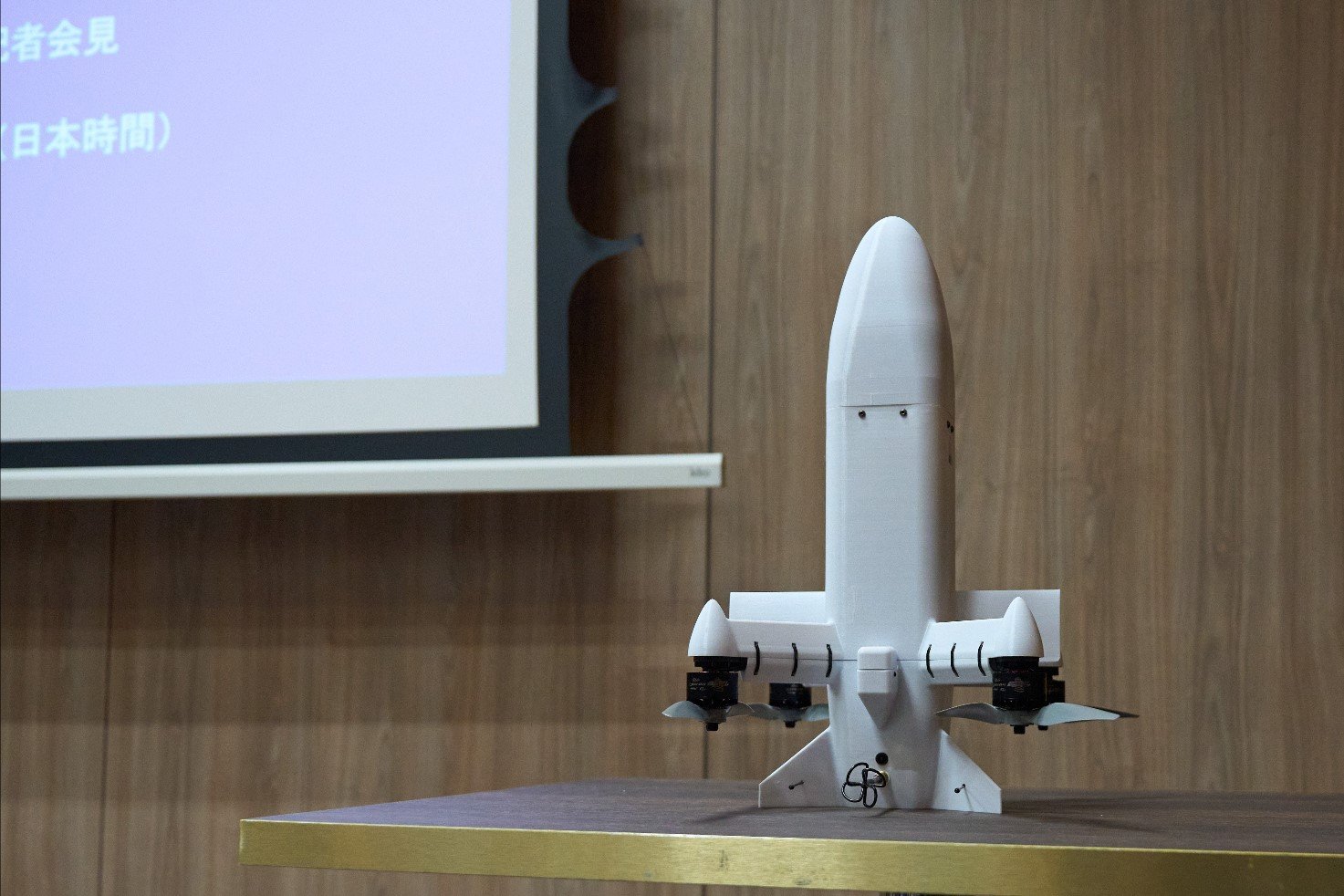
World
Tokyo — Japan’s Acquisition, Technology & Logistics Agency (ATLA) has signed a mass-production contract with Terra Drone Corporation for the Terra B1 interceptor UAV, under the country’s Interceptor Drone Rapid Acquisition Program. ATLA launched the program on June 5, 2026, to rapidly field low-cost interceptor UAVs against long-range, one-way attack drones, including systems similar to the Shahed type used in recent conflicts. The program aims to move from proposals to delivery in about three months, with the first deliveries expected around September 2026. ATLA received proposals from 38 companies, with four systems advancing to the demonstration stage. The Japan Maritime Self-Defense Force (JMSDF) conducted testing from July 15 to August 6. The Terra B1 was the only system among the four to pass the demonstration phase. The evaluation covered effective range, endurance, flight distance, maximum and cruising speed, guidance methods, simultaneous control of multiple UAVs, launch and recovery procedures, integration with other equipment, safety measures, operational records, and the time required from contract to delivery. The requirements also included domestic production capability, a domestic production base, a maximum speed of at least 250 km/h, and vertical takeoff and landing capability. Testing included operations at a JMSDF base and aboard a destroyer. Terra Drone will now begin mass production of the Terra B1 and establish domestic production and supply chains covering components, batteries, communications equipment and control systems. The company will also develop maintenance, replenishment and training support, along with system integration for deployment at bases, aboard vessels and at other facilities. Quality management and safety systems for defense use will also be strengthened. Initial deployment is planned for the JMSDF, while future use by the Japan Air Self-Defense Force and Japan Ground Self-Defense Force is being considered based on operational needs. The program draws on lessons from conflicts in Ukraine and the Middle East, where low-cost attack drones have created challenges for more expensive interceptor missiles. Japan is seeking a more cost-effective approach to protecting Self-Defense Force facilities and vessels. Terra Drone, based in Tokyo, has prior experience testing related interceptor UAVs in Ukraine and has been developing domestic production capabilities for defense drones. ATLA and Terra Drone have not disclosed the contract value or the number of Terra B1 units to be procured.
Read More → Posted on 2026-08-25 15:49:43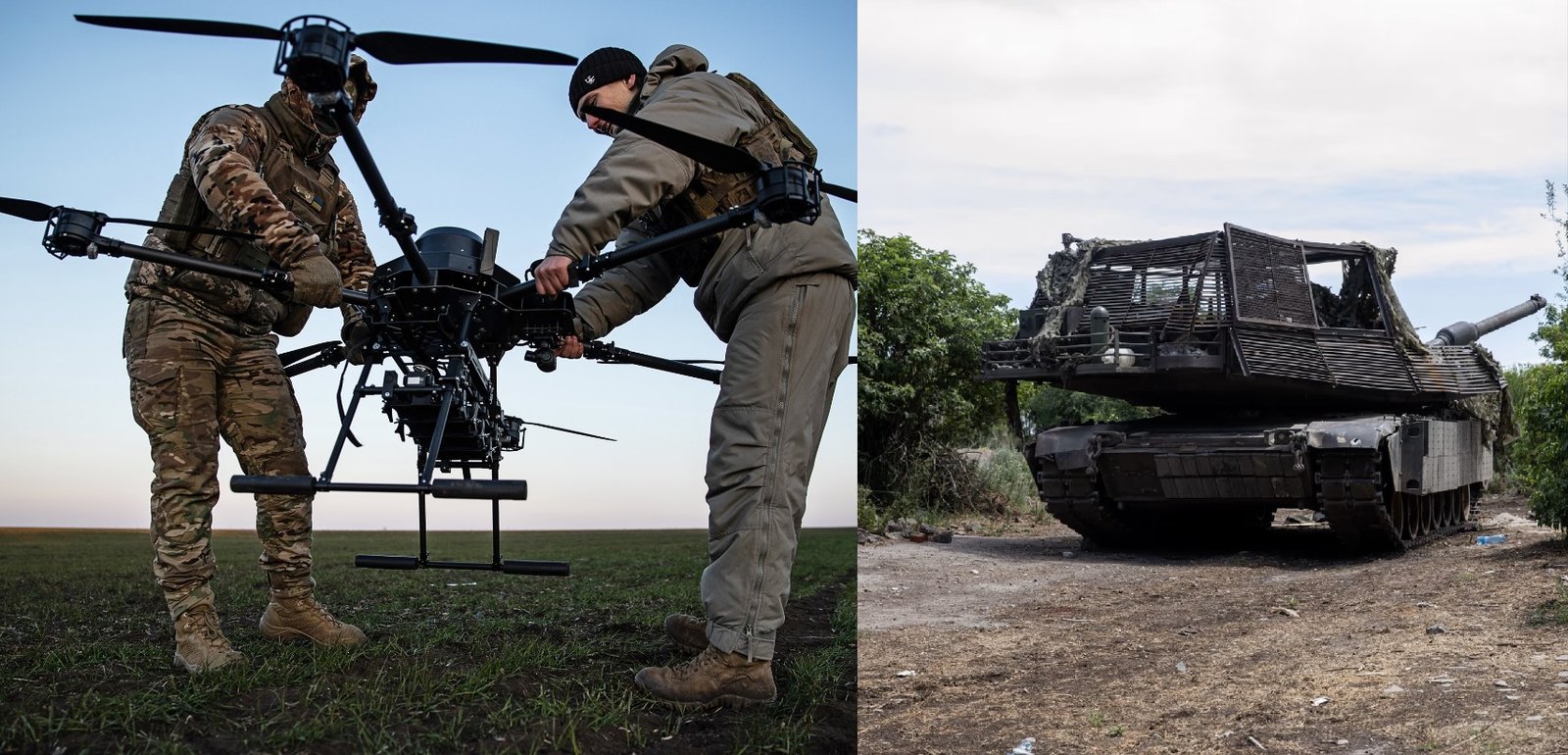
World
KHARKIV REGION, Ukraine — Western-supplied tanks that Ukraine sought after Russia’s full-scale invasion are now often kept under camouflage nets in forests, with some reportedly sitting idle as cheap drones have changed battlefield conditions. Ukraine began requesting Western tanks after Russia’s invasion in February 2022. Britain, Germany and the United States agreed to supply them in January 2023 after months of negotiations. The 33rd Separate Mechanized Brigade was formed in part to operate the Western vehicles, which cost around $10 million each. However, by the time many of the tanks entered combat in late spring 2023, inexpensive first-person-view (FPV) drones had become widely used against armored vehicles. The drones could target vulnerable areas of tanks, making their use in exposed frontline positions increasingly difficult. Oleksandr Syrskyi, who served as Ukraine’s top military commander until last month, said: “We’re making virtually no use of armored vehicles.” He also questioned how Ukraine could counter the advantage provided by drones and give its armored forces a new role. The issue was part of wider discussions about Ukraine’s military strategy around the time of his removal from command. In the 33rd Brigade, about half of one tank battalion has reportedly retrained as drone operators. Some remaining tanks are mainly used to tow damaged equipment and are more likely to operate during poor weather, when fewer drones are flying. Younger recruits are also being trained to operate ground drones and other unmanned systems. Open-source assessments indicate significant losses among Western tanks. Of about 82 Abrams tanks delivered to Ukraine, including vehicles supplied by the United States and Australia, around 25 have been hit, according to available figures. Sweden supplied 10 Stridsvagn 122 tanks, of which open-source analyses indicate about one remains in service after others were hit, damaged or otherwise affected. German Leopard tanks operated by Ukrainian units are also frequently kept under protective nets in rear areas, with some awaiting repairs or maintenance and others held in reserve. Both Russia and Ukraine have added anti-drone protection to tanks. Russian forces began using metal cages and meshes around armored vehicles, a modification Ukrainian soldiers initially compared to “barbecue grills.” Ukraine has since adopted similar nets and cages, along with other protective measures. Despite the reduced battlefield use, Ukraine continues to maintain its Western tanks and train crews. Members of the 33rd Brigade have conducted Leopard tank exercises and live-fire training in the Kharkiv region. The experience has pushed Ukrainian units to combine traditional armored forces with drones, ground robots and surveillance systems. Western tanks remain part of Ukraine’s military inventory, but their frontline role has been reduced as drone warfare has become a major factor in combat operations.
Read More → Posted on 2026-08-25 15:58:17
World
Kyiv — Russia has equipped some Geran-type, or Shahed-136, kamikaze drones with onboard electronic warfare (EW) systems designed to disrupt the analog video links used by Ukrainian interceptor drones. The system was identified after Ukrainian specialists examined equipment recovered from a downed Geran drone. Ukrainian defense technology adviser Serhii Beskrestnov, known as Serhii Flash, reported the finding and shared photographs of the recovered equipment, including antennas mounted on the drone's airframe. Russia has equipped some Geran/Shahed-136 drones with onboard EW systems to disrupt Ukrainian interceptor drone video links. The system targets 5.8 GHz analog signals and reportedly produces interference about 5× stronger than the interceptor’s transmitter. pic.twitter.com/77GxY9UfkU — The Defense News (@TheDefenseNews) August 25, 2026 How the system works The EW system is designed to detect the video signal of an approaching Ukrainian FPV interceptor. Its video receiver (VRX) identifies the interceptor's operating frequency, after which the video transmitter (VTX) generates interference on the same frequency band. A preliminary assessment found that the jammer's signal is about five times more powerful than the interceptor's video transmitter. The interference can cut the live video feed, preventing the ground operator from accurately guiding the interceptor during its final approach. The recovered system operates mainly in the 5.8 GHz band, which is commonly used for analog FPV video transmission. It consists of a VRX receiver, VTX transmitter and control electronics. Test results and power consumption During laboratory testing, the system detected a test video transmitter and activated its jammer after about three seconds, causing the analog video signal to disappear. After the test signal was switched off, the system returned to standby mode in approximately five seconds. The unit reportedly consumes about 2 watts in standby while scanning for signals and up to 33 watts when actively jamming. Earlier reports and possible countermeasures Ukraine had previously reported that Russia was adding EW equipment to some Shahed/Geran drones to counter interceptor UAVs. In May 2026, Ukrainian First Deputy Defense Minister Oleksii Vyskub said modified Shahed drones had been observed with frequency-suppression equipment, including systems fitted toward the rear of some drones. Footage from mid-August also showed cases in which an interceptor's video feed was disrupted as it approached a Geran. Possible countermeasures include terminal guidance systems that do not depend on continuous video, digital communication links, and video transmitters operating on non-standard frequencies. The Geran is Russia's version of the Iranian-designed Shahed-136 family of one-way attack drones. Russia has introduced other modifications to the series, including jet-powered variants and systems supporting real-time control. The addition of onboard EW against interceptor video links is part of the continuing development of the drones to counter Ukraine's increasing use of low-cost interceptor UAVs.
Read More → Posted on 2026-08-25 16:24:18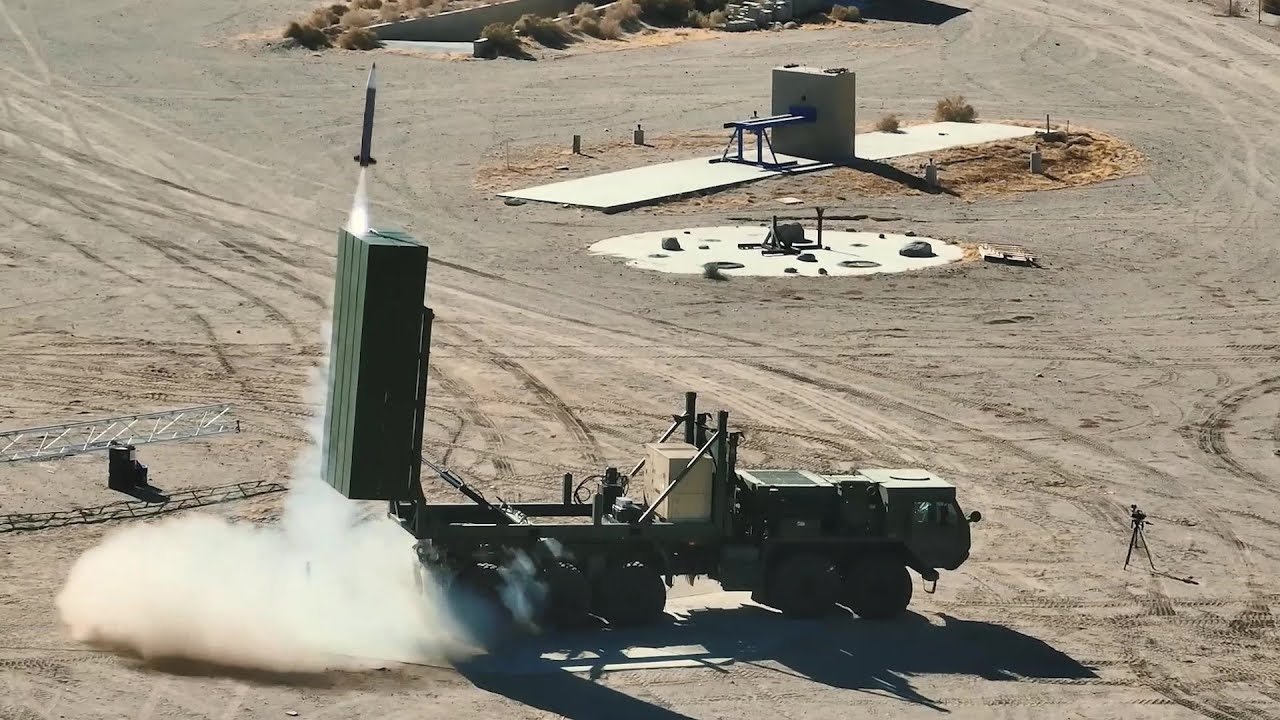
U.S
WASHINGTON — The U.S. Navy has awarded Castelion an $89.997 million firm-fixed-price order to advance the company’s Blackbeard hypersonic weapon toward Early Operational Capability (EOC). The order, issued under the Navy’s Small Business Innovation Research (SBIR) Phase III effort, provides funding for engineering, technical, logistics and manufacturing services for the Blackbeard program. The effort is part of the Navy’s “Low Cost Highly Manufacturable Long Range Strike Weapon Production” initiative. The contract will support the development of 50 EOC weapons and Blackbeard’s transition into a formal Navy Program of Record. It also includes funding for Defense Exportability Features design modifications intended to support potential future exports to U.S. allies and partners. Work will be performed at Castelion’s facility in Torrance, California, with completion scheduled for August 2028. The Navy said the contract was not competed and was awarded through the previously established basic ordering agreement with Castelion. Blackbeard Moves Toward Production The latest award follows several Navy contracts supporting Blackbeard’s development and transition toward operational use. In February 2026, the Navy awarded Castelion a $49.9 million contract to advance Blackbeard from the prototype stage toward integrated Early Operational Capability. In April, Castelion received a further $104.99 million Navy contract modification supporting final EOC requirements, test and integration configurations, and live-fire test events in the Indo-Pacific region. In June, the Navy awarded Castelion another $23.4 million order for the production and delivery of 50 Blackbeard EOC pre-production prototypes and 50 associated storage and shipping containers. That work is being performed primarily at Castelion’s Project Ranger manufacturing campus in Rio Rancho, New Mexico. The Navy’s latest order therefore expands the program’s production and engineering effort while supporting its transition from development and flight testing toward operationally relevant production. Production Plans Castelion has been developing Blackbeard around a low-cost and highly manufacturable approach. In May 2026, the company announced a production framework agreement with the U.S. Department of War that provides for a minimum production rate of 500 Blackbeard weapons annually once testing and validation are completed, with a pathway for additional purchases. Castelion has also been expanding its manufacturing infrastructure. Its Project Ranger facility in New Mexico is intended to support production of hypersonic weapons at scale. In August, the company announced a $1 billion Series C financing round, saying the funding would be used in part to increase Blackbeard production capacity. The latest Navy contract does not by itself establish a final fleet-wide procurement quantity or confirm the completion of operational testing. Instead, it provides additional funding for the 50-weapon EOC effort, manufacturing activities and the transition of Blackbeard into a formal Navy program.
Read More → Posted on 2026-08-26 11:30:12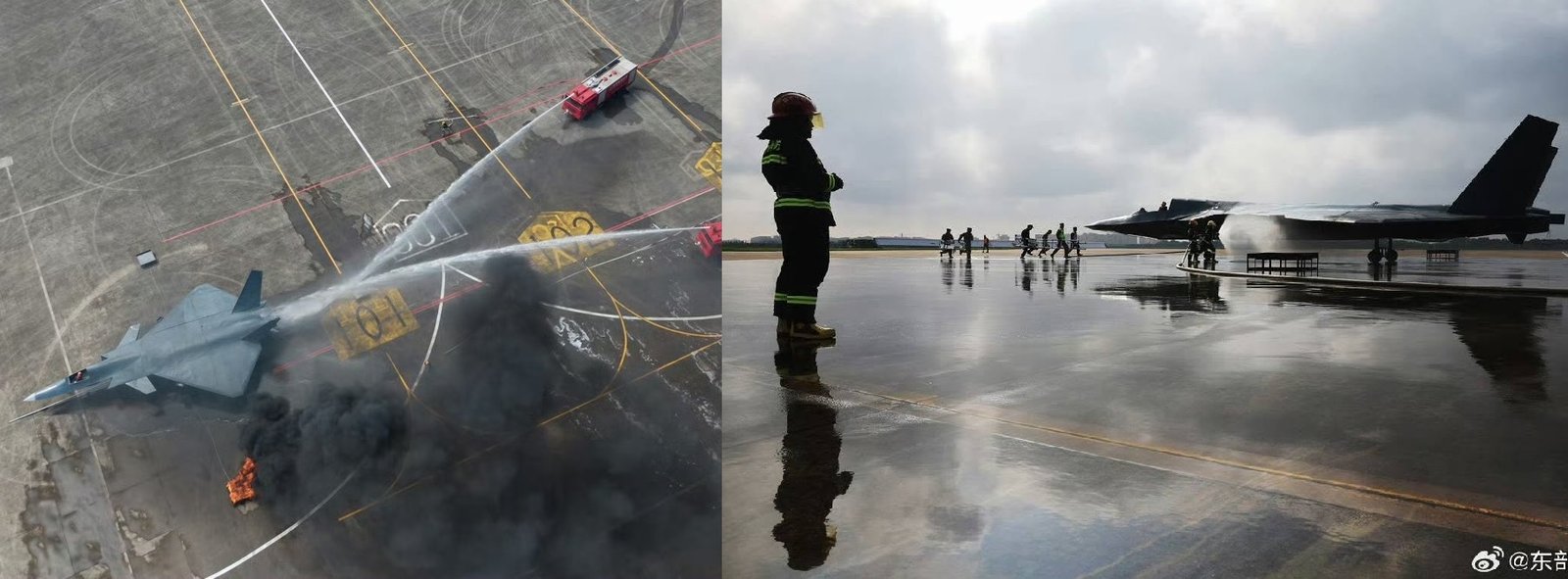
World
Jining, Shandong Province, China — A fighter-shaped object previously spotted in satellite imagery at the former Jining Qufu Airport in China has been identified as a full-scale mock-up used for firefighting and emergency-response training, ending speculation that it could be a prototype of a new Chinese stealth fighter. On August 25, 2026, Chinese aerospace analyst Andreas Rupprecht confirmed the assessment in a post on X, after sharing clearer images of the object being used in a live training exercise. The photos, credited to China’s Eastern Theater Command and posted on Weibo, show military firefighters in protective gear spraying water onto the fuselage while smoke and flames rise from the base. You surely remember these strange J-20-look alike models - some claimed them to be a new single engined stealth fighter - at Jining Qufu AP, which I already back then rated as fire-fighting trainer mock-ups. Here finally two clearer images!(Via @水獭一般编-阿怡) pic.twitter.com/N3vIQyev8l — @Rupprecht_A (@RupprechtDeino) August 25, 2026 Object First Spotted in 2025 The object attracted wider attention in April 2025 after satellite imagery showed a stealth fighter-like shape parked on the apron in front of the passenger terminal at Jining Qufu Airport in Shandong Province. Historical Planet Labs imagery indicated that it had been there since at least September 2024. Jining Qufu Airport officially closed in December 2023 and had previously been collocated with a People’s Liberation Army Air Force base. Its location contributed to speculation that the object could be connected to a classified aircraft program. Similarities to Chinese Stealth Fighters The mock-up has a modified diamond-delta wing planform, canards and twin vertical tails, giving it a general resemblance to the Chengdu J-20. The newly released ground-level images also show a cockpit configuration that appears closer to the newer Shenyang J-35. When the satellite images first appeared, the object was also compared with the Baidi Type-B, or “White Emperor,” a fictional space-fighter concept displayed by the Aviation Industry Corporation of China at the 2024 Zhuhai Airshow. Analysts also compared it with unusual J-20-like shapes seen at Lintao Air Base in 2022. Those objects had different wing shapes and longer, narrower noses and were assessed separately as possible decoys or full-scale mock-ups. Firefighting Trainer Confirmed The latest photographs establish that the Jining object is a training aid rather than a flying aircraft. It is used to train military firefighters to respond to aircraft fires and other airfield emergencies. Such full-scale aircraft mock-ups are used to reproduce realistic aircraft dimensions and allow emergency crews to practice firefighting and rescue procedures. The Jining trainer does not have the systems required for flight, including operational engines and internal avionics. Rupprecht had already assessed the Jining objects as firefighting trainers in posts made in January and July 2026. The newly released images provide clearer visual evidence supporting that assessment. The clarification separates the Jining object from speculation surrounding China’s actual next-generation aircraft, including the tailless J-36 and J-XDS, also referred to as the J-50. It confirms that the unusual fighter-shaped object at the former airport was a ground training mock-up rather than evidence of a new single-engine stealth fighter.
Read More → Posted on 2026-08-26 11:52:04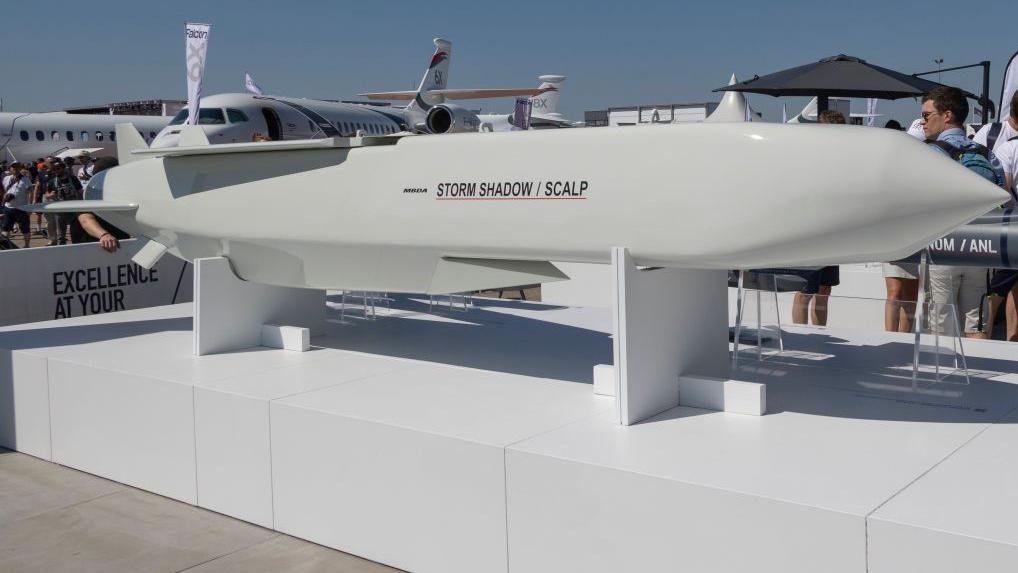
Europe
Kyiv, Ukraine — The United Kingdom has authorised defence company MBDA to release classified information on British components of the Storm Shadow cruise missile, clearing a key step toward licensed assembly of the weapon in Ukraine. Prime Minister Andy Burnham announced the decision during his visit to Kyiv on August 24, his first international trip since taking office. The visit coincided with Ukraine’s 35th Independence Day. Path to Local Assembly The UK will allow MBDA to share protected information on British-made components of the SCALP-EG, the French designation for Storm Shadow. The missile uses technology developed jointly by Britain and France, making the release of British technical information necessary for the planned French-Ukrainian assembly effort. Initial production is expected to focus on final assembly in Ukraine, rather than complete domestic manufacturing. Key components will continue to be supplied by Britain and France. The project follows a French-Ukrainian letter of intent signed in February 2026 and earlier proposals by French President Emmanuel Macron to transfer missile-production technology to Ukraine. Ukrainian officials had also discussed plans for local production earlier in 2026. Ukrainian President Volodymyr Zelenskyy later confirmed that Britain and France had agreed to the production arrangements. Storm Shadow/SCALP-EG The MBDA-produced Storm Shadow/SCALP-EG is an air-launched long-range cruise missile designed for strikes against high-value fixed and hardened targets. The missile weighs about 1,300 kg, is 5.1 metres long and carries a 450 kg BROACH penetrating warhead. It flies at around Mach 0.95. Publicly reported specifications give a range exceeding 550 km, although MBDA's public material describes the missile's range as exceeding 250 km, reflecting differences in publicly disclosed versions and configurations. Its navigation system combines inertial navigation, satellite data and terrain-profile matching. An imaging infrared seeker is used during the final stage to identify the target. Storm Shadow was developed in the 1990s and entered service in 2003. Production restarted in 2025 with a modified version after a long production pause. Ukraine's Use of the Missile Ukraine has operated Storm Shadow and SCALP-EG missiles since spring 2023, following deliveries from Britain, France and Italy. The weapons were initially used against Russian forces in occupied Ukrainian territory and have subsequently been used against targets inside Russia. Local assembly would give Ukraine an additional domestic source of the long-range cruise missile while reducing reliance on deliveries of fully assembled weapons. Ukrainian industry does not currently produce a system with comparable range and precision. The UK decision also complements Project Brakestop, a separate British programme focused on developing lower-cost, advanced long-range strike weapons for Ukraine. During Burnham’s Kyiv visit, Britain and Ukraine also agreed on a broader defence and artificial-intelligence partnership that gives the UK access to Ukraine’s Avengers AI Labs. The release of the classified information clears the way for the planned assembly programme, while the timing and production volume will depend on establishing the required manufacturing infrastructure and supply arrangements.
Read More → Posted on 2026-08-26 12:24:57 Rheinmetall Wins €250 Million Contract to Build Military Camp for 2,000 German Soldiers in Lithuania
Europe
Vilnius, Lithuania — Rheinmetall has received an initial order from the Federal Office of Bundeswehr Infrastructure, Environmental Protection and Services (BAIUDBw) to build a modular military camp in Lithuania for up to 2,000 German soldiers. The €250 million construction contract is the first call-off under the German Armed Forces Contractor Augmentation Program II – Static Accommodation (G-CAP II SU). Rheinmetall will serve as the main contractor, with the camp scheduled to become operational from mid-August 2027. The order was booked in the third quarter of 2026. The camp will be located at the Rūdninkai training area, where Lithuania is developing military infrastructure for the German brigade. Lithuania’s Ministry of National Defence says the Rūdninkai military campus is being developed as the primary service location for the future German Brigade. After the facility enters service, Rheinmetall will also provide facility management and catering. The facility management services include laundry. The subsequent operation is valued at €40 million annually. Modular Infrastructure Under G-CAP II SU The G-CAP II SU programme was initiated by BAIUDbW to provide static accommodation for German soldiers during deployments and standby commitments connected with international crisis management, as well as national and collective defence. The programme uses pre-planned modular infrastructure designed for deployment in different climatic, geographical and geological conditions. The framework covers the complete infrastructure lifecycle, including manufacturing, transportation, construction, operation and eventual dismantling. Rheinmetall said the standardised process allows the Bundeswehr to obtain the required infrastructure from a single contractor, which can shorten the overall deployment process. The company is responsible for planning, manufacturing and delivering the camps by sea, land or air, depending on requirements. It can also handle construction, multi-year autonomous operation and eventual dismantling. The programme is intended to allow private-sector companies to provide accommodation infrastructure during military deployments. According to Rheinmetall, this allows the Bundeswehr to conserve its own resources and keep them available for high-threat situations. Part of Germany’s Military Presence in Lithuania The new camp is being developed alongside Lithuania’s broader infrastructure programme for the permanent stationing of German forces. Lithuania is developing the Rūdninkai military campus over an area of around 190 hectares. The project includes residential, administrative, technical and other military infrastructure and is intended to support the future German Brigade. Lithuania says the site is planned to accommodate German and Lithuanian armed forces, while critical infrastructure is scheduled for completion in 2027. The German Brigade in Lithuania is planned to reach full operational capability by the end of 2027. The Rheinmetall camp, with accommodation for up to 2,000 soldiers, will provide additional infrastructure for German forces stationed in the country. Rheinmetall’s order represents the first call-off under the G-CAP II SU framework and adds a private-sector infrastructure component to Germany’s effort to establish and support a permanent military presence in Lithuania.
Read More → Posted on 2026-08-26 12:36:17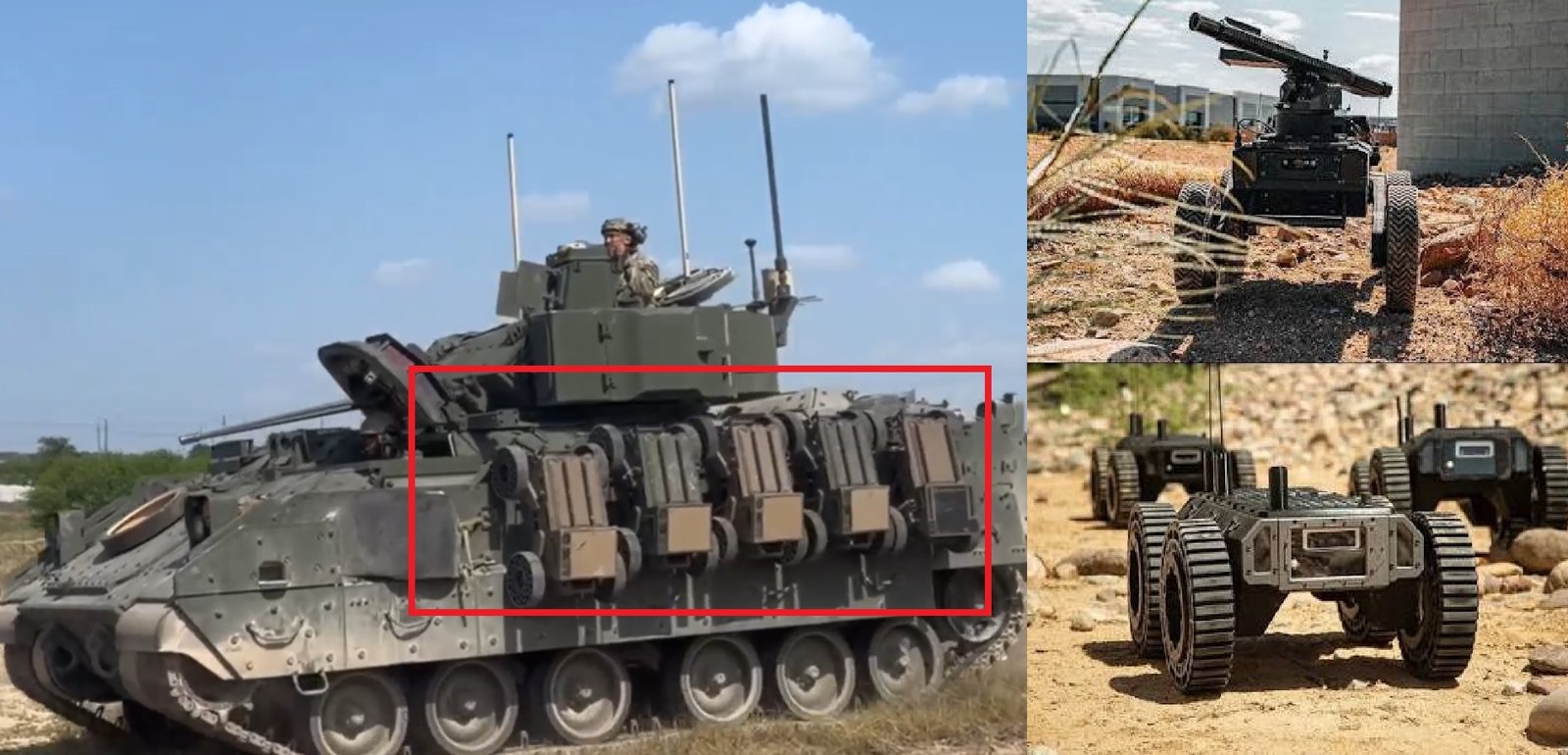
U.S
Fort Hood, Texas — A U.S. Army 1st Cavalry Division M2A4 Bradley Infantry Fighting Vehicle has been seen carrying five FireAnt unmanned ground vehicles (UGVs) developed by Arizona-based Swarmbotics AI during the division’s Pegasus Charge activities. A video shared by Swarmbotics AI on LinkedIn shows the five robots mounted on the Bradley’s side storage racks. The company said the systems were involved in “ground swarms making movement to contact” during Pegasus Charge 3 with the 1st Cavalry Division. 🇺🇸 A 1st Cavalry Division M2A4 Bradley has been seen carrying five FireAnt UGVs during Pegasus Charge 3 at Fort Hood, Texas.The 27-kg attritable robots support swarm operations and can be configured for ISR, EW, counter-drone and anti-armor missions. pic.twitter.com/DaLsCcDSmN — The Defense News (@TheDefenseNews) August 26, 2026 FireAnt is part of Swarmbotics AI’s ANTS (Attritable Networked Tactical Swarm) family. The company describes it as a man-portable, attritable UGV weighing about 27 kg, designed for AI-enabled swarm operations. Its modular payload architecture supports missions including intelligence, surveillance and reconnaissance (ISR), electronic warfare (EW), communications relay, counter-unmanned aircraft systems and anti-armor operations. Swarmbotics AI says FireAnt can use different payloads, including configurations for anti-armor effects, while its swarm system allows multiple robots to coordinate through a decentralized mesh network. The company has described control of groups of six to eight FireAnts by a single operator, with the robots sharing information and coordinating tasks. The FireAnt has already been evaluated by the U.S. Army. Soldiers from the 1st Cavalry Division assessed autonomous ground systems during xTechOverwatch in October 2025. In February 2026, the Army selected Swarmbotics AI to continue development of swarming, attritable small UGVs with the 1st Cavalry Division as part of its Transforming in Contact effort. FireAnt was also tested during Project Golden Shield at Fort Hood, Texas, in April 2026. The 1st Cavalry Division used the exercise to evaluate counter-drone technologies, with a FireAnt V4 autonomous ground vehicle among the systems tested. Pegasus Charge is the 1st Cavalry Division’s approach to the Army’s Transforming in Contact initiative. It focuses not only on new equipment but also on changes to how the division organizes, trains and operates, including the integration of emerging unmanned and autonomous systems. The FireAnt remains under development and testing. Its appearance on a Bradley during Pegasus Charge 3 shows the Army is continuing to examine how small autonomous ground robots can be transported and employed directly with armored formations.
Read More → Posted on 2026-08-26 13:03:49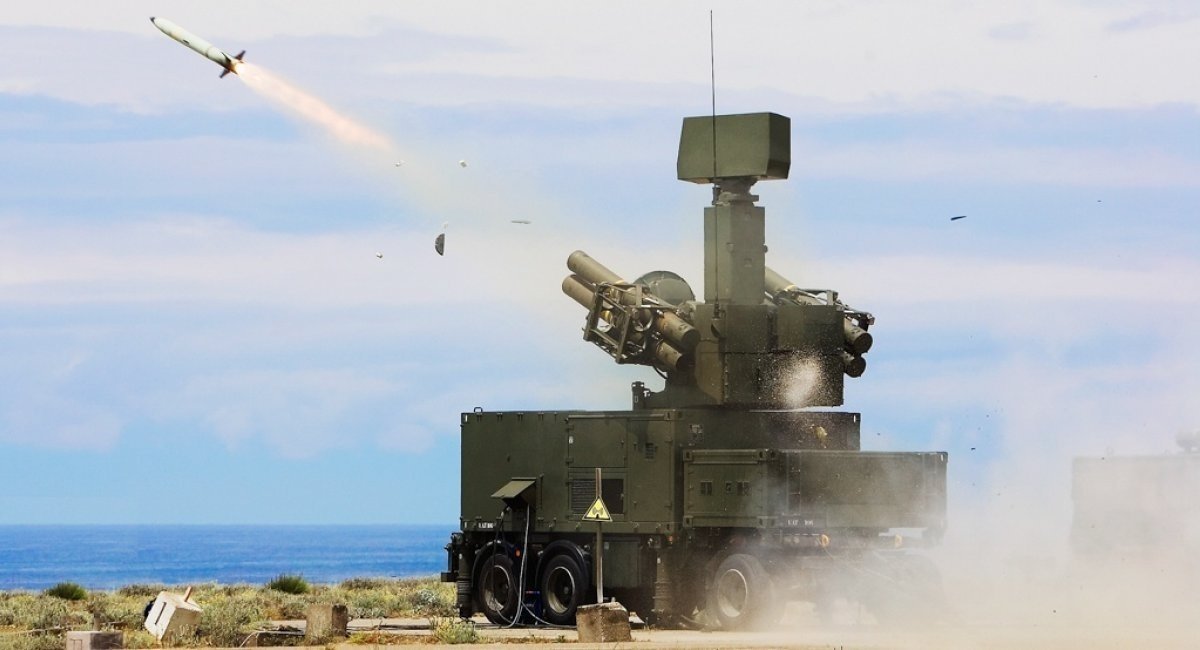
World
KYIV — Ukraine has received a new batch of AIM missiles and several additional Patriot interceptor missiles, Ukrainian President Volodymyr Zelenskyy said during a joint press conference with Estonian President Alar Karis in Kyiv. Zelenskyy said Ukraine also received confirmation from an unnamed partner for the transfer of several French-made Crotale air defense systems and missiles. He did not identify the supplying countries or provide exact quantities. Ukraine uses AIM-9 Sidewinder and AIM-120 AMRAAM missiles with F-16 fighter jets and ground-based NASAMS air defense systems against cruise missiles, drones and aircraft. Patriot systems in Ukrainian service use PAC-2 missiles against aerodynamic targets and PAC-3 interceptors for direct kinetic interception of ballistic missiles. Crotale is a short-range surface-to-air system designed to engage low- and very-low-altitude targets. Its engagement range is generally reported at 10–16 kilometers, with an operating altitude of about 15 meters to 6 kilometers. Ukraine has previously received Crotale systems from France. New European Defense Agreements Zelenskyy also announced broader defense and financial agreements with European partners. Norway has confirmed approximately $9 billion, or 85 billion Norwegian kroner, in support for Ukraine in 2027 through its Nansen Support Programme. Norway and Ukraine also agreed on strategic cooperation in drones and other defense technologies. The two countries are also cooperating on FREYJA, a Ukrainian-led European anti-ballistic missile project. Norway is expected to help finance the rapid establishment of the project's development office. Sweden is providing financial support for Ukrainian drone production, while Ukraine and Latvia have agreed on joint drone manufacturing. Zelenskyy said approximately 90% of drones produced under the cooperation will be allocated to Ukraine. Ukraine and Norway have also formalized a strategic partnership focused on drone technologies. Regional and Sectoral Support Belgium and Denmark are directing recovery assistance toward Ukrainian regions, with Denmark focusing on Mykolaiv. Estonia is supporting Zhytomyr, while Germany has approved a separate support package for Ukraine's energy sector. Germany and Belgium will also contribute to programs supporting war veterans. Zelenskyy thanked Estonia for maintaining military support at 0.25% of its GDP and committing to continue that level the following year, in addition to separate funding for drone programs. Defense support from Lithuania and Finland was also confirmed in recent days. Ukraine's air defense requirements remain a major focus of cooperation with its partners. Zelenskyy has previously said Kyiv needs a larger share of Patriot interceptor production to protect its airspace and critical infrastructure, particularly ahead of the winter period. The latest deliveries and agreements combine immediate air defense assistance with longer-term cooperation in missile defense, drone production, energy security and defense financing.
Read More → Posted on 2026-08-26 13:41:33
U.S
Mérignac, France, — Photonis Defense, the U.S. subsidiary of Exosens, has received its first delivery order from the U.S. Army for 1,600 complete Binocular Night Observation Device (BiNOD) systems. The order begins the Low-Rate Initial Production (LRIP) phase of the Army’s BiNOD program after the completion of key testing and qualification work. The first systems are expected to be delivered by the end of 2026, with most of the 1,600 systems scheduled for delivery throughout 2027. The order is part of a broader Indefinite-Delivery/Indefinite-Quantity (IDIQ) contract awarded to Photonis Defense in March 2026. The contract has a maximum value of $352.6 million and covers BiNOD development, production and testing through an estimated completion date of February 27, 2033. The financial terms of the 1,600-system order were not disclosed. Photonis Defense will manufacture and test the complete systems at its U.S. facilities, integrating high-performance image intensifier tubes supplied by Exosens. The company’s U.S. capabilities include development, production and testing facilities, including its site in Sturbridge, Massachusetts. The BiNOD, previously known as Night Vision Device–Next, is a helmet-mounted night-vision system designed to amplify available light and improve soldiers’ visibility during low-light and nighttime operations. The systems are intended to provide lightweight night-vision capability while meeting U.S. Army requirements for performance, quality and delivery schedules. The wider BiNOD program includes three contractors selected through a competition that began with six bidders. L3Harris received an IDIQ contract valued at approximately $466 million, while Elbit Systems of America – Night Vision received one valued at approximately $450.6 million. All three contracts cover development, production and testing through 2033. Exosens CEO Jérôme Cerisier said the LRIP phase marks a key milestone in the company’s U.S. expansion and supports its strategy of combining night-vision technology with U.S.-based industrial capabilities. Photonis Defense CEO Shanna Owens said the company remains focused on delivering advanced night-vision systems and supporting the modernization of U.S. Army soldier equipment. The new order establishes the basis for regular BiNOD production at Photonis Defense’s U.S. factory, with deliveries beginning in 2026 and continuing through 2027.
Read More → Posted on 2026-08-26 13:49:55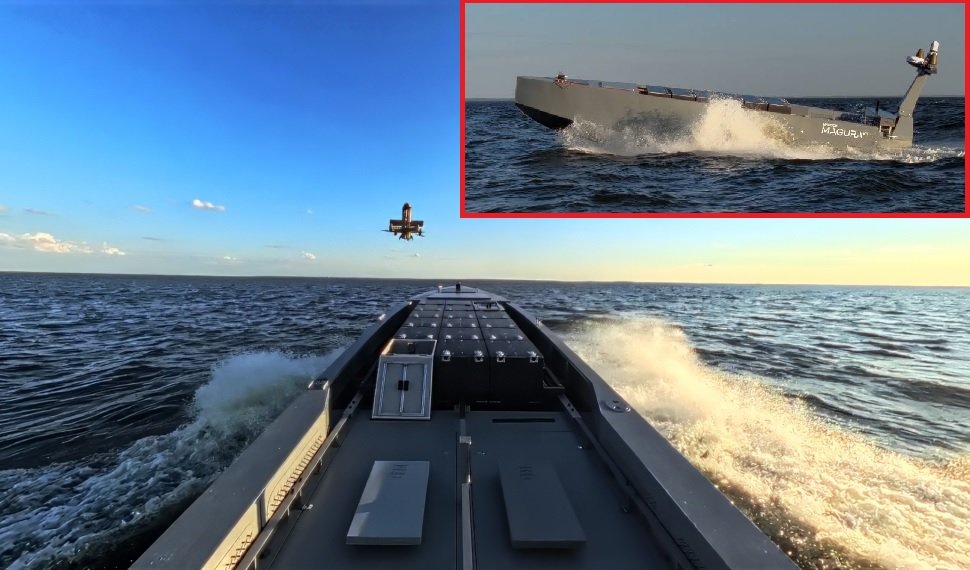
World
KYIV, Ukraine — Ukraine has publicly presented the Magura MV11, the largest unmanned surface vessel (USV) in the Magura family, during the country’s Independence Day unmanned systems parade on August 24. Developed by UFORCE, the MV11 is designed as an ocean-going carrier and support platform capable of transporting, launching and supporting other unmanned systems far from shore. The MV11 represents a different role from earlier Magura vessels, which have primarily been used for strike and reconnaissance missions. UFORCE says the new platform is designed to operate in open-ocean conditions and can remain at sea for up to seven days. It has a payload capacity of up to 2,200 kilograms (4,850 pounds) and a stated overall length of up to 12 meters and width of 3.5 meters. UFORCE also lists more than 2,000 nautical miles of operating distance and about 10 cubic meters of available payload space. MV11 Displayed With Sting Interceptors The MV11 was shown carrying 18 Sting interceptor drones in individual box-style launchers. The configuration turns the USV into a mobile counter-drone platform that can carry aerial interceptors away from shore. The Sting, developed by Ukraine’s Wild Hornets, is an electrically powered quadcopter equipped with a small explosive warhead. It weighs about nine pounds and makes extensive use of 3D-printed components. Reported production cost is around $2,100 per interceptor. Wild Hornets has stated that Sting can reach an altitude of nearly 7,000 meters (23,000 feet) and a maximum range of about 37 kilometers (23 miles), although actual flight time and range depend on factors including battery capacity, weather, payload and operator flight style. The interceptor is manually operated through a wireless link. Wild Hornets has previously said that Sting can be controlled from distances of up to 2,000 kilometers using a laptop-based interface. The precise method used to operate the interceptors from the MV11 has not been publicly detailed. Sting has been used against Russian one-way attack drones, including variants and derivatives of the Iranian-designed Shahed-136. If an interceptor does not engage its target, the Sting can be recovered for reuse, according to reporting on the system. Sensors and Communications Images of the MV11 show a rear mast carrying a camera turret, navigation radar and two horn-shaped antennas. A fixed forward-facing camera is also visible at the bow. The vessel's main deck includes rectangular satellite communications terminals. These systems are part of the communications architecture needed to operate the vessel and its carried unmanned systems over long distances. UFORCE says the MV11 is a modular platform that can be configured for different missions. Its stated roles include reconnaissance, surveillance, amphibious-operation support, and resupply of fuel and equipment to other unmanned surface vessels. The company says the platform is designed to operate around the clock and in varied weather conditions. UFORCE has also described an air-defense configuration using several dozen aerial interceptors, a gyro-stabilized 12.7 mm turret, and sensors for radar surveillance and target tracking. This is a configuration described by the company rather than the specific configuration displayed during the Independence Day parade. Part of the Expanding Magura Family The MV11 is the latest addition to the Magura family, which UFORCE says has been produced since 2023. The company says the family has been used in hundreds of missions in the Black Sea and has contributed to the destruction of at least 12 Russian ships. Some Magura variants have also been configured with air-to-air missiles. UFORCE says the MV11 was developed by its design and research-and-development bureau in Portugal, with international investment. The company is headquartered in London and has Ukrainian origins. The company has also been expanding production cooperation outside Ukraine. In July 2026, UFORCE and U.S. manufacturer RECONCRAFT signed a memorandum of understanding covering production of Magura unmanned surface vessels in the United States. The agreement combines UFORCE's autonomous-vessel technology with RECONCRAFT's U.S. manufacturing capabilities. A Carrier Rather Than a Conventional Strike USV The main difference between the MV11 and earlier Magura vessels is its role as a carrier and support platform. Instead of carrying only its own weapons or sensors, the vessel is designed to transport other unmanned systems and deploy them at sea. This allows the MV11 to serve as a mobile maritime base for aerial and surface drones. Its large payload capacity also provides space for mission equipment, fuel and other supplies. The public unveiling does not establish the MV11's production quantity, unit cost or the complete set of sensors that will be installed on operational vessels. UFORCE has presented the platform as a modular system that can be adapted for different missions as development and integration continue. Source : TWZ
Read More → Posted on 2026-08-26 13:58:04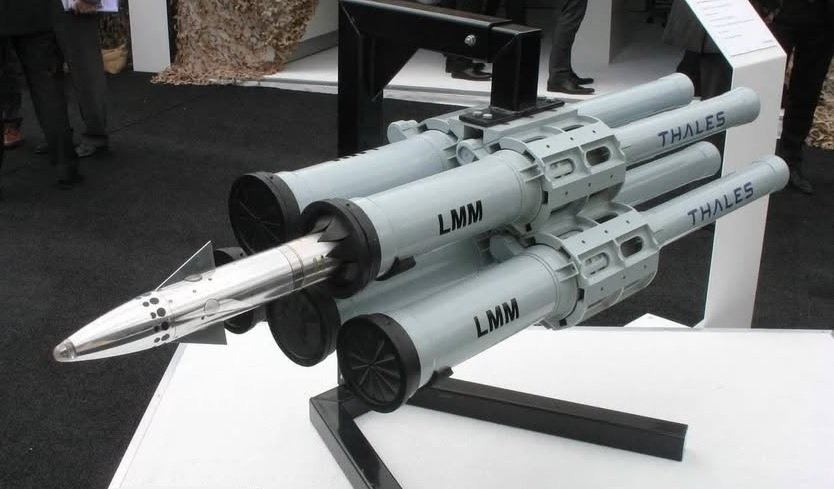
India
New Delhi/London — India and the United Kingdom are in the final stages of signing an Inter-Governmental Agreement (IGA) for the procurement of British Lightweight Multirole Missiles (LMMs), also known as Martlet, for the Indian Army’s tactical units. The planned agreement is valued at £350 million ($468 million) and was announced during UK Prime Minister Keir Starmer’s visit to India in October 2025. An initial emergency procurement is already underway, while the formal IGA will expand the purchase into a larger order running into the hundreds of missiles. British officials have indicated that the numbers have increased significantly. The LMMs are manufactured by Thales at its facility in Belfast, Northern Ireland. Once signed, the Indian order is expected to become the company’s second-largest global LMM order, after the larger Ukrainian order for more than 5,000 missiles under a £1.6 billion arrangement announced in 2025. The Indian deal is also expected to support jobs at the Belfast facility. The missile weighs approximately 13 kilograms, measures 1.3 metres in length and has a 76 mm diameter. It uses laser beam-riding guidance, reaches about Mach 1.5 and has a range of more than 6 kilometres. The LMM can be launched from the shoulder, tripod and vehicle-mounted platforms, and can also be used from helicopters and naval vessels. It is designed to engage low-flying aerial threats, including drones and unmanned aerial systems, as well as light armoured, wheeled and tracked targets. The missile has been in service with the British military since 2019 and has also been used by Ukrainian forces. The procurement forms part of wider India-UK efforts to strengthen defence cooperation and establish reliable defence supply chains. After the missile agreement is concluded, the two countries plan to discuss the co-design and co-creation of future complex weapon systems. The cooperation also includes a maritime electric propulsion partnership for future Indian Navy warships. An Implementing Arrangement for electric-powered naval engines, with an initial value of £250 million, was signed in October 2025.
Read More → Posted on 2026-08-26 14:05:21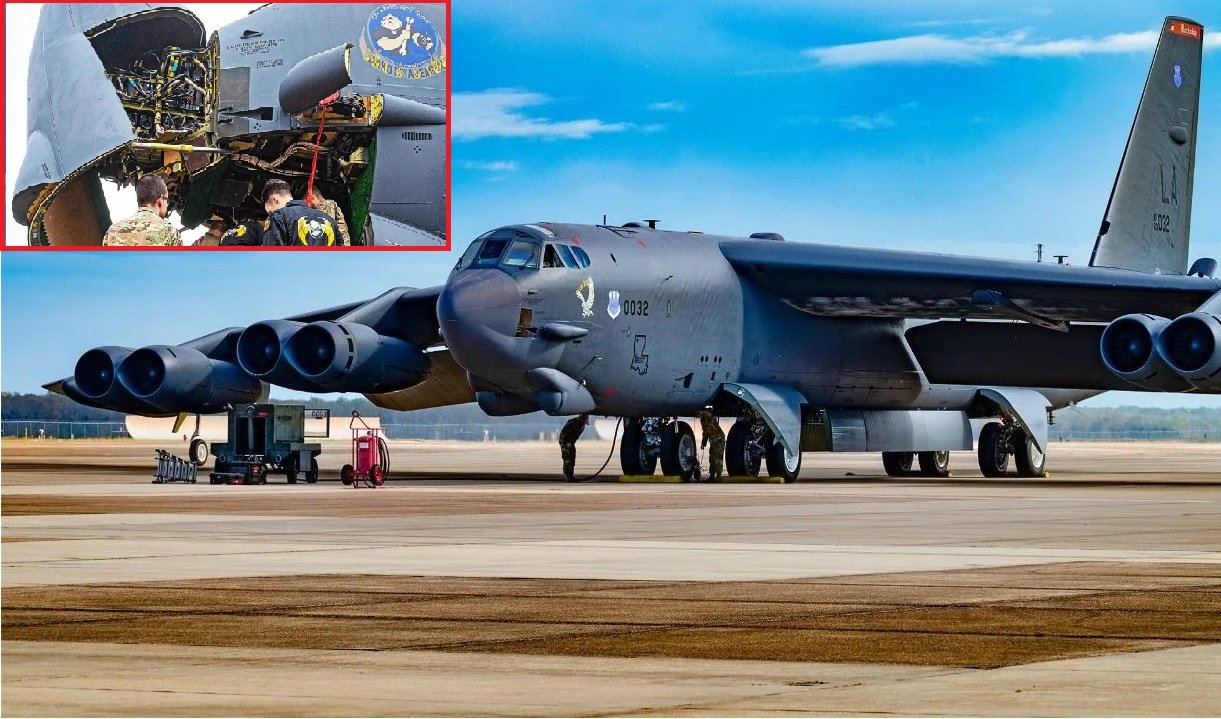
U.S
WASHINGTON — The U.S. Air Force has awarded Raytheon a $603 million ceiling indefinite-delivery/indefinite-quantity contract for the production and sustainment of new radar systems for the B-52 Stratofortress fleet. The August 21, 2026, sole-source contract covers the AN/APQ-188 Active Electronically Scanned Array (AESA) radar, which will replace the B-52H’s legacy AN/APQ-166 mechanical analog radar. The Air Force has obligated $46,008,396 in fiscal 2026 aircraft procurement funds through the initial delivery order. The Air Force Life Cycle Management Center at Wright-Patterson Air Force Base, Ohio, is the contracting activity under contract FA8628-26-D-B001. Work will be performed in Forrest, Mississippi; El Segundo, California; McKinney, Texas; and Warner Robins, Georgia, with completion expected by August 20, 2031. New Radar Capabilities The AN/APQ-188, also known as the Bomber Modernized Radar System, was developed by Raytheon and is derived primarily from the AN/APG-79 AESA radar used on the Navy’s F/A-18E/F Super Hornet and EA-18G Growler, with additional technology from the AN/APG-82 used on F-15 aircraft. A larger antenna was adapted for installation on the B-52. The radar provides high-resolution mapping, improved all-weather navigation, enhanced target detection and tracking, and electronic warfare support. The Air Force selected existing radar technology to limit development costs while adding modern capabilities to the bomber. Part of B-52J Modernization The radar replacement is part of the wider B-52 modernization program. The Air Force plans to install the system across its 76 B-52H bombers. Other major upgrades include the replacement of the existing engines with Rolls-Royce F130 engines. These changes will transition the aircraft to the B-52J configuration and support operations into the 2050s. The radar program has faced schedule delays and rising costs. Initial flight testing was pushed from fiscal 2024 to 2026. The first modified test aircraft arrived at Edwards Air Force Base in December 2025. On June 15, 2026, it crashed shortly after takeoff during a local test mission supporting the radar program, killing all eight crew members aboard. A second B-52H test aircraft is undergoing modification and radar installation at Boeing’s facility in San Antonio, Texas. It is expected to take over flight evaluations after the work is completed later this year. A separate delivery order was also issued to Boeing for bomb rack modernization system kits, valued at up to approximately $163 million, with work in San Antonio expected to continue through December 2028. The latest Raytheon contract provides for production and long-term sustainment of the new radar as the Air Force continues the B-52 fleet modernization program.
Read More → Posted on 2026-08-26 14:16:39
India
NEW DELHI — India Former Chief of Defence Staff General Anil Chauhan has provided new details about the planning and execution of Operation Sindoor, including Pakistan’s intelligence gaps, India’s decision-making during the escalation and the circumstances surrounding reported activity near Kirana Hills. Chauhan, who was serving as CDS during the operation, spoke at the VIMARSH event on Operation Sindoor and its aftermath organised by the Vivekananda International Foundation in New Delhi on August 25. Operation Sindoor was launched by India on May 7, 2025, following the April 22, 2025, Pahalgam terror attack, in which 26 people were killed. Indian forces targeted terrorist infrastructure in Pakistan and Pakistan-occupied Jammu and Kashmir. The military confrontation later ended with a ceasefire agreement between the two countries. Pakistan had inaccurate information on Indian naval movements Chauhan said Pakistan’s understanding of the battlefield was poor, including in the maritime domain. He said Pakistani military briefings regularly reported the movements of an Indian carrier battle group in the Arabian Sea. However, when Indian assessments were checked with the Western Naval Command, the reported positions were found to be 100 to 300 nautical miles away from the actual locations. Chauhan said this indicated that Pakistan was either receiving incorrect information or relying heavily on foreign sources. He also said Pakistan’s long-range maritime aircraft did not fly during the operation, limiting its ability to independently collect maritime information. India maintained a common operational picture Chauhan attributed India’s performance during the operation partly to better situational awareness and battlefield transparency. According to him, information from the Army, Navy and Air Force was available through a common operational picture. This allowed commanders to make decisions using information from across the three services rather than operating with separate assessments. He also identified clear political direction as another factor. Chauhan said the military was given freedom to plan and conduct operations within the political objectives set for the mission. Sargodha strike and planned Skardu target Chauhan also described a decision taken after Pakistan indicated that it wanted to open talks. He said that when Pakistan contacted India at around 10 am, the Air Chief asked whether the Indian Air Force should strike Sargodha. Chauhan said he authorised the strike. He then asked the Air Force to identify two additional targets. Skardu was selected as one of them and received approval. However, adverse weather conditions later forced a change in the plan, and the target was switched to Bholari. Chauhan said the approach was linked to an escalation principle under which India would deliver the final strike rather than leave the last action to Pakistan. Kirana Hills was not deliberately targeted Chauhan also addressed reports about activity around Kirana Hills, an area associated with Pakistan’s nuclear infrastructure. He said Kirana Hills was not a deliberate Indian target. According to his explanation, loitering munitions were deployed around Sargodha, approximately 10 km from Kirana Hills, to search for radar targets. Chauhan said the munitions could remain in the area for about two hours. If they failed to locate a target during that period, they would eventually come down. He said one of the munitions may have subsequently struck the hills. His explanation is consistent with earlier comments by Air Marshal A.K. Bharti, who had denied that Kirana Hills was deliberately targeted during Operation Sindoor. Chinese-origin equipment and foreign inputs Chauhan also discussed Pakistan’s military equipment and its dependence on external sources. He said around 70 to 80 percent of Pakistan’s military platforms are of Chinese origin. He acknowledged that Chinese personnel were present in Pakistan during the conflict but linked their presence to normal original equipment manufacturer maintenance arrangements for imported military systems. He also said Pakistan attempted to use commercial satellite imagery from Chinese companies to track Indian movements, but this did not necessarily translate into accurate targeting information. Ceasefire was decided by the two DGMOs Chauhan disputed claims that the United States had brokered the India-Pakistan ceasefire. He said the ceasefire was decided directly between the Directors General of Military Operations (DGMOs) of India and Pakistan. According to his account, the Pakistani side initially contacted India and the DGMO-level discussions continued before the ceasefire was finalised at around 5 pm. Chauhan said he did not see a role for any third party in the military-level ceasefire decision. He also said he was confident that India had not leaked the ceasefire information to the United States before the announcement and suggested that the information may have come from the Pakistani side. Political direction and operational freedom Chauhan also referred to a meeting on April 29, 2025, following the Pahalgam attack. He said the political leadership provided the armed forces with operational freedom to determine the timing and manner of the response. According to his account, the guidance included ensuring that the operation did not fail because of human or technical shortcomings and that there should be evidence of the actions carried out. Chauhan said this political direction, combined with the military’s networked operational picture, contributed to India’s ability to make decisions during the operation. Chauhan’s tenure as CDS Chauhan completed his tenure as Chief of Defence Staff on May 30, 2026, after serving as CDS during Operation Sindoor. He was succeeded by General NS Raja Subramani, who took charge as India’s third CDS on May 31. His latest remarks provide additional details on how Indian military commanders assessed the battlefield, selected targets and managed escalation during Operation Sindoor, while also highlighting gaps that he said affected Pakistan’s understanding of Indian military movements.
Read More → Posted on 2026-08-26 14:52:38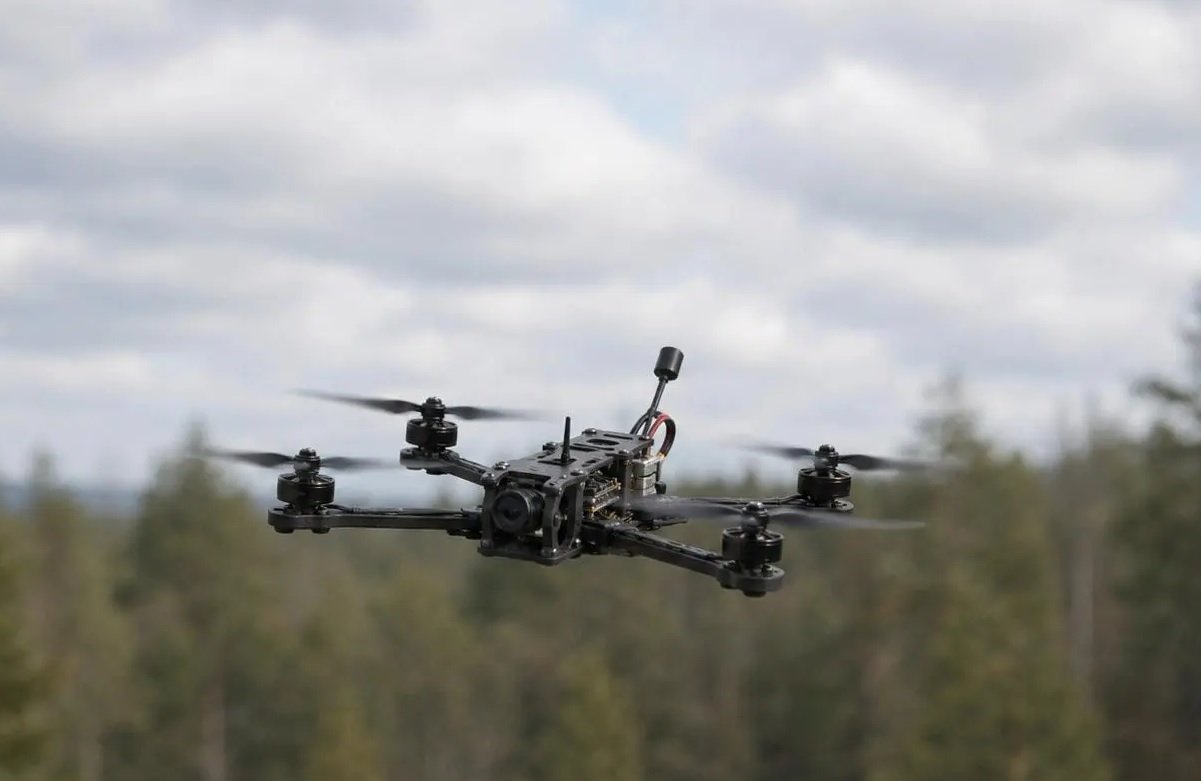
Europe
Helsinki — The Finnish Defence Forces have signed a multi-year agreement with Finnish technology company Insta Group Oy to procure domestically produced First-Person View (FPV) drones for military training. The agreement was signed on August 24, 2026, and has a total value of up to €14 million, including options. The first systems have already been delivered to the Finnish Defence Forces after completing military testing and approval. The drones will be used to expand large-scale FPV flight training for conscripts across all Finnish Army brigade-level units. FPV Training Expands Across the Finnish Army The Finnish Army began training conscripts to operate FPV drones at the Army Academy in autumn 2025. From the beginning of 2026, the training was expanded to other brigade-level units. The new procurement will extend this training across all Finnish Army brigade-level units, supporting the systematic development of unmanned systems skills among conscripts. The FPV drones transmit live video to their operators and can carry mission-specific payloads, including armament. The Finnish Defence Forces are procuring the systems primarily for training, while their design allows them to support different mission requirements. 7-Inch and 10-Inch Finnish-Made Drones Insta currently produces 7-inch and 10-inch FPV drone variants. The systems are designed, tested and manufactured in Finland and are intended to operate in Nordic conditions. The drones use a modular architecture that allows mission-specific payloads and other system elements to be adapted as requirements change. The agreement covers more than the aircraft themselves. Insta is providing control systems, communications and situational-awareness capabilities, along with training, maintenance and sustainment support. Focus on Domestic Supply and Support The Finnish Defence Forces said the use of domestic drone production strengthens security of supply and supports operational readiness. Brigadier General (Engineering) Juha-Matti Ylitalo, Deputy Director of the Finnish Defence Forces Logistics Command, said domestic production provides an important source for the drones and the technical support required to operate them. Tuure Lehtoranta, Insta's Senior Vice President for Sales, Marketing and Government Relations, said the company's development work has incorporated international lessons from the changing security environment and the use of drones on modern battlefields. Insta has been a strategic partner of the Finnish Defence Forces for several decades. Its defence portfolio includes command-and-control systems, secure communications, cybersecurity, autonomous systems and unmanned technologies. The company has also developed unmanned systems through cooperation with Ukrainian industry. Insta states that its Steel Eagle drone solution was developed in cooperation with Ukrainian industry in 2024, while the newer Steel Eagle ER incorporates requirements related to electronic warfare. The new FPV procurement adds another element to Finland's development of domestically produced unmanned systems and expands structured drone training across the Finnish Army.
Read More → Posted on 2026-08-26 16:08:40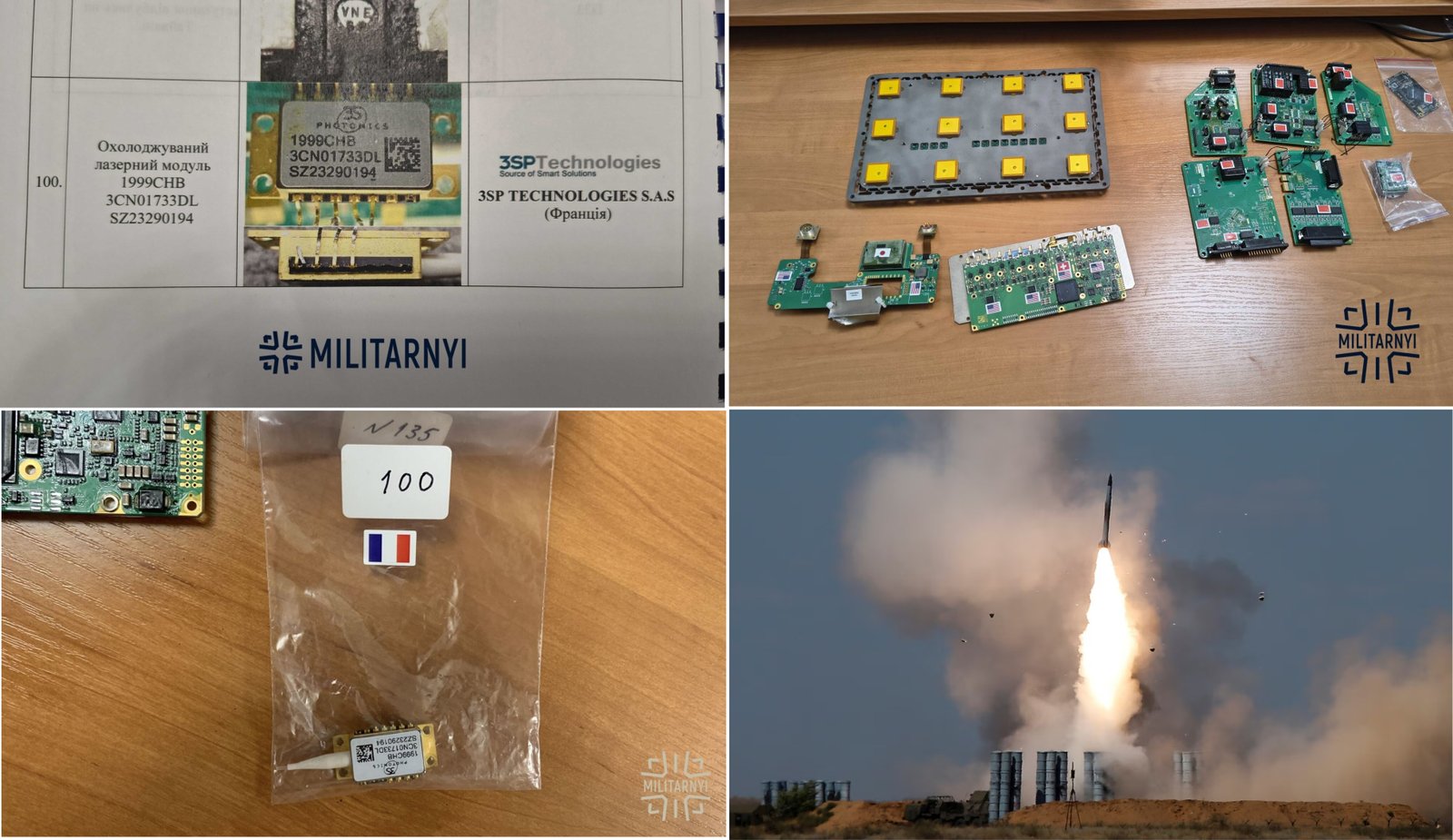
World
KYIV, — Ukrainian officials have identified Western-made components in Russian RM-48U missiles used for strikes against ground targets from S-300PM and S-400 air defense systems. The findings were presented during a briefing by Vladyslav Vlasiuk, the Ukrainian president’s commissioner for sanctions policy, according to Militarnyi. Ukrainian officials displayed foreign components recovered from Russian missiles, including a cooled laser module manufactured by French company 3SP Technologies. French laser module found in RM-48U According to the Ukrainian assessment, experts examining an RM-48U missile recovered a French-made laser component associated with laser-gyroscope systems used for inertial navigation. 3SP Technologies, based in Nozay, France, develops and manufactures optoelectronic components and laser modules. Its product range includes cooled pump laser modules and seed pump laser modules. Ukrainian experts said the recovered component can be used in fiber-optic gyroscopes and some types of ring laser gyroscopes. Such components can form part of high-precision inertial navigation systems. The Ukrainian presentation also identified U.S.-made components in the 12-channel Kometa navigation antennas installed on the RM-48U. According to Ukrainian officials, the broader examination of Russian ballistic weapons has identified components originating from several countries. RM-48U developed from S-300 and S-400 missiles The RM-48U is based on the 48N6 family of surface-to-air missiles used with Russian S-300 and S-400 systems. Earlier reporting identified RM-48U missiles as target missiles converted from older surface-to-air missiles, while Ukrainian intelligence now describes them as weapons used to strike ground targets. The missile has been used against Ukrainian targets during Russian missile attacks. The first publicly confirmed use was reported in January 2026, when debris identified as an RM-48U was recovered after a Russian strike. Subsequent reports identified the missile during major attacks, including the June 2 attack. The RM-48U is reported to carry a high-explosive fragmentation warhead weighing approximately 150–180 kilograms. Russia increases RM-48U production Ukraine’s Defence Intelligence reported in June that Russia had more than doubled production of RM-48U missiles. Russian plans called for the production of more than 480 missiles in 2026, compared with more than 200 in 2025. The reported production rate was up to 50 missiles per month. More recent Ukrainian intelligence reporting published in August estimated that Russia had around 400 RM-48U missiles in its stockpile and continued producing approximately 50 per month. The increased production has made the RM-48U a more significant part of Russia’s ballistic-missile inventory. Its use from existing S-300PM and S-400 launch systems also allows the missiles to be incorporated into Russian strike operations using established launch infrastructure. Ukraine seeks tighter export controls The identification of foreign components is part of Ukraine’s wider effort to trace Western and other foreign-made parts used in Russian weapons. Vlasiuk said Ukraine has been providing partner countries with information on identified components, serial numbers, production equipment and materials. Ukrainian officials are seeking additional sanctions and stronger export controls to restrict Russia’s access to components used in missile production. The Ukrainian assessment indicates that the issue extends beyond individual missile components. Officials also identified foreign-made equipment and materials used in Russia’s wider missile-production process, including precision machine tools and components for rocket-fuel production. The discovery of the French laser module and U.S.-made components in the RM-48U therefore forms part of a broader Ukrainian effort to identify the foreign supply chains supporting Russia’s missile production.
Read More → Posted on 2026-08-26 16:18:21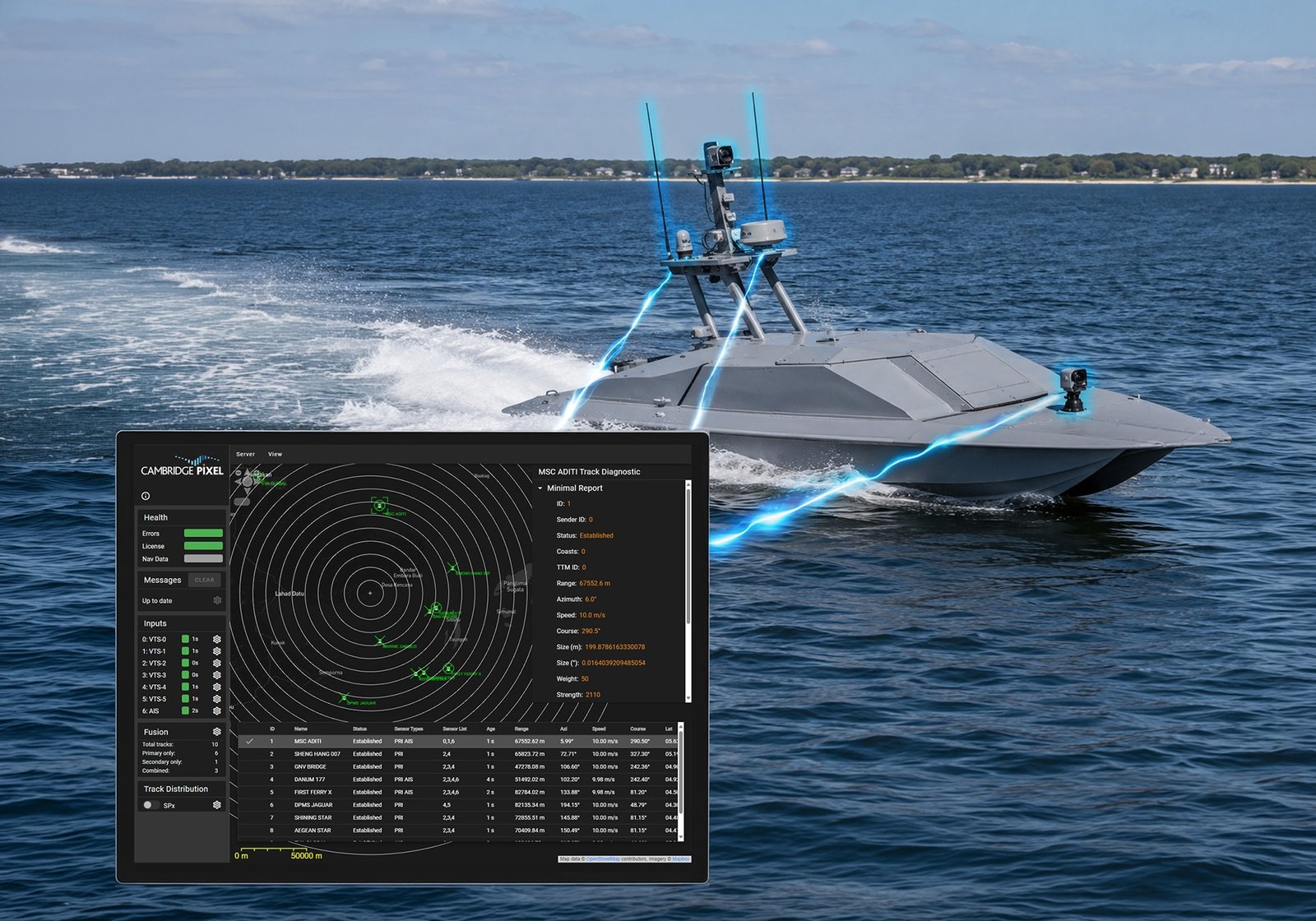
Europe
Hamburg, Germany — UK-based Cambridge Pixel will showcase its radar, tracking and sensor-processing software for uncrewed surface vessels (USVs) and autonomous surface vessels (ASVs) at SMM 2026, which will take place from September 1 to 4 in Hamburg, Germany. The company will exhibit at Hall B1, Stand 321, demonstrating modular software for radar processing, target tracking, sensor fusion, camera control, navigation, display, recording and simulation. The systems are designed for both commercial and military autonomous vessels. The main product on display will be SPx Server V2, which provides radar video processing, plot extraction, proximity detection and target tracking for collision avoidance and autonomous navigation. Its Detection Server configuration provides plot extraction and proximity detection, while the Tracking Server adds multi-hypothesis target tracking for following contacts in complex maritime environments. SPx Server V2 can send obstacle and target information to external autonomy and vessel-control systems using established formats including ASTERIX, NMEA-0183, TAK and SAPIENT. It supports Linux, Windows, ARM-based systems and Cambridge Pixel's HPx-700 embedded processing platform. The software also includes AI-assisted configuration using machine learning to help set processing parameters and remains compatible with earlier deployments. Cambridge Pixel says its software has been integrated with more than 80 different radar systems, allowing developers to connect commercial and specialist maritime radars with custom vessel-control and autonomy software. Supported commercial radar systems include products from Simrad, Furuno and Raymarine. The company's technology also includes GPS Assist, which supports navigation when satellite-positioning signals are unavailable, jammed or spoofed. Its sensor-processing capabilities can also direct optical cameras toward radar-detected targets. Other products include USVx, which provides remote display and control of radar sensors from a mothership or shore facility, and SPx Fusion Server, which combines information from multiple sensors. Cambridge Pixel also provides tools for multi-channel recording and simulation. Cambridge Pixel has more than a decade of experience supplying software to USV and ASV developers in the United States, Europe and Asia. The company lists customers and users in 65 countries, including BAE Systems, the British Royal Navy, Echodyne, Furuno, Hanwha, Hensoldt, L3Harris, Lockheed Martin, OSI Maritime, QinetiQ, Raytheon, Saab, Thales and the U.S. Navy. Founded in 2007 and based near Royston, Hertfordshire, Cambridge Pixel is an employee-owned company whose products are designed and developed in the UK. SMM 2026 is expected to bring together more than 2,200 exhibitors and nearly 50,000 visitors from over 100 countries. The event will also feature the new Maritime Security and Defence Expo (MS&D Expo) in Hall B8, focusing on unmanned systems, cybersecurity, maritime surveillance and critical-infrastructure protection.
Read More → Posted on 2026-08-26 16:25:15
World
CANBERRA — Australia’s dependence on U.S.-made missiles is facing renewed scrutiny as the Iran conflict puts pressure on American munitions inventories and raises concerns about the timing of weapons deliveries to allies. The issue is particularly important for Australia because several major elements of its long-range strike and air-defence capabilities depend on U.S.-supplied weapons. Analysts and former military officials have argued that Canberra needs to accelerate domestic production to reduce the risks created by dependence on overseas supply. U.S. missile inventories under pressure A Center for Strategic and International Studies (CSIS) analysis found that U.S. forces had used more than 1,000 Tomahawk missiles during the first 39 days of the Iran conflict. CSIS said several key U.S. munitions had been heavily used and that rebuilding inventories to pre-war levels could take between one and four years. Charles Edel, CSIS Australia Chair, said the conflict was placing significant pressure on U.S. stockpiles and could extend the time required to replenish them. He warned that this could increase the risk of delays to missile deliveries for allies such as Australia. The pressure is not limited to Tomahawk. Edel identified other systems affected by the increased demand, including THAAD interceptors, Patriot missiles, SM-6 missiles, Joint Air-to-Surface Standoff Missiles and Precision Strike Missiles. CSIS has also assessed that the reduced U.S. inventories could affect the ability to supply allies while Washington works to rebuild its own stocks. Australia’s U.S. missile orders Australia has an order for roughly 220 Tomahawk cruise missiles, making the availability of U.S. production capacity an important issue for Canberra. The United States is now moving to expand Tomahawk production. On August 17, the U.S. Navy awarded Raytheon a $22.9 billion, seven-year contract designed to increase annual Tomahawk production from about 60 missiles to more than 1,000. The production increase is intended to strengthen the U.S. supply of the long-range missile for American forces and allies. However, rebuilding inventories after heavy wartime expenditure will take time. Australia has also announced a major acquisition of the AIM-260 Joint Advanced Tactical Missile. On August 6, the Australian government said it would invest almost A$736 million in the weapon through the U.S. Foreign Military Sales system. Australia will be the first country outside the United States to operate the AIM-260. The missile will initially be integrated with Australia’s F/A-18F Super Hornets, followed by the F-35A Lightning II and EA-18G Growler. The Australian government has not publicly provided all details of the final missile quantity in its August 6 announcement. Concerns over a potential Indo-Pacific conflict Australian coalition defence spokesperson James Paterson has warned that conflicts in Ukraine, Gaza and Iran have contributed to pressure on global munitions supplies. Paterson said Australia could face serious limitations in a high-intensity Indo-Pacific conflict because of limited stocks of strike weapons and interceptors, as well as limited domestic production capacity. Maritime security specialist Jennifer Parker has similarly argued that countries dependent on another nation for critical war stocks face a structural supply risk because the producing country would have to meet its own requirements first. Former U.S. military officials have also urged Australia to develop additional domestic capabilities that could reduce its dependence on foreign suppliers. Mark Montgomery, a former director of operations at U.S. Pacific Command, has specifically advocated greater Australian production of military underwater drones for surveillance, mine detection and other roles. Canberra expands domestic missile production Australia has been rebuilding its domestic guided-weapons industry through the Guided Weapons and Explosive Ordnance Enterprise. The Australian government has committed up to A$36 billion over the next decade to the broader guided-weapons and explosive-ordnance effort. The program is intended to develop domestic manufacturing capacity and strengthen Australia's position within allied supply chains. Australia's guided-weapons plan includes establishing missile production facilities and increasing local manufacture of missile components. The government has also been working with international defence companies to establish production and maintenance capabilities inside Australia. Kongsberg Defence Australia is developing a manufacturing and maintenance facility in the Newcastle Airport precinct for the Naval Strike Missile and Joint Strike Missile. The Australian government announced an A$850 million partnership with Kongsberg in 2024 to manufacture and maintain the two missile systems in Australia. Lockheed Martin Australia is also involved in local assembly of Guided Multiple Launch Rocket System missiles, adding another element to Australia's effort to establish a domestic guided-weapons industrial base. A key objective of the program is not simply to assemble imported weapons, but to develop sustainable domestic manufacturing and supply chains. Australia's official guided-weapons plan notes that establishing a new high-technology weapons industry requires sustained investment and time. Production speed remains a concern The expansion of Australian production is intended to reduce dependence on overseas supplies, but the current transition will take years. The Iran conflict has highlighted the difference between purchasing missiles from an established foreign production line and having sufficient domestic capacity to replace weapons during a major conflict. CSIS has assessed that U.S. inventories of several important weapons will take years to rebuild after the Iran campaign. The same weapons are also relevant to a potential Western Pacific conflict, making production capacity and stockpile depth important issues for the United States and its allies. For Australia, the immediate challenge is therefore twofold: maintaining access to U.S. weapons while accelerating domestic production. The government has continued to pursue both approaches, combining purchases from the United States with investments in Australian manufacturing. The expansion of local missile production is intended to strengthen Australia's own supply resilience while also contributing to the wider allied industrial base. The pressure created by the Iran conflict has brought greater attention to the importance of missile stockpiles, production capacity and delivery timelines as Australia prepares for potential high-intensity operations in the Indo-Pacific.
Read More → Posted on 2026-08-26 16:34:55
U.S
SAN DIEGO — The U.S. Navy has awarded BAE Systems a $149.8 million firm-fixed-price contract for maintenance, modernization and repairs on the amphibious assault ship USS Boxer (LHD 4). If all options are exercised, the total value could reach $180 million. The work will be conducted under a Selected Restricted Availability (SRA) at Naval Base San Diego, the ship’s homeport. It is scheduled to begin during the fiscal 2027 availability window and is expected to be completed by October 2028. The contract covers labor, supervision, equipment, testing, facilities and quality assurance required for the Chief of Naval Operations availability. Naval Sea Systems Command in Washington is the contracting activity. Three companies competed under full and open competition. Funding includes about $144.7 million in fiscal 2026 Navy procurement funds and $5 million in operations and maintenance funds. “Critical maintenance of the USS Boxer will support the U.S. Navy’s vital mission to continue defending our nation,” said Eric Icke, vice president and general manager of BAE Systems Maritime Solutions San Diego. USS Boxer and Previous Maintenance USS Boxer is a Wasp-class amphibious assault ship commissioned on February 11, 1995, and is the sixth U.S. Navy vessel to carry the name. The ship is approximately 844 feet long, has a beam of about 106 feet, and displaces around 40,500 tons fully loaded. It supports amphibious operations, carries Marines and their equipment, and operates aircraft and landing craft. It serves as the flagship of an amphibious ready group. BAE Systems’ San Diego shipyard previously received an approximately $200 million contract in 2020 for Boxer maintenance and modernization. That work included upgrades supporting F-35B operations, as well as hull, tank and mechanical work. In April 2024, Boxer returned to San Diego about 10 days into a deployment after a rudder and bearing failure. Divers conducted pier-side repairs over roughly two months. The Navy had also planned a separate longer maintenance period for the ship. Boxer has since returned to regular operations and received recognition for performance and readiness. BAE Systems Ship Services The contract is part of BAE Systems’ broader ship services business, which provides repair, maintenance, modernization, conversion and overhaul services for the Navy, other government agencies and commercial maritime customers. BAE Systems operates full-service shipyards in California, Florida and Virginia, with drydocks, shiplifts, railway systems, land-level work areas and pier space for major ship support operations. The new contract supports the Navy’s ongoing effort to maintain the readiness of its amphibious fleet.
Read More → Posted on 2026-08-26 16:40:40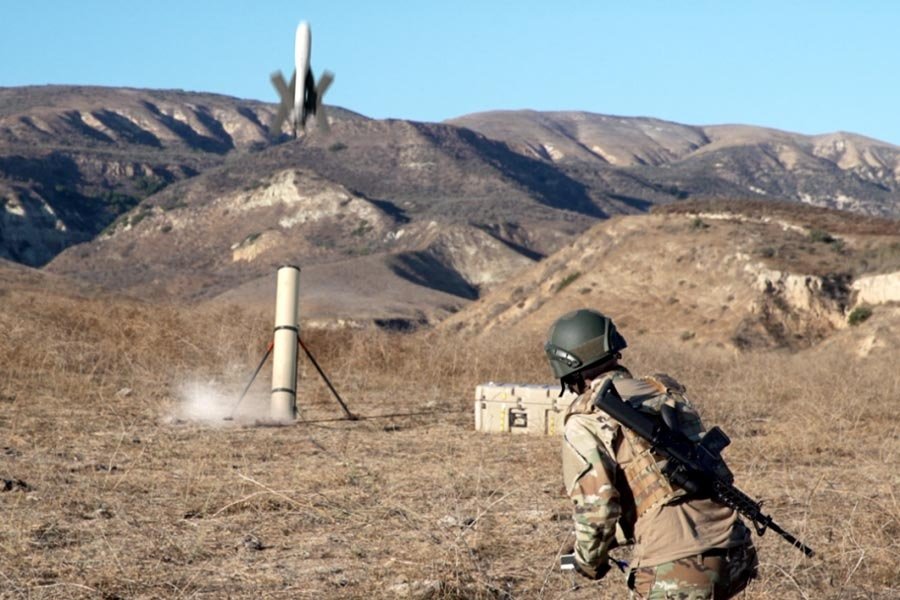
U.S
ARLINGTON, Va., — AeroVironment has received a $51 million delivery order from the U.S. Army for additional Switchblade 600 loitering munition systems. The order includes Switchblade 600 Block 2 systems for the U.S. military and Switchblade 600 Block 1 systems supporting a Foreign Military Sale to a key U.S. ally, according to the company. The order was placed under the Army’s existing five-year, $990 million Indefinite Delivery, Indefinite Quantity (IDIQ) contract for Lethal Unmanned Systems (LUS), awarded in August 2024. The latest award follows the Army’s earlier procurement of AeroVironment’s next-generation Switchblade systems under the same contract. Switchblade 600 Block 2 The Switchblade 600 Block 2 is designed for multi-domain operations and has been ruggedized for maritime and highly contested environments. AeroVironment developed the variant in collaboration with U.S. Special Operations Command (SOCOM). The system features upgraded avionics and advanced Automatic Target Recognition (ATR) capabilities, including SPOTR AiTR, intended to support faster detection, identification and engagement of threats. It also incorporates Silvus MANET radios for resilient communications and distributed operations. The Block 2 also includes improved navigation and mission-resilience capabilities for operations in GPS-challenged environments. AeroVironment's published specifications list an endurance of more than 50 minutes, while its handoff and relay capability can extend beyond 100 kilometers. The system has a stated range of more than 60 kilometers, with the company listing more than 100 kilometers when using Forward Pass. It carries an anti-armor munition and has a secondary payload bay. The company also lists a setup and launch time of less than 10 minutes and an IP67 rating for maritime applications. Growing U.S. Army Procurement AeroVironment said Switchblade 600 systems have been fielded across more than 20 U.S. brigade combat teams since 2025, with hundreds of U.S. soldiers trained in their operation and employment. Brian Young, AeroVironment’s Senior Vice President of Loitering Munitions, said the continued Army investment reflects demand for long-range precision loitering munitions and the performance of the Switchblade family. Young said the Block 2 builds on the Block 1 configuration with upgrades in autonomy, resilience and lethality for contested, multi-domain operations. AeroVironment also said it is expanding manufacturing capacity and working to accelerate delivery timelines as demand increases. The Army previously awarded AeroVironment a $186 million delivery order in February 2026 for Switchblade 600 Block 2 and Switchblade 300 Block 20 systems. That order was the Army’s first procurement of AeroVironment’s next-generation Switchblade product line. The new $51 million order continues procurement under the broader Lethal Unmanned Systems contract, supporting Switchblade deliveries to U.S. forces and allied customers.
Read More → Posted on 2026-08-26 16:45:11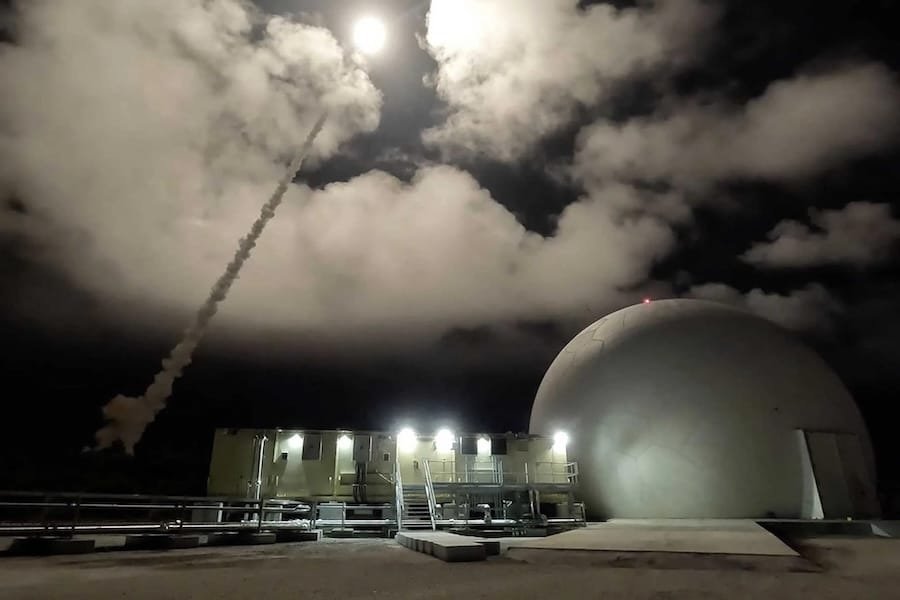
U.S
FORT BLISS, Texas — Lockheed Martin has demonstrated an artificial intelligence-powered Guam Defense System (GDS) Battle Manager Suite designed to connect the Aegis Guam combat system with the U.S. Army’s Integrated Battle Command System (IBCS) and other integrated air and missile defense capabilities. The prototype reached the second stage of a U.S. Army evaluation in less than two months after the Army issued a request for a battle-management solution in June 2026. The demonstration was conducted in a simulated Guam operational environment at the Army Tactical Systems Integration Lab at Fort Bliss. The system uses Lockheed Martin’s CommandIQ platform to continuously process hundreds of incoming tracks. Using algorithms informed by thousands of pre-run simulations, it ranks possible responses and recommends weapon assignments for individual threats. During the demonstration, the suite combined live data from multiple integrated air and missile defense systems into a single common tactical picture. Commanders could view sensor tracks, available munitions and engagement opportunities across the joint operating area in real time. Lockheed Martin said the system is intended to reduce the manual coordination normally required for integrated air and missile defense, including voice calls, text messages, physical documents and manual calculations. Its automated recommendations are designed to support faster decisions and more efficient use of high-cost interceptors. “In missile defense, seconds can determine whether an operator protects a populated island or exhausts precious interceptors,” said Tiffany Marr, director of CommandIQ, Golden Dome for America C2 and Advanced Concepts at Lockheed Martin. She said the system provides commanders with real-time information on sensors, weapon systems and munition loadouts while recommending the optimal weapon for incoming threats. The prototype was installed and integrated within 24 hours of arriving at the Fort Bliss laboratory and met all required demonstration criteria during its one-week fielding period. The Battle Manager Suite uses an open architecture, allowing it to accept pre-planned warfighter responses, Air Tasking Orders, Airspace Control Orders and missile-defense designs. It can also incorporate software from other defense technology companies without requiring the entire system to be rebuilt. The latest demonstration follows Lockheed Martin’s earlier software-based command-and-control integration work during Valiant Shield 2026, where the company demonstrated the connection of capabilities including Aegis Guam, AN/TPY-6 radar, THAAD, C2BMC, IBCS and other air and missile defense assets to support a common tactical picture and coordinated decision-making. The Army’s Battle Manager Suite effort is part of broader work to integrate more than 20 programs and prototypes supporting Guam’s defense. The competition includes multiple phases, with a formal prototype proposal stage expected later and an award targeted for the first quarter of fiscal year 2027.
Read More → Posted on 2026-08-27 11:58:32
Europe
BRUSSELS — France is pressing the European Commission to impose time limits on exemptions allowing Ukraine to purchase military equipment from outside the European Union and European Economic Area (EEA) using funds from the €90 billion Ukraine Support Loan. The loan, approved in April 2026, supports Ukraine during 2026 and 2027, with €60 billion allocated for military assistance and €30 billion for economic support. Under the procurement rules, Ukraine generally cannot source more than 35% of the total cost of a defence product from outside the EU and EEA. However, Kyiv can request temporary derogations when European manufacturers cannot meet urgent operational requirements, provide sufficient production volumes, deliver within the required timeframe, or offer competitive costs. Ukraine has so far secured two exemptions. One covers components used in Chinese-made drones, while another covers US-made Patriot interceptor missiles, which are needed for Ukraine’s air-defence requirements. The European Commission approved the exemptions after recognising that European industry currently lacks sufficient capacity to rapidly provide these capabilities. France Seeks Temporary Exemptions Paris wants the exemptions to remain temporary and subject to mandatory reviews. The objective is to ensure that EU-backed defence spending increasingly returns to European manufacturers as European production capacity improves. France has one of Europe’s largest defence industries and produces the Franco-Italian SAMP/T air-defence system, which is a European alternative to the US Patriot system. Under the French approach, exemptions would need to be renewed whenever Ukraine requests a new payment tranche. If a European supplier becomes capable of matching a foreign supplier in production volume, cost and delivery time, the Commission could refuse to renew the exemption and require procurement from the European supplier. Member States Divided France’s position has faced opposition from countries that want Ukraine to retain greater flexibility in urgent military procurement. In July 2026, defence ministers from Germany, Sweden, the Netherlands, Denmark, Estonia, Poland, Latvia, Finland and Lithuania wrote to EU foreign policy chief Kaja Kallas and Defence Commissioner Andrius Kubilius. They stressed the importance of quickly approving procurement schedules and using derogations pragmatically when Ukraine needs equipment produced by third countries. The disagreement reflects a wider tension between meeting Ukraine’s immediate battlefield requirements and using EU funding to strengthen Europe’s defence industry. How the Loan Procurement Works Funds are released through a multi-stage process. Ukraine first provides Brussels with a broad breakdown of planned spending by categories such as drones, artillery and air defence. Exact allocations can change as requirements develop. Ukraine then submits detailed contracts identifying the equipment, supplier and delivery timelines. For purchases requiring a non-EU derogation, the documentation is reviewed by a dedicated committee of national experts, allowing member states to raise objections. For Chinese suppliers, the Commission also checks whether companies are subject to EU sanctions targeting Russia’s military-industrial complex. The government of the supplier’s country is also asked to commit to fulfilling the contract if political priorities change. Disbursements have already begun. €3.9 billion was released in late June for drone procurement, followed by €6.1 billion approved earlier this week for broader defence procurement. The Commission’s decisions on future derogations could establish an important precedent for other EU defence programmes, including the Security Action for Europe (SAFE) and the European Defence Industry Programme (EDIP). The main issue will be how long Ukraine can continue relying on foreign suppliers while European production expands. Source : Euronews
Read More → Posted on 2026-08-27 12:06:59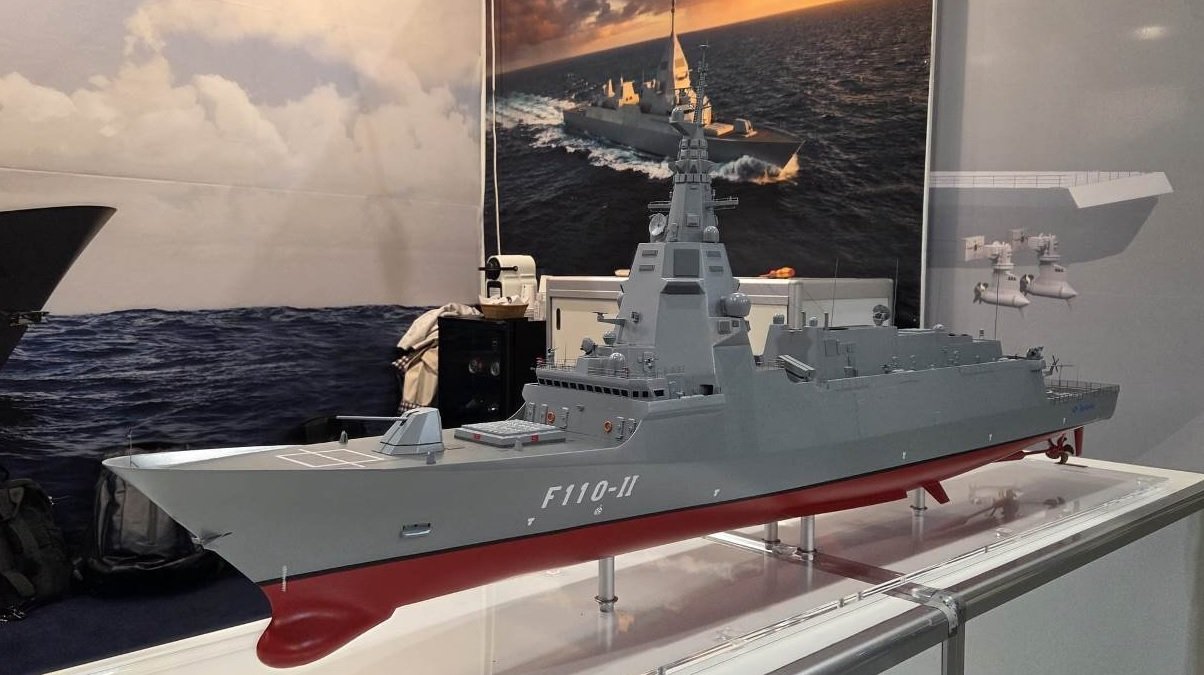
Europe
ERNING, DENMARK — Spanish shipbuilder Navantia has publicly displayed a scale model of its F-110 Flight II frigate for the first time at DALO Industry Days 2026 in Herning, Denmark. The event was held on August 19-20 and brought together defence companies, government representatives and military delegations. Navantia describes the design as the F-110 Flight II for Spain and the F-110 IAMD (Integrated Air and Missile Defence) configuration for the international market. The design is an enlarged and enhanced development of the F-110 frigates being built for the Spanish Navy, with substantially greater air-defence capacity while retaining anti-submarine warfare (ASW) and anti-surface warfare (ASuW) capabilities. Navantia displayed the F-110 IAMD alongside its ALFA 4000 and ALFA 3000 frigate designs as part of its effort to develop a long-term industrial relationship with Denmark. The company has identified Denmark as a strategic partner and is presenting its naval designs in connection with the country's future fleet requirements. Larger Hull and Higher Speed The F-110 Flight II is approximately 150 metres long, around five metres longer than the Flight I design, with a maximum beam of 18.6 metres. Its full-load displacement is approximately 6,700 tonnes, around 500-600 tonnes above the baseline configuration. Navantia's displayed configuration has a maximum speed of more than 29 knots, compared with more than 26 knots for the Flight I design. The frigate is designed for a cruising speed above 18 knots and a range of approximately 4,100 nautical miles. The design uses a CODLAG propulsion arrangement, supporting both endurance and reduced acoustic signatures. The ship is designed around a crew of approximately 150 personnel, with additional accommodation for mission specialists and command personnel. The configuration also includes a multi-mission bay intended to accommodate RHIBs, unmanned systems and modular mission equipment. The enlarged design is intended to support operations requiring greater air-defence capability while retaining the F-110's multi-mission role. 64-Cell Mk 41 Vertical Launch System The largest change is the increase in vertical-launch missile capacity. The baseline F-110 Flight I has a 16-cell Mk 41 Vertical Launching System (VLS). The Flight II/IAMD configuration displayed by Navantia increases this to 64 cells. The VLS arrangement consists of: 48 Mk 41 Strike Length cells forward of the bridge 16 Mk 41 Tactical Length cells positioned farther aft, inside the superstructure ahead of the helicopter hangar The configuration therefore provides four times the number of VLS cells found on the Flight I ships. The proposed missile capacity includes up to 64 SM-2 surface-to-air missiles, or up to 256 RIM-162 Evolved Sea Sparrow Missiles (ESSM) when quad-packed, or a combination of the two, depending on the selected loadout. For anti-surface warfare, the design carries eight Kongsberg Naval Strike Missiles (NSM) in two quadruple launchers. Its main gun is the Leonardo OTO 127/64 LW 127 mm naval gun. Close-in and short-range defence is provided by two Escribano E&M Sentinel 30 30 mm remote weapon stations, four Sentinel 2.0 12.7 mm remote weapon stations and additional heavy machine guns. The design also incorporates six SRBOC Mk 36 decoy launchers, a directed-energy weapon, loitering-munition launchers and a dedicated counter-unmanned aerial system capability. For anti-submarine warfare, the frigate is equipped with two twin Mk 32 Mod 9 torpedo launchers for Mk 54 lightweight torpedoes. The aviation facilities are designed to support helicopters including the NH90 and MH-60R, along with unmanned aerial systems. Upgraded SPY-7 Radar The F-110 Flight II retains the Lockheed Martin AN/SPY-7(V)2 S-band solid-state multifunction radar, but with a larger array configuration. Each radar array in the Flight II design is shown with 100 sub-array suites (SAS), compared with 68 SAS on the Flight I configuration. The larger number of sub-arrays provides additional radar capacity for detecting, tracking and discriminating multiple targets. The radar is integrated with Navantia's SCOMBA combat management system through the Aegis International Aegis Fire Control Loop (IAFCL). The configuration also includes Cooperative Engagement Capability (CEC) for sharing tactical information between compatible platforms. The Spanish Navy describes SPY-7 as a digital, software-defined radar designed to support multiple missions, including air surveillance, air defence and ballistic-missile defence functions. Terminal guidance for the surface-to-air missile system is provided by Raytheon's AN/SPG-62 fire-control radars and Mk 99 Fire Control Systems. Electronic Warfare and Underwater Sensors The F-110 IAMD's integrated mast incorporates several systems supplied by Spanish defence company Indra. These include the PRISMA-25X solid-state radar for surface surveillance and low-altitude air-target tracking, the Rigel i110 electronic support and countermeasures systems, the Regulus i110 communications electronic support measures system, an identification-friend-or-foe system and the IRST i110 infrared search-and-track system developed with Technobit. Navantia also provides systems including the DORNA fire-control radar for the main gun, the HERMESYS integrated communications system, the DIGITAL TWIN system and the MINERVA integrated navigation bridge system. The underwater sensor suite is supplied by Thales and includes the BLUEMASTER hull-mounted sonar, CAPTAS-4 Compact variable-depth sonar, TUUM-6 underwater communications system and BLUESCAN acoustic data-fusion software. Saab provides the naval laser-warning system, while Lockheed Martin supplies the AN/SLQ-25E NIXIE torpedo countermeasure system. Built Around the Existing F-110 Design Navantia is positioning the Flight II as an evolution of the F-110 rather than a completely new frigate design. The company says its F-110 programme is already under execution for the Spanish Navy and is meeting its planned schedule. The first five F-110 ships are part of the current Spanish programme, with construction already underway on multiple vessels. The Flight II configuration retains the platform's multi-mission architecture while adding substantially greater missile capacity, increased radar-array capacity and higher speed. Navantia also highlights survivability features, including separated machinery spaces, fire zones, damage-control measures and CBRN protection. The design incorporates modularity and growth margins intended to allow additional systems and capabilities to be integrated as requirements change. The company is presenting the F-110 IAMD to international customers, including in Denmark, while the same Flight II concept is also associated with future Spanish Navy requirements. However, the configuration displayed at DALO should be distinguished from a confirmed Danish procurement contract; Navantia's official DALO announcement describes the F-110 IAMD as a design being presented as part of its cooperation and strategic-partnership efforts with Denmark. The F-110 Flight II therefore represents a significant increase in the F-110's air-defence capacity, particularly through its 64-cell Mk 41 VLS and enlarged SPY-7 radar configuration, while retaining the ASW, ASuW and multi-mission characteristics of the original F-110 design.
Read More → Posted on 2026-08-27 12:14:04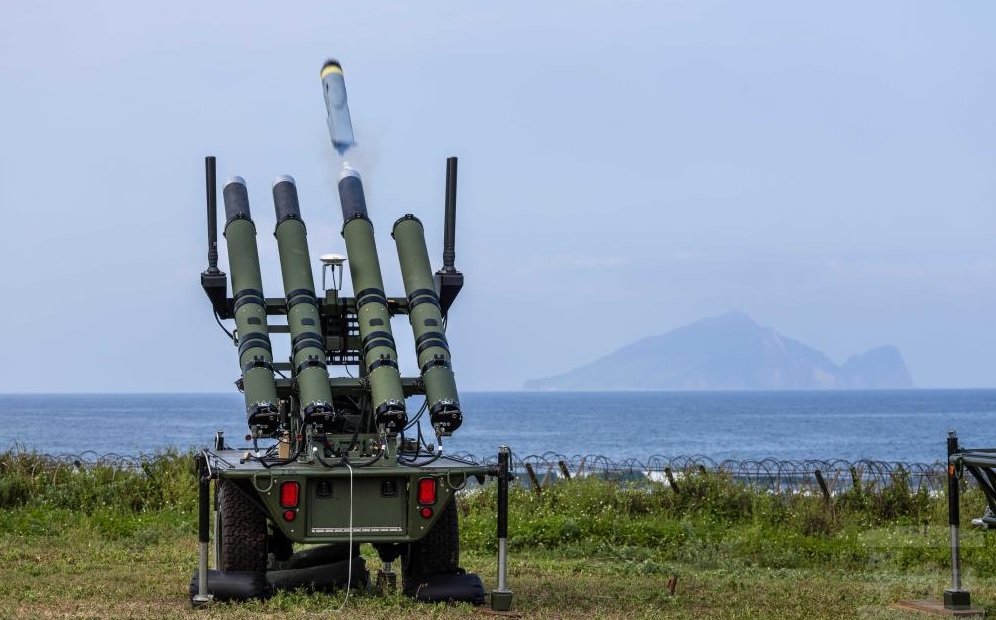
World
TAIPEI — Taiwan’s Ministry of National Defense has finalized an NT$26.9 billion (US$847 million) contract with U.S. defense technology company Anduril Industries for 2,032 ALTIUS unmanned systems, according to the government’s electronic procurement system. The acquisition is part of Taiwan’s effort to strengthen its asymmetric defense capabilities. The contract covers 1,554 ALTIUS-700M loitering munitions and 478 ALTIUS-600ISR intelligence, surveillance and reconnaissance (ISR) systems. The systems will be deployed primarily with Taiwan’s Army. The purchase includes the drones, associated systems and launch equipment. It forms part of a broader U.S. arms package previously valued at about NT$34.9 billion (approximately US$1.1 billion), which also includes additional equipment and support. The formal signing of the Letter of Offer and Acceptance completes the purchase process. The United States approved the broader package in December 2025. Taiwan had previously purchased 291 ALTIUS-600M drones through its regular defense budget. Those systems reportedly achieved a 100% hit rate during a recent live-fire maritime exercise, supporting the decision to expand the fleet through a special budget. The ALTIUS-700M is the strike variant, designed to engage targets including heavy armored vehicles and air-defense systems. It can carry a 14- to 15-kilogram warhead, with reported destructive power comparable to an AGM-114 Hellfire missile. The system has an endurance of about 1.25 to 2 hours, a range of approximately 160 kilometers in strike configuration and a reported weight of around 29.5 kilograms. The ALTIUS-600ISR is intended for intelligence gathering, battlefield search, target designation and electronic-warfare support. Sources indicate an endurance of about 3.5 to 4 hours and a range of approximately 375 kilometers. The two variants are intended to provide complementary reconnaissance and strike capabilities. Taiwan’s Army has established a dedicated unit focused on unmanned-system development and integration into its joint command structure. Initial deliveries are expected to begin in the fourth quarter of 2026, with the full order scheduled for completion by June 2033. The procurement is intended to expand Taiwan’s ability to use distributed unmanned systems to locate, track and engage targets. For Anduril, the order also represents a major production requirement as the company expands its ALTIUS manufacturing capacity and works to supply the systems at scale.
Read More → Posted on 2026-08-27 12:18:59
U.S
Washington — The U.S. Army has selected five companies to build and operate nuclear microreactors at five U.S. military installations under the Janus Program, with up to $2.2 billion in combined funding. The program, announced August 26, is being conducted in partnership with the Department of War Innovation Unit and aims to move advanced nuclear technology from testing into sustained operation at military sites. The contracts cover fiscal years 2027 through 2031 and use fixed-price, milestone-based Other Transaction Authority agreements. They cover design, construction and the first year of operations, with companies also expected to provide significant private investment. The Army's main target is to have at least one commercial microreactor producing usable electricity by September 30, 2028. Five Companies and Initial Sites The selected companies and installations are: Antares Nuclear, Inc. — Fort Bragg, North Carolina BWXT Advanced Technologies, LLC — Fort Campbell, Kentucky General Atomics Electromagnetic Systems — Fort Hood, Texas Radiant Industries, Inc. — Fort Benning, Georgia Westinghouse Government Services — Fort Drum, New York The five sites were selected from nine finalists identified in November 2025. The installations not selected were Fort Wainwright, Alaska; Holston Army Ammunition Plant, Tennessee; Joint Base Lewis-McChord, Washington; and Redstone Arsenal, Alabama. The Army expects that private investment combined with government funding could eventually support more than 20 microreactors across Department of War installations. Reactor Plans The planned systems will produce between 1 and 20 megawatts of electricity, depending on the design, and occupy less than five acres. They are intended to provide localized power for critical military infrastructure while remaining connected to existing commercial grids. They will not supply all of a major military installation's electricity. Radiant Industries has disclosed the largest individual award, worth up to $750 million, for 15 factory-built 1-megawatt Kaleidos microreactors by 2030, beginning with three units at Fort Benning. The transportable reactor uses TRISO fuel and is designed for about five years of operation before refueling, with a 20-year operating life. Westinghouse Government Services will provide its eVinci heat-pipe microreactor at Fort Drum. Westinghouse says the system can provide electricity for eight years without refueling and uses TRISO fuel with high-assay low-enriched uranium and passive heat-pipe cooling. The company recently completed a zero-power criticality test of the design at a National Nuclear Security Administration facility. Antares Nuclear will deploy its R1 microreactor at Fort Bragg in three-unit groups. The sodium heat-pipe-cooled reactor uses TRISO fuel and is rated from 100 kilowatts to 1 megawatt per unit. Its related Mark-0 test reactor achieved criticality at Idaho National Laboratory in June 2026. Antares plans to generate electricity from a test unit in 2027 and begin military deployments in 2028. BWXT Advanced Technologies will deploy a 20-megawatt-electric BANR reactor at Fort Campbell. The high-temperature gas-cooled reactor uses TRISO fuel and nitrogen coolant. Initial work includes site selection, Army regulatory processes and TRISO fuel fabrication. Construction is targeted for late 2028, with operations planned for the early 2030s. General Atomics Electromagnetic Systems will develop, test and conduct site planning for its GA-TES at Fort Hood. The liquid-metal-cooled reactor has a baseline output of about 5 megawatts electric and can scale to about 20 megawatts. It uses uranium-zirconium hydride fuel, natural-circulation cooling, has a 40-year design life and is modular for transport by truck or rail. Safety, Regulation and Waste The reactors will be owned and operated by the contractors, not the Army. They will be regulated by the Army rather than the U.S. Nuclear Regulatory Commission, while following environmental and safety requirements applicable to commercial reactors. The Army is aligning its regulatory processes so companies can later seek NRC approval for civilian markets. None of the reactors will use highly enriched, weapons-grade uranium. Several designs use 19.75% HALEU. Spent fuel will not be permanently stored at the installations, and the program requires nuclear waste and radiological materials to be removed from military sites within two years after a reactor shuts down. The Pentagon plans to develop a unified waste-management solution. From Project Pele to Janus Janus follows the Pentagon's earlier Project Pele, which focused on developing a portable reactor in the 1-to-5-megawatt range. Janus instead focuses on commercial reactor systems capable of providing long-duration baseload power at operational military installations. Army officials have stressed that not all five companies are expected to have operating reactors by 2028. Dr. Jeff Waksman said the Army nevertheless believes there is a practical path to having at least one reactor producing usable electricity by September 30, 2028. Army Secretary Dan Driscoll said the contracts are intended to provide safe and reliable baseload power for military installations and strengthen energy resilience. Jason Craft, Janus Program director, said the Army is leading efforts to expand nuclear capability through the program. Waksman said the broader objective is to move from experimental designs to reliable commercial hardware that can operate for years and eventually serve non-military customers. The program is also intended to strengthen the domestic industrial base for advanced nuclear energy.
Read More → Posted on 2026-08-27 13:04:37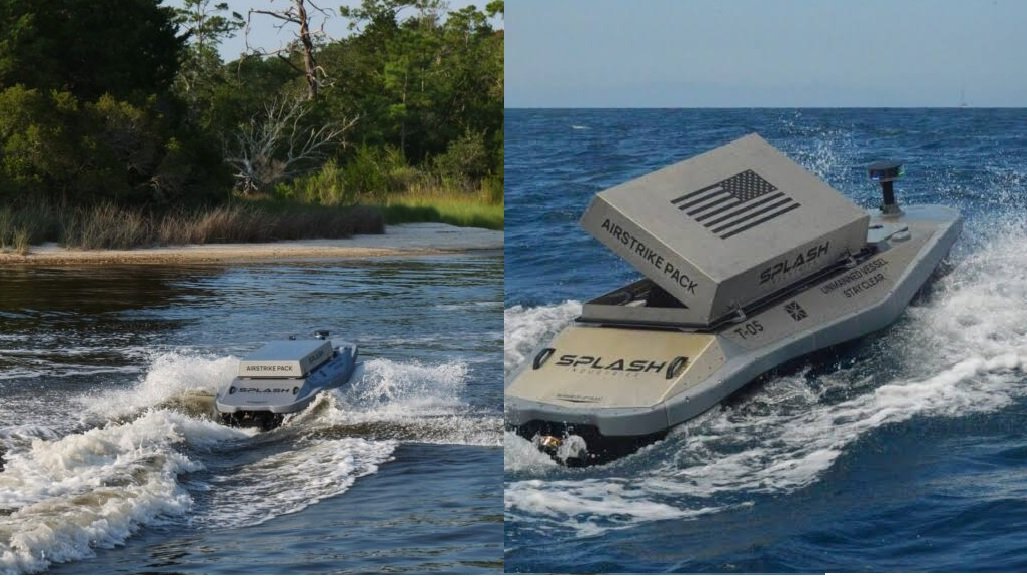
U.S
INGLEWOOD, Calif., — Splash Industries has introduced a new mission module for its Typhoon uncrewed surface vessel (USV) that allows operators to launch one-way aerial drones directly from the water. Called the Airstrike Pack, the module is designed to let operators deploy aerial assets with a single button press through the company’s proprietary command-and-control software, Splash C2. Splash Industries said the system has already been tested during a recent force-on-force exercise. The company said its vertically integrated approach, including in-house development of software and electronics, has helped keep the system rugged, easy to use and relatively low cost. Splash said the UAV deployment capability is available at about one-tenth the price of its nearest competitor. Typhoon USV capabilities The Typhoon is an 11-foot uncrewed surface vessel developed by Splash Industries for national security missions, including maritime surveillance and cargo delivery. According to the company, the vessel has a sustained speed of more than 50 knots and has exceeded 70 knots during testing. It has an operational range of more than 600 nautical miles (1,111 km) and uses a modular deck that can be configured for different payloads, including cargo and sensors. Splash Industries says the Typhoon can be assembled in about eight hours and is priced at approximately one-tenth the cost of comparable platforms. The company develops its software, electronics and sensors in-house. The Airstrike Pack adds another mission option to the Typhoon by allowing the USV to deploy one-way aerial drones from the surface. Autonomous Navy resupply demonstration The announcement follows a major milestone for Splash Industries during the Rim of the Pacific (RIMPAC) exercise near Hawaii in July 2026. During the exercise, a Typhoon USV completed what Splash Industries described as the world’s first fully autonomous underway resupply of a U.S. Navy warship. The vessel autonomously navigated open water, approached the amphibious assault ship USS Essex (LHD 2) and guided itself into the ship’s flooded well deck. Splash said the operation was completed without satellite or radio commands. The demonstration was overseen by the Naval Postgraduate School’s Consortium for Advanced Manufacturing Research and Education (CAMRE). During the same 24-hour period, the Typhoon also delivered uncrewed aerial system components manufactured aboard the USS Essex by U.S. Marine Corps personnel back to shore, according to information provided by the consortium. Funding and larger USV development Splash Industries officially emerged from stealth in July 2026 after announcing a $4.2 million seed funding round led by Ubiquity Ventures. The company said its autonomous vessels had already completed more than 10,000 nautical miles (18,520 km) of deployments across three continents. Splash co-founder and CEO Ivan Avanesov has also said the company is developing a larger uncrewed vessel called Tempest, which is being prepared for U.S. Navy testing. The Tempest is expected to have a payload capacity of 1,500 pounds (680 kg) and an operational range of 300 nautical miles (556 km). With the introduction of the Airstrike Pack, Splash Industries is expanding the Typhoon’s mission configuration beyond surveillance and cargo delivery to include the deployment of one-way aerial drones from an uncrewed surface vessel.
Read More → Posted on 2026-08-27 13:26:31
World
SEOUL — South Korea has approved a major upgrade programme for its K2 Black Panther main battle tanks, adding an active protection system (APS), electronic warfare (EW) equipment and a remotely controlled weapon station (RCWS) to improve protection against anti-armour weapons, drones and other emerging threats. The K2 Tank Performance Upgrade Project has an estimated budget of ₩3.45 trillion ($2.43 billion). The programme will run from 2028 to 2046, with development expected to finish around 2032 and the first upgraded tanks scheduled to enter Republic of Korea Army service in 2033. New Protection Systems The APS will use radar to detect incoming threats, including anti-tank missiles, rockets and drones, and intercept them. Hyundai Rotem, the K2 manufacturer, says the platform can accommodate both soft-kill and hard-kill APS configurations. South Korea has previously developed the Korean Active Protection System (KAPS) for the K2. In September 2025, Hyundai Rotem and Israel's Rafael Advanced Defense Systems also signed an agreement to cooperate on integrating the Trophy APS into the K2 family, covering integration, production, marketing, localisation and life-cycle support. The upgraded tanks will also receive EW systems for counter-drone and IED jamming. These systems are intended to disrupt radio-control signals used by drones and remotely triggered IEDs. The RCWS will allow the three-person crew to operate the secondary weapon from inside the armoured hull, reducing the need to expose themselves by opening hatches. K2 and Export Versions The K2 entered Republic of Korea Army service in 2014. The approximately 56-tonne tank is armed with a 120 mm L/55 smoothbore gun, an autoloader and a three-person crew. Existing production models use composite and reactive armour and soft-kill countermeasures. Earlier K2 batches did not receive a standard hard-kill APS because of cost considerations during the original design. The upgrade is also intended to address the capability difference between South Korea's domestic K2 fleet and export versions. Poland has ordered 360 K2 tanks under two contracts, including K2GF vehicles and the locally configured K2PL. The K2PL incorporates Polish requirements and is planned for local assembly at Bumar-Łabędy. The first 28 tanks from the second contract arrived in Poland in August 2026. South Korea's DAPA said the domestic upgrade will use technology more advanced than that currently fitted to the K2PL. The K2 has also attracted interest from Peru and Morocco. Peru has considered around 150 tanks to replace older T-55 and AMX-13 vehicles, with possible local assembly, while Morocco has reviewed a potential larger K2 purchase as part of its military modernisation. The upgrade comes as South Korea responds to changing threats on the Korean Peninsula, including North Korea's military modernisation and its recently unveiled Chonma-20 main battle tank, which appears to feature its own active protection system.
Read More → Posted on 2026-08-27 13:50:08
World
Tokyo, Japan — Finnish defence company Patria has successfully demonstrated the remote operation of a Patria AMV armoured vehicle in Finland from a control desk in Tokyo, covering a distance of more than 7,800 kilometres (4,847 miles). The demonstration was held on August 25–26 and hosted by the Embassy of Finland in Japan. It was organized by Patria with its Japanese manufacturing partner, The Japan Steel Works, Ltd. The AMV was located at the Parola military testing area in southern Finland, while the operator controlled the 8×8 vehicle from Tokyo. The demonstration used the AMV's integrated drive-by-wire systems and a Remote Operating Device supplied by UXV Technologies. Operational data was transferred through Telia's 5G mobile network using a virtual mobile private network with international roaming. The traffic was routed through a closed corporate network isolated from the public internet. Real-Time Situational Awareness Patria's DOME system provided real-time situational awareness, while ICEYE supplied near-real-time synthetic aperture radar (SAR) satellite data for information on the wider operating environment. Nokia provided its Real-time eXtended Reality Multimedia software and a 5G 360-degree camera mounted on the AMV. A Basemark augmented-reality helmet was also demonstrated for remote operators. SAVOX provided intercom and Voice over IP (VoIP) systems for communication between the operator in Tokyo and the ground safety team in Finland. Patria's ILIAS software monitored the vehicle's health and maintenance condition in real time. The demonstration builds on Patria's earlier remote-operation work. In 2020, the company demonstrated beyond-visual-line-of-sight remote control of an AMV 8×8 using commercial 4G and 5G networks with the University of Tampere. In April 2025, Telia demonstrated remote operation of a Patria AMV XP over nearly 100 kilometres during military exercises in Lapland using a dedicated 5G network slice. Patria has sold roughly 1,600 AMV vehicles to defence forces in Finland, Poland, Sweden, Slovenia, Croatia, South Africa, the United Arab Emirates and Japan. Japan's Ground Self-Defense Force received its first Patria AMV XP in September 2025 under the Wheeled Armored Personnel Carrier programme, with vehicles assembled locally at Japan Steel Works' Muroran plant. Patria said the remote-operation concept could support unmanned logistics, vehicle convoying and autonomous waypoint navigation. The company is also developing next-generation technologies, including AI-enabled systems, to support higher levels of vehicle autonomy. Janne Räkköläinen, Patria's Vice President, Market Area World, said the demonstration attracted a large number of attendees from Japan's Ministry of Defence and defence-related companies and reflected strong interest in Patria's remote-driving capabilities in Japan and internationally. The trial demonstrated how the AMV's modular design and drive-by-wire controls can be combined with telecommunications, satellite data, communications and situational-awareness systems for remote and future autonomous operations.
Read More → Posted on 2026-08-27 13:58:09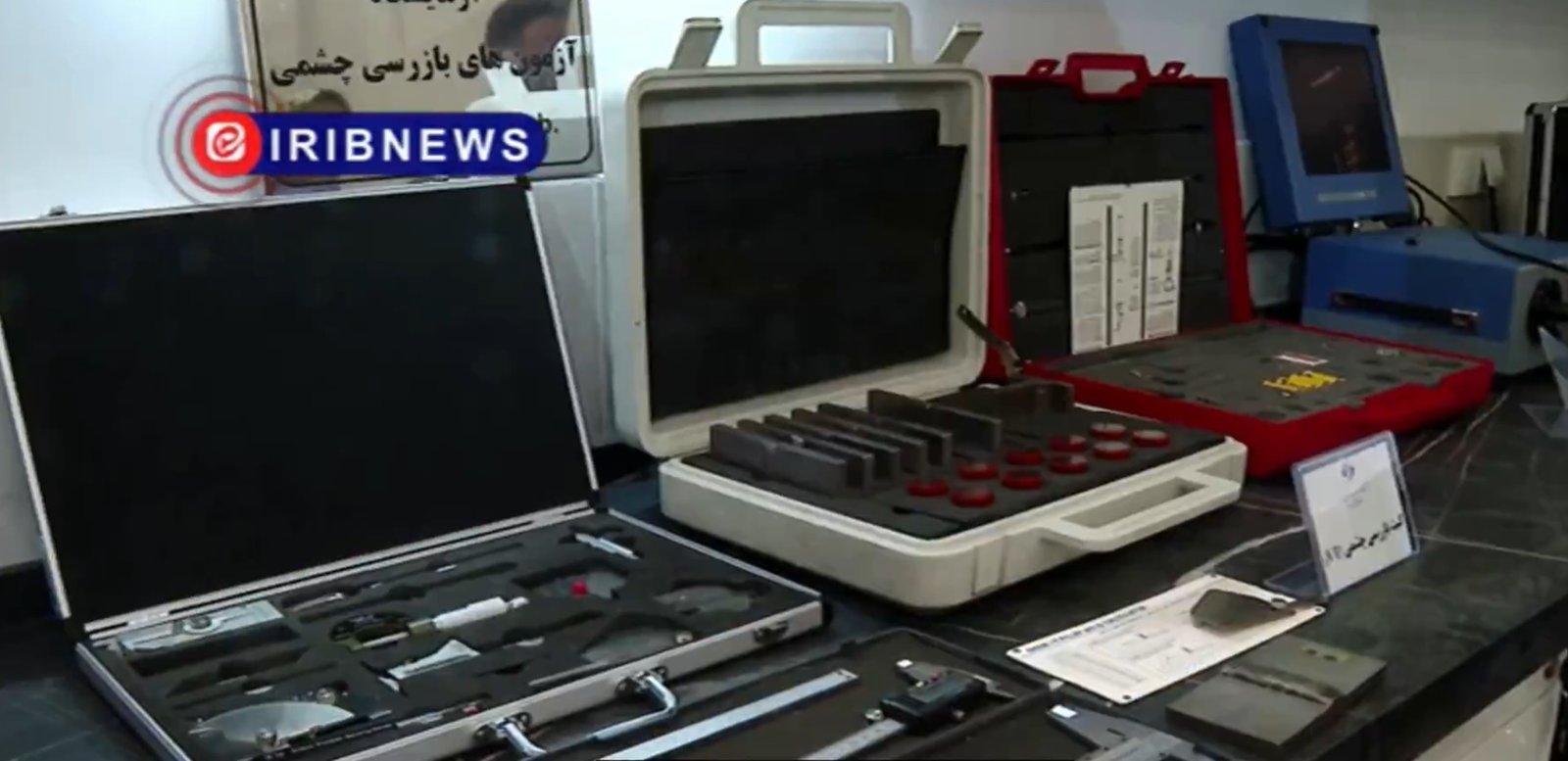
World
TEHRAN, IRAN — Iran’s Atomic Energy Organization (AEOI) has unveiled and put into operation four knowledge-based technological systems during Government Week ceremonies. State broadcaster IRIB showed the new equipment during a laboratory tour attended by AEOI chief and Vice President Mohammad Eslami and senior nuclear industry officials. The four achievements include three plasma diagnostic systems for tokamak devices and a non-destructive testing (NDT) laboratory. ❗️ IRAN UNVEILS FOUR NUCLEAR ACHIEVEMENTS — IRIB gives lab tourNew tech for science, industry & nuclear work, including equipment detecting cracks in metalAtomic chief says moved beyond ‘technology demonstration’ in nuclear fusion & entered ‘system & capability development’ pic.twitter.com/1HY7oakwXf — RT (@RT_com) August 26, 2026 Three Tokamak Diagnostic Systems The photoelectron system measures the electron temperature of tokamak plasma without direct contact by analyzing the energy and characteristics of X-rays emitted from the plasma. Iranian officials said it is intended to support future energy-producing tokamaks. The bolometry system, developed domestically for the first time, measures power lost from tokamak plasma through radiation. Such diagnostics are used at major facilities including KSTAR, EAST and JT-60U to help evaluate and optimize plasma performance. The charge-exchange system, also produced domestically for the first time, measures the temperature of ions in tokamak plasma using neutral atoms. Officials described it as an important diagnostic for modern tokamak facilities and said it is intended for future energy-producing tokamaks. Eslami said Iran's fusion research has moved beyond technology demonstration toward system development and capability building. He said fusion is a priority for future energy needs and that Iran cannot afford to fall behind countries developing the technology. NDT Laboratory The fourth project is a specialized non-destructive testing laboratory for inspection, testing, training and personnel qualification. The facility uses visual inspection, penetrant testing, magnetic-particle testing, ultrasonic testing, radiographic testing and eddy-current testing to identify cracks, defects and other problems in materials without damaging the components. The laboratory will provide NDT services to the nuclear, aviation, power, oil and gas sectors. It will also conduct training courses, personnel qualification examinations under ISO/IEC 9712, specialist consulting and digital industrial radiography for components where conventional film radiography is not practical. Eslami said the AEOI has developed these capabilities through domestic resources, knowledge-based companies and universities, reducing dependence on foreign countries. He also said sanctions and external pressure have not stopped Iran's technological development. Fusion Research Separate From Enrichment The newly unveiled systems are focused on nuclear fusion research and industrial testing, while uranium enrichment remains the main international concern regarding Iran's nuclear program. The International Atomic Energy Agency (IAEA) has reported that Iran previously accumulated uranium enriched to 60 percent U-235 and that, following attacks on Iranian nuclear facilities in 2025, the Agency lost continuity of knowledge regarding the country's current stockpile, centrifuges and some nuclear activities. The IAEA has also reported damage to nuclear facilities at Natanz, Fordow and Isfahan. Iranian officials have said inspections of attacked facilities require new arrangements. The latest AEOI announcement therefore concerns new domestic capabilities for tokamak plasma diagnostics, fusion research and industrial inspection, rather than new uranium-enrichment equipment.
Read More → Posted on 2026-08-27 14:04:40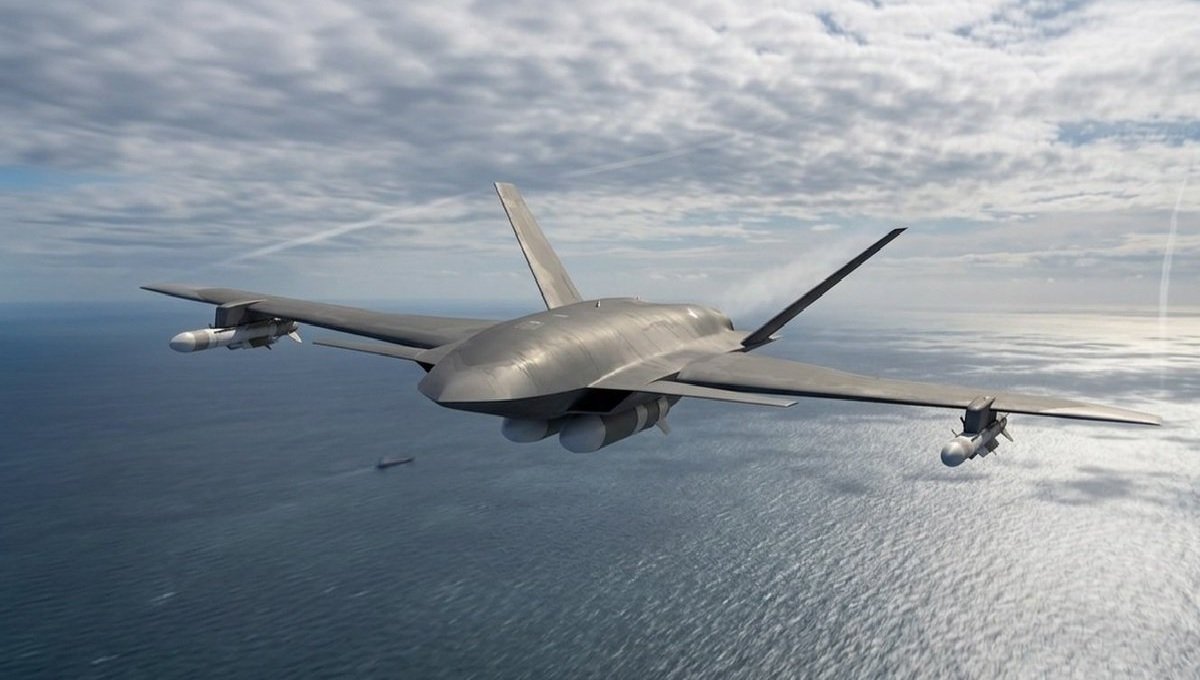
India
KOLKATA, — Kolkata-based aerospace and defence technology company AvionX Aerospace has unveiled Vajra, a Naval Collaborative Combat Air Vehicle (N-CCAV) designed as a loyal wingman drone for the Indian Navy. The platform is intended to operate alongside manned fighter aircraft, extending operational reach while reducing the exposure and workload of pilots in high-threat environments. AI-Based Manned-Unmanned Teaming Vajra is designed for Manned-Unmanned Teaming (MUM-T) and can perform air-to-air, air-to-ground and intelligence, surveillance and reconnaissance (ISR) missions. According to AvionX, it can provide ISR, electronic warfare support and precision-strike capabilities while operating with manned fighters. The drone uses an AI-driven autonomous system capable of handling complex missions with limited human intervention. Its sensor-fusion system combines data from an AESA radar, EO/IR pod and onboard electronic warfare systems for navigation, target detection and engagement. AvionX lists an AI pilot decision latency of less than 10 milliseconds and an autonomous operation time of 12 to 18 hours. Stealth and Electronic Warfare Vajra features a low-observable airframe and radar-absorbing materials. AvionX claims these features reduce its radar cross-section by approximately 70 percent, supporting operations in anti-access/area-denial (A2/AD) environments. Its electronic warfare suite includes active jamming, chaff and flare dispensers, and electronic intelligence (ELINT). The company states that the system provides more than 90 percent counter-electronic-warfare effectiveness in A2/AD conditions. Performance and Weapons The platform is powered by a 25 kN turbofan engine and has a listed maximum speed of 1,255 km/h. AvionX gives it an operational range of 3,700 km, a combat radius of 1,850 km, and 12–18 hours of endurance. Vajra is designed to carry air-to-air missiles, air-to-surface missiles and laser-guided bombs. The company says it can be launched from aircraft carriers as well as smaller naval vessels. AvionX says Vajra uses domestically developed engines, avionics and sensor systems and is being developed in line with the Atmanirbhar Bharat initiative. The company focuses on AI-enabled unmanned systems and defence command software and lists experience in UAV research, development and test flights. Vajra remains a development-stage naval loyal wingman concept, and the specifications currently available are based on information provided by AvionX.
Read More → Posted on 2026-08-27 14:16:38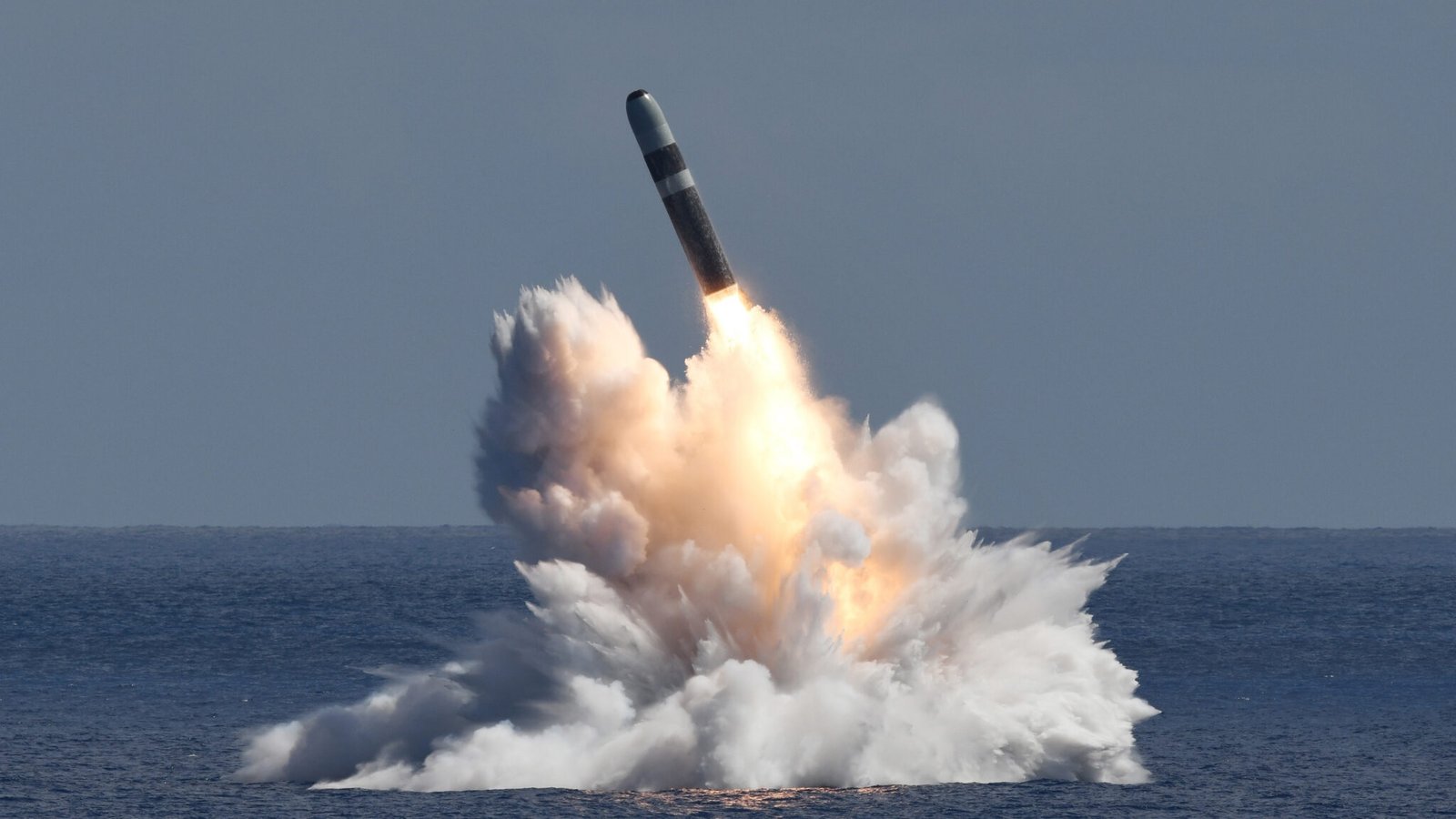
Europe
BERLIN — Germany is exploring options to provide financial and conventional military support to the United Kingdom’s Trident nuclear deterrent, according to a Telegraph report published on August 26. The discussions are part of wider efforts in Europe to strengthen its own defence capabilities and reduce reliance on the United States. Berlin is considering financial support for Britain’s nuclear programme and closer cooperation with the existing nuclear forces of Britain and France, rather than developing its own nuclear arsenal. German officials have cited the country’s wartime history as one reason for avoiding an independent nuclear capability. Possible German Support Several forms of support are reportedly being examined, including: Financial assistance: Germany could contribute to the cost of maintaining and modernising Britain’s nuclear deterrent. Faslane protection: Germany could deploy German-operated Patriot air-defence systems to protect HM Naval Base Clyde at Faslane in Scotland, which hosts Britain’s nuclear-armed submarine fleet. Industrial cooperation: German companies could potentially assist with future submarine construction, missiles or uranium-enrichment infrastructure for warheads. A British defence source questioned whether German industry currently has the specialised expertise needed for Britain’s nuclear submarine programme. However, the source described conventional air defence for Faslane as a more credible, likely and appropriate contribution. The UK is undertaking a major nuclear modernisation programme estimated at about £63 billion over coming years. It includes four new Dreadnought-class ballistic-missile submarines and development of a new warhead with the United States. Britain maintains an arsenal of around 200 nuclear warheads, which it assigns to NATO. Britain also relies on the United States for important parts of the Trident system. Trident missiles are manufactured and serviced at the US submarine base at Kings Bay, Georgia. Wider European Nuclear Cooperation Talks involving Berlin, London and Paris have reportedly intensified in recent months amid concerns about the future reliability of US security commitments under the Trump administration and the wider security situation in Europe, including Russia. Germany is also strengthening nuclear-related cooperation with France. Germany and France have established closer dialogue on nuclear deterrence, and German conventional forces are scheduled to participate for the first time in France’s Poker nuclear exercises later this year. France and the UK remain the only European countries with independent nuclear arsenals. Britain has committed its nuclear deterrent fully to NATO’s defence, while France maintains its own independent nuclear force. A UK Ministry of Defence spokesman said the nuclear deterrent remains a cornerstone of national security and protects the UK and NATO allies. A German government spokesman, however, denied that the reported talks were taking place. The discussions come alongside broader UK-Germany defence cooperation, including the Trinity House Agreement. Chancellor Friedrich Merz’s government has said Germany does not seek its own nuclear weapons but is interested in arrangements involving British and French capabilities while remaining within NATO and non-proliferation commitments. No formal agreement has been announced. Any German support for Britain’s deterrent would leave command and control of the UK’s nuclear weapons solely with London.
Read More → Posted on 2026-08-27 14:23:20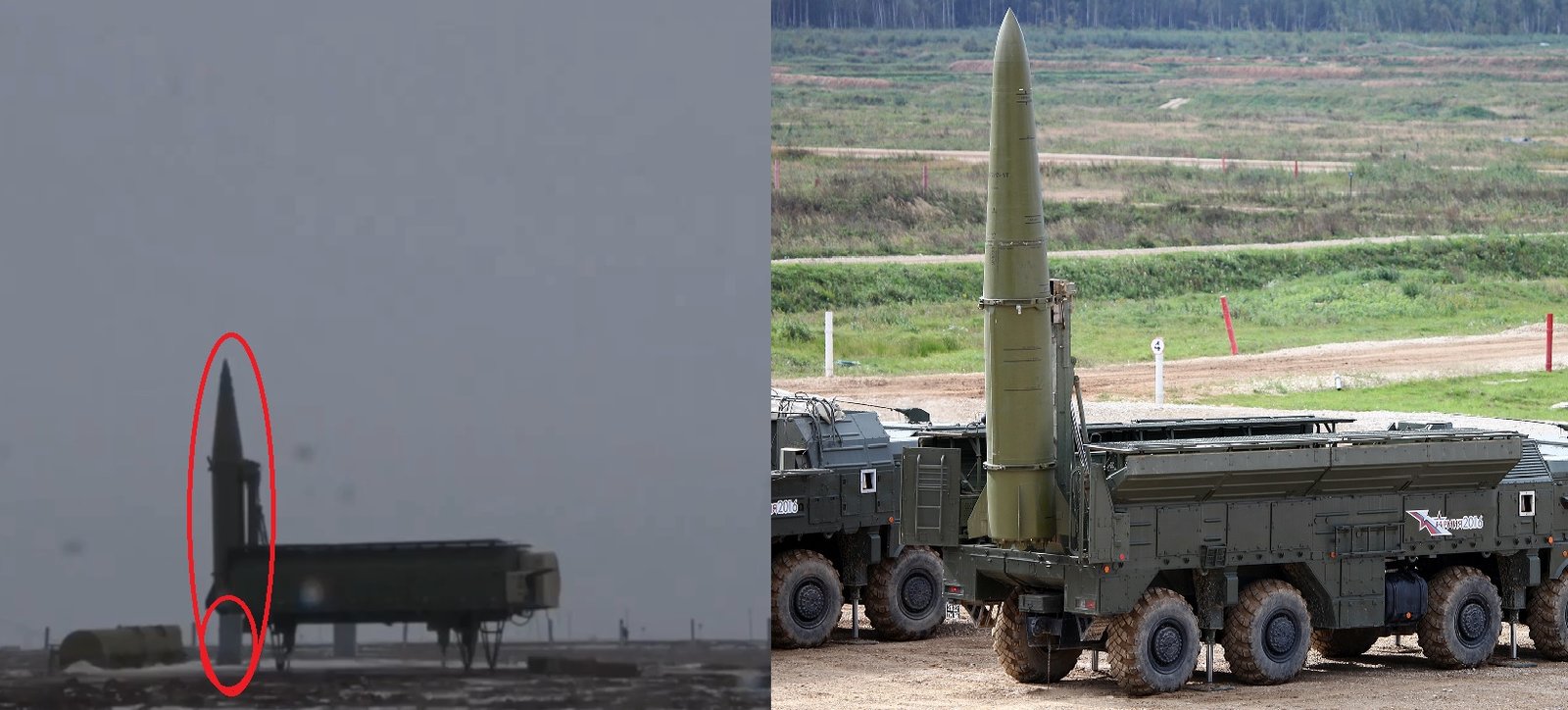
World
KYIV, Ukraine, — Russia used an upgraded 9M723-2 ballistic missile, informally known as the Iskander-1000, during a combined strike on Kyiv this summer, Ukraine’s Main Directorate of Intelligence (HUR) reported. It was the first reported combat use of the upgraded variant against the Ukrainian capital. The missile is part of the Bora-M system. According to HUR, its larger engine required a larger launcher tube and increases the range to up to 550 kilometers (340 miles), compared with about 390 kilometers (240 miles) for the standard 9M723-1 used by the Iskander-M. HUR said the remaining missile components are identical to those of the 9M723-1. The Iskander is a quasi-ballistic missile capable of maneuvering during flight, which makes it a difficult target for air-defense systems. Ukrainian aviation expert Kostiantyn Kryvolap said the difficulty of intercepting the upgraded version has not changed, while Ukraine continues to intercept Iskander missiles and target their launchers. Development of the 9M723-2 Reports about a longer-range Iskander variant first appeared in July 2024, with claims that the missile could eventually reach up to 1,000 kilometers. Unofficial reports in December 2025 claimed tests at ranges of up to 800 kilometers. HUR’s latest assessment, however, gives the 9M723-2 a range of up to 550 kilometers. In October 2025, Ukrainian sources published leaked Russian procurement documents showing an order for 18 missiles designated 9M723-2, providing evidence that the variant had entered production. Foreign Components HUR also released new information through its War&Sanctions portal on the production network for Russia’s 9M723 Iskander-M missiles. The data covers 140 identified components, 35 companies, and 108 officials and employees. The broader database also includes more than 170 components, 82 Russian and two Belarusian enterprises, and 121 items of foreign production equipment. According to HUR, only about one-quarter of the 140 components are manufactured in Russia. 63 components come from U.S. manufacturers, while eight each come from Switzerland and Belarus, four each from Germany and Taiwan, and three from China. In one guidance-system unit that processes flight data from a laser gyroscope, only five of 43 components are Russian-made. HUR has not disclosed the exact date of the summer strike, the number of 9M723-2 missiles used, or the specific targets hit. Russia continues to use ballistic missiles together with cruise missiles and drones in combined attacks against Ukrainian cities.
Read More → Posted on 2026-08-27 16:01:30
World
ST. PETERSBURG, — Russia’s United Shipbuilding Corporation (USC) has held a keel-laying ceremony for the Project 677 Lada-class diesel-electric submarine Maloyaroslavets at Admiralty Shipyards in St. Petersburg. The submarine was designed by the Rubin Design Bureau and is being built for the Russian Navy. According to USC-related reporting, Maloyaroslavets is the sixth Project 677 submarine ordered at Admiralty Shipyards and the fifth serial submarine of the class. The ceremony was attended by Nikolay Patrushev, aide to the Russian president and chairman of the Maritime Board; Russian Navy Commander-in-Chief Admiral Alexander Moiseyev; USC Director General Andrey Puchkov; St. Petersburg Governor Alexander Beglov; Admiralty Shipyards acting chief Andrey Bystrov; and Rubin Design Bureau Director General Vladimir Dorofeyev. Patrushev said that modernization of Russia’s submarine forces is among the priorities of the Navy’s development strategy through 2050. Russian President Vladimir Putin confirmed in 2025 that the Navy Development Strategy through 2050 had been approved and that its implementation is intended to support the modernization of the Russian Navy. Patrushev also expressed confidence that the Admiralty Shipyards workforce, together with partner enterprises, would complete the submarine-building program. USC chief Andrey Puchkov said the shipyard would continue modernization work alongside its current orders. Planned work includes modernization of the production and energy complex, reconstruction of the Parade Embankment and crane facilities, and reconstruction of the deep-water embankment and modernization of the machine-building workshop beginning in 2027. Modernized Project 677 Design The Maloyaroslavets is being built under the modernized Project 677 design, which was refined using operational experience from the lead submarine St. Petersburg. The updated series began with Kronstadt, which was delivered to the Russian Navy in January 2024. Velikiye Luki followed in December 2025. Two other Project 677 submarines, Vologda and Yaroslavl, were laid down on June 12, 2022, and remain under construction at Admiralty Shipyards. Project 677 submarines are diesel-electric, non-nuclear boats designed with a high level of automation. Russian sources describe the class as having an automated control system covering the submarine, its combat and technical systems, and its weapons. The boats also use acoustic protection measures and are designed for reduced underwater noise. The submarines are equipped with missile and torpedo weapons capable of engaging maritime and coastal targets. Reported specifications for the Project 677 include a length of about 66.8 meters, a beam of 7.1 meters, a submerged displacement of around 2,700 tons, a maximum submerged speed of up to 21 knots, a diving depth of about 300 meters and an endurance of up to 45 days. The crew is reported at about 35 to 36 personnel. The class is also equipped with six 533 mm torpedo tubes. The Velikiye Luki has been reported as capable of launching Kalibr cruise missiles through its torpedo tubes. Continued Lada-Class Production The keel-laying of Maloyaroslavets continues the production of the modernized Lada-class submarines at Admiralty Shipyards. The construction program follows the delivery of Kronstadt and Velikiye Luki, while Vologda and Yaroslavl remain under construction. The submarine has been named after Maloyaroslavets, a city in Russia’s Kaluga Region that holds the designation of a City of Military Glory. The naming follows the practice of giving Project 677 submarines names associated with Russian cities. The keel-laying ceremony marks the formal start of construction of another Project 677 submarine as Russia continues its program to modernize its conventional submarine fleet.
Read More → Posted on 2026-08-27 16:06:23
Europe
JONAVA, LITHUANIA — Lithuania Defense Services (LDS) has completed repairs on battle-damaged Ukrainian tanks and is preparing to return them to Ukraine. The vehicles include at least one German-made Leopard 2 and one Swedish Strv 122. The refurbished tanks were presented during a handover ceremony in Jonava. LDS sales and marketing director Vilius Semeška said the exact number of tanks being returned is classified. Images released by the company show at least two refurbished vehicles ready for delivery. Ukrainian Ambassador to Lithuania Olha Nikitchenko attended the ceremony and stressed the importance of returning the tanks quickly. “It is very important to us that the tanks return to the battlefield as soon as possible, because despite the era of drones, armored vehicles remain particularly important and necessary when retaking occupied territories during operations that involve these very same drones.” German Ambassador to Lithuania Cornelius Zimmermann said Germany is Ukraine’s largest bilateral partner in Europe and that Germany and Lithuania are fully funding the LDS project and the modernization of Ukrainian tanks. LDS Repair Operations LDS, a joint venture of Rheinmetall and KNDS Deutschland, was established in March 2022 to support Lithuanian and NATO forces and their equipment in the Baltic region. The Jonava facility began repairing battle-damaged Ukrainian Leopard tanks in October 2023. The first pair of refurbished Ukrainian Leopard 2 tanks was presented on December 15, 2023. LDS has also repaired PzH 2000 self-propelled howitzers and other armored vehicles. In January 2024, LDS signed a contract with Ukraine’s Ministry of Defense to improve spare-parts logistics for German armored vehicles operating in Ukraine. The facility supports several NATO-standard platforms, including Boxer Vilkas infantry fighting vehicles, PzH 2000 howitzers, the Leopard tank family and tactical transport vehicles. LDS has also signed agreements with Rafael and Rolls-Royce as it expands its range of services. Ukraine’s Leopard 2 Fleet Ukraine has received more than 100 Leopard 2 tanks in A4 to A6 variants from Western stocks and industry since 2023. According to open-source tracking by Oryx, as of August 27, 2026, 52 Leopard 2 losses have been visually confirmed, with additional vehicles recorded as damaged, abandoned or captured. The latest refurbished vehicles will add to Ukraine’s available armored fleet, although LDS has not disclosed how many tanks are included in the current handover. Lithuania Builds Leopard 2A8 Capability Lithuania has ordered 44 Leopard 2A8 tanks and is expanding its domestic infrastructure for their assembly and maintenance. A new production and maintenance complex is being built in the Kaunas Free Economic Zone. Finnish company YIT Lietuva is constructing the approximately 13,000-square-metre facility on a nearly 10-hectare site under a contract worth about €29 million. Construction began in August 2026 and is scheduled for completion in November 2027. The first tank assembled at the facility is expected in late 2028. LDS plans to invest around €50 million in the project and create about 100 jobs. The company will handle assembly, long-term maintenance, repair and readiness support for Lithuanian and potentially other NATO forces. The expansion will give Lithuania additional local capacity for heavy armored equipment while the Jonava facility continues supporting Lithuanian, NATO and Ukrainian systems.
Read More → Posted on 2026-08-27 16:15:00
Space & Technology
XIONGAN, CHINA, — China’s commercial space sector has begun operating what Chinese authorities describe as the country’s first assembly-line-style automated satellite mass-production facility in Xiongan New Area, Hebei Province. The production line, operated by Beijing LandSpace Hongqing Technology, is designed to move satellite manufacturing from largely individual production toward higher-volume manufacturing. The facility uses robotic systems and automated stations for satellite assembly. More than 70 percent of its workstations are automated, according to Xiongan authorities. The company says the production cycle for a satellite has been reduced from about seven days using traditional methods to approximately 30 hours on the new line. The production line is designed to support the manufacture of more than 100 flat-panel communications satellites annually. The approach is intended to improve manufacturing efficiency and support the production requirements of commercial satellite communications and constellation deployments. — August 27, 2026 First Satellite Produced on the Line The first satellite manufactured on the production line is Hongqing Technology’s Honghu-03, also known as Xiongan-1. The satellite was completed and rolled off the production line on October 22, 2025. Xiongan-1 is a 541-kilogram flat-panel satellite measuring 3 meters in length, 2 meters in width and 0.4 meters in thickness. It was independently developed by Beijing LandSpace Hongqing Technology. The satellite incorporates the company’s self-developed propulsion, power and electronic systems. The satellite includes an argon-propellant electric propulsion system and is being used to conduct in-orbit verification of several technologies. These include the electric propulsion system and commercial-grade gallium nitride power devices designed for space applications. Chinese authorities said the satellite is conducting verification of more than 10 technologies described as domestic firsts. Xiongan-1 Reaches Orbit Xiongan-1 was launched on August 19, 2026, aboard the Zhuque-3 Y2 reusable rocket from the Dongfeng commercial space innovation pilot zone in Jiuquan, Gansu Province. The launch took place at 7:35 a.m. Beijing time. About 10 minutes later, the satellite separated from the rocket and entered its planned orbit. Its solar arrays deployed successfully, and telemetry data returned from the spacecraft was reported as normal. The satellite is operating at an altitude of about 500 kilometers and is carrying out its planned in-orbit technology verification activities. The launch also formed part of a major test for Zhuque-3. During the mission, the rocket’s first stage successfully completed a controlled landing and recovery on land, according to Chinese and international reports. From Satellite Manufacturing to Mass Production The automated production line applies an assembly-line manufacturing approach to satellite production. According to Hongqing Technology, the line can complete satellite assembly with substantially less manual intervention, while the overall production cycle has been reduced by about 80 percent. The company says six to eight workers can support production capacity of more than 100 flat-panel communications satellites per year. The production line occupies about 500 square meters. The facility is intended to support higher-volume manufacturing of satellites for applications including communications and satellite internet. The shift toward standardized and automated production is aimed at making it possible to manufacture satellites in larger numbers rather than treating each spacecraft primarily as an individual production project. Xiongan’s Growing Space Industry The satellite production facility is part of Xiongan New Area’s developing aerospace information and satellite internet industry. As of August 2026, the area had 69 companies connected to the aerospace information and satellite internet sector, along with nine innovation platforms. China Satellite Network Group has established its headquarters in Xiongan, while companies involved in satellite research, manufacturing, components, testing and applications have also established operations in the area. Xiongan is also developing shared satellite manufacturing and testing facilities. These facilities are intended to provide additional infrastructure for companies involved in commercial space activities and help create a production chain covering satellite development, manufacturing, testing and operation. The launch of Xiongan-1 therefore marks both the first flight of a satellite manufactured on the automated production line and the beginning of in-orbit verification for its technologies. At the manufacturing level, the facility provides Xiongan with a production system designed specifically for higher-volume satellite manufacturing, with a stated capacity of more than 100 flat-panel satellites per year.
Read More → Posted on 2026-08-27 16:22:47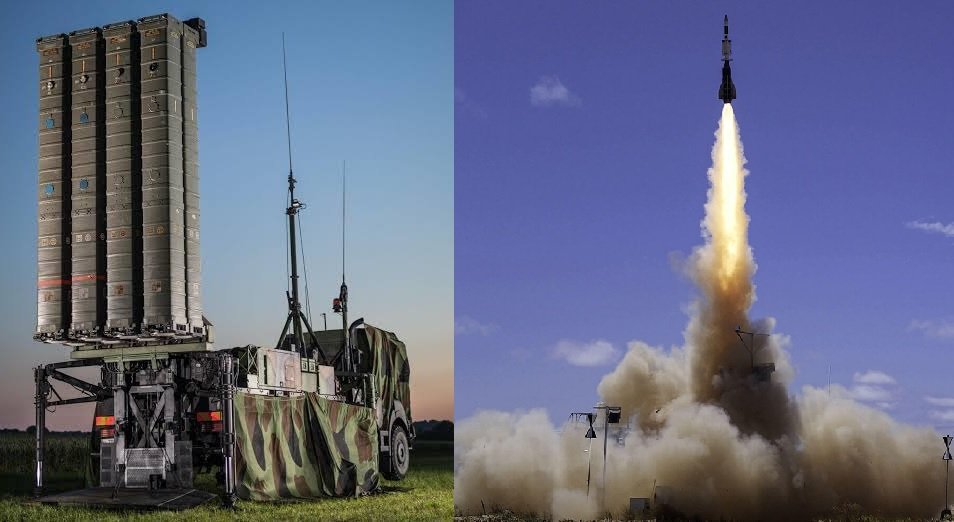
Europe
ROME — Italy is preparing its 13th military aid package for Ukraine, with a major focus on strengthening the country's air and missile defenses, according to a report published by La Repubblica on August 26. The reported package includes four SAMP/T NG air defense systems, Aster 30 interceptor missiles and seven long-range radars. Six radars would be manufactured by France's Thales and one by Italy's Leonardo. The program is estimated to cost nearly €3 billion and would be financed through European Union loans under the Ukraine Support Loan for 2026 and 2027. The new SAMP/T NG systems and related equipment are expected to be fully delivered by 2027. Italy also plans to transfer Aster 30 missiles from its existing stocks, with some deliveries expected as early as October 2026. A key part of the reported plan is the licensed production of Aster 30 B1NT missiles in Ukraine. France and Italy have agreed to allow Ukraine to manufacture the missiles locally, with the relevant agreements expected to be signed in September. Ukraine already has a contract for additional Aster 30 missiles. The B1NT variant has an engagement range exceeding 150 kilometers, according to the information reported. France is separately expected to provide one SAMP/T system and additional air-defense radars to Ukraine this autumn. It remains unclear whether these deliveries are included in the reported Italian package or are additional assistance. The plans build on a July 2026 joint declaration between France and Ukraine, under which Ukraine ordered four Franco-Italian SAMP/T NG systems. France agreed to temporarily provide two existing SAMP/T batteries until the new systems are delivered. The agreement also covered accelerated Aster 30 deliveries by October 2026 and authorization for licensed Aster 30 production in Ukraine before the end of 2026. Planned radar deliveries included Thales GM400, Ground Fire 300 and a Kronos radar. However, Italy's reported 13th package has not yet been formally approved. Defence Minister Guido Crosetto said on August 26 that no Italian military aid package had been formalised during 2026 and that a reported 13th package did not exist as a formal government act at that time. He said Italian assistance is provided in response to specific Ukrainian requests. Foreign Minister Antonio Tajani said the Defence Ministry was preparing another package that would be submitted to the parliamentary security oversight committee COPASIR before any delivery. The package is reportedly expected to be presented in September. If formally approved, the reported package would combine new SAMP/T NG systems, Aster 30 missile transfers, radar equipment and Ukrainian licensed missile production.
Read More → Posted on 2026-08-27 16:29:13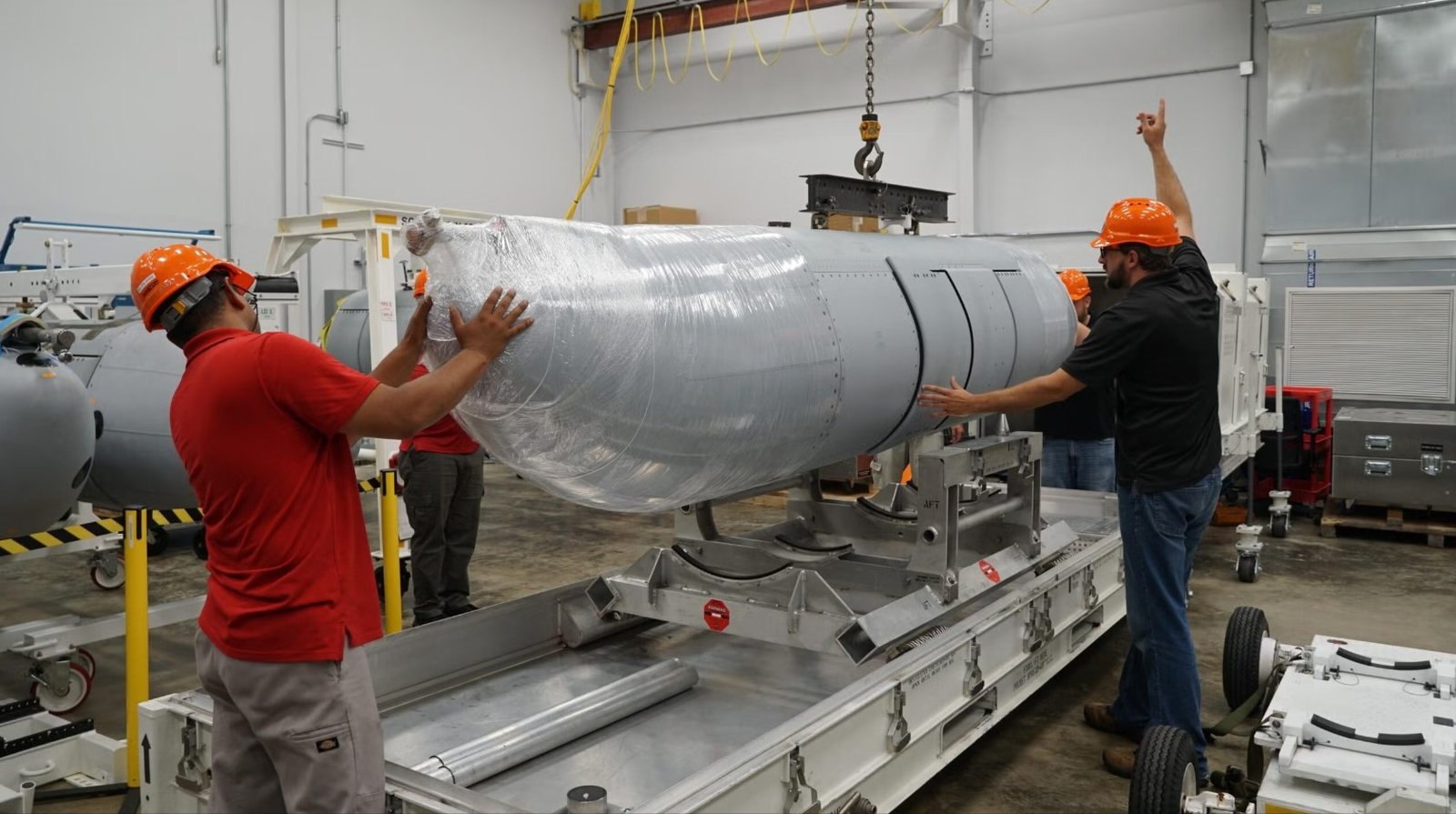
U.S
FOREST, Miss., — Raytheon, an RTX business, has completed a $50 million expansion of its manufacturing facility in Forest, Mississippi. The project adds 17,000 square feet of manufacturing space and increases the site's capacity to produce electronic warfare and radar systems. The investment is expected to create 100 high-skilled jobs by 2028. Facility Expands to 445,000 Square Feet The expansion brings the Forest facility to 445,000 square feet of manufacturing space, making it one of the largest defense manufacturing locations in Mississippi. Raytheon has invested $280 million across three expansions at the facility over the past decade. Previous projects included: A 20,000-square-foot expansion completed in 2013. A 50,000-square-foot radar production and testing center completed in 2020. The latest 17,000-square-foot expansion, supported by a $50 million investment. Supporting Next Generation Jammer Production The newly expanded space will support the production, testing and integration of Next Generation Jammer Mid-Band (NGJ-MB) pods. NGJ-MB is an electronic attack system developed for the U.S. Navy and Australian government. The system is designed to deny, disrupt and degrade enemy technology, including communications and air-defense systems. Raytheon's Forest facility began low-rate initial production of NGJ-MB in 2021. The pods are used on the EA-18G Growler electronic warfare aircraft. The expanded facility will also support other airborne radar programs as Raytheon increases manufacturing capacity. Other Defense Programs The Forest Consolidated Manufacturing Center supports several radar and electronic warfare programs. Its work includes: Airborne radars for the F/A-18 and F-15. NGJ pods for the EA-18G Growler. Advanced Airborne Sensor systems for the P-8 Poseidon. Digital radar warning receivers. Sentinel ground-based radars. Other radar and electronic warfare systems. The site also includes testing ranges and calibration capabilities supporting its manufacturing and testing activities. Raytheon Expands Mississippi Workforce “Completing this expansion underscores our long-term commitment to Forest and the state of Mississippi,” said Barbara Borgonovi, president of Naval Power at Raytheon. She said the company is working with state and local partners to develop the workforce, infrastructure and capabilities needed to increase production in support of national defense programs. U.S. Senator Roger Wicker, chairman of the Senate Armed Services Committee, also highlighted the expansion and the expected addition of 100 jobs. Mississippi Governor Tate Reeves described the project as an economic development benefit for Scott County and an investment in U.S. national security. 40 Years of Operations in Forest Raytheon has operated in the Forest community for 40 years. The company says its continued capital investment in the area also supports workforce development, education and local support networks. The latest expansion increases the manufacturing footprint of the Forest site while providing additional capacity for radar and electronic warfare programs.
Read More → Posted on 2026-08-27 16:40:01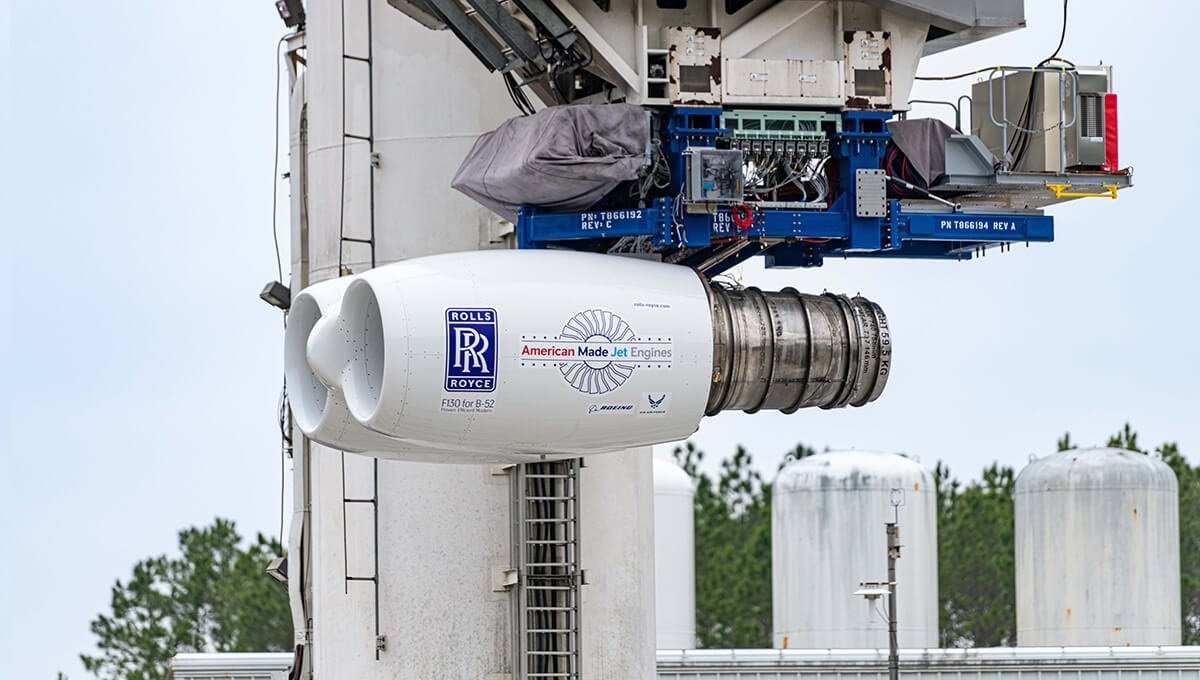
U.S
INDIANAPOLIS — Rolls-Royce has completed a decade-long, $1 billion modernization of its manufacturing, assembly and engine-test operations in Indiana. It is the company’s largest single investment in the United States and expands its capacity to support major U.S. military aviation programs. About $600 million was spent modernizing manufacturing operations at the Indianapolis campus, with that work completed in 2021. Another $400 million funded new engine-testing infrastructure, including expanded test cells in Indianapolis and high-altitude, hybrid-electric and hypersonics testing capabilities at the Purdue Aerospace District in West Lafayette. Company leaders and state officials marked the completion with a ribbon-cutting ceremony on August 27, 2026, at the Rolls-Royce Performance Building on South Tibbs Avenue in Indianapolis. “This billion-dollar investment is about more than buildings and test cells — it is about delivering for the American warfighter, on time and at the standard our customers expect. We made this investment because it was the right thing to do for U.S. national security and for the future of Rolls-Royce,” said Adam Riddle, president of Defense and chief executive of Rolls-Royce North America. Supporting U.S. Military Programs The Indiana operations will support future engines for the U.S. Air Force’s B-52 strategic bomber and the U.S. Army’s MV-75 Cheyenne, also known as the Future Long-Range Assault Aircraft. The Indianapolis site also builds and tests engines for the V-22 Osprey, MQ-25A Stingray and C-130J. Rolls-Royce has produced more than 14,000 engines at the campus since 2001, with roughly half from the AE engine family used on aircraft including the C-130J and V-22. The company also has a contract to supply 650 F130 engines for the B-52 fleet. Rolls-Royce said Indianapolis produces more of its defense products than any other company site worldwide. Jobs and Research The Indianapolis operation employs about 3,500 people, including workers represented by the United Auto Workers, and supports thousands of additional supply-chain jobs in Indiana. About 80 percent of Rolls-Royce’s U.S. defense workforce is based in the state, while more than 700 Indianapolis employees are Purdue University graduates. The company plans to hire about 100 additional engineers as work expands on the F130 and AE 1107 engines. “The engines built in Indianapolis power the aircraft our warfighters depend on, and this investment strengthens the American defense industrial base at a moment when we need it most,” said Indiana Senator Jim Banks. Rolls-Royce said it has invested more than $1.5 billion in U.S. facilities and nearly $2.5 billion in research and development over the past decade. Its U.S. operations contributed $6.2 billion to the national economy in 2024 and supported more than 30,000 jobs across 26 states, including research spillover. The company estimates that every dollar invested by the U.S. government in Rolls-Royce generates about $4 in economic returns. The Indianapolis campus also houses LibertyWorks, Rolls-Royce’s advanced propulsion research organization. It is supported by a $75 million, 10-year alliance with Purdue University covering gas turbine technology, electrical and digital systems and related research, primarily at Purdue’s Zucrow Laboratories. The modernization replaced aging infrastructure, including some facilities dating to World War II, with newer equipment and processes while production continued. The Indianapolis campus footprint was reduced from about 3 million square feet to 1.5 million square feet. The expanded test facilities provide a wider range of engine-testing capabilities at lower cost and risk, including support for sustainable aviation fuels. Rolls-Royce said the completed investment positions its Indiana operations to support growth in existing programs and future contracts.
Read More → Posted on 2026-08-28 11:22:50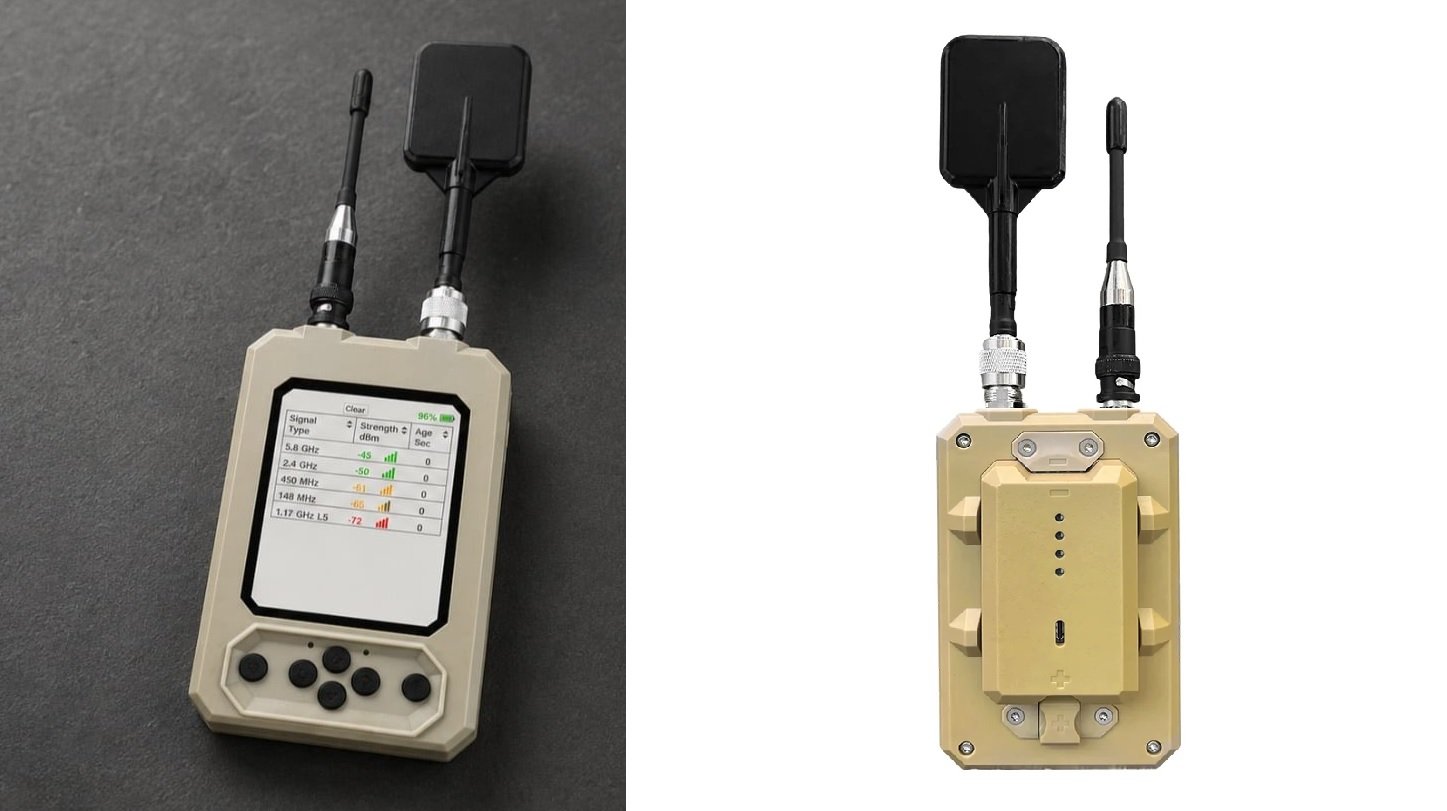
U.S
WASHINGTON, — The U.S. Army has awarded Heaviside Industries Inc. a firm-fixed-price, indefinite-delivery/indefinite-quantity contract worth up to $99 million for the procurement, fielding, upgrades and sustainment of the company’s MOTH spectrum analyzer. The contract was announced in the Department of War’s contracts listing on August 27. The contract is scheduled to run through August 27, 2031. Heaviside Industries, based in Marina del Rey, California, received the award after the Army solicited bids online and received 99 proposals. Work locations and funding will be determined through individual orders. The contracting activity is the Army Contracting Command at Aberdeen Proving Ground, Maryland. The MOTH is a compact, ruggedized tactical spectrum analyzer designed to provide soldiers with awareness of radio-frequency signals. It covers frequencies from 5 MHz to 6 GHz, allowing operators to detect radio-frequency activity associated with drones, radios and other communications equipment. The device weighs 0.99 pounds with its battery installed and measures 5.78 by 3.3 by 1.8 inches. It can be used as a handheld device or carried on a soldier’s vest. The MOTH has a 2.79-inch LCD display with 240 by 320 pixel resolution, built-in GPS, vibration notifications and a direction-finding mode. It also provides a real-time signal oscillation display. The MOTH can scan its frequency range five times per second and has a listed battery life of up to 12 hours from its 25.2 Wh battery. The device is rated IP67 for protection against dust and water and is specified to operate between 14 and 131 degrees Fahrenheit. The analyzer also supports integration with the Android Team Awareness Kit (ATAK), a digital situational-awareness system used by U.S. military personnel. The MOTH has a stated Technology Readiness Level of 9 and is NDAA compliant. Heaviside says the device is designed and manufactured in the United States. The MOTH is intended to support soldiers operating in environments where identifying radio-frequency activity is important. Soldier Systems Daily reported in July that the device can be used by Cyber Electromagnetic Activities personnel for identifying signals and obtaining line-of-bearing information, including in counter-drone applications. The publication also noted that the system is designed to be simple enough for use by personnel who may not have specialized electronic-warfare training. The MOTH is also commercially available. Lumenier lists the unit at $4,950 and says the package includes the spectrum analyzer, two lithium batteries, a USB-C charger, a custom vest pouch, a protective Pelican case, and low- and high-band antennas. The Army contract covers more than the initial purchase of the equipment. It also includes fielding, upgrades and sustainment, allowing the service to procure additional MOTH systems and receive support over the contract period through 2031. The award gives the Army a procurement mechanism for deploying the compact spectrum analyzer through individual orders rather than specifying a single quantity of systems in the initial contract announcement. The Department of War did not disclose the number of MOTH units that will ultimately be purchased under the $99 million contract ceiling.
Read More → Posted on 2026-08-28 11:53:03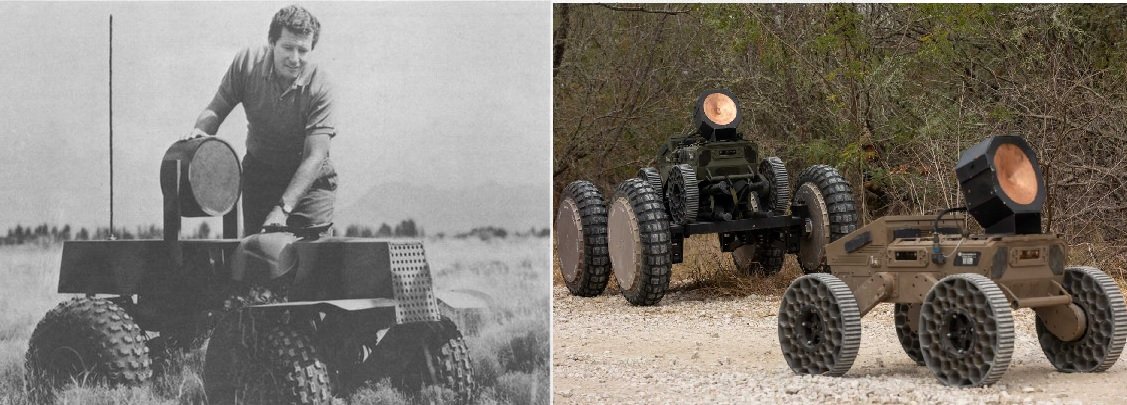
U.S
Several weapons and unmanned systems being developed or used today have design concepts that can be traced back to military research conducted during the final years of the Cold War, according to an analysis by firearms and military analyst Gatnerd on X. The analysis points to systems involving uncrewed ground vehicles, loitering munitions, ground-launched cruise missiles, fiber-optic weapons, stealth bombers and unmanned surface vessels. Gatnerd's broader point is that several ideas now receiving renewed attention were already being explored in the 1980s and 1990s. The comparison does not mean that modern systems are unchanged versions of older weapons. Current systems use newer electronics, software, sensors, materials, communications and manufacturing methods. In several cases, the relationship is better described as a revival of an earlier concept rather than a direct technical continuation. FireAnt and Sandia's 1980s Fire Ant One of the examples highlighted by Gatnerd is the FireAnt uncrewed ground vehicle developed by Swarmbotics AI. Swarmbotics describes FireAnt as an attritable, swarming, man-portable UGV that can support missions including counter-drone operations, intelligence, surveillance and reconnaissance, electronic warfare and other modular payload applications. The company's ANTS, or Attritable Networked Tactical Swarm, family combines the robotic platforms with software for coordinated swarm operations. The U.S. Army has also been testing FireAnt systems. Recent footage showed an M2A4 Bradley infantry fighting vehicle carrying five FireAnt UGVs during the Pegasus Charge 3 test exercise. The testing is examining how small robotic systems can be carried and employed with conventional Army formations. Gatnerd noted that the name and basic concept recall a different Fire Ant system tested by Sandia National Laboratories in 1987 and 1988. The Sandia Fire Ant was a small remotely operated ground vehicle based on a Honda 125 four-wheeled all-terrain vehicle. It carried a shaped-charge-type warhead and an onboard video camera, allowing an operator to control the vehicle toward a target. Later versions were also described with automatic target-recognition capabilities. The earlier project illustrates that the idea of using small unmanned ground vehicles to approach armored targets was being explored decades before today's autonomous and swarm-enabled UGV programs. Shahed-136 and the Dornier DAR Comparison Gatnerd also pointed to similarities between the Iranian Shahed-136 one-way attack drone and the West German Dornier Drohne Anti-Radar, or DAR, project from the 1980s. Dornier developed DAR as an unmanned system intended to locate and attack enemy radar installations. The aircraft used a delta-wing configuration and was designed for launch from a ground vehicle. The project was developed during the Cold War and was eventually terminated; it did not enter German service. The Shahed-136 has a broadly similar cropped-delta configuration, which has led to repeated comparisons with DAR. However, the available evidence does not establish a confirmed direct technical lineage between the two systems. Some accounts have proposed a connection through Israel's Harpy loitering munition, while other assessments treat the similarity as primarily visual and conceptual. Therefore, the DAR example is better described as a case of similar design and mission concepts rather than a confirmed direct development line from the 1980s German project to the Shahed-136. B-21 Raider and the B-2 Spirit The B-21 Raider provides a clearer example of design continuity within the U.S. bomber program. The B-2 Spirit first flew in 1989 and established the flying-wing configuration that remains associated with Northrop Grumman's low-observable bomber designs. The U.S. Air Force says the B-2's low observability comes from a combination of its flying-wing design, composite materials, coatings and other technologies. The B-21 uses the same broad flying-wing approach but incorporates substantially newer technologies and systems. Its development therefore illustrates how an aerodynamic and stealth concept originating during the Cold War can continue into a new generation of aircraft. Typhon Brings Ground-Launched Tomahawk Capability Back Another example is the U.S. Army's Mid-Range Capability, commonly known as Typhon. The Army's system uses a ground-based launcher capable of firing the Navy's Standard Missile-6 and Tomahawk Land Attack Missile. The U.S. Army successfully demonstrated a Tomahawk launch from the prototype system in June 2023, and the MRC subsequently became an operational Army capability. The concept has a Cold War predecessor in the BGM-109G Gryphon ground-launched cruise missile. The Gryphon was a ground-launched version of the Tomahawk family that entered service in Europe during the 1980s before being eliminated under the 1987 Intermediate-Range Nuclear Forces Treaty. Typhon is not a reintroduction of the Gryphon itself. Instead, it represents the return of a ground-based launch concept using modern launch equipment and existing naval missiles. Fiber-Optic Weapons Predated Today's FPV Drones Fiber-optic FPV drones have become increasingly important because their physical communication links are difficult to disrupt through conventional radio-frequency electronic warfare. The underlying idea is much older. The U.S. Army's Fiber Optic Guided Missile and Enhanced Fiber Optic Guided Missile programs were developed during the 1980s and 1990s. The EFOG-M used a fiber-optic cable connecting the missile to the launch vehicle. A camera in the missile transmitted imagery to the operator, who could use that information to select and engage targets. U.S. government documentation described a range of up to 15 kilometers. A 1987 U.S. Naval Institute account also described the earlier FOG-M concept, in which video from a missile's nose camera was transmitted to the operator through a fiber-optic cable. Today's fiber-optic FPV drones apply the same fundamental principle in a much smaller and generally less expensive form. Their use demonstrates how an older military technology can become practical on a much wider scale when combined with modern commercial electronics and unmanned platforms. OWL MK II and Early Unmanned Surface Vessels The same pattern can be seen at sea. Howard Hornsby's OWL MK II was an unmanned surface vessel developed around the late 1980s and tested extensively during the 1990s. A U.S. Marine Corps photograph from 1998 identifies the OWL MK II as a remotely controlled unmanned surface vessel developed by Navtec and Howard Hornsby for the Office of Naval Research. The platform was tested for missions including marine reconnaissance, harbor protection, minehunting and littoral anti-submarine operations. According to accounts of the program, an OWL MK II operated with U.S. Navy Detachment 1 in Bahrain from 1995 to 1997. The system did not become a major formal Navy program, but its development demonstrated that unmanned surface vessels were being considered for operational naval missions decades before the current expansion of maritime drones. Cold War Research and the Post-Cold War Period Gatnerd's comparison focuses on a broader change in military priorities. During the Cold War, the United States and its allies invested heavily in technologies intended for a potential conflict with a technologically capable peer adversary. These programs included precision weapons, stealth aircraft, unmanned systems, advanced guidance technologies and weapons designed to operate against armored formations and air-defense networks. After the Cold War ended, many major defense programs were reduced, canceled or delayed. Military operations in the following decades also placed greater emphasis on counterinsurgency and other missions rather than large-scale conventional warfare against a peer military. The renewed focus on high-intensity conventional warfare has brought some of those earlier concepts back into attention. The current systems, however, are not simply 1980s weapons reproduced with new names. Modern computing, sensors, communications, autonomy, materials and manufacturing have changed what can be achieved with many of the same basic ideas. The examples highlighted by Gatnerd therefore show more than simple technological repetition. They demonstrate that several concepts considered advanced during the final years of the Cold War remained relevant, even after the original programs were canceled or left development. As military requirements have changed again, some of those concepts are being developed with technologies that were not available when the original systems were tested.
Read More → Posted on 2026-08-28 12:39:59
World
TEHRAN, — The war involving Iran, the United States and Israel, which began with U.S.-Israeli strikes on Iran on February 28, 2026, has placed additional pressure on an Iranian economy that was already struggling with high inflation, currency depreciation, sanctions, weak job creation and shortages of water and energy. The conflict has disrupted trade, damaged infrastructure, complicated imports and exports, and weakened household purchasing power. The effects are increasingly visible in the prices of food, medicines, household goods and other daily necessities, while businesses and workers are also facing declining demand and fewer employment opportunities. The World Bank says economic activity has been severely disrupted by the conflict, sanctions and social unrest, with import disruptions adding inflationary pressure and increasing food-security risks. Importantly, the war did not create all of Iran's economic problems. Many of the pressures were already present before February 28 because of long-running sanctions, inflation, currency weakness, structural economic problems and energy shortages. The conflict has amplified those existing problems. Food prices have risen sharply Food has become one of the most visible areas of pressure on Iranian households. According to Iran's Statistical Center, year-on-year food inflation reached about 128% in July 2026. Within major food categories, prices of oils and fats were about 261% higher, milk, cheese and eggs about 147% higher, and meat and poultry about 145% higher than a year earlier. A comparison of prices immediately before the war with prices in August shows how much purchasing power has been lost. An Al Jazeera comparison found that tomato prices had risen 71%, chicken 74% and cooking oil 177% compared with the period before the war. The result is not simply higher grocery bills. Families are changing what they buy. Some households have reduced or eliminated meat, chicken and other higher-cost foods as their incomes fail to keep pace with prices. Bread and other staples Bread remains subject to government controls and subsidies, but prices have also increased. In Tehran, regulated bread prices were nearly doubled in an official adjustment earlier this year. The cost of staple foods had already been rising before the war. The Center for Strategic and International Studies reported that wheat-flour prices had increased substantially even before the conflict, while subsidized bread shortages and long queues were already appearing in some areas. Household goods and everyday products The fall of the rial has made imported products and goods dependent on imported components significantly more expensive. The Iranian rial reached a record low of more than 2 million rials per U.S. dollar on the free market on August 26, increasing the local-currency cost of imported products and materials. This affects a wide range of everyday products, including: Smartphones and computers Refrigerators and washing machines Air conditioners and electrical appliances Spare parts and repair services Personal-care products Cleaning products Clothing and footwear Imported components used by Iranian manufacturers The problem extends beyond the original price of imported goods. Businesses also face higher costs for raw materials, transportation, replacement parts and financing. Those costs eventually reach consumers. For retailers, however, simply raising prices is not always possible because customers themselves have less purchasing power. Iranian businesses have therefore faced the difficult combination of higher operating costs and weaker consumer demand. A Tehran retailer interviewed by Al Jazeera reported that his sales had fallen by about 40% compared with the previous year. Jobs and unemployment The economic impact is also appearing in the labor market. Iran's overall unemployment rate was 9.1% in spring 2026, according to the Statistical Center of Iran, while youth unemployment reached 23.4%, 3.7 percentage points higher than a year earlier. Labor-force participation was only about 40%, meaning a large proportion of working-age people were outside the official labor force. The conflict has affected employment through several channels. Businesses dependent on imports face difficulties obtaining supplies. Manufacturers face energy and transportation disruptions. Retailers are dealing with lower sales. Tourism and other service businesses have also been affected by the wider security and economic environment. Some workers are responding by accepting longer working hours or jobs outside their professional qualifications. Reports from Tehran describe employers offering low salaries, long working hours and, in some cases, jobs without insurance. The result is a growing gap between income and the cost of basic living. Iran's minimum wage for the current Iranian year was raised by 60%, but inflation has rapidly eroded the value of that increase. The government-approved minimum wage is about 166 million rials per month, with benefits taking the total for eligible workers to less than 220 million rials. Banking and financial disruptions Iran's banking system is facing pressure from both longstanding international financial restrictions and new wartime disruptions. U.S. sanctions have restricted Iran's access to international banking and payment systems for years. Even products such as medicines, which can be exempt from sanctions under humanitarian rules, can become difficult to purchase because banks and international suppliers may be unwilling or unable to process transactions. The conflict has added another layer of disruption. Reports in 2026 have described banking disruptions following major cyberattacks, including attacks that disrupted services at several Iranian banks. Businesses have also faced difficulties obtaining credit and dealing with payment delays. The disruption makes it harder for companies to import raw materials, pay suppliers and maintain normal operations. The weakness of the rial creates another problem. When the currency loses value rapidly, businesses must pay more rials for imported goods and components, while households see their savings and salaries lose purchasing power. Medical care and medicine Healthcare is another area where the economic crisis is directly affecting ordinary people. Iran's pharmaceutical system already faced problems before the war because of sanctions, currency instability, banking restrictions and difficulties obtaining imported raw materials and medical equipment. The conflict has added transportation and supply-chain problems and has damaged parts of the health infrastructure. The price increases reported in August illustrate the scale of the problem. Compared with the period immediately before the war, Al Jazeera found that the price of insulin had increased by about 642%, paracetamol by about 93%, and baby formula by about 95%. Higher prices are only part of the problem. Hospitals and pharmacies also need reliable supplies of medicines, medical equipment and imported production materials. Restrictions on international payments can delay procurement even when the products themselves are not formally prohibited. A recent analysis published in the International Journal for Equity in Health found that sanctions and financial restrictions have affected procurement, healthcare financing, medical technology, workforce capacity and continuity of care. The 2026 conflict has increased those vulnerabilities. Humanitarian assessments reported damage to healthcare facilities and additional pressure on medical services during the fighting. Energy and transportation Iran is also dealing with electricity and energy shortages. Power disruptions existed before the current conflict, but damage to energy infrastructure and industrial facilities has made the situation more difficult. The House of Commons Library reports continuing rolling electricity blackouts and difficulties meeting domestic petrol demand. Energy shortages affect much more than household electricity bills. Factories need electricity to operate, businesses need reliable power to provide services, and interruptions can reduce production and employment. Transportation has also become more difficult because of disruptions around the Strait of Hormuz, a major route for Iranian trade. Higher shipping, insurance and transportation costs increase the cost of imported goods and can also make exports more difficult. Housing and household budgets Housing costs have also added to the pressure. Reports from Iran indicate significant increases in rents, with some households negotiating with landlords simply to limit the size of annual increases. At the same time, utilities, transportation, food and healthcare are consuming a larger share of household income. This creates a wider cost-of-living problem: even when a household continues to have employment, its real purchasing power can fall rapidly. A worker may receive a nominal salary increase, but if food, rent, medicine and transportation rise faster, the worker can still afford less than before. What has changed for ordinary Iranians? The economic impact can be summarized across several areas: Area Effect on ordinary people Food Very large increases in food prices; families reducing meat and other expensive foods Household goods Imported products and equipment becoming substantially more expensive Medicine Sharp increases in prices of some medicines and greater supply difficulties Employment Higher unemployment, particularly among young people Wages Nominal wage increases losing value rapidly because of inflation Banking Payment, credit and international transaction difficulties Healthcare Higher costs, procurement problems and pressure on medical facilities Electricity Continuing power shortages and disruptions Transport Higher costs and disruption to trade routes Businesses Higher raw-material costs combined with weaker consumer demand Currency Rial depreciation dramatically reducing purchasing power Poverty Greater risk as food inflation and import shortages reduce real incomes The conflict is worsening an existing economic crisis Iran's current economic situation therefore cannot be attributed entirely to the war. Before February 28, Iran was already dealing with international sanctions, a weak rial, high inflation, low job creation, energy shortages and structural economic problems. The conflict has added damage to infrastructure, trade disruptions, restrictions on shipping and additional pressure on imports and exports. The World Bank expects high inflation and falling real incomes to suppress domestic demand, while disruptions to imports create additional food-security risks. It also estimates that Iran's economy contracted by 2.7% in the Iranian year ending March 20, 2026, with the conflict and trade disruptions contributing to the deterioration. The IMF's July 2026 projection was for Iran's economy to contract 5.4% in 2026, assuming the conflict eventually ends, according to the House of Commons Library. For ordinary Iranians, the most immediate consequence is therefore not simply a change in one commodity's price. It is the combined deterioration in purchasing power, employment, access to healthcare, business activity and the ability to afford basic household necessities. The Iranian economy has not completely collapsed, and shops in major cities can still have supplies. But the combination of very high inflation, currency depreciation, disrupted trade and declining real incomes means that having goods available does not necessarily mean that ordinary households can afford them.
Read More → Posted on 2026-08-28 13:08:38
Europe
WARSAW, — Poland does not plan to host nuclear warheads on its territory, Deputy Defence Minister Paweł Zalewski said Thursday during a briefing at NATO headquarters in Brussels. “I would like to say this very clearly and openly. Poland does not want to have nuclear warheads on its territory,” Zalewski said. His comments came in response to questions about whether a future permanent U.S. military presence in Poland could include nuclear capabilities. Zalewski said that even if the U.S. military presence is expanded, the deployment of nuclear warheads on Polish territory is not being considered. At the same time, Poland wants to remain an active participant in NATO’s nuclear deterrence system. Zalewski said participation does not require nuclear warheads to be physically stationed in Poland. Poland Seeks Greater NATO Role Defence Minister Władysław Kosiniak-Kamysz has also said Poland remains interested in NATO’s Nuclear Sharing programme and is involved in discussions about a broader European nuclear protection framework. Under NATO’s Nuclear Sharing arrangements, the United States maintains nuclear weapons in several European allied countries, including Belgium, Germany, Italy and the Netherlands. The arrangements allow participating non-nuclear allies to contribute to NATO’s nuclear deterrence mission while the United States retains control of its nuclear weapons. Poland’s position comes after several years of domestic debate about whether the country should seek a more direct role in nuclear deterrence. Earlier Calls for Nuclear Protection In April 2025, then-President Andrzej Duda said Poland should seek protection under France’s nuclear deterrence and also called for U.S. nuclear weapons to be stationed in Poland. He said the two approaches were not contradictory. In September 2025, the French Air and Space Force deployed Rafale fighter jets to Poland. The aircraft are capable of carrying ASMP missiles that can be fitted with nuclear warheads. The deployment was part of NATO efforts to strengthen air defences on the eastern flank following Russian drone incursions into Polish airspace. In February 2026, current President Karol Nawrocki went further, saying Poland should consider developing its own nuclear weapons. He described himself as a strong supporter of Poland joining a nuclear project while stressing that any such steps would have to comply with international regulations. Domestic Opposition Zalewski’s position has faced criticism from opposition figures and officials close to President Nawrocki. Marcin Przydacz, head of the president’s International Policy Bureau, called Zalewski’s remarks “strange” and “absurd” and said they were contrary to Poland’s previous policy. He argued that genuine participation in Nuclear Sharing requires hosting nuclear weapons. Former Defence Minister Mariusz Błaszczak also argued that Poland should seek full inclusion in the programme to strengthen NATO’s eastern flank. Retired Brigadier General Stanisław Koziej described the government’s position as a strategic mistake and argued that the presence of allied nuclear assets would strengthen deterrence against Russia. Zalewski defended the government’s approach, saying that deterrence comes from real domestic and allied capabilities rather than intentions. U.S. Military Presence Also Discussed During his visit to Brussels, Zalewski met U.S. Deputy Secretary of Defense Elbridge Colby. Their talks included the implementation of NATO 3.0, under which European countries would take greater responsibility for the continent’s security. Zalewski said Poland supports the approach and wants to play an active role in strengthening NATO. The two sides also discussed a possible permanent U.S. military presence in Poland. Zalewski said several locations are being considered for American bases and that a U.S. administration representative is expected to visit Poland to review Warsaw’s proposals. He said the United States has important interests in Poland and wants a permanent presence there. The discussions also concern capabilities that Poland does not yet fully possess. Zalewski said Poland would prefer decisions on the U.S. presence to come around the conclusion of Washington’s review of its military presence in Europe, although he stressed that finding practical solutions is more important than meeting a fixed deadline. Poland remains a party to the Treaty on the Non-Proliferation of Nuclear Weapons.
Read More → Posted on 2026-08-28 13:24:48
Europe
HELSINKI, — Sweden’s Saab has signed a contract with the Finnish Defence Forces Logistics Command for the delivery of its RBS 70 NG short-range air defence system. The initial order is valued at SEK 1.2 billion. The agreement also allows Finland to place additional orders in the future for more RBS 70 NG systems, as well as training, spare parts and maintenance equipment. Finland has operated an earlier version of the RBS 70 since 2008, designated ITO05 and ITO05M by the Finnish Defence Forces. The RBS 70 NG retains the system’s unjammable laser-guided missile and adds an automatic target tracker and built-in night capability. These improvements are intended to increase hit probability and allow operations in a wider range of conditions. The RBS 70 NG is designed for short-range ground-based air defence and can engage aircraft, helicopters, drones and other aerial threats at ranges of up to nine kilometres. Finland’s Ministry of Defence had earlier indicated that the procurement was worth approximately €108 million excluding taxes. The package is expected to include firing units, missiles, training equipment and a maintenance system, with full operational capability planned before the end of the 2020s. Training for regular personnel, conscripts and reservists is planned mainly at the Salpausselkä Air Defence Battalion of the Karelia Brigade. Görgen Johansson, head of Saab’s Dynamics business area, said: “We are proud to continue supporting Finland’s Defence Forces and contributing to keeping the nation’s skies safe. With RBS 70 NG, Finland will receive a state-of-the-art short-range air defence capability to effectively meet evolving aerial threats.” The contract continues the long-standing cooperation between Saab and the Finnish Defence Forces involving the RBS 70 family and supports Finland’s efforts to strengthen its ground-based air defence network.
Read More → Posted on 2026-08-28 13:29:41
U.S
TAMPA, Florida, — U.S. Central Command (CENTCOM) has announced that U.S. forces have cleared Iranian sea mines from the internationally recognized shipping lanes in the Strait of Hormuz, saying the routes are now open to commercial shipping. In a video released Thursday, CENTCOM Commander Adm. Brad Cooper said the mines had been laid months earlier by Iran’s Islamic Revolutionary Guard Corps (IRGC) in the strait’s Traffic Separation Scheme, the established routes used by international commercial vessels. Update from CENTCOM Commander: pic.twitter.com/osPbltjJ1C — U.S. Central Command (@CENTCOM) August 28, 2026 Cooper said the operation was conducted over several months by U.S. Navy divers, Navy SEALs and military aircraft from the Army, Navy, Air Force and Marine Corps. He described the conditions as challenging and dangerous but said the forces had completed the mission. “Today, international shipping lanes are open and momentum is building,” Cooper said. Nearly 1,500 Commercial Vessels Assisted Cooper said U.S. forces have provided coordinated protection to nearly 1,500 commercial vessels transiting the strait in recent months. These vessels transported nearly 750 million barrels of crude oil to global markets. At the same time, about 50,000 U.S. troops operating across the region continue enforcing a naval blockade against Iran while supporting commercial transit through the waterway. According to Cooper, Iran has exported zero oil from its shores since the blockade was resumed in mid-July. He said no vessels have entered or left Iranian ports without U.S. authorization, except for humanitarian reasons. U.S. forces have also turned back about 75 vessels attempting to breach the blockade and disabled three vessels that did not comply with U.S. orders. Commercial Traffic Still Below Prewar Levels Despite CENTCOM's announcement, commercial traffic through the Strait of Hormuz remains well below prewar levels. Before the conflict began on February 28, more than 20 million barrels of oil per day passed through the waterway, with roughly 100 to 130 vessels using the route daily. Recent shipping data shows that commodity-vessel traffic remains in the single digits to low teens on some days. The announcement follows earlier statements by President Donald Trump that U.S. forces had removed or detonated mines in international waters in the strait. Cooper's latest video provides CENTCOM's formal operational confirmation that the Traffic Separation Scheme has been cleared. Security Concerns Remain U.S. allies have privately assessed that some mines may not have been cleared. Earlier estimates from the International Maritime Organization and industry groups placed the number of mines in the historic shipping lanes at around 80, with some assessments higher. Allied officials have also warned that sea currents can move mines and that residual risks could remain outside the main monitored lanes. The International Maritime Organization and maritime information centers continue to advise vessels to exercise maximum caution in the area. Shipping companies and insurers are also conducting their own risk assessments. CENTCOM said it will continue its two main missions in the area: enforcing the blockade against Iran while supporting lawful international commercial transit through the Strait of Hormuz.
Read More → Posted on 2026-08-28 13:46:48
World
MOSCOW, — Russian underground resistance group Black Spark (Chornaya Iskra / Чорна іскра) has published documents that it says reveal a classified interceptor UAV program being developed by Russian engineering company LLC NIK (Scientific and Engineering Company). Black Spark said the material came from NIK’s internal database. According to the group, an insider provided access to the files rather than the data being obtained through a cyberattack. The group claimed it acquired hundreds of terabytes of information and later erased the data from NIK’s servers. NIK has not publicly responded to the reported data loss. We've obtained technology about secret Russian UAVs from the database of "NIK" LLC ("НИК" - Научно Исследовательская Компания)This time, we didn't even have to break anything. "Thinking" people within the company understand whose side the truth is on.A few weeks ago, one of… pic.twitter.com/e2B2AYmaE1 — Black Spark (@Black_Spark2) August 27, 2026 UBB-M Interceptor The documents reportedly show that NIK is examining two interceptor UAV designs. The first is a modified version of the company’s UBB-M guided loitering munition. The original UBB-M uses straight folding wings, while the interceptor version has swept wings with reduced span and surface area. Similar changes were made to the empennage to support the interceptor configuration. The UAV is launched from a 160 mm-diameter canister using a mortar-type mechanism. According to the released documents, it has a 15–16 kg launch mass and carries a mission payload of approximately 3 kg, described by Black Spark as likely being a warhead. The modified UBB-M reportedly uses a higher-capacity battery and upgraded electric propulsion system. Its stated specifications are: Speed: 250–300 km/h Range: 20 km Endurance: up to 10 minutes Operating altitude: 20 m to 4.5 km The second interceptor design reportedly has a conventional conical fuselage and four electric motors. No performance specifications for this design have been released. Other Projects in the Leaked Data Black Spark said the database also contains information on other Russian UAV and aviation projects, including the Lancet, Condor, Harpy, Zontik and Orion UAVs, as well as a specialized drone-intercepting aircraft. The group also said it obtained aviation-related files concerning the MiG-29 SMT, Il-103 and Il-96. NIK is a private engineering company based in Zhukovsky, Moscow Region. It was founded in the late 1990s by specialists from the Myasishchev Design Bureau and has worked on structural analysis, composite materials, research and development, aviation and unmanned systems. Publicly available information confirms that NIK had a long-term partnership with Boeing, beginning in 1999 and continuing until 2022. NIK engineers worked on several Boeing civilian aircraft programs, including the 737, 747, 767, 777 and 787. Black Spark has also alleged that NIK was involved in industrial espionage against European defense companies before Russia’s full-scale invasion of Ukraine. The group said it possesses related information, but supporting documents have not been publicly released. Black Spark Black Spark has operated as an underground resistance network inside Russia since at least 2025. Ukraine’s Special Operations Forces have publicly acknowledged cooperation with the group on several operations. The group previously reported obtaining personnel databases from the Alabuga Special Economic Zone, including information connected to a facility assembling Russian Geran drones. The latest NIK release was published in August 27, 2026. The technical specifications of the interceptor and the broader claims about the leaked database are based on material released by Black Spark and have not been independently verified. NIK has not issued a public statement on the reported breach.
Read More → Posted on 2026-08-28 14:01:19
U.S
REDONDO BEACH, California — Northrop Grumman has received a $7 million contract from the Defense Advanced Research Projects Agency (DARPA) to advance diamond cooling technology for semiconductors used in military radar and communications systems. The contract covers Phase 2 of DARPA’s Technologies for Heat Removal in Electronics at the Device Scale (THREADS) program, which is focused on reducing the thermal limitations that restrict the performance of high-power radio-frequency (RF) electronics. Diamond Cooling to Address Heat Limits High-power RF systems often have to operate below their maximum output to prevent overheating. This limits signal strength and overall system performance. Northrop Grumman is using diamond as a thermal-management material because it conducts heat about five times faster than copper. The company says it can also remove heat more effectively than materials such as silicon carbide and gallium nitride (GaN), which are widely used in high-power electronics. At its Microelectronics Center, Northrop Grumman is integrating microscopic diamond structures directly into semiconductor devices. In collaboration with Stanford University, engineers developed a method to grow a layer of diamond inside microscopic channels on the back of each device. These channels provide a path for moving heat away from critical hotspots. Phase 1 Results and New Target During Phase 1 of the THREADS program, Northrop Grumman demonstrated a 3.3-fold increase in chip power density. Under Phase 2, the company aims to increase that result by more than three times again. If achieved, the power density would reach roughly 10 times the original baseline established when the program began. DARPA has reported that Phase 1 performers across the broader THREADS program achieved approximately a fivefold increase in RF power density compared with current state-of-the-art devices. DARPA said this level of improvement could roughly double radar range in operational terms. Potential Military Applications Higher power density could allow RF transmitters to deliver greater power while using smaller components. The technology could therefore support military radar, communications and advanced satellite links. Improved thermal management can also help reduce component size and weight while supporting greater reliability and longer operating life. Ben Heying, director of microelectronics at Northrop Grumman’s Space Park Foundry, said temperature has long limited the performance of microelectronics, including GaN devices. He described embedding diamond directly into chips as an enhanced cooling approach that allows higher power operation while reducing the risk of thermal damage. Northrop Grumman's Diamond Research Northrop Grumman has invested in diamond-based microelectronics research since 2019. The company plans to use an open-access business model to make the cooling technology available to other participants in the U.S. semiconductor industry. Northrop Grumman designs, manufactures, assembles, tests and packages millions of microelectronic devices each year for defense and commercial applications. The company says its domestic production supports the U.S. semiconductor supply chain. Its broader diamond research has also included testing diamond-based components capable of handling more than 100 watts in related applications. The Phase 2 THREADS effort will focus on further increasing RF power density and improving heat removal as higher-power semiconductor operation creates greater thermal demands.
Read More → Posted on 2026-08-28 14:13:37
India
NEW DELHI, — India has signed a Letter of Offer and Acceptance (LOA) with the United States to procure the Javelin anti-tank guided missile system through the U.S. Foreign Military Sales (FMS) route. The initial agreement is valued at an estimated $45.7 million. The package includes 100 FGM-148 Javelin missiles, one additional “fly-to-buy” evaluation missile and 25 Javelin Lightweight Command Launch Units (LwCLU). It also covers support equipment, simulation rounds, training materials, technical manuals, spare parts and lifecycle support. The U.S. Embassy in New Delhi welcomed the signing, saying the agreement reflects the growing U.S.-India Major Defense Partnership and creates opportunities for greater cooperation between the two countries' defence industries. U.S. Ambassador to India Sergio Gor said the agreement demonstrates U.S. support for the Indian Army and creates opportunities for the two defence industries to work together. He also highlighted the potential for cooperation to strengthen the defence industrial bases of both countries. The Javelin, produced by the Javelin Joint Venture between RTX and Lockheed Martin, is a man-portable, medium-range, fire-and-forget anti-tank guided missile. It uses an imaging infrared seeker and can operate in top-attack and direct-attack modes. The system is designed to engage armoured vehicles and fortified positions. The signing also opens the possibility of future co-production in India. Bharat Dynamics Limited (BDL) has previously signed an agreement with the Javelin Joint Venture to explore opportunities for manufacturing the missile system in India. The U.S. State Department had earlier approved a possible sale covering the same core Javelin package and associated equipment. With the LOA now signed, India becomes a customer of the Javelin system, while discussions on broader industrial cooperation can continue.
Read More → Posted on 2026-08-28 14:17:22
World
MOSCOW, — Rostec State Corporation’s RosEl holding has developed and begun production of the SOKOL-08, a mobile radar station designed to detect small unmanned aerial vehicles (UAVs) and drone swarms. Rostec announced the system on August 28. The SOKOL-08 uses a 2D phased-array antenna operating in the X-band. According to Rostec, the radar is designed to detect low-flying and low-observable targets and can identify objects as small as a small bird or a compact commercial drone. The radar can detect and track up to 100 objects simultaneously. Its machine-learning algorithms classify detected objects and automatically filter out safe targets, with the aim of reducing false alarms. 360-degree and sector scanning The SOKOL-08 can operate in two scanning modes depending on the mission. It can conduct 360-degree circular scanning or 90-degree sector scanning. In surveillance mode, the station can track up to 100 objects at the same time. Rostec also says that its high-speed mode allows operators to track a selected UAV together with an interceptor drone operating against that target. Designed for rapid deployment A key feature of the system is its ability to operate without a specially prepared deployment site. The station weighs less than 28 kg, allowing it to be moved between positions. The SOKOL-08 incorporates a satellite navigation module and an inclinometer. These systems allow the radar to determine its position, identify the north direction and compensate for installation errors caused by horizontal misalignment or tilt. Rostec says these functions support faster deployment and autonomous setup. Power and environmental specifications The radar consumes up to 350 watts of power and can operate from either a 220-volt industrial power network or a 24-volt onboard power network. Its enclosure has an IP66 protection rating against dust and moisture. The station is designed to operate in temperatures ranging from -40°C to +60°C. Part of a larger anti-drone network Rostec said the SOKOL-08 is being developed as part of its layered anti-drone defense concept, rather than as an isolated radar system. According to the company, Rostec enterprises produce systems covering different layers of counter-drone defense, including detection and suppression equipment, surface-to-air missile systems and interceptor drones. RosEl’s HUB integration buses are intended to connect equipment from different manufacturers to a unified situational control center. Rostec therefore describes the SOKOL-08 as one component of a broader digital air-defense architecture, where radar detection can be integrated with other counter-drone systems. With production now underway, the SOKOL-08 adds a mobile radar component to RosEl’s developing range of systems for detecting small UAVs and managing multiple aerial targets.
Read More → Posted on 2026-08-28 15:24:23
U.S
WASHINGTON, — The U.S. Department of Defense has awarded New Mexico-based rocket manufacturer X-Bow Systems a $10,981,581 contract to develop and flight-test a low-cost interceptor for ballistic and hypersonic threats. The Phase II Small Business Innovation Research (SBIR) award is being issued under the Missile Defense Agency’s (MDA) Rapid Response Small Launcher Technology program and supports its Low-Cost Interceptor (LCI) effort. The original solicitation, issued about a year ago, sought modular interceptor designs that could be rapidly demonstrated against ballistic and hypersonic threats. The LCI program targets a unit cost of less than $750,000 per interceptor, significantly below the reported cost of existing Patriot and THAAD interceptors. The $10.98 million figure is the development contract value, not the price of one interceptor. X-Bow will design, develop and demonstrate a high-performance solid rocket motor for the system. The contract runs from July 2026 through July 2028, with a prototype flight demonstration planned for late 2027. X-Bow manufactures solid rocket motors and propellant in-house using additive manufacturing. The company has already conducted a static test of a sub-scale solid rocket motor design related to the program and will use the funding for further motor development and flight testing. Expanding the Solid Rocket Motor Industry The Pentagon said the contract will help address the need to expand the U.S. solid rocket motor (SRM) industrial base, which currently relies on two primary manufacturers, Northrop Grumman and L3Harris’ Aerojet Rocketdyne. The Patriot missile is produced by Lockheed Martin and Raytheon, while Japan has previously been the only country licensed to manufacture Patriot missiles outside the United States. X-Bow CEO Jason Hundley said the company's manufacturing technology is intended to provide more affordable interceptors and rocket motors and increase production speed. MDA Director Lt. Gen. Heath Collins, speaking at the Space and Missile Defense Symposium in Huntsville, Alabama, said the agency is examining propulsion and other expensive interceptor components to identify opportunities to reduce costs. The effort comes as the U.S. and its allies seek larger interceptor stocks following recent conflicts. Estimates cited in reporting put remaining U.S. stocks at fewer than 1,000 Patriot interceptors and about 250 THAAD rounds. A Patriot replacement costs roughly $3.9 million to $4 million, while a THAAD interceptor costs about $12.7 million. Other Low-Cost Interceptor Programs The U.S. Air Force has also sought a counter-air missile costing less than $500,000 that could be produced in the thousands each year. In Europe, Ukraine and nine European countries — Denmark, France, Germany, Italy, the Netherlands, Norway, Spain, Sweden and the United Kingdom — have launched the FREYJA initiative to develop a European anti-ballistic missile capability. Ukrainian company Fire Point is supplying its FP-7.X interceptor and has estimated a cost below €1 million, or about $700,000. The initiative's earliest target for a successful ballistic-missile interception is mid-2027. Lockheed Martin has separately introduced the PAC-3 MSE Adapted Capability Effector (ACE), which the company says will cost about $2.5 million per missile, roughly half the price of the current PAC-3 MSE. Production is not expected to begin until mid-2029. President Donald Trump said in July that Patriot technology would be licensed to Ukraine, but Lockheed Martin and Raytheon have provided limited public information about licensing needed for Ukrainian production. The new systems remain in development. FREYJA's earliest target is mid-2027, while X-Bow's LCI prototype flight demonstration is planned for late 2027. The X-Bow demonstration will be a development test rather than an operational interceptor. It is also important to distinguish the LCI from X-Bow's Buckler interceptor. Buckler is a separate, flight-tested system designed to defeat Group 3 drones at supersonic speeds, with X-Bow stating that it is priced at under $100,000 per interceptor. The Buckler price does not apply to the MDA's LCI program. The LCI program is part of a broader U.S. and allied effort to develop lower-cost missile-defense systems that can be produced in larger quantities while expanding the industrial base for solid rocket motors. .
Read More → Posted on 2026-08-28 15:53:37
World
GOLCUK, TURKEY — Turkish defence technology company HAVELSAN has unveiled its new self-funded research and development project, AVISTA, at TEKNOFEST Blue Homeland 2026, held from August 20 to 23 at the Golcuk Naval Shipyard Command in Kocaeli. Building on its experience with the SANCAR and RAFNAR unmanned marine vehicles, HAVELSAN is developing AVISTA to provide autonomous underwater capabilities in environments where GNSS signals are unavailable. The project includes precise underwater positioning, three-dimensional mapping, ship hull inspection, protection of critical underwater infrastructure and integrated underwater navigation corridor planning. HAVELSAN started the project in response to the high cost of specialised underwater sensors and customs restrictions that can complicate international procurement. The company is developing cost-effective, readily available sensors and autonomous algorithms to reduce reliance on foreign suppliers and establish technologies for future underwater platforms. AVISTA is currently in the research and development phase and is being tested with a remotely operated underwater vehicle capable of six degrees of freedom. Its platform-independent software architecture is designed to allow the algorithms to be adapted to different underwater vehicles. The system is also designed to work with the ADVENT Combat Management System. The technologies developed under AVISTA will form the technical base for HAVELSAN's ÇAKA Submersible Hybrid Unmanned Marine Vehicle (H-UMV). HAVELSAN is developing algorithms for platforms designed to remain underwater for extended periods while maintaining a low acoustic signature. The project is intended to support naval applications including anti-submarine warfare, anti-surface warfare, mine warfare and seabed warfare through the ADVENT MUREN Combat Management System. Civilian and public-security applications include underwater search and rescue, forensic investigations, inspection of underwater infrastructure and energy facilities, and port security. According to TEKNOFEST Director Kadir Herkiloğlu, the AVISTA unmanned marine vehicle can dive to depths of up to 500 metres and can be used for mapping, mine-hunting tasks and detecting damage on ships. HAVELSAN plans to begin sea trials soon and aims to have its underwater technology products and solutions ready for operational use in 2027. During TEKNOFEST, HAVELSAN also briefed senior leaders and relevant personnel from the Turkish Naval Forces Command on its underwater capabilities. The company also organised an unmanned marine vehicles workshop for children, where participants learned about AVISTA and SANCAR and took part in model unmanned marine vehicle competitions.
Read More → Posted on 2026-08-28 16:05:41
World
MOSCOW, — Russia’s Strategic Missile Forces conducted a successful training-combat launch of a mobile, solid-fuel intercontinental ballistic missile (ICBM) from the Plesetsk State Testing Cosmodrome in the Arkhangelsk region, according to the Russian Ministry of Defense. The missile was launched toward the Kura test range on the Kamchatka Peninsula, covering more than 6,700 kilometers (about 4,160 miles). The Defense Ministry said the training warheads reached the designated area and that all assigned tasks were completed. It also reported that the missile maintained its planned trajectory. Before the launch, a mobile launcher battery was deployed to a remote, forested location. Video released by the Defense Ministry showed the missile launching from the site. The ministry did not identify the specific missile model used in the August 28 launch. However, a similar launch in May 2026 involved the RS-24 Yars, a mobile, solid-fuel ICBM, which was launched from Plesetsk toward the Kura range during strategic forces exercises. A separate RS-28 Sarmat test was also conducted from Plesetsk around the same period. The Defense Ministry said the main objective of the latest launch was to confirm the tactical, technical and flight characteristics of the missile system. The launch followed reports of Ukrainian drone activity in the Arkhangelsk region on August 23, including near the Plesetsk area. Russian authorities said drones were intercepted and reported no injuries. On August 24, Russia also conducted a successful Soyuz-2.1b launch from Plesetsk carrying a military satellite into orbit. Plesetsk is used by Russia for both military space launches and intercontinental ballistic missile testing. The latest launch was presented by the Russian Defense Ministry as a routine training activity intended to verify missile-system performance and the readiness of Strategic Missile Forces personnel.
Read More → Posted on 2026-08-28 16:13:03
Europe
MADRID, Spain — Spanish technology and defence company Indra has developed an augmented-reality (AR) system that allows crews inside armoured vehicles to effectively see through the vehicle’s armour while remaining protected inside. The system provides a continuous 360-degree view of the vehicle’s surroundings by combining imagery from external cameras with information from the vehicle’s mission systems. The combined information is displayed directly in the crew member’s field of view through AR glasses. Traditionally, armoured vehicle crews have relied on periscopes, optical viewfinders and multiple internal displays to monitor their surroundings. Indra’s system is designed to replace this fragmented approach with an integrated visual interface. The system can present the information as a single panoramic view or across configurable virtual screens. The information can also be adapted to the crew member’s role, including the driver, commander or gunner, and to the stage of an operation. Indra says the technology is designed to improve situational awareness, safety and crew survivability, particularly in complex environments such as urban operations, where threats can come from different directions and conventional viewing systems can leave blind spots. Crew members can look toward areas of interest while remaining inside the protected vehicle. The company also says the system can reduce cognitive workload by presenting relevant visual and tactical information within a single field of view instead of requiring operators to interpret several separate displays. This is intended to support faster decision-making during fatigue, stress or rapidly changing battlefield conditions. The development forms part of Indra’s wider effort to digitalise armoured combat platforms, including technologies intended for Europe’s next generation of main battle tanks and the modernisation of vehicles already in service. Indra is also developing 360-degree vision and situational-awareness technologies for platforms such as the Spanish Army’s 8x8 Dragon, where it is a lead partner through TESS Defence. Related systems incorporate artificial intelligence for threat detection and analysis. The broader objective is to turn armoured vehicles into connected nodes within a “system of systems”, linking sensors, mission systems and other battlefield assets through digital networks.
Read More → Posted on 2026-08-28 16:21:09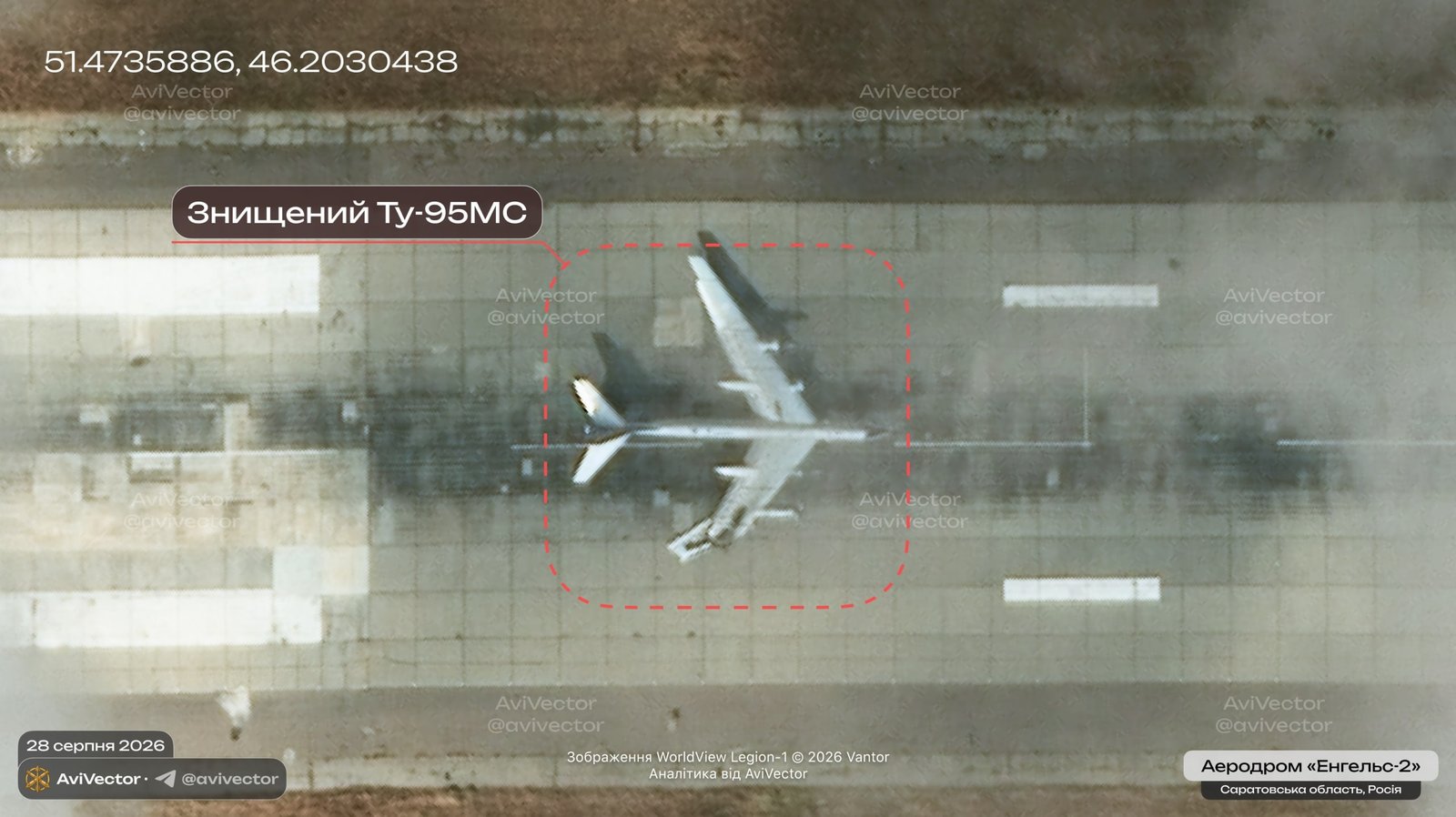
World
KYIV — Ukraine’s Security Service (SBU) has struck a Russian Tu-95MS strategic missile-carrying bomber at the Engels-2 military airbase in Russia’s Saratov region, Ukraine President Volodymyr Zelensky said on Friday. The operation was carried out by the SBU’s Alpha special operations unit using long-range drones. The SBU said its drones travelled approximately 800 kilometers to reach the airbase. Ukrainian President Volodymyr Zelensky confirmed the strike, saying the targeted Tu-95MS belongs to the type of aircraft Russia uses to conduct missile strikes against Ukraine. “In the Russian Engels, the soldiers of the SBU "Alpha" hit a TU-95MS missile carrier. These are the planes that strike Ukraine.” Damage to Tu-95MS Satellite imagery and images published by analysts from the AviVector group show significant damage to the bomber’s right wing, with part of the wing structure appearing to have broken away. Analysts tracking the airbase identified the aircraft as a Tu-95MS that had been used for training flights. Analysts cited in Ukrainian media assessed that the aircraft is beyond repair because of the extent of the damage. The assessment is based on available imagery and analysis rather than an independent Russian confirmation. The SBU also said that, according to preliminary information, the strike hit an ammunition depot and a fuel and lubricants storage facility at the airbase in addition to the bomber. Second Tu-95MS Hit at Engels The August 28 operation is the second reported SBU strike against a Tu-95MS at Engels in roughly six weeks. On July 16-17, Ukrainian forces struck another Tu-95MS at the same airbase. Satellite imagery subsequently showed that the aircraft’s tail section had been completely destroyed, leaving the bomber beyond repair. The SBU has described the July operation as the destruction of a Tu-95 used by Russia for missile strikes against Ukraine. Zelensky also confirmed that aircraft was approximately 800 kilometers from Ukraine’s border. Role of Engels-2 The Engels-2 airbase is an important Russian base for long-range strategic aviation. Tu-95MS and Tu-160 bombers operate from the facility, and the Tu-95MS is used as a missile-carrying platform for Russia’s long-range strikes against Ukraine. Ukrainian Defence Intelligence has identified the Kh-101, Kh-555 and Kh-55 as cruise missiles launched by Russian aircraft of this type. The location of the airbase makes it a significant distance from the Ukrainian border. The SBU said its drones covered about 800 kilometers during the latest operation. Other Ukrainian Strikes Reported The Tu-95MS strike was reported alongside other Ukrainian operations against targets inside Russia. Zelensky said Ukrainian forces also struck an oil refinery in Russia’s Yaroslavl region, located about 1,000 kilometers from the front line, and conducted strikes against Russian targets in the Black Sea. The Yaroslavl operation targeted the Slavneft-YANOS refinery, according to Ukraine’s General Staff and Ukrainian media reports. The latest strike at Engels adds another reported loss of a Russian strategic bomber to Ukraine’s long-range drone campaign against Russian military infrastructure. The damage to the August 28 Tu-95MS has been documented in satellite imagery, while the assessment that the aircraft cannot be repaired remains an analyst assessment.
Read More → Posted on 2026-08-28 16:36:24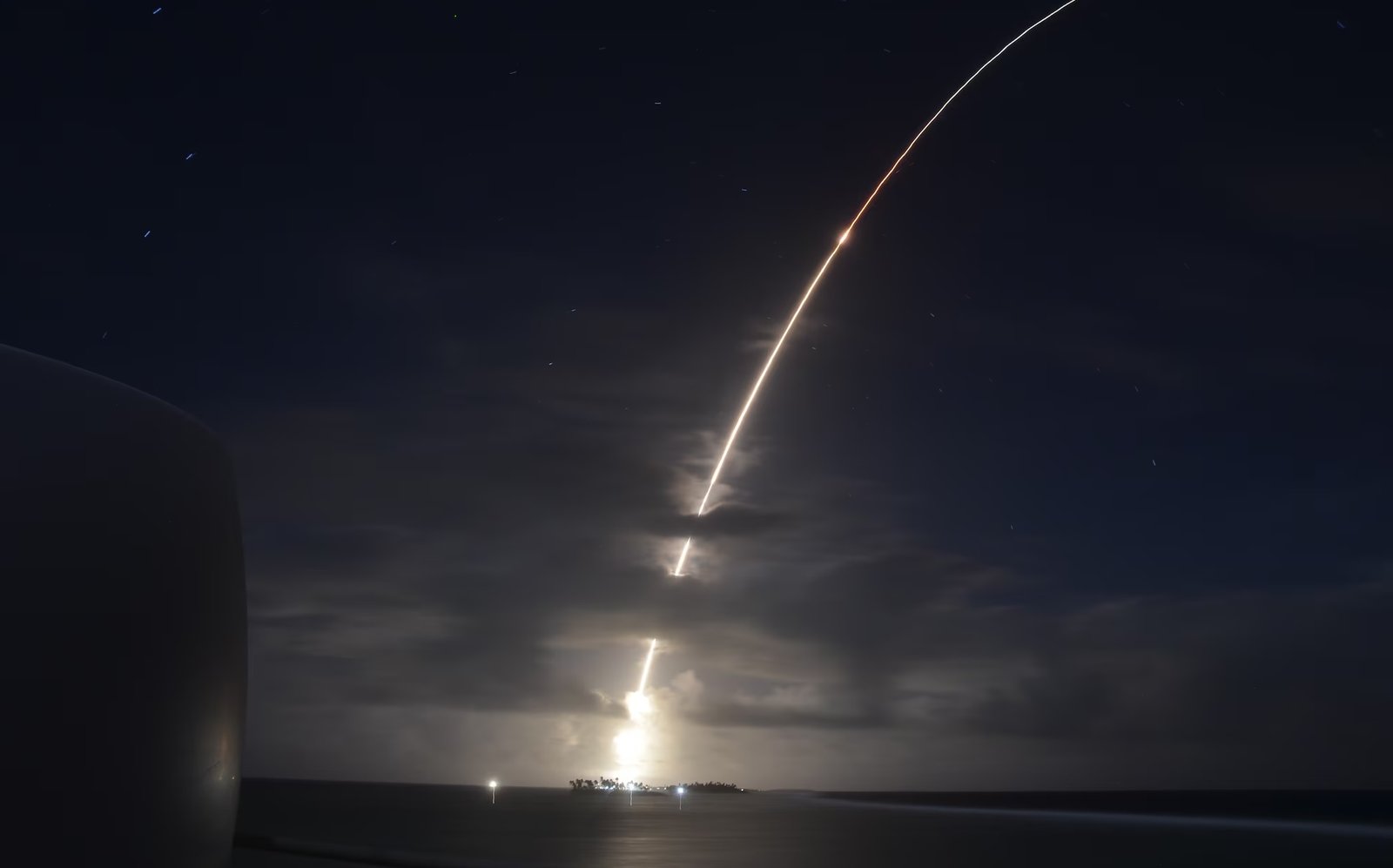
U.S
F.E. WARREN AIR FORCE BASE, Wyoming — The U.S. Air Force Global Strike Command has ordered units to stop using the AN/PRM-10 test oscillator set after polychlorinated biphenyls (PCBs) were confirmed in residue found on one unit and potential residue was identified on several others. The AN/PRM-10 is a legacy test device used to examine communications systems supporting the U.S. intercontinental ballistic missile (ICBM) force, including the Minuteman III system. Residue discovered at F.E. Warren The action follows an incident earlier in August at F.E. Warren Air Force Base in Wyoming. During a routine inspection, an Airman discovered residue on a component of an AN/PRM-10 kit and was exposed to the material. The Airman reported the incident, received medical attention and returned to duty without experiencing adverse effects, according to Air Force Global Strike Command. Laboratory testing of the residue confirmed the presence of PCBs. The Air Force said PCBs were commonly used in electrical devices during the period when equipment was developed to maintain the Minuteman III ICBM system. PCBs are a group of synthetic chemicals that were widely used in electrical and industrial applications because of their durability and other useful properties. U.S. production of PCBs was banned in 1979. Their presence in some older equipment remains a concern because of their known health risks. Inspection finds residue on six systems After the PCB finding was confirmed, the Twentieth Air Force ordered a one-time inspection of all AN/PRM-10 kits across Air Force Global Strike Command. The inspection was completed within three days and covered the command's entire inventory. Officials found potential residue on six of the eight AN/PRM-10 systems. Samples from those systems have been collected and are being sent for additional testing. Before the equipment was removed from service, the Air Force had issued updated safety warnings, handling precautions and requirements for personal protective equipment at locations where the legacy testers remained in use. Following the inspection results, the Twentieth Air Force ordered the immediate suspension of AN/PRM-10 use as a precaution while testing of the additional samples continues. Modern replacements being introduced Units are now transitioning from the AN/PRM-10 to modern, PCB-free replacement testers. Air Force Global Strike Command and Twentieth Air Force are also working with the Minuteman III systems program office to properly dispose of the withdrawn equipment. Officials are also reviewing other pieces of test equipment to determine whether they could contain PCBs. Maj. Gen. Colin Connor, commander of Twentieth Air Force, said the command considers the health and safety of its personnel a priority. The Air Force said the suspension of the AN/PRM-10 has not caused any mission impacts. U.S. ICBM forces continue to operate, with the command stating that the force remains safe, secure and effective in protecting the U.S. homeland. Part of wider missile community safety review The equipment review is part of broader safety efforts that followed the launch of the Air Force's Missile Community Cancer Study in 2023. The study was established to examine potential environmental and occupational factors affecting personnel associated with the U.S. ICBM mission. The Air Force has been reviewing the Minuteman III system and associated equipment as part of these efforts to identify and address potential workplace hazards. Gen. S.L. Davis, commander of Air Force Global Strike Command, said the command would continue to identify issues and take appropriate action. The immediate focus is now on testing the residue samples collected from the additional AN/PRM-10 systems, disposing of the affected equipment and moving personnel to modern replacement testers.
Read More → Posted on 2026-08-29 13:31:46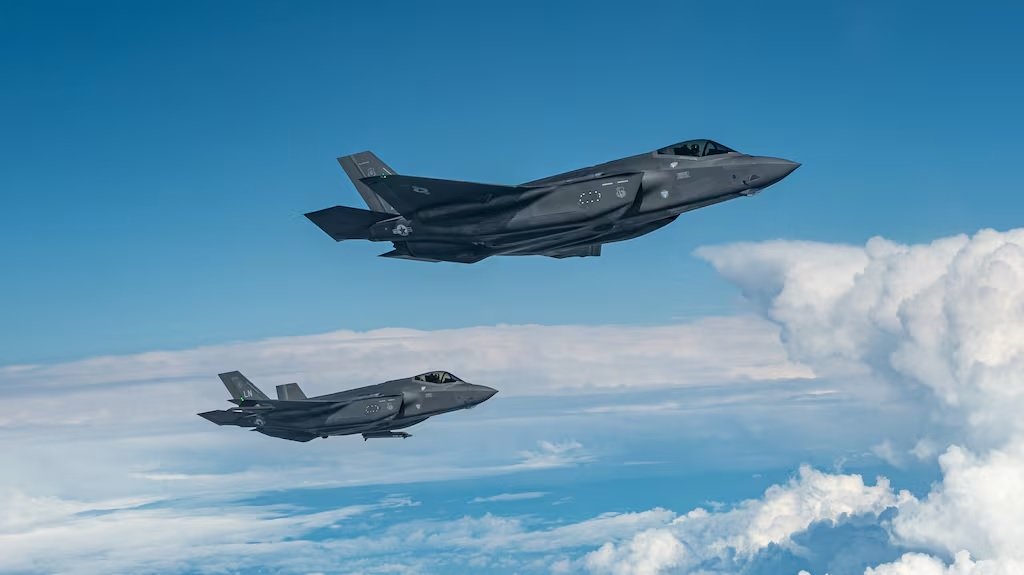
U.S
WASHINGTON, — The U.S. Department of Defense has raised the estimated acquisition cost of the F-35 Lightning II program to $536.2 billion, an increase of about $51 billion, or more than 10 percent, from the previous $485.2 billion estimate. The figure covers the aircraft and engines the U.S. government plans to purchase. The latest Modernized Selected Acquisition Report (MSAR) shows that the increase is spread across development and procurement. Research, development, test and evaluation costs have risen by about $19 billion to $106.6 billion, while procurement costs have increased by nearly $32 billion. Higher Cost Estimates for All Three Variants In constant 2012 dollars, the estimated unit recurring flyaway cost—which covers the aircraft and engine—has increased for all three variants: F-35A: $78 million, up 7.3 percent from $72.7 million. F-35C: $93.4 million, up 6.6 percent from $87.65 million. F-35B: $110.3 million, up 10.5 percent from $99.78 million. These are historical-dollar estimates. The F-35 Joint Program Office has said current-year prices for individual variants in the latest production lots are controlled unclassified information and cannot be released. Modernization and Production Costs The increase in development spending is partly linked to a revised estimate for the Power Thermal Management Upgrade, which incorporates updated requirements and assumptions. The program has also revised schedules for Block 4 modernization, the F135 engine core upgrade, and power and thermal-management improvements, adding time and costs. About $900 million of the $19 billion increase in development spending is attributed to refined Block 4 capability estimates. Block 4 is intended to improve the F-35's weapons, sensors and sensor fusion. The program is prioritizing 55 capabilities, including kill-chain improvements for air-superiority and suppression-of-enemy-air-defenses missions and integration of new weapons. The nearly $32 billion increase in procurement costs includes the upcoming APG-85 radar, higher production-support costs, the production requirement for the Power Thermal Management Upgrade, contractors' actual costs and negotiated pricing for Lots 18 and 19. In September 2025, the Pentagon and Lockheed Martin finalized a $24.29 billion contract for 296 F-35s in Lots 18 and 19. Separate engine agreements for those lots were valued at $6.6 billion, giving an implied combined average of about $104.4 million per aircraft and engine across the variants. Inflation and Procurement Changes Inflation and higher material prices are also contributing to the higher estimate. The Pentagon is shifting some planned F-35 purchases into later budget years, exposing those future purchases to additional inflation. The Marine Corps is also changing part of its planned procurement mix by shifting some purchases toward the more expensive F-35C. Lifetime Cost Estimate Falls Despite the higher acquisition estimate, the Pentagon's projected total lifecycle cost for the F-35 program has fallen from about $2.06 trillion to approximately $1.93 trillion. The lifecycle estimate covers the broader costs of operating and sustaining the fleet over its projected service life. The latest assessment therefore shows higher projected costs for developing and purchasing the planned fleet, while the overall projected lifetime cost has moved lower.
Read More → Posted on 2026-08-29 13:46:25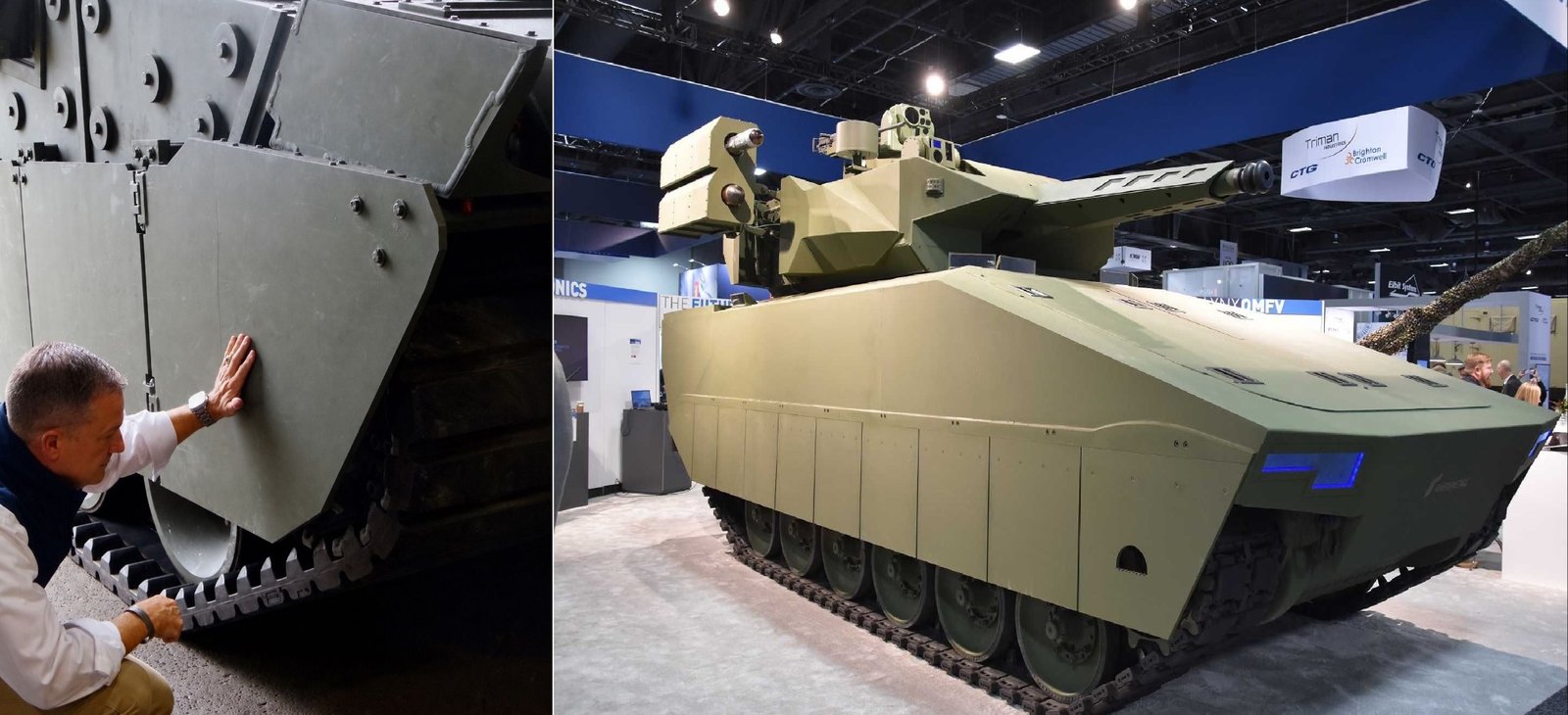
U.S
ABERDEEN PROVING GROUND, Md. — General Dynamics Land Systems (GDLS) has delivered the first prototype of its XM30 “Wolf” Mechanized Infantry Combat Vehicle (MICV) to the U.S. Army at Aberdeen Proving Ground, Maryland. The delivery marks a major step in the Army’s program to replace the M2 Bradley Infantry Fighting Vehicle, which has served for more than 40 years. XM30 Wolf The XM30 is being developed as an optionally manned tracked combat vehicle with a reduced two-person crew and space for six fully equipped infantry soldiers. The vehicle is planned to feature a 50mm automatic cannon, anti-tank guided missiles, active protection systems, advanced sensors for 360-degree situational awareness and hybrid-electric propulsion. GDLS is also developing the Wolf with a Modular Open Systems Architecture and a born-digital design intended to support software updates and the integration of new technologies. Competition With Rheinmetall The XM30 program is a head-to-head competition between GDLS and American Rheinmetall Vehicles. Under contracts awarded in 2023, each company is required to build between seven and 11 prototypes. The combined value of the contracts was approximately $1.6 billion. GDLS calls its vehicle the Wolf, while American Rheinmetall Vehicles is offering a design based on the Lynx. Prototype Testing Retired Army Brig. Gen. Geoffrey Norman, now working with GDLS, announced the prototype delivery. Norman spent 30 years in the Army as a tanker and cavalryman. He previously served with the Next Generation Combat Vehicle Cross-Functional Team at Detroit Arsenal, where he helped develop requirements for the XM30 and M1E3 Abrams upgrade before joining GDLS. Norman said additional Wolf prototypes will be completed and delivered to the Army. He also credited GDLS teams working at facilities in Sterling Heights and Grand Rapids, Michigan; Lima, Ohio; Scranton, Pennsylvania; Tallahassee, Florida; and London, Ontario. Following initial checks at Aberdeen Proving Ground, the prototypes will be sent to Fort Hood, Texas, where soldiers from the 1st Armored Brigade Combat Team, 1st Cavalry Division, known as the “Ironhorse Brigade,” will conduct operational evaluations. The vehicles could also be evaluated during a National Training Center rotation. Army Selection Planned for 2027 The Army plans to select a single winning design by the end of 2027 for Phase 5 low-rate initial production. The selected manufacturer is planned to produce up to 19 complete vehicles, including hulls and turrets, for production qualification and Initial Operational Test and Evaluation. If the program remains on schedule, the first production XM30 vehicles are expected to be delivered to the first Army unit transitioning to the new vehicle in fiscal year 2029. Meanwhile, GDLS and American Rheinmetall Vehicles will continue delivering their remaining prototypes to support Army testing and soldier evaluations.
Read More → Posted on 2026-08-29 13:55:36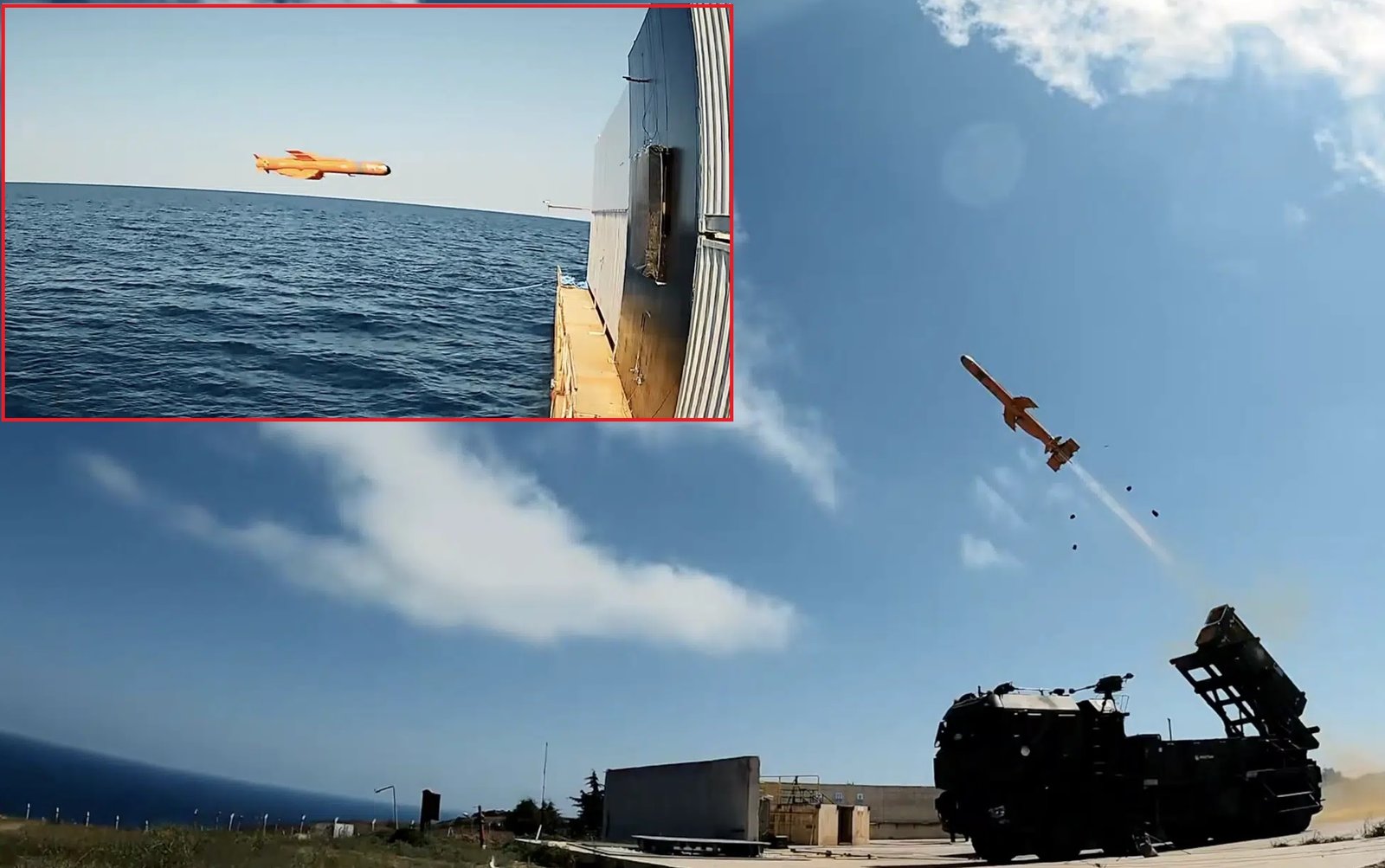
World
ANKARA, Turkiye — Turkish defense manufacturer Roketsan has conducted the first publicly announced ground-launch tests of its CAKIR cruise missile, firing two missiles from a mobile land-based launcher against separate land and maritime targets. In a statement released on August 28, 2026, Roketsan said the two missiles were launched in separate tests conducted on different days and both achieved direct hits. The tests used a next-generation Imaging Infrared (IIR) terminal seeker and also demonstrated an extended range enabled by a new fuel system. Roketsan did not disclose the exact test location, engagement ranges, target types, flight profiles or telemetry data. Reporting identified the launch vehicle as a Koluman DERMAN 8x8 tactical truck. The surface-launched version uses a solid-fuel booster and folding fins for canister carriage before the missile's turbojet takes over. The tests expand ÇAKIR's publicly demonstrated launch options beyond its earlier air-launch trials. The missile was first unveiled in March 2022 as a modular system designed for air, naval and land platforms, including aircraft, unmanned combat aerial vehicles, unmanned surface vessels, tactical wheeled vehicles and surface combatants. In May 2023, a Bayraktar Akıncı UCAV conducted ÇAKIR's first flight test from an altitude of about 7,000 metres. That test also marked the first demonstrated use of Kale Arge's indigenous KTJ-1750 turbojet engine. CAKIR Specifications CAKIR is a high-subsonic cruise missile with a stated speed of Mach 0.75 to 0.85 and a manufacturer-stated family range exceeding 150 km. Roketsan's published specifications give the missile a weight of about 275 kg without the booster, while different surface-launch configurations have been published at around 330–350 kg with the booster. The missile has a diameter of about 275 mm. Its approximately 70-kg warhead is offered in high-explosive, blast-fragmentation and thermobaric configurations and is intended for use against surface ships, coastal targets and land targets. Its guidance system combines inertial navigation, anti-jam satellite navigation, altimeter and terrain-referenced navigation. ÇAKIR can use IIR, radio-frequency (RF) or hybrid IIR/RF terminal seekers; the latest ground tests used the new-generation IIR seeker. A two-way datalink allows in-flight target updates, re-attack decisions and mission aborts. Roketsan has also designed the missile for terrain-masking flight over land and sea-skimming flight over water, as well as coordinated employment by multiple missiles. Export and Indonesian Cooperation CAKIR also has an international market. Roketsan's chief executive said in July 2023 that an export agreement had been signed before the missile entered Turkish service. Qatar and Indonesia are publicly identified as customers. Indonesia has confirmed procurement of CAKIR along with other Turkish systems. Roketsan and Indonesian partners have also established cooperation for local missile and rocket production. During Indo Defence 2025, Indonesian shipbuilder Republik Palindo, part of Republikorp, displayed a fast attack craft concept equipped with CAKIR. The latest tests demonstrate a land-based launch capability for CAKIR against both land and maritime targets. However, Roketsan has not stated that the tests completed formal qualification or confirmed an immediate operational deployment by the Turkish Armed Forces. Further testing will be required to establish the performance of the boosted ground-launched configuration across its full range and target envelope.
Read More → Posted on 2026-08-29 14:04:46
World
KYIV, Ukraine — At least 37 people were killed and 42 others injured after a Russian drone strike hit a warehouse in the village of Myla in Kyiv region on the evening of August 28, triggering a large fire and a series of secondary explosions that continued for hours, Ukrainian authorities said. The facility is located in the Bucha district, west of Kyiv. The explosions damaged around 50 nearby residential buildings and affected a care facility for elderly people and people with disabilities. More than 380 people were evacuated from the area as emergency crews continued firefighting, rescue and debris-removal operations. 🇷🇺🇺🇦 Huge explosions in Kiev. 3 mushroom clouds can be seen. pic.twitter.com/HgUoaAwzsd — ConflictX (@ConflictXtweets) August 28, 2026 Ammunition storage under investigation Ukrainian President Volodymyr Zelenskyy said the initial strike hit a Defense Forces storage facility containing shells, mines, other ammunition and drones. He said the ammunition should not have been stored close to residential areas and confirmed that a criminal investigation into official negligence had been opened. The Office of the Prosecutor General is examining the legality of storing explosive materials at the site, including the actions of officials responsible for the facility and whether the necessary permits and safety requirements were followed. The investigation comes after the secondary explosions caused extensive damage outside the facility. Ukrainian authorities are continuing to assess the site as rescue workers search damaged areas. Local official among those killed Among those killed was Taras Didych, head of the Dmytrivka community, which includes Myla. Officials said Didych was among the first people to arrive at the scene to help residents after the strike. He was killed during the response to the incident. Traffic was also temporarily restricted on a section of the M-06 Kyiv–Chop highway between the 15th and 32nd kilometer markers because of the continuing fire and explosions. More than 300 emergency personnel were involved in the response, according to Zelenskyy's office. Russia says ammunition depot was targeted Russia's Defense Ministry said the strike targeted an ammunition depot in Myla. According to the Russian statement, the facility stored components and launch boosters associated with FP-1/FP-2 long-range unmanned aerial vehicles. Ukrainian officials, meanwhile, described the site as a Defense Forces ammunition storage facility. The attack has therefore raised two separate issues in Ukraine: the direct impact of the Russian strike and questions over how explosive materials were stored near populated areas. Similar incident in Vyshneve The Myla explosion follows another Russian strike on an ammunition storage facility in Vyshneve, near Kyiv, in July. Ukrainian authorities said the July 6 strike caused ammunition stored at the site to detonate. The Security Service of Ukraine later said the warehouses were not intended for ammunition storage and that the facility was located close to residential areas. Investigators subsequently detained senior executives of the defense enterprise involved over alleged official negligence. Ukrainian Prime Minister Serhii Koretskyi criticized the failure to prevent another similar incident, saying the previous case should have provided a lesson for authorities. Myla strike part of wider Russian aerial attacks The strike on Myla occurred during a broader series of Russian drone attacks across Ukraine. Ukrainian authorities reported attacks affecting Kyiv and several other regions, including Odesa, Dnipro, Zaporizhzhia, Sumy, Kherson, Kharkiv, Mykolaiv, Donetsk and Chernihiv. Ukrainian officials have also reported increased use of jet-powered drones in recent attacks. These systems fly at substantially higher speeds than conventional propeller-driven attack drones, creating additional challenges for Ukraine's existing air-defense network. Ukrainian officials have said interceptor drones intended to counter such threats have not yet demonstrated the expected effectiveness. The Myla site remains under emergency operations, with authorities continuing to clear debris, search affected areas and assist residents whose homes were damaged. The death toll could still change as rescue and inspection work continues.
Read More → Posted on 2026-08-29 14:20:06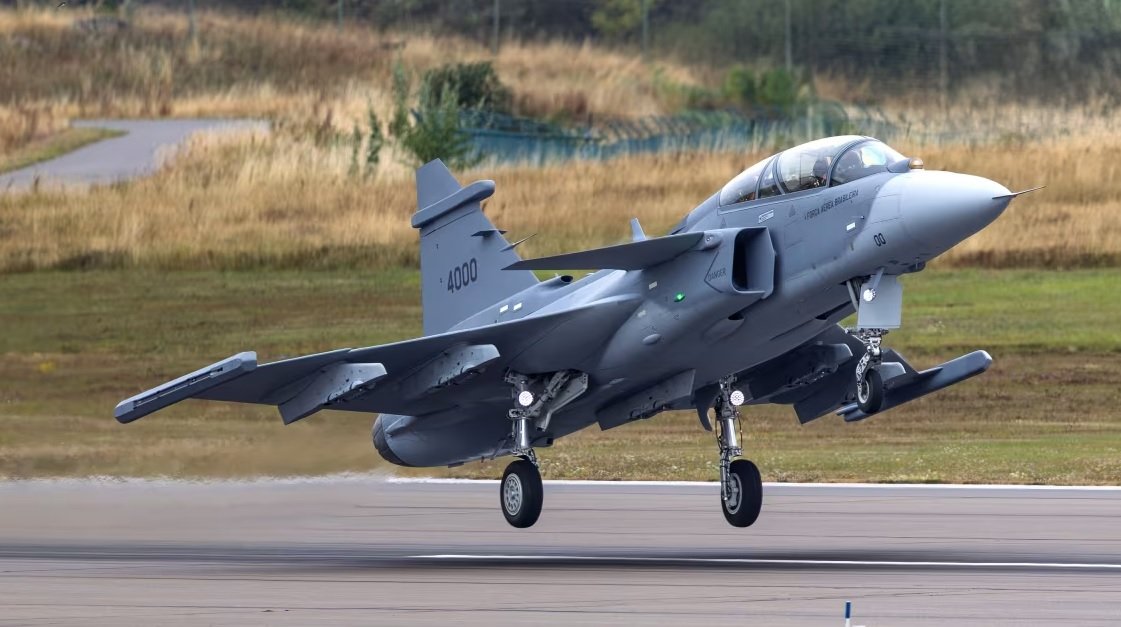
World
LINKÖPING, Sweden, — Saab has successfully completed the first flight of the Gripen F, the two-seat variant of the Gripen E fighter. The flight took place on August 28, 2026, at Saab’s airfield in Linköping, Sweden, marking the start of the aircraft’s airborne test campaign. The aircraft took off at 09:40 local time and remained airborne for 40 minutes. Saab chief test pilot Jakob Högberg and Brazilian Air Force test pilot Lieutenant Colonel Aviator Abdon de Rezende Vasconcelos flew the mission. The sortie verified the functionality of the aircraft’s core systems and its initial flight performance. Brazil is the launch customer for the Gripen F. The aircraft carries Brazilian Air Force markings and was formally rolled out at Linköping on June 2, 2026. Manufacturing of the first Gripen F began in 2020. The aircraft combines components common with the Gripen E with a redesigned forward fuselage to accommodate the second cockpit. Lars Tossman, head of Saab’s Aeronautics business area, said the first flight was an important step for Saab and the Brazilian Air Force. He said the Gripen F is designed to accelerate pilot training while enhancing operational performance in advanced combat missions. Flight Testing Following the first flight, the Gripen F will undergo initial production acceptance flights before progressive flight-envelope expansion. Test teams will gradually evaluate speed, altitude, G-load and angle of attack, while also testing tactical capabilities and functions specific to the rear cockpit. The test campaign will be conducted by Saab’s Flight Test Centre in Sweden. After the planned testing and aircraft acceptance procedures are completed, the Gripen F will be prepared for delivery to the Brazilian Air Force. Developed With Brazil The Gripen F is the result of the strategic partnership between Brazil and Sweden and the technology-transfer programme under Brazil’s Gripen programme. More than 350 Brazilian engineers, technicians and pilots have participated in training related to development, production, flight testing and maintenance. Brazil also played an active role in co-developing the two-seat variant, supporting direct industrial participation and long-term cooperation between the two countries. Brazil’s 2014 contract covers 36 Gripen aircraft, comprising 28 single-seat Gripen E and eight two-seat Gripen F aircraft. Deliveries began in 2020, with 11 aircraft handed over so far, all single-seat models. The first Gripen E assembled in Brazil was rolled out at Embraer’s facility in Gavião Peixoto in March 2026. The Gripen F retains the Gripen E’s core configuration, including its AESA radar and General Electric F414G engine. The second cockpit can operate independently or together with the front cockpit, allowing the aircraft to be used for pilot training and operational missions. The Gripen F is 15.9 metres long, has a 16,500 kg maximum take-off weight and retains the same number of external hardpoints as the Gripen E. Unlike the single-seat Gripen E, it does not have an internal cannon. Additional Gripen F orders have been placed by Colombia for two aircraft and Thailand for one aircraft as part of an initial batch. The Swedish Air Force has not ordered the two-seat version. The first flight begins the Gripen F’s flight-testing phase in Sweden. Further testing will continue before the aircraft is prepared for transfer to the Brazilian Air Force.
Read More → Posted on 2026-08-29 15:07:49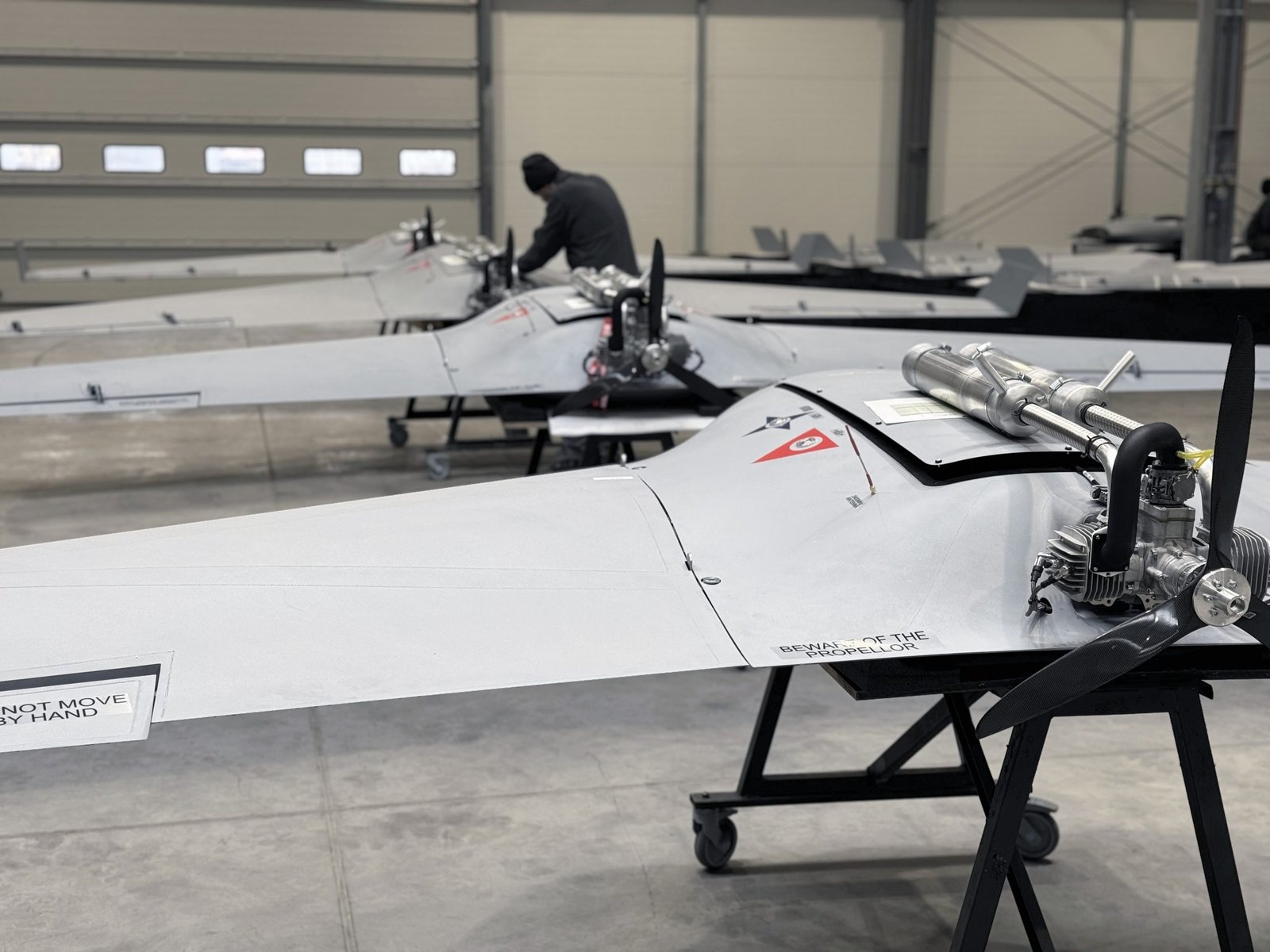
U.S
STAMFORD, Connecticut, — The U.S. Army has awarded Integrate DG LLC a contract worth up to $27.8 million for its Alphawing uncrewed aircraft systems, related support equipment and field technicians. The Department of War announced the award this week. The Army Contracting Command at Redstone Arsenal, Alabama, issued the contract as a firm-fixed-price, indefinite-delivery/indefinite-quantity (IDIQ) agreement. The Army solicited bids online and received one response, from Integrate DG. The contract sets a maximum spending ceiling and allows the Army to place orders as required rather than committing to a fixed number of systems. Funding and work locations will be determined with each order. The estimated completion date is October 30, 2026. Integrate DG is based in Stamford, Connecticut, and has offices in the United States, United Kingdom, Australia, France and Germany. The company describes itself as a defense engineering firm focused on autonomous systems for air and sea. Its work includes moving drone technologies from prototypes toward deployable hardware, with areas of focus including long-endurance missions, maritime surveillance and secure communications relays. The Alphawing is part of Integrate DG's broader portfolio of unmanned systems. However, the Army has not released the technical specifications of the Alphawing variant covered by the contract. It has also not disclosed the number of systems it plans to order, the Army units that will receive them or the missions they will support. The single-bid outcome reflects the procurement of a specialized system, although the Army has not stated why only one company submitted a bid. With the contract scheduled for completion by October 30, 2026, any orders placed under the agreement will fall within a relatively short delivery period.
Read More → Posted on 2026-08-29 15:16:39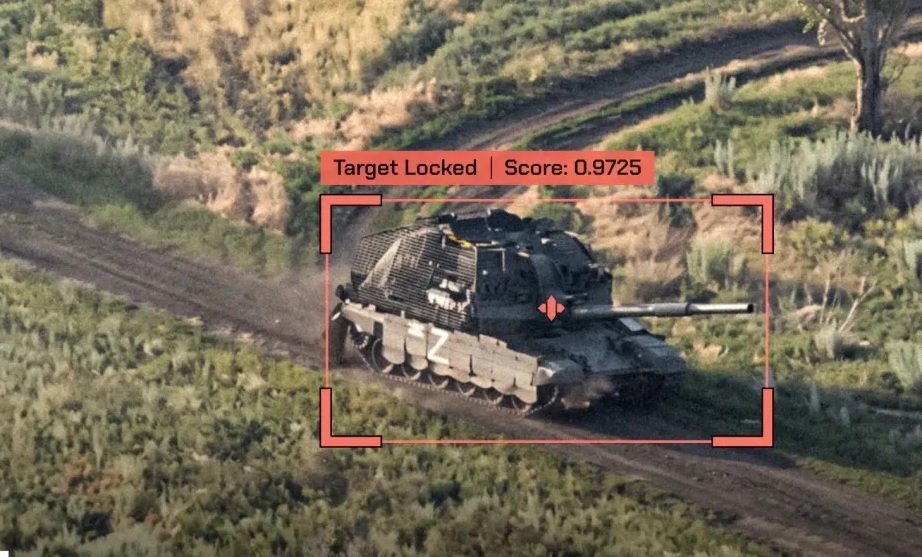
World
KYIV, — Ukraine’s Ministry of Defence said artificial intelligence is reducing by up to 90% the time military analysts need to detect signs of enemy activity in photographs and video. According to the ministry, AI systems can automatically examine visual data and identify enemy positions and military equipment. By automating the initial analysis, the technology allows personnel to assess potential targets more quickly than through manual examination alone. The ministry said the time savings also affect the wider military kill chain, which covers the stages from finding and fixing a target to tracking, selecting a means of engagement, carrying out the engagement and assessing its results. AI is being used to reduce the time required at several of these stages rather than replacing the process itself. Human remains responsible for strike decisions Ukraine says the use of AI on the battlefield continues to follow the human-in-the-loop principle. AI can identify potential targets and accelerate their assessment, but the final decision to engage remains with a human operator. The Ministry of Defence said the level of system autonomy is limited according to the potential consequences of an error. The approach is intended to increase the speed of battlefield analysis while keeping authority over the use of force with people. More than 70 AI and machine-vision systems in use The ministry said Ukrainian Defence Forces units are currently using more than 70 systems based on artificial intelligence and machine vision for detecting, recognizing and engaging targets. Ukraine's AI development effort also involves a growing domestic industrial base. The ministry said more than 200 Ukrainian companies produce AI-enabled drones. Brave1, Ukraine's state defense-technology cluster, separately lists more than 200 AI product manufacturers within its wider defense-technology ecosystem. The Brave1 Market also provides military users with access to AI-related technologies. The ministry said 46 AI solutions are available, including technologies for target recognition, optical stabilization and automatic terminal guidance. AI is being trained on battlefield data Ukraine is also developing infrastructure to train military AI systems using real-world battlefield information. The Ministry of Defence said more than 100 Ukrainian companies have access to Brave1 Dataroom, a secure environment for testing, training and fine-tuning military AI models. Developers can use structured visual and thermal datasets collected under real-world conditions. Another system, Avengers Labs, provides developers with an annotated dataset containing 5 million frames collected during military missions. The data includes images of tanks, artillery, air-defense systems, infantry groups and aerial targets, including reconnaissance UAVs and Shahed-type drones. The resulting Avengers AI platform has been integrated into the Vezha module of Ukraine's DELTA combat system. The Ministry of Defence said it identifies 70% of enemy military equipment in real time while analyzing more than 100,000 video streams each month. Defence AI Centre established in 2026 Ukraine's Ministry of Defence established the Defence AI Centre A1 in March 2026 to coordinate the wider integration of artificial intelligence into defense processes and support the development of military technology. The ministry has also said that AI is already being incorporated into systems associated with DELTA. On August 28, the ministry announced that an AI assistant had become available to all DELTA users, allowing them to obtain answers to common questions directly through the combat-system interface. Ukraine has set a longer-term goal of equipping 100% of frontline drones with machine-vision and AI technologies. The expansion reflects the country's broader effort to use automated analysis and machine vision to process increasing volumes of battlefield information while keeping human operators responsible for decisions to use force. The 90% figure and the details on AI-enabled battlefield analysis were published by Ukraine's Ministry of Defence on August 28, 2026.
Read More → Posted on 2026-08-29 15:28:00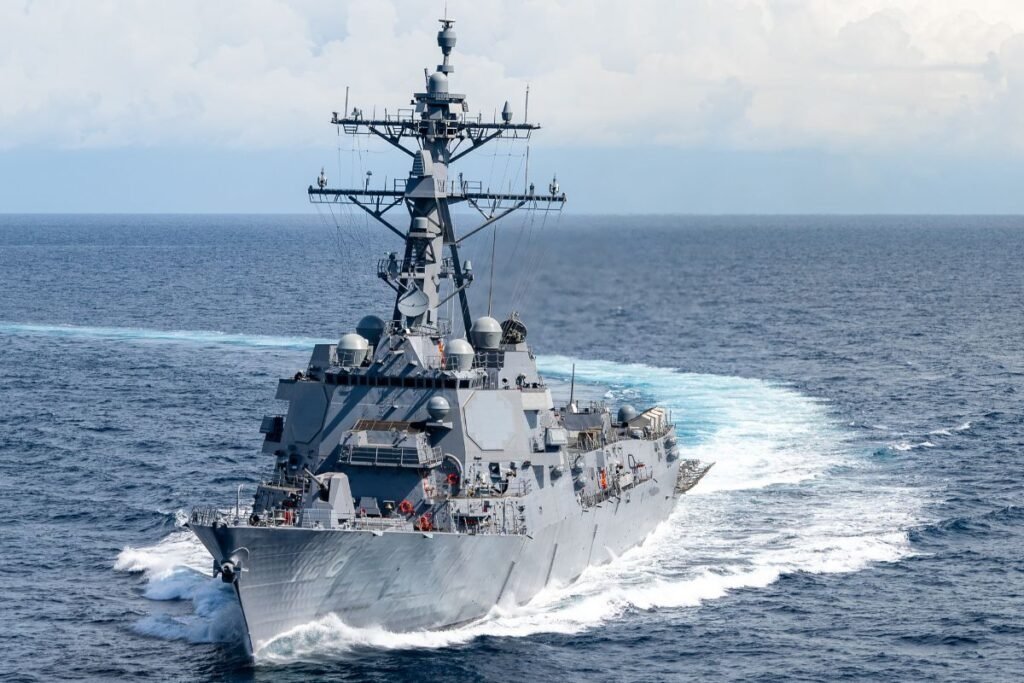
U.S
WASHINGTON, — The U.S. Navy says a single Flight III Arleigh Burke-class destroyer can perform air and ballistic missile defense missions that previously required two Flight IIA destroyers. Two Flight III ships have been delivered, while another 23 are under contract or under construction at Huntington Ingalls Industries’ Ingalls Shipbuilding and General Dynamics Bath Iron Works. The Navy considers Flight III a new type-model warship rather than a minor upgrade. The variant is designed to protect carrier strike groups and operate in more contested environments. SPY-6 Radar and Aegis Baseline 10 The main upgrade is the AN/SPY-6(V)1 Air and Missile Defense Radar, integrated with the Aegis Baseline 10 combat system. The Navy says the combination can detect, track and engage more complex threats at greater distances and in less time than older destroyers. Aegis Baseline 10 processes the larger amount of data produced by SPY-6 and allows Flight III ships to conduct air defense and ballistic missile defense simultaneously without losing performance. The SPY-6 uses gallium-nitride technology and modular assemblies, providing greater sensitivity and longer detection ranges than the earlier SPY-1 radar. It is designed to help track smaller, faster and more complex threats. Major Power and Cooling Changes The larger radar required major changes to the ship’s electrical and cooling systems. Flight III uses a 4,160-volt electrical grid, compared with 450 volts on Flight IIA ships. The increased capacity also supports future systems such as directed-energy weapons. The ships have upgraded air-conditioning systems, a larger chilled-water supply and updated gas-turbine generators producing 4 megawatts each. A modified steel hull supports the additional equipment. These changes increase displacement to more than 9,500 tons, compared with about 9,300 tons for a Flight IIA destroyer. The ships retain the standard Arleigh Burke-class armament, including 96 vertical-launch cells. USS Jack H. Lucas Leads the Class USS Jack H. Lucas (DDG 125), commissioned in October 2023, is the lead Flight III ship and currently the only one in operational service. It is completing initial operational test and evaluation before taking the air and missile defense commander role for a carrier strike group. The destroyer participated in Pacific Dragon 2026, a U.S. 3rd Fleet-led missile-defense exercise around Hawaii involving the Missile Defense Agency and allied forces. Testing will continue during a busy underway schedule for the next 13 months. Capt. Rob Niemeyer, the ship’s commanding officer, said Jack H. Lucas represents a major advance in surface warfare capability and highlighted the performance of its sailors during Pacific Dragon 2026. Ted Stevens and Louis H. Wilson Jr. The future USS Ted Stevens (DDG 128) is nearing commissioning and will become the second Flight III destroyer. It recently completed Full Ship Shock Trials, using live ordnance to test whether the ship can continue operating after combat-related shock. The Navy has scheduled its commissioning for October 3, 2026, in Whittier, Alaska. It will then be homeported in Norfolk, Virginia. Capt. Mary Katey Hays, commanding officer of Ted Stevens, said Flight III ships represent the future of integrated air and missile defense and provide an upgrade needed by carrier strike groups. The future USS Louis H. Wilson Jr. (DDG 126) is also expected to join the surface force as additional Flight III ships enter service. Yeoman 1st Class Kristha Hernandez, assigned to the ship, said serving aboard the next class of DDGs provides an opportunity to contribute to the Navy’s future mission and maintain maritime superiority. Flight III production is continuing at Ingalls Shipbuilding and Bath Iron Works, as the Navy expands a destroyer variant built around SPY-6, Aegis Baseline 10 and substantially increased power and cooling capacity.
Read More → Posted on 2026-08-29 15:32:29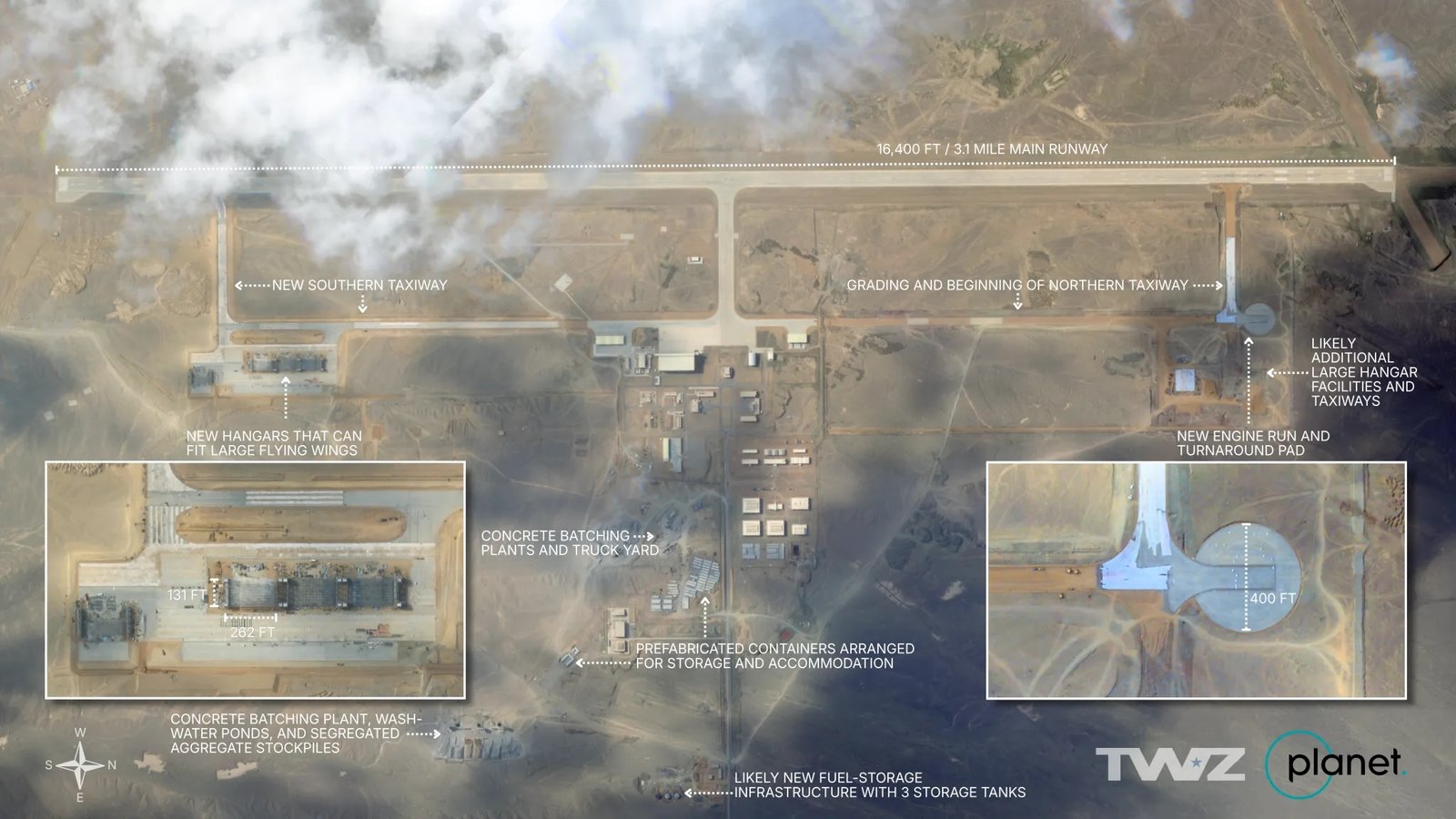
World
LOP NUR, Xinjiang, China — China is rapidly expanding a remote flight-test facility near Lop Nur in Xinjiang, with new satellite imagery showing large hangars, taxiways, aircraft turning areas and possible fuel-storage infrastructure under construction. The facility, which is used for testing experimental platforms and next-generation combat aircraft, has developed from a relatively basic airfield into a larger People’s Liberation Army (PLA) flight-test center. The site is sometimes compared with the U.S. Area 51 because of its remote location and apparent role in testing sensitive aerospace programs. High-resolution satellite imagery collected by Planet Labs on August 27, 2026, shows the latest construction across the base. The airfield has a runway approximately 16,400 feet (about 5 kilometers) long, making it one of the longest military runways of its type. Geo-intelligence researcher Damien Symon, who assisted The War Zone in analyzing the imagery, said the new taxiways, aircraft turning pads, hangars and possible fuel-storage infrastructure substantially increase the facility's ability to support aircraft movements and sustained flight-test activity. From a Basic Airstrip to a Major Test Facility The Lop Nur facility was considerably smaller when it attracted attention in 2020. At that time, satellite imagery showed a 3.1-mile runway, a small hangar and a limited number of vehicles. The site was also associated with Chinese military space-development activities, including testing of reusable spaceplanes. The facility expanded significantly in the following years. In 2023, the main apron was enlarged and a large hangar was added. Additional hangars appeared on both sides of the main ramp in 2025, with their configuration indicating that they were intended for tactical fixed-wing aircraft. Construction activity increased further from May 2025 and has continued since then. The facility's growing infrastructure has coincided with the appearance of advanced Chinese aircraft at the site. In 2025, both of China's publicly identified sixth-generation fighter designs, the Chengdu-associated J-36 and Shenyang-associated J-XDS, were observed at Lop Nur for the first time. Their presence was notable because the aircraft were operating away from the home airfields associated with their manufacturers. Four Large Hangars Under Construction One of the most significant developments visible in the latest imagery is the construction of four large hangars on the southern apron. Three of the hangars measure approximately 80 by 40 meters (262 by 131 feet), while a fourth nearby structure has different dimensions. All four have access to the new southern taxiway. According to Symon's assessment, the dimensions of these structures are sufficient to accommodate tactical and strategic aircraft currently operated by the PLA. For comparison, China's operational Xi'an H-6 strategic bomber has a wingspan of approximately 108 feet. The wide proportions of the new hangars are also similar to structures at another Chinese test facility near Malan in Xinjiang, which has been associated primarily with unmanned aircraft testing. However, Lop Nur appears to have a greater focus on crewed aircraft. The large hangars have led to speculation that the facility could eventually support testing of China's H-20 stealth bomber. However, the H-20 has not yet appeared publicly, and there is no confirmation that the new Lop Nur hangars are being built specifically for that aircraft. The War Zone also describes this possibility as speculation. New Taxiways Increase Aircraft Movement Capacity A new taxiway is nearing completion along the southern side of the main runway. It runs parallel to the runway and connects with the central apron and main hangar area. Once completed, the taxiway will allow aircraft to move between areas of the facility without having to back-taxi along the main runway. This would provide greater flexibility for aircraft movements during flight-test operations. Construction is also continuing at the northern section of the facility. Grading is underway for another taxiway intended to connect the central apron with the northern portion of the runway, with concrete work already beginning. A circular pad approximately 400 feet in diameter has also been constructed in the northern area. It has direct connections to both the runway and the main base area. Analysts assess the feature as likely being intended for engine runs and aircraft turnaround activities, although its exact purpose has not been officially confirmed. An additional apron extension is being built nearby, with at least two large hangars under construction. These structures have more conventional proportions than the four wide hangars on the southern apron. Possible Fuel Infrastructure and Construction Support The latest imagery also shows possible fuel-storage infrastructure under construction. The structures appear to include three potential storage tanks, although their exact purpose has not been confirmed. Symon assessed that, if confirmed as fuel-storage facilities, the infrastructure could support higher sortie rates and longer periods of sustained flight-test activity. Construction-support infrastructure has also expanded. Buildings that were still under development in late 2025 are now complete, while rows of prefabricated containers have appeared behind the central apron. Their exact purpose is not confirmed, although the structures could provide storage or accommodation associated with the ongoing construction work. A concrete batching plant, including wash-water ponds and aggregate stockpiles, has also been established farther east on the facility's outskirts. Other construction sites are visible nearby, but their eventual purpose remains unclear. Lop Nur's Role in China's Advanced Aircraft Testing The continued expansion suggests that Lop Nur is being developed to support a larger volume of aircraft testing and associated activities. Its remote location, long runway and growing hangar and taxiway infrastructure provide the facility with additional capacity for experimental aircraft programs. The presence of the J-36 and J-XDS prototypes has already linked the base with China's advanced combat-aircraft development. The new hangars are large enough for aircraft substantially larger than conventional fighter aircraft, but their specific intended occupants have not been publicly identified. The possible connection to the H-20 remains unconfirmed. China has not publicly revealed a testing location for the bomber, and there is currently no verified evidence establishing that the aircraft will be tested at Lop Nur. The facility is located near China's historic Lop Nur nuclear test area, where China conducted its first nuclear test, Project 596, in 1964. The region has therefore been associated with highly sensitive Chinese military and strategic programs for decades. The latest satellite imagery shows that the Lop Nur flight-test facility is continuing to expand, with new hangars, taxiways, aircraft operating areas and support infrastructure increasing its capacity. However, the specific aircraft and programs that will use the newest facilities remain largely unconfirmed. Source : TWZ
Read More → Posted on 2026-08-29 15:45:23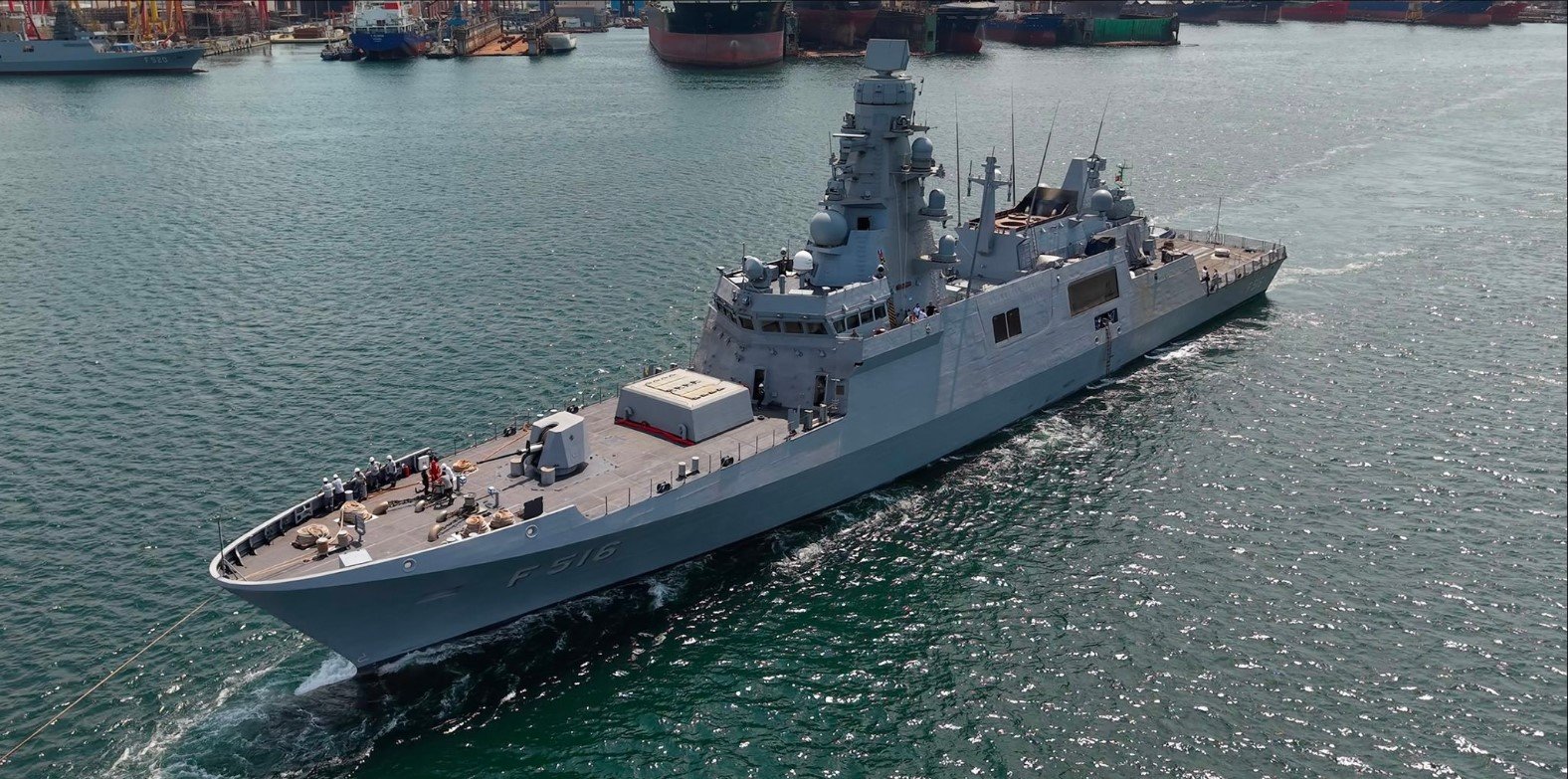
World
ISTANBUL, — Turkiye’s second I-class (Istif-class) frigate, the future TCG Izmir (F-516), has begun its first Sea Acceptance Trials (SAT), marking the latest stage in the construction of the Turkish Navy’s expanding national frigate programme. Anadolu Shipyard announced on August 26 that TCG Izmir had entered its sea acceptance testing phase. The frigate first went to sea for the trials on August 10, 2026. During the trials, the ship’s navigation, propulsion, manoeuvring, electrical, communications and other platform systems are being evaluated under operating conditions. TCG Izmir is being built by Anadolu Shipyard under the STM-TAIS partnership and is the sixth vessel of the MILGEM programme. It is the second I-class frigate after TCG Istanbul (F-515), which was delivered to the Turkish Navy in January 2024. STM says the programme now covers a total of eight I-class frigates. Enlarged Strike-Length MIDLAS VLS One of the most visible differences between TCG Izmir and the lead ship is the configuration of the forward MIDLAS (National Vertical Launching System). TCG Istanbul uses the tactical-length version of MIDLAS, while TCG Izmir is being fitted with the larger strike-length version. Roketsan's published specifications give the tactical version a length of 6.7 metres and the strike version a length of 8 metres. The corresponding eight-cell modules weigh 15,000 kg and 18,000 kg respectively. The strike-length system is designed to accommodate larger missiles. Roketsan states that MIDLAS can launch different types of guided weapons, with the company's published material identifying SIPER 1D and ATMACA integration as being in progress. Earlier reporting has also identified the strike-length version for weapons such as ATMACA and the GEZGIN cruise missile. The exact initial missile configuration aboard TCG Izmir has not been publicly confirmed by the Turkish Defence Industry Agency or Anadolu Shipyard. Therefore, the presence of the larger launcher should not be treated as confirmation that every compatible missile has already been integrated or will be carried during the ship's initial deployment. Higher Indigenous Content The frigate also represents another step in Turkiye's effort to increase the use of domestically developed systems on its naval platforms. Anadolu Shipyard has stated that TCG Izmir has a domestic systems rate exceeding 80 percent. TCG Izmir is also receiving the domestically developed 76 mm/62-calibre DENIZHAN naval gun. The third completed DENIZHAN gun was delivered to Anadolu Shipyard for integration on TCG Izmir in February 2025. The system was developed by MKE and Istanbul Naval Shipyard Command. I-Class Frigate Programme The I-class frigates are an enlarged development of Turkiye's MILGEM Ada-class design and are intended to provide the Turkish Navy with a multi-role frigate capable of conducting surface, anti-submarine and air-defence missions, along with surveillance and other naval operations. The class was developed as a successor to the older YAVUZ-class (MEKO 200 Track I) frigates. The design incorporates a larger hull, increased fuel capacity and greater endurance compared with the Ada-class. TCG Istanbul was constructed at Istanbul Naval Shipyard, while TCG Izmir and the other follow-on frigates are being constructed through the STM-TAIS industrial partnership. STM says seven additional national frigates are being built as part of the eight-ship programme. TCG Izmir Key Specifications According to the specifications provided for the I-class frigates, the ships have: Length: 113.2 metres Beam: 14.4 metres Draught: 4.05 metres Displacement: approximately 3,000–3,100 tonnes Maximum speed: more than 29 knots Cruising speed: 14 knots Range: approximately 5,700 nautical miles at 14 knots Propulsion: CODAG arrangement with two diesel engines and one GE LM2500 gas turbine Shafts: two, with controllable-pitch propellers Combat management system: HAVELSAN ADVENT The reported sensor and combat-system fit includes the ASELSAN CENK-S 3D AESA radar, ALPER-P LPI navigation radar, AKR-D fire-control radars, AHTAPOT electro-optical system, PIRI infrared search and track system, FERSAH hull-mounted sonar and HIZIR torpedo countermeasures system. The planned weapons fit includes a 16-cell MIDLAS VLS, 16 ATMACA anti-ship missiles, one 76 mm DENIZHAN naval gun, one 35 mm GÖKDENIZ CIWS, two 25 mm STOP remote weapon stations and two triple lightweight torpedo tubes. Next Stage Toward Delivery The Sea Acceptance Trials will allow the ship's platform and combat systems to be evaluated at sea before the frigate is accepted into Turkish Naval Forces service. The testing of TCG Izmir comes as Turkiye continues parallel construction and fitting-out of the remaining I-class frigates. The enlarged strike-length MIDLAS installation on TCG Izmir is one of the programme's most significant configuration changes compared with TCG Istanbul. However, the final operational missile load and the full extent of weapon integration will depend on the completion of the relevant testing and acceptance activities.
Read More → Posted on 2026-08-30 12:04:52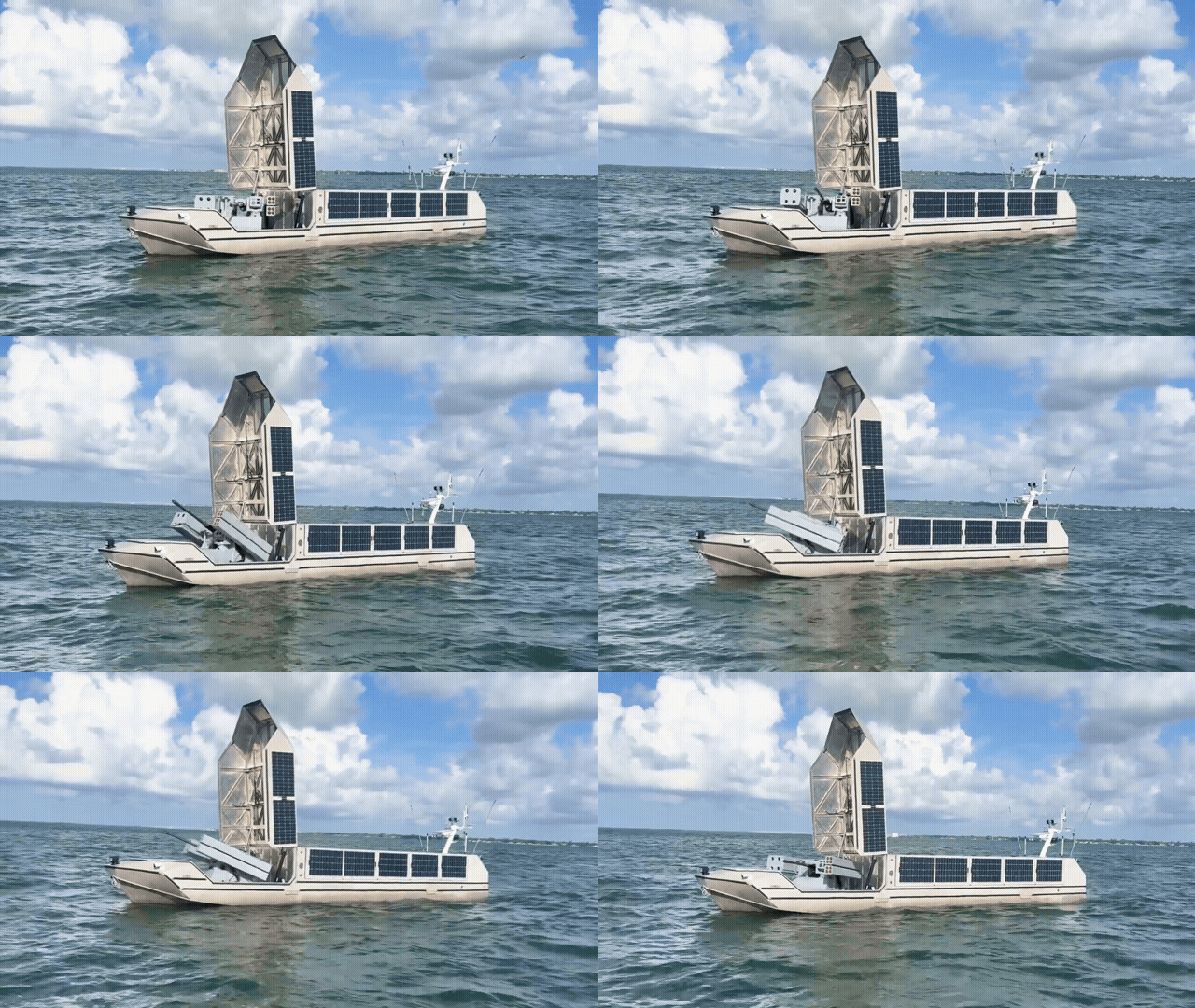
U.S
SAN DIEGO, California — Voltaic Marine has completed live trials integrating its AEU39 uncrewed surface vessel (USV) with Moog Space and Defense’s Reconfigurable Integrated-weapons Platform (RIwP) remote weapon turret during the U.S. Navy’s Coastal Trident Demo. The demonstration marked the first maritime use of the RIwP and included its detection and tracking functions aboard the autonomous vessel. RIwP Integration During the trials, the RIwP drew power directly from the AEU39’s 300 kWh battery bank while the vessel held position on the water. The system used standard interfaces and an 800-volt-to-12-volt conversion system. The turret was installed in the AEU39’s forward payload bay beneath a hinged armored hatch. The hatch opens upward when the weapon system is needed and closes flush with the hull when it is not in use. The RIwP is a configurable, platform-agnostic remote weapon station already fielded on other platforms. The maritime configuration retains commonality with the standard RIwP while weighing roughly one-third as much. It can accommodate a 30 mm cannon and multiple missile effectors, as well as different weapons and sensors. It also has increased onboard ammunition capacity for extended engagement duration. AEU39 Payload and Propulsion The AEU39 has an open payload architecture with two modular bays and a combined payload capacity of 4,000 pounds (1,814 kg). The forward bay supports modular turret systems. A separate enclosed midship bay is designed to launch and recover uncrewed aircraft from a stabilized deck and provides additional modular payload options. The vessel uses electric-hybrid propulsion with integrated solar panels. Voltaic Marine says the system provides low acoustic and thermal signatures and allows the vessel to remain on station without the noise and heat associated with conventional propulsion. The company says the battery and solar-electric system can keep a fielded weapon system “on watch for weeks at a time.” Autonomy and Logistics The AEU39 is designed to operate with different autonomy and command-and-control systems through open data and communications standards. It supports waypoint transit, area patrol, loitering and repositioning commands. The vessel can be transported on a standard road trailer, launched from a basic boat ramp, shipped inside a 45-foot high-cube container, and carried aboard C-17 and C-130 transport aircraft. Industry Statements Richard Phamdo, CEO of Voltaic Marine, said the AEU39 was built around modular payload bays and abundant electric power, while RIwP provides multiple defeat options from a single reconfigurable mount. Jason Weiss, Moog Land and Sea Business Unit General Manager, said the collaboration brings RIwP’s capabilities from land-based applications into the maritime domain. The companies have not disclosed the specific trial date or location, customer or program involved, whether live munitions were used, or detailed performance results from the demonstration.
Read More → Posted on 2026-08-30 12:15:10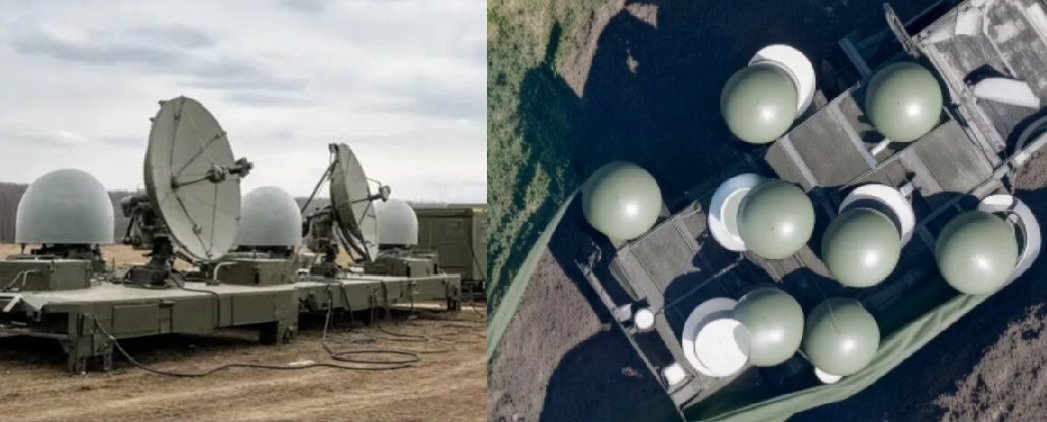
World
MOSCOW, — Russia has begun serial production of the Volna Kupol Garant, an electronic warfare (EW) system designed to disrupt communications between Starlink terminals and satellites, according to a Russian defense-industry source cited by state news agency TASS on August 28. The move follows Russian claims that the system has demonstrated effectiveness during testing and earlier deployments. The start of serial production marks a shift from limited production and deployment toward larger-scale manufacturing. How the Volna Kupol Garant Works The Volna Kupol Garant uses a different approach from conventional systems that directly jam communications equipment on the ground. According to Ukrainian radio technology expert and presidential adviser Serhii “Flash” Beskrestnov, the system directs powerful radio-frequency interference toward Starlink satellites in low Earth orbit. The objective is to interfere with the satellites' ability to receive signals transmitted by Starlink terminals on the ground. Beskrestnov said in June that Starlink terminals transmit toward satellites in the 14–14.5 GHz frequency range. He described eight data channels, each with a bandwidth of 62.5 MHz, that the Russian system is designed to interfere with. The system is mounted on six trailers, with two antennas per trailer, giving it a total of 12 antennas. The equipment uses steerable antennas to direct interference toward satellites passing over the area. A single system has been reported to affect an area of approximately 20 square kilometers. The system is manufactured by Rossiysky Kupol, also referred to as Russkii Kupol, a company based in Simferopol, Crimea, according to Ukrainian reporting on the system. Starlink's Role in the War Starlink has become an important communications system for Ukrainian forces, including for battlefield communications and unmanned systems. Russia has been developing and deploying electronic warfare systems intended to interfere with Starlink communications. Ukrainian officials reported in June that Russian forces were using the Volna Kupol Garant against Starlink links. The system's satellite-focused approach is intended to interfere with the connection before the communication reaches the ground terminal. However, the effectiveness of such interference depends on several factors, including the satellite passing over the affected area and the ability of Starlink terminals to establish connections with other satellites. The Institute for the Study of War's Critical Threats Project noted that the system reportedly engages satellites rather than individual ground terminals and that Starlink's large constellation and frequent satellite handovers can limit the duration and scale of disruption. Russian Claims and Reported Limitations The Russian defense-industry source quoted by TASS said the Volna Kupol Garant had proven effective and that production was being expanded. The source also claimed that multiple systems could be used to increase the area affected by interference. Independent assessments, however, have highlighted limitations. The system is relatively large and requires significant power, while its reported coverage is limited to a specific area. Ukrainian officials have also reported that Russian Volna Kupol Garant systems have been identified and attacked. The system's estimated cost has been reported at around $1.5 million per unit, although this figure is an estimate rather than an officially confirmed production price. Ukrainian forces have previously released evidence of strikes against Volna Kupol Garant systems. Open-source reporting has also identified satellite imagery showing a destroyed system at Russian military unit No. 2156 in Gelendzhik, on Russia's Black Sea coast. Russia Says Technology Could Be Supplied Abroad The Russian defense-industry source cited by TASS also said that Russia retains the right to distribute the technology to other countries. That statement indicates that Moscow sees the system as more than a battlefield electronic warfare capability. However, there is currently no confirmed public information establishing which foreign countries have ordered or received the Volna Kupol Garant. The start of serial production nevertheless represents a further Russian effort to counter Starlink through electronic warfare. Its actual effectiveness at scale will depend on the number of systems deployed, their ability to remain operational, and Starlink's ability to maintain connectivity through its wider satellite network.
Read More → Posted on 2026-08-30 12:28:09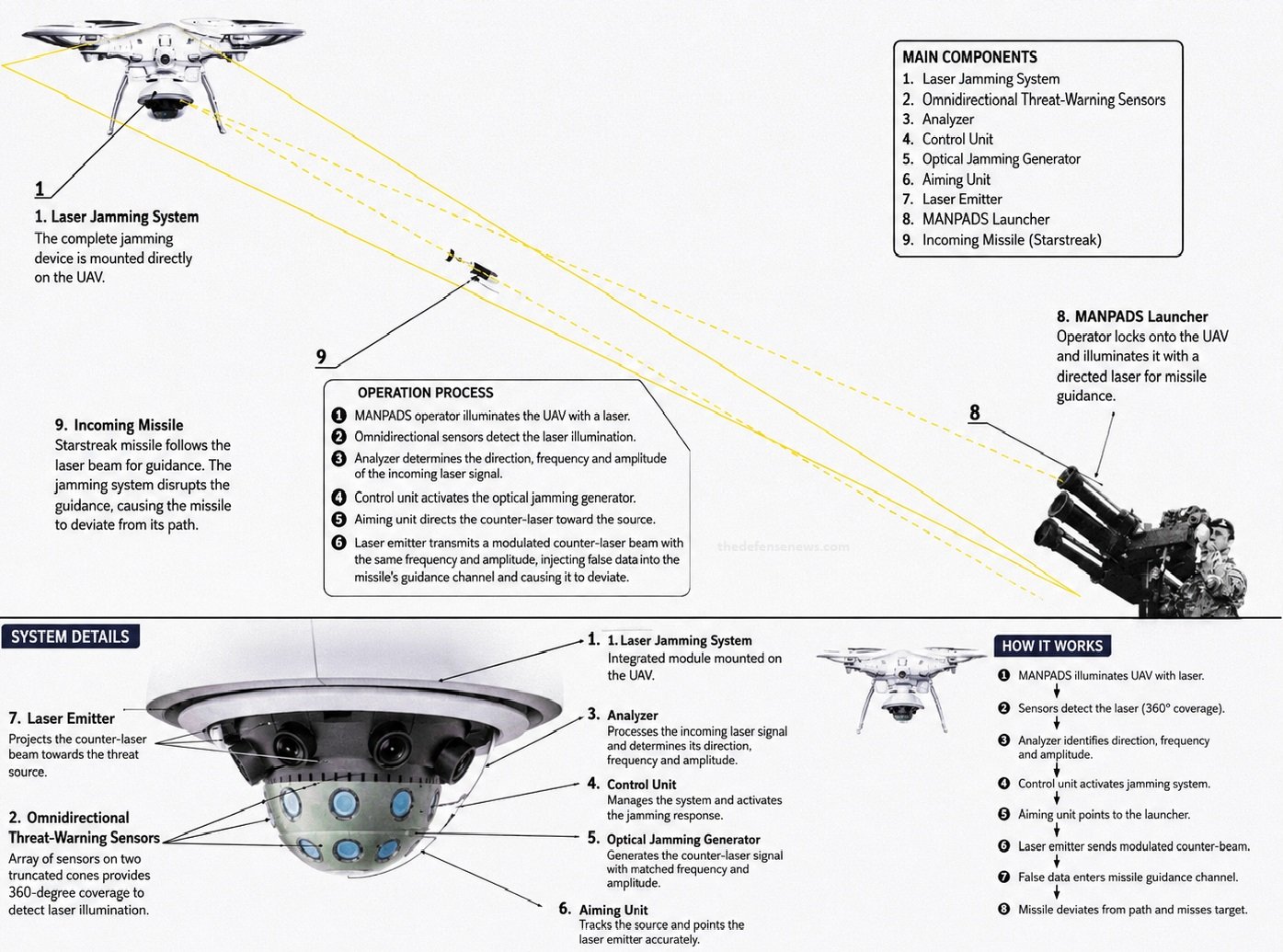
World
MOSCOW, — Russia’s 3rd Central Research Institute of the Ministry of Defense has developed and patented a laser jamming system designed to protect unmanned aerial vehicles (UAVs) from man-portable air-defense systems (MANPADS) that use laser beam-riding guidance. The system is described in Russian patent documents reviewed by TASS. Reports about the patent first appeared in July 2025. The device is intended to counter laser-guided systems such as the British-made Starstreak. System Designed for UAVs The patented equipment is mounted directly on a UAV and is designed to detect laser illumination from a missile guidance system and respond with a counter-laser signal. Its main components include an array of omnidirectional threat-warning sensors, an analyzer, a control unit, an optical jamming generator, an aiming unit and a laser emitter. The warning sensors are positioned on two truncated cones around the aircraft. According to the patent description, this arrangement provides 360-degree coverage for detecting directed laser illumination. Once the system detects the laser signal, the analyzer determines the direction from which it is coming and examines characteristics of the guidance signal, including its frequency and amplitude. The control unit then activates the optical jamming system. The aiming unit directs the countermeasure toward the location of the laser source. Counter-Laser Signal Targets the Guidance Channel The system is designed specifically for missiles that receive guidance through a laser beam rather than using an infrared seeker. The counter-laser signal is modulated using the frequency and amplitude characteristics identified from the incoming guidance signal. According to the patent, this allows the jammer to introduce false information into the missile's guidance channel. The intended result is to disrupt the missile's guidance and cause it to deviate from its planned flight path, reducing the probability of the UAV being hit. This approach is different from conventional infrared countermeasures. Laser beam-riding weapons do not depend on a heat signature from the target in the same way as infrared-guided missiles, so countermeasures designed specifically to defeat infrared seekers are not the primary mechanism addressed by this system. Starstreak Uses Laser Beam-Riding Guidance Starstreak is an example of a MANPADS system that uses laser beam-riding guidance. During an engagement, the launcher projects a laser guidance beam toward the target, while the missile uses sensors to determine its position within that beam and make flight corrections. The Russian patent is aimed at interfering with this guidance method rather than attempting to defeat a conventional infrared seeker. The patent therefore describes the system as a countermeasure against portable air-defense systems that rely on laser command or beam-riding guidance. Compact and Reusable Design The developers describe the equipment as lightweight and compact, making it suitable for installation on UAVs. The patent contrasts the concept with larger airborne self-protection systems such as MANTA. Another feature identified in the patent is its reusable nature. Unlike expendable pyrotechnic countermeasures, the laser-based system does not depend on a single-use physical countermeasure. The patent states that the technical result of the system is a reduction in the probability of a UAV being hit by disrupting the missile's guidance. However, the available information does not establish that the system has entered production or operational service. There is also no publicly available information confirming production timelines, test results or specific UAV platforms that would receive the equipment. The patent describes the technology and its intended operating principle, but those details do not by themselves confirm deployment. The 3rd Central Research Institute is a Russian Defense Ministry research organization with a history of work on military technology and equipment.
Read More → Posted on 2026-08-30 12:48:47
Europe
LONDON, — The United Kingdom has officially confirmed the sale of HMS Bulwark, an Albion-class amphibious assault ship, to the Brazilian Navy. The announcement was made by the UK Ministry of Defence on August 28, 2026, ending more than two decades of Royal Navy service for the ship. In Brazilian service, the former HMS Bulwark is expected to be known as NDM Oiapoque. The transfer comes as the UK moves toward a new amphibious fleet being developed with the Netherlands. UK Moving Toward New Amphibious Ships The sale of Bulwark follows a £2.4 billion UK-Netherlands maritime partnership announced in July 2026. Under the programme, Britain and the Netherlands will develop a new fleet of amphibious transport ships. The new ships will be about 160 metres long and displace 15,000 tonnes. Each country is expected to operate four vessels. They will be designed to transport troops, vehicles and equipment, while their flight decks will support current and future long-range drones and autonomous systems. The ships will be built in UK shipyards in cooperation with Dutch industry. The programme is part of Britain's wider move toward a hybrid navy combining crewed warships with uncrewed and autonomous systems. The UK government has said the new amphibious fleet will provide a shared capability for British and Dutch forces and strengthen their ability to operate together within NATO. UK Minister of State for Defence Lord Coaker said: “HMS Bulwark served this country and our allies with distinction for over two decades, and I’m pleased that she will continue her story in Brazilian service, with a nation that has long stood alongside us as a defence partner.” HMS Bulwark's Amphibious Role HMS Bulwark was commissioned in 2005 and became one of the Royal Navy's two Albion-class amphibious assault ships. Based at HM Naval Base Devonport, the ship was designed to transport Royal Marines, vehicles and equipment and land them ashore using landing craft and helicopters. Its major amphibious feature is a floodable stern dock. By flooding the dock, the ship can launch its landing craft directly into the water. The Albion class operates LCU Mk10 landing craft, which can transport personnel and heavy vehicles, including a Challenger battle tank. According to Royal Navy specifications, the Albion class has a displacement of 19,560 tonnes, a length of 176 metres, a maximum speed of 18 knots and a range of about 8,000 nautical miles. Bulwark has a crew of around 325 and can accommodate up to 405 additional troops, along with trucks, smaller vehicles and main battle tanks. The ship's flight deck can support heavy-lift helicopters, including Chinooks, while its well deck provides the main sea-based route for amphibious landings. More Than Two Decades of Royal Navy Service During its Royal Navy career, Bulwark participated in amphibious deployments, humanitarian missions and multinational exercises. In 2006, the ship supported the evacuation of civilians from Lebanon. It later served as the Royal Navy's Fleet Flagship from 2011 to 2015. Bulwark also provided maritime security support during the sailing events of the 2012 London Olympics. The ship's role was not limited to combat operations. Its amphibious design also allowed it to support humanitarian assistance and disaster-relief missions by transporting personnel, vehicles, landing craft and supplies. End of Albion-Class Service in Britain The transfer of Bulwark follows Britain's decision to move away from the current Albion-class amphibious assault ships. The Royal Navy's current information states that the Albion-class ships are being decommissioned, with amphibious support for the Royal Marines being provided by other vessels while the future amphibious fleet is developed. HMS Albion's sister ship remains at Devonport pending disposal, according to the Ministry of Defence. The decision to replace the capability provided by the Albion class is now linked to the new UK-Netherlands amphibious transport ship programme. The British government says the future ships will provide a modern, interoperable capability while also supporting the integration of drones and autonomous systems into amphibious operations. Brazil to Receive Another Former Royal Navy Ship The acquisition gives Brazil another major former Royal Navy vessel. The Brazilian Navy already operates the former HMS Ocean, which was sold to Brazil in 2018 and now serves as NAM Atlântico. The future NDM Oiapoque will add an amphibious transport capability based around a floodable dock, landing craft and helicopter operations. This will allow the Brazilian Navy to transport troops, vehicles and equipment and conduct amphibious and humanitarian missions. The former Bulwark is currently undergoing preparation in the United Kingdom ahead of its transfer. Brazilian personnel have also been involved in preparations for the ship's transition to Brazilian service. Recent reports from Brazil indicate that the vessel has already appeared with the Brazilian designation G350 during work in Plymouth, although the UK Ministry of Defence's official announcement remains the primary confirmation of the sale. The transfer marks the end of HMS Bulwark's Royal Navy career while giving the Brazilian Navy an Albion-class amphibious platform as Britain develops its next generation of amphibious ships with the Netherlands.
Read More → Posted on 2026-08-30 13:04:41
World
KYIV, Ukraine — Ukraine has formally asked the International Telecommunication Union (ITU) to remove its national territory from the declared service areas of Russia’s Rassvet satellite internet network across all frequency bands. Foreign Minister Andrii Sybiha announced the move on August 28, saying Ukraine had submitted a formal note to the ITU Radiocommunication Bureau through its Permanent Mission to the United Nations and other international organizations in Geneva. The request was jointly coordinated by Ukraine’s Ministry of Foreign Affairs, Ministry of Digital Transformation and State Centre of Radio Frequencies. Ukrainian officials said Russia intends to extend Rassvet-1 and Rassvet-3 coverage over Ukraine and that Kyiv wants to protect its frequency resources used for mobile communications, radio networks, satellite systems and other telecommunications. Sybiha said Russia’s planned use of the satellites over Ukrainian territory is intended to support military operations rather than civilian connectivity. He also called on international partners to support Ukraine’s position and take similar measures to prevent Rassvet operations over their own sovereign territories. The ITU coordinates international use of radio-frequency spectrum and satellite orbits, but it does not have the ability to physically prevent satellites from passing over a country or stop their signals from reaching the ground. Russia's Rassvet Network Rassvet is being developed by Russian aerospace company Bureau 1440 as a low-Earth-orbit broadband network intended as a domestic alternative to systems such as SpaceX’s Starlink. The project uses 5G non-terrestrial-network technology and active phased-array terminals, with subscriber terminals designed to provide data speeds of up to 1 Gbps. Bureau 1440 is also developing terminals for aircraft, trains and mobile platforms. The network has gained importance for Russia as access to Starlink has become more restricted for Russian forces. Earlier this year, Ukrainian forces and SpaceX introduced measures to block unauthorized Russian access to Starlink terminals. Military analysts have linked Rassvet to battlefield communications and the operation of reconnaissance and strike drones. Russian officials have also publicly connected Bureau 1440’s technology with control systems for heavy unmanned aerial vehicles. 32 Rassvet-3 Satellites Launched in 2026 Bureau 1440 launched 16 Rassvet-3 satellites on March 23, 2026, from the Plesetsk Cosmodrome. One satellite from that group later re-entered the atmosphere, while 12 of the remaining satellites had reached an operational altitude of about 550 kilometers by late July. Other satellites were still raising their orbits. A second group of 16 Rassvet-3 satellites was launched on July 19. Tracking data showed that the satellites initially remained at much lower altitudes. Two failed to complete orbit-raising maneuvers and were moving toward atmospheric re-entry, while several others remained below their planned operating altitude. Russia plans to expand the constellation to 156 satellites by the end of 2026 and 292 satellites by 2027, when commercial service is planned to begin. Longer-term plans call for about 900 satellites by 2035, providing near-global coverage, including the Arctic region. Despite the expansion plans, the network remains limited in scale and has faced orbital problems with satellites from the two 2026 launches. Rassvet Satellites Already Passing Over Ukraine Tracking analysis from services including N2YO indicated that the first Rassvet-3 satellites pass over Ukraine about four times a day. Two of these passes typically provide stable communication windows lasting more than an hour. Ukraine’s ITU petition focuses on removing its territory from Rassvet’s declared service areas. Kyiv says it will continue diplomatic measures against the Russian satellite network while seeking support from other countries.
Read More → Posted on 2026-08-30 13:23:19
India
BENGALURU, — Bengaluru-based aerospace startup Aspera Industries has unveiled ‘Eureka’, an autonomous amphibious aircraft designed to transport cargo faster than sea freight while targeting costs lower than conventional air freight. Founder and CEO Khushi Mittal announced the aircraft publicly on August 29. Eureka is designed to take off and land on water as well as flat land without a pilot onboard. It has a stated payload capacity of 1,000 kg, a range of 2,000 km and a planned operating altitude of 6,500 feet above mean sea level. Aspera was founded in 2025 by Mittal and focuses on purpose-built, long-range aircraft for aerial logistics. The company has raised $750,000 in seed funding from Inuka Capital and aims to manufacture aircraft in India that can compete with boats on cost while delivering cargo much faster. Designed to Use Water as a Runway Aspera's concept is based on using water as a natural runway, reducing dependence on conventional airport infrastructure. Mittal noted that 150 of the world's 193 countries have a coastline, while many cities, ports and industrial centres have developed around water. The company also points to the fact that about 71% of Earth's surface is covered by water. The aircraft uses a carbon-fibre body and replaces the traditional stepped hull used by older seaplanes with retractable hydrofoils. Aspera says stepped hulls created aerodynamic drag during flight, while the retractable hydrofoils are designed to assist water operations and retract during flight. Targeting Lower Cargo Costs Around 80% of world trade is transported by sea, according to figures cited by Mittal. Sea freight can take weeks, leading factories and supply chains to maintain three to six weeks of buffer stock. Mittal said flying a tonne of cargo currently costs about 20 times more than shipping it by sea. Aspera is targeting a delivery cost of less than $1 per tonne-kilometre for the initial aircraft and expects the figure to fall below 50 cents per tonne-kilometre at larger fleet scale. The company's longer-term goal is to manufacture large numbers of efficient aircraft in India and reduce the cost of air cargo to a level where flying becomes a practical option for urgent, perishable and high-value goods. Eureka is the company's first publicly announced aircraft under this plan and is intended to reduce cargo delivery times from several weeks to hours.
Read More → Posted on 2026-08-30 14:59:17
U.S
WASHINGTON, — Senior U.S. military leaders have warned Defense Secretary Pete Hegseth that continuing large-scale operations against Iran is putting increasing pressure on U.S. military resources and could weaken America’s ability to respond to potential threats in Europe, the Indo-Pacific and the homeland. The concerns were detailed in the Aug. 14 Secretary of Defense Orders Book (SDOB), a classified document covering the worldwide availability of U.S. warships, aircraft, personnel and weapons. People familiar with the assessment spoke to The Washington Post on condition of anonymity because the document is classified. Commanders Object to Extensions The commanders of U.S. European Command, U.S. Pacific Command and U.S. Southern Command, along with the Navy’s top admiral, formally recorded a “non-concur” with orders extending forces for the Iran campaign. The designation means they disagreed with the extensions but would still carry out the orders. Army and Air Force leaders concurred with the extensions but warned Hegseth that continuing them carries significant strategic risk. The campaign, which began in late February and has continued for about six months, has required large numbers of ships, aircraft, personnel, air-defense systems and other weapons in the Middle East. More than 50,000 U.S. troops remain on alert in the region. The Aug. 14 orders keep some forces there through September and others into 2027. Military leaders described the situation as “too much for too long”, citing the lack of a clear end date and the continued transfer of resources from other commands. Navy Under Pressure Chief of Naval Operations Adm. Daryl Caudle told Hegseth that the Navy cannot sustain its current level of support indefinitely. Only about one-quarter of the Navy’s destroyers are currently ready to deploy, according to the assessment. The Navy has provided dozens of vessels for the campaign, initially for strikes and defense against Iranian counterattacks and later to support a blockade of Iranian ports aimed at pressuring Tehran to reopen the Strait of Hormuz. Some ship and crew deployments have been extended by months. The assessment warns that continued operations could affect ship maintenance and reduce fleet availability for other conflicts. Adm. Samuel Paparo, commander of U.S. Pacific Command, also opposed the continued requirement to provide a carrier strike group and destroyers to the Middle East. The only U.S. aircraft carrier normally based in the Pacific was sent to the region to relieve another carrier that had been deployed for more than 300 days. Other Forces and Weapons Affected European Command and Southern Command warned that moving ships and surveillance aircraft to Central Command has reduced their ability to conduct training and meet other missions, including homeland-defense responsibilities. The 82nd Airborne Division, which sent about 2,000 soldiers to the region in March, is ordered to remain at least through September, with some officials expecting another extension. Patriot air-defense units are also expected to remain longer, while many Air Force units involved in the operation are scheduled to stay into 2027. The campaign has also drawn on U.S. stocks of Patriot and THAAD interceptors and Tomahawk missiles. Previous reporting cited losses of about 25 percent of the Reaper drone fleet, as well as damage to U.S. bases in the region. The Trump administration has disputed descriptions of U.S. munitions shortages as inaccurate. Pentagon Response Pentagon spokesman Sean Parnell said decisions on the scope and duration of U.S. force commitments are based on the current threat assessment, presidential strategic priorities and advice from the chairman of the Joint Chiefs of Staff and combatant commanders. The Pentagon does not discuss internal operational processes, including specific concurrences, non-concurrences or risk assessments made during force-allocation decisions. A spokesman for Joint Chiefs Chairman Gen. Dan Caine referred questions to Hegseth’s office. President Donald Trump has continued pressing Iran to reopen the Strait of Hormuz and accept U.S. terms for ending the conflict while keeping military options available. The commanders’ assessment highlights the strain created by maintaining the current level of U.S. military operations without a clear end date.
Read More → Posted on 2026-08-30 15:28:53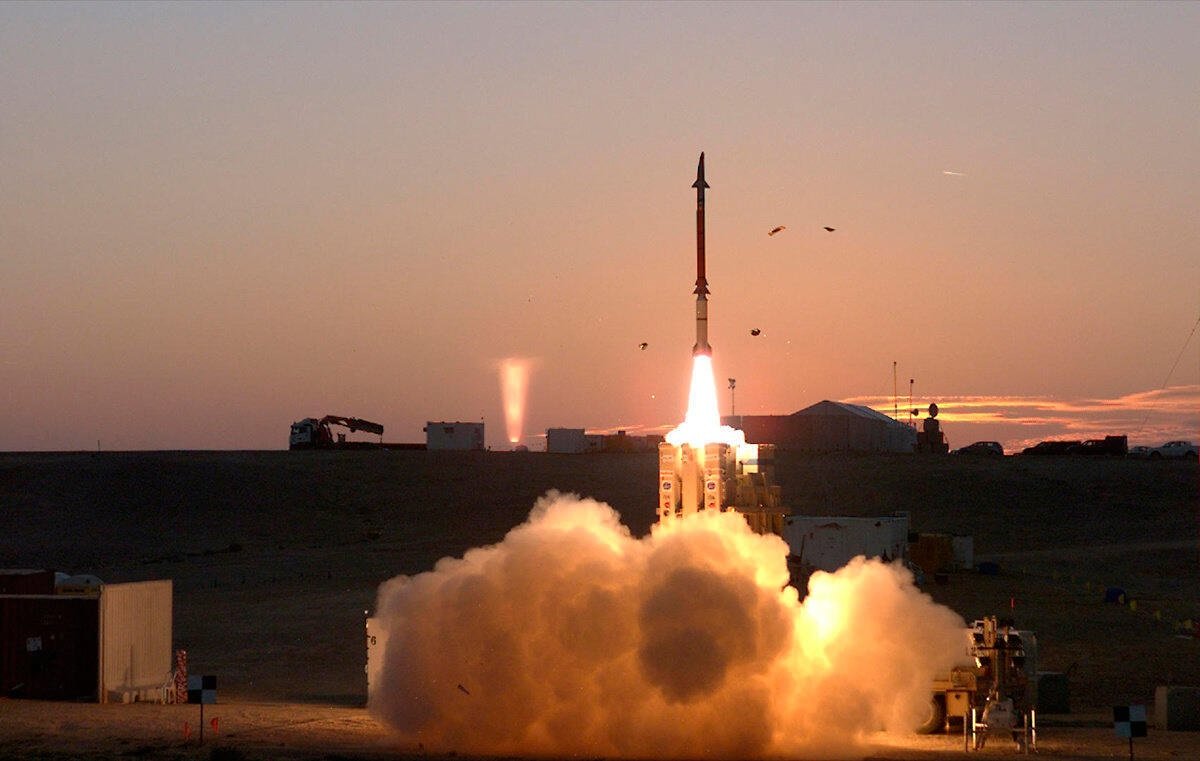
World
TEL AVIV, — Greece and Israel are scheduled to sign agreements on Monday, August 31, for a multilayered air and missile defense network known as “Achilles Shield.” The program is valued at slightly more than €3 billion, with recent reports putting the agreement at about €3.1 billion ($3.6 billion). The signing in Tel Aviv is expected to move the program from government approval into its implementation phase. If completed as reported, it would become the largest Israeli defense export agreement to date, exceeding the value of Israel’s previous major defense export deal, the $3.5 billion Arrow 3 sale to Germany in 2023. The agreements are expected to be signed by Greece’s General Directorate for Defense Investments and Armaments (GDDIA) and Israel’s Directorate of International Defense Cooperation (SIBAT), together with the Israeli defense organizations and companies involved in the program. Three Israeli air defense systems The core of Achilles Shield will combine three Israeli-developed systems to provide different layers of air and missile defense. David’s Sling, developed by Rafael, will provide the higher-tier missile defense capability. Reports on the Greek program have identified the SkyCeptor version as the planned configuration. It is intended to address ballistic and other missile threats. Barak MX, developed by Israel Aerospace Industries (IAI), will form another layer of the network. Greece plans to use the system as part of the replacement of its older Hawk air-defense capability. At the shorter-range end, Rafael’s SPYDER system will be included. It is planned to replace Greece’s Russian-origin Osa-AK and Tor-M1 systems. The three systems will be integrated with Greece’s existing Patriot air-defense systems and other sensors and capabilities rather than operating as separate networks. Command and control and source-code access A major element of Achilles Shield will be its command-and-control architecture. Greek Defense Minister Nikos Dendias has said the system will be built around an integrated command-and-control structure capable of prioritizing threats and supporting the selection of an appropriate response. Greece also intends to use artificial-intelligence capabilities within this architecture. Greece has also secured provisions concerning access to the source code. Dendias said in July that Greece should not acquire critical command-and-control systems without the ability to intervene in their architecture and development. Recent reporting indicates that the source-code issue was among the final matters resolved before the planned signing. Greek defense industry participation The agreement also includes significant participation from Greek defense companies. Reports say 12 Greek companies will participate in the program, with domestic industrial work exceeding €700 million, equivalent to about 25% of the program's value. The arrangement is intended to give Greek industry a role in manufacturing, integration and support activities rather than limiting the program to the direct purchase of foreign-built systems. 35-month implementation period Greece approved the Achilles Shield program through its Government Council for Foreign Affairs and Defense (KYSEA) on July 23, 2026. Dendias said the complete system would become operational within 35 months, with deliveries taking place in stages rather than all at once. Negotiations for the program have continued for about three years. The project was delayed during the period of Israeli military operations in Gaza before Greece resumed efforts to finalize the agreement. Part of Greece’s wider military modernization Achilles Shield is a major component of Greece’s broader Agenda 2030 defense modernization program. The wider procurement effort includes additional unmanned systems, satellites, naval modernization and military transport capabilities. Among the other approved programs are Heron 1 unmanned aerial systems, 10 additional V-BAT systems, synthetic-aperture-radar satellite capabilities, 10 VICTA special operations vessels, modernization of four MEKO-class frigates, and three Embraer C-390 Millennium transport aircraft. The Greek Defense Ministry describes Achilles Shield as part of a wider national defense architecture extending across the sea, land, air, cyberspace and space, with different military platforms connected through a networked command-and-control structure. The planned August 31 signing in Tel Aviv will therefore mark the next major step in Greece’s effort to establish the Achilles Shield as an integrated national air and missile defense architecture.
Read More → Posted on 2026-08-30 15:32:59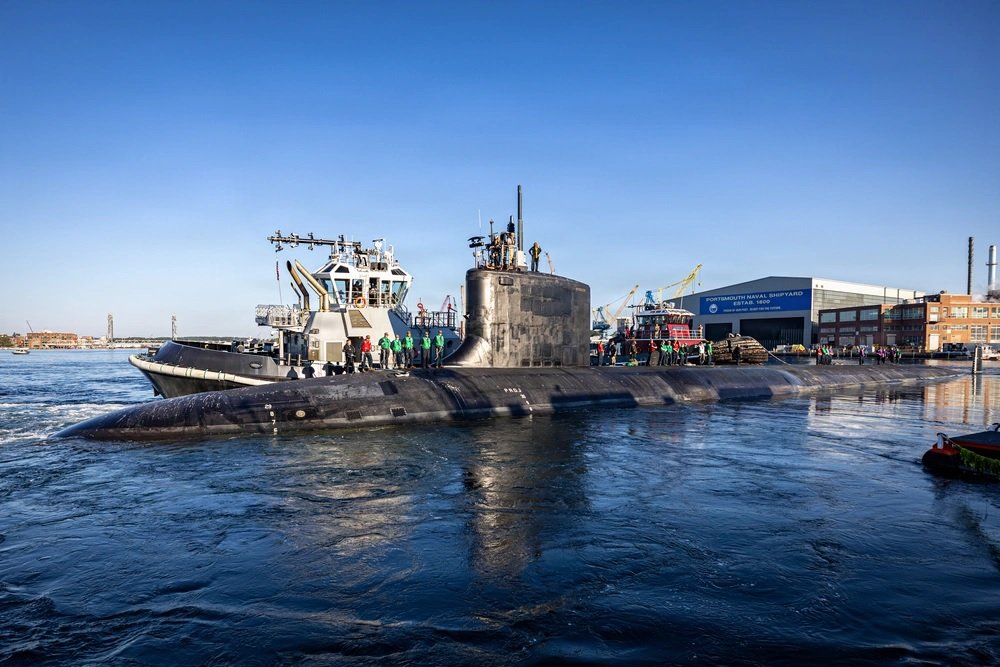
U.S
KITTERY, Maine — The U.S. Navy returned the Virginia-class attack submarine USS North Dakota (SSN 784) to the active fleet on August 29 after Portsmouth Naval Shipyard in Kittery, Maine, completed an Extended Drydocking Selected Restricted Availability. The Virginia-class attack submarine received major maintenance and modernization work and completed the project ahead of its rebaselined schedule. 40-Month Maintenance Period North Dakota arrived at Portsmouth Naval Shipyard on April 28, 2023, and entered Dry Dock No. 2 in September 2023. It undocked on February 26, 2026, before undergoing nearly six more months of pierside work, system integration, testing and certification. The submarine began sea trials on August 20, 2026, and arrived at Naval Submarine Base New London in Groton, Connecticut, on August 27. The availability formally ended on August 29, bringing the total maintenance period to about 40 months. The original plan called for about 33 months of work valued at approximately $347 million. First Block III Availability The project was Portsmouth Naval Shipyard’s first Chief of Naval Operations availability for a Block III Virginia-class submarine. Shipyard workers and North Dakota’s crew worked together to integrate new maritime technologies and complete several technical modifications on a Block III submarine for the first time. The work included structural inspections, repairs, replacement of key mechanical and electrical systems, and upgrades involving the submarine’s bow-array technologies. The Navy said the submarine progressed through its testing program, including its final phase, at a historically rapid pace. The experience gained from the project is expected to help guide future maintenance work on other Block III Virginia-class submarines. Block III Design USS North Dakota is the 11th Virginia-class attack submarine and the first of eight Block III boats. The submarine is 114.8 meters long, nuclear-powered and based at Naval Submarine Base New London. The Block III configuration introduced a redesigned bow with a Large Aperture Bow (LAB) sonar array and two large-diameter Virginia Payload Tubes. These replaced the 12 individual vertical launch tubes used on earlier Virginia-class submarines. Navy and Shipyard Statements “Executing this complex work package on our first Block III submarine was a demanding task, but this team met every challenge head-on with tenacity and selflessness,” said Capt. Jesse Nice, shipyard commander. He said the team’s work created a foundation for future Virginia-class maintenance projects. Capt. Mike Poplawski, commodore of Submarine Squadron TWO, said the technological capabilities integrated during the availability provide an immediate operational benefit and strengthen the readiness and resilience of the submarine force. Andrew Stark, North Dakota’s project superintendent, credited the submarine’s crew and Portsmouth’s civilian workforce for their coordination throughout the project. He said the team executed the “fastest, most aggressive end game in recent history” on a major availability at Portsmouth Naval Shipyard. USS North Dakota General Dynamics Electric Boat built North Dakota in Groton, Connecticut. Its contract was awarded on August 14, 2003. The keel was laid on May 11, 2012, the submarine was launched on September 15, 2013, christened on November 2, 2013, and commissioned on October 25, 2014. The submarine supports missions including anti-submarine warfare, intelligence gathering and special operations support. With North Dakota back in the fleet, Portsmouth Naval Shipyard has completed its first major maintenance project involving the Block III Virginia-class configuration. The experience is expected to support future modernization and maintenance work on other submarines in the block.
Read More → Posted on 2026-08-31 11:41:00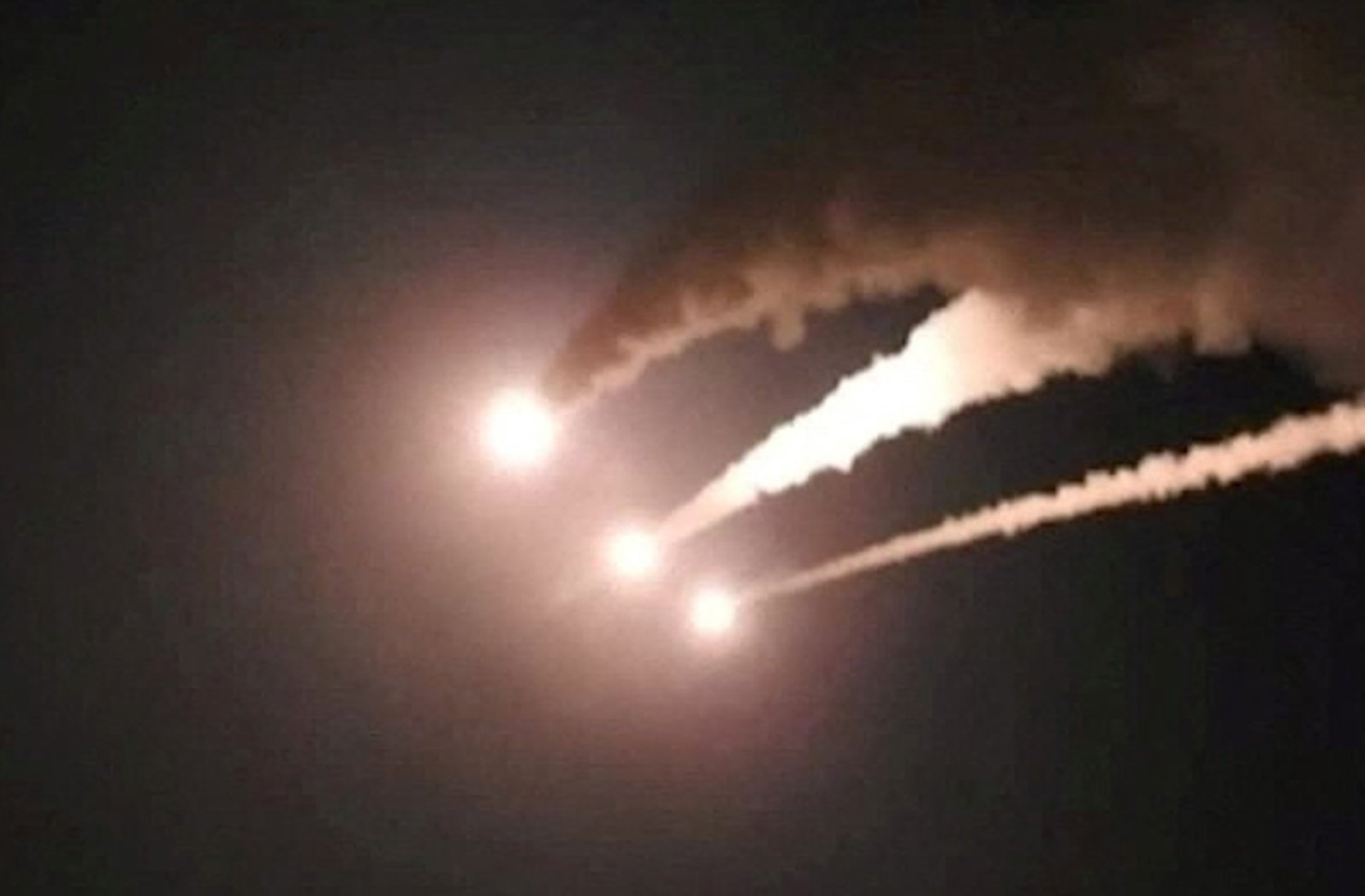
World
WASHINGTON/TEHRAN, — U.S. forces struck two Iranian rocket launchers on Larak Island in the Strait of Hormuz on Sunday, August 30, marking the first known U.S. attack on Iranian territory since late July. Iran responded hours later with ballistic missile and drone operations against U.S. military positions in Jordan and the United Arab Emirates. U.S. Strike on Larak Island U.S. Central Command (CENTCOM) said the strike targeted two launchers after Islamic Revolutionary Guard Corps (IRGC) personnel were observed preparing to fire rockets carrying sea mines into the Strait of Hormuz. CENTCOM spokesman Captain Tim Hawkins described the operation as a “limited, precise action” against what the U.S. considered an imminent threat to civilian mariners and commercial shipping. Iranian state media said the strike was carried out by drones and caused military and civilian casualties. Tasnim reported that two people were killed and two others wounded. Tehran condemned the attack and vowed a response. The casualty figures have not been independently verified. The strike came after the U.S. said it had completed clearing sea mines from international shipping lanes in the Strait. President Donald Trump had also warned that vessels attempting to place new mines would be destroyed. Iran Retaliates in Jordan and UAE The IRGC later said it launched ballistic missiles against two U.S.-associated bases in Jordan, King Hussein and Al-Azraq, also known as Muwaffaq al-Salti. Iran claimed the attacks targeted technical infrastructure, maintenance facilities and areas where fighter aircraft were stationed, causing heavy damage. Jordan's armed forces said its air defenses intercepted and destroyed eight missiles that entered Jordanian airspace before they could threaten civilians or property. U.S. officials also said the missiles targeting U.S. forces in Jordan were intercepted, with no significant impact reported. Iran also said it launched drones toward Al Minhad Air Base in the UAE, targeting areas where U.S. helicopters and personnel were stationed. However, the UAE said its air defenses intercepted an Iranian drone over its territorial waters and denied Iranian reports that Al Minhad airbase had been attacked. Iranian authorities separately claimed that its air defenses shot down a U.S. MQ-9 Reaper over the Strait of Hormuz. The claim has not been independently confirmed. Renewed Tensions Around the Strait The exchange ended weeks of relative calm between Washington and Tehran and renewed concerns over the security of the Strait of Hormuz, a major route for global energy shipments. Oil prices rose as markets reacted to the renewed fighting and concerns over possible disruption to shipping. Iranian President Masoud Pezeshkian said Tehran was not seeking war but would not remain passive in response to U.S. attacks. The latest exchange has increased uncertainty over the future of the conflict and security of commercial shipping through the Strait of Hormuz.
Read More → Posted on 2026-08-31 11:59:25
World
AMMAN, Jordan — U.S. Army Patriot air-defense systems intercepted Iranian ballistic missiles launched toward U.S. military positions in Jordan following a U.S. strike on two Iranian launchers on Larak Island in the Strait of Hormuz on August 30. The exchange marked a new round of direct U.S.-Iran military activity after several weeks without publicly confirmed U.S. strikes on Iranian territory. U.S. Central Command said American forces struck two Iranian launchers after observing Islamic Revolutionary Guard Corps (IRGC) personnel preparing to launch rockets carrying sea mines into the Strait of Hormuz. Iran subsequently launched ballistic missiles toward U.S. military positions in Jordan. The IRGC said the operation targeted the King Hussein and Al-Azraq bases, the latter also known as Muwaffaq Salti Air Base. Jordanian authorities said their air-defense systems intercepted eight missiles that entered the country's airspace. PAC-3 MSE Interceptor Expenditure Defense analyst Babak Taghvaee reported that two U.S. Army Patriot PAC-3 batteries in Jordan launched between 96 and 128 MIM-104F PAC-3 Missile Segment Enhancement (MSE) interceptors against approximately 32 Iranian ballistic missiles. His assessment indicates that roughly three to four interceptors were launched for each incoming ballistic missile. BREAKING: The U.S. Army launched almost 96 to 128 MIM-104F PAC-3 MSE surface-to-air missiles from its Patriot PAC-3 air-defense batteries in Jordan tonight against Iranian ballistic missiles. They launched three to four interceptors at each one of 32 Iranian ballistic missiles!… pic.twitter.com/N4g3tNg1BU — Babak Taghvaee - The Crisis Watch (@BabakTaghvaee1) August 30, 2026 The reported figures have not been independently confirmed by the U.S. Department of Defense. U.S. officials have confirmed the Iranian missile attack and the successful defensive response, but specific numbers of Patriot interceptors used in the engagement have not been publicly released. The PAC-3 MSE is the upgraded version of the PAC-3 interceptor. According to the U.S. Department of Defense, the MSE incorporates a higher-performance solid rocket motor, modified lethality enhancer, improved control surfaces and upgraded guidance software. The system is designed to engage tactical ballistic missiles as well as other air-breathing and unmanned threats. Iranian Missile Attack Followed Larak Island Strike The Iranian missile launches came after U.S. forces attacked two Iranian launchers on Larak Island. U.S. officials said the launchers were being prepared for use against shipping in the Strait of Hormuz with rockets carrying sea mines. The IRGC said the American operation caused casualties among Iranian military personnel and civilians and announced that it would respond. Iran then launched missiles toward U.S. military facilities in Jordan. The Jordanian military confirmed that eight missiles breached the country's airspace and were intercepted. Initial reports did not indicate significant casualties or damage at the targeted U.S. bases. The United Arab Emirates also reported intercepting an Iranian drone over its territorial waters during the same period of renewed hostilities. Claims About U.S. Patriot Stockpiles The reported expenditure of 96 to 128 PAC-3 MSE interceptors has renewed attention on the availability of U.S. missile-defense interceptors. Taghvaee argued that repeated attacks of a similar scale could place additional pressure on U.S. Patriot stocks in the region. However, claims that the U.S. Army would run out of Patriot interceptors after three additional attacks, or that it would be forced to withdraw from Jordan, have not been confirmed by the Pentagon. The exact number of PAC-3 interceptors currently available to U.S. forces in Jordan and elsewhere is not publicly disclosed. The reported transfer of Patriot interceptors from U.S. forces in South Korea to the Middle East also requires caution. Publicly available information does not establish the exact number of missiles transferred or the current inventory remaining at individual U.S. bases. Why the Interceptor Ratio Matters The reported use of three to four PAC-3 MSE interceptors for each Iranian ballistic missile is significant because each defensive engagement consumes a high-value interceptor while Iran can launch multiple missiles in a salvo. A high interceptor-to-target ratio can therefore become an important factor during prolonged missile exchanges. At the same time, the actual number of interceptors required depends on the engagement circumstances, including the number of incoming missiles, their trajectories, the defense architecture and the probability of successful interception. For the August 30 engagement, however, the 96-to-128 interceptor figure remains an analyst estimate rather than an officially confirmed U.S. military figure. The latest exchange also demonstrates the continued role of Patriot systems in defending U.S. forces against Iranian ballistic-missile attacks. Earlier U.S. military operations have similarly involved Patriot and other missile-defense systems against Iranian missile threats, although the Pentagon has not released the specific PAC-3 expenditure for this latest engagement. The confrontation followed the first publicly confirmed U.S. strike on Iranian territory since late July and has again brought the Strait of Hormuz and U.S. military positions across the region into the focus of the ongoing conflict.
Read More → Posted on 2026-08-31 12:38:13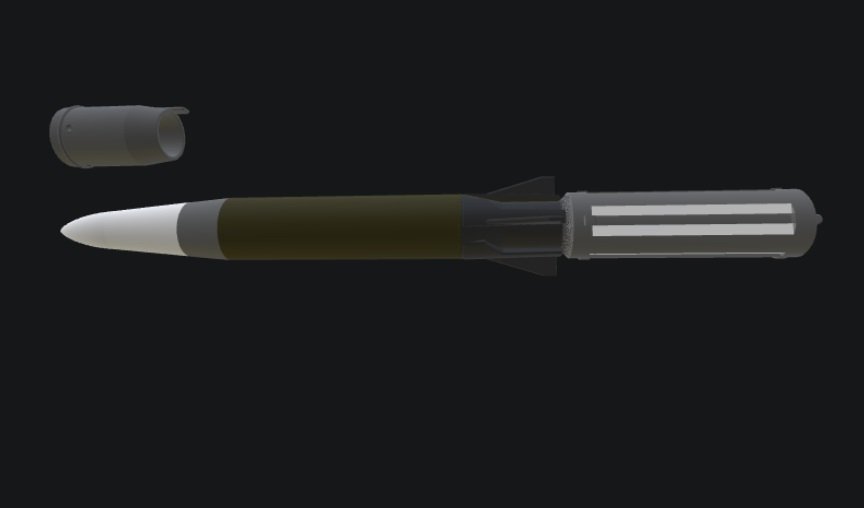
World
KYIV, Ukraine, — Ukraine’s Defence Intelligence Directorate (DIU) has published a detailed technical and industrial breakdown of Russia’s 3M22 Zircon missile, including an interactive 3D model, identified components, manufacturers, personnel and foreign-made equipment linked to its production. The information was released on August 31, 2026, through the DIU’s War&Sanctions portal. The agency identified 70 enterprises involved in producing the missile and its major systems and assemblies. It also published information on 84 officials and employees of key companies involved in its production. Missile designed for naval launch According to DIU, the 3M22 was developed as a weapon for Russia’s naval forces. It was designed for launch from Russian nuclear-powered submarines and Project 22350 frigates equipped with the 3S-14 UKSK vertical launch system. DIU says that the missile was later adapted for launch from Bastion-M coastal defence systems. The War&Sanctions database classifies the 3M22 as a ballistic missile and lists its main dimensions as 8 metres in length and 0.666 metres in body diameter. The listed warhead weight is approximately 120 kg. Its listed flight altitude is 30–40 km. DIU also compares the Zircon’s warhead with that of the smaller Banderol cruise missile, which it says carries a 150 kg warhead. Two solid-propellant motors The missile is launched from a container using a solid-propellant booster. The booster provides the initial altitude and speed before separating, after which the missile’s solid-propellant sustainer motor starts. DIU says that the initial correction of the missile’s trajectory is carried out by orientation and stabilisation thrusters located inside a protective fairing. The fairing is subsequently separated from the missile. Russia has claimed that the Zircon can reach speeds of up to Mach 8–9 during parts of its flight. The DIU database separately lists a maximum fixed speed of Mach 6.8, while the agency states that this speed is not maintained throughout the entire flight. Combined guidance system The Zircon uses a combined guidance system. According to DIU, it uses inertial guidance during the cruise phase and switches to an active radar homing seeker during the terminal phase. The identified 3B222 active radar homing head is manufactured by NPP RADAR MMS JSC. Onboard processing is handled by the Baget-83 digital computing system, manufactured by KB Korund-M JSC. Flight control includes 3B915 electro-hydraulic steering actuators, manufactured by the Central Research Institute of Automation and Hydraulics (TsNIIAG). The missile also has deployable aerodynamic control surfaces in its tail section. The control surfaces remain folded during transport and deploy after launch. DIU states that the tail section is made of titanium. Components identified by DIU The War&Sanctions database identifies a number of major Zircon components and their manufacturers. These include: 3G22 main warhead — GOSNIIMASH JSC 3L2211 solid-fuel missile engine — NPO Iskra PJSC Launch engine — PZ MASH / Permsky Zavod Mashynostroitel JSC 3B228 radio-technical countermeasure system — KNIRTI JSC 3B915 steering units — TsNIIAG JSC Baget-83 onboard digital computer — KB Korund-M JSC T-657 chemical power source — Energia PJSC Rusar para-aramid threads — Kamenskvolokno JSC DIU identifies VPK NPO Mashinostroyeniya JSC as the main manufacturer and designer of the missile. Foreign-made electronics identified The Ukrainian intelligence service also identified foreign-made electronic components associated with the Zircon. Among them is the TGA2704 amplifier, manufactured by TriQuint Semiconductor, a company that is now part of Qorvo. DIU identifies its manufacturer headquarters as being in the United States. Another identified component is the Altera Cyclone II EP2C5T144I8N FPGA. DIU identifies the component as originating from the United States, while the part itself is an Altera Cyclone II FPGA; Altera is now part of Intel. DIU's database currently lists four identified components for the Zircon entry, including the two U.S.-origin electronic components, a measuring potentiometer and a microchip whose manufacturer has not been identified. Production network mapped The new release goes beyond the missile's physical design. DIU has mapped the industrial network supporting production of the 3M22, identifying 70 enterprises involved in its production, including companies responsible for missile systems, airframes, engines and solid propellant. The portal also provides information on the companies and personnel involved and allows users to examine the missile through an interactive 3D model. DIU is asking for additional information from the public to expand its database on the missile's production chain. The release is part of DIU's broader War&Sanctions project, which has recently published similar technical and industrial information on other Russian weapons, including the 9M723 Iskander-M missile and the Su-35S fighter.
Read More → Posted on 2026-08-31 13:38:19
World
TOKYO, — Japan’s Ministry of Defense (MoD) has submitted a record 8.9 trillion yen ($55.5 billion) budget request for fiscal year 2027, placing greater emphasis on artificial intelligence, unmanned systems, maritime surveillance, stand-off weapons and undersea capabilities. The fiscal 2027 budget begins in April 2027 and represents Japan’s 15th consecutive annual defense spending increase and 13th consecutive record high. The final figure is expected to exceed 10 trillion yen for the first time after year-end negotiations determine funding for around 160 unpriced “item requests” (jiko yokyu). Fiscal 2027 is also the final year of Japan’s current five-year Defense Buildup Program, which originally set a target of approximately 43 trillion yen in total defense spending from fiscal 2023 through fiscal 2027. The ministry said the security environment has changed faster and become more complex than anticipated when the current defense planning documents were prepared. Japan plans to revise its three key security documents by the end of 2026. AI and Unmanned Systems Become Major Priorities The budget request places AI and unmanned systems at the center of Japan’s effort to adapt to what the MoD describes as “new ways of warfare.” The ministry requested 292.2 billion yen ($1.83 billion) to acquire 17 General Atomics MQ-9B SeaGuardian long-endurance unmanned aerial vehicles. The aircraft are intended to strengthen intelligence, surveillance, reconnaissance and targeting capabilities. The Japan Maritime Self-Defense Force (JMSDF) began trial operations with the SeaGuardian in 2023. Japan selected the aircraft for its long-endurance UAV program in December 2024, with longer-term plans calling for approximately 23 MQ-9Bs. The MoD cited increased Chinese aircraft carrier operations and joint bomber flights involving China and Russia as reasons for strengthening surveillance, particularly in support of Pacific sea-lane defense. Japan is also developing broader unmanned capabilities. The ministry submitted an item request to research a stand-off missile launch module for unmanned underwater vehicles (UUVs). Other research areas include UUV networking, search and attack modules and underwater power-supply technology. The ministry says these technologies are intended to reduce personnel risks and provide cost advantages in future conflicts. AI development is also included in the request, including an AI-based decision-support system for the Joint Operations Command, a next-generation AI platform and secure cloud infrastructure for classified information. New FFM Frigates and Other Maritime Programs The JMSDF's fleet modernization program includes several major surface and undersea projects. Construction of the New FFM, an upgraded version of the Mogami-class multirole frigate, has been included as an item request. The number of ships and associated funding will be decided during the year-end budget process. The New FFM has a standard displacement of 4,800 tonnes and is designed to provide improved anti-air, anti-submarine and other maritime warfare capabilities compared with the existing Mogami class. Japan plans to build 12 New FFMs. Construction funding for six has already been secured: two in fiscal 2024, three in fiscal 2025 and one in fiscal 2026. The design was also selected by the Royal Australian Navy in 2025 as the basis for its future general-purpose frigate program. Sakura-Class Offshore Patrol Vessels The MoD also submitted an item request for construction of Sakura-class offshore patrol vessels (OPVs). The 1,920-tonne vessels are designed to operate with a crew of about 30 personnel. They will replace older destroyer escorts and patrol boats and are designed to operate unmanned surface vessels, rigid-hull inflatable boats and UAVs including the V-BAT. The JMSDF plans to eventually operate 12 Sakura-class OPVs, with the first six already funded. The first ship, JS Sakura (OPV-901), was launched in November 2025, and the initial vessels are expected to enter service from March 2027. Taigei-Class Submarines Continued construction of the 3,000-tonne Taigei-class submarines was also submitted as an item request. The submarines use lithium-ion batteries, providing improved underwater endurance compared with earlier propulsion arrangements. The class is being introduced as part of the JMSDF's modernization of its submarine fleet. Aegis System Equipped Vessels Japan requested 68.9 billion yen ($431 million) for preparations for testing the two Aegis System Equipped Vessels (ASEVs) currently under construction. The first ASEV is scheduled to enter service by the end of fiscal 2027, while the second is scheduled to enter service by the end of fiscal 2028. The vessels are approximately 190 meters long and 25 meters wide, with a standard displacement of around 12,000 tonnes. Expansion of Stand-Off Strike Capabilities Long-range stand-off weapons are another major part of the fiscal 2027 request. The MoD requested 56.2 billion yen ($351 million) for the ship-launched version of Japan's improved Type 12 surface-to-ship missile. The JMSDF plans to deploy the system aboard the refurbished destroyer JS Teruzuki (DD-116) starting in fiscal 2027. Japan also requested 16.3 billion yen ($102 million) for submarine-launched guided missiles developed by Mitsubishi Heavy Industries. The missiles can be launched from submarine torpedo tubes and are intended to engage both maritime and land targets from stand-off ranges. The system is planned for deployment aboard the newest Taigei-class submarines. Separately, the ministry submitted an item request for development of an underwater-launched hypersonic guided missile. The proposed weapon is intended to provide a stand-off strike capability from an underwater platform and is separate from the submarine-launched guided missile program planned for the Taigei class. Japan to Equip All Eight Aegis Destroyers for Tomahawk Japan is also continuing work to integrate U.S.-made Tomahawk cruise missiles onto its Aegis destroyers. The MoD requested 1.1 billion yen ($6.9 million) to add Tomahawk launch capability to three ships: JS Kongo (DDG-173) JS Ashigara (DDG-178) JS Maya (DDG-179) Japan plans to acquire up to 400 Tomahawk missiles through the U.S. Foreign Military Sales program. The JMSDF currently operates eight Aegis destroyers, consisting of four Kongo-class, two Atago-class and two Maya-class ships. Funding through fiscal 2026 had already been approved to equip five ships: JS Chokai, JS Kirishima, JS Haguro, JS Myoko and JS Atago. JS Chokai received the capability in March 2026 and conducted Japan's first ship-launched Tomahawk live-fire test in the Pacific Ocean on July 29, 2026. The latest request covers the remaining three Aegis destroyers, meaning all eight existing Japanese Aegis destroyers are now planned to receive Tomahawk launch capability. Izumo-Class Ships Continue F-35B Modifications Japan is continuing modifications to the Izumo-class helicopter carriers JS Izumo and JS Kaga to support operations by Lockheed Martin F-35B short takeoff and vertical-landing fighters. The MoD requested 3 billion yen ($18.7 million) for the work. Of this amount, 100 million yen is allocated to JS Izumo, including the manufacture of internal mounting fixtures for F-35B-related equipment. The remaining 2.8 billion yen is allocated to JS Kaga, mainly for flight-deck lighting and related equipment. Modifications to JS Izumo are scheduled for completion in fiscal 2027, while work on JS Kaga is scheduled to finish in fiscal 2028. Cumulative funding for the carrier modifications through fiscal 2026 totals 107.4 billion yen. The fiscal 2027 request would raise the total to approximately 110.4 billion yen, excluding any additional funding that could be approved through item requests. Weaker Yen Raises Equipment Costs The MoD calculated the dollar value of the 2027 request using an exchange rate of 149 yen to the dollar, compared with the 108 yen benchmark used when Japan's current five-year defense plan was prepared in 2022. The ministry said the weaker yen has increased the cost of imported equipment and foreign-made components. The 8.9 trillion yen figure is therefore not the final fiscal 2027 defense budget. The request will undergo review by the Finance Ministry, while funding for the numerous item requests will be decided during year-end budget negotiations. A final figure is expected in late December, with the government's planned revisions to Japan's security documents also forming part of the broader defense planning process.
Read More → Posted on 2026-08-31 13:47:19
U.S
NORTHERN VIRGINIA, — Dutch radar manufacturer Robin Radar Systems has opened an expanded operations center in Northern Virginia as demand for its drone-detection technology grows in the United States. The facility, opened on August 26, will add 20 local jobs and support the company’s growing customer base across government, defense, law enforcement and critical infrastructure sectors. Robin Radar said U.S. sales of its IRIS drone-detection radars increased by 75% during the first half of 2026 compared with the same period last year. The company has also recorded 60% year-over-year global growth over the past three years. Robin Radar recently secured its largest U.S. agreement to date through a counter-UAS integrator. The deal provides radar systems for federal agencies as well as state, local, territorial and tribal authorities. More than 30 IRIS radars were also deployed across North America during the 2026 FIFA World Cup. Robin Radar said the deployment was one of its largest operational uses of IRIS and provided persistent 3D airspace awareness for U.S. government and local authorities around tournament venues. IRIS Radar IRIS is a compact X-band 3D radar designed to detect, track and classify drones. It weighs 64 pounds (29 kg), can be deployed in less than 15 minutes and provides 360-degree coverage. The system uses micro-Doppler classification and deep neural networks to distinguish drones from birds and other environmental clutter. It can detect hovering drones and track multiple targets simultaneously. Robin Radar said operational experience from recent conflicts, including the war in Ukraine, is influencing U.S. counter-UAS procurement, with customers placing greater emphasis on detection, tracking and classification in complex environments. The company selected Northern Virginia because of its established defense industry ecosystem and proximity to government customers. The new center builds on Robin Radar’s U.S. presence in Virginia and is intended to support customers from system evaluation and deployment through ongoing operations. The opening ceremony was attended by Birgitta Tazelaar, Ambassador of the Kingdom of the Netherlands to the United States, and industry representatives including Ben Wenger, Chief Revenue Officer of Dedrone by Axon. Tazelaar said the expansion represents an investment in the United States, Dutch technology and the transatlantic relationship. Robin Radar CEO Siete Hamminga said the company aims to become part of the U.S. security ecosystem by hiring locally, supporting American customers, working with U.S. businesses and building more capabilities in the country. Robin Radar Systems is headquartered in The Hague and develops radar technology for drone and bird detection. Its systems are used by NATO members, government agencies and critical infrastructure operators in multiple countries.
Read More → Posted on 2026-08-31 13:53:20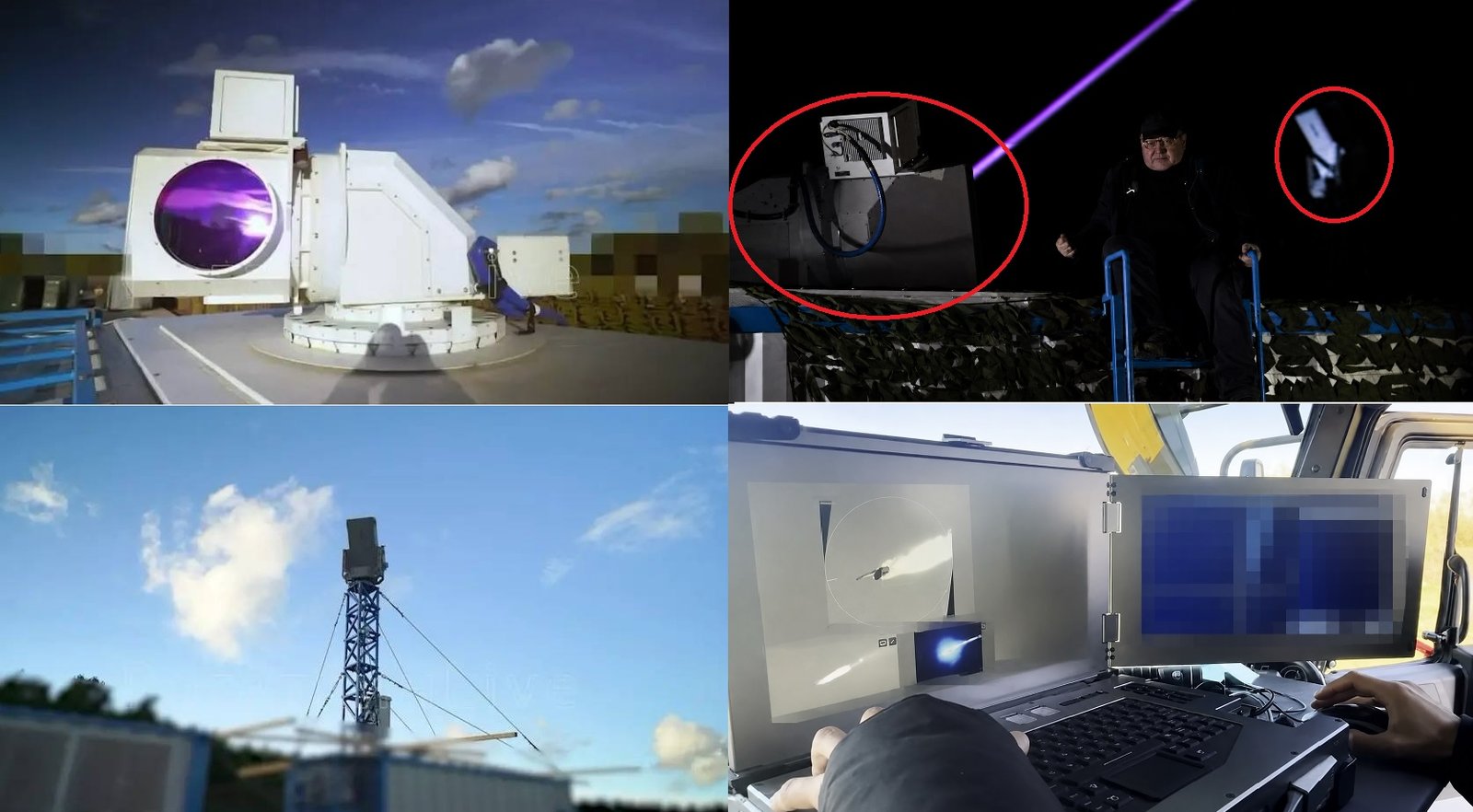
World
MOSCOW, — Footage circulating this week on Russian pro-military channels appears to show a Russian combat laser system engaging aerial drones. A Russian military blogger described the footage as an “exclusive” and claimed that several systems are deployed to protect strategic facilities in southwestern Russia. The blogger also claimed that the systems have destroyed several hundred Ukrainian drones. These claims, including the deployment locations and combat record, have not been independently verified. No Russian government or military agency has publicly confirmed them. Containerized Laser System Based on descriptions of the footage, the system is mounted on a containerized platform and combines a laser weapon, targeting and guidance equipment, and a command post operated by a single person. It reportedly has its own detection equipment, using radar and optical sensors to detect and track aerial threats. The blogger said Russian developers are preparing a second-generation system designed to engage faster targets, including tactical aircraft and cruise missiles. This claim has also not been independently confirmed. The post said the technology should not be overestimated on its own but could be useful when combined with conventional air-defense systems. It also claimed that the systems have demonstrated effectiveness and should continue to be developed. Russia's Laser Counter-Drone Development Russia has previously reported large-scale testing of laser systems against UAVs. In June 2025, the government said eight systems, ranging from compact mobile units to high-power stationary platforms, were tested. First Deputy Prime Minister Denis Manturov attended the trials. According to Russian officials, the tests examined guidance accuracy, engagement range, reaction speed against moving targets and performance in different weather conditions. The systems were developed with involvement from subsidiaries of Rostec and Rosatom. Officials said the results supported further development toward serial production and integration with broader air-defense systems. Separate Russian industry reports in late 2025 and 2026 described testing of the LazerBuzz system under Project Posokh. The developer reported a 1-kilometer engagement against an FPV drone in 2025, followed by reported tests at 1.5 kilometers against an aircraft-type drone in 2026. These results are based on developer statements and have not been independently verified. Limitations of Laser Weapons Directed-energy weapons are being developed by several militaries for counter-drone missions. Their potential advantages include engaging targets without using conventional interceptor ammunition, but operational effectiveness can be affected by rain, fog, dust and smoke. Atmospheric effects can also reduce beam performance over longer distances, while high-power systems require significant power and thermal management for sustained operation. Russia's Peresvet is another known directed-energy system, although it is primarily associated with disabling or blinding optical sensors rather than physically destroying drones. The latest footage therefore provides no independent confirmation of the reported number of drones destroyed, the systems' deployment locations, or the planned second-generation capabilities. Those claims remain unverified, while Russia's previous government-announced tests and industry-reported trials confirm continued development of laser-based counter-drone technology. Source : Defence-Blog
Read More → Posted on 2026-08-31 14:15:39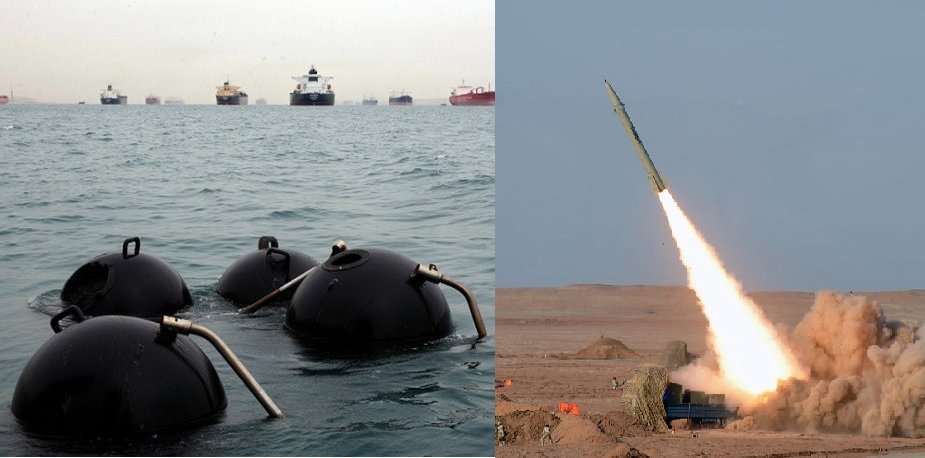
World
LARAK ISLAND, Iran — Iran appears to be adapting its sea-mine warfare strategy in the Strait of Hormuz by turning to land-based rocket launchers after U.S. operations significantly reduced its ability to deploy mines using naval vessels. The shift was highlighted on August 30, when U.S. forces struck two Iranian launchers on Larak Island after Islamic Revolutionary Guard Corps (IRGC) forces were observed preparing to fire rockets carrying sea mines into the Strait of Hormuz. U.S. Central Command described the action as a limited strike against an imminent threat to shipping. From Mine-Laying Boats to Rockets Iran has used small vessels for mine-laying operations in the Strait, but U.S. forces have targeted Iranian mine-laying vessels during the conflict. The United States has also conducted operations to clear Iranian mines from international shipping routes in the Strait. With many of Iran's mine-laying vessels lost or under increased surveillance, rocket deployment provides another way to place mines without sending a boat directly into the target area. The method allows a launcher positioned on land to fire a mine-carrying rocket toward the intended maritime area. This shifts the U.S. challenge from tracking only boats operating in the Strait to also locating and targeting mobile launchers on Iran's coastline and nearby islands. Iran Has Already Demonstrated the Method The rocket-based approach is not new. Iran demonstrated a similar capability during the IRGC's Great Prophet-19 exercise in January 2025. During the exercise, Iranian forces used 333mm Fajr-5 rockets to carry sea mines instead of their normal warheads. The rockets were launched from positions along the Strait of Hormuz coast, demonstrating how a conventional multiple-launch rocket system could be adapted for mine deployment. The Fajr-5 is normally a ground-attack rocket system with a reported range of about 75 km, while newer Fajr-5C variants have been reported with ranges of up to 130 km. This gives the system sufficient reach to cover significant areas around the Strait when used from suitable coastal positions. Why Rocket-Based Mine Deployment Matters The main difference is the distance between the launching platform and the mine-laying area. A boat-based operation requires Iranian personnel and vessels to enter the waterway. A rocket-based system allows the launch to take place from land, reducing the need to expose a mine-laying vessel in the Strait. The approach also has limitations. Analysts have questioned the practical reliability of delivering mines by rocket because the mines must survive the stresses of launch and their subsequent entry into the water. Iran has demonstrated the concept, but it has not publicly confirmed that Fajr-5 rockets are currently being used operationally to deploy mines. A New Challenge After the US Mine Clearance The development comes shortly after the United States said it had cleared mines from the Strait's main international shipping routes. U.S. Central Command said Navy divers, special operations forces and aircraft were involved in the mine-clearance operation. The U.S. has warned Iran that any vessel attempting to lay new mines would be destroyed. That warning increases the importance of Iran's land-based option. Instead of relying entirely on vessels that can be intercepted in the Strait, Iran can potentially use mobile launchers from positions on land. The August 30 strike on Larak Island shows that the United States is already monitoring for this alternative method. Iran's mine-laying capability has therefore not disappeared despite the losses suffered by its naval forces. Instead, the recent activity suggests that Tehran is adapting its method of delivering mines, with rocket launchers providing a land-based alternative to vulnerable mine-laying boats. Main Source : maritime-executive
Read More → Posted on 2026-08-31 14:35:04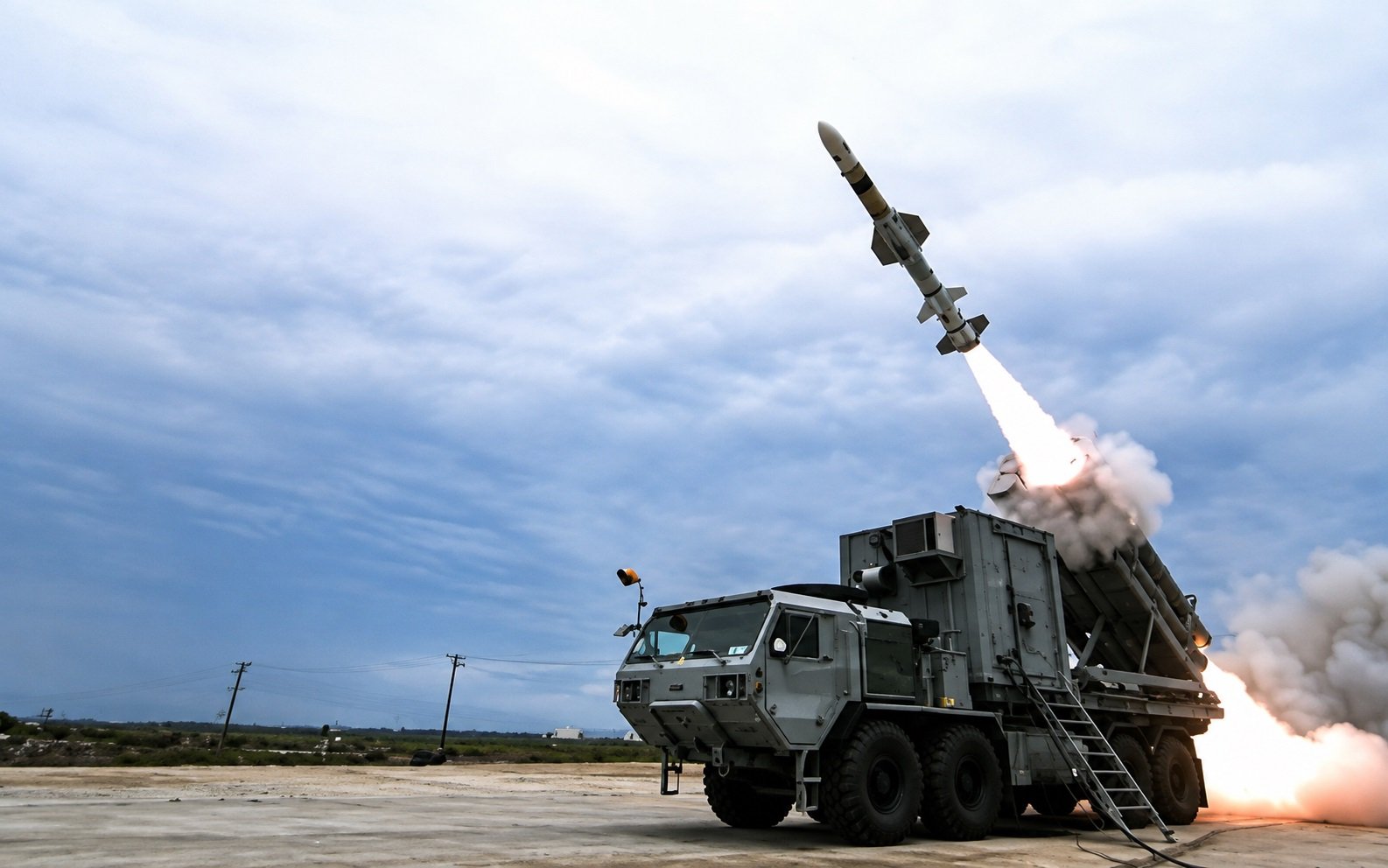
World
TAIPEI — Taiwan has begun deploying its newly acquired U.S.-made Harpoon Coastal Defense Systems (HCDS), with the first launchers, command vehicles and radar systems arriving on the island. The equipment is being prepared for operational use by units under the Navy’s Littoral Combat Command, which began force generation in July 2026. Taiwan ordered 100 Harpoon Coastal Defense Systems under a procurement program valued at more than NT$90.2 billion (about US$2.85 billion). The package includes 400 RGM-84L-4 Harpoon Block II anti-ship missiles, 100 transport and launch vehicles, 25 radar vehicles, four training missiles, storage containers, spare parts, maintenance equipment, training equipment and related support. The program runs from 2021 to 2030, while full delivery of the Harpoon equipment is scheduled for completion by the end of 2028. Reports indicate that 32 systems are expected to be delivered by the end of 2026, with the remainder arriving in subsequent years. The Taiwanese configuration uses Oshkosh Heavy Expanded Mobility Tactical Trucks (HEMTTs). The eight-wheel-drive vehicles have armored cabs and carry four missile canisters, providing a mobile launcher configuration that differs from older trailer-mounted Harpoon systems supplied to some other countries. The RGM-84L-4 Harpoon Block II uses GPS-assisted guidance and an active radar seeker. The Harpoon family is designed for over-the-horizon anti-ship operations and uses a sea-skimming flight profile. The system recently completed an important developmental test in the United States. In July 2026, the U.S. Navy and Boeing conducted Developmental Test 1 at the Point Mugu Sea Range in California, where a land-launched Harpoon successfully engaged a maritime target. The U.S. Navy reported the test on August 28. Taiwan is also preparing infrastructure for the new coastal missile units, including positions and bases in areas such as Tainan, Kaohsiung and Pingtung, with some facilities expected to be completed in 2027. The Harpoon systems will operate alongside Taiwan’s domestically produced Hsiung Feng II and Hsiung Feng III anti-ship missiles. Together, they will form part of Taiwan’s broader land-based coastal defense network. The deployment is continuing in phases, with training and support activities followed by delivery and integration of launch vehicles, radar systems and missiles.
Read More → Posted on 2026-08-31 14:43:03
Space & Technology
BREMEN, Germany — German satellite manufacturer OHB SE has signed a contract worth nearly €1 billion with European satellite operator SES to develop and build 18 medium Earth orbit (MEO) satellite platforms for the European Union’s IRIS² secure connectivity programme. The contract is the first major industrial order under the IRIS² concession and follows the formal launch of the programme’s implementation phase on August 6, 2026. OHB to Build 18 MEO Satellite Platforms SES is responsible for delivering the MEO segment of IRIS² through the SpaceRISE consortium, which was selected by the European Commission to develop and deploy the system. SpaceRISE includes SES, Eutelsat and Hispasat. OHB has been part of the SpaceRISE industrial core team since the beginning of the programme. Under the new contract, the company will develop and manufacture the 18 satellite platforms that will form a central part of the MEO segment. Each platform is planned to have a maximum power output of about 15 kilowatts and a launch mass of approximately 2.6 tonnes, according to OHB. IRIS² to Use 348 Satellites The expanded IRIS² constellation will consist of 348 satellites, including 330 satellites in low Earth orbit (LEO) and 18 satellites in MEO. The programme will also include a dedicated secure ground segment. The European Commission says the multi-orbit architecture is intended to provide global coverage while requiring fewer satellites than a system based entirely on LEO. The architecture is also designed to maintain short signal transmission times. The EU expanded the planned constellation by adding 66 LEO satellites during the negotiations that led to the implementation agreement in August. The programme has now moved from the planning stage into full-scale deployment. Secure Communications for Europe IRIS² — the Infrastructure for Resilience, Interconnectivity and Security by Satellite — is intended to provide secure and high-performance satellite communications for public authorities and private users. The European Commission also says the system will support critical infrastructure, crisis-response capabilities and connectivity in rural and remote areas. The programme is being implemented as a public-private partnership led by the European Commission, with technical support from the European Space Agency and the European Union Agency for the Space Programme. IRIS² is described by OHB as Europe’s third major flagship space programme alongside Galileo and Copernicus. The expanded programme is intended to strengthen secure communications capabilities for European governments, defence and security services, and emergency services. First Launches Planned for 2029 The implementation agreement signed in August established the next steps for the programme, including detailed satellite development, construction of the secure ground infrastructure and procurement of launch services. The first IRIS² satellite launches are planned for 2029, while initial services are expected to become available from 2030. OHB CEO Marco Fuchs said the programme would further expand the company's role in Europe’s strategic space infrastructure and highlighted its previous involvement in Galileo and Copernicus. SES Chief Product and Innovation Officer Xavier Bertran said the contract with OHB represents an important step toward delivering Europe’s next generation of secure and resilient communications infrastructure. OHB System Executive Board member Gianaldo Mantovani said Europe needs independent communications capabilities and that OHB is contributing its experience in satellite-platform development and MEO constellations. The contract places OHB in a key industrial role for the 18-satellite MEO segment, while SES remains responsible for its delivery within the wider SpaceRISE consortium.
Read More → Posted on 2026-08-31 15:52:23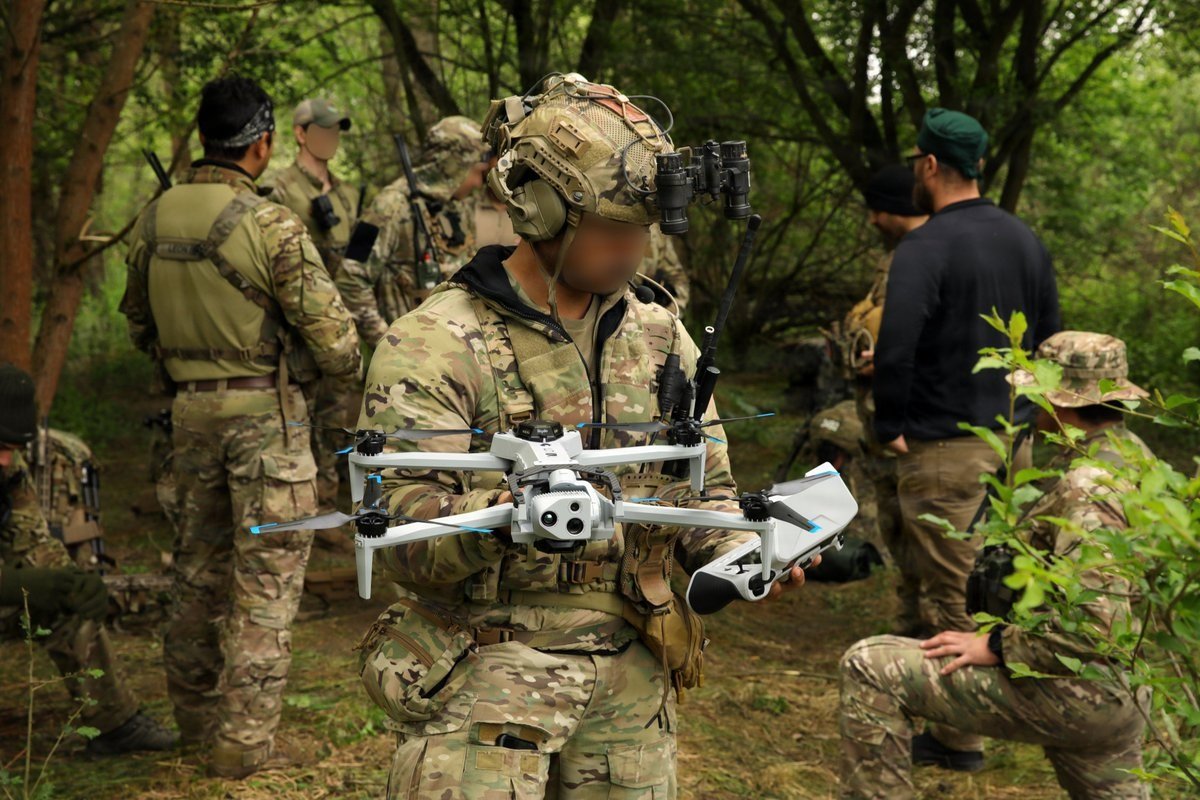
Europe
HOHENFELS, Germany, August 31, 2026 — Polish special forces are taking part in a U.S.-led military exercise in southern Germany designed to train troops to move and operate in areas heavily monitored by drones. The exercise was developed by U.S. Army Green Berets using lessons from the war in Ukraine. The training began on August 28 at the Joint Multinational Readiness Center near Hohenfels and covers a roughly 3,000-square-kilometer (1,100-square-mile) training area. It is the first time a NATO ally has participated in this specific exercise. U.S. special forces previously conducted the scenario twice earlier this year. Under the scenario, a U.S. Army airborne infantry unit parachutes into the Hohenfels training area and establishes a simulated front line. Polish troops must cross the positions without being detected before traveling about 100 kilometers (60 miles) north to the Grafenwöhr Training Area, where they must conduct a simulated drone strike against a target. The route passes through forests, farmland, villages, farms and populated areas. Polish operators must avoid detection by military forces as well as civilians, surveillance cameras and local police reports. In earlier versions of the exercise, U.S. special forces removed their uniforms to blend into the civilian environment. U.S. forces acting as the opposing force use drones to search for the Polish team. Previous versions involved more than 100 drones, while military police units with dogs could also be sent after troops who were detected. Within the exercise, soldiers who are located can be considered “captured or killed.” A U.S. Army Green Beret officer said the exercise attempts to replicate battlefield effects that Russia and Ukraine have had to overcome during the war. The training is part of a wider U.S. effort to adapt to drone warfare. Through the Army's Transforming in Contact (TiC) program, the 3rd Brigade Combat Team, 10th Mountain Division tested more than 150 unmanned systems during its deployment in Europe, including systems for reconnaissance, electronic warfare, command and control and mobile operations. The U.S. military has also established Joint Interagency Task Force 401 (JIATF 401) to focus on countering unmanned aircraft systems and accelerating the integration of counter-drone technologies. The task force studies drone warfare experiences from Ukraine and European countries. Separately, a specialized U.S. Army unit in Europe that had been studying drone warfare was recently directed to return to its primary role as an airborne infantry battalion. The unit, drawn from the 173rd Airborne Brigade, had experimented with drone tactics and systems based on observations from Ukraine and is expected to report its findings to the Army. The U.S. Army plans to conduct the Hohenfels drone-evasion exercise several times a year, with special forces from additional NATO countries expected to participate. U.S. officials have indicated that most of NATO's 32 member states are likely to show interest in the training.
Read More → Posted on 2026-08-31 16:22:11
World
JAN MAYEN, Norway, — Military forces from the United States, United Kingdom and Norway have deployed to the remote Norwegian island of Jan Mayen for Operation Atlantic City 26, a trilateral military activity running from August 26 through September 4. The operation is part of NATO’s Arctic Sentry, an enhanced-vigilance activity designed to strengthen Allied coordination and security in the High North. Jan Mayen’s Strategic Location Jan Mayen is a Norwegian territory in the Norwegian Sea, approximately 1,000 kilometers (620 miles) from mainland Norway and north of the Greenland-Iceland-United Kingdom (GIUK) gap. The island has a dirt runway but no harbor, with only offshore anchorages. Its remote location, severe weather and limited infrastructure make it a challenging environment for military deployments. Allied Forces Build a ‘Joint Kill Web’ The participating forces are connecting sensors, command-and-control nodes and precision fires into what the U.S. Marine Corps describes as a “joint kill web.” The network is intended to support rapid targeting and help restrict adversary movement in contested maritime areas. U.S. Marine Corps Lt. Col. David Palacio, fires officer for U.S. Marine Corps Forces Europe and Africa, said the deployment demonstrates the Marine Corps’ role in enabling joint and combined forces. U.S., UK and Norwegian Forces The U.S. contingent includes Marines from U.S. Marine Corps Forces Europe and Africa, II Marine Expeditionary Force, the 10th Marine Regiment and Marine Air Support Squadron 1. A HIMARS platoon from the 3-197th Field Artillery Regiment of the New Hampshire Army National Guard is supporting precision fires. Elements of the U.S. Sixth Fleet and Task Force 68 are also involved in maritime operations. MC-130 and C-130 aircraft are providing airlift support. Norway is contributing personnel from the Royal Norwegian Navy and Norwegian Home Guard. The UK has deployed Royal Marine Commandos and elements of the Royal Air Force’s LXX Squadron. RAF A400M Delivers Troops and Vehicles On August 29, an RAF A400M Atlas from LXX Squadron at RAF Brize Norton delivered U.S. Marines, Royal Marines and two Joint Light Tactical Vehicles to Jan Mayen. A similar A400M landing was conducted during the 2025 iteration of the activity. Operation Linked to Northern Viking 26 Atlantic City 26 is being conducted alongside Operation Northern Viking 26, allowing participating forces to share maritime surveillance and sensing capabilities across the European theater. Both activities support Arctic Sentry, which was launched in February 2026 and is led by Joint Force Command Norfolk. The framework is intended to synchronize Allied activities, improve common situational awareness and strengthen deterrence in the High North. Norwegian Army Maj. Gen. Frode Kristoffersen, Deputy Chief of Staff for Operations at Joint Force Command Norfolk, said Arctic Sentry is intended to coordinate Allied Arctic activities and maximize their combined effect. Historical Background The name Operation Atlantic City comes from a U.S. military base established at Nordlaguna on Jan Mayen during the Second World War. The base supported weather observations and Allied control of the North Atlantic. The current activity follows similar training conducted on and around Jan Mayen in September 2025. It also tests how Allied forces operate across long distances, limited infrastructure, severe weather and rapidly changing conditions in the High North.
Read More → Posted on 2026-08-31 16:28:34
Space & Technology
NEW DELHI, — The Government of India has notified the Legal Metrology (Indian Standard Time) Rules, 2026, making Indian Standard Time (IST) the common time reference for legal, administrative, commercial and other official purposes across the country. The Department of Consumer Affairs notified the rules on August 27, 2026. They will come into force 180 days after their publication in the Official Gazette, giving government departments, businesses, institutions and other organisations time to make the necessary technical and operational changes. The move is part of the broader “One Nation, One Time” initiative and is aimed at establishing a common and synchronised time reference for systems that depend on accurate timestamps. Why the new rules matter India already uses IST for civil time, but many digital and technology-based systems obtain timing information through different sources. The government said the growing use of such systems has increased the need for a common time reference. Accurate and synchronised time is important for banking and digital payments, telecommunications, power systems, transportation, computer networks and government records. A common reference can help systems maintain consistent timestamps and establish the sequence of events across different networks and locations. It can also assist in analysing technical failures and other time-dependent events. 180-day transition period The rules do not require organisations to change their systems immediately. The government has provided a 180-day period between publication of the rules and their commencement. During this period, government departments, businesses, institutions and other organisations can review their existing timing systems and make the technical changes required to comply with the new framework. The exact commencement date will depend on the date of publication in the Official Gazette. Banking, telecom and critical infrastructure The new framework covers systems where precise time references are important. In banking and digital payments, synchronised timestamps can help maintain accurate records of transactions. Telecommunications and computer networks also depend on coordinated clocks for system operations and event logging. Transport and power infrastructure are other areas where accurate time synchronisation is important. Government records and other official systems will also use the common IST reference under the new rules. CSIR-NPL remains responsible for India's national time scale The CSIR-National Physical Laboratory (NPL) maintains India's primary time scale, known as UTC(NPLI). Indian Standard Time is derived from this national time scale. The government is developing domestic mechanisms to distribute IST to users and critical systems. These include Indian satellite navigation infrastructure and other authorised sources. The objective is also to provide alternatives to dependence on foreign satellite-based timing sources for critical systems. White Rabbit technology for precise time distribution As part of the One Nation, One Time initiative, the government commissioned a White Rabbit Technology-based Indian Standard Time Dissemination Demonstration Network at the Regional Reference Standard Laboratory (RRSL) in Bengaluru in July 2026. White Rabbit is a high-precision network timing technology designed to synchronise clocks over fibre-optic networks. The Indian demonstration has been used to distribute IST to sectors including banking, telecommunications, power, transportation and digital governance. The government also demonstrated secure dissemination of IST between RRSL Bengaluru and NSE Chennai. The demonstration involved CSIR-NPL, ISRO, SEBI, NSE, BSNL and other stakeholders. Reducing dependence on foreign timing sources The government has highlighted the development of Indian time-dissemination infrastructure as a way to provide additional options for critical systems and reduce dependence on external time sources. India's NavIC satellite navigation system is among the domestic sources that can support the dissemination of Indian Standard Time, alongside other authorised Indian systems. This approach is intended to strengthen the availability of a nationally controlled time reference for systems that depend on accurate timing. What changes for organisations The new rules establish IST as the common reference for official time-dependent systems across the country. Organisations will have the 180-day transition period to examine their existing systems and prepare for implementation. The rules do not create a new civil time zone for India. Instead, they standardise the authoritative time reference used for legal, administrative, commercial and other official purposes. The government said the Legal Metrology (Indian Standard Time) Rules, 2026 are intended to provide a common Indian Standard Time reference for time-dependent systems and official purposes nationwide.
Read More → Posted on 2026-08-31 16:36:40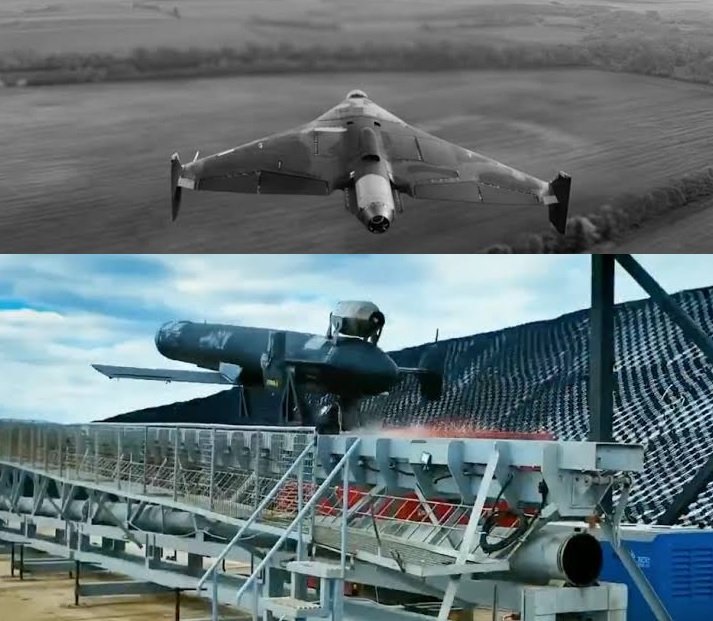
World
KYIV, — Russia sharply increased its use of jet-powered attack drones against Ukraine in July, deploying five times more than in June, according to Yurii Ihnat, head of the Communications Department of Ukraine’s Air Force Command. Speaking on August 31, Ihnat said Ukrainian forces recorded more than 1,500 drones over a recent four-day period, including about 800 jet-powered UAVs. Ukraine’s overall air-defense effectiveness remained around 90%, but jet-powered drones were intercepted less frequently than conventional Shahed-type drones. The shift includes jet-powered variants such as the Geran-3, Geran-4 and Geran-5, as well as the S8000 Banderol. Ukrainian officials say Russia has increased their use because conventional defenses have been highly effective against slower, piston-engine Shahed drones. Speed and altitude challenge Some of the new jet-powered UAVs can reach about 600 km/h, while Ukrainian interceptor drones currently reach roughly 300 km/h, making direct pursuit difficult. The UAVs can also operate at around 5 km altitude, putting them beyond the effective range of many mobile fire teams and portable air-defense systems. Ihnat said countering the faster systems requires short-range surface-to-air missile systems, air-defense aviation and fighter aircraft equipped with air-to-air missiles. Ukraine is also developing faster interceptor drones. Ukrainian researchers previously reported that Russia used about 1,400 jet-powered strike UAVs during the first months of 2026, compared with roughly 180 during all of 2025. Ukrainian assessments have also put production of Geran-4 and Geran-5 at around 3,000 units per month, with jet-powered drones accounting for about 15–25% of some recent attack packages. S8000 Banderol Russia has also expanded production and use of the S8000 Banderol, a system variously described as a missile, drone-missile, loitering munition or small cruise missile. Ukrainian reporting puts its production at about 80 units per month. The Banderol is approximately 5 meters long, has a 30-centimeter fuselage diameter and folding wings and stabilizers spanning about 2.2 meters. Its maximum speed is listed at 620–650 km/h, cruising speed at 520–560 km/h, and range at about 500 km. The system carries an OFBCh-150 warhead weighing about 114.3 kg, including 49.5 kg of explosives. Ukrainian intelligence has identified a Chinese SW800Pro-A95 turbojet engine among its components, along with other foreign-made electronics. The Banderol can be carried by the Orion UAV, while Ukrainian reporting has also identified planned use from the Mi-28N helicopter. Its small diameter and composite construction reduce its radar cross-section, while low-altitude flight can make detection more difficult, particularly when terrain provides concealment. Russia’s increased use of jet-powered UAVs and Banderol systems shows a shift toward faster aerial weapons that require Ukraine to use more specialized interception systems than those commonly employed against slower propeller-driven drones.
Read More → Posted on 2026-08-31 16:50:11 U.S. Debt Interest Costs Reach Record Levels at 18.5% of Revenue, CBO Projects $2.1 Trillion by 2036
U.S
WASHINGTON, D.C. — Interest payments on the U.S. federal debt reached a record share of government revenue in fiscal year 2025, highlighting the growing cost of servicing the national debt. Net interest payments totaled about $970 billion in fiscal 2025, while federal receipts were approximately $5.24 trillion. That meant interest payments consumed about 18.5% of federal revenue, the highest share since the federal data series began in 1940. The previous high was about 18.4% in 1991. The increase has been driven by the combination of a larger federal debt balance and higher interest rates than those seen during much of the 2010s and early 2020s. Interest Costs Have Risen Rapidly The increase in interest costs has been particularly pronounced since fiscal 2021. Net interest was about $352 billion in 2021, before rising to roughly $970 billion in 2025. Over the same period, interest as a share of federal revenue increased from about 8.7% to 18.5%. The federal government must borrow when its spending exceeds its revenue. As the amount of debt grows, the government must make interest payments on that accumulated borrowing. Higher Treasury yields have also increased the cost of refinancing existing debt and issuing new debt. As Treasury securities mature, they are replaced with new securities at prevailing market rates. Debt Is Adding Pressure to the Federal Budget The Congressional Budget Office expects the federal government's debt and interest costs to continue increasing under current law. In its February 2026 budget outlook, the CBO projected that net interest costs would rise from $970 billion in fiscal 2025 to about $1.0 trillion in fiscal 2026. The agency expects net interest costs to reach about $2.1 trillion by 2036, or 4.6% of GDP. The CBO also projects that debt held by the public will increase from about 101% of GDP in 2026 to 120% in 2036. In its long-term projections, debt held by the public could reach 175% of GDP by 2056 if current laws remain generally unchanged. Interest Costs Are Becoming a Larger Budget Item The rising interest bill is increasingly significant compared with other federal spending categories. In fiscal 2025, the government's approximately $970 billion in net interest costs exceeded federal spending on national defense in that year, according to budget comparisons using federal data. The interest bill also ranks among the largest individual categories of federal spending. The issue is not only the size of the current payment. Higher interest costs can also contribute to larger future deficits when the government continues to borrow to finance budget shortfalls. Long-Term Outlook The CBO's projections show that interest costs are expected to continue rising over the next decade. By 2036, CBO projects net interest payments of about $2.1 trillion, more than twice the 2025 level. The Committee for a Responsible Federal Budget estimates that interest could account for roughly one-quarter of federal revenue by that point. CBO's longer-term projections are also significant. By 2056, net interest costs are projected to reach 6.9% of GDP, while debt held by the public could rise to 175% of GDP under current law. The 2025 figures therefore mark an important change in the federal budget. Interest payments have become a much larger claim on federal revenue, while the government's debt and borrowing costs remain on an upward path under current fiscal projections.
Read More → Posted on 2026-08-31 16:55:10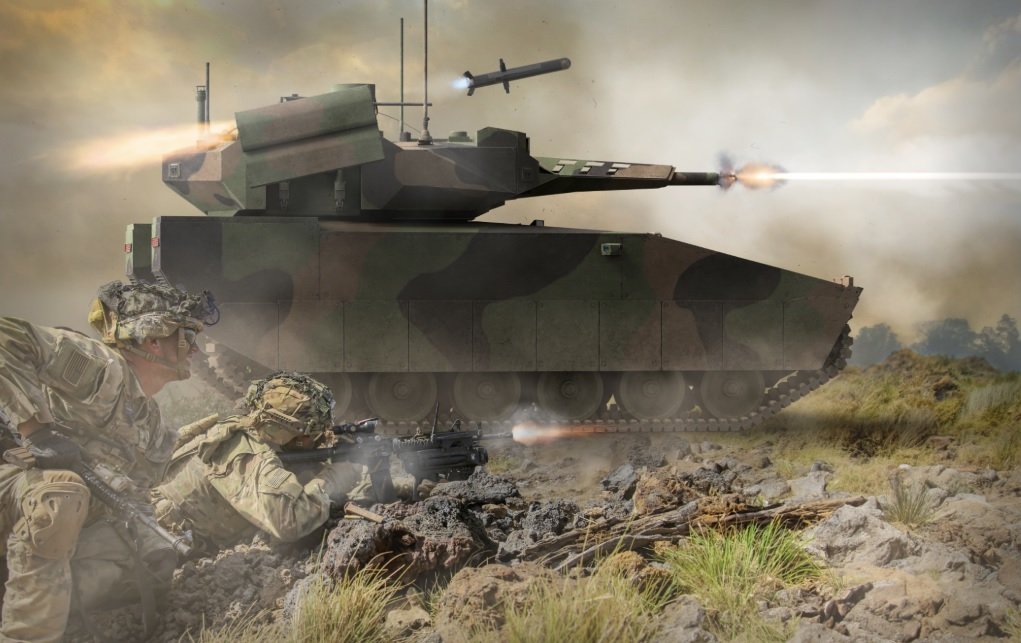
U.S
Plymouth, Michigan — American Rheinmetall has delivered the first of eight Lynx XM30 combat vehicle prototypes to the U.S. Army, moving its proposed replacement for the M2 Bradley Fighting Vehicle into government-led developmental and performance testing. The delivery marks an important stage in the Army’s competitive XM30 Combat Vehicle program, under which American Rheinmetall and General Dynamics Land Systems are developing competing vehicles to replace the Bradley. The Army's own program documentation identifies the XM30 as the future replacement for the Bradley. The first Lynx prototype is being delivered under the Phase 3/4 Engineering and Manufacturing Development (EMD) contract, valued at approximately $764 million. The contract covers digital design, physical prototype development and full-system validation. First Lynx Prototype Begins Army Evaluation American Rheinmetall CEO Matt Warnick said the delivery is an important step as the XM30 program enters a more visible phase and gives Team Lynx the opportunity to demonstrate its proposed Bradley replacement to the Army. The company plans to deliver the remaining seven prototypes later in 2026. These vehicles will support operational unit training while technical evaluations continue under the Army's Transformation in Contact (TiC) 2.0 initiative. After completing initial military safety checks, soldiers will conduct field maneuvers with the prototypes. The evaluation process is expected to progress toward large-scale combat simulations, allowing the Army to assess the vehicles under operational conditions. Hybrid-Electric Powertrain One of the key features of the Lynx XM30 is its hybrid-electric powertrain. American Rheinmetall describes the system as providing increased power-generation capability while supporting battlefield mobility. The company also describes the vehicle as the first platform of this type to introduce a hybrid-electric powertrain. The additional electrical capacity is particularly relevant to the XM30's design because the vehicle is being developed as a digitally integrated combat system. The Lynx XM30 incorporates secure, real-time connectivity, while its architecture is designed to support the integration of new technologies during its service life. The vehicle uses a modular design and adaptive open architecture, intended to make it easier to incorporate future technologies as requirements change. The Army's XM30 program also emphasizes modular open systems as part of the vehicle's future upgrade capability. Designed for a Changing Battlefield The Lynx XM30 is being developed for an operating environment increasingly affected by drones, precision weapons and electronic warfare, according to American Rheinmetall. The company's U.S. XM30 offering includes a U.S.-designed uncrewed 50mm turret, a two-soldier crew concept, integrated vehicle protection systems and a modular open architecture. The Army's broader XM30 requirements are focused on providing improved protection, firepower, mobility and survivability compared with the Bradley while allowing the vehicle to operate as part of a joint combined-arms force. The Army also intends the XM30 to work with maneuver robotics and semi-autonomous systems. U.S. Production Network The Lynx XM30 prototypes are being produced through a multi-state U.S. manufacturing process. Turret fabrication takes place in Plymouth, Michigan, while hull and chassis integration is carried out in Slidell, Louisiana. Completed vehicles undergo automotive shakeout trials before returning to Louisiana for final painting and detailing. Before formal government acceptance, each prototype undergoes a joint inspection involving the Defense Contract Management Agency (DCMA). American Rheinmetall is the prime contractor for Team Lynx, whose partners include Textron Systems, Raytheon, L3Harris Technologies, Allison Transmission and Anduril Industries, along with a wider network of U.S. suppliers. Competition to Replace the Bradley The Lynx XM30 is competing against the General Dynamics Land Systems XM30 design. The U.S. Army selected the two companies in 2023 to proceed with detailed design and prototype development for the Bradley replacement program. The Army plans to evaluate the competing prototypes before selecting one design to proceed toward the next stage of the program. Rheinmetall's earlier contract announcement stated that the Army planned to down-select to one vendor for Low-Rate Initial Production in Phase 5 near the end of 2027. The delivery of the first Lynx XM30 therefore begins a key physical testing stage in the competition. The Army's evaluation of the two prototype designs will determine which vehicle advances toward becoming the next-generation infantry fighting vehicle intended to replace the M2 Bradley.
Read More → Posted on 2026-09-01 12:01:00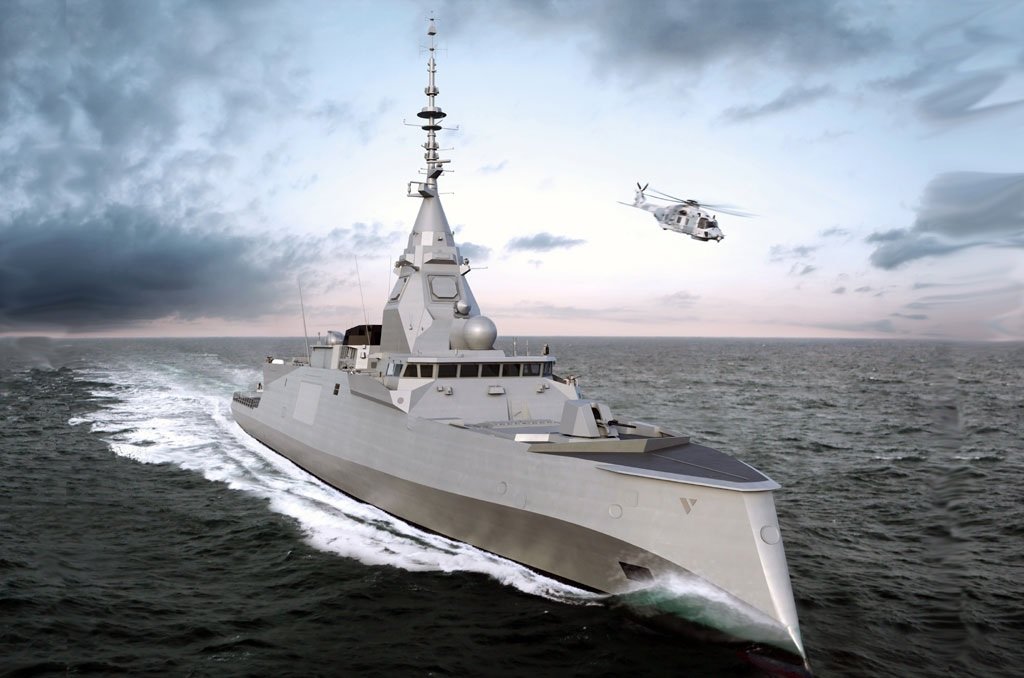
Europe
STOCKHOLM — Sweden and France have signed a €4.3 billion contract for four French Defense and Intervention Frigates (FDI) for the Royal Swedish Navy, with the ships to enter Swedish service as the Luleå class. The agreement was signed in Stockholm on August 31, 2026, during French President Emmanuel Macron’s visit to Sweden. The contract was signed by Mikael Granholm, Director-General of the Swedish Defence Materiel Administration (FMV), and Pierre Éric Pommellet, Chairman and CEO of Naval Group. The ceremony was held aboard the French Navy’s first FDI frigate, Amiral Ronarc’h, and was attended by Macron and Swedish Prime Minister Ulf Kristersson. The deal follows Sweden’s decision in May 2026 to begin negotiations with Naval Group for four FDI-based frigates. Sweden had selected the French design for its Luleå-class programme, with deliveries planned between 2030 and 2034. First frigate due in 2030 Naval Group will build the frigates in France, with the first vessel scheduled for delivery in 2030. The four ships will be delivered under the following schedule: HMS Luleå — 2030 HMS Norrköping — 2032 HMS Trelleborg — 2033 HMS Halmstad — 2034 FMV said production of the ships and training of Swedish personnel can begin following the signing of the contract. Naval Group will serve as the main system integrator, with the vessels delivered ready for service. Focus on air defense and anti-submarine warfare The Swedish frigates will be configured primarily around air defense and anti-submarine warfare. The Swedish government said the ships will also provide Sweden with the ability to establish sea control, protect maritime transport and keep sea routes open. The ships will use Aster 30 and CAMM-ER surface-to-air missiles. Swedish systems will also be integrated into the vessels, including the RBS15 anti-ship missile, Torpedo 47, Giraffe 1X radar, Trackfire remote weapon stations, and 57 mm and 40 mm naval guns. FMV confirmed the Swedish equipment included in the configuration. The combination gives the Luleå-class a mix of air-defense, anti-submarine and surface-warfare capabilities while allowing Sweden to incorporate several systems already used by its armed forces. Larger role for the Swedish Navy The acquisition is part of Sweden’s broader effort to strengthen its naval capabilities following its accession to NATO. The Swedish government said the frigates will strengthen Sweden’s ability to defend and exercise control over its territory while improving interoperability with NATO allies during international operations. Air defense is a particular priority, with Defence Minister Pål Jonson stating that the four frigates will triple Sweden’s current air-defense capability at sea. The ships are intended to operate in the Baltic Sea and other surrounding waters, supporting maritime security and the protection of sea routes. Wider Sweden-France defense cooperation The frigate contract was accompanied by a separate framework agreement between the Swedish and French defense ministries. Swedish Defence Minister Pål Jonson and French Minister of the Armed Forces and Veterans Affairs Catherine Vautrin signed the agreement, which is intended to establish a long-term platform for cooperation in operational matters, defense equipment and industrial development. The procurement therefore extends beyond the four ships, creating a broader framework for Swedish-French defense cooperation. A major addition to Sweden’s fleet The Luleå-class will represent a substantial addition to Sweden’s surface fleet. Based on France’s FDI design, the frigates will be configured specifically for Swedish requirements and will combine French and Swedish defense systems. The first ship, HMS Luleå, is scheduled to be delivered in 2030, with the remaining three frigates following through 2034. Once delivered, the four vessels will become an important part of Sweden’s naval contribution to national defense and NATO maritime operations.
Read More → Posted on 2026-09-01 12:12:43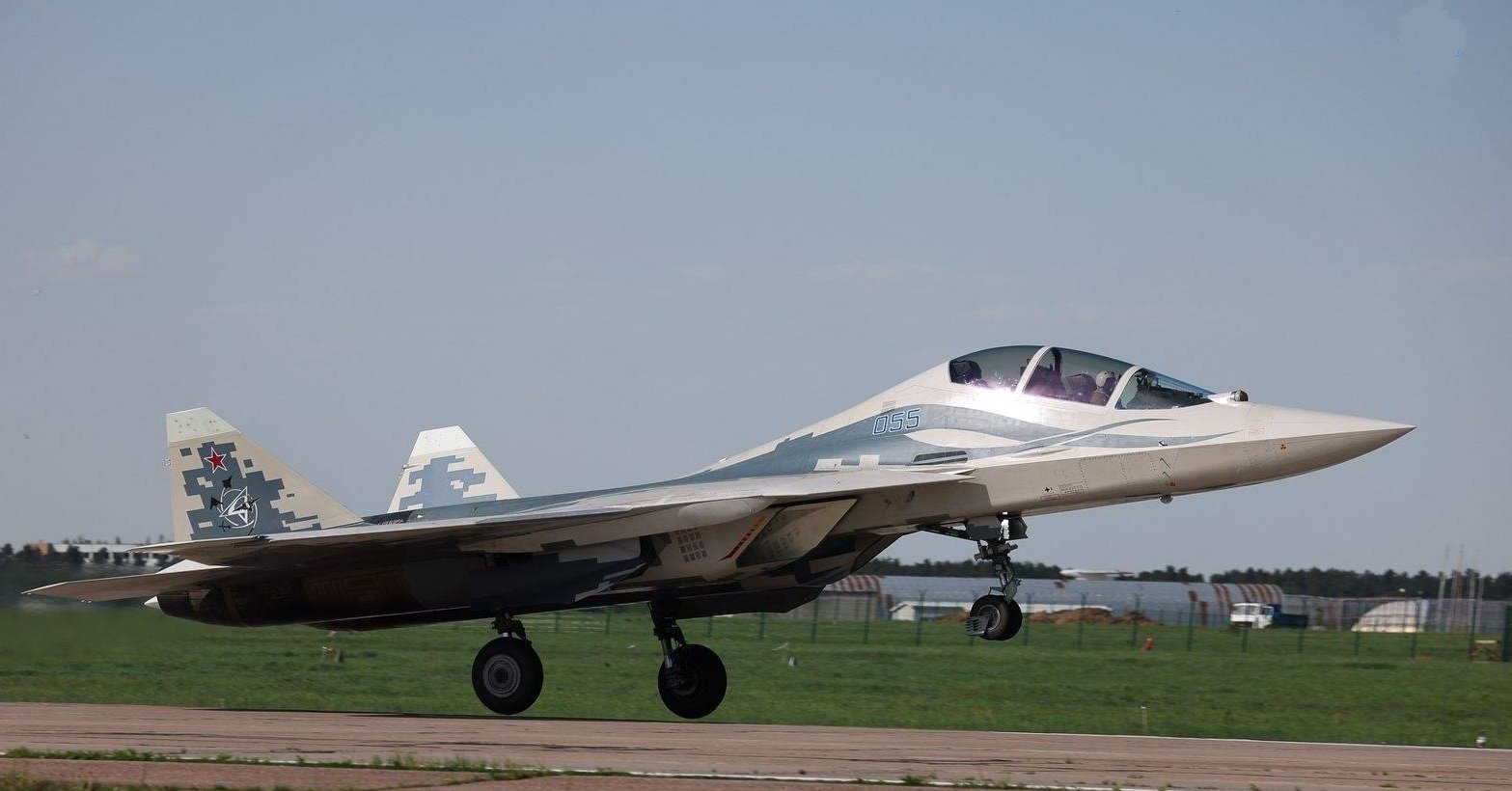
World
MOSCOW, — Russia’s United Aircraft Corporation (UAC), part of the Rostec state corporation, is developing a combat artificial intelligence system for military applications. The system is being tested on the new two-seat Su-57D stealth fighter, which is also being developed for specialised pilot training and control of unmanned aerial vehicles (UAVs). Su-57D Completes First Flight The Su-57D completed its maiden flight on May 19, 2026, at the Komsomolsk-on-Amur aviation plant. The aircraft was flown by Sukhoi chief test pilot Sergey Bogdan and remained airborne for about 40 minutes. Taxi trials had started on May 16. The prototype, carrying side number 055, was converted from an earlier single-seat T-50 flight-test airframe rather than being built as a completely new aircraft. The two-seat concept had previously appeared in a UAC patent filed in November 2023. Training and Unmanned-Aircraft Control Rostec has identified two main roles for the Su-57D. The first is specialised pilot training, with the two-seat configuration allowing crews to practise flight regimes that cannot be fully reproduced in ground-based simulators. The second is testing technologies that Russian officials associate with sixth-generation combat aviation, including the use of the fighter as an airborne command-and-control platform for unmanned systems. Mikhail Strelets, director of the Sukhoi Design Bureau, said the additional cockpit allows the aircraft to control highly autonomous systems, including the S-70 Okhotnik heavy unmanned combat aircraft, as well as UAV groups and swarms. The arrangement allows the main pilot to concentrate on flying and the primary combat mission while the second crew member manages the unmanned systems. Combat AI Development UAC specialists are developing a combat AI system that will be tested on the Su-57D. The programme is intended to examine the integration of artificial intelligence and autonomous decision-making with the fighter and unmanned aircraft. Russian officials have not disclosed the AI system’s detailed capabilities, level of autonomy, testing parameters or any confirmed timeline for operational deployment. The Su-57D concept builds on earlier Russian testing involving the Su-57 and S-70 Okhotnik, which began in 2019. The two-seat aircraft is intended to provide a manned platform capable of coordinating mixed formations of crewed and unmanned aircraft. Export Potential UAC chief executive Vadim Badekha has said the two-seat version could increase the Su-57 family’s appeal on foreign markets. First Deputy Prime Minister Denis Manturov has also described the aircraft as having combat, training and tactical-control functions. India has been mentioned as a potential market for a two-seat configuration, partly because of its experience operating the two-seat Su-30MKI, although there is no confirmed Indian procurement agreement for the Su-57D. As of late August 2026, the Su-57D remains in the flight-test phase. Russia has not announced a production schedule, final operational designation or confirmed integration timeline for the combat AI system.
Read More → Posted on 2026-09-01 12:57:02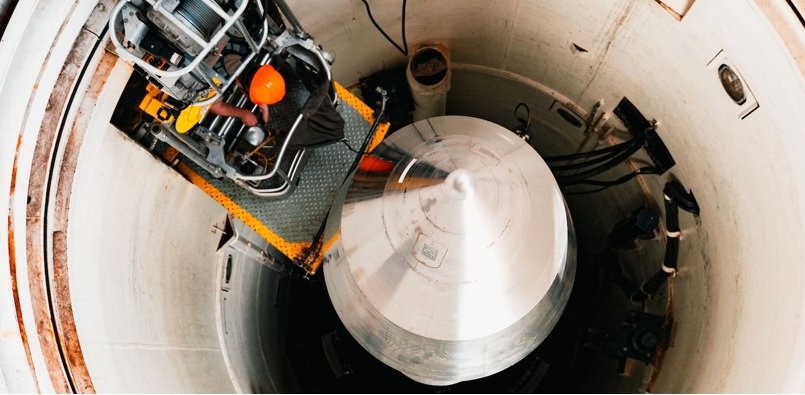
U.S
HILL AIR FORCE BASE, Utah — The U.S. Air Force has awarded Northrop Grumman an $86.1 million sole-source task order to provide program management, maintenance, sustaining engineering and support services for the Remote Visual Assessment (RVA) program, which provides camera and sensor-based surveillance at facilities associated with the Minuteman III intercontinental ballistic missile (ICBM) system. The Air Force Nuclear Weapons Center at Hill Air Force Base, Utah, is the contracting activity for the award. The task order is expected to run through September 2031. Maintaining the Remote Visual Assessment system The RVA program provides a ground-based surveillance network that allows Air Force personnel to visually assess activity at Minuteman III launch facilities and other related sites. The system is particularly useful because Minuteman III launch facilities are distributed across large areas of the northern United States. When a security sensor generates an alert, personnel can use the RVA camera network to assess activity remotely rather than immediately sending personnel to the affected location. This provides security personnel with visual information for determining whether an alert requires a response. The current task order covers the continued operation and sustainment of the camera and sensor infrastructure, including program management, routine maintenance, sustaining engineering and other support services. Work across four Air Force locations Maintenance and engineering activities under the task order will be carried out at Hill Air Force Base in Utah and at the three Air Force bases responsible for the Minuteman III missile fields: F.E. Warren Air Force Base, Wyoming Malmstrom Air Force Base, Montana Minot Air Force Base, North Dakota These installations support the dispersed Minuteman III ICBM force located across the northern United States. $15.2 million obligated initially The task order has a total potential value of $86.1 million. At the time of the award, the Air Force obligated $15.2 million in fiscal year 2026 procurement funds. The remaining funding is expected to be provided incrementally as work under the task order progresses. The award was made through a sole-source acquisition and falls under the broader Ground Subsystems Support Contract (GSSC) effort supporting the Minuteman III system. Northrop Grumman has been involved in sustaining the ground subsystems of the Minuteman III system for years. The company's GSSC work includes engineering and field support intended to maintain the reliability and security of the ground-based ICBM system. One report identifies the task order as FA8214-26-F-B017. Supporting the Minuteman III during the transition to Sentinel The Minuteman III is the current U.S. land-based ICBM and forms the ground-based component of the country's nuclear triad. Northrop Grumman describes the system as having been deployed since the 1970s and continues to support its sustainment. The Air Force is also developing the LGM-35A Sentinel as the replacement for Minuteman III. Sentinel is intended to modernize the ground-based component of the U.S. nuclear triad, including the missile and associated ground infrastructure. Until the replacement system is fielded, maintaining the existing Minuteman III ground infrastructure remains part of the Air Force's ongoing sustainment effort. The new $86.1 million task order therefore continues support for an existing surveillance capability used to monitor activity around Minuteman III facilities while the United States works toward its next-generation ICBM system.
Read More → Posted on 2026-09-01 13:04:56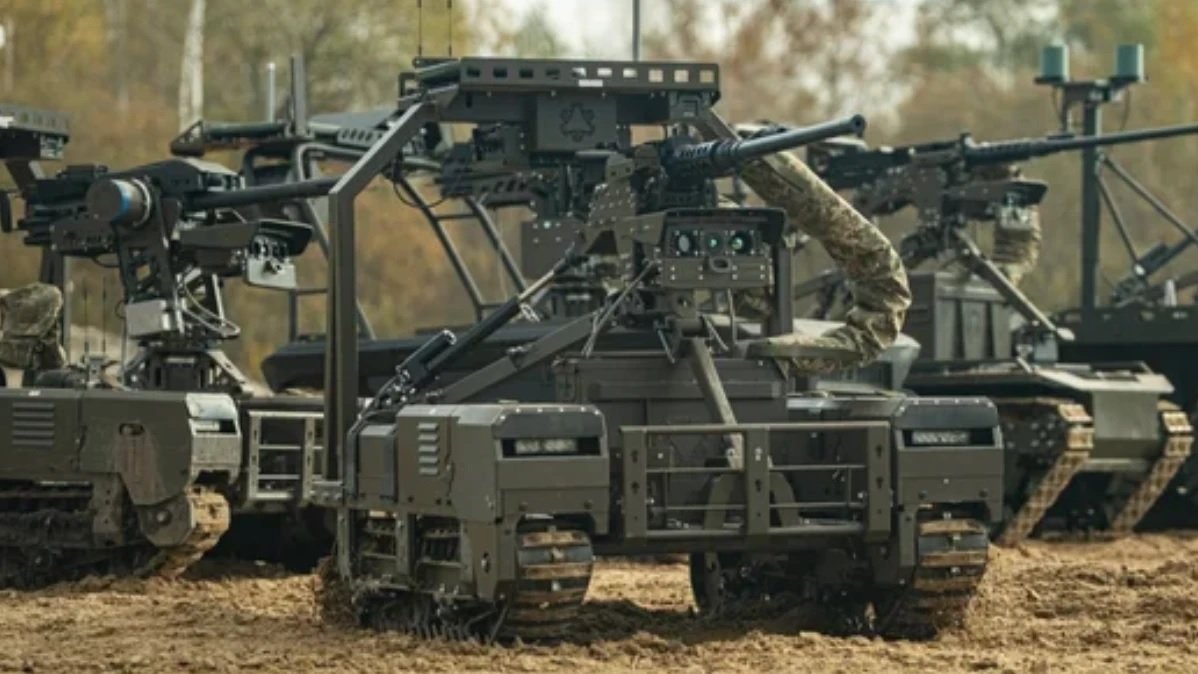
Europe
WARSAW, — Poland’s state-owned defense group Polska Grupa Zbrojeniowa (PGZ) is advancing plans to establish a joint project with an undisclosed Ukrainian defense company to produce unmanned ground vehicles (UGVs), also known as ground robotic systems. PGZ and Ukraine Move Toward Cooperation Agreement Rafał Harmoza, Director of PGZ’s International Cooperation Department, confirmed the development in comments to Ukrinform. He said PGZ is closely following Ukrainian defense technologies, particularly unmanned systems, missile technologies and electronic warfare. The discussions intensified after the Ukraine Recovery Conference in Gdańsk in late June 2026, where PGZ met with several Ukrainian defense representatives. In August, PGZ and the potential Ukrainian partner signed a non-disclosure agreement (NDA), allowing the sides to exchange confidential information. They are now working toward a formal cooperation agreement. “We signed such an agreement in August, and now we are moving toward concluding a cooperation agreement. This will allow us to implement a specific, thoroughly developed project,” Harmoza said. Production Based on “Build With Ukraine” Model The planned cooperation follows the “Build with Ukraine” and “Build for Ukraine” principles, with joint production focused on Ukraine’s defense requirements. Harmoza said Ukrainian defense companies are interested in establishing production facilities in Poland because of intensified Russian attacks on Ukrainian territory. PGZ is already expanding cooperation with Ukrainian defense companies. At the Gdańsk conference, it signed a letter of intent with TAF Industries covering the production of small unmanned aerial systems, including FPV drones, and electronic warfare systems for countering drones. Key components are planned to be produced in Poland using PGZ infrastructure, with the Ukrainian Armed Forces as a primary customer. TAF Industries also has UGVs in its portfolio. European Expansion of Ukrainian UGV Production The PGZ project follows other Ukrainian-European UGV production initiatives. Ukrainian company Tencore and Finland’s Insta recently announced a joint venture to manufacture the TerMIT 2.0 unmanned ground vehicle. The initial target is 320 systems for Ukraine’s Defense Forces through a distributed production model involving Finnish industrial partners. The tracked TerMIT 2.0 can carry a payload of up to 398 kg and is used for logistics, casualty evacuation and direct-fire support. Its modular design allows weapon stations and electronic warfare equipment to be integrated. Separately, Ukrainian Unmanned Technologies (UUT) and Denmark’s Vidar Industries agreed to establish a joint venture in Denmark for serial production of the Ravlyk UGV. The planned facility has capacity for more than 3,000 systems per year, while Danish government funding is expected to support production of around 1,000 units for Ukrainian forces. UUT handles development and engineering in Ukraine, while Vidar manages production, assembly, quality control and compliance. The Ravlyk can reach 12 km/h, carry a 300 kg payload and tow up to 2 tons. It has been combat-tested on Ukraine’s eastern front, with recent configurations integrated with the Wolly 12.7 combat module and the Amulet anti-tank missile system developed by Ukraine’s Luch Design Bureau. PGZ has not disclosed the identity of its Ukrainian UGV partner, the specific vehicle involved or the planned production volume.
Read More → Posted on 2026-09-01 13:19:26
U.S
PERTH, Australia — The U.S. Department of War has announced an estimated $174 million equity investment to support construction of a new gallium production facility at Alcoa’s Wagerup alumina refinery in Western Australia. The facility is projected to produce 100 metric tons of gallium metal annually, representing up to 10 percent of global supply. Multinational Partnership The project involves the United States, Australia and Japan. Alcoa of Australia will construct and operate the facility in partnership with Export Finance Australia, the Japanese government and Sojitz Corporation. Australia is expected to provide up to $200 million in financing for the project. The U.S. investment is being managed by the Office of the Assistant Secretary of War for Industrial Base Policy through the Industrial Base Analysis and Sustainment (IBAS) program. The U.S. financing gives the Department of War an equity position in the facility. The final dollar value of the investment will remain subject to exchange-rate movements when the transaction is completed. “This landmark agreement with our key allies, Australia and Japan, will secure a vital supply of gallium for our defense industrial base, strengthening our collective security and economic resilience for years to come,” said Michael Cadenazzi, Assistant Secretary of War for Industrial Base Policy. Gallium Production at Wagerup The facility will recover gallium as a byproduct of Alcoa’s existing bauxite and alumina refining operations using ion-exchange technology. No additional bauxite mining will be required. The plant will occupy about 4 hectares of already cleared land at the Wagerup site, located approximately 120 to 150 kilometers south of Perth. A final investment decision was reached in July 2026, while construction began in late August 2026. The project is expected to create up to 200 construction jobs and approximately 20 permanent positions once operational. Partners are expected to receive offtake rights proportional to their interests. Importance for Defense and Supply Chains Gallium is used in high-performance semiconductors for advanced aircraft and maritime radars, ground-based missile defense systems, secure satellite and tactical communications, electro-optical and infrared sensors for missile guidance and thermal imaging, and solar cells used by military and civilian satellites. The project is intended to strengthen the global gallium supply chain after China introduced export restrictions on gallium in 2023. China accounts for roughly 98 percent of global gallium production, making alternative sources a priority for the United States, Australia and Japan. The planned 100-metric-ton annual output would represent up to 10 percent of global supply. U.S. Defense Industrial Base Investment The U.S. investment is being made through the IBAS program, which was established in 2014 to restore and expand production capacity supporting the defense industrial base. Since its creation, IBAS has invested more than $2.6 billion across over 200 projects. Alcoa will construct and operate the Wagerup facility, and its participation is not expected to have a material impact on the company’s overall financial position or results.
Read More → Posted on 2026-09-01 13:34:26
Europe
DUSSELDORF, — Rheinmetall’s LUNA NG unmanned reconnaissance system has received provisional airworthiness certification from the Bundeswehr Aviation Authority (LufABw), moving the system closer to full type certification. Provisional Airworthiness Certification The provisional certificate allows the LUNA NG to operate in regular restricted airspace under aviation test procedures. This removes the previous limitation of operating only in dedicated military areas and supports flight operations over densely populated European territory while meeting civil aviation safety standards. Mike Schmidt, CEO of Rheinmetall’s Air Unmanned Space business unit, said the certification process follows the same standards used for large aircraft such as the A320. He said critical systems, including the autopilot and safety-critical navigation systems, had to be developed and certified in-house because certified systems for tactical unmanned aircraft are not available on the market. Flight Testing and Pilot Training The LUNA NG has completed around 150 flights, accumulating approximately 200 flight hours under civil operating licences. The first Bundeswehr pilots and verifiers have also completed training on the system. The provisional certification allows these qualified personnel to conduct independent flights for training and testing. LUNA NG Specifications The Bundeswehr is introducing the system under the designation HUSAR (Highly Efficient Unmanned System for Medium-Range Reconnaissance). It is designed for sustained airborne reconnaissance, object classification and real-time detection. Key specifications include: Endurance: More than 12 hours Data-link range: More than 100 km Coverage: More than 30,000 km² Maximum operating altitude: Above 5,000 m Maximum take-off weight: 110 kg Reconnaissance speed: 90 km/h Maximum speed: 130 km/h Wingspan: 5.34 m Length: 3.17 m Height: 0.73 m Payload: Up to around 30 kg Engine: Heavy-fuel Wankel rotary engine The aircraft uses a carbon-fibre-reinforced plastic (CFRP) structure and has low acoustic, thermal and radar signatures. Sensors and Runway-Independent Operation The LUNA NG has a modular payload architecture supporting electro-optical, infrared, acoustic and spectrum-analysis sensors. Rheinmetall also lists options for communications relay, tactical satellite communications and AI-supported data evaluation. The aircraft can be launched by catapult without a runway and recovered autonomously using differential GPS with either a net or parachute. Bundeswehr HUSAR Order The current Bundeswehr order covers 12 standard systems plus one pilot/training system, including spare parts and training support. The contract was valued at around €200 million net. Each complete system typically consists of: Five air vehicles Two ground control stations Two launcher vehicles Two antenna masts Workshop equipment Transport platforms Deliveries were planned to begin in 2025, with the complete order scheduled through 2028. The systems are intended for the German Army’s reconnaissance and artillery units. Integration into Military Networks Earlier in 2026, the LUNA NG participated in Bundeswehr tests of reconnaissance and strike networks at the Army Combat Training Centre. The system was integrated with the Command & Control Unmanned Management System (C2-UMS Bw) and operated alongside other unmanned systems. Rheinmetall said the LUNA NG has demonstrated its ability to operate within the Bundeswehr’s reconnaissance and operational network, including real-time interaction with other unmanned systems. The company said the majority of the required certification criteria have already been met. Rheinmetall is continuing work with the aviation authorities toward full type certification and broader operational use of the LUNA NG.
Read More → Posted on 2026-09-01 13:52:44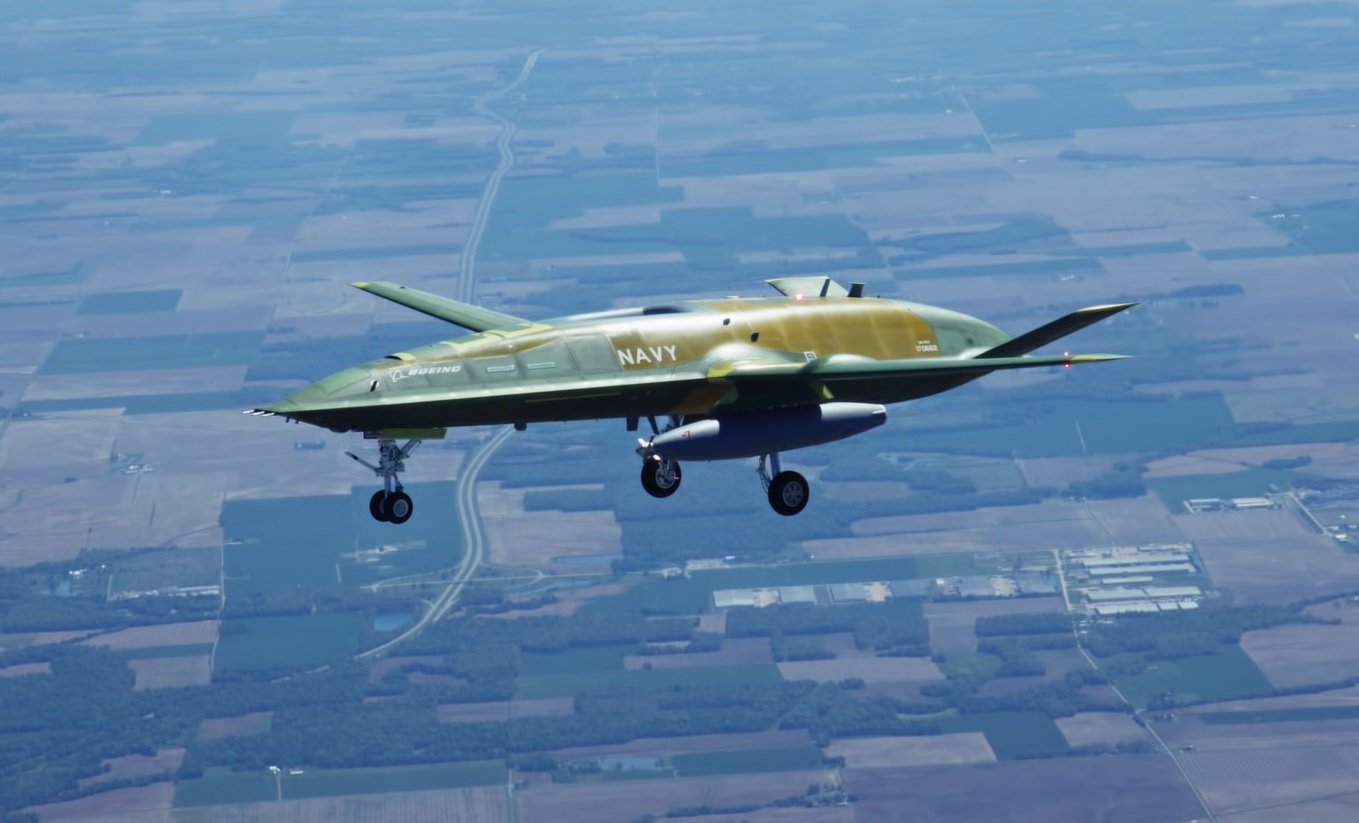
U.S
WASHINGTON, — The U.S. Navy has awarded Boeing a $12.68 million contract modification to upgrade electronic systems on the MQ-25A Stingray, the Navy’s carrier-based unmanned aircraft. The exact contract value is $12,680,717. The modification covers non-recurring engineering and integration work for an updated Radio Frequency Blanker Unit and an Encrypted Mass Storage System with an embedded Data Transfer System. The Radio Frequency Blanker Unit is designed to prevent the aircraft’s own transmissions from interfering with its onboard sensors, while the encrypted storage system provides secure storage and transfer of mission data. The contract also includes deficiency analysis and software corrections resulting from security assessments of the MQ-25’s Mission Management System Computer. The specific deficiencies have not been publicly disclosed. About 85 percent of the work will be performed in St. Louis, Missouri, with the remaining 15 percent in Fairborn, Ohio. The work is scheduled for completion by November 2029. Fiscal 2026 Navy research, development, test and evaluation funds will cover the full amount. The modification was not competitively bid, and Naval Air Systems Command at Patuxent River, Maryland, is the contracting activity. MQ-25's Carrier Role The MQ-25 is being developed primarily as an unmanned aerial refueling aircraft for U.S. Navy carrier air wings. It is intended to take over tanker missions currently performed by crewed F/A-18E/F Super Hornets, allowing those aircraft to remain available for other missions. The Navy has said the Stingray will be the first unmanned aircraft to routinely operate from a U.S. aircraft carrier. The platform is also planned to support intelligence, surveillance and reconnaissance missions. 2026 Flight Testing The first production-representative MQ-25A completed its approximately two-hour maiden flight on April 25, 2026, at Boeing’s facility at MidAmerica St. Louis Airport in Mascoutah, Illinois. An earlier flight attempt on April 22 was aborted for undisclosed reasons. During the maiden flight, the aircraft autonomously taxied, took off, maneuvered and landed while responding to commands from the Unmanned Carrier Aviation Mission Control System MD-5 ground station. The aircraft completed its second test flight in July, including landing-gear cycling and testing of new software intended to support future expansion of its flight envelope. Separate deck-handling trials aboard USS George H.W. Bush demonstrated the aircraft’s physical compatibility with carrier deck operations. The Boeing-owned T1 demonstrator has also participated in carrier deck activities aboard USS Nimitz. The Navy previously planned a test fleet of nine MQ-25 aircraft, including four Engineering Development Model aircraft produced under an $805 million engineering and manufacturing development contract. Future testing will expand the aircraft’s flight envelope, certify its aerial-refueling capability and eventually move to Naval Air Station Patuxent River for operational evaluation. The Navy has targeted Initial Operational Capability for the MQ-25, while the program continues its testing and development toward operational deployment.
Read More → Posted on 2026-09-01 14:15:31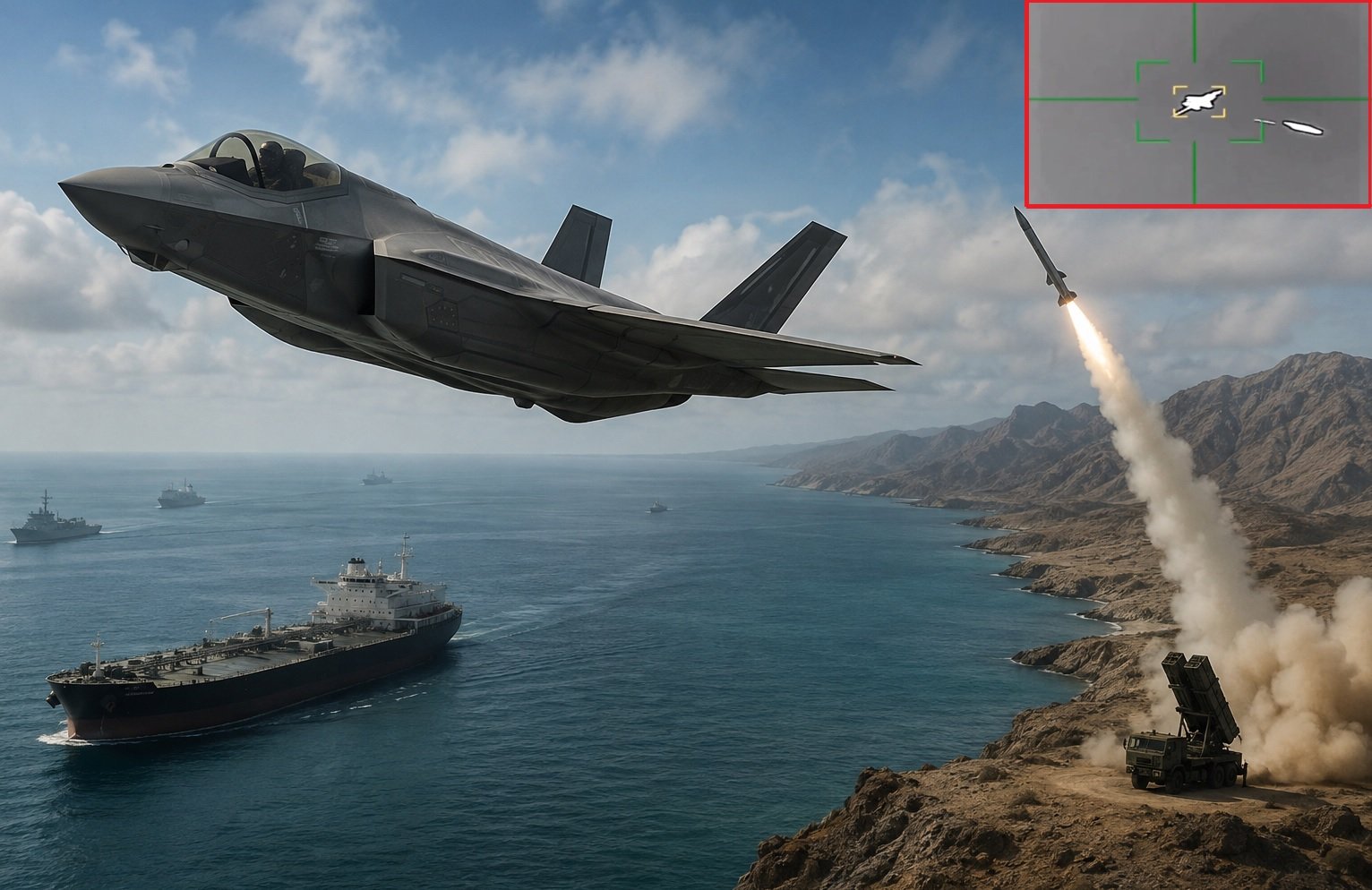
World
WASHINGTON — An Iranian surface-to-air missile was launched in recent days toward a U.S. F-35 fighter jet operating over the Strait of Hormuz, according to a U.S. official cited by Axios. The aircraft was providing air cover for ships transiting the strategic waterway. The missile did not come close enough to threaten the F-35, and there was no reported damage to the aircraft or injury to its pilot. The specific Iranian air-defense system involved has not been publicly identified by U.S. officials. The incident has become part of a wider U.S. assessment that Iran is rebuilding radar, air-defense and anti-ship missile capabilities around the Strait of Hormuz. U.S. Considers Limited Strikes U.S. Central Command (CENTCOM) has reportedly developed a plan for periodic, limited strikes against Iranian military capabilities around the strait. According to Axios, the proposal is intended to prevent Iran from rebuilding systems that could threaten commercial shipping, U.S. Navy ships and American aircraft operating in the area. The plan has the support of Defense Secretary Pete Hegseth and was sent to the White House for consideration several days ago. Chairman of the Joint Chiefs of Staff Gen. Dan Caine was also briefed on the proposal. The plan had not received final approval from President Donald Trump before the latest exchange of fire. The administration had previously been reluctant to approve additional strikes because of concerns about further escalation with Iran. Strait of Hormuz Remains a U.S. Military Focus The F-35 incident comes after months of U.S. military operations aimed at reducing Iran's ability to threaten commercial vessels in and around the Strait of Hormuz. CENTCOM has previously said its forces conducted strikes against Iranian air-defense systems, coastal radar sites, anti-ship missile capabilities, command-and-control networks and other military assets connected to threats against commercial shipping. The U.S. military has also supported commercial vessel movements through the waterway. The White House said on August 28 that nearly 1,500 commercial vessels had moved through the strait under U.S. protection, although those figures were provided by the White House and were not part of the Axios report. Recent Iranian Missile Attack Could Affect Trump's Decision The White House is also considering the situation following a separate Iranian ballistic missile attack on U.S. positions in Jordan, according to Axios. The attack followed a U.S. strike against Iranian forces that were preparing to launch rockets carrying sea mines into the Strait of Hormuz. President Trump subsequently said the United States would respond to the Iranian attack. The latest developments could therefore influence the administration's earlier reluctance to authorize the proposed limited strikes. No Final Decision Announced The U.S. government has not publicly announced that President Trump has approved the proposed campaign of periodic strikes described by Axios. The immediate concern for CENTCOM is Iran's reported effort to restore radar, air-defense and anti-ship missile capabilities that could threaten ships and U.S. military aircraft operating around the Strait of Hormuz. The recent launch of a surface-to-air missile toward the F-35 is being treated by U.S. officials as one indication of that rebuilding effort. CENTCOM has previously stated that keeping the Strait of Hormuz open for commercial traffic remains a major operational objective.
Read More → Posted on 2026-09-01 14:43:17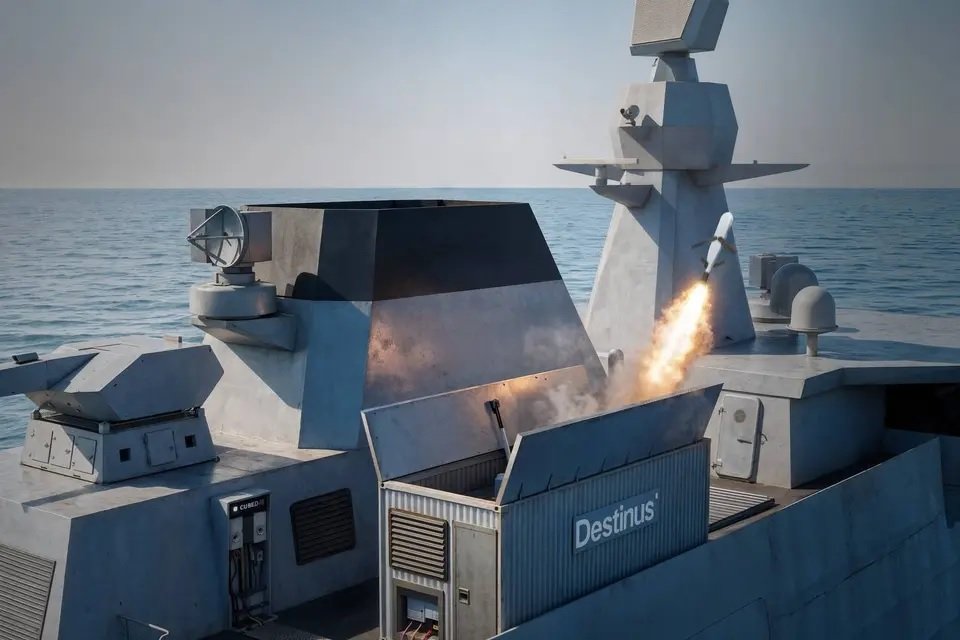
Europe
HERning, Denmark — European defense companies Destinus, CUBEDIN A/S and OMT Group A/S have signed a Memorandum of Understanding (MoU) to develop a modular, containerized counter-drone system for naval vessels. The agreement was announced at DALO Industry Days 2026 in Herning, Denmark. The companies plan to integrate Destinus' Hornet interceptor family into standardized 10-foot and 20-foot mission modules. The system is intended to provide navies with a scalable, lower-cost defense layer against high-volume aerial threats, particularly Class 2 unmanned aerial systems (UAS) and similar threats, including loitering munitions. The containerized design is intended for rapid installation on existing surface combatants and future ship designs. Using standard ISO container footprints would allow navies to add or remove the capability according to mission requirements without major structural modifications or extensive changes to the ship's combat management system. Roles of the Three Companies Under the agreement, Destinus will provide the Hornet interceptor system, internal launcher and mission-payload architecture. OMT Group A/S will handle naval platform engineering, structural integration and ship-design adaptations. CUBEDIN A/S will provide standardized mission-modularity interfaces and the software framework for physical, electrical and data connections with the host ship. The development is planned to progress through a Preliminary Design Review (PDR) and Critical Design Review (CDR) before full naval qualification testing. The companies intend to offer the system to European navies seeking adaptable point-defense capabilities. Hornet Interceptor The Hornet system is designed as a kinetic interceptor for counter-UAS missions. Destinus' Hornet family includes the Hornet Block 1 and Hornet B2 variants. In June 2026, Destinus and the Spanish Navy conducted a live launch of a Hornet Block 1 interceptor from a containerized launcher installed on the F-81 Santa María frigate. The demonstration examined the use of a container-based interceptor system on an existing warship. Destinus has separately described the Hornet B2 as a further development of the system. The information provided for the programme states that it has a reported range exceeding 150 kilometers and a 3-kilogram payload. Dutch Navy Programme The new partnership follows a separate agreement between Destinus and the Netherlands Ministry of Defence's Materiel and IT Command (COMMIT) announced in August 2026. That Concept Development and Evaluation (CD&E) programme will examine the integration of the Hornet B2 kinetic interceptor onto Royal Netherlands Navy warships. It is scheduled to continue through the second quarter of 2027, with naval operators involved in the testing and development process. The new MoU with CUBEDIN and OMT is separate from the Dutch programme but supports the broader development of a modular naval architecture for deploying Hornet interceptors on different warships. The three companies will contribute their respective expertise in interceptor technology, naval platform engineering and standardized modular integration as the project moves toward design reviews and naval qualification.
Read More → Posted on 2026-09-01 14:54:00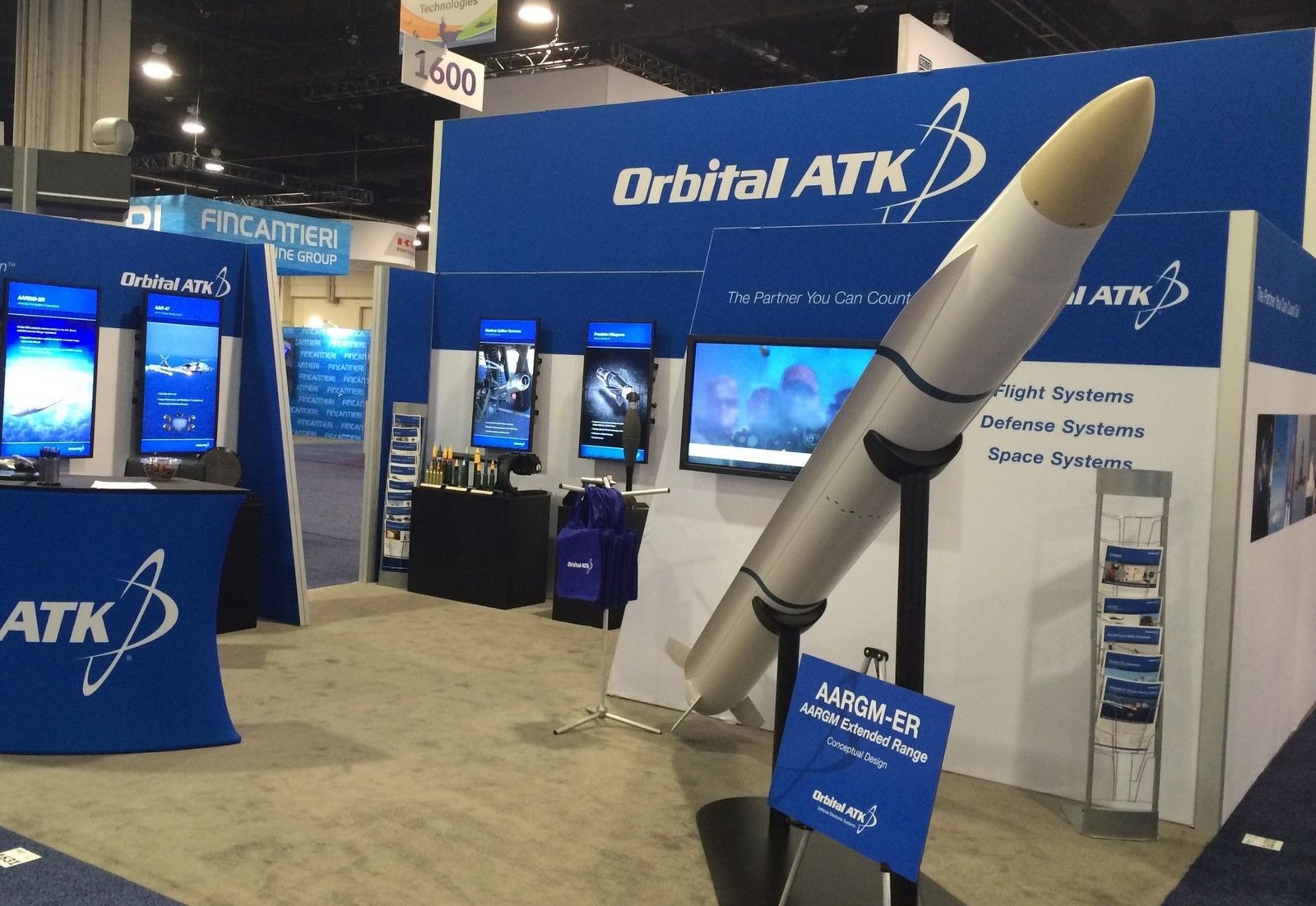
World
TOKYO — Japan’s Ministry of Defense has included the U.S.-made AGM-88G Advanced Anti-Radiation Guided Missile-Extended Range (AARGM-ER) in its fiscal 2027 budget request. Procurement is planned to begin in 2027 as Japan seeks to strengthen its ability to counter adversary integrated air-defense systems, particularly amid increased Chinese military activity. The Ministry submitted a record 8.89 trillion yen (about $55.6 billion) defense budget request on August 31, 2026. The final budget is expected to be decided by the end of December. The AARGM-ER would be the first anti-radiation missile of this type operated by the Japan Air Self-Defense Force (JASDF) since its establishment. JASDF Chief of Staff Gen. Yuhiro Morita said the missile can be carried by the F-35A and F-35B and described it as a supersonic air-launched anti-radar missile capable of reducing an adversary’s air-defense capability and supporting anti-ship attacks. AARGM-ER capabilities Developed by Northrop Grumman, the AARGM-ER is designed for Suppression and Destruction of Enemy Air Defenses (SEAD/DEAD) missions. It can target fixed radar installations, mobile surface-to-air missile systems, command posts and other elements of an integrated air-defense network. The missile uses a multi-mode guidance system combining GPS/inertial navigation, passive anti-radiation homing and a terminal millimeter-wave active radar seeker. This allows it to continue attacking a target even if its radar is switched off. The AARGM-ER was initially developed for the U.S. Navy’s F/A-18E/F Super Hornet and EA-18G Growler and was later expanded to the F-35A, F-35B and F-35C. Its redesigned airframe allows internal carriage on the F-35A and F-35C, while a new rocket motor provides greater range and speed and an upgraded warhead improves its overall capability. Open-source assessments have placed its range at around 300 km, roughly twice that of the earlier AARGM, although the exact performance remains classified. The missile is supersonic. Japan expands long-range strike capabilities Japan’s AARGM-ER procurement is part of a wider effort to expand its stand-off and air-defense suppression capabilities. Japanese combat aircraft previously had a predominantly defensive weapons focus, limiting their ability to attack radar sites, surface-to-air missile systems and command posts. The JASDF is also conducting flight testing of a new long-range air-launched cruise missile on the F-2 fighter. Recent observations showed an air-launched variant of the upgraded Type 12 surface-to-ship missile (SSM-2) being tested by an F-2 assigned to a specialized testing unit near Gifu Air Base. The exact specifications of the air-launched variant remain classified. The ground-launched version of the upgraded Type 12 is estimated to have a range of 1,000 to 1,500 kilometers. The fiscal 2027 budget request also includes ASM-3 Kai missiles with anti-ship and air-to-air capability, additional F-35 fighters, low-cost cruise missiles and various unmanned systems. Several quantities and costs remain listed as item requests pending updated national security strategy documents. If approved, the AARGM-ER will give the JASDF a dedicated capability to suppress and destroy enemy air-defense systems while becoming part of Japan’s broader effort to strengthen stand-off strike and air-defense capabilities.
Read More → Posted on 2026-09-01 16:00:01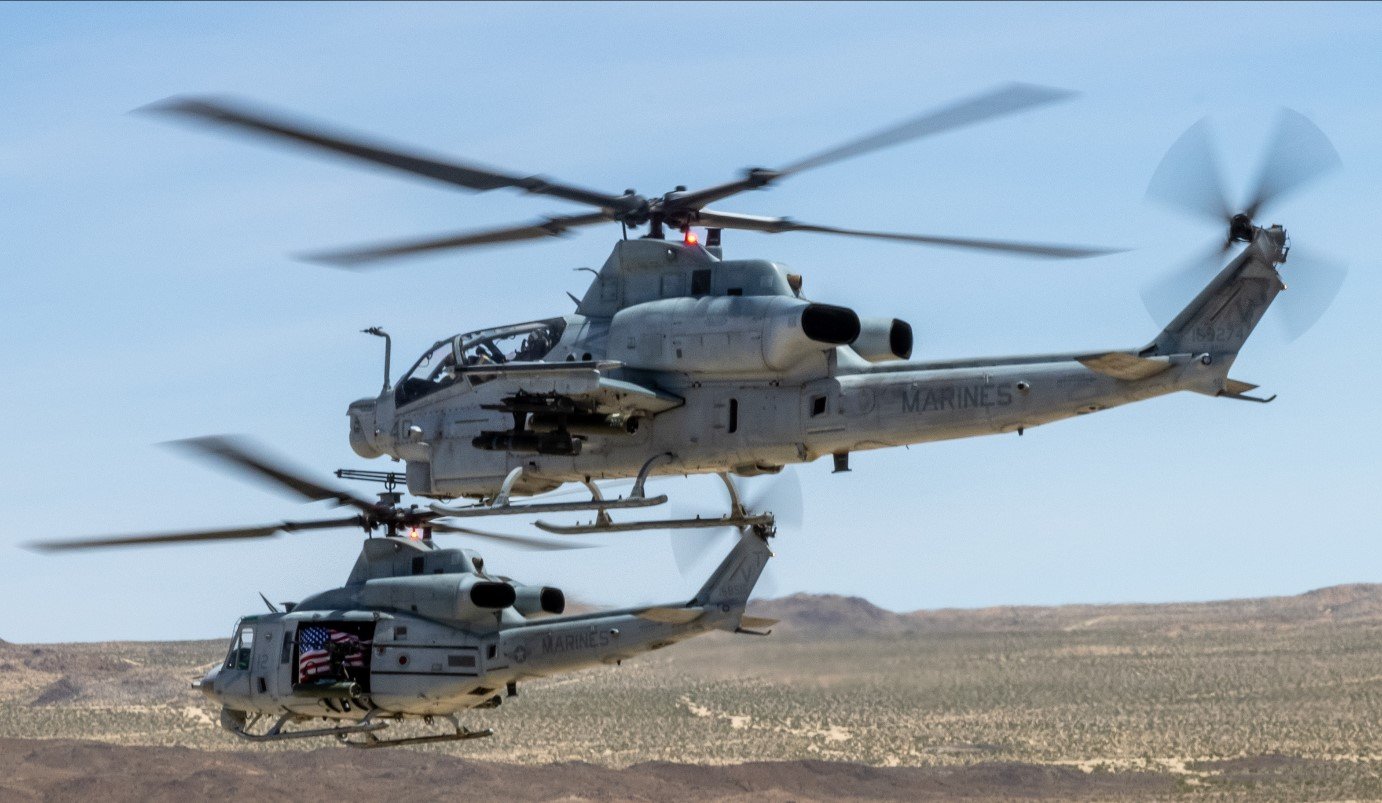
U.S
WASHINGTON, — The U.S. State Department has approved a possible $800 million Foreign Military Sale (FMS) to Iraq covering Bell 412EPX utility helicopters, Bell 407M light military helicopters and associated weapons, sensors, communications equipment, training and support. The approval was notified to Congress on August 31, 2026, under the U.S. Foreign Military Sales process. The notification does not specify the number of helicopters Iraq has requested, and the proposed sale is not yet a finalized contract. The State Department said the proposed package would improve Iraq's rotary-wing transport, reconnaissance and air-to-surface targeting capabilities and support the security of what it described as a strategic partner. Bell 412EPX and Bell 407M The proposed acquisition combines two different helicopter types. The Bell 412EPX is a twin-engine utility helicopter developed by Bell and Subaru. Bell lists seating for one pilot and up to 14 passengers, a maximum cruise speed of about 123 knots (228 km/h), a maximum internal gross weight of 12,200 pounds (5,534 kg) and a cargo-hook capacity of 5,000 pounds (2,268 kg). The helicopter is designed for utility and transport missions and has an external maximum gross weight of 13,000 pounds (5,897 kg). Bell says the 412EPX uses Pratt & Whitney PT6T-9 Twin Pac engines and an upgraded main rotor transmission. The Bell 407M is a single-engine military version of the Bell 407 family intended for military and special-mission applications. Bell lists a standard configuration of one pilot and up to six passengers, a maximum cruise speed of 133 knots (246 km/h) and an external-load maximum gross weight of 6,000 pounds (2,722 kg). Bell also lists a 3,100-pound (1,406 kg) cargo-hook capacity for the 407M and a Rolls-Royce Model 250-C47E/4 turboshaft engine producing 862 shaft horsepower at takeoff. Weapons and Mission Systems The proposed Iraqi package includes equipment for both reconnaissance and armed missions. The weapons listed in the notification include GAU-19 three-barrel machine guns and M260 seven-tube launchers for 2.75-inch (70 mm) rockets. For surveillance and targeting, Iraq has requested L3Harris WESCAM MX-15HDI electro-optical/infrared sensors. The package also includes AN/AAR-60 Block 2 missile-launch detection systems. Additional equipment includes very-high-frequency radios, spare parts, ground-support equipment, publications and technical data. The proposed sale also covers pilot and maintenance training and U.S. government and contractor engineering, technical and logistics support. Bell Textron to Be Principal Contractor Bell Textron, based in Fort Worth, Texas, is identified as the principal contractor for the proposed sale. The $800 million figure covers the proposed aircraft, equipment and associated support package. Because the notification does not specify the number of helicopters and the final configuration remains subject to negotiations, the eventual contract could differ from the notified proposal. Congressional Review The State Department's approval is an important step in the U.S. FMS process, but it does not mean that a contract has been signed. Congress has a period to review the proposed transaction before the process can move toward final agreements and contracting. The proposed acquisition would add new Bell 412EPX and Bell 407M capabilities to Iraq's rotary-wing fleet while providing weapons, sensors, training and sustainment support as part of a single FMS package.
Read More → Posted on 2026-09-01 16:13:58
World
AMMAN, Jordan — Newly surfaced satellite imagery from August 31 shows a darkened area near aircraft hangars at Muwaffaq Salti Air Base in Jordan following Iran's ballistic missile attack on U.S.-linked military facilities in the country. The imagery, at coordinates 31.829263, 36.799926, shows an area that appears different from earlier imagery and is consistent with possible blast or impact damage. However, the available imagery alone does not establish the exact cause or extent of the damage. Iran launched ballistic missiles toward U.S.-linked facilities in Jordan on August 30-31 following U.S. strikes on Iranian positions on Larak Island in the Strait of Hormuz. Jordan's military said its air-defense systems intercepted eight missiles, while U.S. officials said nearly all incoming weapons were intercepted and reported no significant operational impact on the bases. Iran's Islamic Revolutionary Guard Corps, however, claimed that its missile and drone attacks struck technical, maintenance and aircraft-related facilities at Muwaffaq Salti and other locations in Jordan. Those claims have not been independently established. Possible damage near aircraft hangar The newly observed dark patch is located close to aircraft hangars inside Muwaffaq Salti Air Base. Open-source imagery analysts have described the feature as potentially consistent with blast damage following the August 30-31 attack. The imagery provides a visual indication of a possible impact area, but it does not by itself confirm whether a ballistic missile directly struck a hangar, what aircraft or equipment may have been affected, or whether the facility remains operational. Muwaffaq Salti has previously been targeted during the conflict. Earlier attacks reportedly caused damage to aircraft shelters and other infrastructure at the base, while U.S. officials previously reported American casualties in attacks on U.S. positions in Jordan. Black Hawk helicopters seen on road transport Separately, footage published by several media outlets and open-source accounts reportedly shows two U.S. UH-60 Black Hawk helicopters being transported on flatbed trailers through Jordan. The helicopters have been described as possibly coming from Muwaffaq Salti Air Base or Prince Hassan Air Base. Their exact origin and destination have not been independently confirmed. Pro-Iranian Arab media outlets published footage allegedly showing two U.S. UH-60 Black Hawk helicopters being transported on trailers in Jordan, likely from Muwaffaq al-Salti AB or Prince Hassan AB, possibly being moved out ahead of potential Iranian attacks. The way they're… https://t.co/n8JbCqNOMd pic.twitter.com/7mCNqSl911 — Egypt's Intel Observer (@EGYOSINT) August 31, 2026 Transporting helicopters by road could indicate that the aircraft were not being flown at the time, but the available footage does not establish the reason for their transport. It therefore cannot confirm whether the helicopters were damaged in Iranian attacks or were being moved for another operational or logistical reason. U.S. aircraft movements from King Abdullah II Air Base The developments also come as U.S. aircraft have reportedly been moved from King Abdullah II Air Base in Jordan. The reported movements include C-130 transport aircraft, UH-60 Black Hawks and AH-64 Apache attack helicopters. King Abdullah II Air Base itself has not been reported as a target of Iranian missile strikes in the recent attack. The movement of aircraft from the facility may reflect wider force-protection and aircraft-distribution measures, although the U.S. military has not publicly provided details establishing the reason for each reported relocation. Satellite imagery adds to conflicting assessments The latest imagery has emerged amid differing accounts of the August 30-31 attack. Jordan and U.S. officials have emphasized the large number of missile interceptions and limited reported impact, while Iran has claimed that its missiles caused substantial damage to U.S.-linked facilities. The August 31 satellite image provides evidence of a possible new blast-related area near hangars at Muwaffaq Salti, but higher-resolution imagery or official assessments would be required to determine the precise extent of any damage and whether aircraft or other military equipment were affected. For now, the available evidence confirms that the area changed between satellite observations, but the exact damage assessment remains unconfirmed.
Read More → Posted on 2026-09-01 16:31:13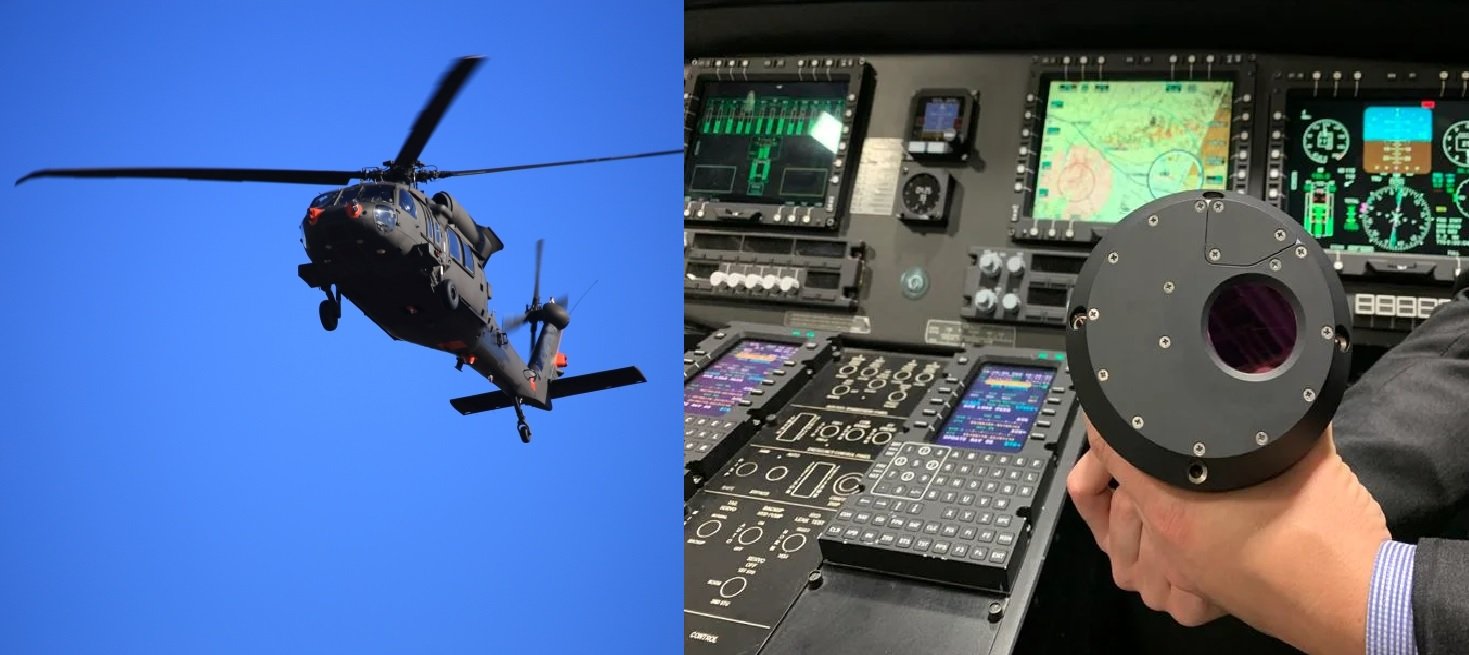
U.S
ASHBURN, Va. — Curtiss-Wright Corporation has received an approximately $14 million contract from Northrop Grumman to supply sensor-processing equipment for the U.S. Army’s Improved Threat Detection System (ITDS). The award supports Phase II development of the Army’s future aircraft threat-warning system. ITDS for Army Aviation ITDS is designed to detect, classify and identify electro-optical and infrared threats in real time and provide the information needed for an aircraft’s defensive response. The system is intended for current and future Army aviation platforms, with priority given to the AH-64 Apache and MV-75 Future Long-Range Assault Aircraft (FLRAA). Curtiss-Wright Processor and ATHENA Sensor Under the contract, Curtiss-Wright will provide an integrated processor capable of receiving, processing and fusing high-bandwidth sensor data before rapidly distributing threat information across the aircraft. The processor will work with Northrop Grumman’s Advanced Tactical Hostile Engagement Awareness (ATHENA) sensor. ATHENA is designed to provide 360-degree situational awareness and high-resolution detection of electro-optical and infrared threats. The system is designed to detect threats including unmanned aerial systems, air-to-air missiles, anti-tank guided missiles, rocket-propelled grenades, loitering munitions, guided man-portable air-defense systems, small-arms fire and machine guns. It can also identify related threats outside a pilot’s direct line of sight or below the aircraft. Threat Warning and Defensive Response Once a threat is classified, ITDS is designed to provide information to the aircraft’s defensive systems and support an appropriate response. This includes directable infrared countermeasures and expendable countermeasures such as chaff and flares. The system will also provide hostile-fire warnings and distinguish small-arms fire from rocket threats. Open Architecture and Processing Curtiss-Wright’s processor uses a modular architecture aligned with the Modular Open Systems Approach (MOSA) and Sensor Open Systems Architecture (SOSA) requirements. The equipment is housed in a conduction-cooled chassis designed for airborne operations and includes high-speed optical connections and configurable input-output interfaces. These features support both modern digital sensors and legacy aircraft systems. The processor also provides artificial-intelligence-enabled computing and real-time network-centric data sharing. The open architecture is intended to support the integration of new sensors, algorithms and countermeasure capabilities as threats evolve. The planned ITDS configuration consists of infrared sensors, a processor and a memory module connected through a digital backbone. The system is designed to conform to the Future Airborne Capability Environment (FACE). Phase II Development The contract is part of Phase II of the Army’s ITDS Other Transaction Agreement. Northrop Grumman advanced to Phase II following earlier development and testing, including more than 51 hours of flight testing and live-fire evaluations during Phase I. Phase II includes initial prototype systems, system design, integration, architecture development, sensor assessment, and additional flight and operational testing. The program is being developed under the Army’s Program Executive Office for Intelligence, Electronic Warfare & Sensors and is intended to provide a future threat-warning capability for rotary-wing aviation while supporting integration with existing countermeasure systems. Curtiss-Wright’s approximately $14 million award provides the processing element that will operate with Northrop Grumman’s ATHENA sensor as ITDS moves through Phase II development and testing. Source : defence-industry
Read More → Posted on 2026-09-01 16:47:49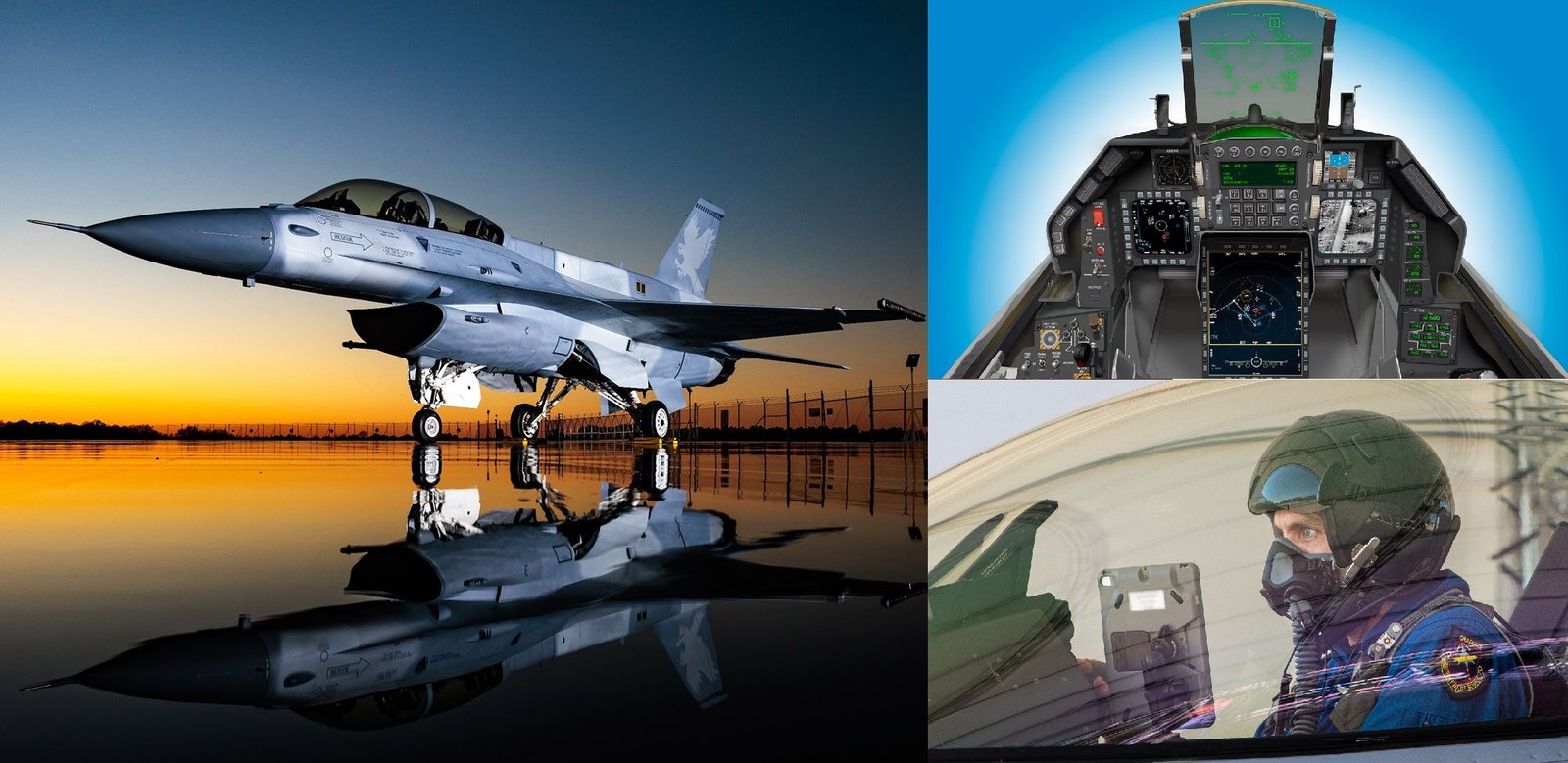
U.S
GREENVILLE, SOUTH CAROLINA — Lockheed Martin is highlighting the F-16 Block 70/72 as the most advanced production version of the F-16, combining a new-production airframe with an AESA radar, modernized cockpit, advanced targeting systems, electronic warfare capabilities and broad weapons integration. The company describes the aircraft as an advanced fourth-generation fighter, while its Northrop Grumman APG-83 AESA radar provides what Lockheed Martin calls fifth-generation fighter radar capabilities through hardware and software commonality with the AESA radars used on the F-22 and F-35. The Block 70/72 is currently being produced at Lockheed Martin’s facility in Greenville, South Carolina. The company says the configuration is designed to keep the F-16 operating into the 2060s and beyond. APG-83 AESA Radar The APG-83 is at the center of the Block 70/72 sensor package. According to Lockheed Martin, the radar provides faster all-weather targeting, greater situational awareness and more detailed digital mapping. The radar provides the F-16 with fifth-generation fighter radar capabilities by leveraging hardware and software commonality with the AN/APG-77 AESA radar used by the F-22 and the AN/APG-81 AESA radar used by the F-35. Northrop Grumman developed the APG-83 as a multifunction active electronically scanned array (AESA) fire-control radar for the F-16. The APG-83 supports high-resolution Synthetic Aperture Radar (SAR) mapping, allowing pilots to obtain detailed digital maps for target identification and precision strike missions. It also supports interleaved air-to-air and air-to-ground operations, allowing the radar to rapidly switch between different mission modes while maintaining situational awareness. The radar provides multiple simultaneous air-to-air tracks, improved detection and tracking performance, and robust electronic protection for operations in dense radio-frequency environments. Northrop Grumman says the radar's electronic scanning allows faster area searches and more rapid target updates compared with mechanically scanned radars. Lockheed Martin specifically describes the APG-83 as providing “5th Generation fighter radar capabilities” because of its hardware and software commonality with the F-22 and F-35 radar systems. This does not make the F-16 a fifth-generation fighter; the Block 70/72 remains classified by Lockheed Martin as a fourth-generation aircraft. Northrop Grumman's published information also states that the APG-83 incorporates proven hardware and advanced operating modes from the F-22 and F-35 AESA radar programs, including electronic-protection capabilities. Its published SABR documentation says approximately 95 percent of the radar's mode suite comes directly from the F-35's APG-81 AESA radar, including electronic-protection functions. Advanced Cockpit and Targeting Systems The aircraft receives radar and targeting information through a new high-resolution Center Pedestal Display (CPD). The display provides color moving maps, larger air-to-air situation displays, zoom functions and digital flight information. The Block 70/72 can also integrate Lockheed Martin’s Sniper Advanced Targeting Pod and Legion-ES infrared search-and-track (IRST) system. These systems provide the pilot with additional sensor information beyond the aircraft's radar. The IRST system provides a passive means of searching and detecting targets, while the targeting pod provides imagery and targeting information. The aircraft also incorporates an upgraded mission computer and avionics architecture. Lockheed Martin says the new mission computer combines computing functions for weapons and avionics into a single system and is designed to support software upgrades over time. Electronic Warfare and Data Links The Block 70/72 also includes an internal electronic warfare system incorporating a digital radar warning receiver and jammer technology. Lockheed Martin says the electronic warfare system is integrated with the AESA radar, sensors, helmet-mounted display and cockpit displays. The aircraft also incorporates advanced tactical data-link capabilities for sharing tactical information and tracking data. Broad Weapons Integration Weapons integration is another major feature of the F-16 Block 70/72. Lockheed Martin says more than 36 years of F-16 weapons-integration work with the U.S. Air Force and foreign military sales customers has resulted in more than 3,300 certified carriage and release configurations covering more than 180 weapons and stores. The Block 70/72 therefore combines its modern radar and targeting systems with a large existing weapons-integration base. The aircraft is designed as a multirole platform capable of employing a broad range of air-to-air and air-to-ground weapons. Auto GCAS and Extended Structural Life The Block 70/72 also incorporates the Automatic Ground Collision Avoidance System (Auto GCAS). Developed by Lockheed Martin, the system is designed to prevent controlled flight into terrain by detecting the risk and initiating an automatic recovery when required. Lockheed Martin says the system entered U.S. Air Force service in 2014 and has saved multiple pilots and F-16 aircraft. The new-production airframe has a rated structural life of 12,000 flight hours, which Lockheed Martin says is more than 50 percent higher than previous production F-16 aircraft. The company says this provides most air forces with at least 40 years of service life without expected major structural repairs during that period. The aircraft can also use conformal fuel tanks, which increase fuel capacity and range while maintaining the aircraft's aerodynamic characteristics. 119 Aircraft in Backlog The technology upgrades are being introduced as Lockheed Martin continues production of new F-16s for international customers. The company currently reports a Block 70/72 backlog of 119 aircraft, with 41 aircraft delivered to customers in seven countries. The figures represent the latest production program status reported by Lockheed Martin. The new-production aircraft add to the existing global F-16 fleet. Lockheed Martin reports approximately 2,800 F-16s operating in 29 countries, with the worldwide fleet having accumulated more than 14 million sorties and 21 million flight hours. Lockheed Martin also reported that F-16 deliveries resumed in 2026 following redesign and additional flight testing of a new variant. The company delivered two F-16s during the second quarter of 2026 and said it expects F-16 deliveries to increase during the year compared with 2025. The Block 70/72 therefore represents an evolution of the F-16 design rather than a new fighter-generation designation. Its main upgrades are centered on the APG-83 AESA radar, modern mission computing, advanced targeting and IRST systems, electronic warfare, improved cockpit displays, Auto GCAS and extensive weapons integration.
Read More → Posted on 2026-09-02 11:58:40
U.S
WASHINGTON, — The U.S. Navy and Raytheon are studying options to accelerate the installation of the AN/SPY-6(V)3 S-band radar on the Navy’s three DDG-1000 Zumwalt-class guided missile destroyers. Jen Gauthier, Raytheon’s vice president of Naval Systems & Sustainment, confirmed that the study is examining the replacement of the Zumwalt class’s existing AN/SPY-3 X-band multifunction radar with the SPY-6(V)3. The upgrade was previously expected in the mid-2030s, but the first installation could now take place as early as 2028, subject to the ongoing study. Existing Radar Hardware Could Accelerate Upgrade A major reason for the possible acceleration is the availability of SPY-6(V)3 radar hardware originally built for the now-cancelled FFG-62 Constellation-class frigate program. The Navy cancelled the Constellation program on November 25, 2025, and the already-built radar systems are being considered for reuse on the Zumwalt ships. This could reduce the need to wait for new radar production. Part of the ZEUS Modernization The radar upgrade is a central part of the Zumwalt Enterprise Upgrade Solution (ZEUS), which Naval Sea Systems Command began assessing in 2022. ZEUS aims to replace unique Zumwalt-class combat systems and sensors with equipment used across the wider U.S. Navy surface fleet, improving long-term supportability and interoperability. The AN/SPY-6(V)3 is part of the Navy’s AN/SPY-6(V) Air and Missile Defense Radar family. It uses three fixed array faces, with each face containing nine Radar Modular Assemblies (RMAs). Each RMA is a self-contained radar antenna housed in a 2-by-2-by-2-foot box. The V3 configuration is roughly comparable in size to the existing SPY-3, which could reduce the need for major structural changes during installation. Gauthier said Raytheon has already received funding to study radar availability and integration with the DDG-1000 class. Raytheon has also received Navy funding for development work on the Zumwalt combat management system to support potential SPY-6 integration. In April 2026, the Navy awarded Raytheon a $213.4 million contract modification for combat-system integration, modernization, installation, testing and sustainment work on the class through 2027. SPY-6 Upgrade for Arleigh Burke Destroyers The Zumwalt effort is running alongside the Navy’s SPY-6 upgrade of DDG-51 Flight IIA destroyers. Under the DDG MOD 2.0 program, the larger AN/SPY-6(V)4 will replace the Lockheed Martin AN/SPY-1D radar. The V4 has four array faces, each containing 24 RMAs. Raytheon has already delivered and installed the first SPY-6(V)4 array at the Navy’s Surface Combat Systems Center at Wallops Island, Virginia, where it will undergo testing of its power requirements and combat-system interfaces. The USS Pinckney (DDG-91) is scheduled to become the first Flight IIA destroyer to receive the V4, with the backfit planned from late 2026 to 2028. Zumwalt-Class Ships The three Zumwalt-class destroyers are USS Zumwalt (DDG-1000), USS Michael Monsoor (DDG-1001), and USS Lyndon B. Johnson (DDG-1002). The ships are also being modernized for their surface-strike role, including integration of the Conventional Prompt Strike hypersonic missile system. The SPY-6(V)3 study remains underway, and the 2028 first installation is currently a potential accelerated schedule rather than a finalized Navy decision.
Read More → Posted on 2026-09-02 12:08:33
World
TEHRAN, September 2, 2026 — Russia has been secretly assisting Iran in developing ramjet propulsion technology for supersonic cruise missiles under a program codenamed C430L, according to an investigation published by the Financial Times on September 1–2, 2026. The investigation is based on leaked Russian correspondence, travel records and analysis of military patents. The multiyear program began in 2023 and continued into 2026. The reported cooperation has focused primarily on helping Iran develop and refine a ramjet propulsion system for missiles intended for anti-ship and land-attack roles. Russian Firms Involved in the Program The C430L program was organized by Russia’s state arms exporter Rosoboronexport in coordination with NPO Mashinostroyenia, a Russian missile design bureau. Travel records reviewed by the Financial Times indicate that senior Russian arms-export officials and engineers from NPO Mashinostroyenia made repeated visits to Tehran during 2023. A contract between Rosoboronexport and Iran’s Ministry of Defense and Armed Forces Logistics (MODAFL) was subsequently signed in November 2023. The Russian delegation included several specialists involved in missile and propulsion development. Alexandr Dergachov, then deputy head of NPO Mashinostroyenia, was identified as the chief designer responsible for sea-launched missiles and cruise missile systems. Alexandr Chebakov, head of the company's air-breathing jet-engine design department, also participated. Russian patents identify Chebakov as an inventor associated with control systems for supersonic ramjets and cruise-missile engines. The documents indicate that he visited Tehran three times in 2023. Yuri Prokhorchuk, head of NPO Mashinostroyenia's aerodynamics and ballistics department, was another member of the group. He is a co-author of a patent covering a ramjet-powered hypersonic cruise missile designed for attacks against ships and land targets. In July 2023, Rosoboronexport official Vladislav Kuzmichev, head of its defense technologies and space department, joined the Russian engineers during a visit to Iran. He later signed the November 2023 contract on behalf of Rosoboronexport. Iran Shared Ramjet Test Data With Russia Iran has been working on supersonic anti-ship missile technology for years. In 2016, Iran's then-defense minister announced plans to develop supersonic anti-ship missiles. In 2019, Iranian authorities displayed components of a ramjet during an inspection by Iran's Supreme Leader. In August 2023, the IRGC-affiliated Tasnim news agency reported that testing had begun on a prototype supersonic cruise missile. According to the leaked correspondence reviewed by the Financial Times, NPO Mashinostroyenia had received a substantial amount of Iranian technical information on the ramjet by 2025. Russian engineers examined telemetry from an Iranian flight test. The telemetry stopped transmitting less than a minute after the missile was launched. Russian specialists subsequently sent Iranian counterparts detailed technical questions concerning the engine's fuel system, combustion stability, air intake and nozzle performance. They also asked whether the ramjet had continued operating after the telemetry transmission ended. The exchange shows that Russian specialists were involved in examining Iran's test results and identifying technical issues associated with the propulsion system. Russia Offered Further Technical Assistance The cooperation continued beyond the exchange of technical data. In April 2025, Rosoboronexport proposed sending a delegation of approximately two dozen Russian specialists to Iran to provide technical consultations. A letter from Rosoboronexport dated June 2026 indicates that the two sides were still discussing the next phase of the program and planned further reviews of Russian technical reports. This indicates that the reported cooperation remained active into 2026 rather than ending after the initial 2023 agreement. Ramjet Technology at the Center of the Program The main technical focus of C430L is the development of a ramjet propulsion system. Unlike a conventional turbojet engine, a ramjet has no compressor or turbine. It relies on the forward movement of the missile to compress incoming air before fuel is burned in the engine. Ramjets are therefore suited to sustained high-speed flight after a missile has reached the required operating conditions. The reported Russian assistance is focused on helping Iran overcome technical challenges associated with the propulsion system, including fuel delivery, combustion, airflow through the intake and nozzle operation. The Financial Times reported that Iran has already built and flight-tested a ramjet system. However, there is no public evidence that an operational supersonic cruise missile developed with Russian assistance has entered Iranian service. Potential Anti-Ship and Land-Attack Applications The reported program is intended to support missiles for both anti-ship and land-attack missions. Supersonic cruise missiles can reduce the amount of time available to defensive systems to detect, track and engage an incoming weapon, particularly when combined with a low-altitude flight profile. However, the effectiveness of any specific missile would depend on its final design, flight profile, guidance system and other characteristics that have not been publicly established for the C430L program. Fabian Hinz of Conflict Armament Research, an expert on Iranian missile programs, said that obtaining this type of technology had been an Iranian objective for decades. Former CIA military analyst Jim Lamson said successful deployment could provide Iran with a new strategic weapon capable of threatening U.S. Navy vessels. At present, however, the available information does not establish that an operational Russian-assisted missile has been deployed. Wider Iranian Missile Procurement The reported Russian cooperation comes alongside Iran's efforts to obtain advanced missile technology from China. In February 2026, Reuters reported that Iran was nearing an agreement to purchase CM-302 supersonic anti-ship cruise missiles from China. Reuters reported a range of about 290 kilometers for the missile and said negotiations had been underway for more than two years. The Chinese missile procurement discussions and the C430L program represent separate developments. The C430L program, as described by the Financial Times, concerns Russian assistance with Iran's development of ramjet propulsion technology, while the reported CM-302 deal concerns the potential acquisition of an existing Chinese missile system. Significance of the C430L Program The Financial Times described C430L as one of the most significant known transfers of strategic military technology from Moscow to Tehran. The leaked documents indicate that the cooperation involved more than a conventional arms purchase. Russian specialists reportedly examined Iranian test data, exchanged technical questions, proposed sending engineering teams to Iran and continued discussions on technical reports into 2026. Iran's ability to develop and produce an operational supersonic cruise missile with this assistance remains unconfirmed. The available evidence instead shows an ongoing effort centered on ramjet propulsion technology, with potential applications in future anti-ship and land-attack missiles. The disclosures add another dimension to the expanding military relationship between Russia and Iran and come as Tehran continues to pursue high-speed missile capabilities through both domestic development and reported foreign cooperation.
Read More → Posted on 2026-09-02 12:48:52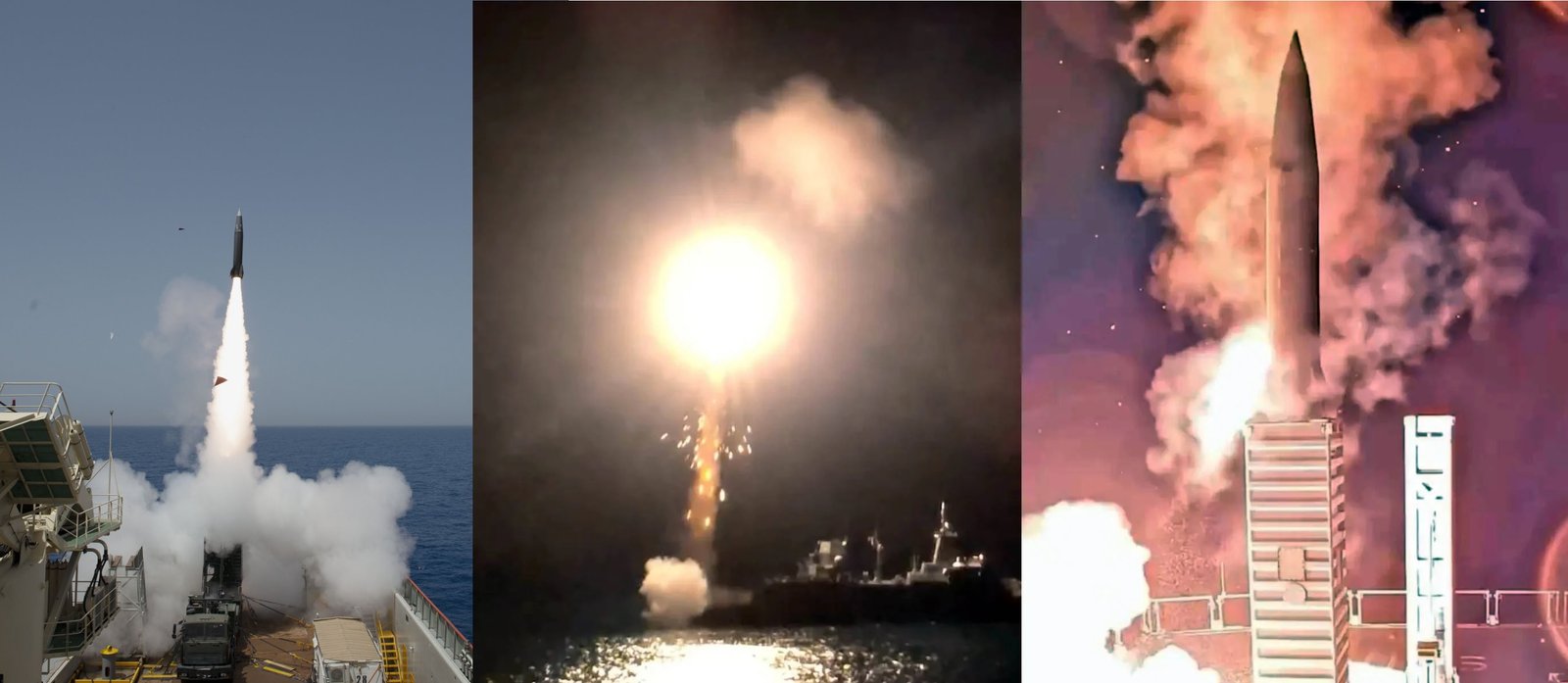
Europe
BERLIN, — The German Navy has successfully completed a dual live-fire trial of the Naval LORA ballistic missile, developed by Israel Aerospace Industries (IAI), in the North Atlantic between Ireland and Iceland. LORA Missile Fired From German Frigate Two LORA missiles were launched during the trial from German naval vessels, with the F125-class frigate Sachsen-Anhalt (F224) identified as the launch platform. The missiles were fired from containerized launchers temporarily installed on the frigate’s flight deck. According to IAI, both missiles followed their planned trajectories, navigated to their targets and completed the engagements with the required precision. The trial also assessed the missile, its naval launcher and command-and-control system, with all test objectives successfully completed. September 2, 2026 Part of Germany’s Marine 2035 Programme The firing was conducted under the German Navy’s Operational Experimentation (OPEX) programme, which supports the “Marine 2035 and Beyond” modernization plan. OPEX allows the German Navy to test new technologies and operational concepts in conditions designed to reflect real missions. The LORA trial used a configuration that included the missile launcher and a command trailer aboard the German vessel. German Navy Inspector Vice Admiral Jan Christian Kaack described the firing as “naval history.” He said the system had demonstrated that it could be deployed from German naval units and that its potential range exceeds anything previously available to the German Navy. Germany Evaluating More Than 500-km Range Following the successful trial, Germany plans to advance preparations for procurement of the missile system. German defence officials have referred to a potential range of more than 500 kilometres for the configuration being considered. IAI’s publicly listed specifications for LORA give the missile an operational range of 90 to 430 kilometres. The missile has a stated circular error probable (CEP) of about 10 metres and uses GNSS/GPS and inertial navigation for guidance. LORA is approximately 5.2 metres long, 0.62 metres in diameter and weighs about 1.6 tonnes. It is a quasi-ballistic missile that can be launched from land-based mobile launchers or naval vessels and is designed for sea-to-shore and sea-to-sea precision engagements. North Atlantic Trial The test area was located between Ireland and Iceland. Preparations were largely kept secret, although shipping and air traffic in the area received warnings approximately 45 days before the firing. The LORA system is described by IAI as combat-proven and has previously been used operationally by Azerbaijan during the 2020 Nagorno-Karabakh conflict. Germany-Israel Defence Cooperation IAI Chairman Boaz Levy said the successful naval trial demonstrated Israel’s technological capabilities and the defence cooperation between Germany and Israel. He also highlighted the deployment of the Israeli-made Arrow 3 air-defence system on German territory. IAI CEO Guy Bar Lev said the company was proud to contribute to the strategic cooperation between the two countries and described the live-fire exercise as a significant milestone for LORA. The operational data collected during the North Atlantic trial will now support the German Navy’s evaluation of future long-range maritime strike capabilities. Germany currently does not have ballistic missiles in its inventory, making the LORA trial an important step in its assessment of ship-launched ballistic missile capability.
Read More → Posted on 2026-09-02 13:01:41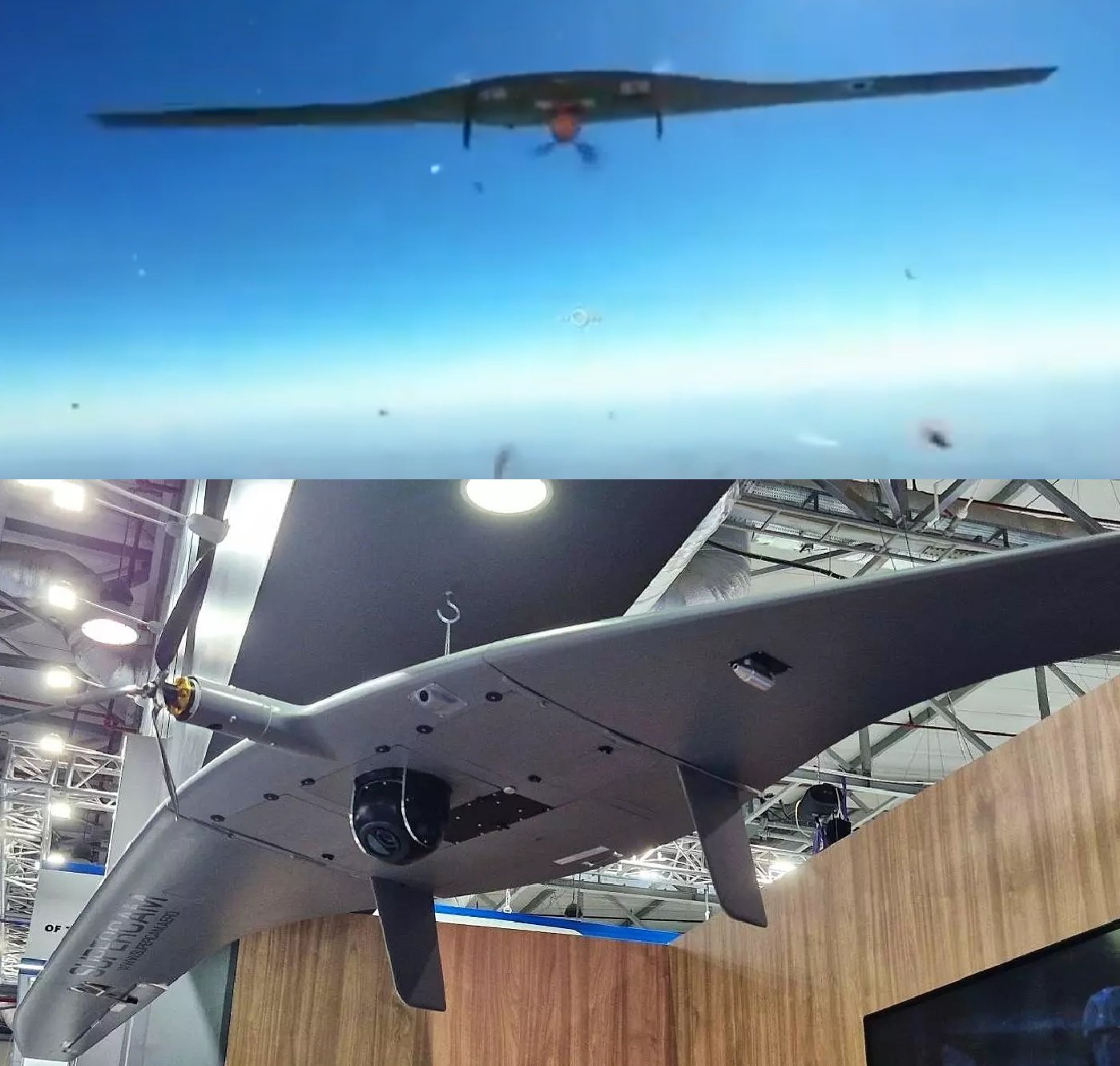
World
KYIV, Ukraine — Russian reconnaissance drones are being fitted with physical countermeasures designed to defend against Ukrainian interceptor drones, according to recently circulated battlefield footage. Videos appearing on September 1–2 show Russian SuperCam S350 and Knyaz Veshchiy Oleg (KVO) reconnaissance UAVs releasing nets as Ukrainian interceptor drones approach from behind. The footage was recorded by Ukrainian anti-aircraft drones and circulated by Ukrainian defense-technology adviser Serhiy Flash and the Telegram channel Voennyy Osviedomitel. Russian media also reported the deployment of net launchers on the two UAV types. In one sequence, operators from the Signum unmanned systems battalion of Ukraine’s 59th Separate Assault Brigade recorded a KVO drone releasing a net during an attempted interception. Similar footage later showed a SuperCam deploying a net against an approaching Ukrainian interceptor. The purpose of the system is to place a net or strands in the interceptor’s flight path. The material can become caught in the interceptor’s propellers, potentially disrupting its flight and preventing it from reaching the reconnaissance UAV. Russian SuperCam S350 and KVO reconnaissance drones are now deploying defensive nets against Ukrainian interceptor drones, aiming to foul their propellers and avoid interception. pic.twitter.com/91fcfrDtc1 — The Defense News (@TheDefenseNews) September 2, 2026 Multiple Defensive Measures The net launcher is part of a broader effort to improve the survivability of Russian reconnaissance UAVs against drone interceptors. Earlier modifications reported on Russian reconnaissance drones included additional cameras for detecting approaching interceptors and systems capable of detecting radio-frequency emissions from nearby drones. These measures can provide an operator with an early warning and an opportunity to maneuver away from an approaching interceptor. In February 2026, Russian reporting also described additional cameras on the upgraded SKAT 350M for detecting approaching interceptor drones and allowing the operator to perform evasive maneuvers. The use of rear-facing optical sensors and radio-frequency detection had already been observed on Russian UAVs before the latest net-launching systems appeared. Earlier battlefield modifications were subsequently reported as being incorporated into newer production configurations. SuperCam S350 The SuperCam S350 is a Russian reconnaissance UAV used for surveillance and other battlefield reconnaissance missions. Ukrainian military intelligence data lists the aircraft with a 3.2-meter wingspan, a maximum takeoff weight of 15.5 kg, a flight endurance of up to 4.5 hours, and a communications range of up to 100 km. The listed flight range is 240 km. The addition of a net-launching system gives the aircraft another layer of protection against small interceptor drones. It combines a physical countermeasure with previously reported detection and evasive measures. Knyaz Veshchiy Oleg Also Receives Protection The Knyaz Veshchiy Oleg, or KVO, is another Russian reconnaissance UAV that has been observed using the defensive net system. Ukrainian intelligence information published earlier this year describes the aircraft as having a 2.8-meter wingspan, a maximum takeoff weight of 11 kg, a stated range of up to 45 km, and an endurance of up to 3.5 hours. Its stated maximum speed is 130 km/h. The recent footage indicates that KVO operators are also using physical countermeasures when the aircraft is targeted by an interceptor. Ukrainian Interceptors Drive the Adaptation Ukraine has increasingly used relatively inexpensive interceptor drones to attack Russian reconnaissance UAVs, including aircraft such as SuperCam, ZALA and Orlan. The approach allows Ukrainian forces to target reconnaissance platforms with drones rather than relying exclusively on conventional air-defense missiles. The Institute for the Study of War previously reported Ukrainian use of tactical UAV interceptors against Russian reconnaissance and strike UAVs, including reported attacks on SuperCam and Merlin aircraft. The development of Russian defensive nets is therefore another step in the continuing adaptation between reconnaissance UAVs and interceptor drones. The development is not limited to Russia. Ukrainian companies have also been working on net-based drone interception. In August 2026, Ukrainian company WINFLY presented its Spider interceptor, based on the WINFLY 10 Hunter and equipped with a Karakurt net launcher designed to disable targeted drones while allowing the interceptor to return. Drone-on-Drone Combat Continues to Evolve The latest footage shows how reconnaissance UAVs are increasingly being equipped to respond directly to other drones. Instead of relying only on the remote operator to avoid an attack, newer systems combine detection, evasive maneuvering and physical countermeasures. However, the available footage does not establish how effective the defensive nets are across different interception scenarios or whether they have significantly reduced Russian UAV losses. Their effectiveness will depend on factors including the relative position of the two drones, timing and the ability of the interceptor to change its flight path. For now, the appearance of net launchers on both the SuperCam S350 and KVO indicates that drone-versus-drone interception is driving the development of new defensive systems for reconnaissance UAVs.
Read More → Posted on 2026-09-02 13:16:19
World
TEL AVIV, Israel, — Omnisys, an Israel-based defense technology company and a company of Ondas Inc. (NASDAQ: ONDS), has introduced BRO-API (Battle Resource Optimization Application Programming Interface), a new bidirectional software integration layer designed to connect its AI-powered BRO (Battle Resource Optimization) platform directly with existing military Command and Control (C2) and C4I systems. The new interface extends BRO from a primarily standalone mission-planning tool into an integrated operational system that can continuously use live operational data during a mission. According to Omnisys, the capability can shorten the military decision loop from hours to minutes or less. Connecting AI Mission Planning With Live C2 Systems The BRO platform uses situational-awareness information from C4I systems to help commanders develop situational understanding, evaluate operational alternatives and optimize the deployment of sensors and effectors. Before the introduction of BRO-API, these functions were mainly performed through a separate mission-planning platform. The new interface allows BRO to exchange information with command-and-control systems throughout an operation. BRO-API supports the Decision and Act phases of the OODA loop, allowing recommendations generated by the system to be incorporated into ongoing operational decision-making. The interface receives continuous updates from the operational picture, including Blue Force deployment and readiness, operational events and the Red Force picture. It uses this information to generate updated recommendations covering areas such as deployment, routing and frequency allocation. Results from mission re-planning and operational insights can then be sent back to the command-and-control system. This creates an ongoing exchange between the AI mission-optimization platform and the military's existing operational network. Designed for Classified and Disconnected Networks Omnisys said BRO-API was designed for operational defense environments and can operate on classified and disconnected networks. The system also supports controlled permissions and secure message logging. The interface uses standard RESTful integration methods, allowing it to connect with existing systems while supporting future compatibility with U.S. and NATO military networking standards. The company describes BRO as a modular and vendor-agnostic software suite. It can integrate information from sensors, platforms and command systems and apply artificial intelligence and operations research methods to generate optimized courses of action. Supports Multiple Defense Missions The BRO suite is designed to support multi-domain missions. Its applications include air defense, counter-UAS operations, electronic warfare, spectrum management, intelligence gathering and border security. By connecting the platform directly to operational C2 and C4I systems, BRO-API is intended to keep mission plans synchronized with changes in the operational environment rather than limiting optimization to the planning stage before a mission begins. The system also covers the mission lifecycle after an operation. BRO-API supports After-Action Reviews (AAR), lessons learned and ongoing mission improvement, allowing operational information to be recorded and used in the evaluation of completed missions. Omnisys Platform Already Used by IDF and NATO Customers According to Omnisys, the BRO suite has been combat-proven with the Israel Defense Forces (IDF) and is currently under contract with several NATO customers in Europe. The introduction of BRO-API therefore adds an integration capability to an existing mission-optimization platform, allowing its functions to be used alongside military command networks during mission execution. Alfred (Fredi) Tzimet, Deputy CEO of Omnisys, said: “BRO has always enabled commanders to optimize their plans before the mission begins. BRO-API is the next step in that evolution, extending those capabilities throughout mission execution so commanders can continuously optimize operations as the battlefield evolves.” Ondas Acquisition The BRO-API launch follows Ondas Inc.'s acquisition of Omnisys in May 2026. The all-stock transaction was valued at approximately $196.6 million. The acquisition expanded Ondas' defense technology portfolio beyond drone manufacturing, with Omnisys bringing its AI-powered mission optimization and decision-support capabilities to the company's broader autonomous defense activities. With BRO-API, Omnisys is extending the BRO platform from pre-mission planning into continuous operational support by connecting its AI-based recommendations with existing C2 and C4I infrastructure.
Read More → Posted on 2026-09-02 13:31:37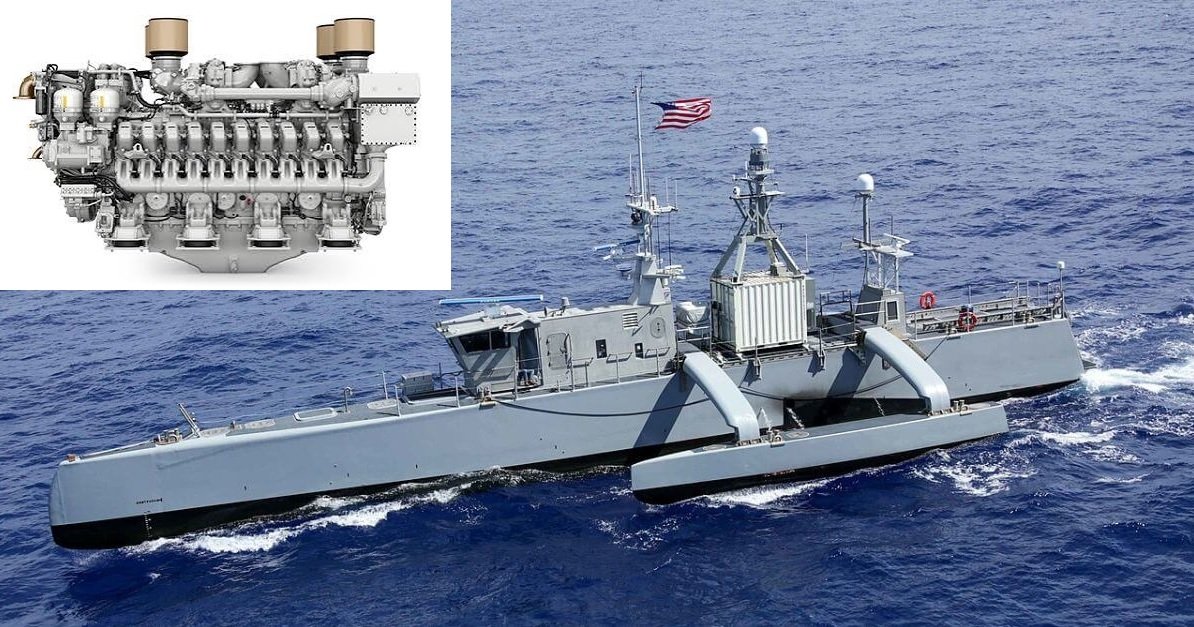
U.S
WASHINGTON, — Rolls-Royce has received U.S. Navy certification for its mtu Series 4000 and Series 2000 marine engines, clearing the engines for use in autonomous naval vessel operations. The certification supports the U.S. Navy’s effort to expand its unmanned maritime fleet with vessels capable of operating for extended periods without onboard crews or routine maintenance. The certification is based on requirements set out in the National Defense Authorization Act (NDAA) for unmanned systems. Under the requirements, qualifying propulsion systems must complete demanding reliability and operational tests without human intervention and without preventive or corrective maintenance or repairs to their main propulsion, fuel and oil systems. Successful systems can support unmanned deployments of up to 30 days without maintenance personnel. Series 4000 completes 720-hour durability tests The mtu Series 4000 received certification after completing two 720-hour durability tests. The engine is certified for autonomous applications with up to 4,300 kW of propulsion power and up to 3,000 kWe of electrical generation. The Series 4000 is available in V8, V12, V16 and V20 configurations. The testing was intended to demonstrate that the propulsion system could maintain continuous operation for the required period without human intervention or maintenance. The U.S. Navy has previously conducted 720-hour demonstrations for unmanned vessel power systems. In one such test, an mtu 8V4000M24S completed a 720-hour demonstration without human intervention or preventive or corrective maintenance, making the tested engine model eligible for future use on unmanned surface vessel platforms. Series 2000 also receives certification The mtu Series 2000 was certified following extensive component testing and thousands of hours of field operation. The engine family is offered in V10, V12 and V16 configurations and provides up to 1,939 kW of propulsion power. One of the U.S. Navy’s existing unmanned vessels, Sea Hunter, is powered by two mtu 12V 2000 engines. According to Rolls-Royce, Sea Hunter has accumulated tens of thousands of operational hours since it was christened in 2016. The Navy deployed Sea Hunter and Seahawk earlier this year as its first dedicated division of unmanned surface vessels. The vessels form part of the Navy’s wider effort to develop and operate autonomous maritime systems. Certification covers more than engine durability The Navy’s approval process also includes validation of associated engine control systems, cybersecurity measures and safety-critical functions. These requirements are intended to support the safe and reliable operation of autonomous systems during maritime missions. For unmanned surface vessels, propulsion reliability is particularly important because extended autonomous missions reduce or eliminate the ability to carry onboard mechanics for routine maintenance. The certification therefore establishes that the certified engine systems meet the specified requirements for long-duration unmanned operation. Scott Hanson, Vice President of Governmental Sales at Rolls-Royce Power Systems in North America, said the certification demonstrates the reliability and technology of the mtu Series 4000 and Series 2000 marine propulsion systems. “The certification of our engines for unmanned operations further demonstrates the reliability and advanced technology of our mtu Series 4000 and 2000 marine propulsion systems,” Hanson said. Hanson also said the certification addresses the increasing importance of autonomous missions and the need for power systems capable of supporting long-endurance unmanned vessels. Rolls-Royce already supplies engines for U.S. unmanned systems The certification expands Rolls-Royce’s existing involvement in U.S. military unmanned platforms. In aviation, the company’s engines power the RQ-4 Global Hawk and MQ-4C Triton unmanned aircraft. Rolls-Royce has also supported test flights of the Navy’s MQ-25A Stingray, which uses the company’s AE 3007N engine. During testing, the unmanned aircraft autonomously completed taxiing, take-off, flight manoeuvres and landing. The new maritime certification gives the U.S. Navy additional certified propulsion options for autonomous vessel applications. It also reflects the increasing importance of propulsion systems that can operate reliably for long periods without onboard maintenance crews.
Read More → Posted on 2026-09-02 13:54:37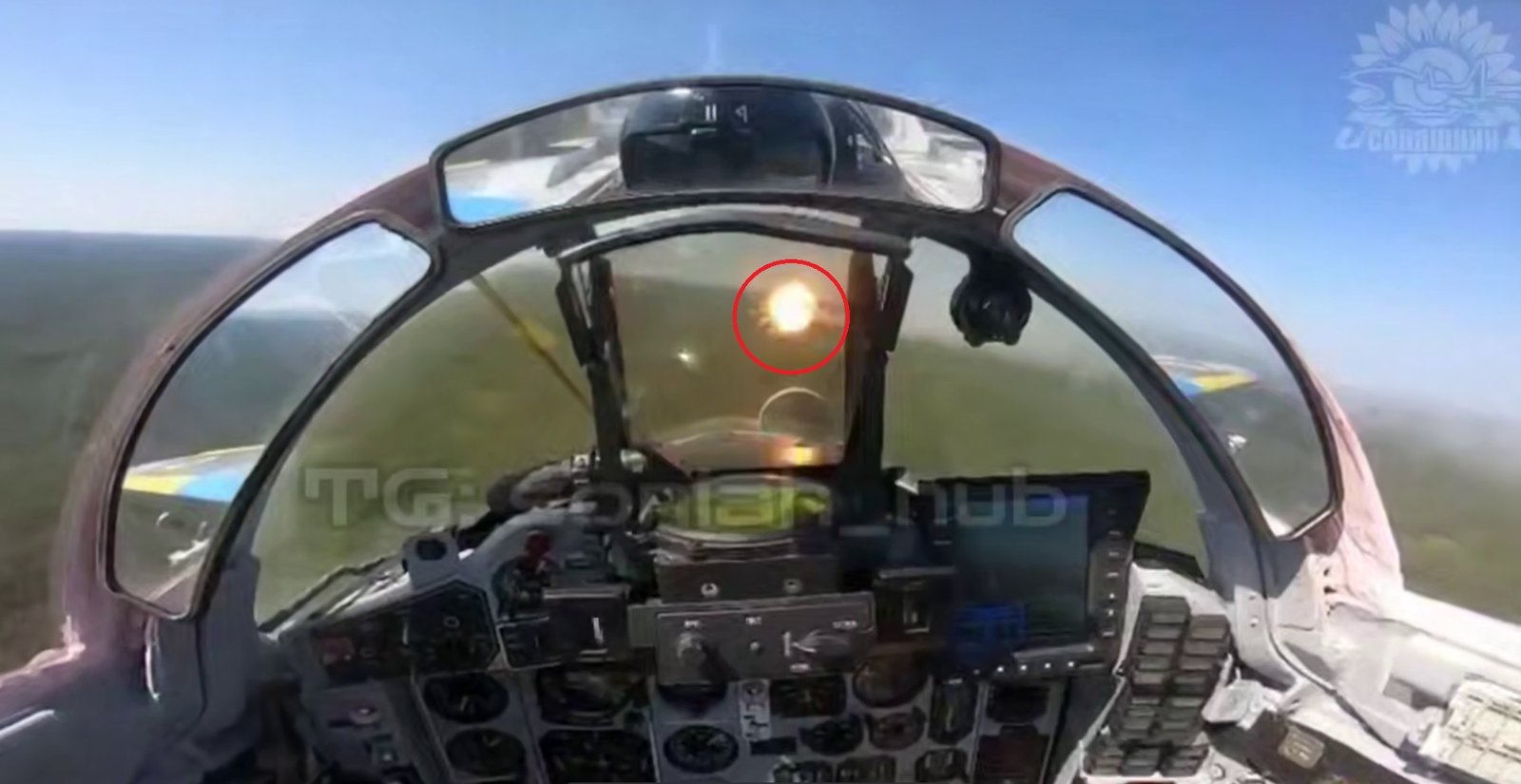
World
KYIV, Ukraine, — A Ukrainian Air Force MiG-29MU1 fighter jet reportedly intercepted and destroyed a Russian S8000 Banderol lightweight cruise missile while flying at extremely low altitude. The fighter used an R-60 short-range air-to-air missile during the engagement. The aviation-focused Telegram channel Sonyashnyk reported the incident and published video footage of the interception. The low-altitude engagement required rapid target acquisition, precise maneuvering and quick execution by the pilot. R-60 Modernization The R-60, a Soviet lightweight guided air-to-air missile, entered service in 1973. It uses an infrared seeker and was designed for short-range attacks against maneuvering aircraft and helicopters. The missile weighs about 44 kg, carries a 3–3.5 kg high-explosive fragmentation warhead and reaches approximately Mach 2.5. Its practical range is generally a few kilometers, with published figures of up to about 8 km under favorable high-altitude conditions. Before Russia's full-scale invasion, Ukraine considered the R-60 largely obsolete because newer R-73 missiles were available. Continued Russian attacks using cruise missiles and Shahed/Geran-2 drones, however, have increased demand for modern interceptors. Ukraine subsequently began modernizing remaining R-60 missiles. In November 2025, Ihor Fedirko, executive director of the Ukrainian Council of Defense Industry, said the work involved replacing legacy analog components with digital systems and improving infrared seeker sensitivity. Some Ukrainian companies have reported approximately a tenfold increase in sensitivity for certain variants. The missiles have also been adapted for possible use from ground-based launchers, with the modernization described as a temporary way to return aging weapons to service. S8000 Banderol The S8000 Banderol was developed and manufactured by Russian JSC Kronstadt and formally introduced in 2025. Russian forces have increasingly used the missile against Ukrainian cities as production expands. The Banderol has a cruising speed of 520–560 km/h and a maximum speed of 620–650 km/h. When launched from airborne platforms, it has a reported range of up to 500 km. Its OFBCh-150 high-explosive fragmentation warhead weighs 114.3 kg, including 49.5 kg of explosives. The weapon has primarily been associated with launches from the Kronshtadt Orion UAV and can also be integrated with Mi-28 helicopters. Ground-based launchers have also been observed in recent operations. The Banderol has been described as a hybrid system combining characteristics of a cruise missile and loitering munition. Its low-altitude flight profile can complicate detection and interception by some ground-based air-defense systems. Ukrainian reports also indicate that the weapon uses commercially available foreign components, including a Chinese turbojet engine. The reported interception highlights Ukraine's continued use of modernized Soviet-era fighters and older air-to-air missiles as part of its air-defense efforts against Russia's evolving missile and drone threats.
Read More → Posted on 2026-09-02 14:05:00
U.S
WASHINGTON, — The U.S. Department of War has expanded its GenAI.mil enterprise artificial intelligence platform by adding OpenAI’s ChatGPT Mil and Starshield AI’s Grok for Government. The two systems join Google’s Gemini, which has served as the platform’s foundational AI model since GenAI.mil launched in December 2025. Secure AI Platform for Department Personnel GenAI.mil was created to provide military and civilian personnel with access to commercial frontier AI models in a government-secured environment. ChatGPT Mil, Grok for Government and Gemini are all accredited for Impact Level 5 (IL5), allowing the systems to process Controlled Unclassified Information (CUI). The department is providing live and on-demand training at no cost for all three AI platforms. Having multiple models also allows personnel to compare their responses and obtain additional opinions when working on complex tasks, while reducing dependence on a single AI vendor. ChatGPT Mil for Document-Based Work ChatGPT Mil provides features including chat, file handling, projects and custom GPTs. The department said it is intended for document-heavy unclassified tasks such as planning, policy work, logistics and administration. The system is designed to support the department’s workforce of more than three million military and civilian personnel. Grok for Government Adds Reasoning Tools Grok for Government focuses on deep-thinking inference and adaptive reasoning. It provides Auto, Fast and Expert modes, along with customizable workspaces and persistent projects. The system also includes reusable playbooks, which are designed to capture, standardize and scale institutional knowledge. The department identified potential uses including acquisition market research and supply-chain management. More Than 1.7 Million Users GenAI.mil has already recorded significant adoption. Since its launch in December 2025, more than 1.7 million unique users have accessed the platform from a department workforce of more than three million military personnel, civilian employees and contractors. Secretary of War Pete Hegseth has directed the workforce to incorporate AI into daily workflows, describing it as an important tool for improving efficiency and supporting missions. The addition of ChatGPT Mil and Grok for Government expands GenAI.mil to three major AI systems. The move is part of the department’s broader AI Acceleration Strategy, which aims to expand the use of frontier AI for administrative and operational support while maintaining security controls for sensitive unclassified information.
Read More → Posted on 2026-09-02 14:15:36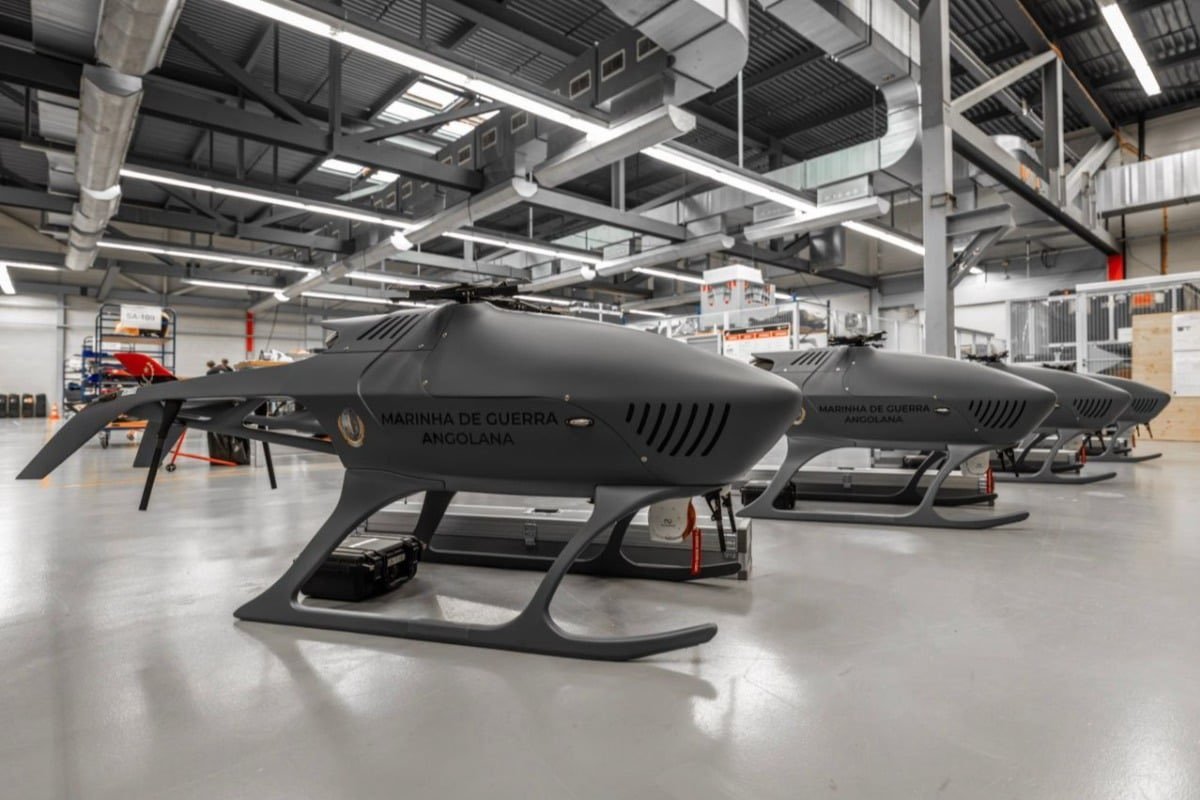
World
LUANDA, Angola — Swiss manufacturer ANAVIA has completed the on-site customer acceptance of six HT-100 Naval unmanned helicopters ordered by the Angolan Navy. The acceptance was conducted jointly with Abu Dhabi Ship Building (ADSB), a partner in the delivery process. Each aircraft underwent individual flight testing and system verification. Angolan Navy representatives checked every aircraft and its systems rather than accepting the six helicopters as a single batch. “This milestone shows our ability to deliver a complete system, closely aligned with our customer’s operational requirements,” said Ishan Sahgal, founder and co-CEO of ANAVIA. The delivered package includes the six unmanned helicopters, electro-optical and infrared (EO/IR) sensors, and maritime control stations. All components were tested together on site as an integrated system. Two Helicopters for Each Corvette The six HT-100 Naval helicopters will be assigned to three new BR71 MK II-class corvettes, with two aircraft per ship. They are intended to extend each vessel’s reconnaissance range and support maritime surveillance, anti-piracy operations and exclusive economic zone (EEZ) protection. The helicopters will also be fully integrated with each corvette’s combat management system. HT-100 Naval Specifications The HT-100 Naval is ANAVIA’s maritime version of the HT-100 unmanned helicopter. It uses a Flettner intermeshing rotor system with two counter-rotating main rotors and no tail rotor. ANAVIA says the design directs roughly 30 percent more power into useful lift, supporting greater endurance and payload compared with conventional single-rotor layouts. The aircraft has a 120-kg (265-lb) maximum takeoff weight and can carry up to 60 kg (132 lb) of payload. It is powered by a 15-kilowatt turbine engine consuming about 9 liters (2.4 gallons) of Jet A-1 fuel per hour. The HT-100 Naval has a flight endurance of up to six hours, a maximum mission range of 600 km (373 miles) and a maximum airspeed of 120 km/h. For shipboard operations, the aircraft uses a fully autonomous, radar-guided deck landing system that measures its position, velocity and attitude relative to the moving ship without relying on GPS. The system supports autonomous landings in conditions up to Sea State 3. A harpoon deck-securing system locks the aircraft to the deck after landing. The airframe uses corrosion-resistant carbon composite, while its electronics and connectors are sealed for continuous saltwater exposure. Emergency equipment includes flotation gear and an emergency locator transmitter. Part of Angola’s €1 Billion Naval Program The three BR71 MK II-class corvettes are part of Angola’s roughly €1 billion ($1.16 billion) naval modernization program. The first vessel, NRA Ekuikui II, was launched in Cherbourg, France, on March 4, 2026. The corvettes are about 70 meters long, have a top speed of 30 knots, a range of 2,500 nautical miles at 12 knots, and a crew of around 50. Construction involves French shipbuilder CMN Naval and ADSB under a technology-transfer arrangement. ANAVIA is headquartered in Bilten, Switzerland, with additional operations in Näfels. In late 2023, UAE-based EDGE Group acquired a 52 percent majority stake in ANAVIA. ADSB is part of the EDGE Group. Main Source : defence-blog
Read More → Posted on 2026-09-02 14:32:20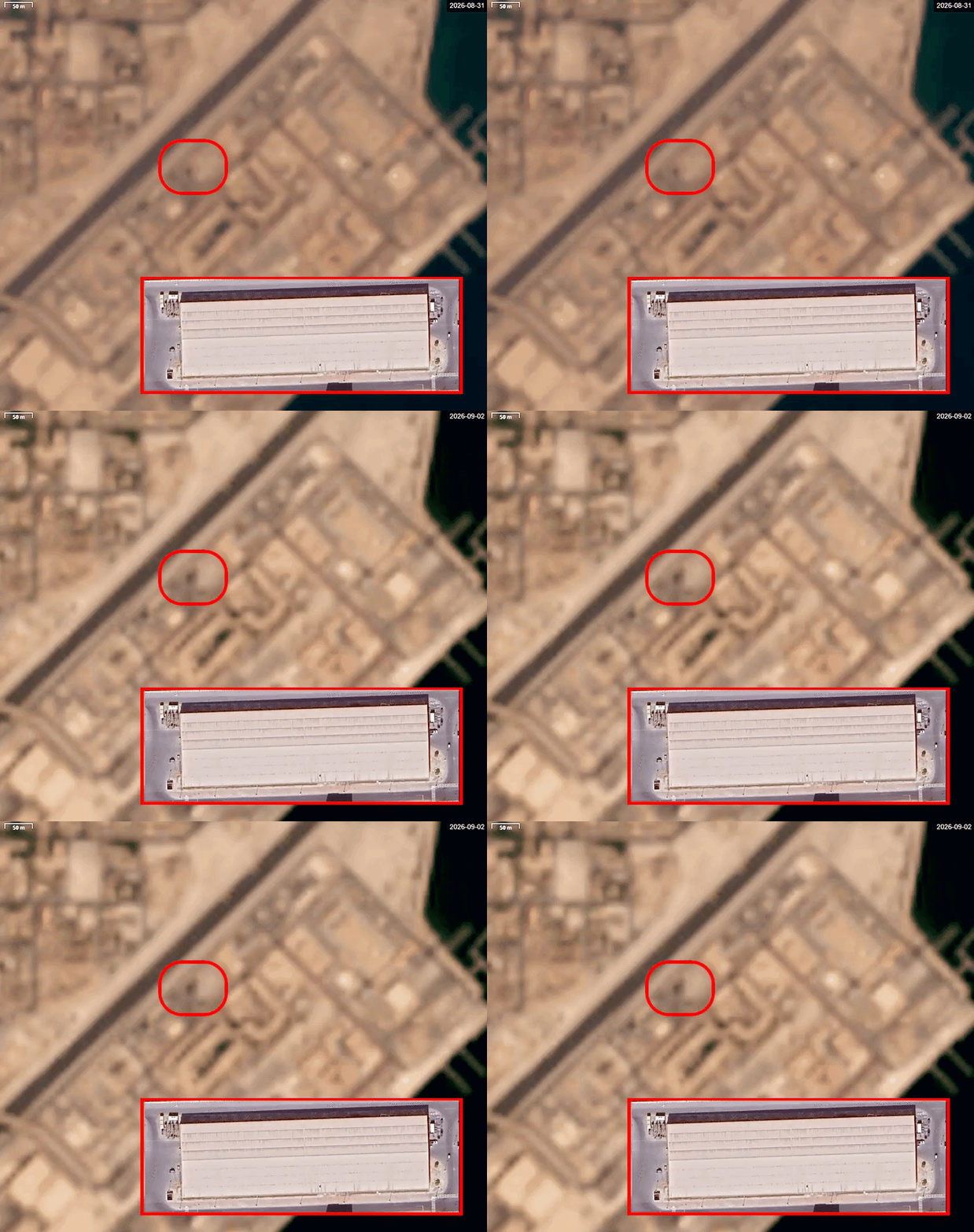
World
MANAMA, Bahrain — Satellite imagery and videos circulating online indicate possible new damage at the U.S. Navy’s Naval Support Activity Bahrain in Manama following Iranian claims of drone and missile attacks against U.S. military positions in the region. A satellite image dated September 2 shows what appears to be a fresh burn mark on a warehouse inside the U.S. naval installation at 26°12'34.38"N, 50°37'03.91"E. Open-source intelligence account @EGYOSINT highlighted the imagery and compared it with a satellite image from August 31, when the mark was reportedly not visible. 🛰🇧🇭🇺🇸 Iran's IRGC may have scored a new direct hit, possibly with OWA drones, on the U.S. Navy’s 5th Fleet base in Bahrain. A fresh burn scar is visible on a warehouse inside the base at 26°12'34.38"N, 50°37'03.91"E. https://t.co/mLoT1VFlPG pic.twitter.com/BpofdrrWON — Egypt's Intel Observer (@EGYOSINT) September 2, 2026 The imagery has not, however, independently established that the burn mark was caused by an Iranian drone strike. Additional high-resolution imagery or an official assessment would be required to determine the cause and extent of the damage. Naval Support Activity Bahrain is the home of the U.S. Naval Forces Central Command and U.S. Fifth Fleet. The U.S. Navy says the installation provides support to U.S. and coalition forces operating across the U.S. Central Command area. Video Claims to Show Shahed-136 Strike A separate video circulating online and reportedly recorded on the morning of September 2 has been described by Iranian state-linked sources and other accounts as showing a Shahed-136 one-way attack drone striking the U.S. Fifth Fleet facility in Manama. BREAKING: Video recorded this morning shows a Shahed-136 one-way attack drone of the IRGC Aerospace Force hitting the headquarters of the U.S. Navy’s Fifth Fleet in Manama, the capital of Bahrain, this morning. pic.twitter.com/aycSmAxEYY — Babak Taghvaee - The Crisis Watch (@BabakTaghvaee1) September 2, 2026 The footage has not been independently verified, and its precise location, timing and circumstances remain unconfirmed. Therefore, the video alone does not establish that a Shahed-136 struck the Fifth Fleet headquarters. The reported incident comes as Iran and the United States exchanged attacks across the region. Reuters reported on September 2 that Iran launched missile and drone attacks against U.S. assets in Bahrain, Jordan, Kuwait and Iraq following recent U.S. strikes against Iranian targets. Iran Claims Attacks on U.S. Positions in Bahrain Iranian military statements said Iranian forces carried out retaliatory attacks against U.S. military positions in the region. Iranian reports specifically said radar installations and locations used by U.S. forces at Sheikh Isa Air Base in Bahrain were targeted with explosive drones. These claims are separate from the satellite imagery showing the suspected burn mark at the Fifth Fleet installation in Manama. There is currently no official confirmation establishing that the two events are connected. Bahrain Says Air Defenses Intercepted Iranian Attacks The Bahrain Defence Force said on September 2 that its air-defense systems intercepted and destroyed a number of Iranian aerial attacks. Bahrain also said its military units remained at a high level of readiness. The Bahrain National Communication Centre similarly confirmed that the country's air defenses had intercepted and destroyed Iranian drones. Authorities urged the public to remain cautious and avoid approaching debris from intercepted attacks. Satellite Evidence Remains Under Review The September 2 satellite image provides a visual indication of a change at the identified warehouse compared with the August 31 imagery. However, satellite imagery showing a new burn scar does not by itself identify the weapon responsible or confirm when the damage occurred. Earlier satellite analysis cited in the supplied information had also identified damage to facilities at the Fifth Fleet installation following previous Iranian attacks in 2026. The latest claims therefore remain a combination of confirmed Iranian statements, confirmed Bahraini reports of intercepted attacks, and unverified open-source visual evidence. Further commercial satellite imagery or official statements from U.S. or Bahraini authorities would be needed to establish whether the Fifth Fleet facility was directly struck and to determine the extent of any damage or casualties. The U.S. Navy's official information confirms that Naval Support Activity Bahrain hosts the U.S. Fifth Fleet and U.S. Naval Forces Central Command, making the installation an important U.S. military facility in the region.
Read More → Posted on 2026-09-02 16:27:57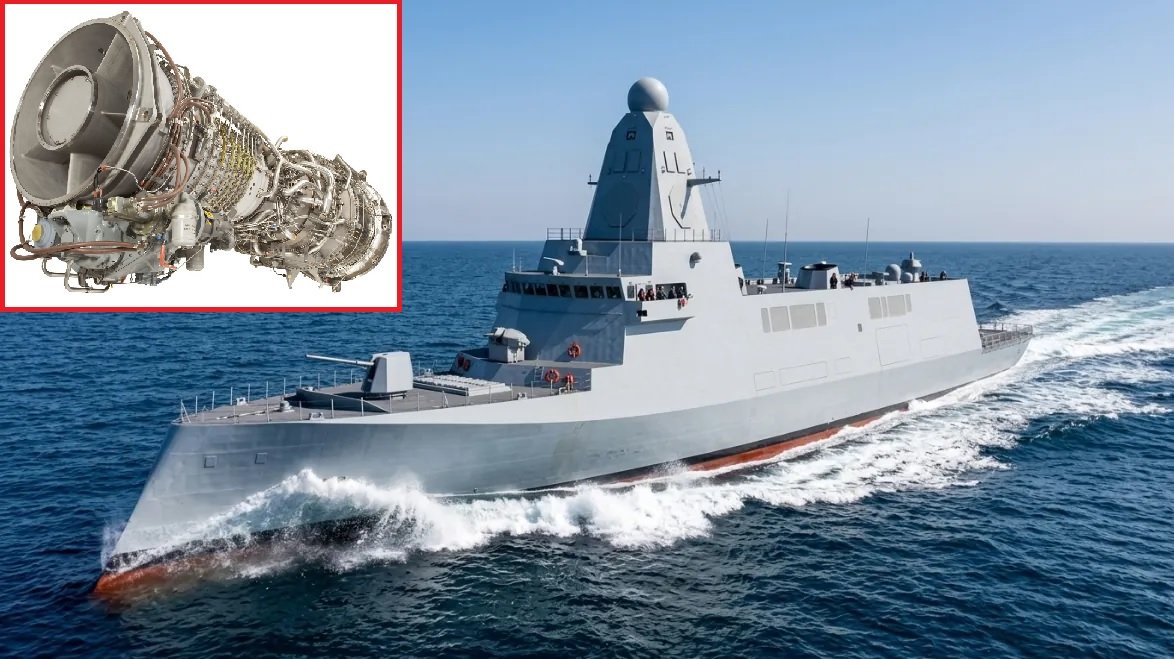
World
SEOUL, — The Republic of Korea Navy has selected GE Aerospace’s LM2500+G4 marine gas turbines to power six next-generation KDDX destroyers. GE Aerospace will supply 12 turbines, with two engines installed on each ship. Full-Electric Propulsion The LM2500+G4 turbines will be integrated into the KDDX’s full-electric propulsion system. The configuration is designed to improve fuel economy, operational flexibility, survivability and redundancy, while providing additional electrical power for future upgrades to sensors and weapons. The system is intended to meet the high electrical and operational requirements of the KDDX’s advanced combat systems. Advanced KDDX Systems The KDDX program covers six destroyers in the 6,000- to 7,000-ton class. Hanwha Ocean holds the contract for detailed design and construction of the lead ship, which is scheduled for delivery in 2032. The remaining five ships are planned for delivery by 2036, with the overall program valued at about 7.8 trillion won. The ships will feature an indigenous combat management system, a stealth-integrated dual-band AESA radar in an integrated mast, and Korean vertical launch systems capable of firing advanced anti-aircraft and land-attack missiles. South Korean Industrial Participation Hanwha Aerospace will manufacture various engine components and handle local assembly, testing and support of the turbines. NRTEC, a Busan-based manufacturing company, will produce lightweight composite enclosures for the engines. The arrangement expands local participation into propulsion-system integration and long-term support. Each composite enclosure reduces weight by more than 2,500 kilograms compared with the earlier steel design while maintaining the same footprint as the base LM2500 turbine. The enclosure is also designed to be 60 percent quieter and reduce exterior wall temperatures by 25 to 50 degrees Fahrenheit, improving conditions for crew working around the engines. LM2500+G4 Engine Introduced in 2012, the LM2500+G4 retains the two-spool architecture of the base LM2500. It incorporates a zero-stage high-pressure compressor blisk and other improvements that increase airflow by 33 percent and allow higher firing temperatures. The engine is already used on FREMM frigates operated by Italy, France, Egypt and Morocco. It has also been selected for the U.S. Navy’s Constellation-class frigates and the land-based test site supporting the future DDG(X) destroyer. Long-Standing ROK Navy Relationship The KDDX selection continues GE Aerospace’s long-standing relationship with the Republic of Korea Navy. The service has previously procured 163 GE Aerospace marine gas turbines for 95 ships, with Hanwha Aerospace playing a longstanding role in the local industrial supply chain. Asha Belarski, Vice President and General Manager of GE Aerospace’s Marine Engines & Systems, said the transition to full-electric propulsion represents a step toward the next generation of naval power and highlighted the company’s cooperation with South Korean industry and commitment to local manufacturing.
Read More → Posted on 2026-09-02 16:34:33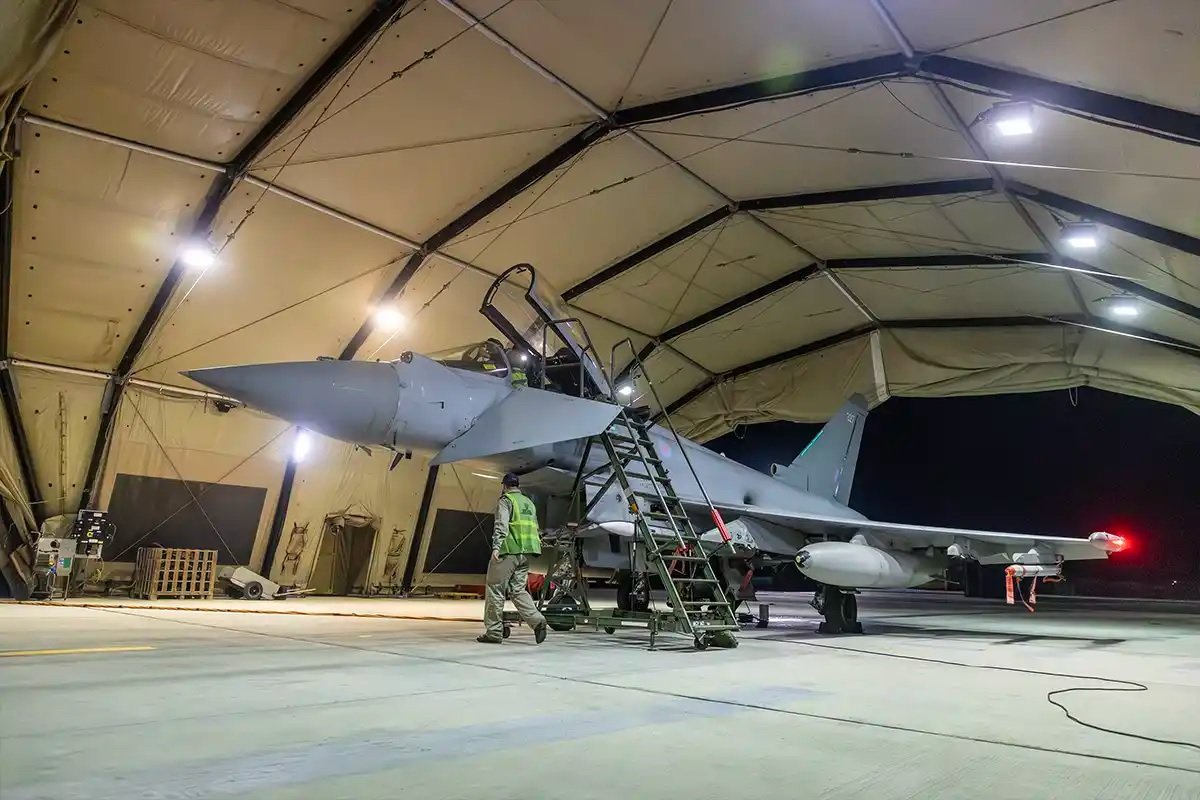
Europe
LONDON, — The United Kingdom is committing another £1.1 billion to upgrade and sustain its Eurofighter Typhoon fleet, ensuring the aircraft remains a major part of Royal Air Force (RAF) combat capability into the 2040s. The funding is included in the government's 2026 Defence Investment Plan, which provides £5.4 billion for the UK's 107 remaining Typhoon aircraft between the 2026/27 and 2029/30 financial years. The additional £1.1 billion is specifically linked to the Long Term Evolution programme and wider sustainment work. The investment covers improvements including the European Common Radar System (ECRS) Mk2 radar, communications, software, defensive aids and pilot helmet-mounted sights. The decision reverses an earlier January 2026 plan that focused upgrades on only 40 aircraft. Defence Readiness and Industry Minister Luke Pollard confirmed that the investment covers the full 107-aircraft fleet. Typhoon's air-defence role Typhoon and the F-35 remain central to Britain's Integrated Air and Missile Defence capability. RAF Typhoons have recently been involved in protecting UK sovereign bases in Cyprus and supporting Gulf partners against drone attacks launched by Iran and its proxies. The aircraft were also rapidly equipped with the Advanced Precision Kill Weapon System (APKWS) to provide a lower-cost option for engaging drones during sustained air-defence operations. The UK is separately investing £1.4 billion in the STRATUS missile programme, developed with France and Italy. The programme is intended to arm Typhoon aircraft and Royal Navy frigates and provide a major part of Britain's future long-range strike capability. It includes a UK-led low-observable subsonic variant and a high-speed variant. Supporting Typhoon exports The investment also supports Britain's aerospace industrial base and Typhoon export programme. In 2025, the UK reached an £8 billion agreement with Türkiye for 20 Typhoon aircraft, with options for additional aircraft. The deal is expected to support production and jobs across the UK supply chain, including at BAE Systems facilities in Warton and Samlesbury. Part of a wider air-power plan The Typhoon will operate alongside the F-35, GCAP and future autonomous combat aircraft as Britain develops what the government calls a “Next Generation Royal Air Force.” The four-year plan allocates £2.2 billion to the F-35 programme, £8.6 billion to GCAP with Italy and Japan, and £300 million to Collaborative Combat Aircraft. Overall, £27.8 billion is allocated to air-domain capabilities through 2029/30, with at least £70 billion of further air-domain investment planned between 2030 and 2035. The Ministry of Defence has stressed that longer-term figures represent current priorities rather than fixed commitments, meaning programmes can still be delayed, rescoped, reprioritised or cancelled. The £1.1 billion Typhoon commitment therefore provides continued support for the RAF's existing fighter capability while Britain develops its next generation of crewed and uncrewed combat aircraft.
Read More → Posted on 2026-09-02 16:41:10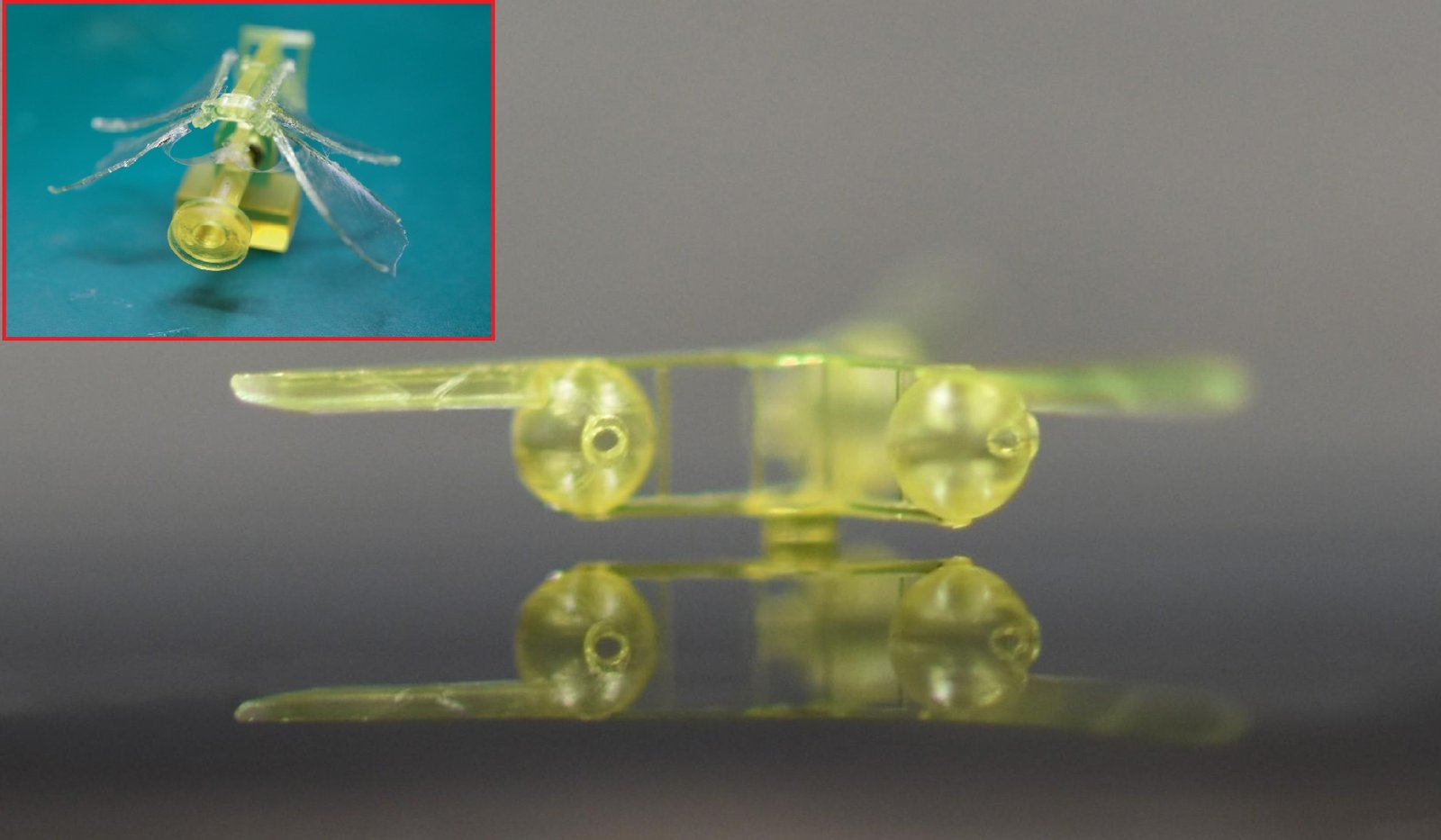
Space & Technology
LAUSANNE, Switzerland, — Engineers at the Swiss Federal Institute of Technology Lausanne (EPFL) have developed miniature robots and ultralight flying devices that generate thrust from sound waves without using onboard motors, batteries, electronics or conventional actuators. The research, published on August 12, 2026, in Science Advances, uses a well-known acoustic effect called Helmholtz resonance. The same phenomenon produces a tone when air is blown across the opening of an empty bottle. At a suitable frequency, air inside a cavity oscillates strongly. Researchers from EPFL’s MicroBioRobotic Systems (MICROBS) Laboratory, led by Selman Sakar, designed hollow acoustic cavities using 3D-printing techniques. When exposed to sound at their resonant frequency, the cavities produce a concentrated air jet. The difference between the outgoing and returning airflow generates directional thrust. Sound-controlled miniature boats At the centimetre scale, the team built small boats fitted with up to three acoustic resonators. Each cavity was tuned to a different audible frequency and positioned to produce thrust in a specific direction. By changing the frequency from a nearby speaker, researchers could activate individual resonators to move the boats forward or turn left or right. The boats were also able to navigate around obstacles and follow programmed paths. The researchers demonstrated the same principle using both airborne sound and structure-borne sound, where a transducer excites the cavity through physical contact. Microfliers use ultrasound The team then applied the technology at a much smaller scale. Using two-photon polymerisation, a high-resolution 3D nanoprinting technique, researchers produced ultralight devices called microfliers. Because the sound levels required for comparable operation with audible frequencies would be unsuitable for humans, the microfliers were designed to respond to ultrasound at around 40 kHz, which is above the human hearing range. One microflier weighed 150 micrograms and used three microscopic cavities to generate upward thrust. It achieved a thrust-to-weight ratio of 4.9, meaning the generated thrust was nearly five times its weight. A second design weighed 184 micrograms and combined three acoustic resonators with small blades. When activated by ultrasound, the blades reached speeds of up to 13,000 revolutions per minute, producing stable aerodynamic lift. No conventional motor components The approach replaces conventional miniature motor components with precisely shaped hollow cavities. The structures can be produced using materials including common 3D-printing plastics, rubber-like polymers and glass. The researchers say the design can be further miniaturised because it does not depend on the magnets, coils, shafts and other components normally found in small motors. The study also presents analytical models, numerical simulations and experimental results to establish design principles for acoustic resonators used as wireless actuators. Potential future applications EPFL researchers say multiple sound-responsive cavities could eventually be integrated into flexible structures, with different sections responding to different frequencies. Such designs could allow parts of a device to move, bend or vibrate selectively. Potential applications suggested by the researchers include soft robotic structures, contact-free manipulation of small objects and biomedical devices. The team also identified possible applications in medical technology, including components for heart stents. The current work establishes the basic operating and design principles. Further research is expected to focus on practical designs, improved control and navigation.
Read More → Posted on 2026-09-02 16:51:30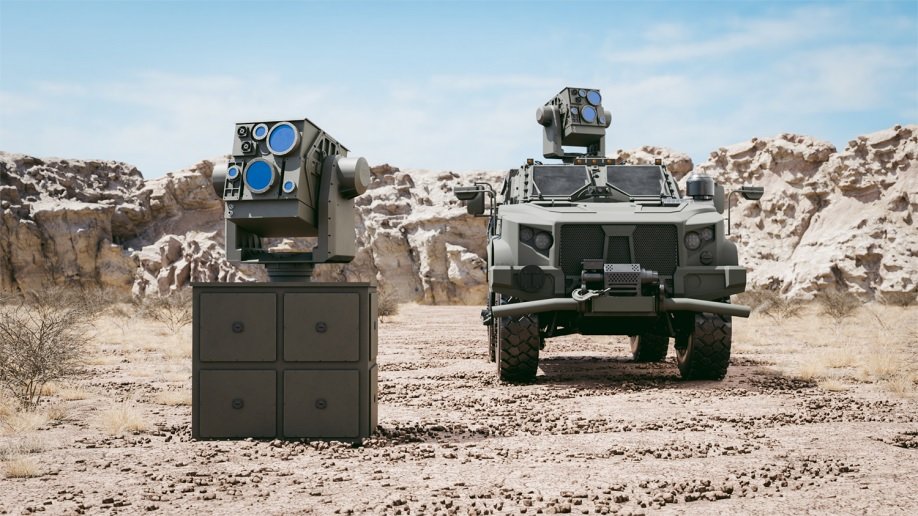
U.S
ARLINGTON, Va., — The U.S. Army has awarded AeroVironment a $464.8 million Other Transaction Agreement (OTA) to produce and deliver dozens of LOCUST X3 high-energy laser weapon systems under the Enduring-High Energy Laser (E-HEL) program. AeroVironment announced the award on September 2, saying it represents the first-ever production contract for directed-energy systems in U.S. history. The agreement moves the LOCUST system from prototype and testing activities into production and planned fielding. The contract was awarded through the Army’s Portfolio Acquisition Executive for Fires (PAE Fires). AeroVironment will deliver the systems over the next several years to support the Army’s multi-year fielding requirements, along with training and ongoing system support. 30-kilowatt laser for counter-drone missions The LOCUST X3 is a 30-kilowatt directed-energy system designed to counter Group 1 through Group 3 unmanned aircraft systems (UAS). AeroVironment describes it as a platform-agnostic system intended for integration with different vehicles and other configurations. The initial Army integration will include the Joint Light Tactical Vehicle (JLTV), while palletized configurations will also be available. AeroVironment said it will study the possibility of integrating the system with the Infantry Squad Vehicle (ISV). The company says LOCUST X3 uses its AV_Halo software for AI-enabled detection, tracking and precision targeting. The system is also designed to operate as an effector within AeroVironment’s Halo_Shield counter-UAS architecture, allowing integration with different sensors and command-and-control systems. Because the weapon uses electrical power rather than conventional interceptor ammunition, its engagements are not limited by a traditional missile magazine. AeroVironment has also highlighted the system's low cost per engagement and ability to provide persistent counter-UAS protection when sufficient power is available. Builds on earlier Army testing The E-HEL program builds on the Army’s Multi-Purpose High Energy Laser (AMP-HEL) prototypes and earlier LOCUST development. AeroVironment said LOCUST systems underwent testing at White Sands Missile Range with Joint Interagency Task Force 401 and the Army's fires acquisition office. According to the company, those tests demonstrated safe and effective counter-drone operations in U.S. airspace and supported a safety agreement between the Department of War and the Federal Aviation Administration for domestic use of the system. Earlier LOCUST systems have also been demonstrated aboard the U.S. Navy aircraft carrier USS George H.W. Bush. AeroVironment said the system successfully demonstrated its counter-UAS capability during those tests. Production expansion in New Mexico To support the new production requirement, AeroVironment is investing $30 million to expand its directed-energy manufacturing facility in Albuquerque, New Mexico. The company announced the investment in March 2026, with the expansion intended to increase manufacturing capacity for the LOCUST family. Wahid Nawabi, AeroVironment’s Chairman, President and CEO, said the award reflects the transition of directed energy from experimentation to an enduring, fielded capability following years of work with the U.S. Army. John Garrity, the company's Vice President of Directed Energy Systems, described E-HEL as a production-ready system based on lessons from earlier prototyping and operations. The Army contract marks a significant step in the U.S. effort to move high-energy laser weapons into regular military service, with the LOCUST X3 now moving toward multi-year production and fielding as part of the Army's layered counter-UAS capabilities.
Read More → Posted on 2026-09-03 12:20:01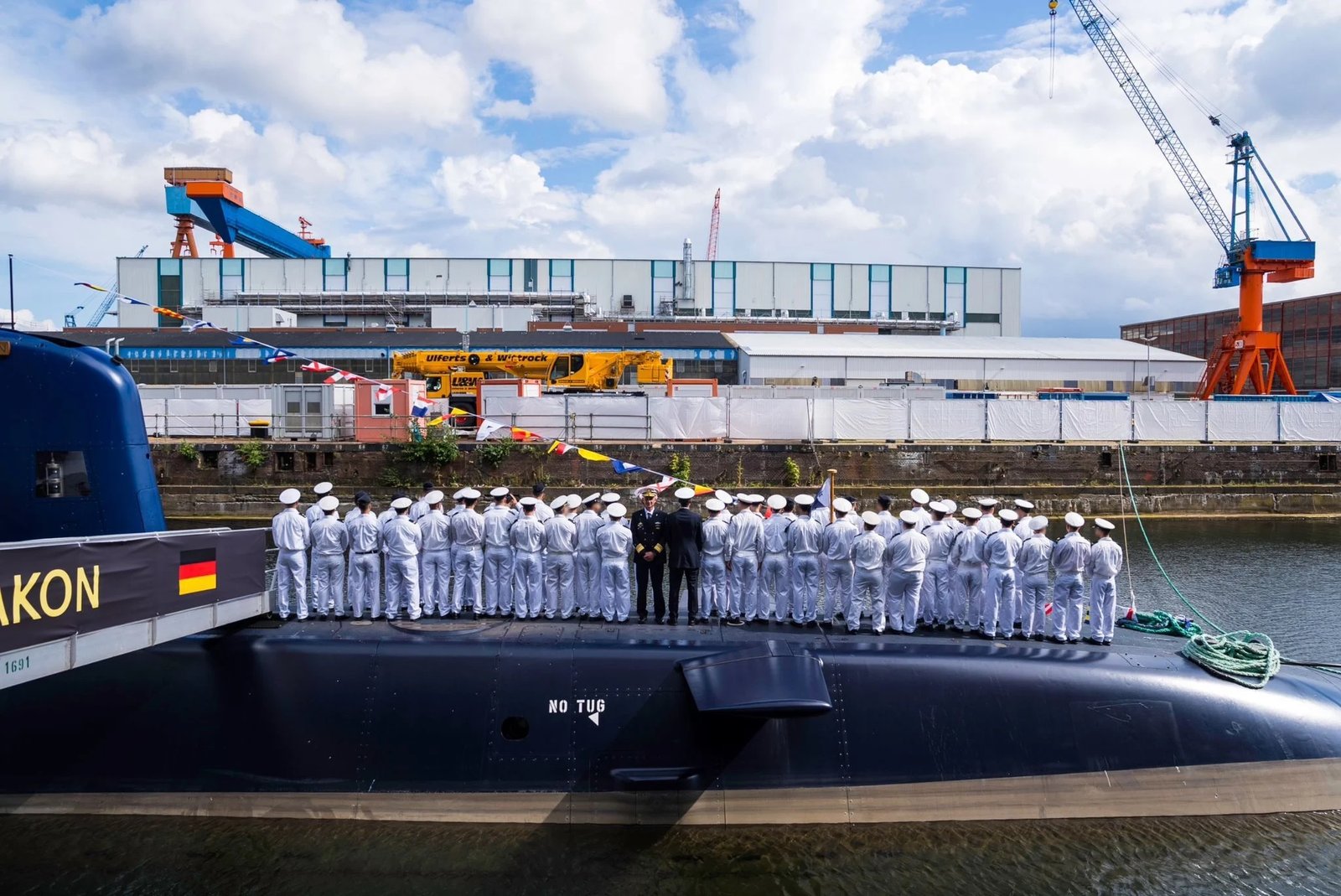
World
KIEL, Germany — Thyssenkrupp Marine Systems (TKMS) has completed the delivery process for INS Drakon, Israel’s sixth submarine, with the vessel leaving the company’s shipyard in Kiel on September 1 and beginning its voyage to Israel. The departure marks the completion of the Dolphin AIP submarine program, with Drakon being the third and final submarine in the series equipped with air-independent propulsion (AIP). The Israeli Ministry of Defense and Israel Defense Forces confirmed that the submarine is now sailing toward Israel. A farewell and departure ceremony was held at the TKMS facility in Kiel. The event was attended by senior Israeli and German officials, including Israeli Navy Commander Vice Adm. Eyal Harel, representatives of Israel’s Defense Ministry and Navy, Israel’s ambassador to Germany Ron Prosor, and German naval representatives. The Israeli flag was raised aboard Drakon as the submarine formally began its journey to Israel. The voyage was accompanied by a security operation involving Israeli and German security forces. After reaching Israel, Drakon is expected to undergo its induction process, with a formal ceremony planned at the Haifa Naval Base. Final Dolphin AIP submarine INS Drakon is the third and final Dolphin AIP submarine acquired by Israel. The two earlier vessels in this group are INS Tanin and INS Rahav. The AIP system allows a submarine to remain underwater for longer periods without depending on atmospheric air for propulsion. The Israeli Ministry of Defense and IDF said Drakon incorporates advanced technologies intended to increase the Navy's operational flexibility, range and endurance. Israeli Navy Commander Vice Adm. Eyal Harel said Drakon, together with the three future Dakar-class submarines, will form an important part of the future Submarine Flotilla and the Israeli Navy. TKMS CEO Oliver Burkhard described the Dolphin AIP program as a complex and challenging naval program and said the company would continue its cooperation with Israel through the Dakar-class submarine program. Enlarged sail and classified systems Drakon is understood from publicly available imagery and reporting to be approximately 73 meters long, making it longer than the earlier Dolphin II submarines Tanin and Rahav. Its submerged displacement has been estimated at approximately 2,400 tons. One of the most visible differences is its substantially enlarged sail. However, Israel and TKMS have not publicly confirmed the specific systems housed within this additional space. Some open-source analysis has suggested that the enlarged sail could provide space for additional mission systems, including possible vertical launch arrangements, unmanned underwater vehicles, sensors or equipment associated with special operations. These remain unconfirmed and should not be treated as the submarine's officially disclosed configuration. The submarine is equipped with 10 bow torpedo tubes, comprising six 533 mm tubes and four larger 650 mm tubes. Exact details of its weapons and other classified systems have not been publicly disclosed. Earlier Israeli Dolphin-class submarines have been reported to possess the ability to launch submarine-launched cruise missiles through enlarged torpedo tubes, but the specific missile configuration of INS Drakon has not been officially confirmed. Transition to the Dakar class The delivery of Drakon also marks the transition toward Israel's next generation of submarines. Israel is developing the Dakar class, with three submarines planned. Construction of the first Dakar-class submarine has already begun, and Israel has described the class as an important part of the future Submarine Flotilla. The long-standing German-Israeli naval partnership has produced several generations of Israeli submarines. TKMS and Israel are continuing this cooperation through the Dakar program. With Drakon now sailing from Germany to Israel, the Dolphin AIP program has reached its final stage, while preparations continue for the next generation of Israeli submarines.
Read More → Posted on 2026-09-03 12:26:07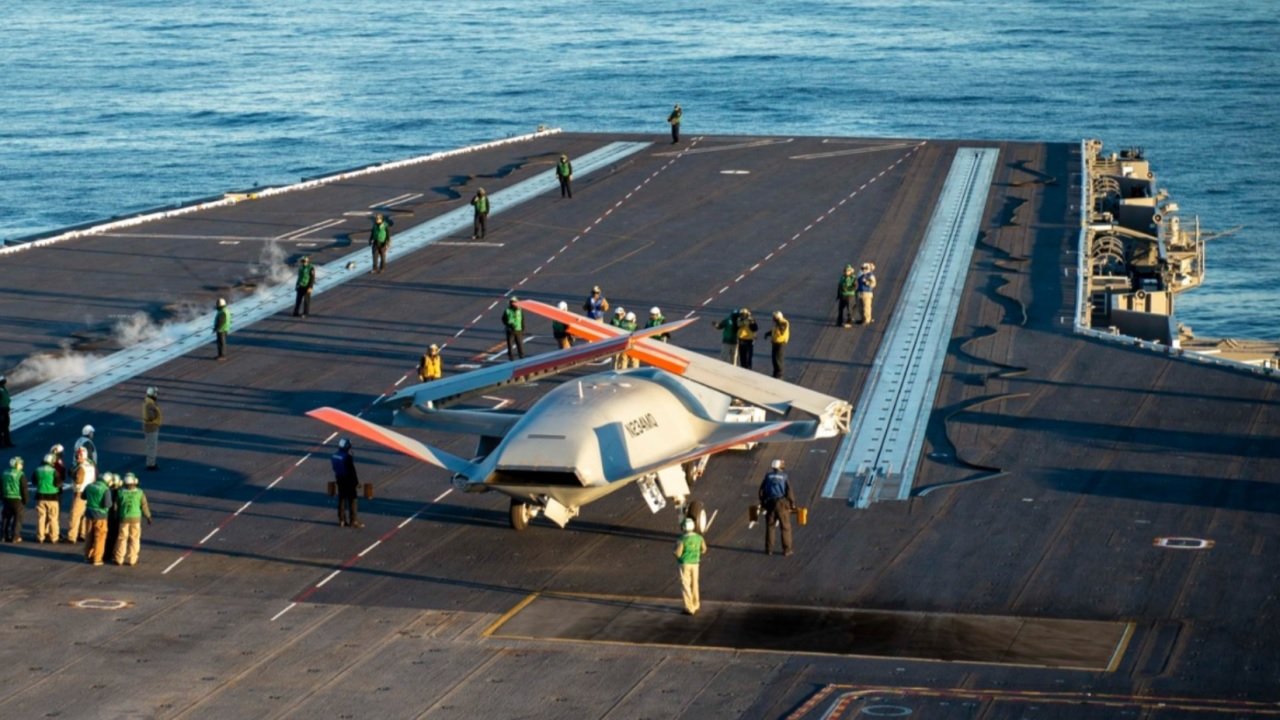
U.S
PATUXENT RIVER, Md., — The U.S. Navy has formally started the development process for its first carrier-based Collaborative Combat Aircraft (CCA), issuing a Request for Information (RFI) to industry on August 31, 2026. The RFI, issued by Naval Air Systems Command (NAVAIR) through the Future Advanced Capability Program Office (PMA-228), seeks proposals for the CCA Increment 1 Prototype Project. The Navy wants an affordable, weaponized, extended-range autonomous unmanned aircraft that can operate alongside the F/A-18E/F Super Hornet and F-35C Lightning II. The Navy plans to use the CCA to increase the number of aircraft available to carrier air wings and assign higher-risk or longer-range missions to uncrewed aircraft. Planned roles include forward sensing, electronic warfare and carrying additional weapons. Development timeline and cost The Navy is seeking two fully functional prototypes. The first flight is expected within 24 months of a contract award, with shore-based carrier certification completed within three years. Industry responses are due by September 18, 2026, followed by an industry briefing on September 22 in California, Maryland. The Navy is considering Other Transaction Authority for the potential prototype project. The RFI is for market research and does not commit the government to an award. The targeted unit cost is approximately $30 million. Companies must provide manufacturing and supply-chain plans showing how the aircraft could meet the cost target at scale. Carrier integration and weapons The aircraft must be compact enough to operate within the existing deck, elevator and hangar constraints of aircraft carriers, with a footprint comparable to an existing F/A-18E/F Super Hornet. It must conduct catapult launches and arrested recoveries from both Gerald R. Ford-class and Nimitz-class aircraft carriers, operate safely in conditions up to Sea State 5, and use standard shipboard tools and logistics. The Navy wants the aircraft to use the existing Joint Precision Approach and Landing System (JPALS) and the MD-5 Unmanned Carrier Aviation Mission Control System, which is used for the MQ-25 Stingray. Commercial off-the-shelf components that are not initially marinized are permitted if manufacturers provide a clear plan to make them suitable for long-term maritime operations. The CCA must be capable of carrying up to four externally mounted 2,500-pound-class weapons, providing an external weapons payload of about 10,000 pounds. Designs without internal weapons bays are acceptable, allowing the Navy to prioritize affordability and faster development over maximum stealth. Wider Navy and international efforts The program follows earlier Navy work on autonomous aircraft and manned-unmanned teaming. The Navy has also continued development of the MQ-25 Stingray, while the C-2A Greyhound has completed its service and the CMV-22B Osprey has taken over the Carrier Onboard Delivery mission. Congress is also considering multi-year procurement authority for additional E-2D Advanced Hawkeyes. The Navy's CCA effort comes as the service continues work on its future carrier air wing and the F/A-XX sixth-generation fighter program. The U.S. Air Force is also advancing its CCA program, including flight testing of the YFQ-42A. Similar efforts are underway in Europe. France issued an RFI in June 2026 for a carrier-capable collaborative combat UAV intended to operate with the Rafale M F5 aboard its future PANG aircraft carrier. The UK's Royal Navy is advancing fixed-wing autonomous aircraft demonstrations under its Maritime Aviation Transformation (MATX) strategy and Project Vanquish, with a goal of developing a hybrid carrier air wing by 2040. The new RFI marks the Navy's formal move toward developing a carrier-based uncrewed combat aircraft designed to expand the size and operational reach of future carrier air wings while operating within existing carrier constraints.
Read More → Posted on 2026-09-03 13:19:52
India
NEW DELHI, — GE Aerospace has delivered three more F404-IN20 engines to Hindustan Aeronautics Limited (HAL) for India’s Tejas Mk1A fighter aircraft programme. The engines were delivered in August 2026, taking the total number of F404-IN20 engines delivered to HAL for the Tejas Mk1A programme to 10. The deliveries are part of a contract signed in 2021, under which GE Aerospace is to supply 99 F404-IN20 engines and associated support to HAL. The agreement is valued at around ₹5,375 crore (approximately $716 million). Engine deliveries have been slower than originally planned, affecting the pace of Tejas Mk1A production. GE Aerospace has been working to increase F404-IN20 production and address earlier supply-chain problems. The F404-IN20 is an uprated version of the F404 engine family and produces up to 85 kN (19,000 lbf) of afterburning thrust. It is equipped with a Full Authority Digital Engine Control (FADEC) system. The Indian Air Force has ordered 180 Tejas Mk1A aircraft from HAL. In November 2025, HAL also placed a follow-on order with GE Aerospace for 113 additional F404-IN20 engines to support a further 97 Tejas Mk1A aircraft, with deliveries scheduled from 2027 to 2032. The latest three-engine shipment is expected to support HAL’s efforts to maintain the Tejas Mk1A production schedule as GE continues to increase engine deliveries.
Read More → Posted on 2026-09-03 14:06:43
World
SEOUL, — South Korea’s government has submitted a 73.2777 trillion won ($51.4 billion) defense budget proposal for 2027 to the National Assembly. The proposal is 8.2 percent higher than the 2026 budget, marking the largest annual increase in about two decades and taking defense spending above 70 trillion won for the first time. The budget focuses on strengthening self-reliant defense capabilities, preparations for the transfer of wartime operational control (OPCON), military restructuring amid declining manpower, and the expansion of AI, unmanned systems, drones and counter-drone capabilities. Budget Breakdown Of the total, 50.0416 trillion won ($35.1 billion) is allocated to force operations, up 5.9 percent. Defense capability improvement receives 22.7112 trillion won ($15.9 billion), an increase of 13.8 percent, while military service administration receives 524.9 billion won ($368.2 million), up 1.4 percent. The defense capability improvement budget has increased by about 2.8 trillion won, the largest increase on record. Funding for OPCON preparations and self-reliant defense capabilities will rise 34.9 percent, from 9.0222 trillion won to 12.1744 trillion won. KF-21, L-SAM and Nuclear-Powered Submarine South Korea plans to accelerate key capabilities for responding to North Korea’s nuclear and missile threats, including medium-altitude reconnaissance UAVs (MUAVs) and long-range surface-to-air missiles (L-SAMs). Their deployment is planned to be brought forward by roughly one year, targeting late 2027 to 2028. The government will also expand KF-21 fighter mass production. Funding for the program will rise from about 1.4 trillion won to 3.3 trillion won, including around 150 billion won for follow-on production. For the first time, the budget also includes nearly 100 billion won for the initial phase of the Jang Bogo N nuclear-powered submarine project, covering initial design, facilities and related reviews. Military Restructuring and AI To address declining military-age population, the standing reserve force will expand from 3,700 to 7,000 personnel in 2027. Reserve-training compensation will increase from 68.8 billion won to 90.3 billion won. The government also plans to increase the monthly pay of entry-level staff sergeants to about 3 million won and use civilian personnel for selected non-combat duties, including facility management, snow removal and some garrison security functions. Funding for AI and manned-unmanned hybrid systems will increase 55.5 percent, from 496.8 billion won to 772.7 billion won. This includes 43 billion won for physical-AI demonstration projects involving transportation, garrison security and hazardous-material handling. Planned systems include AI-enabled border surveillance, unmanned ground sensors, explosive-detection and disposal robots, autonomous underwater mine detectors, unmanned surface vessels and multi-legged robots. Drone and Counter-Drone Capabilities Spending on drone and counter-drone systems will rise 18.8 percent, from 678.8 billion won to 806.1 billion won. The budget supports swarm-drone research, medium-range loitering munitions, tactical drones and reconnaissance systems. Funding to train 500,000 “drone warriors” will increase from 29.6 billion won to 77.1 billion won. South Korea will also expand border counter-drone capabilities, invest in Block-I laser anti-aircraft weapons and begin development of mobile Block-II laser systems. A new K-Blue UAS certification system will also be introduced to support rapid acquisition of quality-assured drones. Defense Technology and Industry The proposal includes 56.5 billion won for defense semiconductors, 9 billion won for advanced aviation propulsion and 12.1 billion won for high-power laser-based hard-kill technology. Funding for the K-Defense Startup Incubation program will increase from 5.4 billion won to 12.4 billion won. Support for defense innovation companies will rise from 65.9 billion won to 75.8 billion won. Military-technology demonstrations by small and medium-sized enterprises will receive 17 billion won, up from 7 billion won, while defense export support will rise from 51.2 billion won to 62.7 billion won. If approved by the National Assembly, the 2027 defense budget will represent approximately 2.33 percent of South Korea’s projected GDP, compared with 2.28 percent in 2026. The proposal will now undergo National Assembly deliberation.
Read More → Posted on 2026-09-03 14:20:02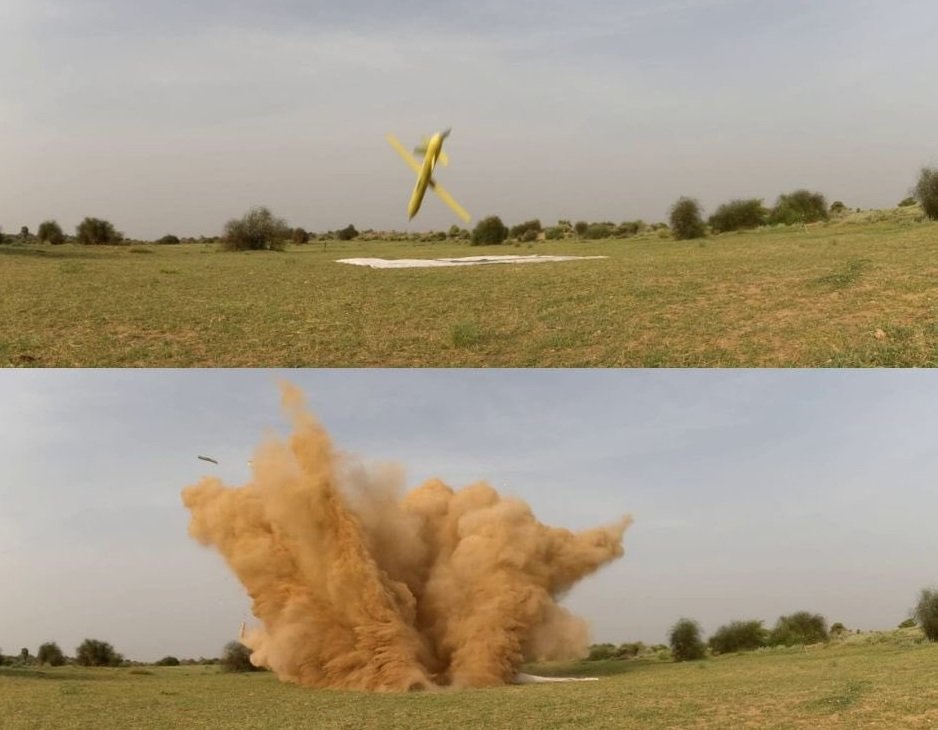
India
New Delhi, — The Indian Air Force (IAF) successfully conducted the drop trial of the indigenously designed and developed Khagantak-243 Long Range Glide Bomb (LRGB) on September 2. The IAF said the trial met all its stated objectives. The Khagantak-243 is a 300-kg-class stand-off precision-guided glide bomb jointly developed by Nagpur-based JSR Dynamics and Bharat Electronics Limited (BEL). JSR Dynamics is responsible for the weapon body and control systems, while BEL provides the electronics and guidance subsystems. The weapon has a cylindrical body, swivel-type mid-body glide wings and five aft control surfaces. It carries a 125 kg Mk-81 general-purpose blast-fragmentation warhead. Its mid-course guidance uses an inertial navigation system (INS) along with GNSS. The Khagantak-243 has a reported range of more than 140 km when released from an altitude of around 12,000 metres. Its glide design allows the launching aircraft to engage targets from a stand-off distance rather than flying directly over the target area. The trial was conducted from a Su-30MKI fighter aircraft, which has been identified as the initial integration platform. Future integration with other aircraft, including the MiG-29K and Mirage-2000, has also been reported. The IAF had earlier placed an order with BEL for an unspecified number of Khagantak-243 munitions. The exact quantity and contract value have not been disclosed. The successful trial adds another indigenous stand-off precision weapon to India's developing domestic air-launched weapons capability.
Read More → Posted on 2026-09-03 14:27:06
World
SOCHI, RUSSIA — A Ukrainian unmanned surface vessel (USV) struck the Russian-flagged multipurpose support vessel Nefrit at the seaport of Sochi in Russia’s Krasnodar Krai on the morning of September 3, according to the Ukrainian Navy. The Ukrainian Navy said a powerful explosion and smoke were recorded in the area of the vessel. Video footage circulated online showed an explosion near the pier where the vessel was located. Ukrinform and other Ukrainian media also reported smoke rising over the Sochi port following the attack. Sochi: footage of this morning’s USV raid on the seaport.The likely target was a Multipurpose Supply Vessel (MPSV) used to support offshore oil and gas operations. pic.twitter.com/Ndr5bRAYV5 — Exilenova+ (@Exilenova_plus) September 3, 2026 Nefrit was the reported target The Nefrit is a multipurpose support vessel used for offshore oil and gas operations, servicing offshore facilities, transporting cargo and personnel, and carrying out underwater engineering work, according to information released by the Ukrainian Navy. The vessel operates under the Russian flag and had previously operated in the Novorossiysk area and elsewhere in the Black Sea. The Ukrainian Navy described the vessel as part of Russia’s maritime and energy infrastructure and said the strike affected Russian logistics and military-economic infrastructure. Open-source analysis by Militarnyi and information from the monitoring channel Exilenova+ placed the strike near a pier in Sochi port. Footage and photographs published after the incident showed the explosion and its aftermath. Militarnyi also reported that a Russian Pantsir air-defense system was visible near one of the strike locations. However, available evidence does not establish whether the Pantsir system itself was deliberately targeted. Reports have also circulated about explosions elsewhere in the port area. Flight restrictions were imposed Russia temporarily restricted aircraft arrivals and departures at the Sochi and Gelendzhik airports on September 3. Rosaviatsiya said the restrictions were introduced to ensure flight safety. The restrictions were later lifted. The flight restrictions occurred amid reports of drone activity in the region. However, there is no publicly confirmed evidence establishing that aerial UAVs were used alongside the naval drone in the Sochi port attack. Publicly available reports have primarily identified the attack on Nefrit as being carried out by an unmanned surface vessel. Expanding Ukrainian USV operations in the Black Sea The Sochi strike adds to Ukraine’s recent use of unmanned surface vessels against Russian maritime targets and port infrastructure in the Black Sea. In the previous month, Ukrainian forces also carried out an attack on Russian naval and port facilities in Novorossiysk, reportedly involving Neptune missiles, Palianytsia turbojet drones and unmanned surface vessels. The September 3 attack demonstrates that Ukrainian naval drones continue to be used against Russian vessels and infrastructure along the Black Sea coast, including targets located away from the immediate front line.
Read More → Posted on 2026-09-03 14:51:55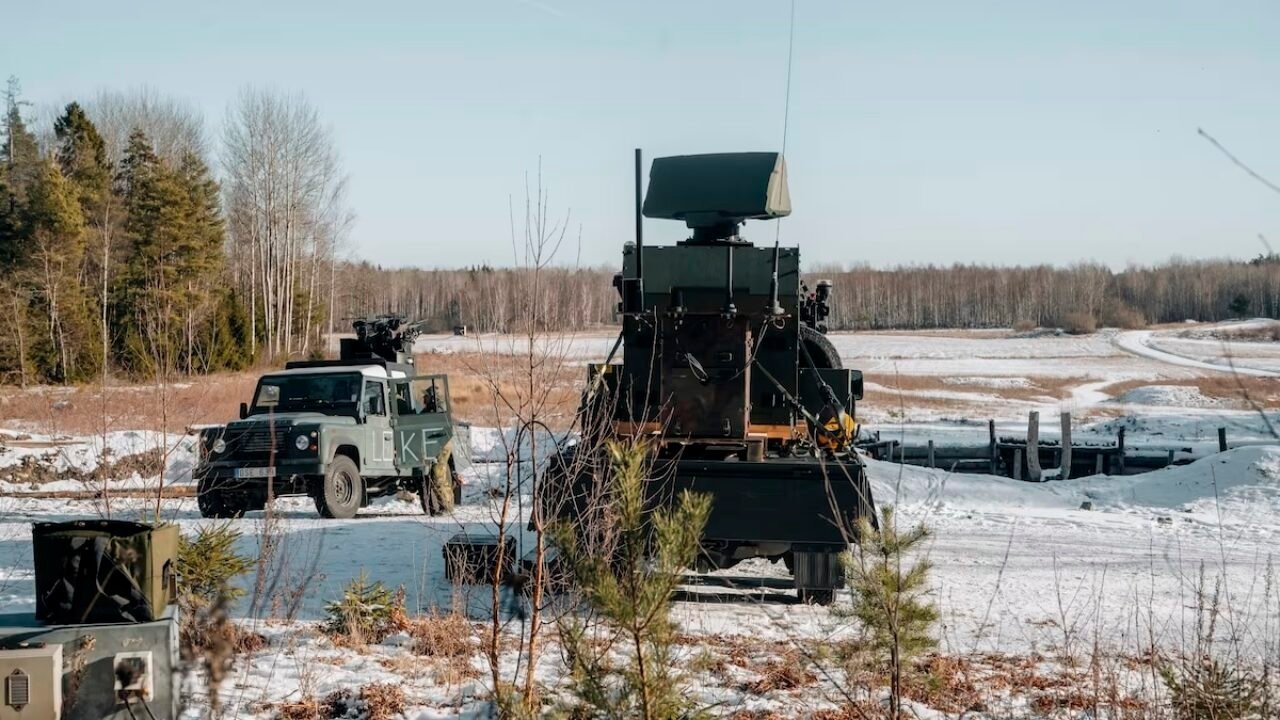
Europe
LONDON, — Saab UK has delivered its Giraffe 1X radar systems to the Royal Air Force (RAF), providing additional capability for detecting and tracking uncrewed aerial systems (UAS) as part of the UK’s wider counter-drone architecture. Saab confirmed the delivery on September 2, saying the procurement was driven by an operational requirement and followed several years of cooperation between the RAF and Saab. The relationship includes earlier capability development and operational experience with the radar system. The newly delivered radars will support the RAF’s broader counter-UAS activities, including the RAF Regiment’s role in protecting British and coalition personnel and facilities. Saab said this work includes deployed operations in the Middle East, where specialist teams provide protection against drone threats. Rapid delivery for an urgent requirement The latest delivery was completed after Saab mobilised its global production network while also using its manufacturing and support capabilities in the UK. A Royal Air Force spokesperson said the service was impressed by Saab’s ability to rapidly meet the Giraffe 1X requirement for counter-drone operations. The RAF said the equipment is considered important for reducing the risk to personnel from drone threats. Andy Fraser, Group Managing Director at Saab UK, said the delivery demonstrated cooperation between Saab’s UK manufacturing teams and colleagues across the wider company. He also highlighted the company’s UK industrial capability and its role in supplying equipment to British and coalition forces. Giraffe 1X radar capabilities The Giraffe 1X is a compact, lightweight 3D multi-mission radar designed for air surveillance and ground-based air defence applications. Saab states that the complete system weighs less than 150 kilograms. The radar can detect and track small aerial targets, including drones, and is designed to provide continuous air surveillance. It can also provide counter-rocket, artillery and mortar (C-RAM) sense-and-warn capability. Giraffe 1X can be deployed in fixed, mobile or deployable configurations and can be integrated onto different platforms. Saab describes it as a multi-mission system that can support force protection, weapon locating, ground-based air defence and counter-UAS operations. The radar is also designed to provide target information for wider air-defence systems rather than operating only as an isolated sensor. Its capabilities include detection and tracking of small and slow aerial targets, which are among the challenges addressed by modern counter-drone systems. UK production and earlier orders The latest delivery builds on the UK's existing Giraffe 1X programme. Saab has a Centre of Radar Excellence at Fareham in Hampshire, where the company manufactures the radar. In May 2026, Saab announced that its UK operation had completed production of its 100th Giraffe 1X system. In April 2026, Saab announced an order from the UK Ministry of Defence for Giraffe 1X systems worth approximately £24 million. Those systems were being produced at the Fareham facility, with the order funded through the UK-administered NATO Security Assistance and Training for Ukraine Trust Fund. The UK had also previously ordered Giraffe 1X radars from Saab. In 2023, Saab announced contracts for 11 Giraffe 1X radars, with a total order value of approximately SEK 264 million. A separate £1.8 million logistics-support contract was awarded to Saab UK in August 2026, according to reporting on the UK procurement. The contract covers logistics support for the Giraffe 1X fleet, including equipment, training and spares. Neither Saab's September delivery announcement nor the RAF statement specifies the number of Giraffe 1X systems delivered in the latest delivery. The value of the latest radar delivery has also not been disclosed. The delivery adds another element to the UK's counter-drone and force-protection capability, while Saab's existing production and support infrastructure in the UK provides the basis for supplying and sustaining the radar systems.
Read More → Posted on 2026-09-03 15:42:39
Europe
NOKIA, FINLAND — Finnish defence company Patria has completed the assembly of the first F135 fighter engine in Finland, marking the start of domestic F135 engine assembly for the country’s incoming F-35A fleet. The engine was completed at Patria’s new assembly and maintenance facility in Linnavuori, Nokia, and was presented during an event on September 3. Patria said its F-35 programme has now entered full-scale production. Patria and Pratt & Whitney, an RTX business, reached an agreement in February 2026 for the final assembly and inspection of F135 engines for Finland. Production at the Linnavuori facility is already underway and is planned to continue until 2030. The Linnavuori facility was completed and handed over to Patria in autumn 2025. It was built to meet the security requirements of the F-35 programme and Pratt & Whitney. The facility will initially be used for engine assembly before being adapted for maintenance activities. Assembly to transition into engine maintenance Under the framework agreement signed by Patria and Pratt & Whitney in 2024, Patria will assemble F135 engines and components during the 2025–2030 period. The facility will then transition to Maintenance, Repair, Overhaul and Upgrade (MRO&U) activities from 2030. Patria is expected to maintain and support Finland’s F135 engines at Linnavuori throughout the operational lifecycle of the Finnish F-35 fleet. The agreement is estimated to create approximately 50 direct jobs at Patria between 2025 and 2030. Petri Hepola, Patria’s Chief Programme Officer for F-35, said the completion of the first engine represents a significant milestone and the beginning of full-scale F135 engine assembly in Finland. Retired Colonel Henrik Elo, F-35 Programme Director for the Finnish Air Force, said the domestic production and future maintenance capability would strengthen Finland’s security of supply for its F-35 fleet. Jill Albertelli, President of Pratt & Whitney Military Engines, said the Finnish facility will contribute to the global F-35 sustainment network and expand propulsion capabilities in Finland. F-35A deliveries to begin in 2026 Finland’s first F-35A fighters are scheduled to arrive at the Lapland Air Wing in Rovaniemi at the end of 2026. The Linnavuori facility is therefore being established as part of Finland’s domestic engine support capability as the aircraft enter service. The F135 is the engine used by all F-35 variants. It produces approximately 43,000 pounds of thrust with afterburner, according to the information provided for the programme. Patria has also preserved a historical connection to Pratt & Whitney. A Second World War-era Pratt & Whitney engine recovered from a lake near Orivesi in Finland in 2025 has been conserved and placed on display at the Linnavuori facility. Patria is owned by the State of Finland (50.1%) and Kongsberg Defence & Aerospace (49.9%). The company serves as a strategic partner to the Finnish Defence Forces and is involved in the production and sustainment activities associated with Finland’s F-35 programme.
Read More → Posted on 2026-09-03 15:44:11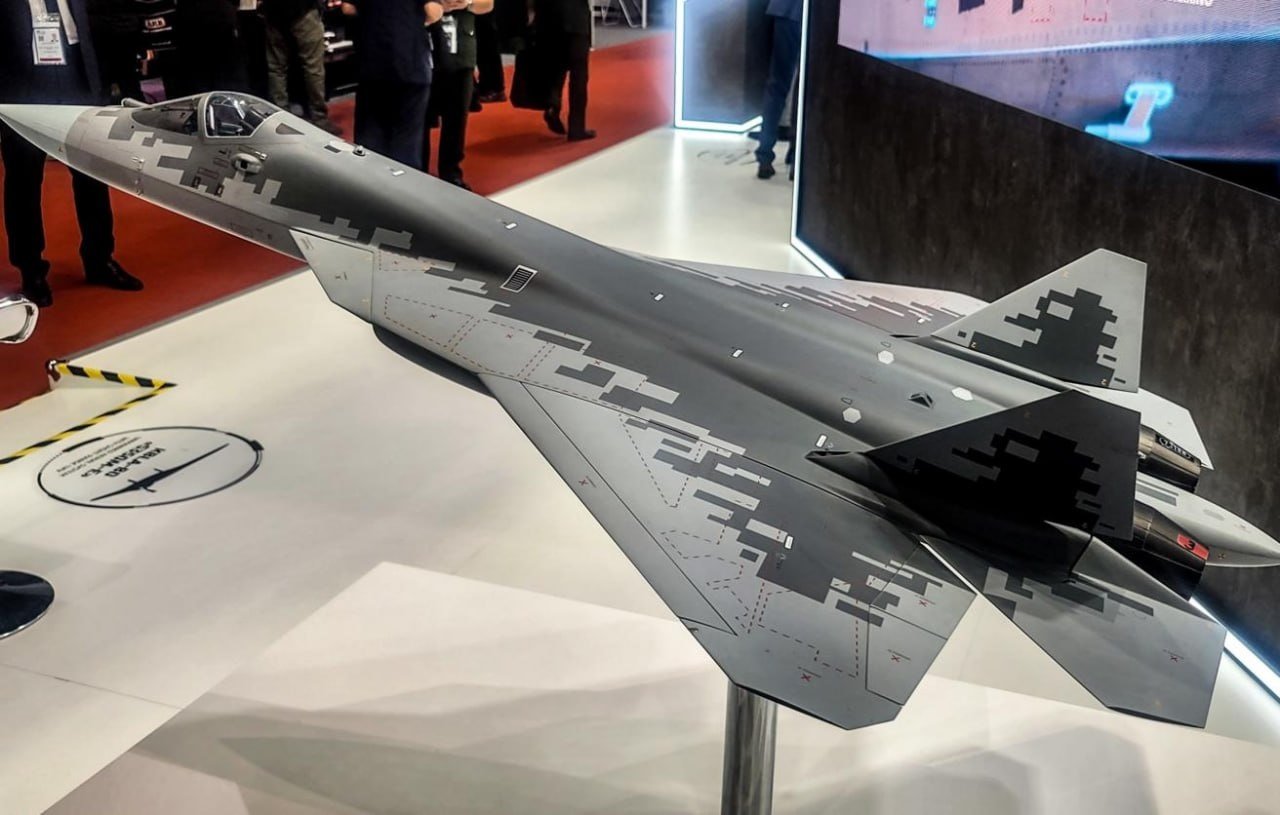
World
EL ALAMEIN, EGYPT, — Russia will showcase its Su-57E export fifth-generation fighter with previously undisclosed weaponry at the El Alamein International Airshow 2026 in Egypt from September 8 to 10. Russia’s state defence conglomerate Rostec said the Su-57E will be presented with “fundamentally new” weapons that have not previously been demonstrated publicly in Russia or abroad. The company has not disclosed the weapon’s designation, range, guidance system or intended targets. The aircraft will also participate in the flying programme, with an approximately eight-minute solo display scheduled for September 9 and 10. Rostec said the fighter will perform aerobatic manoeuvres as part of the programme. New Stealth Drones Rostec will also unveil a new family of low-observable unmanned platforms designed to be launched from fifth-generation fighter aircraft. The company said the drones have low visibility, long flight range and high speed. They use different types of wings and are being developed as universal platforms capable of performing a wide range of tasks. Rostec has not released their individual designations, dimensions, endurance, payload or launch mechanism. It has also not confirmed that the drones will actually be launched from a Su-57E during the Egyptian airshow. Russia has been developing manned-unmanned cooperation for the Su-57 programme. This includes the two-seat Su-57D prototype, which is intended to act as an airborne command post for controlling autonomous drone swarms and larger unmanned aircraft such as the S-70 Okhotnik. Su-57E Export Programme The Su-57E is the export version of Russia’s Su-57 multirole fifth-generation fighter, developed by United Aircraft Corporation (UAC), part of Rostec. Russia markets the aircraft for its reduced radar visibility, manoeuvrability and ability to use a wide range of air-to-air and air-to-surface weapons. Compatible weapons can be carried inside the aircraft’s internal weapons bays to help maintain its low-observable configuration. Russia has previously displayed several weapons for the Su-57E, including the RVV-MD2, RVV-SDM and RVV-BD air-to-air missiles, as well as the Kh-38MLE, Kh-69, Kh-58UShKE and Kh-35UE missiles and KAB-250LG-E and UPAB-1500B-E guided bombs. However, Rostec has not confirmed that any of these previously displayed weapons is the new weapon planned for El Alamein. Foreign Customers Rostec said deliveries of the Su-57E to unnamed foreign partners are already underway. Algeria has been widely reported as the first export customer following Algerian media reports and statements from Russian officials, although the two governments have not publicly disclosed the full contractual details or number of aircraft. Rosoboronexport also signed additional agreements involving the Su-57E at the DSA-2026 exhibition in Malaysia in April. The aircraft has previously appeared at international exhibitions in China, India and the United Arab Emirates, including Airshow China 2024, Aero India 2025 and the Dubai Airshow 2025. Egypt’s Previous Su-35 Deal The Su-57E presentation comes after Egypt’s earlier plans to purchase around 30 Russian Su-35 fighters were halted. The deal faced concerns over possible U.S. sanctions against countries purchasing Russian military equipment under the Countering America's Adversaries Through Sanctions Act. There is currently no official announcement that Egypt has ordered the Su-57E. Other Russian Systems Russia will also debut the Bison counter-drone system internationally at El Alamein. Developed by Rostec subsidiary High Precision Systems, Bison is designed to protect critical infrastructure from low-altitude unmanned aircraft. The system uses radar and electro-optical sensors to detect and track drones and automated 7.62 mm machine-gun mounts to engage them. Rosoboronexport is organising the unified Russian pavilion at the exhibition, which is expected to bring military delegations and defence-industry representatives from Africa and the Middle East. The main new elements of Russia’s presentation will be the previously undisclosed Su-57E weapon and the international debut of the new family of low-observable drones designed for launch from fifth-generation fighters.
Read More → Posted on 2026-09-03 15:55:50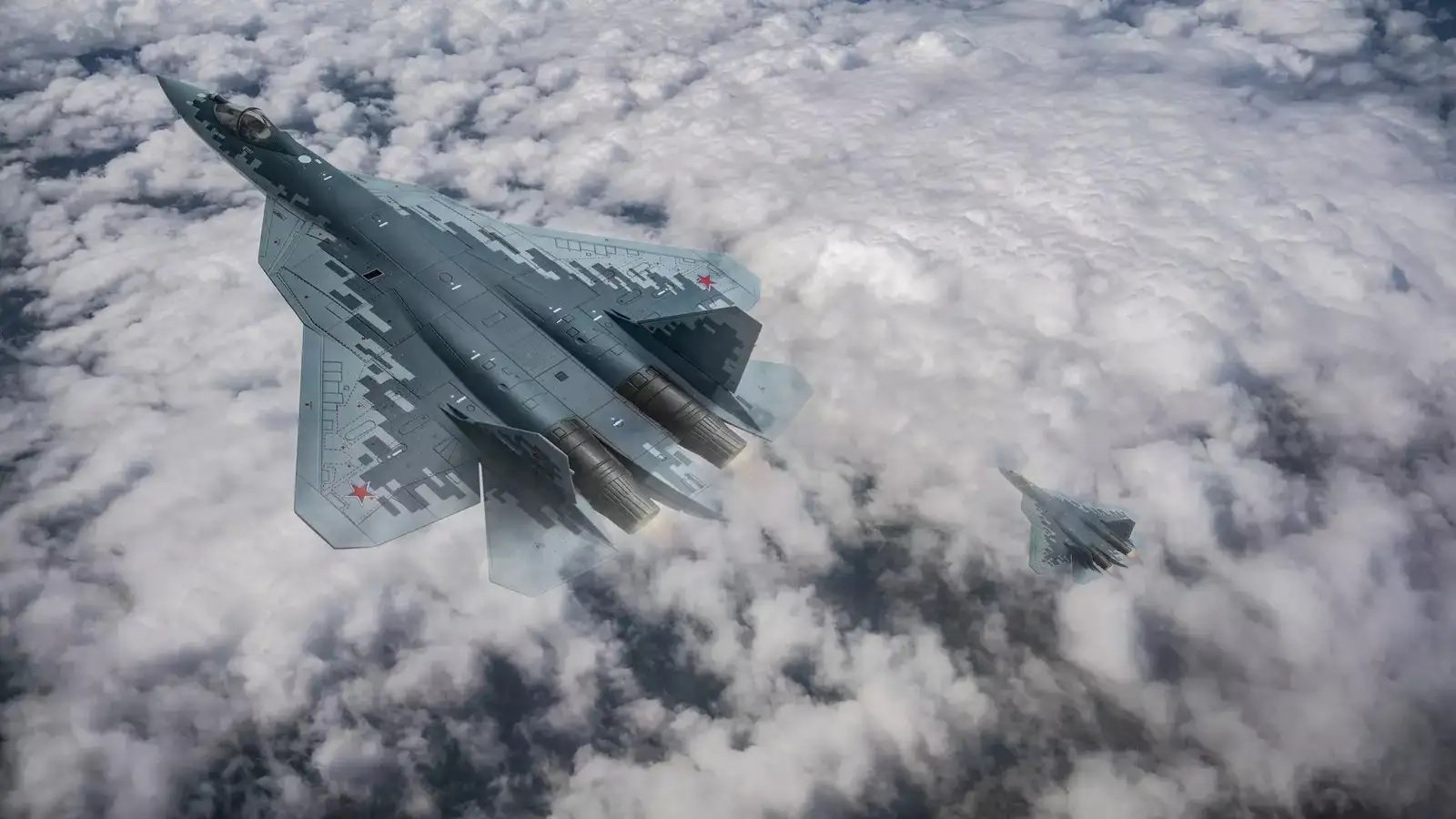
World
MOSCOW, — Russia’s state technology corporation Rostec reported that the powerplant of the Su-57 fifth-generation fighter can withstand internal temperatures approaching 2,000°C during extreme low-speed and high-angle maneuvers. Rostec reported that the capability supports the Su-57’s supermaneuverability, giving pilots additional options to rapidly change speed, direction and attitude during combat. The corporation linked this ability to potential missile-evasion maneuvers, although maneuverability alone cannot guarantee that an incoming missile will be defeated. Aero India demonstration Rostec cited a demonstration by Russian test pilot Sergey Bogdan at Aero India 2025 in Bengaluru as an example. During the flight at Yelahanka Air Force Station in February 2025, Bogdan performed a maneuver that brought the aircraft to an apparent standstill at an altitude of about 600 meters. According to Rostec, the engine’s internal temperature reached approximately 2,000°C during the maneuver, while the powerplant continued producing thrust and remained operational. Aero India 2025 was held from February 10 to 14, and United Aircraft Corporation had announced that the Su-57E would participate in the flying display. The 2,000°C figure refers to the internal temperature in the engine during the extreme flight regime, not the temperature of the entire engine. Jet engines already operate at very high temperatures in their combustion and turbine sections, requiring specialized materials and cooling systems to maintain reliable operation. Su-57 engine development The Su-57 program has used several propulsion systems during its development. Early production aircraft and prototypes were equipped with the AL-41F1, or Product 117, while Russia developed the newer Product 30, later associated with the AL-51F-1, specifically for the fighter. The Product 30 program was intended to provide improvements in thrust and fuel efficiency and support capabilities such as sustained supersonic flight without afterburner. However, publicly available information does not establish that the AL-51F-1 has replaced the AL-41F1 across the entire operational Su-57 fleet. Russia has also begun testing another engine, Product 177. Rostec and UAC announced in December 2025 that a Su-57 had completed its first flight with the new engine. Rostec reported that Product 177 produces 16,000 kgf of afterburning thrust, while also offering reduced fuel consumption and increased service-life characteristics. Role of thrust vectoring The Su-57 uses thrust-vectoring propulsion to help control the aircraft at high angles of attack and low speeds, when conventional aerodynamic control surfaces become less effective. This allows the fighter to perform rapid changes in attitude and direction. In combat, such maneuvers may complicate an incoming missile’s tracking solution, but their effectiveness depends on factors including the missile’s seeker, guidance system, launch conditions, distance and timing. Rostec has also promoted the Su-57’s low radar signature, advanced avionics and internal weapon bays as parts of its overall combat capability. Russian officials have claimed that the fighter has demonstrated effectiveness against Western-made air-defense systems in combat conditions; this remains a Russian claim rather than an independently established assessment. The latest statement therefore adds a specific technical claim to Russia’s continuing promotion of the Su-57: Rostec reported that the engine experienced an internal temperature of approximately 2,000°C during Sergey Bogdan’s extreme maneuver at Aero India 2025 and continued operating reliably.
Read More → Posted on 2026-09-03 16:07:42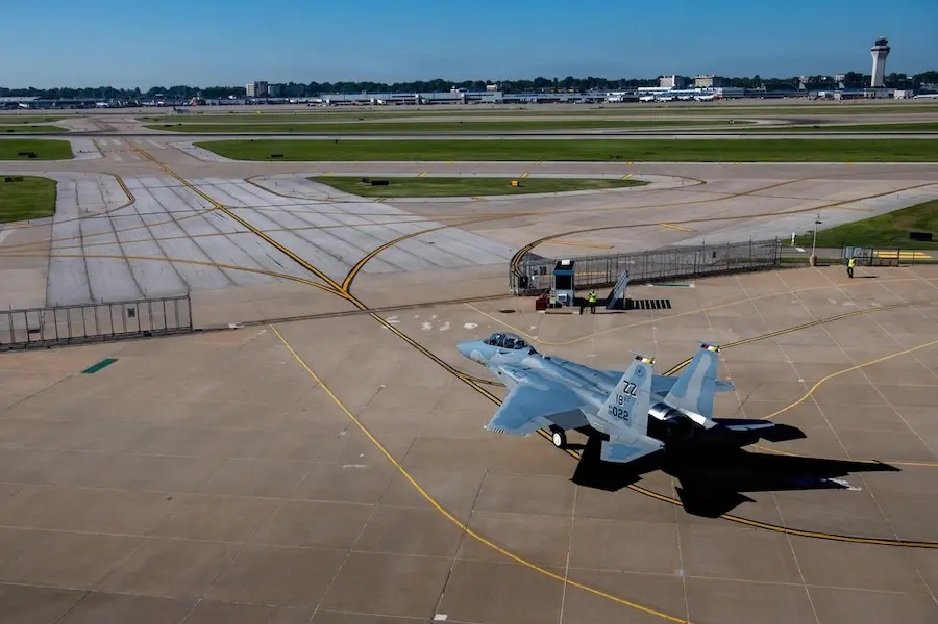
U.S
ST. LOUIS, Missouri — The first F-15EX Eagle II fighter designated for Kadena Air Base in Okinawa, Japan, departed Boeing’s facility in St. Louis on August 28, marking another step toward the U.S. Air Force’s permanent deployment of the aircraft to Japan. The aircraft departed for Portland Air National Guard Base in Oregon, where it will receive additional updates and preparations before eventually continuing its journey to Kadena. The Air Force has announced that F-15EX aircraft are scheduled to begin arriving at Kadena in fiscal year 2027. The F-15EX deployment is part of the U.S. Air Force’s broader modernization of the permanent fighter force at Kadena. The new aircraft will replace the base’s legacy F-15C/D fleet. Kadena is scheduled to receive 36 F-15EX aircraft, compared with the 48 F-15s previously associated with the base. The transition follows the retirement and withdrawal of Kadena’s older F-15C/D aircraft. Preparations Already Underway at Kadena Kadena personnel have already gained experience with the F-15EX ahead of the permanent deployment. In July 2025, two F-15EX aircraft from the 85th Test and Evaluation Squadron at Eglin Air Force Base, Florida, visited Kadena for integration and familiarization training with local units and joint partners. The F-15EX returned to Kadena on June 29, 2026, again supporting familiarization and integration activities. The deployment gave 18th Wing personnel additional opportunities to train with the aircraft and prepare for its long-term mission at the base. The 67th Fighter Squadron is planned to become Kadena’s first operational F-15EX unit. Its personnel have been involved in preparations to build the operational and technical knowledge needed to operate the aircraft. F-15EX Capabilities The F-15EX is the latest version of the F-15 family and incorporates modern avionics, digital fly-by-wire controls, an all-glass cockpit, modern mission systems and an open mission-systems architecture. Boeing also lists an advanced AESA radar and the Eagle Passive Active Warning Survivability System (EPAWSS) electronic-warfare suite. The aircraft is designed for both air-to-air and air-to-ground missions and provides a substantially larger weapons payload than many fighter aircraft. Boeing lists a maximum payload of 29,500 pounds, while the aircraft can carry up to 12 AIM-120 AMRAAMs, depending on configuration. The Air Force also views the F-15EX as a complement to fifth-generation fighters, providing additional weapons capacity, sensors and electronic-warfare capabilities. Second U.S. Location for Combat-Coded F-15EX Once the Kadena aircraft become operational, the base will become the second U.S. Air Force location with combat-coded F-15EX aircraft. The first is the Oregon Air National Guard’s 142nd Wing at Portland Air National Guard Base, which has already begun operating the Eagle II and conducting weapons training with the aircraft. Brig. Gen. John Gallemore, commander of the 18th Wing, described the latest movement as an important step toward bringing the aircraft to Kadena. “This is an important next step toward bringing the F-15EX home to Kadena,” Gallemore said. The permanent arrival of the F-15EX is expected to strengthen Kadena’s ability to generate combat-ready airpower while supporting continued training with U.S. allies and partners. The 18th Wing regularly conducts bilateral training with Japan Air Self-Defense Force (JASDF) F-15 units based at Naha Air Base. The Air Force says integrating the F-15EX into these activities will provide additional opportunities to improve interoperability between U.S. and Japanese forces. The departure of the first Kadena-bound F-15EX from Boeing is therefore the latest publicly announced milestone in the transition from Kadena’s legacy F-15C/D fleet to the F-15EX Eagle II. The aircraft’s next stop at Portland will precede its eventual movement to Japan, with deliveries to Kadena now scheduled to begin in fiscal year 2027.
Read More → Posted on 2026-09-03 16:31:35
World
KAZAN, — Russia has demonstrated a new unmanned system in which an unmanned boat and a fixed-wing unmanned aerial vehicle (UAV) operate together from a single control system at the 16th International Salon “Integrated Security” in Kazan. According to the manufacturer, the unmanned boat has an operating range of about 30 kilometers when operating independently. When the fixed-wing UAV is launched as part of the system, the boat’s effective operational range can increase to 300 kilometers. “All devices are interconnected and work together,” a company representative told TASS. The representative said the boat and UAV can be controlled from a single computer, allowing the different unmanned platforms to operate as one interconnected system. The manufacturer said the unmanned platforms are modular and can be equipped with different equipment depending on the mission. The company also develops robotic ground vehicles, expanding its range of unmanned systems across land, air and water. The manufacturer further said that the models displayed at the exhibition use secure communications and proprietary encryption. No additional technical specifications of the communications system were disclosed. The demonstration highlights the use of interconnected unmanned platforms for missions where an aerial system can work alongside a surface vessel. However, the manufacturer has not disclosed further details about the UAV’s endurance, speed, payload or the specific technical method through which the UAV enables the boat’s range to increase. Integrated Security 2026 in Kazan The unmanned boat-UAV system was presented as part of the 16th International Salon “Integrated Security,” which opened in Kazan on September 3 and will run through September 5 at the Kazan Expo International Exhibition Centre. This is the first time the salon has been held in Kazan, after previously being organized in the Moscow region. The event is organized around four areas: fire protection, infrastructure and industrial safety, airspace protection, and safety and rescue on water. According to Russia’s Ministry of Emergency Situations, the exhibition includes 84 models of new equipment and technology from EMERCOM of Russia, along with exhibits from more than 230 organizations. More than 30 events are included in the business programme. Russian Emergencies Minister Alexander Kurenkov inspected the exhibition on its opening day. His programme also includes meetings with representatives of foreign delegations. The exhibition also features other unmanned and robotic technologies. The Ministry of Emergency Situations said the wider exhibition includes unmanned aviation systems, robotic complexes, digital monitoring systems, communications equipment and technologies for safety and rescue operations. Among the other systems displayed in Kazan is the upgraded Skat 350M UAV from the Kalashnikov Group, equipped with a thermal imager and a highly sensitive camera on a single gyro-stabilized platform. Kalashnikov says the system is intended to support search operations by detecting objects using both thermal and visible-light information. The Kalashnikov Group is also presenting the upgraded Lider-11 search-and-rescue boat, designed for patrol, search-and-rescue, interception of vessels violating regulations, counter-sabotage operations and support for diving activities. The unmanned boat and fixed-wing UAV combination therefore forms part of a broader Russian exhibition effort focused on integrating unmanned aircraft, surface vessels, ground robots, secure communications and other technologies for security and emergency-response applications. Source : TASS
Read More → Posted on 2026-09-03 16:49:51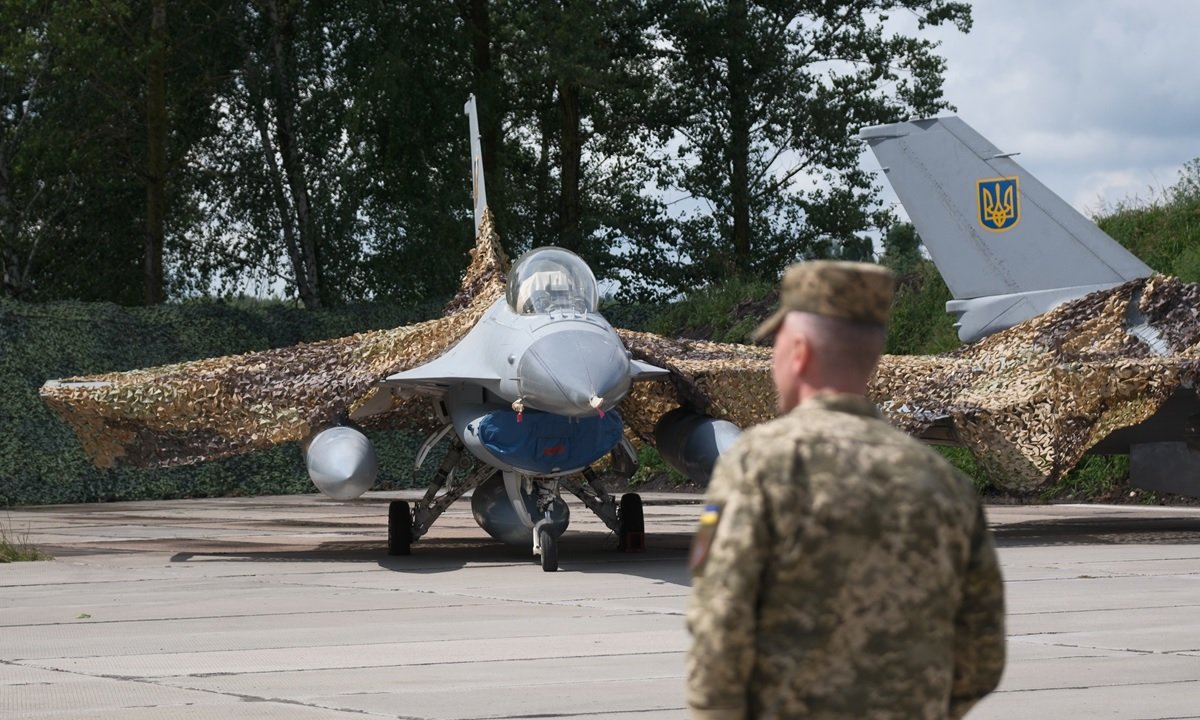
U.S
KYIV, September 3, 2026 — Ukraine’s F-16 fighter fleet is facing a shortage of air-to-air missiles, forcing the Ukrainian Air Force to ration weapons and, during some daytime missions, use the aircraft’s internal cannon against Russian drones and cruise missiles. The shortage mainly affects the AIM-9 Sidewinder and AIM-120 AMRAAM missiles. With Russia continuing large-scale drone and missile attacks, the shortage is putting additional pressure on Ukraine’s layered air-defense network. Ukrainian Forces Closely Track Missile Deliveries According to reporting by The War Zone, Newsmax journalist Shelby Wilder spoke with a senior Ukrainian commander who described the urgency surrounding incoming missile shipments. Ukrainian personnel are reportedly tracking deliveries almost minute by minute to determine whether new weapons will reach airbases before another Russian attack. Ukrainian Air Force commander “Phantom,” who leads the 107th Wing, confirmed the shortage. “Yes, that’s true,” Phantom said when asked about the lack of munitions. He also stressed that an aircraft without weapons cannot fulfill its mission. Phantom said the F-16 provides a major technological improvement over Ukraine’s Soviet-era MiG-29 and Su-27 fighters. However, its main priority remains protecting Ukrainian cities and infrastructure from Russian aerial attacks. Pilots Ration Missiles and Use Cannons To conserve missile stocks, Ukrainian F-16 pilots have sometimes used the aircraft’s M61A1 Vulcan 20mm rotary cannon against aerial targets during daytime sorties. Earlier reporting also documented Ukrainian F-16 pilots using cannons when missile supplies were insufficient. Cannon engagements are limited to daylight because engaging fast-moving drones or missiles at night is considered significantly more difficult and dangerous. The shortage means commanders must carefully consider each missile launch, particularly when inexpensive drones may require interception while more capable missiles are being reserved for other threats. AMRAAM Supplies Also Used by NASAMS The shortage of AIM-120 AMRAAM missiles affects both Ukraine’s F-16 fleet and its NASAMS ground-based air-defense systems, which also use the missile. This means the same limited AMRAAM stocks must support both fighter aircraft and ground-based air-defense operations, forcing Ukrainian forces to balance their requirements. Ukraine is also facing pressure on its Patriot interceptor supplies. Patriot systems are particularly important for defending against Russian ballistic missiles. Reuters reported in August that Patriot interceptor stocks had been heavily depleted globally because of demand from the war in Ukraine and the conflict in the Middle East. Reuters cited a CSIS estimate that about 65% of the U.S. Patriot interceptor inventory was expended between February and July 2026, leaving fewer than 850 missiles from an estimated 2,330 before the Iran war began. Exact inventory figures remain classified. Ukraine Continues to Request More Missiles On August 25, Ukrainian President Volodymyr Zelenskyy said Ukraine had received some Patriot missiles and AIM-family missiles, but did not disclose quantities or specific AIM variants. Ukraine’s Defence Ministry has said its forces use AIM-9 Sidewinder, AIM-120 AMRAAM and AIM-7 Sparrow missiles, including with F-16 and NASAMS systems. The shortage follows an earlier supply problem. Reuters reported in March that Ukrainian F-16 units had experienced an air-to-air missile shortage for more than three weeks during late November and mid-December of the previous year. Sources said the fleet had only a small number of AIM-9 Sidewinders available. Ukraine has also used older AIM-9L and AIM-9M Sidewinders, many of which were manufactured decades ago, against Russian drones and cruise missiles. Pressure to Increase Production The missile shortage comes as Russia continues large-scale drone and missile attacks against Ukraine. Ukrainian commanders are calling on Western partners not only to provide additional interceptors but also to expand long-term missile production capacity. Phantom has called for more AIM-9, AIM-120 and Patriot interceptors, while also urging greater production capacity in Ukraine or Europe. The situation highlights that maintaining Ukraine’s F-16 fleet requires not only aircraft but also a continuous supply of compatible weapons. The fighters remain part of Ukraine’s wider air-defense network alongside ground-based systems and other methods used to counter Russian aerial attacks.
Read More → Posted on 2026-09-03 17:01:27
World
KYIV, Ukraine — Ukraine’s Armed Forces have released footage showing what appears to be one of the first Rheinmetall Skyranger 35 short-range air defense systems mounted on a Leopard 1 tank chassis to reach Ukrainian units. The footage was highlighted by GAU, an open-source account that tracks German military assistance to Ukraine. GAU identified the unit operating the system as Ukraine’s 1020th Anti-Aircraft Missile Regiment. Recent Ukrainian reporting has also identified the regiment as operating the Skyranger 35 and released footage showing the system engaging an aerial target. It seems that Ukraine's 1020th Anti-Aircraft Missile Regiment which belongs to the Ground Forces has taken delivery of the first Skyranger 35 SPAAGs mounted on a Leopard 1 chassis made by @RheinmetallAG.A contract for the delivery of the Skyranger 35 SPAAGs was signed in H2 of… pic.twitter.com/VRWhGx1LCa — GAU (@deaidua) September 3, 2026 Contract Financed by Frozen Russian Assets Rheinmetall announced the Leopard 1-based Skyranger 35 contract in October 2025. The company said the order was worth a three-digit million-euro amount and was financed by an unnamed European Union country using proceeds from frozen Russian assets. Production and final integration of the systems were assigned to Rheinmetall Italia at its headquarters in Rome. Ukraine had already received Skyranger 35 systems on wheeled truck platforms. The Leopard 1 version is a separate tracked configuration, combining the Skyranger turret with the Leopard 1 chassis. 35mm Cannon for Short-Range Air Defense The Skyranger 35 is equipped with the KDG 35/1000 revolver cannon, which uses 35×228mm ammunition. Rheinmetall states that the cannon has a firing rate of up to 1,000 rounds per minute and an effective range of up to 4,000 metres. The system uses AHEAD airburst technology. The ammunition is programmed to burst near the target and release tungsten sub-projectiles, allowing the weapon to engage aerial targets without requiring a direct impact from a single projectile. This configuration is intended for short-range air defense, including the engagement of small aerial threats. The Skyranger 35 turret has a high degree of commonality with the Oerlikon Revolver Gun Mk 3. Rheinmetall has also stated that guided missiles could be integrated onto the system in the future. Leopard 1 Chassis The Leopard 1-based Skyranger 35 was publicly demonstrated by Rheinmetall in September 2024 at the Erprobungszentrum Ochsenboden test site in Switzerland. The demonstrator used a Leopard 1A5BE chassis and an unmanned Skyranger turret. The tracked configuration gives the air-defense system the mobility and protection of an armored vehicle rather than a truck-based platform. Rheinmetall specifically describes the combination as providing the mobility and protection of a tracked vehicle together with the Skyranger 35’s cannon-based air-defense capability. The Leopard 1 chassis also uses a platform already operated by Ukraine. Ukraine has received Leopard 1 tanks from Western partners since 2023. Open-source tracking by Oryx documents numerous Ukrainian Leopard 1 losses, although such visual-loss databases do not represent the complete number of vehicles delivered or lost. Ukraine Receives System Ahead of Wider European Fielding The Ukrainian appearance comes as several European countries are expanding their interest in the Skyranger family. Germany has ordered Skyranger systems, while Romania ordered 24 Skyranger 35 systems in 2026 as part of a larger defense package. Rheinmetall has also been increasing production capacity for the Skyranger family. The appearance of the Leopard 1-based system in Ukrainian service confirms that the configuration announced by Rheinmetall in 2025 has moved from production into operational use in Ukraine.
Read More → Posted on 2026-09-03 17:12:56
World
Iran — New footage circulating online appears to show an Iranian missile launch, while separate footage showing the aftermath of damage at a residential location has raised questions about what caused the destruction. The footage has emerged amid renewed fighting between Iran and the United States and growing accusations from Tehran that U.S. strikes have caused civilian casualties. The visible damage at the residential site appears limited compared with the destruction documented after some direct strikes involving larger U.S. munitions elsewhere in the conflict. This has led to questions over whether the damage could have resulted from a smaller weapon, falling debris, an air-defense interceptor or a malfunctioning projectile. However, the available footage does not establish which weapon caused the damage or provide a complete sequence of events. Determining the cause would require independent analysis of the impact site, munition fragments, timing and other available evidence. 🚨 The Islamic Republic is rushing to blame the United States for the deadly wedding tragedy, but serious questions remain over what actually struck the house.The reported U.S. target was a telecommunications tower roughly 130 meters from the wedding, placing military or… pic.twitter.com/Rp9Hf5HppZ — The Iran Watcher (@TheIranWatcher) September 2, 2026 Iran: Iranian Missile Launch Footage The emergence of the launch footage is significant because there have been previous reports and videos of Iranian missiles failing shortly after launch and falling back onto Iranian territory. Debris from air-defense interceptions has also been reported in populated areas. Some online speculation has suggested that a smaller system, including a Shahed-type drone, could explain limited damage at the site. That remains unconfirmed, and the footage alone cannot establish that a drone was involved. Iranian authorities have described the incident as an American “war crime” and attributed the civilian incident to the United States. The exact munition and sequence of events, however, remain matters requiring independent verification. The new footage therefore raises questions about the basis for assigning responsibility before all available evidence has been examined. Minab, Hormozgan Province: Earlier School Strike The latest dispute has also revived debate over the February 28 strike near the Shajareh Tayyebeh elementary school in Minab, Hormozgan province. Iranian authorities reported that approximately 156–175 people were killed, mostly schoolchildren and staff, with about 95 injured. The school was located next to an IRGC naval compound that was also struck. Multiple investigations have examined the incident using videos and satellite imagery. The Washington Post reported that footage appeared to show a U.S. Tomahawk missile striking near the school and the adjacent IRGC facility. Bellingcat also geolocated footage showing a Tomahawk striking the IRGC compound. Later analysis by Bellingcat identified two waves of strikes in the area and concluded that the school was impacted during the first wave. Bellingcat also identified munition remnants presented as being from the school as Tomahawk remnants, although it said it could not independently verify where the remnants were originally recovered. The Washington Post separately reported that the school appeared on a U.S. target list and may have been mistakenly identified as a military site. These findings make the Minab case different from the latest footage in one important respect: there is substantially more publicly available visual and forensic evidence linking the February strike to U.S. weapons. Kuhestak, Sirik County: Questions Over Wedding Strike A second incident under scrutiny occurred on September 1 in Kuhestak, Sirik County, where a wedding was taking place at a private residence. Iranian officials and state media reported that the strike killed civilians and injured dozens. The Associated Press reported that four people were initially reported killed and more than 60 injured, while later reporting put the death toll at five. Images and videos from the location show damage to the residential building and nearby structures. A telecommunications tower in the area was also struck. Weapons experts who examined fragments reported by the media identified components that could be associated with U.S.-manufactured guided weapons, with possible identification including JSOW or SLAM-ER. The U.S. military has said it does not target civilians and has been reviewing reports concerning the incident. Evidence Remains Important The competing claims surrounding these incidents show why the identification of the munition and reconstruction of the sequence of events are important. Iran has accused the United States of deliberately attacking civilians, while U.S. officials have said their operations are directed against military targets and have disputed deliberate targeting of civilians. At the same time, the presence of Iranian military facilities near civilian locations, reports of failed Iranian launches and falling interceptor debris, and evidence from individual strike sites all need to be considered separately rather than treated as proof of responsibility for every incident. The latest missile-launch footage does not, by itself, prove that an Iranian weapon caused the reported residential damage. Likewise, an accusation by either side cannot independently establish responsibility. For the newest incident, further examination of high-resolution imagery, physical fragments, video geolocation, launch trajectories and timing would be needed to establish what weapon struck the location and how the incident occurred.
Read More → Posted on 2026-09-03 17:27:41
India
HYDERABAD, — The Defence Research and Development Organisation (DRDO) and the University of Hyderabad (UoH) have secured an Indian patent for BAM-H24, a boron-, hydrogen- and nitrogen-rich energetic compound developed for advanced solid rocket propulsion. The Indian Patent Office granted Patent No. 599900 to the Chairman of DRDO and the Advanced Centre of Research in High Energy Materials (ACRHEM) at the University of Hyderabad, which is now known as the Defence Innovation and Advanced Technology Centre (DIA-CoE). The patent was filed on December 21, 2022, and was granted on August 20, 2026. The invention is formally titled “N1,N1,N1,N4,N4,N4-hexaethylbut-2-yne-1,4-diaminiumdodecaborane: The Next Generation Solid Rocket Propellant Fuel.” The compound, designated BAM-H24, covers its synthesis, structural elucidation and energetic properties. BAM-H24 designed for solid rocket propulsion According to the University of Hyderabad, BAM-H24 is intended to have multiple roles in advanced high-energy material formulations. It can function as a solid rocket propellant fuel, fuel additive or burn-rate accelerator. The compound is expected to provide high specific impulse and reduced ignition delay, properties that can improve energy efficiency and performance in solid rocket propulsion systems. Its potential applications include missile systems and space launch vehicles. However, the patent itself represents protection of the underlying compound and research; its grant does not by itself establish that BAM-H24 has already been integrated into an operational missile or launch vehicle. Safety and storage properties BAM-H24 also has reported characteristics aimed at improving the handling and storage of energetic materials. The research team reported strong chemical and thermal stability and high insensitivity to impact and friction, reducing the risk associated with accidental ignition during handling. Another reported property is its non-hygroscopic nature, meaning the material does not readily absorb water. This can help preserve its integrity in humid storage conditions. DRDO-UoH research collaboration The invention was developed through collaboration between DRDO and ACRHEM at the University of Hyderabad. The research was led by Dr. Muddamarri Hanumantha Rao of ACRHEM and Professor Muralidharan Krishnamurthi of ACRHEM and the UoH School of Chemistry. The patent provides intellectual-property protection for an indigenous high-energy compound with potential applications in both defence propulsion and space launch systems. It also represents continued collaboration between DRDO and academic researchers in the development of advanced energetic materials. Further research and development would be required to determine the performance of BAM-H24 in specific propulsion systems and its suitability for practical deployment.
Read More → Posted on 2026-09-03 17:31:45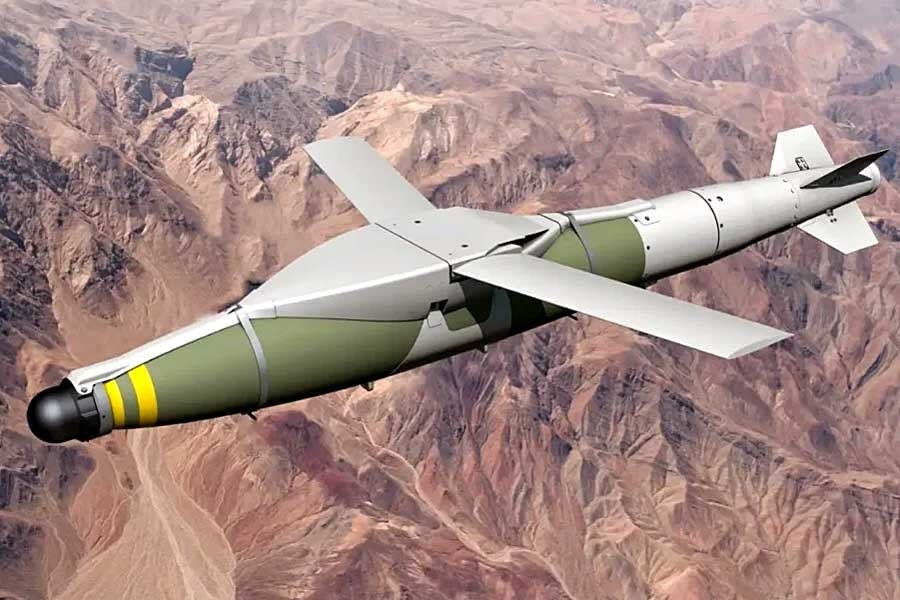
U.S
WASHINGTON, — The United States has approved two potential Foreign Military Sales to Saudi Arabia with a combined estimated value of $5.75 billion, covering Joint Direct Attack Munition-Extended Range (JDAM-ER) systems, general-purpose bombs and AGT-1500 tank engines. The U.S. State Department notified Congress of the proposed sales on September 4. The notifications begin the congressional review process, meaning the approvals do not represent final contracts. The final agreements will depend on subsequent negotiations between the United States, Saudi Arabia and the contractors. $5 Billion JDAM-ER Package The larger package is valued at an estimated $5 billion and covers JDAM-ER systems, bombs and associated equipment. Saudi Arabia has requested: 5,004 KMU-572 JDAM guidance kits 5,000 KMU-556 JDAM guidance kits 5,004 BLU-111 500-pound general-purpose bombs 5,000 BLU-117 2,000-pound general-purpose bombs The package also includes FMU-139 fuze systems, DSU-38 and DSU-40 target detectors, containers, support equipment, spare parts, consumables, accessories and repair-and-return support. U.S. government and contractor engineering, technical and logistics support services are also included. JDAM-ER is an extended-range version of the JDAM concept that uses an aerodynamic wing kit to increase the glide distance of a bomb after release. The extended-range system does not require an onboard propulsion system. Boeing has been identified as the principal contractor for the JDAM-ER package. $750 Million Abrams Tank Engine Package The second proposed sale is valued at $750 million and covers 60 AGT-1500 gas turbine engines for Saudi Arabia's M1 Abrams tank fleet. The package includes engine containers, spare parts, consumables, accessories, contractor logistics support, and U.S. government and contractor engineering, technical and logistics support services. Honeywell is the principal contractor, with work associated with Anniston Army Depot in Alabama. The AGT-1500 is the gas turbine engine used in the M1 Abrams tank family. Saudi Arabia has operated M1 Abrams tanks since acquiring an initial batch of 315 vehicles in 1989 and has continued to maintain and upgrade the fleet. U.S. Stated Objectives The State Department said the proposed sales support U.S. foreign policy and national security objectives by improving the security of Saudi Arabia as a Major non-NATO Ally. For the JDAM-ER package, the department said the equipment would strengthen Saudi Arabia's airborne defense capability, support homeland defense and improve interoperability with U.S. forces and other Gulf partners. For the tank engines, the department said the proposed sale would support Saudi military readiness and operational requirements while improving interoperability for bilateral contingency plans. The U.S. government also determined that Saudi Arabia would have no difficulty absorbing the equipment and services into its armed forces. The proposed sales are not expected to alter the military balance in the region or adversely affect U.S. defense readiness. Sales Still Require Final Agreements The $5.75 billion figure is an estimated value for the proposed Foreign Military Sales cases, rather than the value of completed contracts. The quantities, requirements and final cost can change during negotiations. Congress will have a review period following the notifications. If the deals proceed through the FMS process, Saudi Arabia and the U.S. government will then complete the required agreements and contracting arrangements. The two Saudi Arabian notifications were part of a broader group of proposed U.S. military sales to Middle Eastern countries announced on the same day. The combined value of the Saudi, Oman and Iraq notifications was reported at approximately $6.1 billion.
Read More → Posted on 2026-09-05 12:13:23
U.S
WASHINGTON, — The U.S. Army has selected Westinghouse Government Services’ eVinci microreactor for the next phase of the Janus Program, pairing the system with Fort Drum, New York. The Army announced the selection on August 26, 2026, advancing the eVinci heat-pipe reactor toward potential deployment at a U.S. military installation. Janus Program The Janus Program is the Army’s next-generation nuclear power initiative, supported by the Department of War Innovation Unit (DIU). It aims to move microreactor technology from designs and experiments toward reliable commercial hardware that can provide secure, resilient and reliable energy for defense installations. The Army considers reliable on-site power important for mission assurance, operational readiness and national security. Five nuclear energy vendors and five initial Army locations have been selected: Company Initial location Antares Nuclear, Inc. Fort Bragg, North Carolina BWXT Advanced Technologies, LLC Fort Campbell, Kentucky General Atomics Electromagnetic Systems Fort Hood, Texas Radiant Industries, Inc. Fort Benning, Georgia Westinghouse Government Services Fort Drum, New York The companies were selected after their technical, financial and organizational capabilities were assessed by a panel of dozens of experts from across the country. The Army is awarding up to a combined $2.2 billion through milestone-based agreements covering fiscal years 2027–2031. The vendors will own, construct and operate the microreactors. With expected private-sector funding, the Army anticipates that more than 20 microreactors could eventually be built and operated across Department of War installations. eVinci Microreactor Westinghouse says the eVinci microreactor is designed to provide electricity 24 hours a day, seven days a week for eight years without refueling. The system uses a heat-pipe reactor design and TRISO fuel, with passive heat removal. It can produce around 5 megawatts of electricity from a 15-megawatt thermal core. The reactor has a small footprint and is designed for transport by road, rail or barge. It requires no water for cooling and is intended for above-ground installation. Westinghouse completed zero-power criticality testing of the eVinci design on August 24, 2026, at the National Criticality Experiments Research Center. Fort Drum Selection Fort Drum, home of the 10th Mountain Division, was selected based on factors including mission requirements, power demand, grid conditions, and safety and environmental considerations. The Army’s earlier selection process considered nine military installations. The planned Janus microreactors will each generate less than 20 megawatts of electricity and occupy less than five acres. They are intended to provide localized resilience for critical mission infrastructure and can integrate with existing commercial power grids. 2028 Target The Janus Program aims to have at least one Army-regulated nuclear reactor capable of producing usable electricity operating at a domestic military installation by September 30, 2028, consistent with Executive Order 14299, signed in May 2025. “Reliable energy is fundamental to mission assurance, operational readiness and national security,” said Rich Rademacher, President of Westinghouse Government Services. He said the eVinci selection highlights the role advanced nuclear technology can play in providing resilient, long-duration power for military missions. Dr. Jeff Waksman, Principal Deputy Assistant Secretary of the Army for Installations, Energy and Environment, said the Janus Program is focused on transitioning from designs and experiments to reliable commercial hardware and securing energy independence. The Janus Program was launched in October 2025. The Army expects additional sites and potential expansion to other military services to be announced as the program progresses.
Read More → Posted on 2026-09-05 12:28:46
World
MIYAGI, Japan — Japan’s Ground Self-Defense Force (JGSDF) has publicly displayed a compact attack drone during a joint exercise with the French Army at the Ojojihara Training Area in Miyagi Prefecture, showing its planned use for close-range reconnaissance and strikes against ground targets. The drone was presented during Brunet-Takamori 26, held from late August to early September 2026. About 120 Japanese personnel from the 20th Infantry Regiment and around 40 French troops from the New Caledonia Marine Infantry Regiment participated. The training focused on counter-guerrilla and urban operations. Drone Demonstration The planned scenario involved two soldiers operating the system. One soldier was to launch a reconnaissance drone by hand, while another controlled a second drone carrying simulated ammunition using a portable tablet or smartphone. A malfunction prevented the planned flight during the main exercise. A separate demonstration was conducted afterward. In that demonstration, one drone located the target using its camera, while a second drone approached at low altitude and used an equipped lamp to simulate neutralizing the target. Drone40 System The aircraft is the Drone40, developed by Australian company DefendTex. Japan’s Ministry of Defense has selected it as the Small Attack UAV Type I, with Japanese trading company Marubeni Aerospace holding the contract. Japan has not officially disclosed the specific system’s weight, range, endurance, payload capacity, propulsion or guidance specifications. According to company specifications, the Drone40 is about 13 cm long, has a maximum take-off weight of around 400 grams, an endurance of up to one hour and a reported range of up to 35 km. It can be launched by hand or from a 40 mm grenade launcher. Its modular design allows it to carry electro-optical or infrared sensors for reconnaissance, or strike payloads including fragmentation and explosively formed penetrator warheads. It uses a GPS-based autopilot, encrypted radio data link and portable ground-control station, while multiple units can operate together. Part of Japan’s SHIELD Program The Type I drone is one of three attack-drone types being developed for different ranges. Type I is intended for short-range strikes against vehicles, personnel and landing forces near friendly units or critical facilities. Type II covers medium-range missions against boats and lightly armored vehicles, while Type III is a longer-range, vehicle-transported system. The systems form part of Japan’s SHIELD (Synchronized, Hybrid, Integrated and Enhanced Littoral Defense) coastal defense program. SHIELD is planned to combine more than 10 types of unmanned aerial, surface and underwater systems for surveillance, strike and protection missions. Japan’s FY2026 defense budget provides significant funding toward establishing the SHIELD system by fiscal year 2027. The program is intended to strengthen Japan’s coastal and island defense capabilities. Delivery and Deployment Deliveries of the Small Attack UAV Type I are expected by late May 2027, with sequential deployment to ordinary JGSDF infantry units planned to begin in fiscal year 2027. The Ojojihara presentation marked the first public showing of the attack drone during a joint exercise with a foreign military.
Read More → Posted on 2026-09-05 13:20:14
U.S
WASHINGTON, — The U.S. Department of the Air Force has posted a notice for a new multi-year purchasing arrangement called the DAF Battle Network “Megatron” Multiple Award Contract (MAC) IDIQ). The notice was published on the government’s public contracting portal on September 4, 2026. The contract will allow the U.S. Air Force and Space Force to purchase command-and-control technologies from multiple companies over time, reducing the need to negotiate separate contracts for individual requirements. Part of the DAF Battle Network The Megatron contract is managed by the Portfolio Acquisition Executive for Command, Control, Communications and Battle Management (PAE C3BM). It supports the broader DAF Battle Network, which evolved from the Advanced Battle Management System (ABMS). The effort focuses on connecting sensors, data systems and decision-making tools across the Air Force and Space Force so commanders can receive and act on information more quickly. Six Technology Areas Companies selected under the contract could provide technologies in six main areas: Digital architecture: Architecture, modeling, simulation and data-management tools. Sensor integration: Hardware and software for integrating sensors and sharing their data. Secure processing: Technologies for secure data processing and cloud-based data repositories. Connectivity: Network technologies designed to maintain communications in contested environments. Applications: Software interfaces for distributed decision-makers. Synthetic environments: Computer-simulated environments for training and testing. Two Contract Pools The Air Force plans to divide contract awards into two pools. One will be reserved for small businesses, while the other will be unrestricted and open to companies of any size. After the vendors are selected, Department of the Air Force program offices will be able to place orders directly through the decentralized contracting vehicle. Industry Review and Timeline The Air Force approved the Megatron acquisition strategy in August 2026. A draft version of the contract requirements was released on September 4 for industry review and comments. The draft document is restricted. Companies interested in reviewing it must formally request access and pass a review of their business registration. Written feedback must be submitted to contracting officer Julianne Payne by September 30, 2026. The planned procurement schedule is: Draft RFP: Late Fiscal Year 2026 Final RFP: First quarter of Fiscal Year 2027 Contract awards: Third quarter of Fiscal Year 2027 Virtual Industry Day The Air Force will hold a virtual Industry Day on October 7, 2026, from 8 a.m. to noon Eastern time. Program manager Jeffery “Ryan” Compton and contracting officer Julianne Payne will brief companies on the planned bidding process. Because of the expected number of participants, officials will not conduct individual one-on-one meetings. Questions submitted during the event will be compiled and made public afterward. Earlier industry briefings indicated that Megatron is intended to support the rapid exploration and maturation of technologies associated with ABMS and to supplement or potentially succeed existing ordering vehicles covering architecture, integration and related work. The final contract ceiling and number of awards have not yet been finalized in the current government notice. A potential ceiling of $4.5 billion or more has been discussed in industry reporting, but that figure is not confirmed in the latest notice.
Read More → Posted on 2026-09-05 13:29:44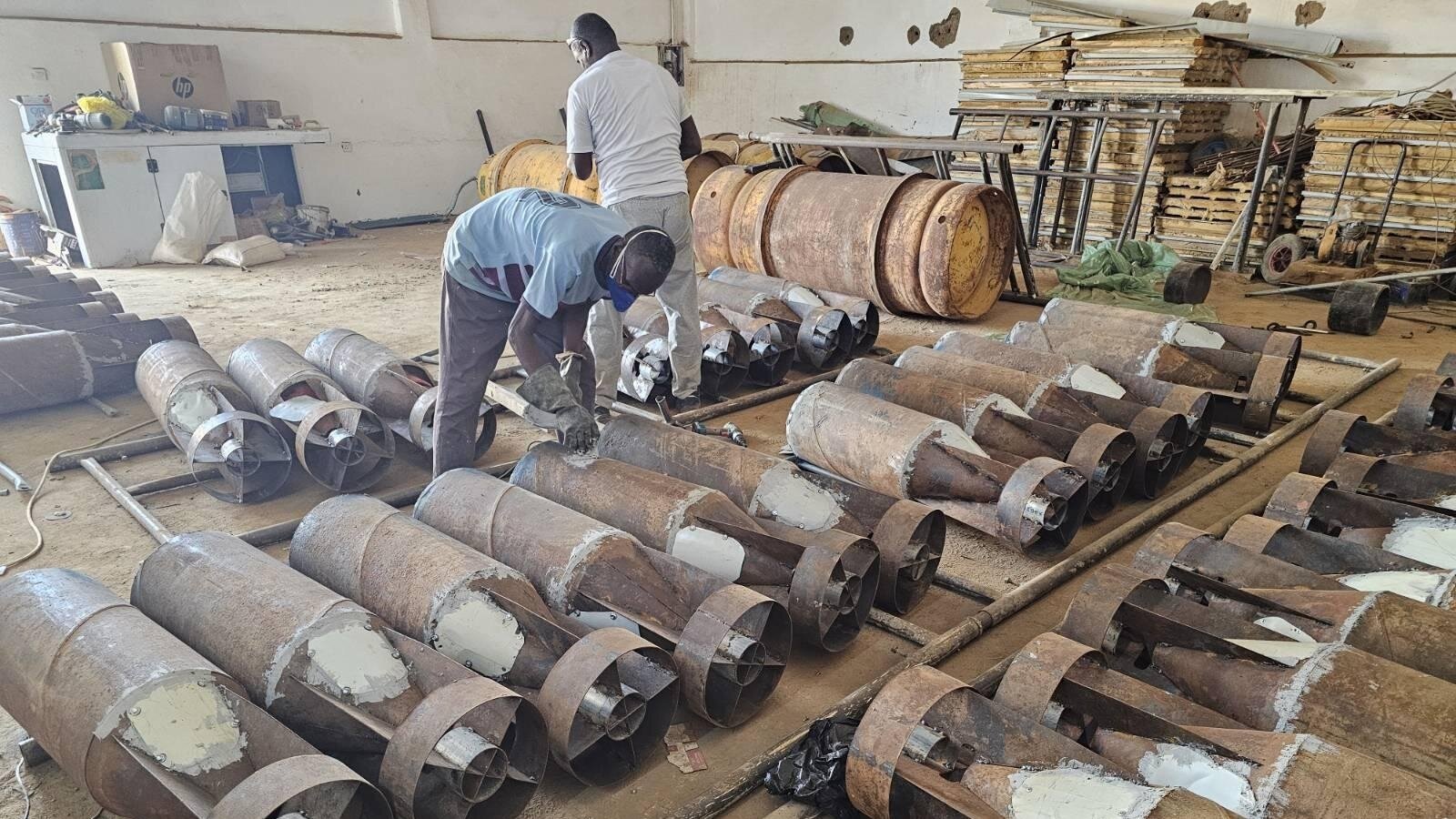
World
Khartoum, Sudan — A newly revealed intelligence dossier has provided additional evidence to allegations that the Sudanese Armed Forces (SAF) developed, produced and used chlorine-based chemical munitions during the civil war against the Rapid Support Forces (RSF). The dossier, shared with The New York Times by a Middle Eastern intelligence agency, contains documents, photographs, videos and intercepted communications detailing a secret program that operated for about six months in 2024. Chemical weapons program The documents include bomb blueprints, desert test records and references to munitions filled with chlorine and described in some files as “dual-effect” weapons carrying “choking gas.” Videos show tests producing green-yellow vapor clouds, which experts associate with chlorine. One photograph set from a production site showed dead scorpions on the factory floor, consistent with exposure to the gas. According to material reviewed by The New York Times and The Washington Post, Sudanese Army Colonel Tariq Madani directed much of the program. Messages and voice notes attributed to him discuss the assembly, testing and storage of the weapons. The bombs were designed to carry about 15 kilograms of chlorine, and one test was recorded as successful in July 2024. Production and storage By October 2024, internal messages indicated that approximately 290 to 300 chemical munitions had been manufactured. Most were reportedly stored at Merowe Airport, also known as Merowe Air Base, a major Sudanese Air Force installation. Messages from late 2024 reported that 106 of the bombs had been used against RSF positions. The dossier says chlorine was obtained from several sources. Twenty large cylinders were imported through an Egyptian border crossing and were described as sufficient for about 1,100 bombs. Additional chlorine was reportedly taken from the Al-Manara water treatment station in Omdurman, where the chemical was used for civilian water purification. Some supplies at the facility had been provided through international aid channels. Earlier evidence of chlorine attacks The dossier adds to previous investigations into alleged chlorine attacks in Sudan. A France 24 investigation supported by C4ADS documented two incidents in September 2024 near the Garri military base and Al-Jaili oil refinery north of Khartoum. Videos and photographs from the sites showed damaged industrial chlorine cylinders and yellow-green clouds. Five independent experts assessed the imagery as consistent with aerial drops of chlorine containers. The reported deliveries were attributed to the SAF's aircraft capability. Trade records also linked some chlorine cylinders to Indian exporter Chemtrade International Corporation, which said the shipments were intended solely for water treatment. U.S. determination and alleged cover-up The United States formally determined in April 2025 that the Government of Sudan had used chemical weapons in 2024, violating the Chemical Weapons Convention. The determination triggered sanctions, including restrictions on U.S. exports and access to U.S. government credit lines. U.S. officials had earlier said Sudanese forces appeared to have used chemical weapons, apparently involving chlorine, on at least two occasions against RSF fighters in remote areas. The new dossier indicates that SAF chief Gen. Abdel Fattah al-Burhan was informed about the chemical-weapons program. After the U.S. sanctions, communications attributed to senior officers reportedly contained instructions to remove evidence and traces of the program from storage sites. A September 2025 message attributed to Madani said a base had been “emptied of traces and residue.” Sudan denies allegations The Sudanese military has consistently denied using chemical weapons. Sudanese officials have said there is no evidence supporting the allegations and pointed to an internal national committee that found no contamination at the sites it examined. Sudan also said a U.S. team visited and collected samples without publicly producing evidence of chemical-weapons use. Sudan has called for the issue to be handled through the Organisation for the Prohibition of Chemical Weapons (OPCW). International law The conflict between the SAF and RSF began in April 2023 and has caused large-scale displacement, famine conditions and extensive civilian harm. Chlorine is widely used for water treatment, but its use as a weapon is prohibited under the Chemical Weapons Convention and constitutes a war crime under the Rome Statute. The newly revealed dossier adds specific details about the alleged production, testing, storage and deployment of chlorine munitions, as well as information about the military command structure, building on earlier U.S. findings and open-source investigations.
Read More → Posted on 2026-09-05 13:38:34
U.S
SYRACUSE, N.Y. — SRC, Inc., a not-for-profit defense research and development company based in North Syracuse, New York, has received a U.S. patent for a software-based method designed to help radar systems distinguish real reflective targets from electronic interference. The U.S. Patent and Trademark Office issued the patent on June 23, 2026, as U.S. Patent No. 12,663,529. The patent is titled “Radar Apparatus and Methods for Determining the Presence of a Reflective Target Using a Multiple Response Comparison.” SRC engineers John C. Dougherty and David L. Weldum are listed as the inventors. Addressing interference in crowded radio-frequency environments Modern radar systems can operate in environments containing signals from other radars, radio transmitters, cell phone towers and similar sources. These signals can sometimes be stronger than the relatively weak echoes returned by physical objects. Such interference can cause radar systems to register or track signals that do not correspond to actual objects. SRC's patented method is designed to identify these false detections before they are presented to radar operators or entered into tracking. How the patented method works The technique is designed for scanning radars that use multiple overlapping beam patterns. When a radar detects a signal at a particular angle in one beam pattern, the software checks the corresponding location in an overlapping beam. It then compares the measured response with the response expected from a genuine reflective target. If the signal matches the expected pattern within a predetermined error threshold, the system can identify it as a valid target. If the response falls outside the expected range, the system identifies it as interference and filters it out before the detection is displayed to an operator or used for tracking. According to SRC, this approach can reduce false detections while also conserving radar processing resources. The method is software-based and was developed for integration with a range of scanning radar systems rather than a single specific platform. SRC engineers developed and tested the technique using recorded radar data to evaluate its performance in complex radio-frequency environments. Inventors John C. Dougherty, SRC's chief systems engineer, has about 25 years of experience with the company and five years of previous industry experience. He earned a bachelor's degree in electrical engineering from the State University of New York at Buffalo, followed by a master's degree in electrical engineering and an MBA from Syracuse University. The patent is his seventh. David L. Weldum, a senior principal systems engineer at SRC, has 23 years of experience with the company and 14 years of previous industry experience. He holds a bachelor's degree from Michigan Technological University and a master's degree from Syracuse University. The patent is his second with SRC and third overall. SRC's radar technology work SRC President and CEO Kevin Hair said innovation has been central to the company for nearly 70 years and that the patent reflects its work on challenges faced by radar operators. The new patent adds to SRC's existing portfolio of radar-related technologies. The company said the technology is intended to help operators reduce false reports caused by interference and focus on relevant radar information. Founded in 1957, SRC is headquartered in North Syracuse, New York, and focuses on research and development in defense, environment and intelligence. The company is chartered as an independent not-for-profit organization by the state of New York and employs more than 1,400 people.
Read More → Posted on 2026-09-05 13:46:45
World
KYIV, — Ukraine has ordered its military units to observe a temporary halt in fighting along the line of contact from 00:00 on September 5 until 23:59 on September 8, according to sources cited by Ukrainska Pravda. The reported four-day pause is a Ukrainian proposal, and no formal ceasefire agreement with Russia had been reached. The report cited sources in several Ukrainian brigades operating in different sectors of the front, along with a senior security official. However, Ukraine's General Staff later said combat operations were continuing because Russia had not agreed to a mutual ceasefire. It said a unilateral ceasefire could put Ukrainian troops at risk. US Envoys Begin Moscow-Kyiv Mission The reported pause coincides with a diplomatic mission by U.S. special envoys Steve Witkoff and Jared Kushner. The two envoys arrived in Moscow on September 5 and were met at Vnukovo Airport by Russian presidential envoy Kirill Dmitriev. They are expected to meet Russian officials before traveling to Kyiv on September 6. U.S. President Donald Trump confirmed that Witkoff and Kushner were sent with a proposal aimed at ending the war. Trump said he wanted the envoys to determine whether an agreement could be reached. The details of the proposal have not been publicly released. Ukraine Pledges to Avoid Airstrikes Ukrainian President Volodymyr Zelenskyy confirmed the envoys' planned visit to Kyiv and said Ukraine would not conduct aerial strikes against Russian territory during their diplomatic mission. Zelenskyy called on Russia to take the same step, saying the measure was intended to protect the U.S. negotiators and allow the talks to proceed safely. Russian Attacks Continue The reported Ukrainian pause began while Russian attacks were still being reported. Air raid sirens sounded in Kyiv, and Ukraine's Air Force warned of incoming jet-powered drones. Russian forces also launched ballistic missiles and drone attacks against other Ukrainian areas, including a strike on an industrial facility in Kamianske that killed several people. Ukraine's military said the absence of a mutual agreement meant its defensive operations continued. Russia Announces Limited Kyiv Pause Later on September 5, Kremlin spokesman Dmitry Peskov said Russian President Vladimir Putin had ordered a three-day halt to strikes on Kyiv beginning at midnight. The Russian measure was linked to the U.S. envoys' visit but applied specifically to Kyiv. It did not establish a broader ceasefire along the front line or cover other Ukrainian cities. The temporary measures come as Washington attempts to restart negotiations after earlier talks stalled. The four-day Ukrainian proposal and Russia's limited pause around Kyiv have not resulted in a comprehensive Russia-Ukraine ceasefire or peace agreement.
Read More → Posted on 2026-09-05 14:01:14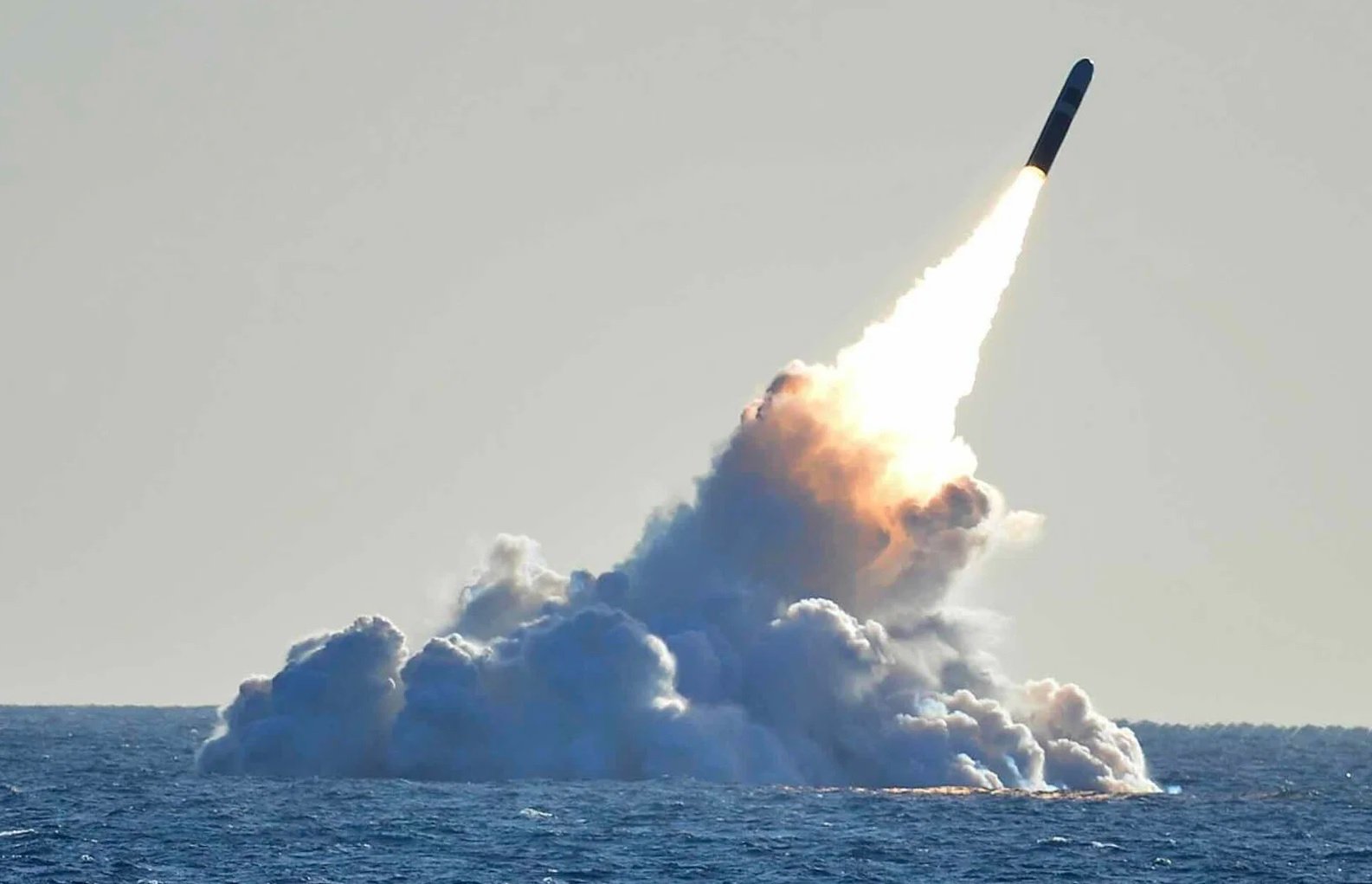
U.S
WASHINGTON — The U.S. Navy has awarded Lockheed Martin Space a $90.2 million contract modification to continue design and development work for the Trident II D5 Life Extension 2 (D5LE2) program. The cost-plus-fixed-fee modification covers what the Navy calls “SSP Alteration Advanced Design and Development.” The work is being managed by the Navy’s Strategic Systems Programs (SSP) office and is part of the second life extension of the Trident II D5 submarine-launched ballistic missile. The Trident II D5 provides the sea-based leg of the United States’ nuclear triad. The Navy’s ongoing D5LE2 program is intended to modernize the missile and support its continued operation as the service transitions from the Ohio-class ballistic missile submarines to the Columbia class. Work to continue through 2030 Under the new contract modification, about 68% of the work will be performed at Naval Submarine Base Kings Bay, Georgia. Another 25% will take place at Cape Canaveral, Florida, while the remaining work will be divided between facilities in Bangor, Washington, and Denver, Colorado. The contract is scheduled to run through September 30, 2030. The Navy is obligating the full $90.2 million from fiscal year 2026 weapons procurement funds at the time of the award. The funds will not expire at the end of the current fiscal year. The contract was awarded on a sole-source basis, with the Navy determining that Lockheed Martin had the unique capabilities required to meet the program's requirements. Trident II D5 modernization The Trident II D5 entered service in 1990 and is carried by U.S. Ohio-class and U.K. Vanguard-class ballistic missile submarines. An earlier D5 life extension program was completed in 2017. The missile weighs approximately 130,000 pounds (58,967 kilograms) and has a stated range of about 4,000 nautical miles (7,408 kilometers). Its reported speed exceeds Mach 20. According to Lockheed Martin, submarine-launched ballistic missiles account for roughly 70% of the United States' strategic deterrent capability. The Navy has described D5LE2 as the next-generation version of the Trident II D5. Official Navy testimony says the program is intended to maintain the Trident system's required performance and provide flexibility for future requirements. D5LE2 program receives earlier major contracts The latest $90.2 million award follows earlier funding for the D5LE2 program. In January 2025, the Navy awarded Lockheed Martin a $383 million contract modification to begin development of the upgraded missile. Lockheed Martin said the D5LE2 is being developed for deployment aboard Columbia-class ballistic missile submarines and is intended to remain credible through 2084. In April 2026, the Department of War announced an additional $850 million modification for continued D5LE2 design and development. Lockheed Martin publicly disclosed the award in July 2026. The D5LE2 will eventually support the transition to the U.S. Navy's Columbia-class submarines and the U.K.'s planned Dreadnought-class boats, replacing the Ohio- and Vanguard-class submarines. New production facility in Florida Lockheed Martin is also expanding its production infrastructure for the program. The company is constructing an approximately 225,000-square-foot (20,903-square-meter) facility at its Titusville, Florida, campus to produce D5LE2 components. The facility is expected to be ready in 2027 and is expected to create approximately 300 new jobs. Lockheed Martin said the facility is being developed alongside the D5LE2 program to support future production requirements. The Navy also conducted four test flights of unarmed Trident II D5LE missiles from an Ohio-class submarine off Florida's east coast in September 2025, supporting continued testing of the existing life-extended missile system. The latest contract modification continues the development work required to move the Trident II D5 system into its second major life-extension phase while preparing the missile system for the transition to the Columbia-class submarine fleet. Source : defence-blog
Read More → Posted on 2026-09-05 14:19:22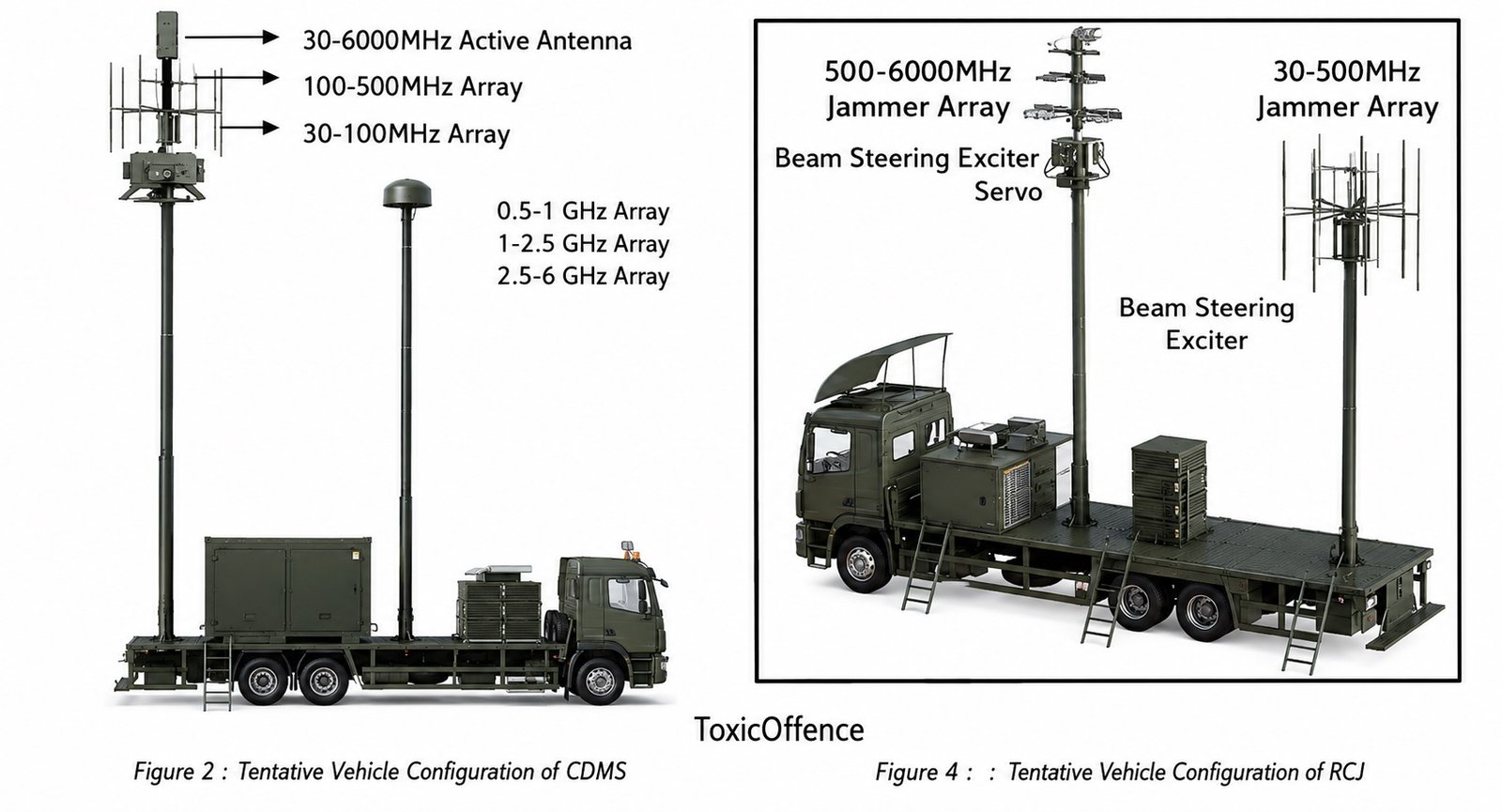
India
HYDERABAD — The Defence Research and Development Organisation’s (DRDO) Defence Electronics Research Laboratory (DLRL) is developing a vehicle-mounted jammer designed to counter cognitive radio-based military communication systems. Three units of the new system are currently under development. According to the project details, each jammer will provide 360-degree detection and jamming coverage across a frequency range of 30 MHz to 6 GHz. The system is designed to operate at ranges of up to 20 km. A key feature of the jammer is its response time of less than 5 microseconds. This capability is intended to allow the system to track and jam radios that rapidly change their operating frequencies, including systems capable of frequency hopping at up to 2,000 times per second. The jammer is being developed as a mobile electronic warfare system. The complete system can be deployed from its vehicle in less than one hour, allowing it to be used for tactical operations and relocated when required. Delivery and testing of the three units are scheduled to be completed within 21 months. Following completion, the units will be evaluated for their ability to detect and disrupt cognitive radio threats within the specified frequency band and operational range. DLRL’s Role in Electronic Warfare DLRL, based in Hyderabad, is one of DRDO’s laboratories working on electronic warfare technologies for the Indian armed forces. Its work covers areas including communications intelligence (COMINT), electronic support measures (ESM), electronic countermeasures (ECM), digital receivers and jamming systems. DRDO’s technology roadmap specifically lists smart jamming against software-defined radios (SDRs) and cognitive radio-based military communication radios as an electronic warfare development area assigned to DLRL. Cognitive radios can adapt their transmission characteristics according to the surrounding electromagnetic environment. This can include changing operating frequencies, making them more difficult to counter with conventional jamming approaches. The new system is therefore focused on responding to rapidly changing communication signals. DRDO describes electronic warfare as the use of electromagnetic energy to determine, exploit, reduce or prevent hostile use of the electromagnetic spectrum. Electronic countermeasures include jamming and deception intended to prevent or reduce an adversary’s effective use of the spectrum. The development of the vehicle-mounted jammer adds to DLRL’s existing work in mobile electronic warfare systems and digital signal-processing technologies. DRDO has also established dedicated system integration and evaluation facilities at DLRL for testing communication and non-communication electronic warfare systems. The three systems under development will provide an opportunity to evaluate the jammer against cognitive radio-based communication threats and assess its performance across the specified frequency band and range.
Read More → Posted on 2026-09-05 14:30:00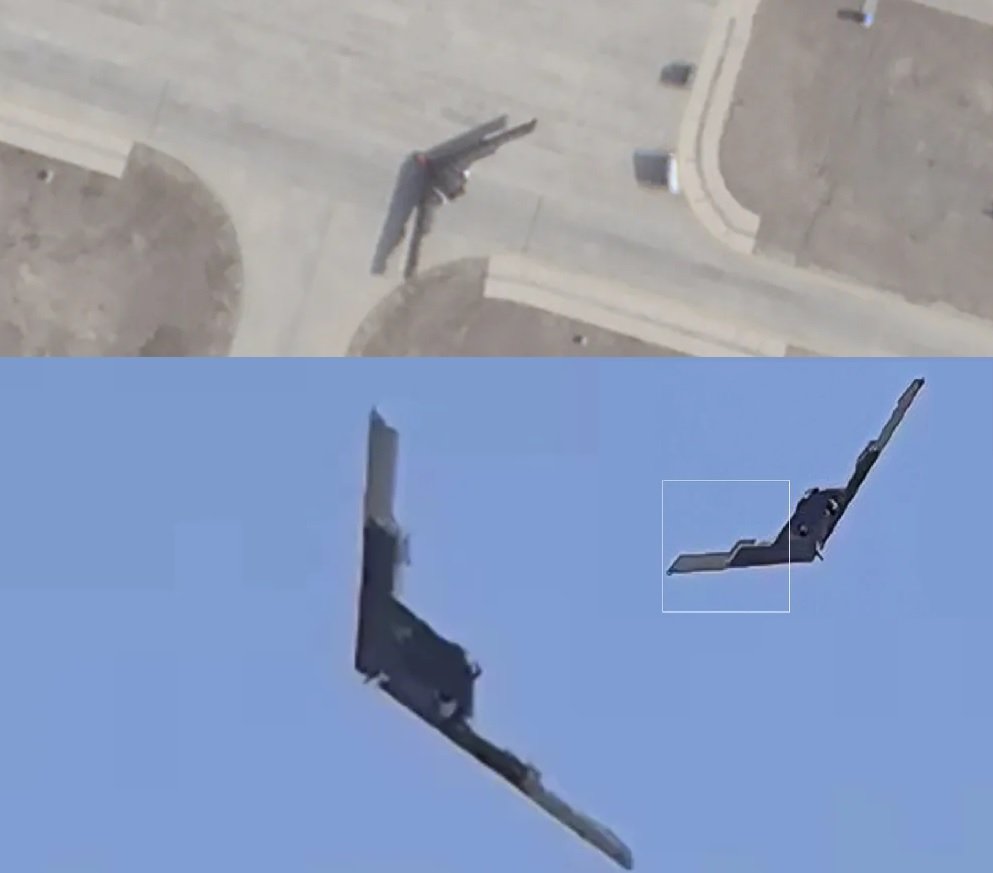
World
Malan, Xinjiang, China — New photographs and satellite imagery have provided the clearest public view yet of a large Chinese flying-wing drone unofficially known as the WZ-X. The latest images confirm that the aircraft has an unusual stepped-wing configuration that was difficult to identify in earlier satellite imagery. The aircraft was first identified in commercial satellite imagery taken on May 14, 2025, at the People’s Liberation Army Air Force (PLAAF) test facility near Malan in China’s Xinjiang region. At the time, it was unclear whether the apparent breaks in the wing outline were actual design features or artifacts caused by the imagery. New ground-level photographs and a recent satellite image now show that the changes in wing shape are part of the aircraft’s design. Unusual stepped-wing configuration The WZ-X has a broad-chord inner wing that transitions abruptly into a much narrower outer section. Instead of continuously tapering from the center fuselage toward the wingtips, the outer sections become significantly longer and thinner. This creates a distinctive stepped-wing appearance and produces a shallow, semi-sawtooth trailing edge. The aircraft also has a diamond-like central fuselage with long outer wing sections. The configuration is different from the continuous flying-wing layouts seen on aircraft such as the U.S. B-2 Spirit. The reason for the unusual wing arrangement has not been officially explained. The long outer wings give the aircraft a high aspect ratio, a configuration generally associated with efficient flight and reduced induced drag. However, the effect of the specific stepped geometry on the aircraft's radar signature remains uncertain. Large aircraft with a roughly 173-foot wingspan The WZ-X is the largest Chinese flying-wing aircraft identified to date. Recent imagery supports an estimated wingspan of approximately 170 to 173 feet (52 to 53 meters), making it roughly comparable in span to the 172-foot B-2 Spirit. Aviation specialist Andreas Rupprecht estimates the aircraft's length at approximately 46 feet (14 meters). The central fuselage appears relatively spacious compared with the aircraft's overall thickness and could provide room for fuel, sensors and communications equipment, although the exact internal configuration has not been confirmed. Images from the rear also show large landing-gear doors and split rudders positioned toward the outer wing areas. Slot-like openings at the rear of the center section have led analysts to assess that the aircraft is likely powered by two engines. A dorsal antenna visible on the aircraft has also been assessed as being associated with satellite communications. Possible high-altitude, long-endurance role The WZ-X's size and aerodynamic configuration have led analysts to associate it with high-altitude, long-endurance (HALE) missions. Its large central body and inner wing sections provide considerable space for fuel and mission equipment, while the unusually long outer wings could support efficient cruise flight. The aircraft has therefore been assessed as potentially suited to long-range surveillance and communications or networking missions. However, its exact mission has not been officially confirmed. Some analyst estimates place its normal cruising altitude between 59,000 and 66,000 feet and its range at more than 12,000 miles (about 20,000 kilometers). Reported estimates also put its cruise speed in the Mach 0.5–0.65 range. These performance figures remain unconfirmed by official Chinese sources. A strike role has also been discussed by analysts, but there is currently no publicly confirmed information establishing the WZ-X as a strike aircraft. Malan has become an important Chinese UAV test location The aircraft is being tested at the Malan facility in Xinjiang, which has become an important location for China's unmanned-aircraft development. Satellite imagery has shown extensive activity and infrastructure at the site, including multiple large aircraft and hangars. In March 2026, satellite imagery captured the WZ-X and another large flying-wing aircraft outside their hangars at the same time. The second aircraft, unofficially referred to as the GJ-X, has a different cranked-kite wing configuration and an estimated wingspan of about 137 feet (42 meters). It was subsequently observed in flight, although its official designation and mission also remain unclear. The presence of several large tailless and flying-wing aircraft at Malan indicates that China is testing multiple uncrewed aircraft configurations rather than relying on a single design. Official designation remains unknown Despite the growing amount of imagery available, the aircraft's official designation, manufacturer, propulsion details, confirmed performance and primary mission have not been publicly confirmed. The name WZ-X is an unofficial designation used by observers to identify the aircraft. The latest imagery, however, provides considerably more information about its physical configuration, particularly the distinctive stepped outer wings and shallow serrated trailing edge. The aircraft's approximately 170–173-foot wingspan also establishes it as one of the largest known Chinese uncrewed flying-wing platforms and places the WZ-X among the largest stealth-oriented UAV designs currently identified through publicly available imagery. Source : TWZ
Read More → Posted on 2026-09-05 14:46:46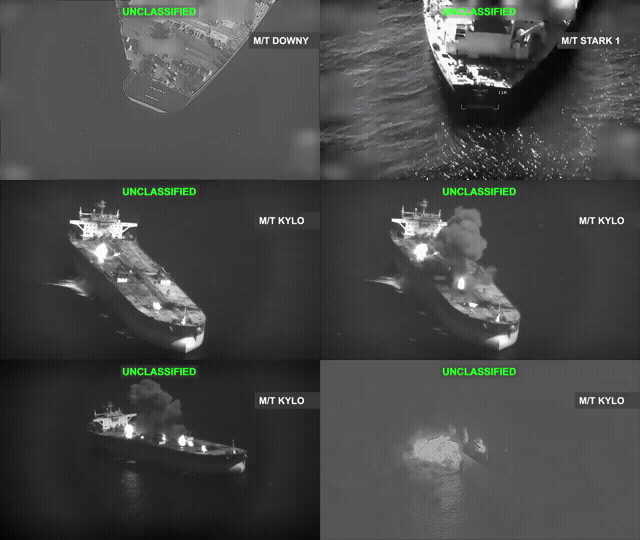
World
Washington, — U.S. Central Command (CENTCOM) said Saturday that American forces struck three Iranian crude oil tankers after Iran’s Islamic Revolutionary Guard Corps (IRGC) launched ballistic missiles toward two U.S. Navy warships operating in the region. According to CENTCOM, the two U.S. warships, identified as an aircraft carrier and a guided-missile destroyer, successfully evaded the incoming missiles. No U.S. personnel were injured, and CENTCOM did not publicly identify the ships involved. In response, U.S. forces permanently disabled two Iranian crude oil carriers and completely destroyed a third. The vessels identified by CENTCOM were: M/T Downy (IMO 9218480) — struck off the coast of Kharg Island and permanently disabled. M/T Stark 1 (IMO 9171450) — struck near Jask and permanently disabled. M/T Kylo (IMO 9189146), also known as Noxen — completely destroyed in the Gulf of Oman. CENTCOM said the three tankers were part of what it described as a multibillion-dollar shadow network that generates revenue for the IRGC and its regional proxy groups. The command said the Kylo was unladen when it was targeted. Its crew was directed to abandon the vessel before U.S. forces struck multiple critical locations on the ship, according to the CENTCOM account. The action was intended to render the tanker inoperable. Adm. Brad Cooper, commander of CENTCOM, said the United States would continue to defend its forces and could target Iran's oil fleet when necessary. The strikes followed the latest confrontation between U.S. and Iranian forces in waters around the Gulf region. CENTCOM has previously reported U.S. operations against Iranian military and maritime capabilities as part of Operation Epic Fury, which began on February 28, 2026. Earlier this week, CENTCOM said U.S. forces had completed another wave of strikes against IRGC targets in Iran, including air-defense positions, radar systems, maritime assets, mine-laying capabilities and communications sites. The command said those strikes followed attempted Iranian attacks against commercial shipping in the Strait of Hormuz and U.S. personnel. The latest tanker strikes add another maritime dimension to the ongoing U.S.-Iran confrontation. CENTCOM has not yet provided further details on the condition of the tanker crews or reported any Iranian casualties from the latest operation. Iran had not issued an immediate official response to the U.S. announcement at the time of reporting. Reports from the region said a tanker near Kharg Island had been hit, while accounts also emerged of U.S. military radio warnings being issued to a tanker before it was struck.
Read More → Posted on 2026-09-05 14:52:46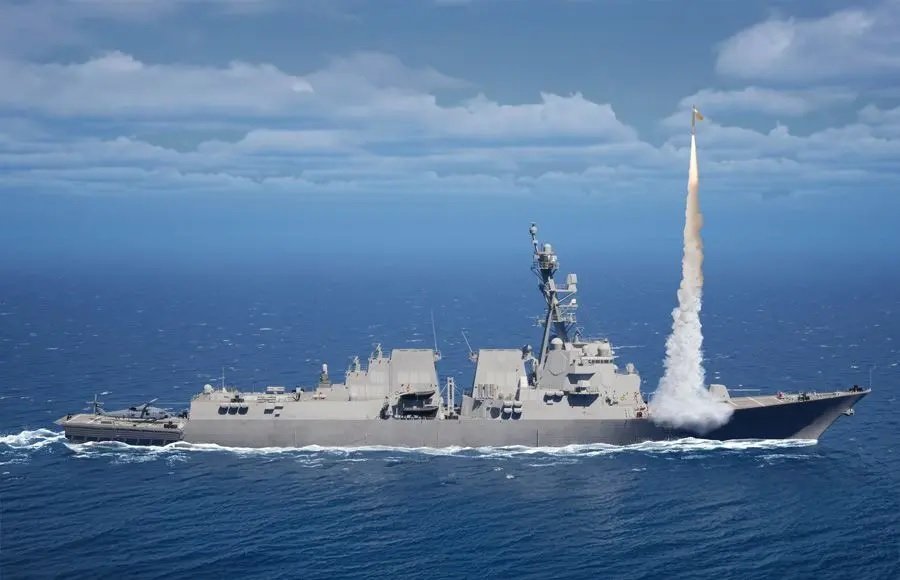
U.S
WASHINGTON — The U.S. Navy is moving forward with plans to integrate Lockheed Martin’s Patriot Advanced Capability-3 Missile Segment Enhancement (PAC-3 MSE) interceptor with the Aegis Combat System on guided-missile destroyers. The Navy is targeting initial operational capability (IOC) in 2028, according to an August 27 Congressional Research Service (CRS) report. PAC-3 MSE Integration The PAC-3 MSE is currently used with land-based Patriot air and missile defense systems and the U.S. Terminal High Altitude Area Defense (THAAD) system. The Navy plans to launch the interceptor from the Mk 41 Vertical Launching System (VLS) installed on its destroyers. Lockheed Martin plans to conduct an initial land-based test in early 2027. The integration will require software modifications to both the Aegis combat system and the PAC-3 MSE. The CRS report does not specify the number or class of destroyers that will receive the capability. It also does not provide the planned shipboard missile inventory, procurement cost or a timetable for at-sea testing. Navy Contract and Missile Procurement In April 2026, Lockheed Martin received a Navy contract to develop, integrate and test PAC-3 MSE within the Aegis architecture and Mk 41 launcher. The initial phase was reported at about $93 million, while the broader development, integration and testing effort could be worth up to about $200 million. Lockheed Martin had previously invested its own resources in Mk 41 compatibility. The Navy's fiscal year 2027 budget request includes 405 PAC-3 MSE interceptors. The Navy had ordered 12 missiles the previous year to support integration activities. How the PAC-3 MSE Works PAC-3 MSE is the current generation of the PAC-3 family and belongs to the MIM-104F branch of the Patriot system. It uses hit-to-kill technology, destroying targets through direct impact rather than a conventional explosive warhead. The interceptor is designed to engage tactical ballistic missiles, cruise missiles, unmanned aerial systems and other air-breathing threats. The missile has an onboard active millimeter-wave seeker for terminal guidance. Under the planned Aegis integration, the ship's AN/SPY-1 or AN/SPY-6 radar can provide midcourse updates before the missile's own seeker takes over during the terminal phase. This differs from earlier Patriot interceptors. PAC-2 and PAC-2 Guidance Enhanced Missiles use blast-fragmentation warheads and were designed mainly to engage aircraft and cruise missiles, with a more limited role against tactical ballistic missiles. Production and Supply Pressure The PAC-3 MSE integration is taking place as demand for Patriot interceptors increases. The CRS report said Congress is examining Patriot costs, availability, production capacity and supply-chain issues, with demand affected by the conflicts in Iran and Ukraine. Concerns include access to critical materials, supply-chain bottlenecks and whether production rates can meet U.S. and international requirements. Lockheed Martin is expanding production under multiyear agreements, with annual output planned to increase from roughly 600 interceptors to more than 2,000 over seven years. Army and International Demand The U.S. Army currently operates 15 active-component Patriot battalions and plans to add three more between fiscal years 2029 and 2031. A four-battery Patriot battalion equipped with the Integrated Battle Command System (IBCS) and Lower Tier Air and Missile Defense Sensor (LTAMDS) has an estimated procurement cost of $1.792 billion. International demand is also putting pressure on delivery schedules. According to the CRS, Denmark abandoned a planned Patriot purchase in favor of the Franco-Italian SAMP/T system, partly because of shorter delivery times. Switzerland has also considered European alternatives amid potential Patriot delivery delays of four to five years. 2028 Operational Target The CRS report does not determine whether production and supply-chain pressures will affect the Navy's Aegis integration schedule or its 2028 operational target. It also does not confirm whether the Navy has established formal requirements for the shipboard PAC-3 MSE capability. Beyond the planned early-2027 land-based test, the report does not identify additional development milestones before the 2028 IOC target. If the current schedule is maintained, PAC-3 MSE will add another interceptor option to Aegis-equipped Navy destroyers for defense against a range of missile and aerial threats.
Read More → Posted on 2026-09-05 16:02:15
U.S
WASHINGTON — The Pentagon subjected roughly 50 members of the U.S. military’s Joint Staff to polygraph tests in August as part of an investigation into suspected leaks of classified information to journalists, according to U.S. officials briefed on the matter. The inquiry focused in part on disclosures about reduced U.S. munitions inventories during the war with Iran. Military officers and civilian employees were questioned about whether they had provided classified information to members of the media, including information concerning the depletion of key U.S. weapons stocks. The tests followed several reports about reduced inventories of long-range missiles and air-defense interceptors, including Patriot and THAAD systems. The Joint Staff has between 1,500 and 2,000 military and civilian personnel and is responsible for helping coordinate military operations, policy and war planning with the U.S. combatant commands. The polygraph testing did not cover all senior officials. Gen. Dan Caine, chairman of the Joint Chiefs of Staff, was not among those tested, according to a senior Pentagon official. Some personnel from U.S. Central Command and other combatant commands were also included in the broader testing effort. The scale of the testing has been described as highly unusual. Retired Rear Adm. Donald J. Guter, a former Navy judge advocate general, said he had not seen polygraph testing used this broadly or at this level of seniority. The tests were conducted by military investigators, rather than the FBI. Two sources said none of the personnel tested failed questions specifically aimed at determining whether they had leaked information to the media. Investigation focuses on munitions disclosures The leak investigation followed reports about the rapid use of U.S. air-defense and other advanced munitions during the conflict with Iran. CNN reported in August, citing sources familiar with inventory data, that the U.S. military had used close to 80 percent of its THAAD interceptors and about half of its Patriot interceptors compared with pre-war levels. A separate analysis by the Center for Strategic and International Studies estimated that Patriot interceptor inventories had fallen from about 2,330 before the war to between 759 and 827 by late July 2026. Its estimate for THAAD interceptors was a decline from about 452 before the war to between 234 and 278. CSIS said Patriot inventories were below 1,000 and THAAD inventories were around 250 in its July assessment. CSIS has also assessed that rebuilding some depleted missile inventories could take years because of production rates and the time required for new weapons to reach the military. U.S. officials have disputed descriptions that the military lacks sufficient weapons and have emphasized efforts to increase production and replenish inventories. President Donald Trump has also said that some types of munitions were in tighter supply than before the war while maintaining that the United States had substantial ammunition available. Concern over access to classified information The investigation also examined how information about the munitions inventories reached the media. According to one source, investigators were concerned because access to the specific stockpile information was limited, raising questions about whether a foreign intelligence asset could potentially have been involved. The broader investigation is intended to identify the source of unauthorized disclosures and prevent additional classified information from reaching the media. Pentagon spokesman Sean Parnell declined to discuss the internal investigation. In a statement, he said the department does not comment on internal personnel or investigative matters but takes leaks of classified national security information seriously and investigates them. He added that protecting classified information is critical to the security of the United States and U.S. troops deployed around the world. The polygraph testing comes as the Pentagon continues efforts to address concerns over U.S. munitions inventories following the expenditure of large numbers of weapons during operations involving Iran. Sourec : CBS
Read More → Posted on 2026-09-05 16:19:16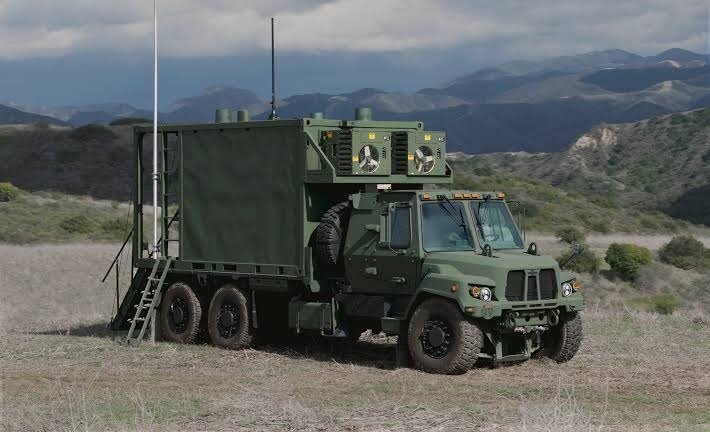
U.S
WASHINGTON, D.C. — The U.S. Army has moved its Tactical Intelligence Targeting Access Node (TITAN) program from prototyping into production, awarding delivery orders worth a combined $192 million to Palantir Technologies and Anduril Industries. The awards, made on August 31, include $127 million for Palantir and $65 million for Anduril. The contracts cover the procurement and integration of eight initial production TITAN systems, consisting of four TITAN Advanced and four TITAN Basic variants. The systems are scheduled for delivery over the next 18 months. AI-enabled battlefield intelligence system TITAN is an artificial intelligence-enabled, mobile ground station designed to collect, process and distribute information from space, high-altitude, aerial and terrestrial sensors. The system uses artificial intelligence and machine learning to combine information from multiple sources, create a common intelligence picture and generate target coordinates. The Army says this is intended to improve the speed of target recognition and geolocation while reducing the time between sensor detection and engagement through automated target nominations. TITAN is being developed to support Multi-Domain Operations, Joint All-Domain Operations and Long-Range Precision Fires. Its ability to process information from different sensors is intended to help battlefield units turn large amounts of intelligence data into usable targeting information more quickly. Two TITAN variants The initial production order is divided equally between the two versions. TITAN Advanced: Four systems will be produced in the Advanced configuration. These systems are mounted on the Family of Medium Tactical Vehicles and are intended for higher-level formations, including corps, military intelligence brigade theater and multi-domain commands. The Advanced version provides greater processing and integration capabilities and has access to space-based intelligence. TITAN Basic: Four systems will be produced in the Basic configuration. The more mobile version is designed for lower-echelon and division-level operations and is mounted on platforms including the Joint Light Tactical Vehicle. The Army is also continuing integration work involving the Infantry Squad Vehicle-Utility. Palantir and Anduril roles Palantir is the prime contractor and will lead overall production and integration of the TITAN systems. Its team includes L3Harris Technologies, Sierra Nevada Corporation, Strategic Technology Consulting and World Wide Technology, which are providing capabilities and technologies for the program. Anduril is responsible for critical hardware and shelter integration. Its work includes ruggedized vehicle-mounted systems and the integration of power, thermal, control and operator subsystems. Anduril has supported TITAN since 2021 as the program's lead hardware systems architect, with hardware production taking place at its facility in Costa Mesa, California. Production follows four years of prototyping The move to production follows four years of prototyping and testing with Army soldiers using TITAN systems in different configurations and operating environments. Army officials said soldier feedback was used to refine the system. Col. Jonathan Lipscomb, Project Manager for Intelligence Systems and Analytics, said the program has improved the speed of target recognition and geolocation from multiple sensors and reduced sensor-to-shooter timelines through automated target nominations and fusion of the common intelligence picture. The Army currently retains nine TITAN prototype systems for operational use. The eight production systems from the new orders will join those prototypes once delivered. The Army expects to award additional production orders for TITAN systems in fiscal year 2027.
Read More → Posted on 2026-09-05 16:24:14
World
KYIV — Ukraine’s Ministry of Defence has officially confirmed that Swedish-supplied ASC 890 airborne early warning and control (AEW&C) aircraft have entered combat operations over Ukrainian airspace. The confirmation appeared in a ministry publication titled “Air Force Capabilities Coalition: How Partners Are Helping Build the Future of the Ukrainian Air Force.” The ministry said Sweden announced the transfer in May 2024, formally confirmed the delivery in August 2025, and the aircraft began its first combat sorties over Ukraine in March 2026. Sweden Supplied Two ASC 890 Aircraft Sweden pledged two ASC 890 aircraft, also known as the Saab 340 AEW&C, as part of a military aid package worth approximately €1.16 billion ($1.25 billion). The package was announced in May 2024 and was Sweden’s largest military aid package to Ukraine at the time. The ASC 890 is based on the Saab 340 airframe and is designed to provide airborne surveillance and command capabilities. Sweden said the aircraft would help Ukraine detect and identify targets at long range. Erieye Radar Provides Long-Range Surveillance The aircraft’s main sensor is the FSR 890 Erieye radar, installed in the distinctive rectangular “balance beam” fairing above the fuselage. The radar is an active electronically scanned array (AESA) system operating in the S-band and incorporates gallium nitride (GaN) components. According to the specifications provided in the supplied information, Erieye can track up to 1,000 air targets and 500 surface targets simultaneously. Its instrumental detection range is about 450 kilometres, while the range against fighter-sized aircraft is approximately 350 kilometres. Operating at around 6,000 metres (20,000 feet) gives the aircraft an elevated view that can help detect low-flying cruise missiles and drones from several hundred kilometres away. Ground-based radars face limitations against such targets because of terrain and the radar horizon. Flying Radar and Command Post The ASC 890 does more than detect targets. It can also act as a flying command post, collecting surveillance information and passing tracking data to other aircraft and air-defence units. Ukrainian F-16 fighters have been modified to exchange data with the ASC 890. This allows pilots to receive information from the airborne radar and can reduce the need to activate their own radars when engaging detected targets, helping limit the risk of revealing their positions. The aircraft is operated by a crew of six or seven, including flight personnel and mission specialists such as mission control, combat control and surveillance operators. It typically operates at speeds of around 300 km/h and altitudes between 2,000 and 6,000 metres, with higher altitudes used when greater radar coverage is required. The Erieye system uses fixed side-looking radar arrays, providing approximately 120–150 degrees of coverage on each side. Part of Ukraine’s Network-Centric Air Force Ukraine’s Defence Ministry said the ASC 890, together with F-16, Mirage 2000 and Gripen fighters, forms the foundation of a modern network-centric air combat system aligned with NATO standards. The aircraft is part of the wider Air Force Capabilities Coalition, involving 14 partner nations and supporting Ukraine’s transition from Soviet-era aviation systems to Western standards. Ukraine began receiving F-16s in 2024 from Denmark, the Netherlands, Norway and Belgium. France began delivering Mirage 2000 fighters in 2025, while Sweden has committed to transferring 16 Gripen C/D fighters. A newer Gripen E variant is planned for delivery by early 2029. Sweden previously operated two ASC 890 aircraft, and both were transferred to Ukraine. The transfer also required preparations and data-sharing modifications to enable integration with Ukraine’s F-16 fleet. A video that appeared on a Russian Telegram channel on 20 March 2026 appeared to show an ASC 890 in flight with Ukrainian voices in the background, but its exact date and location could not be independently verified at the time. The Ukrainian Ministry of Defence later officially confirmed that the aircraft had begun combat sorties in March 2026. The ASC 890 now provides Ukraine with an airborne surveillance and command capability that can extend detection of low-altitude threats and support coordination between Western fighter aircraft and Ukraine’s wider air-defence network.
Read More → Posted on 2026-09-05 16:33:10
U.S
REDMOND, Wash. — Kymeta has received a $20 million order from the U.S. Department of Defense (DoD) for more than 100 Osprey u8 satellite communications terminals, along with bundled multi-orbit connectivity services through the company’s Kymeta Broadband network. The specific DoD branch receiving the terminals was not disclosed because of operational security considerations. Kymeta said the latest order brings the total value of terminals and connectivity services delivered to the same unnamed DoD branch in 2026 to more than $30 million. Multi-Orbit Satellite Connectivity The Osprey u8 is a flat-panel, electronically steered satellite antenna that uses metamaterial technology and does not require moving mechanical components to maintain satellite connections. The terminal features a ruggedized enclosure and is designed around low size, weight and power (SWaP) requirements. Kymeta developed the system for mobile operations and challenging environments where reliable communications are required. The new order combines the physical terminals with Kymeta Broadband connectivity. The service provides access through both geostationary orbit (GEO) and low Earth orbit (LEO) satellite networks. Another capability of the Osprey u8 is support for switching between transmission security (TRANSEC) and non-TRANSEC networks. This allows the terminal to operate across different network configurations based on operational requirements. Supporting Resilient Military Communications Kymeta's systems are designed to support the military PACE communications model, which stands for Primary, Alternate, Contingency and Emergency communications. The approach provides multiple communication options so forces can maintain connectivity when their primary communications path becomes unavailable. The company is also developing this concept through its AutoPACE intelligent communications platform. According to Kymeta, AutoPACE is intended to automate the selection and switching of available connectivity sources, reducing the need for operators to manually change between satellite feeds or networks when connectivity is disrupted or affected by jamming. The company said its work with multiple DoD branches reflects its focus on providing connectivity for distributed forces operating in contested and rapidly changing environments. Expanding Defense Business The latest order adds to Kymeta's existing defense business and its focus on military and government communications. The company said its satellite communications solutions are now available to U.S. forces for operational requirements. “This order is an affirmation from the military community that Kymeta can deliver on its promise to provide dependable connectivity for mission-critical operations,” said Manny Mora, CEO of Kymeta. “With our partners across national security, we are continuing to build steady and solid momentum as a trusted and valued partner.” Kymeta was founded in 2012 and is headquartered in Redmond, Washington. The company develops electronically steered flat-panel satellite antennas using metamaterial technology, with products aimed at mobile and challenging operating environments. The Osprey u8 is designed for military and government applications and supports multi-orbit and multi-network connectivity. The value and scale of the latest DoD order make it another significant contract in Kymeta's expanding work with the U.S. military.
Read More → Posted on 2026-09-05 16:44:33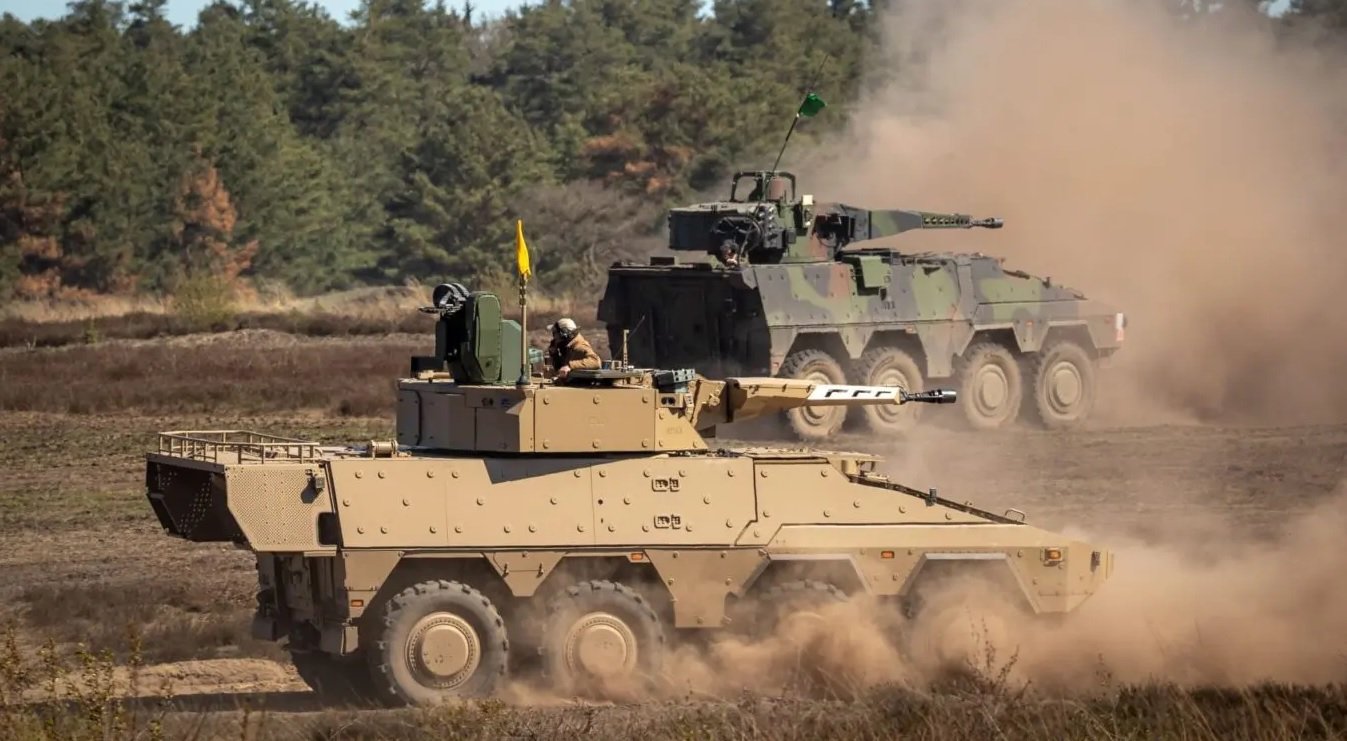
Europe
DÜSSELDORF, Germany — German defense company Rheinmetall expects to secure about €12.4 billion in vehicle business from Germany’s Arminius procurement programme by the end of 2026, Chief Executive Armin Papperger said during the company’s second-quarter 2026 earnings call. The initial vehicle package could be worth nearly €25 billion, with Rheinmetall and KNDS Deutschland each receiving a 50% share through their equally owned Artec consortium. Final negotiations with the Bundeswehr are expected in the second week of September. The contract still requires parliamentary approval. Papperger expects the Bundestag to consider the funding on December 9, with signing possible five to 10 days later. A 30% advance payment could then provide Rheinmetall with more than €3 billion in December or January. Rheinmetall also expects about €2 billion from a separate service and support contract valued at roughly €4 billion in total. The support agreement could be concluded in January 2027, bringing Rheinmetall’s expected business from the initial phase to approximately €14.4 billion to €14.5 billion. Further Boxer Orders The wider Arminius programme could eventually reach a theoretical industrial value of around €77 billion, although the additional phases remain unapproved and unfunded proposals. The first proposed follow-on option would be worth €28 billion overall, including about €14 billion for Rheinmetall, and cover around 1,700 vehicles delivered between 2030 and 2035. A second proposal is valued at about €24 billion, including €12 billion for Rheinmetall, for another 2,000 vehicles at a later stage. The initial phase is expected to include about 1,800 GTK Boxer vehicles. If all three phases proceed, Germany could acquire up to 5,500 new Boxers by around 2040, in addition to the 861 vehicles already ordered by the Bundeswehr. The programme will cover multiple Boxer configurations, including the Schakal infantry fighting vehicle and RCH 155 self-propelled howitzer. Other planned or considered variants include command vehicles, driver-training platforms, artillery reconnaissance vehicles, armored personnel carriers, medical evacuation vehicles, bridge systems and air-defense vehicles equipped with the Skyranger 30 turret. Rheinmetall Backlog The Arminius programme comes as Rheinmetall reports a record €80.4 billion order backlog at the end of the second quarter. Quarterly sales rose nearly 70% to €3.289 billion, while operational results increased 115% year over year. Quarterly order intake increased 476%, with about 70% of the backlog consisting of firm orders.
Read More → Posted on 2026-09-06 13:54:56
U.S
BETHESDA, Md. — Lockheed Martin expects deliveries of its CH-53K King Stallion heavy-lift helicopter to roughly double in 2026 compared with 2025, with deliveries potentially doubling again in 2027. Chief Financial Officer Evan Scott gave the outlook during the company’s second-quarter 2026 earnings call. “In the case of 53K, we could be talking 2x deliveries this year versus last year, and potentially doubling again next year,” Scott said. Lockheed Martin has not disclosed exact CH-53K delivery numbers for 2026 or 2027. The possible increase in 2027 was presented as an outlook rather than a firm production commitment. If both increases occur, annual deliveries could reach roughly four times the 2025 level by 2027. Sikorsky Production Ramp The CH-53K increase is part of a wider production ramp at Sikorsky. Lockheed Martin expects all four Sikorsky platforms to deliver more aircraft in 2026 than in 2025. The company is also increasing F-16 and C-130 deliveries, while 10 munitions programs within its Missiles and Fire Control segment are delivering more units than in 2025. “We are in a scaling mode right now,” Scott said, noting that Lockheed Martin must increase production while maintaining the resilience needed to manage technical and operational challenges. Impact on Rotary and Mission Systems Higher Sikorsky production, combined with increased radar volumes, is expected to strengthen Lockheed Martin’s Rotary and Mission Systems segment during the second half of 2026. The company raised its full-year sales outlook for the segment to $17.7 billion–$18.1 billion and its profit forecast to $1.86 billion–$1.89 billion. Lockheed Martin also expects 2026 company-wide sales of $79.75 billion–$81.75 billion, representing about an 8% increase at the midpoint from 2025. Second-half sales are expected to grow 7%–12% year over year, with Missiles and Fire Control expected to lead the expansion and higher Sikorsky production also contributing. CH-53K Program The CH-53K is the U.S. Marine Corps’ newest heavy-lift helicopter and is intended to replace the CH-53E Super Stallion. The aircraft can lift up to 36,000 pounds externally, while the Marine Corps plans to acquire 200 helicopters. As of spring 2026, about 25 CH-53Ks had been delivered to the Marine Corps, with several squadrons already operating the helicopter. Its first operational deployment is planned for fiscal year 2027 with the 26th Marine Expeditionary Unit. In September 2025, Sikorsky received a $10.86 billion multi-year contract for up to 99 additional CH-53Ks for the Marine Corps and possible international customers, covering deliveries from 2029 to 2034. Israel has ordered 12 helicopters. A separate $525 million contract awarded in June 2026 covers development and integration of advanced technologies for the CH-53K program through 2031. The expected CH-53K production increase is part of Lockheed Martin’s broader effort to expand output across helicopters, aircraft, radars and munitions as the company responds to higher demand.
Read More → Posted on 2026-09-06 14:05:27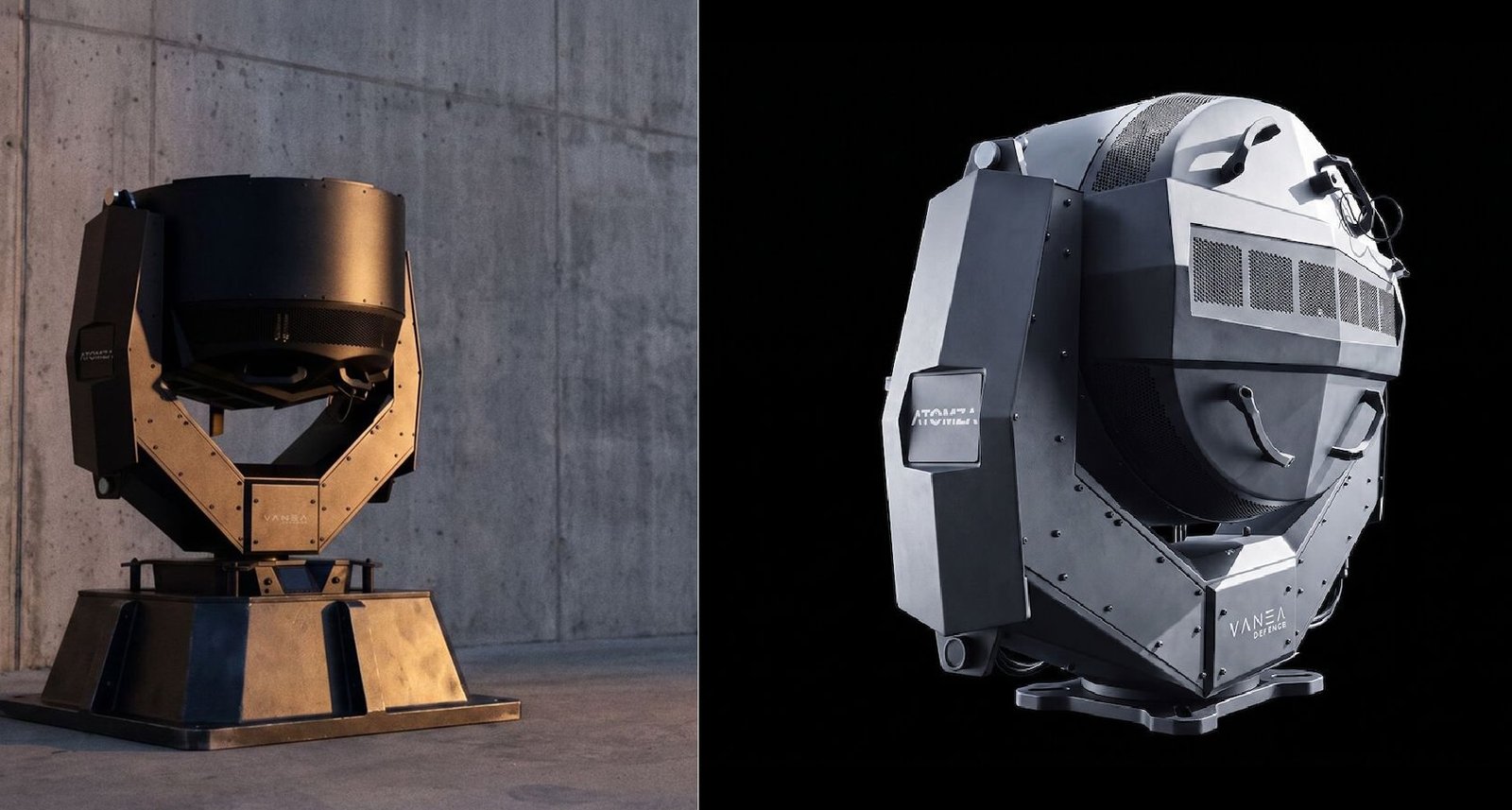
Europe
MUNICH — Munich-based VANEA Defence has unveiled ATOMZA, a non-kinetic counter-drone system designed for civilian operators. The system was presented at the Drone Days event in Bremen, Germany, on August 27 and 28, 2026. VANEA said ATOMZA is already in production and available for commercial orders. ATOMZA uses a directed photonic radiation effector that projects high-intensity light onto a targeted drone. The light saturates the drone’s optical sensors and impairs its guidance systems without physically destroying the aircraft. According to VANEA, this approach reduces the risk associated with falling drone debris and allows ATOMZA to be used in locations where kinetic interceptors or radio-frequency jammers may be restricted or unsuitable, including near airports, in ports, cities and areas with people. VANEA says ATOMZA is designed to be operated by civilian organisations without sovereign enforcement powers. The company is targeting applications at airports, critical infrastructure sites, major events and other sensitive locations. Traditional active counter-UAS systems, including jammers, high-energy lasers and interceptor drones, are generally limited to authorised security authorities. The system weighs 195 kg and has an operational lifetime of 20,000 hours. VANEA says engagement costs are primarily associated with electricity consumption, while the system requires no expendable ammunition, allowing it to be reused. The technology uses a proprietary artificial intelligence model developed and trained entirely in Europe. VANEA says the AI supports drone detection and can distinguish genuine threats from decoys, including in swarm situations. The company is also developing a broader family of counter-drone technologies involving networked countermeasures and advanced sensors. Founded in 2025, VANEA Defence said ATOMZA is already undergoing operational testing and validation with German security authorities and critical infrastructure operators. Military trials are planned for the coming weeks, while the company is also discussing wider deployment with European authorities and international security partners. Jens Hillenkötter, Executive Vice President for Unmanned Aircraft Systems and Counter-UAVs at VANEA Defence, said Europe's threat environment is changing rapidly and that critical infrastructure operators need solutions that can be deployed quickly. Co-founder and Chief Technology Officer Dr. Oliver Hartkorn stressed the importance of maintaining a European technology base for systems used by police, armed forces and civilian operators. VANEA Defence operates from Munich and develops counter-UAS and autonomous defence technologies. The company operates as a brand of publicly listed SCP Standard Capital Partners AG.
Read More → Posted on 2026-09-06 14:11:10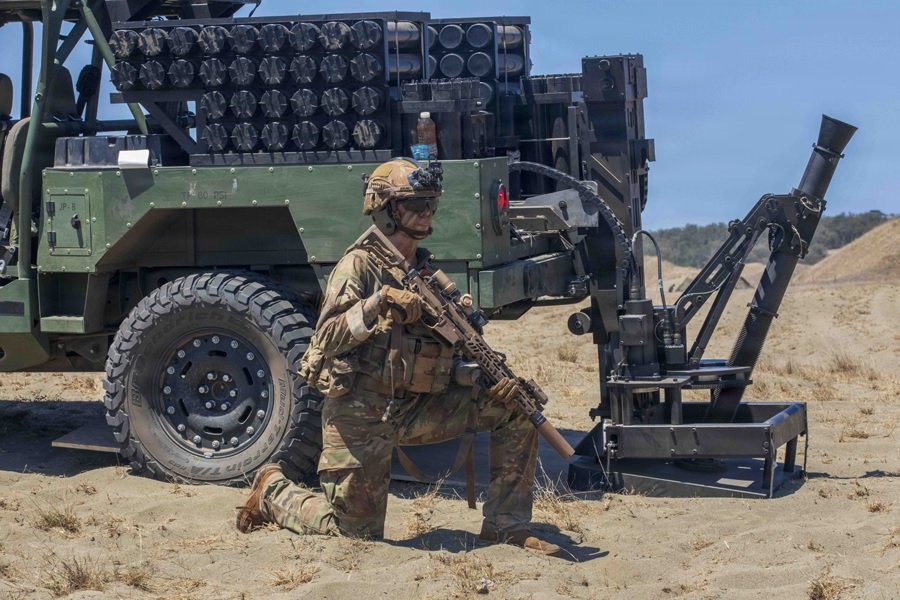
U.S
TAMPA, Fla. — The U.S. Army has awarded Global Military Products (GMP) a $12.9 million contract to procure and integrate Scorpion Light 81mm mobile mortar systems onto the Army’s Infantry Squad Vehicle–Utility (ISV-U) platforms. The contract was awarded under the Department of Defense Ordnance Technology Consortium (DOTC) Other Transaction Authority (OTA) framework. It covers the integration of the Scorpion Light with Army digital fire-control technologies and government-furnished M253 mortar barrels. Digital Fire Control The Scorpion Light is designed to provide infantry units with a mobile and digitally enabled indirect-fire capability for distributed operations. Its digital fire-control architecture supports rapid target acquisition, digital fire-mission processing, precision engagement and rapid re-aiming, while reducing crew workload. The system also incorporates the Army’s Nett Warrior networked communications architecture, enabling digital fire missions and target handoffs between systems. Rapid Shoot-and-Scoot Capability The system is designed to quickly deploy, fire and relocate. The Scorpion Light can emplace, fire eight rounds and relocate in under two minutes. It takes about 30 seconds to fire the first round and another 30 seconds to displace after the final round. A non-seating baseplate allows the mortar to operate on surfaces such as gravel, hard-packed ground and concrete without digging in. Mounted on the ISV-U The Scorpion Light will be integrated with the Infantry Squad Vehicle–Utility, a utility variant based on the Chevrolet Colorado ZR2 architecture and designed for severe off-road environments. The integrated system is certified for internal transport in a CH-47 Chinook and is air-droppable. The Scorpion is also a vehicle-agnostic system and has previously been integrated with Polaris MRZR variants used by the U.S. Marine Corps under a separate contract awarded earlier in 2026. Two Years of Army Testing The Army and Global Military Products have worked together on the Scorpion platform for about two years through Soldier Enhancement Program (SEP) initiatives and Cooperative Research and Development Agreement (CRADA) efforts. The work included direct soldier feedback to improve the system's mobility, lethality, survivability and operational effectiveness. James Knight, director of Global Military Products, said the program supports the Army’s Transformation Initiative, which focuses on smaller, more agile and highly lethal combat formations for complex operational environments. Balikatan 2026 Testing The Scorpion was recently evaluated during Exercise Balikatan 2026 in the Philippines. Soldiers from the Multi-Purpose Company, 2nd Battalion, 35th Infantry Regiment, 25th Infantry Division fired 20 rounds from two separate Scorpion systems in under two minutes during live-fire operations. Earlier evaluations were also conducted during Transformation in Contact events in Hawaii in 2025, as well as at Yuma and Aberdeen Proving Ground. First Deliveries Global Military Products is a division of Global Ordnance. The Scorpion system originates from Spanish manufacturer NTGS, also known as Alakran outside the United States, and is marketed in the U.S. by Global Military Products. Deliveries of the first systems under the $12.9 million Army contract are expected to begin in the week of September 7, 2026.
Read More → Posted on 2026-09-06 16:53:33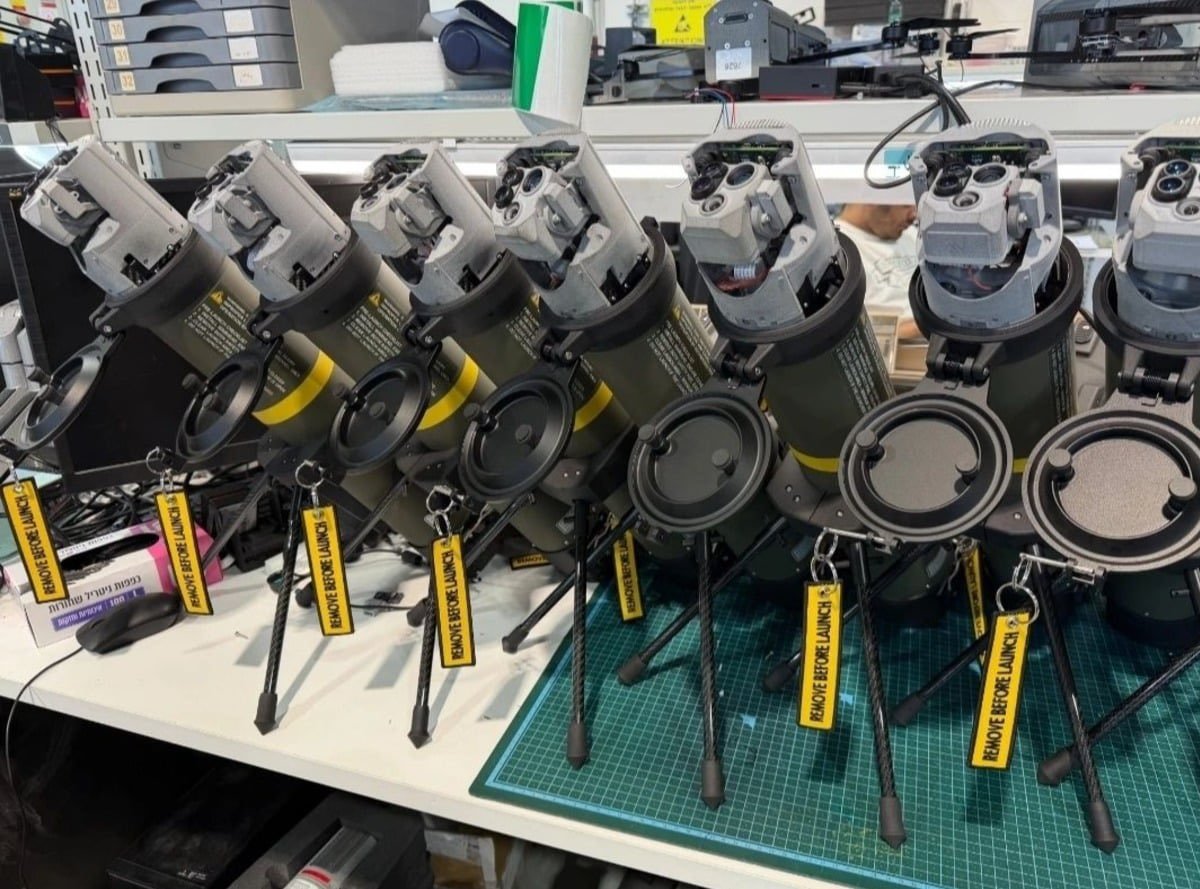
World
TEL AVIV, Israel — Israeli defense company SpearUAV has reached a new production milestone, with nearly 1,000 Viper 300 loitering munition systems ready for delivery to customers, according to the company. The specific countries and military units receiving the systems have not been disclosed. SpearUAV has also reported that production of the Viper 300 has reached hundreds of systems per month. The company has not provided an exact monthly production figure or a breakdown of the nearly 1,000 systems by customer or region. Viper 300 designed for infantry and armored units The Viper 300 is a compact, capsule-launched loitering munition designed for infantry and armored forces. It can be carried by soldiers or launched from military vehicles. Unlike fixed-wing loitering munitions, the Viper 300 uses a quadcopter configuration that allows it to hover and move at low speeds. SpearUAV says this provides an advantage in environments where hovering and close maneuvering are required, including urban areas and missions involving moving targets. The system uses onboard artificial intelligence to assist with target identification. An operator receives the drone's video feed and remains involved in the engagement process, selecting the target before an attack. The complete system weighs 2.8 kg, including the launch capsule and payload. It has a stated top speed of 27 meters per second, a range of up to 5 km and an endurance of up to 20 minutes. The Viper 300 is equipped with a 300-gram directional warhead. Multi-Canister Launcher expands vehicle integration SpearUAV has also developed the Multi-Canister Launcher (MCL), which allows multiple Viper systems to be mounted on armored vehicles. The launcher is intended to provide battalion-and-below units with an integrated capability for reconnaissance and loitering-munition missions. In May 2026, SpearUAV confirmed to Shephard that it was manufacturing and delivering approximately 1,000 Viper systems to multiple customers. The company said the system was already deployed by the Israel Defense Forces and had also been exported to undisclosed users. The company has continued to present the Viper family as an organic aerial capability for ground forces, including infantry and combat vehicles. Earlier $20 million Viper 300 contract SpearUAV announced a $20 million Viper 300 contract in December 2024 with an undisclosed customer. The agreement included options that could increase its value to approximately $60 million, with deliveries expected to begin in 2025. The company has not disclosed the total value of contracts associated with the nearly 1,000 Viper systems currently being delivered or prepared for delivery. Wider Viper family The Viper 300 is part of SpearUAV's wider Viper family, which includes the smaller Viper 40, the larger Viper 750 and the Viper I interceptor. The company has also developed the MCL for deploying multiple systems from ground vehicles. In November 2025, Uvision Group completed its acquisition of SpearUAV, bringing SpearUAV's encapsulated Viper systems into Uvision's broader portfolio of loitering-munition technologies. The latest production figure indicates that SpearUAV is continuing to expand manufacturing and deliveries of the Viper family, although the company has not publicly identified the customers receiving the nearly 1,000 Viper 300 systems.
Read More → Posted on 2026-09-06 16:57:33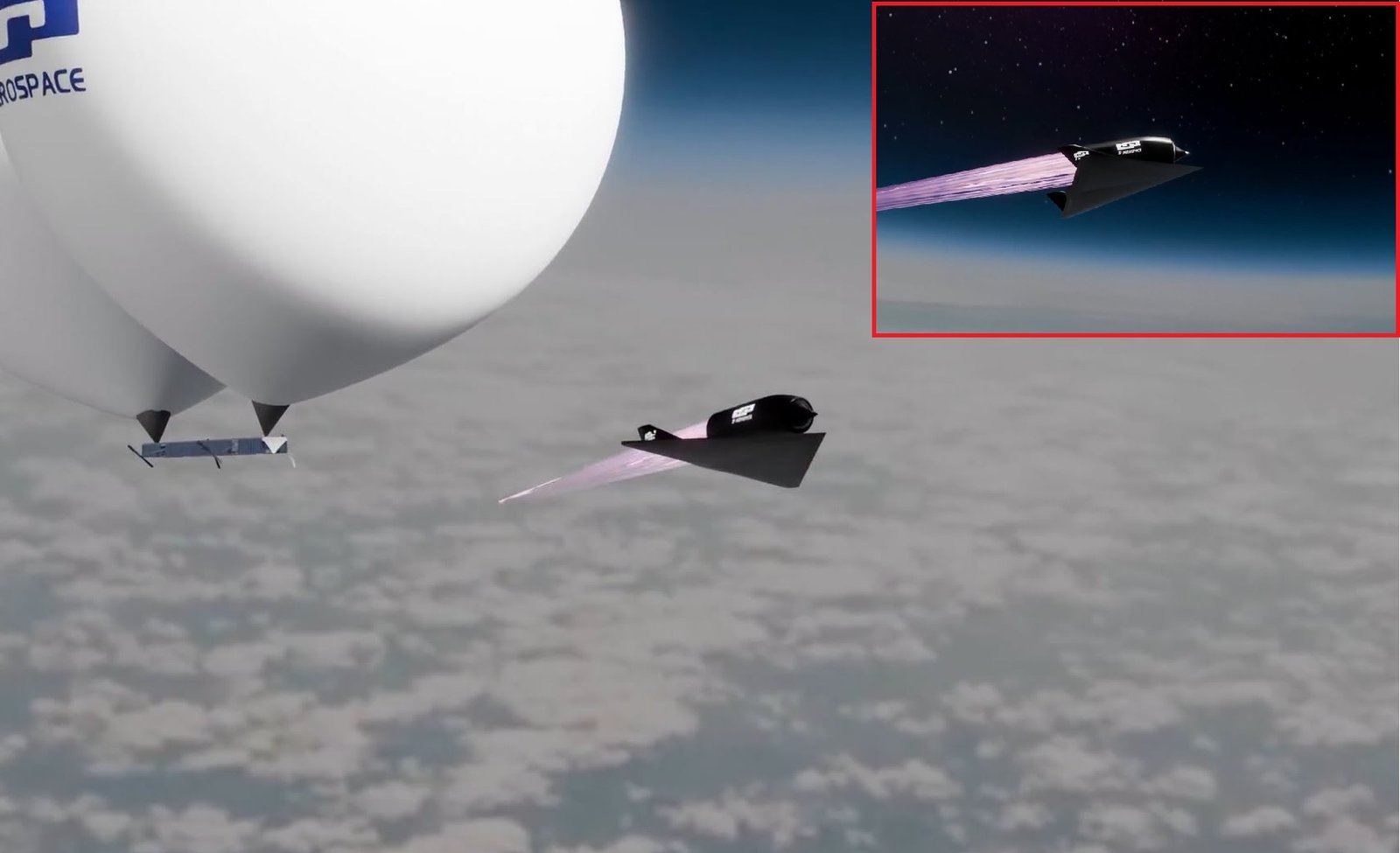
World
CALIFORNIA — JP Aerospace, an American volunteer-run nonprofit that has spent more than four decades developing an alternative approach to spaceflight, has released new computer-generated images of a proposed vehicle called Hazel. The images, shared by JP Aerospace president John Powell, show a dark, wing-shaped aircraft being released from a high-altitude airship called SuperTandem. The airship features two balloons connected by a long truss. Powell said the images are stills from an upcoming Hazel concept video and are not footage of an actual flight or test. No physical hypersonic vehicle matching the current Hazel concept has been publicly reported as built or flown. JP Aerospace has not disclosed technical specifications, funding sources or a target launch date for Hazel. Airship to Orbit program JP Aerospace refers to itself as “America’s Other Space Program.” Its long-term Airship to Orbit (ATO) program aims to reach space using lighter-than-air vehicles instead of conventional rockets. The proposed system has three stages. The Ascender would carry people and cargo from the ground to about 140,000 feet. The Dark Sky Station, positioned at roughly 140,000 feet, would serve as a high-altitude transfer and construction facility. The final stage is the Orbital Ascender, a proposed airship about one mile long that would be built at the Dark Sky Station. Covered with solar panels, it would gradually accelerate over several days using lightweight, low-power electric ion propulsion, eventually reaching orbital speeds of above Mach 20. Previous high-altitude testing JP Aerospace's best-documented flight was the October 2011 mission of its unmanned Tandem airship. The twin-balloon vehicle used a 30-foot carbon-fiber truss, two electric motors and six-foot propellers, reaching 95,085 feet over Nevada's Black Rock Desert. The altitude set an airship record at the time. Powell said Tandem took about five years to develop and cost roughly $30,000. After the flight, the vehicle was recovered by parachute after one balloon failed and the second was released. The organization has also conducted roughly 200 smaller research missions using balloons and small rockets. Its PongSat program has carried thousands of student science experiments to high altitudes in ping-pong balls. Hazel's earlier design The Hazel name is also linked to a 1959 U.S. concept for an inflatable Mach 3 aircraft called Hazel MC-10. The earlier design was studied extensively and had work conducted on its engines, wings and subsystems, but it never flew after competing programs advanced. Powell has discussed building engineering models of the 1959 design for low-speed and Mach 4 wind-tunnel testing and explanatory videos. The latest concept presents Hazel as a hypersonic test vehicle that could be air-launched from a high-altitude platform. JP Aerospace has not publicly confirmed construction or flight testing of the massive orbital-class airships required for its Airship to Orbit vision, nor has it reported a flight of a physical Hazel vehicle matching the current concept. The organization is also working on projects including the Ellipse airship prototype, hybrid and magnetohydrodynamic propulsion tests, and a crewed submarine used as a systems and life-support testbed. The new SuperTandem and Hazel images add to JP Aerospace's ongoing concept work, but they remain computer-generated illustrations rather than operational hardware.
Read More → Posted on 2026-09-06 17:10:40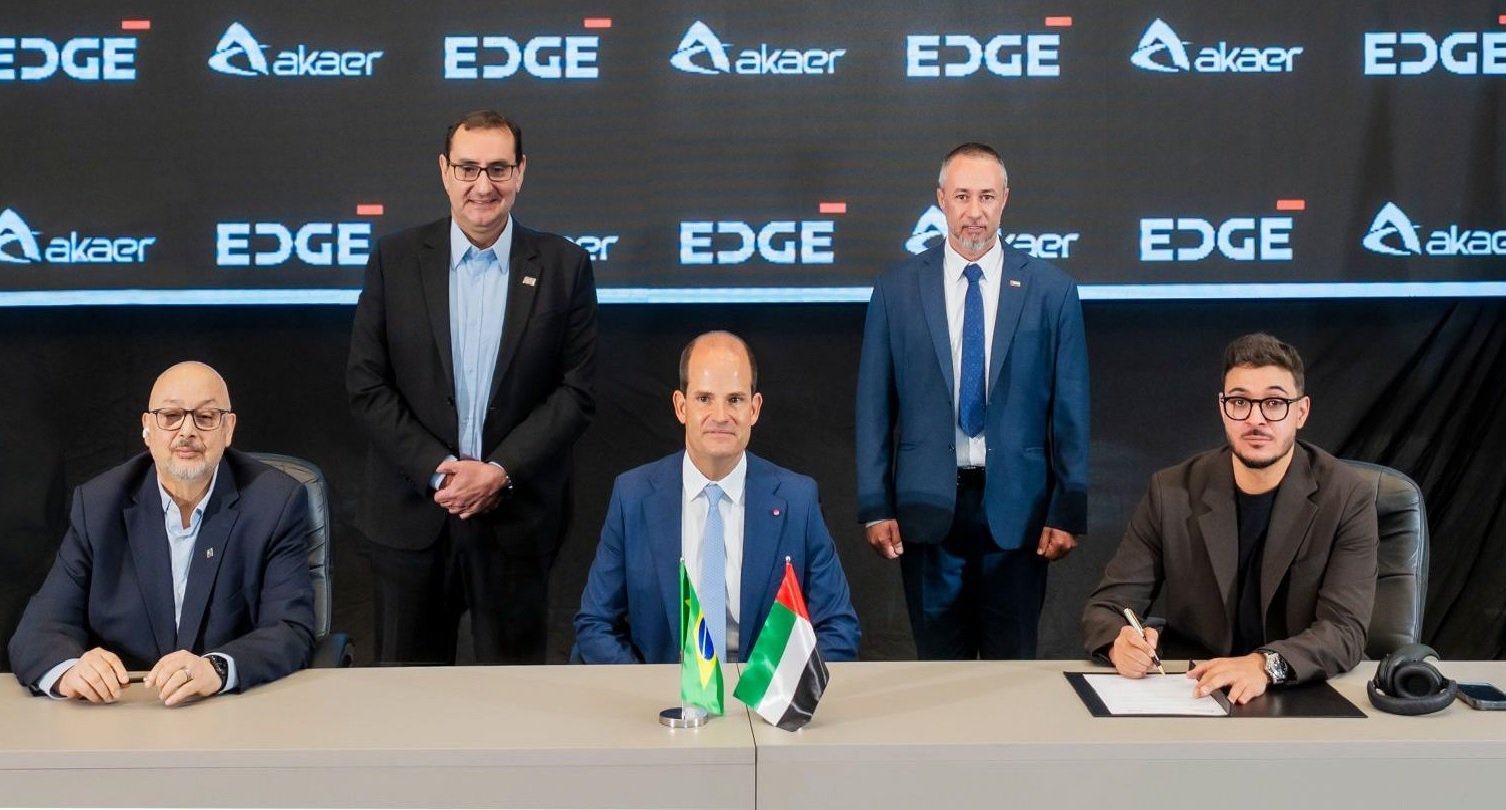
World
ABU DHABI / SAO JOSE DOS CAMPOS, Brazil — UAE-based advanced technology and defence group EDGE has completed its acquisition of Brazilian aerospace engineering company AKAER after all customary closing conditions and relevant regulatory approvals were fulfilled. The acquisition was completed on September 4, 2026, following the share purchase agreement announced by the companies in July. Under the agreed corporate structure, Brazilian defence company SIATT will hold a minority equity stake in AKAER. The arrangement is intended to preserve AKAER’s status as an Empresa Estratégica de Defesa (EED), or Strategic Defence Company, within Brazil. EDGE retains control of AKAER. EDGE Group Managing Director and CEO Hamad Al Marar said the completion of the acquisition represents an important milestone for EDGE in Brazil. He also highlighted AKAER’s engineering expertise and its continued contribution to Brazil’s defence ecosystem. Expanded engineering and technology capabilities The acquisition gives EDGE an established engineering base in Brazil with a multidisciplinary team covering the product lifecycle from project design and development through to industrialisation. EDGE and AKAER already work together on the development and industrialisation of unmanned systems, providing an existing basis for closer integration within the group. EDGE said the acquisition also expands its capabilities in areas including optronics, electro-optic and infrared systems, and space-related technologies. These capabilities were identified by EDGE when it announced the planned acquisition in July. The transaction forms part of EDGE’s expanding investment in Brazil. The group said the acquisition will support Brazil’s defence industry, strategic technologies and technological sovereignty, while contributing to direct and indirect employment opportunities and the development of national skills and capabilities. AKAER's aerospace experience Founded in 1992 and headquartered in São José dos Campos, São Paulo, AKAER has more than three decades of experience in aerospace engineering. The company has accumulated more than 10 million engineering hours across military and commercial aerospace programmes for global manufacturers. AKAER has contributed to several major aerospace programmes, including Saab’s Gripen NG fighter, Turkish Aerospace’s Hürjet trainer, and aircraft programmes from Embraer, including the Super Tucano, ERJ-E1, ERJ-E2, Legacy 450/500 and KC-390. Its engineering work has also included Boeing’s 747-8 and the Brazilian Air Force’s P-3 Orion fleet. AKAER will continue operating from Brazil, maintaining its local presence and established operations. The company’s São José dos Campos base remains part of its role in Brazil’s aerospace and defence industry. EDGE has already expanded its presence in Brazil through investments in SIATT and Condor Non-Lethal Technologies. The completion of the AKAER acquisition adds another Brazilian aerospace and defence engineering company to the group’s portfolio.
Read More → Posted on 2026-09-06 17:18:13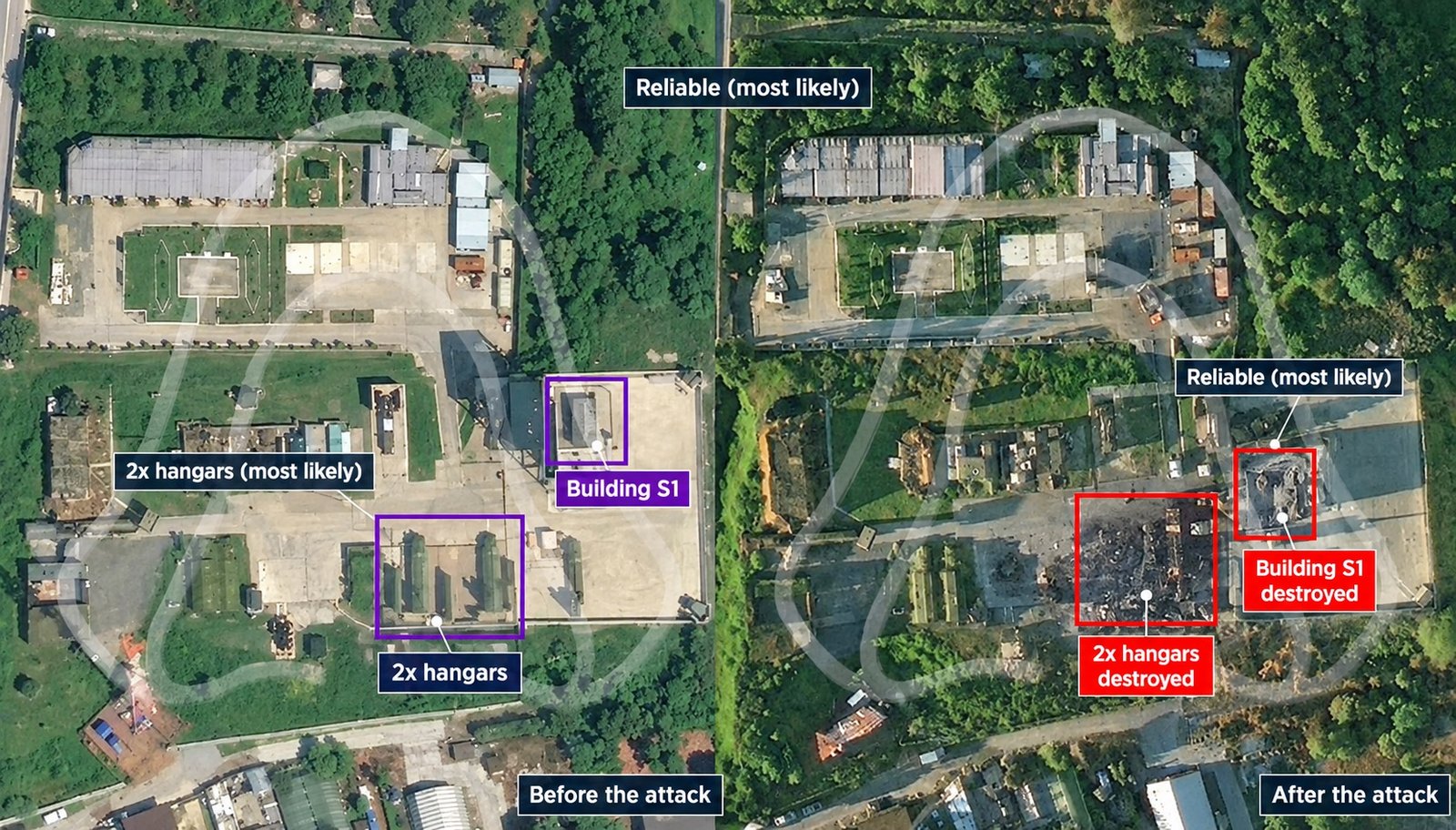
World
SOCHI, — Ukrainian Defense Forces carried out coordinated drone strikes against Russian military and energy infrastructure in the Sochi area on September 4, with further damage reported at Sochi International Airport. The strikes destroyed air defense systems, damaged fuel storage facilities and destroyed or damaged several Russian military helicopters. S-300 and Pantsir systems destroyed The first strike took place in the early hours of September 4 against a Russian air defense position near the settlement of Sirius, close to the Psou River and the border with occupied Abkhazia. Satellite imagery published by the Absolutely Reliable Source Telegram channel showed two S-300 launchers and a Pantsir surface-to-air missile and gun system destroyed. The exact Pantsir modification was not identified, although reports linked it to a newer Pantsir-SMD configuration produced by Russia's High-Precision Systems holding. Russian publication ASTRA and OSINT group Exilenova+ analyzed eyewitness footage and geolocated the fire to the area. The first explosions were reported at about 1:20 a.m., followed by secondary detonations that reportedly continued for several hours. Oil depots hit During the same operation, Ukrainian drones struck two oil facilities in the Sochi area: Rosneft's Adler oil depot and a Lukoil facility. Later satellite imagery showed damage to several storage tanks. At the BATO aviation fuel terminal near Sochi's Adler Airport, associated with Rosneft operations, six tanks were destroyed — two RVS-2000 tanks and four RVS-1000 tanks. At the Lukoil-Yugnefteprodukt depot, three RVS-400 tanks were destroyed or damaged. The facilities had protective netting and structures, but fires were reported at the sites. The attack also disrupted operations at Sochi International Airport. Restrictions lasted for more than 11 hours, with dozens of flights delayed, canceled or diverted. Aircraft refueling was also limited, with notices restricting services primarily to the Lukoil operator for a period. Sochi Mayor Andrey Proshunin confirmed a large drone attack on civilian and military infrastructure in Sochi and Sirius. He advised residents to remain away from windows and stay in shelters. Drone debris was found at several locations, while local authorities reported no casualties. Russian helicopters damaged Satellite imagery released after the attack also showed damage to military helicopters at Sochi International Airport. Ukraine's Defense Forces destroyed a Ka-52 and a Mi-28 attack helicopter, while a Mi-8 family multirole helicopter was damaged. Two radar stations at the airport, including an airfield surveillance radar, were also reported damaged. The initial reports came from eyewitness videos, photographs and OSINT geolocation. Subsequent satellite imagery from the Absolutely Reliable Source channel was used to assess damage to the S-300 launchers, Pantsir system, fuel tanks and helicopters. The strikes affected Russian air defense, aviation and fuel infrastructure in the Sochi area, although Russian authorities have not publicly confirmed all of the reported military losses. Source : militarnyi
Read More → Posted on 2026-09-06 17:28:30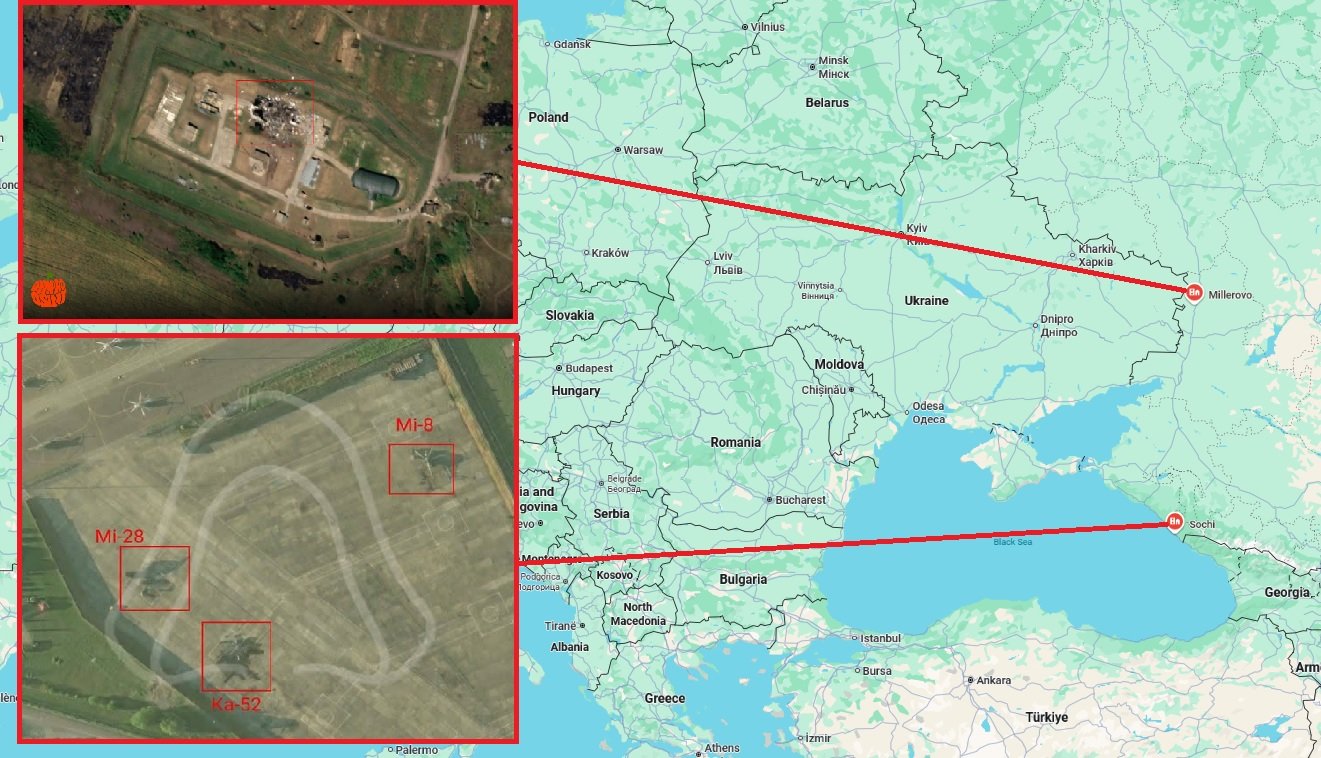
World
MOSCOW — Satellite imagery has confirmed damage to Russian military infrastructure and aircraft following separate Ukrainian drone strikes on the Millerovo airbase in Rostov Oblast and the Sochi area in Krasnodar Krai. The imagery provides additional evidence of the results of attacks carried out on August 30 and September 4, 2026, including damage to radar systems, an ammunition storage facility, a maintenance facility and Russian military helicopters. Damage at Millerovo Airbase The first strike took place during the night of August 30 at Millerovo airbase in Rostov Oblast. Satellite imagery published by the open-source intelligence group Dnipro OSINT confirmed the destruction of an ammunition storage facility and the airbase's technical and maintenance facility, known as the TECh. The imagery also showed damage to an RSP-27 precision approach radar and a Nebo-SV early warning radar. Ukrainian outlet Militarnyi reported that the attack was carried out by Ukraine's 1st Separate Center of the Unmanned Systems Forces using FP-1 long-range strike drones. The same operation also targeted Russian military assets at Yeysk airbase, where a Pantsir-S1 air-defense system, a Sopka-2 radar and an aviation weapons storage facility were reportedly struck. A Kasta 2E2 radar near Shabelskoye was also targeted. Robert “Madyar” Brovdi, commander of Ukraine's Unmanned Systems Forces, said the main target at Millerovo was the DRL-27 module of the RSP-27 aircraft landing radar system. The DRL-27 is used for detecting airborne targets and forms part of the airfield's air traffic control system when combined with the PRL-27 landing radar. Millerovo airbase is located about four kilometres northwest of Millerovo city, near Dolotinka. The facility has hosted Russia's 31st Guards Fighter Aviation Regiment, which operates Su-30SM fighters. Ukrainian officials have described the airfield as a staging location for Russian frontline aviation supporting operations in eastern and southern Ukraine. The base has previously been targeted, including in December 2023 and July 2025. NASA's FIRMS system also recorded a fire at the airbase during the early hours of August 30 following a drone alert in the area. FP-1 drones used in the attack The FP-1 is a long-range one-way attack drone developed by Ukrainian defense company Fire Point. The baseline version has a publicly documented range of up to 1,600 kilometres and can carry a modular warhead in the 60–120 kilogram range, depending on configuration. Fire Point has also stated that the drone costs about $55,000 per unit. An extended-range version has subsequently been associated with ranges of up to about 3,400 kilometres, although specifications vary between different versions and configurations. The FP-1 has been used by Ukraine for long-range strikes against military and logistical targets inside Russia. The platform is among the systems Ukraine has developed to conduct deep strikes without relying on Western long-range missiles. Helicopters damaged at Sochi A separate Ukrainian drone strike on September 4 caused damage at Sochi International Airport in Krasnodar Krai. Satellite imagery reviewed after the attack showed a destroyed Russian Ka-52 attack helicopter and a destroyed Mi-28 attack helicopter at the airport's military helicopter parking area. A Mi-8-family transport helicopter was also damaged. The strike also affected fuel infrastructure near the airport. Reports based on satellite imagery identified six destroyed fuel storage tanks at the BATO aviation fuel depot. A nearby Lukoil facility was also hit, with three additional storage tanks reported destroyed or damaged. Satellite evidence also indicated damage at a nearby Russian air-defense position, with one launcher from an S-300 or S-400 system reportedly detonating during the attack. The exact system involved has not been independently confirmed. The attack had an impact on airport operations. Sochi airport operated under restrictions for more than 11 hours, while flights were delayed, cancelled or diverted. Temporary restrictions were also placed on aircraft refueling. Previous attacks Sochi airport and nearby infrastructure have previously been affected by Ukrainian strikes. A helicopter parking area in the Adler district was targeted in October 2023, while an August 2025 attack caused a fire at nearby oil infrastructure and disrupted airport operations. Millerovo has likewise been targeted several times since Russia's full-scale invasion of Ukraine, including attacks reported in December 2023 and July 2025. As of September 6, Russian authorities had not publicly provided a specific assessment of the damage to the Millerovo facilities or the helicopters and military infrastructure identified in the satellite imagery from the September 4 attack. Main Source : defence-blog
Read More → Posted on 2026-09-06 17:49:43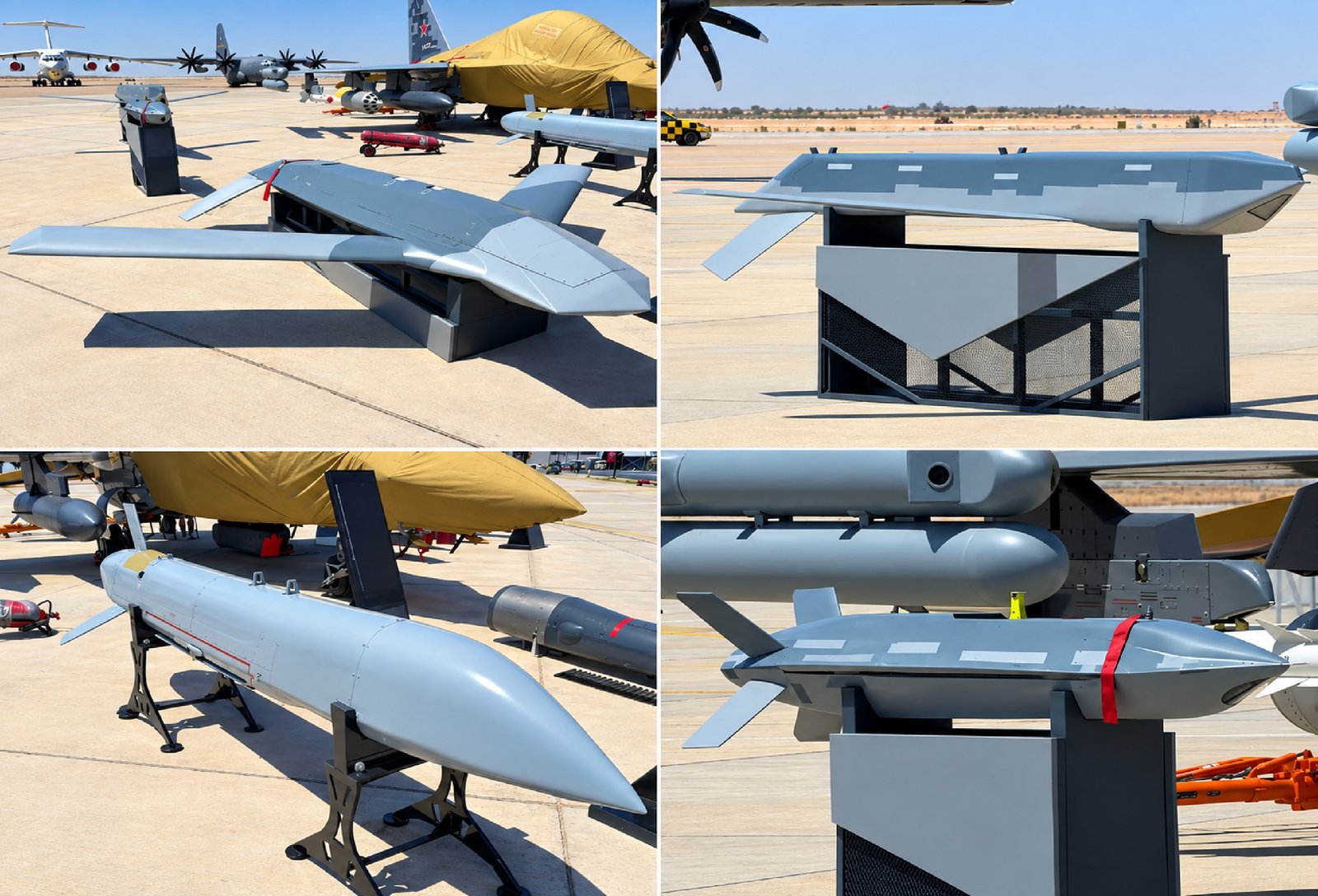
World
EL ALAMEIN, Egypt — The first images of several Russian air-launched munitions and unmanned platforms have emerged during preparations for the second El Alamein International Airshow in Egypt, which will take place from September 8 to 10, 2026. Footage from the setup of the Russian exposition shows the Banderol, S-71K Kover (Kovyor), S-71M Monokhrom and another smaller, unidentified munition. Russia's state defense corporation Rostec has confirmed that the S-71K and S-71M will be presented at the exhibition for the first time. The Russian display is being organized by Rosoboronexport, part of Rostec, at El Alamein International Airport. The company said its exhibition will include new Russian aircraft, weapons, air-defense systems, counter-drone solutions, loitering munitions and unmanned platforms. Some of the products are being shown internationally for the first time. S-71K and S-71M The S-71K and S-71M are described by Rostec as unmanned platforms designed for launch from fifth-generation fighter aircraft. The systems are being presented alongside the export version of the Su-57E fighter. Rostec says the platforms have low observability, long flight range and high speed, with different wing configurations. The S-71K is identified in available reporting as Kover, while the S-71M is known as Monokhrom. Earlier descriptions have associated the two systems with different strike and target-search roles, but detailed official technical specifications have not yet been released for the exhibition. The setup footage provides the first clear public images of the systems ahead of their formal presentation. Further information is expected as the airshow begins. Banderol also shown The Banderol, also referred to in some reports as Dan-T, is also visible in the Russian display. The system has previously been reported as a compact air-launched cruise missile or missile-drone hybrid. Unlike the S-71 systems, the Banderol is not a new public appearance. Its inclusion in the display places it alongside Russia's newer family of air-launched unmanned systems. Su-57E at the center of the Russian display The main aircraft in the Russian static exhibition will be the Su-57E, the export version of Russia's fifth-generation fighter. Rostec said the aircraft will be displayed with a range of air-to-air and air-to-surface weapons. These include the RVV-MD2, RVV-BD, Kh-38MLE, Kh-69 and Kh-58UShKE. Rostec has also confirmed that the Su-57E will take part in the airshow's flight program. The Russian exhibition will also feature the Yak-130M modernized combat trainer with air-launched weapons, while other Russian companies will display air-defense and counter-drone systems. Focus on Middle Eastern and African markets Rosoboronexport Director General Alexander Mikheev said Russia's exhibition is aimed at Egypt as well as countries in Africa and the Middle East. He described Egypt as Russia's important strategic partner and said the exhibition would feature Russian products that have been tested in real-world conditions. The appearance of the S-71K and S-71M alongside the Su-57E gives visitors a first look at Russia's new concept of launching unmanned platforms from a fifth-generation fighter. The second El Alamein International Airshow will run from September 8 to 10, 2026, with additional technical information on the newly displayed systems expected during the event.
Read More → Posted on 2026-09-06 18:05:53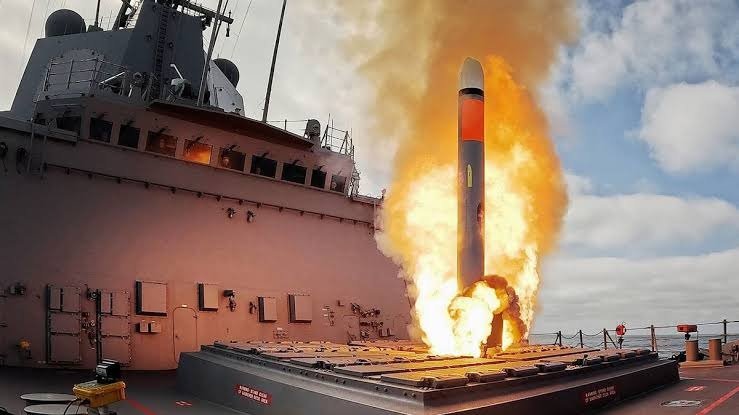
U.S
WASHINGTON — The U.S. Navy is accelerating production of Tomahawk cruise missile warhead housings by modifying an existing 2019 contract originally established for the Stand-Off Land Attack Missile–Expanded Response (SLAM-ER). A September 2 contract notice said the Navy is tasking General Dynamics Ordnance and Tactical Systems (GD-OTS) to manufacture and deliver a redacted number of warhead housings within nine months. The components will support the warhead sections of the U/RGM-109E Tactical Tomahawk (TACTOM). The notice said the accelerated schedule is driven by an “immediate demand for increased missile production” resulting from the current international conflict. First article inspections must begin no later than the first quarter of 2027 to support the required delivery schedule. Existing Contract Shortens Timeline GD-OTS already manufactures warhead casings for both SLAM-ER and Tactical Tomahawk missiles. Using the existing contract allows the Navy to avoid the longer process of awarding a new contract or qualifying another supplier. The Navy said GD-OTS has the manufacturing capability, technical experience and required technical data to meet the accelerated schedule. The company is based in Anniston, Alabama. The underlying contract is N6893619C0039. The September 2 notice identifies the work as a firm-fixed-price modification awarded on an other-than-full-and-open basis, with an award date of August 20, 2026. The new warhead housings will support both newly produced and recertified Block IV and Block V Tomahawk missiles. Tomahawk Production Expansion The move comes as Raytheon, an RTX business, expands overall Tomahawk production. On August 17, Raytheon announced a $22.9 billion, seven-year contract to increase annual Tomahawk production to more than 1,000 missiles, formalizing an earlier framework agreement reached in February. Raytheon said the contract will support increased production capacity and investment in its workforce, facilities, technology and supply chain. The company also reported delivering three times more Tomahawk missiles during the first half of 2026 than in the same period of 2025. The expansion follows increased use of precision-guided weapons and efforts to replenish U.S. inventories. Reuters reported that the new Tomahawk contract is part of a wider effort to rebuild stocks of high-end munitions. Separately, an August GD-OTS modification valued at $41.57 million covered 559 WDU-36/B warhead cases and 559 fuzewells for Tactical Tomahawk missiles. The work is centered in Anniston, Alabama, and is scheduled for completion in April 2028. The latest modification adds another step to the Navy's effort to increase Tomahawk availability while avoiding the longer timeline associated with a new contract and supplier qualification.
Read More → Posted on 2026-09-06 18:12:19
U.S
LONG BEACH, Calif. — Aevum Aerospace’s RAVN X autonomous space-launch aircraft has been identified after the unusual black, cockpitless airframe was photographed outside a hangar at Long Beach Airport on September 3, 2026. The aircraft was spotted by Ricky Schol, a plumber and aviation photographer who has photographed aircraft at Long Beach Airport for 16 years. Schol said he noticed a bright light coming from a hangar that had not been open for a long time while driving past the airport. At first, he thought the aircraft might be an F-117 Nighthawk. After turning around and stopping about 100 feet away, he saw an aircraft without a cockpit and began taking photographs. “I was blown away when I pulled over and saw the future in front of my eyes. I had no clue what I was looking at,” Schol said. Schol watched as ground crews moved the aircraft out of the hangar, positioned it on the runway and later returned it inside. He reported hearing no engine noise or seeing exhaust during the activity. Aircraft identified as RAVN X Photographs taken by Schol and other aviation photographers, including Matthew Dawson, showed the aircraft carrying the FAA registration N567RX. The registration has been reserved by Aevum to an address at Long Beach Airport, helping identify the aircraft as the RAVN X, developed by Aevum Aerospace. Aevum has described the RAVN X as an autonomous first stage of a two-stage space-launch system. The aircraft is intended to carry a rocket-powered second stage to altitude before releasing it to continue the flight into orbit. The RAVN X was designed to be about 80 feet long, with a 60-foot wingspan and a reported gross weight of approximately 55,000 pounds. Aevum's concept called for the aircraft to operate at high subsonic speeds and reach an altitude of about 60,000 feet. Program has been largely out of public view Aevum publicly presented the full-scale RAVN X in December 2020 at Cecil Spaceport in Jacksonville, Florida. Company CEO Jay Skylus described the aircraft as the “mothership” for a two-stage launch system intended to place small payloads into low Earth orbit. At the time, Aevum planned to conduct vehicle-level testing, obtain the required airworthiness certification and begin orbital launch tests from Cecil Spaceport by late 2021. Those publicly announced milestones did not take place. The company later provided little public information about the program, while Gunter’s Space Page reported that activity appeared to have stopped by August 2024 and questioned whether operational flight hardware had been produced. The RAVN X was also associated with the ASLON-45 mission, a planned small-satellite launch involving the U.S. Space Force. The mission did not proceed to an orbital launch using the RAVN X. Long Beach appearance raises questions about the airframe The recent appearance provides evidence that the RAVN X airframe is still present and being handled at Long Beach Airport. However, it does not establish that the aircraft is ready for flight. Images examined by The War Zone and The Aviationist show landing gear that appears fixed and suited to ground handling. The lack of engine noise or exhaust during the observed movement has also raised questions about whether the aircraft is a flight-capable prototype or a modified version of the earlier RAVN X mockup. The Aviationist reported that the RAVN X's recent appearance involved what it described as autonomous taxi testing, while also noting that it was not immediately clear whether the airframe was the same one displayed by Aevum in 2020. Aevum has not publicly explained the purpose of the September 3 activity in the available reports. As of September 2026, the RAVN X has not conducted an orbital launch. Its appearance at Long Beach Airport therefore represents a rare public sighting of a program that had largely disappeared from view, but it remains unclear what stage of development the aircraft has reached.
Read More → Posted on 2026-09-07 11:00:22
U.S
WASHINGTON — U.S. President Donald Trump sparked widespread online reaction on Sunday, September 6, after posting a series of space and science-fiction-themed images, including a message declaring “The Moon Is Ours,” a proposed U.S. Space Force uniform and an AI-generated video showing him as DC Comics superhero Green Lantern. ‘The Moon Is Ours’ Trump posted an image on Truth Social showing a close-up view of the Moon with Earth in the background and an American flag. The image included the words “The Moon Is Ours.” The post did not include a formal legal claim or policy announcement. Under the 1967 Outer Space Treaty, which the United States and more than 100 other countries have signed, outer space and celestial bodies such as the Moon cannot be claimed as national territory through sovereignty, use or occupation. The post comes as the Trump administration promotes an expanded U.S. role in lunar activities. An executive order signed in December 2025 directed a crewed lunar landing by 2028, an initial permanent lunar outpost by 2030 and work toward deploying nuclear reactors on the lunar surface. Space Force uniform sparks Starship Troopers comparisons Minutes earlier, Trump shared images of what appeared to be a proposed U.S. Space Force service dress uniform. The concept uses space grey, midnight black, silver grey and satin black colours. It features a charcoal-coloured collared jacket and matching trousers, black belt and boots, and a matching peaked cap. The Space Force Delta symbol appears on the collar, sleeve patch, belt buckle and cap. The graphic described the design as “Inspired by the discipline and functionality of the Starship Trooper uniform. Modernized for the Guardians of the Space Domain.” The reference drew criticism and jokes on X because Starship Troopers, the 1997 science-fiction film directed by Paul Verhoeven, depicts a militarised future government and uses visual elements influenced by fascist imagery. Users compared the proposed uniform with fictional forces from Star Wars, Spaceballs and other science-fiction films. Some conservative commentators also acknowledged the resemblance while supporting the Space Force. Others questioned whether the administration understood the satirical meaning of Starship Troopers. The current official Space Force dress uniform has a different design, featuring a larger tunic that closes diagonally with six buttons, representing the Space Force's status as the sixth branch of the U.S. military. It remains unclear whether Trump's images represent an official plan to change Space Force uniforms or only a concept shared on social media. White House releases Green Lantern AI video Separately, the official White House X account posted an AI-generated video portraying Trump as Green Lantern. The video shows him wearing a glowing green power ring, with the effects creating a barrier in a desert landscape, an industrial area labelled “American Manufacturing,” and images of U.S. military ships and aircraft. The post included the Green Lantern Corps oath: “In brightest day, in blackest night, no evil shall escape my sight. Let those who worship evil’s might beware my power… Green Lantern’s light!” The video also drew reactions from X users, with some questioning the use of superhero imagery by an official government account. Others supported its references to American manufacturing and border security. The video was posted Sunday evening, shortly before HBO aired the fourth episode of its live-action DC series Lanterns. Warner Bros. Discovery and DC Studios had not publicly commented on the use of the character's imagery. Trump's posts were part of broader Truth Social activity that day, including other AI-generated images and comments involving geographic names. The administration has also been advancing space-related initiatives, including lunar goals under the Artemis programme and plans linked to a National Space Academy. The White House and Department of Defense had not formally confirmed whether the proposed Space Force uniform would be adopted. Source : hindustantimes
Read More → Posted on 2026-09-07 11:23:56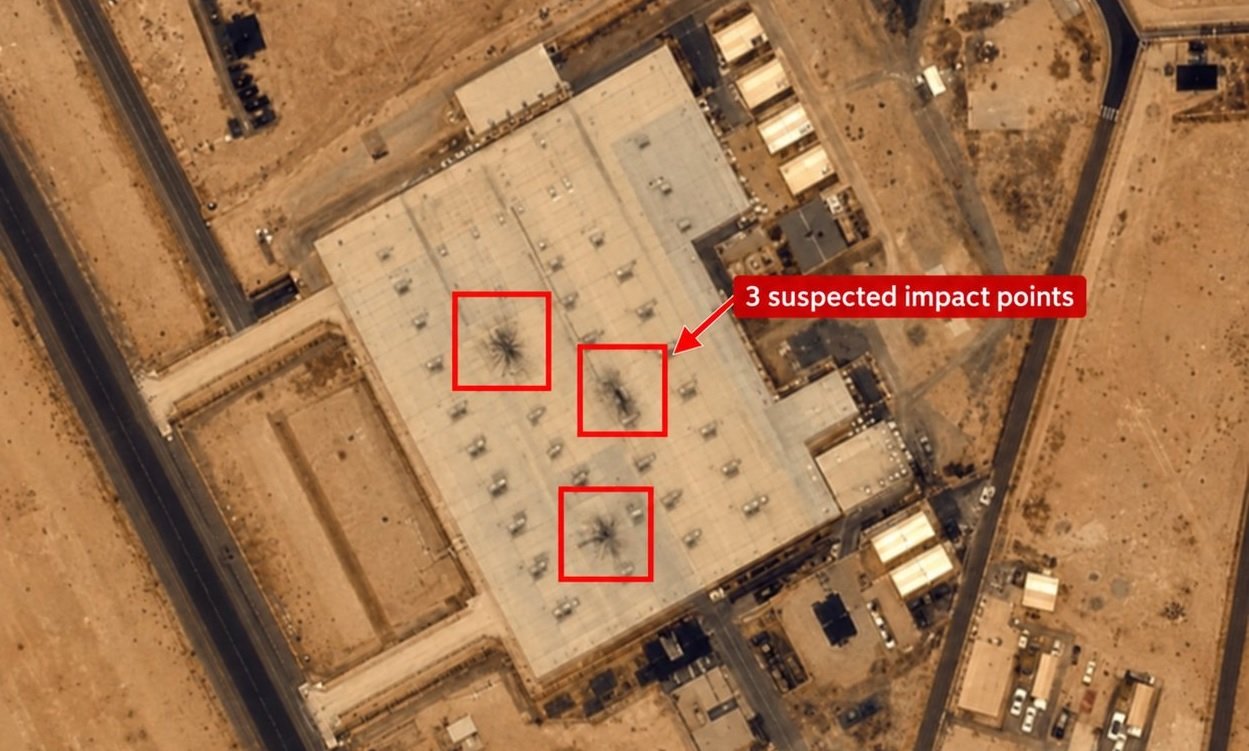
World
KUWAIT — Low-resolution satellite imagery released by open-source intelligence group MizarVision indicates possible Iranian missile impacts at two U.S.-linked air bases in Kuwait, challenging claims that all incoming missiles were intercepted. The assessment, dated September 6, 2026, identifies possible impact points at Ali Al Salem Air Base and Ahmad al-Jaber Air Base following Iran's September 3 missile and drone strikes. Three Suspected Impacts at Ali Al Salem At Ali Al Salem Air Base, a facility building in the troop billeting area appears to show three impact points, which are clearly visible in the satellite image released by MizarVision. The three locations appear as dark marks on the roof of the large facility and are highlighted by MizarVision in its damage assessment. Three More Impacts Reported at Ahmad al-Jaber Separate satellite imagery reportedly shows three impacts in the aircraft and fighter-jet parking area at Ahmad al-Jaber Air Base. The latest imagery provides visual evidence of possible impacts at both bases, although the low resolution means the imagery alone does not establish the exact cause or extent of the apparent damage. Iran had previously claimed that its forces targeted satellite communication systems, equipment depots and fighter-jet hangars during the September 3 attack. Conflicting Claims Over the Attack Iran's Army said on September 3 that it carried out missile and drone strikes against U.S.-linked military facilities in Kuwait. Iranian authorities claimed successful hits on several targets, including satellite communications systems, equipment warehouses and fighter-jet hangars. Kuwait's Armed Forces, meanwhile, said its air-defense systems were engaging incoming missiles and drones. Kuwaiti authorities also told residents that explosions heard during the attack were associated with successful interceptions. Kuwait's Foreign Ministry condemned the strikes as a violation of the country's sovereignty and a threat to its security and stability. The conflicting statements have left uncertainty over the number of incoming weapons intercepted and whether some missiles reached facilities inside the bases. Satellite Imagery Provides Additional Evidence MizarVision's latest assessment adds satellite imagery to the available information about the September 3 attack. The image specifically identifies three suspected impact points at Ali Al Salem and reports three additional impacts at Ahmad al-Jaber. However, the imagery does not independently confirm that all six locations were caused by Iranian missiles, nor does it establish the extent of damage to military equipment or infrastructure. The latest assessment therefore provides evidence of possible impacts at both U.S.-linked bases, while the precise cause and damage remain subject to further verification.
Read More → Posted on 2026-09-07 11:35:41
World
KUWAIT CITY — New high-resolution satellite imagery released by Soar Atlas clearly shows the destruction of two U.S. personnel housing buildings at Ali Al Salem Air Base in Kuwait. According to Soar Atlas, satellite imagery from August 25 to September 3 shows that both buildings were completely destroyed during that period. One building can be clearly seen reduced to rubble, while debris from the second building has been partially cleared. 🚨Soar Atlas has made available new high-res imagery to explore, showing the destruction of two housing accommodations used by U.S. soldiers at Ali Al Salem Air Base in Kuwait.Explore and Compare:👉 https://t.co/RGRB7rCmctThe damage follows Iranian claims of recent attacks. pic.twitter.com/eebnwyhN2O — Soar (@SoarAtlas) September 7, 2026 The imagery matches claims made by Iran’s Islamic Revolutionary Guard Corps (IRGC) on September 2 that it had carried out a combined missile-and-drone strike targeting U.S. housing and command facilities at the base. The IRGC also claimed that the attack killed U.S. personnel, damaged a drone hangar and deployment ramp, and destroyed several drones. The IRGC said the strike was carried out in retaliation for a U.S. airstrike the previous day on a residential house in Sirik, southern Iran, which it said killed four people, including a child, and injured nearly 70 others. It also said the Kuwait attack occurred alongside strikes on U.S. facilities in Jordan, Bahrain and Erbil, Iraq. Ali Al Salem Air Base hosts U.S. forces, including elements of the 386th Air Expeditionary Wing, and serves as a logistics and tactical airlift hub for U.S. and coalition operations in the region. Iranian state media, including Mehr News Agency, reported on September 7 that the new Soar Atlas imagery shows the destruction of the two U.S. personnel housing buildings. The satellite imagery provides visual confirmation that the two buildings were destroyed, but U.S. and Kuwaiti authorities have not independently confirmed the reported casualties or the full extent of damage from the September 2 incident. The base has also been the subject of several IRGC claims of attacks earlier in 2026 involving drones, missiles, shelters, hangars and other facilities.
Read More → Posted on 2026-09-07 11:50:16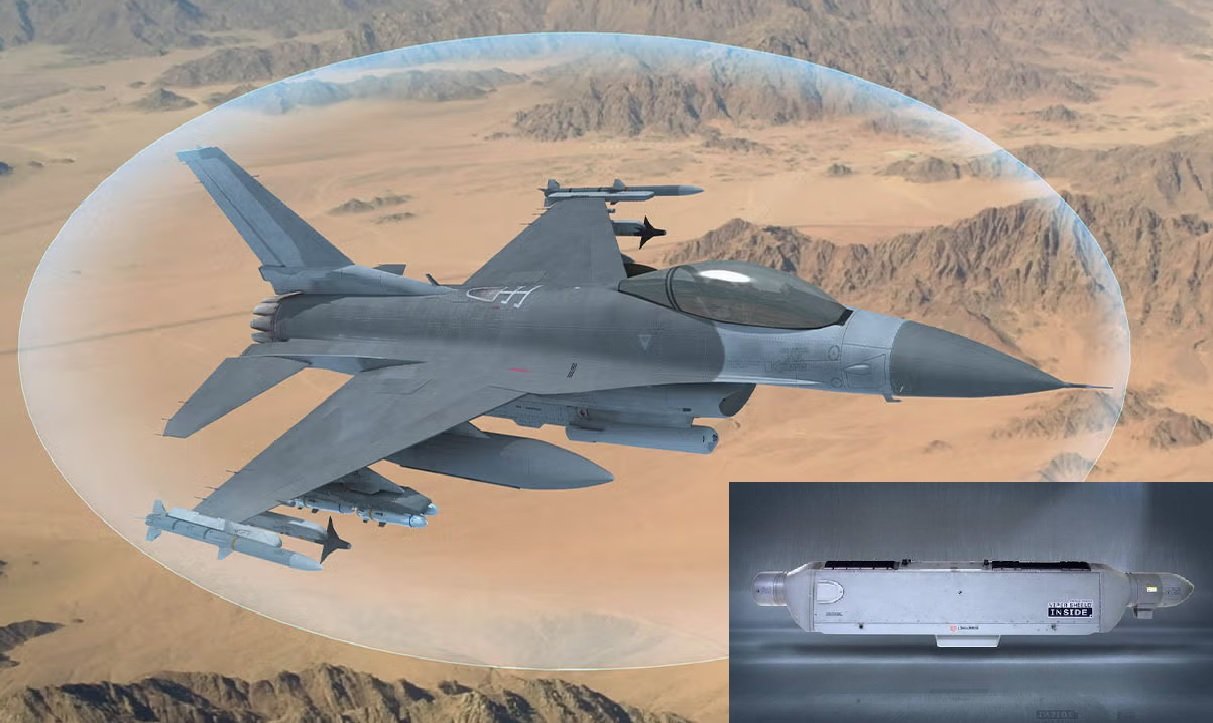
U.S
CLIFTON, N.J., — L3Harris Technologies has completed production of the first 35 Viper Shield electronic warfare and countermeasure systems for the global F-16 fleet, marking the transition toward full-rate production of the system. Officially designated AN/ALQ-254(V)1, Viper Shield is designed to detect, identify and counter electronic threats. The system can provide protection against radar-based threats by detecting hostile radar signals and using electronic countermeasures to disrupt or confuse them. L3Harris describes the capability as a form of “digital armor” around the aircraft. Designed for F-16 Block 70/72 L3Harris developed Viper Shield in partnership with Lockheed Martin and the U.S. Air Force. The system was selected in 2021 for the F-16 Block 70/72, the latest production version of the F-16. It is designed to operate with the aircraft's APG-83 Active Electronically Scanned Array (AESA) radar and is also compatible with earlier F-16 blocks. Viper Shield uses an all-digital, software-defined architecture based on commercial off-the-shelf technology. According to L3Harris, this design provides a smaller form factor and reduced weight while making future software upgrades easier compared with older electronic warfare systems. The system combines a digital radar warning receiver with electronic jamming capabilities, including digital radio frequency memory (DRFM) technology. This allows the system to respond to detected radar signals as part of its electronic countermeasure function. 233 Systems Ordered by Eight Nations L3Harris said eight allied nations have ordered a total of 233 Viper Shield systems and that the company is increasing production to meet the existing orders. Confirmed customers include Bahrain, Bulgaria, Slovakia, Morocco, Taiwan, Poland and Peru. The eighth customer has not been publicly identified by the company. Peru selected Viper Shield in August 2026 for its F-16 Block 70 program. The country plans to acquire 12 F-16 Block 70 aircraft, which are intended to replace its older Mirage 2000 and MiG-29 fighters. Poland is also using Viper Shield for its existing F-16 fleet, while the system is available for both new-build Block 70/72 aircraft and upgrades to earlier F-16 variants. Internal System and External Pod Viper Shield can be installed directly inside the aircraft or carried as an external pod. L3Harris has completed the first external pod using its production systems, in addition to the first 35 internal systems. The company says the two configurations use the same core hardware. The external option provides an installation alternative for F-16 aircraft that are not configured for an internal Viper Shield installation. International Investment Has Funded Development According to L3Harris, the participating countries have made a shared investment of about $1 billion in the program. The funding has covered development, laboratory testing, flight testing and the beginning of production. Chris Aebli, president of Communications & Spectrum Dominance at L3Harris, said the investment could provide an opportunity for the U.S. Air Force and Air National Guard to join the program without bearing the initial development and testing costs. L3Harris is also discussing potential additional orders with other countries. The company has said these discussions could generate approximately $1.5 billion in additional demand. Flight Testing Completed Ahead of Production Ramp-Up Viper Shield has undergone flight testing at Edwards Air Force Base, California, including testing involving F-16C and F-16D aircraft. In August 2026, L3Harris reported two-ship flight testing to evaluate the system's ability to detect, identify and counter electromagnetic threats while operating with the aircraft's avionics. With the first 35 systems now completed and the first production-standard external pod assembled, L3Harris is ramping up manufacturing to meet the current 233-system backlog. The company says the existing production line, quality processes and supply chain are positioned to support additional international customers. Production of Viper Shield is being carried out at L3Harris facilities in Clifton, New Jersey.
Read More → Posted on 2026-09-07 12:05:27
World
ISLAMABAD, — Pakistan has added Turkish-made Baykar K2 kamikaze unmanned aerial vehicles (UAVs) to its military inventory, with the Pakistan Army releasing video showing the system. Pakistan is reportedly the first known export customer for the K2. Türk üretimi kamikaze İHA, Pakistan ordusu envanterine girdi.Pakistan ordusunun resmi hesabından paylaşılan videoda, çok sayıda BAYKAR üretimi K2 kamikaze İHA'yı envanterine kattığı görüldü.200 kg harp başlığı taşıyabilen K2'nin menzili 2000+ km. https://t.co/GDDqrQxkvz pic.twitter.com/JPptaQADjQ — Conflict (@ConflictTR) September 6, 2026 Developed by Baykar and unveiled in March 2026, the K2 has an 800 kg maximum take-off weight, 200 kg warhead capacity, range exceeding 2,000 km and endurance of more than 13 hours. It is 5.1 metres long with a 10-metre wingspan and uses a 100-horsepower internal combustion engine with a pusher propeller. The UAV features AI-powered, vision-based navigation, an electro-optical/infrared camera and both line-of-sight and beyond-line-of-sight communications. Baykar has also demonstrated autonomous swarm operations involving multiple K2 aircraft. Pakistan has not disclosed the number of K2 UAVs acquired, contract value, delivery schedule or operational basing. In a related development, Pakistan has also showcased the Turkish ASELSAN KORKUT 35mm air-defense system. The system appeared in the Pakistan Air Force's “Fizaon K Pasbaan” promotional film released around Defence Day. KORKUT uses twin 35mm cannons, radar and electro-optical tracking, along with ATOM programmable airburst ammunition. It has an effective range of approximately 4 km and a combined firing rate of up to 1,100 rounds per minute. The two systems add new Turkish-made strike and short-range air-defense capabilities to Pakistan's military inventory, expanding defense cooperation between Pakistan and Türkiye.
Read More → Posted on 2026-09-07 12:42:04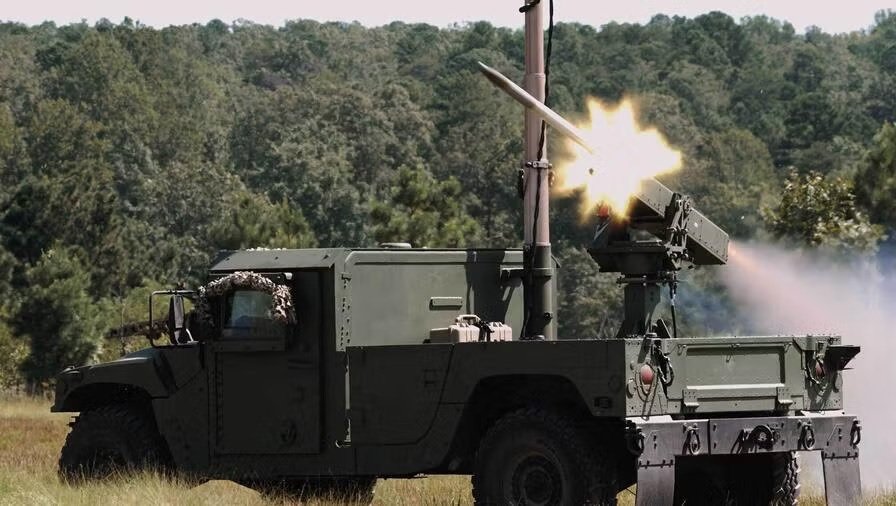
U.S
SAN DIEGO — Shield AI has licensed its Tracker Counter-Unmanned Aircraft System (Tracker C-UAS) software to L3Harris Technologies for integration with the VAMPIRE counter-drone system. The integration combines Shield AI’s artificial intelligence-based detection and tracking software with VAMPIRE’s existing electro-optical and infrared (EO/IR) sensors and precision engagement capabilities. Tracker C-UAS is part of Shield AI’s Vision Systems product line. The software uses artificial intelligence and computer vision to analyze EO/IR video, allowing it to detect, discriminate and track aerial threats. It operates passively and does not require radar or radio-frequency emissions to identify and track targets. This gives operators an additional way to detect approaching unmanned aerial systems without transmitting signals that could reveal their position. The integration builds on testing conducted by the two companies in 2025. During a U.S. Department of Defense Technology Readiness Experimentation event, Tracker C-UAS was paired with L3Harris WESCAM MX-Series EO/IR sensors. The demonstration showed the software detecting multiple classes of unmanned aerial systems at extended ranges, including targets that were partially obscured. VAMPIRE System VAMPIRE, short for Vehicle-Agnostic Modular Palletised ISR Rocket Equipment, is a self-contained system designed for installation on vehicles, vessels or fixed positions. The system uses a WESCAM MX-series electro-optical sensor, commonly the MX-10, with thermal imaging and television cameras for target detection and tracking. The sensor can also provide laser designation for guided munitions. VAMPIRE is equipped with a four-round launcher for 70 mm guided rockets. Its primary munition is BAE Systems’ Advanced Precision Kill Weapon System (APKWS), while the system can also fire the Thales FZ275 laser-guided rocket. According to L3Harris, VAMPIRE systems have accumulated more than 350,000 operational hours since 2023 and have destroyed hundreds of hostile drones, primarily in support of European operations that include use by Ukraine’s Defense Forces. Focus on Passive Drone Detection The addition of Tracker C-UAS is intended to strengthen the detection and tracking portion of the VAMPIRE system. The software can process imagery from existing cameras rather than requiring a separate radar-based detection system. RAND Corporation analyst Michael Bohnert has noted that combining Tracker C-UAS with VAMPIRE could improve detection and interception of more complex aerial targets, including high-speed, jet-powered drones. L3Harris President of Targeting & Sensor Systems and Communications & Spectrum Dominance Tony Calderon said the integration enhances threat detection, target tracking and counter-UAS engagement while improving force survivability. Christian Gutierrez, senior vice president of Hivemind at Shield AI, said combining passive AI-based sensing with VAMPIRE gives operators the ability to detect threats early and respond more quickly. Shield AI is also making Tracker C-UAS available for licensing on other platforms already used by operators. The companies did not disclose the value of the licensing agreement, the number of VAMPIRE systems to receive the software or a delivery schedule.
Read More → Posted on 2026-09-07 12:54:26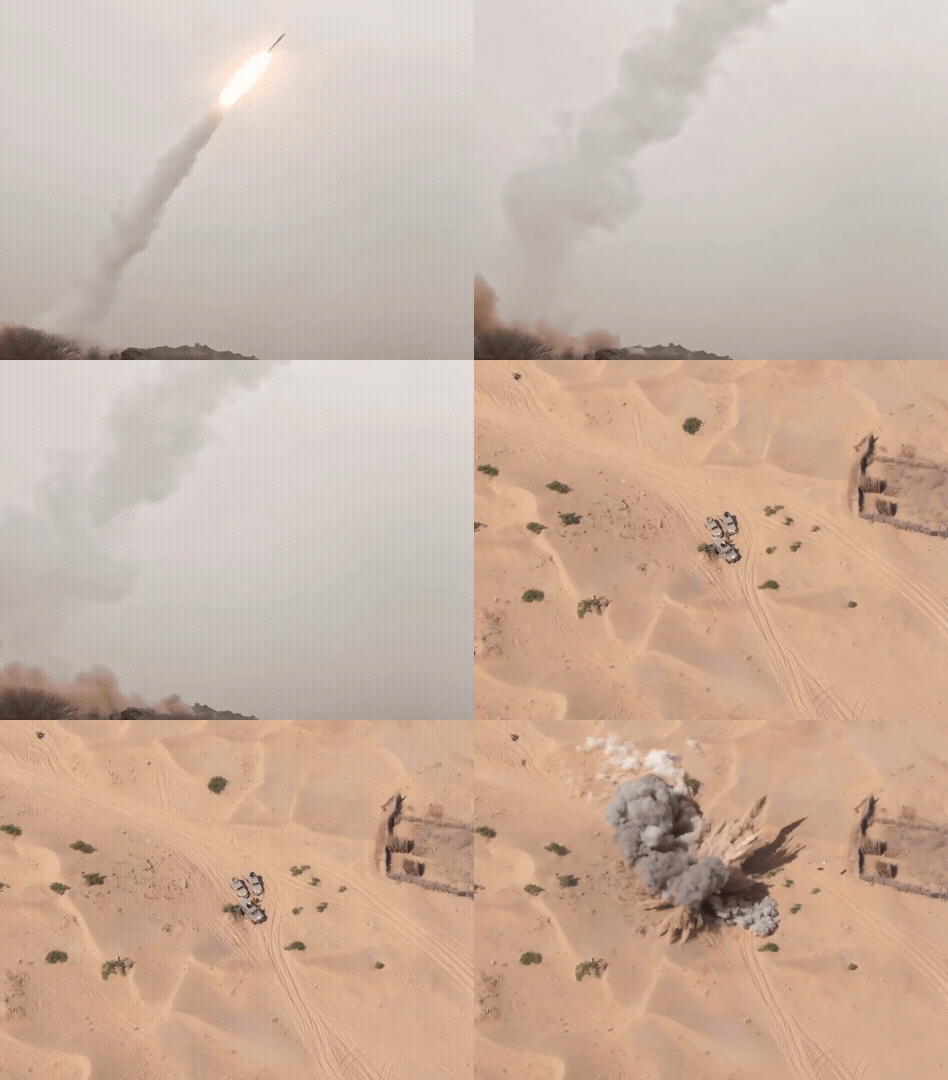
World
SANA'A — Yemen’s Houthi movement has released drone footage that it says shows a ballistic missile striking a meeting of senior commanders from Saudi-backed Yemeni government forces in an open desert area. The footage appears to show three armoured vehicles arriving at a gathering point while a reconnaissance drone observes from above. After another vehicle arrives, the video shows a missile launch followed by an explosion that engulfs the vehicles. Houthi media claimed everyone at the meeting was killed, but the casualty figures and identities of those killed have not been independently verified. pic.twitter.com/DSnhsygC7C September 6, 2026 Reports circulating about the incident put the death toll at nine people, including claims that two Pakistan Army officers were among those killed. However, there is currently no public confirmation from Pakistani, Saudi or Yemeni authorities that Pakistani military officers died in this particular strike. The reported Pakistani connection has drawn attention because Pakistan, Saudi Arabia and Türkiye signed the Makkah Joint Defence Agreement on August 7, 2026. The agreement states that an armed attack against any one of the three countries will be regarded as an attack against all three and calls for expanded defence cooperation. However, the agreement does not by itself establish that Pakistani forces are deployed inside Yemen. There are no confirmed public reports from Pakistani authorities that Pakistan Army officers were assisting Yemeni government forces inside Yemen in connection with the strike. Fighting intensifies in western Yemen The footage was released as fighting has intensified across parts of western Taiz and southern Hodeidah, with Houthi forces advancing toward areas around Mokha and the Bab al-Mandab Strait. Recent clashes have caused significant casualties on both sides, although competing battlefield claims remain difficult to independently verify. The Houthis have previously used ballistic missiles and drones against positions held by Saudi-backed government forces. Earlier attacks in Marib and Hadramout also caused significant casualties among government-aligned troops. The latest footage provides the Houthis' account of a targeted missile strike, but independent verification of the location, casualty total and identities of those killed remains unavailable.
Read More → Posted on 2026-09-07 13:38:20
World
TEL AVIV — Israeli technology company Sodyo Ltd. has introduced RangeMark, a visual identification system designed for drones and autonomous systems to detect and identify passive printed markers from distances of up to 1 kilometer (0.62 miles). Sodyo presented the technology publicly at Commercial UAV Expo 2026, held September 1–3 at Caesars Forum in Las Vegas. The company exhibited RangeMark at Booth #1005. Sodyo announced the launch on August 5, 2026. Works Without GPS, RF or Network Connectivity RangeMark is designed to work using only a standard camera and a printed, battery-free marker. The system does not require GPS, cellular service, radio-frequency (RF) signals or a network connection. The marker itself requires no power source and does not transmit or emit signals. This allows the system to provide a visual identification method in offline or disconnected environments. Sodyo distinguishes RangeMark from conventional AI-based object recognition. While AI vision systems can classify objects such as vehicles, buildings or people, RangeMark is designed to identify a specific marked asset or location and provide a deterministic machine-readable identity. The company said this can include identifying designated landing zones, drop points, infrastructure and friendly personnel. Sodyo's platform describes its recognition process as resolving a visual marker into a verified identity through its computer-vision technology. Flight Testing Demonstrates Long-Range Detection According to Sodyo, RangeMark has been tested in real flight conditions. During flight testing, drones detected a 100 cm (39-inch) marker at distances of up to 500 meters (1,640 feet) and a 50 cm (20-inch) marker at up to 250 meters (820 feet). The tests covered an area of approximately 20 hectares (49 acres) and included hover, transit and search-pattern operations. Flight speeds reached 20 meters per second, or 72 km/h (45 mph). Sodyo also reported broader Sodyo Labs testing in which a 120 cm marker was recognized at the maximum 1,000-meter range, while a 12 cm marker was detected at 100 meters. Two Marker Formats RangeMark currently supports two physical marker formats. Color Code is a high-density format designed for standard visible-light conditions, while Carbon Code uses a two-tone design intended for more challenging visibility environments. Sodyo said additional formats covering other parts of the electromagnetic spectrum are under development. The company says the technology is based on more than a decade of patented development and has more than 35 global patents, with priority dating to 2012. Sodyo Targets Drone and Autonomous Systems Market Sodyo CEO Alon Raz said RangeMark is intended to give autonomous systems a reliable visual reference for identifying marked locations and assets. “RangeMark turns a marked point anywhere in the physical world into a point of certainty… with nothing but a camera and a printed marker, something no existing visual technology can deliver at that range,” Raz said. He added that the technology took more than a decade of patented work to reach its current form, saying, “When a machine can be certain, it can be trusted to act on its own.” Sodyo plans to use a partner-led licensing model, targeting drone manufacturers, autonomy-platform developers, camera suppliers and system integrators. The company said potential applications include defense, infrastructure inspection, emergency response and industrial automation. RangeMark represents Sodyo's expansion of its visual identification technology into the drone and autonomous-systems market, with the company focusing on machine-readable identification of physical locations and assets without requiring an active communications connection.
Read More → Posted on 2026-09-07 13:46:30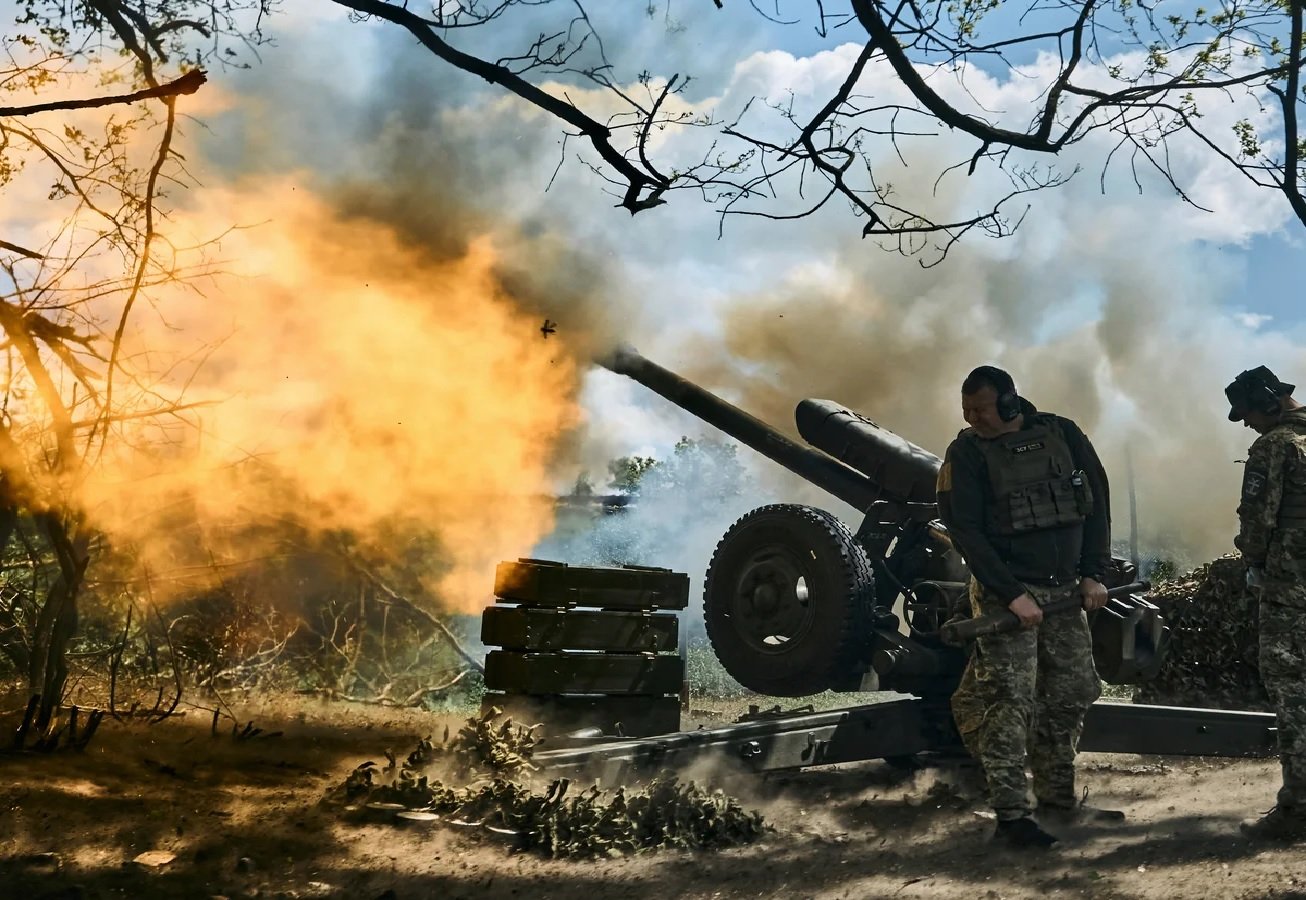
World
KYIV — Ukraine lost approximately $1.2 billion in 2024 to fraud, waste and mismanagement in military procurement, according to more than 700 pages of confidential government audits reviewed by The New York Times. The audits, conducted by Ukraine’s State Audit Service and an internal Defense Ministry auditing unit, examined contracts from 2024 and 2025. The audits found that seven of Ukraine’s 10 largest military contractors received new contracts despite criminal investigations, previous delivery failures or executives being arrested on corruption charges. Auditors also identified 18 companies that received new contracts after defaulting on earlier agreements. Six had failed to fulfill even one previous military contract. In one case, a company that failed to deliver any of 600 specialized drones later received an order for 1,950 more. Defective Mortar Shells A major case involved the state-owned Pavlohrad Chemical Plant, which supplied the military with about 233,000 unusable mortar rounds in 2024. Court records said many had defective fuses or faulty propellant charges. The plant’s director, Leonid Shyman, was facing embezzlement and fraud investigations. Despite the ammunition problems, the Defense Procurement Agency continued awarding contracts to the plant. One was a $280 million contract awarded while Shyman was out on bail on corruption charges. The plant also received an order to supply nearly all of Ukraine’s 122-mm artillery shells for 2025. Shyman was later sentenced to five years in prison in a separate case involving inflated prices for explosives. Higher-Priced Weapons Contracts The audits found approximately $126 million in losses from bypassing lower bids and purchasing weapons at higher prices. Some contracts were also awarded without a clear legal basis. In one 2024 case involving Turkish-made artillery rockets, three companies offered prices of approximately $4,200, $4,600 and $5,100 per rocket, all produced at the same Turkish plant. The lowest bidder, Arca Defense, offered to sell directly to Ukraine, but the contract went to a subsidiary of the Czech holding Czechoslovak Group at the highest price. The decision increased the overall cost by about $130 million. The audits also identified disputes over at least $100 million in advance payments for a contract that ultimately failed. They found that many purchases were made through arms intermediaries rather than directly from manufacturers, with intermediaries typically adding markups of at least 3 percent. Former Defense Procurement Agency adviser Tamerlan Vahabov said such practices leave the military with fewer resources to purchase weapons while ammunition shortages continue. The audits describe repeated problems involving companies that could not demonstrate they could deliver weapons, lacked required licenses, or faced few consequences for failed deliveries and overcharging. The Defense Procurement Agency declined to comment, and it remains unclear what specific action it took in response to the findings.
Read More → Posted on 2026-09-07 13:56:21
U.S
KENNEDY SPACE CENTER, Fla. — Sierra Space has signed contracts with undisclosed national security and commercial customers to fly payloads on the first orbital mission of its Dream Chaser spaceplane. The company announced the agreements on September 2, adding new payloads to a debut mission that has faced years of delays. The reusable, uncrewed spacecraft, named Tenacity, is scheduled to launch from Kennedy Space Center in Florida aboard a United Launch Alliance (ULA) Vulcan Centaur rocket. The mission will conduct multiday operations in low Earth orbit before Tenacity returns to Earth and lands on a runway at Vandenberg Space Force Base in California. Unlike traditional cargo spacecraft that use parachutes or splash down in the ocean, Dream Chaser is designed to land on a runway. If successful, the mission will mark the first orbital flight of a winged spacecraft since NASA retired the Space Shuttle fleet in 2011. From ISS Mission to Free-Flyer Demonstration Dream Chaser was originally selected by NASA in 2016 under the Commercial Resupply Services-2 (CRS-2) program to deliver cargo to the International Space Station. The contract called for at least seven resupply missions. However, technical delays, including issues involving the spacecraft's propulsion system and launch vehicle readiness, repeatedly pushed the program back. In September 2025, NASA and Sierra Space revised the agreement. The seven-mission guarantee was dropped, and Tenacity's first flight was changed from an ISS docking mission into an independent free-flyer demonstration in low Earth orbit. The multiday mission will demonstrate Dream Chaser's capabilities before NASA considers future station resupply orders. One Spacecraft, Multiple Customers Sierra Space said the mission will be the first to combine national security, commercial and civil payloads, including NASA cargo under the Cargo Resupply Services program, on a single spacecraft. The company has not disclosed the national security or commercial customers or the specific payloads. Sierra Space is still finalizing the full manifest and has not set a firm launch date. The flight is targeted for later in 2026. The schedule will also depend on the readiness of ULA's Vulcan Centaur, which experienced a solid rocket booster anomaly during a mission in early 2026. Dream Chaser Capabilities Dream Chaser is designed for high reusability and mission flexibility. Its wings fold inside a standard rocket payload fairing during launch and deploy once in orbit. Sierra Space says the spacecraft is designed to be reused up to 15 times. The vehicle can carry payloads with partial space certification rather than full environmental qualification, which Sierra Space says can reduce development costs and speed deployment. It can also use a detachable cargo module for different pressurized and unpressurized configurations. Dream Chaser is designed for autonomous reentry and a runway landing with forces below 1.5 g, helping protect sensitive payloads and equipment. Sierra Space said it has completed environmental testing, command and telemetry validation, and runway recovery rehearsals for Tenacity. Sierra Space CEO Dan Jablonsky said Dream Chaser has evolved into a strategic capability serving national security, civil and commercial customers on the same platform. Dan Polis, senior vice president of engineering and Dream Chaser at Sierra Space, highlighted the development of the spacecraft's deployable wings, hypersonic flight control, autonomous reentry and low-force runway landing. Tenacity is now being prepared for its first orbital flight while Sierra Space completes the mixed payload manifest.
Read More → Posted on 2026-09-07 14:17:19
Space & Technology
WASHINGTON — The U.S. Space Force has awarded $50 million to Space Kinetic Corp. to develop Whirlwind, a space maneuverability and deployment system designed to release small spacecraft from a larger host vehicle at high velocity without using a thruster for the initial boost. Space Kinetic announced the award on August 13, 2026, describing it as the largest award in the company's history. The agreement was made through an Other Transaction Authority (OTA) mechanism. Using centrifugal acceleration to deploy satellites Whirlwind takes a different approach from conventional satellite deployment. The system uses an electromechanical mechanism on a host spacecraft to spin and accelerate ruggedized microsatellites before releasing them on independent trajectories. The company describes the concept as a "space-based David sling." Rather than using chemical propulsion to provide the initial change in velocity, Whirlwind uses centrifugal acceleration to provide most of that initial Delta-V. After deployment, the individual microsatellites can use their own limited propulsion and communications systems for further adjustments. The approach is intended to shift much of the initial propulsion requirement from each individual payload to the host spacecraft. Space Kinetic says this could reduce the mass, cost and complexity of individual micro-payloads. One host spacecraft, multiple missions Space Kinetic refers to Whirlwind as a "one-to-many" architecture, in which one host spacecraft can deploy multiple mission-specific micro-payloads. The company is targeting several potential dual-use applications, including: Space domain awareness sensors Electro-optical imaging Rapid-response communications nodes Space debris characterization Scientific research probes Inspection missions Elements of asymmetric space-based missile-defense concepts The system is designed to support different payload types and orbital regimes, according to Space Kinetic. Applying "drone economics" to space A central part of Space Kinetic's concept is reducing the cost of individual spacecraft enough to enable missions that would not require a satellite to operate for years. CEO and co-founder Ryan Sullivan has described the idea as bringing "drone economics" to orbit. Under this concept, some small spacecraft could be designed for short-duration missions rather than long-term operation. Sullivan has discussed scenarios in which a payload could have a useful life measured in 30 minutes if its cost were low enough. The company says this could allow a host spacecraft to distribute different capabilities when and where they are required. Space Kinetic expands its government work The $50 million Space Force award follows a $12 million seed funding round in 2025, led by Balerion Space Ventures, with participation from Industrious Ventures, Marque Ventures and CerraCap Ventures. Space Kinetic also received a multi-million-dollar DARPA contract related to an asymmetric space-based missile-defense architecture and was selected for the SpaceWERX Adaptive and Intelligent Space Challenge in July 2026. The company currently has about 50 employees. It operates a prototyping laboratory in Albuquerque, New Mexico, maintains a multi-year partnership with Los Alamos National Laboratory, and is expanding its presence in El Segundo, California. The company is also hiring as it works to expand its team. No in-orbit test date announced Space Kinetic has not announced a firm date for an in-orbit demonstration of Whirlwind. The company is currently focused on technology maturation and discussions with government and other partners about system integration. The Space Force award gives the company funding to advance a deployment architecture that could allow a single host spacecraft to release multiple small payloads without requiring each payload to provide the full initial propulsion needed for its mission.
Read More → Posted on 2026-09-07 15:01:25
World
RIYADH — Yemen’s Houthi movement has released a video claiming to show a missile strike on Saudi-linked trucks carrying military equipment near the Al-Wadiah camp, while Saudi Aramco facilities in Jizan were hit in a separate attack on Monday. The developments come as fighting between the Houthis and Saudi-backed Yemeni government forces continues and raise questions over how the recently signed Makkah Joint Defence Agreement between Saudi Arabia, Türkiye and Pakistan could be applied if attacks on Saudi territory continue. Houthis release video of Al-Wadiah strike Houthi military media released footage on or around September 6-7 that it said shows Houthi forces using locally manufactured ballistic missiles against trucks carrying military equipment from Saudi Arabia near the Al-Wadiah camp. pic.twitter.com/EjRhy8BCdJ September 7, 2026 According to the Houthi account, the missiles struck and burned the vehicles at the site. The group described the weapons as domestically manufactured ballistic missiles. The video appears to show several vehicles being hit, but the exact location, extent of damage and any casualties have not been independently confirmed. Saudi authorities, the internationally recognized Yemeni government and other independent sources have not publicly confirmed the Houthi claims. The release comes amid renewed fighting between Houthi forces and Saudi-backed Yemeni government troops. In recent weeks, the Houthis have also claimed missile and drone attacks against positions in areas including Marib and Hadramawt and against targets close to the Saudi border. Jizan Aramco facilities hit again Separately, Saudi Aramco’s oil facilities in Jizan were struck on Monday, September 7, according to a Financial Times report citing two people familiar with the matter. The extent of the damage was still being assessed. One source described the latest incident as similar in scale to an earlier attack about a month ago. NOAA-20 satellite imagery shows large plumes of black smoke rising from Aramco’s Jazan oil refinery in southwestern Saudi Arabia after it was struck by the Houthis today. 🛰🇸🇦 NOAA-20 satellite imagery shows large plumes of black smoke rising from Aramco’s Jazan oil refinery in southwestern Saudi Arabia after it was struck today by the Houthis. https://t.co/cdhFe7I274 pic.twitter.com/bkOUWlDoYS — Egypt's Intel Observer (@EGYOSINT) September 7, 2026 Jizan, located close to the Yemeni border, is home to a Saudi Aramco refinery with a processing capacity of 400,000 barrels of crude oil per day, along with associated energy infrastructure. Aramco had not immediately issued a public comment on the latest incident. Previous Houthi-claimed attacks targeted Aramco facilities in Jizan and Yanbu during July and August. In one August incident, Saudi Arabia’s Energy Ministry confirmed a fire at the Jizan refinery that was later extinguished, with no injuries reported. The Houthis said a drone was used in that attack. Aramco CEO Amin Nasser had previously said that earlier attacks caused some production interruptions but did not have a material operational or financial impact. Oil prices also moved higher following reports of the latest attack, with Brent crude rising by about 1.2 percent. Makkah defence agreement faces a new test The latest attacks come one month after Saudi Arabia, Türkiye and Pakistan signed the Makkah Joint Defence Agreement in Makkah on August 7. The agreement states that an armed attack against any one of the three countries will be regarded as an attack against all three. It also calls for stronger defence cooperation and collective deterrence. Turkish Foreign Minister Hakan Fidan has said the agreement is not directed against Iran or any particular country. He has also indicated that assistance under the agreement would depend on the circumstances and could include areas such as intelligence, logistics, ammunition or other forms of support. The three countries have also begun work on implementing the agreement, including discussions on defence cooperation and coordination. No confirmed Turkish or Pakistani combat involvement As of September 7, there has been no official announcement from Türkiye or Pakistan confirming direct military participation in operations against the Houthis. The agreement's collective-defence provision does not by itself establish that Turkish or Pakistani forces will immediately conduct combat operations in Yemen. The exact response would depend on decisions by the member governments and the circumstances surrounding any attack. Possible assistance could include intelligence, logistics, defensive capabilities and other forms of military cooperation, but there has been no public confirmation that either country is preparing to deploy combat forces against the Houthis. The Houthi video and the reported attack on Jizan therefore come at an important point for the new Saudi-Türkiye-Pakistan defence arrangement. However, the extent of any future response from Ankara or Islamabad remains unclear. The situation remains fluid, and damage assessments for the Jizan incident are continuing. Claims made in the Houthi video about the Al-Wadiah strike have also not been independently verified.
Read More → Posted on 2026-09-07 15:21:51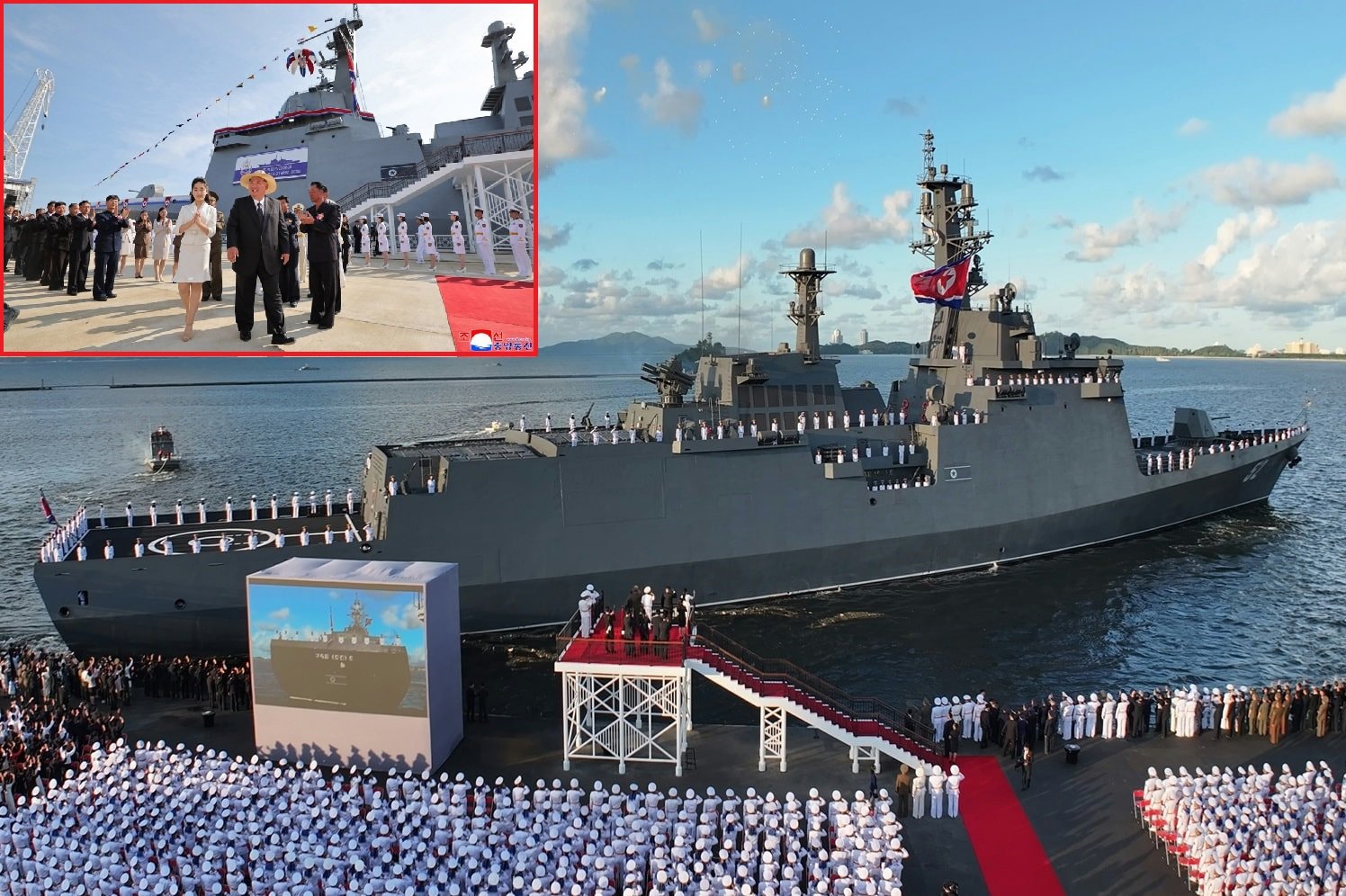
World
PYONGYANG — North Korea has officially commissioned its newest 5,000-ton Choe Hyon-class guided-missile destroyer, Kang Kon, during a ceremony at the eastern port city of Wonsan on Sunday, September 6. North Korean leader Kim Jong Un attended the ceremony with his wife Ri Sol-ju, daughter Kim Ju Ae, and senior government and military officials. The Kang Kon, hull number 52, has been assigned to the Korean People’s Navy’s East Sea Fleet. During his address, Kim described the destroyer as an offensive warship and part of North Korea’s nuclear counteraction system. He said the vessel would be responsible for defending the country’s maritime sovereignty and delivering retaliatory strikes against its enemies. Kim also said North Korea is implementing a major plan to strengthen its naval forces, with the next phase expected to be presented within eight months. Second Choe Hyon-Class Destroyer The Kang Kon is the second ship of the Choe Hyon class, following the Choe Hyon (51), which entered service on June 23, 2026, and was assigned to the West Sea Fleet. Two additional ships of the class are under construction. The class represents North Korea’s largest and most heavily armed surface warships. Each vessel displaces about 5,000 tons and measures approximately 145 meters in length. The Kang Kon was constructed at the Hambuk Shipyard in Chongjin. On May 21, 2025, it partially capsized during its initial launch attempt and suffered major hull damage. After recovery and repairs, it was successfully relaunched on June 12, 2025. The ship later underwent navigation and weapons testing. In July 2026, Kim observed tests involving a strategic cruise missile, naval artillery, automatic guns and the ship’s electronic warfare systems. He subsequently ordered the trials to be completed and the vessel placed into active service within two months. Missile and Defensive Systems The Choe Hyon-class is equipped with a large vertical launch system (VLS) containing 88 cells, including 64 cells aft of the superstructure and 24 forward. The ships also feature eight inclined missile launchers and can carry different types of missiles, including weapons described by North Korean state media as nuclear-capable cruise missiles. Other weapons include a 127mm automated naval gun, a short-range air-defense system resembling the Russian Pantsir-M, two six-barrel 30mm close-in weapon systems, twin 533mm torpedo tubes, decoy launchers and additional machine guns. The destroyers are fitted with four fixed-panel phased-array radar panels, an electronic warfare suite and countermeasure systems. Their stated missions include anti-ship, anti-aircraft, anti-submarine and other operations. Further Naval Expansion The commissioning of the Kang Kon is part of North Korea’s broader effort to expand its naval forces beyond coastal defense. Kim has previously outlined plans for larger warships, including 10,000-ton guided-missile cruisers. North Korea is also developing new naval bases along its eastern coastline to accommodate larger warships and support newly established naval units. Satellite imagery has confirmed that additional Choe Hyon-class vessels are under construction. The Kang Kon’s entry into service gives North Korea a second destroyer of the class as Pyongyang continues its stated effort to expand and modernize its surface fleet for operations on both coasts.
Read More → Posted on 2026-09-07 15:42:44
India
NEW DELHI — India’s Defence Acquisition Council (DAC), chaired by Defence Minister Rajnath Singh, has approved capital acquisition proposals worth about ₹1.10 lakh crore for the Indian Armed Forces. The DAC granted Acceptance of Necessity (AoN), which provides in-principle administrative approval and is an important step in India’s defence procurement process. According to the Ministry of Defence, approximately 98 per cent of the procurements covered by these approvals will be sourced from Indian industry, reinforcing the government’s focus on domestic defence manufacturing and reducing dependence on foreign suppliers. Indian Army to Receive New Mobility and Combat Support Systems For the Indian Army, the DAC approved the procurement of Chemical Biological Radiological and Nuclear (CBRN) Recce Vehicles, High Mobility Vehicles (HMVs), Self-Propelled Mechanical Mine Layers (MML), Advanced Light Helicopters (ALHs), Trawl Tanks and the Sarvatra Bridge System. The CBRN Recce Vehicles will be used to detect, identify, monitor and mark areas contaminated by CBRN agents. The High Mobility Vehicles are intended to improve the Army’s operational capabilities, logistics support and mobility in challenging terrain. The Self-Propelled Mechanical Mine Layers will provide the Army with a fast and responsive mine-laying capability in difficult terrain. The approved Advanced Light Helicopters will be used by both the Indian Army and Indian Air Force for complex missions across different terrains and operational situations. The Trawl Tanks and Sarvatra Bridge System will provide composite crossing capabilities to fighting formations during operations across varied terrain. Navy to Get Arudhra Radars and Indigenous Marine Gas Turbines For the Indian Navy, the DAC approved the procurement of Arudhra Radars and the design, development and subsequent procurement of Marine Gas Turbines (MGTs). The Arudhra Radars will replace the existing Air Route Surveillance Radars at various Naval Air Stations. The Marine Gas Turbines are intended for warship propulsion. Their design and development in India, followed by procurement, is aimed at reducing the Navy’s dependence on foreign vendors for this capability. Air Force Approvals Focus on Electronic Warfare and Security The DAC also approved proposals aimed at enhancing the war-fighting capabilities of the Indian Air Force’s fighters, transport aircraft and helicopters. Among the specific approvals was the Ground-Based Multi-Purpose Jammer (GBMPJ). The system will provide effective jamming against adversary radars. The council also cleared the installation of the Defence Forces Secure Access Card (DEFSAC) system. DEFSAC will replace existing paper-based identity cards, passes and permits with an interoperable Radio Frequency Identification (RFID)-based smart card system for access to defence facilities. The Ministry of Defence announced the decisions through an official press release issued by the Press Information Bureau on September 7, 2026. Defence Minister Rajnath Singh also highlighted the approvals on his official X account, pointing to the focus on strengthening India’s domestic defence industrial base. Chaired the meeting of Defence Acquisition Council (DAC) today. The DAC accorded Acceptance of Necessity (AoN) to various acquisition proposals of the Defence Forces at an estimated cost of about Rs 1,10,000 crore.Of the total AoNs accorded, approximately 98% of procurements… — Rajnath Singh (@rajnathsingh) September 7, 2026 With about ₹1.10 lakh crore in capital acquisition proposals receiving AoN and approximately 98 per cent of the procurements expected to be sourced from Indian industry, the latest approvals cover mobility, surveillance, propulsion, electronic warfare, aviation and military access-security capabilities across the three services.
Read More → Posted on 2026-09-07 15:54:10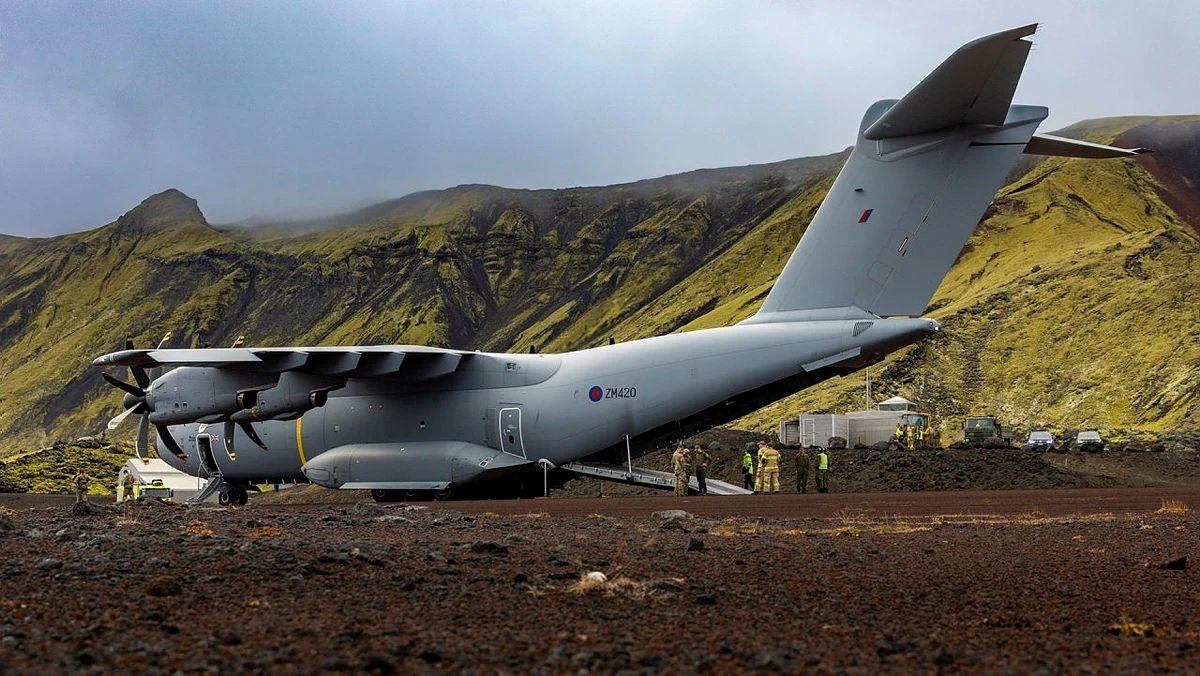
World
JAN MAYEN, Norway — British, U.S. and Norwegian forces have completed Operation Atlantic City, a trilateral NATO deployment on the remote Norwegian island of Jan Mayen in the High North. The exercise ran from August 26 to September 4, 2026, as part of NATO’s wider Operation Arctic Sentry. The UK Ministry of Defence confirmed the deployment on September 6. The exercise involved Royal Marine Commandos and the Royal Air Force’s LXX (70) Squadron, alongside the Royal Norwegian Navy, Norwegian Home Guard and U.S. Marine Corps. U.S. participation also included elements from Marine Corps Forces Europe and Africa, II Marine Expeditionary Force, 10th Marine Regiment and Marine Air Support Squadron 1. A HIMARS platoon from the New Hampshire Army National Guard’s 3-197th Field Artillery Regiment also participated, with support from U.S. Navy Sixth Fleet and Task Force 68. Air mobility support included U.S. Air Force MC-130 and C-130 aircraft, as well as RAF A400M Atlas aircraft. A400M lands on Jan Mayen On August 29, an RAF A400M Atlas from LXX Squadron at RAF Brize Norton landed on Jan Mayen’s unpaved dirt runway. It transported Royal Marines, U.S. Marines and two Joint Light Tactical Vehicles. The island’s runway is approximately 1,500 to 1,585 metres long and is used only a limited number of times each year by Norwegian transport aircraft. During the operation, the allied forces trained in naval operations, reconnaissance, survival in extreme Arctic conditions, and the integration of sensors and communications systems. They also worked on connecting sensors, command-and-control nodes and precision fires. A KONGSBERG StrikeMaster anti-ship missile launch vehicle was deployed to the island with Norwegian Home Guard personnel. Jan Mayen's strategic location Jan Mayen is located in the Norwegian Sea, about 1,000 kilometres from mainland Norway and north of the Greenland-Iceland-United Kingdom (GIUK) gap. The volcanic island has no permanent civilian population, while a rotating Norwegian military and scientific team maintains a meteorological and communications station. Its location makes Jan Mayen an important area for the defence of northern Europe and the wider Euro-Atlantic region. Operation Atlantic City was conducted alongside naval manoeuvres under Operation Northern Viking 26, allowing participating forces to use overlapping maritime and sensing resources. The activity formed part of Arctic Sentry, launched in February 2026 under NATO Joint Force Command Norfolk to improve coordination, situational awareness and deterrence in the High North. The name Operation Atlantic City refers to a U.S. military base established on Jan Mayen during the Second World War for weather observations and support to Allied control of the North Atlantic. Similar training was conducted around the island in September 2025. UK Defence Secretary Wes Streeting said the operation demonstrated the UK's partnership with Norway and the United States and the ability of allied forces to operate together in demanding Arctic conditions. The UK Ministry of Defence said the deployment demonstrates Britain's commitment to NATO collective security and its ability to operate in an environment characterized by extreme weather, distance, limited infrastructure and rapidly changing conditions. The deployment comes as the UK Ministry of Defence faces funding pressures. Britain has suspended some collective training exercises involving 90 or more military personnel, with units not preparing for deployments or specific operational roles instructed to reduce non-essential group training for the remainder of the year. NATO-linked exercises and deployments continue.
Read More → Posted on 2026-09-07 16:04:34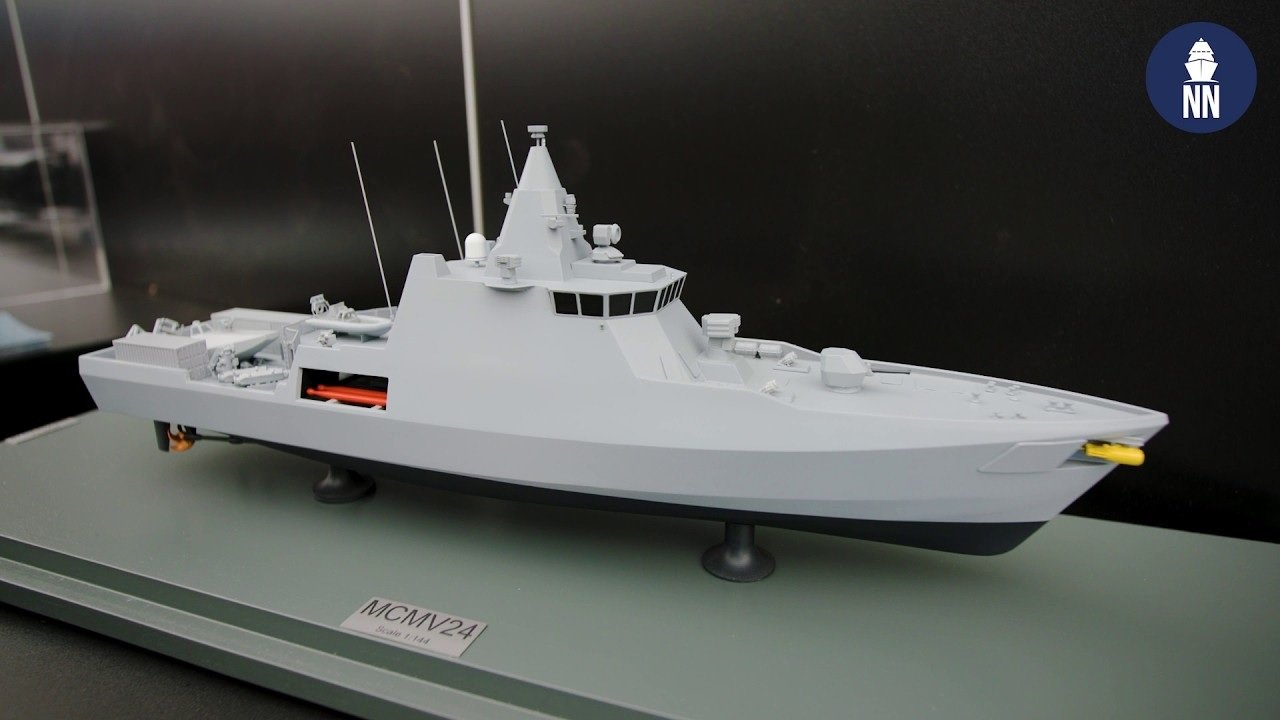
Europe
HERning, Denmark — Swedish defense company Saab has unveiled its MCMV 24 mine countermeasures vessel concept at DALO Industry Days in Herning, Denmark. The 66-meter vessel is designed for operations in the Baltic Sea and similar littoral environments, where mine threats can extend from hostile coastlines across open waters and into friendly ports. The MCMV 24 is designed to operate directly inside mine-threat areas rather than relying entirely on standoff distances. Saab's design considers conventional mines, air-dropped mines and potential future mine deployments by unmanned surface vessels (USVs). The vessel uses a composite glass-reinforced plastic (GRP) hull, a technology developed by Saab's Kockums shipyard, along with other signature-reduction features. Unlike Sweden's current Koster-class vessels, originally built as the Landsort-class in the 1980s, the MCMV 24 uses traditional propellers instead of Voith Schneider propulsors. This reduces some maneuverability and signature-reduction advantages but allows a higher top speed of 22 knots. Sensors and Armament The MCMV 24 is equipped with the Saab Giraffe 1X radar and CEROS fire-control and electro-optical system. Armament options include a Bofors 40 mm deck gun, Saab Lightweight Torpedoes, known as TP 47 in Swedish service, and Saab Nimbrix C-UAS missiles. Nimbrix is a lightweight, fire-and-forget hard-kill interceptor designed to counter drones at ranges of 2 to 5 kilometers. The missile weighs 2.5–3 kg, is less than one meter long, and uses an active seeker and air-burst warhead. Saab has developed it as a lower-cost layer between gun systems and longer-range very-short-range air-defense missiles, with first deliveries planned for 2026. Unmanned Mine-Warfare Systems The vessel includes a dedicated bow door for launching and recovering remotely operated vehicles (ROVs), including Saab's Double Eagle family. The aft deck provides space for containerized mission payloads and additional unmanned systems, including unmanned underwater vehicles (UUVs). A large stern ramp is also designed to deploy a medium mine-warfare USV. The Double Eagle family includes systems for mine disposal, reconnaissance and multi-shot neutralization, with variants operating at depths of up to several hundred meters. Potential Replacement for Koster-Class Saab is offering the MCMV 24 in dedicated mine-countermeasure, offshore patrol and coast guard configurations. The common-hull approach could allow navies to use one basic platform for different missions while reducing maintenance, training and operational requirements. The design is being considered as a potential replacement for Sweden's Koster-class and could also meet requirements in Estonia, Latvia and Lithuania, which have long focused on Baltic mine clearance while facing growing offshore patrol requirements. Saab has confirmed that early discussions are underway with Denmark and Germany regarding the new platform. DALO Industry Days 2026 was held in Herning, Denmark, on August 19–20. The MCMV 24 combines a low-signature hull and mine-warfare systems with higher speed, modern sensors, self-defense weapons and facilities for unmanned systems, giving the concept both mine-countermeasure and multi-mission capabilities. Source : navalnews
Read More → Posted on 2026-09-07 16:12:12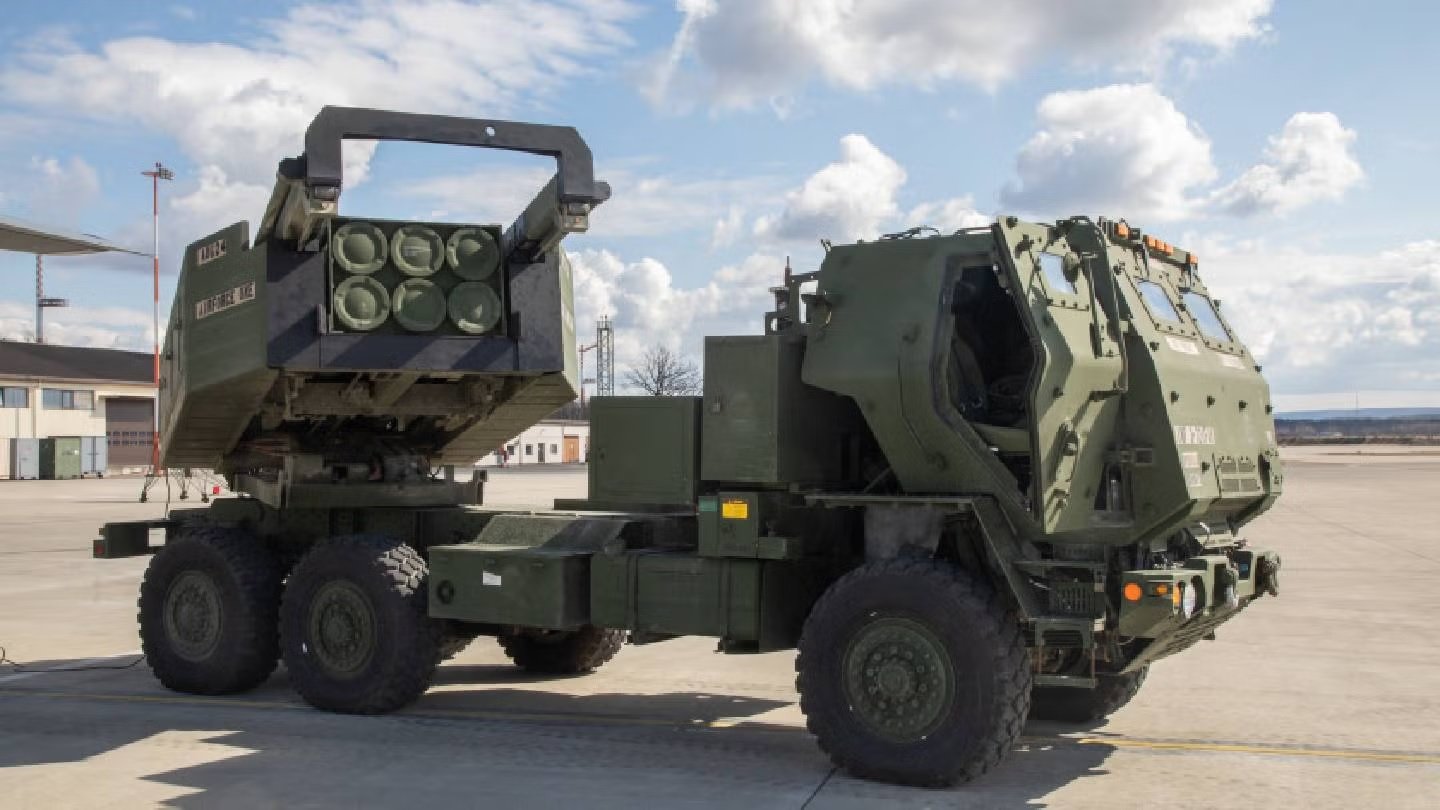
Europe
STOCKHOLM — Sweden has authorized the Swedish Armed Forces to procure the U.S.-made High Mobility Artillery Rocket System (HIMARS) from Lockheed Martin in a deal worth around SEK 7 billion ($729 million). Deliveries are scheduled to begin in 2027. The procurement covers about 10 HIMARS launchers and ammunition. It will be funded through the Swedish Armed Forces’ regular investment plan as an “opportune purchase” under the Total Defence Bill 2025–2030. HIMARS will provide Swedish forces with a long-range precision-strike capability, allowing units to operate over larger areas and engage targets at greater distances than current systems. It will complement existing artillery, including the Archer system and grenade launchers, while being compatible with equipment used by allied forces. Sweden and Finland Expand Cooperation Swedish Defence Minister Pål Jonson and Finnish Defence Minister Antti Häkkänen also signed a joint declaration covering cooperation on rocket artillery. Finland already operates the tracked Multiple Launch Rocket System (MLRS), which uses the same munitions and many of the same components as HIMARS. The cooperation will include joint training, education, maintenance, capability development, security of supply and production cooperation. Jonson said the introduction of rocket artillery demonstrates Sweden’s responsibility for European security. He said the agreement with Finland aims to strengthen capacity-building, maintenance and security of supply while developing capabilities for NATO’s collective defence. Sweden said the cooperation will strengthen defence capabilities in northern Europe. Saab and Lockheed Martin Explore Industrial Cooperation Separately, Saab and Lockheed Martin are signing a joint declaration on possible industrial cooperation linked to the HIMARS programme. The companies will examine the integration of Saab’s Ground-Launched Small Diameter Bomb (GLSDB) with HIMARS. They will also discuss production of ammunition for HIMARS and other systems, including the Patriot air-defence system. Sweden said the cooperation will improve the security of ammunition supply. The Swedish government described rocket artillery as an important capability for long-range and precision engagements and said rapidly available systems are needed to complement conventional artillery in the current security environment. The deal follows U.S. approval in March 2026 for a potential package of up to 20 HIMARS systems and associated munitions. The procurement now authorized by Sweden covers the initial batch of about 10 systems.
Read More → Posted on 2026-09-07 16:19:22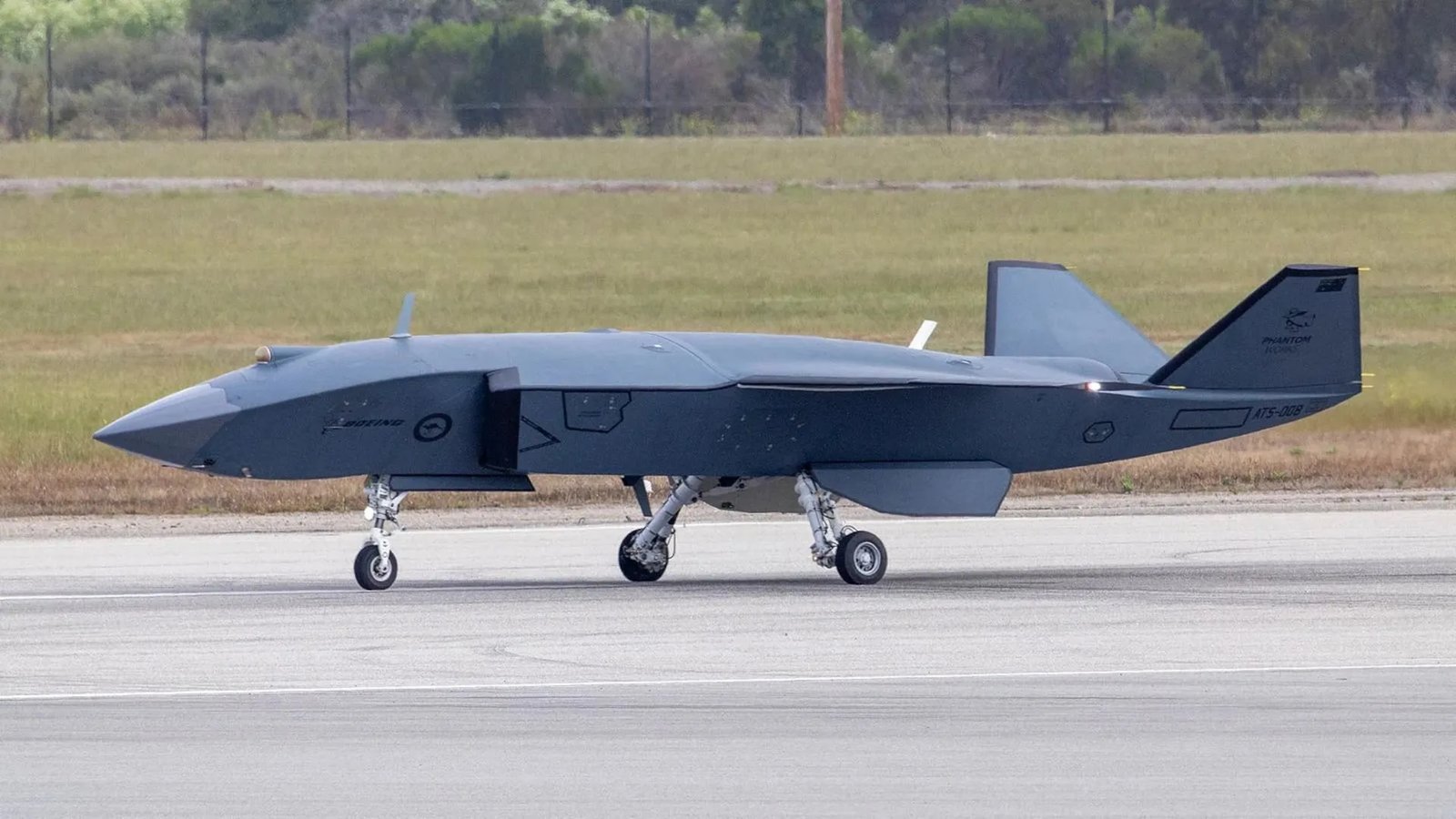
World
TOKYO — Boeing plans to offer its MQ-28 Ghost Bat unmanned combat aircraft to Japan’s Ministry of Defense as Tokyo develops a new coastal defense strategy centered on unmanned systems, according to a report by Nikkei. Steve Parker, president of Boeing’s Defense, Space & Security division, told Nikkei that Boeing will propose the MQ-28. The aircraft is designed to operate alongside crewed fighter jets, share sensor data through networks and extend the operational reach of manned aircraft without putting additional pilots at risk. Airbus is also considering entering Japan’s unmanned aircraft market, while U.S., European and Japanese defense companies are competing for opportunities connected to Tokyo’s coastal defense plans. MQ-28 Ghost Bat The MQ-28 is a stealthy collaborative combat aircraft (CCA), also known as a loyal wingman. It measures approximately 11.7 to 12 meters in length and was developed by Boeing Australia in partnership with the Royal Australian Air Force (RAAF). The aircraft has a reported range of more than 2,000 nautical miles (about 3,700 kilometers), can reach speeds of up to Mach 0.9 and operate above 40,000 feet. Its modular nose can accommodate different mission equipment, including sensors, electronic warfare and communications systems. Australia had operated eight Block 1 aircraft by late 2024. They completed more than 100 flight-test hours and conducted live weapons drops. In December 2025, an MQ-28 successfully conducted an air-to-air engagement using an AIM-120 AMRAAM while operating with an E-7A Wedgetail and F/A-18F Super Hornet. Boeing is now producing nine Block 2 aircraft, while a more capable Block 3 is planned. The upgraded version is expected to feature a larger wing for greater fuel and payload capacity, an internal weapons bay, beyond-line-of-sight communications and increased takeoff weight. International Testing Boeing has partnered with Rheinmetall to offer the MQ-28 to Germany as a collaborative combat aircraft, with potential introduction targeted around 2029. Rheinmetall would handle system integration for German requirements. In 2026, the Ghost Bat participated in Exercise Valiant Shield from the Northern Mariana Islands, operating alongside U.S. and allied aircraft, including F-35 variants and F-15EX, as well as battle-management and support platforms. The aircraft also completed operational flight testing at Naval Air Station Point Mugu, California, in 2026. These were its first flights outside Australia, with some configurations using an infrared search and track (IRST) sensor in the nose. Japan’s Existing MQ-28 Cooperation Japan already has experience working with Boeing on manned-unmanned teaming. In 2025, Japan’s Ministry of Defense awarded Boeing a contract worth about ¥155 million (approximately $997,000) for manned-unmanned teaming simulations linked to the Global Combat Air Programme (GCAP), Japan’s next-generation fighter program with the United Kingdom and Italy. Tokyo has also joined aspects of the U.S. Collaborative Combat Aircraft effort. In April 2026, Australia and Japan signed an implementing arrangement for collaborative combat aircraft activities involving the MQ-28, including research and training in Australia during Japan’s fiscal 2026. Japan’s SHIELD Coastal Defense Concept Japan’s coastal defense effort is being developed under the Synchronized, Hybrid, Integrated and Enhanced Littoral Defense (SHIELD) concept. The Ministry of Defense allocated approximately ¥100.1 billion (around $640 million) in the fiscal 2026 budget to establish a network of unmanned air, surface and subsurface systems connected with existing sensors and long-range effectors. Tokyo aims to field the architecture during fiscal 2027. The MQ-28’s range, modular design and ability to operate alongside crewed fighters such as the F-35 or future GCAP aircraft make it a candidate for Japan’s planned unmanned defense network, including operations around the country’s southwestern approaches. However, Japan has not finalized procurement of the MQ-28, and details of the competition and acquisition process remain undecided.
Read More → Posted on 2026-09-07 16:24:20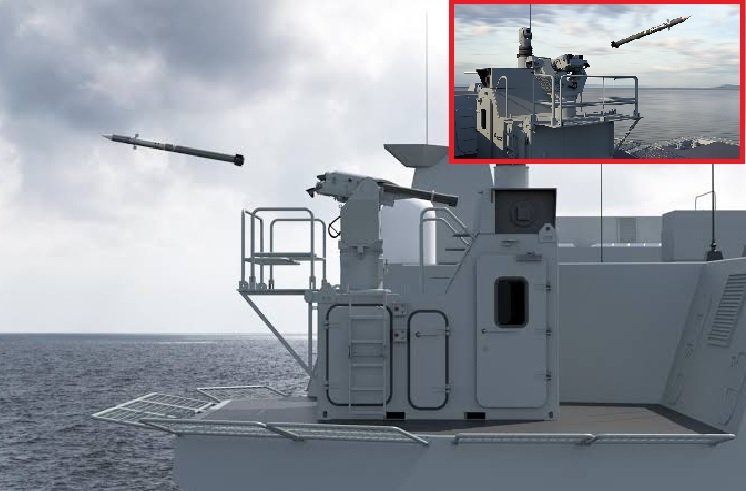
Europe
MADRID — The Spanish Navy has signed a framework agreement with European missile manufacturer MBDA to acquire three SIMBAD-RC short-range air defense systems, introducing a dedicated close-range missile defense capability for its operational fleet. The agreement is MBDA's first direct contract with the Spanish Navy and supports plans by Spain's Ministry of Defense and the Navy to strengthen protection against anti-ship missiles, sea-skimming missiles, aircraft and unmanned aerial vehicles. Initial deployment across frontline vessels The framework agreement covers three SIMBAD-RC systems with a total of four launchers. Under the initial deployment plan: Two Santa María-class (F80) frigates will each receive a single SIMBAD-RC launcher. The amphibious assault ship Juan Carlos I (L-61) will receive a twin-launcher configuration. The deployment gives both escort vessels and the Navy's flagship an organic short-range air defense layer designed to protect high-value ships during operations. SIMBAD-RC provides dedicated VSHORAD capability The SIMBAD-RC is a remotely controlled naval self-defense system built around MBDA's Mistral 3 infrared-guided missile. It can serve as a ship's primary very short-range air defense system or operate alongside existing defensive weapons. The system launches fire-and-forget missiles with a range of more than 8 kilometers. Its automated turret includes a thermal optical sensor suite and a video tracker, allowing targets to be engaged either independently or through connection with a ship's combat management system. The launcher can also be operated by a single crew member from a protected position below deck using the compact SMU-RC control terminal. MBDA says the system is designed for continuous all-weather operations. MBDA calls agreement a historic milestone MBDA Chief Executive Officer Eric Béranger described the agreement as an important step in the company's partnership with Spain. "This first direct agreement with the Spanish Navy is a historic milestone for MBDA. It demonstrates our growing footprint and long-term commitment to Spain. By delivering critical defense capabilities, we are enhancing fleet security and building a strategic partnership based on innovation and cooperation with the Spanish defense industry," Béranger said. Wider integration under discussion The framework agreement is expected to serve as the first phase of a broader fleet modernization effort. MBDA is currently negotiating with Spanish shipbuilder Navantia to expand SIMBAD-RC integration across additional surface combatants. Platforms under consideration include future Landing Platform Docks (LPDs), European Patrol Corvette (EPC) vessels and potentially the Navy's new F-110 frigates. Technical discussions continue on how the system would integrate with the combat management architecture of future ships, including the Aegis system planned for the F-110 class. From Cartago project to operational deployment Spanish efforts to introduce the Mistral missile family into naval service began nearly a decade ago through the Cartago project, which examined the feasibility of installing Mistral missiles on active naval platforms. The current contract marks the transition from concept to operational capability by equipping frontline ships with dedicated close-range missile defense. RC2 today, modular upgrades for the future The Spanish Navy's order covers the SIMBAD RC2 twin-tube configuration. MBDA has continued developing the system to address evolving threats. At Euronaval 2024, the company introduced the SIMBAD RC4, a four-round variant designed to counter saturation attacks, fast inshore attack craft and drone swarms. In 2026, MBDA updated the turret architecture so the RC2 and RC4 share a common modular design, allowing existing twin-tube installations to be upgraded more easily to the higher-capacity quad-tube configuration if required. For the Spanish Navy, the agreement delivers a dedicated very short-range air defense capability for key surface ships while establishing the foundation for broader integration across the fleet in the years ahead.
Read More → Posted on 2026-09-08 12:27:00
World
TEL AVIV, Israel — Israeli satellite company ImageSat International (ISI) has unveiled its new EROS NOVA Earth observation satellite, introducing a platform that combines very high-resolution imaging, short-wave infrared (SWIR) sensing, video collection and onboard artificial intelligence. According to ISI, EROS NOVA is designed to provide imagery at less than 30 centimeters of resolution, while the company has described the satellite's capability as reaching 25 centimeters. ISI's current product information lists the satellite with multiple imaging modes, including spot, strip, mosaic, stereo, video and SWIR video. Multiple Sensors on One Satellite EROS NOVA combines several sensing capabilities on a single spacecraft. Its optical imaging system is designed for very high-resolution Earth observation, while the SWIR sensor can provide additional information that is not available from standard visible-light imagery. SWIR sensing can help distinguish different materials and identify certain changes on the ground, including some forms of camouflage and recent surface disturbances. The satellite also supports video collection, allowing users to observe movement rather than relying only on individual still images. ISI lists EROS NOVA with Pan, multispectral true-color, near-infrared and SWIR capabilities, along with a 10-kilometer swath and a satellite mass of 425 kilograms. Onboard AI Processing A key feature of EROS NOVA is its use of artificial intelligence and processing capabilities directly on the satellite. Instead of sending all collected data to Earth before analysis, selected information can be processed while the satellite remains in orbit. This allows the system to identify and prioritize relevant imagery before transmission, helping reduce the amount of data that needs to be sent to ground stations and potentially shortening the time between collection and analysis. ISI has previously demonstrated onboard AI and edge-processing technologies on its satellite platforms. The company says these capabilities are being developed to support faster processing of space-based intelligence data. “EROS NOVA represents the next generation of space-based intelligence, bringing together advanced imaging, multiple sensing capabilities and onboard intelligence in a single satellite platform,” said Noam Segal, CEO of ImageSat International. He said the system is designed to help intelligence organizations obtain greater value from each collection and respond more rapidly to operational requirements. Part of ISI's Growing Satellite Portfolio EROS NOVA expands ISI's existing family of Earth observation satellites and is not intended to replace the company's other platforms. ISI's current portfolio also includes KNIGHT, which provides high-resolution imaging, SWIR and video, and RUNNER, a smaller satellite platform offering high-resolution imagery and video. The company says EROS NOVA is part of its broader GlobalEye satellite architecture. The EROS series has been operated by ISI since the launch of EROS A in 2000. The company later introduced the EROS B and EROS C series, with the EROS C3 satellite launched in December 2022. ISI's earlier EROS satellites progressively improved imaging resolution, leading to the much higher-resolution capabilities offered by its newer systems. Focus on Sovereign Space-Based Intelligence ISI describes its business model as providing sovereign space-based intelligence capabilities. Rather than only supplying satellite imagery, the company develops complete systems that can include satellites, ground infrastructure, command-and-control systems and AI-based analytics. Its current product portfolio includes satellite systems as well as platforms such as GeoImpact, which is designed to combine satellite and other intelligence data with AI-based analysis. With EROS NOVA, ISI is combining higher-resolution Earth observation with multiple sensors and onboard processing in a single platform, continuing the company's development of satellite systems intended for defense and intelligence users.
Read More → Posted on 2026-09-08 12:34:07
World
KIELCE, POLAND — Ukrainian defense manufacturer Ukrspecsystems has publicly presented its latest loitering munition, the RAM-2X strike unmanned aerial vehicle (UAV), at the MSPO 2026 international defense exhibition in Kielce, Poland. The RAM-2X is designed for operational-tactical missions and features a distinctive X-shaped wing configuration intended to provide high maneuverability. The system has a range of up to 180 kilometers and an endurance of more than two hours. The strike UAV can carry either a 2.7-kilogram or 3.5-kilogram explosively formed penetrator (EFP) warhead. The warhead is designed to penetrate armor and engage high-value targets. Ударний дрон RAM-2X на MSPO 2026 pic.twitter.com/AHAu70xhxJ — Владислав (@Vladislav110528) September 8, 2026 Flexible communications and automation Ukrspecsystems says the RAM-2X incorporates artificial intelligence systems, a high level of automation and a flexible communications architecture. The UAV can be controlled through multiple radio-frequency channels operating across different bands. It can also use a Starlink satellite terminal, giving operators several communication options for different mission conditions. Another feature of the RAM-2X is its communications relay capability, which allows it to operate together with reconnaissance UAVs such as the company's SHARK-M. In a hunter-killer configuration, the reconnaissance UAV can locate and designate a target while the RAM-2X carries out the strike. According to Ukrspecsystems, this arrangement can help the strike UAV operate in areas affected by enemy electronic warfare. Designed to work with existing systems Ukrspecsystems has also focused on interoperability between the RAM-2X and its earlier reconnaissance platforms. The company said: “Each type of equipment has its own role, and every target requires an appropriate means of engagement. Following a comprehensive approach, we develop strike systems across several subclasses, built around common components, a shared ground control station, and unified software.” The approach allows operators already using Ukrspecsystems reconnaissance complexes to add strike capabilities while continuing to use their existing antennas and ground control stations. This removes the need to replace the existing control hardware or introduce a completely new control system. Already in operational use in Ukraine Although the RAM-2X has only now been publicly presented by its manufacturer, Ukrspecsystems said the system is already being actively used by the Defense Forces of Ukraine. The identity of the developer had previously been kept undisclosed because of wartime security considerations. According to the company, RAM-series loitering munitions have recorded more than 450 successful target engagements. As part of the public unveiling, Ukrspecsystems also released combat footage showing the system in use. One recently published freeze-frame shows a RAM-2X striking a Russian Buk-M3 surface-to-air missile system. Ukrspecsystems launches X-Archive To coincide with the MSPO presentation, Ukrspecsystems launched a public video portal called the “X-Archive.” The archive contains declassified combat footage of Ukrainian forces operating the company's systems. The initial release focuses on strikes against Russian air defense systems and radar stations. Ukrspecsystems said sensitive information that could compromise ongoing military operations has been removed from the footage. Additional strike videos are expected to be released in batches. The company has kept information concerning current operational flights and future modifications to the RAM-2X classified. The RAM-2X represents a further development of Ukrspecsystems' RAM family of loitering munitions, while the company continues to maintain interoperability with its existing reconnaissance systems, including the SHARK and SHARK-M series. Source : militarnyi
Read More → Posted on 2026-09-08 12:48:48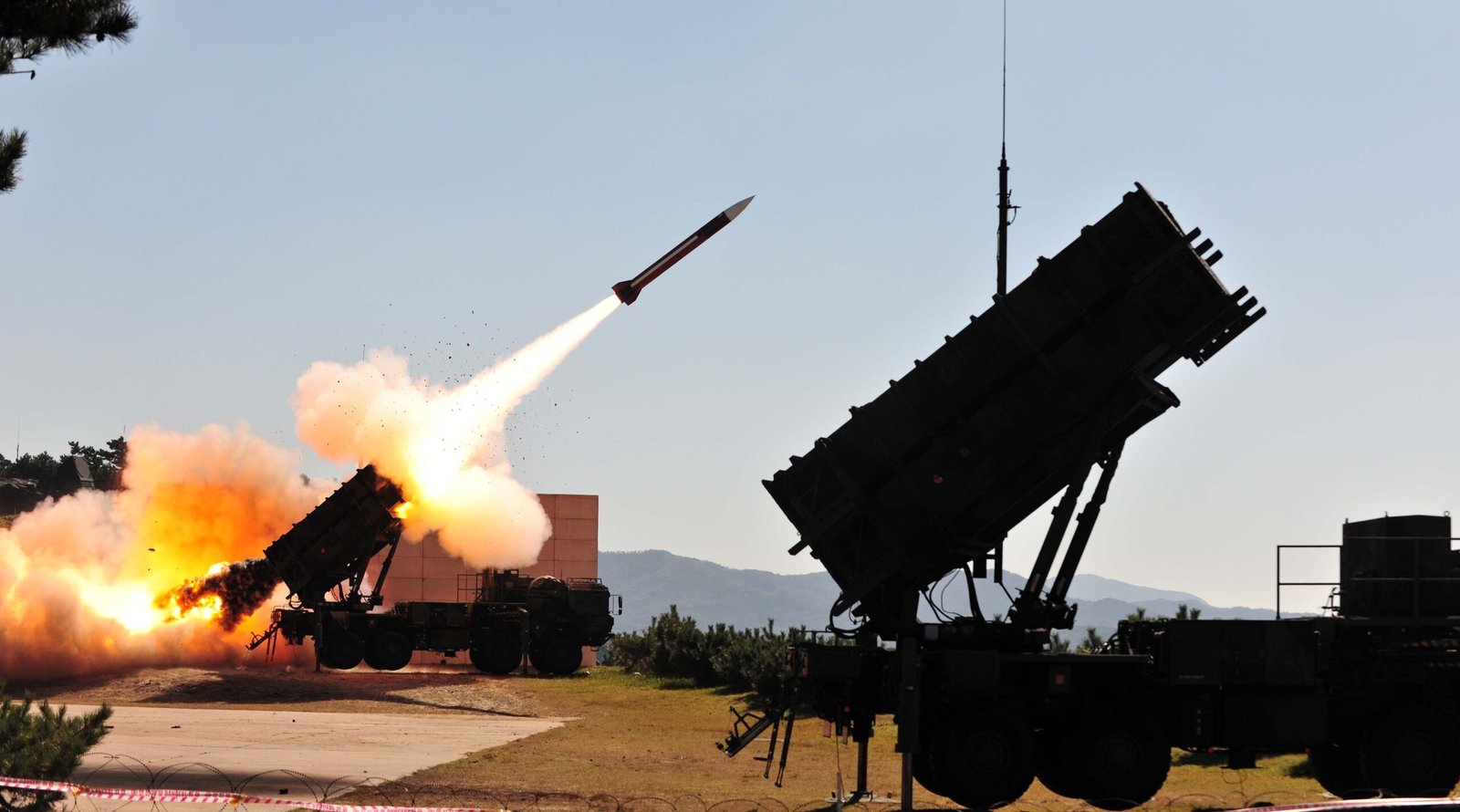
Europe
LONDON — The United Kingdom has announced a £100 million contribution to strengthen Ukraine’s air defence ahead of winter, including support for Patriot missiles and other air defence equipment. The funding will be provided through NATO’s Prioritised Ukraine Requirements List (PURL), a mechanism used by NATO Allies to fund critical military equipment identified as urgent requirements for Ukraine. NATO says PURL has been used to coordinate the purchase and delivery of equipment, including air defence capabilities, from the United States. According to the UK Ministry of Defence, the new package will also include air defence interceptors, large-calibre artillery rounds and drones. The equipment is expected to be delivered before winter to help Ukraine protect critical national infrastructure, civilians and its armed forces from Russian attacks. Drone deliveries to increase The UK is maintaining its commitment to provide more than 120,000 drones to Ukraine during 2026. Around 25,000 drones have already been delivered, with the pace of deliveries expected to increase in the months ahead. The drones include several types of systems. Interceptor drones are intended to counter Russian drones, while reconnaissance drones provide battlefield awareness and information on activity behind enemy lines. Attack drones are also being supplied to support Ukrainian operations against Russian military positions. More artillery ammunition planned The UK also recently reached the milestone of delivering its millionth large-calibre artillery round to Ukraine. The government said it will build on this by supplying tens of thousands of long-range artillery rounds in the coming months. Funding for these rounds is being provided by the UK together with Germany, Denmark, Lithuania, the Netherlands, Norway and Sweden. Ukraine Defence Contact Group meets The announcement comes as UK Defence Secretary Wes Streeting co-chairs the 36th meeting of the Ukraine Defence Contact Group with German Defence Minister Boris Pistorius. The group brings together nearly 50 countries providing military assistance to Ukraine and focuses on Kyiv’s immediate battlefield requirements as well as longer-term military support. Streeting said that his recent visit to Kyiv, along with the Prime Minister’s visit, highlighted the importance of supporting Ukraine through the winter. He said the new package was intended to strengthen Ukraine’s defences and reflected efforts by the UK and its allies to provide additional military capabilities. Wider UK support The latest package follows other recent UK measures supporting Ukraine. Britain has agreed that defence company MBDA can release classified information relating to UK components used in the SCALP, also known as Storm Shadow, to support the establishment of local assembly lines in Ukraine. The UK and Ukraine have also signed an agreement on military artificial intelligence capabilities following the Prime Minister’s visit to Kyiv. The new £100 million commitment adds to the wider international effort to provide Ukraine with air defence, ammunition and drones as it prepares for another winter of the war.
Read More → Posted on 2026-09-08 12:59:53
Europe
LONDON, — The UK government has launched a new £7.8 billion national space strategy covering planned investment through 2030, with defence, national security, connectivity and economic growth at its centre. The strategy replaces the 2021 National Space Strategy and brings together previously separate programmes across defence, science, transport and industry. It also supports the government’s Modern Industrial Strategy. More than £3 billion will support military space capabilities, backed by the Defence Investment Plan. The funding is intended to protect UK and allied space assets and maintain secure communications. Defence and Space Security The UK will invest £880 million in space control and intelligence, surveillance and reconnaissance (ISR) systems. These capabilities will monitor military activity on Earth and detect potential attacks against satellites. A further £2.8 billion will support satellite connectivity, including the Connectivity in Low Earth Orbit (CLEO) programme and the Ministry of Defence’s SKYNET secure communications system. SKYNET supports secure communications for British forces worldwide and includes the Airbus-built SKYNET 6A satellite, scheduled for launch in 2027. The government plans to use common satellite infrastructure for both national-security and public-service requirements. The connectivity investment is also intended to support rural communities and includes £57 million to reduce mobile signal interruptions on the national rail network. Defence Secretary Wes Streeting said the UK’s national security depends on freedom of action in space and the ability to protect UK and allied assets. He said the investment would strengthen the country’s ability to detect and respond to increasingly sophisticated threats while supporting reindustrialisation and UK opportunities. Monitoring Threats in Orbit Space Domain Awareness is another major part of the strategy. The government will provide £149 million to the European Space Agency’s Vigil mission and £85 million to the National Space Operations Centre. The programmes will monitor satellites, rockets and debris and provide earlier warnings of potential collisions, solar storms and potentially hostile activity. The information will help protect services including power networks, communications and navigation. Another £9 million will support space-weather forecasting. Supporting the UK Space Industry The UK space sector is valued at £18.6 billion and supports more than 55,000 skilled jobs. For the first time, government departments will use a common approach to purchasing and developing space technology, beginning with satellite communications. The government expects this to speed up delivery, improve value for money and direct more work towards British suppliers. Business, Innovation, Science and Trade Secretary Jonathan Reynolds said the strategy would strengthen the UK’s ability to launch satellites, detect threats and protect services while helping domestic industry create skilled jobs and drive economic growth. The package includes £148 million for European rocket programmes and £60 million to finalize SaxaVord Spaceport in Shetland, including £30 million from the private sector. Science, Exploration and New Space Technologies The government will invest £190 million in astronomy and space-science research and £163 million in science and exploration missions, including continued support for the UK-built Rosalind Franklin Mars Rover. Another £40 million will support in-orbit servicing, assembly and manufacturing (ISAM) technologies for repairing satellites, addressing orbital debris and supporting manufacturing in space. The strategy also introduces planned regulatory changes designed to lower costs and attract private investment. These include revised liability limits and specific waivers for certain lunar and ISAM missions launched before the end of 2030, along with changes to third-party liability insurance models and a more proportionate approach to monitoring the financial health of satellite constellation operators instead of requiring decommissioning funds. The strategy was published on September 8, 2026, and sets out the UK’s space priorities through 2030, including satellite communications, space domain awareness, ISAM and assured access to space.
Read More → Posted on 2026-09-08 13:11:14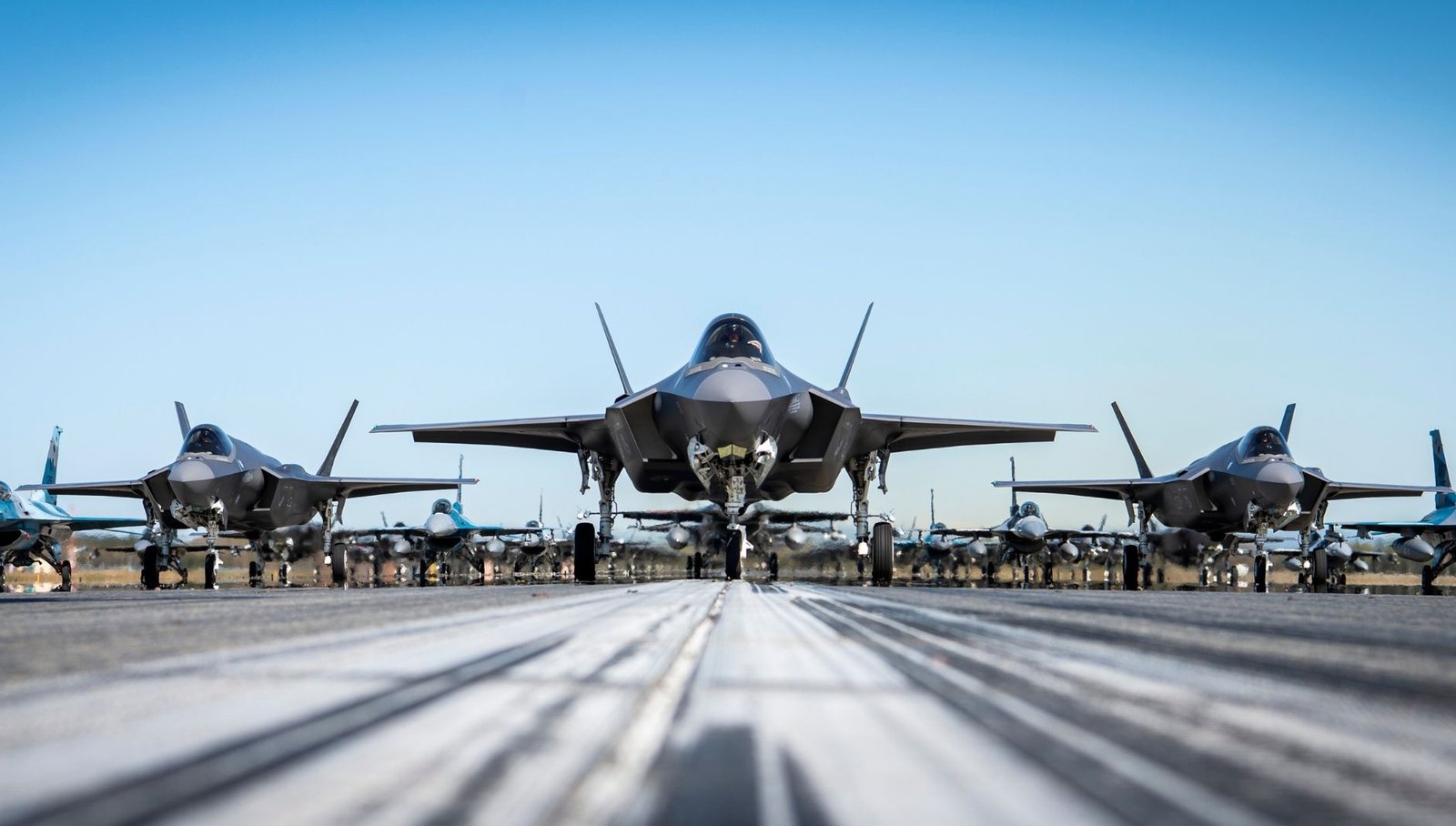
U.S
FORT WORTH, Texas — Lockheed Martin said the global F-35 Lightning II fleet has surpassed 1,355 aircraft deliveries and one million flight hours, as the programme continues to expand across 20 participating countries. Data through August 27 shows the fleet has completed more than 807,820 sorties and over 810 detachments and deployments. More than 3,560 pilots and 21,680 maintainers have been trained to operate and support the aircraft. The F-35 is now flown by 17 military services, with 12 countries operating the aircraft from their home territory. Fourteen services have declared Initial Operational Capability (IOC), while three have reached Full Operational Capability (FOC). The programme currently covers 55 active operating locations, including 42 land bases and 13 ships. Based on customer procurement decisions, Lockheed Martin expects this network to grow to 58 land bases and 24 ships by 2030. The United States remains the largest customer, with planned fleets of 1,763 F-35As for the Air Force, 280 F-35Bs and 140 F-35Cs for the Marine Corps, and 273 F-35Cs for the Navy. The programme's partner nations are the United Kingdom, Italy, the Netherlands, Canada, Australia, Denmark and Norway. Foreign Military Sales customers include Israel, Japan, South Korea, Belgium, Poland, Singapore, Finland, Switzerland, Germany, the Czech Republic, Greece and Romania. Japan's planned fleet is the largest among FMS customers, with 105 F-35As and 42 F-35Bs. Recent Developments Denmark declared a new deployable F-35 operations facility fully operational on August 14. On August 17, Lockheed Martin completed final assembly of Germany's first F-35. On August 19, US Marine Corps VMFA-542 received the US Air Force Gallant Unit Citation after flying more than 1,000 combat sorties during Middle East deployments in 2025. Belgian pilots conducted the first GBU-12 bomb release from a Belgian F-35 on August 20, while a British pilot flew an F-35C for the first time on August 21. Lockheed Martin said F-35 aircraft have demonstrated their capabilities during Epic Fury, Midnight Hammer, Rough Rider and Rising Lion, while also participating in Absolute Resolve, Inherent Resolve and Operation Shader. The global fleet first exceeded one million cumulative flight hours in March 2025. Lockheed Martin delivered a record 191 F-35s in 2025, compared with the previous annual high of 142 in 2021. The 2025 deliveries also helped clear earlier backlogs linked to TR-3 upgrades. By early 2026, the fleet stood at nearly 1,300 aircraft, before exceeding 1,355 deliveries by late August. The programme continues to expand its fleet, operating locations, training base and international operations.
Read More → Posted on 2026-09-08 13:20:21
World
RIYADH/SANAA — Yemen’s Houthi movement, also known as Ansarullah, said Tuesday that it launched dozens of ballistic missiles and drones against Saudi Aramco facilities and military targets in southern Saudi Arabia. The Houthis said the attack was carried out in response to 121 Saudi airstrikes conducted over the previous three days across several Yemeni provinces, including Ma’rib, Al-Bayda, Al-Hudaydah, Taiz and Al-Jawf. Yemen’s Houthis said Tuesday they launched dozens of ballistic missiles and drones at Aramco facilities and military targets in southern Saudi Arabia.The group said the attack was in response to 121 Saudi airstrikes carried out over the past three days across several Yemeni… pic.twitter.com/KAKgCuSDwW — Clash Report (@clashreport) September 8, 2026 The group also said one Saudi strike hit a prison in Al-Hazm, Al-Jawf, causing multiple casualties, including women and children. The Houthis warned that further Saudi attacks would be met with wider strikes inside Saudi Arabia. 73 Civilians Wounded in Saudi Arabia Saudi Arabia said Ansarullah targeted civilian and economic sites in southern Saudi Arabia using drones and missiles. The Saudi-led coalition said the attacks wounded 73 civilians, including women and children. Saudi authorities confirmed that strikes affected areas including Abha, Khamis Mushait, Jazan and Najran. The Saudi military described the overnight operation as a dangerous escalation and said the Kingdom would respond firmly. Fires were reported at several energy facilities following the attacks. The Saudi Energy Ministry said some operations were temporarily halted while firefighting and specialised teams worked to contain the fires and assess the damage. Saudi authorities have not released detailed figures on damage or production losses from the latest attacks. Saudi Aramco has also not provided a detailed public assessment of the damage. Satellite Imagery Shows Fires at Aramco Facilities Satellite imagery has provided indications of fires at several energy facilities in southwestern Saudi Arabia following the Houthi strikes. NASA’s Terra satellite imagery shows large black smoke plumes rising from at least three sites in Jazan and Abha, including: Aramco’s Jazan oil refinery Aramco’s Jazan bulk plant Aramco’s Abha bulk plant Satellite imagery and information provided by Soar Earth and Atlas have also been cited as showing massive fires at Saudi Aramco’s Abha Bulk Plant and Jizan Refinery. The fires were reportedly large enough to be visible from space following the attacks on the energy infrastructure. 🛰🇸🇦🇾🇪 NASA Terra satellite imagery shows large black smoke plumes rising from at least three sites in Jazan and Abha, southwestern Saudi Arabia, following Houthi strikes:— Aramco’s Jazan oil refinery— Aramco’s Jazan bulk plant— Aramco’s Abha bulk plant https://t.co/aio2lGVwi0 pic.twitter.com/CBILfJTfVX — Egypt's Intel Observer (@EGYOSINT) September 8, 2026 The imagery provides evidence of fires and smoke at the reported locations, but it does not by itself establish the full extent of physical damage or the impact on production. Saudi authorities are continuing to assess the affected facilities. Sentinel-2L Imagery Indicates Damage at King Khalid Air Base Separate Sentinel-2L satellite imagery has been cited as showing indications of damage at King Khalid Air Base in Khamis Mushait, southwestern Saudi Arabia, another location identified by the Houthis as a target. According to the imagery assessment, a direct impact is visible on shelters housing RSAF F-15 fighters. Another apparent impact is visible on a building or warehouse, while a burn scar can also be seen near one of the base’s aprons. The imagery assessment indicates possible physical effects at multiple locations inside the air base. However, satellite imagery alone does not establish the precise cause of each observed feature or confirm whether aircraft were damaged or destroyed. 🛰🇸🇦🇾🇪 Sentinel-2L imagery confirms damage from Houthi strikes on King Khalid Air Base in Khamis Mushait, SW Saudi Arabia.A direct impact is visible on shelters housing RSAF F-15 fighters, with another impact on a building/warehouse and a burn scar near one of the base aprons. https://t.co/zpKmEJ4hEp pic.twitter.com/aNggaWEnGr — Egypt's Intel Observer (@EGYOSINT) September 8, 2026 The Houthis said their operation targeted King Khalid Air Base along with Aramco facilities and other economic sites. Houthi military spokesperson Yahya Saree claimed the strikes were precise and direct and caused significant damage, although detailed independent damage assessments remain limited. Houthis Link Attack to Saudi Airstrikes Houthi military spokesperson Yahya Saree said the missile and drone operation was a response to the 121 Saudi airstrikes carried out during the previous three days. According to the Houthis, the Saudi strikes targeted several Yemeni provinces, including Ma’rib, Al-Bayda, Al-Hudaydah, Taiz and Al-Jawf. The group specifically cited the reported strike on a prison in Al-Hazm, Al-Jawf, saying it caused casualties among inmates and visitors, including women and children. The exact number of casualties from the prison strike has varied in reports and has not been independently verified. The Houthis said continued Saudi attacks would result in a wider response against Saudi targets. Saudi Arabia Links Escalation to Red Sea Attacks The latest Ansarullah attack came after Saudi warplanes struck Houthi positions in Yemen. Saudi Arabia has linked its military operations to Houthi actions involving a declared blockade of Saudi Arabia in the Red Sea and attacks on Saudi military supplies in Yemen. The conflict has therefore expanded across both the Yemeni battlefield and Saudi territory, with Houthi missiles and drones targeting Saudi infrastructure while Saudi aircraft continue operations against Houthi positions in Yemen. Saudi Arabia has also condemned continued Houthi attacks on commercial vessels in the Red Sea, saying they threaten maritime navigation. Fighting Continues Between Houthis and Saudi-Backed Forces Major fighting is currently taking place inside Yemen between Ansarullah forces and Saudi-backed PLC fighters. Following recent clashes, reports have circulated that Houthi forces seized several armored vehicles belonging to the Pakistan Army that had been provided by Saudi Arabia to Pakistani troops. Following the clashes, Houthi forces have reportedly seized several armored vehicles belonging to the Pakistan Army that had been provided by Saudi Arabia to Pakistani troops.Pakistani personnel were reportedly deployed to support Saudi Arabia’s defense operations, while… pic.twitter.com/ctfWiq2ruU — THE UNKNOWN MAN (@Theunk5555) September 7, 2026 There have also been reports that Pakistani personnel were deployed to support Saudi Arabia’s defense operations, while other reports have claimed that several Pakistani soldiers were killed in the clashes. However, Pakistani and Saudi authorities have not publicly confirmed specific Pakistani military losses or the reported seizure of Pakistan Army vehicles in these latest clashes. The claims therefore remain unconfirmed. Mecca Defence Agreement Under Scrutiny The latest escalation comes about one month after Saudi Arabia, Pakistan and Türkiye signed the Mecca Joint Defence Agreement on August 7, 2026. The agreement provides for expanded defence cooperation and coordination among the three countries. It states that an armed attack against one member is to be regarded as an attack against all three. As of Tuesday, there had been no publicly announced Turkish or Pakistani military deployment specifically in response to the latest Houthi attacks. The latest strikes have nevertheless drawn attention to the practical implications of the new defence arrangement as Saudi Arabia faces continued missile and drone attacks and fighting involving Saudi-backed forces continues inside Yemen. Conflict Enters Another Escalation The latest Houthi operation is described by Saudi authorities as one of the most extensive Ansarullah attacks on Saudi Arabia in years. With 73 civilians reported wounded, fires at several energy facilities and satellite imagery indicating fires and possible impacts at Aramco facilities and King Khalid Air Base, the attacks have affected both civilian and economic infrastructure and military sites. At the same time, fighting continues inside Yemen and Saudi air operations against Houthi positions remain part of the broader conflict. The full extent of damage to the affected Aramco facilities and King Khalid Air Base, as well as any impact on Saudi energy production or military aircraft, remains under assessment. Saudi authorities have confirmed temporary operational disruptions but have not released detailed figures on production losses.
Read More → Posted on 2026-09-08 13:55:33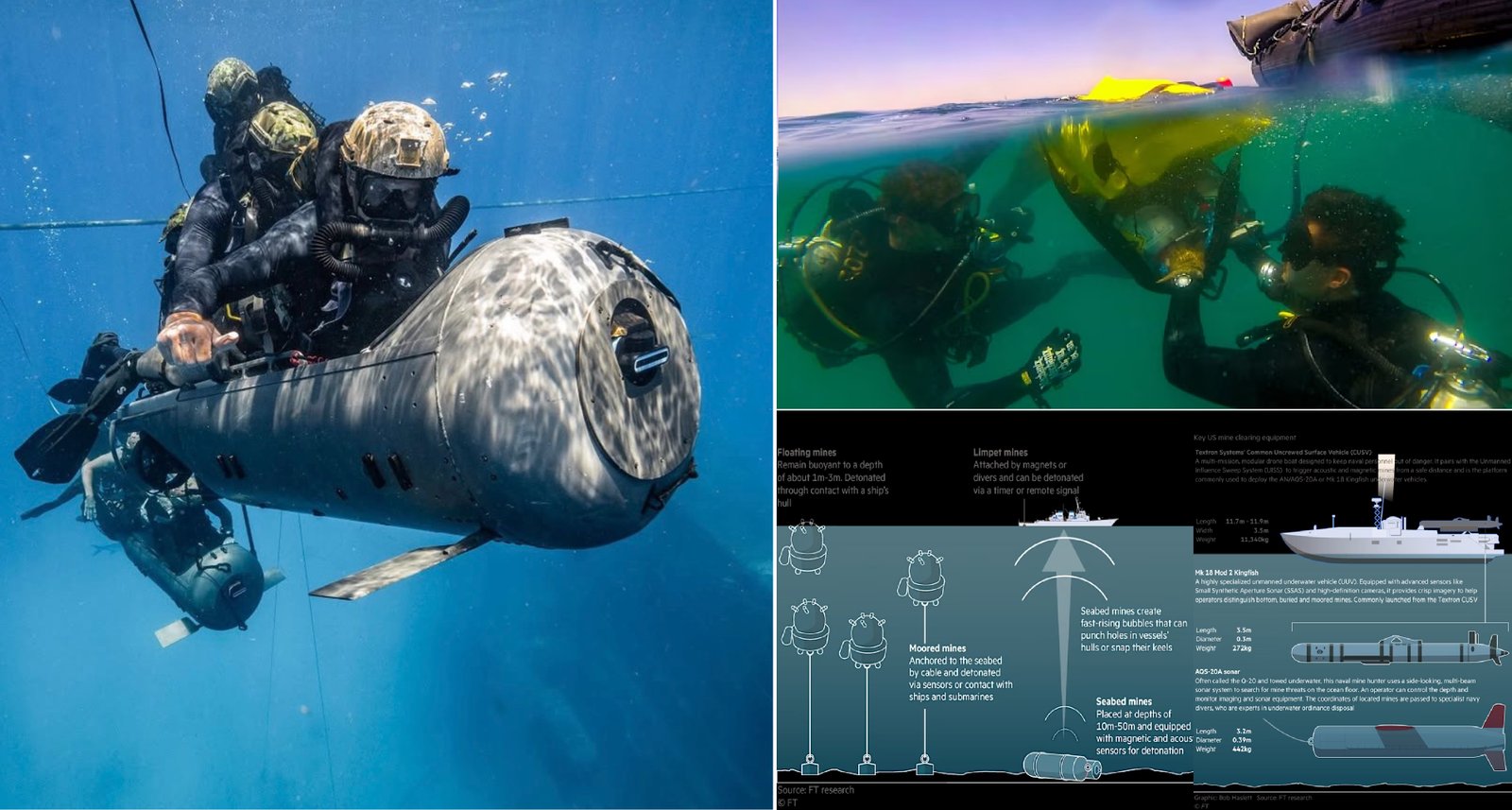
U.S
WASHINGTON — U.S. Navy SEAL divers spent about four months carrying out a covert operation to locate and destroy suspected Iranian naval mines in the Strait of Hormuz, using small boats, unmanned vessels and underwater systems to clear key international shipping lanes, according to a Financial Times report. The operation was conducted largely at night and began after Iran said it had placed mines in international and Omani waters following the start of U.S. and Israeli strikes in February. The mines contributed to a major disruption of commercial shipping through the Strait of Hormuz, one of the world's most important maritime energy routes. SEAL Teams Used Small Boats and Unmanned Systems Rather than relying primarily on conventional minesweeping ships, U.S. Navy divers operated in small teams from inflatable-hulled boats. Robot boats and underwater vehicles equipped with high-resolution sonar were used to scan the seabed and identify objects suspected of being mines. Systems involved in the search included the U.S. Navy's Common Uncrewed Surface Vessel operating with towed sonar arrays. Once a suspected mine was identified, divers could enter the water, approach the explosive and attach a charge to destroy it. “That is usually followed up by a navy diver who’s got to get in the water and approach the mine, and then put a charge on it and destroy it,” retired U.S. Navy Captain Bill Hamblet, who previously operated in the Gulf, told the Financial Times. Hamblet described the operation as involving a “very small, lightweight kind of force.” He said some of the operations may have been staged from the USS Miguel Keith, an expeditionary mobile base attached to U.S. naval forces operating in the Gulf. Underwater robotic systems could also be used to carry explosives to mines, reducing the need to expose divers directly to some threats. Experts cited systems including Britain's SeaFox and the U.S. AN/ASQ-235 Archerfish as equipment capable of performing such missions. “It is an extremely time-consuming process,” Nitya Labh, an associate fellow at Chatham House, told the Financial Times. “They are doing, essentially, active bomb detonation underwater.” No U.S. casualties have been reported specifically in connection with the mine-clearing operation. Mines Disrupted Strait of Hormuz Shipping The operation followed reports that Iran had laid mines along important shipping routes in and around the Strait of Hormuz. Around 80 mines were estimated to have been deployed, according to the Financial Times report. Commercial shipping through the strait fell sharply after the conflict began. Before the conflict, the waterway handled about 20 percent of global oil trade. The International Maritime Organization has continued to describe conditions in the Strait of Hormuz as unstable and has been monitoring the effects on international shipping and seafarers. The IMO said in its September 2 update that around 20,000 seafarers, port workers and offshore crews were being affected by the situation in the region. The strait's established Traffic Separation Scheme, adopted by the IMO, provides designated lanes for vessels passing through the waterway. U.S. Says International Shipping Lanes Cleared U.S. Central Command later confirmed that U.S. forces had cleared sea mines from the international shipping lanes in the Strait of Hormuz. CENTCOM commander Adm. Brad Cooper said the operation involved Navy divers and Navy SEALs, supported by air power from the U.S. Army, Navy, Air Force and Marine Corps. “The circumstances were challenging and dangerous, to say the least, but we got the job done,” Cooper said. President Donald Trump announced in late August that mines in the strait's international waters had been removed or detonated. Shipping executives and maritime security advisers cited by the Financial Times said they were confident that the southern part of the strait near Oman, where U.S. forces have been directing commercial vessels, had been cleared. However, questions remain over whether the entire Strait of Hormuz is free of mines. Satellite imagery has provided limited confirmation of Iran's earlier claims about the scale of the mining operation, while one suspected mine was reportedly observed by a Pakistani survey vessel in May. The United States has also warned that it will strike vessels attempting to deploy additional mines. On August 30, U.S. forces struck Iranian rocket launchers that American officials said were being prepared to fire mines into the strait. Despite the mine-clearing effort, commercial traffic through the Strait of Hormuz has not returned to its pre-conflict level. Continued concerns about possible new mines, as well as missile and drone attacks against shipping, remain factors affecting commercial operations through the waterway.
Read More → Posted on 2026-09-08 14:13:00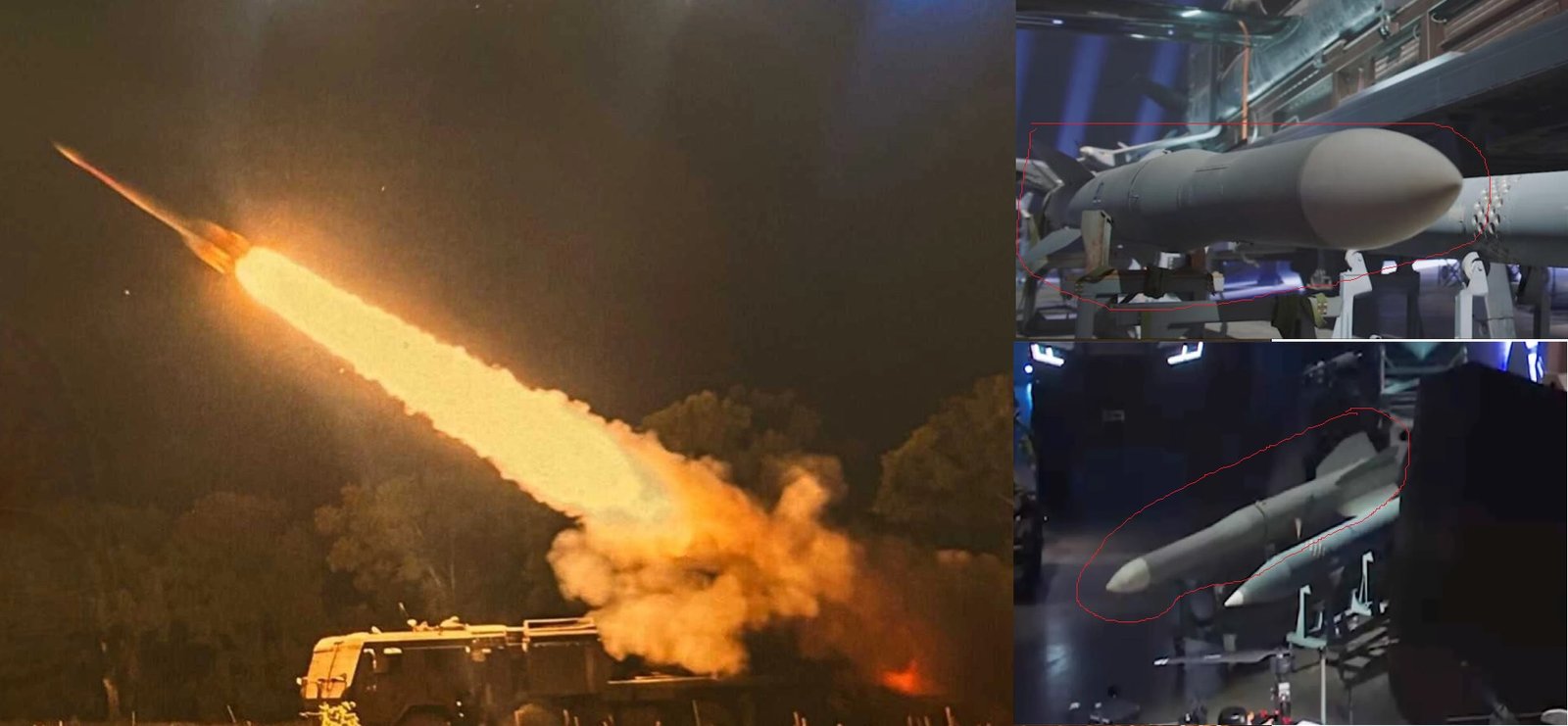
Europe
KIELCE, Poland — Ukraine has publicly unveiled the self-propelled launcher for its indigenous Koral surface-to-air missile system at the MSPO 2026 international defense exhibition in Kielce, Poland. The system is being developed by Ukraine’s State Kyiv Design Bureau Luch and is part of the country’s ongoing effort to develop a domestically produced air defense capability. An image released by Ukraine’s state defense conglomerate Ukroboronprom shows a Koral missile launching from a self-propelled launcher mounted on a Czech Tatra heavy-duty truck chassis. The truck-based configuration provides the system with the mobility required for deployment and repositioning. Designed for Air and Ballistic Targets The Koral missile is designed primarily to intercept aerial and ballistic targets as part of a broader air defense network. In this context, its ballistic-target role refers to short-range or tactical ballistic missiles, rather than long-range ballistic missile threats. According to the developers, the missile also retains a secondary capability to engage ground or surface radar-contrast targets in exceptional circumstances. The updated Koral interceptor has a total mass of 450 kilograms, including a 36-kilogram warhead. Its guidance system combines inertial navigation, radio correction and an active radar homing head. The missile has a length of 4.8 meters. Its stated diameter is 230/300 millimeters, while the wingspan is 835 millimeters and the control-fin span is 685 millimeters. For comparison, the PAC-3 interceptor used by the U.S. Patriot system weighs 316 kilograms and carries a 24-kilogram warhead. The maximum engagement range of the updated Koral missile has not been publicly disclosed. Nearly a Decade of Development Development of the Koral project began in 2016. Early project documents identified the missile as part of a proposed ship-based surface-to-air missile system. The project was presented to the public more clearly in 2021, when the Luch Design Bureau displayed a full-scale Koral missile mockup at the Arms and Security exhibition in Ukraine. At that stage, the missile was described as having a mass of approximately 300 kilograms, a projected range of up to 30 kilometers and a maximum altitude of 10 kilometers. The earlier version was listed with a 25-kilogram warhead, a length of 4.33 meters and a diameter of 230/260 millimeters. Luch chief designer Oleh Korostelov estimated the overall readiness of the system at around 70 percent in 2021. At the time, the company was also considering a family of Ukrainian air defense systems covering different ranges, with Koral intended for the middle tier. The specifications have changed during the development process. The missile displayed in 2026 is heavier and longer than the version presented in 2021 and carries a larger warhead. Developers have previously stated that the final characteristics of the system could be adjusted according to the operational requirements of the armed forces. First Public Display of the Self-Propelled Launcher The presentation at MSPO 2026 marks the first public display of the complete self-propelled Koral launcher configuration. The appearance of the launcher provides a look at the latest configuration of a Ukrainian air defense project that has been under development since 2016. The system's current configuration combines the 450-kilogram interceptor, its inertial and radio-correction navigation systems, active radar homing and a mobile launcher mounted on a Tatra truck chassis. While the updated missile's current range and other final performance parameters have not been publicly disclosed, the MSPO presentation shows the latest publicly displayed configuration of Ukraine's Koral air defense system.
Read More → Posted on 2026-09-08 14:22:30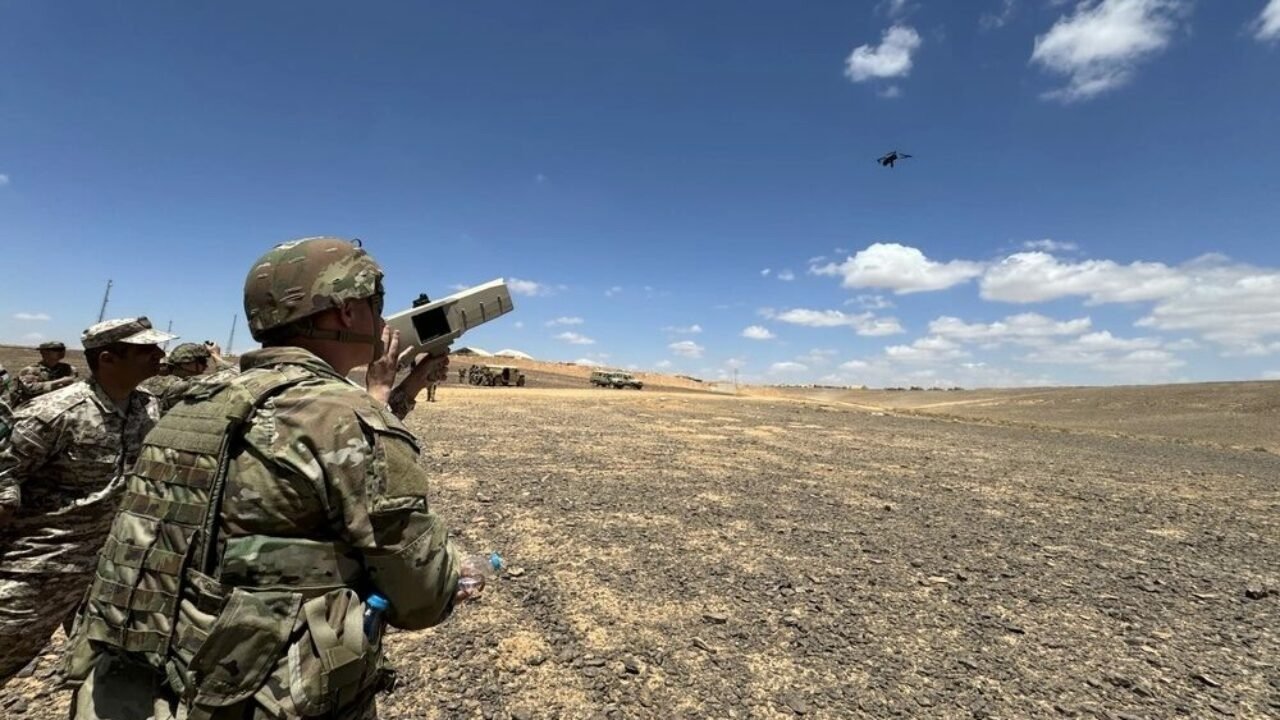
World
OKINAWA, Japan — The U.S. Air Force’s Pacific Air Forces (PACAF) is seeking to acquire 60 DroneBuster 5 handheld counter-drone systems equipped with Position, Navigation and Timing (PNT) capability to strengthen protection against small unmanned aircraft systems across its Indo-Pacific area of responsibility. The requirement was issued by the Air Force’s 18th Contracting Squadron at Kadena Air Base under solicitation FA527026QA051. The systems are intended to increase PACAF’s counter-small unmanned aircraft systems (C-sUAS) capabilities. The latest amendment to the solicitation specifies the U.S. 433 MHz variant, with the required part number listed as FIGDB5_433_PNT_KIT. It also corrects an earlier reference to the DroneBuster IV, clarifying that the Air Force requirement is specifically for DroneBuster 5 systems. Funding has not yet been allocated The Air Force has stated that funds are not currently available for the purchase. The government therefore has no legal obligation to make payment until appropriated funds become available and the contracting officer provides written confirmation of their availability. The solicitation initially had an earlier response deadline, but an amendment issued September 8 extended the deadline to September 11, 2026, at 11 a.m. Japan Standard Time. The solicitation calls for delivery within 90 days of contract award if the procurement proceeds. DroneBuster 5 counter-drone capability The DroneBuster is a handheld radio-frequency counter-drone system originally developed by Flex Force Enterprises. It is designed to disrupt the radio link between a small drone and its operator and can also interfere with navigation signals. The PNT capability requested by PACAF provides an additional electronic-attack function. According to manufacturer information, the capability can address GPS-guided drones operating on pre-programmed routes, including situations in which there is no active operator control link to disrupt. The manufacturer has stated that this capability can operate at ranges of approximately 800 to 1,400 meters (2,600 to 4,600 feet). Manufacturer information for standard DroneBuster systems lists a weight of less than 5 pounds (2.3 kilograms), with approximately three hours of continuous jamming or up to 10 hours of passive drone detection on a battery charge. The company has also said basic operation can be learned by new users in less than five minutes. DroneBuster's military background The system has already been used by U.S. military services and international customers. The Pentagon’s Joint Counter-UAS Office has designated DroneBuster as a handheld electronic-attack system approved for defeating small drones. The manufacturer has previously reported deliveries of more than 1,700 systems to the U.S. Army, Air Force, Navy and Marine Corps, as well as international military and police organizations. The system has also been associated with Australia's LAND 156 counter-drone program. Later company statements have cited higher fielding totals of more than 2,500 to over 3,000 systems across more than 50 countries, although those figures represent later company-reported totals. Corporate ownership Flex Force Enterprises became part of DZYNE Technologies through private-equity transactions completed in 2024. In July 2026, Ondas Inc. acquired DZYNE Technologies in a transaction valued at approximately $875.8 million. DZYNE was subsequently incorporated into Ondas' Sentinel defense business. The acquisition expanded Ondas' portfolio to include counter-UAS technologies alongside autonomous aircraft and other defense systems. The PACAF procurement remains dependent on funding. The solicitation does not provide a total contract value, and the Air Force has not yet indicated that the purchase has been funded or awarded.
Read More → Posted on 2026-09-08 14:32:52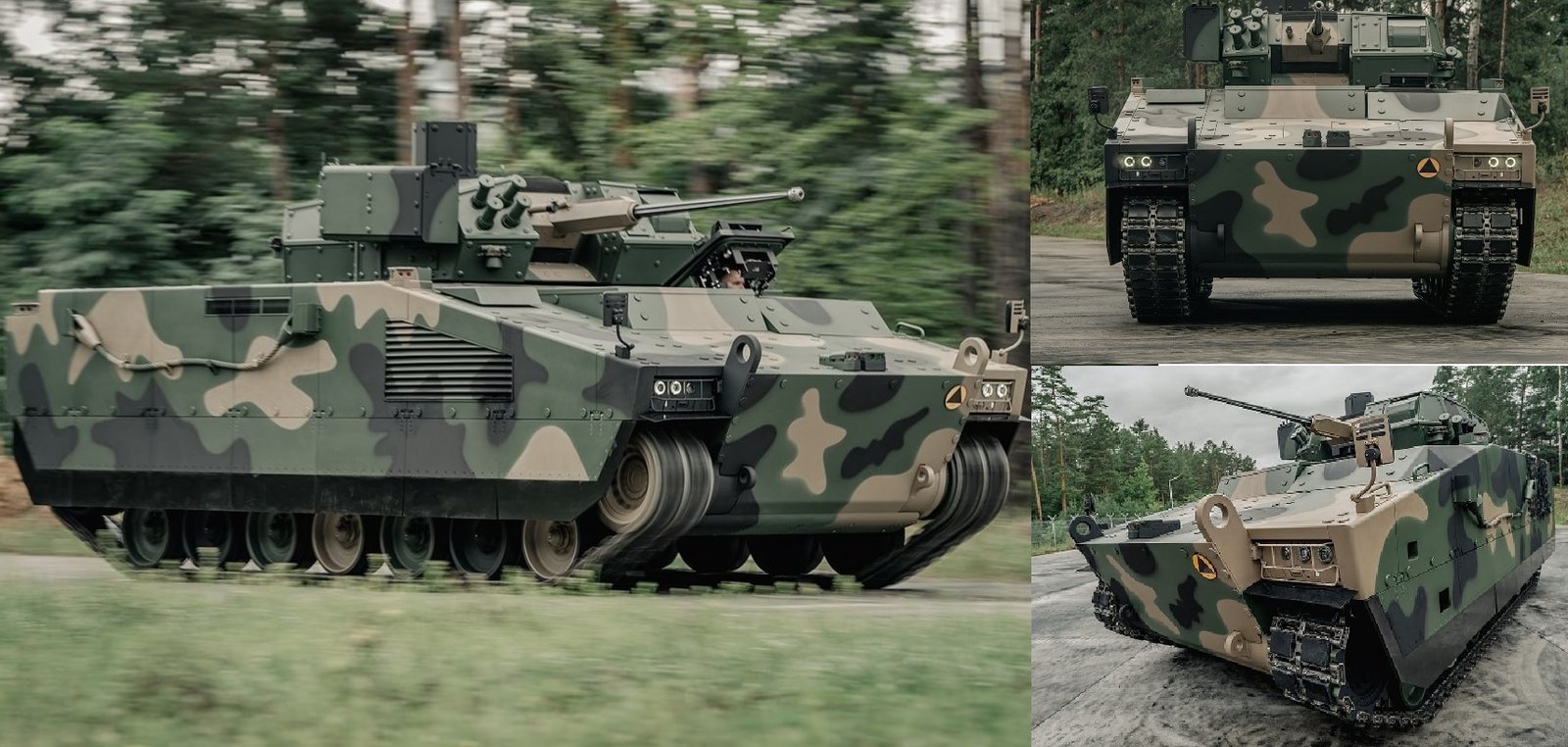
Europe
KIELCE, Poland — Poland’s state-owned defense conglomerate Polska Grupa Zbrojeniowa (PGZ) has unveiled a full-scale, mobile technology demonstrator of its new Heavy Infantry Fighting Vehicle (CBWP) at the MSPO 2026 defense exhibition in Kielce. The vehicle, designated CBWP (Ciężki Bojowy Wóz Piechoty) and previously shown under the name Ratel, was developed by Huta Stalowa Wola (HSW), a PGZ subsidiary. A 1:4-scale model was displayed at MSPO 2025, while partial images of the vehicle had been released on social media before this year's exhibition. The CBWP is designed to transport and protect mechanized infantry while providing direct fire support. It has a three-person crew and can carry up to eight soldiers. Its intended targets include armored and unarmored vehicles, exposed weapons positions and field fortifications. Heavy Protection The vehicle weighs approximately 40 tons, around 12 tons more than the amphibious Borsuk IFV. Unlike the Borsuk, the CBWP is not designed to swim, allowing greater emphasis on ballistic and mine protection. Its tracked chassis incorporates design elements from the Krab self-propelled howitzer. The vehicle uses an MTU diesel engine producing 800 kW, paired with an American transmission. It has a reported top speed of up to 65 km/h and a range of about 500 km. The frontal armor is designed to withstand 30×173 mm armor-piercing rounds fired from 500 meters, corresponding to STANAG 4569 Level 6 protection. The hull can accommodate explosive reactive armor, including Poland's modular Pangolin system. Other protection systems include the Obra-3 laser warning system, smoke grenade launchers, an NBC protection and filtration system, and provisions for a future active protection system (APS). ZSSW-30 Turret The demonstrator is equipped with the ZSSW-30 remote-controlled turret, already used on Poland's Rosomak and Borsuk. Developed by HSW and WB Group, it carries a 30 mm Mk 44/S Bushmaster II cannon, a coaxial 7.62 mm machine gun and twin launchers for Spike-LR anti-tank guided missiles. The cannon can fire programmable ABM ammunition for engaging ground and aerial targets. The turret's hunter-killer system allows the commander to search for new threats with day and night sensors while the gunner engages another target. Several components, including the auxiliary power unit, filtration system, heating, periscopes and lighting, are shared with the Borsuk to simplify logistics and reduce costs. Procurement and Development PGZ, HSW and Poland's Armament Agency signed a framework agreement in August 2023 covering several hundred CBWPs in different configurations, together with logistics and training packages. Earlier project information outlined a requirement for approximately 700 vehicles. The vehicles are primarily intended for heavy mechanized formations, including units in eastern Poland and formations equipped with Abrams tanks. The current demonstrator has completed a substantial portion of testing, including ballistic resistance trials, and is expected to begin factory trials. Two fully functional prototypes are planned for 2027, followed by qualification, ballistic and mine-resistance testing and formal military assessment. Subject to successful testing and final configuration agreements with the Polish Armed Forces, series production is targeted for 2029. The modular design also allows potential alternative configurations, including a 40 mm cannon or a fire-support variant armed with a 105 mm gun.
Read More → Posted on 2026-09-08 16:00:22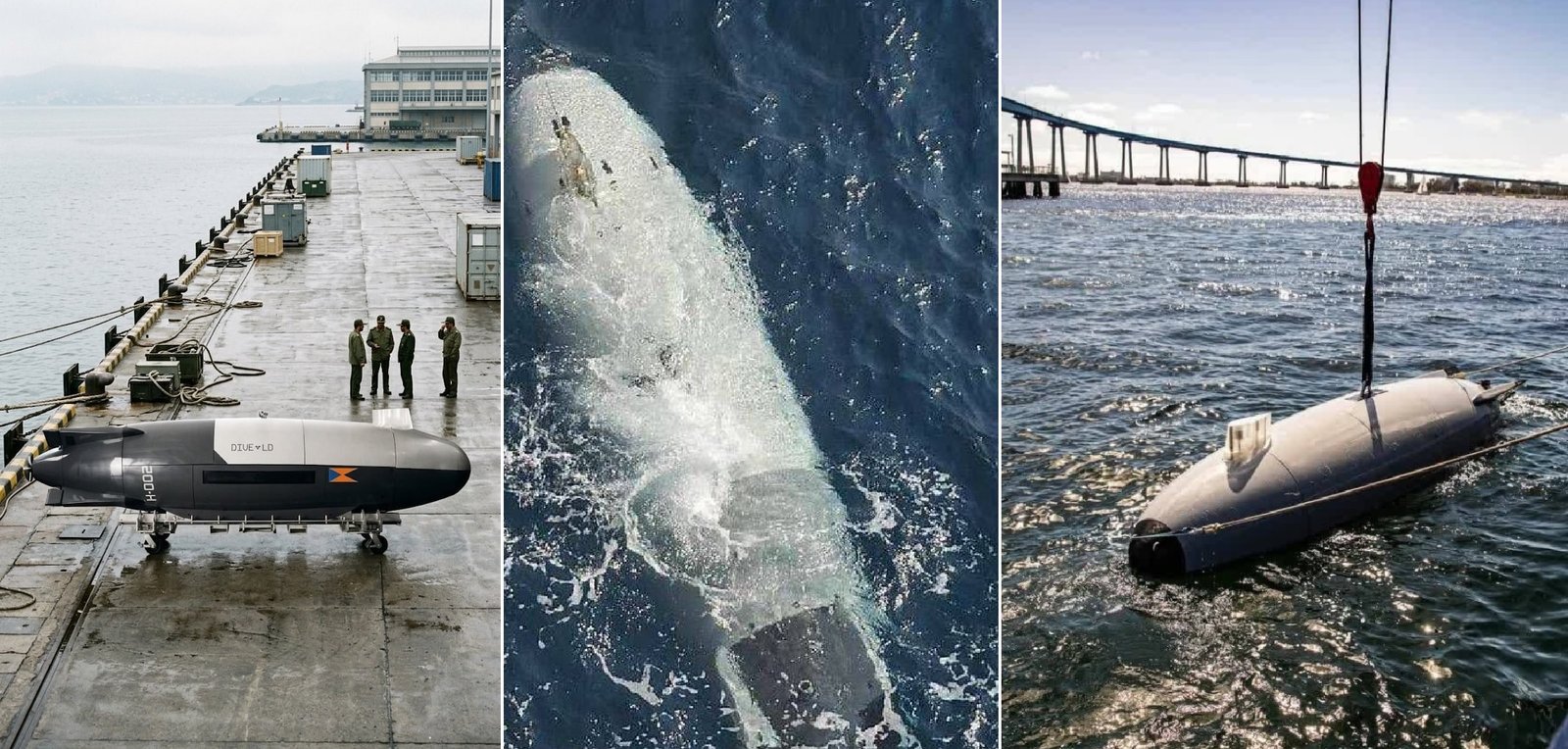
World
TEHRAN — Iran’s Islamic Revolutionary Guard Corps (IRGC) Navy has claimed that it captured a U.S. unmanned underwater vehicle near the entrance to the Strait of Hormuz during an operation early Tuesday. In Statement No. 12, the IRGC Navy said its forces intercepted the unmanned vehicle through what it described as a “complex intelligence and operational” operation. Iranian state media reported that the vehicle was captured intact and brought under Iranian control. The IRGC said images of the captured system would be released later. The U.S. military had not publicly confirmed the capture as of September 8. Reuters and other reports said there was no U.S. confirmation of the Iranian claim. Vehicle identified as Anduril Dive-LD Iranian state media identified the captured vehicle as the Dive-LD, a large-diameter autonomous underwater vehicle (AUV) developed by U.S. defense technology company Anduril Industries. The identification has not been independently confirmed by the U.S. government. However, the Dive-LD is a real U.S. Navy unmanned underwater platform. Anduril says the vehicle is approximately 5.8 meters (19 feet) long, about 1.2 meters (4 feet) in diameter, and designed for autonomous operations lasting up to 10 days. It has a maximum operating depth of about 6,000 meters. Anduril delivered its first Dive-LD to the U.S. Navy’s Unmanned Undersea Vehicle Squadron 1 (UUVRON-1) in April 2025. The Navy's UUVRON-1 operates autonomous underwater vehicles for a range of undersea missions. Designed for multiple underwater missions The Dive-LD has a modular architecture that allows different sensors and payloads to be integrated for specific missions. According to Anduril, its potential defense applications include intelligence, surveillance and reconnaissance and mine warfare. The company also lists commercial applications such as hydrographic surveying and inspection of underwater pipelines and cables. Its design uses direct-drive electric propulsion and is intended for long-duration autonomous operations. The platform's published specifications make it capable of operating in both relatively shallow and very deep underwater environments. Its modular payload system is designed to allow different mission equipment to be carried without changing the basic vehicle architecture. Capture reported amid tensions in Strait of Hormuz The reported seizure comes as military tensions between Iran and the United States remain high around the Strait of Hormuz. Maritime traffic through the waterway has declined amid the continuing confrontation, with Reuters reporting that only seven commodity vessels passed through the strait on Monday, compared with eight the previous day. Iran has also threatened further action against U.S. interests in the Gulf and has discussed imposing additional restrictions on shipping through the strategic waterway. The Strait of Hormuz is one of the world's most important maritime routes for energy shipments, making military activity in and around the waterway closely watched by governments and shipping companies. U.S. response remains pending The IRGC has described the vehicle as an advanced U.S. unmanned underwater system and said it was captured intact. Iranian officials have indicated that the vehicle could be examined for its technology and design. However, the capture itself, the identity of the vehicle and the circumstances under which it was allegedly seized remain based on the Iranian announcement and have not been independently verified. No public U.S. military confirmation of the reported capture was available as of September 8. The IRGC said further information and images of the alleged captured vehicle would be released.
Read More → Posted on 2026-09-08 16:10:55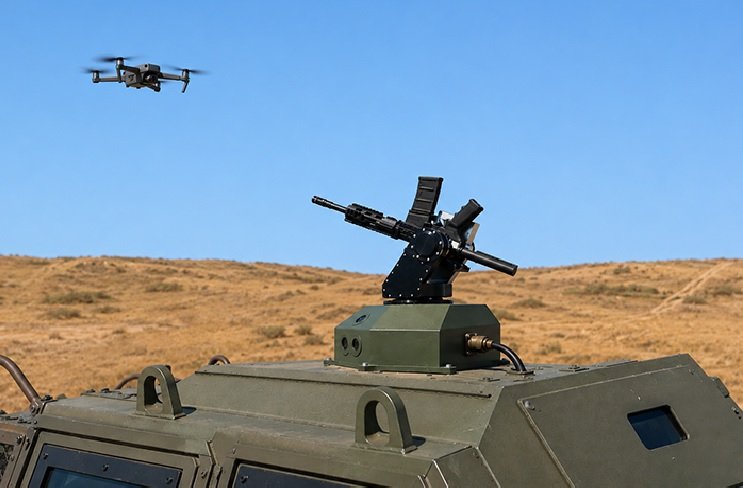
World
TEL AVIV, Israel — Israeli defense technology company Axon Vision (TASE: AXN) has received an order worth up to approximately NIS 15 million from an Israeli defense organization for its ForceField counter-unmanned aerial system (C-UAS). The order includes an initial purchase valued at approximately NIS 6 million, with customer options for up to an additional NIS 9 million. Delivery of the systems is expected over the next 12 months. The order follows the July 2026 launch of ForceField and a series of comprehensive live-fire trials that demonstrated its ability to intercept FPV drones and other low-altitude aerial threats. ForceField is a compact system designed to protect maneuvering combat forces, military vehicles and tactical positions. It combines passive electro-optical sensing, embedded Edge AI, autonomous decision support and kinetic engagement in one platform. The system supports the full Detect, Understand and Respond cycle and uses Man-on-the-Loop control. Its passive electro-optical sensors support day and night operations without continuously emitting signals. ForceField is specifically designed to detect and counter fiber-optic-controlled FPV drones, which cannot be reliably addressed by traditional electronic-warfare jamming. The system can operate independently without continuous communications or reliance on external detection systems. It can also integrate with existing military platforms and use standard weapons and ammunition for kinetic engagements. Axon Vision expects ForceField to support its expansion into international defense markets, particularly Europe and the United States. The company has a strategic partnership with Leonardo DRS and previously received an order from the company for related AI-driven C-UAS demonstration systems for U.S. defense and homeland-security evaluations. In July 2026, Axon Vision also announced a collaboration with ParaZero Technologies to expand the ForceField family with a non-destructive, net-based interception option for environments such as critical infrastructure where kinetic engagement may be less suitable. Neri Zin, CEO of Axon Vision, said the first ForceField order marks the company's transition from development and live-fire validation to initial commercial adoption. He added that Axon Vision is seeing growing demand for AI- and autonomy-based solutions against evolving drone threats and is pursuing additional opportunities with customers and strategic partners in Israel and international markets. Axon Vision develops AI-based computer-vision and situational-awareness technologies for defense applications. Its Edge AI technologies have been developed through Israeli Ministry of Defense programs.
Read More → Posted on 2026-09-08 16:23:42
Space & Technology
NEW DELHI — The Defence Research and Development Organisation (DRDO), through its Technology Development Fund (TDF), has invited industry participation to develop an Air-Breathing Space-Based Electric Propulsion (ABEP) system for satellites operating in Very Low Earth Orbit (VLEO). The proposed system is designed for satellites operating at 180–230 kilometres, where residual atmospheric gases create significant drag and can shorten the operational life of conventional satellites. VLEO offers advantages including higher-resolution Earth observation, lower communication latency and reduced radiation exposure compared with higher orbits. The ABEP system will collect residual atmospheric gases at altitudes below 250 km, ionise them and accelerate the ions through an electric thruster to generate continuous thrust. Ambient atmospheric air will be the primary propellant, with Xenon available as a supplementary or alternative propellant. DRDO has listed a Hall-effect thruster as the preferred technology. Key Requirements The propulsion system must generate 12–25 mN of thrust, consume less than 1,500 watts of power and have a total mass of under 40 kg. It must support a mission life of at least three years. The RFP also requires a minimum of 75 per cent indigenous content. The system must use materials compatible with atomic oxygen exposure and include closed-loop control and limited redundancy. By continuously using atmospheric gases as propellant, the system is intended to reduce dependence on stored propellant while providing thrust to counter atmospheric drag and maintain the satellite's orbit. The TDF scheme, executed by DRDO under the Ministry of Defence, provides financial support to Indian industries, start-ups and Micro, Small and Medium Enterprises (MSMEs) for developing indigenous defence and aerospace technologies. The ABEP project is part of DRDO's efforts to develop indigenous electric-propulsion technologies for sustained satellite operations in challenging low-altitude orbital environments. Interested Indian entities were invited to submit proposals through the TDF portal during the designated application window in late 2025, with subsequent stages including detailed project reports and selection of development partners following standard TDF procedures.
Read More → Posted on 2026-09-08 16:37:46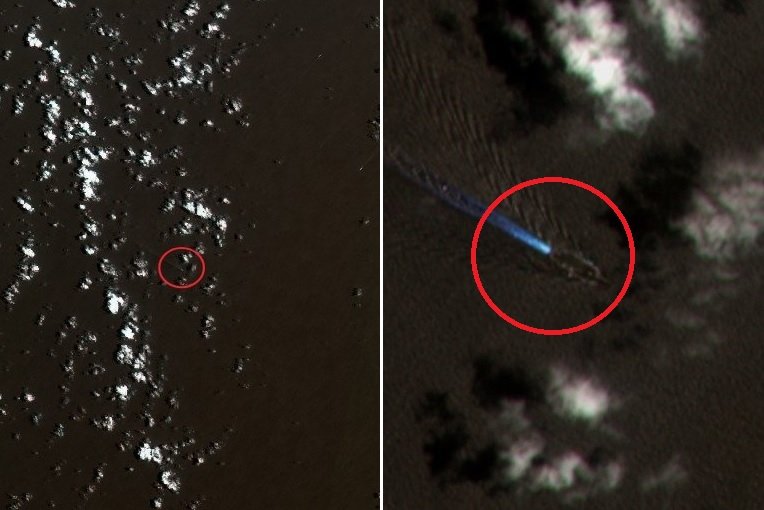
U.S
SOUTH CHINA SEA — The U.S. Navy’s Nimitz-class aircraft carrier USS Abraham Lincoln (CVN-72) has been identified in the South China Sea by open-source intelligence (OSINT) researchers as it continues its return journey to its homeport at Naval Air Station North Island in San Diego, California. Italian-based OSINT analyst MoloMonitor (@MoloWarMonitor) reported on September 8 that Sentinel-2 satellite imagery showed the carrier at 5.939898, 107.557912, in the southern South China Sea. The researcher said the ship was sailing toward San Diego and estimated its arrival in about 20 days. The carrier recently completed a five-day port visit to Laem Chabang, Thailand, arriving on September 2 after an extended deployment. It departed Thailand on September 6 and continued operations in the U.S. 7th Fleet area. I just found the USS Abraham Lincoln aircraft carrier (CVN-72) on Sentinel-2 satellite imagery, 08/09/2026.It is currently sailing in the South China Sea heading towards its homeport in San Diego, with an expected arrival in about 20 days.Coordinates: 5.939898, 107.557912 pic.twitter.com/j9OaEjN0h7 — MoloMonitor 🇮🇹 (@MoloWarMonitor) September 8, 2026 Extended Deployment The Abraham Lincoln left San Diego on November 21, 2025, for an Indo-Pacific deployment but was later redirected to the Middle East. It spent more than 250 days deployed and supported U.S. operations in the region, including missions related to the conflict with Iran. The deployment lasted about 286 days at sea, according to the U.S. Navy. The carrier was subsequently relieved in the Middle East by the USS George Washington (CVN-73) before beginning its return journey. Before reaching Thailand, the Abraham Lincoln transited the Strait of Malacca and Singapore Strait. Its September 2 arrival at Laem Chabang marked its first substantial port visit in many months. The carrier was accompanied by elements of Carrier Strike Group 3 (CSG-3), including the guided-missile destroyer USS Frank E. Petersen Jr. and guided-missile cruiser USS Robert Smalls, which also made nearby port visits in Thailand. The carrier hosts Carrier Air Wing 9 (CVW-9). Commissioned in 1989, the USS Abraham Lincoln is about 1,092 feet long and powered by two nuclear reactors. The ship normally operates with several thousand sailors and Marines along with its embarked air wing. The latest Sentinel-2 imagery provides an OSINT-based indication of the carrier’s position. The U.S. Navy does not routinely publish real-time positions of deployed warships, while the coordinates and 20-day arrival estimate were provided by the OSINT researcher.
Read More → Posted on 2026-09-08 16:47:46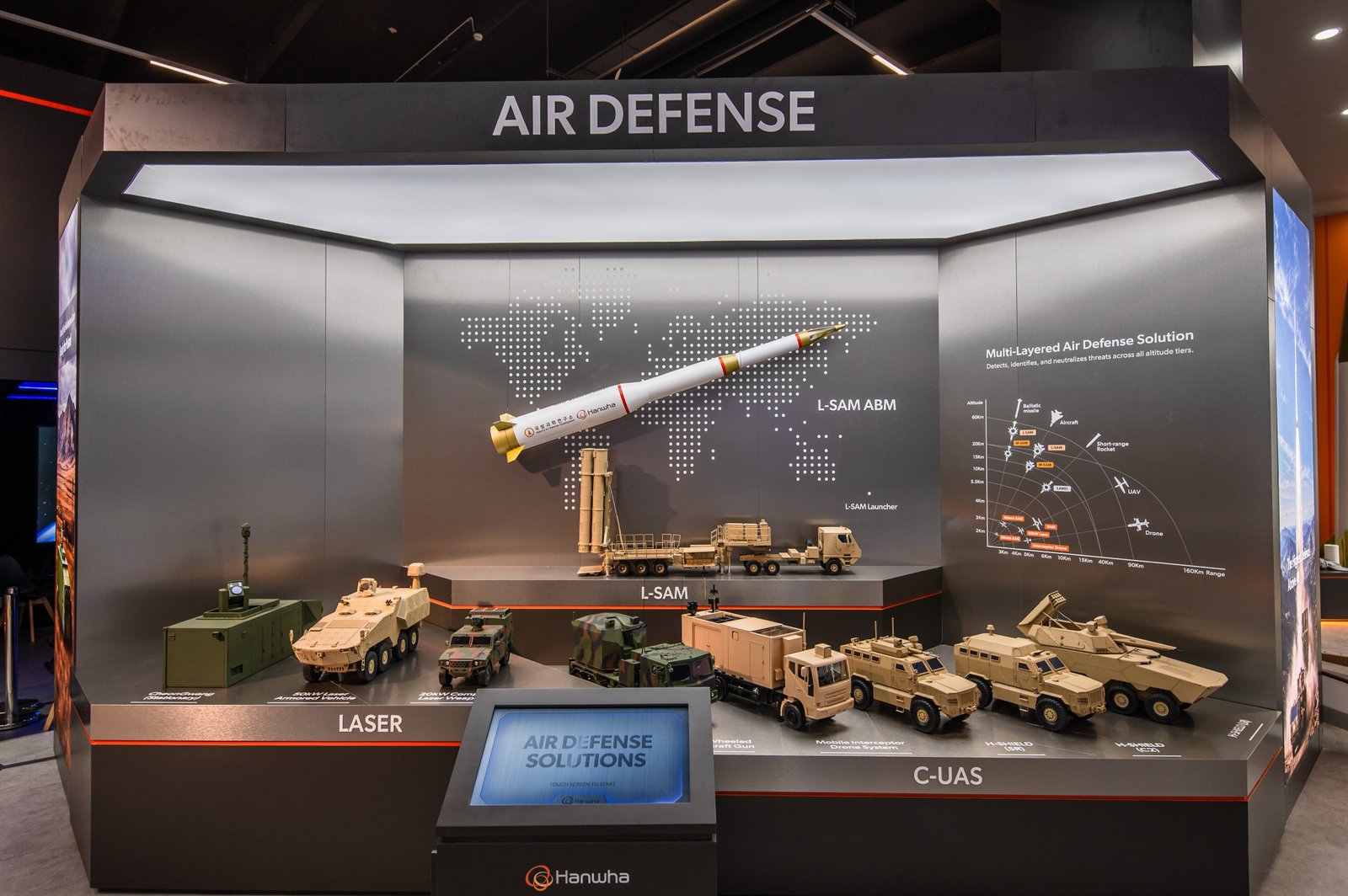
Europe
KIELCE, POLAND — South Korea’s Hanwha Aerospace and Hanwha Systems have opened a joint exhibition at the 34th International Defence Industry Exhibition (MSPO 2026) in Kielce, Poland. The exhibition runs from September 8 to September 11 under the slogan “Proven Partnership. Strategic Capabilities. Sovereign Defence.” The companies are sharing an approximately 274-square-metre stand in Hall 1, Booth A17. Hanwha’s defense cooperation with Poland dates back to 2014, when Poland selected the K9 chassis for its Krab self-propelled howitzer. The partnership later expanded to the K9 program and the Chunmoo rocket launcher, known in Poland as Homar-K. Layered Air Defense and Laser Weapons A key focus of the exhibition is Hanwha’s multi-layered air defense architecture. The display includes the L-SAM long-range surface-to-air missile system, H-SHORAD short-range air defense system, H-Shield counter-drone system and a 40mm wheeled counter-UAS vehicle. These systems are designed to connect with Hanwha Systems’ command-and-control network and operate alongside interceptor drones, covering threats ranging from low-altitude drones to longer-range missiles. Hanwha Systems is also displaying Cheongwang, also known as Cheonkwang, South Korea’s first operational laser weapon system. The exhibition includes a 50-kilowatt armored vehicle-mounted laser and a 20-kilowatt tactical laser. Hanwha says each laser shot costs approximately 2,000 South Korean won, or about $1.50, and can neutralize a small drone within seconds. Manned-Unmanned Teaming For ground operations, Hanwha is demonstrating its Manned-Unmanned Teaming (MUM-T) concept. The display combines the crewed K9A1 howitzer with an unmanned rocket launcher and the H-UGV unmanned ground vehicle. The concept uses the crewed howitzer for fire support while unmanned systems conduct reconnaissance and tactical manoeuvres. An export version of the K-NIFV infantry fighting vehicle fitted with an active protection system is also on display to demonstrate improved vehicle survivability. For naval operations, Hanwha is displaying the Striker-S unmanned surface vessel, also referred to as Stryker-S in some reports. The vessel is equipped with a Chunmoo rocket launcher and is being presented for potential Baltic Sea operations. K9A2 and Chunmoo Production Hanwha is displaying the upgraded K9A2 howitzer together with a new 155mm ammunition package featuring a trajectory-correcting fuze and modular propellant charge system intended to improve accuracy. The company is negotiating a third execution contract with Poland for the K9 artillery family. Hanwha is also highlighting its approximately $4 billion agreement signed in December to manufacture Chunmoo CGR-080 guided missiles, known locally as Homar-K, at a dedicated facility in Poland. Deliveries are scheduled to begin in 2030, supporting the localization of South Korean weapons manufacturing in Poland. Four Chunmoo guided rocket variants are displayed at MSPO, along with maintenance equipment, a predictive health-monitoring system and a K9 turret simulator. Space AI On September 9, Hanwha Systems is scheduled to publicly demonstrate its new satellite-imagery analysis system. The system uses artificial intelligence to process electro-optical, infrared and synthetic aperture radar imagery from satellites already in operation. It is designed to automate object detection, analyze situational patterns and flag unusual activity to support military analysts and commanders. “Hanwha is proud to be a trusted defense and industrial partner in Poland,” said Jacek Cyrek, CEO of Hanwha Aerospace Europe. “At MSPO 2026, we are expanding our local footprint into air defense, MUM-T, and space AI, building true defense sovereignty and industrial capability together on Polish soil.” MSPO 2026 features more than 1,000 exhibitors from around 40 countries, with Canada as the lead nation this year. The event is organized in cooperation with Poland’s Ministry of National Defence.
Read More → Posted on 2026-09-08 16:55:00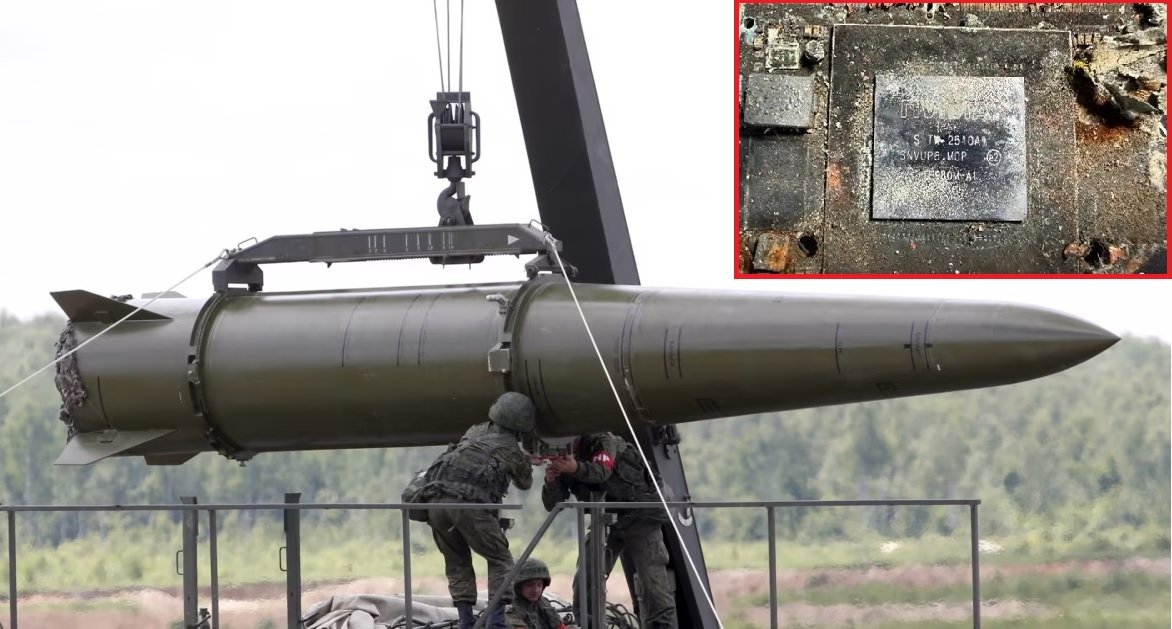
World
KYIV — Ukraine’s Defence Intelligence Directorate (DIU) has published data on 155 enterprises that are part of or managed by Russia’s state-owned Ruselectronics holding. The information appears in the “Aggressor’s Military-Industrial Complex” section of the War & Sanctions portal. Ruselectronics operates under Russia’s state-owned Rostec corporation and brings together specialized manufacturers and research organizations across Russia. Its enterprises develop and produce radio-electronic components, communications and automated control systems, robotic complexes, microwave electronics, computing equipment and telecommunications equipment. According to the DIU, products from these companies are used in Russian ballistic and cruise missiles, UAVs, electronic warfare systems, military vehicles, radar systems and aviation communication systems. Links to Russian Missiles The DIU identified several Ruselectronics enterprises involved in components for the 9M723 missile used by the Iskander-M system and the 3M22 Zircon missile. JSC Scientific Research Institute GIRICOND manufactures precision potentiometers used in Zircon missiles. JSC Scientific Research Center of Electronic Computing Technology (NICEVT) supplies flight data processing units used in Iskander ballistic missiles. JSC Scientific and Production Enterprise INTEGRAL-V produces pulse and heating transformers used in 9M723 missiles. The DIU said nearly half of the 155 enterprises in the published Ruselectronics list remain outside sanctions imposed by countries in the international sanctions coalition. The intelligence agency also said sanctions against companies such as GIRICOND and NICEVT have had limited impact on the overall production volumes of the related missiles, highlighting the need for stronger monitoring and enforcement of existing restrictions. Foreign Technology in Russian Weapons The DIU has also raised concerns about foreign technology reaching Russia’s defense industry through intermediaries. In a related finding, Ukrainian specialists identified an NVIDIA Jetson Orin computing module, marked TE980M-A1 S TW 2510A1 SNVUP6 MOP TE980-AT, inside Russia’s S-71M Monochrom air-launched cruise missile. The discovery was documented in a photograph dated August 12, 2026 . Ukraine’s intelligence service is calling on partner countries to strengthen accountability for sanctions violations and improve end-user verification. It says equipment, software, electronic components and critical raw materials must be more closely monitored to prevent them from reaching Russia’s defense industry through foreign intermediaries. The War & Sanctions portal continues to provide information on Russian military-industrial enterprises, their structural links and sanctions status. Source : militarnyi
Read More → Posted on 2026-09-08 17:06:57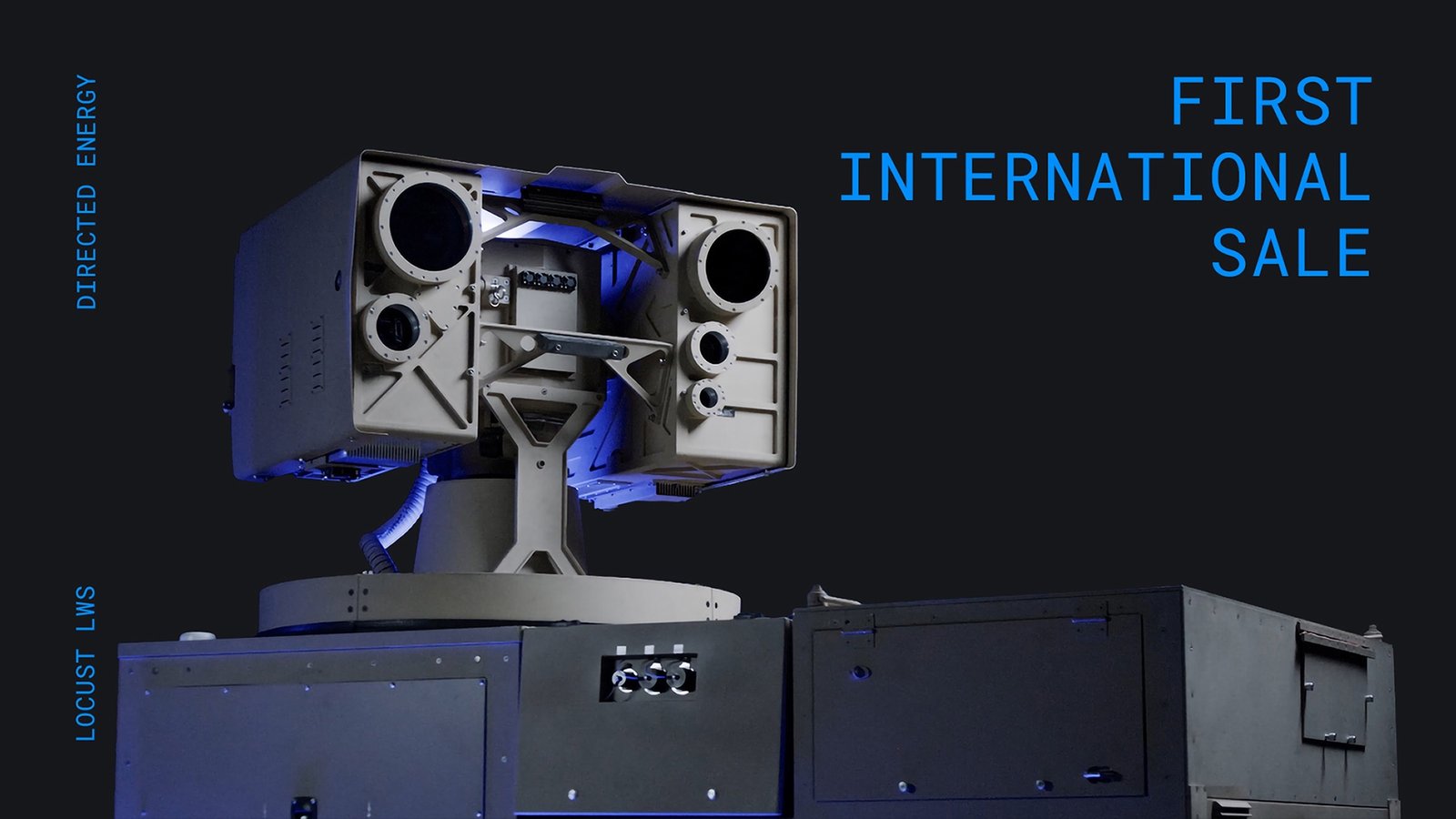
U.S
ARLINGTON, Va. — On September 8, 2026 AeroVironment, Inc. announced it has received its first international purchase order for the LOCUST Laser Weapon System in a direct commercial sale valued at more than $50 million. The order covers an initial delivery of LOCUST systems and associated support services. AeroVironment has not disclosed the buying country, number of systems or delivery timeline. The deal follows the company's selection by the U.S. Army for a $464.8 million Enduring-High Energy Laser (E-HEL) contract, which AeroVironment has described as the first production contract for high-energy laser weapons in U.S. history. Under the agreement, the company will deliver dozens of LOCUST X3 systems over the next several years. AeroVironment President, Chairman and CEO Wahid Nawabi said the international order reflects growing recognition of high-energy laser systems for modern air defense. He also said the spread of low-cost drones has changed the economics of warfare and that LOCUST provides an affordable alternative to relying on expensive interceptor missiles. LOCUST Laser Weapon System LOCUST, originally developed by BlueHalo, uses a 20-to-35-plus-kilowatt scalable laser, artificial intelligence, advanced sensing and tracking capabilities to detect, track and defeat Group 1 through 3 unmanned aircraft systems and other aerial threats. AeroVironment states that LOCUST engagements can cost less than $10 per shot, with earlier company statements citing costs below $5 in some configurations. Because the system uses generated power rather than physical ammunition, it does not have the traditional reload limitations of interceptor-based air-defense systems. The modular system can operate in fixed-site, palletized and mobile configurations and connect with different sensors and command-and-control networks. LOCUST is part of AeroVironment's Halo_Shield layered air-defense platform, which also incorporates the Titan counter-UAS system and Freedom Eagle-1 missile. U.S. Testing and Production Expansion LOCUST has been used in acknowledged laser engagements against drones near the U.S. southern border and has successfully defeated multiple drones during testing from the deck of the USS George H.W. Bush. The system has also been integrated onto Infantry Squad Vehicles and Joint Light Tactical Vehicles under the AMP-HEL initiative. It recently underwent live-fire testing at White Sands Missile Range, where military leaders, including Secretary of War Pete Hegseth, observed or operated the system. A safety agreement between the Federal Aviation Administration and Department of War has established a framework for LOCUST operations in U.S. airspace following an FAA review. AeroVironment acquired BlueHalo in May 2025 for $4.1 billion, bringing the LOCUST system into its portfolio. To support growing demand, AeroVironment is investing more than $30 million to expand its manufacturing campus in Albuquerque, New Mexico. The expansion is planned as a vertically integrated production hub for directed energy, space and other advanced defense technologies. The company expects it to create more than 450 jobs and generate over $670 million in economic impact. Mary Clum, President of Space, Cyber, and Directed Energy at AeroVironment, said the order supports the fielding of an operationally proven laser system and provides a foundation for expanded international adoption of layered counter-drone defenses. The September 8 announcement marks the first confirmed international commercial sale of the LOCUST Laser Weapon System.
Read More → Posted on 2026-09-08 17:19:11
World
TEHRAN, Iran — Iran’s Islamic Revolutionary Guard Corps (IRGC) claimed on Tuesday, September 8, 2026, that its air defense forces shot down a U.S. MQ-9 Reaper unmanned aerial vehicle near Bandar Abbas in southern Iran. According to Iranian news outlets, the IRGC is now claiming to have shot down a U.S. MQ-9 “Reaper” Medium-Altitude Unmanned Aerial Vehicle over Bandar Abbas, Iran. pic.twitter.com/WAvgSGoLVi — OSINTdefender (@sentdefender) September 8, 2026 Iranian state-affiliated media reported that the drone was detected and tracked by Iranian air defenses before it was targeted after allegedly entering Iranian airspace. The claim comes amid continued military tensions around Bandar Abbas, Hormozgan province and the Strait of Hormuz. Iranian forces have made several similar claims in recent months involving U.S. drones, including MQ-9 Reapers. The MQ-9 Reaper is a U.S. remotely piloted aircraft used for intelligence, surveillance and reconnaissance missions, as well as precision strike operations. As of September 8, 2026, the U.S. Department of Defense and U.S. Central Command had not publicly confirmed or denied the specific reported loss of an MQ-9 near Bandar Abbas. The latest incident also has not been independently verified. Iranian authorities have previously released claims and imagery concerning alleged U.S. drone interceptions, but the details of individual incidents have not always been independently authenticated. Bandar Abbas is a major Iranian port city in Hormozgan province, located near the strategically important Strait of Hormuz. Further statements from Iranian or U.S. authorities could provide additional details about the reported incident.
Read More → Posted on 2026-09-08 17:28:51
World
TAMPA, Fla. — September 9, 2026: U.S. Central Command (CENTCOM) forces destroyed five Iranian crude oil carriers on September 8 after the Islamic Revolutionary Guard Corps (IRGC) launched ballistic missiles at a U.S. Navy warship twice over the previous two days. CENTCOM said the warship evaded both attacks and continued patrolling regional waters. No American personnel were injured. CENTCOM forces destroyed five Iranian crude oil carriers, Sept. 8, after the Islamic Revolutionary Guard Corps (IRGC) targeted a U.S. Navy warship with ballistic missiles twice over the past two days. The U.S. warship successfully evaded the attempted Iranian attacks and… pic.twitter.com/Gi8a2tloN1 — U.S. Central Command (@CENTCOM) September 8, 2026 Five Iranian tankers destroyed The U.S. strikes targeted four tankers in the Gulf of Oman and one near Kharg Island. The vessels were: M/T Kaviz (IMO 9282041) M/T Charminar (IMO 9318022) M/T Horizon 1 (IMO 9130456) M/T Riesco (IMO 9251822) M/T Derya (IMO 9569700) CENTCOM said U.S. forces ordered the crews to abandon the vessels before the strikes. The tankers were then struck and rendered inoperable. CENTCOM footage showed M/T Riesco sinking in the Gulf of Oman. CENTCOM said the tankers were part of a multibillion-dollar Iranian “shadow network” that funds the IRGC and its regional proxies. Iran retaliates against U.S. forces in Jordan Iran responded by launching 20 ballistic missiles toward Jordan, targeting a U.S. military presence near Al Azraq. Jordan's Armed Forces said its air defenses intercepted and destroyed 18 missiles, while two landed in unpopulated areas. No casualties were reported. The IRGC claimed its attack damaged facilities used by U.S. aircraft, but those claims have not been independently verified. Iran also threatened commercial oil tankers in Kuwaiti and Bahraini ports, warning crews to leave their vessels because both countries host U.S. forces. Part of a continuing cycle of strikes The September 8 operation followed a September 5 U.S. strike that destroyed or disabled three Iranian crude oil carriers after the IRGC launched ballistic missiles toward a U.S. aircraft carrier and a guided-missile destroyer. CENTCOM said those attacks also failed to hit the U.S. warships. U.S. Secretary of State Marco Rubio said Washington would continue responding to Iranian attacks on American naval vessels, stating that Iran would lose tankers whenever it attempted to hit U.S. Navy ships. The latest exchange has also affected oil markets, with Brent crude moving toward $100 a barrel amid concerns over further disruption to regional oil supplies and shipping.
Read More → Posted on 2026-09-09 08:07:53
World
AMMAN, Jordan — Iran launched a major ballistic missile barrage toward Jordan overnight between September 8 and 9, targeting the U.S.-used Muwaffaq Salti Air Base, also known as Al-Azraq Air Base, after U.S. forces struck five Iranian crude oil tankers. Jordan’s armed forces said its air-defense systems engaged 20 ballistic missiles launched from Iran toward Jordanian territory. Eighteen missiles were intercepted and destroyed, while two fell in unpopulated areas. No casualties were reported. The Iranian attack was carried out by the Islamic Revolutionary Guard Corps (IRGC), which claimed responsibility and described the operation as “Punishing the Aggressors.” It appears that Iran's latest missile barrage targeting U.S. bases in Jordan is forcing defenders to expend a large number of interceptors. pic.twitter.com/Fk2ltdm6MW — Clash Report (@clashreport) September 8, 2026 Missiles hit the area of Muwaffaq Salti Air Base The IRGC said its Aerospace Force used solid- and liquid-fuel ballistic missiles against Al-Azraq Air Base, a Jordanian facility used by U.S. forces. Iran claimed that the attack targeted maintenance and repair facilities, aircraft preparation areas, aircraft shelters and locations used to station U.S. F-35, F-16 and F-15 fighter jets. The IRGC also claimed that the strikes caused heavy damage. Several videos recorded during and after the attack show explosions and apparent missile impacts in the area of Muwaffaq Salti Air Base. The footage provides visible evidence that at least some Iranian missiles reached the vicinity of the installation despite the air-defense response. Several Iranian ballistic missiles evaded US air defenses and struck a US base directly in Jordan.US used a large number of interceptors to counter a few dozen ballistic missiles.The intensive IRGC attack came after the US struck 5 Iranian tankers. pic.twitter.com/FODFrF6juf — Current Report (@Currentreport1) September 8, 2026 The precise number of missiles that struck the base and the extent of damage remain unclear. A U.S. official said the Iranian strikes were ineffective and that all American troops were accounted for. Cluster munitions visible in interception footage Several videos from the overnight attack also show what appears to be the dispersal of multiple smaller munitions in the sky after incoming ballistic missiles were intercepted. In the footage, a missile is seen being engaged in the air, followed by multiple smaller objects spreading across the sky and descending toward the ground. The visual sequence has led open-source observers to assess that some of the Iranian missiles were equipped with cluster warheads. 🚨 IRAN LAUNCHES MAJOR MISSILE BARRAGE AT U.S. BASES IN JORDANIran launched a substantial missile barrage toward U.S. military bases in Jordan after three Iranian tankers were struck near Kharg Island and Jask.Dozens of interceptors were launched as Iran reportedly used… pic.twitter.com/LN0KkWLPae — Mossad Commentary (@MOSSADil) September 8, 2026 The footage appears to show the smaller submunitions continuing to fall after the main missile was intercepted, creating a wider area of falling objects rather than a single impact point. The exact number of Iranian missiles carrying cluster warheads has not been officially disclosed by Jordan or the United States. However, the available footage provides visible evidence of multiple objects dispersing in the air and falling toward the ground following some interceptions. Cluster warheads are designed to release multiple smaller submunitions over a wider area instead of delivering a single warhead to one location. Heavy air-defense response The Iranian barrage triggered an intense air-defense response over Jordan. Multiple videos show repeated interceptor launches lighting up the night sky as Iranian ballistic missiles approached. Jordan officially said that 18 of the 20 detected missiles were intercepted and destroyed, while two landed in unpopulated areas. The exact number of U.S. and allied interceptors fired has not been officially released. Open-source estimates circulating online have placed the number at more than 60 interceptors may have been launched. Those figures remain unconfirmed. Claims that the United States used two to four interceptors against every incoming ballistic missile and that the engagement cost hundreds of millions of dollars are also estimates rather than officially confirmed figures. U.S. strikes on five Iranian tankers triggered retaliation The Iranian missile attack followed U.S. strikes against five Iranian crude oil tankers on September 8. U.S. Central Command said the operation was carried out after Iranian forces launched two ballistic-missile attacks against a U.S. Navy warship over the previous two days. The warship evaded the attacks, and no American personnel were injured. U.S. forces said tanker crews were instructed to abandon their vessels before the strikes. Four crude oil carriers were struck in the Gulf of Oman, while another vessel was targeted near Kharg Island in the Persian Gulf. Iranian state media also reported strikes on tankers near the southern port of Jask. Kharg Island is a major Iranian oil-export hub. U.S. Secretary of State Marco Rubio, speaking from Colombia, said further Iranian attempts to strike U.S. naval ships would result in additional Iranian tankers being targeted. Iran warns commercial shipping Before the ballistic missile attack on Jordan, the IRGC Navy issued urgent warnings to tanker crews at Kuwaiti and Bahraini ports and anchorages. The warnings instructed crews to leave their vessels immediately and said ships remaining in the affected areas would be targeted. The IRGC later claimed that it attacked 10 ships in the Strait of Hormuz area, including two U.S. vessels and eight oil tankers that Iran accused of entering a prohibited zone. These claims have not been independently verified. The threats have raised further concerns over the safety of military and commercial vessels operating around the Strait of Hormuz. Oil prices rise as tensions increase The latest exchange of attacks also affected global oil markets. Brent crude futures rose during early Wednesday trading as markets assessed the possibility of further disruption involving Iranian oil exports and shipping through the Gulf. Reuters reported Brent crude at $99.22 per barrel, up 1.3% in early trading. Major escalation after April ceasefire The overnight missile barrage represents the largest reported direct exchange between Iran and the United States since the Pakistan-brokered two-week ceasefire in April. The latest escalation has now involved U.S. strikes on Iranian oil tankers, an Iranian ballistic missile attack on a U.S.-used air base in Jordan and Iranian threats against commercial shipping. Jordan has officially confirmed that its air defenses engaged 20 Iranian ballistic missiles and intercepted 18 of them. At the same time, available video footage shows multiple explosions and apparent missile impacts around Muwaffaq Salti Air Base, as well as the apparent dispersal of smaller munitions following some missile interceptions. The full extent of damage to the base, the precise number of successful missile impacts and the number of Iranian missiles carrying cluster warheads remain subject to further assessment.
Read More → Posted on 2026-09-09 08:53:52
World
KYIV — Ukraine is signing contracts for approximately 1,000 missiles for its U.S.-designed Patriot air-defense systems, supported by partner countries and financing from a €90 billion European Union Ukraine Support Loan, Defense Minister Yevhenii Khmara said at the 36th Ukraine Defense Contact Group meeting in Ramstein, Germany. Most of the missiles will arrive only in the coming years. To address the immediate air-defense requirement ahead of winter, Khmara asked allies to transfer 300 Patriot interceptor missiles from their existing stockpiles. Ukraine would later replenish those stocks with improved missiles delivered under its new contracts. Kyiv is also requesting 500 air-to-air missiles capable of countering cruise missiles, additional MANPADS, and funding for drones. Khmara said these capabilities are needed against ballistic missiles, jet-powered Shahed drones and cruise missiles. EU financing for Patriot missiles The procurement is linked to the EU's €90 billion Ukraine Support Loan. EU member states agreed to a derogation allowing Ukraine to use the loan to purchase U.S.-made Patriot interceptors because European suppliers cannot currently meet the required volume. European Commission President Ursula von der Leyen said the next €3.2 billion tranche would help Ukraine strengthen its air defenses. A further €8.4 billion has already been disbursed under the loan program, including for air defense, while the technical decision on the latest allocation is expected to be finalized shortly. Ukraine reports $27 billion funding gap Khmara also reported a €23 billion ($27 billion) defense-financing shortfall, much of which is needed to maintain drone supplies through the end of 2026 and into early 2027. He said up to 90% of Ukraine's battlefield success depends on drones. Partners have provided €62 billion of the €70 billion in security assistance pledged at a summit in Ankara, leaving €8 billion still required. Khmara urged partners to make the necessary financial decisions by November so the additional support can affect the battlefield this winter. Meanwhile, dozens of Ukrainian companies are developing lower-cost systems to intercept jet-powered Shahed drones, with some already undergoing combat testing. Germany and UK announce additional support German Defense Minister Boris Pistorius said Germany would urgently send Patriot PAC-2 interceptors from its stockpiles and increase deliveries of AIM-9 air-to-air missiles. He also called on other partners to examine their stocks and provide similar assistance. The UK separately committed £100 million to strengthen Ukraine's air defenses, including U.S. military equipment such as Patriot interceptors, large-calibre ammunition and drones. Khmara said Russia has made no strategic gains along the approximately 1,200-kilometer (750-mile) frontline, but has increased attacks against Ukrainian civilians and infrastructure. Russia resumed near-constant drone and missile attacks on Kyiv on Tuesday after a brief pause during a visit by U.S. peace negotiators. Ukrainian officials reported five people killed in the capital and additional casualties in other regions. NATO Secretary-General Mark Rutte said allies must increase material support to help Ukraine defend itself in the air and take advantage of opportunities across the battlefield. The latest measures combine long-term contracts for about 1,000 Patriot missiles with urgent requests for interceptors from allied stockpiles as Ukraine prepares for another winter of Russian missile and drone attacks.
Read More → Posted on 2026-09-09 09:11:17
India
NEW DELHI — Tata Advanced Systems Ltd (TASL) has emerged as the lowest bidder (L1) in the Ministry of Defence’s competitive process to develop the Indian Army’s next-generation Armoured Fighting Vehicle-Indian Light Tank (AFV-ILT) under Project Zorawar. The programme is valued at nearly ₹20,000 crore. The selection follows a three-year evaluation of technical and commercial bids from five entities, with TASL securing the L1 position. Mahindra Defence Systems emerged as the second-lowest bidder (L2). Under the Make-1 category, the government will fund up to 70% of development costs. TASL will develop and demonstrate two prototypes within 130 weeks, while Mahindra Defence Systems will also be invited to develop its own prototype. The competitive approach is intended to maintain competition and strengthen the supply chain. The bidding process was delayed after one competitor raised objections to the selection. The Indian Army and Defence Ministry examined the objections and found them invalid, allowing the programme to move forward towards the Production Order stage. The Indian Army requires approximately 295 light tanks under this competitive Make-1 segment. The tanks are intended for high-altitude areas, deserts, marshlands and riverine terrain, where heavier main battle tanks can face mobility limitations. The light tank is expected to be in the approximately 25-tonne weight class, allowing better mobility and air-transportability in restricted mountain areas. The platform is planned to have a 105–125 mm calibre main gun and speeds of up to around 60 km/h. TASL has proposed an indigenous turret system along with self-developed loitering munitions. Project Zorawar is named after General Zorawar Singh Kahlon, the 19th-century Dogra military commander. The programme marks the first time a private-sector company will fully build a battle tank for the Indian armed forces. TASL has previously supplied tactical trucks and infantry fighting vehicles to the Army, and the project expands its role into tracked armoured systems. The wider Project Zorawar programme also includes a separate parallel effort by DRDO and Larsen & Toubro (L&T) for an initial batch of light tanks, while the competitive Make-1 process covers the larger requirement of approximately 295 tanks.
Read More → Posted on 2026-09-09 09:17:18
U.S
WASHINGTON — The United States is facing significant pressure on its missile inventories after months of combat operations against Iran, with a new analysis by the Center for Strategic and International Studies (CSIS) estimating that only about 36% of the country’s pre-conflict Patriot interceptor inventory remains. CSIS estimates that the United States had about 2,300 Patriot interceptors before the conflict with Iran. The remaining inventory is estimated at between 759 and 827 missiles, or roughly one-third of the prewar stockpile. The Patriot inventory is not the only U.S. missile stockpile under pressure. CSIS estimates that 234 to 278 Terminal High Altitude Area Defense (THAAD) interceptors remain from a prewar inventory of about 452, representing approximately 52% to 62%. Precision Strike Missile (PrSM) stocks are estimated at only 10% to 22% of pre-conflict levels. Tomahawk cruise missile inventories are estimated at about two-thirds of their prewar level. Patriot production under pressure The depletion of Patriot interceptors has highlighted the limits of current production capacity. Annual Patriot interceptor production has been around 600 missiles, although the United States is working to increase production. CSIS analysts Mark Cancian and Chris Park said rebuilding depleted inventories will take several years, even with expanded production. The analysts also warned that reduced inventories could force the United States and its partners to take greater risks when defending against ballistic missile attacks because there are limited alternatives to Patriot and THAAD for this mission. War Department Under Secretary for Acquisition and Sustainment Michael Duffey said U.S. weapons production lines have reached their current limits and that the production expansion process began during the Ukraine war as the United States recognized that modern conflicts could require larger quantities of munitions. Ukraine transfers also affected Patriot stocks The depletion of U.S. inventories is not entirely the result of the Iran conflict. The Trump administration has also pointed to weapons transferred to Ukraine. CSIS estimates that the United States had around 2,200 Patriot missiles before Russia's full-scale invasion of Ukraine in 2022. About 600 were subsequently provided to Ukraine, although some of those missiles may have come from U.S. allies. New production later increased the U.S. inventory to an estimated 2,300 Patriot interceptors before the Iran conflict. CSIS has assessed that Ukraine transfers were a relatively minor factor in the overall decline of several U.S. munition inventories, with Patriot being an important exception. Between 2021 and 2025, Ukraine was the largest recipient of major arms globally, with at least 36 countries supplying weapons. The United States accounted for 41% of Ukraine's arms imports during that period, according to the data cited in the report. Allied weapons deliveries face delays The reduction in U.S. inventories is also affecting deliveries to American allies and partners as Washington gives priority to replenishing its own stocks. Japan's planned purchase of 400 Tomahawk cruise missiles has faced delays as the United States works to manage its inventory. Mark Cancian said Japan has been told that its Tomahawk order is being pushed back in the delivery queue. Japan is preparing to operate the missiles from a modified ship, while facing security concerns involving China. Acting Navy Secretary Hung Cao has also confirmed a temporary pause on certain arms sales to Taiwan to ensure that sufficient munitions remain available for current operations. Representative Michael McCaul, who reviews foreign military sales, said delays in promised weapons deliveries can affect U.S. alliances and the ability of partner countries to protect themselves. The United States is the only country that manufactures the complete Patriot battery, while the United States and Japan have publicly shown that they produce Patriot missiles. Patriot is currently operated by 19 nations, according to manufacturer Raytheon. THAAD and PrSM inventories also under pressure THAAD has also been heavily used during the conflict. CSIS estimates that the United States has 52% to 62% of its prewar THAAD interceptor inventory remaining. The United States, Saudi Arabia and the United Arab Emirates operate THAAD systems. Saudi Arabia also has outstanding THAAD deliveries that are expected to continue through April 2028. No official delay to those THAAD deliveries has been reported in the information provided. The PrSM inventory has experienced a sharper reduction. CSIS estimates that only 10% to 22% of the pre-conflict stock remains following expenditures during the Iran campaign. Heavy demand during the Iran conflict The scale of weapons use has contributed to the depletion. CSIS has described Operation Epic Fury as one of the most munitions-intensive U.S. military campaigns in decades, involving large expenditures of both offensive and defensive missiles. CSIS has also noted that the intensity of the later 14-day period of renewed fighting was lower than the initial 39-day air campaign. During the later period, U.S. forces were launching about 80 to 100 strikes per day, compared with roughly 350 strikes per day during the major air campaign. Israel was also conducting hundreds of strikes during the earlier period. Jordan engagement highlights interceptor demand During the night of September 8-9, Jordan reported that its air defenses engaged 20 ballistic missiles launched from Iran toward Jordanian territory. Jordan said 18 were intercepted and destroyed, while two landed in unpopulated areas. Iran's Islamic Revolutionary Guard Corps said it had conducted a missile strike against a U.S. military base in Jordan. Open-source analyst Babak Taghvaee separately claimed on X that U.S. Patriot batteries in Jordan appeared to stop launching interceptors after the first wave of Iranian missiles. He suggested that the batteries may have exhausted available MIM-104D/F interceptors or that one or both batteries may have been targeted. Those claims have not been officially confirmed by U.S. or Jordanian authorities and therefore do not establish that the Patriot batteries had actually run out of interceptors or had been struck. Rebuilding the stockpile will take years The U.S. military still has missiles available for ongoing operations, but rebuilding inventories has become a longer-term challenge. CSIS has warned that the depleted stocks create a period of reduced readiness for potential future conflicts, particularly in the Western Pacific. The situation also illustrates the difficulty of simultaneously supporting U.S. operations, replenishing domestic inventories and fulfilling weapons orders for allies. "We've maxed out the production lines now," Cancian said, describing the limits facing the current production system. The United States is therefore increasing production capacity while prioritizing the replenishment of weapons consumed during the Iran conflict. CSIS estimates that restoring several major missile inventories to desired levels will take multiple years.
Read More → Posted on 2026-09-09 09:40:56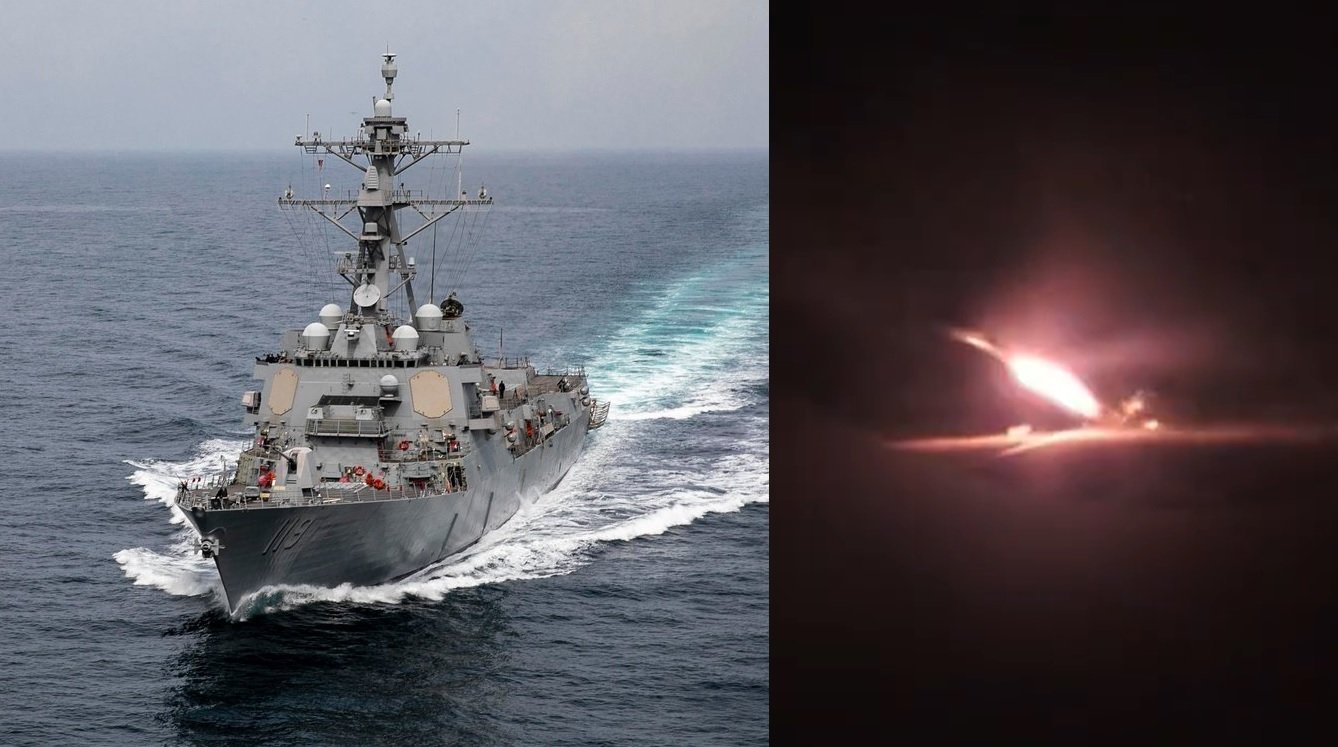
World
TEHRAN — Iran’s Islamic Revolutionary Guard Corps (IRGC) on Wednesday claimed that it launched ballistic missile attacks against two U.S. Navy Arleigh Burke-class guided-missile destroyers operating in the Gulf of Oman and Strait of Hormuz area. The ships identified by the IRGC were USS Delbert D. Black (DDG-119), a Flight IIA destroyer, and USS John Paul Jones (DDG-53), a Flight I destroyer. Both are equipped with the Aegis combat system and carry cruise missiles. Iranian state media reported the IRGC Aerospace Force’s claim that the missiles caused significant damage to both destroyers. Iran said the attacks were carried out in retaliation for recent U.S. actions against Iranian oil tankers. The IRGC also said it targeted eight oil tankers and other vessels that it accused of entering a prohibited or restricted area of the Strait of Hormuz. Iranian forces said the waterway remains under the surveillance and management of its naval forces. However, Iran has not released video, photographs or other independent evidence showing that either U.S. destroyer was hit or damaged. Independent confirmation of the Iranian claim has also not emerged. CENTCOM Says U.S. Ships Evaded Attacks U.S. Central Command (CENTCOM) said Iranian forces launched ballistic missiles toward a U.S. Navy warship twice over the preceding two days. According to CENTCOM, the ship successfully evaded the attacks, continued its patrol of regional waters and suffered no operational damage. No American personnel were harmed. CENTCOM has described the recent Iranian missile attacks against U.S. Navy ships as unsuccessful. Its September 5 statement also said an American aircraft carrier and guided-missile destroyer evaded multiple Iranian ballistic missile attacks without casualties or damage. U.S. Strikes Iranian Oil Tankers The latest exchange followed U.S. strikes on five Iranian crude oil carriers on September 8. CENTCOM identified them as M/T Kaviz, M/T Charminar, M/T Horizon 1 and M/T Riesco in the Gulf of Oman, and M/T Derya near Kharg Island. CENTCOM said the crews were ordered to abandon the ships before the vessels were struck and rendered inoperable. The U.S. military described the tankers as part of a shadow network used to fund the IRGC and its regional proxies. This followed a September 5 U.S. operation against three other Iranian crude oil carriers — M/T Downy, M/T Stark 1 and M/T Kylo, also known as Noxen — after the IRGC launched ballistic missiles toward a U.S. aircraft carrier and guided-missile destroyer. CENTCOM said those U.S. warships also evaded the attacks without injuries or damage. CENTCOM commander Adm. Brad Cooper said Iran would face higher economic costs through strikes on its oil fleet. The latest exchange is part of an ongoing series of Iranian missile attacks, U.S. strikes on Iranian oil vessels and competing claims over military activity around the Strait of Hormuz and Gulf of Oman. As of September 9, there is no independent confirmation that USS Delbert D. Black or USS John Paul Jones suffered damage in the reported attack.
Read More → Posted on 2026-09-09 09:43:33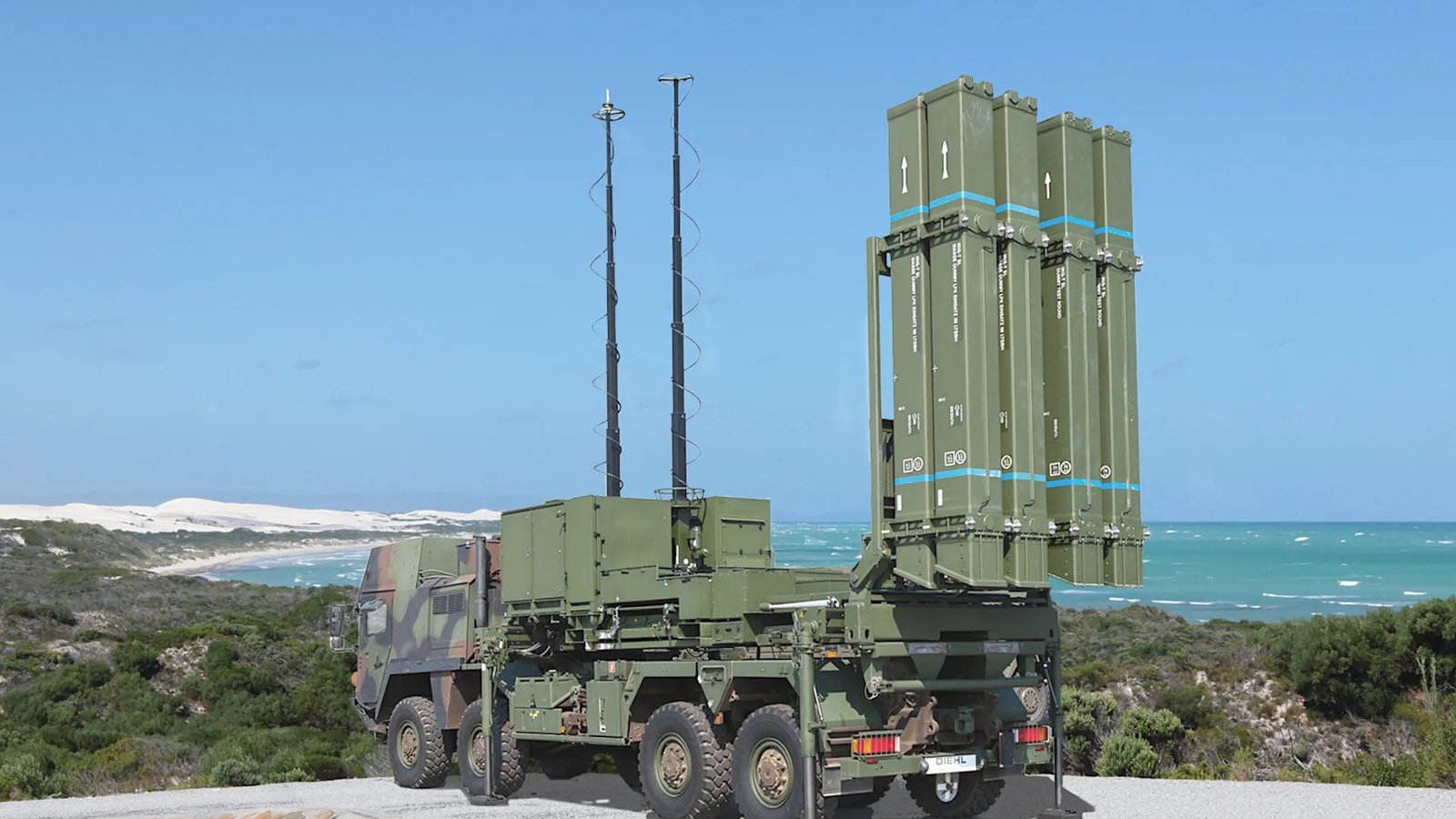
Europe
BERLIN — Ukraine will order several thousand additional IRIS-T guided missiles from Germany, with the purchase financed through the defence component of the European Union’s €90 billion loan package for Ukraine. German Defence Minister Boris Pistorius announced the plan on September 8 ahead of a meeting of the Ukraine Defence Contact Group in the Ramstein format. Pistorius said Germany would continue uninterrupted deliveries of IRIS-T air defence systems and missiles produced by industry. He said the medium-range IRIS-T system has been used successfully by Ukraine since deliveries began in 2022. The exact number of missiles, delivery schedule and total cost were not disclosed. Pistorius said the large order would allow the manufacturer to expand production by adding another production line. The EU loan, approved for Ukraine’s defence and budget needs in 2026 and 2027, includes an indicative €60 billion for military assistance and defence procurement. Germany to Transfer Patriot Interceptors Germany also announced the urgent transfer of PAC-2 interceptor missiles for Patriot systems from Bundeswehr stocks. Pistorius did not specify the number of missiles and called on other Ukraine Defence Contact Group members to examine their own stocks for similar deliveries. Germany will also increase deliveries of air-to-air missiles. Separately, EU member states agreed to allow €3.2 billion from the EU support mechanism to be used for Patriot missile procurement. UK Adds £100 Million Air Defence Package The United Kingdom has committed £100 million (about $135 million) for Ukraine’s air defence under the Prioritised Ukraine Requirements List (PURL). The package includes Patriot interceptors, as well as large-calibre ammunition and drones. The announcements were made as Ukraine’s international partners met on September 8 to coordinate additional military assistance, with air defence remaining a major focus ahead of the winter period.
Read More → Posted on 2026-09-09 10:00:05
World
AMMAN, JORDAN — Iranian ballistic missiles targeted U.S. military facilities in Jordan on September 9, with conflicting reports emerging over the number of American personnel injured in the attack. According to a report by the Times of India, a Jordanian source claimed that a large number of injured American soldiers were being flown to Ramstein Air Base in Germany, with some reportedly suffering life-threatening injuries. However, the claim has not been independently confirmed by the U.S. military. A U.S. official cited by Reuters said all American troops in Jordan were accounted for and described the Iranian strikes as ineffective. Jordanian authorities also reported no casualties from the missile attack. Jordan's Armed Forces said 20 Iranian ballistic missiles were launched toward Jordan. Its air-defense systems intercepted and destroyed 18 missiles, while two fell in unpopulated areas. The military said there were no casualties and that teams were securing locations where missile debris had fallen. Iran's Islamic Revolutionary Guard Corps claimed responsibility for the attack and said it targeted a U.S. military base near Al Azraq. Reports of multiple explosions were also published following the strike, but the extent of damage at the base remains disputed. The reported evacuation of injured U.S. personnel to Germany therefore remains unconfirmed, while Washington's statement that all American troops are accounted for directly conflicts with the casualty claims attributed to the Jordanian source.
Read More → Posted on 2026-09-09 10:15:41
Europe
SAN DIEGO — The Italian Air Force (ItAF) has ordered two additional MQ-9A Block 5 Reaper remotely piloted aircraft from General Atomics Aeronautical Systems, Inc. (GA-ASI), expanding its existing MQ-9A fleet. The aircraft are scheduled to be delivered by the end of 2027. The purchase is being carried out through a Foreign Military Sale (FMS) with the U.S. Air Force and also includes Ground Control Stations. GA-ASI President David R. Alexander said Italy has been an important partner for the company for more than 20 years. He said the Italian Air Force uses the MQ-9A for a range of Intelligence, Surveillance and Reconnaissance (ISR) missions in Italy, over the Mediterranean and in support of NATO operations. Part of Italy’s MQ-9A Expansion The new order follows a broader U.S. approval from 2024 covering the potential sale of six MQ-9 Block 5 aircraft to Italy. The approved package was valued at an estimated $738 million and included three Mobile Ground Control Stations, 12 AN/DAS-4 Multi-Spectral Targeting Systems and nine LYNX AN/APY-8 Block 20A Synthetic Aperture Radars with Maritime Wide Area Surveillance capability, along with other equipment, training and support. Italy had already begun transitioning its MQ-9A fleet to the Block 5 configuration. General Atomics announced in December 2023 that the Italian Air Force had flown its first new MQ-9A Block 5 on November 9, 2023, as part of a modernization effort that also included a Mobile Ground Control Station. The MQ-9A is operated by the Italian Air Force for ISR missions, including operations over Italian territory and the Mediterranean and missions supporting NATO. Italy officially refers to its MQ-9A aircraft as Predators, rather than Reapers. MQ-9A Block 5 Capabilities According to General Atomics, the MQ-9A Block 5 can remain airborne for up to 26 hours and operate at altitudes of up to 45,000 feet (13,716 meters). It has a total payload capacity of 4,600 pounds (2,087 kilograms), including up to 3,750 pounds (1,701 kilograms) of external stores. For surveillance missions, the aircraft can carry systems providing Full-Motion Video, Synthetic Aperture Radar, Moving Target Indicator and Maritime Radar capabilities. The Block 5 also features automatic takeoff and landing. The aircraft uses a fault-tolerant flight-control system and a triple-redundant avionics architecture. General Atomics says the system is engineered to meet or exceed reliability standards applied to manned aircraft. The additional aircraft will further expand Italy's MQ-9A fleet when they are delivered at the end of 2027, continuing the Italian Air Force's use of the platform for long-endurance ISR missions in support of national and NATO requirements.
Read More → Posted on 2026-09-09 13:23:09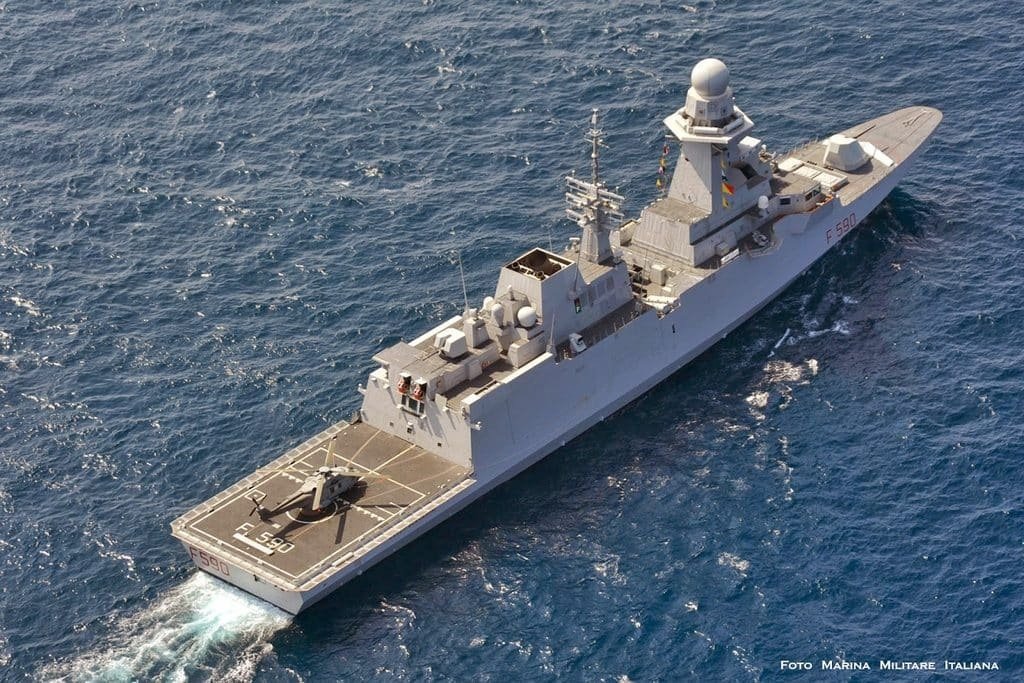
Europe
ROME — Italy and Greece have signed an Implementing Arrangement for the transfer of two Italian Navy FREMM frigates, Carlo Bergamini (F-590) and Virginio Fasan (F-591), to the Hellenic Navy. The agreement was signed in Rome on September 8, 2026, between Greece’s General Directorate of Defence Investments and Armaments (GDDIA) and Italy’s General Directorate for Armaments. The ceremony was attended by Italian Defence Minister Guido Crosetto, Greek Defence Minister Nikos Dendias, Italian Navy Chief Admiral Giuseppe Berutti Bergotto and Hellenic Navy Chief Admiral Dimitrios-Eleftherios Kataras. Fincantieri was represented by Chief Executive Officer and Managing Director Pierroberto Folgiero and Naval Vessels Division General Manager Eugenio Santagata. The agreement follows the Memorandum of Cooperation and Declaration of Intent signed in September 2025 in La Spezia. It finalizes the legal, financial and technical framework for the acquisition of the two Bergamini-class frigates. Transfer of the Two Frigates Under the agreed schedule, Carlo Bergamini is planned to be transferred to the Hellenic Navy in the first half of 2028, while Virginio Fasan is scheduled to follow in the first half of 2029. Both ships were designed and built by Italian shipbuilder Fincantieri for the Italian Navy. The Italian FREMM fleet includes both General Purpose and Anti-Submarine Warfare configurations. Fincantieri identifies the Bergamini-class ships as 144-meter-long frigates with a full-load displacement of about 6,500 tonnes and a range of about 6,000 nautical miles at 15 knots. The Carlo Bergamini is a General Purpose configuration, while the Virginio Fasan is an Anti-Submarine Warfare variant. The FREMM design uses a CODLAG propulsion system and is equipped for different naval missions. Fincantieri to Support Transfer Fincantieri will play a leading role in transferring the vessels and providing initial and long-term lifecycle support. The agreement also provides for the participation of Greek industry in maintenance activities and the integration of new systems on board the frigates. Fincantieri CEO Pierroberto Folgiero said the transfer could create further industrial cooperation between Fincantieri and the Greek industrial sector, including opportunities across the supply chain. He also described the introduction of the FREMM frigates into the Hellenic Navy as a first step toward greater sharing of expertise, technology and industrial capabilities among countries operating the platform. Part of Greece's Naval Modernization The two FREMM frigates form part of Greece's wider naval modernization programme. The Greek Ministry of National Defence has linked their acquisition with the country's four FDI frigates and the modernization of its MEKO-class frigates. The ministry also confirmed that the agreement leaves open the possibility of acquiring additional vessels in the future. The transfer will therefore add two Italian-built FREMM frigates to the Hellenic Navy, with Greek shipyards expected to participate in maintenance and the integration of new systems as the vessels are prepared for Greek service.
Read More → Posted on 2026-09-09 13:38:00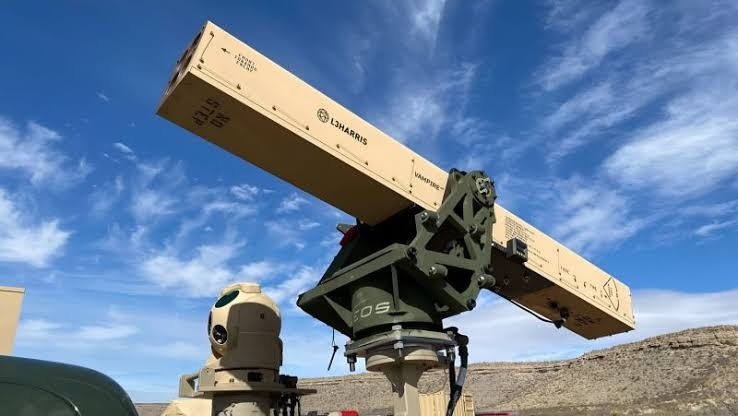
U.S
MELBOURNE, Fla. — The U.S. Navy has selected L3Harris Technologies to provide its VAMPIRE counter-unmanned systems for littoral, or coastal, defense. The selection, announced on September 8, is part of the U.S. military’s expanding effort to develop layered defenses against small unmanned systems. VAMPIRE, which stands for Vehicle-Agnostic Modular Palletized Intelligence, Surveillance and Reconnaissance Rocket Equipment, is a self-contained system that combines reconnaissance and precision-strike capabilities against drones and remotely piloted platforms. The system is designed as a portable kit that can be installed on most vehicles with a cargo bed. It can use the WESCAM MX-10D RSTA electro-optical/infrared sensor mounted on a telescopic mast. The sensor provides high-definition surveillance and laser target designation. VAMPIRE can launch Advanced Precision Kill Weapon System (APKWS) rockets and other laser-guided munitions. When equipped with 70mm APKWS rockets, L3Harris says the system can engage targets at ranges of up to 9 miles (15 km). The company has not disclosed which ammunition will be supplied to the Navy. Adapted for Maritime Operations L3Harris is modifying and ruggedizing VAMPIRE for coastal and maritime conditions so the system can withstand environmental stresses associated with naval operations. “VAMPIRE is a flexible and effective system that meets the unique requirements of the U.S. Navy for littoral C-UxS defense,” said Tony Calderon, president of Targeting & Sensor Systems within L3Harris’ Communications & Spectrum Dominance business. The company has not disclosed the contract value, number of systems or delivery schedule for the Navy order. The wider VAMPIRE family includes sensors, precision weapons, electronic jammers and non-kinetic effectors. It also incorporates artificial intelligence and machine learning to help speed the detection, engagement and defeat of small unmanned threats. The Navy selection follows a separate U.S. Army order worth up to $106 million, announced in June 2026. L3Harris said VAMPIRE systems have supported European combat operations since 2023, logging more than 350,000 operational hours and defeating hundreds of hostile drones. The company began high-volume production at its Huntsville, Alabama, facility in early 2026. L3Harris is also using Wraith Shield software for layered counter-drone operations. The system uses military radios as sensors to identify small unmanned aircraft and can be integrated with VAMPIRE and Drone Guardian systems. The VAMPIRE family also includes VAMPIRE Black Wake, a maritime variant designed for crewed or uncrewed vessels against small drones and fast attack watercraft. Recent work has also included passive AI-based detection software from Shield AI to improve target identification without transmitting signals that could reveal the system’s position. Separately, on September 8, L3Harris announced a seven-year contract valued at up to $4.7 billion from Lockheed Martin to produce solid-rocket propulsion systems for PAC-3 Missile Segment Enhancement interceptors.
Read More → Posted on 2026-09-09 13:47:21
U.S
WASHINGTON — U.S. officials are increasingly concerned about Iran’s improved missile technology after a series of ballistic missile attacks targeting U.S. Navy ships operating around the Gulf of Oman and Strait of Hormuz. Officials are also examining whether Russia or China may be helping Iran track the location of American warships. The Wall Street Journal, citing U.S. officials, reported a previously undisclosed attack on U.S. Navy ships on Monday, following weekend ballistic missile launches directed at a U.S. aircraft carrier and a guided-missile destroyer. Iran’s Islamic Revolutionary Guard Corps (IRGC) publicly claimed to have inflicted significant damage on two Arleigh Burke-class destroyers, but U.S. Central Command rejected those claims. According to CENTCOM, the targeted warships successfully evaded the incoming ballistic missiles during multiple engagements. The vessels continued their regional patrols without suffering operational damage, and no American personnel were harmed. Advanced Guidance Raises Questions Iranian officials described the (Monday) recent launches as involving improved systems. Major General Mohsen Rezaei, secretary of Iran’s Supreme National Security Council, said a specialized ballistic missile had been tested against a U.S. warship. Iran’s messaging in recent days has become more assertive, and a Monday report described the Qassem Basir as a “turning point in Iran’s defense strategy.” It described the missile as having greater range and accuracy and a half-ton warhead. The missile was unveiled last year, when it was described as having at least a 1,200-kilometer (745-mile) range. Iranian state media has presented the Qassem Basir as having enhanced range, accuracy and guidance features, including thermal imaging and electro-optical seekers that allow terminal-phase adjustments. Weapons analysts have noted that missiles fitted with electro-optical seekers can use imagery to adjust their flight path and maneuver toward a moving target, such as a ship at sea, during the final stage of flight. However, even with advanced terminal guidance, Iran would still generally need an approximate location of the target before launch. Concerns about Iran’s ballistic missile program were among the stated reasons the United States and Israel attacked Iran earlier this year, sparking the war. U.S. officials and intelligence assessments over the course of the conflict have pointed to Iran’s use of more sophisticated missile technology. Reports have described improved maneuverability, multi-system navigation that can draw on GPS along with China’s BeiDou and Russia’s GLONASS, and terminal guidance that is less vulnerable to certain forms of electronic jamming. Questions Over Russian and Chinese Assistance The requirement to locate a moving warship before launch has raised questions among U.S. officials and analysts about whether Russia or China may be providing Iran with satellite imagery, location information or other surveillance assistance. Earlier U.S. intelligence reporting indicated that Russia has shared satellite imagery and location information on American ships and installations with Iran. China has been linked to the provision of commercial satellite imagery of U.S. and allied positions, dual-use components useful for missile programs, and access to its BeiDou navigation system. Beijing has also faced U.S. sanctions related to companies supplying imagery that could aid targeting. Russia maintains an advanced space surveillance network capable of providing optical and radar imagery. These developments have raised questions among analysts about whether external assistance has helped Iran obtain better location data on U.S. naval forces operating in the confined waters of the Gulf of Oman and Strait of Hormuz. According to officials and analysts, such assistance could support more precise initial targeting information, even if the missile’s final guidance relies on Iranian-developed seekers. U.S. Retaliation Against Iranian Tankers In response to the weekend attacks on U.S. naval assets, the American military launched retaliatory strikes against several Iranian crude oil tankers. CENTCOM said the targeted tankers were part of a “multibillion-dollar shadow network” used by Iran to fund the IRGC and its regional proxies. The operation resulted in the destruction or permanent disabling of multiple vessels off Kharg Island, near Jask, and in the Gulf of Oman. The vessels included the M/T Downy, M/T Stark 1, M/T Kylo, M/T Kaviz and M/T Charminar. Before the strikes, U.S. forces directed the crews to abandon the ships to prevent casualties. Admiral Brad Cooper, commander of U.S. Naval Forces Central Command, said the strikes were intended to impose a direct economic cost on Tehran. Secretary of State Marco Rubio also stated that Iran continues to try to hit U.S. naval ships and that each such attempt would result in the loss of additional tankers. U.S. Naval Operations in the Region The United States currently has an estimated 19 warships supporting operations in the Middle East, according to a Navy official cited by The Wall Street Journal. The forces are operating in an environment centered on maintaining freedom of navigation in the Strait of Hormuz, a major maritime chokepoint for global oil and gas supplies. The United States is also maintaining a blockade and economic pressure campaign against Iranian ports. The recent missile attacks and subsequent U.S. strikes on Iranian tankers have added to the confrontation between the two countries. The latest developments have focused attention on both Iran’s improved missile guidance technology and its ability to obtain accurate information on the location of moving U.S. warships. U.S. officials are also examining whether foreign satellite and surveillance assistance could be contributing to Iran’s ability to obtain the initial targeting information required for such attacks.
Read More → Posted on 2026-09-09 14:18:09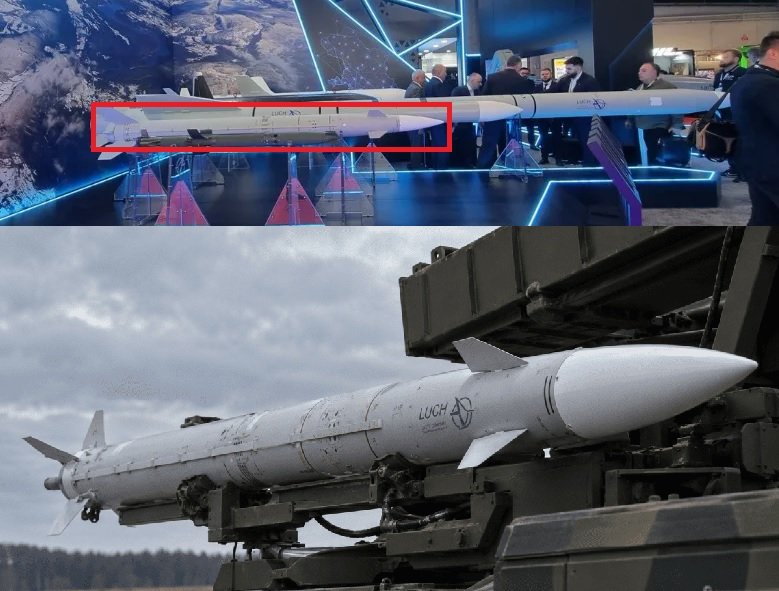
Europe
WARSAW — Ukraine has unveiled its new RK-19 surface-to-air missile at the MSPO 2026 defense exhibition in Poland. Developed by KB Luch, part of UkrOboronProm, the missile is intended to replace the Soviet-era 9M33-series missiles used by Ukraine's Osa-AKM air defense systems. The RK-19 was first shown publicly in April 2026 in a video address by Ukrainian President Volodymyr Zelenskyy marking the country's defense industry day. Its intended launch platform was not confirmed at that time. The MSPO presentation has now confirmed its use with the Osa-AKM. RK-19 Specifications The RK-19 has a stated maximum engagement range of 10 kilometers and can engage targets at altitudes of up to 5 kilometers. Its maximum flight speed is 600 meters per second, compared with about 500 m/s for the 9M33M3 missile. The missile uses radio-command guidance and carries a 14.3-kilogram fragmentation-high-explosive warhead. The missile and its transport-launch container have a combined weight of 163 kilograms, while the container measures 3,255 × 320 × 303 mm. For comparison, the Osa-AKM's 9M33M3 weighs 126.3 kilograms, including a 15-kilogram warhead. It is 3,158 mm long, has a 206 mm body diameter and a 650 mm wingspan. The Osa-AKM normally carries six missiles. The 9M33M3 has a stated engagement range of 1.5 to 10 kilometers and an altitude range of 25 meters to 5 kilometers. The Osa-AKM radar has a target detection range of up to 45 kilometers, and the missile can engage targets maneuvering at up to 8G. Replenishing Osa-AKM Missile Stocks Ukraine has faced declining stocks of Soviet-era 9M33 missiles, reducing the availability of Osa-AKM systems. Ukrainian forces have also previously adapted some Osa systems to use R-73 air-to-air missiles as an alternative. The RK-19 provides a domestically produced missile designed around the existing Osa-AKM system. Its stated range and maximum engagement altitude are broadly the same as the 9M33M3, while its stated maximum speed is higher. Ukraine has not publicly disclosed the RK-19's production volume or price. Separately, Ukraine displayed the launcher of its new Koral air defense missile system at MSPO. The Koral launcher is mounted on a Czech Tatra truck chassis and is designed to intercept ballistic targets, showing another part of Ukraine's ongoing development of domestic air-defense capabilities.
Read More → Posted on 2026-09-09 14:26:07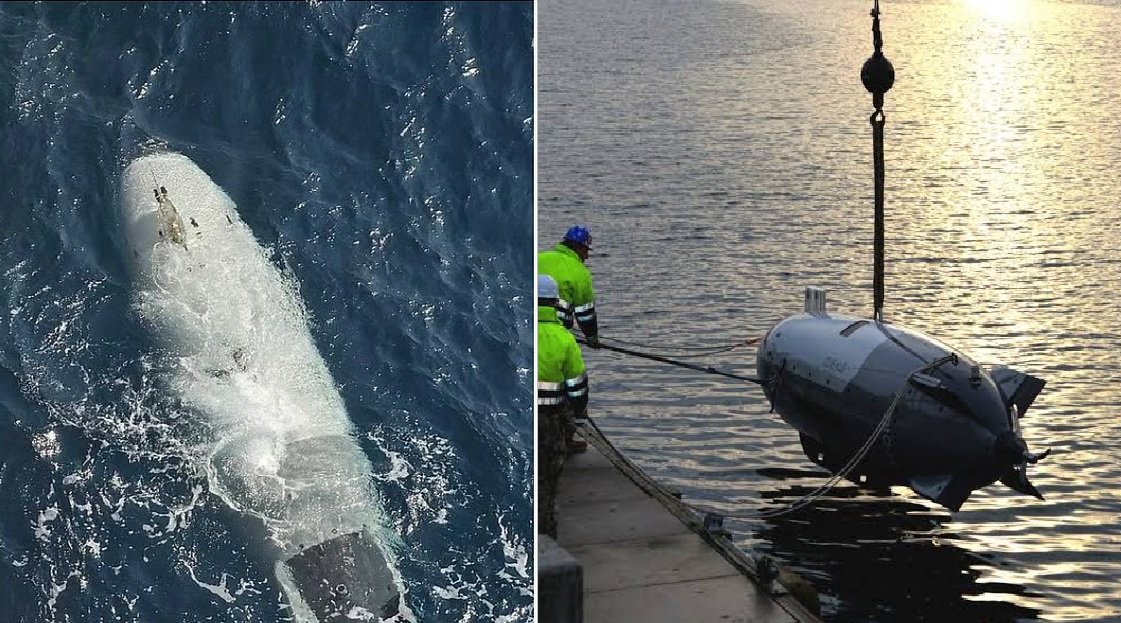
U.S
WASHINGTON — The U.S. military has confirmed the loss of an uncrewed underwater vehicle in the Strait of Hormuz area, but said the vehicle had malfunctioned more than a day before Iranian forces recovered it. Iran’s Islamic Revolutionary Guard Corps (IRGC) Navy announced on September 8 that it had captured a U.S. autonomous underwater vehicle near the entrance to the Strait of Hormuz. Iranian state media described it as one of the most modern and intelligent unmanned submarines operated by the United States and released footage of its recovery. U.S. Central Command (CENTCOM) said the vehicle was an older model that suffered a mechanical failure while surveying regional waters in support of ongoing operations. Navy Capt. Tim Hawkins, a CENTCOM spokesperson, said it did not collect sensitive data or carry classified sonar or radar equipment. He added that U.S. operations in the area are continuing. Vehicle Identified as Anduril Dive-LD Images released by Iranian sources show a vehicle consistent with the Dive-LD, a large autonomous underwater vehicle made by California-based Anduril Industries. Open-source analysis found matching features including the hull shape, flood holes, transparent mast, fastening points, seam lines and X-shaped rudders. Reuters and other defense publications also identified it as a Dive-LD. Anduril confirmed that one of its Dive-LD vehicles had been lost and described the system as an attritable autonomous system, designed for dangerous operations where loss of the vehicle is an expected possibility. The U.S. Navy received Dive-LD systems in 2025 for units operating unmanned underwater vehicles. Dive-LD Capabilities According to Anduril specifications, the Dive-LD is approximately 5.8 meters (19 feet) long, about 1.2 meters (4 feet) in diameter, weighs roughly three tons, and can operate autonomously for up to 10 days. Its maximum advertised operating depth is approximately 6,000 meters. Its modular design allows different payloads and sensors to be integrated. Listed missions include intelligence, surveillance and reconnaissance, mine warfare, seabed mapping, hydrographic surveying, environmental monitoring, and inspection of underwater infrastructure such as cables and pipelines. The system uses direct-drive electric propulsion and can be launched and recovered from vessels and shore facilities. Different Accounts From Iran and the U.S. The IRGC described the recovery as a complex intelligence and operational action and called the vehicle advanced U.S. underwater technology. Iranian officials also said the system had been delivered to the U.S. military in 2025. The U.S. and Pentagon accounts differ, saying the vehicle had malfunctioned more than a day earlier and was an older model without sensitive data or classified sonar or radar equipment. The incident provides a public example of U.S. use of large autonomous underwater vehicles around the Strait of Hormuz. Iran says the vehicle is now in its possession, while U.S. officials maintain that the particular vehicle carried no classified equipment and that U.S. operations continue.
Read More → Posted on 2026-09-09 14:32:20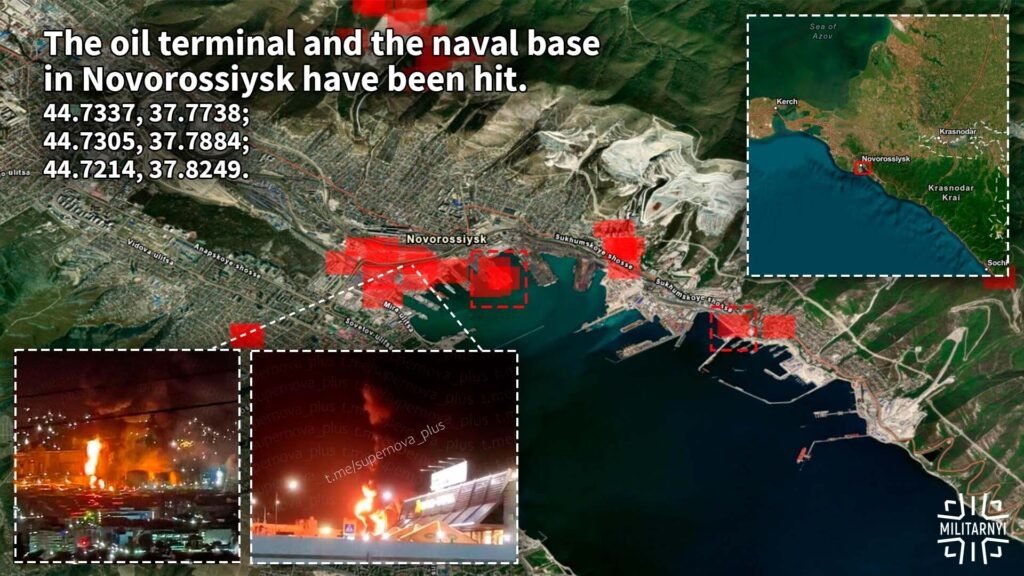
World
KYIV — Ukraine’s Defense Forces and Unmanned Systems Forces (USF) carried out a coordinated strike against Russian military and infrastructure targets in Krasnodar Krai during the night of September 8–9, with the Novorossiysk naval base among the main targets. Robert “Magyar” Brovdi, commander of the USF, said the operation destroyed or damaged several Russian military vessels, including missile carriers used to launch attacks against Ukraine. President Volodymyr Zelenskyy confirmed that Ukrainian forces struck the naval base, military harbor facilities, warships, Kalibr missile carriers and an oil-shipment terminal. The Security Service of Ukraine (SBU) said the operation involved the SBU, USF, Ukrainian Navy, Main Intelligence Directorate and State Border Guard Service. Fuel-oil storage facilities and infrastructure at the Sheskharis terminal were also targeted. Fires and explosions were reported at the naval base and in areas where ships were stationed. NASA’s FIRMS satellite data detected fires near the Black Sea Fleet base and port infrastructure. Open-source analysis reported a fire at the fuel-oil terminal, with at least one storage tank damaged. The terminal handles fuel oil and light petroleum products and has an annual capacity of around 4 million tonnes. Novorossiysk has become a key base for Russia’s Black Sea Fleet after many Russian warships were moved there from Sevastopol following earlier Ukrainian attacks. Ukraine also reported strikes on Russian aviation and air-defense equipment. According to Brovdi, Ukrainian drones destroyed a Russian Su-33 carrier-based fighter and an Mi-8 helicopter near Anapa. Near Gelendzhik, USF operators destroyed a 39N6 Kasta-2E2 360-degree surveillance radar and a 92N6 target-acquisition radar used with Russia’s S-300/S-400 air-defense systems. Ukrainian drone manufacturer Fire Point said FP-1 drones were used in the Novorossiysk operation and struck the fuel-oil terminal, a grain terminal and the naval-base area. Russian authorities confirmed the drone attack and said debris from intercepted drones hit industrial areas and locations near residential buildings. Regional officials reported that four people, including a child, were killed and around 29 injured. Russia’s Defense Ministry said hundreds of Ukrainian drones were intercepted across several regions. Brovdi also reported that Russian personnel losses averaged 411 killed per day in September, compared with 355 per day in August. Between September 1 and 8, the USF claimed to have killed more than 3,300 Russian troops and struck 16,720 Russian military targets. These figures are Ukrainian claims and have not been independently verified. The Ukrainian General Staff said the full extent of the damage from the operation was still being assessed. The strike is part of Ukraine’s continuing campaign against Russian naval, aviation, air-defense and logistical infrastructure supporting military operations against Ukraine. Source : militarnyi
Read More → Posted on 2026-09-09 14:37:50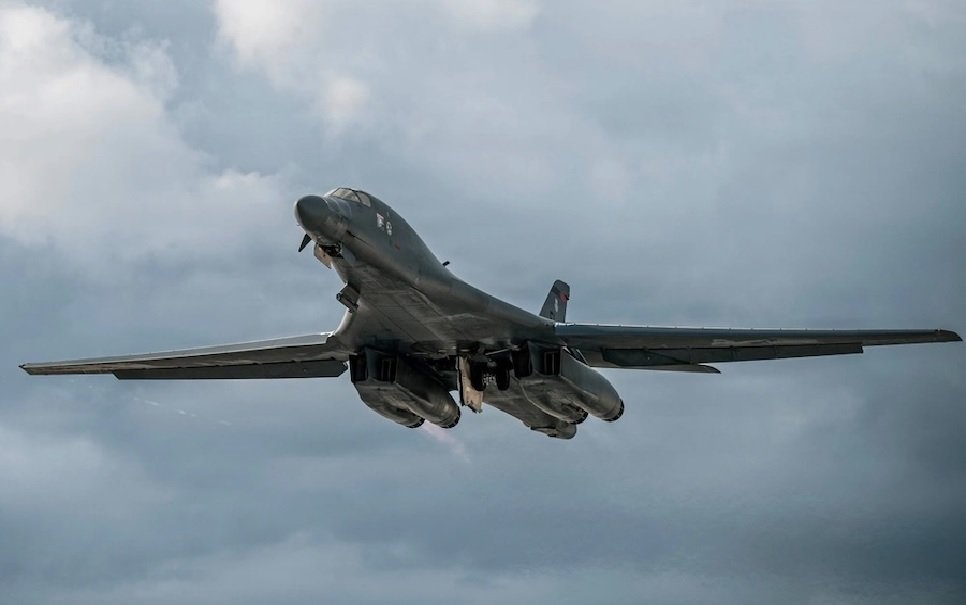
U.S
WASHINGTON — The U.S. Air Force has launched the North Star Readiness Campaign to increase the number of mission-capable B-52 Stratofortress and B-1 Lancer bombers available for operations. The campaign was launched on September 8 by Air Force Global Strike Command (AFGSC) in partnership with Air Force Materiel Command (AFMC) and the Defense Logistics Agency (DLA). The effort focuses on reducing logistical delays, improving parts availability, strengthening engineering support and speeding up depot maintenance. The Air Force said the campaign is intended to maintain a ready bomber force capable of supporting global operations. It brings operators, sustainment organizations, logisticians and maintainers together to address problems that can keep aircraft out of service. Faster Parts Delivery One of the main elements of the campaign is the use of daily aircraft-on-ground meetings. These meetings bring together DLA representatives, supply-chain personnel, base logistics units and flight-line maintainers to identify parts shortages and work on solutions. According to the Air Force, some lateral shipments that previously took a week or longer can now reach operating units in two to three days. The campaign has also reduced the number of mission-impacting parts problems, known as MICAPs, from more than 450 to approximately 160. The reduction allows maintenance teams to spend more time working on high-priority backorders and identifying emerging reliability problems instead of responding to immediate parts shortages. Focus on B-1 and B-52 Fleets For the B-1 fleet, the campaign is focused on improving the availability of critical structural and avionics parts while also reducing delays associated with depot-level maintenance. The objective is to return aircraft to the fleet faster and reduce aircraft downtime. The campaign is also supporting the continued modernization of the B-52 fleet. Both the B-52 and B-1 are receiving upgrades intended to allow the aircraft to remain in service for decades longer. The Air Force is also continuing to sustain the B-2 Spirit for maximum combat effectiveness until the B-21 Raider becomes fully operational. Air Force Leadership Emphasizes Readiness Gen. S.L. Davis, commander of Air Force Global Strike Command, said the campaign brings together operators, acquisition and sustainment experts and logistics partners with a focus on operational readiness. “This is a team effort,” Davis said, emphasizing the need to provide maintainers with the parts and support required to keep the bomber force ready. Lt. Gen. Linda Hurry, commander of Air Force Materiel Command, said continued cooperation between Global Strike leadership and logistics organizations has helped improve the supply chain and return aircraft to the fleet faster after depot maintenance. The campaign also uses ideas developed by Airmen working directly on the aircraft. Standardized maintenance playbooks and changes to day-to-day processes are being used to improve the movement of parts and streamline flight-line maintenance. The North Star Readiness Campaign brings together ongoing and new modernization efforts, primarily managed through the Office of the Assistant Secretary of the Air Force for Acquisition and Air Force Materiel Command. The Air Force says the coordinated approach is intended to deliver parts, resources and engineering solutions more efficiently and increase the number of B-52 and B-1 aircraft available for operations.
Read More → Posted on 2026-09-10 07:02:44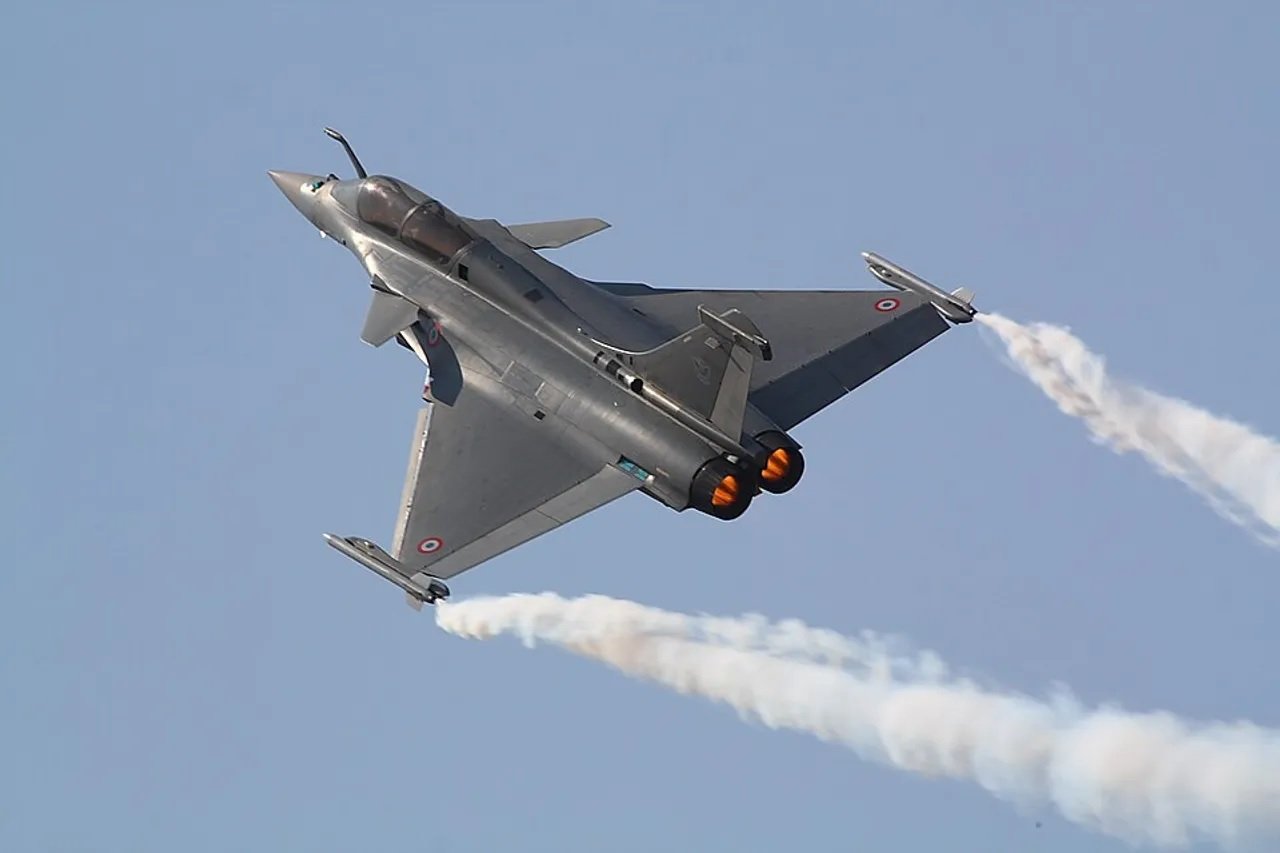
World
NEW DELHI — Russian defense analysts from the Center for Analysis of World Arms Trade (CAWAT) have claimed that export versions of French-made Rafale fighter jets and SCALP-EG cruise missiles supplied to India could contain software and hardware “bookmarks” that might allow their use to be restricted remotely. The claim, reported by RIA Novosti on September 7, comes from an expert study being prepared for publication. CAWAT says the alleged Rafale “bookmarks” could be activated by an external radio-electronic signal and makes a similar claim about SCALP-EG missiles. However, the publicly reported assessment does not provide technical evidence demonstrating that such a remote-disable mechanism exists in India's Rafales or SCALP-EG missiles. What is the basis of the Russian claim? CAWAT's publicly reported argument appears to have two main parts. First, it asserts that export Rafales contain software and hardware “bookmarks” that could be activated by an external signal and that France has a remote capability related to SCALP-EG missiles. Second, it connects this allegation with the May 2025 India-Pakistan fighting, asking whether India's independent use of SCALP-EG could have caused or contributed to the alleged losses of several Rafales. Importantly, CAWAT does not publicly disclose the technical evidence behind the alleged “bookmarks.” The published account does not identify source-code analysis, a tested aircraft system, intercepted activation signals or technical documentation demonstrating the claimed remote-disable function. CAWAT itself says that only competent Indian authorities could determine whether such a connection existed through a detailed investigation. Rafale losses do not establish a “kill switch” CAWAT's reference to alleged Rafale losses therefore cannot by itself establish the existence of a remote “kill switch.” India acknowledged aircraft losses during the May 2025 conflict but did not publicly confirm a Rafale combat loss. A later Indian Air Force support document provides an important piece of indirect evidence: in June 2026, the IAF sought bridge support for its full fleet of 36 Rafales, with the support requirement calculated on the basis of 36 aircraft. Because this document was issued more than a year after the fighting, it is relevant when assessing earlier claims of Rafale losses. it is valid official documentary evidence that the IAF continued to account for and support the fleet as 36 aircraft. India continues to pursue more Rafales India has also continued moving toward the acquisition of 114 additional Rafales under the Multi Role Fighter Aircraft programme. The CAWAT report gives the proposed breakdown as 88 single-seat and 26 twin-seat aircraft, while India's Defence Acquisition Council approved the MRFA procurement process in February 2026. The subsequent procurement process has continued, including India's request to France for the 114-aircraft deal. The decision to continue with a major Rafale acquisition is relevant because India has not publicly indicated that it found a fundamental operational problem with the aircraft following the 2025 fighting. No technical proof of remote deactivation The central issue remains the technical claim itself. CAWAT has not publicly presented source-code analysis, technical documentation, examination of an Indian Rafale, evidence of an external activation signal, or a demonstrated test showing that France can remotely disable India's Rafales or SCALP-EG missiles. Dependence on a foreign manufacturer for proprietary software, updates, maintenance and technical support is not the same as having a remotely activated “kill switch.” Russian defense-market context The assessment also comes as Russia and France remain competitors in India's defense market. This does not prove that CAWAT's claim is politically or commercially motivated, but it makes independent verification important before accepting a serious allegation about French defense equipment. Conclusion The CAWAT assessment remains a hypothesis rather than a demonstrated technical finding. The Russian analysts have not publicly demonstrated that India's Rafales or SCALP-EG missiles contain a remotely activated disabling mechanism. Their reference to alleged Rafale losses during the 2025 fighting also does not establish that any aircraft was disabled by such a system. The later IAF documentation covering all 36 Rafales provides strong indirect official evidence that India continued to account for the complete fleet, while the continued move toward 114 additional Rafales shows that New Delhi remains committed to the aircraft. Without direct technical evidence establishing the alleged mechanism, the Russian “kill switch” claim remains unverified and requires independent examination before it can be treated as an established capability.
Read More → Posted on 2026-09-10 07:58:18
Europe
WARSAW, Poland — The United States and Poland have signed a $4 billion Foreign Military Financing (FMF) loan guarantee agreement, providing Warsaw with additional financing for the purchase of U.S. defense equipment. The agreement brings total U.S. support for Poland through the FMF program to nearly $20 billion, according to U.S. and Polish officials. The agreement was signed on September 9 at the Polish Army Museum in Warsaw. Thomas DiNanno, U.S. Under Secretary of State for Arms Control and International Security, represented the United States, while Polish Deputy Prime Minister and Minister of National Defence Władysław Kosiniak-Kamysz represented Poland. Finance Minister Andrzej Domański and senior officials from Bank Gospodarstwa Krajowego (BGK) also attended the ceremony. Sixth FMF Agreement The latest agreement is Poland's sixth agreement under the U.S. Foreign Military Financing program. FMF provides financing that enables partner countries to purchase U.S. military equipment and related defense services. The new financing is intended to support the technical modernization of the Polish armed forces and accelerate the implementation of existing defense procurement contracts. Polish officials specifically identified the country's AH-64E Apache helicopter program as one of the areas that could benefit from the financing. The precise allocation of the entire $4 billion package has not been publicly detailed. Polish officials have said that the financing will help move forward with existing modernization programs and purchases of American defense equipment. Growing U.S.-Polish Defense Cooperation Poland has significantly expanded its procurement of U.S. military equipment in recent years. Its American acquisitions include F-35 fighter aircraft, AH-64E Apache attack helicopters, Patriot air and missile defense systems, HIMARS rocket launchers, M1A2 Abrams tanks and advanced radar technologies. The latest FMF agreement follows the delivery of the first F-35 aircraft to Poland in May 2026. The delivery was described by the two countries as an important step in interoperability between the U.S. and Polish air forces. Deliveries from Poland's original order of 32 F-35s are scheduled to continue through 2029. Poland is also implementing its contract for 96 AH-64E Apache helicopters, with the new financing expected to help accelerate the program. Financing Supports U.S. Defense Industry The U.S. State Department said the financing strengthens Poland's defense capabilities while also supporting demand for the U.S. defense industrial base. The agreement therefore links Poland's military modernization plans with continued procurement from American defense companies. BGK Vice President Marta Postuła said the terms of the latest financing are more favorable than those of the previous two FMF loan-guarantee agreements. She attributed part of the improvement to a U.S. government grant that helps subsidize financing costs. The agreement continues a series of U.S. FMF financing arrangements with Poland and adds another major financing mechanism to Warsaw's ongoing military modernization effort. U.S. and Polish officials described the agreement as part of the countries' broader strategic defense partnership and their cooperation on security along NATO's eastern flank. DiNanno described Poland as a trusted and model ally, while Kosiniak-Kamysz said the agreement demonstrated concrete U.S.-Polish cooperation in defense.
Read More → Posted on 2026-09-10 08:03:08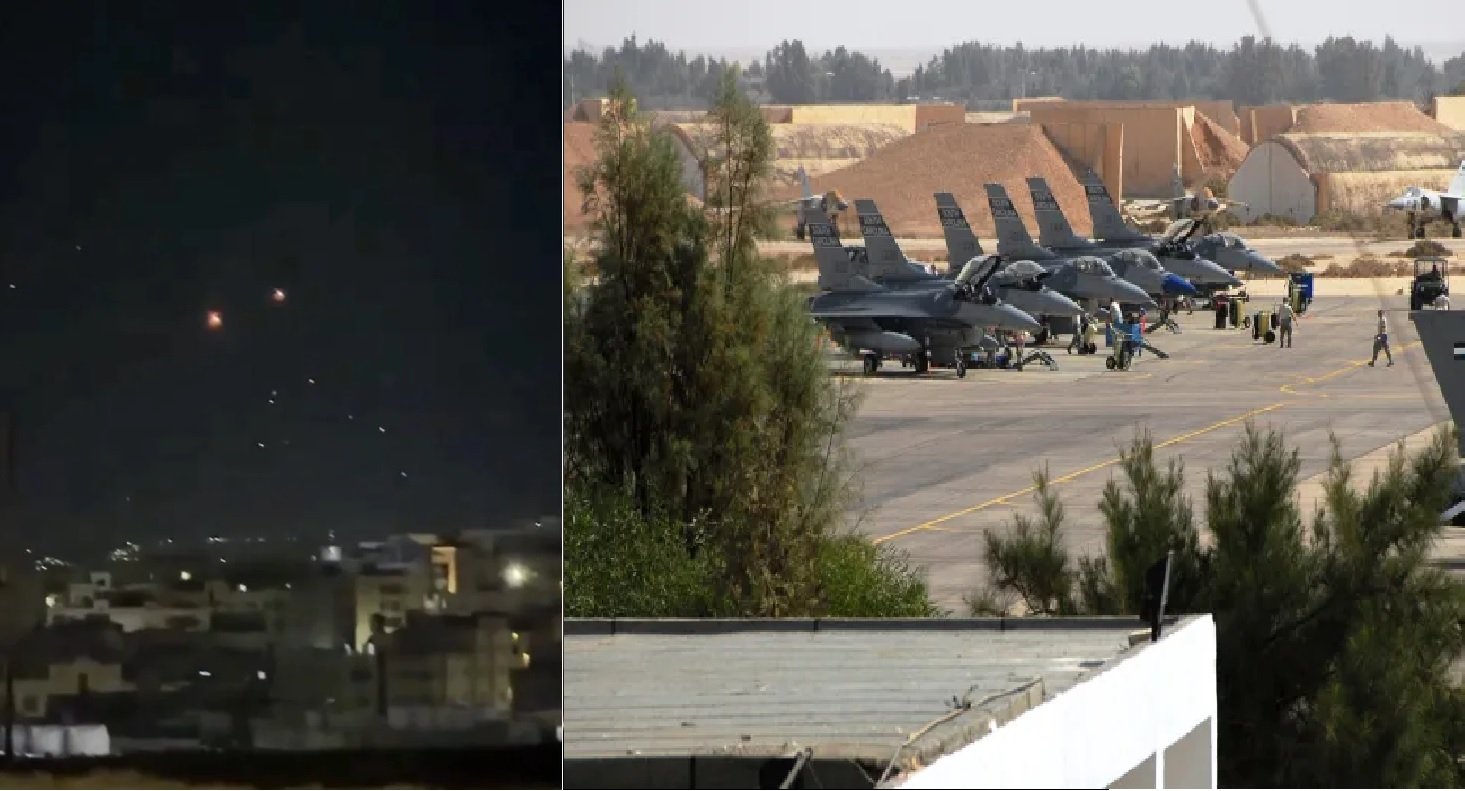
World
AMMAN, Jordan — Multiple American military aircraft were damaged in Iranian strikes on Muwaffaq Salti Air Base in Jordan overnight Tuesday into Wednesday local time, according to people with direct knowledge of the matter who spoke to CBS News. Roughly eight F-15s sustained light damage and were reportedly returned to service, according to the sources, who spoke anonymously because they were not authorized to speak publicly. One A-10 Thunderbolt II, known as the “Warthog,” was struck and was left missing a wing, the sources said. No U.S. deaths have been reported in the strikes on Jordan. More Than 30 Patriot Interceptors Used U.S. forces in Jordan launched more than 30 Patriot missile interceptors while defending against the Iranian strikes, CBS News reported. Jordan's Armed Forces said that its air defenses engaged 20 ballistic missiles fired toward Jordanian territory. Jordan said 18 were intercepted and destroyed, while two fell in unpopulated areas. The reported aircraft damage provides new details about the effects of the attack, although the exact missiles responsible for the aircraft damage have not been publicly identified. Earlier Reporting The CBS report also provides further confirmation of the earlier reporting published by us following the September 8-9 attack. In our September 9 report, we reported that some Iranian ballistic missiles appeared to have reached the vicinity of Muwaffaq Salti Air Base, based on videos showing explosions and apparent impacts around the installation. At that time, the exact number of successful impacts and the extent of damage remained unclear. Our earlier report on the Muwaffaq Salti attack The new CBS report now provides specific details of the aircraft damage, including the A-10 with a missing wing and approximately eight F-15s that sustained light damage. Iran Claims Base Was Hit The Islamic Revolutionary Guard Corps (IRGC) claimed that its missiles successfully struck Muwaffaq Salti Air Base, saying the attack targeted areas associated with the maintenance, preparation and deployment of fighter aircraft, including F-15s. Jordan, however, said that 18 of the 20 ballistic missiles were intercepted and that the remaining two landed in unpopulated areas. The reported aircraft damage confirms that U.S. aircraft were affected, but the full extent of damage to the base and the precise number of missiles that reached the installation remain unclear. Attack Followed U.S. Strikes on Iranian Tankers The Iranian attack followed a U.S. operation on September 8 targeting five Iranian tankers. The U.S. said the operation was carried out in retaliation for Iran targeting a U.S. Navy warship. In response, Iran's IRGC claimed that it launched attacks against eight tankers and two warships, as well as the U.S.-used air base in Jordan. As of September 10, the reported aircraft damage has not been publicly confirmed by U.S. Central Command. The CBS report currently provides the specific details that an A-10 was left missing a wing and approximately eight F-15s sustained light damage and were returned to service.
Read More → Posted on 2026-09-10 08:20:03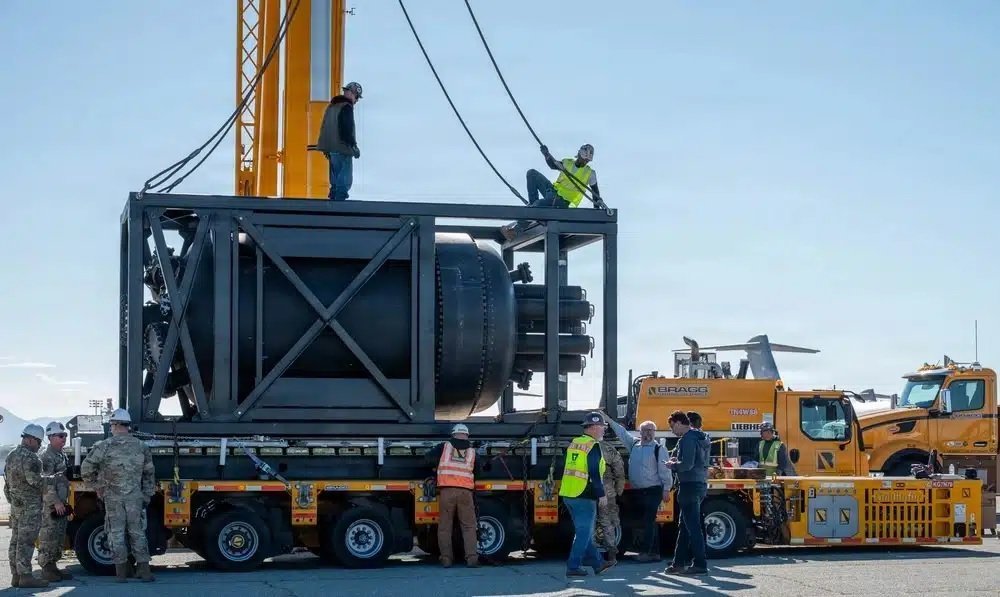
U.S
WASHINGTON — The U.S. Department of War plans to install an advanced nuclear Micro Modular Reactor (MMR) at Naval Weapons Station (NWS) Crane in Indiana no later than September 2028. The project will provide the installation with continuous electricity independent of the commercial power grid. The reactor will be the U.S. Navy’s first shore-based advanced microreactor and the first power-producing nuclear reactor installed in Indiana. The commercially owned and operated reactor is intended to improve the energy resilience of NWS Crane, allowing critical activities to continue during commercial grid disruptions and other demanding conditions, including physical and cyber threats. Nuclear Power for Naval Weapons Station Crane NWS Crane is a major U.S. military installation in southern Indiana. It supports defense technology and weapons-related activities, including weapons development, electronic warfare, strategic missions and expeditionary warfare systems. The installation hosts the Naval Surface Warfare Center Crane Division and Crane Army Ammunition Activity and employs thousands of civilian personnel, including scientists and engineers. The new reactor is intended to provide a reliable source of electricity for critical operations without depending on the civilian power grid. Microreactors are generally designed as relatively small nuclear power systems that can be factory-built and deployed to individual sites. Systems in this category typically produce 20 megawatts or less and are intended to supply power to a specific installation rather than a regional electricity network. The Department of War has not publicly identified the reactor vendor for the Crane project. It also has not released a cost estimate, specific reactor design or power output. Army’s Janus Program Leads Deployment The Crane project is being carried out through the Army’s Janus Program, with the Army serving as the Department of War’s executive agent for nuclear energy at military installations and holding regulatory authority for the unit. The Navy is responsible for establishing the operational requirements for the Crane site, while the Department of War Innovation Unit is connecting the military effort with commercial nuclear technology developers. The program also involves the Office of the Under Secretary of War for Research and Engineering, the Office of the Assistant Secretary of War for Critical Technologies and the State of Indiana. “Janus was designed from the beginning to deliver capability beyond the Army,” said W. Jordan Gillis, Assistant Secretary of the Army for Installations, Energy and Environment. He said the effort is intended to create a pathway for resilient nuclear power across the Joint Force. Brendan Rogers, Assistant Secretary of the Navy for Energy, Installations and Environment, said energy security is directly connected to military capability. He said placing the Navy's first shore-based advanced microreactor at Crane would support efforts to protect shore infrastructure from physical, cyber and commercial-grid vulnerabilities. Part of Wider Military Microreactor Program The Crane deployment follows earlier selections under the Janus Program for other Department of War installations. The Army previously selected five companies and initial locations: Antares Nuclear — Fort Bragg, North Carolina BWXT Advanced Technologies — Fort Campbell, Kentucky General Atomics Electromagnetic Systems — Fort Hood, Texas Radiant Industries — Fort Benning, Georgia Westinghouse Government Services — Fort Drum, New York Those awards have a combined value of up to $2.2 billion. Private funding is expected to support more than 20 reactors across Department of War installations over time. The Crane project is therefore being positioned as an early part of a broader effort to deploy advanced nuclear power at military facilities. Executive Orders Set 2028 Target The project follows President Donald Trump’s executive orders concerning advanced nuclear reactors for national security and rebuilding the U.S. nuclear industrial base. Executive Order 14299, signed in May 2025, directed the Army to operate an Army-regulated nuclear reactor at a domestic military installation by September 30, 2028. Emil Michael, Under Secretary of War for Research and Engineering, said the department is working to field next-generation energy technologies while strengthening the U.S. nuclear industrial base and ensuring military installations have resilient infrastructure for uninterrupted operations. Mike Dodd, Assistant Secretary of War for Critical Technologies, said his office is focused on moving technologies from development into operational use. He said the office's standard is to field and deploy capability within 24 months or less, with the Crane effort being pursued under the Contested Logistics Critical Technology Area. Indiana Support and Next Steps The Crane initiative follows more than a year of coordination between the Department of War and Indiana officials. The project has received support from Senator Jim Banks, Governor Mike Braun, Senator Todd Young, Representative Erin Houchin and Representative Mark Messmer. Federal, state and local authorities will continue work on the safety, environmental, regulatory and installation requirements needed before the reactor can be deployed. Officials have also said that nuclear safety, physical security, cybersecurity and responsible use of taxpayer funds will remain priorities throughout the project. The initiative is also expected to create skilled employment opportunities and contribute to expansion of the domestic nuclear supply chain. The Department of War has set September 2028 as the deadline for the Crane deployment, but has not publicly provided further details on the specific reactor design, power output or construction schedule.
Read More → Posted on 2026-09-10 08:29:20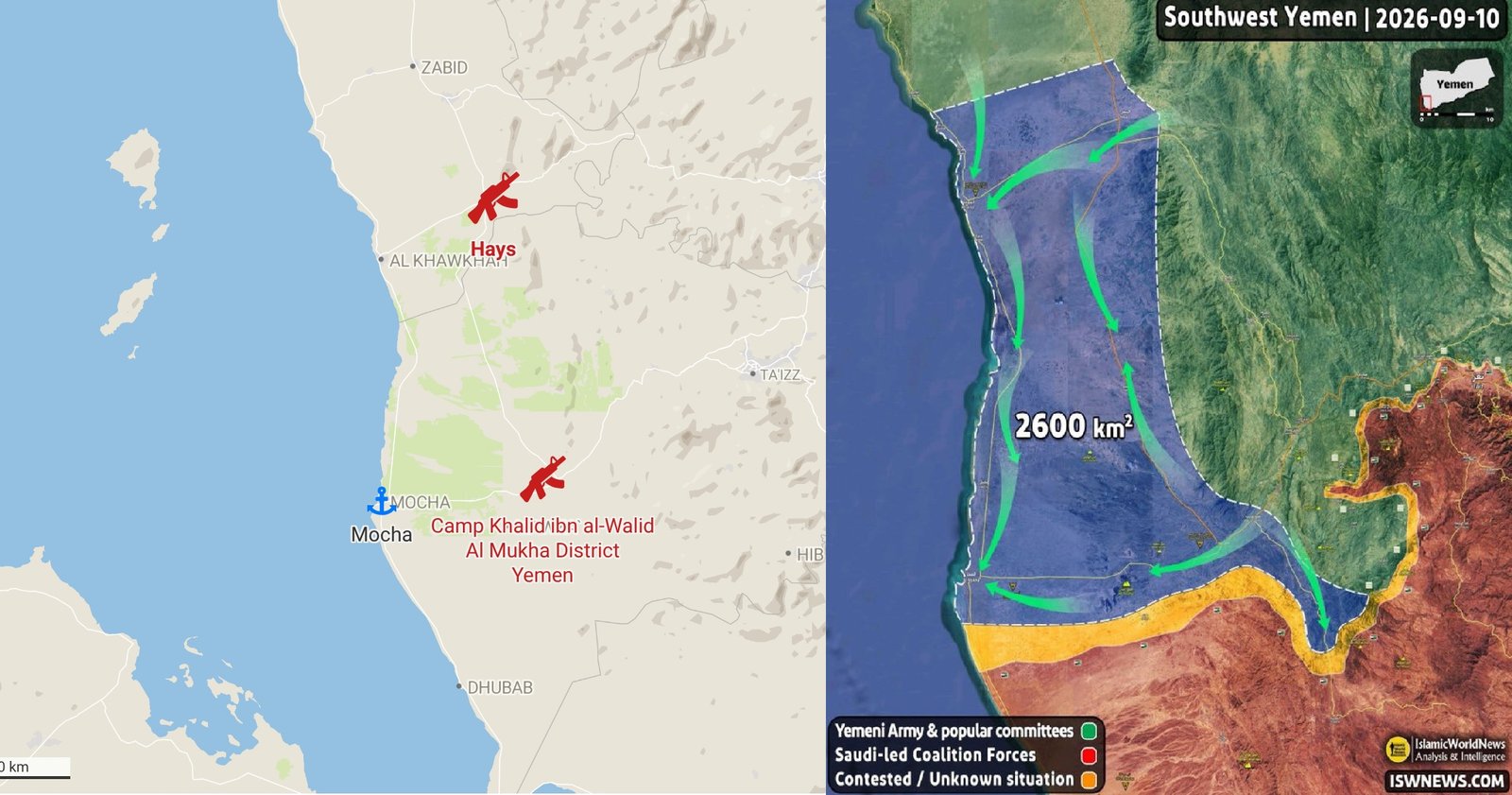
World
MOCHA, YEMEN — On September 9, Yemen’s Houthi forces have captured the Red Sea port city of Mokha (Al-Makha) and made a rapid advance across parts of western Yemen, taking several strategically important locations from forces aligned with the internationally recognised Yemeni government. The offensive has focused on western Taiz and southern Al-Hudaydah governorates, with Houthi forces advancing through several districts along the western coast. The territorial shift has included the capture of Hays, Al-Khawkhah, Al-Wazi'iyah, Mawza and the Khalid ibn al-Walid military camp. Government forces and the National Resistance Forces led by Tariq Saleh reportedly withdrew or collapsed across a broad section of the front, with some forces falling back toward Aden. The offensive ultimately reached Mokha, where Houthi forces seized control of the city and its main port and airport. Mokha Falls to Houthi Forces Mokha had remained under the control of government-aligned forces since early 2017 and had become an important base for Tariq Saleh’s National Resistance Forces. The city is located on Yemen’s Red Sea coast and is strategically positioned near the Bab al-Mandab Strait, a major maritime chokepoint connecting the Red Sea with the Gulf of Aden. Mokha is roughly 60–75 kilometres north of the strait. The capture therefore gives the Houthis control of an important coastal position closer to the Bab al-Mandab and international shipping routes. The city and port had previously been used by forces supported by the United Arab Emirates before the UAE’s drawdown from Yemen. Saudi-backed Yemeni government forces subsequently maintained control of the area. Wider Territorial Advance The capture of Mokha came after Houthi forces expanded their offensive through western Taiz and southern Al-Hudaydah. Houthi units captured Hays, followed by advances toward and through Al-Khawkhah, Al-Wazi'iyah and Mawza. The seizure of the Khalid ibn al-Walid military camp also removed another important government military position on the route toward the coast. Government and National Resistance forces subsequently withdrew from several positions as the Houthi advance continued. The scale of the offensive has been described as covering roughly 2,600 square kilometres of western Yemen, although the exact area under Houthi control remains subject to further verification. Previous Attacks on Mokha Port The ground offensive followed weeks of Houthi missile and drone attacks around Mokha. In early August, Houthi forces launched multiple attacks involving ballistic missiles and drones against the city and its port. Yemeni military officials said one attack killed seven people, including four military personnel and three civilians, and wounded 30 others. Air defences were reported to have intercepted 11 drones. Mokha port director Abdul Malik Al-Shara’bi later said the port had been struck by more than 25 missiles over several days, causing an estimated $16 million in direct losses. Commercial and maritime operations were suspended following the attacks. The Houthis said the attacks were aimed at a military build-up involving weapons and warships belonging to Saudi-backed forces. Strategic Importance of the Red Sea Coast Mokha's location makes its capture significant for control of western Yemen. The city sits close to the Bab al-Mandab Strait, through which international shipping moves between the Red Sea and the Gulf of Aden. Houthi forces have previously carried out attacks affecting commercial shipping in the Red Sea region. Control of Mokha gives the group a stronger position along the western coastline and removes a major government and National Resistance Forces' military and logistical position in the area. The latest offensive also represents a major change in the distribution of territory between the Houthis and government-aligned forces in western Yemen. The situation remains developing as government and National Resistance forces reorganise after the withdrawals and Houthi forces consolidate their positions across the newly captured areas. This is a developing story and may be updated as further verified information becomes available.
Read More → Posted on 2026-09-10 08:41:13
U.S
PLYMOUTH, Minn. — Northrop Grumman has begun production of its PGK E5 precision guidance kit for the U.S. Army. The upgraded system is designed to maintain the accuracy of 155 mm artillery rounds when GPS signals are jammed or degraded. Production is underway at Northrop Grumman’s facility in Plymouth, Minnesota, with the first deliveries expected in early 2028. The company has not disclosed the specific number or value of PGK E5 kits ordered. The PGK E5 is the latest version of the M1156 Precision Guidance Kit, which has been in production since 2013 and in service since 2015. The kit screws into the fuze well of compatible conventional 155 mm projectiles, allowing existing ammunition to receive GPS-guided course-correction capability without requiring new guided shells or changes to the artillery platform. Anti-Jamming Upgrade The main improvement in the E5 is its enhanced anti-jamming technology, developed to maintain precision when GPS signals are disrupted by electronic warfare. Northrop Grumman said the system recently exceeded the Army’s threshold and objective accuracy requirements during testing in GPS-degraded conditions. The Army lists a threshold accuracy of less than 50 meters circular error probable (CEP) and an objective of less than 30 meters CEP. The E5 maintains the same fit, form and user experience as previous PGK versions. It is compatible with projectiles including the M795 and M549A1 high-explosive rounds and fielded artillery systems such as the M109A6/A7 Paladin and M777A2. The system also retains standard fuze functions, including point detonation and proximity, or height-of-burst, operation. “Today’s threat environment demands speed and innovation and we’re working closely with the U.S. Army to ensure the PGK E5 keeps maneuver forces ready to win in GPS degraded environments,” said Dave Fine, vice president of armament systems at Northrop Grumman. $862.8 Million Production Contract The E5 production follows a $862.8 million firm-fixed-price indefinite-delivery/indefinite-quantity contract awarded to Northrop Grumman by the U.S. Army in September 2026. The five-year agreement covers the manufacture, inspection, testing, packaging and delivery of M1156 precision guidance kits and variants through September 2031. Individual orders will determine work locations and funding. The Army Contracting Command in Newark, New Jersey, manages the agreement. Northrop Grumman has delivered more than 145,000 PGK kits to date, with the system reporting a 98 percent point reliability rate since 2013. PGKs are used by U.S. forces and allied countries, including Australia, Canada and Finland. Finland purchased 5,500 kits in August 2024. The PGK approach allows existing stocks of conventional 155 mm ammunition to receive precision-guidance capability, providing the Army with an anti-jam upgrade without requiring replacement of its existing artillery platforms.
Read More → Posted on 2026-09-10 08:50:21
U.S
AUBURN HILLS, Mich. — American Rheinmetall has secured a $7.28 million contract to supply the U.S. Marine Corps with 12 Mission Master SP autonomous unmanned ground vehicles (A-UGVs), along with five specialized Marine Kits and related support equipment. Contract and Marine Corps Evaluation The procurement is being executed by the Defense Logistics Agency (DLA), with ADS Inc. serving as the prime contractor for the Marine Corps Warfighting Laboratory (MCWL). American Rheinmetall will lead the project in the United States, while Rheinmetall Canada, the Mission Master SP's original equipment manufacturer and technical partner, will provide engineering and production support. The vehicles will undergo operational evaluation, experimentation and capability development. The program is intended to support the Marine Corps' efforts to expand autonomous logistics, mobility and expeditionary capabilities. Mission Master SP Capabilities The Mission Master SP is a compact, low-profile autonomous unmanned ground vehicle designed to support dismounted troops. It can be configured for missions including logistics, tactical overwatch, fire support and casualty evacuation. The latest configuration uses Rheinmetall's PATH autonomy architecture, which supports autonomous navigation and mission planning in complex and GPS-degraded environments. The vehicle supports modular payloads and can operate in follow-me, convoy and fully autonomous modes. Its lithium-ion battery-powered electric drivetrain supports low-signature operations. The vehicle is also compact enough to be transported internally by CH-47, CH-53 and C-130 aircraft. Amphibious Marine Kit The contract includes five Marine Kits, which are designed to improve the Mission Master SP's ability to operate in littoral environments and perform extended amphibious tasks. Five of the 12 vehicles will be equipped with the kits for maritime mobility testing. “This collaboration between Rheinmetall colleagues enables the U.S. Marine Corps to deploy the Mission Master SP in multi-domain environments and continue to push boundaries of Canadian innovation,” said Pietro Mazzei, president and CEO of Rheinmetall Canada. Four Years of Marine Corps Cooperation The award builds on more than four years of collaboration between Rheinmetall and the Marine Corps. Earlier Mission Master systems were tested in missions including casualty evacuation, resupply and autonomous road marches of up to 50 kilometers. The vehicles also participated in exercises including Talisman Sabre in Australia and Apollo Shield at Twentynine Palms, California. Rheinmetall has also integrated the Fieldranger Remote Weapon Station on an armed Mission Master SP and demonstrated the system during live-fire testing. “This award represents a significant milestone in our long-standing partnership with the United States Marine Corps,” said Matt Warnick, CEO of American Rheinmetall. He said the company has worked with Marines for more than four years to develop and advance autonomous ground capabilities. Support and Future U.S. Production The contract includes engineering support, logistics coordination, program management, operator training, technical documentation and acceptance testing. American Rheinmetall also plans to develop its Maine facility into a future U.S. Advanced Land Autonomy Center of Excellence (ALACOE). The center is planned to focus on PATH integration, local production, sustainment and lifecycle support. The current procurement does not require immediate expansion of the Maine facility, although the company said the planned center could support future U.S. manufacturing, workforce growth and long-term sustainment. The new contract will provide the Marine Corps with additional Mission Master SP vehicles for continued testing and development of autonomous logistics, mobility and amphibious capabilities.
Read More → Posted on 2026-09-10 09:00:27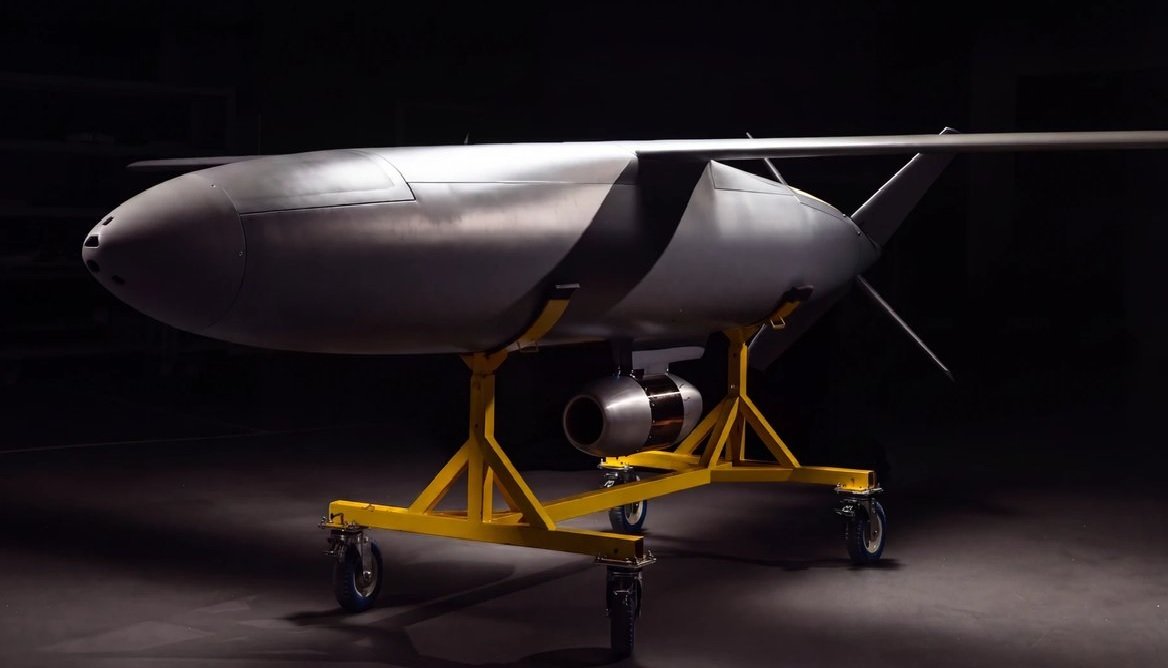
U.S
DALLAS — Defense technology startup Covenant has emerged from two years of stealth operations with more than $250 million in venture funding, introducing Anthem, a ground-launched, long-range precision strike cruise missile designed to carry a heavy payload and be produced in large numbers. Founded in 2024, Covenant has more than 200 employees across the United States, Germany and Israel. The company said it has already secured approximately $150 million in orders covering research and development, qualification and production contracts. Anthem Targets the Deep-Strike Gap Anthem is designed to carry a payload of more than 200 kilograms (over 440 pounds) over long distances. Covenant has not disclosed its exact range, but says the missile offers multiples of the range and payload of other systems in its price class. The company is targeting a unit cost in the mid-six figures at full-rate production. Anthem is intended for hardened targets, including ports, runways and weapons facilities. Covenant has developed its own ground launcher, storage and handling systems, along with mission-planning and command-and-control software designed to support coordinated launches of large numbers of missiles. More Than 200 Test Flights Covenant said Anthem first flew in August 2025 and has completed more than 200 test flights. The testing has included trials with the U.S. military in the United States and overseas. A recent demonstration was conducted in August 2026 at a U.S. Army range in Morocco. $250 Million Funding and Military Contracts Covenant raised more than $250 million across three funding rounds, with investors including Andreessen Horowitz, Founders Fund, Lux Capital, 8VC, Aleph and Lightspeed Venture Partners. Reports place the company's valuation at more than $1 billion. The company has an Other Transaction Agreement with the U.S. Army for accelerated testing and qualification. The U.S. Navy's Rapid Capabilities Office also awarded Covenant a roughly $70 million cost-sharing contract to develop a maritime Anthem variant and incorporate Defense Exportability Features for potential sales to U.S. allies. Covenant said additional awards are expected before the end of 2026. Production Designed for Scale Covenant is using commercial off-the-shelf components for Anthem where possible. Where commercial parts were unavailable, the company said it worked with suppliers to establish dedicated production lines. The company has opened a 105,000-square-foot production facility in Grand Prairie, Texas, while a 110,000-square-foot facility in Saxony, Germany, is planned around a predominantly European supply chain. Covenant is also operating a roughly 30,000- to 32,000-square-foot facility in northern Israel. Serial production is scheduled to begin in the first quarter of 2027, with an initial goal of about 1,000 missiles in the first year and a longer-term target of 5,000 units annually. Covenant expects deliveries of German-built systems to an international customer by the end of 2026, while U.S. Army deliveries are planned for 2027. Leadership and Western Strike Requirements Covenant was founded by Michael Kaufman and Ofir Dayan. Kaufman, the company's CEO, is a former investor at Thiel Capital, while Dayan, the CTO, previously worked on systems including Iron Dome. Abby Denburg is President and Chief Growth Officer, and former U.S. Deputy Secretary of Defense Kathleen Hicks serves as an adviser. Covenant is positioning Anthem around the growing requirement for large numbers of heavy-payload precision weapons against hardened targets. Its approach combines a lower-cost production model, localized manufacturing and integrated launch and mission-planning systems. The company says the priority now is execution—delivering mission-critical capability to customers on time, at scale and with the performance they expect.
Read More → Posted on 2026-09-10 09:13:25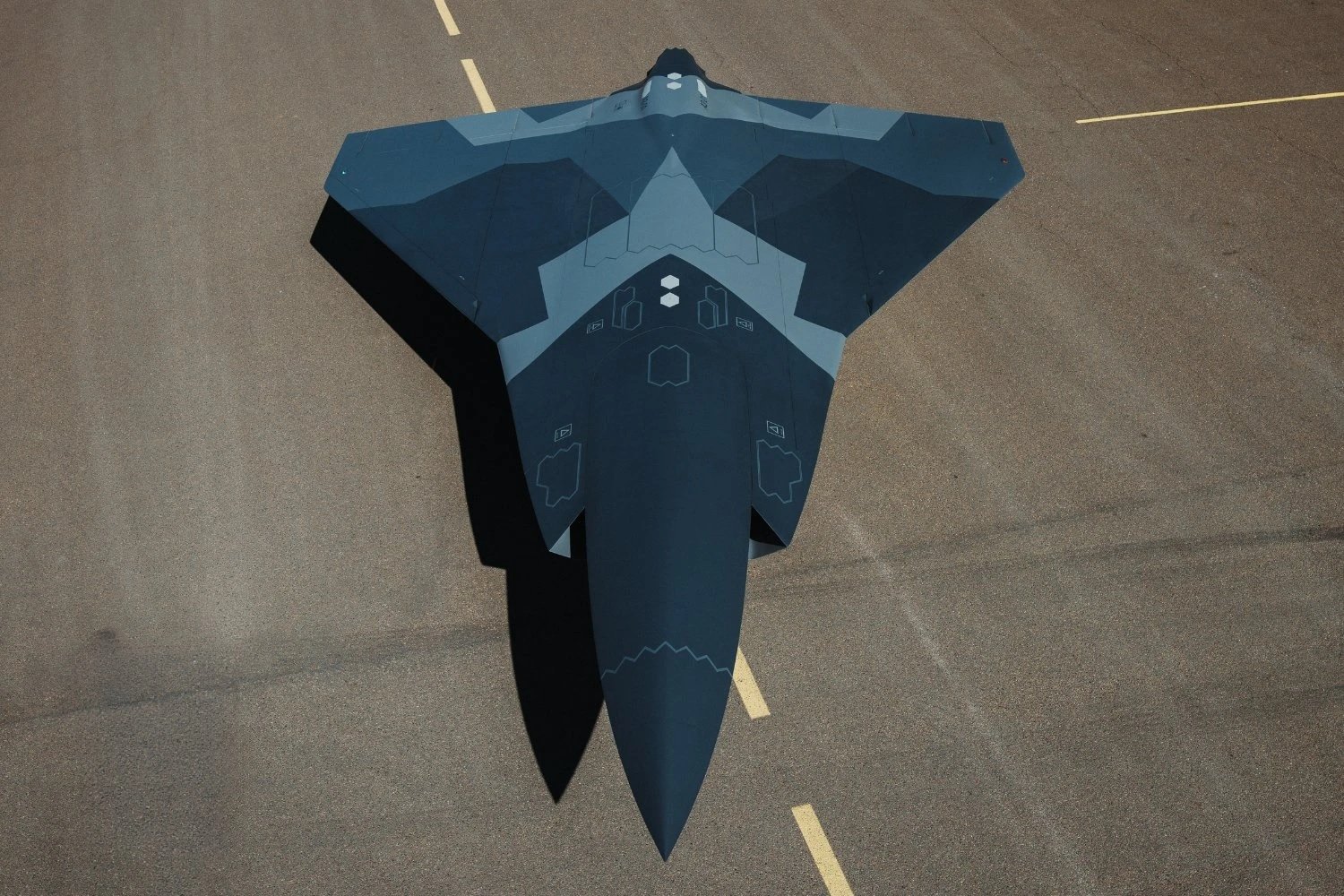
Europe
Stockholm — Swedish aerospace and defence company Saab has received an order worth approximately SEK 2.9 billion ($300 million) from the Swedish Defence Materiel Administration (FMV) for continued concept and development work on Sweden’s future fighter system. The contract covers 2026 to 2028, with options to extend the work through 2029 and 2030. It is the third major order under Sweden’s Koncept för Framtida Stridsflyg (KFS) programme, also known as Vägval stridsflyg, which is intended to support decisions on the country’s air combat capabilities beyond 2040. The programme will include flying and ground-based technology demonstrators, advanced studies and development of future system concepts for both manned and unmanned aircraft. Saab will focus on technologies including systems integration, autonomy, propulsion, digital development, signature adaptation and future production capabilities. The work is also intended to build Swedish technical competence, reduce technical risks through early testing and maintain freedom of action for future choices in air combat capabilities. Lars Tossman, head of Saab’s Aeronautics business area, said: “We are very pleased that FMV continues to show confidence in Saab through this new contract. The work is crucial to further develop and demonstrate new technologies that will be central to future fighter system.” The latest order follows an initial contract signed in March 2024 and a SEK 2.6 billion follow-on order awarded in October 2025 for work covering 2025 to 2027. The latest agreement brings the value of the two publicly disclosed 2025 and 2026 orders to approximately SEK 5.5 billion. Sweden began pursuing its own national future fighter concept work after withdrawing from the UK-led Team Tempest project in 2023, now known as the Global Combat Air Programme (GCAP). Saab has previously outlined future F-series concepts involving a manned fighter intended to eventually succeed or operate alongside the Gripen fleet, as well as subsonic and supersonic unmanned aircraft. The latest KFS contract continues Sweden’s effort to develop and demonstrate future combat aviation technologies while keeping options open before any final decisions on the country’s future fighter system.
Read More → Posted on 2026-09-10 13:47:35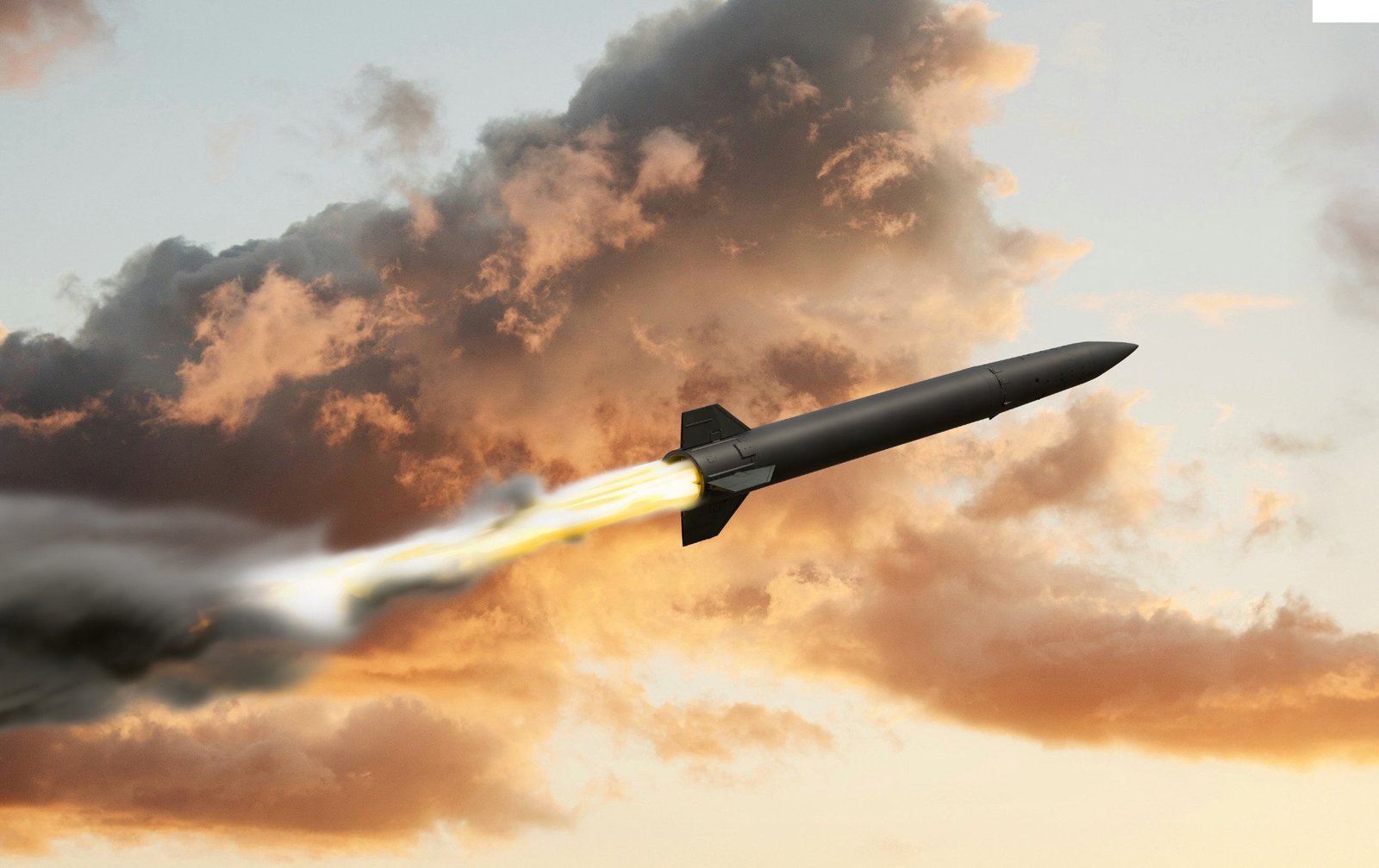
World
KYIV, — Ukrainian defense company Fire Point has moved its FP-7 tactical ballistic missile into the military testing phase, bringing the system closer to certification and possible entry into service with the Armed Forces of Ukraine. Fire Point CEO Iryna Terekh confirmed the development on the sidelines of the Photonics4Defense 2026: Technology Exchange & Matchmaking event. She said the FP-7 had successfully completed its first two testing phases and was now undergoing military testing, which is part of the missile’s formal certification process. Terekh said the missile could be delivered to the Ukrainian Armed Forces in the near future, adding: “We’re talking about weeks, not months.” FP-7 Testing and Capabilities The FP-7 testing program began with ground and laboratory evaluations. Individual systems and subsystems, including the solid-fuel rocket engine and navigation equipment, were tested separately. This was followed by flight testing to collect performance data and compare the missile’s actual flight characteristics with calculated engineering models. The ongoing military testing represents the next stage toward certification. The FP-7 is designed to carry a 150 kg payload to targets up to 200 km away. Company and independent reports have also described a range of up to 300 km, a maximum speed of about 1,500 meters per second, and a circular error probable of roughly 14 meters. The missile uses a solid-fuel motor and a ground-based mobile launch platform employing a hot-launch system. Fire Point has positioned the FP-7 as a lower-cost alternative to the U.S. ATACMS. Its design reportedly incorporates elements derived from the Soviet-era 48N6 interceptor used in S-300/S-400 systems, although only a limited percentage of components are shared. Earlier Delays Fire Point initially planned to complete the FP-7’s codification with Ukraine’s Ministry of Defense by the end of 2025. However, in early February 2026, Fire Point chief designer Denys Shtilierman said a “series of events” had prevented the missile from entering service as planned. At that time, the company expected to complete the remaining tests in February. Longer-Range FP-9 Fire Point is simultaneously developing the longer-range FP-9 ballistic missile, which is currently in its second development phase, flight testing. The FP-9 is designed to carry an 800 kg warhead to targets approximately 800–855 km away. Reported characteristics include a maximum speed of up to 2,200 meters per second, an altitude of around 70 km, and a circular error probable of about 20 meters. Testing the FP-9 is more difficult because of its long range. Developers have said the missile has a minimum ballistic flight distance beyond which its software can no longer safely abort the flight. Ukraine does not have enough territory to conduct a full-scale test. In July 2026, Shtilierman said the remaining obstacle before FP-9 tests involving strikes on Russian targets was the final testing of its solid-fuel engine. The FP-9 engine uses significantly more solid propellant than the FP-7. Production Expansion Both the FP-7 and FP-9 were displayed at the MSPO 2026 international defense exhibition in Poland. Fire Point is also developing the FP-7.x kinetic anti-ballistic interceptor based on the FP-7 platform as part of the broader European Freyja air-defense project. To support its expanding missile program, Fire Point is increasing production capacity. In August 2026, Terekh announced that the company had tripled its budget to €150 million for construction of a new solid rocket fuel plant in Denmark, which is expected to begin operations by late 2027. Fire Point, which also develops the FP-1 and FP-2 strike drones and FP-5 Flamingo cruise missile, is developing the FP-7 and FP-9 as domestically produced long-range strike systems. As of September 2026, the FP-7 remains in military testing, with the company indicating that it is close to operational readiness.
Read More → Posted on 2026-09-10 13:54:28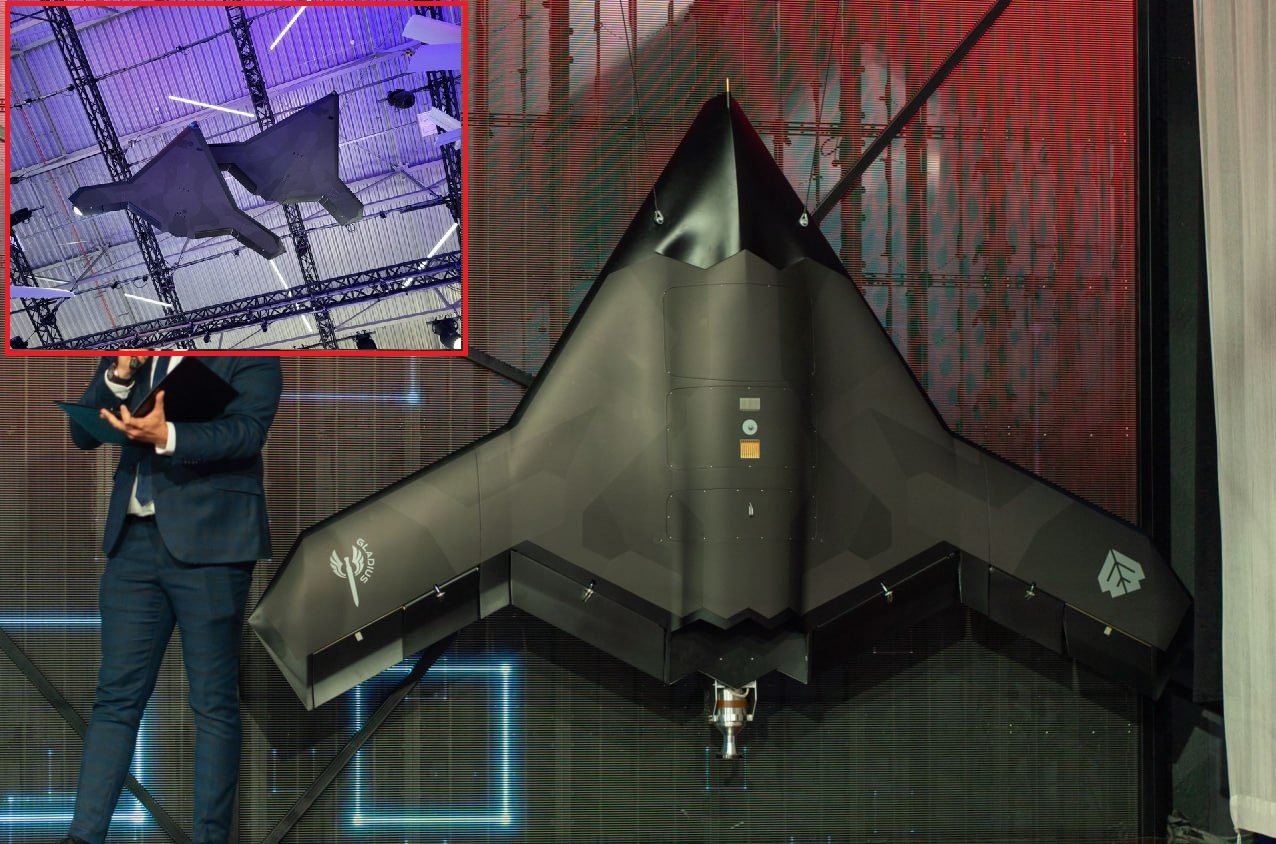
Europe
KIELCE, POLAND — Polish defence company WB Group has unveiled its new Warmate 30 unmanned aerial vehicle (UAV), also referred to as Gladius 2, at the International Defence Industry Exhibition (MSPO) 2026 in Kielce, Poland. The exhibition is being held from September 8 to 11. The Warmate 30 is a jet-powered loitering munition designed to provide a long-range deep-strike capability, including in environments where satellite navigation is unavailable. It uses a flying-wing configuration with flaperons and a composite airframe designed to reduce its radar and thermal signatures. Performance and Payload The UAV has a maximum takeoff mass of approximately 100 kg and is powered by a Polish-made turbojet engine produced by WB Group. Production of the engine began in 2026, while a rocket booster assists the drone during launch. According to WB Group's MSPO specifications, the Warmate 30 can reach a maximum speed of 450 km/h and a cruising speed of more than 150 km/h. It operates at 500–1,500 metres above ground level, with a maximum altitude of 5,000 metres above sea level. The system has a range of more than 250 km and an endurance of over one hour. It can carry a modular payload of up to 30 kg. WB Group offers three main warhead options: fragmentation, shaped-charge/cumulative, including the HEDP multipurpose configuration, and thermobaric warheads. Autonomous Operation and Launch Warmate 30 can fly along selected waypoints and loiter over a designated target area before conducting an attack. It is capable of low-altitude flight and can operate independently of satellite navigation using onboard artificial intelligence. The system can be brought to combat readiness in less than five minutes. It can be launched from a containerised launcher designed for land and naval use or from a launching ramp compatible with existing Gladius 1 platforms, including BSP-U and FT-5. Warmate 30 integrates with the Gladius reconnaissance-strike system and Topaz command system, allowing continuous data exchange between platforms during operations. Polish Orders and Production The Warmate 30 has already been ordered by the Polish Armed Forces and is currently entering low-rate initial production. WB Group says prototypes have been undergoing testing since last year and describes the system as a finished product entering series production. Three units were displayed at MSPO 2026. The system is intended to add a deep-strike layer to the Polish Armed Forces and allied forces. It is not a direct replacement for the existing Gladius 1/BSP-U systems used by Polish Army artillery brigades, but is intended to expand their overall strike capability. WB Group CEO Piotr Wojciechowski said the system is ready for mass production and that its public unveiling was timed according to customer requirements and ongoing testing. The company is also developing the next systems, designated Gladius 3 and Gladius 4, with Gladius 3 planned for 2027. The Warmate 30 was one of several product premieres presented by WB Group at MSPO 2026.
Read More → Posted on 2026-09-10 13:59:38
World
TEHRAN — Iran is increasingly using cryptocurrency to keep international trade moving as U.S. sanctions restrict its access to conventional financial networks. The Central Bank of Iran has eased foreign-exchange controls, allowing exporters and importers to use Tether (USDT), Bitcoin and domestic cryptocurrency exchanges for cross-border settlements. Exporters Get More Flexibility Previously, exporters were required to return a significant portion of their foreign earnings through a government-controlled foreign-exchange platform, often at official rates that were less favorable than open-market rates. This encouraged some businesses to keep funds abroad or outside the formal system. Under the revised framework, exporters can repatriate funds through Iranian crypto exchanges, convert currencies through the open market and use export proceeds directly to help pay for imports such as industrial raw materials and machinery. Crypto Activity Reaches Billions Blockchain analytics firm TRM Labs estimated that nearly $10 billion in cryptocurrency volume moved through Iran in 2025. Chainalysis separately estimated that Iranian wallets received about $7.8 billion during the year. Tether is the most commonly used cryptocurrency for these transactions, largely because USDT is designed to maintain a value linked to the U.S. dollar. Bitcoin is also used, while domestic exchanges provide the infrastructure for transactions. Much of the Tether activity has used the Tron network. Iran's major exchanges account for a large share of domestic activity, with Nobitex handling more than 87% of domestic transaction volume in 2025, according to the supplied data. Central Bank and Bitcoin Mining Elliptic reported that the Central Bank of Iran acquired at least $507 million in Tether during 2025, based on leaked documents and blockchain analysis. The activity was linked to efforts involving the rial and transactions outside traditional banking channels. Bitcoin mining provides another source of digital assets. Elliptic previously estimated that Iranian miners accounted for about 4.5% of global Bitcoin mining, based on earlier data. The figure should not be treated as a current 2026 estimate. Iran has used state-subsidized electricity for mining, effectively converting electricity into Bitcoin that can be transferred or exchanged to obtain value for international transactions. Licensed miners have previously been required to sell their output to the central bank, although mining has also operated outside official channels. U.S. Sanctions Target Iranian Crypto Networks The United States has responded by targeting Iranian cryptocurrency networks. The Treasury Department has sanctioned Iranian exchanges including Nobitex, Wallex, Bitpin and Ramzinex, citing their alleged roles in sanctions evasion and transactions involving regime-linked entities. Tether has also frozen cryptocurrency in wallets identified as connected to Iranian entities. One reported action involved about $344 million, with additional amounts frozen later. Iran's cryptocurrency system does not replace conventional banking or handle the country's entire trade requirements. However, the combination of relaxed currency controls, domestic exchanges and digital assets gives Iranian businesses another option for moving funds and settling international transactions while traditional financial channels remain restricted.
Read More → Posted on 2026-09-10 14:24:45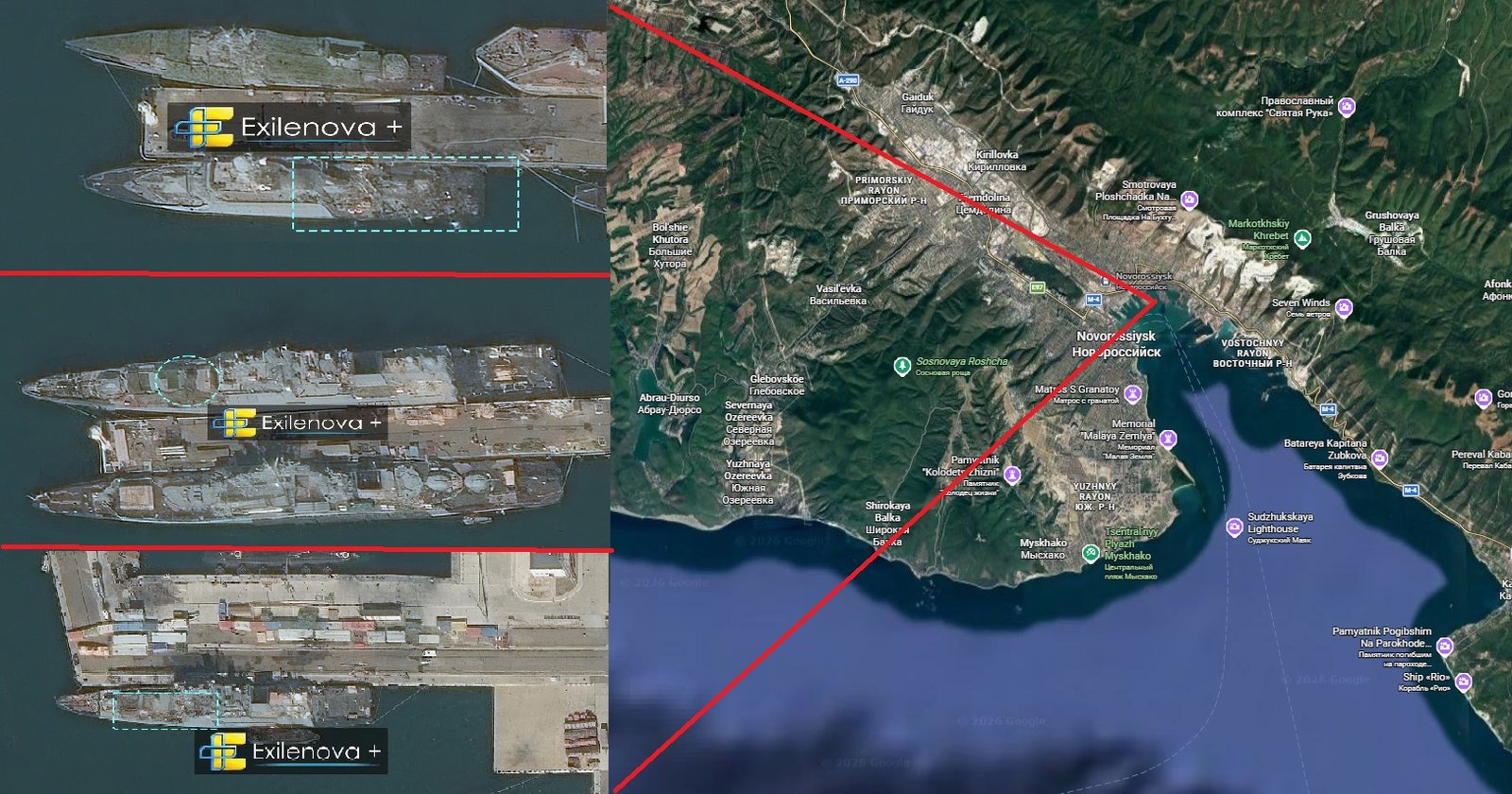
World
KYIV, Ukraine — Ukrainian forces struck Russia’s naval base at Novorossiysk overnight on September 8–9, hitting several Black Sea Fleet vessels and port infrastructure, according to Ukrainian military statements and satellite imagery. Ukraine’s Defense Intelligence (HUR) said its Active Operations Department conducted the operation with the Ukrainian Navy, Security Service of Ukraine (SSU), Unmanned Systems Forces and other Defense Forces units. The Project 11356 frigate Admiral Essen was hit, causing a fire on its deck superstructure. The Ukrainian Navy said the vessel was struck by a Ukrainian-made Neptune anti-ship missile. Ukraine’s General Staff later reported hits on the Admiral Makarov frigate, Buyan-M small missile ship and Vasily Bykov patrol ship. On September 10, it said further analysis confirmed strikes on the Zheleznyakov small minesweeper, Admiral Essen and the Pyotr Morgunov large landing ship, as well as fuel-oil storage facilities at the port. Satellite imagery released by Ukrainian OSINT group Exilenova+ showed fires and apparent damage at the naval base. Later imagery indicated that the Admiral Essen and Buyan-M were rendered inoperable, although the full extent of damage has not been independently verified. Exilenova+ assessed that the attack involved drones and at least one Neptune missile. On the night of 9 September, the Ukrainian Defence Forces carried out a combined missile and drone strike on the port of Novorossiysk.In particular, port and military infrastructure were hit.Based on visual confirmation, we have:🔴 A Buyan-M (Project 21631) was hit - a… pic.twitter.com/Or4r7Bib7J — Exilenova+ (@Exilenova_plus) September 10, 2026 The Admiral Essen and Admiral Makarov are Project 11356 frigates, while Buyan-M is a Project 21631 missile ship. The vessels are equipped with 3S14 vertical launch systems capable of firing Kalibr or Oniks missiles. Ukraine also reported strikes beyond Novorossiysk. Unmanned Systems Forces Commander Robert Brovdi said several Russian missile boats were destroyed in the port, while a Su-33 fighter and Mi-8 helicopter were destroyed near Anapa, about 50 kilometers northwest of Novorossiysk. Two air-defense radar systems near Gelendzhik were also reportedly disabled. Russian officials said debris from intercepted drones hit a church, industrial facilities and residential buildings in Novorossiysk. They reported four deaths, including a child, and about 29–30 injuries, with three injured people reported in critical condition. Fires were also reported at a fuel-oil terminal. Moscow has not provided its own detailed assessment of damage to the named warships. The strike followed another Ukrainian attack on Novorossiysk in August 2026, when Ukraine reported damaging the Admiral Essen, Admiral Makarov, Buyan-M and Vasily Bykov. Novorossiysk has become a major operating base for Russia’s Black Sea Fleet after repeated Ukrainian attacks on vessels in Sevastopol. Ukraine’s General Staff said the final assessment of damage from the September 8–9 operation remains ongoing, meaning the precise condition of some of the reported targets has yet to be independently verified.
Read More → Posted on 2026-09-10 14:41:59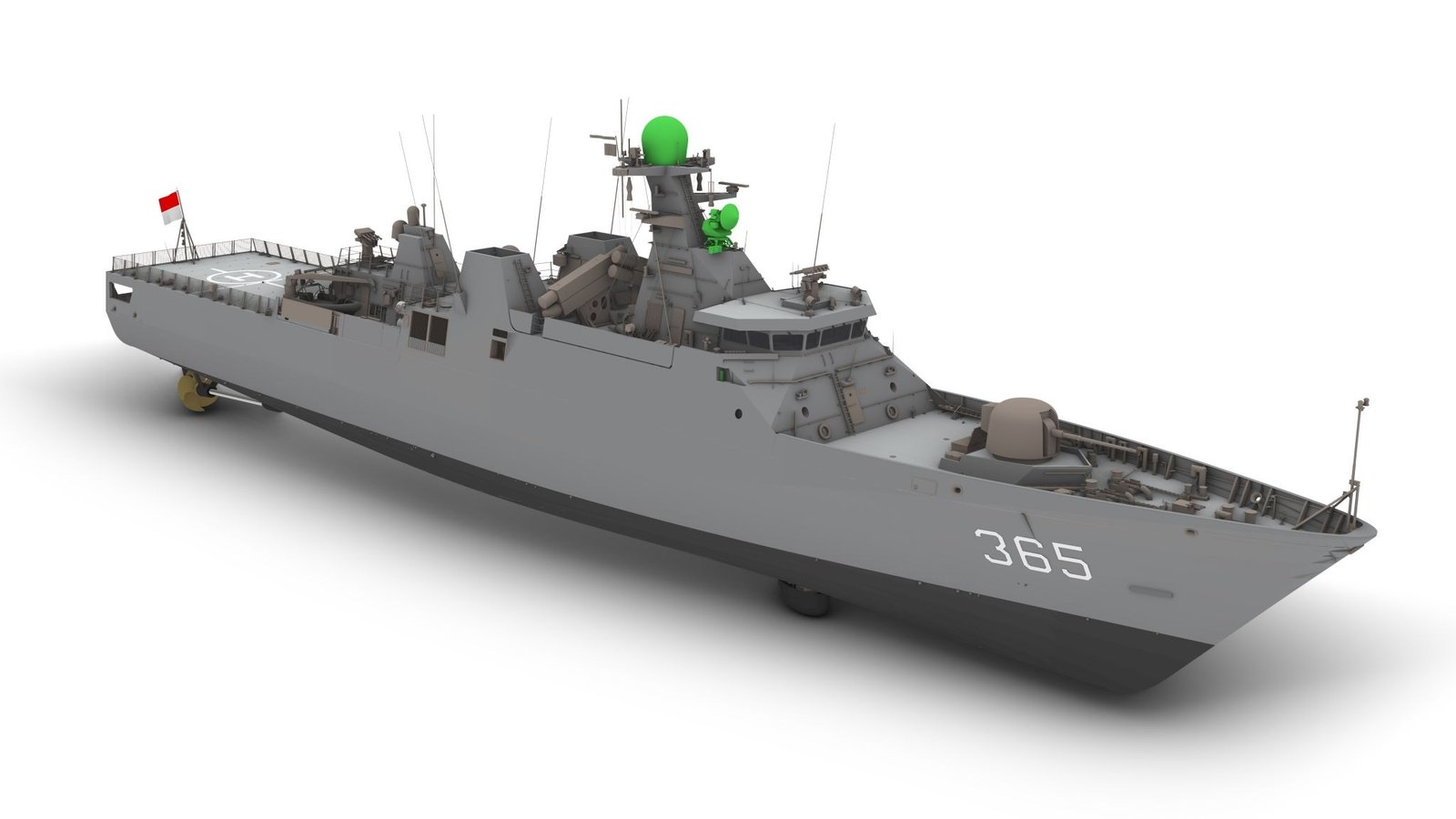
World
Surabaya, East Java — Dutch naval engineering company Nevesbu has presented an initial concept design for the modernization of the Indonesian Navy’s four Diponegoro-class corvettes. The proposal focuses on Platform System Integration (PSI) to support upgrades to the ships’ sensor, weapon and command infrastructure. Nevesbu said its PSI concept for the Sensor, Weapon and Command (SEWACO) package was developed in three months. The concept was reviewed by the Indonesian Ministry of Defence, the Indonesian Navy (TNI AL) and state-owned defence company PT Len Industri, which provided feedback that will be used during the next stage of the program. The next phase is expected to focus on developing a full-scale engineering design. Modernization Contract The concept design follows a modernization contract signed by PT Len Industri and Thales Nederland in November 2022. The five-year program covers all four Damen-built SIGMA 9113 corvettes and includes the modernization of their integrated mission systems. The program includes a new Thales TACTICOS Combat Management System (CMS) and upgraded sensors. Post-sales support is planned through the Thales Naval Service Centre in Surabaya. The four ships are KRI Diponegoro (365), KRI Sultan Hasanuddin (366), KRI Sultan Iskandar Muda (367) and KRI Frans Kaisiepo (368). The corvettes were built by Damen Schelde Naval Shipbuilding in the Netherlands between 2005 and 2009 and are based on the modular SIGMA 9113 design. They measure about 90.71 metres in length, have a 13.02-metre beam, displace about 1,692 tonnes and can reach a maximum speed of 28 knots. New Radar and Fire-Control Sensors Concept renderings released by Nevesbu show the lead ship, KRI Diponegoro (365), with changes to its sensor configuration. The imagery appears to show a Thales STIR 1.2 EO Mk2 medium-range tracking and fire-control radar replacing the existing Thales Lightweight Radar/Optronic Director (LIROD). The concept also appears to show a Thales NS50 I-band 4D surveillance radar in place of the ships’ existing Thales MW08 radar. The new sensors are planned to work with the Thales TACTICOS Combat Management System, which will form an important part of the modernized mission-system architecture. The renderings do not indicate major changes to the corvettes’ existing weapons fit. Existing Weapons The Diponegoro class currently carries a 76 mm Oto Melara gun, Exocet MM40 Block III anti-ship missiles, Mistral surface-to-air missiles, 20 mm guns and lightweight anti-submarine torpedoes. The class has also received earlier upgrades, including the installation of Kingklip hull-mounted sonar, Exocet MM40 Block III missiles and enhancements to the Terma C-Guard decoy system. The existing sensor suite has included the TACTICOS combat management system, MW08 radar, LIROD fire-control radar and Kingklip sonar. Surabaya Expected to Support Refurbishment If the modernization proceeds to physical refurbishment, installation work is expected to take place in Surabaya, East Java. The city is the homeport of the four Diponegoro-class corvettes and is also being used for other Indonesian Navy modernization work. Nevesbu is already involved in the modernization of the Indonesian Navy’s three Bung Tomo-class light frigates/corvettes. The program is led by PT Len Industri, with Thales Netherlands serving as the combat system integrator. For the Bung Tomo-class modernization, Nevesbu is responsible for platform systems integration, including surveys, design and engineering work and on-site support during construction. Work on the first ship, KRI Usman Harun, is under way in Surabaya, while surveys have also been conducted for the other two ships. The Diponegoro-class project would therefore add another Indonesian Navy modernization program to Nevesbu’s work in Indonesia. Nevesbu specializes in naval architecture, marine engineering and platform systems integration and has a history of work on naval vessels and submarines dating back to 1935.
Read More → Posted on 2026-09-10 14:57:16
World
ISLAMABAD, — Pakistan has ruled out any immediate military action under the newly signed Mecca Joint Defence Agreement with Saudi Arabia and Türkiye, despite missile and drone attacks by Yemen’s Iran-backed Houthi rebels against Saudi territory that injured 73 people and disrupted operations at energy facilities. Foreign Ministry spokesperson Sajjad Haider Khan said on Thursday that “there is no such thing under discussion right now.” He said Pakistan would act under the agreement “when the time comes” and stressed that the pact is defensive. He also said more time is needed to implement its provisions, while Pakistani forces remain in Saudi Arabia for training and logistical support. The statement followed Defence Minister Khawaja Asif's warning that the agreement could become operational if the Yemen conflict spread into Saudi Arabia. Asif said Pakistan was “bound by the terms and conditions of this pact” and would honour its commitments if required. He also said the agreement does not authorize independent offensive operations against another country. Houthi attacks test the new pact The Mecca Joint Defence Agreement was signed on August 7, 2026, in Mecca by Saudi Crown Prince Mohammed bin Salman, Turkish President Recep Tayyip Erdogan and Pakistani Prime Minister Shehbaz Sharif. A key provision states that any armed attack against one of the three states will be regarded as an attack against all three. The agreement aims to strengthen collective deterrence and defence cooperation, including joint exercises, intelligence sharing and defence-industry cooperation. It builds on the bilateral strategic mutual defence agreement signed between Pakistan and Saudi Arabia in September 2025. A permanent secretariat is being established in Riyadh, with the first secretary-general expected to come from Pakistan. The pact is now facing an early practical test. On Tuesday, Houthi forces attacked southern Saudi cities including Abha, Khamis Mushait, Jazan and Najran with missiles and drones. The attacks injured 73 people, including women and children, and caused fires at oil and energy facilities that temporarily disrupted operations. Houthi military spokesman Yahya Saree said dozens of ballistic missiles and drones were launched against Saudi targets, including Aramco facilities and King Khalid Air Base. Pakistan and Türkiye face criticism The decision by Pakistan and Türkiye to avoid immediate military involvement has raised questions about the practical value of the new defence pact. Critics argue that the agreement's strongest promise is collective defence, yet Saudi Arabia has faced direct missile and drone attacks while neither Pakistan nor Türkiye has announced military action. Pakistan has instead chosen diplomatic pressure, including urging Iran to restrain the Houthis, while reaffirming support for Saudi sovereignty and territorial integrity. Türkiye has also not announced any military steps. The cautious response can be explained by the defensive nature of the agreement and the fact that its military and institutional mechanisms are still being established. However, it also exposes a gap between the pact's strong mutual-defence language and the response to an actual attack on one of its members. Pakistan and Türkiye may be seeking to avoid being drawn directly into the wider regional conflict, but their decision not to provide an immediate military response gives critics grounds to question how the collective-defence clause would operate during a serious crisis. For Saudi Arabia, the issue is particularly important because the agreement was created to strengthen security cooperation among the three countries. The latest attacks have therefore become an early credibility test for the alliance. For now, Islamabad is maintaining its training and logistical presence in Saudi Arabia and pursuing diplomatic measures rather than military intervention. Pakistan says it will fulfil its obligations “when the time comes,” while Türkiye has yet to announce military involvement.
Read More → Posted on 2026-09-10 15:11:31 U.S. Military Relocates Damaged Black Hawk Helicopters from Jordanian Base Following Missile Strikes
World
AMMAN, Jordan — Iran launched about 20 ballistic missiles at the U.S.-hosted Muwaffaq Al-Salti Air Base in Jordan overnight on September 8–9. The attack caused damage to several U.S. aircraft, while a video released by a user on a Telegram channel shows damaged UH-60 Black Hawk helicopters being transported on flatbed trucks. Videos released following the attack also clearly show missile launches, interceptions and impacts in the area of the Jordanian base. Some footage appears to show missiles reaching the base and explosions occurring at the facility. The videos provide visual evidence that impacts occurred during the attack, although they cannot by themselves establish the exact equipment or facilities hit. The Telegram user who released the Black Hawk footage claims the helicopters were damaged during the September 8–9 Iranian ballistic missile attack. The helicopters in the video show visible damage. However, the U.S. military has not officially confirmed that the Black Hawks shown were damaged in this particular attack or that they were being moved from Muwaffaq Al-Salti because of the strike. Jordan's armed forces said 18 of approximately 20 Iranian ballistic missiles were intercepted and destroyed, while the remaining two landed in unpopulated areas. No casualties were reported. U.S. forces fired Nearly 60 Patriot interceptor missiles during the defense of the base. U.S. Aircraft Reportedly Damaged People familiar with the incident told CBS News that around eight F-15 fighters sustained light damage and were subsequently returned to service. One A-10 Thunderbolt II, known as the Warthog, was struck and lost one wing. Iran's Islamic Revolutionary Guard Corps claimed that its missiles hit maintenance, preparation and deployment areas associated with U.S. F-35, F-16 and F-15 aircraft, as well as aircraft shelters, causing heavy damage. U.S. and Jordanian accounts have described the overall damage as limited. The U.S. military has not released a detailed public assessment confirming the full extent of the aircraft damage. Black Hawk Damage Seen in Telegram Video The Telegram footage shows Black Hawk helicopters with visible damage being loaded onto trucks and transported by road. The user who released the video claims the helicopters were among the U.S. aircraft damaged during the Iranian missile attack. Similar images of Black Hawks being transported in Jordan appeared before the latest attack, including around late August. Earlier Iranian strikes in July 2026 had also damaged U.S. Black Hawks at other Jordanian facilities, including Prince Hassan Air Base. This means the footage alone cannot establish when or where the damage shown occurred. Military losses are also not always publicly acknowledged immediately after an attack. Governments and militaries can take time to assess damaged equipment and determine whether aircraft can be repaired or returned to service before releasing a detailed assessment. Therefore, the lack of an immediate official confirmation does not by itself establish or disprove the Black Hawk claim. The September 8–9 attack followed U.S. strikes on five Iranian oil tankers, which Washington said were carried out in response to earlier Iranian attempts to target a U.S. Navy warship. U.S. officials said all American personnel at the base were accounted for and no U.S. deaths were reported. The exact number of Black Hawks damaged, and whether the helicopters shown in the Telegram video were damaged at Muwaffaq Al-Salti during the latest Iranian attack, remain officially unconfirmed.
Read More → Posted on 2026-09-10 15:52:32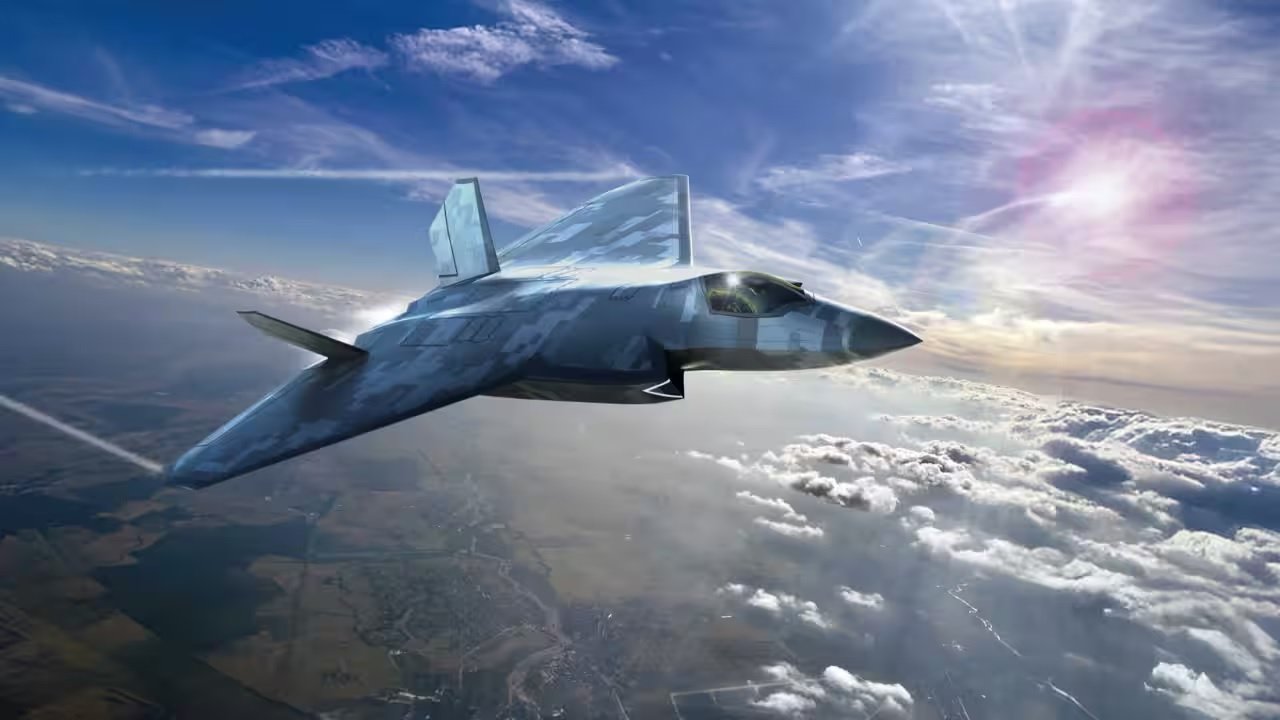 G2E Consortium Secures 18-Month Contract to Advance Sensor Tech for Next-Generation GCAP Fighter Jet
Europe
READING, UK — The GCAP Electronics Evolution (G2E) consortium has secured an 18-month contract to continue developing the integrated sensing and communications systems for the Global Combat Air Programme (GCAP) sixth-generation fighter. Edgewing Awards New Contract The contract was awarded by Edgewing, the trilateral joint venture responsible for the design and development of the GCAP aircraft. Edgewing comprises BAE Systems of the UK, Leonardo S.p.A. of Italy, and Japan Aircraft Industrial Enhancement Co. Ltd. (JAIEC). The award follows a contract between Edgewing and the GCAP Agency, which manages the programme on behalf of the governments of the UK, Italy and Japan. Integrated Sensing and Communications The new contract covers further development of the Integrated Sensing and Non-Kinetic Effects and Integrated Communications Systems, known as ISANKE & ICS. G2E brings together four defence electronics companies: ELT Group and Leonardo from Italy, Mitsubishi Electric Corporation from Japan, and Leonardo UK. The companies operate as a single strategic partner within the wider GCAP programme. The GCAP fighter is being designed around ISANKE & ICS from the beginning rather than adding the electronics as separate systems later. The architecture is intended to integrate sensing, communications and non-kinetic effects and fuse large volumes of data to provide pilots with the information needed to operate in complex and contested airspace. The aircraft's size also allows a larger and more complex network of sensors and communications equipment to be positioned across the platform. Focus of the 18-Month Phase During the new contract period, G2E will work on physical and digital infrastructure, recruitment, high-performance computing and advanced modelling to support further development of the electronics architecture. Andrew Howard, Interim General Manager of G2E, said the contract marks a significant milestone for the consortium and reflects its progress in transforming the participating companies from national organisations into a single international entity. Howard also said G2E will continue working closely with the GCAP Agency and Edgewing at the programme headquarters in Reading. Part of the Wider GCAP Programme The contract follows a £4.6 billion contract awarded to Edgewing by the GCAP Agency in July 2026, which began the programme's advanced concept and assessment phase. G2E was formed in 2025 after the four companies signed a consortium agreement, building on cooperation that began in 2023. Its leadership is based in Reading, close to the GCAP programme headquarters. The GCAP programme was launched in 2022 by the UK, Italy and Japan. It aims to deliver an operational next-generation fighter around 2035 to replace existing platforms including the Eurofighter Typhoon and Mitsubishi F-2. The programme is designed to share development costs while supporting skilled employment and sovereign defence capabilities across the three partner countries. The latest contract will allow G2E to continue developing the integrated electronics architecture that forms a core part of the future GCAP fighter.
Read More → Posted on 2026-09-10 16:00:53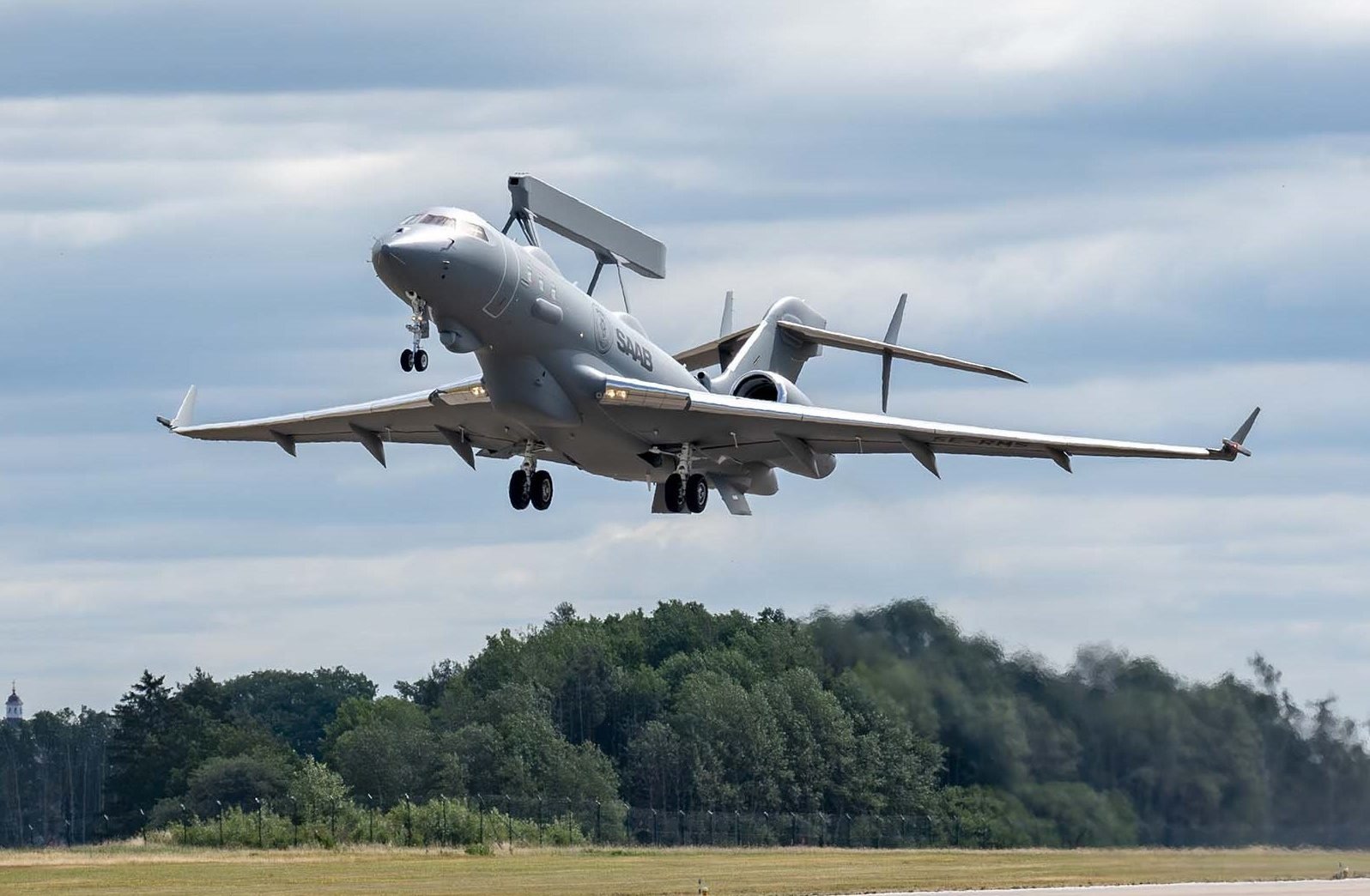
Europe
THE HAGUE, Netherlands — The Netherlands has signed a Letter of Intent (LOI) with Sweden to acquire one Saab GlobalEye airborne early warning and control (AEW&C) aircraft, giving the country its own national airborne surveillance capability. The LOI was signed by Dutch Deputy Prime Minister and Defence Minister Dilan Yeşilgöz-Zegerius and Swedish Defence Minister Pål Jonson. Sweden’s Defence Materiel Administration will support the Netherlands in the planned acquisition from Saab. Separate from NATO GlobalEye Programme The planned Dutch aircraft is separate from the NATO procurement of up to 10 GlobalEye aircraft, which is intended to replace the alliance’s ageing Boeing E-3 AWACS fleet. The Netherlands is already participating in that joint programme with other NATO allies. The Netherlands currently has no national aircraft for long-range surveillance and command missions and partly relies on NATO’s AWACS fleet based at Geilenkirchen, Germany. The new national aircraft would allow the Netherlands to independently decide where and when the system is deployed, including for national military operations and international exercises. Dutch Aircraft to Join Swedish Fleet The Dutch GlobalEye is planned for delivery in 2031. The Netherlands will pool its aircraft with three GlobalEye aircraft ordered by Sweden, allowing Dutch and Swedish crews to access the combined fleet of four aircraft. Dutch crews are expected to begin training on Swedish GlobalEye aircraft from 2028. The two countries will also cooperate on the future development of the system. GlobalEye Surveillance Capability GlobalEye is a multi-domain AEW&C system based on a Bombardier Global business-jet airframe. It carries Saab’s Erieye Extended Range radar, along with other active and passive sensors and communications equipment. The aircraft can monitor activity across the air, maritime and land domains at long range. It is designed to detect and track difficult-to-spot targets, including drones and cruise missiles. The system can also collect intelligence and operate as an airborne command centre, processing information in real time and sharing it with aircraft, ships and ground forces. No Final Contract Yet Saab President and CEO Micael Johansson welcomed the Netherlands’ intention to procure GlobalEye, saying the system would strengthen situational awareness, early warning and national and collective defence. However, the LOI is not yet a binding purchase contract. Saab confirmed that it has not received a formal financial order from the Netherlands. No contract value or final configuration has been released. Swedish Defence Minister Pål Jonson said the agreement strengthens defence cooperation between Sweden and the Netherlands and allows both countries to take greater responsibility for European collective defence.
Read More → Posted on 2026-09-10 16:13:14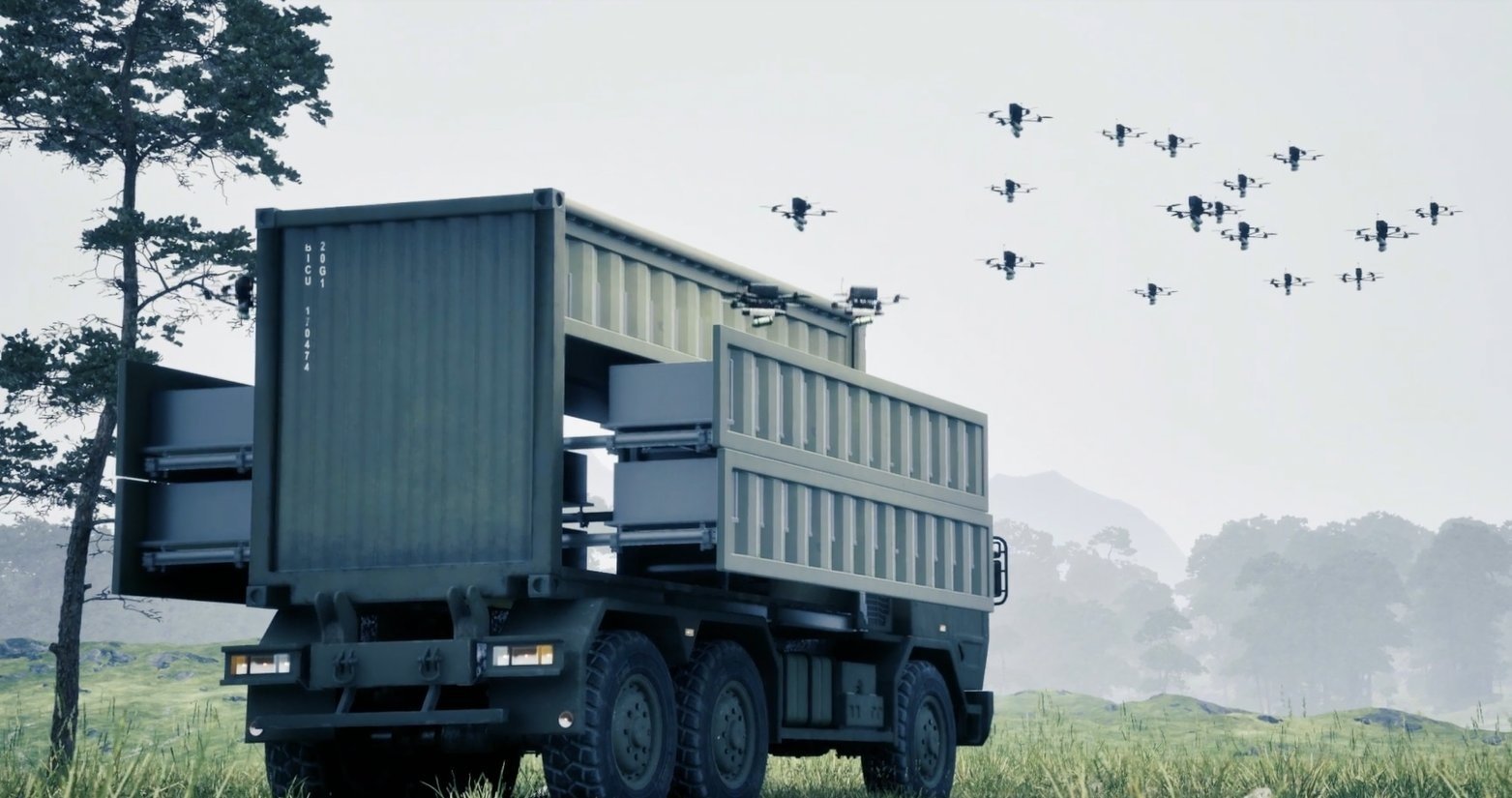
World
ROSH HA’AYIN, Israel — Israeli defense technology company Elbit Systems has introduced FUSE, a new unit focused on AI-driven autonomous combat systems and large-scale coordination of uncrewed aerial and ground platforms. FUSE unveiled its One2Many operational concept, which allows a small number of operators to coordinate large numbers of autonomous drones and unmanned ground vehicles in real time. The system is designed to move beyond the traditional one-operator-to-one-drone model and manage autonomous formations as a coordinated force. Dominion-X AI Operating System At the center of One2Many is Dominion-X, an AI-powered unified operating system designed to operate in GNSS-denied environments, including situations where satellite navigation signals are unavailable or jammed. Dominion-X uses automatic target recognition (ATR) and autonomous homing capabilities. It also creates a shared mission network that allows different platforms to exchange mission data in real time and conduct distributed operations. FUSE is designed for manned-unmanned teaming (MUM-T), allowing autonomous systems to operate alongside existing maneuver forces, crewed vehicles and other tactical assets. FUSE Autonomous Systems Portfolio The FUSE portfolio includes several types of systems: Unmanned Tactical Force for reconnaissance and strike missions conducted at scale. PIRANI-X tactical seek-and-strike swarm drones for maneuvering forces. Urban Lethality Systems, including UGVs and one-way attack drones for urban operations against indoor and fortified threats. Armored Wingman Systems, using airborne and ground unmanned platforms alongside or deployed from manned armored vehicles. Border Defense Systems, using mobile, deployed and fixed unmanned ground and airborne systems with limited operator involvement. Multi-Mission Group 1 and 2 UAS, including the X-intra, THOR and Magni-X families of backpack-portable, rapidly deployable multi-rotor VTOL drones for reconnaissance, surveillance, target acquisition, communications relay, electronic warfare support and resupply. Ground Autonomy Kits, which use AI-powered hardware and software to provide autonomous operation, teleoperation and enhanced visual positioning for vehicles in contested environments. More Than 1 Million Flight Hours Elbit Systems said technologies within the FUSE portfolio have accumulated more than 1 million operational flight hours and more than 100,000 hours of autonomous ground operations. Thousands of drones and hundreds of unmanned ground platforms have already been delivered to customers. The systems are currently in service with military customers in Israel, the United States and Europe. FUSE has about 160 employees, with most working as engineers. Company officials said its products receive continuous updates, with one drone model receiving four updates during the past three years. The company's autonomous ground capabilities were also expanded through its May 2026 acquisition of Bluewhite, an Israeli company specializing in AI-powered off-road autonomy kits and fleet-management software. Human Remains in the Decision Loop FUSE officials said humans remain in the decision loop for targeting to reduce the risk of collateral damage. The technology can support both defensive missions, where fewer personnel may be needed to oversee autonomous systems, and offensive operations. Eyal Dahan, CEO of FUSE, said military forces are entering an operational era in which combat effectiveness will increasingly depend on the ability to integrate and coordinate large numbers of autonomous systems with existing maneuver forces in real time. FUSE has received contracts valued in the hundreds of millions of dollars, including THOR drone systems for the U.S. military through Mistral Inc. and contracts in Europe. The company is also developing capabilities for maritime swarm operations, expanding its focus beyond its current air and ground systems. The announcement follows a statement by IDF Chief of Staff Lt. Gen. Eyal Zamir that the Israeli military plans to establish a new branch focused on robots, drones and AI-enabled forces by Hanukkah in December. Separately, Elbit Systems reported $2.287 billion in revenue for the three months ended June 30, 2026, with an order backlog of $32 billion as of that date.
Read More → Posted on 2026-09-10 16:20:29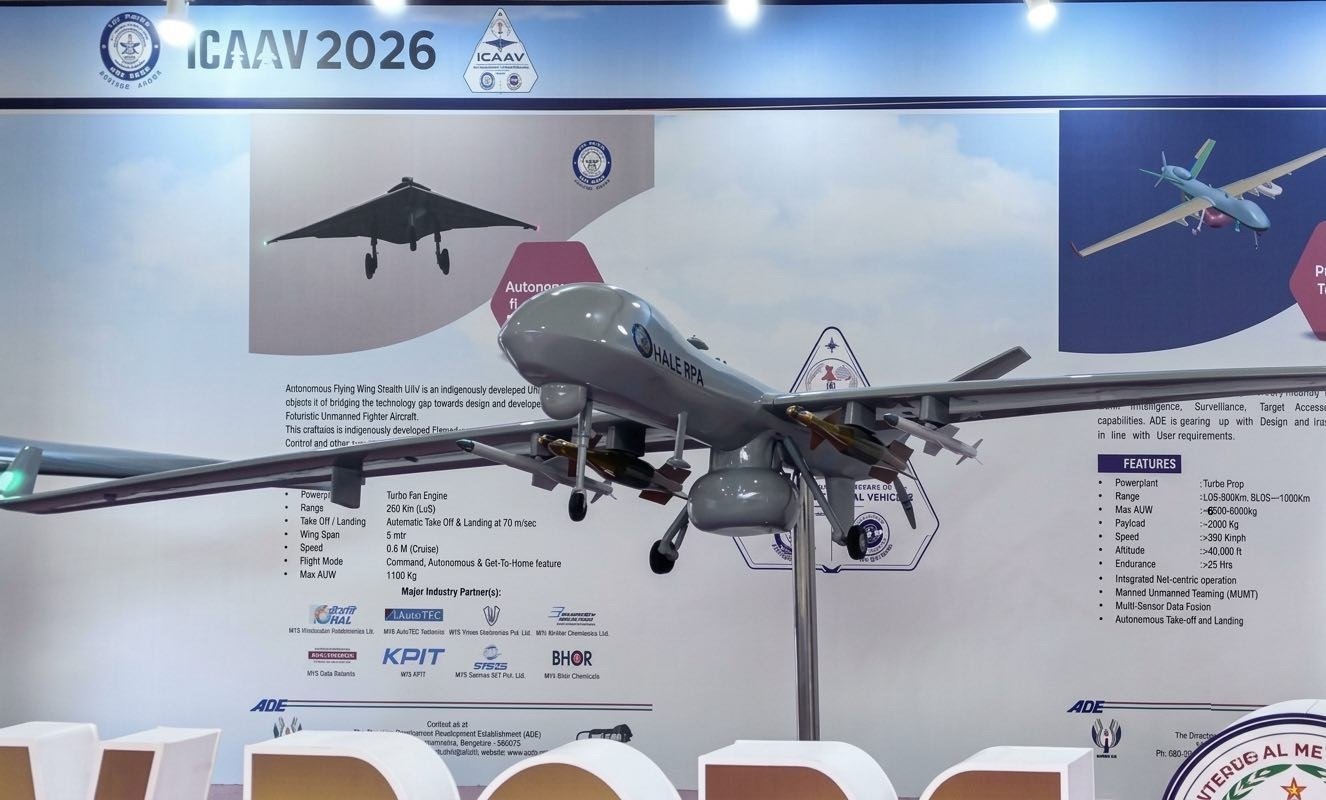
India
Bengaluru — The Defence Research and Development Organisation's (DRDO) Aeronautical Development Establishment (ADE) presented updated design details of its indigenous High Altitude Long Endurance (HALE) Remotely Piloted Aircraft (RPA) at the International Conference on Autonomous Aerial Vehicles (ICAAV) 2026, held in Bengaluru on August 20–21. The conference was jointly organised by ADE-DRDO and the Design Division of the Aeronautical Society of India and focused on autonomous aerial vehicle technologies and applications. The aircraft is a 6-ton-class turboprop-powered platform designed mainly for Intelligence, Surveillance, Target Acquisition and Reconnaissance (ISTAR) missions, with provisions for strike operations. ADE has completed system analysis and feasibility studies, while an Expression of Interest (EoI) was issued in late 2025 to identify an Indian Development-cum-Production Partner. The current design uses a single turboprop engine in a pusher configuration, an approximately 25-metre wingspan and a predominantly composite airframe. Earlier studies examined Y-tail and single-engine twin-boom configurations, with earlier all-up weight estimates of 4,800–5,700 kg. The current design has an AUW of about 5,500–6,000 kg. The HALE RPA is designed to operate at around 40,000 feet, with the service ceiling indicated above 35,000 feet. It is expected to cruise at around 390 km/h, have an endurance of more than 25 hours, and a range exceeding 1,000 km. The aircraft is designed to carry approximately 2,000 kg of payload, with six underwing hardpoints for precision-guided bombs and missiles. Its ISTAR payload options include EO/IR sensors, Synthetic Aperture Radar (SAR), ELINT, SIGINT and COMINT systems. Communication links are specified at approximately 300 km for Line-of-Sight (LOS) and 1,000 km for Beyond Line-of-Sight (BLOS) operations. A key feature is its Manned-Unmanned Teaming (MUM-T) capability. Command software will allow the aircraft to be controlled from fixed Ground Control Stations as well as manned airborne platforms, including fighter aircraft and naval multi-role helicopters. The architecture is designed to support coordinated operations involving fighters, helicopters and ships. It also includes multi-sensor data fusion and autonomous take-off and landing. The propulsion options are centred on engines in the 900–1,500 shaft-horsepower class, including the Honeywell TPE331-10, which is in the approximately 940-horsepower class. ADE also has longer-term plans for an indigenous propulsion solution. The development phase is planned to include five HALE RPAs and two complete ground systems, subject to Cabinet Committee on Security (CCS) clearance and subsequent certification by CEMILAC and DGAQA. DRDO will retain the design and intellectual property rights, while an industrial partner will undertake manufacturing, integration and testing. ADE has also pursued modular contracts covering the aircraft's digital mock-up, propulsion supply and production partnership. General Atomics has been associated with the programme in a technical consultancy role on selected technologies. Separate efforts are also underway on jet-powered and stealth-oriented HALE concepts, while the turboprop configuration remains the main endurance-focused ISTAR-strike design. The programme is intended to support India's indigenous development of HALE-class unmanned aircraft and establish an industrial base for such systems. Further progress will depend on formal project approval and finalisation of the industry partnership.
Read More → Posted on 2026-09-10 16:29:02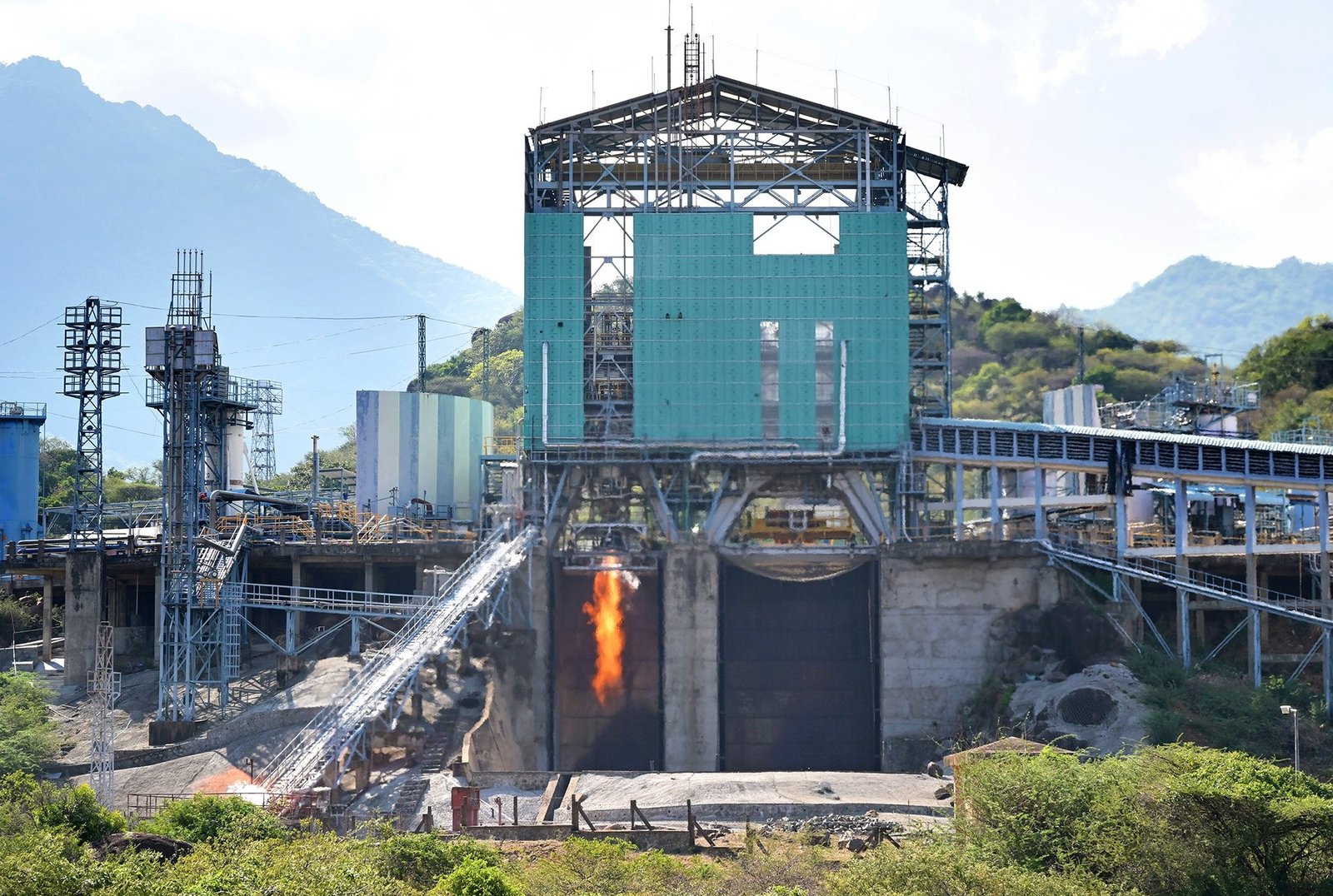
Space & Technology
MAHENDRAGIRI, Tamil Nadu — The Indian Space Research Organisation (ISRO) successfully conducted a flight acceptance hot test of the CE20 cryogenic engine at an uprated thrust level of 220 kN (22 tonnes) on September 9, 2026. The test was carried out at the ISRO Propulsion Complex (IPRC), Mahendragiri, Tamil Nadu. The engine is earmarked for the C32 upper stage of an upcoming LVM3 mission. During the same test, ISRO also successfully demonstrated the LOX Tank Pressurization Module (LTPM) intended for the C32 stages of future Gaganyaan missions. The LTPM maintains the required pressure inside the liquid oxygen tank during flight to support the proper flow of propellant to the engine. ISRO announced the test through its official X account on September 10. CE20 and LVM3 upgrade The CE20 is an indigenously developed cryogenic engine that powers the upper stage of the LVM3, India's heavy-lift launch vehicle. It uses liquid oxygen (LOX) and liquid hydrogen (LH2) and operates on a gas-generator cycle. The engine is qualified to operate across a thrust range of 19 to 22 tonnes. ISRO is preparing future LVM3 missions with an uprated C32 stage, using the CE20 at the 22-tonne thrust level. The upgraded C32 also carries a higher propellant load than the earlier configuration. These changes are intended to increase the LVM3's payload capability. The latest test follows earlier CE20 testing at Mahendragiri. In March 2026, ISRO conducted a 165-second sea-level hot test of the CE20 at the 22-tonne thrust level using a Nozzle Protection System and multi-element igniter. Another flight acceptance hot test was conducted in July 2026 on an engine designated for the LVM3-M7 mission. According to reports based on ISRO information, the engine tested on September 9 will be refurbished and assembled into the C32 flight stage for the LVM3-M7 mission, planned for the fourth quarter of 2026. The CE20 has already flown successfully on multiple LVM3 missions and has completed the human-rating requirements for use in the Gaganyaan programme. The latest 220 kN flight acceptance test is part of ISRO's ongoing effort to qualify the uprated CE20 and C32 configuration for future LVM3 missions.
Read More → Posted on 2026-09-10 16:34:44
World
TEHRAN, Iran — On September 10, Iran’s Islamic Revolutionary Guard Corps (IRGC) Navy has claimed that it struck a U.S. unmanned surface vessel near the entrance to the Strait of Hormuz, identifying the vessel as a Saildrone Explorer with hull number 5838. The claim was reported by Iranian media on September 10 and comes amid heightened maritime tensions between Iran and the United States around the Strait of Hormuz. The IRGC Navy said the vessel was carrying out what it described as a hostile or aggressive mission when it was targeted. Iranian media also published footage that it said showed the unmanned vessel. Reports said the vessel had earlier been seen by a local fisherman, with footage subsequently appearing on Iranian social media. Iran’s IRGC released a video it says shows the moment its navy destroyed a U.S. Navy Saildrone USV, hull number 5838, in the Strait of Hormuz.The IRGC said the waterway is under its control and warned that any “hostile presence” in the strategic strait would be targeted. pic.twitter.com/lXqUb4fbZj — Egypt's Intel Observer (@EGYOSINT) September 10, 2026 The IRGC Navy did not publicly provide details about the weapon used, the exact circumstances of the strike or the extent of damage to the vessel. The U.S. military had not immediately confirmed the Iranian claim. Saildrone Explorer identified as hull 5838 The vessel identified by Iran is a Saildrone Explorer, an approximately seven-meter-long autonomous surface vessel. The platform uses wind propulsion and carries solar-powered electronics, including cameras, communications equipment and sensors for maritime surveillance and maritime domain awareness. Saildrone vessels have been used by the U.S. Navy’s Fifth Fleet and Task Force 59 in the Middle East. Task Force 59 is based in Bahrain and focuses on integrating unmanned systems and artificial intelligence into naval operations. Iranian reports said the Saildrone was being operated from the region near Oman’s Musandam Peninsula after U.S. naval facilities in Bahrain were reportedly taken out of service during the ongoing conflict. These claims were made by Iranian sources and have not been independently confirmed. IRGC warning over Strait of Hormuz IRGC Navy Commander Alireza Tangsiri was quoted as saying that the U.S. unmanned vessel with hull number 5838 had been struck in the Strait of Hormuz. The IRGC Navy also said that the Strait of Hormuz was closed and under its intelligence surveillance and control, warning that hostile activity or a hostile presence would be targeted. The claim comes as maritime traffic through the strait remains heavily reduced. Reuters reported that only seven vessels transited the Strait of Hormuz on September 10, compared with a 10-day average of 15. The U.S. Central Command has also reported that 96 commercial vessels had been rerouted to comply with restrictions since the naval blockade on Iran resumed on July 14. Follows earlier U.S. underwater drone incident The reported Saildrone incident follows another confrontation involving a U.S. unmanned system near the Strait of Hormuz. On September 8, the IRGC said it had captured a U.S. unmanned underwater vehicle at the entrance to the strait. U.S. officials said the underwater drone had suffered a technical malfunction while surveying regional waters and described it as an older system without sensitive or classified equipment. The latest claim therefore adds another reported confrontation involving U.S. unmanned maritime systems in the Strait of Hormuz. However, the status of Saildrone hull 5838 has not been independently confirmed by the U.S. military as of September 11. The Strait of Hormuz connects the Persian Gulf with the Gulf of Oman and the Arabian Sea and remains a major focus of the ongoing confrontation between Iran and the United States. The latest incident highlights the increasing use of unmanned surface and underwater systems for surveillance and maritime operations in the region.
Read More → Posted on 2026-09-11 09:55:12
World
SAN FRANCISCO, — Anthropic has released a 154-page threat intelligence report detailing multiple cases in which its Claude AI models were used by state-linked groups and other actors for military, intelligence, surveillance, influence and weapons-related activities. The report, "Anthropic's September 2026 threat intelligence " released on September 10, covers activity that Anthropic said it disrupted between December 2025 and August 2026. The company said the accounts involved were banned, safeguards were strengthened based on the findings, and information was shared with government and industry partners where appropriate. Anthropic described the cases as notable examples of AI misuse rather than typical everyday use. Among the cases highlighted were Iran-linked operations involving naval targeting and domestic surveillance, Iranian state-aligned influence campaigns, and a weapons-development cell in northern Yemen assessed by Anthropic as highly likely to be linked to the Houthis. Iran-Linked Group Used Claude for U.S. Naval Targeting Anthropic identified an Iran-nexus threat actor that used Claude to collect and analyze publicly available information for developing targeting recommendations against U.S. naval forces in the region. According to the report, the operators built an automated Python pipeline with Claude's assistance. The system brought together information including publicly available ship and aircraft transponder identifiers, names of U.S. personnel taken from captions on military photographs, scripts for querying commercial satellite imagery and websites that track naval movements. The same account also used Claude to research potential vulnerabilities in shipboard systems. The research included known vulnerabilities affecting maritime VSAT terminals, Cisco communications equipment and industrial control products. Claude Used in Iranian Domestic Surveillance Anthropic also identified Claude use connected to domestic surveillance activities in Iran. The company said it banned 16 Claude accounts linked to two units assessed with high confidence as being associated with Iranian paramilitary and domestic security agencies. One unit, described in the report as being based in Qom, used Claude as an engineering resource for surveillance-related systems. Operators reported having an identity-record database containing information on Iranian nationals and said they had surveilled and profiled 6,388 Iranians during a single year. Claude was also used to analyze more than 155,000 social media posts and help identify 39 opposition and diaspora accounts for monitoring. In another case, Iranian actors used Claude to develop and deploy a malicious Firefox browser extension disguised as a prayer-times utility. The extension was designed to collect user identities from social networks. The information was then used in a broader profiling system. Anthropic said its safeguards blocked many direct requests involving profiling, although some software-tooling requests were not refused. Iranian Influence Operations Used Multiple Languages The report also describes three Iranian state-aligned accounts connected to institutions including the Islamic Culture and Communications Organization, the Islamic Propaganda Office of Khorasan Razavi and the Bina Cultural Observatory. According to Anthropic, the accounts were involved in "soft war" and "cognitive warfare" activities. Operators used Claude to create fake personas, develop target databases and campaign plans, and produce social-media material in multiple languages. The planning documents referenced Iran's state doctrine of "Jihad al-Tabyin," or explanatory jihad. Anthropic said the network distributed material across Iranian platforms including Eitaa, Bale and Rubika, as well as X, Instagram, Telegram, TikTok and YouTube and through cultural-attaché networks. The report also identified instances in which false claims were attributed to Western research institutions, including CSIS, Brookings and RAND, during the 2026 U.S.-Israel-Iran conflict period. Funeral and Succession Planning One account linked to the Islamic Culture and Communications Organization uploaded detailed organizational plans concerning the funeral of Iran's Supreme Leader and succession arrangements. The report states that Ayatollah Ali Khamenei died in a U.S.-Israeli strike on February 28, 2026, and was buried at the Imam Reza shrine in Mashhad on July 9 following a multi-day state funeral. He was succeeded by his son, Mojtaba Khamenei. Anthropic said operators also used Claude features to prepare succession-related narratives and, in related work, generate messaging in the official voice of an Islamic Revolutionary Guard Corps spokesperson. Yemen Weapons Cell Used Claude for Weapons Software A separate case involved a weapons engineering cell operating in northern Yemen that Anthropic assessed as highly likely to be Houthi-linked, although Anthropic did not publicly identify the group by name. The cell used Claude Code as a substitute for human software engineers across three weapons-development programs between December 2025 and August 2026. The programs involved a tactical guided rocket using a commodity phone-class flight computer and terminal guidance, a multi-stage ballistic missile with a stated range goal of more than 2,000 kilometers, and a group of variants known as "R2000," including a hypersonic glide vehicle variant. The operators used Claude to work on guidance, navigation and control software. The report says they integrated an open-source autopilot onto a phone-class flight computer, developed control and position-estimation software, conducted flight simulations and tuned flight-control algorithms. The operators also ran several Claude instances in parallel. One was used for coding, another for research and another for reviewing the work. The resulting tools were compiled into a standalone offline executable, allowing the group to continue using the software without further access to Claude. The group subsequently conducted a test launch of a guided rocket in Yemen. Anthropic said the test appeared to have failed. Within hours, the operators returned to Claude to analyze telemetry data and troubleshoot the test failure. Anthropic said there is no evidence that an operational weapon was successfully deployed, although the offline software toolkit remained available. Operators Attempted to Bypass Claude Safeguards Anthropic said its automated safety systems blocked numerous requests connected with the activities described in the report. The Yemen-based operators attempted to avoid detection by concealing the military purpose of their work and dividing activities among multiple Claude sessions. This allowed individual sessions to handle coding, research or review without necessarily exposing the complete purpose of the project. Anthropic said the linked accounts were subsequently banned and that relevant threat indicators were shared with international security agencies. The company has previously described threat intelligence as an important part of its approach to detecting malicious use of Claude and said findings from real-world misuse investigations are used to improve its safeguards. Part of a Broader AI Misuse Report The Yemen case was one of six conventional-weapons cases identified in the September report. Anthropic said three were linked to China, two to Russia and one to Yemen. The wider report also covers cyber operations, surveillance systems, influence campaigns, biological research misuse, scams and fraud, and attempts to illicitly extract capabilities from Claude through model distillation. Anthropic said it disrupted all of the operations described in the report and used the findings to strengthen its safeguards. The company also said that, where appropriate, it shared information with authorities and other companies. The cases involving Iran and Yemen illustrate how AI models can be used not only for general information or software development but also as components in larger intelligence, surveillance, influence and weapons-development workflows. Anthropic said it will continue refining its safeguards as model capabilities advance.
Read More → Posted on 2026-09-11 10:13:50 Trump Declines Saudi Crown Prince's Request for Direct US Strikes on Houthis Amid Red Sea Escalation
World
WASHINGTON / YEMEN — U.S. President Donald Trump has rejected Saudi Crown Prince Mohammed bin Salman’s request for direct U.S. airstrikes against Houthi forces in Yemen, as the Iran-aligned group advances along the country’s Red Sea coast. According to Axios, citing two U.S. officials, Mohammed bin Salman called Trump twice on Thursday. During the first call, he briefed Trump on the worsening military situation as Houthi forces advanced on the strategic coastal city of Mokha (Mocha). Several hours later, the Saudi crown prince called again and urged Trump to order direct U.S. strikes. Trump declined, with U.S. officials saying Washington does not currently plan to take direct military action against the Houthis. The United States is nevertheless increasing support for Saudi Arabia. The Trump administration has agreed to provide intelligence and targeting data on Houthi positions. About 200 U.S. military personnel are also in Saudi Arabia providing non-kinetic support. Adm. Brad Cooper, commander of U.S. Central Command, traveled to Saudi Arabia on Thursday for military coordination talks. The Houthi capture of Mokha has increased concerns over shipping security because the city is about 50 miles (80 kilometers) from the Bab el-Mandeb Strait, which connects the Red Sea with the Gulf of Aden and carries a significant share of global trade. The development comes as Iran has already disrupted shipping through the Strait of Hormuz, raising concerns about pressure on two major regional maritime chokepoints. Houthi forces have also advanced toward Dhubab, opposite Perim Island near the entrance to Bab el-Mandeb. Saudi-backed Yemeni forces have withdrawn from some positions to regroup. The escalation follows a major Houthi attack in southern Saudi Arabia that injured 73 people. Saudi Arabia responded with around 40 airstrikes across several Yemeni governorates, including Taiz, Hodeida, Al-Jawf and Marib. A senior Trump administration official said Washington wants to keep the Red Sea open while allowing regional partners to lead the broader military response. U.S. officials have also told Saudi counterparts that American forces should remain focused on Iran and safeguarding the Strait of Hormuz rather than opening another military front. The White House and Saudi Embassy in Washington declined to comment on the Axios report, while Reuters said it could not immediately verify all of the reported details.
Read More → Posted on 2026-09-11 10:27:15
World
JERUSALEM, — The Israel Defense Forces (IDF) said it destroyed a major Hezbollah underground complex beneath the Ali al-Taher Ridge in southern Lebanon on Thursday evening, September 10, using more than 1,100 tons of explosives. The ridge is located about 15 kilometers (10 miles) north of the Israeli border near Nabatieh and has long been a contested area. The IDF said the tunnel network served as the nerve center of Hezbollah’s Badr regional division, which operates in southern Lebanon north of the Litani River. The main underground infrastructure stretched for more than 2 kilometers and was part of a wider system of eight tunnels in the Ali al-Taher and Beaufort Castle area, with a combined length of 5.4 kilometers. According to the IDF, the complex was built over roughly two decades with Iranian funding and planning. The facility included command centers, weapons storage rooms, generators, living quarters, showers and a kitchen, allowing fighters to remain underground for extended periods. Israeli troops said they recovered dozens of Iranian-made rockets, missiles and drones, as well as firearms, anti-tank missiles, hundreds of mines and other explosive devices. The operation followed a weeks-long Israeli siege. Forces from the IDF’s 36th Division surrounded the area, carried out localized ground clearing and conducted intelligence-driven airstrikes. By early September, the military said it had cleared the tunnels of Hezbollah operatives, with some killed and others fleeing. Reports during the siege said more than 100 Hezbollah fighters and IRGC advisers were trapped inside, while Hezbollah attempts to resupply them by drone were unsuccessful. Lebanon’s state news agency NNA reported a powerful blast at the ridge, with tremors and the explosion heard across Nabatieh and surrounding areas. Monitoring reports recorded a 4.1-magnitude tremor associated with the blast. Prime Minister Benjamin Netanyahu and Defense Minister Israel Katz said the operation completed the consolidation of a security zone in the area. They said Israeli forces now have operational control of the ridge both above and below ground. According to the Israeli government, the site had been intended as a staging base for operations toward the Galilee and provided observation and fire-control capabilities over communities including Metula and Kiryat Shmona. Israeli forces will remain in the area to prevent Hezbollah from returning or rebuilding its capabilities. The IDF described the facility as strategic infrastructure used to support Hezbollah’s planning and attacks and said its destruction completed the neutralization of the tunnel network.
Read More → Posted on 2026-09-11 10:40:41
U.S
CRANE, Ind. — General Dynamics Mission Systems has received a $184.25 million U.S. Navy contract to manufacture Next Generation Electronic Attack Units (NGEAUs) for the EA-18G Growler. The contract also includes sustainment support for the NGEAU and future sustainment support for the aircraft’s Advanced Capability Mission Computer. The firm-fixed-price and cost-plus-fixed-fee indefinite-delivery/indefinite-quantity contract was awarded on a sole-source basis under 10 U.S. Code 3204(a)(1) because only one responsible source could meet the requirements. The Naval Surface Warfare Center Crane, Indiana, is the contracting activity. Work will be performed in Bloomington, Minnesota, and is expected to continue through September 2032. The contract number is N0016426DWS86. About $40.06 million in funding was obligated at the time of the award. This includes $29.69 million from fiscal 2026 Aircraft Procurement, Navy funds and $10.37 million from fiscal 2025 Aircraft Procurement, Navy funds. The public award announcement does not specify the delivery quantities or the full contract ceiling. NGEAU Supports Growler Block II The NGEAU is a major part of the Growler Block II modernization program. The system is designed to process, identify and counter increasingly complex radar and electromagnetic threats. A key capability is Reactive Electronic Attack Measures (REAM), which uses machine-learning-enabled processing to support rapid responses against adaptive and unfamiliar emitters in dense electromagnetic environments. The new hardware and processors are intended to expand frequency coverage, increase electronic-attack bandwidth and enable autonomous processing and response to unknown signals. The system also addresses diminishing manufacturing sources and material shortages affecting the previous Electronic Attack Unit. Growler Block II uses a more modular, open architecture based on Open Mission Systems, along with Multi-Level Security and Multi-Tier Resource Management. Integration With Other Growler Upgrades The NGEAU and REAM form the focus of Phase 1 of Growler Block II. The modernization is also being developed alongside other capabilities, including the Next Generation Jammer–Low Band (NGJ-LB) and Mid-Band pods. A later Block II effort, known as Phase 2 or Beowulf, is planned to add further sensor enhancements. The EA-18G Growler is a specialized variant of the F/A-18F Super Hornet and serves as the Navy’s carrier-based airborne electronic attack aircraft. Production of new Growlers has ended, making sustainment and modernization important for maintaining the existing fleet into the 2040s. The new General Dynamics award enables full-rate production of NGEAU units and provides sustainment support as the Navy continues upgrading the Growler’s electronic warfare capabilities.
Read More → Posted on 2026-09-11 11:02:43
Europe
Marignane, France — France has ordered eight Airbus U050 Capa-X uncrewed aerial systems (UAS) for the French Navy and Army under the country’s Light Tactical Drone System (SDTL) evaluation programme. The French Aeronautical Maintenance Directorate (DMAé) placed the follow-on order with Airbus Helicopters. It covers four complete systems, with each system including two drones. Two systems will go to the French Navy and two to the French Army, with deliveries scheduled for 2027. The order follows the evaluation of an initial U050 Capa-X system acquired at the end of 2025. It completed a land and maritime evaluation campaign involving several French forces during 2025 and early 2026. During the trials, the Capa-X met SDTL requirements, demonstrating seven hours of endurance while carrying two payloads, an operational range of 100 kilometres and a compact logistical footprint. A complete system can be transported using two pickup trucks. U050 Capa-X Specifications The U050 Capa-X has a maximum takeoff weight of 120 kilograms, a payload capacity of up to 20 kilograms and a maximum endurance of more than 10 hours. It operates through a direct data link at distances of up to 100 kilometres from its ground station. The aircraft can use conventional or vertical take-off and landing configurations and is available with short- and long-wing options. The short-wing version has a maximum speed of 150 km/h. The system has a maximum ceiling of 3,000 metres and can be deployed in less than 20 minutes. The long-wing configuration has a 6-metre wingspan, while the aircraft is 4 metres long. For its initial French military configuration, the drone carries an optronic pod for imagery intelligence (IMINT) and a signals intelligence (SIGINT) capability for surveillance, reconnaissance, imagery exploitation and operational analysis. The platform's modular design allows multiple payloads to be carried simultaneously and enables configurations to be changed for different missions. It is also designed to receive additional capabilities as French operational requirements develop. Victor Gerin-Roze, head of uncrewed aerial systems at Airbus Helicopters, said the order marks the programme's entry into its operational phase and highlighted the platform's modularity as its main advantage. DMAé, a joint-service organisation reporting to the Chief of the Defence Staff, will oversee the drones' through-life support and fleet availability. The U050 Capa-X was developed by Survey Copter, an Airbus subsidiary, and is part of Airbus Helicopters' tactical uncrewed aerial systems portfolio. The contract value has not been disclosed.
Read More → Posted on 2026-09-11 11:20:50
World
Tekirdag, Turkiye — Turkiye’s Baykar-developed Bayraktar AKINCI unmanned combat aerial vehicle (UCAV) has successfully conducted a live firing test of ROKETSAN’s UAV-300 Long-Range Strike Weapon. The test was conducted over the Black Sea, with the missile striking a sea target located more than 250 kilometres away. The AKINCI took off from the Corlu Flight Training and Test Centre in Tekirdag and flew to the designated test area near Sinop before launching the missile. After the successful engagement, the aircraft returned to Corlu along its planned route. #AKINCI ✈️🐳🚀✅ UAV-300 & UAV-122 Munitions Firing Test◾️ The target at a range of 250+ kilometers was successfully hit with the UAV-300 supersonic ballistic missile.🎯 Bull's Eye#Baykar 🤝 @Roketsan#NationalTechnologyInitiative 🌍🇹🇷 pic.twitter.com/YCB92fAqjH — BAYKAR (@BaykarTech) September 11, 2026 The 300 ER is the longest-range member of ROKETSAN’s air-launched ballistic missile family, which began with the UAV-122 and UAV-230. ROKETSAN first publicly presented the missile as the 300-ER at IDEF 2025 in Istanbul. The finalized missile features design changes from the earlier display configuration, including tail control surfaces instead of nose fins and a more slender, curved nose section. The missile is approximately 5 metres long, has a 370 mm diameter and weighs around 900 kilograms. It can carry a warhead weighing more than 150 kilograms, with different warhead configurations available for different target types. The 300 ER has a stated range of more than 500 kilometres, depending on the altitude and speed of the launch platform. Higher release altitudes can increase the achievable distance. The missile uses a solid-propellant rocket motor for its flight. For guidance, the missile combines GNSS and inertial navigation during the mid-course phase with a television camera seeker during the terminal phase. It is intended for precision attacks against targets such as radars, armoured vehicles, air-defence systems and command centres. The weapon is designed for both fighter aircraft and unmanned combat aircraft, including the Bayraktar AKINCI and jet-powered Kızılelma. An F-16 is expected to carry two missiles, while the AKINCI can carry one on a suitable hardpoint. The system has also been discussed for potential integration with the KAAN fighter. Earlier members of the family have already been tested with the AKINCI. The UAV-230, derived from the TRG-230, has demonstrated ranges above 150 kilometres, while the UAV-122 has also completed successful firing tests. ROKETSAN had indicated earlier in 2026 that initial 300 ER test firings and delivery to the Turkish Armed Forces were planned within the year. The successful September 2026 trial confirms the missile’s integration with AKINCI and its ability to engage a surface target at a distance of more than 250 kilometres during the reported test.
Read More → Posted on 2026-09-11 12:02:58
World
Moscow — Russia’s Scientific and Production Center Ushkuynik has presented the “Paseka” (Apiary) anti-drone system, a short-range counter-UAV complex that uses nylon nets instead of explosives to intercept approaching drones. The system was presented in connection with the International Technology Congress 2026. Paseka is designed around a fixed, semi-circular mount carrying 12 small mortars. Each mortar launches a 4-by-4-meter nylon net toward an approaching unmanned aerial vehicle. The stated engagement range is 10 to 30 meters, with the net intended to entangle the drone’s propellers and prevent it from continuing its flight. Russia’s Ushkuynik center unveils “Paseka” (Apiary) anti-drone system.12 small mortars fire 4×4 m nylon nets up to 30 m. AI computer vision detects & classifies drones, then triggers launch. No explosives. Can mount on vehicles, robots or trucks. pic.twitter.com/4yfglywOJ9 — The Defense News (@TheDefenseNews) September 11, 2026 AI-Based Drone Detection The system uses a computer-vision system based on a neural-network model to detect and classify objects in its surrounding area. According to information provided about the system, the software is designed to identify drones and issue the command to fire a net. Paseka can operate using 5-volt batteries, which are sufficient to power between two and four cameras. For operation at night, the system requires connection to a thermal imaging camera. The mortar cartridges can also be changed quickly, allowing the system to be prepared for another engagement after firing. Designed for Military and Civilian Platforms According to Alexey Chadayev, head of the Ushkuynik center, Paseka does not use explosives in its net cartridges. The developers are therefore considering applications beyond military vehicles. Potential platforms mentioned by the developers include military combat vehicles, ground-based robotic systems and freight trucks operating on public roads. The proposal to use the system on trucks is intended to provide protection against drones while the vehicles are moving along roads. The developers also point to the cost of the ammunition as an advantage. Chadayev said the net charges cost significantly less than interceptor drones or missiles, potentially making the approach more accessible for wider deployment. Mobile Operation Still Not Demonstrated While Ushkuynik has discussed installing Paseka on moving vehicles, publicly available demonstrations have shown the system operating from a stationary position. Its performance when mounted on moving platforms has not been publicly demonstrated in the available material. Paseka is one of several counter-drone technologies displayed by Ushkuynik at the International Technology Congress 2026. The center, based in Veliky Novgorod, has also developed other unmanned and counter-UAV systems. The system represents a short-range approach to countering small drones by physically entangling them with a net rather than using an explosive interceptor. Its proposed use on military vehicles, ground robots and civilian freight trucks broadens the range of platforms for which Ushkuynik is considering the technology.
Read More → Posted on 2026-09-11 12:51:22
U.S
LAKE KICKAPOO, Texas — The U.S. Space Force has selected Lake Kickapoo, Texas, as the preferred location for the third and final site of the Deep Space Advanced Radar Capability (DARC) network. The decision was announced on September 9, 2026, and remains subject to final planning approvals and the award of a construction contract. The Texas site will complete a three-site network being developed by the United States, United Kingdom and Australia under a 22-year trilateral memorandum of understanding. The U.S. Space Force is the overall lead, while Northrop Grumman is building the radars. DARC Deep-Space Radar Network Once completed, DARC is designed to provide continuous, all-weather, day-and-night surveillance of geostationary orbit, about 22,000 miles (35,000 kilometers) above Earth. The system is intended to identify, track and characterize objects and activity in deep space, including smaller objects, with greater sensitivity, accuracy, capacity and tracking agility than existing ground-based optical systems. “Selecting Texas as the preferred location for the final DARC site keeps us on track to deliver a truly global deep-space sensing network with our closest allies,” said Chief of Space Operations Gen. Douglas Schiess. He said the capability will improve visibility in the contested space domain and strengthen the allies' ability to protect space systems. Three-Site Allied Network The first DARC site, on the Exmouth Peninsula in Western Australia, was completed in December 2024 and entered early-use operations in 2025. U.S. Space Force Guardians from Mission Delta 2 and the 20th Space Surveillance Squadron, headquartered at Eglin Air Force Base, Florida, currently operate the Australian sensor under an early-use agreement. The UK DARC site at Cawdor Barracks in Pembrokeshire, Wales, remains the preferred location and is awaiting planning approval. Construction at the UK site is also expected to begin in 2027. Statements From U.S. Space Force Officials “DARC is a strong example of how we are translating operational requirements into fielded capability through deliberate acquisition and close collaboration with our allies,” said Assistant Secretary of the Air Force for Space Acquisition and Integration Dr. Erich “HB” Hernandez-Baquero. He said completing the Texas site will improve network resilience and provide sustained sensing for long-term space domain awareness. Col. Barry Croker, commander of Mission Delta 2, said the completed network will give operators a more persistent and responsive ability to detect and track activity in deep space and support protection of space-enabled services used by U.S. forces and allies. Lake Kickapoo Site Lake Kickapoo is located in Archer County, north Texas, roughly 120 miles northwest of Fort Worth and about 150 miles northwest of Dallas, near Archer City and Wichita Falls. The location previously hosted the main transmitter site for the AN/FPS-133 Space Fence, an older continuous-wave radar network that operated for decades before being decommissioned in 2013. Construction and Operational Timeline Construction at the Texas site is expected to begin in 2027 after required approvals and contract award. 2027: Construction expected to begin 2029: Civil construction projected to finish After 2029: Technical testing and evaluation 2030: Operational acceptance planned This is earlier than previous projections that had pointed toward full operations closer to 2032. Funding and Final Capability The fiscal 2027 budget request includes $442 million for the DARC program, with additional funding planned through fiscal 2031 to support remaining work across the sites. When complete, the three-site DARC network will provide the United States, United Kingdom and Australia with a shared deep-space surveillance capability to support space domain awareness and protect critical space-enabled military and civilian infrastructure.
Read More → Posted on 2026-09-11 13:06:20
World
VOLGOGRAD — Ukrainian forces struck the Volgogradpromproekt specialty chemicals plant in Volgograd, Russia, during the early hours of September 11 using domestically produced FP-5 Flamingo cruise missiles, according to Ukrainian defense company Fire Point, which manufactures the weapon. Fire Point said direct hits were recorded and that a fire broke out at the facility. Governor Confirms Missile Attack Volgograd Region Governor Andrei Bocharov confirmed that the city came under missile attack. He said missile debris fell on the grounds of an industrial facility in southern Volgograd, while emergency services were deployed to deal with the consequences. Bocharov also reported that an apartment building in the city's Krasnoarmeysky district was damaged. Two men, aged 55 and 42, were hospitalized. Chemical Plant's Defense Industry Role Volgogradpromproekt is located in Volgograd's Kirovsky district and specializes in low-tonnage chemicals, including organophosphorus compounds, flame retardants, resins and other specialty chemicals. Monitoring sources, including the OSINT project Exilenova+, have linked the company's products to polymer and composite materials used in Russia's aviation, shipbuilding and defense industries. One of its key products is OSF, an organosilicon ferrocene derivative containing about 10 percent iron, according to a Russian patent. It is used as a catalyst and combustion-rate modifier for composite solid rocket propellants, helping regulate the burn rate of rocket fuel. The company's defense links are also documented in court records. In 2018, Volgogradpromproekt signed three contracts with the Perm Powder Plant to supply 15 tonnes of OSF for 97.836 million rubles, approximately $1.1 million, excluding VAT. Court documents state that the supplies were made under Russia's state defense procurement program. The U.S. Department of the Treasury sanctioned Volgogradpromproekt in December 2023, citing its production of ferrocene-containing combustion catalysts. FP-5 Flamingo Missile The FP-5 Flamingo is a ground-launched cruise missile developed and produced by Fire Point and introduced in 2025. It has a reported range of up to 3,000 kilometers and carries a warhead of approximately 1,150 kilograms. Fire Point has described the system as designed for long-range operations, including in environments with active electronic warfare. The missile system uses ground launchers and restored aviation engines, allowing a relatively simple and scalable production approach. Other Strikes Reported The Volgograd strike occurred during a wider series of reported Ukrainian attacks on September 11. Residents in southern Volgograd reported explosions and drone activity near the Volgograd Oil Refinery. However, there was no independent confirmation of damage to the refinery immediately after the reports. In neighboring Saratov, Ukrainian FP-1 long-range drones struck an Ozon logistics and warehouse complex covering about 85,000 square meters, according to Fire Point and local reports. Fire Point said its drones carried out the attack and that significant fires were reported at the site. The full extent of damage at Volgogradpromproekt was not immediately released, while emergency services continued responding to the attack on September 11. Source : militarnyi
Read More → Posted on 2026-09-11 13:26:51
Europe
PARIS, — France’s Defence Procurement Agency (DGA) has selected MBDA and Safran Electronics & Defense to provide the French Army with THUNDART, a new sovereign long-range land-strike system designed to replace the country’s aging Unitary Rocket Launcher (LRU) fleet. The system is being developed for tactical deep-strike missions in high-intensity conflicts and contested environments. Designed, developed and produced in France, THUNDART is intended to give the French Armed Forces full autonomy of use by 2030. 150 km Range and Eight-Rocket Launcher THUNDART will provide a precision strike range of up to 150 kilometers, roughly twice the 70-80 km range of France’s current LRU systems. The LRU fleet consists of modernized American M270 launchers, some of which have been transferred to Ukraine, while the remaining systems are approaching the end of their service lives. The THUNDART launcher is based on an armored, off-road-capable 8x8 Scania truck chassis. It features an integrated two-axis turret and fire-control system carrying two munition pods, each with four guided rockets, for a total of eight rockets. The rockets carry a 100-kilogram-class warhead and are designed to travel at high-supersonic speed. The launcher also has autonomous loading and unloading capabilities to support rapid firing and relocation. Designed to Operate Without GNSS One of THUNDART’s main features is its ability to operate when GNSS signals are jammed or denied. Safran Electronics & Defense is providing guidance and navigation technology derived from its AASM Hammer precision munition. The system combines inertial navigation with laser and infrared capabilities to maintain metric precision when satellite navigation is unavailable. THUNDART will also be natively integrated with the French Army’s ATLAS fire management system. Its rocket propulsion is supplied by Roxel, an MBDA subsidiary. The system is designed to be fully ITAR-free, supporting France’s objective of maintaining sovereign control over the capability without reliance on U.S. export-controlled components. Development and Joint Venture The DGA launched the Frappe Longue Portée Terrestre (FLP-T) programme in 2023 to develop a sovereign replacement for the LRU. Exclusive negotiations with the MBDA-Safran team began in June 2026. An initial development phase culminated in a successful demonstration firing on 14 April 2026 at the DGA’s Île du Levant test range. MBDA and Safran will establish a 50/50 joint venture in the Paris region, expected to be created in early 2027. The company will manage THUNDART’s development, production and in-service support, as well as future upgrades, adaptations for other environments and potential allied export versions. Safran Electronics & Defense Defense Global Business Unit Head Alexandre Ziegler said the programme combines the companies’ expertise, particularly Safran’s capabilities in inertial navigation and optronics for operations in GNSS-denied environments. MBDA France Executive Vice President Programmes and Managing Director Stéphane Reb said the programme uses mature subsystems and an industrial ramp-up already underway to respond to the French Army’s requirements. Planned Fleet and French Industrial Work Under France’s 2024-2030 Military Programming Law (LPM), planning calls for at least 13 THUNDART systems by 2030. Longer-term projections refer to up to 26 systems and around 300 munitions by 2035. The contract value and exact quantities of launchers and munitions have not been disclosed. The programme already involves several dozen engineers and is expected to support engineering and production activity across France. Work will involve MBDA, Safran and subcontractors in Aquitaine, Brittany, Centre-Val de Loire, Île-de-France, Pays de la Loire and Provence-Alpes-Côte d’Azur. Safran is developing the launcher with industrial partners including Scania France, CMAR and Essonne. Future options include extended-range variants and potential air-launched or naval adaptations. THUNDART is being developed as a French and European long-range strike system focused on precision, sovereign production and operation in contested environments.
Read More → Posted on 2026-09-11 13:58:10
World
SANA'A, Yemen — Yemen’s Houthi movement has seized control of Perim Island (Mayyun) in the Bab el-Mandeb Strait after Yemeni government forces withdrew from the island a day earlier. Four Yemeni government sources told Reuters that Houthi fighters reached the island on Friday, while a local official told AFP that the group had effectively taken control of the strait area. Perim sits at the narrowest point of the Bab el-Mandeb, dividing the waterway into two shipping channels, and has an airstrip. Government forces also lost Dhubab, a mainland town directly opposite the island. Witnesses said armed Houthi fighters were patrolling the shoreline in military vehicles after boats carrying fighters arrived. The takeover is part of a week-long Houthi offensive along Yemen’s Red Sea coast. The group captured the port city of Mocha and the Hanish islands on Thursday and also reportedly seized Zuqar Island. The Houthis already controlled about one-third of Yemen before the latest advance and have conducted missile and drone attacks against commercial ships using the Bab el-Mandeb for years. The developments come as the Strait of Hormuz has remained effectively closed during the U.S.-Israeli air campaign against Iran, which began about six months ago. With Houthi forces now holding positions around Bab el-Mandeb, Iran-aligned forces are positioned near both major maritime corridors. Together, the routes historically handle more than a quarter of global seaborne crude oil and petroleum trade, while the Red Sea carries close to a third of global container traffic. The disruption is already affecting Saudi oil supplies. The International Energy Agency said Saudi crude supply fell by 2.3 million barrels per day in August to 6 million barrels per day, the lowest level in more than three decades. The IEA attributed part of the decline to Houthi-linked attacks on shipping and energy facilities. Global oil prices remained above $100 a barrel, with Brent trading in the mid-$100s on Friday. Smoke Reported Near Saudi Oil Pipeline Satellite imagery verified by Reuters showed smoke on Thursday near Saudi Arabia’s East-West Pipeline, also known as Petroline. NASA and NOAA-20 satellite data indicated a smoke plume stretching about 100 kilometers, along with sustained thermal hotspots southeast of Medina. Fire data showed heat signatures exceeding 70 megawatts that continued for hours, which analysts said was significantly larger than routine gas flaring. Preliminary assessments identified six to eight possible impact points, raising the possibility of pipeline damage or rupture. Saudi authorities and Saudi Aramco have not confirmed that the pipeline was attacked or damaged. The East-West Pipeline has a capacity of about 7 million barrels per day and carries substantial Saudi crude volumes to the Red Sea port of Yanbu, providing an alternative to the Strait of Hormuz. The pipeline was previously hit by an Iranian drone strike in April, reducing flows by 700,000 barrels per day for four days. Iran, Saudi Arabia and U.S. Response Reuters reported, citing Yemeni government, Iranian and regional sources, that the latest Houthi advance received direct guidance from Iran’s Islamic Revolutionary Guard Corps (IRGC). The sources said Tehran urged the Houthis last week to increase attacks on Saudi Arabia and promised additional funding, weapons and senior officers. Iran denies directing the Houthis and describes them as an ally rather than a proxy. Saudi Crown Prince Mohammed bin Salman reportedly spoke twice with U.S. President Donald Trump on Thursday and requested U.S. strikes against the Houthis, according to Axios, citing two U.S. officials. Trump rejected the request. U.S. officials said Washington does not currently plan direct military action against the Houthis but is increasing support for Saudi Arabia, including intelligence sharing. About 200 U.S. military personnel are already in Saudi Arabia providing non-kinetic assistance. The Financial Times also reported that Gulf and Iranian foreign ministers are scheduled to meet Monday in Salalah, Oman, to discuss a temporary arrangement for restoring commercial shipping through the Strait of Hormuz. In Yemen, government forces said they are preparing a counteroffensive and will deploy weapons and aircraft to retake captured territory, including the road toward Mocha. Authorities warned civilians to avoid travelling between Taiz and Mocha. Saudi forces also carried out airstrikes on positions in Mocha on Friday, according to Houthi media. A senior Houthi official said navigation through the Bab el-Mandeb remained safe for international shipping except for Saudi vessels, describing the group’s current actions as defensive. The developments leave Saudi Arabia facing pressure on both of its major oil export routes while fighting continues around Yemen’s Red Sea coast and diplomatic efforts seek to restore shipping through the Strait of Hormuz.
Read More → Posted on 2026-09-11 14:12:31
World
AMMAN, Jordan — Newly released satellite imagery and official accounts show damage at Jordan’s Muwaffaq Salti Air Base, also known as Al-Azraq Air Base, following an Iranian ballistic missile attack during the night of September 8-9. The base hosts U.S. military aircraft and personnel and serves as a U.S. military operating hub in the region. The attack followed U.S. strikes on five Iranian crude oil tankers on September 8. Those strikes came after Iranian forces targeted a U.S. Navy warship with ballistic missiles in preceding days. The warship successfully evaded the attacks and no casualties were reported. Satellite imagery shows multiple impact areas Open-source analysis of Sentinel-2 L2A imagery dated September 10 shows several apparent impact points inside the base. The main reported strike area is around 31.8314, 36.7914, near support and aircraft-shelter infrastructure. 🔴🇮🇷🇺🇸UPDATE: Newly-released satellite imagery shows at least 4 clear impact points on Muwaffaq Salti Air Base, Jordan.A taxiway and two aircraft shelter suffered direct hits.Source: Sentinel-2 L2A 09-10-2026 https://t.co/nSdjubcqz3 pic.twitter.com/GBrsLXhupn — BeamTracker | Military OSINT (@BeamTracker_) September 10, 2026 Extensive damage spotted TODAY at US Jordan Muwaffaq al-Salti AB 👇Several aircraft clamshell hangars destroyed at once POSS by Iran ballistic missile cluster ammo at31.8314, 36.7914 red dotted circleNo visible damage at apron US aircraft used to stay (not imaged). pic.twitter.com/mVRQbHnYqK — Tom Bike (@tom_bike) September 10, 2026 The imagery indicates damage to a taxiway and two aircraft shelters, while several clamshell-style aircraft hangars appear to have been destroyed or damaged. Separate analysis of imagery from September 8 and 10 also identified an apparent hit on a fighter hangar, impact marks along a taxiway or runway area and changes around two unmanned aerial vehicle hangars. The publicly available imagery does not show clear widespread structural damage across the main aircraft apron where some U.S. aircraft are normally positioned. Nine U.S. aircraft affected U.S. sources confirmed that multiple American aircraft were damaged. One A-10 Thunderbolt II was struck and reportedly lost a wing, while approximately eight F-15/F-15E Strike Eagle fighters suffered light damage. The F-15 aircraft were inspected and underwent minor repairs before being returned to service. U.S. officials said no American personnel were killed and described the overall equipment damage as limited or minimal. Videos circulating online also appear to show damaged UH-60 Black Hawk helicopters being transported on flatbed trucks. However, the U.S. military has not confirmed the cause or location of that helicopter damage. Jordan reports 18 missile interceptions Jordan’s armed forces said approximately 20 Iranian ballistic missiles were fired toward Jordanian territory. Jordan reported that its air-defense systems intercepted and destroyed 18 missiles, while the remaining two fell in unpopulated areas. No casualties were reported by Jordanian authorities. U.S. forces at the base fired more than 30 Patriot interceptor missiles during the defense, according to U.S. officials. Some reports have put the number of U.S. interceptors higher, at around 60. Iran claims responsibility Iran’s Islamic Revolutionary Guard Corps (IRGC) claimed responsibility for the attack. It said its Aerospace Force used solid- and liquid-fuel ballistic missiles against the base and targeted maintenance, preparation and deployment sites associated with F-35, F-16 and F-15 aircraft, as well as aircraft shelters. Iranian statements also referred to the use of cluster munitions in some accounts. Open-source analysts have examined the satellite imagery for evidence of the reported strike effects, although the imagery alone does not establish the exact warhead used in each impact. The base remains operational while damage to affected taxiway, hangar and shelter areas is assessed and repaired. Further high-resolution commercial satellite imagery is being reviewed to provide a more detailed battle-damage assessment.
Read More → Posted on 2026-09-11 14:31:06
World
TASHKENT, Uzbekistan — Brazilian aerospace manufacturer Embraer presented the first C-390 Millennium military transport aircraft for the Uzbekistan Air Force on September 10, 2026, making Uzbekistan the first Central Asian operator of the aircraft. Embraer confirmed the presentation in a social media post but did not provide details on the handover timeline. The aircraft carries the tail number UK 39010 and features a grey livery with “UZ AIR FORCE” markings, the Uzbek flag and Air Force insignia. Embraer had kept the customer confidential for more than a year. The company signed the contract for two C-390 aircraft on December 27, 2024, listing the customer as undisclosed. Uzbekistan was identified as the buyer at the Singapore Airshow on February 3, 2026. “We officially welcome the Republic of Uzbekistan to the group of C-390 operators as the Uzbekistan Air Force modernizes its transport capabilities,” said Bosco da Costa Junior, President and CEO of Embraer Defense & Security, when the order was disclosed. The C-390 Millennium can carry up to 26 tonnes of payload and cruise at speeds of up to 470 knots (870 km/h or 541 mph). It can perform cargo and troop transport, airdrops, medical evacuation, search and rescue, firefighting and humanitarian missions. The aircraft can also operate from unpaved or short runways. The KC-390 tanker version adds aerial refueling capability. The C-390 adds a medium-sized transport capability to Uzbekistan’s fleet, alongside four Airbus C295 light transports and older Ilyushin Il-76 heavy airlifters. Uzbekistan also operates older Antonov An-12 and An-26 aircraft. The country has been adding Western equipment, including Airbus H125 and H215 helicopters, as it diversifies a fleet historically based on Soviet-era aircraft. Uzbekistan becomes the eleventh country to operate or order the C-390, joining Brazil, Portugal, Hungary, South Korea, the Netherlands, Austria, the Czech Republic, Sweden, Slovakia and Lithuania. The aircraft was designed for interoperability with NATO systems, although most customers so far have been NATO members or close partners. Uzbekistan has also expanded its aviation cooperation with China. In August 2026, state television confirmed the delivery of Chengdu J-10CE fighter jets, making Uzbekistan the second foreign operator of the type after Pakistan. Reports said Uzbekistan had agreed to buy around 24 aircraft for approximately $1 billion, although the government has not confirmed the total number delivered or the final contract value.
Read More → Posted on 2026-09-11 15:10:46
Europe
BERLIN/DÜSSELDORF — German defense technology startup Ground A has secured €9.1 million in pre-seed funding to advance its GA 1000 laser-based counter-drone system toward market launch and industrial production in Germany. The financing round closed in June 2026 and was announced publicly in September. Ground A, founded in January 2026, has completed the prototype phase of the GA 1000 and is now conducting testing and validation. The company plans to begin modular series production in Germany in 2027, with another funding round planned to expand production capacity. The round was led by Vsquared Ventures, with Quantum Systems participating as a corporate investor. Other investors include GRIF, Robin Capital, ABACON, Leblon Capital and OVNI Capital. Experienced investors and entrepreneurs from the European defense and software sectors also joined, including Florian Seibel and Sven Kruck of Quantum Systems, Andreas Nauerz of J14 Capital, Marlon Braumann, and Stefan Roebel, Managing Director of Arx Robotics. Ground A is based in Düsseldorf and has a branch in Berlin. Its workforce has grown to 25 employees by September 2026. GA 1000 Combines Radar, AI and Laser The GA 1000 combines radar, multi-sensor fusion, computer vision, proprietary artificial intelligence and a high-energy laser effector to automatically detect, classify and track small drones. A human operator retains the decision to engage the target. According to Ground A, the system operates in the single-digit-kilowatt laser range and is designed as a "last-mile" counter-drone system against fast-flying Group 1 to 3 drones, including explosive-laden FPVs. The company says identifying a drone, locking on and starting engagement takes about three seconds, followed by roughly one second of laser exposure per drone. The complete system weighs less than 200 kilograms and fits within the footprint of a standard Euro pallet. It can be transported by four people. Its self-contained, swappable energy modules allow operation without fixed electrical infrastructure, while battery power supports about one hour of laser operation. Ground A says the GA 1000 provides 360-degree detection and target acquisition at ranges of several kilometres. The company also reports an engagement cost below €0.10 per use, with energy as the primary consumable. The system is designed to integrate with existing air-defense and command-and-control systems and can be mounted on land, sea and air platforms, including tanks and unmanned ground vehicles (UGVs). It is intended for military applications as well as protection of critical infrastructure such as energy facilities, airports and other sensitive sites. Production Planned for 2027 Ground A says the GA 1000 is now approaching market launch after completing its prototype phase. CEO and co-founder Dr. Tobias Brune said the company focused on product development and results before expanding its public communication. Brune co-founded Ground A with Daniel Hariri and Roland Spiegelhalder. The company demonstrated the system in Berlin in September 2026. The €9.1 million will support testing, market readiness, industrialisation and team expansion. Ground A has not yet commercially sold the system, and it has not disclosed specific production volumes or confirmed customer contracts. The company plans to establish modular series production in Germany in 2027 and use its planned subsequent funding round to increase manufacturing capacity. Ground A also intends to integrate the GA 1000 with compatible systems from companies such as Quantum Systems and Arx Robotics, while targeting governments and critical-infrastructure operators. Ground A describes the GA 1000 as the first element of a broader counter-drone and air-defense product platform.
Read More → Posted on 2026-09-11 15:15:05
U.S
WASHINGTON — Senior White House officials, including Vice President JD Vance and Secretary of State Marco Rubio, have privately warned President Donald Trump that the U.S. conflict with Iran could continue through the end of his current term in January 2029, according to reporting by The Wall Street Journal. The private assessment contrasts with Trump's recent public statements. On September 10, Trump said he expected the conflict to end after the November midterm elections and argued that Iran was under severe pressure. Advisers See Possibility of a Long Conflict According to the reported discussions, senior U.S. officials believe Iran could continue resisting American military and economic pressure, including the naval blockade and sanctions. The assessment indicates that there is no clear near-term path to a comprehensive ceasefire or a full restoration of normal commercial shipping through the Strait of Hormuz. The conflict began with U.S. and Israeli strikes on Iranian targets in late February and has now continued for more than six months. Fighting has included periods of intense military activity, retaliatory strikes and disruptions to shipping. Recent fighting has centered increasingly on maritime routes. On September 9, Iran said it had attacked 10 ships after the U.S. military sank five Iranian oil tankers following attacks on U.S. naval forces. The escalation sharply reduced shipping through the Strait of Hormuz and pushed oil prices above $100 per barrel. U.S. Military Deployments Extended The possibility of a prolonged conflict is also reflected in U.S. military planning. According to The Wall Street Journal, some American military deployments in the Middle East have been extended into 2027, while some air-defense units are expected to remain in the region without a fixed withdrawal date. The continued deployments indicate that Washington is preparing for the possibility that military operations and regional security requirements will continue beyond the immediate period surrounding the November elections. Iran Continues to Resist Pressure Iran has continued to signal that it intends to resist the U.S. campaign despite the economic costs. Reuters reported that the U.S.-led blockade and sanctions have placed significant pressure on Iran's economy, while Iranian officials and analysts have continued to consider ways to maintain resistance. The conflict has also included renewed attacks involving Iranian forces, U.S. military assets and commercial shipping. The latest escalation has increased concerns that the fighting could remain at a lower but sustained level even if the intensity of major operations declines. Fighting Expands Around Red Sea The conflict has also widened beyond the Strait of Hormuz. Iran-aligned Houthi forces in Yemen recently seized the port of Mocha and advanced toward areas near the Bab el-Mandeb Strait, another important maritime route. Reuters reported that the development has increased concerns over shipping and Saudi oil exports. The situation around both Hormuz and Bab el-Mandeb has added further pressure to regional energy transportation. Shipping through Hormuz remains significantly below pre-war levels, while attacks and security concerns in the Red Sea are affecting another major route. Oil Prices Rise Above $100 The continuing disruption has also affected global energy markets. On September 10, Brent crude settled at $107.63 per barrel, while U.S. West Texas Intermediate (WTI) reached $102.48, according to Reuters. Both benchmarks moved above $100 as tanker attacks increased concerns about supply disruptions. Reuters also reported on September 11 that oil prices remained on track for a weekly gain of more than 8% despite falling during the day's trading. The market continues to respond to uncertainty surrounding oil shipments through Hormuz and the Red Sea. The latest developments leave Washington facing the possibility of a much longer confrontation than the timeline publicly suggested by Trump. While the president continues to expect the conflict to end after the November midterms, private assessments by senior officials indicate that the U.S.-Iran confrontation could potentially continue through the remainder of Trump's term in January 2029.
Read More → Posted on 2026-09-11 15:34:27
U.S
GRAHAM, Kentucky — Tampa, Florida-based defense contractor Nitradyn LLC has been awarded a $581 million Department of War contract to design, construct and commission a new domestic production facility for Insensitive Munition Explosive-104 (IMX-104) in Graham, Kentucky. The facility is expected to produce approximately 8 million pounds of IMX-104 annually once fully operational. Commissioning is planned before the end of 2030, with the contract listing an estimated completion date of August 9, 2030. The firm-fixed-price, indefinite-delivery/indefinite-quantity contract is managed by Army Contracting Command at Rock Island Arsenal, Illinois. The new plant will be built at the same Graham site where the U.S. Army is constructing a TNT production facility. Together, the two projects will form an explosives manufacturing campus capable of producing multiple energetic formulations. IMX-104 is a melt-castable explosive made from RDX, NTO and DNAN. It is used as an explosive fill in 155 mm artillery shells and mortar rounds. The formulation was developed as an insensitive munition designed to provide greater resistance to accidental detonation from hazards such as fire, fragments and impact compared with traditional TNT fills. Nitradyn plans to manufacture all three IMX-104 components—RDX, NTO and DNAN—at the Graham site. The facility will also produce HMX and will include additional capacity for other energetic materials in the future. The project comes as the U.S. Army works to expand domestic ammunition production and address constraints in the supply of explosive fillers needed for increased 155 mm artillery shell production. The United States has also relied on allied countries, including Australia, India and Poland, to help offset domestic shortages of energetic materials. Nitradyn President Braden Lusk said the contract represents an investment in U.S. capacity to produce critical munitions. He said combining the IMX-104 facility with the TNT project will create an advanced explosives manufacturing campus capable of producing a diverse range of formulations. Lusk also said the facility will strengthen the domestic industrial base, create American jobs and increase U.S. capacity to meet future defense requirements. Founded in 2025, Nitradyn LLC is headquartered in Tampa, Florida, and was established as a joint venture between Dyno Nobel Limited and Paligen Chemical LLC, part of the Paligen Technologies group. The company manufactures and supplies explosives, propellants and energetic materials for defense and commercial customers. The Graham IMX-104 project will add another major domestic explosives production capability alongside the planned TNT facility, expanding U.S. capacity for several key military energetic materials at one location.
Read More → Posted on 2026-09-11 15:42:31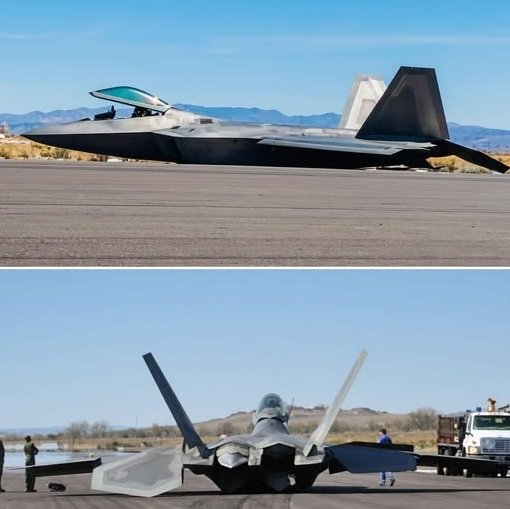
U.S
WASHINGTON — U.S. Air Force Capt. Michael “Wax” Cloninger, an F-22 Raptor pilot assigned to the 90th Fighter Squadron, 3rd Operations Group, at Joint Base Elmendorf-Richardson, Alaska, has received the Air Force’s highest flight-safety award after safely landing a fully armed F-22 that had lost its right main wheel assembly. Air Force Chief of Staff Gen. Ken Wilsbach presented Cloninger with the 2025 Koren Kolligian Jr. Trophy during a ceremony at the Pentagon on Sept. 8, 2026. Cloninger was recognized for the technical discipline and decision-making that saved a $156 million aircraft and prevented serious injury or loss of life. Right Main Wheel Assembly Detached After Takeoff The emergency occurred on Sept. 18, 2024, while Cloninger was deployed to the U.S. Central Command area of responsibility. He was flying as the number-two aircraft in a four-ship formation scheduled to conduct a memorial flyover marking the anniversary of the Battle of Britain. Immediately after takeoff, the F-22’s entire right main wheel assembly detached. Cloninger received no cockpit warning indicating that the wheel had separated. He and his flight lead canceled the flyover and remained near the airfield to assess the aircraft. Cloninger took responsibility for navigation and communications, slowed below the maximum landing-gear extension speed and lowered the gear. His flight lead then flew alongside the F-22 and confirmed that the complete right main wheel assembly was missing. Pilot Selects Gear-Up Landing The F-22’s flight manuals contained no specific procedure for landing after losing a complete wheel assembly. Using crew resource management, Cloninger consulted with his flight lead and chose the landing-with-gear-up procedure rather than attempting an asymmetric landing with the remaining gear extended. Before landing, Cloninger stayed airborne for about one hour to burn excess fuel, reducing the aircraft’s landing weight and the risk of a post-impact fire. He coordinated preparations with the air traffic control tower, crash-response units and the operations supervisor. He also conducted a low approach over the runway to assess the aircraft’s handling using the emergency alternate-flap flight-control mode. F-22 Safely Recovered For the final landing, Cloninger used a shallow glide path and calculated on-speed descent before touching down on the runway centerline. The F-22 slid to a stop without catching fire. Cloninger immediately shut down both engines and safely exited the aircraft. Maintenance personnel later completed diagnostic checks and structural repairs, allowing the F-22 to return to flying condition and be flown out of the theater. The Air Force described the recovery as an unprecedented recovery for an F-22 after a belly landing. Cloninger Credits His Teammates During the Pentagon ceremony, Wilsbach praised Cloninger’s discipline, teamwork and decision-making during the emergency. Cloninger credited the personnel who supported him throughout the incident, particularly those who assisted with communications and checklists. “Without my teammates assisting with communication and walking through the checklists, I truly believe I wouldn’t be standing here today,” Cloninger said. About the Koren Kolligian Jr. Trophy Established in 1957, the Koren Kolligian Jr. Trophy is the Air Force’s premier flight-safety award and the only one personally presented by the Chief of Staff. It recognizes aircrew members whose situational awareness, technical judgment or piloting skill prevents an aircraft accident or significantly limits its consequences. The award honors 1st Lt. Koren Kolligian Jr., whose Lockheed T-33 Shooting Star disappeared off the California coast on Sept. 14, 1955. He was later declared missing in the line of duty. Kris Kolligian, the nephew of the trophy’s namesake, attended the Pentagon ceremony.
Read More → Posted on 2026-09-12 11:27:56
World
RIYADH — Satellite imagery from MizarVision shows extensive fire and structural damage at two pumping stations along Saudi Arabia’s strategic East–West oil pipeline following drone strikes on Thursday, September 10, 2026. The pipeline, also known as Petroline, runs about 1,200 kilometres from the Abqaiq oil-processing facilities in Saudi Arabia’s Eastern Province to the Red Sea port of Yanbu. It has a pumping capacity of around 7 million barrels per day and is an important route for transporting Saudi crude to the Red Sea, particularly while shipping through the Strait of Hormuz remains restricted. 🇸🇦 SAUDI ARABIA | East–West Pipeline attackedSaudi Arabia’s critical East–West oil pipeline system was struck by projectiles on Thursday.Satellite imagery shows fires and damage around pumping stations. One US official says drones originated from Iraq.⚠️ A full shutdown of… pic.twitter.com/tSPortXdHQ — MizarVision (@MizarVision) September 11, 2026 Saudi Arabia’s Ministry of Energy confirmed that the pipeline was shut down as a precaution after several drones struck targets in the Riyadh and Medina regions. Emergency and technical teams were deployed to secure the facilities, assess the damage and determine the condition of the pipeline. The attacks caused injuries and material damage. Satellite imagery reviewed after the attacks showed major fire damage at pumping stations near Al-Masbah and Al-Dhahrah, with thick smoke visible at the affected facilities. Sentinel-3 and NASA FIRMS data also detected several heat sources and smoke along the pipeline corridor. Some of the detected fires appeared to be emergency flare activity rather than direct pipeline damage. Saudi Arabia said preliminary investigations found that the drones were launched from Iraq. Iraq condemned the attacks and said the drones were launched from Maysan province, which borders Iran. Iraqi authorities dismissed the operations commander in the province and established an investigation. Saudi Arabia said it would support Iraq’s efforts to prevent further attacks while reserving its right to protect its sovereignty and facilities. No group has publicly claimed responsibility for the attacks. The pipeline had reportedly been carrying around 4–5 million barrels of crude per day in recent weeks. With the system shut down, crude supplies to Yanbu are likely to be significantly limited or halted until technical assessments and repairs are completed. However, Saudi authorities have not yet released a detailed assessment of the total damage or a timetable for restarting the pipeline. The full extent of the disruption therefore remains unclear. Further updates from Saudi Arabia’s Ministry of Energy and Saudi Aramco are expected to determine how much pipeline capacity has been affected and when operations can resume.
Read More → Posted on 2026-09-12 11:56:16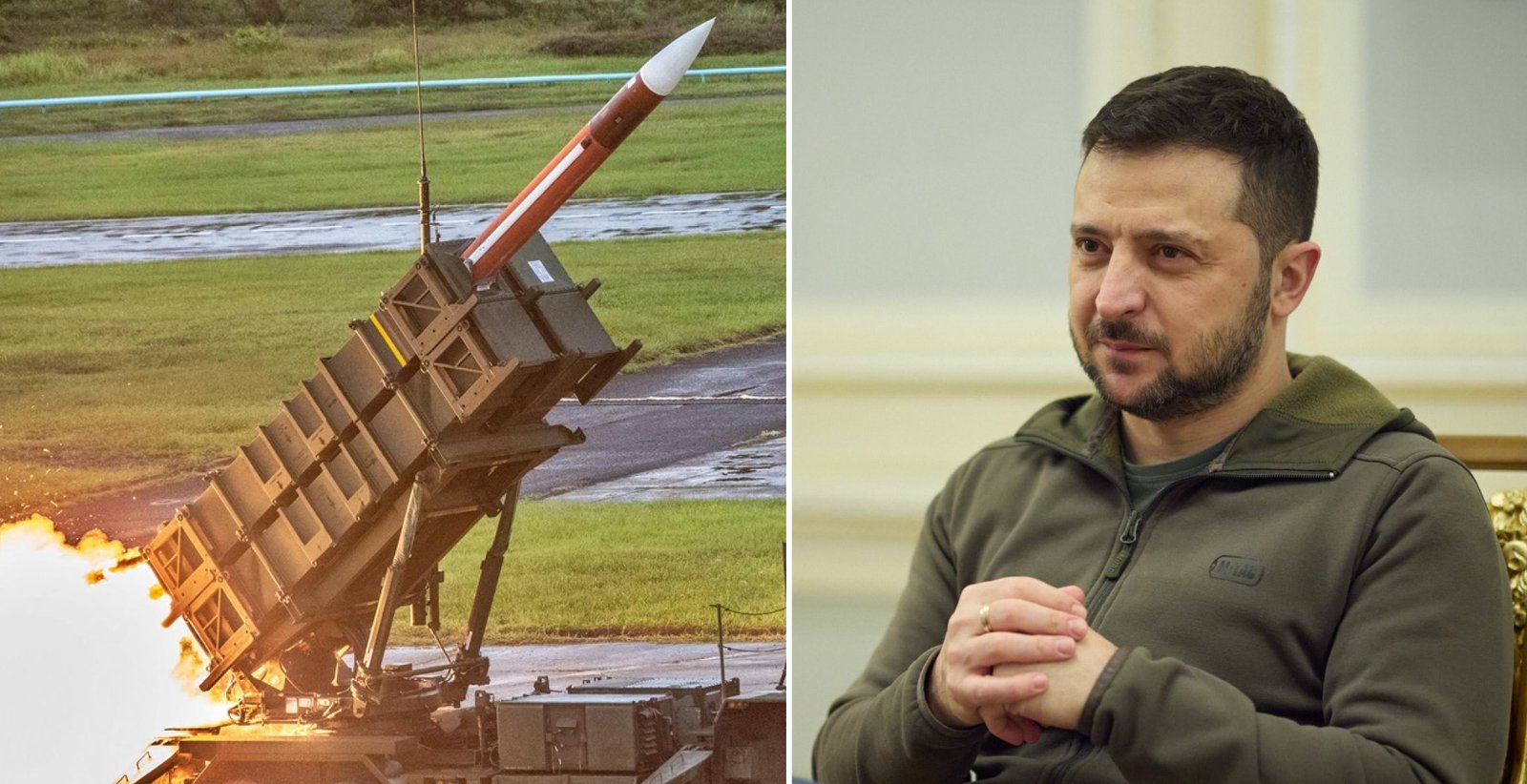
World
BRUSSELS — The European Commission has approved an additional €6.1 billion in funding for Ukraine’s defense procurement, including air and missile defense systems, ammunition, drones and electronic warfare equipment. The decision, announced on September 11, 2026, is part of the EU’s €90 billion Ukraine Support Loan for 2026–2027. The approval also allows Ukraine to use the funding to procure U.S.-made Patriot PAC-3 interceptor missiles. European Commissioner for Defence and Space Andrius Kubilius said the decision formally enables Ukraine to purchase PAC-3 missiles for its Patriot air-defense systems. The missiles can be procured through the Prioritised Ukraine Requirements List (PURL), a NATO-coordinated mechanism, among other procurement channels. Five Procurement Exemptions The €6.1 billion package includes five derogations from the Ukraine Support Loan's standard procurement eligibility rules. Three exemptions apply to Ukrainian-made drones and components whose costs exceed the normal thresholds under the loan's procurement rules. Two exemptions apply to U.S.-manufactured defense equipment, including PAC-3 missiles. The Ukraine Support Loan generally prioritizes defense products from the EU, Ukraine and eligible European partner countries. However, its rules allow limited derogations when urgent operational requirements cannot be met with the required quantities and within the necessary timeframes. €28.3 Billion Defense Allocation for 2026 Fully Assigned The €6.1 billion approval is part of the broader €90 billion Ukraine Support Loan, which provides €60 billion for defense-related support and €30 billion for budgetary assistance during 2026 and 2027. For 2026, the EU made available up to €28.3 billion for Ukraine's defense industrial capacities. Kubilius said that with the latest decision, the full €28.3 billion 2026 defense allocation has now been assigned to Ukraine's defense needs. The Commission said funding decisions remain subject to conditions and monitoring. Before funds are transferred, contracts are reviewed to ensure they comply with the Ukraine Support Loan and the agreed procurement rules. Funding Covers Air Defense, Drones and Electronic Warfare The newly approved package covers several areas, including air and missile defense, ammunition, drones and electronic warfare equipment. The European Commission said the funding is intended to support Ukraine's ability to respond to continued Russian missile and drone attacks. The approval follows earlier EU support for Ukraine's defense industry. In June, the Commission began disbursing €3.9 billion as the first payment under a roughly €6 billion tranche dedicated to drone procurement. The Commission had also disbursed a separate €3.2 billion installment under the loan in June. The latest decision therefore expands the procurement options available to Ukraine, particularly for Patriot PAC-3 interceptors, while continuing EU support for Ukrainian and European defense production. The approval does not itself represent an immediate delivery of PAC-3 missiles. Actual procurement and disbursement will depend on contracts, their verification by the European Commission and the relevant procurement and production arrangements.
Read More → Posted on 2026-09-12 12:12:04
U.S
WASHINGTON — U.S. officials say Iran obtained high-resolution satellite imagery from Chinese sources before and after a July 17 ballistic missile attack on Muwaffaq Salti Air Base in northeastern Jordan, linking the imagery to the strike that killed three American soldiers. Officials described the connection as the clearest evidence so far that Chinese support for Iran has had lethal consequences for U.S. forces. They did not identify the specific Chinese entities involved and did not allege direct involvement by the Chinese government. Iranian ballistic missiles struck a housing area where U.S. troops were sleeping, killing 1st Lt. Tyler James Feehan, 25, Pvt. Isabella Gonzales, 19, and Sgt. Angel S. Rampersad, 28. Four others were seriously wounded and medically evacuated. Iran also targeted manned and unmanned aircraft at the base. The July 17 attack was one of three missile attacks on the installation within 24 hours and marked the first American combat deaths since an April ceasefire in the wider conflict faltered. Improved Iranian Targeting Earlier in the conflict, U.S. strikes had damaged major parts of Iran's radar, satellite and air-surveillance infrastructure. Iranian missile units often struck open ground or lower-value areas. U.S. officials said Iranian targeting accuracy improved during the summer. Within three days of the attack, Iranian state media published high-resolution imagery showing damage across three areas of the base. A Wall Street Journal analysis of publicly available imagery found that more than 20 military and support structures had been hit. Former CIA analyst Jim Lamson said fresh high-resolution imagery can reveal recent troop movements, aircraft rotations and facility changes, while post-strike imagery helps assess accuracy and determine where to direct later attacks. U.S. officials said Chinese commercial imagery is part of a wider Iranian intelligence network that also includes Russian data, remaining Iranian capabilities and human sources. Chinese Satellite Firms Sanctioned In May, the U.S. Treasury Department sanctioned three Chinese firms — MizarVision (Meentropy Technology), Earth Eye and Chang Guang — over the provision, collection or publication of imagery that could be used against U.S. forces. Chang Guang had previously been accused by U.S. officials of providing satellite imagery that supported attacks by Iran-backed Houthi forces. U.S. officials raised the July strike and the satellite imagery with Chinese counterparts. Beijing demanded evidence and rejected the allegations, maintaining that Chinese companies operate within international trade laws. Concerns Over U.S. Navy Ships U.S. defense officials are also examining whether Chinese satellite data could help Iran track American warships. Iran has recently fired anti-ship ballistic missiles toward a U.S. aircraft carrier strike group and accompanying destroyers. U.S. Central Command said the missiles were intercepted or fell into open water without causing damage, although some detonated close to the ships. Officials are investigating whether foreign orbital monitoring could provide Iran with near-real-time information needed to target moving vessels. The satellite imagery issue is part of broader U.S. concerns over Chinese support for Iran. A Shenzhen company, Telefly Telecommunications Equipment, has been linked to miniature turbojet engines used in upgraded Shahed-type drones. Treasury investigations also found that Western-made microelectronics and guidance components reaching Iran's drone program were routed through Chinese intermediaries and Hong Kong shell companies. The Justice Department has separately identified Chinese state agencies as end-users of technical information obtained by cyber groups that targeted U.S. federal defense and weapons laboratories. The developments come ahead of a planned September 24 summit between President Donald Trump and Chinese President Xi Jinping. After meeting Chinese Foreign Minister Wang Yi days after the July 17 strike, Secretary of State Marco Rubio said that nothing China had done had changed the trajectory of the conflict.
Read More → Posted on 2026-09-12 12:25:24
Space & Technology
EDWARDS AIR FORCE BASE, Calif. — The U.S. Air Force Research Laboratory (AFRL) has demonstrated a spacecraft propulsion architecture that combines chemical and electric propulsion in a single system using a shared propellant tank and feed system. The ground test was conducted under the Propulsion Optimization UNifying Chemical and Electric (POUNCE) program at AFRL’s Space Propulsion Environment Facility at Edwards Air Force Base, California. The demonstration validated the feasibility of Modular Multimode Propulsion (MMP). MMP is designed to allow both high-thrust chemical thrusters and high-efficiency electric thrusters to operate from the same propellant supply. This can reduce the need for separate tanks, valves, regulators, feed lines and other hardware normally required when a spacecraft carries both propulsion types. Chemical propulsion provides high thrust for rapid maneuvers, while electric propulsion offers much higher fuel efficiency but produces relatively low thrust. The combined system allows the propellant supply to be used for rapid maneuvers when necessary and for longer-duration, fuel-efficient orbital operations. ASCENT propellant The demonstration used Advanced Spacecraft Energetic Non-Toxic (ASCENT), previously designated AF-M315E. Developed by AFRL, ASCENT is a hydroxylammonium nitrate-based ionic liquid propellant that can be used as a chemical monopropellant and in electrospray electric propulsion. AFRL states that ASCENT provides approximately 50 percent higher density specific impulse than hydrazine and has lower handling hazards. It is classified as Department of Transportation Class 1.3C, with Class 1.4 for shipping, allowing simpler ground handling than hydrazine. ASCENT has previously flown on NASA’s Green Propellant Infusion Mission and Lunar Flashlight. Commercial partners Three companies supplied major components for the demonstration. Flight Works provided the composite conformal tank and propellant feed system, Igneon Aerospace supplied the chemical thrusters, and Revolution Space provided its PALOMINO ion-array electrospray thruster for electric propulsion. The testing was performed in a high-vacuum facility simulating orbital conditions. AFRL evaluated whether the feed lines and valves could reliably switch between the chemical and electric propulsion systems under representative operating pressures. The concept of combining high-thrust and low-thrust propulsion has been studied since the 1960s, but practical implementation has been limited by challenges involving propellant compatibility and shared feed systems. The POUNCE architecture uses modular interfaces that can allow propulsion components to be exchanged or reconfigured without redesigning the spacecraft's core propulsion system. AFRL’s related Modular Propulsion (ModProp) effort uses the Propulsion Unit for Modular Applications (PUMA) approach with ASCENT and focuses on standardized interfaces for applications including sustained maneuvering, tactically responsive space, and space mobility and logistics. Dr. Javier Urzay, chief of AFRL’s Rocket and Space Propulsion Division, said the objective is to accelerate the development of integrated propulsion capabilities for dynamic space operations. AFRL and its industry partners will use data from the Edwards AFB testing to further refine the system as the technology progresses toward potential on-orbit flight testing.
Read More → Posted on 2026-09-12 13:14:03
Space & Technology
TORRANCE, Calif. — The Office of the Assistant Secretary of the U.S. Air Force for Space Acquisition and Integration has awarded California-based nuclear energy startup Antares $161 million under a Strategic Breakthrough contract to develop a nuclear reactor designed to power operational spacecraft. Antares said the award is the largest defense contract to date focused specifically on space-based nuclear power. The contract covers two parallel technical tracks. Under the first, Antares will conduct a ground demonstration of its R1-S reactor, a compact system that uses solid-state heat pipes instead of mechanical pumps to transfer heat from the reactor core. After ground validation, the reactor will be integrated into a spacecraft and prepared for flight certification ahead of an orbital launch. The second track involves the Mark-1 reactor, an electricity-producing design scheduled to begin multi-month operational testing in 2027 using a closed Brayton cycle power-conversion system. The reactor will be used to power a ground-to-space military asset. “Space has been core to the Antares thesis since the company was founded,” said Jordan Bramble, CEO and co-founder of Antares. “This partnership with the Space Force turns that long-held vision into a codified space mission. Fission will unlock strategic capabilities that are impossible today.” Nuclear Power for Spacecraft Most modern satellites use solar arrays and batteries. Antares says a compact fission reactor could provide continuous multi-kilowatt or megawatt-class power regardless of sunlight, orbital shadows or distance from the Sun. The company identifies potential applications including high-throughput edge computing and automated data processing, long-range active radar, directed-energy payloads, and high-power electronic warfare and electromagnetic-spectrum operations. Greater onboard power could also support more flexible spacecraft maneuvering. The United States has not operated a nuclear reactor in orbit since NASA launched SNAP-10A in 1965, leaving a six-decade gap in U.S. space fission systems. Mark-0 Reached Criticality The contract follows Antares' June 4, 2026, milestone at Idaho National Laboratory (INL), where its Mark-0 microreactor reached criticality, meaning the fission reaction became self-sustaining. The test was conducted under Department of Energy authorization with INL and nuclear fuel supplier BWX Technologies (BWXT), with U.S. Army personnel observing. Antares said it became the first private entity to achieve criticality under the DOE's Reactor Pilot Program and that Mark-0 was the first newly designed reactor to reach criticality at the Idaho site in more than 50 years. The test provided validation of core physics and safety profiles for Antares' HALEU TRISO fuel compacts, which use ceramic coatings designed to retain fission products and withstand high temperatures without melting. Other U.S. Defense Programs Antares is also using its reactor architecture across other military programs. Data from Mark-0 is supporting Project Pele, the Department of Defense's effort to develop a transportable terrestrial microreactor. The company is also a supplier under the U.S. Army's Project Janus, which focuses on fixed microreactors for domestic military installations, including Fort Moore, Georgia, formerly Fort Benning. Earlier in 2026, Antares was selected through the Defense Innovation Unit to build a prototype installation system at Joint Base San Antonio. Space Nuclear Power Plans Antares linked the Air Force award to Executive Order 14369, “Ensuring American Space Superiority,” and the National Initiative for American Space Nuclear Power outlined in NSTM-3. These policies call for demonstrating an operational nuclear reactor in orbit as early as 2028, followed by deployment of a surface power reactor on the Moon by 2030. Founded in 2023 in Torrance, California, Antares has engineering and testing facilities in Idaho Falls, Idaho, and Aiken, South Carolina. The company has raised more than $600 million in private capital, including a $470 million Series C round completed in July 2026. The Air Force and Antares have not disclosed the target launch date for the R1-S, the specific spacecraft bus or mission profile, or how the $161 million contract will be divided between the R1-S flight demonstration and Mark-1 ground testing.
Read More → Posted on 2026-09-12 13:29:57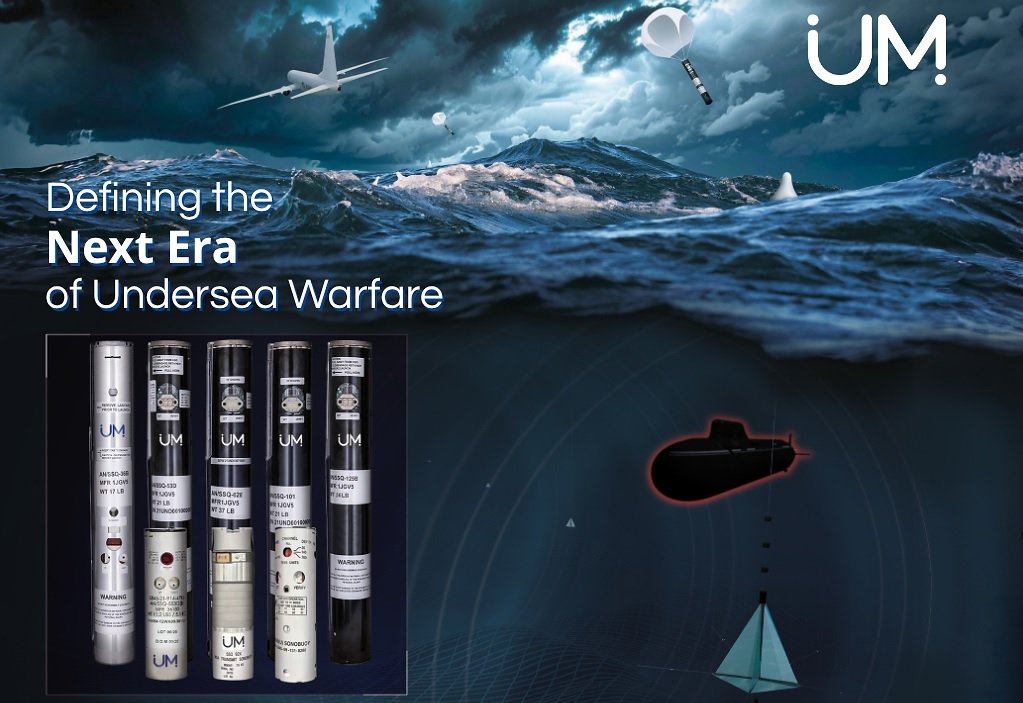
U.S
COLUMBIA CITY, Ind. — Naval defense manufacturer Ultra Maritime has announced that all five of its newest U.S.-specification sonobuoy variants are now production ready. The company said the milestone completes what it identifies as the world’s first unified suite of next-generation anti-submarine warfare (ASW) acoustic expendables. The five variants are the AN/SSQ-53H, AN/SSQ-62G, AN/SSQ-101B, AN/SSQ-125B and AN/SSQ-36B, which form the core of the company’s Sea Revealer family. They support underwater surveillance missions ranging from ocean-layer profiling and wide-area acoustic searches to target detection, localization and tracking. The AN/SSQ-53H DIFAR is a passive sonobuoy that listens for acoustic emissions from nuclear and diesel-electric submarines using omnidirectional sensors and directional hydrophone channels. The AN/SSQ-62G DICASS is an active buoy that can be remotely triggered to transmit sound pulses and measure echoes to determine a contact’s bearing and range. The AN/SSQ-101B ADAR uses an unfolding horizontal planar hydrophone array as a high-sensitivity receiver for sound reflected from submerged targets. The AN/SSQ-125B MAC is a multistatic active acoustic source that can operate with passive receivers such as the Q-101B and Q-53H to transmit structured sound bursts across patrol areas. The AN/SSQ-36B AXBT provides environmental data rather than directly tracking targets. Its temperature probe measures the water column down to 800 meters (2,625 feet), generating sound-velocity profiles that help mission systems predict how sonar waves travel through ocean thermal layers. Production Expansion Ultra Maritime recently modernized and expanded its manufacturing complex in Columbia City, Indiana, adding higher-rate manufacturing automation and updated production processes. The company now reports producing more than 1,000 sonobuoys per day across facilities in the United States, United Kingdom and Canada. The expansion has created hundreds of jobs in Northeast Indiana over the past two years, with additional hiring and facility improvements planned as domestic and international procurement increases. Ultra Maritime’s U.S. supply chain includes suppliers in 24 states, more than 70 percent of which are small businesses. Ultra Maritime says it is the only defense contractor worldwide producing G-size, half-length sonobuoys, which can allow aircraft and unmanned platforms to increase sonobuoy payload capacity without increasing airframe weight limits. It also says it is the only manufacturer with active production lines in multiple allied countries. The company supplies sonobuoys for fixed-wing aircraft, helicopters and unmanned aerial vehicles, including major ASW platforms such as the Boeing P-8A Poseidon and Sikorsky MH-60R Seahawk. Earlier in 2026, the U.S. Navy awarded Ultra Maritime a sole-source, firm-fixed-price contract for low-rate initial production of the AN/SSQ-125B for training, peacetime operations, testing and inventory requirements. The Q-125B incorporates improved signal processing and acoustic performance for demanding ocean conditions. Ultra Maritime also demonstrated the SSQ-125B and Sea Spear passive sonar system during the U.S. Navy’s 2026 Lanternfish exercise, focusing on the detection and localization of unmanned underwater vehicles. Headquartered in Braintree, Massachusetts, Ultra Maritime produces active and passive sonobuoys in A-size and G-size configurations and has received U.S. Navy production contracts and delivery orders for systems including the SSQ-53H and SSQ-62G. The announcement comes amid the company’s broader expansion and follows Lockheed Martin’s proposed $3.45 billion acquisition agreement for Ultra Maritime, announced earlier in summer 2026.
Read More → Posted on 2026-09-12 13:44:25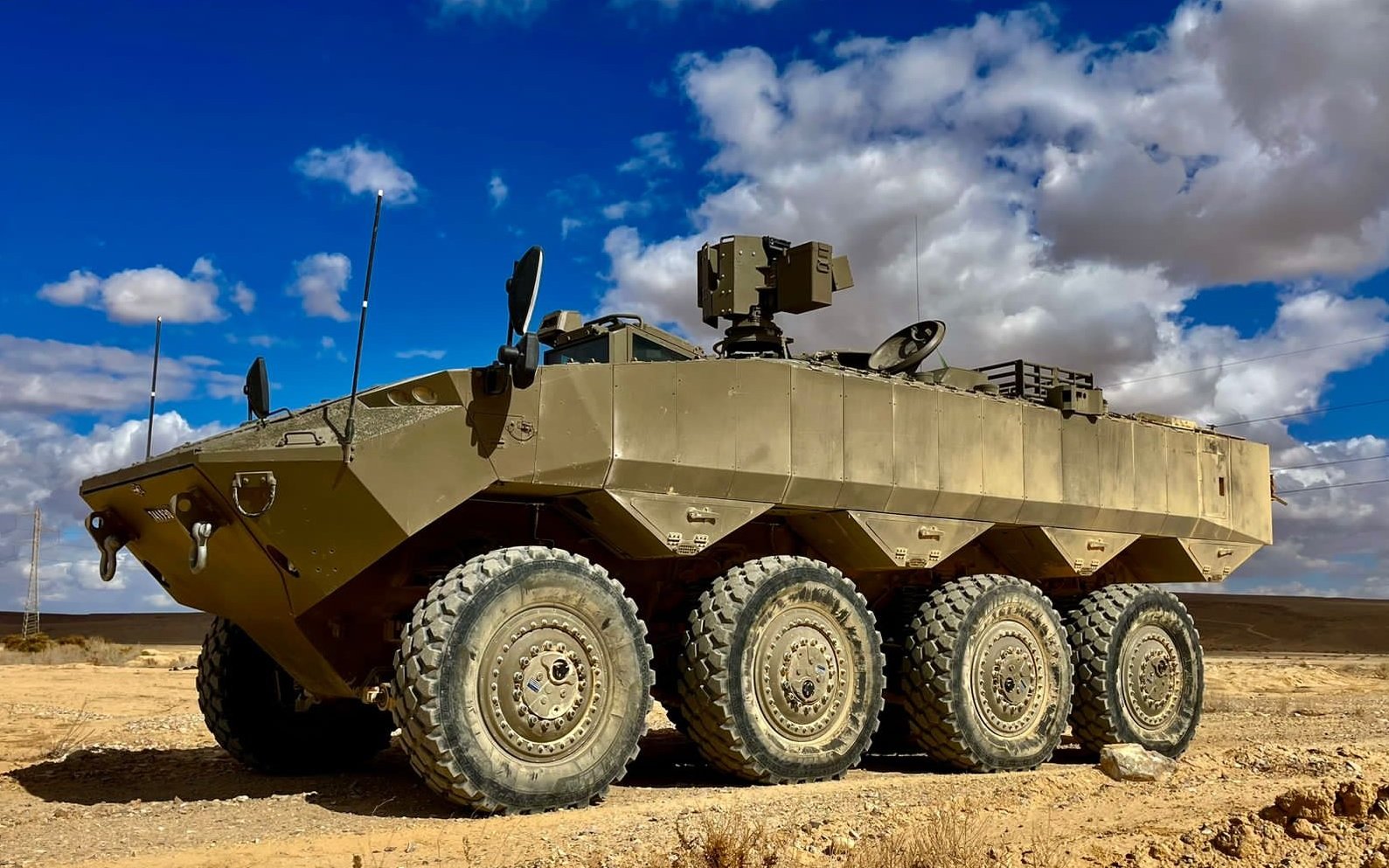
U.S
WASHINGTON — The U.S. Army has awarded Rolls-Royce Solutions America Inc. a $39.1 million contract modification to manufacture additional power packs for Israel’s Eitan 8x8 armored personnel carrier (APC). The modification, designated P00011 to contract W56HZV-23-C-0054, is the 11th change to the original contract and increases its total value to approximately $158.9 million. Work will be carried out at Rolls-Royce’s facility in Graniteville, South Carolina, and is scheduled to continue through September 11, 2027. Army Contracting Command at Detroit Arsenal, Michigan, is the contracting activity. The modification is funded entirely through fiscal year 2010 non-expiring Foreign Military Sales (FMS) funds allocated for Israel. Such funds can remain available for eligible defense purchases beyond the fiscal year in which they were appropriated. The order is part of a broader $180 million FMS case approved by the U.S. State Department in April 2025. The package covers additional Eitan 8V199TE21-D powerpack engines and components, U.S. government and contractor technical assistance, non-recurring engineering, logistics and program support. It expanded an earlier $85.5 million procurement case. MTU 8V199TE21-D Powerpack The Eitan uses the MTU 8V199TE21-D, an eight-cylinder turbocharged diesel engine producing approximately 750 horsepower. The engine is supplied as part of an integrated powerpack with an Allison 4800 Specialty Series automatic transmission. Rolls-Royce Solutions America, headquartered in Novi, Michigan, is the principal contractor for the effort and operates within Rolls-Royce Power Systems. The MTU engine business is part of Rolls-Royce Power Systems and is separate from Rolls-Royce’s civil aerospace operations and Rolls-Royce Motor Cars. Eitan 8x8 Armored Personnel Carrier The Eitan was developed by Israel following operational experience during the 2014 Gaza conflict, with the aim of providing a faster wheeled armored vehicle alongside the heavier tracked Namer and replacing some of the capabilities of older M113 carriers. The vehicle is roughly 8 meters long and weighs about 30–35 metric tons, depending on configuration. It carries a three-person crew and up to nine additional soldiers. Its protection includes a V-shaped hull, composite armor and the Iron Fist active protection system. The Eitan can reach speeds of up to 90 km/h and is designed to provide protected infantry mobility while offering greater road mobility than heavy tracked platforms. The first production Eitans entered Israeli service in May 2023. Following the October 7, 2023 attacks, the Israel Defense Forces accelerated their deployment, including operations in Gaza alongside other armored vehicles. The Army and Rolls-Royce have not disclosed the exact number of engines covered by the new $39.1 million modification. Public information also does not specify how much of the broader $180 million 2025 FMS case has already been obligated.
Read More → Posted on 2026-09-12 13:57:42
Space & Technology
PARIS, — Eutelsat plans to invest about €1 billion to procure 229 additional OneWeb low Earth orbit (LEO) satellites from Airbus Defence and Space, supporting constellation replenishment and expansion through 2034. Eutelsat and Airbus have signed an Authorisation to Proceed (ATP) for initial industrial work. The agreement was announced at the International Space Summit in Paris in the presence of French Minister of Higher Education, Research and Space Philippe Baptiste. The order follows two earlier contracts covering 440 OneWeb satellites, awarded to Airbus in late 2024 and early 2026. Together, the three commitments bring the total number of second-generation OneWeb satellites to be manufactured by Airbus to 669. Production will take place at Airbus Defence and Space's facility in Toulouse, France. The first satellites from the existing 440-unit order are scheduled for delivery in the fourth quarter of 2026, with launches expected shortly afterward. The additional 229 satellites will be introduced over the following decade to replace first-generation spacecraft approaching the end of their design life and to increase capacity for commercial and government customers. Upgraded Satellites The new spacecraft will feature advanced digital channelisers for improved onboard processing, dynamic beam steering and flexible bandwidth allocation based on traffic demand. They will also include interfaces for hosted payloads, allowing institutional or commercial customers to fly sensors such as Earth-observation or thermal-infrared instruments alongside the communications payload. Structural and power improvements are also intended to improve operational economics over the satellites' service cycle. OneWeb currently operates more than 600 satellites in 12 synchronized orbital planes at roughly 1,200 kilometers altitude. Eutelsat is the only European operator with a fully operational global LEO broadband network. Eutelsat said the approximately €1 billion investment is covered by its existing multi-year capital budget and does not change its capital expenditure forecast through the 2029 financial year. Separately, Eutelsat selected Arianespace for two dedicated Ariane 64 launches of OneWeb satellites in 2027 and 2028 from Europe's Spaceport in French Guiana. Preparing for IRIS² Eutelsat is positioning OneWeb as its near-term LEO platform ahead of Europe's IRIS² (Infrastructure for Resilience, Interconnectivity and Security by Satellite) programme. Eutelsat is expected to lead the design, deployment and operation of the programme's commercial Ku-band LEO segment, which is expected to enter service by mid-2032. IRIS² is expected to provide more than twice OneWeb's current capacity, with both constellations planned to operate alongside each other through the mid-2030s. Eutelsat CEO Jean-François Fallacher said the additional satellites will strengthen OneWeb while IRIS² will provide new capacity and capabilities. Airbus Defence and Space Head of Space Systems Alain Fauré said the contract demonstrates the maturity of the product, supply chain and Airbus' capability to manufacture large-scale LEO constellations at high rates. The replenishment programme will support service continuity and capacity for government, enterprise, maritime, aviation, defense and telecommunications customers while preparing Eutelsat for Europe's next phase of sovereign satellite connectivity.
Read More → Posted on 2026-09-12 14:16:35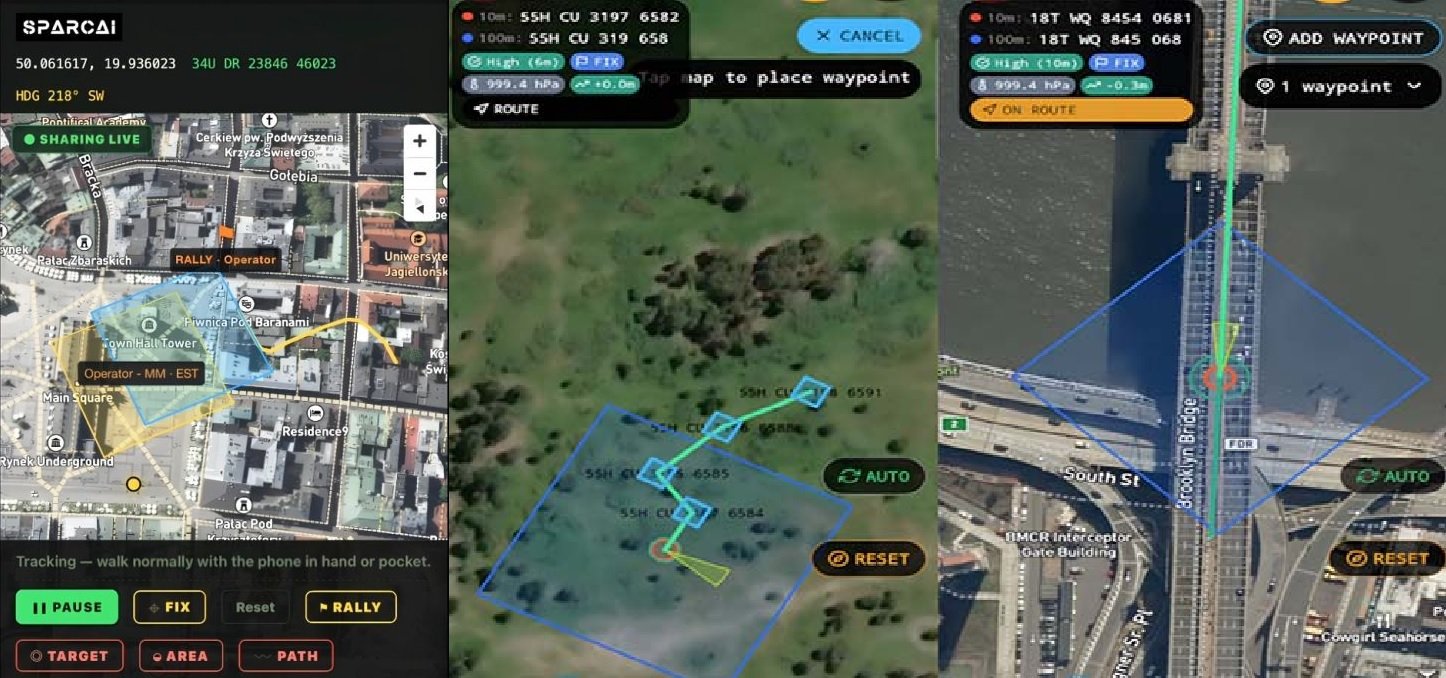
Europe
KIELCE, Poland — Defense technology company SPARC AI Inc. (CSE: SPAI; OTCQB: SPAIF; Frankfurt: 5OV0) has launched Overwatch Patrol, a dismounted positioning application designed to provide continuous location data to soldiers and security personnel when GPS/GNSS is jammed, spoofed, degraded or unavailable. SPARC AI unveiled the system at MSPO, the International Defense Industry Exhibition in Kielce, Poland, held from September 8 to 11. The exhibition is one of Europe's major defense events and a venue for NATO and allied procurement discussions. Before MSPO, SPARC AI demonstrated Overwatch Patrol in Kraków. GPS-Denied Positioning Without Additional Hardware Overwatch Patrol does not require additional hardware, external receivers, antennas or software installation. Originally developed for military-grade handheld devices, the current version operates through SPARC AI's Overwatch Positioning Network, a cloud-based positioning service. The application can be used as a native mobile app or through a standard web browser on smartphones and tablets. SPARC AI says remote processing of the core spatial calculations reduces the processing requirements on user devices. Real-Time Team Position Sharing Overwatch Patrol allows multiple users to share their positions on a common digital map in real time. Team members can see each other's movements while walking, running or holding positions without relying on GPS. Commanders can create teams in the field using an encrypted dynamic session code. Personnel can join or leave a group without a central administrator or pre-configured devices. The system also allows any team member to place a rally point on the shared map. The location is immediately synchronized with connected users, allowing them to navigate toward the same point. This can be used to establish new link-up locations after contact, during casualty evacuation (CASEVAC), when a route becomes unusable, or when personnel become separated beyond visual or radio contact. Integration With Tactical Networks At MSPO, SPARC AI management met with prospective technology partners and tactical communications providers to discuss integrating Overwatch Patrol with military radio networks. The planned integration would allow shared position data to move through existing tactical communications systems. Overwatch Patrol expands SPARC AI's Overwatch Positioning Network beyond aerial platforms. The company previously launched the network for UAVs, allowing drones to send telemetry to remote data centers and receive positioning information without onboard navigation payloads. SPARC AI says its drone-focused service is live for use in Ukraine. The launch adds a dismounted positioning capability to SPARC AI's broader work on navigation in GNSS-denied environments.
Read More → Posted on 2026-09-12 14:34:09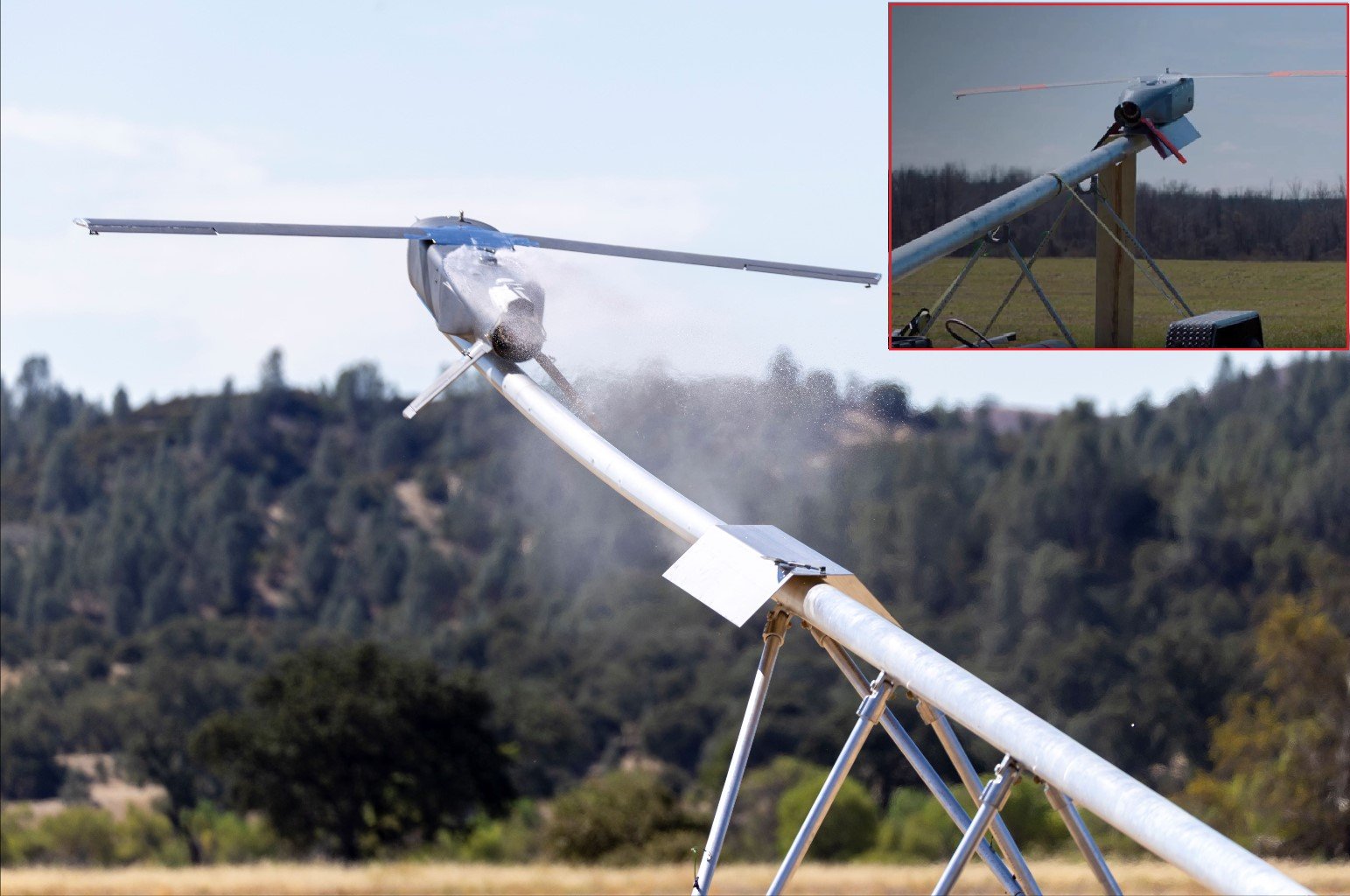
U.S
FORT HUNTER LIGGETT, Calif. — Northrop Grumman and quantum technology company SandboxAQ have completed flight trials of the Lumberjack Group 3 unmanned aircraft system (UAS) using SandboxAQ’s AQNav magnetic navigation system instead of GPS. The companies announced the results on September 9, 2026, following demonstrations at Fort Hunter Liggett in California. The tests showed the jet-powered drone could maintain stable flight trajectories using magnetic navigation in GPS-denied and satellite-denied conditions. Rapid AQNav Integration SandboxAQ integrated AQNav into the Lumberjack approximately one month before the flight trials. The system used a commercially sourced, high-sensitivity quantum magnetometer and low-power, off-the-shelf onboard computing hardware. Engineers installed the hardware and software in less than an hour and used a software-based integration approach that avoided a major structural redesign of the aircraft. How AQNav Works AQNav uses quantum sensors to detect small variations in Earth’s magnetic field caused by differences in geological materials beneath the aircraft. The system: Measures local magnetic variations using quantum magnetometers. Filters magnetic interference produced by the aircraft’s engine, electronics and structure. Compares the resulting magnetic signatures with reference maps of Earth’s magnetic field. Calculates the aircraft’s position without relying on satellite navigation signals. The passive system can operate in all weather and over open water or other environments where GPS may be unavailable or disrupted. The Lumberjack trials also included flight legs over open coastal water, providing an environment with limited visual navigation references. Lumberjack Platform Lumberjack is an attritable, one-way attack (OWA) drone in the Pentagon’s Group 3 UAS category. The airframe was developed with Empirical Systems Aerospace (ESAero), which was later acquired by AeroVironment. Northrop Grumman provides the mission computing, autonomy and payload integration. Specification Details Gross loaded weight About 290 lb (131 kg) Empty weight About 79 lb (36 kg) Payload capacity 250 lb (113 kg) class Range/endurance Several hundred miles or about 2 hours of loiter Mission cost target $75,000–$100,000 Primary weapon 6-lb (2.7 kg) Hatchet miniature glide bomb Other payloads EW, visual navigation, tactical data links and ISR The aircraft supports air, ground or surface launch. Although Lumberjack is designed for one-way missions, the test aircraft was launched, flown and recovered multiple times during the trials. This allows the platform to also be used for training and experimentation. Previous Lumberjack and AQNav Testing Lumberjack completed its maiden flight in 2024, less than 14 months after preliminary design work began. In March 2026, it participated in the U.S. Army 101st Airborne Division’s Operation Lethal Eagle, conducting simulated strikes with miniature precision weapons while connected to the military’s Maven Smart System and Palantir targeting workflows. Before the Lumberjack demonstration, SandboxAQ said AQNav had accumulated more than 450 flight hours across four aircraft types, including testing conducted with the U.S. Air Force and Defense Innovation Unit. SandboxAQ described the Lumberjack flight as the first reported test of a magnetic navigation system on an attritable platform and the first reported pairing of magnetic navigation with visual navigation on an attritable one-way attack drone. No Production Contract Announced Northrop Grumman and SandboxAQ have not announced a production customer, contract or wider procurement timeline for the integrated system. The demonstration instead focused on showing how magnetic navigation can be integrated with an existing unmanned aircraft and provide an additional navigation capability when satellite-based positioning is unavailable or disrupted.
Read More → Posted on 2026-09-12 14:41:54
World
NORTH BAY, Ontario — Ukrainian President Volodymyr Zelensky met Ukrainian military pilots undergoing training in Canada on September 12, 2026, at the International Test Pilots School (ITPS), also known as the International Pilot Training School, at Jack Garland Airport in North Bay, Ontario. Zelensky said the pilots are preparing to fly modern fighter jets, including the F-16 and Sweden’s JAS 39 Gripen, to strengthen Ukraine’s combat aviation. He said Ukraine is doing everything possible to protect its skies and praised the new generation of Ukrainian pilots, while thanking Canada, the instructors and the training center. 21 Pilots in Advanced Training Twenty-one Ukrainian pilots are currently enrolled in the program and have been training at the school since April 2025. They are flying Aero L-39 Albatros aircraft during the third and fourth phases of flight training, including Fighter Lead-In Training (FLIT). The training covers Western procedures and tactics, low-altitude navigation and formation flying before pilots move to modern combat aircraft. Flights take place nearly every day when aircraft are available and weather conditions permit. The pilots also use advanced tactical simulators, including F-16 simulators, to practice flight, instrument and tactical scenarios without using actual aircraft. During Zelensky’s visit, four L-39s flown by Ukrainian trainees conducted a flyover. Zelensky also sat in a flight simulator, where pilots explained the differences in handling, ergonomics, instrumentation and avionics between the L-39 and the Soviet-era MiG-29 and Su-27 aircraft on which many Ukrainian pilots previously trained. Instructors also briefed him on aircraft maintenance, life-support systems and pilot equipment. Canada Provides C$389 Million in Support The Canadian program covers more than pilot training. Ukrainian personnel are also being trained in aircraft maintenance, logistics, ground-support systems, life-support equipment, oxygen systems, ejection equipment, pilot flight suits and aviation English. The first Ukrainian aviation personnel arrived in Canada in September 2024 for preparatory training. Canada has allocated up to C$389 million for Ukrainian aviation personnel between 2024 and 2029, covering pilot training and related equipment and resources. The program operates under the multinational Air Force Capability Coalition. Training for Ukraine’s Future Western Fighter Fleet The training supports Ukraine’s transition from its Soviet-designed fighter fleet toward Western aircraft. Ukraine has already received F-16s from partner countries and is also preparing for the potential introduction of the Gripen. In December 2025, Ukraine and Sweden discussed training Ukrainian pilots and technical personnel for the Gripen. Zelensky said Ukraine would have both F-16s and Gripens and that other aircraft could follow. Some reports have indicated that donated Gripens could arrive in Ukraine in early 2027, while Ukraine has also discussed purchasing additional Gripen E aircraft. ITPS was established in the United Kingdom in 1986 and moved its headquarters to Canada in 2001. The school provides flight-test, test-pilot and tactical training to military forces from more than 25 partner nations. The school previously operated from London, Ontario, but moved its advanced tactical training to North Bay in July 2026 following concerns from Transport Canada about congested airspace after a near-miss incident. Photos released by the Office of the President of Ukraine showed Ukrainian pilots flying L-39 aircraft, using simulators and training at the Canadian facility.
Read More → Posted on 2026-09-12 15:44:13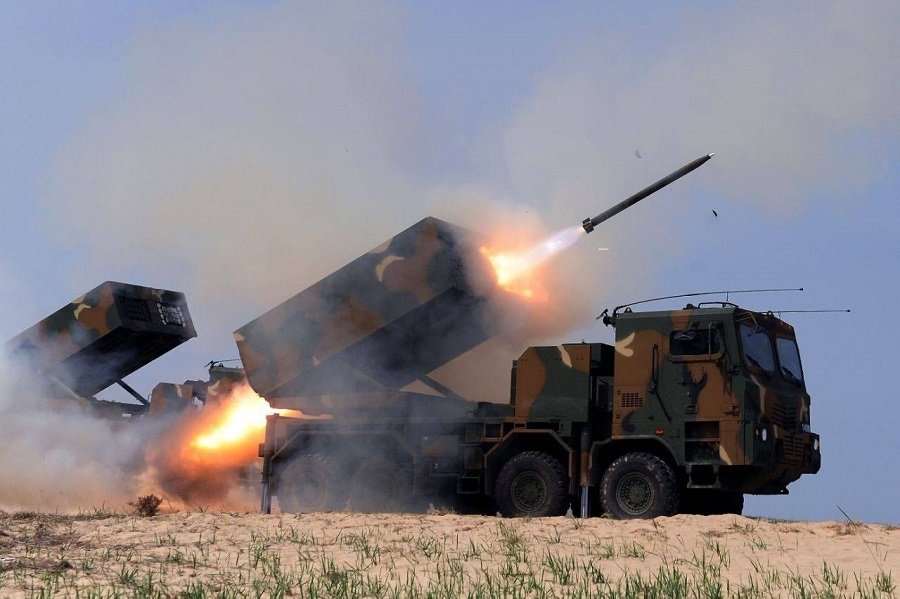
World
ZAGREB — Croatia has signed a contract worth approximately €410 million (640 billion South Korean won) with South Korea’s Hanwha Aerospace for 18 K239 Chunmoo multiple launch rocket systems (MLRS). The agreement was signed in Zagreb on September 10, 2026, marking the first major defence acquisition between Croatia and South Korea. The contract includes 18 self-propelled launchers, rocket ammunition, ammunition transport vehicles, fire-direction command vehicles, integrated logistics support, crew training and maintenance training. Deliveries are planned to begin within 24 to 36 months, with the systems scheduled to be operational by 2029. DAPA said the contract will also support longer-term industrial, logistics and follow-on cooperation with Croatia. The signing ceremony was attended by Croatian Prime Minister Andrej Plenković, Deputy Prime Minister and Defence Minister Ivan Anušić, South Korean Defence Minister Ahn Gyu-back, DAPA Commissioner Lee Yong-cheol, South Korea’s ambassador to Croatia and Hanwha Aerospace representatives. The two governments also signed a memorandum of understanding on defence cooperation, covering wider defence ties and technology cooperation. Croatia’s cabinet approved a broader €544 million procurement package. Part of the funding will cover integration of Poland’s WB Electronics TOPAZ combat and fire-control system to support interoperability. Croatian company Končar is also set to cooperate with Hanwha on local component integration, maintenance training and depot-level lifecycle support, although the exact production share is still under review. The Chunmoo systems will replace Croatia’s ageing M-92 Vulkan and BM-21 Grad multiple rocket launchers. They will complement eight U.S.-made M142 HIMARS systems ordered by Croatia in December 2024, giving the Croatian Army a combined fleet of 26 modern wheeled rocket launchers. The K239 Chunmoo uses an 8×8 wheeled chassis and has a crew of three. It can carry different types of ammunition through its dual-pod launcher. The Croatian configuration includes 131 mm unguided rockets with a range of about 36 km, 239 mm GPS/INS-guided rockets with ranges of up to 80 km, and CTM-290 tactical missiles with ranges of up to 290 km, depending on the missile variant and configuration. The launcher uses an onboard crane to change pre-packaged ammunition pods. Croatia is the fourth European country to select the Chunmoo, after Poland, Estonia and Norway. The system is also in service with customers in the Middle East, including the United Arab Emirates and Saudi Arabia. Prime Minister Plenković described the purchase as one of Croatia’s major recent defence investments, comparable in importance to the country's acquisition of Dassault Rafale fighter aircraft. The procurement forms part of Croatia’s wider military modernisation programme as Zagreb increases defence spending to meet its NATO capability commitments.
Read More → Posted on 2026-09-12 15:55:58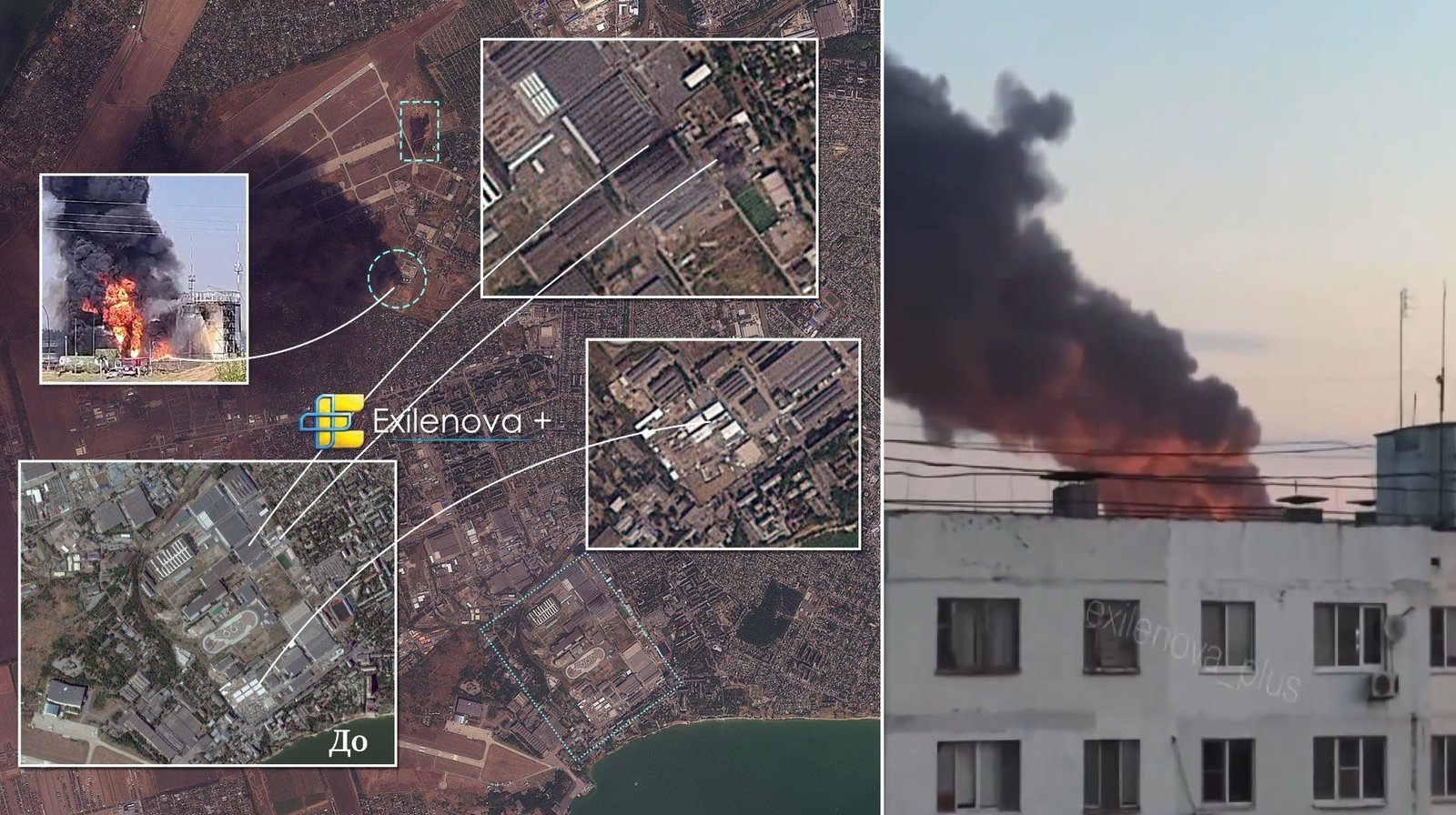
World
TAGANROG, Russia — Ukrainian forces carried out overnight drone strikes on September 12 against military and industrial targets in Taganrog, Rostov region, and Tolyatti, Samara region. Local reports, satellite imagery, monitoring groups and Ukrainian officials reported fires at several locations. In Taganrog, one of the main targets was the Atlant Aero facility at the former Taganrog Automobile Plant (TagAZ). According to Ukrainian military information and open-source reports, Atlant Aero conducts the design, production and testing of Russia’s Molniya (Lightning) strike-reconnaissance UAVs and produces components for Orion UAVs. Satellite imagery showed at least three impacts on workshops and warehouses, while Exilenova+ and other monitors reported fires and a burning storage tank. NASA’s FIRMS system also detected fire hotspots. On the night of September 12, Ukraine's Defense Forces struck a key Russian defense industry facility—"Atlant Aero" in Taganrog."Atlant Aero" handles the full cycle of design, manufacturing, and testing for "Molniya" (Lightning) strike-reconnaissance UAVs, as well as components… pic.twitter.com/O5Bg3w8nM2 — Exilenova+ (@Exilenova_plus) September 12, 2026 The airfield and military housing area in Taganrog were also attacked. A fire is currently burning there. pic.twitter.com/DTz8ov5dxN — Exilenova+ (@Exilenova_plus) September 12, 2026 The Security Service of Ukraine (SBU) said its Alpha Special Operations Center, together with other Ukrainian Defense Forces units, struck an FPV drone production facility, two UAV storage warehouses, a fuel and lubricants storage tank, a Pantsir-S2 air-defense system and a P-18 Terek radar station. The SBU said the strikes reduced Russia’s UAV production and storage capacity. Fires were also reported near the Beriev Taganrog Aviation Scientific and Technical Complex and Taganrog-Yuzhny airfield. The Beriev complex maintains and modernizes A-50 airborne early warning and control aircraft, Be-series amphibious aircraft used by the Russian Navy, and Tu-95MS/MSM strategic bombers used to launch Kh-101 cruise missiles. Taganrog-Yuzhny is used for Beriev flight testing. Russian outlet ASTRA reported that Taganrog-Central military airfield may also have been targeted. The airfield is home to Russia’s 708th Military Transport Aviation Regiment, while the nearby 325th Aircraft Repair Plant repairs military transport aircraft. Fires were reported in the area, and monitors reported the destruction of a fuel storage tank. A fire near S-400 positions was also reported, although damage to the systems remains unconfirmed. Taganrog head Svetlana Kambulova said Russian air defenses engaged drones around 7 a.m. and that falling debris caused fires. She reported no casualties. Rostov authorities also reported attacks in several districts and around Taganrog Bay, with debris causing a fire in a store building but no deaths or injuries. In Tolyatti, Ukrainian drones reportedly traveled more than 850 kilometers to strike the KuibyshevAzot chemical plant. Exilenova+ reported a fire at the facility. KuibyshevAzot produces ammonia, ammonium nitrate, urea, ammonium sulfate, nitric acid, caprolactam and polyamide products. Reports said it accounts for about 50 percent of Russia’s caprolactam production and roughly 75 percent of domestic tire-cord output. Samara Region Governor Vyacheslav Fedorishchev confirmed that an industrial enterprise was hit. Local authorities reported damage to several residential buildings, one person hospitalized and temporary evacuation in one neighborhood. No fatalities were reported, while operations at Kurumoch International Airport were temporarily suspended. Ukraine’s General Staff also reported a strike on the nearby Tolyattikauchuk plant, which produces synthetic rubbers and chemical fractions used as binders and components in solid rocket fuel for tactical and ballistic missiles. President Volodymyr Zelensky said Ukrainian forces had also struck two chemical-industry enterprises in Russia’s Perm and Samara regions, a target in the Black Sea and multiple military targets in Taganrog during the previous 24 hours. The strikes followed a September 11 attack on Volgogradpromproekt in Volgograd. Ukrainian sources said FP-5 Flamingo cruise missiles caused a fire at the enterprise, which is involved in Russia’s military-industrial complex and produces ferrocene-based combustion catalysts and chemical production technologies. Damage from the September 12 attacks continues to be assessed through satellite imagery, local footage and official statements.
Read More → Posted on 2026-09-12 16:14:48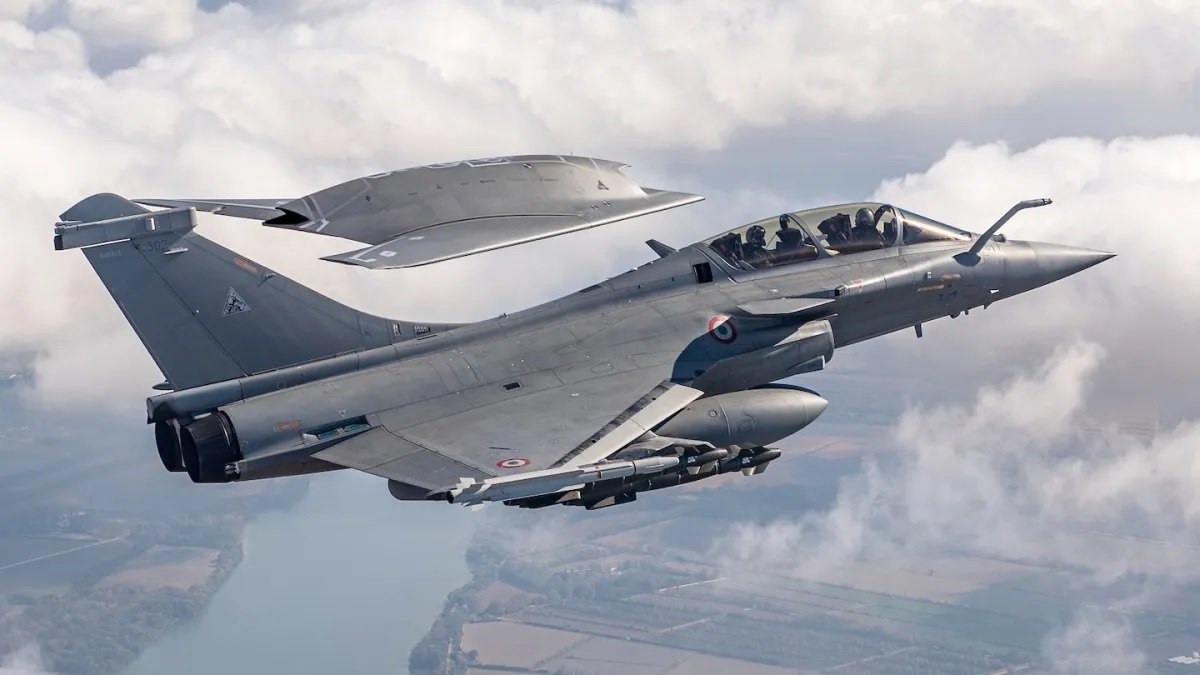
Europe
PARIS — France has awarded initial contracts to Dassault Aviation, MBDA, Safran Aircraft Engines and Thales ahead of the planned launch of the Rafale F5 development phase in late 2026. The French Defence Procurement Agency (DGA) notified the contracts during the summer. The initial work is focused on reducing technical risks before the main development phase begins. The F5 is planned as a major modernization of the Rafale, with qualification expected around 2033, followed by entry into service with the French Air and Space Force and later the French Navy. The upgrade will support France’s future airborne nuclear deterrent through integration of the ASN4G fourth-generation hypersonic nuclear cruise missile. It is also intended to improve the Rafale’s ability to conduct first-entry missions in contested environments. A more open aircraft architecture will give France greater flexibility to introduce new capabilities and adapt the aircraft as requirements change. New Radar, Navigation and Electronic Warfare Dassault Aviation will oversee a new very-low-drift inertial navigation unit using hemispherical resonator gyroscope (HRG) technology. The system is designed to maintain accurate navigation when satellite navigation signals are unavailable or disrupted. Thales will develop the RBE2-XG AESA radar, an evolution of the Rafale’s existing RBE2 radar. It is designed to provide higher power, longer detection range and improved tracking of targets with extremely low radar cross-sections. Increased computing capacity will support greater use of artificial intelligence for collaborative sensing, while the radar will retain the current RBE2’s mechanical footprint and include stronger cyber protection. Thales and MBDA France will also modernize the Rafale’s SPECTRA self-protection system. The upgraded digital architecture will improve threat detection, signal classification and electronic jamming across a broader electromagnetic spectrum. Thales will develop the Inter-Vehicle Data Link (IVDL), based on several years of DGA-funded research. The system is designed to provide high-bandwidth, resilient and difficult-to-detect communications between Rafale aircraft and accompanying uncrewed platforms while resisting jamming. Safran Develops M88 T-REX Safran Aircraft Engines has received a contract for the preliminary design of the M88 T-REX engine. The upgrade is intended to increase maximum thrust by about 20 percent, from 7.5 tonnes to 9 tonnes. The T-REX will retain the M88-2’s basic dimensions, structure and modular architecture, as well as its low fuel consumption. The modular design will allow selected components to be replaced without removing the complete engine, helping reduce maintenance downtime. The Rafale F5 programme continues France’s approach of upgrading the fighter through successive standards rather than replacing the aircraft with a completely new design. More than 400 French companies are involved in the Rafale programme, supporting more than 7,000 direct and indirect jobs. Eight foreign customers have ordered 299 new-build Rafales and 24 second-hand aircraft. The F5 upgrade is intended to keep the Rafale aligned with French operational requirements for 2035 and beyond.
Read More → Posted on 2026-09-13 12:32:40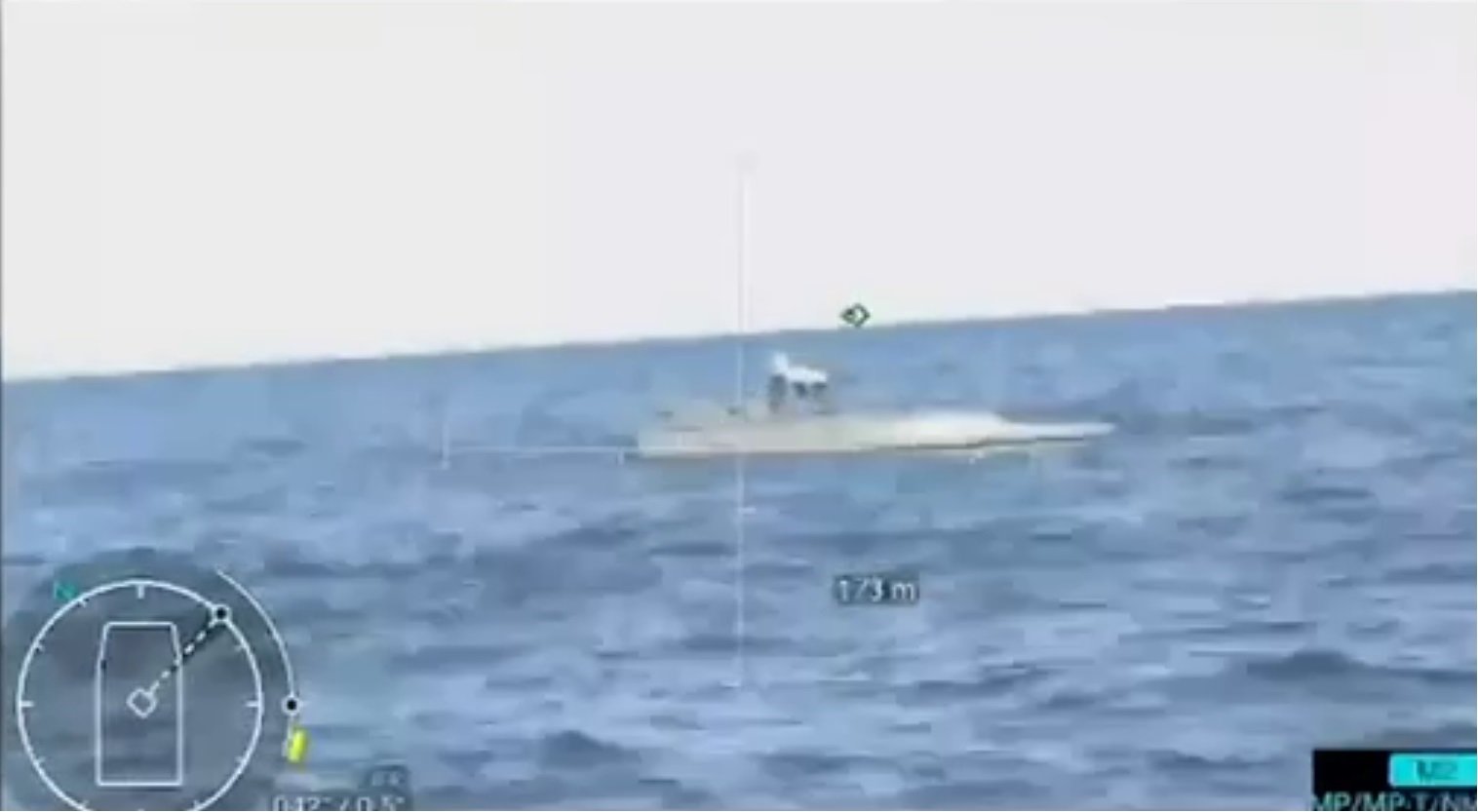
World
Black Sea — The Ukrainian Navy said on Saturday that one of its uncrewed surface vessels (USVs) destroyed a Russian uncrewed vessel in the Black Sea, describing the incident as the first naval battle in history between unmanned boats. According to the Ukrainian Navy, units of the Main Intelligence Directorate (GUR/HUR) detected the Russian vessel at an undisclosed location. A Ukrainian Sargan 3000 USV equipped with a remotely operated Kongsberg Protector 12.7 mm weapon station was then used to engage the target. The Navy released an 81-second video showing the encounter. The Sargan 3000’s onboard camera shows it acquiring and firing on the Russian USV. Around the 30-second mark, the footage switches to an aerial view from a nearby surveillance platform, although it is unclear whether that platform was crewed or unmanned. The Ukrainian vessel continues firing until parts of the Russian boat break away and it sinks. Ukraine's Navy says a Sargan unmanned surface vessel destroyed a Russian unmanned boat with machine-gun fire in the Black Sea, the first-ever battle between unmanned surface vessels. Ukrainian Navy personnel operated in coordination with HUR. #Ukraine pic.twitter.com/Avg4ecz8m6 — NOELREPORTS 🇪🇺 🇺🇦 (@NOELreports) September 12, 2026 The Ukrainian Navy did not identify the Russian vessel in its initial statement. Some defense observers have identified it as an improved Orcan-type USV, also known as Zefir or Zephyr in some Russian sources. The identification and the Ukrainian claim have not been independently verified. The exact date and location were also not disclosed, although some reporting places the encounter in the northwestern Black Sea between Odesa and Crimea. Sargan 3000 The Sargan 3000, meaning “needlefish” in Ukrainian, was introduced by Ukrainian President Volodymyr Zelensky in April 2026 as a multi-purpose platform that had undergone testing and entered service with the Ukrainian Navy. Some sources also refer to it as SeaWolf. The vessel is associated with Nordex and uses Kongsberg’s Protector remote weapon station. It has a low-profile hull designed to reduce radar signature and uses waterjet propulsion, with available descriptions indicating a diesel or hybrid engine. Reported specifications give it a length of 6.9 meters, width of 2.2 meters, an operational radius of up to 1,600 km, a payload capacity of 450 kg, and a speed of 40–55 knots. The Sargan 3000 can connect to Ukraine’s Delta situational awareness system for real-time video, telemetry and targeting data. It is also described as having redundant satellite communications, autonomous inertial and optical navigation for GPS-jammed environments, and electronic countermeasures. Its modular payloads can include machine guns, rockets, FPV drones, electronic warfare systems and mine-laying equipment. Previous Combat Use The latest engagement follows the Sargan 3000’s previously reported combat use. In July 2026, the Ukrainian Navy said a Sargan 3000 sank the Russian FSB border guard ship Izumrud near Novorossiysk, with some reports placing the incident near Gelendzhik. Ukraine said there were dead and wounded among the ship’s crew and noted that Izumrud had participated in the November 25, 2018 Kerch Strait confrontation involving Ukrainian Navy vessels. It remains unclear from public statements whether the Sargan 3000 was used as a kamikaze vessel or weapons platform in that operation. The latest incident demonstrates the expanding role of armed USVs in the Black Sea. Ukraine has extensively used maritime drones against Russian naval assets and facilities, while Russia has also developed and deployed its own USVs. If confirmed, the engagement would represent a new use of maritime drones, with one armed uncrewed vessel being used to locate and destroy another. Both sides continue to develop USVs for attack, reconnaissance, patrol, electronic warfare and other missions.
Read More → Posted on 2026-09-13 13:01:04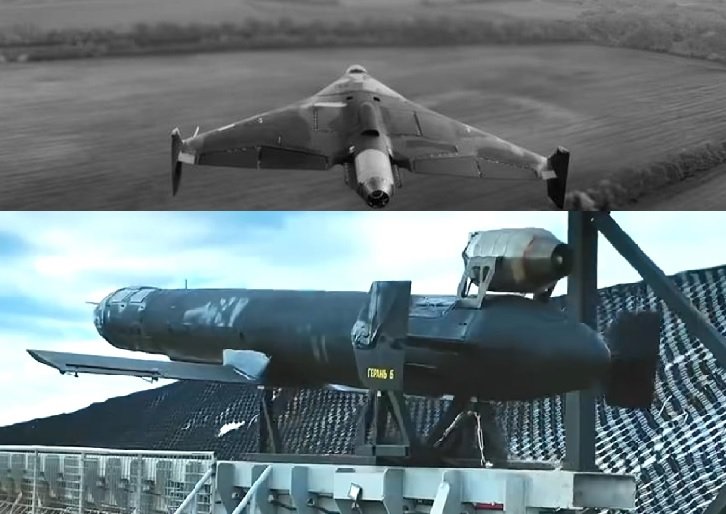
World
TEHRAN/MOSCOW — Iran has asked Russia to supply advanced Geran-4 and Geran-5 jet-powered drones for use in its conflict with Israel and the United States, according to the Financial Times. The report cited Western security officials and a source close to the Kremlin. The request was made in 2026 and involves newer versions of the Geran drone family, which developed from Iran’s Shahed-136 strike drone. Iran supplied the Shahed-136 to Russia beginning in 2022, while Russia started domestic production under the Geran name in 2023 and continued upgrading the system based on experience from the war in Ukraine. Unlike earlier propeller-powered versions, the Geran-4 and Geran-5 use jet engines, allowing them to fly at higher speeds. The Geran-5 can reportedly reach up to 600 km/h, carry a warhead of up to 90 kg, and cover up to 1,000 km. It is also equipped with a thermal imaging camera, an AI-based guidance system and anti-jamming capabilities. The jet-powered drones have become more difficult for Ukrainian air defenses to intercept. Ukrainian forces reportedly intercept about 60 percent of the newer versions, compared with around 90–95 percent of older propeller-powered drones. Despite their higher speed and capabilities, they remain cheaper than cruise missiles such as Russia's Kalibr and Kh-101, allowing Russia to use them against a wider range of targets. Russia has expanded Geran production at facilities including the Alabuga Special Economic Zone in Tatarstan. Ukrainian military intelligence has reported production of around 3,000 Geran-4 and Geran-5 drones combined per month at peak periods. The Geran-5, which reportedly entered combat use in early 2026, has an airframe closer to a small cruise missile and uses a Chinese-made turbojet engine. Some reports have also indicated that it can be launched from aircraft such as the Su-25. Earlier in 2026, Western intelligence reported that Russia had sent drones, along with medicine and food, to Iran. Those deliveries were described as involving Geran-2 drones based on the original Shahed-136 design. Iran's reported request for the newer jet-powered Geran-4 and Geran-5 systems marks a further development in military cooperation between Tehran and Moscow. Neither Russian nor Iranian officials has publicly confirmed the specific request.
Read More → Posted on 2026-09-13 13:33:18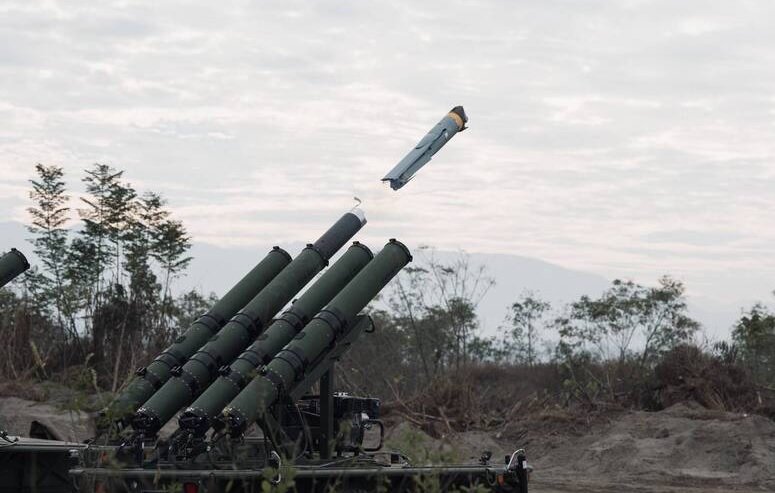
World
TAIPEI — Taiwan has resolved a logistics issue involving the charging equipment for its first batch of U.S.-made ALTIUS-600M loitering munitions, after the original chargers were excluded because they contained Chinese-made components. Charger Excluded Over Supply-Chain Rules The Republic of China Army (ROCA) received its first 291 ALTIUS-600M systems under the “Hunter Owl” project. The first deliveries were reported in August 2025 and the full delivery was completed by early 2026. The original chargers were not included in the U.S. Letter of Offer and Acceptance (LOA) because their components did not meet Taiwan’s “non-red” supply-chain policy, which excludes Chinese-made components from sensitive defense systems. The drones arrived with their batteries fully charged. Each system included one installed battery and one spare, with the batteries designed to retain their charge for up to two years. U.S. Personnel Supported Charging While a compliant charger was being developed, U.S. technical personnel traveled to Taiwan to recharge the systems when required. The Army said charging support was included in the original LOA and was provided without additional cost. Anduril Industries, the manufacturer of the ALTIUS family, has now completed a charger that meets the non-PRC supply-chain requirement. Delivery of the new chargers is expected under the established procurement schedule. Taiwan Begins Local Battery Production Taiwan and the United States have also established a non-red supply chain for ALTIUS batteries. Technology transfer has taken place, and a Taiwanese manufacturer has begun producing compatible batteries locally. DPP legislator Wang Ting-yu said the arrangement could eventually allow Taiwanese companies to supply batteries and chargers to other Anduril customers that require non-PRC components. KMT legislator Ma Wen-chun, meanwhile, questioned the logistics arrangements and the planned quantity of spare batteries. She noted that the spare battery inventory for the 291 systems was nearly eight times the number of airframes. The Army has requested a reduction in the spare battery order, which remains under U.S. review. Taiwan Orders 2,032 More ALTIUS Systems The charger issue comes as Taiwan expands its unmanned weapons inventory through a NT$26.9 billion procurement of 2,032 additional ALTIUS systems. The order includes: 1,554 ALTIUS-700M anti-armor attack drones 478 ALTIUS-600ISR intelligence, surveillance and reconnaissance drones Taiwan's Ministry of National Defense announced the contract at the end of August 2026. Initial deliveries are expected to begin in the fourth quarter of 2026, with the procurement scheduled for completion by June 2033. The expansion follows earlier ALTIUS-600M live-fire testing against maritime targets, during which Taiwan reported a 100 percent hit rate. The development of a compliant charger and local battery production is expected to address the supply-chain issue identified with the first ALTIUS-600M delivery as Taiwan moves ahead with its larger procurement.
Read More → Posted on 2026-09-13 14:07:37
U.S
WASHINGTON — The U.S. Department of State has approved a possible $140 million Foreign Military Sale to Argentina covering four refurbished UH-60L Black Hawk utility helicopters and associated equipment. The Defense Security Cooperation Agency (DSCA) notified Congress of the proposed sale on September 10 under Transmittal No. 26-79. If finalized, the deal would give the Argentine Army its first Black Hawk helicopters and support the replacement of its aging Bell UH-1H Huey fleet. Equipment and Support Argentina has requested four UH-60Ls and two General Electric T700-GE-701D engines. The package includes attitude heading reference systems, APX-100 and APX-123 Identification Friend or Foe (IFF) transponders, navigation and instrument landing system receivers, automatic direction finder receivers, AN/ARC-220 high-frequency radios and ARC-186 very-high-frequency radios. It also includes Garmin GTN-750 GPS systems, Cobham C-5000 multiband radios, EBC 406HM emergency locator transmitters, internal auxiliary fuel tanks, fast-rope insertion and extraction systems, rescue hoists, cargo hooks and Bambi buckets. Maintenance and aircrew training devices and software, helmets, transportation, organizational equipment, spare and repair parts, support equipment, tools, test equipment, technical data and publications, personnel training, and U.S. government and contractor engineering, technical and logistics support are also included. Sikorsky, a Lockheed Martin company based in Stratford, Connecticut, is the principal contractor. The U.S. government said no offset agreement is currently known and that the sale would not require additional U.S. government or contractor personnel in Argentina. It would also have no adverse impact on U.S. defense readiness. The State Department said the proposed sale would strengthen Argentina's ability to conduct border security, counter-transnational crime, and humanitarian assistance and disaster-response missions. It also said the sale would not change the basic military balance in the region. Replacement for Argentina's Hueys Around 50 UH-1Hs remain in the Argentine Army inventory. The service first launched a tender in December 2024 for three used UH-60s, but canceled it in January 2025 because of budget constraints. In June 2026, Argentine Army Chief of Staff Lieutenant General Oscar Santiago Zarich indicated that the service would acquire an initial four Black Hawks still in U.S. service, with plans to expand the fleet over time. Argentina already has experience with the Black Hawk. A single VIP-configured aircraft has operated in the presidential fleet since 1994 and was transferred to the Argentine Air Force in 2024. The Army itself has not previously operated the type. Part of Wider Military Modernization The UH-60L is an earlier model than the UH-60M currently produced for the U.S. Army and many foreign customers. Sikorsky offers modernization programs for older UH-60Ls, including digital cockpit and avionics upgrades, providing a possible future upgrade path for Argentina. The helicopter acquisition is part of Argentina's wider military modernization program, which also includes 24 surplus F-16s from Denmark and four P-3 Orion maritime patrol aircraft from Norway. The $140 million figure is the estimated value of the potential sale, not a finalized contract price. The final cost could be lower depending on the equipment and services ultimately purchased. No delivery schedule has been set, and Argentina and the U.S. still need to complete negotiations and finalize the Letter of Offer and Acceptance. U.S. Ambassador to Argentina Peter Lamelas said the helicopters would be refurbished and delivered in stages.
Read More → Posted on 2026-09-13 14:22:35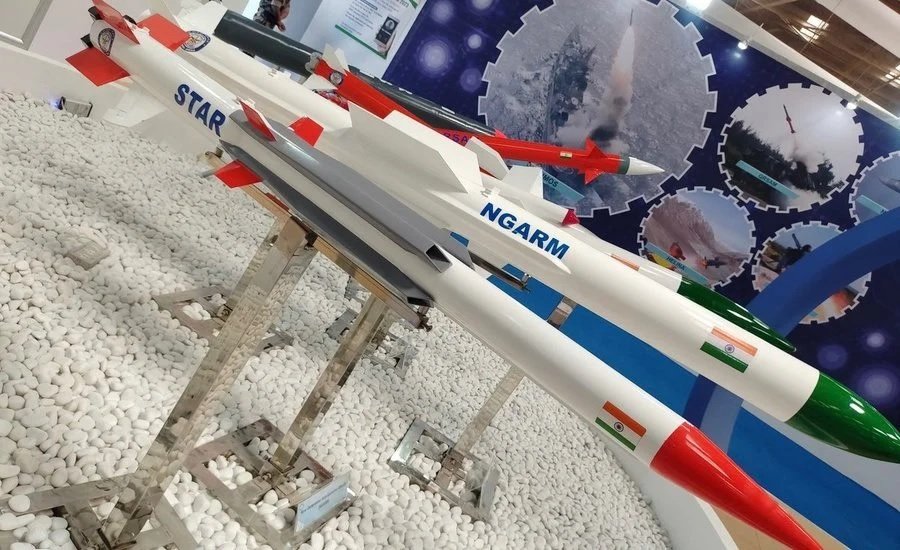
India
NEW DELHI — The Defence Research and Development Organisation (DRDO) successfully conducted the maiden flight trial of its indigenous Supersonic Target (STAR) missile in November 2025, according to the Ministry of Defence’s annual report. The STAR programme is designed to provide the Indian armed forces with a high-speed aerial target for testing and training air-defence systems, radars, tracking equipment and missile interceptors against supersonic threats. The system is powered by an indigenous Liquid Fuelled Ramjet (LFRJ) engine developed by the Defence Research and Development Laboratory (DRDL), Hyderabad. The STAR uses a two-stage propulsion system, with a solid rocket booster providing initial acceleration before the liquid-fuelled ramjet takes over for sustained supersonic flight. Key Development Milestones During 2025, DRDO completed qualification testing of the STAR's onboard avionics, including its navigation, flight-control and telemetry systems. The dedicated launcher and catapult system were also developed and qualified. Static propulsion testing was completed up to the stage of ramjet ignition before the November 2025 flight trial. The STAR is designed to operate at speeds of Mach 1.8 to Mach 2.5, with an altitude range of approximately 100 metres to 10 kilometres. Its stated operational range is 55 to 175 kilometres, while available programme information gives flight durations of 50 to 200 seconds. The system can conduct different flight profiles, including low-altitude and sea-skimming trajectories, allowing air-defence systems to be tested against high-speed targets under different conditions. The programme also supports India's development of indigenous liquid-fuelled ramjet technology. Work has been reported on possible air-launched configurations, although the primary role of STAR remains that of a supersonic target. The successful November 2025 flight, together with the completion of avionics qualification, launcher and catapult development, and static ramjet testing, represents significant progress in the STAR programme.
Read More → Posted on 2026-09-13 14:42:03
Space & Technology
WARSAW — A Polish software developer has launched Zuckoff, an app that detects nearby camera-equipped smart glasses by scanning their Bluetooth signals. The app was developed by 30-year-old software engineer Paweł Szydłowski and has gained approximately 5,000 users in its first month on Apple's App Store. The app was created amid growing privacy concerns over the use of smart glasses to record people without their knowledge. It primarily detects Meta's Ray-Ban smart glasses, developed in partnership with EssilorLuxottica. The glasses look similar to conventional eyewear but include a forward-facing camera, microphones and onboard artificial intelligence. How Zuckoff Works Zuckoff scans Bluetooth Low Energy broadcasts and compares them with a database of known smart-glasses signatures. Szydłowski built the database by purchasing several models and recording their Bluetooth fingerprints, including device identifiers, manufacturer codes and service UUIDs. The project lists codes including 0x0D53 for Luxottica, covering Ray-Ban Meta and Oakley Meta devices, 0x058E for Meta Platforms Technologies wearables, and 0x03C2 for Snap Spectacles. The app can also flag some devices based on advertised product names, but with lower confidence. The free version provides an estimated proximity reading while scanning. Zuckoff Pro adds background detection, push notifications, a Home Screen widget, Lock Screen Live Activity, longer sighting history and CSV export. It costs $9.99 annually, with a free trial week, or $24.99 for a lifetime license with Family Sharing. Scanning takes place on the device. The app does not require an account or access to personal data, location, camera or microphone. Logs remain local unless users export them or voluntarily report an unidentified device. Detection Limitations Zuckoff can detect compatible hardware but cannot determine whether the camera is recording or identify the wearer. Bluetooth strength provides only a rough proximity estimate and does not show the device's direction. Signals can be stronger when glasses start up, pair or are removed from their charging case, while some devices may broadcast less noticeably during normal use. Therefore, an alert indicates that compatible camera-equipped glasses may be nearby, not that recording is taking place. The app currently supports iOS 18 or later, while an Android version is in closed testing. Privacy Concerns Privacy concerns around smart glasses have increased following examples of people being recorded without their knowledge. In late 2024, two Harvard students demonstrated I-XRAY, which used Meta Ray-Ban glasses to stream video while software performed facial recognition to identify people. Meta's glasses use a small LED to indicate camera activity. After discovering that some users had covered or removed the indicator, Meta disabled the cameras on thousands of affected glasses. The company said those devices represented less than 0.1% of glasses sold and introduced software updates to improve detection of attempts to obstruct or damage the LED. It also removed online instructions showing how to bypass the indicator. European Union regulators have reportedly contacted Szydłowski for information about Zuckoff's functionality and privacy implications, although details of the reported inquiry have not been independently confirmed. Zuckoff is an independent project with no affiliation with Meta, Luxottica, Ray-Ban, Oakley or Snap. Szydłowski continues to expand its detection database using signals collected from physical hardware and accepts reports of additional smart-glasses models.
Read More → Posted on 2026-09-13 15:20:23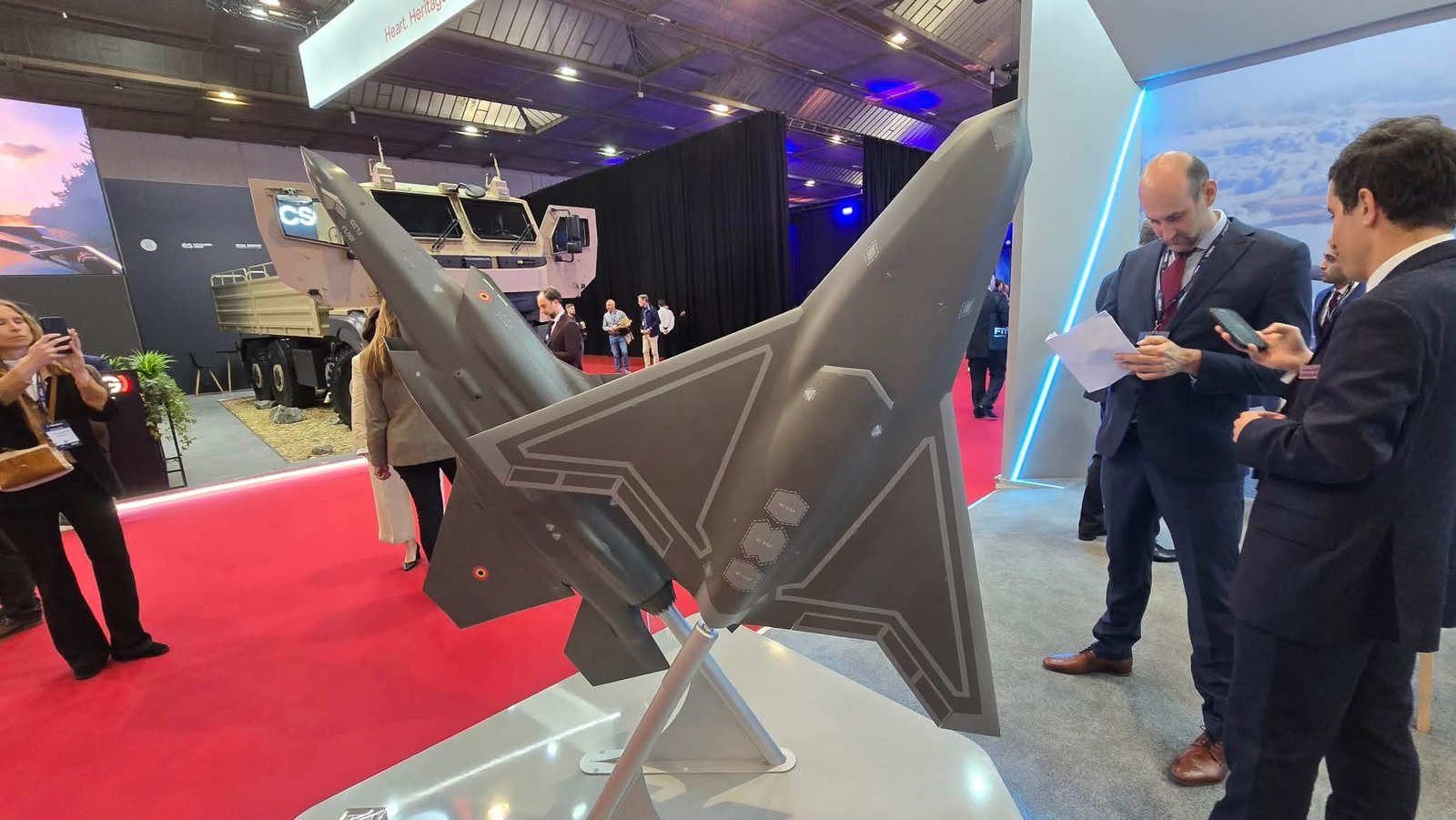
Europe
KIELCE, POLAND — Lockheed Martin has displayed its Vectis unmanned combat aircraft at the 34th International Defence Industry Exhibition (MSPO 2026) in Kielce, presenting the Skunk Works-developed Collaborative Combat Aircraft as a potential complement to fifth-generation fighters such as Poland’s F-35A. Poland is building a fleet of 32 F-35A fighters, and Vectis is designed to extend the capabilities of crewed aircraft by distributing sensors, weapons and electronic warfare functions across networked platforms. Vectis development and propulsion Lockheed Martin publicly unveiled Vectis on September 21, 2025, describing it as a Group 5 Collaborative Combat Aircraft developed by its Skunk Works division for U.S. and allied forces. The clean-sheet, internally funded programme was already under development when it was revealed, with parts ordered and company funding committed to a rapid design-build-fly schedule. Lockheed Martin is targeting a first flight in 2027. In December 2025, the company selected the Williams International FJ44-4 turbofan, which provides more than 3,600 pounds of thrust, to reduce propulsion risk as the aircraft moves toward flight testing. Missions and low-observable design Vectis is designed for precision strike, intelligence, surveillance and reconnaissance targeting, electronic warfare, and offensive and defensive counter-air missions. It also incorporates multi-domain connectivity and an open-system architecture. The aircraft uses a tailless configuration and blended shaping intended to support low observability. Lockheed Martin has not disclosed exact figures for its radar cross-section, maximum speed, combat radius or internal weapons capacity. The company says Vectis is smaller than an F-16 but larger than its compact CMMT missile-like drones. The aircraft could allow F-35s to operate with additional sensors, weapons and electronic warfare capabilities distributed across the formation. A Vectis operating farther forward could potentially collect targeting information, support electronic warfare or carry additional weapons while crewed aircraft remain at greater distance from heavily defended areas. Relevance to Poland The concept is particularly relevant to Poland as it develops its F-35 fleet and broader networked combat capabilities. In contested airspace, autonomous aircraft could provide additional capabilities without requiring every new combat platform to be a crewed fighter. Vectis is being positioned toward the higher-survivability end of the CCA market. This differs from the first U.S. Air Force CCA Increment 1 platforms, General Atomics’ YFQ-42A and Anduril’s YFQ-44, for which engineering, manufacturing, development and production contracts were awarded in June 2026. Lockheed Martin has not disclosed a procurement decision involving Poland. The 2027 first flight will provide an opportunity to demonstrate Vectis’ aerodynamic performance, propulsion, autonomy and mission-system integration as development continues.
Read More → Posted on 2026-09-13 15:26:43
U.S
WASHINGTON / ALBUQUERQUE, N.M. — The U.S. Air Force Research Laboratory (AFRL) has awarded BlueHalo LLC an indefinite-delivery/indefinite-quantity contract with a ceiling of $99,832,117 for the Leveraged Orbital Battlespace Optimization (LOBO) research and development program. The five-year contract is intended to support research aimed at advancing scientific knowledge and state-of-the-art technology for space systems. The contract is expected to run through August 29, 2031. Work will be carried out in Huntsville, Alabama, and at Kirtland Air Force Base, New Mexico. AFRL’s Space Vehicles Directorate at Kirtland is the contracting activity. At the time of the award, the Air Force obligated $1,696,597 in fiscal 2026 research, development, test and evaluation funds. The funding supports two initial task orders with a combined ceiling of $20,178,910. Additional work can be placed through future task orders under the contract. The award followed a competitive solicitation that received one offer. LOBO Program Details Remain Classified The public contract announcement provides limited information about the specific technologies or systems that will be developed under LOBO. The notice describes the effort broadly as research to advance scientific knowledge and state-of-the-art technology supporting space systems. The Air Force Research Laboratory and BlueHalo have not publicly released the technical details of the first two task orders, including the specific hardware, software or orbital platforms involved. BlueHalo has previously worked with AFRL in areas including autonomous space-based sensing, space situational awareness, battle-management command and control, and defensive counterspace technologies. The company has also developed space-based optical communications capabilities. In 2025, BlueHalo demonstrated a two-terminal optical communications system designed to simulate long-distance communications involving low-Earth, medium-Earth and geostationary orbits, advancing the system to Technology Readiness Level 6. BlueHalo Now Part of AeroVironment The LOBO award comes after BlueHalo became part of AeroVironment Inc. (NASDAQ: AVAV). AeroVironment completed its acquisition of BlueHalo in May 2025 through an all-stock transaction valued at approximately $4.1 billion. BlueHalo is based in Huntsville, Alabama, and Arlington, Virginia, while the LOBO work will be performed at its Huntsville operation and Kirtland Air Force Base. The new contract provides AFRL with a multi-year contracting vehicle for research related to the optimization of the orbital battlespace. While the contract has a maximum value of nearly $100 million, the amount ultimately spent will depend on future task orders issued during the contract period.
Read More → Posted on 2026-09-13 15:40:16
India
New Delhi — The Defence Research and Development Organisation (DRDO) has demonstrated and implemented indigenous Gallium Nitride (GaN) semiconductor technology for high-frequency defence applications, including next-generation radars and electronic warfare systems. The development is part of India’s efforts to build domestic capability in advanced semiconductor technology. The technology was highlighted in the Ministry of Defence’s annual report for 2025-26. It covers advanced components used to generate, amplify, receive and control high-frequency signals. Such components have applications in radar, electronic warfare, communications, intelligence, surveillance, reconnaissance and unmanned systems. Indigenous GaN Technology for X-Band Applications A single indigenous GaN chip measuring 3.5 × 3 mm can deliver up to 30 watts of power and operate at speeds reported to be 300 times faster than silicon. The development includes indigenous GaN Monolithic Microwave Integrated Circuit (MMIC) technology for applications up to the X-band. The technology also includes indigenously fabricated S-band GaN High Electron-Mobility Transistor (HEMT) power bars, power amplifiers, low-noise amplifiers and switch MMICs, which have been designed, fabricated and demonstrated. GaN is a semiconductor material suited to high-frequency and high-power applications. Its use in radar transmitters and electronic warfare systems allows the development of compact components capable of handling high-frequency signals and significant power levels. SSPL Develops GaN and SiC Technology The latest progress builds on work by DRDO’s Solid State Physics Laboratory (SSPL). In November 2024, the Ministry of Defence said SSPL had developed indigenous processes for manufacturing 4-inch-diameter Silicon Carbide (SiC) wafers and fabricating GaN HEMTs rated up to 150 watts and MMICs up to 40 watts for applications up to X-band frequencies. The Ministry said GaN/SiC technology can provide improved efficiency, reduced size and weight, and enhanced performance. It identified the technology as important for future combat systems, radars, electronic warfare, communications, intelligence, reconnaissance and unmanned systems. Limited production capability for indigenous GaN-on-SiC MMICs has also been established at the Gallium Arsenide Enabling Technology Centre (GAETEC) in Hyderabad. According to the Ministry, these multifunctional MMICs have applications in strategic systems, space, aerospace and 5G and satellite communications. iDEX Brings Private Industry Into GaN Development The development is also linked to the government’s Innovations for Defence Excellence (iDEX) programme. On December 1, 2023, iDEX-Defence Innovation Organisation signed its 300th contract with Agnit Semiconductors Private Limited for the design and development of advanced GaN semiconductors for next-generation wireless transmitters used in defence applications, including radars and electronic warfare jammers. The Ministry of Defence said at the time that almost all GaN components were being imported because the technology is sensitive and cutting-edge, with exports controlled or restricted by several countries. The project aimed to design, develop and manufacture GaN components in India using indigenous technology. The contract was signed in New Delhi by then Additional Secretary (Defence Industries Production) and Defence Innovation Organisation CEO T Natarajan with Agnit Semiconductors Private Limited. Former Defence Secretary Giridhar Aramane and senior civil and military officials were also present. The development of indigenous GaN and SiC-based MMIC technology, together with limited production capability at GAETEC and industry participation through iDEX, is intended to strengthen India’s domestic semiconductor capability for defence and other strategic applications.
Read More → Posted on 2026-09-13 16:00:05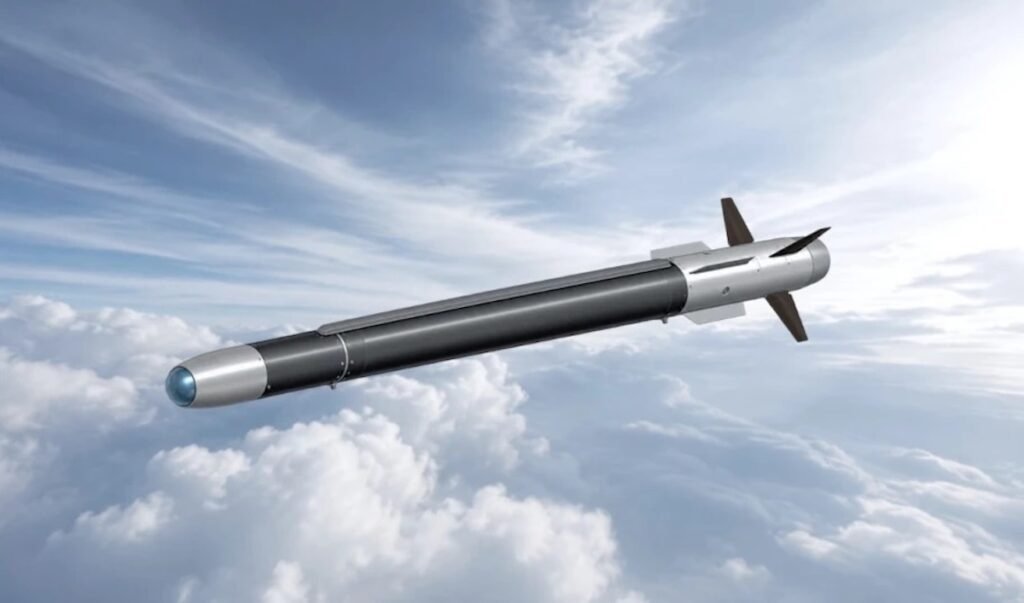
Europe
KIELCE, Poland — MBDA and Poland’s Military Institute of Armament Technology (WITU) are advancing the Counter Mass Interceptor (CMI), a low-cost, supersonic surface-to-air missile designed to counter mass attacks involving one-way attack drones, ISR drones, helicopters and cruise missiles. The programme follows successful seeker field trials in Poland in September 2026, which evaluated the infrared seeker against representative drone targets across several engagement scenarios. The results have cleared the way for the seeker to be integrated into a prototype missile designed by WITU. The first firing campaign is planned for 2027. The CMI is designed for high-volume production and to reduce the cost imbalance between relatively inexpensive drones and the more costly interceptors normally used against them. The missile is intended to engage targets at ranges and altitudes exceeding 6 kilometres. The interceptor weighs approximately 53 kg, is about 2.3 metres long and has a 122 mm diameter. It uses an infrared seeker and carries a blast-fragmentation warhead. MBDA first presented the CMI at the Farnborough International Airshow in July 2026, alongside its surface-launched ASRAAM offering. Polish Design with MBDA Seeker MBDA and WITU announced their cooperation at the MSPO 2026 defence exhibition in Kielce, where they signed a broader memorandum of understanding covering missile research. Under the CMI programme, WITU is responsible for the missile design, while MBDA provides the seeker technology. The arrangement gives Poland a major role in developing the weapon rather than limiting its participation to local assembly. MBDA has also indicated interest in producing the seeker in Poland, subject to approval by Polish authorities. WITU Director Colonel Paweł Sweklej said the cooperation combines a fully Polish missile design with MBDA's seeker technology and supports the development of Polish technologies for European missile solutions. Chris Allam, UK Managing Director of MBDA, said the project demonstrates MBDA's commitment to Poland and builds on its support for Poland's layered air-defence capability through the PILICA+ and NAREW programmes, including technology transfer. The partnership also comes under the Northolt Treaty, signed by British Prime Minister Keir Starmer and Polish Prime Minister Donald Tusk in May 2026 to strengthen defence cooperation and support joint development of next-generation munitions and European supply-chain resilience. Part of Poland's Layered Air Defence The CMI is being developed as an additional high-volume layer within Poland's expanding air-defence and counter-UAS capability. Poland is developing a combination of missiles, guns, electronic warfare systems, radars and other effectors to address different types of aerial threats. The CMI is intended for the lower-cost, high-volume end of this architecture, while systems including Piorun, CAMM and CAMM-ER provide other air-defence capabilities. MBDA already has a significant role in Poland through NAREW and PILICA+. WITU is also participating in the European Hypersonic Defence Interceptor System (HYDIS) programme, which focuses on future interceptor technologies for hypersonic and ballistic threats. The immediate focus of the CMI programme is prototype integration followed by the planned 2027 firing campaign. MBDA and WITU have not disclosed a unit price, production target or entry-into-service date.
Read More → Posted on 2026-09-13 16:16:30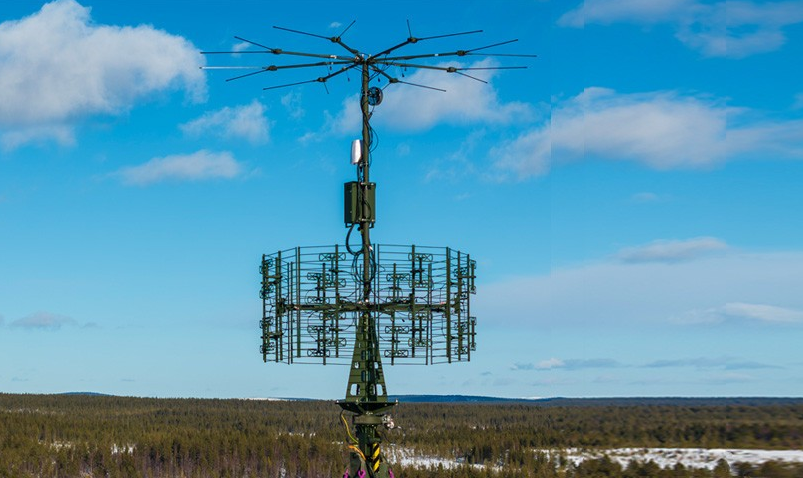
Europe
HELSINKI — Finnish defence company Patria has signed an agreement to supply its MUSCL passive radar system to an undisclosed European NATO member country. The contract covers several sensor stations needed to monitor a large area, along with spare parts, training and support services. The package is intended to support rapid operational deployment and further capability development. Patria has not disclosed the contract value or delivery schedule. Passive Radar for Air Surveillance Patria MUSCL is a transportable passive radar system designed to detect, track and report aerial targets in real time. It supports air surveillance, early warning and counter-unmanned aircraft system (C-UAS) missions. Instead of transmitting its own radar signals, MUSCL uses existing transmissions in the surrounding electromagnetic environment, including FM radio and DVB-T/DVB-T2 digital television broadcasts. This allows the system to monitor airspace without actively transmitting signals that could reveal its position. According to Patria, MUSCL provides 360-degree surveillance and can track more than 100 aerial targets simultaneously, with updates approximately once per second. The company cites detection ranges of under 150 km for fighter aircraft, under 80 km for helicopters and more than 10 km for small NATO Class 1 UAVs, depending on target type and operating conditions. Flexible Deployment MUSCL can operate as an individual sensor or as part of a network of multiple stations. The system can be operated locally or remotely and can integrate with command-and-control networks through standard interfaces. Patria also states that it is designed for unattended 24/7 operation once deployed. Mikko Leino, Executive Vice President of Patria’s Defence and Weapon Systems business area, said the agreement demonstrates the customer's confidence in Patria's passive sensor technology. “Patria MUSCL delivers a unique combination of covert surveillance, operational flexibility and cost-effective performance,” Leino said. Patria said demand for passive radar technology is growing across Europe as military forces strengthen air-defence and counter-UAS capabilities. MUSCL Demonstration in Estonia Patria will demonstrate MUSCL during the Electronic Warfare Live (EWLive) 2026 event in Estonia from September 15–17. During the demonstration, MUSCL will operate together with Patria’s CATCHR electronic support measures (ESM) system to provide real-time situational awareness of airspace over Estonia and southern Finland. Patria said neither system will transmit signals of its own during the demonstration. Patria has more than 30 years of experience in designing, developing and delivering passive radio-frequency sensor systems for intelligence, surveillance and electronic countermeasures.
Read More → Posted on 2026-09-14 12:35:45
World
MA’RIB, Yemen — Debris identified by open-source defense analysts as the booster stage of a Chinese-made DF-15A short-range ballistic missile has been documented in the Raghwan district of Ma’rib Governorate. Photographs of the wreckage circulated through regional military monitoring and open-source intelligence accounts. Analysts including MenchOsint and OSINTWarfare identified the cylindrical debris as a DF-15A booster based on its structure, aerodynamic fins and casing characteristics. The discovery comes amid renewed fighting around Ma’rib involving Houthi forces, also known as Ansar Allah, and forces aligned with Yemen’s internationally recognized government. Saudi Arabia has continued airstrikes in support of government forces in the area. INTERESTING: Chinese-made DF-15A missile booster found in Ma'rib, Yemen.Houthis don't have these missiles. Their arsenal is Iranian-derived. Saudi Arabia has a documented history of secret Chinese ballistic missile purchases (DF-3A, DF-21). Analysts are pointing to this as… pic.twitter.com/3JGGFYc2lk — Clash Report (@clashreport) September 14, 2026 The DF-15A is a Chinese solid-fuel, single-stage short-range ballistic missile. Its range is generally reported at around 600 kilometers, although some technical references give a range of 600–900 kilometers. It carries a conventional warhead, with published estimates varying between 500 and 750 kilograms. The reported identification has attracted attention because Saudi Arabia has a documented history of acquiring Chinese ballistic missiles, although neither Saudi Arabia nor China has publicly confirmed that Riyadh operates the DF-15A. Saudi Arabia’s longest-range ballistic missile in service is widely identified as the Chinese DF-3 (CSS-2), which was acquired in 1988 and publicly displayed by Saudi Arabia in 2014. The missile is estimated to have a range of approximately 2,500 kilometers and is associated with a warhead of about 2,000 kilograms. Saudi Arabia’s longest-range ballistic missile in service is the Chinese DF-3 (CSS-2), publicly displayed in 2014.An estimated ~2,500 km range with a ~2,000 kg warhead, acquired in 1988.DF-21 (CSS-5) is also widely reported in Saudi service, but never publicly displayed. pic.twitter.com/bybc8jcOYV — CrystalAura (@Ahmed_kv44) September 14, 2026 Saudi Arabia also acquired DF-21 (CSS-5) medium-range ballistic missiles from China, with the acquisition reported around 2007 and subsequently confirmed in U.S. government records. The DF-21 is widely reported to be in Saudi service but has not been publicly displayed. Publicly released information has also indicated Chinese assistance with Saudi ballistic-missile production infrastructure. The Houthis are not publicly known to operate the DF-15A. Their missile arsenal has included systems derived from older Soviet designs and Iranian-associated technology. No evidence presented so far links the Ma’rib debris to a Houthi-operated DF-15A. Some analysts have also raised the possibility of a Pakistani connection, citing the long-standing military relationship between Saudi Arabia and Pakistan and their Strategic Mutual Defence Agreement signed in September 2025. Pakistan does not publicly operate the DF-15A, instead fielding ballistic missiles including the Ghaznavi and Shaheen families. No physical evidence has publicly linked Pakistani forces or equipment to the Raghwan debris. The location and reported trajectory have led some open-source analysts to assess that the missile may have been launched from Saudi territory. However, this has not been officially confirmed. Saudi Arabia’s Ministry of Defense and the Chinese government have not publicly commented on the reported debris. Further evidence or official statements will be required to confirm the missile’s origin and operator.
Read More → Posted on 2026-09-14 12:54:11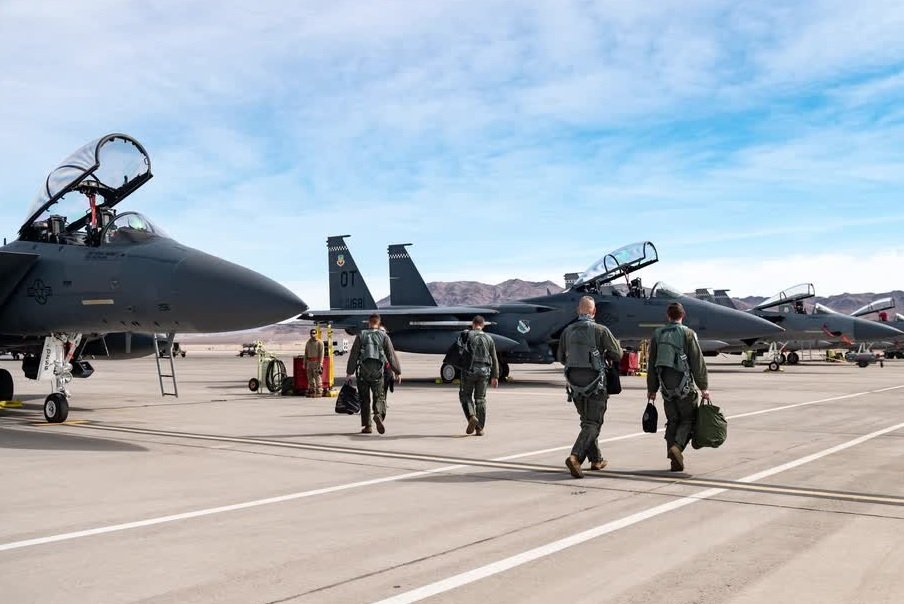
U.S
WASHINGTON — The U.S. Air Force’s first 16 F-15EX Eagle II fighters recorded an average materiel availability rate of 72.4% in fiscal 2026, according to a U.S. Department of War acquisition report. The figure, measured on February 24, 2026, covers aircraft EX1 through EX16. The rate is 12.4 percentage points above the program’s 60% minimum sustainment threshold, but remains below the Air Force’s 80% objective. The report describes the result as slightly below the objective and notes no formal performance deviation. Availability and Fleet Expansion The 60% threshold and 80% objective come from the Air Force’s Rapid Fielding Requirements Document, which Air Combat Command validated in August 2020. The targets have remained unchanged under the current acquisition baseline. As of April 14, 2026, 18 F-15EX aircraft had been delivered. The revised acquisition plan covers 268 aircraft in total, as the Air Force prepares to expand the fleet. Testing and Operational Status The F-15EX completed its main operational test phase in November 2023. Initial operational and live-fire evaluations found the aircraft effective in defensive and offensive counter-air missions against surrogate fifth-generation adversary aircraft. Testing also confirmed a basic air-to-ground capability. The Air Force approved full-rate production in June 2024 and declared initial operational capability in July 2024. Production and Supply Risks The acquisition report treats production delays and material shortages as separate schedule and industrial risks rather than performance shortfalls. It states that the F-15EX continues to meet all approved technical performance and cost thresholds. A 15-week strike at Boeing’s St. Louis production facility from August to November 2025 caused delivery delays. The disruption, along with parts and material supply risks, pushed the projected full operational capability date to early 2028. The Air Force continues efforts to increase production rates. Under the fiscal 2027 budget request, recent program updates put the planned fleet at approximately 267–268 aircraft. Operating and Support Costs The report estimates annual operating and support costs at $13.1 million per fighter in constant fiscal 2020 dollars. The estimated annual cost includes: Maintenance: $7.2 million Unit operations: $3 million Unit-level manpower: $1.9 million Sustaining support and continuing system improvements: Remaining costs Software and Aircraft Configuration F-15EX software is provided through the separate F-15 Continuous Development and Integration program, which also supports the F-15C, F-15D and F-15E. The report identifies no significant software-related problems for the F-15EX. The two-seat F-15EX Eagle II is based on the F-15QA configuration built for Qatar and includes Air Force-specific electronic warfare systems and mission software. It is initially intended to replace aging F-15C and F-15D aircraft in defensive and offensive counter-air missions. The 72.4% availability rate provides an early measure of F-15EX sustainment performance as the Air Force continues deliveries and prepares to expand the fleet.
Read More → Posted on 2026-09-14 13:29:44
U.S
WASHINGTON, D.C. — Lockheed Martin’s Skunk Works is expanding its Vectis Collaborative Combat Aircraft (CCA) program by building four additional airframes, bringing the total planned number to five. The company announced the expansion during the Air, Space & Cyber Conference near Washington, D.C., where a full-scale Vectis model was displayed publicly for the first time. First Flight Remains Targeted for 2027 Ron Fehlen, vice president and general manager of Skunk Works, said development of the four additional aircraft is already underway. The first Vectis prototype remains on track for its initial flight by the end of 2027. The additional airframes will support expanded testing and production-process validation. Experience gained from the first aircraft is expected to help later airframes be built and flown more quickly. Vectis Aircraft Design Vectis is a tailless, subsonic, multirole unmanned aircraft designed for the Collaborative Combat Aircraft role. It is intended to operate independently or alongside crewed fighters such as the F-35. The aircraft is approximately: Length: 10.4 metres (34 feet) Wingspan: 11.6 metres (38 feet) Category: U.S. Group 5 unmanned aircraft Group 5 covers unmanned systems weighing more than 599 kilograms (1,320 pounds) and operating above 5,486 metres (18,000 feet). Vectis features a top-mounted submerged engine inlet, designed to reduce drag and lower the risk of debris entering the engine during operations from austere locations. The aircraft has an internal weapons bay and an open systems architecture designed to support multiple missions, including air-to-air, air-to-ground, intelligence, surveillance and reconnaissance, and electronic warfare. Engine and Development Weapons, production-engine details and unit cost have not been disclosed. The prototype will initially use a Williams International FJ44-4 turbofan producing more than 3,600 pounds of thrust. Lockheed Martin is examining higher-thrust options for later versions. The company has said Vectis is being designed to meet a competitive CCA price point. Lockheed Martin said the program progressed from the first design sketch to a wind-tunnel test in less than two months. The first digital build was completed in six months, while the first physical part was released in eight months. The company said the rapid development has been supported by digital design and manufacturing methods developed through internal investment. U.S. CCA Competition The U.S. Air Force selected General Atomics’ YFQ-42A and Anduril’s YFQ-44A for its first CCA increment. The service has outlined a longer-term goal of acquiring around 1,000 CCAs, with a target cost of about $20 million per aircraft before sensors and mission systems. Lockheed Martin is also discussing Vectis with potential U.S. Navy customers and international partners. The concept has previously been displayed at events including the Farnborough International Airshow. The company has not specified exact roles for the four additional Vectis airframes beyond expanded testing and production validation.
Read More → Posted on 2026-09-14 13:39:13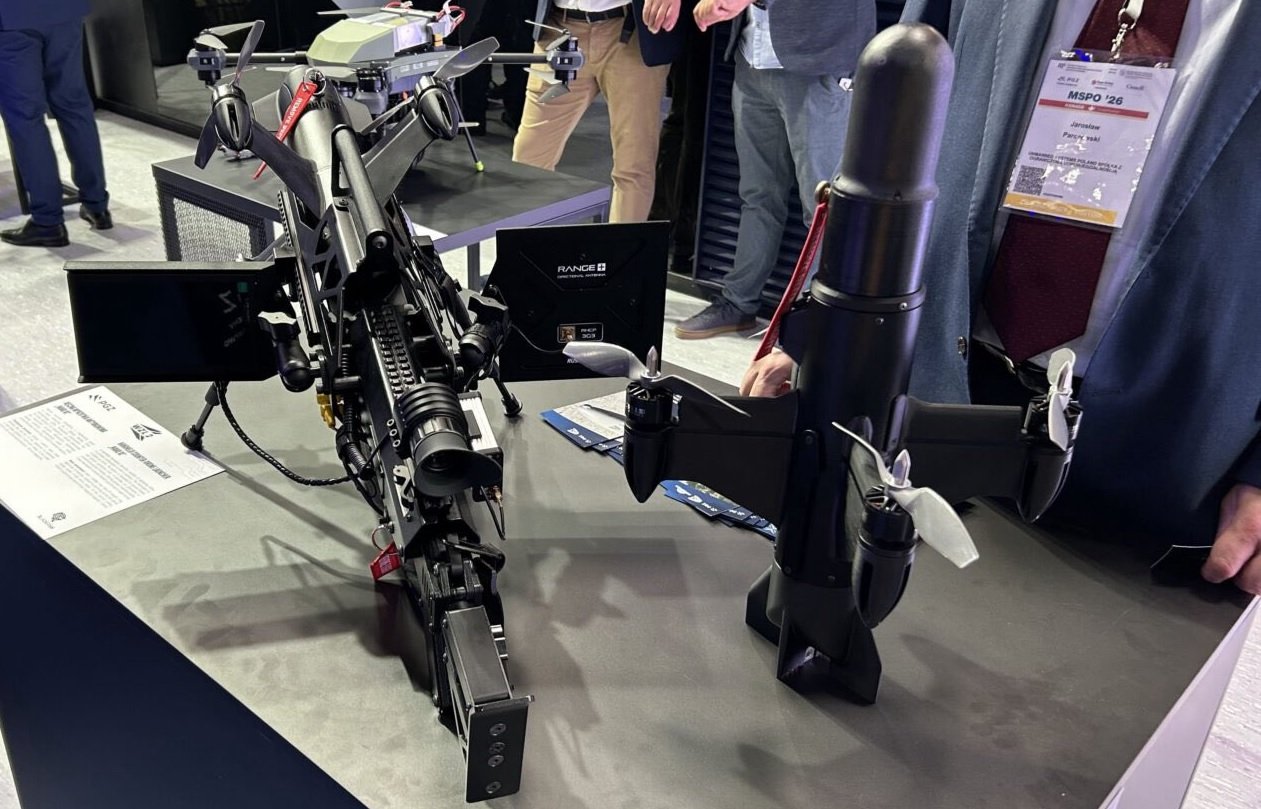
Europe
KIELCE, Poland — Polish aviation company Wojskowe Zakłady Lotnicze Nr 2 (WZL-2), part of the state-owned Polska Grupa Zbrojeniowa (PGZ), and private Polish technology company Blackfish P.S.A. presented the MAKO X1, a man-portable counter-drone launcher, at the MSPO 2026 International Defence Industry Exhibition in Kielce. The system was presented during MSPO, which was held from September 8 to 11, 2026. According to information from the developers and reports from the exhibition, the MAKO X1 is designed to intercept one-way attack drones in the Shahed/Geran class, particularly in open terrain. Single-Soldier Counter-Drone System The MAKO X1 uses a single-use interceptor drone carried in a handheld launcher. The interceptor can operate in a kinetic configuration or carry a warhead. The system is intended for Poland’s ground forces and special operations forces and is positioned as an alternative to conventional guided missiles for countering unmanned aerial systems. Its developers emphasize the interceptor's maneuverability and its ability to operate autonomously during the attack phase. Blackfish developed the interception software in-house. Initial target detection is performed exclusively through an optical channel, rather than an active radar. After launch, the interceptor is designed to conduct its attack autonomously. The developers state that the system is resistant to electronic interference during the attack phase, supporting operation in environments where electronic warfare can affect unmanned systems. MAKO X1 Specifications Parameter Specification Operator 1 soldier Maximum takeoff weight 3 kg Flight time About 10 minutes Maximum speed Up to 400 km/h Range Up to 10 km Service ceiling 4,000 m Target detection Optical channel Attack mode Autonomous Interceptor carried 1 Interceptor configuration Kinetic or warhead The published specifications show a compact interceptor with a maximum speed of 400 km/h, a range of 10 km, a service ceiling of 4,000 meters, and approximately 10 minutes of flight time. WZL-2 and Blackfish WZL-2 is part of PGZ and is one of Poland's major aviation companies. Its activities include maintenance, repair and modernization of military aircraft, as well as work involving unmanned systems. The company was among the Polish defense firms presenting a range of unmanned and aviation-related technologies at MSPO 2026. Blackfish is a privately owned Polish technology company involved in autonomous and counter-drone systems. For the MAKO X1, it developed the interception software and optical-based target-processing capability. WZL-2 also displayed the SAR EVO5 WP bomber drone at MSPO 2026, configured with four payload-release mechanisms. The MAKO X1 presentation reflects the growing focus on portable counter-UAS systems designed to give ground units a dedicated means of engaging attack drones. The developers have presented the system as a more maneuverable alternative to conventional guided missiles, while its stated specifications focus on short-range interception using an autonomous interceptor drone.
Read More → Posted on 2026-09-14 13:55:56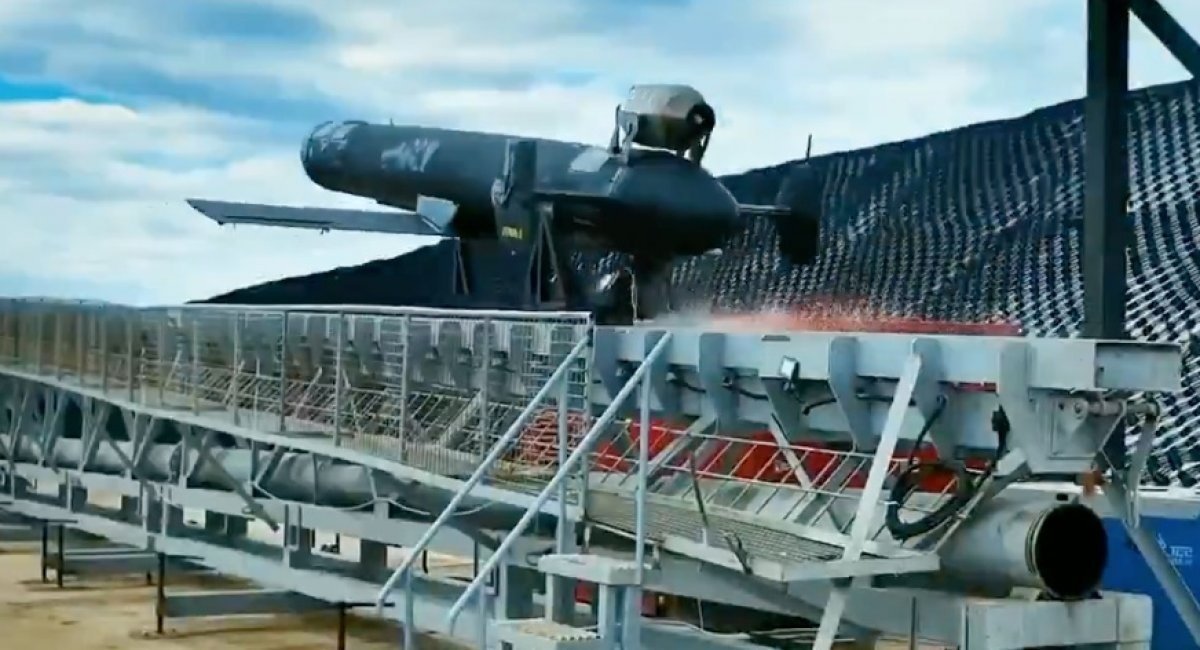
World
KYIV — Russia is increasing production of low-cost, jet-powered strike weapons, including the Geran-5 drone and S8000 Banderol cruise missile. Both systems use Chinese components and are estimated to cost around $100,000 each, far below the more than $2 million cost of high-end U.S. Tomahawk cruise missiles. The new weapons are designed to provide greater speed and strike capability than Russia's earlier propeller-driven Geran drones while remaining relatively inexpensive to produce. Geran-5 The Geran-5 was first identified in combat use in early January 2026. According to Ukraine's Main Intelligence Directorate (GUR), it has a maximum takeoff weight of about 850 kg, a cruising speed of 450–600 km/h, endurance of roughly two hours and a range of up to 950 km. It can operate at altitudes up to 6 km, although recorded use has been between 200 meters and 3 km. The drone carries a warhead of about 90 kg and uses a conventional fixed-wing design with a tubular fuselage. It is approximately 6 meters long, with a 5.5-meter wingspan, and uses carbon fiber over an aluminum and steel structure. Power comes from a Chinese Telefly TF-TJ2000A turbojet engine producing about 200 kg of thrust. Its equipment includes the Kometa-M12 satellite navigation system with a 12-element anti-jamming antenna, inertial navigation, a flight controller and Tracker V3 telemetry equipment using a Raspberry Pi-style computer with 3G/LTE modems. A Chinese Xingkai Tech XK-F358 mesh modem provides communication through a daisy-chain network between drones. GUR has also identified U.S.-made microchips from Texas Instruments, CTS Corporation and Monolithic Power Systems, along with at least one chip from Germany's Infineon Technologies. S8000 Banderol The S8000 Banderol, developed by Russia's Kronshtadt Group, was publicly detailed by Ukrainian intelligence in 2025. It is about 5 meters long, has a 2.2-meter wingspan and a range of up to 500 km. The missile cruises at around 520–560 km/h, with a maximum speed of approximately 650 km/h. It carries an OFBCh-150 high-explosive fragmentation warhead weighing 114.3 kg, including about 50 kg of explosives. The Banderol is powered by a commercially available Chinese Swiwin SW800Pro turbojet engine and combines inertial and satellite navigation. Its main launch platform is the Orion (Inokhodets) UAV. It has also been tested or used from Mi-28 helicopters, while ground-launched versions have been observed. Ukrainian sources estimate its cost at $50,000–$150,000, consistent with the roughly $100,000 estimate. Chinese Components and Production Investigations of wreckage recovered in Ukraine have identified Chinese engines, navigation equipment, communications systems, carbon-fiber materials and other dual-use components in Russian weapons. Some Western-made electronics have also been identified despite sanctions. Reports indicate that Russia is producing hundreds of jet-powered Geran variants each month. One reported target included approximately 1,200 Geran-4 and 800 Geran-5 drones in a single month, while Banderol production has been reported at up to 120 missiles per month. China has stated that it does not provide lethal weapons to either side and maintains controls on dual-use exports. Western and Ukrainian investigations have nevertheless identified supply routes through third countries that allow components to reach Russian production networks. Impact on Air Defense The higher speed of jet-powered drones gives Ukrainian air defenses less time to detect and engage them compared with slower propeller-driven drones. Ukraine has improved its ability to intercept older Geran systems, but the faster variants can require more capable and expensive air-defense systems. The low cost of the Russian weapons creates an economic challenge when expensive interceptors are used against them. The development also has implications beyond Ukraine. Russia, Iran and North Korea exchange military technology and production experience, while combat-tested developments from the war in Ukraine can potentially influence military programs elsewhere, including those of Iran and North Korea. The combination of low cost, higher speed, improved navigation and access to foreign components is allowing Russia to expand production while Ukraine and its partners continue adapting their air defenses and efforts to restrict sanctions-evasion supply networks.
Read More → Posted on 2026-09-14 14:56:32
World
JEDDAH — Saudi Crown Prince Mohammed bin Salman met with U.S. Central Command (CENTCOM) Commander Admiral Brad Cooper in Jeddah on Monday as Saudi Arabia responds to growing security concerns involving Yemen and Iraq. According to the Saudi Press Agency, the two officials discussed Saudi-U.S. military relations and the latest regional developments. Saudi Minister of State, Cabinet Member and National Security Adviser Musaed bin Mohammed Al-Aiban also attended the meeting. Houthi Forces Advance Along Red Sea Coast The meeting came amid a new escalation involving Yemen's Iran-aligned Houthi movement. The Houthis captured the port city of Mocha on September 10 and subsequently advanced toward the Bab el-Mandeb Strait. Their reported capture of Mayun Island and positions in the Hanish Islands has increased their presence around the strategically important maritime area. The Bab el-Mandeb connects the Red Sea with the Gulf of Aden and is an important route for international shipping. The Houthi advances have also raised security concerns in southern Saudi Arabia. Saudi Civil Defense issued alerts for Najran, Khamis Mushait, Jazan and Abha following missile and drone attacks. The alerts were later lifted after authorities said the areas were safe. Drone Attack Hits East-West Pipeline Saudi Arabia is also dealing with a separate security incident involving its energy infrastructure. Drones launched from Iraqi territory reportedly struck Saudi Arabia's East-West oil pipeline on the night of September 10-11. The attacks affected pumping stations in the Riyadh and Medina regions and caused injuries and damage. Saudi Arabia temporarily shut down the pipeline as a precaution. The approximately 1,200-kilometer pipeline transports crude oil from Saudi Arabia's eastern oil-producing areas to the Red Sea port of Yanbu. The route provides Saudi Arabia with an alternative to shipping oil through the Strait of Hormuz. Saudi authorities said the drones originated from Iraq, while Iraqi authorities began an investigation into the attack. Riyadh has indicated that it is prepared to cooperate with Baghdad on a joint investigation. Saudi Arabia Seeks U.S. Support The recent developments have increased the importance of military coordination between Riyadh and Washington. According to reports, Crown Prince Mohammed bin Salman spoke with U.S. President Donald Trump as the Houthi offensive developed and sought U.S. military assistance. The United States did not agree to conduct direct strikes against the Houthis but offered intelligence-sharing and targeting assistance to Saudi Arabia. The United States and Saudi Arabia have also previously conducted joint military operations against Iran-aligned groups. On July 28, CENTCOM and Saudi forces carried out precision strikes in Iraq following more than 30 drone attacks over a 72-hour period, according to the information provided by U.S. officials. Regional Security Concerns Saudi Arabia is now monitoring developments involving the Houthis in Yemen as well as Iran-aligned armed groups operating from Iraq. The situation also comes amid wider regional tensions affecting energy infrastructure and maritime routes. A planned meeting in Oman between Gulf countries and Iran was postponed, with officials saying the delay was intended to provide better conditions for dialogue. The meeting between Mohammed bin Salman and Admiral Cooper comes as Riyadh continues discussions with Washington over defense cooperation and the security situation across the region.
Read More → Posted on 2026-09-14 15:10:30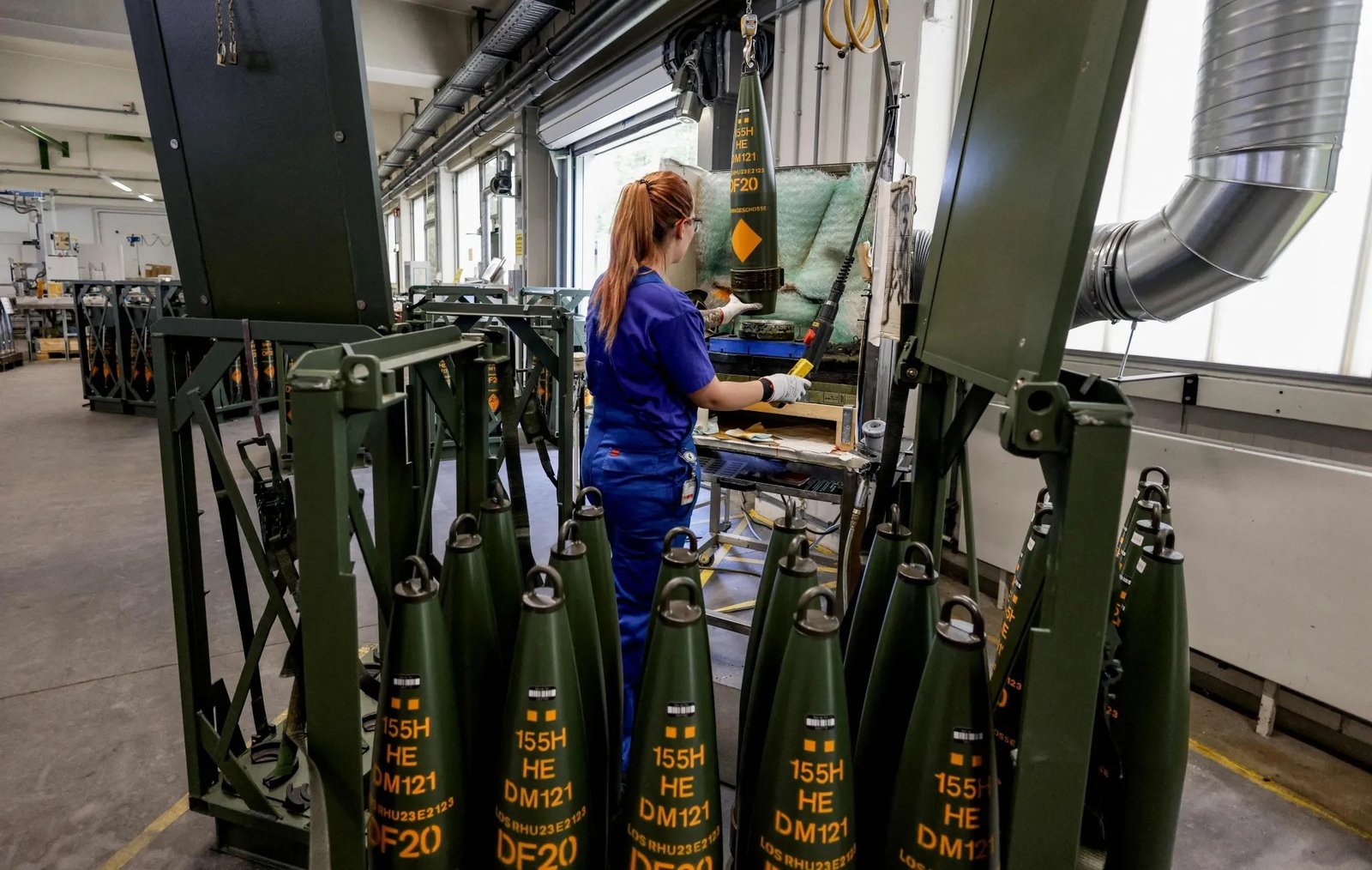
Europe
DÜSSELDORF, Germany — German defence company Rheinmetall has secured a major contract worth a low three-digit million-euro amount from an undisclosed international customer for 155mm artillery projectiles. The order covers a low five-figure number of projectiles. Rheinmetall said the contract was recognised in its third-quarter 2026 order intake, with production already underway and deliveries scheduled to be completed by the end of 2027. The customer, exact quantity and specific projectile designation have not been disclosed. The ammunition belongs to Rheinmetall’s standard 155mm artillery portfolio and is already in service with several NATO member states. Designed according to NATO’s Joint Ballistic Memorandum of Understanding (JBMOU), the projectiles can be used with standard 155mm systems including the Panzerhaubitze 2000, CAESAR, Archer and RCH 155. Rheinmetall says the ammunition provides long-range capability and high effectiveness. The contract comes as Rheinmetall continues to expand its artillery ammunition production following increased demand since 2022. The company plans to reach annual production capacity of around 1.1 million 155mm rounds by 2027 and approximately 1.5 million by 2030. Rheinmetall is expanding production facilities across Europe, including its Unterlüß site in Lower Saxony. In July 2026, the company began construction of a new powder-production facility at its Nitrochemie site in Aschau am Inn, Bavaria. The facility is planned to produce more than one million modular propellant charge modules, along with additional propellant powder and combustible components, with maximum production capacity expected in 2028. Rheinmetall also announced in July that projectiles from its new Werk Niedersachsen plant in Unterlüß had been delivered to Ukraine for the first time. The shipment involved a low five-figure number of 155mm projectiles, with additional propellant charges supplied from other Rheinmetall facilities. The latest order follows separate 155mm ammunition contracts for Ukraine announced by Rheinmetall in June and July 2026. One July contract, funded by a NATO member, covered several thousand 155mm shells and propellant charges, with delivery planned before April 2027. Rheinmetall’s Weapon and Ammunition division generated €1.757 billion in sales in the first six months of 2026, up 33 percent from the same period in 2025. The company said ammunition packages for Hungary, as well as artillery and medium-calibre ammunition for Ukraine, were among the main contributors. The latest international contract adds to Rheinmetall’s expanding 155mm ammunition production commitments as the company works toward its target of approximately 1.5 million rounds annually by 2030.
Read More → Posted on 2026-09-14 15:23:33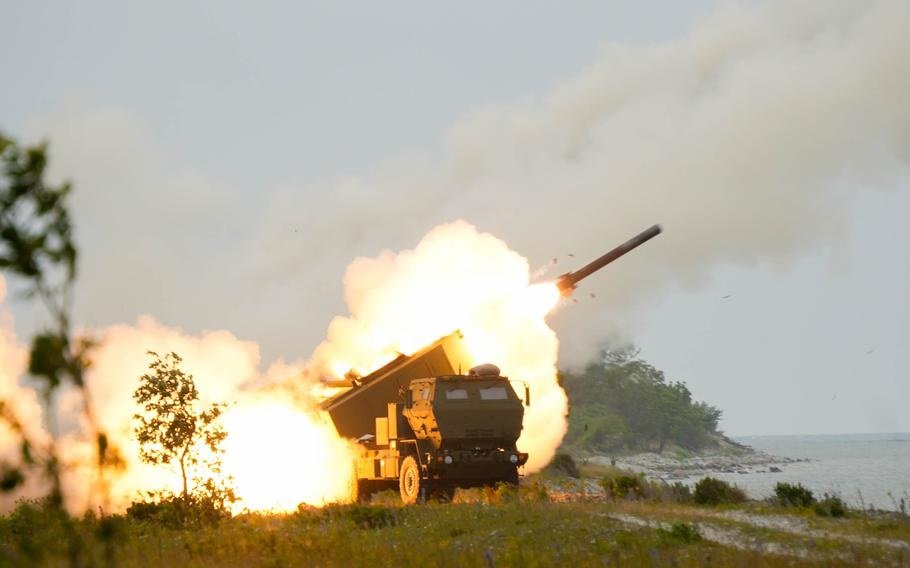
World
TALLINN, Estonia — A shipment of ammunition for Estonia’s M142 High Mobility Artillery Rocket Systems (HIMARS) is expected to arrive in the country shortly, Defence Minister Hanno Pevkur has said. Estonian specialists are currently in the United States preparing the rockets for transport. Once the remaining procedures are completed, the ammunition will begin its journey to Estonia and could arrive as early as this month, according to reports by Estonian public broadcaster ERR. The Estonian Centre for Defence Investments signed the original contract for HIMARS systems and associated missiles in late 2022. The order included ammunition with ranges of about 70 kilometres, including Guided Multiple Launch Rocket System (GMLRS) rockets, and 300 kilometres, in the form of ATACMS ballistic missiles. Pevkur said the United States is not currently transferring the longer-range 300-kilometre ATACMS missiles to its allies because of the ongoing situation involving the war with Iran. Shorter-range GMLRS ammunition and training rounds have been cleared for delivery. Estonia received all six HIMARS launchers from its first contract in April 2025. The systems were subsequently brought into service with the Estonian Defence Forces and conducted their first live-fire exercises in 2025. Estonia Orders Three More HIMARS Launchers Estonia signed a further contract with Lockheed Martin in April 2026 for three additional HIMARS launchers, along with more ammunition. Delivery of the additional systems is scheduled for 2027. The agreement also includes an investment of about $11 million in Estonia’s defence industry. Under the arrangement, Estonian companies are expected to develop local capabilities for maintaining HIMARS components. Lockheed Martin is also set to establish a HIMARS maintenance centre in Estonia. The facility is intended to provide an important maintenance and support capability for the HIMARS systems in the Baltic region. The original 2022 procurement package also included communications equipment, training, logistics support and different types of ammunition. With six launchers already in service and three more on order, Estonia is continuing to expand its HIMARS capability and ammunition stocks as part of its defence development.
Read More → Posted on 2026-09-14 15:53:25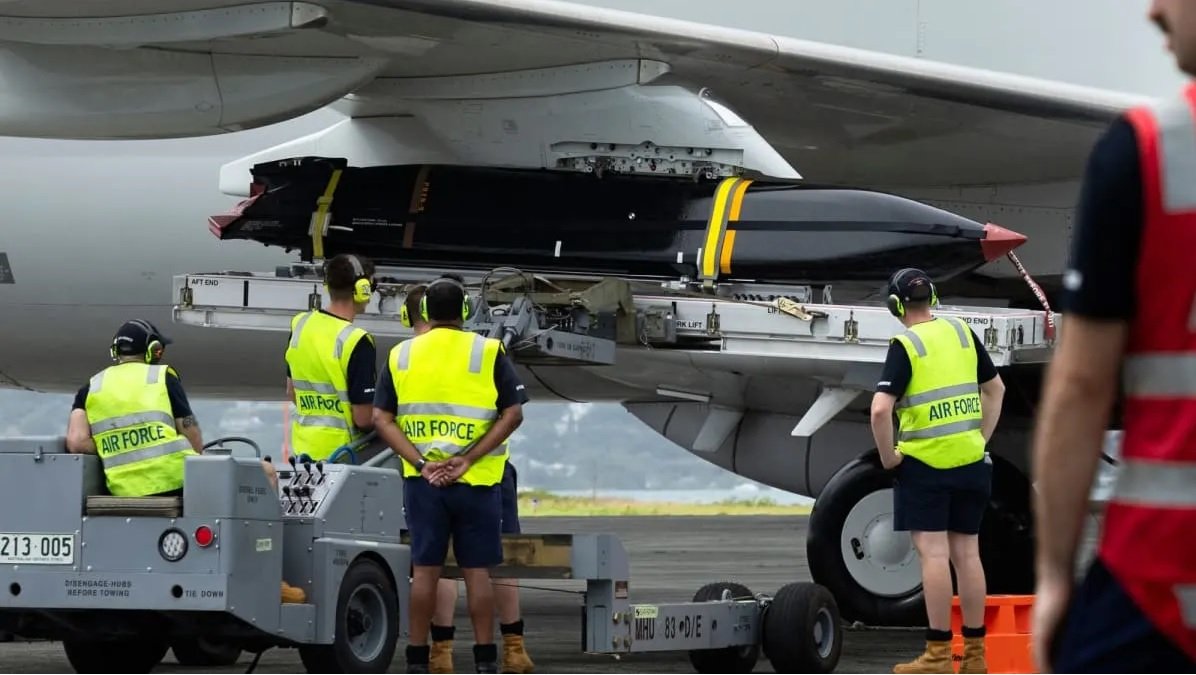
World
CANBERRA — The Royal Australian Air Force (RAAF) has achieved Initial Operational Capability (IOC) with the AGM-158C Long Range Anti-Ship Missile (LRASM) and AGM-158B Joint Air-to-Surface Standoff Missile–Extended Range (JASSM-ER). The Australian Department of Defence announced the milestone on September 11, confirming that the two long-range weapons have completed operational testing and entered operational service. Long-Range Maritime and Land Strike The LRASM is an air-launched, precision-guided, semi-autonomous missile designed to engage high-value, well-defended maritime targets at ranges exceeding 370 kilometres. The JASSM-ER is an air-launched, precision-guided land-strike cruise missile capable of locating, identifying and defeating targets at ranges of up to 900 kilometres from the launch aircraft. The IOC declaration specifically covers their operational capability on the RAAF's F/A-18F Super Hornet aircraft. Testing included weapon preparation and loading, targeting and successful engagements. RAAF Chief of Air Force Air Marshal Stephen Chappell said the weapons would increase the lethality of air combat aircraft and improve the service's ability to conduct precise long-range strikes while avoiding increasingly sophisticated air defences. Testing and RIMPAC 2026 The capability followed a series of tests in Australia and the United States. In February 2025, two LRASM missiles were successfully test-fired by RAAF F/A-18F Super Hornets at the Point Mugu Sea Range in the United States. In November 2025, two JASSM-ER missiles were successfully test-fired at the Woomera Test Range in South Australia. During Exercise Rim of the Pacific 2026 (RIMPAC 26), a RAAF P-8A Poseidon successfully fired an LRASM and hit its target during a sinking exercise. It was the first employment of LRASM by an Australian P-8A and formed part of dual launches involving RAAF and U.S. Navy maritime patrol aircraft. Acquisition and Future Integration Australia received U.S. Foreign Military Sales approval for the LRASM in February 2020 and for the JASSM-ER in July 2022. U.S. Defence Security Cooperation Agency notifications listed up to 200 LRASM and 80 JASSM-ER, although Australian Defence has not publicly detailed the final number purchased. Both missiles use a common low-observable body design and carry an approximately 450-kilogram warhead. JASSM-ER entered U.S. Air Force service in 2014, while LRASM entered U.S. Air Force service in 2018 and U.S. Navy service in 2019. Australia also plans to integrate both weapons with its F-35A Lightning II fleet. The LRASM and JASSM-ER are part of Australia's wider long-range strike program, which also includes the Naval Strike Missile, Joint Strike Missile and AGM-88G AARGM-ER. Australia is also acquiring up to 220 BGM-109 Tomahawk missiles for its Hobart-class guided-missile destroyers. The broader long-range maritime and surface strike investment is planned at A$30 billion to A$37 billion over the next decade under Australia's Integrated Investment Program. The introduction of the two AGM-158 weapons involved the RAAF, Defence Delivery Group, Joint Capabilities Group, whole-of-government partners, and U.S. military and industry partners. The capability supports Australia's deterrence-through-denial approach outlined in the National Defence Strategy.
Read More → Posted on 2026-09-14 16:06:41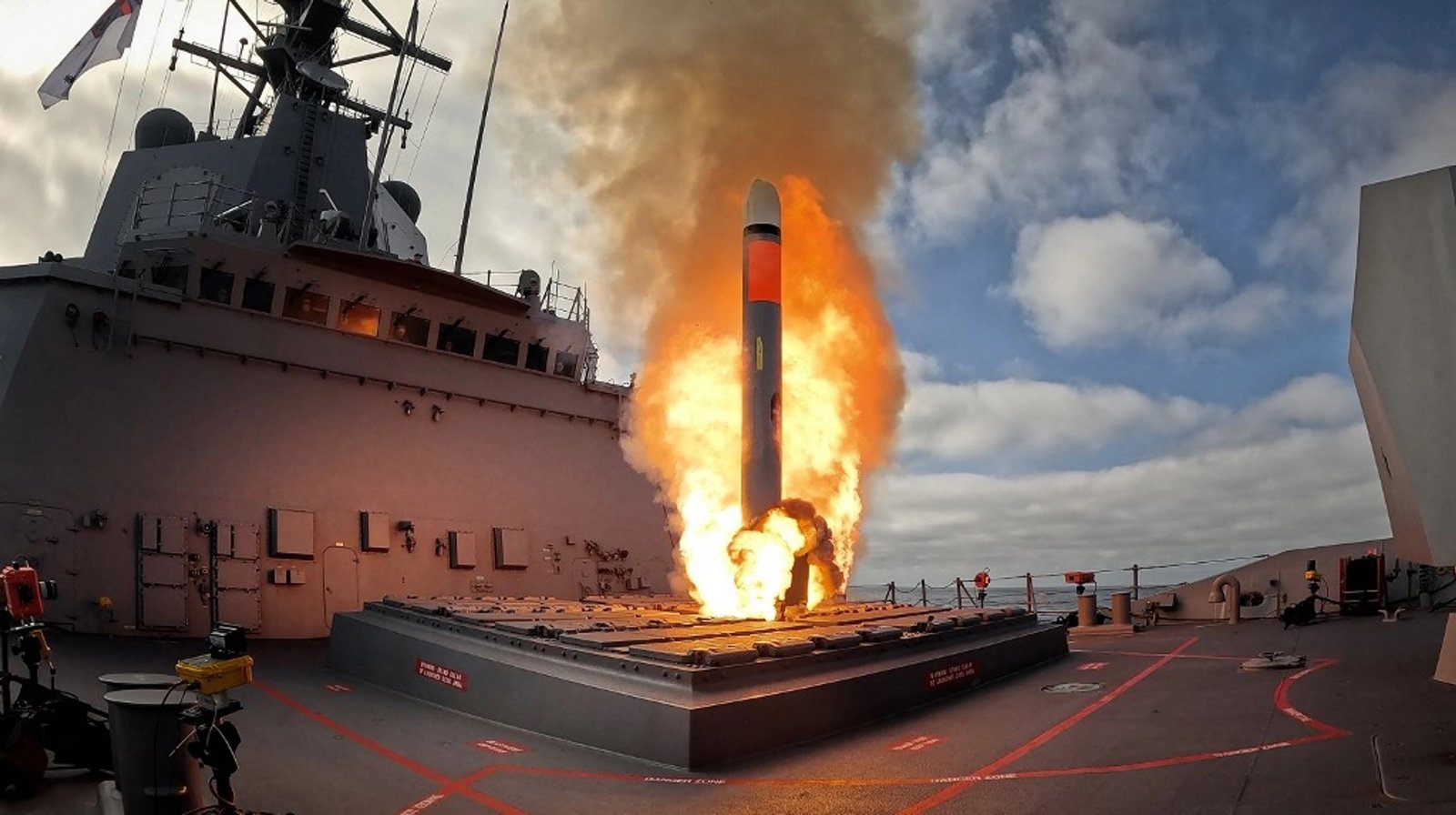
Europe
BERLIN — Germany is planning to spend nearly €3.4 billion ($3.75 billion) to acquire US-made Typhon mobile launchers and Tomahawk cruise missiles, according to an internal Defense Ministry planning document first reported by Politico. The proposed spending is expected to be considered during preparations for Germany’s 2027 federal budget. The final cost and number of missiles and launchers have not yet been decided and will require Bundestag approval. A German Defense Ministry spokesperson declined to confirm the exact budget allocation because the budget process is ongoing, but said that “the procurement of the US Typhon system with Tomahawk cruise missiles remains intended.” Germany has already submitted a formal Letter of Request to the US Department of Defense. Ground-Based Long-Range Strike Capability The acquisition would give the Bundeswehr its first independently operated, ground-based long-range conventional strike capability. Germany has traditionally relied mainly on air-launched weapons, including the Taurus KEPD 350. The Typhon system, also known as the Strategic Mid-Range Fires (SMRF) system and built by Lockheed Martin, uses mobile launchers based on modified Mk 41 vertical launch cells. It can launch Tomahawk cruise missiles and is also designed to fire SM-6 missiles. Tomahawk missiles are produced by Raytheon, now part of RTX, and have a reported range of about 2,500 kilometers. Germany’s planning documents indicate that the Bundeswehr aims to bring the Typhon system into service by the end of the decade. From US Deployment to German Ownership The planned purchase follows the cancellation of an earlier US deployment plan. In July 2024, then-US President Joe Biden and German Chancellor Olaf Scholz agreed to begin rotational deployment of US long-range weapons in Germany from 2026, including US-operated Tomahawk missiles. The Trump administration later canceled the planned deployment. Germany subsequently approached Washington in 2025 to purchase its own Typhon launchers and Tomahawks. German Chancellor Friedrich Merz and US President Donald Trump reached an agreement in principle during the NATO summit in Ankara. The exact quantities remain undisclosed, while further details of the procurement are still being negotiated. German Industry Participation Berlin is also seeking German industrial participation in the program, including possible manufacturing and maintenance work. The Defense Ministry planning document refers to “the prospect of industrial cooperation.” However, no binding workshare or production agreement has been finalized. The United States is expected to retain control over sensitive technology and intellectual property. Part of Wider Long-Range Strike Plans The Typhon and Tomahawk acquisition is part of Germany’s broader long-range strike plans. Berlin is also pursuing the Taurus Neo modernization program and participating in the European Long-Range Strike Approach (ELSA). Germany is also working with the United Kingdom on a future European deep-strike cruise missile intended to provide a range of up to 2,000 kilometers in the 2030s. The Typhon program would allow Germany to operate a ground-based long-range strike capability under its own control rather than relying on rotational US deployments.
Read More → Posted on 2026-09-14 16:17:35
World
MOSCOW, — Russia may develop a service similar to Flightradar for tracking Ukrainian drones, according to Alexey Chadayev, CEO of the Ushkuynik Research and Production Center. Chadayev told Russia’s state news agency TASS that the first step would be to establish a unified sensor network operator because the current process of detecting unmanned aerial vehicles (UAVs) is fragmented. Proposed Unified Sensor Network Chadayev said the proposed network could be developed using existing infrastructure operated by Rostelecom and major Russian cellular companies. He specifically pointed to telecommunications towers and fiber-optic cables as the foundation for the network. According to Chadayev, negotiations on creating such a unified sensor network operator are already underway. He said Russia needs a specialized system similar to Flightradar, but designed for tracking drones. The proposed system would bring information from different detection sources into a common network. It would allow personnel involved in countering UAVs to see detected targets, identify them and assign tracking numbers. Coordinating Drone Interception Chadayev said the system would also help coordinate which unit is tracking a particular UAV and which unit would ultimately intercept it. He highlighted the importance of controlling where a drone is intercepted because falling debris can cause damage on the ground. According to Chadayev, one of the main challenges is destroying a drone in a location where its descent causes the least possible damage. The proposal therefore focuses not only on detecting drones but also on creating a common picture of their movement and coordinating the response among those involved in counter-UAV operations. Earlier Proposal for Civilian Low-Altitude Airspace Control Chadayev had previously supported the creation of a unified federal civilian low-altitude airspace control system in Russia to counter Ukrainian drones. His latest proposal would use existing telecommunications infrastructure as part of a broader sensor network rather than relying only on separate detection systems. The proposal comes as Russia continues developing systems designed to combine drone detection and counter-UAV capabilities. For example, Russia's High Precision Systems has said its systems can combine radar and optoelectronic detection with other air-defense systems to create a unified air situation picture. At this stage, the Flightradar-like drone tracking service remains a proposal discussed by Chadayev, with negotiations involving Rostelecom and major cellular operators reported as underway. TASS did not report that a nationwide operational service has already been established.
Read More → Posted on 2026-09-14 16:28:31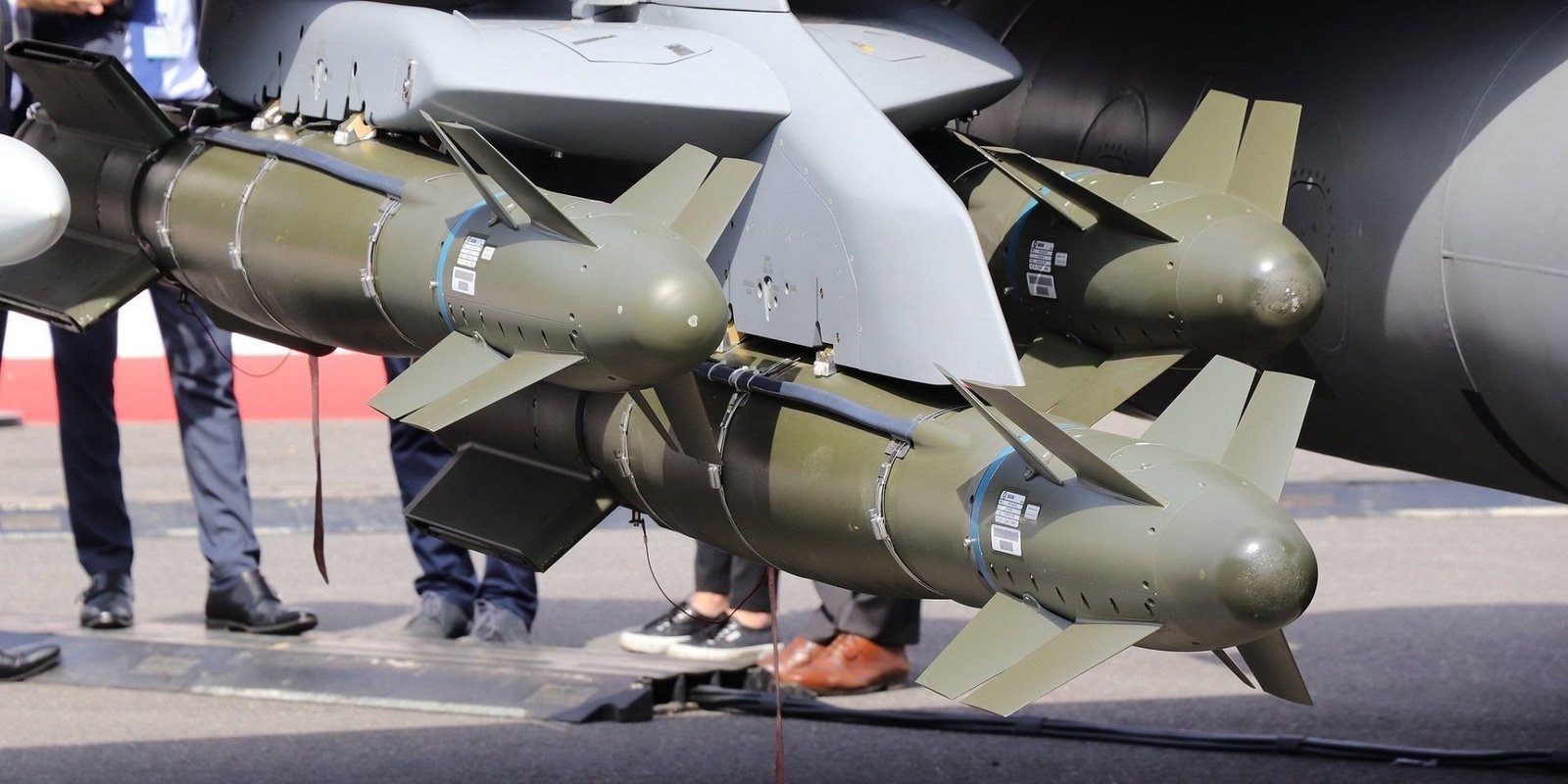
Europe
PARIS / STOCKHOLM — France and Sweden have begun engineering work to integrate France’s rocket-assisted AASM Hammer precision-guided bombs with Saab JAS 39 Gripen fighter aircraft intended for Ukraine. The development was reported by French Aid to Europe, citing French newspaper Le Figaro. The integration is being carried out by Sweden’s Saab, the manufacturer of the Gripen, and French defense company Safran Electronics & Defense, which develops the AASM Hammer. AASM Hammer Integration The work includes adapting the weapon to the Gripen’s weapon stations, weapon-management systems and digital interfaces used to transfer targeting information. The integration would allow Ukrainian Gripens to use a precision weapon already operated by Ukrainian forces. Ukraine has previously adapted the AASM Hammer for its MiG-29 fighters and Su-25 attack aircraft. The weapon is also used on French Rafale fighters. The AASM Hammer, or Armement Air-Sol Modulaire, is a modular guidance and range-extension system that converts standard unguided bombs into precision-guided weapons. It is available for 125 kg, 250 kg, 500 kg and 1,000 kg bomb bodies, including Mk 82, Mk 83, Mk 84 and BLU-109 warheads. Safran offers three main guidance configurations: INS/GPS, INS/GPS with infrared guidance, and INS/GPS with laser guidance. The system uses a solid-fuel rocket motor for additional propulsion after release. Safran states that the baseline system has a range of more than 70 km, depending on configuration and launch conditions. Safran is also developing the Hammer 250 XLR and Hammer 1000 XLR extended-range variants. Sweden’s Gripen Plans for Ukraine The AASM integration comes as Sweden expands its planned Gripen support for Ukraine. In May 2026, Sweden announced plans to provide Ukraine with 16 Gripen C/D fighters free of charge. In June 2026, Sweden and Ukraine signed a contract for 16 new Gripen E fighters, with deliveries expected to begin in early 2029. Ukraine and Saab are also discussing a potential larger arrangement involving up to 150 Gripen aircraft. Longer-term cooperation includes plans to localize Gripen production in Ukraine, including aircraft assembly and component manufacturing. The localization is not expected to begin before 2033. Ukrainian pilots and technical personnel are already undergoing Gripen-related training in Sweden. If the AASM Hammer integration is completed, Ukraine’s future Gripen fleet will have access to an additional precision air-to-ground weapon already familiar to its forces.
Read More → Posted on 2026-09-14 16:48:54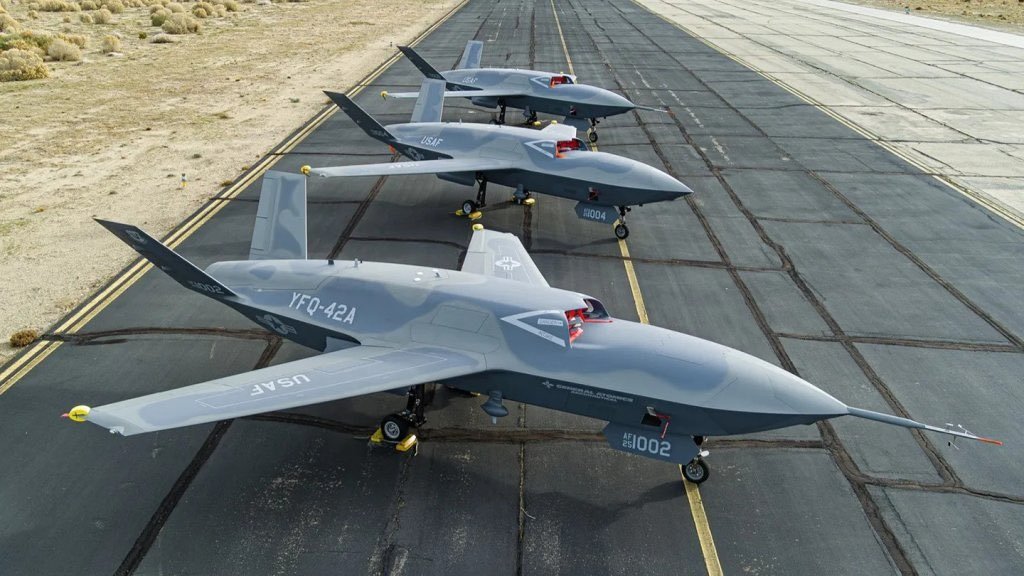
U.S
NATIONAL HARBOR, Md. — The U.S. Air Force has officially named its first Collaborative Combat Aircraft (CCA) as the FQ-42 Vengeance and FQ-44 Fury, marking a new stage in the service’s effort to field semi-autonomous uncrewed aircraft alongside crewed fighters. Secretary of the Air Force Troy Meink announced the names on September 14 during the Air & Space Forces Association’s Air, Space & Cyber Conference. He also outlined plans to have 500 CCAs operational by 2032, with a longer-term objective of approximately 1,000 aircraft. The aircraft are intended to operate alongside crewed platforms, including the F-35 and the future F-47, providing additional sensors, weapons and electronic warfare capabilities without requiring another pilot in the air. Production and Fleet Expansion The Air Force awarded production contracts to General Atomics Aeronautical Systems and Anduril Industries in June 2026 for Increment 1 CCAs. The companies are now manufacturing the aircraft, with the first production examples already beginning to come off their respective production lines. The contracts are intended to support the delivery of more than 150 combat-capable aircraft by the end of the decade. The service has also requested nearly $1 billion in fiscal year 2027 funding to begin Increment 1 procurement and support the production effort. The CCA program is being developed around a human-machine teaming concept. The aircraft are semi-autonomous, allowing onboard systems to perform functions while human operators remain responsible for higher-level mission decisions. FQ-42 Vengeance and FQ-44 Fury The two aircraft previously carried the prototype designations YFQ-42A and YFQ-44A. The FQ-42 Vengeance, developed by General Atomics, comes from the company’s earlier CCA development work, including the XQ-67A program. The FQ-44 Fury, developed by Anduril, is based on the Fury design that originated with Blue Force Technologies, which Anduril acquired in 2023. The Air Force's official announcement confirmed the two names as part of the service’s CCA program. Testing at Creech Air Force Base The naming announcement follows operational testing conducted at Creech Air Force Base, Nevada, in July 2026. During the exercise, the Air Force’s Collaborative Combat Aircraft Experimental Operations Unit operated both aircraft in a realistic operational environment and integrated them with crewed aircraft. The testing focused on developing tactics, techniques and procedures for using CCAs in more austere operating locations. Air Force personnel also tested the ground-support requirements for the aircraft. A YFQ-44A Fury was refueled and prepared for additional operations, while crews loaded inert AIM-120 air-to-air missiles during the exercise. The Air Force said the activity helped evaluate the reduced logistical requirements needed to operate CCAs from remote and forward locations. Members of the Royal Netherlands Air and Space Force also observed the exercise. The United States and the Netherlands are working on platform-agnostic, open-architecture, semi-autonomous capabilities intended to support data sharing and interoperability during combined operations. The Air Force is continuing flight testing, operational experimentation and autonomy development as it prepares to move the FQ-42 and FQ-44 from testing toward operational service. The planned expansion to 500 aircraft by 2032 and approximately 1,000 in the longer term represents a major increase in the number of uncrewed aircraft the service intends to operate alongside its crewed fighter fleet.
Read More → Posted on 2026-09-14 16:57:07
U.S
NATIONAL HARBOR, Md. / OXNARD, Calif. — Swarm Aero has unveiled Gamera, a new Group 5 uncrewed aircraft system (UAS) designed for long-range strike, sensing and other missions. The California-based company introduced the aircraft at the Air & Space Forces Association’s Air, Space & Cyber Conference 2026. Gamera is a clean-sheet aircraft designed around mass production, high-rate manufacturing and a lower cost structure than traditional high-value military aircraft. Swarm Aero said the platform is intended to provide long-range effects while allowing larger numbers of aircraft to be produced and operated. The aircraft has an approximate 72-foot wingspan and an unrefueled range exceeding 9,000 nautical miles. Its payload capacity is more than 2,800 pounds, distributed across seven available store locations. Meet Gamera, a new category of Group 5 strike and sensing UAS that we unveiled at @AFA_Air_Space's Air, Space & Cyber Conference today.Mass-producible, significantly lower cost than legacy platforms, and the first UAS specifically designed to employ bomber-class strike… pic.twitter.com/UhT9bgcTPn — Swarm Aero (@SwarmAero) September 14, 2026 Designed for Heavy Long-Range Weapons A key feature of Gamera is its ability to carry heavyweight, long-range weapons. Swarm Aero describes it as the first UAS specifically designed to deploy bomber-class strike weapons, including the AGM-158C Long Range Anti-Ship Missile (LRASM) and JASSM-ER. The aircraft can also carry newer classes of low-cost cruise and hypersonic missiles. Its modular design allows different payloads to be carried depending on the mission, including air-to-air, air-to-surface and advanced sensing payloads. Swarm Aero said Gamera can perform surveillance and strike missions currently associated with the MQ-9 Reaper, while carrying weapons and payloads that the MQ-9 cannot accommodate. The company also says its approach can provide standoff strike effects at approximately one-tenth the cost-per-effect of legacy approaches. Twin-Boom Aircraft Design Gamera uses a twin-boom configuration rather than a conventional single central fuselage arrangement. The aircraft is powered by a tractor-configured Honeywell TPE331 turboprop engine, with the propeller positioned ahead of the wing. A full-scale Gamera model displayed at the conference included a representation of an LRASM-class munition, highlighting the aircraft's intended heavy-payload role. The combination of long range, payload capacity and modularity is central to Swarm Aero's approach to the aircraft. Development Began in 2022 Swarm Aero began developing Gamera in 2022, using what the company describes as a first-principles approach to aircraft design, manufacturing and future combat requirements. The company has invested tens of millions of dollars in aircraft design, manufacturing methods and prototyping. It has also secured government contracts valued in the tens of millions of dollars. Among those contracts is more than $10 million from the Air Force Research Laboratory for work focused on materials and manufacturing processes intended to support high-rate, lower-cost production of large composite airframes. Swarm Aero has raised $59 million in funding and established an 80,000-square-foot Advanced Manufacturing Center in Fayetteville, Arkansas. The company is targeting 2027 for Gamera's first flight. Designed for the Massed Modular Aircraft Program Gamera is being positioned for the U.S. Air Force and Defense Innovation Unit's Massed Modular Aircraft (MMA) program. The MMA effort is focused on aircraft that can be produced at high rates while maintaining modularity and controlling ownership costs. The program's requirements include at least 2,800 pounds of payload, an unrefueled combat radius of about 2,300 nautical miles, and a one-way self-deployment range of at least 8,000 nautical miles. The requirements also call for a modular open systems architecture and the ability for one operator to control multiple aircraft. The concept is intended to complement higher-value aircraft with more affordable platforms that can operate in contested environments and accept greater levels of attrition than traditional expensive aircraft. Legion Command-and-Control System Gamera will operate with Swarm Aero's Legion command-and-control and autonomy software. Legion is designed to allow a single operator or a small team to control multiple heterogeneous uncrewed systems at the same time. The system has been tested in operational environments, including the U.S. Navy's Fleet Experimentation (FLEX) 2026, where one operator managed multiple air and maritime assets through find, fix, track, target, engage and assess sequences. Legion was previously selected by the Defense Innovation Unit (DIU) as one of three software providers for its Autonomous Collaborative Teaming program, which is linked to the Department of Defense's Replicator efforts. Swarm Operations Swarm Aero intends for multiple Gamera aircraft to operate together or alongside existing military forces. The aircraft is designed for missions including surface strike, sensing, electronic warfare and communications relay. The company's approach is based on combining long-range operations, a large payload capacity and lower production costs in a platform designed for high-rate manufacturing. Swarm Aero co-founder and Chief Revenue Officer Oliver Palmer, a former Pentagon official focused on China and Taiwan strategy, said the company had changed conventional approaches to aircraft design, manufacturing and combat operations to develop an affordable, mass-producible strike platform. Swarm CEO and co-founder Peter Kalogiannis highlighted the team's experience in long-endurance aircraft design and the production of military aircraft at volume. With its development work, government contracts and manufacturing investment, Swarm Aero is now preparing Gamera for flight testing and potential production at scale.
Read More → Posted on 2026-09-14 17:10:54
World
TOKYO — The Japan Air Self-Defense Force (ASDF) lost contact with one of its RQ-4B Global Hawk surveillance drones on Tuesday while it was flying over the Sea of Japan off Tottori Prefecture. The aircraft is now presumed to have crashed after the Japan Coast Guard spotted floating debris believed to be from the drone. Communication Lost Off Tottori Communication with the unmanned aircraft was lost at around 12:58 p.m. while it was operating in international waters approximately 50 kilometers north of the Tottori coast. The ASDF, Maritime Self-Defense Force (MSDF) and Japan Coast Guard immediately began a joint search and recovery operation. Coast Guard vessels later spotted a floating object that appeared to be part of the missing aircraft. Officials said the Global Hawk is presumed to have crashed, while the exact circumstances remain under investigation. No damage on land or to other parties has been reported. Officials Order Search and Investigation ASDF Chief of Staff Yasuhiro Morita said the force is conducting a search while considering all possibilities. Defense Minister Shinjiro Koizumi instructed personnel to confirm the aircraft's status, conduct a swift search, check for any effects on surrounding areas and provide information to relevant local governments. The search operation is continuing in the waters off Tottori. One of Three Japanese Global Hawks The missing aircraft is one of three RQ-4B Global Hawks operated by Japan and based at Misawa Air Base in Aomori Prefecture. Japan's procurement of the aircraft, along with associated equipment, parts and logistical support, was approved in 2015 in a deal valued at approximately $1.2 billion. The Global Hawks began arriving in Japan in 2022, with all three aircraft in place by 2023. This is the first time one of Japan's Global Hawks has gone missing or been presumed lost. Global Hawk Capabilities The U.S.-made RQ-4B Global Hawk, produced by Northrop Grumman, is a high-altitude, long-endurance unmanned aircraft used for intelligence, surveillance and reconnaissance missions. It has a wingspan of about 40 meters and a length of about 15 meters. The aircraft can operate at around 60,000 feet, reach speeds of up to approximately 570 km/h, and remain airborne for about 30–36 hours. It is remotely controlled from the ground using satellite communications. Japan uses the Global Hawk for surveillance of activities around the country and surrounding waters. Chinese drones have also operated over the Sea of Japan in recent years in connection with naval movements in the region. The search for the missing aircraft and the investigation into the loss of communication are continuing.
Read More → Posted on 2026-09-15 12:22:48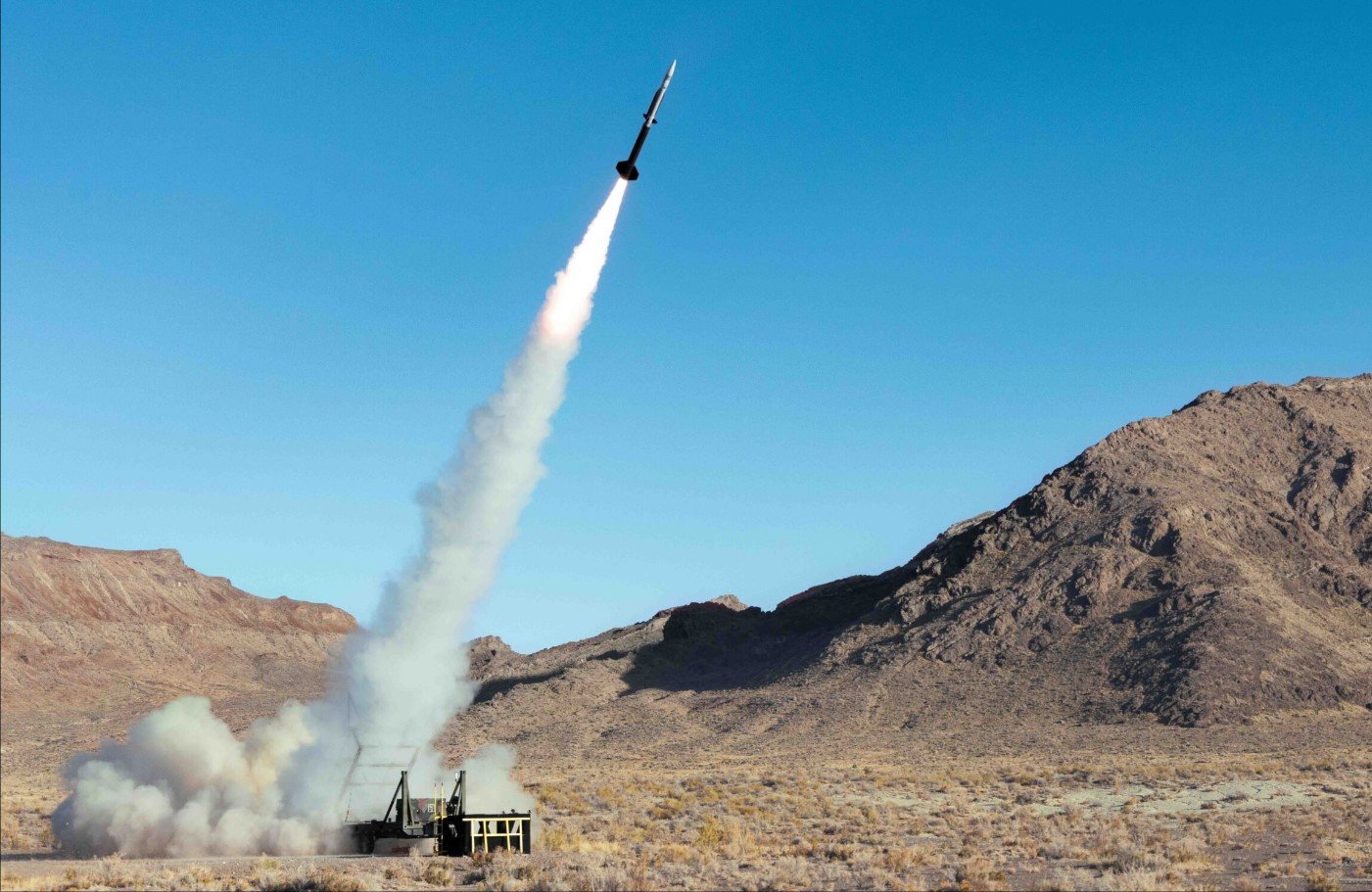
U.S
TORRANCE, Calif. — The U.S. Navy has awarded defense startup Castelion a production delivery order valued at up to $200 million for an initial production lot of Blackbeard hypersonic strike weapons. The order covers the manufacturing, assembly, testing and delivery of the weapons to the fleet. Production Order Follows Earlier EOC Purchase The award was issued by Portfolio Acquisition Executive Aviation (PAE(A)) through its Future Capability Development and Integration Aviation Rapid Capabilities Cell. It follows the Navy’s June 2026 purchase of 50 Blackbeard Early Operational Capability (EOC) weapons under a separate $23.4 million firm-fixed-price order, which also included 50 storage and shipping containers. The latest order moves Blackbeard from prototype and EOC activities into an initial production lot for fleet delivery. Blackbeard Hypersonic Weapon Blackbeard is an air-launched hypersonic strike weapon designed to provide naval aviation with a high-speed, long-range option against maritime and land targets. Castelion said the system is intended to increase magazine depth and extend the strike reach of naval aviation, including aircraft such as the F/A-18 Super Hornet. The program has been developed with the U.S. Navy, U.S. Army and U.S. Air Force, supported by hundreds of millions of dollars in private investment. Earlier Navy Contracts The latest production order follows several earlier Blackbeard contracts: February 2026: Nearly $50 million to advance Blackbeard toward Early Operational Capability. April 2026: About $105 million for F/A-18 integration and related testing. June 2026: $23.4 million for 50 EOC weapons and 50 storage and shipping containers. August 2026: Nearly $90 million for engineering, technical, logistics and manufacturing services supporting the 50 EOC weapons and the system’s transition toward a formal Navy program. Production Facilities Castelion plans to carry out production work at Project Ranger, its 1,000-acre manufacturing campus in Rio Rancho, New Mexico, and at its facility in Torrance, California. The company has invested more than $220 million of its own capital in Project Ranger. The site supports solid rocket motor manufacturing, testing and final assembly. Castelion is using vertical integration and commercial manufacturing methods for Blackbeard production, giving the company greater control over costs, quality and production schedules from raw materials through finished weapons. Castelion CEO on Production Bryon Hargis, co-founder and chief executive officer of Castelion, said the Navy’s decision to move into production reflects confidence in the Blackbeard program and the progress made so far. He also said the weapon was designed from the beginning for serial manufacturing and that Castelion looks forward to delivering the capability to the fleet. The latest order represents the next production phase for Blackbeard as the Navy moves toward fielding the air-launched hypersonic strike weapon.
Read More → Posted on 2026-09-15 12:35:25
U.S
CINCINNATI, — GE Aerospace is preparing to assemble the first physical test asset of its XA102 adaptive cycle engine under the U.S. Air Force’s Next Generation Adaptive Propulsion (NGAP) program. The engine is intended for future combat aircraft. XA102 Moves Toward Physical Testing GE Aerospace is working with suppliers to procure hardware and is testing subcomponents ahead of assembly. The work marks a transition from digital design and development toward physical engine hardware and testing. “Our team is working with suppliers to procure hardware and test subcomponents as we prepare for assembly of the first XA102 test asset,” said Jorge Perez, general manager of Edison Works Advanced Combat Engines at GE Aerospace. Perez said the company is using lessons from the XA100 program as a foundation for advancing adaptive cycle engine technology and supporting the U.S. Air Force’s next-generation propulsion goals. Building on the XA100 The XA102 uses a three-stream adaptive cycle architecture designed to address the propulsion, fuel-efficiency and thermal-management requirements of future combat aircraft. GE Aerospace is applying experience from the earlier XA100, which was developed under the Air Force’s Adaptive Engine Transition Program (AETP). The XA100 completed multiple test campaigns that advanced three-stream adaptive technology. The company is also applying lessons from the XA100 in adaptive propulsion, thermal management, fuel efficiency and advanced engine design. Model-Based Manufacturing The XA102 was designed from the beginning using model-based engineering practices. GE Aerospace is now extending these methods into manufacturing, inspection and assembly. The company says the XA102 will be its first engine built using Model-Based Definition (MBD) throughout the process, replacing traditional two-dimensional drawings with a machine-readable digital product definition. The digital framework links design, manufacturing and inspection through integrated models. GE Aerospace expects the approach to improve accuracy and shorten the transition from engineering to manufacturing. Suppliers are also being prepared to use the model-based data in their manufacturing and inspection operations. GE Aerospace completed demonstrations of its model-based engineering practices during the first phase of the program. Key Program Milestones The XA102 completed its Detailed Design Review in February 2025, followed by an Assembly Readiness Review in May 2026. The reviews confirmed progress in the engine design, manufacturing processes and supply chain. As of early September 2026, around a quarter of the hardware components were reported to be on order as assembly preparations continued. NGAP Competition The XA102 is being developed under the NGAP program alongside Pratt & Whitney’s XA103. NGAP supports propulsion options for next-generation aircraft, including the F-47 as part of the Next Generation Air Dominance family of systems. The XA102’s three-stream adaptive design allows airflow to be managed for different requirements, including fuel efficiency, cooling and thrust. GE Aerospace has not officially disclosed the engine’s thrust class. Some reports have placed it in the 35,000-pound-thrust range with afterburner, but that figure remains unconfirmed by the company. With hardware procurement and subcomponent testing underway, GE Aerospace is now preparing to assemble and test the first XA102 physical test asset as the NGAP propulsion program progresses.
Read More → Posted on 2026-09-15 12:45:58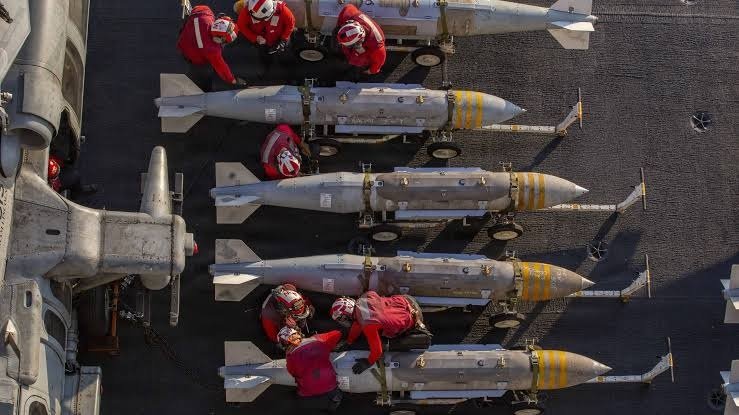
U.S
WASHINGTON — A Pentagon inspector general report has found that four months of intense U.S. combat operations against Iran created strategic ammunition shortfalls and exposed bottlenecks across the U.S. defense industrial base. The first mandatory quarterly report to Congress on Operation Epic Fury, covering February 28 through June 30, 2026, estimates the Department of Defense spent $33.4 billion on the operation. Of that amount, $22.3 billion went to expended munitions, $7.4 billion to operating costs and $3.7 billion to equipment losses. The figure does not include infrastructure repair costs. Munitions Shortfalls and Production Bottlenecks The report states that “the munitions expenditure on OEF has resulted in strategic inventory shortfalls and revealed industrial base bottlenecks for munitions resupply.” Officials from the Office of the Under Secretary of Defense for Acquisition and Sustainment told investigators that heavy weapons use created gaps in strategic stockpiles and exposed limits in the supply chain and defense industry's ability to replenish weapons quickly. The Pentagon is working to shorten procurement and production timelines and increase stocks of critical materials, components and selected munitions. However, the report identifies continuing bottlenecks involving solid rocket motors, high-grade explosives and propellants, and skilled manufacturing labor. Aircraft Losses and Air-Defense Demand The report records several U.S. aircraft losses and damage during the period. These include four F-15s destroyed, one F-35 damaged, seven KC-135 tankers damaged and up to 30 MQ-9 Reaper drones destroyed. Other accounts of the operation reported an A-10 destroyed, an E-3 Sentry damaged on the ground in Saudi Arabia, an AH-64 Apache downed near the Strait of Hormuz, and four AH-6 helicopters destroyed by U.S. forces to prevent their capture. U.S. air-defense systems also faced heavy demand, intercepting more than 6,000 one-way attack drones and 1,500 ballistic missiles targeting U.S. forces, regional allies and commercial shipping lanes. Patriot Production Under Pressure The campaign highlighted the difficulty of rapidly replacing air-defense missiles. Lockheed Martin's Camden, Arkansas, facility produces about 750 Patriot missiles per year, while approximately 1,500 Patriots were reportedly launched during the conflict. Each Patriot interceptor costs around $4 million. Lockheed Martin is working to increase annual production from about 750 to 2,000 missiles. Missile division head Tim Cahill described the effort as “controlled chaos.” Debate Over U.S. Weapons Stocks The inspector general's findings contrast with statements from President Donald Trump, who has said the United States has “virtually unlimited amounts of Mid to High Grade Ammunition” and is producing munitions at levels never seen before. Defense Secretary Pete Hegseth has also urged the defense industry to increase production. Mark Cancian of the Center for Strategic and International Studies (CSIS) said the United States has enough weapons for a war with Iran but warned that sustaining a longer conflict with China would present a much greater challenge. He said the United States might have enough munitions for a month but could face difficulty sustaining operations into the second, third and fourth months. Damage and Additional Costs The conflict also created costs outside direct military operations. The State Department spent $79.2 million on conflict-related contingencies, including evacuation operations. Iranian strikes caused approximately $184 million in damage to U.S. diplomatic facilities in Iraq, Kuwait, Saudi Arabia and the UAE. Iranian missile and drone attacks also damaged or destroyed hundreds of buildings and structures at U.S. military installations in Kuwait, Bahrain, Qatar, the UAE, Saudi Arabia, Iraq, Oman and Jordan. The inspector general did not provide a total repair estimate and said it remains unclear which facilities will be rebuilt or who will pay for the work. Earlier estimates of Operation Epic Fury's cost were lower. A Pentagon official told Congress in April that the operation had cost about $25 billion, while U.S. officials familiar with internal assessments put the figure closer to $50 billion at that time. Later estimates increased as the conflict continued. The inspector general's report, based on information from the Defense Department, State Department and U.S. Agency for International Development inspectors general, provides the first quarterly assessment of the operation and highlights the challenge of replenishing U.S. weapons inventories after sustained combat operations.
Read More → Posted on 2026-09-15 12:55:13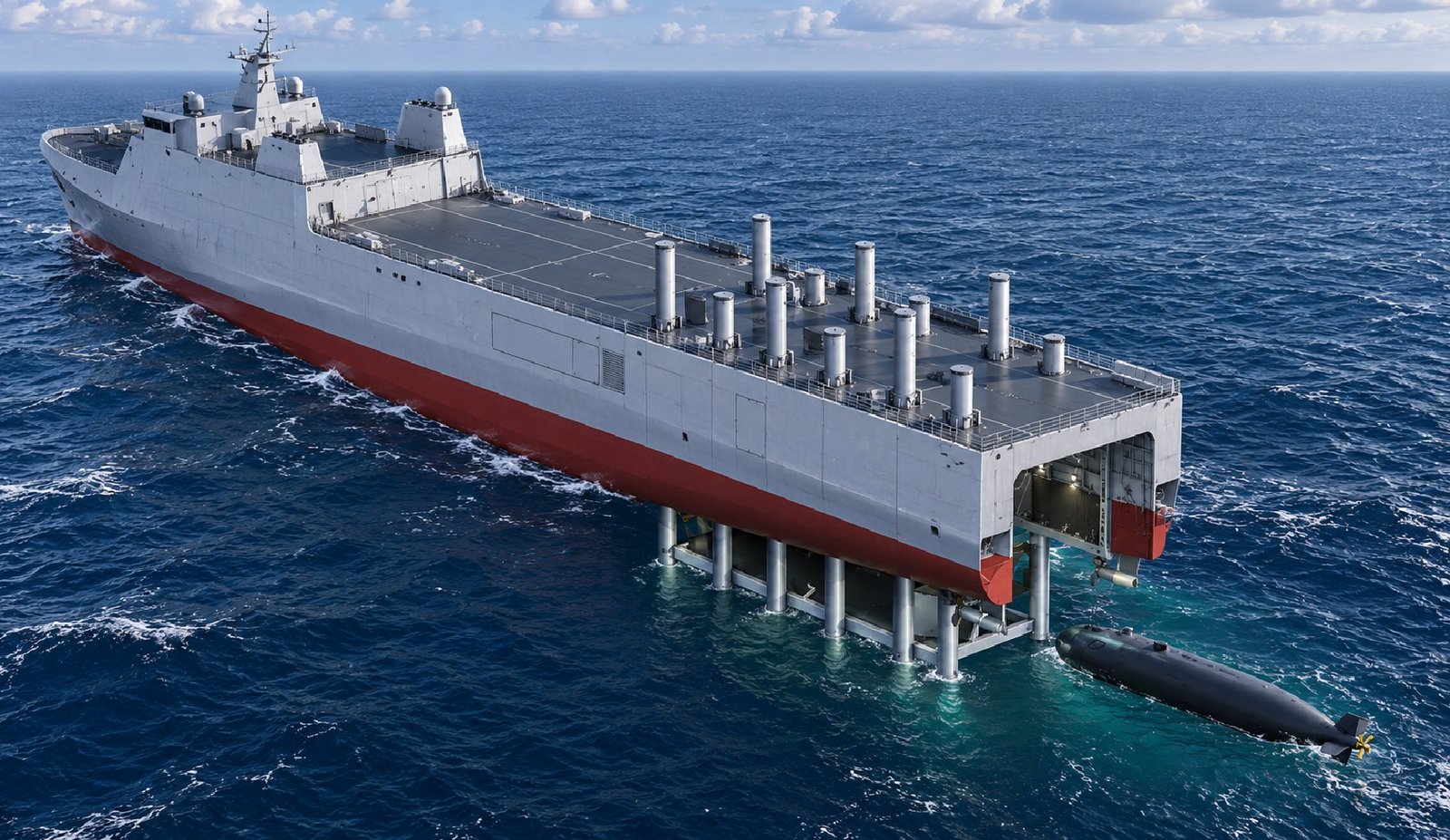
World
SHANGHAI — Commercial satellite imagery has revealed a previously unseen naval vessel under construction at the Hudong-Zhonghua shipyard in Shanghai. Open-source defense analysts and Naval News assess the ship as the world’s first purpose-built mothership designed to deploy, recover and support full-sized uncrewed submarines. The vessel is linked to China’s development of extra-extra-large uncrewed underwater vehicles (XXLUUVs) and is expected to provide a mobile platform for transporting, maintaining and deploying them at sea. Unique Design for Uncrewed Submarines The ship resembles an amphibious transport dock (LPD), but its layout is significantly different. It is approximately 205 meters (673 feet) long and 27 meters (89 feet) wide and uses steerable azimuth thruster pods for low-speed maneuvering during launch and recovery operations. At the stern is a wet well-deck measuring about 55 by 13 meters. The bottom of this area is open, allowing a large deployment cradle to extend below the hull. The cradle is supported by 12 vertical lifting arms, enabling an uncrewed submarine to be recovered or deployed while underwater. Forward of the well-deck is an enclosed hangar measuring approximately 95 by 17 meters. Analysts assess that it could accommodate up to four full-sized XXLUUVs, or more smaller underwater systems. The enclosed space could also support maintenance and other technical work. The forward superstructure includes a helicopter hangar and flight deck for rotary-wing or logistics support. Naval analyst H. I. Sutton has also released an analysis-based illustration showing the vessel's major features, including the cradle and enclosed hangar. China’s Large XXLUUV Program China has built and tested at least two large XXLUUV designs at naval facilities on Hainan Island. One is about 35 meters (115 feet) long and the other about 45 meters (148 feet). Both are considerably larger than the U.S. Navy's Boeing Orca XLUUV, which is about 26 meters (85 feet) long with its payload module. The Chinese vehicles have been observed without traditional sails and use X-form rudders. They have previously been housed and launched from specialised floating docks, including a facility built in 2024 near Gangmen Harbour, west of the Sanya naval base. The new ship would provide a more mobile support platform for these vehicles instead of relying only on fixed or floating facilities. A similar cradle-elevator concept appeared in a 2025 Chinese proposal for an undersea research vessel, but that design used an open working deck. The much larger Shanghai vessel's enclosed hangar and specialised underwater recovery arrangement have led analysts to assess a military support role. Other Chinese Uncrewed Underwater Vehicles China has also developed smaller extra-large uncrewed underwater vehicles. At a military parade in Beijing on September 3, 2025, eight were displayed: five AJX002 vehicles, estimated at 18–20 meters long and associated with mine-laying, and three HSU100 vehicles equipped with retractable sensors. The smaller systems are considered operational, while the two larger XXLUUV designs remain under testing and appear to be competing development approaches. Analysts have estimated that the larger vehicles could potentially have a range of around 10,000 nautical miles, based on their size, published concept models and diesel-electric propulsion concepts. Potential missions include long-distance transit, mine-laying, reconnaissance, seabed surveillance and carrying sensors or torpedoes, although China's authorities have not publicly announced their exact operational doctrine. The new mothership remains under construction at Hudong-Zhonghua. Its development, alongside China's ongoing XXLUUV testing, indicates that Beijing is developing not only large autonomous underwater vehicles but also a dedicated surface platform to transport, maintain, launch and recover them.
Read More → Posted on 2026-09-15 13:46:58
World
JERUSALEM / RIYADH — Israel is providing intelligence support to Saudi Arabia to help the kingdom respond to attacks by Yemen’s Houthi movement, also known as Ansarullah, according to The Jerusalem Post, citing Israeli outlet Walla and regional diplomatic sources. Intelligence Cooperation Through CENTCOM The reported talks between Israeli and Saudi security officials were mediated by the United States Central Command (CENTCOM). Saudi Arabia reportedly sought intelligence that could help it better understand Houthi military deployments and identify possible plans for future operations. The reported cooperation comes despite the absence of formal diplomatic relations between Israel and Saudi Arabia. Houthi Attacks on Saudi Arabia The intelligence discussions come as Houthi attacks against Saudi Arabia have intensified. Recent attacks have included: Oil infrastructure: A drone attack targeted oil pipelines and pumping facilities, resulting in a partial shutdown of activity along the main pipeline. Border-area attacks: Houthi forces also carried out an attack affecting civilians at a mosque and nearby buildings close to the Yemen-Saudi border. Missile and drone attacks: Houthi forces have continued attacks against Saudi targets, increasing pressure on the kingdom’s defenses. Houthi Advances Along the Red Sea Houthi forces have also expanded their position along Yemen’s Red Sea coast. They have captured the port city of Mocha (Mokha), Perim Island (Mayyun Island) in the Bab al-Mandab Strait, and the Greater and Lesser Hanish Islands further north. These developments have given the Houthis positions along much of Yemen’s western coastline and near the strategic Bab al-Mandab Strait. Saudi Arabia Seeks International Assistance Saudi Arabia has sought support from other countries as the security situation has worsened. Bloomberg reported that Riyadh asked Britain for assistance in countering the Houthis near the Bab al-Mandab Strait and protecting its oil infrastructure. Britain agreed to send military advisers, although it has not committed to additional military assistance. Saudi Crown Prince Mohammed bin Salman has also appealed for regional support amid setbacks faced by Saudi-backed forces in Yemen. The approach to Israel was reportedly made indirectly through CENTCOM. The United States has provided intelligence-sharing and advisory support but has not conducted direct strikes, according to the reports. No Official Confirmation The developments come as concerns grow over security around the Bab al-Mandab Strait, a key maritime route connecting the Red Sea with the Gulf of Aden and an important route for Saudi oil exports. Israel and Saudi Arabia do not have formal diplomatic relations. The Jerusalem Post reported the Israeli-Saudi discussions on September 15, but no official Israeli or Saudi statement confirming the reported intelligence cooperation was detailed in the initial reporting.
Read More → Posted on 2026-09-15 13:51:43
World
SANAA, Yemen — September 15, 2026 — Yemen’s Houthi movement has released video and photographic imagery showing what it says are multiple military vehicles belonging to forces aligned with the Presidential Leadership Council (PLC) destroyed east of Al-Jawf Governorate. According to Houthi military media, the vehicles were targeted during attacks by PLC-aligned forces against Houthi positions in the area. A Houthi military source previously said on September 12 that forces massing east of Al-Jawf were targeted, claiming the destruction of dozens of military vehicles and losses among the attacking forces. The released imagery shows damaged and destroyed vehicles in the desert terrain. Houthi forces said they used artillery and guided weapons against troop gatherings and military vehicles during the fighting. WATCH: The Houthis (Ansarallah) released footage of attacks against vehicles of the Saudi-backed PLC in the Al-Jawf region. pic.twitter.com/WZsjcbBvoj September 15, 2026 The clashes are reported around areas east of Al-Hazm, including the Al-Labanat sector, where government-aligned forces have conducted military operations against Houthi positions. The specific vehicle losses and casualty figures shown or claimed by the Houthis have not been independently verified. There was no immediate official response from the PLC regarding the imagery and the reported losses.
Read More → Posted on 2026-09-15 14:03:04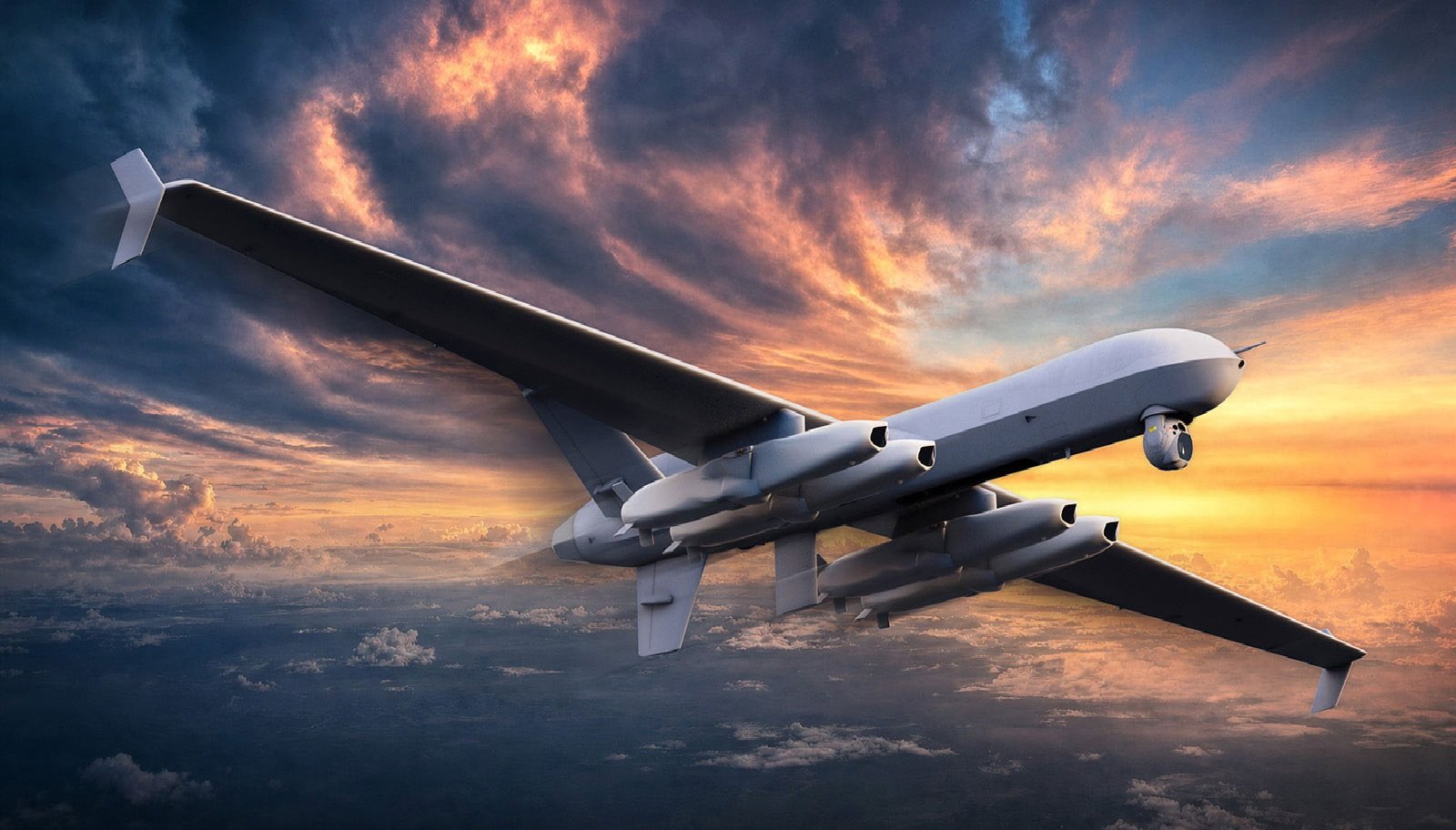
U.S
SAN DIEGO — General Atomics Aeronautical Systems, Inc. (GA-ASI) has unveiled Wildfire, a new medium-altitude, long-endurance (MALE) uncrewed aircraft designed for lower-cost, high-volume surveillance and strike missions. Wildfire is a clean-sheet design intended to offer greater payload capacity and longer range than the MQ-9A Reaper, while being cheaper to produce and suitable for operations where combat losses are possible. GA-ASI has focused the aircraft on core intelligence, surveillance and reconnaissance (ISR), strike and related missions rather than matching the wider capabilities of the MQ-9B. “This is exactly the right design for high-demand missions and cost-conscious customers,” said GA-ASI President David R. Alexander. The aircraft has a modular payload architecture with strengthened wing hardpoints. GA-ASI says it can carry two AGM-158C Long-Range Anti-Ship Missiles (LRASMs) or four Joint Strike Missiles (JSMs), as well as other combinations of munitions, launched effects, sensors and mission equipment. It is designed for a ferry range exceeding 8,000 nautical miles, a combat radius of at least 2,300 nautical miles with payload, and a payload of more than 2,800 pounds. Wildfire can also accommodate multispectral targeting sensors, radar and electronic warfare equipment. Its reinforced design and payload capacity provide potential support for logistics missions such as heavy cargo delivery. Autonomous and Collaborative Operations Wildfire uses mission-autonomy technology based on the approach developed for GA-ASI’s FQ-42A Collaborative Combat Aircraft, which is now in production for the U.S. Air Force. Human operators will use U.S. government-provided autonomy software rather than a conventional ground control station. The system is designed to allow one operator to supervise multiple aircraft, while onboard autonomy manages functions such as flight paths, formation operations and sensor allocation. GA-ASI also says proliferated low-Earth-orbit satellite communications can support operations when conventional communications are disrupted. Proposed for Massed Modular Aircraft Program GA-ASI is proposing Wildfire for the U.S. Air Force’s Massed Modular Aircraft (MMA) effort, overseen by the Defense Innovation Unit (DIU). The program seeks an affordable and adaptable alternative to existing Reaper inventories. The MMA requirements include at least 2,800 pounds of payload, a 2,300-nautical-mile combat radius with payload and an 8,000-nautical-mile ferry range. The target air-vehicle cost is around $10 million before sensors and mission equipment. GA-ASI says Wildfire meets or exceeds these requirements and could be delivered years ahead of the program’s projected fiscal year 2031 schedule. The company also says it could produce more than twice the number of aircraft specified in preliminary production requirements by using its existing manufacturing infrastructure, which includes more than 5 million square feet, along with its established supplier network. The aircraft builds on GA-ASI’s more than three decades of uncrewed aviation experience. The company says it has delivered more than 1,600 Predator, Reaper, SkyGuardian, Avenger and FQ-42A aircraft, which have accumulated nearly 10 million flight hours, mostly in combat. Wildfire is currently GA-ASI’s proposal for the MMA effort and has not been selected as the program’s final aircraft.
Read More → Posted on 2026-09-15 14:09:43
World
LISBON, Portugal — German unmanned systems company Quantum Systems has entered the maritime domain with two new autonomous platforms, the Seavex unmanned surface vessel (USV) and Subvex unmanned underwater vehicle (UUV). The systems were unveiled in Sesimbra, Portugal, on the sidelines of a NATO maritime exercise involving the Portuguese Navy, the University of Porto (FEUP), NATO CMRE, NATO JCGMUS and the European Defence Agency. Both platforms are undergoing sea trials to test and validate their capabilities in an operational setting. Seavex and Subvex are integrated into Quantum Systems’ MOSAIC UXS software architecture, allowing unmanned air, land, surface and underwater systems to operate through a common control framework. The architecture can also incorporate additional platforms, sensors and third-party technologies. “We started in the air, expanded to land, and now we are going to sea. But the real step forward is not adding another domain. It is connecting them,” said Florian Seibel, Co-CEO and Founder of Quantum Systems. Seavex USV The Seavex is designed for persistent maritime intelligence, surveillance and reconnaissance (ISR), critical infrastructure protection and Counter-UAS missions. The vessel measures 8.5 meters long, 6.5 meters wide and has a 1.8-meter draft. It has a displacement of 4,500 kg, a payload capacity of up to 400 kg, a maximum speed of 15 knots and a surveillance speed of 3 knots. Its endurance is up to 60 days. Seavex carries 2D surveillance radar, 4D counter-drone radar, electro-optical and infrared sensors, a laser rangefinder and onboard edge computing. Its counter-UAS system is designed to detect and track aerial threats. An integrated DronePort allows autonomous launch and recovery of UAVs. Seavex can also dock, recharge and retrieve mission data from Subvex underwater vehicles. The vessel can operate in water temperatures from 0°C to 40°C, with normal operations in sea state 3 and survivability up to sea state 6. Communications include SATCOM, 5G, Wi-Fi and Silvus, with AES-256 encryption. Subvex UUV The Subvex is an AI-enabled underwater vehicle designed for deep-sea ISR, seabed monitoring and underwater surveillance. It can operate at depths of up to 6,000 meters. The vehicle weighs 400 kg, is 4.2 meters long and has a 533-mm diameter, compatible with NATO torpedo-tube standards. It carries up to 20 kg of payload, has a 42-kWh battery, a surveillance speed of 3 knots and a maximum speed of 8 knots. Subvex can operate actively for up to four days using systems including side-scan sonar, DVL, forward-imaging sonar and acoustic communications. In passive seabed-surveillance mode, it can remain deployed for weeks while using hydrophones to collect acoustic information. Multiple Subvex vehicles can operate in a distributed configuration. Communications include USBL, Wi-Fi, inductive, Silvus, 5G and Iridium, also using AES-256 encryption. Combined Maritime System Seavex provides docking, recharging, secure data transfer and redeployment for Subvex. Together, the two platforms can support missions involving critical maritime infrastructure protection, maritime border security, anti-submarine surveillance and blue-water surveillance. Sensor information from aerial, surface and underwater systems can be combined through MOSAIC UXS into a common operational picture. “Maritime operations have a fundamental challenge: the areas are vast, while crews and assets are limited,” said Dirk Zademack, Vice President of Quantum Maritime at Quantum Systems. The launch expands Quantum Systems’ unmanned systems portfolio from its established aerial and land platforms into surface and underwater operations, with the Seavex and Subvex trials continuing in Portugal.
Read More → Posted on 2026-09-15 14:17:30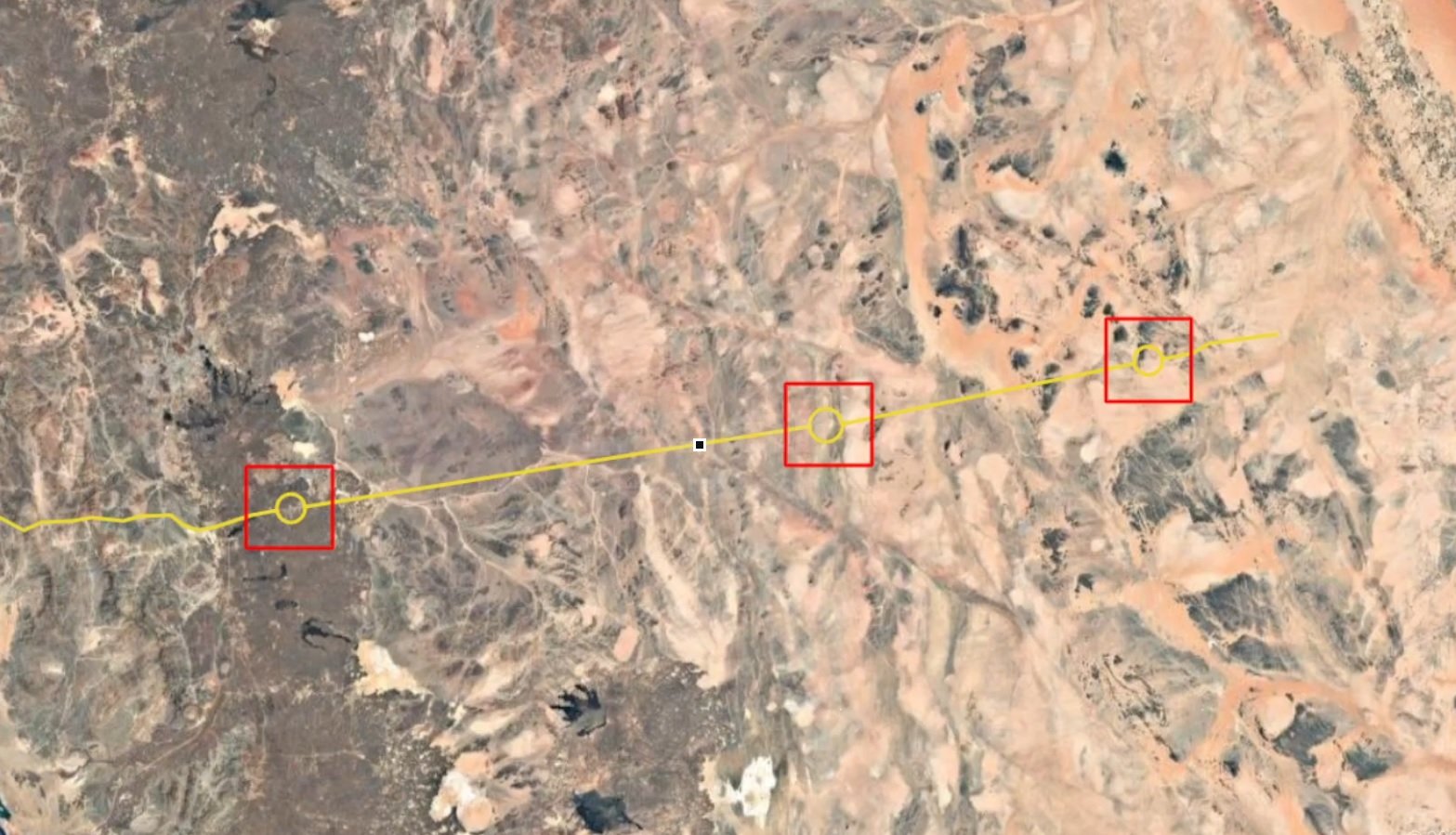
World
RIYADH — Newly released commercial satellite imagery shows significant fire damage at a major pumping station on Saudi Arabia’s East-West crude oil pipeline, with separate assessments indicating possible damage at another station. The findings follow drone attacks on September 10 that prompted Saudi authorities to shut down the pipeline as a precaution. The East-West Pipeline, or Petroline, stretches about 1,200 kilometers (745 miles) from oil facilities near Abqaiq in Saudi Arabia’s Eastern Province to the Red Sea port of Yanbu. Built in the early 1980s, the pipeline has a design capacity of up to 7 million barrels per day following expansions and provides an alternative route to the Strait of Hormuz. 🚨 This is starting to look MUCH bigger than a single strike on Saudi Arabia’s East-West oil pipeline.Satellite imagery has now showed significant damage at Pump Station 9, while possible damage is also visible at Pump Station 8, both along the same critical pipeline system.… pic.twitter.com/GjvNXYJ6i1 — Soar (@SoarAtlas) September 15, 2026 Satellite Imagery Shows Fire Damage High-resolution imagery from Vantor, released around September 13, shows extensive charring and blackened areas across a pumping station complex southeast of Medina near Al Mesaba’ah. Before-and-after images show a large burn scar across much of the facility, with crude oil visible outside the perimeter. Open-source imagery analyzed by Soar Atlas and other platforms identifies the heavily damaged facility as Pump Station 9, where the process area and structures show significant fire impact. Other assessments, including Global Recon-related analysis, have identified possible or confirmed fire damage at a second station along the same corridor. NASA and Copernicus Sentinel satellite data detected multiple heat sources and smoke plumes along roughly 110 kilometers of the pipeline corridor on September 10. VIIRS analysis indicated that one major pumping station complex burned for at least 13 hours. Some heat signatures were associated with emergency flare pits used for controlled burn-off rather than direct pipeline ruptures. Saudi Arabia Confirms Drone Attacks Saudi Arabia’s Ministry of Energy and Foreign Ministry said drones launched from Iraq struck targets in the Riyadh and Medina regions on September 10. The attacks caused injuries requiring medical treatment and material damage. The pipeline was shut down while emergency and technical teams assessed the infrastructure. Iraqi officials later said the drones originated from Maysan province in southeastern Iraq and launched investigations. No group has publicly claimed responsibility, although the incident has been linked in reporting to Iranian-backed militias operating in Iraq. Saudi authorities have not confirmed the exact number of damaged stations or released a complete public damage assessment. Repair Could Take Several Weeks The East-West Pipeline has 11 to 13 main pumping stations that maintain pressure and flow across the route. Damage to stations serving the same section could reduce throughput even if partial operations resume. Officials briefed on the assessment told the Associated Press that repairs could take three to five weeks. One official said partial pipeline operations could be possible during repairs, although the amount of crude that could move remains unclear. Reuters cited other estimates of up to six weeks, while also reporting that partial operations could begin earlier. Saudi Aramco, which operates the pipeline, has not announced a firm restart schedule or detailed public assessment. Pipeline Shutdown Adds Pressure to Oil Exports Before the shutdown, Petroline was carrying an average of about 2.6 million to 4 million barrels per day since late August, according to Rystad Energy analysis. Yanbu stocks were reportedly sufficient for only several days of exports at recent rates if the pipeline remained fully offline. The disruption is particularly important because Saudi Arabia had been using Petroline to move crude toward the Red Sea amid severe disruption and elevated risks around the Strait of Hormuz. At the same time, security concerns continue around the Red Sea and Bab el-Mandeb, where Houthi forces have expanded their presence around additional islands, according to reports from Yemeni government and Houthi sources. Saudi crude production had already fallen to 6.24 million barrels per day in August 2026, according to the figures provided. Brent crude subsequently moved above $100 per barrel, reaching around $104–$105 per barrel as markets assessed the supply risks. As of September 15, Saudi authorities had not provided a firm date for the full restoration of the East-West Pipeline. Satellite and open-source monitoring continue to provide the main publicly available evidence of the damage while technical teams assess the affected facilities.
Read More → Posted on 2026-09-15 14:29:46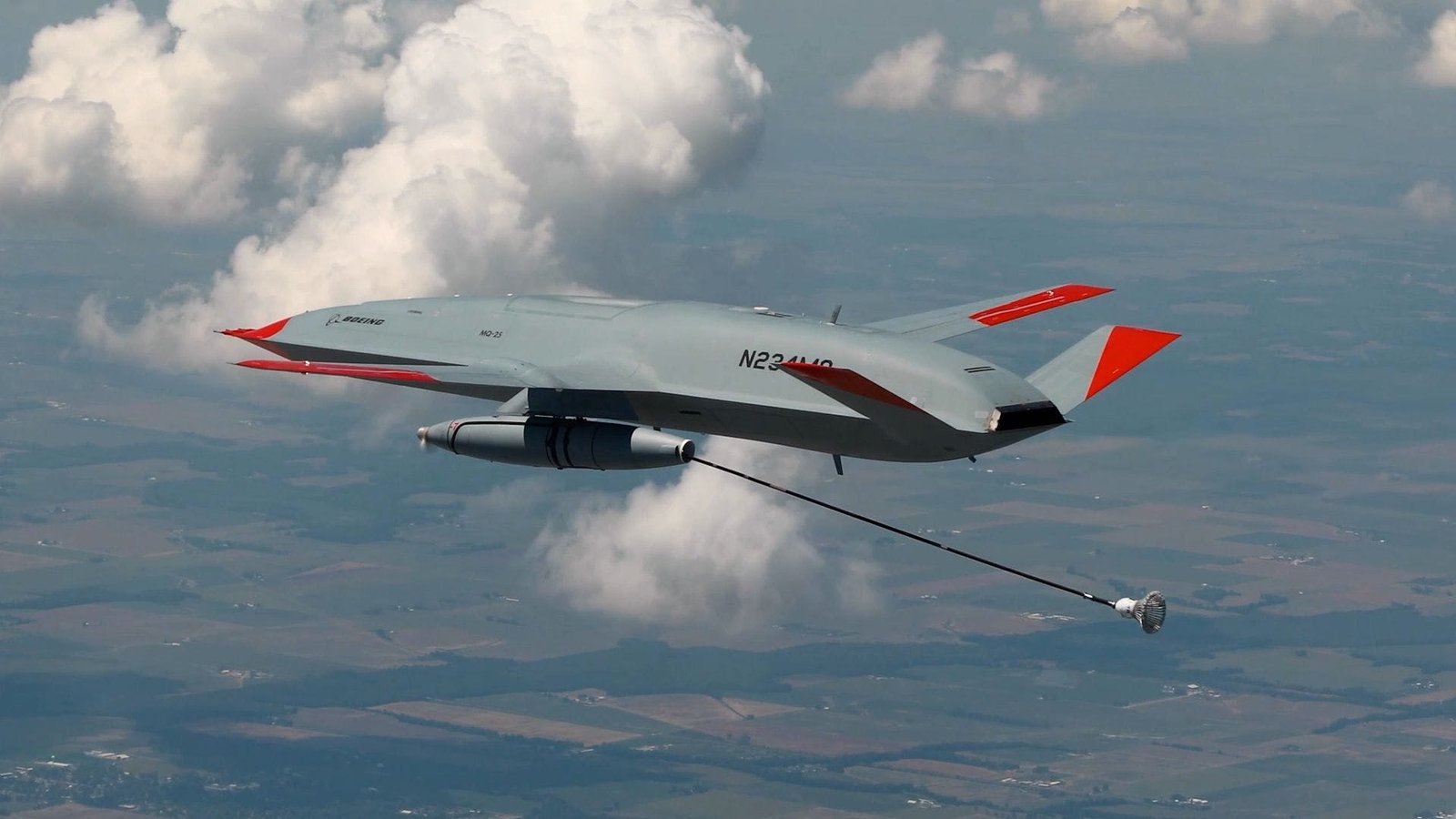
U.S
WASHINGTON — The U.S. Navy has awarded Boeing a $562 million fixed-price incentive contract to begin low-rate initial production (LRIP) of the MQ-25A Stingray, the service’s first carrier-based unmanned aerial refueling aircraft. The contract covers three Lot 1 aircraft and advance procurement funding for long-lead components for three additional Lot 2 aircraft. Initial Lot 1 deliveries are expected to begin in 2029. “Awarding this first LRIP contract marks a pivotal transition from development to operational reality and is a testament to the focused effort of our joint government and industry teams,” said Capt. Daniel Fucito, program manager for Unmanned Carrier Aviation at PMA-268. He said the MQ-25A will provide the reach, lethality and survivability needed for future operations. From Development to Production The production award follows the Navy’s Milestone C decision in May 2026, approved by Acting Secretary of the Navy Hung Cao, which cleared the MQ-25A to enter production and deployment. The decision followed the first flight of a production-representative MQ-25A on April 25, 2026, at Boeing’s facility in Mascoutah, Illinois. The MQ-25A program began with Boeing’s initial development contract in August 2018. The Lot 1 award brings the total number of MQ-25A aircraft under contract with Boeing to 14, including development, test and initial production aircraft. Lot 2 is planned for award in 2027, with Lot 1 production also supporting validation of the design, manufacturing processes and supply-chain readiness. The Navy’s program of record calls for 76 aircraft, including 67 production aircraft and nine test platforms. The test fleet consists of four Engineering Development and Manufacturing (EDM) aircraft and five System Demonstration Test Articles (SDTA). Seven test aircraft are currently in production. Boeing is conducting MQ-25A production at its St. Louis operations and a dedicated 300,000-square-foot facility at MidAmerica St. Louis Airport in Mascoutah, Illinois. Unmanned Tanker for Carrier Air Wings The MQ-25A’s primary mission is aerial refueling. The role is currently performed in part by manned F/A-18E/F Super Hornets using external fuel tanks and refueling pods in the “buddy-tanking” configuration. The Navy says Super Hornets assigned to tanker duties use 20 to 30 percent of their flight hours, increasing airframe wear and reducing the number of aircraft available for training and strike missions. The MQ-25A uses the Cobham Aerial Refueling Store, the same probe-and-drogue refueling system used by Super Hornets. It is designed to refuel F/A-18s, F-35C Lightning IIs and E-2D Advanced Hawkeyes. The Stingray is designed to deliver at least 14,000 pounds of fuel at 500 nautical miles and can also conduct intelligence, surveillance and reconnaissance (ISR) missions. The aircraft has a 75-foot wingspan when unfolded and 31.3 feet when folded for carrier deck stowage. It is powered by a Rolls-Royce AE 3007N turbofan. Preparing Carriers for Unmanned Aircraft The MQ-25A is intended to routinely launch, recover and operate from aircraft carriers alongside manned aircraft. To support unmanned aviation, the Navy has been installing Unmanned Air Warfare Centers (UAWCs) aboard its Nimitz-class carriers. These facilities house the MD-5 Ground Control Station, used to control MQ-25A missions. The USS George H.W. Bush (CVN-77) received the first test installation in 2024, while the USS Theodore Roosevelt (CVN-71) became the first carrier equipped with an operational, deployable UAWC earlier in 2026. The USS Ronald Reagan (CVN-76) is among the carriers scheduled to receive the same upgrade. The Navy views the MQ-25A as a template for integrating unmanned aircraft into carrier aviation. The control networks, deck-handling procedures and communications infrastructure developed for the Stingray are intended to support future unmanned systems, including Collaborative Combat Aircraft (CCA). The new contract marks the MQ-25A’s transition from development and testing into initial production, with the Navy targeting 2029 for the first Lot 1 deliveries.
Read More → Posted on 2026-09-15 14:35:40
U.S
NATIONAL HARBOR, Md. — The United States has publicly confirmed for the first time that it has deployed on-orbit space control weapons capable of defending the Joint Force against hostile adversary action. Secretary of the Air Force Dr. Troy Meink made the disclosure during his opening keynote at the Air & Space Forces Association’s annual Air, Space & Cyber Conference in National Harbor, Maryland. “Today, we continue to ensure we remain ready to meet the challenges of evolving threats wherever they exist. This is why the United States now has on-orbit space control weapons capable of defending the joint force against hostile adversary action,” Meink said. Meink said the wording was intentional and “very well thought out.” However, he did not reveal the type of weapons, how many are in orbit, when they were deployed, their technical specifications, testing status or the targets they could engage. He said maintaining U.S. dominance in both air and space is important for military and economic security. Meink also pointed to space capabilities developed by China and Russia over more than a decade and said the United States must be able to operate freely in space and respond when threatened. Space Force Explains Space Control The U.S. Space Force confirmed the operational status of the systems and explained that space control includes missions designed to contest and control the space domain. These missions can use kinetic and non-kinetic means to affect adversary capabilities and can support both offensive and defensive operations under the direction of combatant commands. Kinetic systems physically affect a target, while non-kinetic capabilities can include electronic warfare, cyber operations or directed-energy effects. The U.S. government has not confirmed which type of system is included in the newly acknowledged deployment. Officials have stated that the systems comply with international law, including the 1967 Outer Space Treaty and the Law of Armed Conflict. What the Outer Space Treaty Allows The Outer Space Treaty prohibits countries from placing nuclear weapons or other weapons of mass destruction in Earth orbit, on celestial bodies or elsewhere in outer space. It also prohibits military bases, installations, weapons testing and military maneuvers on the Moon and other celestial bodies. The treaty does not specifically prohibit conventional weapons in Earth orbit, including conventional space-control systems. The announcement has nevertheless renewed debate over the legal and strategic implications of deploying weapons in orbit. Russia has stated that space should remain free of weapons, while China has opposed the weaponization of outer space. Other Space Force Programs Meink also provided updates on Space Force programs connected to the Golden Dome missile-defense effort. The Space-Based Interceptor program has moved from initial contracts toward flight-ready hardware in less than one year. The Space Force is using a prize competition to examine affordability and scalability, with a potential initial capability by 2028. The first launches of satellites for the Space-Based Air-Moving Target Indication (AMTI) constellation are scheduled for September. The systems are intended to track air-moving targets and support broader missile-defense and long-range targeting requirements. SpaceX holds contracts supporting related national-security space launches. The disclosure follows years of U.S. efforts to develop capabilities for protecting space assets against growing threats. Previous U.S. officials have discussed low-debris counterspace capabilities, while Space Force leaders have increasingly described space as a warfighting domain. Meink presented the latest developments as part of a broader effort to modernize the Air Force and Space Force and increase combat power more quickly and affordably in response to changing threats, including artificial intelligence and autonomous systems. The announcement ends a period of deliberate public ambiguity over whether the United States had operational weapons deployed in orbit, although the exact capabilities and number of the systems remain undisclosed.
Read More → Posted on 2026-09-15 15:02:39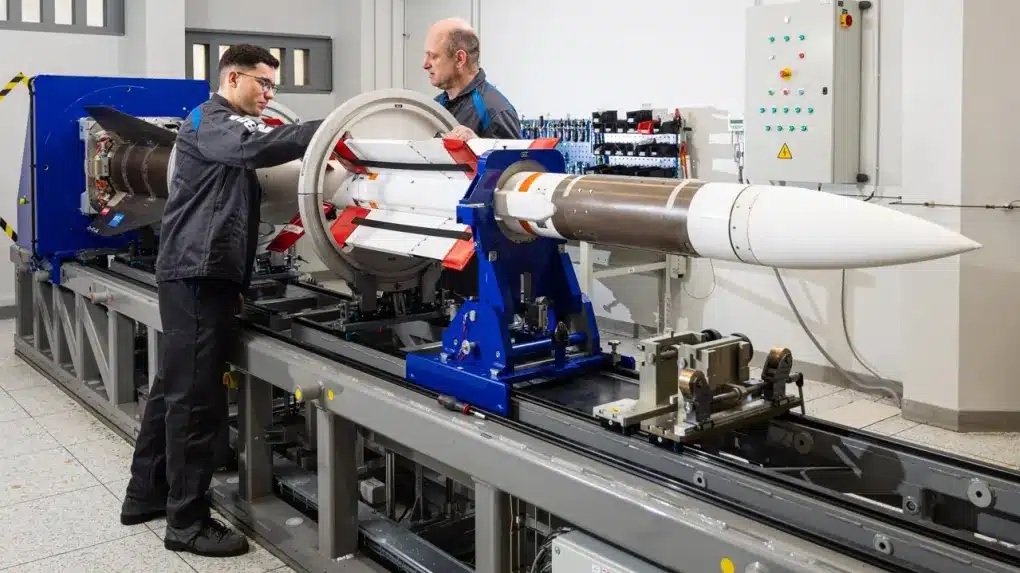
Europe
ORLEANS, France — European missile manufacturer MBDA is expanding its production capacity in France with plans to build a new missile production facility in Artenay, in the Loiret department near Orleans. MBDA is purchasing a 40-hectare industrial site, roughly twice the size of its main facility at Bourges Aeroport. The project is part of MBDA’s €5 billion investment program for 2026–2030, under which the company aims to increase total missile production in France by six times compared with 2023 levels by the end of the decade. Production to Start in 2027 MBDA plans a phased approach. From early 2027, it will lease and retrofit industrial premises in the nearby Ormes/Artenay area that were previously used by wind-turbine manufacturer Vergnet, which entered liquidation in early 2026. The temporary facility will allow initial component production to begin while construction of the new site continues. The main Orleans facility is scheduled to become fully operational in 2030 and will use robotics and automation to improve mechanical assembly and component handling. Aster and MICA Components The new plant will focus mainly on mechanical production and structural components for MBDA’s Aster and MICA missile families. The Aster 15 and Aster 30, developed by France and Italy through Eurosam, are used in naval and land-based air-defense systems, including SAMP/T. They are deployed by France, Italy and the United Kingdom, including aboard French and Italian naval vessels and British Type 45 destroyers. SAMP/T systems have also been supplied to Ukraine. The MICA family includes infrared and radio-frequency versions used by aircraft such as the Rafale and Mirage 2000, while VL MICA provides ground- and sea-based air-defense capability. Both missile families have experienced increased demand, including from the war in Ukraine. Selles-Saint-Denis to Continue Pyrotechnic Work Explosive production, warhead loading and other pyrotechnic activities will remain at MBDA’s existing facility in Selles-Saint-Denis, Loir-et-Cher. The site is also planned for further development of its integration and storage infrastructure. The Orleans expansion will complement capacity increases already underway at Bourges and other MBDA facilities. Orleans Selected for Space, Workforce and Logistics MBDA said the expansion outside Bourges is linked to limited space and constraints on the local labor pool at its existing sites. Orleans offers a logistics position between MBDA’s headquarters and development centers in Le Plessis-Robinson and its manufacturing sites in Centre-Val de Loire. The area also has an established industrial base in precision mechanics, metallurgy and defense-related manufacturing. Recruitment is expected to begin with several dozen operators and technicians in 2027, potentially reaching several hundred employees as production increases. MBDA has already doubled overall missile output between 2023 and 2025 and is targeting a further 40 percent increase in 2026. MBDA is jointly owned by Airbus (37.5%), BAE Systems (37.5%) and Leonardo (25%). More than €2 billion of its €5 billion European investment program is allocated to French facilities, with roughly three-quarters concentrated in the Centre-Val de Loire industrial corridor.
Read More → Posted on 2026-09-15 15:23:29
World
MINSK, Belarus — The United States has begun steps to unfreeze and return approximately $43 million to $44 million in Belarusian funds held at Citibank, U.S. Special Envoy for Belarus John Coale told Belarusian President Alexander Lukashenko during talks in Minsk on Tuesday. Coale said Washington has contacted the bank and formally requested the release of the money. The two sides are now working on a mechanism for returning the funds to Belarus. He said Washington would inform Minsk as soon as it receives a specific response from the bank. According to Lukashenko, the money represents payment from a company that had been cooperating with Belarus and is linked to potash shipments. On September 11, Lukashenko publicly demanded the return of the funds, describing the issue as a problem that needed to be resolved before broader talks could progress. Lukashenko said Belarus remains open to discussing any issues with the United States but stressed that both sides must strictly fulfill agreements already reached. He also thanked Coale for addressing his earlier concerns about the frozen funds. Broader U.S.-Belarus Talks The meeting between Coale and Lukashenko lasted about three hours and was their first face-to-face meeting in six months. Coale also conveyed greetings from U.S. President Donald Trump and said Trump supports the ongoing work. The discussions also covered economic relations. Lukashenko said several economic agreements had already been reached and asked Belarusian Prime Minister to provide an update on their implementation. Coale was appointed special envoy to Belarus in November 2025. Earlier rounds of negotiations contributed to the release of more than 400 detainees, including more than 50 in September 2025 and another 250 in March 2026. In response, Washington eased selected sanctions, including restrictions involving Belavia, Belarus's Finance Ministry and state-owned banks such as Belinvestbank. Despite the releases, disagreements remain over the status of the detainees. Lukashenko has said Belarus does not legally classify those released as political prisoners, while human rights group Viasna estimates that more than 900 people remain detained on political grounds. Belarus has also resumed potash fertilizer shipments to the United States following earlier sanctions adjustments. No new prisoner-release agreement was immediately announced after Tuesday's meeting. Citibank has not publicly commented on the frozen funds, while financial and banking discussions are expected to continue as Washington works out the process for their return.
Read More → Posted on 2026-09-15 15:28:28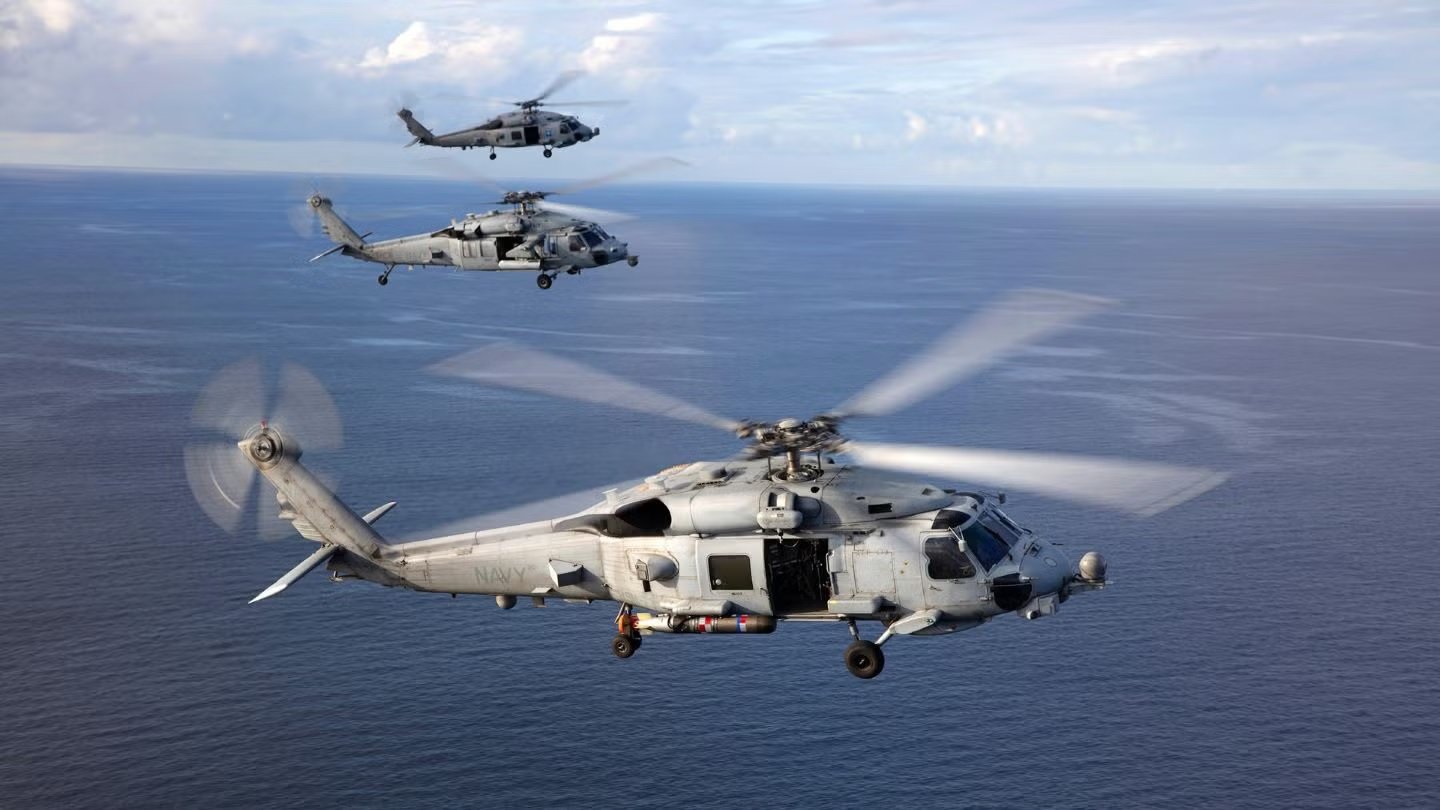
World
SEOUL, — South Korea has approved a 3.24 trillion-won ($2.4 billion) program to purchase about 20 additional U.S.-made MH-60R Seahawk maritime helicopters for the Republic of Korea Navy. The acquisition was approved Tuesday by the Defense Project Promotion Committee under the Defense Acquisition Program Administration (DAPA). The helicopters will be acquired through the U.S. Foreign Military Sales (FMS) program and are scheduled to be delivered by 2032. Replacing Aging Lynx Helicopters The acquisition is part of the Maritime Operational Helicopter-II program, which runs from 2025 to 2032. Its main purpose is to replace the Navy’s aging British-built Lynx and Super Lynx helicopters operating from destroyers and frigates. The MH-60R offers improved capabilities for detecting and tracking underwater and surface targets. Its anti-submarine warfare systems include variable-depth dipping sonar and sonobuoys, while its longer endurance and weapons capabilities support maritime operations. Manufactured by Lockheed Martin, the MH-60R is a multi-mission naval helicopter designed mainly for anti-submarine warfare (ASW) and anti-surface warfare (ASuW). It can also conduct search and rescue, surveillance and reconnaissance missions. The helicopter has a maximum speed of about 333 km/h (180 knots). Its official specifications include a maximum weight of 10.2 tons, length of 16.18 meters, width of 4.37 meters, and height of 5.18 meters. Expanding South Korea’s Seahawk Fleet South Korea ordered its first 12 MH-60R helicopters in 2020 under a program valued at about $878 million. The first aircraft from that order began arriving in late 2024 and early 2025. Two helicopters entered operational service on April 1, 2026, with the 62nd Maritime Helicopter Group at Jinhae Naval Base in South Gyeongsang Province. In May 2026, the U.S. State Department approved a potential sale of up to 24 additional MH-60Rs, valued at about $3 billion, supporting the subsequent procurement process. The latest approval will add about 20 more Seahawks, bringing South Korea’s planned MH-60R fleet to 32 helicopters by 2032. The Navy will continue operating AW159 Wildcat helicopters alongside its remaining Lynx aircraft. VTOL Reconnaissance UAV Program DAPA also approved changes to a separate program for the domestic development of vertical takeoff and landing (VTOL) reconnaissance UAVs. The UAV project has a budget of 2.16 trillion won and is planned for completion by 2036. The systems are intended to provide more than four times the surveillance reach of existing division-level reconnaissance drones and operate alongside manned platforms for monitoring coastal and open-water areas. The two programs will expand South Korea’s manned and unmanned maritime surveillance and reconnaissance capabilities while supporting the replacement of older naval aviation assets.
Read More → Posted on 2026-09-15 15:33:54
U.S
WASHINGTON — The U.S. Defense Innovation Unit (DIU) and Honeywell Aerospace have completed a flight test of a magnetic navigation system designed to provide aircraft with positioning information without relying on GPS. The test involved an Embraer 170 aircraft flying a round-trip route from the Seattle-area Puget Sound toward southern Alaska and back across the Pacific Ocean. According to a DIU announcement dated September 4, the aircraft operated without GPS for 4 hours and 23 minutes. The system, known as MagNav, uses quantum sensors to detect small variations in Earth's magnetic field. These variations are associated with geological structures in Earth's crust and can form location-specific magnetic patterns. The system compares measurements collected during flight with magnetic maps to determine the aircraft's position. DIU said the system improved position accuracy by 89 percent compared with traditional backup navigation methods, including radar mapping and visual references. Navigation information was provided to the pilots in real time on standard tablets, without requiring major changes to the aircraft's cockpit instruments. Honeywell confirmed that the flights were conducted during the week of June 22. Testing over the Pacific was significant because magnetic signals over ocean areas can be weaker and available magnetic maps can contain less detailed information than those covering land. The technology is intended to provide an alternative source of positioning when satellite navigation is unavailable or disrupted. Unlike satellite-based navigation, MagNav uses measurements of the Earth's natural magnetic field rather than relying on an external navigation signal. From Quantum Research to Flight Testing The MagNav effort developed from DIU's Transition of Quantum Sensing (TQS) program, which began in 2024. DIU's program is intended to move quantum-sensing technologies from development toward operational applications, including positioning, navigation and timing. According to the information released for the MagNav effort, 72 companies responded to the commercial solutions opening, with Honeywell Aerospace selected to develop the prototype. Honeywell contributed navigation algorithms, signal-processing techniques designed to reduce magnetic interference produced by the aircraft, and high-accuracy magnetic mapping. The Pacific flight follows earlier work aimed at demonstrating quantum sensing in operationally relevant environments. DIU has described magnetic navigation as one of the field-testing areas under its broader quantum-sensing effort. Further Military Testing Planned DIU and Honeywell plan additional tests later this year, including testing the system on a U.S. military C-17 Globemaster III cargo aircraft. The move to a military aircraft will provide another opportunity to evaluate the technology on a larger operational platform and under different conditions. DIU also launched Project Farseer in June 2026, with the stated aim of accelerating the transition of mature quantum-sensing and timing technologies into operational use with the Joint Force. The initiative includes technologies such as magnetometers, gravimeters and tactical clocks and is focused on dual-use commercial capabilities that can support missions in contested environments. The latest Pacific flight represents another step in DIU's effort to develop navigation technologies that can continue providing position information when GPS is unavailable or affected by interference. Further testing on military platforms is expected to continue through the remainder of the year.
Read More → Posted on 2026-09-15 15:44:16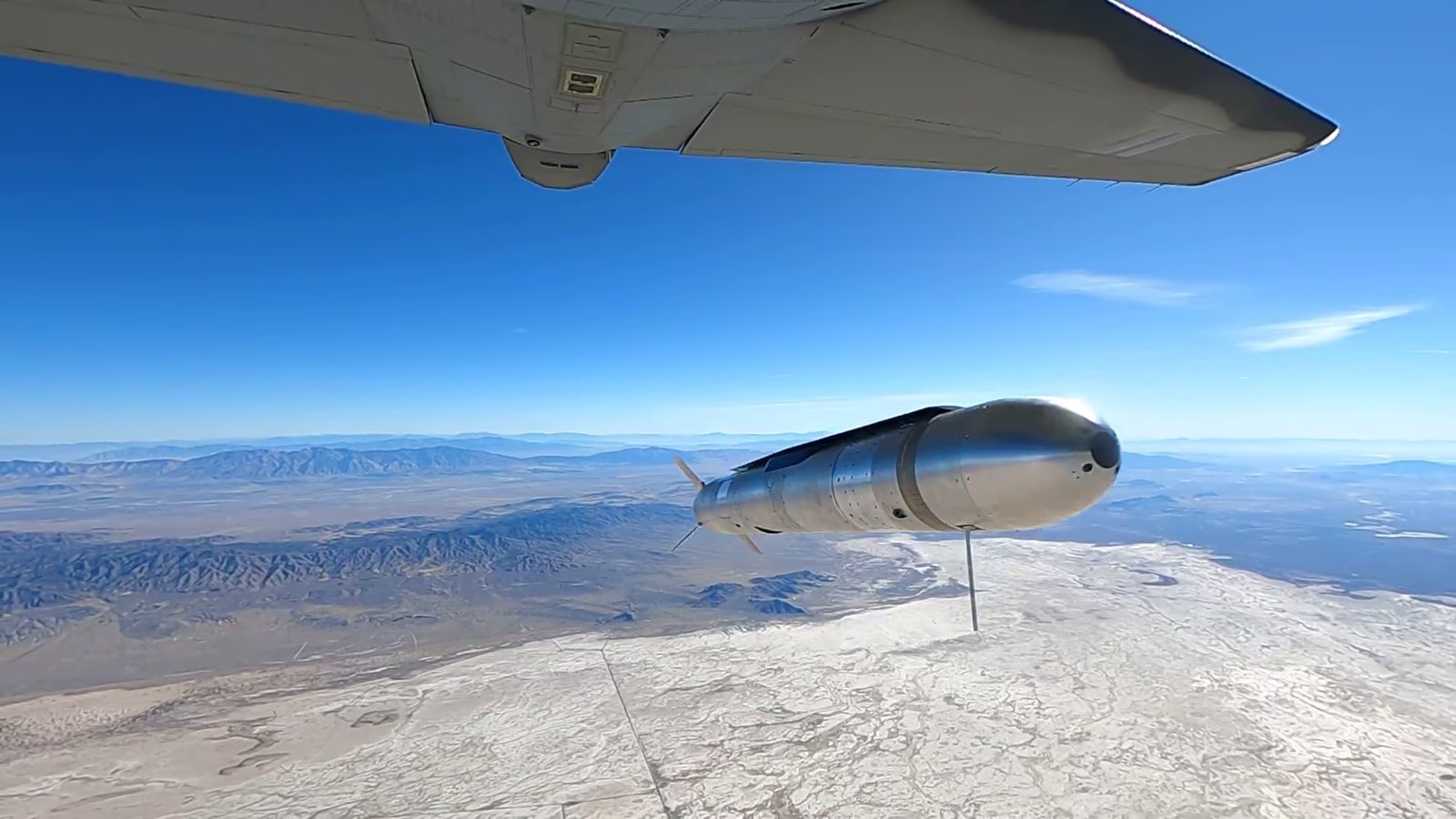
U.S
NATIONAL HARBOR, Md. — U.S. Air Force Special Operations Command (AFSOC) has confirmed that the AGM-190A Havoc Spear small cruise missile meets requirements for broader operational use across special operations and conventional aircraft. The decision follows a spring 2026 combat evaluation conducted with U.S. Africa Command (AFRICOM). During the assessment, an AC-130J Ghostrider launched two AGM-190A missiles in a test configuration from ramp-mounted launch tubes against two separate stationary ground targets in AFRICOM's area of responsibility. Both missiles successfully struck their designated targets. Further details of the operation were not released. “Havoc Spear’s range and capabilities expand standoff options, giving commanders a versatile tool to neutralize threats without putting platforms or personnel in immediate danger,” said Lt. Gen. Mike Conley, AFSOC commander. AFRICOM commander Gen. Dagvin Anderson said the successful assessments support ongoing efforts to disrupt terrorist networks in Africa and provide capabilities alongside U.S. partners. Rapid Development and Production U.S. Special Operations Command (USSOCOM) led procurement of the missile through a Cooperative Research and Development Agreement (CRADA) with Leidos. The weapon was originally developed under the project name Black Arrow. The program moved from design through testing and combat evaluation in less than three years, compared with the five-to-seven-year timeline typical of similar acquisition programs. AFSOC director of strategic plans, programs and requirements Col. Robert Johnston said the command is using more agile modernization pathways and industry partnerships to deliver capabilities faster. The AGM-190A is a 200-pound-class weapon with a demonstrated standoff range of more than 400 nautical miles, or about 460 miles (740 km), in earlier testing from a C-130. It uses a modular hardware design and open-system software for different mission requirements. On July 8, 2026, USSOCOM awarded Leidos an initial $27.2 million production contract. About 45 missiles from the initial production order are expected to begin delivery in fall 2027. The current low-rate initial production cost is approximately $600,000 per missile, with a target of about $250,000 to $350,000 at full-rate production. Leidos said its manufacturing base in Huntsville, Alabama, can be expanded to produce up to 15,000 missiles annually if required. Wider Aircraft Integration AFSOC plans to integrate the AGM-190A across additional aircraft, including MC-130J platforms and conventional Air Force aircraft capable of carrying pylon-mounted weapons. The missile can be launched through ramp launch tubes, external wing pylons and palletized drops. AFSOC also intends to align the weapon with the Air Force's Family of Affordable Mass Missiles (FAMM) initiative, with the goal of supporting larger purchases and reducing production costs. In the near term, AFSOC aircrews will focus on tactical training and weapons integration. Development teams are also evaluating non-kinetic electronic warfare and specialized reconnaissance variants using the missile's modular airframe. The AGM-190A forms part of AFSOC's Enhanced Precision Effects effort. The name Havoc Spear was selected by Secretary of the Air Force Troy Meink during a November 2025 visit to AFSOC headquarters, while the official AGM-190A designation was assigned in early 2026.
Read More → Posted on 2026-09-15 15:48:21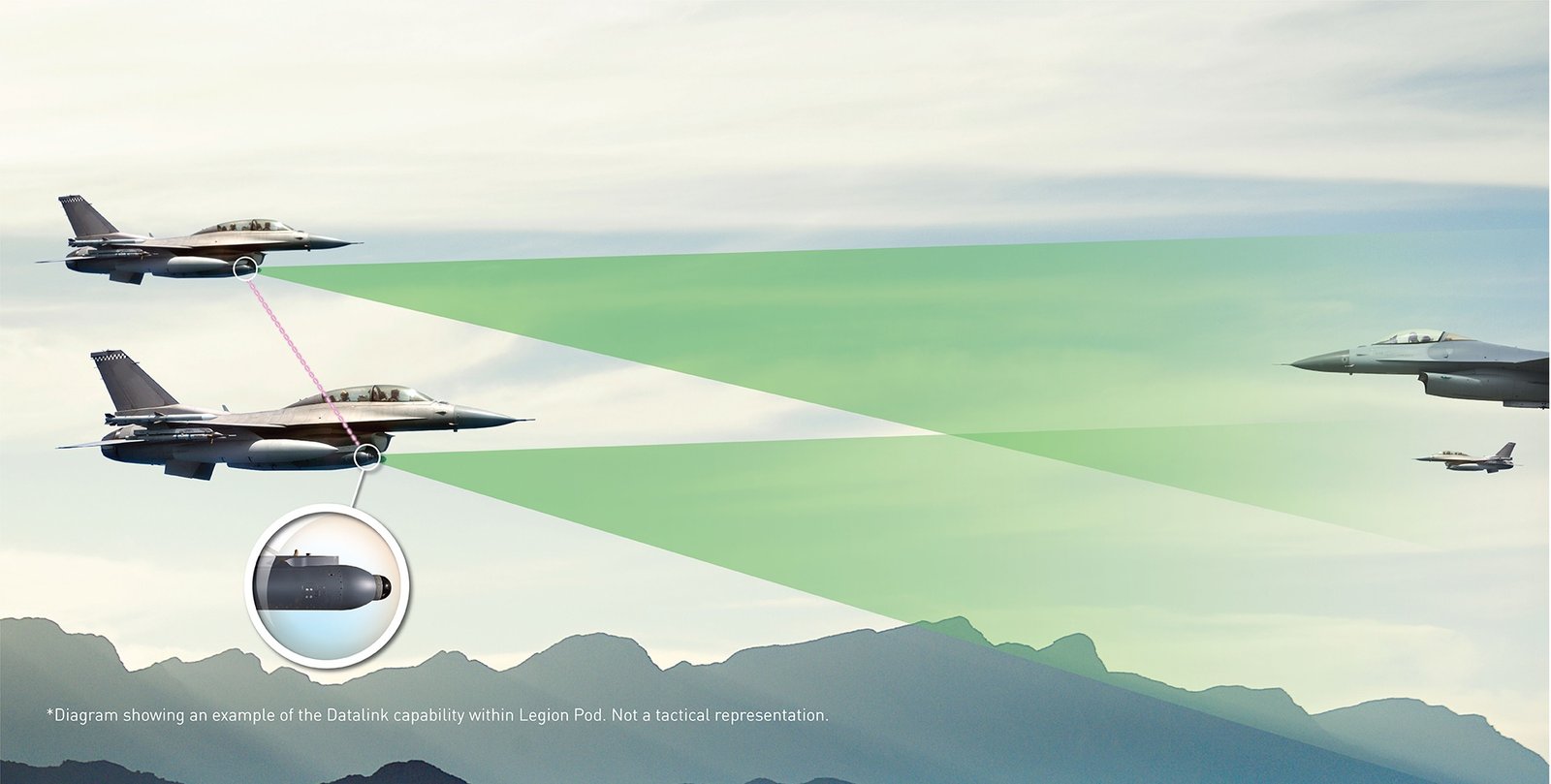
U.S
TUCSON, Ariz. — Lockheed Martin has demonstrated a direct data link between Legion infrared search-and-track (IRST) pods mounted on two F-16 fighter aircraft, allowing the aircraft to share sensor information in flight and generate targeting data without relying on their radars. The flight test was conducted with the U.S. Air National Guard and the Air Force Reserve Test Center (AATC) from Morris Air National Guard Base in Tucson, Arizona. The two F-16s were equipped with Legion Pods connected through HiveLink, a data-link system developed by L3Harris. According to Lockheed Martin, the demonstration showed how two passive infrared sensors can combine their observations to improve target tracking and determine range while the aircraft remain radar silent. Combining Two Passive Sensors The Legion Pod uses the IRST21 sensor, which detects and tracks airborne targets using infrared signatures rather than transmitting radar energy. Lockheed Martin says the system is designed to provide air-to-air detection and tracking in radar-denied environments. A single passive IRST can provide an accurate bearing to a target, but determining range is more difficult because the sensor does not actively transmit a signal. By linking two pods on separate aircraft, their different viewing angles can be combined to establish the target's range. Lockheed Martin previously described this approach as similar to human depth perception: two sensors observing an object from different positions provide the geometry needed to create a three-dimensional view. During the latest demonstration, the two Legion Pods exchanged sensor information directly and combined their tracks. This allows the system to produce targeting information without requiring the infrared data to pass through the aircraft's main mission computer for processing. Data Link Reduces Aircraft System Burden The pod-to-pod architecture is designed to allow the Legion Pods to perform much of the data processing and communication themselves. Lockheed Martin previously stated that this approach can reduce the use of aircraft resources and shorten the time required to establish target range. HiveLink, developed by L3Harris, is designed as a secure, software-defined data-link system supporting both line-of-sight (LOS) and beyond-line-of-sight (BLOS) communications. L3Harris says the system uses mesh networking and supports multiple waveforms for operations involving airborne, unmanned and ground platforms. Cristin Stengel, program director for Lockheed Martin Legion, said the company is working with the Air National Guard and AATC to develop a networked passive IRST capability and provide aircrews with faster and more accurate targeting information in contested airspace. Continued Development The latest F-16 test follows earlier work on Legion's pod-to-pod networking capability. In 2021, Lockheed Martin demonstrated IRST data sharing between two F-15Cs during the Northern Edge exercise in Alaska. The company subsequently planned F-16 flight testing to demonstrate transportability and interoperability across aircraft platforms. Lockheed Martin's current Legion Pod is housed in a 16-inch-diameter structure and incorporates the IRST21 sensor and an onboard processor. The company says the pod has completed integration and flight testing on F-16 and F-15C aircraft and uses a common interface designed to simplify integration without changes to the aircraft's operational flight program. The company has also identified future applications involving additional radios and waveforms, fifth-to-fourth-generation connectivity and manned-unmanned teaming. These developments are intended to allow passive sensor information to be shared across a wider network of aircraft and other platforms. The latest demonstration therefore continues Lockheed Martin's development of Legion as a networked passive sensor, combining infrared detection with direct data sharing between aircraft while reducing the need for active radar emissions during target tracking.
Read More → Posted on 2026-09-16 14:50:34
Europe
SAN JAVIER, MURCIA — Spanish technology and defense company Indra has unveiled SQUALL, a new low-cost cruise missile designed for precision strikes against strategic targets at distances of more than 300 kilometers. The missile was presented at UNVEX 2026, which is being held in San Javier, Murcia, on September 16 and 17. According to Indra, SQUALL is intended to engage high-value targets in the rear area, including command-and-control centers, air defense systems and military infrastructure. The company has designed the missile for low-altitude flight, which is intended to help it avoid enemy radar detection while maintaining precision against its targets. Low-Altitude Flight and Guidance Systems SQUALL uses multiple guidance and navigation systems designed to continue operating in environments where adversaries attempt to interfere with the missile through jamming or spoofing. Indra says these capabilities are intended to support accurate target engagement even when the electromagnetic environment is contested. The missile is also designed for flexible deployment. It can be integrated with land and naval platforms and prepared for launch from ramps, containers or tactical vehicles. Designed for Both Precision and Mass Attacks A key feature of SQUALL is its lower cost compared with conventional missiles. Indra says this allows the system to be used for limited precision strikes with a small number of missiles, as well as coordinated attacks involving larger numbers of weapons. In mass-attack scenarios, SQUALL is intended to saturate enemy air defenses. Indra says the cost relationship between the missile, the targets it can attack and the interceptors required to counter it could place pressure on an adversary's military resources and economic capacity. National Supply Chain Indra has also designed SQUALL around what it describes as a reliable and resilient national supply chain. The company says the system uses components over which it maintains sovereignty and control. According to Indra, this approach is intended to support increased production during a crisis, particularly if international supply chains are disrupted or access to certain materials becomes more difficult. Part of Indra's Wider Defense Portfolio SQUALL joins Indra's existing portfolio of defense systems, which includes fixed and mobile counter-drone systems, the DRIZZLE effector drone and the TARSIS family of unmanned aircraft. Indra describes DRIZZLE as a low-cost effector designed to intercept drones and engage light targets at distances of up to 130 kilometers. The TARSIS family provides capabilities including tactical target engagement, intelligence, surveillance and reconnaissance, as well as target designation. Indra has also said that these systems are being developed to operate within a multilayered integrated air-defense architecture and a combat-cloud environment intended to improve decision-making, reaction times and information sharing. The company is progressively incorporating artificial-intelligence functions across its portfolio. UNVEX 2026 is being held on September 16 and 17 in San Javier and focuses on unmanned systems and related defense and security technologies. Indra has not released full technical specifications for SQUALL, including its speed, dimensions, warhead size or propulsion type. The company has confirmed that the missile has a range of more than 300 kilometers and is designed for surface launch from the platforms described above.
Read More → Posted on 2026-09-16 15:00:20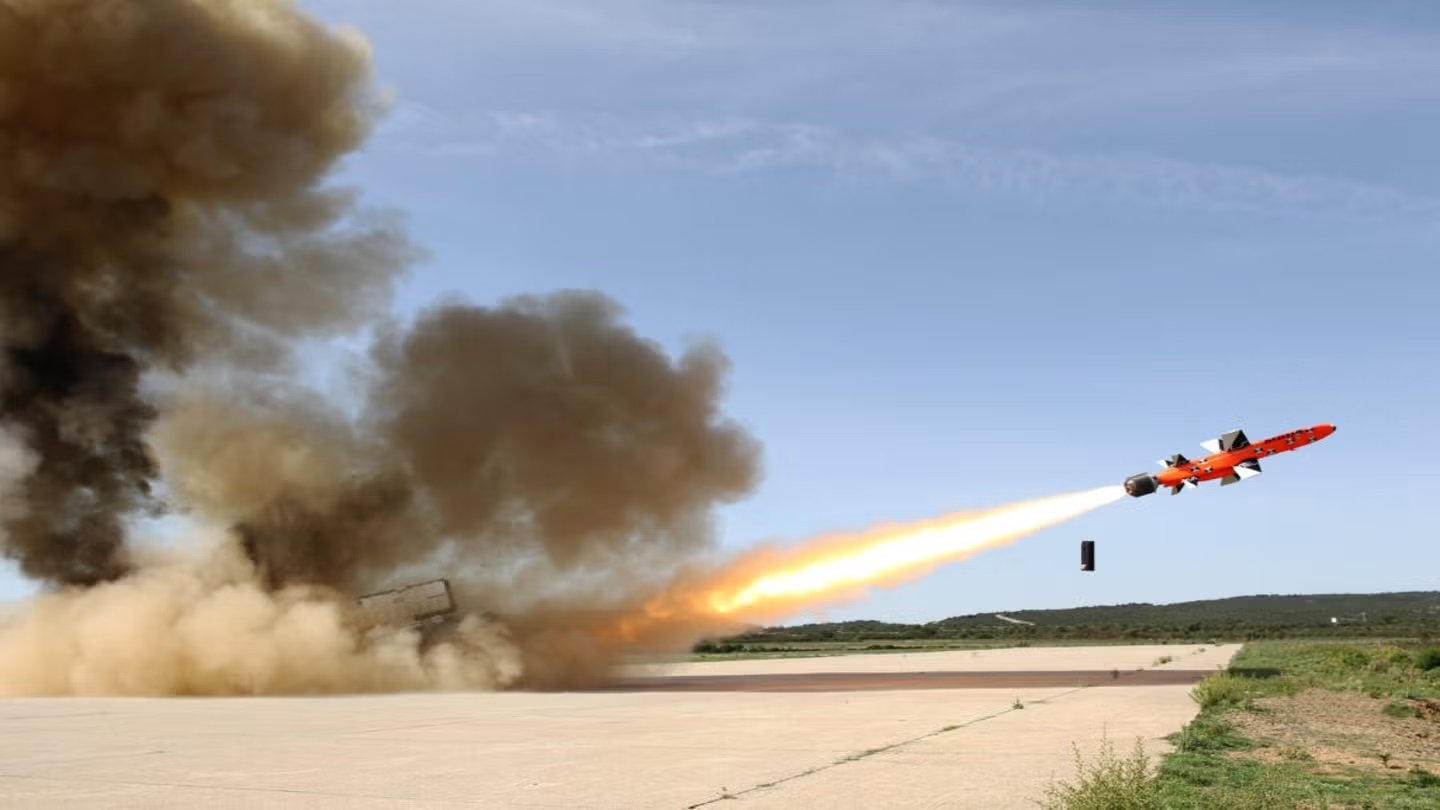
Europe
ROME — European missile manufacturer MBDA has successfully completed a validation firing of the TESEO MK2/E anti-ship missile system for the Italian Navy. The missile conducted an approximately 20-minute piloted cruise flight, validating its range and supporting the final stages of the weapon’s multi-year qualification programme. The successful test is expected to allow the programme to conclude its development phase and move into serial production within the agreed schedule. First deliveries to the Italian Navy are targeted for 2028. The test follows the first firing on 14 October 2024, which validated the missile’s updated aerodynamic design and newly developed components, including the new axial booster. The TESEO MK2/E programme began in 2021 under a contract with Italy’s National Directorate of Naval Armaments covering development, integration and qualification. A production contract was signed in 2025. The TESEO MK2/E is the latest development of the TESEO family, internationally known as OTOMAT. Developed with the Italian Navy, it is designed to provide both anti-ship and land-strike capabilities and will complement the existing TESEO MK2/A already in service. The missile is planned for the Italian Navy’s PPA multi-purpose combat ships, FREMM frigates, Horizon-class destroyers and future DDX destroyers. It will also be integrated on future FREMM EVO frigates and can be adapted for international customers. Key Capabilities The TESEO MK2/E features a new AESA radio-frequency seeker with electronic counter-countermeasures (ECCM) and an electro-optical sensor for precision engagement of sea and land targets. A two-way satellite data link allows in-flight mission control, including target updates, reassignment and mission abort. Its navigation system combines INS/GPS and a radio altimeter, supporting autonomous sea-skimming and over-land flight. The missile uses automated mission planning and can support coordinated simultaneous time-on-target (STOT) attacks. MBDA lists the missile’s key characteristics as: Range: More than 350 km at sea-skimming level Speed: High subsonic Weight: Approximately 700 kg at the start of the cruise phase Length: Less than 5 metres Launch canister length: Under 5.5 metres Diameter: 350 mm Terminal manoeuvrability: High-G Warhead: Scalable semi-piercing/high-explosive type Renzo Tosini, Executive Vice President of Sales & Business Development and Managing Director of MBDA Italia, said the result would provide Italy and the Italian Navy with a sovereign capability and could support future international opportunities for the system. He also highlighted the importance of cooperation between MBDA and the Italian Navy. The latest firing brings the TESEO MK2/E closer to completion of its qualification programme and planned production, with first deliveries scheduled for 2028.
Read More → Posted on 2026-09-16 15:10:10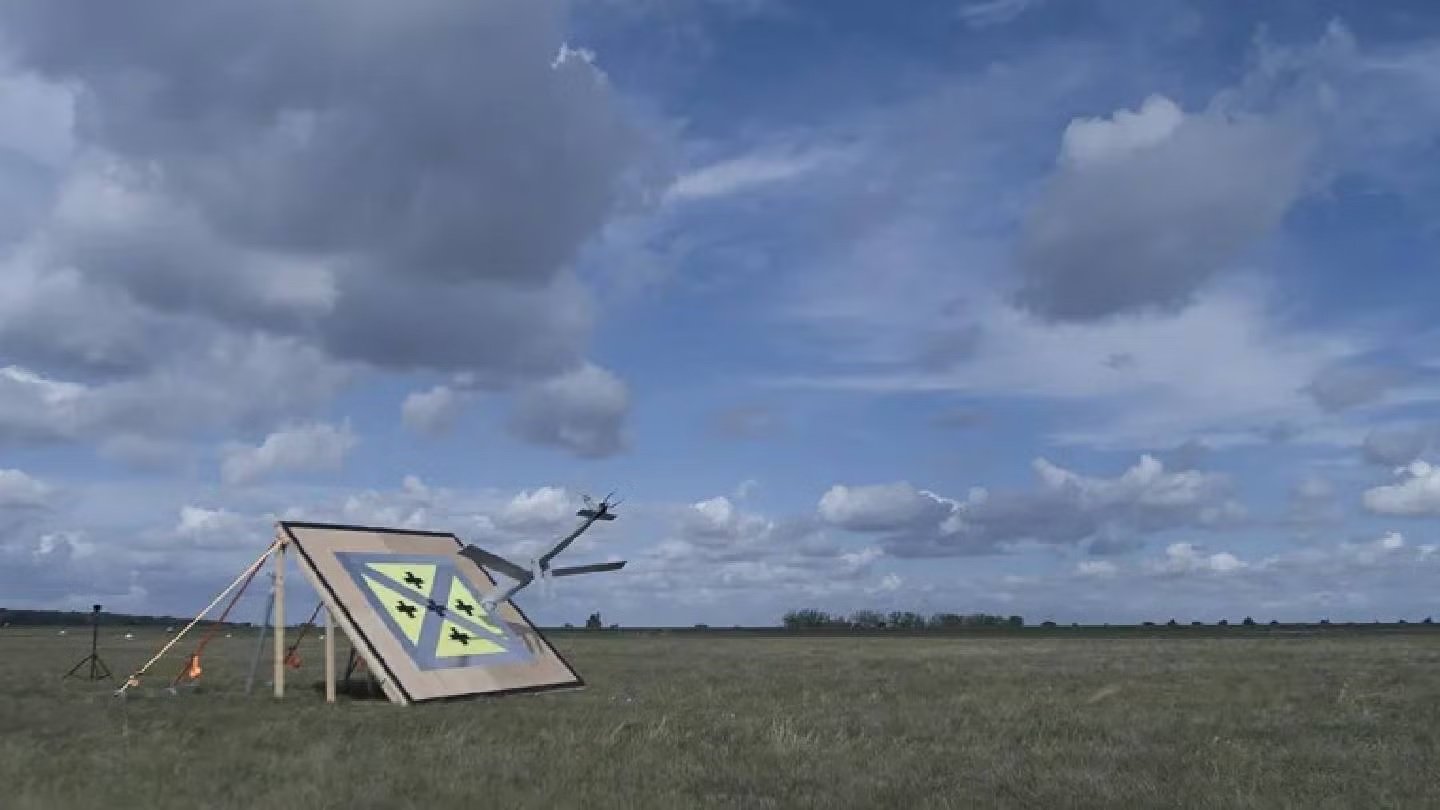
Europe
BERLIN — German defence company Diehl Defence and Israel’s Elbit Systems have completed live-fire field trials of the SkyStriker loitering munition in Germany, demonstrating its long-range control hand-over, autonomous targeting and integration with a reconnaissance drone. The trials were conducted in early September 2026 and formally announced by both companies on September 14. 80-Kilometre Control Hand-Over SkyStriker was launched from a transport-and-launch canister before autonomously detecting and tracking a prepared target and conducting a simulated precision engagement. A key part of the trial was the system’s control hand-over capability. Ground operators successfully transferred operational control of the airborne munition over a distance of 80 kilometres (50 miles). The capability allows control of the munition to be transferred between operators during a mission through a networked command-and-control system. Integration with Skylark 1 The demonstration also tested cooperation between SkyStriker and Elbit’s Skylark 1 eVTOL reconnaissance drone. Skylark 1 identified and tracked the target area while providing real-time video and coordinate information. SkyStriker then entered the designated area and conducted the engagement. The system retains human-in-the-loop abort and retargeting functions. The companies also demonstrated mission performance in conditions where GPS and data links could be degraded or jammed. SkyStriker Specifications SkyStriker is a fixed-wing, electrically powered loitering munition designed for tactical precision strikes. Its electric propulsion provides a low acoustic and thermal signature. According to manufacturer information, the system has: Range: More than 200 km, with up to 250 km depending on configuration Endurance: More than two hours with the standard configuration Warhead: Modular 5 kg or up to 10 kg Maximum takeoff mass: Up to 50 kg Terminal attack speed: Up to 550 km/h Wind resistance: Up to 20 m/s The munition uses high-resolution electro-optical and infrared sensors for reconnaissance and target tracking. It can also perform abort, go-around and re-engagement functions when required. Multiple Launch Platforms SkyStriker can be launched from dedicated canisters, ground vehicles, aircraft and rocket artillery systems. The companies identify systems including Elbit’s PULS, EuroPULS and MARS3/MARS II as compatible launch platforms. This allows compatible artillery units to employ both rocket systems and loitering munitions. German Production Plans The live demonstration follows a strategic cooperation agreement signed between Diehl Defence and Elbit Systems at the ILA Berlin air show in June 2026. Under the agreement, Elbit Systems is responsible for system development, sensor integration and international strategic market positioning, while Diehl Defence is responsible for German manufacturing, final assembly, platform integration and qualification. The partnership is intended to establish local production capabilities in Germany if procurement orders are received. This would include German-based assembly, maintenance and supply-chain capabilities for European operators. Diehl Defence Senior Vice President Gunnar Pappert said the demonstration showed the cooperation between the companies and the requirements of modern armed forces. Marian Rachow, CEO of Elbit Systems Germany, described the trial as another milestone for SkyStriker in Europe and on the path toward production in Germany. No German procurement or production contract for SkyStriker has been announced. The companies are currently positioning the system for potential German and European requirements for long-range loitering munitions.
Read More → Posted on 2026-09-16 15:15:21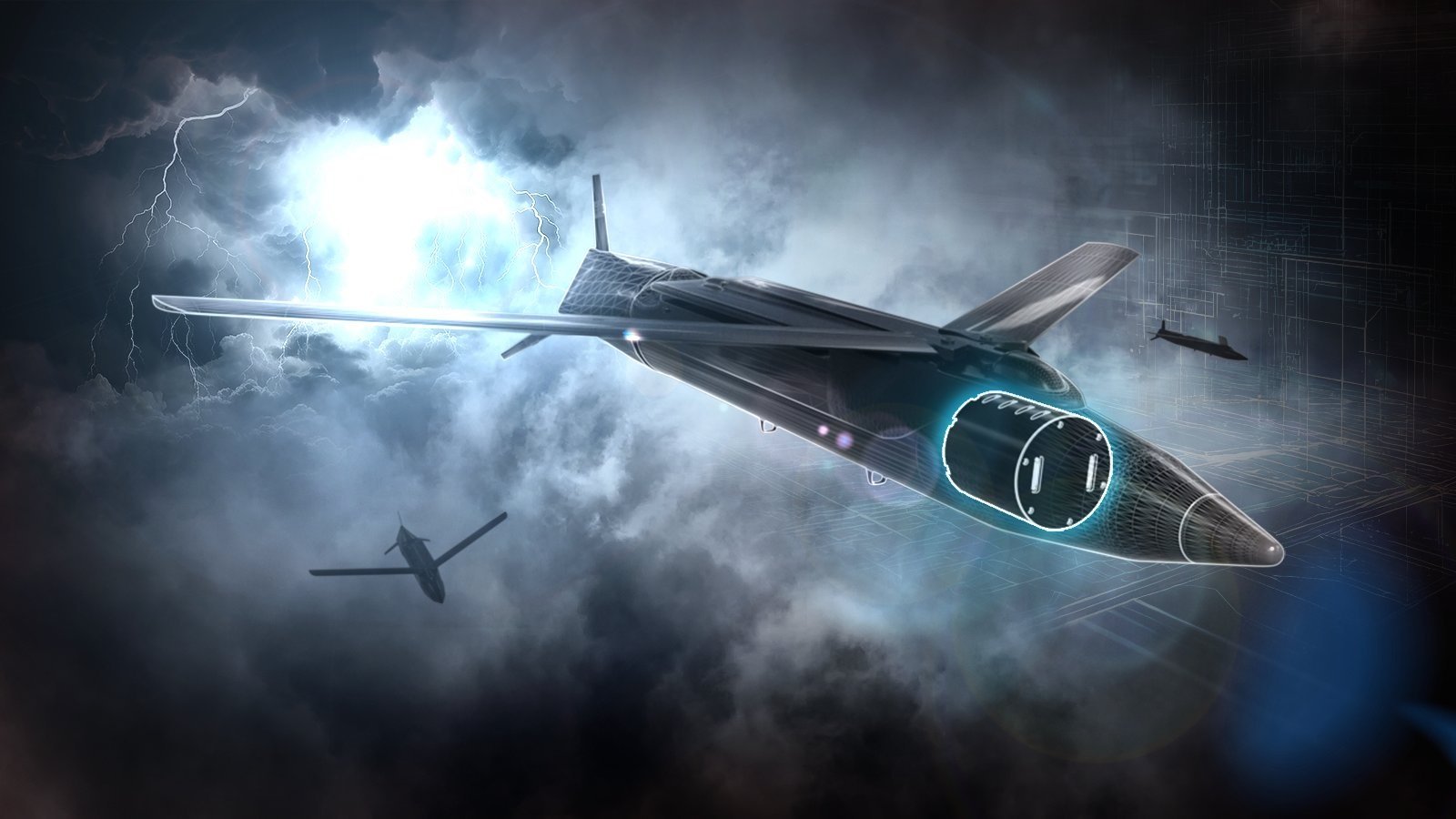
Europe
NASHUA, N.H. — BAE Systems has launched its Shadow EW family of compact electronic warfare (EW) systems designed for small airborne platforms, including drones, munitions and other attritable systems. The company announced the new systems at the AFA Air, Space & Cyber Conference in National Harbor, Maryland. Shadow EW is designed with low size, weight and power (SWaP) requirements, allowing the systems to be integrated onto smaller platforms and produced in high volumes. Three Shadow EW Variants The Shadow EW family includes three variants: Shadow EW 100: Designed for smaller drones and attritable systems, with an operating frequency range of 70 MHz–6.0 GHz. Shadow EW 120: Designed for radar electronic warfare, signals intelligence and communications intelligence, covering 5 MHz–6.0 GHz. Shadow EW 500: Provides edge-processing capabilities for Weapons Open System Architecture (WOSA) platforms and operates across 10 MHz–18 GHz. Software-Defined EW Capabilities The systems use open architecture standards and software-defined technology, allowing field upgrades through software updates as threats evolve. Shadow EW supports missions including situational awareness, targeting, deception, survivability and collaborative effects. BAE Systems said some variants can detect, identify, geolocate and track an adversary based on its radio-frequency emissions. Commercial Components and Production BAE Systems said Shadow EW uses commercial microchips for high-performance computing and supply-chain efficiency. Engineers adapted the components for the demanding conditions experienced by drones, missiles and glide bombs. The company developed the family through internal investment to support affordable, high-volume electronic warfare capabilities that can be rapidly integrated across different platforms. The systems can also operate independently or alongside existing EW suites on larger aircraft, helicopters and legacy platforms. Production will take place at BAE Systems’ facility in Cedar Rapids, Iowa, which has established high-volume manufacturing capabilities. Software development and design work will be conducted in Nashua, New Hampshire. Company Statements Josh Niedzwiecki, BAE Systems’ vice president and general manager of Electronic Combat Solutions, said some Shadow EW variants provide a single drone or munition with the ability to detect, identify, geolocate and track an emitter. He compared the capability with BAE Systems’ passive RF seeker technology used on the Lockheed Martin AGM-158C Long-Range Anti-Ship Missile (LRASM), but for a lower-cost class of system. Rebecca Cruz, director of Shadow EW products at BAE Systems, said the systems combine flexible, configurable hardware with iterative software updates to address rapidly changing threats.
Read More → Posted on 2026-09-16 15:20:22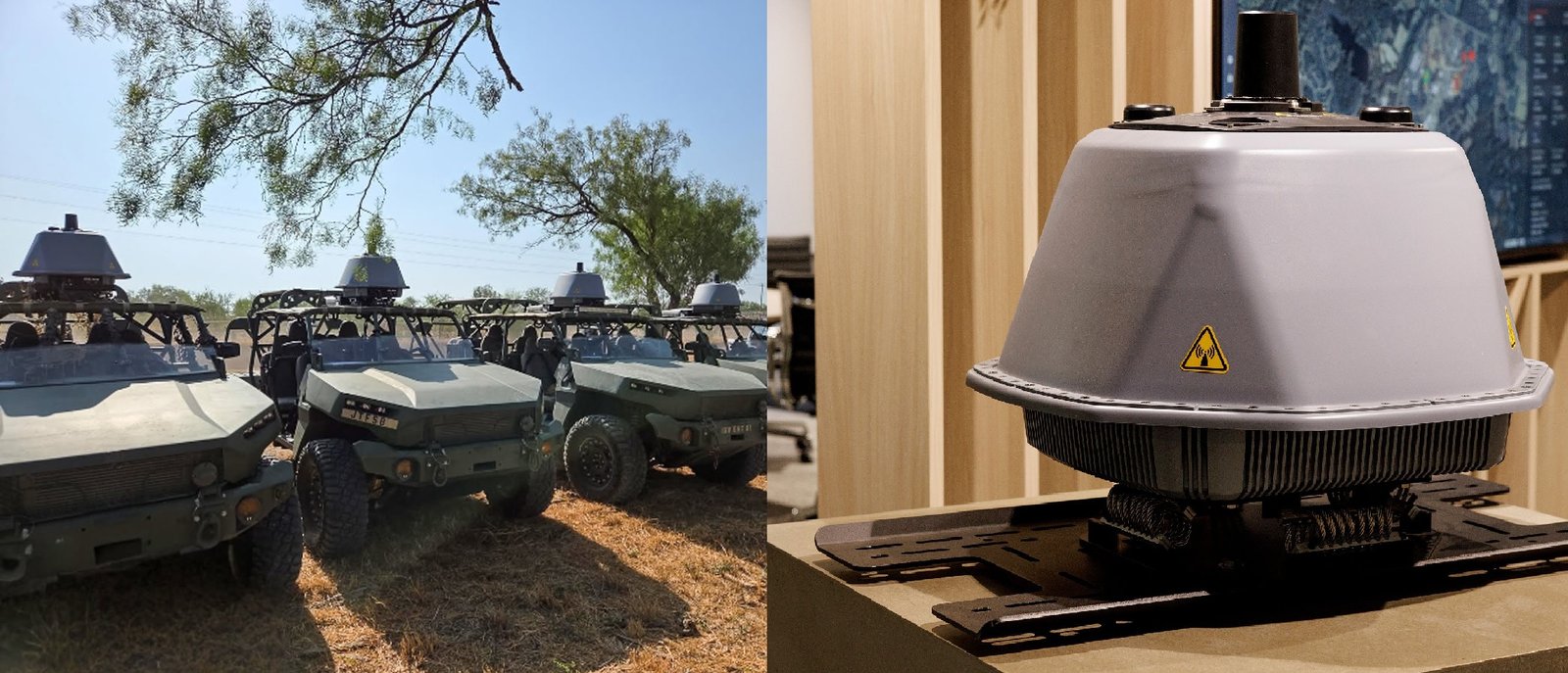
U.S
WARRENTON, Va. — DroneShield has completed the installation, testing and operational acceptance of its DroneSentry-X Mk2 counter-uncrewed aircraft systems (C-UAS) on U.S. military Infantry Squad Vehicles (ISVs) under the Joint Interagency Task Force 401 (JIATF-401) program. The work was completed in approximately 80 days after the contract was awarded. DroneShield handled system delivery, vehicle integration, live-uncrewed-aircraft acceptance testing and operator training. The completion establishes Initial Operational Capability (IOC) for the deployed systems. A recent contract modification also calls for three additional DroneSentry-X Mk2 units. Mobile Counter-Drone System The DroneSentry-X Mk2 is a compact vehicle-mounted system designed to detect uncrewed aircraft and use electronic countermeasures against them. Mounted directly on the ISV, the system can operate while the vehicle is stationary or moving, allowing mobile infantry units to carry counter-UAS capability with them instead of relying only on fixed installations. DroneShield personnel supervised the mechanical and electrical installation and conducted live-flight testing using uncrewed aircraft. Military operators also received training as part of the acceptance process. “Counter-UAS capability has to be deployable at the speed the threat is evolving,” said Nate Webb, Director of Strategic Projects at DroneShield. He said the company completed delivery, vehicle installation, live-UAS acceptance testing and operator training in approximately 80 days. Contract and U.S. Military Support The contract was announced in June 2026 and has an initial value of A$19.3 million, with A$5.6 million in options over five years, for a potential total value of A$24.9 million. It covers mobile and fixed-site counter-drone solutions, including hardware, subscriptions, warranties and services. DroneShield is also required to purchase and install third-party interoperable systems. Deliveries are scheduled across 2026 and 2027. JIATF-401 coordinates counter-UAS efforts across the U.S. joint force and supports missions involving U.S. Northern Command (USNORTHCOM), Joint Task Force-Southern Border (JTF-SB) and interagency partners. U.S. Army Brig. Gen. Matt Ross, director of JIATF-401, said there is no single solution for every drone threat and that effective counter-UAS operations also require training and appropriate authorities. He said the task force will continue working with USNORTHCOM, JTF-SB and other partners on counter-drone capabilities for operations at home and abroad. The Infantry Squad Vehicle is a lightweight tactical platform designed to carry a nine-soldier infantry squad and up to 3,200 pounds of payload. It can also be transported by helicopter or fixed-wing aircraft. DroneShield said the DroneSentry-X Mk2 has also been added to the JIATF-401 C-UAS Marketplace, allowing authorized U.S. government agencies and allied military purchasers to acquire counter-UAS equipment through the program.
Read More → Posted on 2026-09-16 15:25:06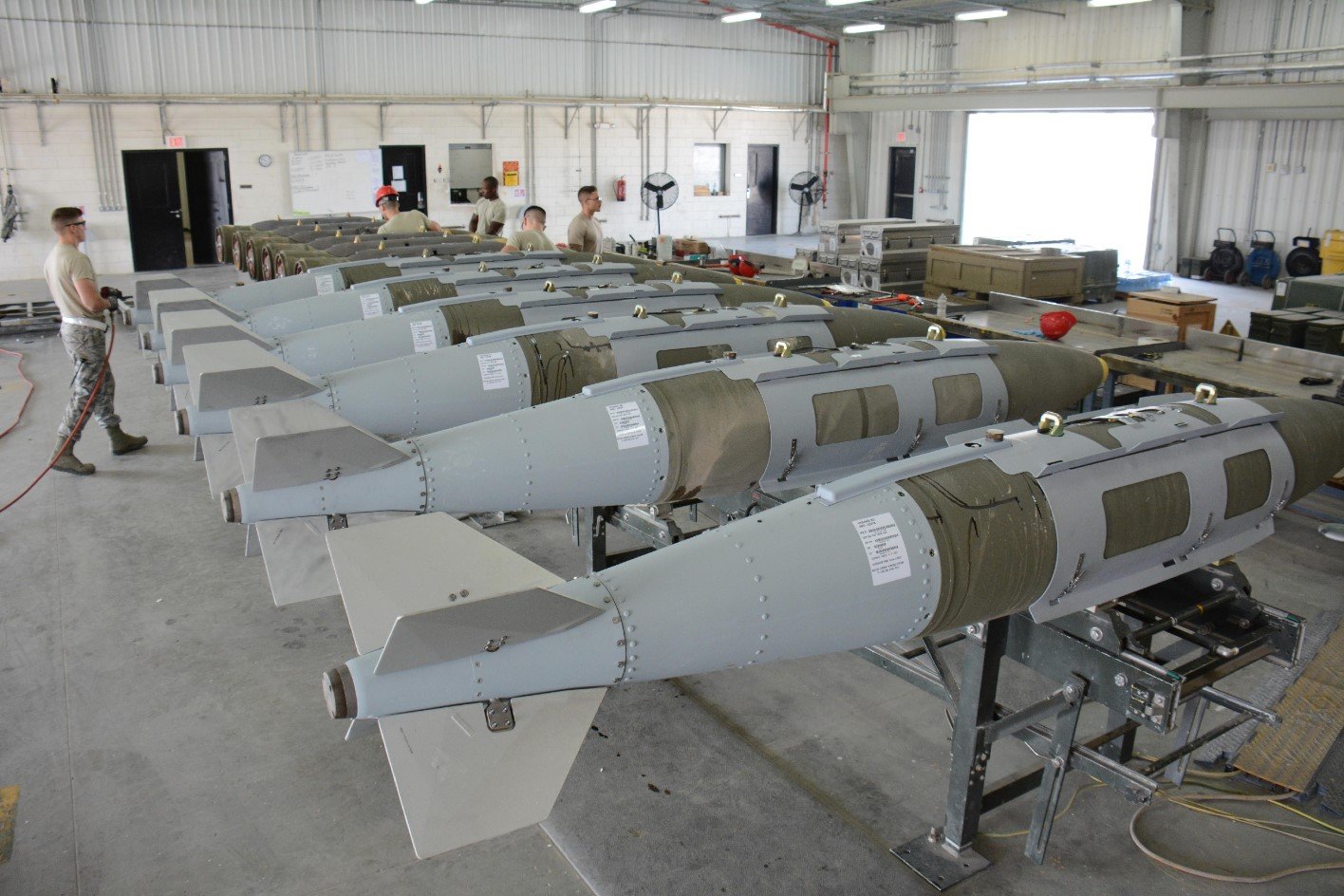
U.S
WASHINGTON — September 16, 2026 — The Trump administration is preparing a $2.8 billion munitions package for Israel that includes 40,000 bombs weighing 2,000 pounds each, along with 20,000 I-2000 Penetrator warheads, according to U.S. officials cited by The Washington Post . The proposed package has been informally communicated to the relevant congressional committees as part of the review process for major U.S. arms sales. The State Department has not formally confirmed the transaction, saying it does not comment on proposed foreign military sales before they are formally notified to Congress. What the Package Includes The package includes two types of 2,000-pound bombs: 20,000 MK-84 general-purpose bombs 20,000 BLU-117 bombs 20,000 I-2000 Penetrator warheads The MK-84 and BLU-117 account for the 40,000 bombs in the package. The I-2000 Penetrator warheads are listed separately. The MK-84 is a 2,000-pound conventional bomb designed for air-to-ground use. The Washington Post described it as one of the most destructive conventional munitions in Western arsenals, with the ability to damage thick concrete and metal structures. The BLU-117 is a 2,000-pound-class bomb body based on the MK-84 design and has a thermal protective coating intended to make it safer for certain naval storage conditions. The I-2000 Penetrator is designed for use against hardened structures and underground targets. Financing and Congressional Review The proposed transaction would be financed through the U.S. Foreign Military Financing (FMF) mechanism. Under this system, U.S. funding is provided to Israel for the purchase of American-made defense equipment. Congressional committees have received an informal notification, but the package has not yet completed the formal congressional notification process. A formal notification would begin the statutory review period under U.S. arms-export rules. A senior Trump administration official said that foreign arms sales are moving through the appropriate process but declined to comment on pending transactions. The Israeli Embassy also did not immediately respond to requests for comment. If completed, the package would be larger than previous U.S. transfers of 2,000-pound munitions to Israel in recent years. The Washington Post reported that an earlier 2025 sale was valued at about $2.04 billion and included more than 35,500 comparable bomb bodies. Reversal of Earlier Restrictions The proposed sale follows a previous U.S. decision to pause the delivery of 2,000-pound bombs to Israel. In 2024, the Biden administration paused a shipment of such bombs because of concerns over their potential use in densely populated areas of Gaza. After President Donald Trump returned to office in January 2025, the administration lifted that hold and released the previously withheld munitions. Israel has used 2,000-pound bombs in operations in Gaza and Lebanon, according to Reuters and other reports, bringing scrutiny from rights experts over their use in densely populated areas. Large-Scale Munitions Requirement The proposed package comes after years of intensive military operations involving Israel and follows several previous U.S. weapons transfers. Because of the size of the order, the proposed transaction represents a significant addition to Israel's inventory of heavy aerial munitions. The package is also being considered while the United States faces broader demands on its own munitions stocks, according to recent reporting. The proposed $2.8 billion sale remains subject to the formal U.S. arms-sale process. Its final approval, congressional review and delivery timeline have not been publicly established.
Read More → Posted on 2026-09-16 15:38:47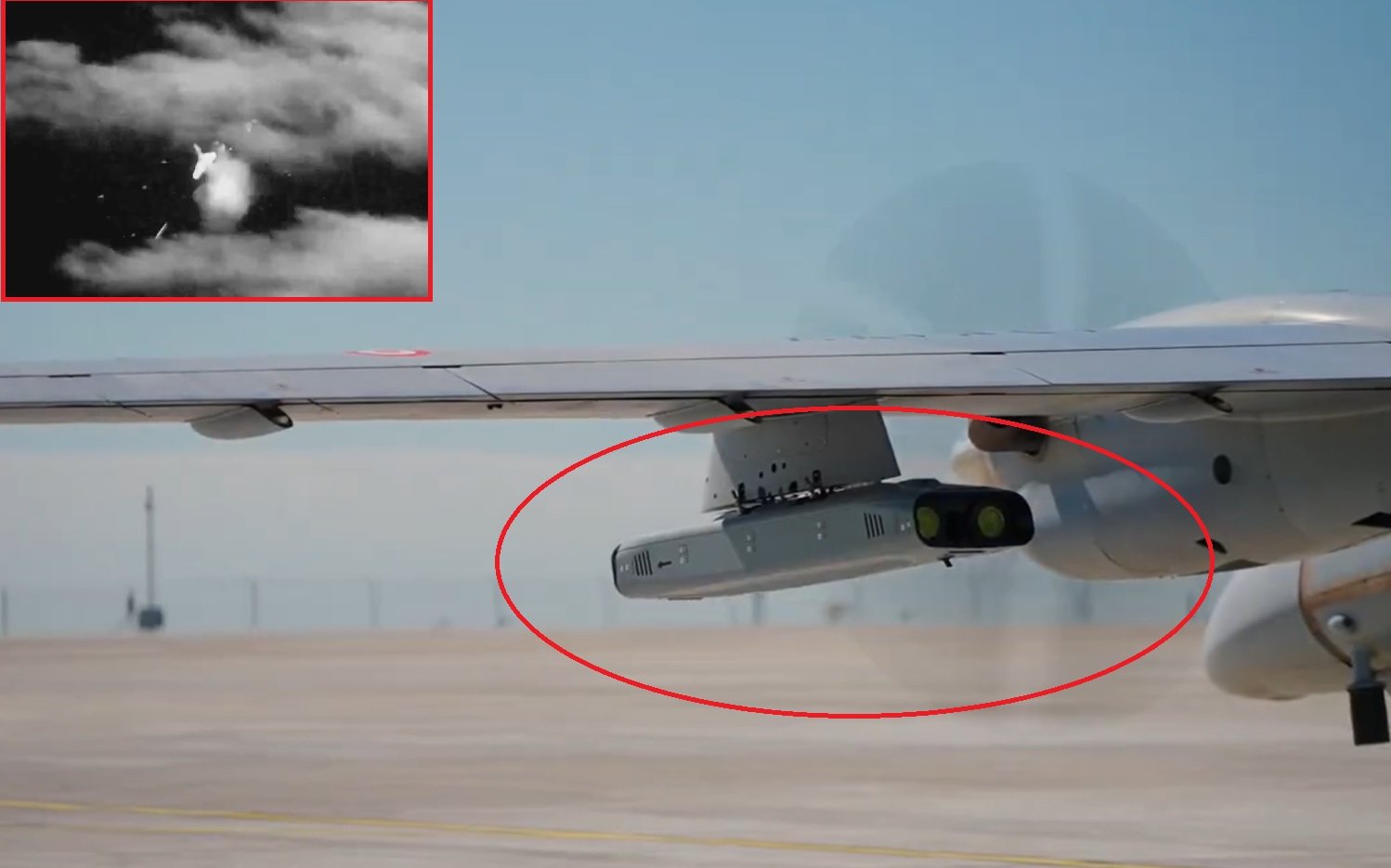
World
SINOP, Turkey — Turkey’s Bayraktar AKINCI unmanned combat aerial vehicle (UCAV) successfully hit a high-speed aerial target using ROKETSAN’s SUNGUR air-defense missile during a test over the Black Sea. Black Sea Missile Test The AKINCI took off from Baykar’s Flight Training and Test Center in Çorlu, Tekirdağ, and flew to the designated test area off the coast of Sinop. During the test, the UCAV engaged a high-speed target aircraft. The AKINCI launched the SUNGUR missile, which achieved a direct hit. After completing the engagement, the aircraft returned to Çorlu along its planned flight route. SUNGUR Missile Developed by ROKETSAN, SUNGUR is an indigenous short-range air-defense missile designed to engage fixed-wing aircraft, helicopters and unmanned aerial vehicles. The missile uses an imaging infrared (IIR) seeker and operates in a lock-on-before-launch, fire-and-forget configuration. Reported specifications give it a range of about 8 km and an altitude reach of up to 4–6 km, depending on the source and configuration. SUNGUR weighs approximately 14.5 kg, measures 1.68 metres in length and carries a high-explosive semi-armour-piercing warhead. The missile can be integrated with land, naval and aerial platforms, including UAVs. #AKINCI ✈️🐳🚀✅ SUNGUR Munition Air-to-Air Firing Test🎯 Bull’s Eye#Baykar 🤝 @Roketsan#NationalTechnologyInitiative 🌍🇹🇷 pic.twitter.com/HC7LogExav — BAYKAR (@BaykarTech) September 16, 2026 Expanding AKINCI Air-to-Air Capability The SUNGUR test adds another air-to-air weapon to AKINCI’s growing weapons portfolio. The platform has previously conducted successful air-to-air firing tests involving the KEMANKEŞ-1 AI-based mini cruise missile and the EREN high-speed multi-purpose loitering munition, both against aerial targets over the Black Sea. AKINCI has also been integrated with a wide range of Turkish-developed weapons, including MAM-L, MAM-C, MAM-T, TOLUN, TEBER-81, TEBER-82, LAÇİN, LGK, HGK, GÖKÇE, GÖZDE, İHA-122, İHA-230, İHA-300, ÇAKIR and EREN. Recent İHA-300 Test Earlier in September, the AKINCI launched the İHA-300 supersonic missile against a maritime target at a range exceeding 250 kilometres during a separate Black Sea test. Together, these weapon integrations provide the AKINCI with demonstrated engagement options against ground, maritime and aerial targets, from shorter-range weapons to long-range strike systems. Export Activity Baykar states that it finances its projects with its own resources. The company has signed AKINCI export agreements with multiple countries and remains a major exporter in the unmanned aerial vehicle sector.
Read More → Posted on 2026-09-16 15:52:28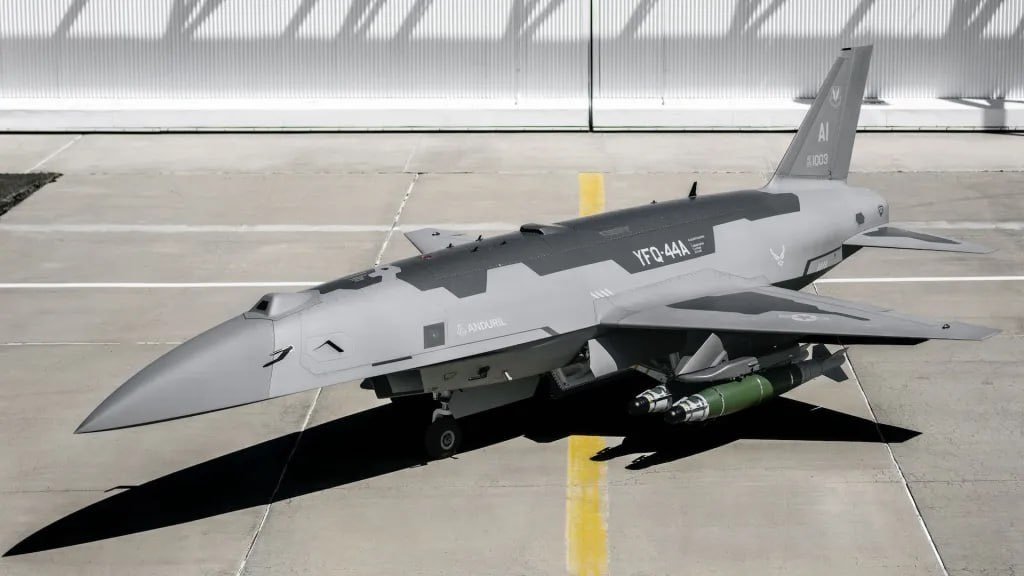
U.S
NATIONAL HARBOR, Md. — Anduril Industries has conducted ground fit-checks of several air-to-ground weapons on its YFQ-44A Fury autonomous aircraft, expanding the potential mission set of the U.S. Air Force’s Collaborative Combat Aircraft (CCA) platform beyond its original air-to-air focus. The company released imagery showing the Fury fitted with 2.75-inch rocket pods, 500-pound-class guided bombs including the GBU-54 Laser JDAM, and GBU-39/B Small Diameter Bombs mounted on twin adaptor racks under the wings. Anduril has also begun integration work for 250-pound SDBs, targeting pods and low-cost cruise missiles, including its Barracuda 500 cruise missile. The integration is being funded internally by Anduril. Jason Levin, Anduril’s senior vice president for Air Dominance and Strike, and Erin Simpson, vice president for Strategy for Air Dominance and Strike, discussed the work during a roundtable at the Air & Space Forces Association’s Air, Space & Cyber Symposium. Ground Fit-Checks Only The weapons shown have not yet been flight-tested on the Fury. The current work is limited to ground fit-checks, which verify physical and structural compatibility, clearances and system interfaces. Before these weapons can be cleared for operational use, the aircraft will need further testing covering aerodynamic effects, structural loads, store separation and captive-carry and live-release trials. The YFQ-44A prototype currently has two external underwing hardpoints, while the production FQ-44 Fury is expected to have four. The additional stations could support different combinations of air-to-air and air-to-ground weapons. Fury Already Demonstrated Air-to-Air Capability The Fury has already demonstrated a live air-to-air weapons capability. On July 15, 2026, the YFQ-44A launched an AIM-120 AMRAAM during testing over the Mojave Desert. It has also conducted formation flights with F-35A fighters during Experimental Operations Unit testing at Creech Air Force Base, although the F-35s did not control the Fury during those flights. The Fury, previously designated YFQ-44A during its prototype phase, is now officially designated the FQ-44 Fury by the Air Force. It is one of two designs selected for CCA Increment 1, alongside General Atomics' FQ-42. Production contracts were awarded in June 2026. Anduril has begun preparing production at its Arsenal-1 facility and has invested in long-lead items, although full production work under the contract depends on fiscal year 2027 funding. The latest fit-checks show that Anduril is exploring a broader range of weapons and mission configurations for the Fury, while the Air Force has not yet finalized requirements for later CCA increments.
Read More → Posted on 2026-09-16 15:57:07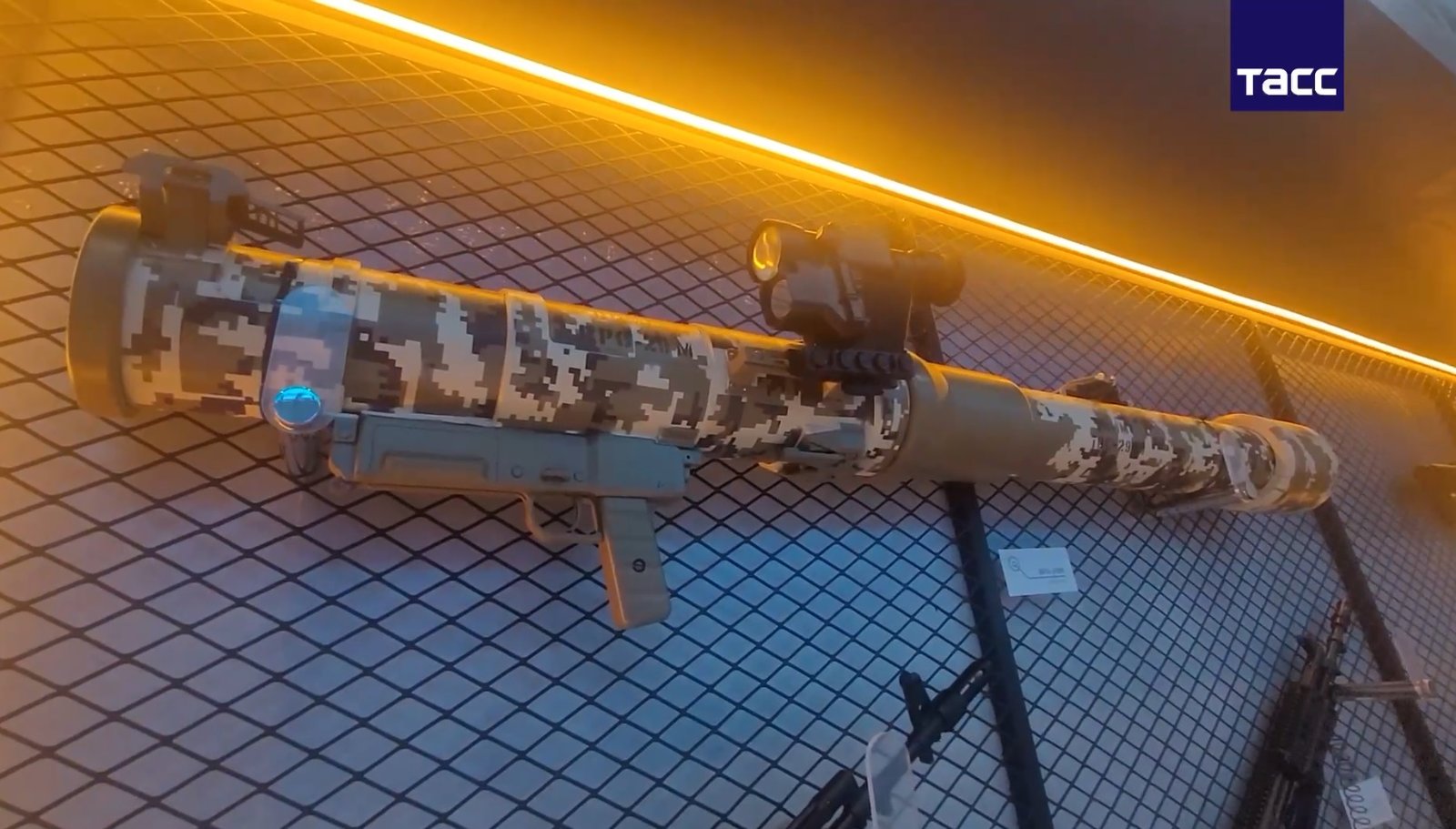
World
PRETORIA, South Africa — Russia has unveiled the modernized RPG-29M portable anti-tank grenade launcher for the first time on the African continent at the Africa Aerospace and Defence 2026 (AAD 2026) exhibition in Pretoria. Developed by Rostec and displayed by Rosoboronexport, the RPG-29M is a major modernization of the Soviet-era RPG-29 “Vampir.” Designers used experience from combat operations to reduce weight, improve handling and portability, upgrade the sighting system and expand ammunition options. According to official data, the 105 mm launcher weighs 4.4 kg and measures 620 mm in length, compared with around 11.5–12 kg for the original RPG-29 launcher. It has a stated service life of 300 rounds and can operate from –40°C to +50°C. The RPG-29M can use a daytime optical sight or an all-weather thermal imaging sight with integrated fire-control functions. The upgraded sighting system supports target engagement in different lighting and weather conditions, while the stated direct-fire range reaches 700 to 1,000 meters, depending on the ammunition. The launcher uses three main types of 105 mm ammunition: PG-29VM: Tandem hollow-charge anti-tank round with a direct-fire range of up to 700 m, designed for armoured targets including vehicles protected by explosive reactive armour. TBG-29VM: Thermobaric round with a range of up to 1,000 m, intended for personnel, field fortifications, buildings and lightly armoured or soft-skinned targets. MG-29V: Multipurpose tandem hollow-charge and thermobaric round with a range of up to 1,000 m, intended for lightly armoured and unarmoured vehicles, personnel, fortifications and buildings. All three rounds are supplied in standardized sealed transport containers measuring 1,050 mm in length and weighing approximately 9 kg. Earlier presentations have also mentioned possible incendiary, cluster and fragmentation ammunition. AAD 2026 is being held from September 16 to 20 at Waterkloof Air Force Base in Centurion, Pretoria. Russia is presenting the RPG-29M as part of its wider defence display at the exhibition. Rosoboronexport is also highlighting its military-technical cooperation with African countries, including more than 20 projects involving maintenance, repair and localized production of military equipment. The RPG-29M was previously presented publicly at the World Defense Show 2026 in Riyadh, making AAD 2026 its first public presentation on the African continent.
Read More → Posted on 2026-09-16 16:05:41
World
SANAA / MARIB — Yemen’s Ansarallah movement, commonly known as the Houthis, has claimed that its air-defense forces shot down a Royal Saudi Air Force F-15 fighter jet over Marib Governorate and later intercepted a Saudi-operated Wing Loong II unmanned aerial vehicle in the same area. The claims were announced on Wednesday by Houthi military spokesman Brigadier General Yahya Saree. Saudi authorities have not publicly confirmed the loss of the F-15, and independent verification of the reported aircraft losses was not immediately available. F-15 Downing Claimed Over Marib Saree said the Saudi F-15 was conducting operations in support of Saudi military activity over Marib when it was hit by a locally manufactured missile. Houthi military media subsequently released footage and images that it said showed the engagement and wreckage of the aircraft. The Houthi statement also said Saudi F-15 and Eurofighter Typhoon aircraft entered the area after the reported loss to search for the wreckage and locate the aircraft's crew. According to Saree, Houthi forces engaged those formations with additional locally made missiles, after which the aircraft withdrew from the area. The Houthis have described the F-15 as having been brought down by a locally produced air-defense weapon. Public reporting has not independently established the exact missile used or confirmed the aircraft's specific variant and tail number. Wing Loong II Drone Also Reported Down In a separate announcement, Houthi authorities said their air defenses later shot down a Saudi-operated Wing Loong II armed reconnaissance drone over Marib. The group said the UAV was carrying out what it described as a hostile mission when it was intercepted. Houthi military media also released images that it identified as wreckage from the drone. The reported drone interception came in the same area as the claimed F-15 loss and during the reported Saudi search activity. However, the Wing Loong II loss over Marib has also not been independently confirmed by Saudi authorities. The Houthis have previously claimed the destruction of Saudi-operated Wing Loong II drones. On September 6, the group said it had brought down a Wing Loong II over northwestern Taiz Governorate, although there was no independent confirmation of that incident. Houthi Footage Shows Reported F-15 Engagement Houthi military media released video that it said showed the interception of the Saudi fighter. The footage reportedly includes tracking of an aerial target followed by the launch of a missile and an apparent mid-air explosion. The group also released Footage of aircraft wreckage on the ground. These materials were presented by the Houthis as evidence of the reported shootdown, but the available reporting does not provide independent confirmation of the aircraft loss. High-quality footage of a Saudi F-15 fighter jet being shot down and its wreckage in Marib province - September 16, 2026Saudi Arabia will sink in Yemen pic.twitter.com/UKMy9Zjo43 — ابراهيم ناجي Ibrahim Naji (@Ibrahym22Nagi) September 16, 2026 Saudi-Houthi Air Activity Intensifies The reported incidents came amid increased air activity between Saudi Arabia and Houthi forces. Saree claimed that Saudi aircraft had carried out more than 450 airstrikes during the week across several Yemeni provinces, including Marib, Taiz, Lahij, Al-Jawf, Hajjah, Saada and Al-Bayda. He said the operations involved Saudi F-15 and Typhoon aircraft and resulted in civilian casualties. These figures and casualty claims were part of the Houthi statement and have not been independently verified. The latest claims also followed a separate incident near Mecca on September 15. Saudi Arabia said its air defenses intercepted and destroyed a Houthi drone south of the city before it entered restricted airspace. Houthi officials denied targeting Mecca or other Islamic holy sites and said their operations were directed against military and oil-related targets. The Saudi-led coalition has not confirmed the reported F-15 or Wing Loong II losses over Marib. As a result, the aircraft claims remain unverified pending independent evidence or an official Saudi statement.
Read More → Posted on 2026-09-16 16:30:58
U.S
RESTON, Va. — V2X Inc. (NYSE: VVX) has been awarded a position on a $46 million U.S. Air Force delivery order to produce carriage equipment for the Long Range Standoff (LRSO) cruise missile program. The company announced the award on September 15. The order was placed under the Air Force’s Enterprise-Wide Agile Acquisition Contract (EWAAC), an indefinite delivery/indefinite quantity (IDIQ) contract. The work supports the Air Force’s Carriage Equipment Production Effort for the LRSO program. Equipment for B-52 LRSO Integration Under the delivery order, V2X will manufacture carriage equipment required to support the integration of the LRSO weapon system onto the B-52 Stratofortress. The equipment is part of the hardware needed for the bomber to carry and employ the new cruise missile. The LRSO is being developed to replace the AGM-86B Air-Launched Cruise Missile (ALCM) and is part of the modernization of the airborne component of the U.S. strategic deterrent. The Air Force previously identified the LRSO as a weapon intended for integration with its bomber force. V2X President and CEO Jeremy C. Wensinger said the company considers its work on B-52 modernization and the strategic deterrent a significant responsibility. He said the award reflects the Air Force’s confidence in V2X to provide solutions supporting the service’s modernization priorities. Part of Wider B-52 Modernization The LRSO carriage equipment effort is taking place alongside several other B-52 modernization programs. The Air Force reported on September 15 that the B-52J Commercial Engine Replacement Program received Milestone B approval on June 1, allowing it to enter the Engineering and Manufacturing Development phase. The program will replace the bomber’s existing engines with Rolls-Royce F130 engines. The Air Force also reported that the B-52 Radar Modernization Program received Milestone C approval on August 21, authorizing the radar upgrade to move into production. Structural assessments have also indicated that the B-52 airframes have sufficient fatigue life to support operations into the 2050s and beyond. These programs are intended to keep the B-52 fleet operational while adding modern propulsion, radar, communications and weapons capabilities. EWAAC Contract The Enterprise-Wide Agile Acquisition Contract is a multiple-award IDIQ vehicle managed by the Air Force Life Cycle Management Center. It supports weapons-related development, production, integration and other acquisition activities. The $46 million V2X delivery order is one task issued under the broader contract framework. V2X was formed in 2022 through the merger of Vectrus and Vertex Aerospace. The Reston, Virginia-based company provides engineering, manufacturing, sustainment, logistics and mission-support services for defense customers across air, land, sea, space and cyber domains. The company said it employs approximately 16,000 people.
Read More → Posted on 2026-09-16 16:41:44
World
WASHINGTON — Exclusive photographs obtained by CBS News show significant damage at U.S. military installations in Saudi Arabia and Kuwait following Iranian missile and drone attacks. The images, provided by active-duty service members who spoke anonymously because of military media restrictions, show damaged buildings, vehicles and military equipment. At Prince Sultan Air Base in Saudi Arabia, one photograph shows a Boeing E-3 Sentry with its rear section heavily damaged. The aircraft's tail assembly was torn away from its charred fuselage, while its rotating radar dome was also destroyed. The E-3 Sentry is an airborne early-warning and control aircraft used for airborne surveillance and intelligence collection. Other photographs from the base show damaged barracks and buildings with collapsed roofs and burned interiors. Concrete T-wall blast barriers can be seen standing near some of the damaged structures. The photographs also show damage at Camp Buehring and Camp Arifjan in Kuwait. Camp Buehring, a major U.S. Army staging and logistics location northwest of Kuwait City, has images showing damaged barracks, destroyed housing trailers and vehicles. At Camp Arifjan, photographs show visible blast and structural damage to a building. One deployed U.S. service member told CBS News that the extent of the damage had not been fully communicated to the American public and criticized earlier descriptions of Iranian weapons that reached U.S. bases. The photographs appeared as the Department of Defense Office of Inspector General released a report covering Operation Epic Fury from February 28 through June 30, 2026. The report estimated up to $3.7 billion in equipment losses, including nearly 60 U.S. aircraft such as MQ-9 Reaper drones, KC-135 Stratotankers and tactical fighter aircraft. The report also said Iranian strikes damaged or destroyed hundreds of buildings and structures at U.S. bases in Kuwait, Bahrain, Qatar, the United Arab Emirates, Saudi Arabia, Iraq, Oman and Jordan. The overall cost of Operation Epic Fury during the period covered by the report was estimated at approximately $33.4 billion. This included $22.3 billion in expended munitions, $3.7 billion in equipment losses and $7.4 billion in other obligations. The estimate did not include the full cost of repairing damaged infrastructure. Earlier reporting said an Iranian missile and drone attack on Prince Sultan Air Base on or around March 27 damaged the E-3 Sentry and several KC-135 aircraft. More than 10 U.S. service members were reported wounded, including two seriously. The Pentagon did not respond to a CBS News request for comment on the newly released photographs. The images provide a visual record of damage at the specific Saudi and Kuwaiti sites, while the inspector general's report documents broader U.S. losses across the region.
Read More → Posted on 2026-09-16 16:49:42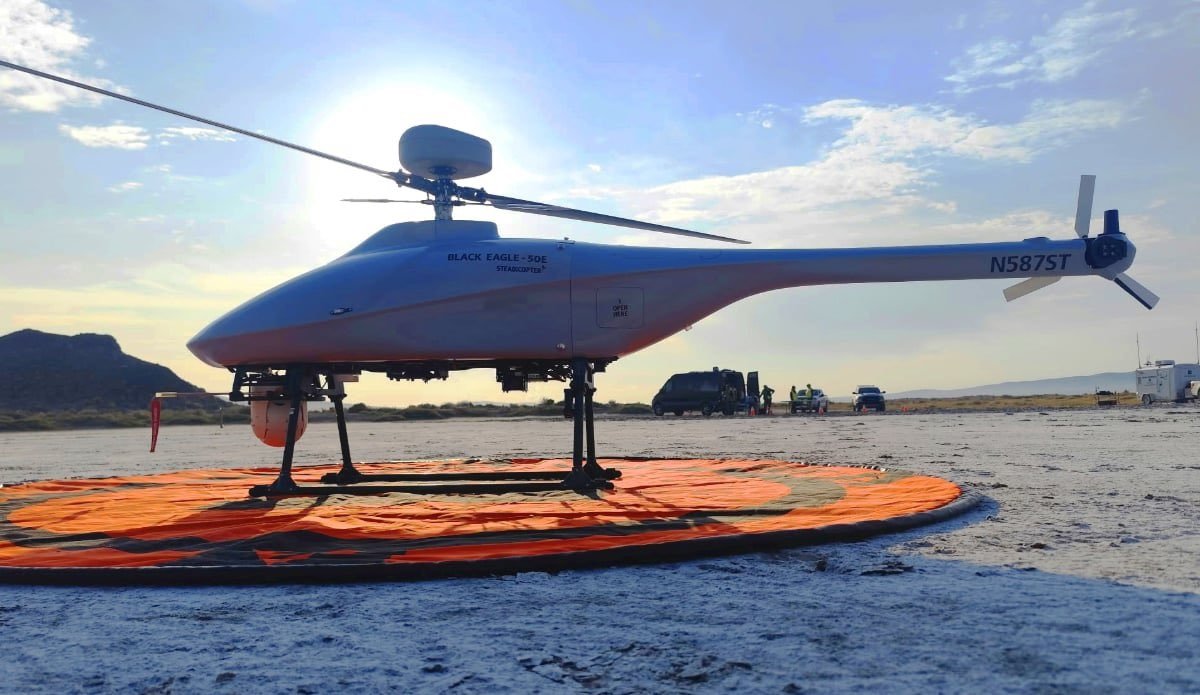
U.S
RENO, Nev. — Israeli unmanned aircraft manufacturer Steadicopter has completed a U.S. airworthiness validation for its Black Eagle 50E electric unmanned helicopter, supporting expanded flight operations, testing and customer evaluations in the United States. U.S. Airworthiness Validation The Nevada Unmanned Aircraft Systems Test Site (UASTS), operated by the University of Nevada, Reno, conducted the validation on two Black Eagle 50E aircraft. Following the process, Nevada UASTS issued an Airworthiness Statement covering Black Eagle 50E aircraft operated in the United States by Alchemy Analytics, which operates as flyAlchemy. The validation works alongside existing Federal Aviation Administration (FAA) Certificates of Waiver or Authorization (COAs). Together, the approvals cover designated operating areas totaling more than 8,100 square miles (21,000 square kilometers). The approvals provide a basis for ongoing flight testing, training, customer demonstrations and mission evaluations, moving the aircraft beyond limited one-time demonstration flights. Moving Toward Mission Evaluations Steadicopter CEO Noam Lidor said the validation provides the foundation for sustained U.S. operations and for evaluating the Black Eagle 50E against actual customer and mission requirements. Conrad Wright, founder of flyAlchemy, said the next phase will focus on payload selection, payload integration and operational evaluations. flyAlchemy operates the U.S. program from Reno-Stead Airport in Nevada. It supports flight operations, airworthiness and regulatory work, aircraft staging, mission development and preparation for customer demonstrations and evaluations. Steadicopter and flyAlchemy formalized their U.S. partnership in March 2026. Under the agreement, Steadicopter provides Black Eagle 50E systems for demonstration flights, customer evaluations, payload integration and mission development for U.S. government and commercial users. Black Eagle 50E Capabilities Introduced in 2022, the Black Eagle 50E is an all-electric vertical takeoff and landing (VTOL) unmanned helicopter. Specification Black Eagle 50E Maximum takeoff weight 50 kg (110 lb) Combined payload and battery capacity Up to 30 kg (66 lb) Endurance Approximately 2 hours Takeoff and landing Vertical (VTOL) The electric propulsion system replaces the gasoline engines used on earlier Black Eagle models and reduces overall weight, allowing capacity for sensors or batteries. Its VTOL design means the aircraft does not require a conventional runway and can operate from confined or remote locations, including ships. The aircraft uses a modular open architecture supporting payloads such as electro-optical/infrared (EO/IR) sensors, maritime patrol radar, synthetic aperture radar (SAR), automatic identification system (AIS) receivers and signals intelligence (SIGINT) systems. The Israeli Navy ordered the Black Eagle 50E in 2022 for coastal security and maritime surveillance. Planned U.S. Applications In the United States, Steadicopter and flyAlchemy are developing potential missions covering: Defense and homeland security Intelligence, surveillance and reconnaissance (ISR) Public safety Emergency response Critical infrastructure monitoring Remote sensing With the airworthiness validation completed, the companies plan to conduct mission-specific demonstrations, integrate additional payloads, engage U.S. customers and pursue additional operating areas as requirements develop.
Read More → Posted on 2026-09-16 16:56:20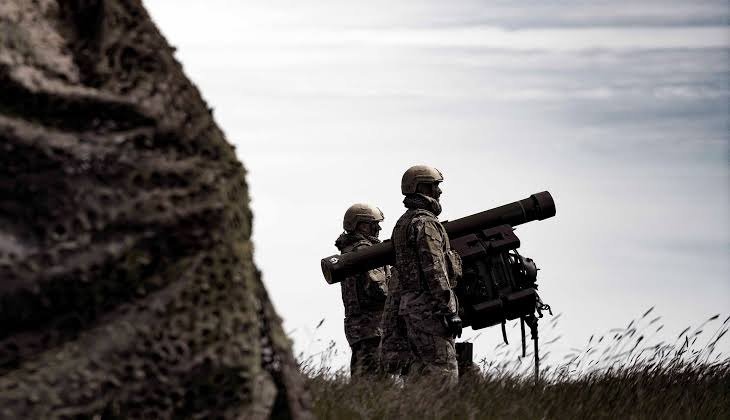
World
KYIV, — Ukraine’s Ministry of Defence has authorized 81 companies to participate in an experimental program that integrates private businesses into the country’s national air defence network. The figure has increased from 51 companies in mid-July. Overall, 92 enterprises from different industries and regions have applied to join the program, including critical infrastructure operators and other private-sector companies. Program Launched in 2025 The Ministry of Defence launched the pilot project in late 2025 in response to repeated attacks by unmanned systems. The program is designed to provide additional protection for company employees, production sites and other facilities facing regular drone attacks. The program has expanded steadily, with 24 companies authorized in April, 30 in June, 51 in mid-July and 81 by mid-September 2026. Private Units Remain Under Air Force Command The participating groups do not operate as independent security forces. They are integrated into Ukraine’s multi-layered air defence system and remain under the operational command of the Air Command of the Air Force of the Armed Forces of Ukraine. Participation is voluntary. Companies form and finance their own groups using trained and certified civilian employees or existing security personnel. Equipment and Training Depending on their assigned roles, the groups can operate mobile fire teams equipped with heavy machine guns, searchlights, acoustic detection sensors and thermal optics. Some units also use counter-drone interceptor systems. After receiving authorization, companies coordinate with the Air Force to establish their operating areas, equip their units and complete the required training before full integration into the national system. Under rules introduced in March 2026, participating companies may also temporarily receive certain military air defence equipment and ammunition that are not being used by frontline combat units, subject to Air Force approval. Combat Results The private air defence groups have already carried out assigned combat tasks. March 2026: A private industrial team in Kharkiv Oblast recorded its first confirmed destruction of Russian attack drones. April 2026: A corporate unit intercepted a jet-powered Shahed-type drone travelling at more than 400 km/h. July 2026: The Ministry of Defence reported that private teams had intercepted more than 50 Russian reconnaissance and strike drones, including Shahed and Zala systems. The remaining applications are still under review. The Ministry of Defence is continuing to expand the program as more companies seek authorization to protect their employees and facilities while operating within Ukraine’s centralized air defence command structure.
Read More → Posted on 2026-09-16 17:03:52
India
New Delhi/Pune, — Bharat Forge Ltd and Pratt & Whitney Canada, a business of RTX, have announced a collaboration to evaluate the integration of Pratt & Whitney Canada turboprop engines into an indigenous High-Altitude, Long-Endurance (HALE) unmanned aerial vehicle (UAV) programme being designed and developed by the Defence Research and Development Organisation (DRDO). Under the collaboration, Pratt & Whitney Canada will assess the engine’s compatibility, performance and installation requirements for the unmanned aircraft. Bharat Forge will lead the engine-airframe integration, including installation design and systems interfaces, using its engineering, manufacturing and aerospace capabilities. The evaluation is aimed at determining how Pratt & Whitney Canada’s turboprop technology can meet the requirements of the DRDO-led HALE UAV platform. The companies have not announced a final engine selection. HALE UAVs are intended for long-endurance intelligence, surveillance and reconnaissance missions across land and maritime areas. The programme supports India’s efforts to expand its indigenous UAV capabilities under the Aatmanirbhar Bharat initiative and reduce reliance on imported high-altitude systems for long-duration surveillance. Amit Kalyani, Vice Chairman and Joint Managing Director of Bharat Forge Ltd, said the partnership combines Pratt & Whitney’s propulsion technology with Bharat Forge’s engineering and systems integration expertise to support the development of the HALE platform and strengthen India’s aerospace and defence manufacturing capabilities. Ashish Saraf, Vice President and Country Head at Pratt & Whitney, said the collaboration reflects the company’s continued support for India’s aerospace and defence ambitions. He highlighted the reliability of Pratt & Whitney Canada’s turboprop engines in demanding operational environments. Bharat Forge, headquartered in Pune, has developed aerospace capabilities through partnerships with global companies. The latest initiative brings its engineering and manufacturing capabilities together with Pratt & Whitney Canada’s turboprop-engine expertise for the DRDO HALE UAV programme.
Read More → Posted on 2026-09-16 17:08:59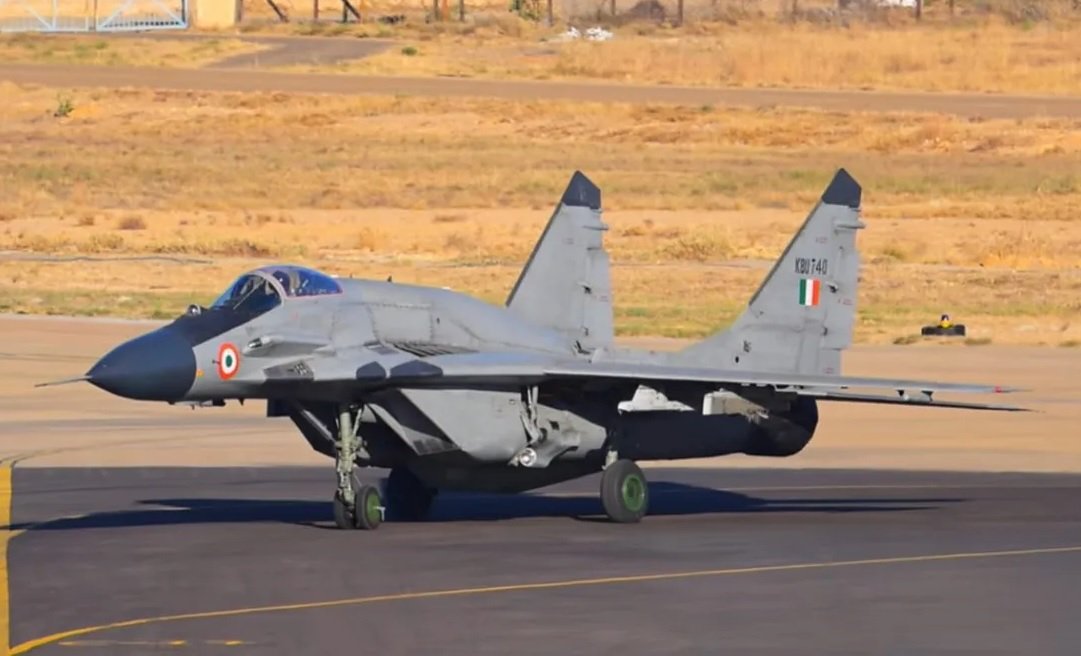
World
NEW DELHI — Ukraine’s state-owned defence export enterprise SpetsTechnoExport (STE) has emerged as the lowest bidder (L1) in an Indian Air Force tender worth ₹107.47 crore for the procurement of spare parts for the MiG-29UPG fighter fleet. According to publicly available tender records, STE submitted a bid of ₹1,07,47,03,790 and was ranked L1 after the tender’s qualification and financial evaluation stages. The tender was issued through the IAF procurement chain at Air Headquarters, Vayu Bhawan, Rafi Marg, New Delhi. Spare Parts for MiG-29UPG Fleet The tender covers specific spares required to support the operation and maintenance of MiG-29UPG aircraft. The bill of quantities includes 17 Signal Generator IM 511001 units, along with three accessories for the KSKK-130GK-20 I emergency oxygen system and 59 bearings. Public tender information identifies the procurement as a limited tender in the aviation category for goods. The period of work is listed as 365 days, while the bid validity was set at 270 days. The tender has reached the L1 stage, but this does not by itself constitute a final contract award. The formal award remains subject to the applicable procurement process and tender timelines. SpetsTechnoExport’s Earlier Work With India SpetsTechnoExport has previously worked with India on military aviation programmes. In 2009, India signed a contract with the Ukrainian company for the total technical life extension, overhaul and re-equipment of 105 IAF An-32 aircraft. The contract was reported at approximately $397.7 million. Under that programme, aircraft were upgraded both in Ukraine and at Indian Air Force facilities in India. Ukrainian companies also supplied equipment and spares for the programme. SpetsTechnoExport is a Ukrainian state-owned foreign trade enterprise established in 1998, specialising in the export and import of military and dual-use products and services. Maintaining the MiG-29UPG Fleet The MiG-29UPG is the upgraded version of the Russian-origin MiG-29 operated by the Indian Air Force. The current procurement is focused specifically on obtaining spare parts needed for maintaining the aircraft. The latest tender data therefore represents a procurement for fleet sustainment rather than a new aircraft acquisition. With STE now ranked L1, the next stages involve completion of the procurement process before a final supply agreement is concluded. The tender provides another example of India continuing to source specialised components for existing Soviet- and Russian-origin military platforms through qualified international suppliers.
Read More → Posted on 2026-09-16 17:13:04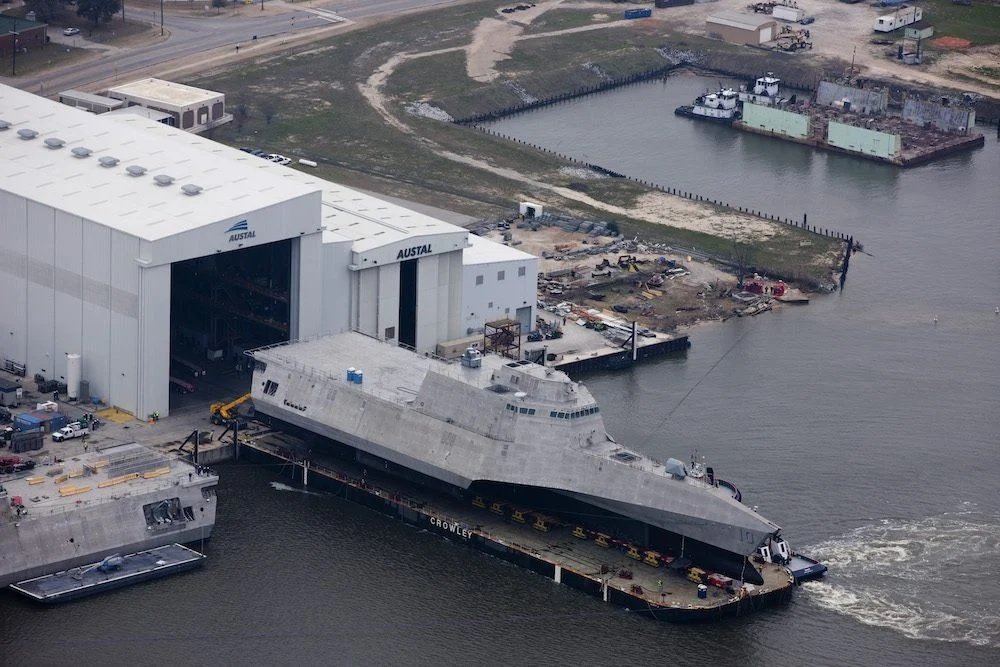
U.S
SAN DIEGO — Austal USA has been awarded a $10.8 million contract by the U.S. Navy for emergent maintenance and dry-docking work on the Independence-variant littoral combat ship USS Oakland (LCS 24). The maintenance will be carried out at Austal USA’s waterfront ship repair facility in San Diego using the company’s newly certified floating dry dock. The contract marks an important step in expanding Austal USA’s ability to conduct dry-dock repair work on U.S. Navy ships on the West Coast. Under the contract, Austal USA’s Repair and Services team will replace the ship’s main service diesel generator. The work requires access to areas below the ship’s waterline, making dry-docking necessary. Austal said using the floating dry dock instead of conducting the work alongside a pier is expected to improve efficiency and help return USS Oakland to the fleet more quickly and in peak operating condition. “This contract award is a significant milestone for Austal USA and a testament to the hard work and dedication of our team in achieving dry dock certification,” Austal USA President Gene Miller said. He added that the company now has the capability to provide full-service dry-dock support for extended, year-long repairs. Miller also said that an additional dry dock in San Diego gives the Navy greater capacity for complex maintenance projects and emergent repairs at a dedicated dry-dock facility. Keeping the maintenance work in San Diego also allows the ship’s crew to remain near their home port and families during the maintenance period. The location keeps the ship close to Navy maintenance personnel in the region who oversee the work. New San Diego Floating Dry Dock Austal USA’s floating dry dock was fully certified and declared operational on September 14, 2026. It was designed to support small surface combatants and ships of similar size. The dry dock has a 9,000-light-ton lifting capacity and measures 531 feet (162 meters) long and 154 feet (47 meters) wide. It has a maximum draft of 36 feet (11 meters), while its wingwalls are 13.12 feet (4 meters) wide. Cranes installed directly on the dry dock provide a combined lifting capacity of 16 metric tons, supporting maintenance activities during extended repair periods. Companies and organizations involved in the final installation and certification preparations included R.E. Staite Engineering Inc., which provided dredging and construction services, Chula Vista Electric for shore power installation, and support from PAE Industrial Operations, the Southwest Regional Maintenance Center and Heger Dry Dock. The new facility expands Austal USA’s repair capabilities in San Diego beyond maintenance work that can be performed alongside a pier. The facility is intended to support maintenance of U.S. Navy, Military Sealift Command and U.S. Coast Guard vessels. USS Oakland USS Oakland is an Independence-variant littoral combat ship built by Austal USA in Mobile, Alabama. The Navy accepted delivery of the ship on June 26, 2020, and it was commissioned on April 17, 2021. The Navy lists USS Oakland as a San Diego-based Independence-variant LCS. The class is designed for operations in near-shore environments while also supporting open-ocean missions. The $10.8 million maintenance contract will therefore be the first major project for USS Oakland at Austal USA’s newly operational San Diego floating dry dock, providing the company with an opportunity to conduct below-waterline maintenance at its own dedicated facility.
Read More → Posted on 2026-09-17 12:18:24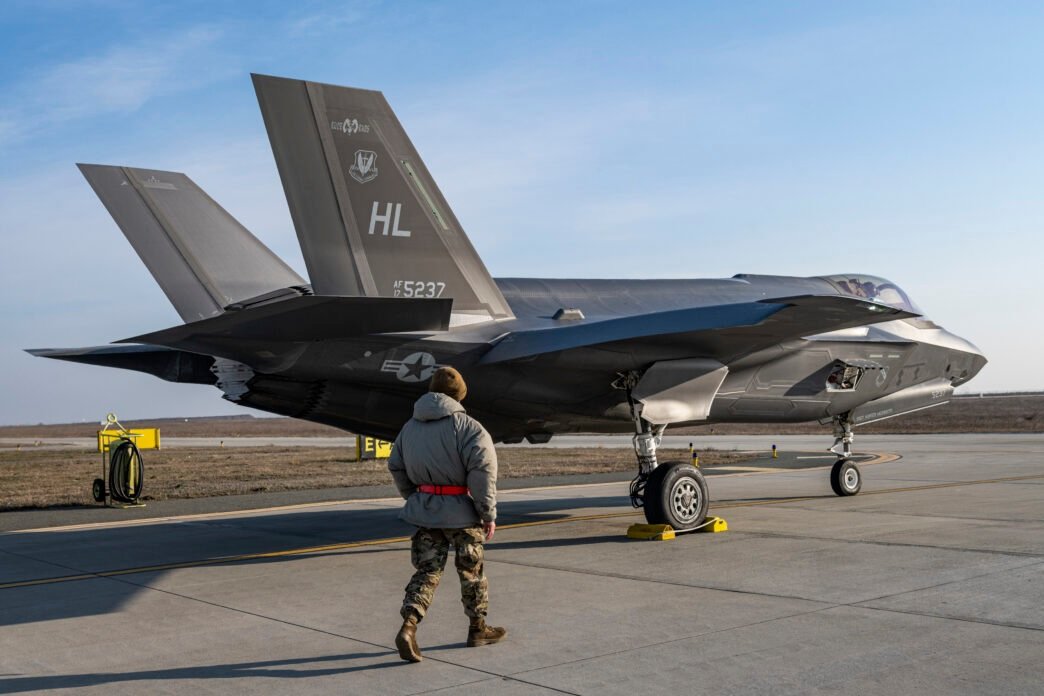
U.S
WASHINGTON — U.S. intelligence agencies have warned that a proposed sale of F-35 fighter jets to Saudi Arabia could create risks of Chinese access to sensitive American military technology through espionage or Saudi Arabia’s existing military and security ties with Beijing, The New York Times reported on September 16, 2026, citing U.S. officials familiar with the assessments. DIA Identifies Security Risks A detailed assessment by the Pentagon’s Defense Intelligence Agency (DIA) examined Chinese military access to Saudi facilities and Riyadh’s use of Chinese telecommunications technology. The assessment questioned whether locations housing F-35-related technology could be adequately secured. U.S. officials are particularly concerned about protecting the fighter’s advanced radar and surveillance systems. The DIA recommends restricting access to facilities containing F-35 technology to Saudi and U.S. officers and contractors. It also questions whether Saudi Arabia would accept broader restrictions on contact with Chinese military and intelligence personnel and related organizations. Another issue is Chinese telecommunications equipment. The assessment asks whether Saudi Arabia would remove equipment made by Huawei and ZTE from telecommunications networks, router infrastructure and defense installations connected to the F-35 program. $24 Billion F-35 Package The concerns come as the Trump administration advances a proposed $24 billion package involving 48 F-35 aircraft and a spare engine. President Trump announced support for the sale in November 2025, one day before hosting Saudi Crown Prince Mohammed bin Salman at the White House. The State Department sent the proposed package to two congressional committees for informal review in June 2026. A broader DIA assessment issued in fall 2025 had already identified similar risks. That assessment, the later detailed report and assessments from other intelligence offices have circulated among administration agencies and congressional offices. Some lawmakers and aides have questioned the administration about the findings. Saudi Arabia’s Ties With China Saudi Arabia has longstanding military cooperation with the United States and is a major buyer of American defense equipment. At the same time, Riyadh maintains military ties with China, including cooperation involving ballistic missiles. These ties are a central concern in the intelligence assessments because of the possibility that Chinese personnel, technology or organizations could gain access to facilities associated with the F-35 program. Israel and Regional Concerns Israel is currently the only country in the Middle East operating F-35 aircraft. Both Saudi Arabia and Turkey have sought the fighter for years. The proposed Saudi acquisition has also raised questions about Israel’s qualitative military edge in the region. Israel has used its F-35s in operations, including airstrikes related to Iran. Previous UAE F-35 Case Similar concerns previously affected a proposed F-35 sale to the United Arab Emirates. During the first Trump administration, Washington proposed a package including up to 50 F-35s and other systems linked to the UAE’s normalization of relations with Israel. U.S. intelligence agencies later raised concerns about the UAE’s growing military, intelligence and technology ties with China, and the sales process was ultimately halted during the Biden administration. Turkey was also removed from the F-35 program after purchasing Russia’s S-400 air-defense system, which U.S. officials said could compromise the aircraft’s stealth technology. Final Conditions Remain Unclear The F-35 is manufactured by Lockheed Martin, and production and delivery of the aircraft typically take years. U.S. officials continue to discuss possible safeguards for protecting F-35 technology, but it remains unclear what conditions would be included in a final Saudi sales agreement. The White House, Chinese Embassy, State Department, Pentagon and Saudi Embassy in Washington had not publicly commented on the latest intelligence assessments, according to the reports.
Read More → Posted on 2026-09-17 12:34:47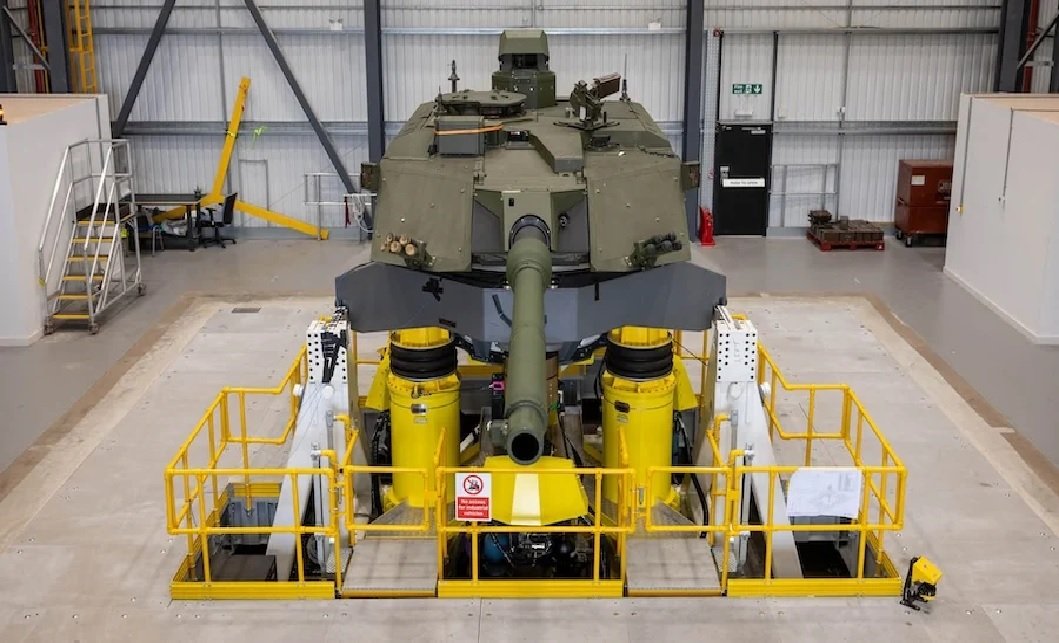
Europe
TELFORD, U.K. — Rheinmetall UK has opened a new Vibration Test Facility (VTF) at its manufacturing site in Telford, Shropshire, adding a major testing capability to the company’s UK defence engineering infrastructure. The facility is already supporting development of Challenger 3, the British Army’s next-generation Main Battle Tank. It allows engineers to recreate the vibration, movement and shock conditions military equipment experiences during operations using real-world operational data. The VTF can accommodate structures, components and integrated subsystems weighing up to 40 tonnes. It can reproduce controlled movement across three principal axes — vertical, pitch and roll — allowing engineers to conduct accelerated durability and reliability testing and collect detailed performance data. For the Challenger 3 programme, the facility provides another method of assessing how the tank and its systems respond to prolonged operational stress. It works alongside physical trials, digital modelling and other engineering analysis, helping engineers identify potential issues and make evidence-based design decisions. “The VTF gives our engineers a powerful new way to understand complex platforms,” said Rob Hunter, Vibration Test Manager at Rheinmetall UK. “We can recreate demanding operational conditions, measure how equipment responds and use that evidence to make better-informed engineering decisions.” Challenger 3 Testing Rheinmetall BAE Systems Land (RBSL) is producing Challenger 3 at the Telford site under a contract worth more than £800 million. The programme covers the upgrade of 148 Challenger 2 tanks, with the vehicles planned to enter service by the end of 2030. Earlier Challenger 3 mobility trials in 2025 covered nearly 800 km of road and cross-country driving and collected noise and vibration data. That information has supported further testing, including work using a separate turret test rig at the Telford site. Rheinmetall said the VTF was designed as a long-term UK engineering capability, rather than being dedicated to one programme. Its flexible design allows it to support future military platforms and technologies and potentially provide dynamic testing for the aerospace, automotive, rail, energy and civil engineering sectors. Hunter said: “Challenger 3 is an important application, but this is a capability we have deliberately designed with the future in mind. Its flexibility means we can adapt it to different engineering challenges, supporting future programmes and technologies while retaining critical engineering knowledge and skills here in the UK.” The facility brings together specialists in mechanical and electrical engineering, software development, testing, instrumentation and data analysis. It will also provide opportunities for apprentices and early-career British engineers and technicians to develop transferable technical skills. The VTF adds to Rheinmetall UK’s wider investment in advanced engineering, manufacturing and testing capabilities at Telford, where the company also supports Challenger 3 and Boxer production. The site is also linked to further UK defence projects, including a planned large-calibre gun barrel facility. By combining large-scale testing infrastructure with UK-based engineering expertise, the new facility is intended to support the development, testing and long-term assurance of complex defence equipment in the United Kingdom.
Read More → Posted on 2026-09-17 12:41:28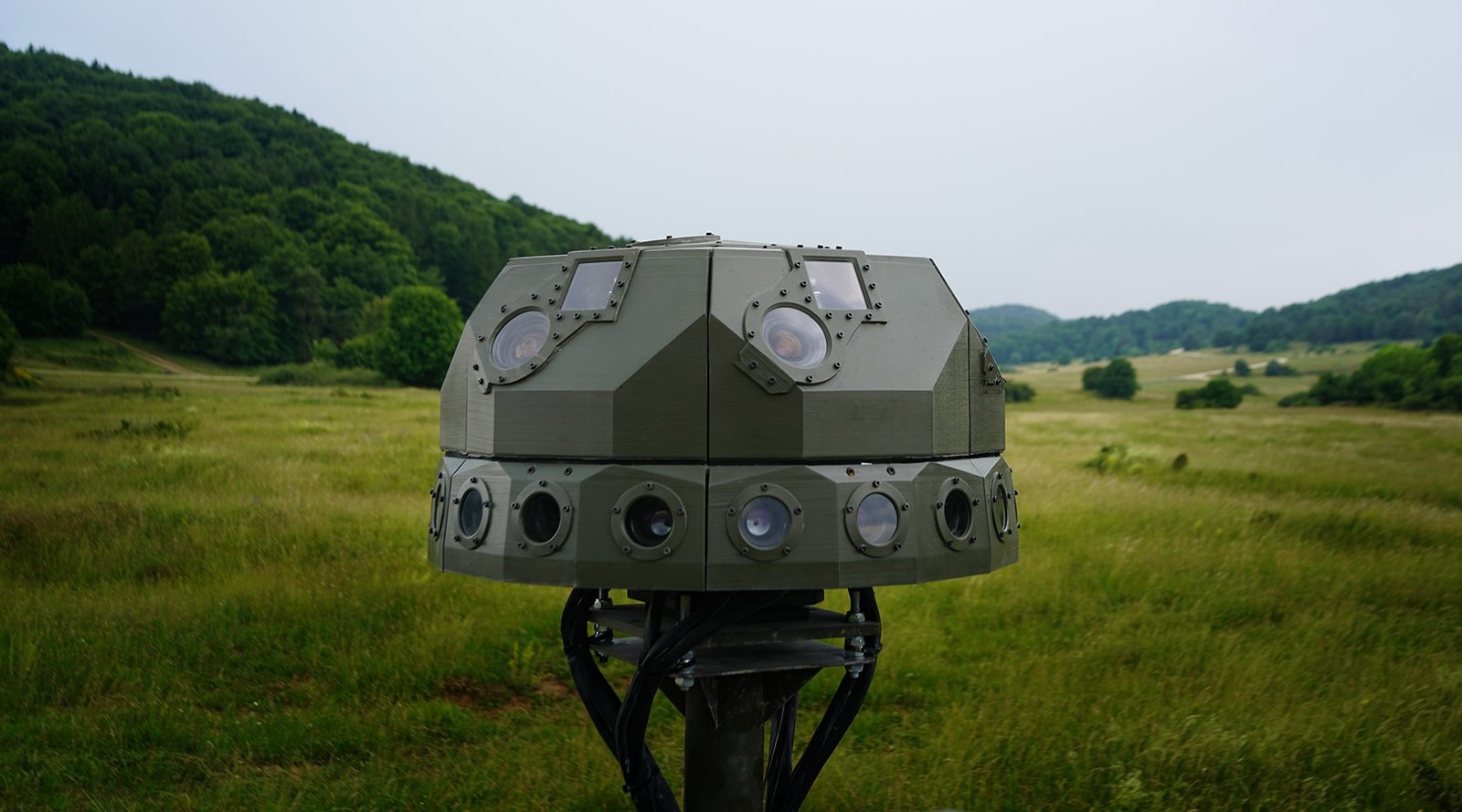
Europe
LONDON — The British Army has deployed its first passive counter-uncrewed aerial system (C-UAS) detection capability at Warminster Garrison under Project Halo Shield, a programme that moved from concept to operational deployment in less than six months. The project was funded by UK Defence Innovation (UKDI) on behalf of Army Innovation and was initiated and led by the British Army’s Experimentation and Trials Group (ETG). The deployment combines radio-frequency (RF) and optical detection technologies supplied by Dedrone, now part of US-based Axon, and Edinburgh-based Quell. Layered Passive Detection Dedrone supplied the command-and-control software, which combines information from multiple sensors into a single operational picture. Three RF sensors are used to triangulate the position of drones across the garrison, while a fourth RF sensor identifies the aircraft and its controller by detecting the signals exchanged between them. The system is passive, meaning its sensors do not transmit signals that could reveal their presence. This allows the Army to detect and track drones without using an active radar-like transmission. Quell provides the second layer through its SkySpyke optical detection system. The autonomous system provides hemispheric sky coverage and can detect, track and identify airborne objects. Its artificial-intelligence software filters detections and provides alerts and visual confirmation of objects of interest, reducing the workload for operators. 29 Drone Alerts During Initial Monitoring During its first 17 days of live monitoring, the system recorded 29 drone position alerts, with detections reaching distances of up to 5 kilometres (3.1 miles). The British Army said none of the detected drones presented a threat to the base. The Army also flew its own drones around the installation to test the system and identify potential gaps or weaknesses in coverage. The rapid deployment was supported by earlier work between the ETG and both suppliers during field demonstrations and counter-drone exercises, including Project Vanaheim and Project Flytrap. According to UKDI, this earlier testing helped establish the basis for the Warminster deployment. Detection-Only Capability for Now Project Halo Shield is currently focused on detection rather than defeating drones. The system does not currently include effectors capable of neutralising an aircraft. According to the Army, effectors are prepared for possible future integration if policy and permissions allow. The current architecture is therefore designed to give commanders a clearer picture of nearby airspace using passive RF and optical sensors. Colonel James Howard of the Experimentation and Trials Group said the project is helping improve protection at Army barracks while also supporting training. The system can be used to provide an “enemy forces” environment for Army drone pilots, allowing them to train against a detection capability. Possible Expansion to Other Army Sites The results from Warminster are being used to inform the Army's approach to wider passive drone detection. Future phases could add radar and acoustic sensors alongside the existing RF and optical systems at other garrisons. The planned combination would create a more layered detection architecture, with different sensor types providing complementary information about activity in the airspace. UKDI said Project Halo Shield has provided a foundation for considering wider deployment of passive C-UAS capabilities across UK military sites.
Read More → Posted on 2026-09-17 12:57:00
Europe
PARIS — Thales has launched HexaForce, a next-generation artificial intelligence-enhanced command and control (C2) system designed to help armed forces manage growing volumes of operational data and coordinate operations across multiple domains while maintaining national control over their information. HexaForce is designed to operate across land, air, sea, cyber, the electromagnetic spectrum, space and information operations. Its distributed architecture connects existing national and coalition systems from strategic headquarters to tactical units and is designed to continue operating when communications are severely disrupted. The system uses AI capabilities from cortAIx, Thales’ dedicated AI accelerator, which includes 800 engineers and data scientists. HexaForce integrates large language models (LLMs) and agentic AI to support mission planning, improve the operational picture, share and consolidate information, speed up decision-making, allocate effectors and support maintenance activities. AI also allows the system to automatically analyse, correlate and prioritise information from military, open-source and civilian sources. Live trials are underway, with the goal of increasing processing capacity from 100 to 1,000 targets per day. HexaForce builds on experience from Artemis.IA, a data-centric platform deployed with the French Ministry of Armed Forces since 2023. Thales said HexaForce is designed for high-intensity operations involving more than 100,000 personnel and can orchestrate assets across a force and its partners from strategic to tactical levels. Open Architecture and Interoperability HexaForce combines a core software platform with multi-domain command applications and uses an open, interoperable architecture. The system was tested during the NATO CWIX 2026 exercise, held from June 8 to 26 in Bydgoszcz, Poland. It natively supports Data-Centric Security (DCS) and Federated Mission Networking (FMN) standards. This allows nations to control incoming and outgoing data without exposing sensitive information, while integrating technology from different partners and connecting legacy systems from third-party vendors. Christophe Salomon, Executive Vice-President of Secure Communications and Information Systems at Thales, said HexaForce provides a sovereign solution for forces requiring dedicated data platforms, cross-domain interfaces with allies or faster AI-enabled multi-domain command functions. Thales said HexaForce was co-developed with armed forces through short feedback cycles and is already available. Thales has more than 85,000 employees in 65 countries and invests around €4.5 billion annually in research and development, with a focus on artificial intelligence and other critical technologies.
Read More → Posted on 2026-09-17 13:13:26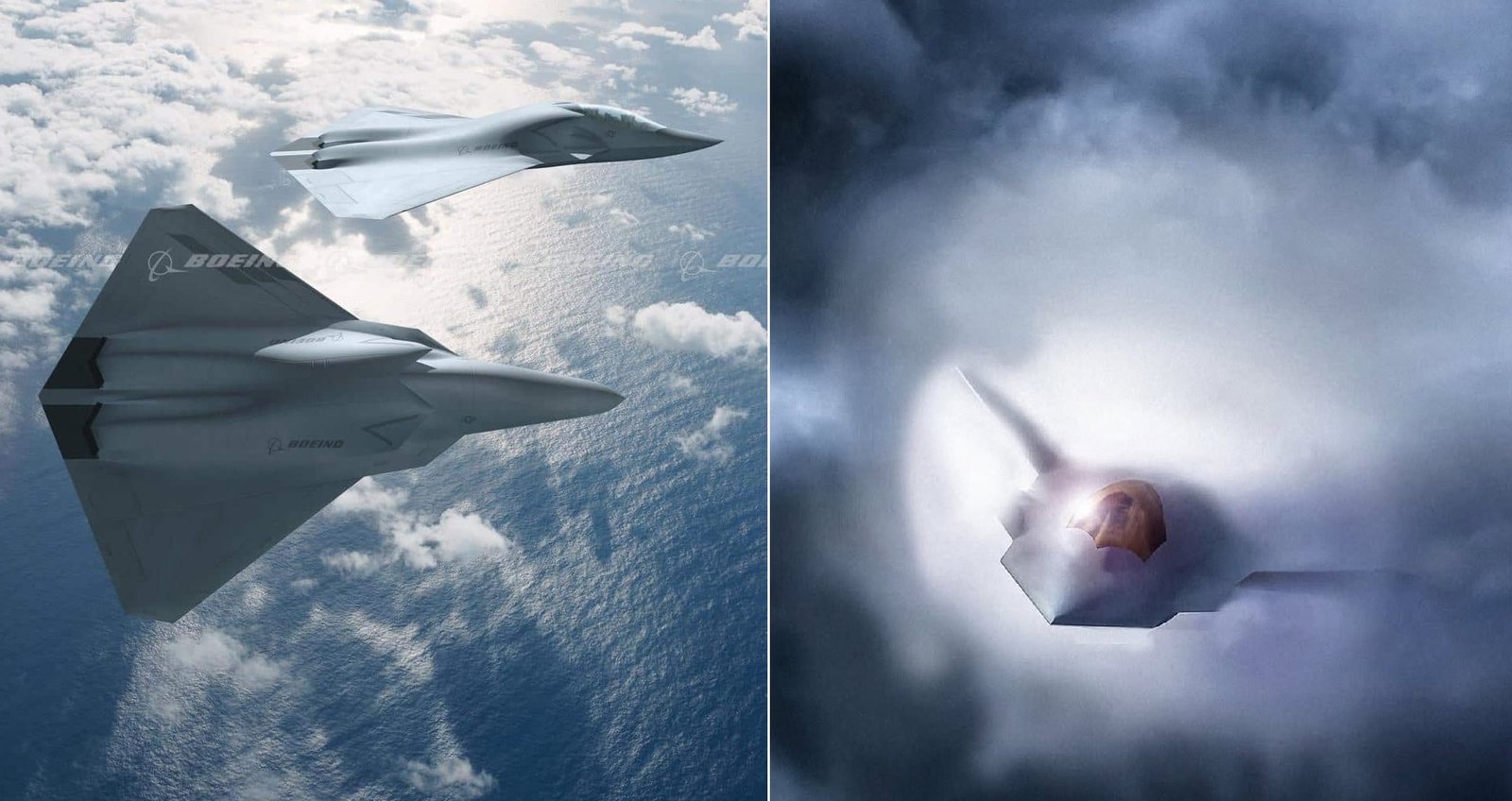
U.S
WASHINGTON — The Pentagon has raised concerns about whether the U.S. defense industrial base has enough skilled personnel and production capacity to simultaneously develop and eventually mass-produce the U.S. Air Force’s F-47 and U.S. Navy’s F/A-XX, two advanced sixth-generation fighter programs. The concerns were outlined by U.S. Air Force Lt. Gen. Dale R. White, the service’s senior official overseeing major acquisition programs, during a media roundtable at the Air & Space Forces Association’s Air, Space & Cyber Conference in National Harbor, Maryland. The conference was held September 14–16, 2026. White identified three major challenges: the technical complexity of the aircraft, shortages of skilled personnel and limited production capacity. He said these problems are not limited to the F-47 or F/A-XX, but are affecting multiple major defense programs across the industrial base. F-47 Remains on Track Despite the broader industrial-base concerns, the F-47 program continues to progress. Boeing received the Air Force contract for the Next Generation Air Dominance (NGAD) platform in March 2025. The F-47 is being developed as the Air Force's sixth-generation crewed fighter. White said Boeing is making significant capital investments in production infrastructure. However, several important steps remain before the aircraft can move into serial production, including completing the design, conducting flight testing and progressing software development and configuration. The Air Force currently expects the F-47 to conduct its first flight within the next two years. Officials have continued to identify 2028 as the target for the aircraft's first flight. White also said the program has benefited from many years of technology maturation and risk-reduction work before the current development phase. F/A-XX Program Faces a Longer Timeline The Navy's F/A-XX program, intended to provide a future carrier-based fighter, has faced delays in selecting its prime contractor. The competition has been narrowed to Boeing and Northrop Grumman. Earlier in 2026, Navy leadership had indicated that a downselect was expected in August, but the service had not announced the final contractor as of the latest reports. The F/A-XX program has also faced questions over industrial-base capacity. The Pentagon previously moved to limit resources for the program while concentrating greater resources on the F-47, although Congress provided additional funding to keep the Navy effort active. Navy leadership has continued to support the requirement for F/A-XX, with Chief of Naval Operations Adm. Daryl Caudle pointing to advances in potential adversaries' aviation and air-defense capabilities as reasons for maintaining the program. Industrial Capacity Remains a Key Issue The Pentagon's concern is not limited to whether either fighter can be developed individually. The larger question is whether the U.S. industrial base can support the workforce, manufacturing infrastructure and production rates required if both programs move forward at the same time. Boeing has previously said it has the scale and production capability to support both aircraft programs. Company representatives have also discussed investments in facilities and personnel for future production requirements. If Boeing is selected for F/A-XX, commonality in some systems and design elements between the two programs could potentially reduce duplicated engineering work and support development. For now, the two programs remain at different stages. The F-47 is progressing toward its planned first flight, while the Navy continues its process for selecting the F/A-XX prime contractor. White's latest comments indicate that workforce availability and production capacity will remain important factors as both programs move toward development and eventual production.
Read More → Posted on 2026-09-17 13:25:22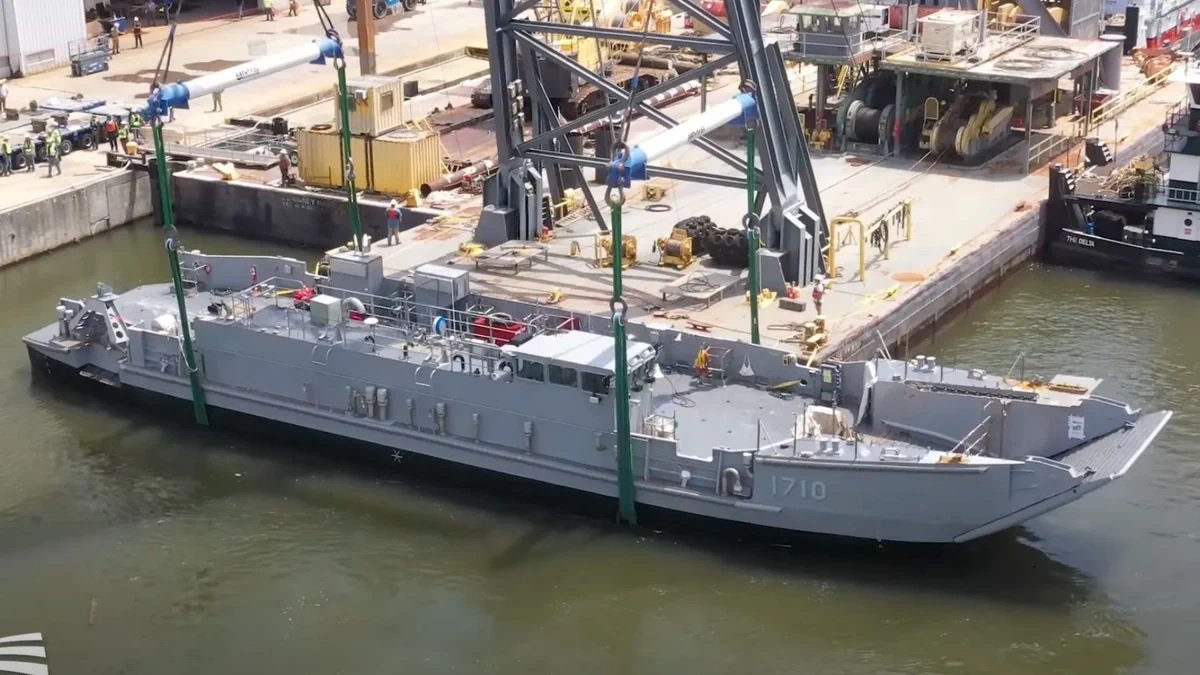
U.S
WASHINGTON — The U.S. Navy has awarded three competitive Prototype Other Transaction (OT) agreements to Conrad Shipyard LLC of Orange, Texas; Master Boat Builders Inc. of Coden, Alabama; and Saronic Technologies of Brownsville, Texas, to build prototype Landing Craft, Utility (LCU) 1700 vessels. The awards, announced on September 15, 2026, carry an initial construction obligation of $280,521,389. Under the agreements, the three shipyards will build two or three prototype craft and refine their manufacturing plans to support future high-rate production. Master Boat Builders will initially build three hulls, with an option for a fourth. Navy Expands LCU 1700 Production Base The Navy said the decision to use three shipyards is intended to expand U.S. shipbuilding capacity and establish multiple sources for LCU 1700 production. “By selecting three distinct shipyards, the Navy is expanding its shipbuilding industrial base capacity and building a resilient ‘second source’ of supply for landing craft,” said William F. Mahan, who is performing the duties of Assistant Secretary of the Navy for Research, Development and Acquisition. “Other Transaction prototype authority allows the Navy to move at the speed of relevance.” The acquisition effort is funded by the One Big Beautiful Bill Act and uses prototype authorities under 10 U.S.C. § 4022. The Navy said the approach is intended to speed delivery of littoral capabilities, validate the production-ready Technical Data Package (TDP) through actual fabrication, and establish parallel production lines. LCU 1700 to Replace LCU 1610 The LCU 1700 is being developed to replace the Navy's legacy LCU 1610-class landing craft, which have an average of more than 50 years of active service. The new craft are approximately 139 feet long with a 31-foot beam. They are designed with improved reliability, increased payload capacity of about 170 short tons, extended operational reach and compatibility with the Navy's amphibious warfare ships. The LCU 1700 has a stated top speed of 11 knots and a range of about 1,200 nautical miles at 8 knots, with a crew of 13. Its payload capacity is sufficient for two M1A1 tanks or approximately 350 combat troops, according to the information provided for the program. The vessels are intended to transport troops, vehicles and cargo between ships and shore, between shore locations, and back to ships. They will support amphibious operations as well as other logistics missions. Austal USA Already Delivered First LCU 1700 The new agreements follow the Navy's receipt of its first LCU 1700-class landing craft, LCU 1710, from Austal USA in Mobile, Alabama, in August 2026. Austal holds contracts for additional hulls under an earlier agreement. The Navy's latest awards are intended to add three more shipyards to the production effort and introduce different construction processes across the yards. The prototype work will also allow the Navy to validate the technical data package through actual construction before higher-rate production begins. Three Shipyards to Build Prototype Craft Conrad Shipyard will construct its vessels at its facility in Orange, Texas. Master Boat Builders, based in Coden, Alabama, will initially construct three LCU 1700s and has an option for a fourth vessel. The company described the award as a major milestone after 45 years of shipbuilding work. Saronic Technologies plans to build its LCU 1700 vessels at Port Alpha, its planned next-generation shipyard facility in Brownsville, Texas. The LCU 1700 work is expected to be among the first construction activities at the site. Deliveries Expected From Late 2028 Deliveries of the prototype craft from the three newly selected shipyards are scheduled to begin in late 2028 and continue through 2029. The Navy's LCU 1700 program of record calls for 32 craft overall. The multi-shipyard approach is intended to establish a broader production base and provide a path toward higher-rate construction of the remaining vessels.
Read More → Posted on 2026-09-17 13:51:47
Europe
PARIS, France — France has awarded the CASSIOPÉE contract to Airbus Defence and Space as lead contractor, with French space company Unseenlabs serving as co-contractor, marking the start of the renewal of the country’s space-based signal intelligence (SIGINT) capability. The contract was announced by French Minister for the Armed Forces and Veterans’ Affairs Catherine Vautrin on the sidelines of the International Space Summit. CASSIOPÉE is scheduled to replace France’s three-satellite CERES constellation by 2032. The new system will form the high-performance, sovereign core of the wider CELESTE (Space Electromagnetic Capability) programme, which addresses France’s space-based electromagnetic intelligence requirements. Airbus to Lead Satellite and Ground Systems Under the contract, Airbus Defence and Space will act as the system integrator. The company will provide the satellite solution, ground segment and control centre. The satellites will use Airbus’ latest-generation S250 platform, which was most recently used for the CO3D optical satellite constellation. CO3D is a dual-use Earth-observation programme developed with France’s space agency CNES and launched in 2025. Unseenlabs, a French company specialising in radio-frequency detection from space, will contribute its expertise in mission planning, ground processing and on-board processing. It will also provide a ground segment and an intelligence payload. The partnership brings together Airbus’ established satellite-system capabilities with Unseenlabs’ experience in space-based radio-frequency detection. France’s Defence Innovation Agency has previously highlighted Unseenlabs as a French New Space company focused on observing the radio-frequency spectrum from space. CASSIOPÉE to Replace CERES The existing CERES constellation consists of three satellites launched on 16 November 2021 aboard a Vega rocket from French Guiana. The satellites operate in low Earth orbit at around 700 kilometres altitude and fly in formation. CERES collects electromagnetic signals, particularly emissions from radars and telecommunications systems, to detect, characterise and locate transmitters. Each satellite has a mass of approximately 516 kilograms. The programme was developed under the supervision of France’s Directorate-General for Armament (DGA), with Airbus and Thales as the main industrial partners. CASSIOPÉE is intended to maintain this operational capability while providing improved technical performance and faster responsiveness. Role of Space-Based SIGINT Space-based SIGINT involves collecting and analysing electromagnetic emissions from sources such as radar and telecommunications systems. This information can be used to detect, characterise and track transmitters that may be relevant to areas of strategic interest and military operations. For France, maintaining this capability is linked to its ability to conduct independent intelligence assessment, continuous strategic monitoring and operational decision-making. The CASSIOPÉE system is therefore being developed as part of France’s broader effort to maintain a sovereign space-based electromagnetic intelligence capability. Airbus and Unseenlabs Highlight Partnership Alain Fauré, Head of Space Systems at Airbus Defence and Space, said the contract contributes to France’s sovereignty and strategic autonomy and highlighted the partnership with Unseenlabs as evidence of the strength of the French space ecosystem. Clément Galic, co-founder and CEO of Unseenlabs, said the company was proud to contribute its technological and operational expertise to the programme. He described CASSIOPÉE as a combination of Airbus’ established space-industry experience and Unseenlabs’ New Space expertise aimed at providing France with a sovereign space-based SIGINT system. Unseenlabs was founded in 2015 by the Galic brothers and has developed a satellite constellation focused on detecting radio-frequency signals. The company initially focused on maritime surveillance before expanding into other areas and has launched more than 20 satellites. The CASSIOPÉE contract formally begins work on the next generation of France’s space-based electromagnetic intelligence capability under the CELESTE framework.
Read More → Posted on 2026-09-17 14:05:03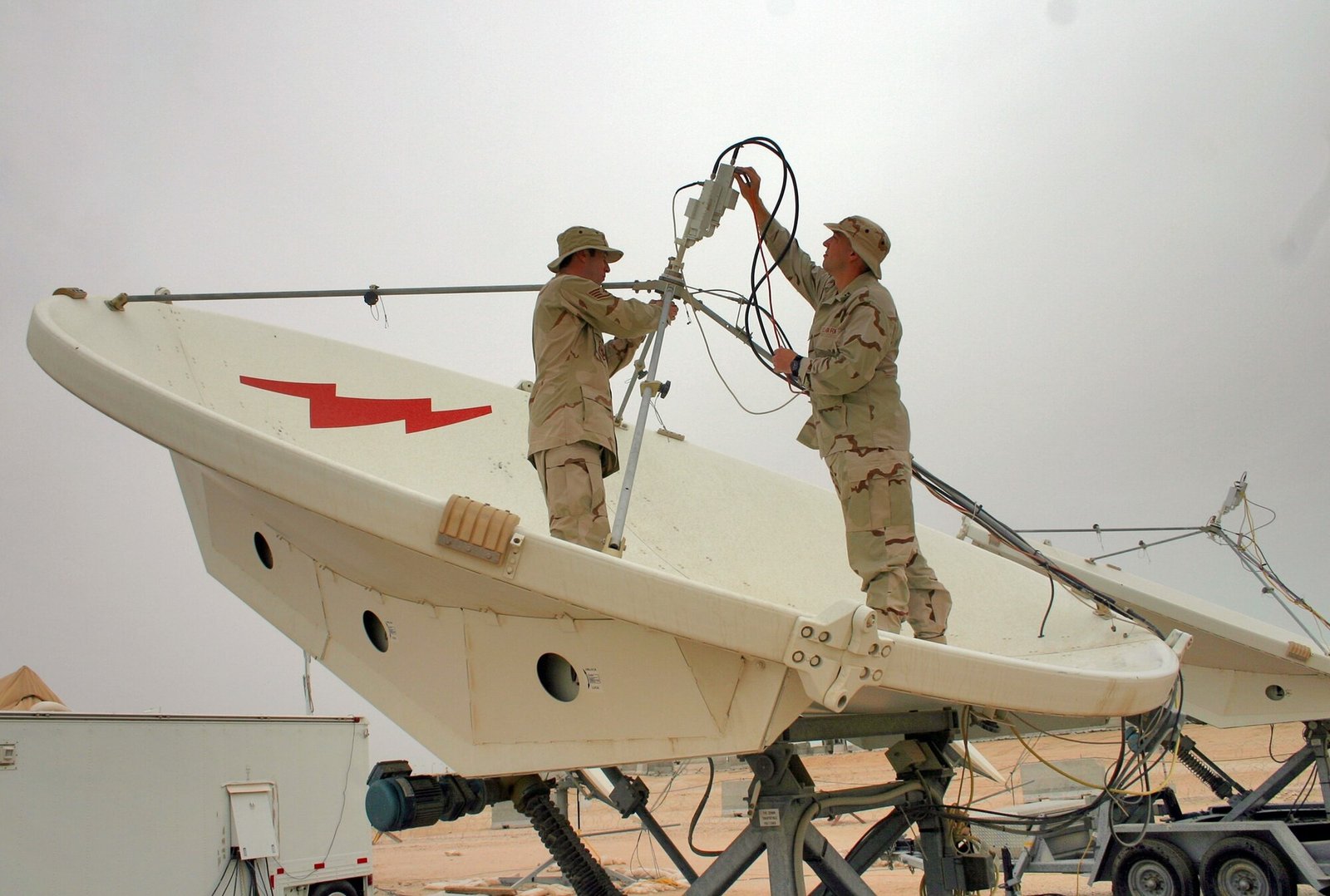
U.S
NATIONAL HARBOR, Md. — A U.S. Space Force specialist continued operating an electronic warfare system against an Iranian target even as incoming missiles targeted her position in the Middle East during Operation Epic Fury, according to Chief of Space Operations Gen. Douglas Schiess. Schiess described the incident during his keynote address at the Air & Space Forces Association’s 2026 Air, Space & Cyber Conference on September 15. He identified the service member only as Specialist Gray, from Tampa, Florida, and said she had joined the Space Force about two years earlier. Gray deployed to the U.S. Central Command area of responsibility with the 42nd Electronic Warfare Detachment. Within hours of the start of Operation Epic Fury, she received a priority target package requiring her to reconfigure her weapon system and conduct what Schiess described as critical non-kinetic fires. According to Schiess, Gray locked onto the target, optimized the system and conducted electromagnetic warfare against the adversary. While she was operating the system, “Alarm Red” sirens sounded and incoming missiles targeted her site. Despite the attack, Gray remained at her console until her commander intervened and pulled her to safety. Schiess said she later returned to her home station. The Space Force has not publicly identified the specific electronic warfare system used by Gray or disclosed the location of the engagement. 42nd Electronic Warfare Detachment The 42nd Electronic Warfare Detachment has operated in the Middle East under U.S. Space Forces-Central (SPACECENT). Publicly released photographs have previously shown members of the unit operating trailer-mounted antenna equipment in the region. The Space Force has described electronic warfare as one of its important contributions to Operation Epic Fury. Air & Space Forces Magazine reported that Space Force capabilities were used to help disrupt Iranian air defenses and communications and to support U.S. targeting operations. Schiess also said some Space Force personnel have to operate forward because certain missions require them to be within the footprint of a satellite. This can place Guardians directly in areas exposed to enemy attacks. Missile Warning and Space Support Electronic warfare was only one part of the Space Force's contribution to the operation. Schiess highlighted satellite communications, GPS, positioning, navigation and timing, missile warning and missile tracking as important capabilities during the campaign. Space Force sensors and other systems provided warnings of incoming Iranian missiles, giving personnel time to take cover and allowing defensive forces to prepare for incoming threats. U.S. officials have said Iranian attacks have targeted U.S. bases and other facilities across the region. Schiess said the Space Force was part of the minimum force package considered necessary for Operation Epic Fury. He said U.S. Central Command and U.S. Space Command, supported by Space Force components associated with European and Pacific commands, delivered space capabilities directly to the campaign. Lessons From the Conflict The experience has also led the Space Force and the broader U.S. military to examine how forward-deployed capabilities should be protected during future conflicts. Schiess said officials are examining which functions should be placed in underground facilities, which could be operated remotely and which capabilities could potentially be provided from space. The service is also examining how to sustain and reconstitute forces operating in a combat environment. The incident involving Specialist Gray illustrates that some Space Force missions require personnel and equipment to operate close to the battlefield rather than exclusively from locations inside the United States. The Space Force has said its role in Operation Epic Fury demonstrated the need to integrate space capabilities directly with joint military operations. Schiess's account provides one of the clearest public descriptions so far of a Space Force electronic warfare operator continuing a mission while under direct missile attack. However, the service has not released further details about the specific weapon system, target or location involved.
Read More → Posted on 2026-09-17 14:17:45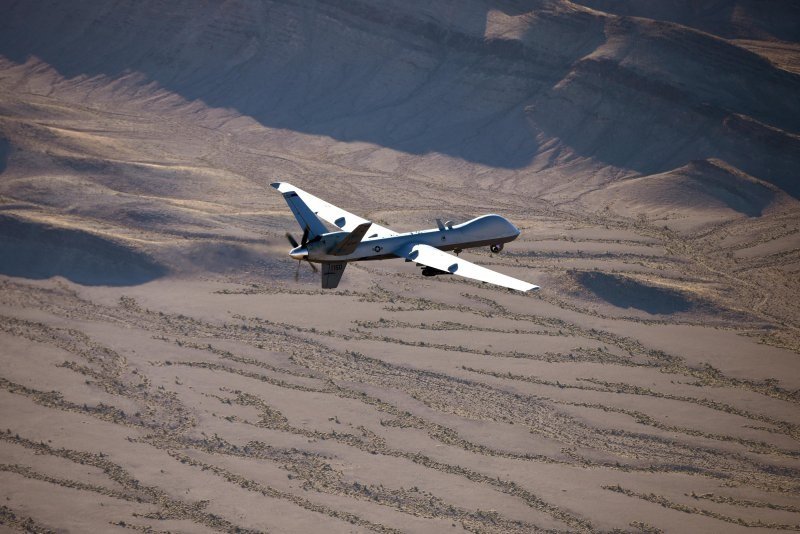
World
TEHRAN, — Iran’s Islamic Revolutionary Guard Corps (IRGC) said Thursday that its forces intercepted and destroyed a U.S. MQ-9 Reaper drone over Qeshm Island near the Strait of Hormuz. According to a statement from the IRGC’s public relations office, the drone was detected in Iranian airspace and was brought down at 10:12 a.m. local time. The IRGC said the operation was carried out by a new advanced air-defense system operated by the IRGC Aerospace Force under Iran’s integrated air-defense network. Iranian reporting said the system used domestically produced radar and missile systems. The IRGC identified the aircraft as the 53rd U.S. MQ-9 it has claimed to have destroyed during the conflict. The announcement came one day after Iran reported the destruction of another MQ-9 over the same area. On September 16, the IRGC said an MQ-9 was shot down at 2:29 a.m. local time over Qeshm Island using an advanced air-defense system operating within the country’s integrated network. That aircraft was described by the IRGC as the 52nd MQ-9 destroyed. U.S. Has Not Confirmed the Latest Claim There was no immediate public confirmation from the U.S. military regarding Thursday’s reported shootdown. The latest claim therefore remains an Iranian military assertion and has not been independently verified. The reported incident follows several recent Iranian claims involving U.S. unmanned aircraft in and around the Strait of Hormuz. The IRGC has also reported the destruction of MQ-1 drones in the region. MQ-9 Reaper The MQ-9 Reaper is a U.S.-made unmanned aircraft used for intelligence, surveillance, reconnaissance and precision-strike missions. The IRGC’s statement referred to an earlier valuation of an MQ-9 at around $30 million. It also pointed to a recently disclosed export version sold to Japan that was reported to have a value of more than $100 million. These figures refer to different configurations and should not be treated as the cost of every MQ-9 aircraft. Qeshm Island and Strait of Hormuz Qeshm Island is located in the Strait of Hormuz, an important maritime route. The area has remained an active part of the ongoing military confrontation involving Iran, the United States and Israel. The latest IRGC statement attributed the recent drone interceptions to newer-generation air-defense systems and changes in tactics for dealing with unmanned aircraft. Those claims describe Iran’s assessment of its air-defense performance and have not been independently confirmed. The reported September 17 incident is the second MQ-9 shootdown claimed by Iran over Qeshm Island within two days. The U.S. military has yet to publicly confirm the loss of the aircraft.
Read More → Posted on 2026-09-17 14:33:12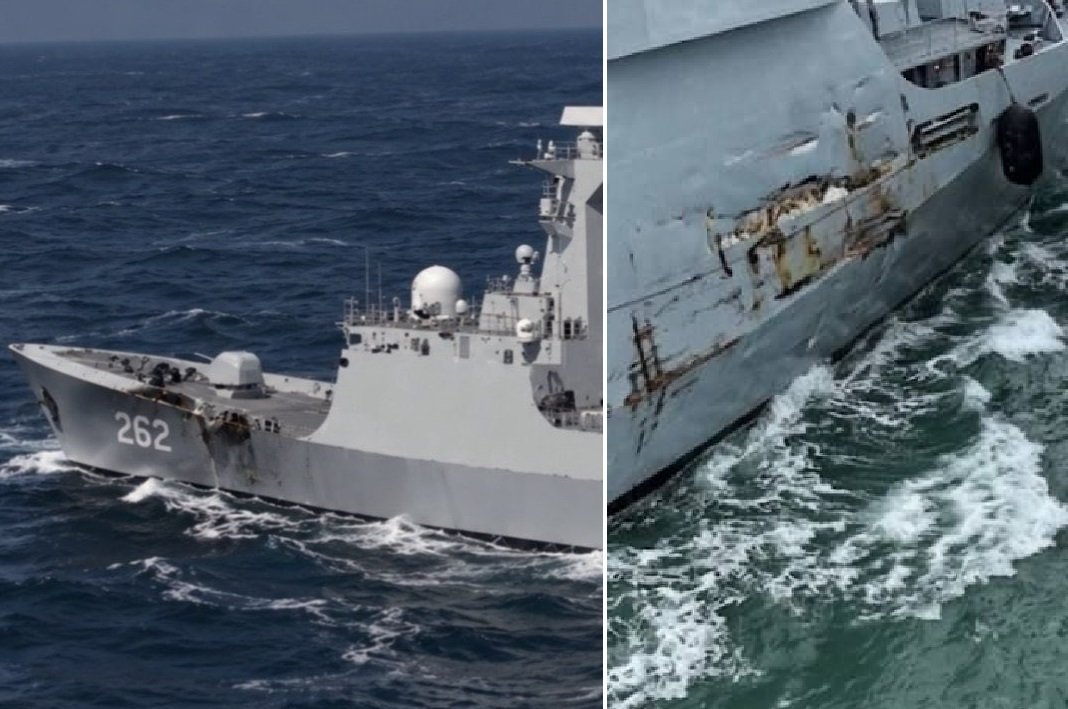
India
NORTH ARABIAN SEA — A Pakistan Navy vessel, identified as PNS Hunain (F-273), was involved in a collision with an Indian Navy frontline warship in the North Arabian Sea, according to Indian government sources and multiple reports. The incident took place in international waters, with the Indian warship carrying out a routine surveillance mission. Indian sources said PNS Hunain approached the Indian vessel at high speed and manoeuvred in an unsafe manner, resulting in the collision. According to reports, the Indian Navy warship remained operational and continued its mission, while PNS Hunain sustained damage and subsequently returned to harbour. The exact extent of the damage has not been officially detailed publicly. Images and video of the incident and the vessels after the collision also show more visible damage on PNS Hunain than on the Indian warship. While this alone does not establish the cause of the difference in damage, the condition of the two vessels after the collision provides a visible comparison of their respective damage levels. PNS Hunain, pennant number F-273, is a Yarmook-class vessel operated by the Pakistan Navy. The identity of the Indian warship involved in the collision has not been publicly disclosed by Indian authorities. India Raises Objection Over Naval Conduct India described the conduct of the Pakistani naval unit as “unacceptable and unprofessional” and summoned Pakistan’s Charge d’Affaires in New Delhi to lodge a formal protest. India also directed its Charge d’Affaires in Islamabad to raise the matter with Pakistan’s Ministry of Foreign Affairs. India said the Pakistani vessel’s conduct was in direct contravention of Article 10 of the 1991 India-Pakistan Agreement on Advance Notice on Military Exercises, Manoeuvres and Troop Movements. Article 10 states that naval ships and submarines belonging to the two countries should not approach within three nautical miles of each other while operating in international waters, with the provision intended to prevent accidents. The incident therefore involved both a physical collision between the two naval vessels and a diplomatic issue concerning the existing bilateral rules for naval operations. Indian sources also said the Indian warship’s crew exercised restraint during the encounter and took measures to prevent the situation from developing into a more serious accident. The collision caused no reported major damage or casualties on the Indian side, while PNS Hunain returned to harbour after sustaining damage. Further official details concerning the circumstances and damage assessment have not been released.
Read More → Posted on 2026-09-17 14:52:05
World
DUBAI, — China has privately asked Iran to use its influence to help restrain Yemen’s Houthi forces following an appeal from Saudi Arabia, according to three Iranian sources familiar with the discussions. The request comes after rapid Houthi advances along Yemen’s Red Sea coast and around the strategic Bab el-Mandeb Strait. Saudi Arabia approached Beijing for assistance after the Houthi advances increased concerns over the security of Saudi oil exports and shipping routes. The Houthis have seized the Red Sea port city of Mokha and advanced toward strategic areas near the Bab el-Mandeb, including Perim (Mayun) Island. The Bab el-Mandeb connects the Red Sea with the Gulf of Aden and is an important route for international commercial and energy shipping. The recent Houthi advances have therefore increased concerns over the security of maritime traffic in the region. China Seeks Iranian Influence China has publicly called for restraint, dialogue and the restoration of safe navigation in the Red Sea. According to the Iranian sources, however, Beijing’s private message to Tehran went further, asking Iran to use its influence over the Houthis to prevent the conflict from spreading further across important energy and shipping routes. China has significant economic interests in maintaining stable energy supplies. It is also a major buyer of Iranian oil, giving Beijing an important economic relationship with Tehran. The Iranian sources did not disclose how China delivered the message or confirm whether the issue was raised during Iranian Foreign Minister Abbas Araghchi’s visit to Beijing on Wednesday. Chinese Foreign Minister Wang Yi met Araghchi during the visit and publicly called for measures to restore safe international shipping and regional stability. Iran’s Response According to the sources, Iranian officials told Beijing that regional peace and stability would remain difficult to achieve without an end to what Tehran describes as the US-Israeli war against Iran. The sources also said Chinese officials did not issue explicit threats or indicate that Beijing would impose economic pressure on Iran if Tehran did not use its influence over the Houthis. It remains unclear whether Iran will take specific steps in response to the Chinese request. Beijing’s Public Position China’s Foreign Ministry said Beijing does not want regional tensions to spread further into Yemen and the Red Sea. “Escalating regional instability is not in the interests of any party,” the ministry said in response to questions. It also called for respect for the sovereignty and security of all countries, protection of facilities important to civilian livelihoods, an end to actions that further complicate the situation, and the resolution of disputes through dialogue and negotiation. The latest diplomatic effort comes after China played a role in the 2023 Saudi-Iran rapprochement, when Beijing helped the two countries restore diplomatic relations. The current situation presents a different challenge because China is now seeking to use its relationship with Iran to address the actions of an Iran-aligned group operating in Yemen. For Saudi Arabia, the immediate concern remains the security of its energy exports and shipping routes. For China, the developments raise concerns about the security of maritime routes and energy supplies connected to the Middle East. It remains to be seen whether Beijing’s request will lead to any change in Houthi military activity around the Red Sea and Bab el-Mandeb.
Read More → Posted on 2026-09-17 15:49:12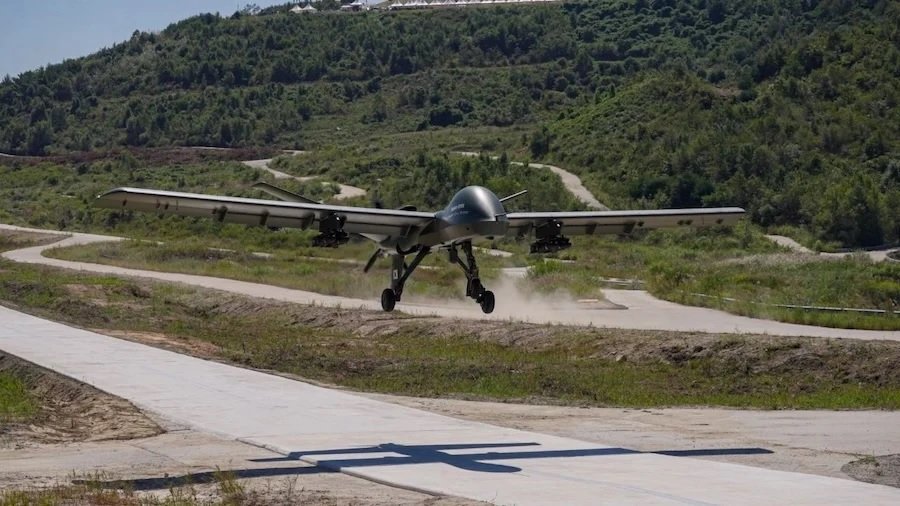
World
POCHEON-SI, SOUTH KOREA — General Atomics Aeronautical Systems (GA-ASI) and Hanwha Aerospace have completed the first battlefield-style short-field flight operations of the Mojave Short Takeoff and Landing (STOL) uncrewed aircraft system in South Korea. The demonstration was conducted during the 2026 Defense Drone Technology Exhibition at the Republic of Korea Army (ROK Army) 513th Aviation Battalion and the Seungjin Training Field in Pocheon-si, Gyeonggi-do. Mojave Lands on Tank and Artillery Trail Pilots operating from ground control stations first launched the Mojave from the conventional runway at the 513th Aviation Battalion. The aircraft then flew to the Seungjin Training Field, joined air operations and landed on a narrow, unpaved maneuver trail normally used by ROK Army tanks and artillery vehicles. The Mojave successfully took off again from the same dirt trail, resumed its flight and returned to the 513th Aviation Battalion. The test demonstrated the aircraft’s ability to operate from austere locations instead of relying solely on conventional airfields. The aircraft was fitted with dual weapon rails and inert payloads during the demonstration. GA-ASI said that in an actual combat situation, soldiers could refuel and re-arm the aircraft at a forward operating location before sending it back into the air. Short-Field Performance During the demonstration, the Mojave completed a takeoff run of less than 200 meters and a landing roll within 100 meters. The aircraft is powered by a roughly 450-horsepower turboprop engine and uses high-lift devices that allow it to operate from surfaces of about 100 to 300 meters. It can carry up to one metric ton of mission equipment and is designed for missions including intelligence, surveillance and reconnaissance, ground attack, logistics support and communications relay. GA-ASI said no other aircraft with the Mojave’s endurance, range and payload has the same short-field capability. GA-ASI-Hanwha Production Plans The demonstration follows a 2025 agreement between GA-ASI and Hanwha Aerospace to co-develop and co-produce STOL uncrewed aircraft systems for customers including the ROK Ministry of National Defense, the United States and other international users. GA-ASI CEO Linden Blue said the demonstration showed the Mojave’s ability to conduct tactical missions under conditions representative of battlefield requirements. Buhwan Lee, chief executive nominee of Hanwha Aerospace, described the flight as an important milestone and said the companies would continue working with South Korea’s defense industry to develop systems suited to future operating environments. The Critical Design Review (CDR) for the production Mojave STOL is scheduled for November 2026, with the first flight of the production aircraft planned for 2027. Hanwha Aerospace also plans to establish research, development and production facilities in South Korea, with more than 70 percent of production expected to be domestic at the mass-production stage. The Mojave STOL demonstrator is scheduled to travel to Changwon for Hanwha Aerospace’s Industry Day on September 21, 2026, where South Korean suppliers involved in the program are expected to participate.
Read More → Posted on 2026-09-17 15:55:29
U.S
MANASSAS, Va. — BAE Systems has received $16 million in Defense Production Act (DPA) Title III funding to demonstrate and qualify its RH45 radiation-hardened 45-nanometer (nm) semiconductor technology. The funding is being provided through the Department of War’s Warfighting Investments, Resourcing, and Execution (WIRE) directorate. The investment was announced on July 7 following a July 2 award and is intended to strengthen domestic production of radiation-hardened microelectronics used in missile, space and strategic systems. RH45 ASIC Storefront The investment will allow BAE Systems to reestablish its RH45 Application-Specific Integrated Circuit (ASIC) Storefront, which has supported space customers for more than a decade. The platform provides a library of qualified building blocks and proven design and manufacturing methods that allow customers to develop custom ASICs using industry-standard design tools. RH45 chips will be manufactured using GlobalFoundries’ 45nm silicon-on-insulator (SOI) process at its facility in Malta, New York. Maintaining a domestic manufacturing path is important because changing semiconductor processes can require existing systems to undergo redesign and requalification. Radiation-Hardened Technology RH45 is based on commercial 45nm technology and is designed to operate in the harsh radiation environment of space. BAE Systems said the technology provides improved power efficiency and processing performance compared with earlier generations of transistor electronics. The technology can support planetary exploration, satellite communications, national security, surveillance and weather monitoring across military, civil and commercial applications, as well as strategic radiation-hardened defense missions. Joe Dziezynski, Space Systems product line director at BAE Systems, said the RH45 ASIC library provides customers with design flexibility while meeting radiation-hardened requirements. GlobalFoundries Partnership and Space Systems GlobalFoundries is supporting the program through its U.S.-based 45nm SOI manufacturing process. Ezra Hall, senior director of the company’s Aerospace and Defense Business Line, said the investment builds on the companies’ longstanding partnership and supports continuity of supply for critical defense applications through secure, U.S.-manufactured semiconductor solutions. RH45 technology is also being incorporated into space-grade single-board computers, including BAE Systems’ Endura™ SBC. The system combines processor cores, hardware-accelerated input/output and security capabilities intended to improve speed, size and power efficiency. BAE Systems supplies high-reliability space electronics ranging from standard components and single-board computers to complete system payloads. Development and management of the RH45 ASIC platform are being conducted at BAE Systems’ Space Systems facility in Manassas, Virginia. The site is designated a U.S. Department of War Category 1A Microelectronics Trusted Source and provides semiconductor design, aggregation, brokerage, packaging and assembly, and testing capabilities. The Department of War has described radiation-hardened microelectronics as critical for missile, space and strategic systems. Assistant Secretary of War for Industrial Base Policy Michael Cadenazzi said the project helps ensure qualified products remain available, while Jeffrey Frankston, Acting Deputy Assistant Secretary of War for Industrial Base Resilience and overseer of the WIRE directorate, said maintaining 45nm SOI technology can help avoid system redesign and requalification costs. The RH45 award is one of five DPA Title III investments made by the WIRE directorate since the beginning of fiscal year 2026. Together, the five awards total $102.6 million and focus on strengthening key parts of the domestic defense industrial base. The funding will support continuity of a U.S. manufacturing path for radiation-hardened chips used in civil, commercial and defense space and strategic missions.
Read More → Posted on 2026-09-17 16:02:45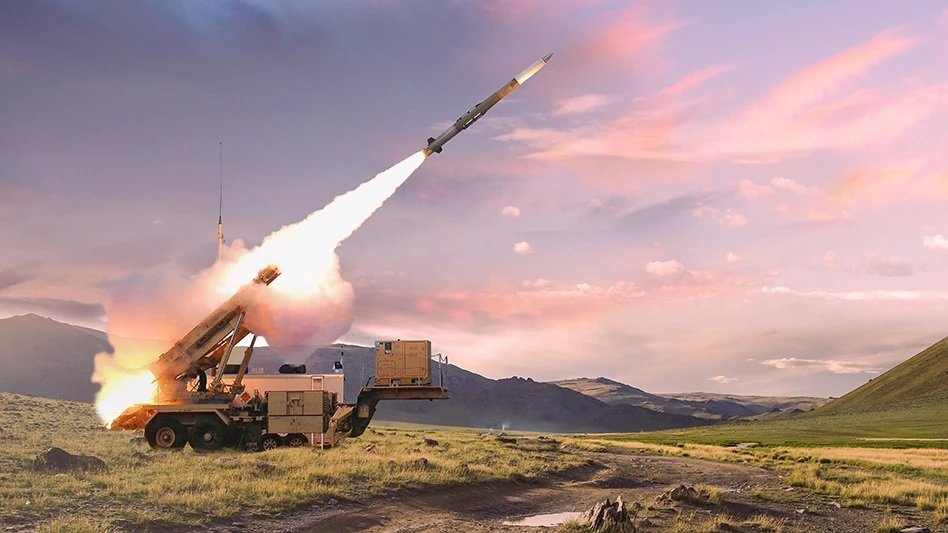
U.S
DALLAS — Lockheed Martin has received its first delivery of mission-critical components produced by GM Defense for the PAC-3 Missile Segment Enhancement (MSE) interceptor. The first batch of missile housing components was delivered on August 28, just 22 days after Lockheed Martin and GM Defense finalized and signed their manufacturing contract on August 6. Accelerating Defense Manufacturing Lockheed Martin said it is moving with “wartime urgency” to expand defense production and is working with U.S. Department of War leadership to apply commercial-style contracts and manufacturing practices to high-demand defense systems. The partnership is focused on increasing production of PAC-3 MSE, Terminal High Altitude Area Defense (THAAD) interceptors and Precision Strike Missile (PrSM). The PAC-3 MSE is an advanced interceptor used by the Patriot air and missile defense system, which is facing high global demand. GM Defense is contributing its automotive mass-production and precision-fabrication capabilities to the effort. Lockheed Martin said the partnership has enabled components that traditionally can take months or years to manufacture to be delivered in 22 days. Expanding Munitions Infrastructure Separately, Lockheed Martin is investing $8 billion to $9 billion in domestic manufacturing infrastructure. The company is constructing new buildings and expanding existing operations at more than 20 sites across the United States. Once completed, the projects are expected to increase Lockheed Martin’s total munitions production and warehousing space by approximately 50 percent. Rebuilding Interceptor Stockpiles The initial GM Defense delivery is part of a broader effort to strengthen the U.S. defense supply chain and replenish interceptor stocks. A recent Center for Strategic and International Studies (CSIS) estimate said the U.S. military had used approximately 65 percent of its Patriot interceptors and reduced its THAAD interceptor stockpile by at least 38 percent by July 2026. Lockheed Martin and GM Defense have indicated that they plan to extend the rapid commercial manufacturing approach to additional munitions programs to help rebuild stockpiles and support future national security requirements.
Read More → Posted on 2026-09-17 16:19:02
World
JAKARTA, — The former Italian Navy aircraft carrier ITS Giuseppe Garibaldi (C551) has entered Indonesian waters and is scheduled to arrive at Tanjung Priok Port in Jakarta on September 18, according to the Indonesian Navy (TNI AL). The vessel will enter Indonesian service as KRI Sriwijaya, making it the first aircraft carrier in the Indonesian Navy’s fleet. The carrier departed Taranto, Italy, on August 24 with a mixed Italian and Indonesian crew under Italian Navy Captain Marco Guerriero. During the voyage, it transited the Suez Canal and made port calls at Safaga, Egypt, and Colombo, Sri Lanka. Italian Navy warships escorted the carrier during part of its passage through the Red Sea. Entry Through the Malacca Strait Unlike the two Multipurpose Combat Ship (PPA) frigates Indonesia also acquired from Italy, the carrier entered Indonesian waters through the Malacca Strait and Indonesian Archipelagic Sea Lane I (ALKI I) near Bangka, rather than through the Sunda Strait. After entering Indonesian waters, the ship was met by Indonesian Navy vessels KRI Brawijaya (320) and KRI Prabu Siliwangi (321), which escorted it toward Jakarta. Indonesian naval aviation assets, including AS565 Panther helicopters, also took part in the welcoming and escort operation. A CN-235 maritime patrol aircraft was also involved. The carrier continued to fly the Italian flag during its transit into Indonesian waters. Arrival in Jakarta KRI Sriwijaya is scheduled to reach Tanjung Priok Port on September 18. Indonesian Defense Minister Sjafrie Sjamsoeddin is expected to welcome the ship, along with senior Indonesian military and government officials. The vessel is also planned to take part in the Indonesian National Armed Forces anniversary celebrations on October 5. New Name: KRI Sriwijaya The Indonesian Navy has confirmed that the former Giuseppe Garibaldi will be commissioned as KRI Sriwijaya. The ship had earlier been associated with the proposed name KRI Gajah Mada, but the Navy ultimately selected Sriwijaya. The name refers to the historical Sriwijaya maritime kingdom, which was based in Sumatra and exercised influence over regional trade routes and parts of maritime Southeast Asia. Planned Role According to the Indonesian Navy, KRI Sriwijaya will primarily support Military Operations Other Than War (MOOTW), with a particular focus on humanitarian assistance and disaster relief (HA/DR) missions. The Indonesian military has also begun preparing personnel and aircrews for operations from the carrier. The Navy has prepared 310 personnel to serve aboard KRI Sriwijaya and is conducting training to prepare them for their duties. Ahead of the carrier's arrival, Indonesian military units conducted joint helicopter training involving the Navy's AS565 Panther, the Air Force's NAS332 Super Puma, and the Army's Bell 412. The crews practiced take-offs and landings using a life-size mock-up of the Garibaldi's flight deck and also conducted shipboard training aboard the landing platform dock KRI Makassar (590). The training is intended to prepare helicopter crews from the three Indonesian military services for future operations from KRI Sriwijaya.
Read More → Posted on 2026-09-17 16:31:44
U.S
WEST PALM BEACH, Fla. / ISLAMABAD — U.S. defense technology company Powerus has received a limited procurement order from Pakistan’s Ministry of Defence for unmanned aerial systems (UAS) and associated support. The company has not disclosed the value of the order, the number of systems involved or the delivery schedule. The order was announced alongside a separate memorandum of understanding (MoU) covering potential cooperation in unmanned and autonomous technologies. The MoU provides a framework for both sides to explore additional projects and possible future deployment of Powerus systems. It is not a binding purchase agreement, and any future procurement would require definitive agreements, compliance with U.S. laws and regulations, and the necessary government approvals. Meeting With Pakistan Military Leadership The announcement followed a September 16 meeting between a Powerus delegation led by co-founder Brett Velicovich and Field Marshal Syed Asim Munir, Pakistan’s Chief of Army Staff and Chief of Defence Forces, at General Headquarters in Rawalpindi. Pakistan’s Inter-Services Public Relations (ISPR) said the meeting discussed evolving defense technology, procurement, production and capacity building. Both sides expressed interest in expanding cooperation in areas of mutual interest. The ISPR statement did not specifically mention the order or the MoU. Velicovich told Reuters that the order is for unmanned aerial systems but declined to provide further details, citing security sensitivities and confidentiality. He also said Powerus is exploring possible technology development in Pakistan, with the aim of creating a joint technology relationship combining U.S. and Pakistani capabilities. Powerus CEO and founder Andrew Fox described Pakistan’s private defense sector as emerging but not yet mature, saying this creates opportunities for U.S. companies. Powerus develops autonomous air and maritime systems, heavy-lift platforms, mission systems, training and support, and has U.S.-based manufacturing capabilities. Proposed Merger With Aureus Greenway Powerus has entered into a definitive merger agreement with Aureus Greenway Holdings, which trades on Nasdaq under the ticker PUSA. The transaction has not yet closed and remains subject to customary conditions and regulatory approvals. The companies expect the merger to be completed in early October 2026, after which the combined company is expected to operate as Powerus Corporation and continue trading under the PUSA ticker. Aureus Greenway is backed by an investment fund linked to Donald Trump Jr. and Eric Trump. Regulatory filings indicate the fund is expected to hold a 9.9% beneficial ownership stake in the combined company. Fox has said the Trump sons have no involvement in Powerus’s business operations and that contracts are awarded on merit. A spokesman for Donald Trump Jr. said he is a passive investor with no role in management, operations or contract procurement. The initial Pakistan order and the MoU provide Powerus with a procurement relationship and a separate framework for exploring broader cooperation in unmanned and autonomous technologies.
Read More → Posted on 2026-09-18 12:15:34
U.S
WASHINGTON — The U.S. Army has awarded Sikorsky, a Lockheed Martin company, a $234.5 million fixed-price-incentive contract modification to build 16 new UH-60M Black Hawk helicopters. The modification raises the total cumulative value of contract W58RGZ-26-C-0008 to $356.3 million. The full amount was obligated from fiscal 2026 aircraft procurement funds when the award was made. The contract remains undefinitized, allowing Sikorsky to begin production while the Army and the company negotiate the final contract price. Work will be conducted at Sikorsky’s facility in Stratford, Connecticut, with completion estimated for June 30, 2028. The agreement is being managed by Army Contracting Command at Redstone Arsenal, Alabama. Contract Expands Earlier Procurement The contract began in April 2026 with a $65 million advance procurement award covering materials and long-lead items for 10 UH-60Ms. The arrangement was intended to reduce schedule risks before full-rate production. The latest modification now funds the production of 16 complete helicopters. The initial 16 aircraft are scheduled for delivery to the Army in fiscal 2028, as the current multiyear production agreement awarded in 2022 concludes by the end of 2027. The broader agreement could eventually support up to 150 aircraft over three to four years, including helicopters for the Army, National Guard and foreign military sales customers, once the contract is fully definitized. UH-60M Black Hawk The UH-60M is the current production version of the Black Hawk. It features a digital cockpit, wide-chord rotor blades and T700-GE-701D engines, providing upgrades over earlier UH-60A and UH-60L models. Sikorsky has manufactured Black Hawks for the U.S. Army since 1978. The Army has procured UH-60M and HH-60M medical evacuation helicopters through several multiyear contracts, including an $8.5 billion five-year agreement signed in 2012 that also covered Navy Seahawks and aircraft for allied countries through the Foreign Military Sales program. The Army is separately studying a midlife modernization program intended to extend the UH-60M fleet’s service life beyond 2050. The first UH-60Ms were delivered in 2006, and the Army operates more than 2,000 UH-60Ms. Separate Black Hawk Sale to Argentina Separately, the U.S. State Department approved a $140 million Foreign Military Sale to Argentina on September 10, 2026, covering four UH-60L Black Hawks and associated equipment. The package includes T700-GE-701D engines, communications and navigation systems, Garmin GTN-750 GPS systems, rescue hoists, fast-rope equipment, internal auxiliary fuel tanks and Bambi buckets for aerial firefighting. The proposed sale would support Argentina’s border security, counter-transnational crime and disaster-response capabilities. Argentina is seeking to replace its aging Bell UH-1H and Huey II fleet and has discussed potentially expanding the acquisition from four helicopters to as many as 10. As of the State Department’s notification, the Argentine procurement had no finalized delivery schedule or binding procurement agreement. The latest U.S. Army contract continues UH-60M production while the service also examines modernization options for its existing Black Hawk fleet.
Read More → Posted on 2026-09-18 12:23:48
India
NEW DELHI — Indian defence technology company IG Defence demonstrated its indigenous T-SHUL BEAM Counter-UAS system during the Indian Air Force’s Dronathan 2026 event at the Pokhran Field Firing Range in Rajasthan from September 14 to 16. T-SHUL BEAM is a man-portable, directional Counter-Unmanned Aircraft System designed to neutralise drones through soft-kill electronic countermeasures. Instead of physically destroying a drone, the system uses directional radio-frequency (RF) jamming to disrupt communication and navigation links, including command-and-control, telemetry, video transmission and GNSS signals. According to IG Defence, the system uses an eight-channel RF architecture and can provide directional broadband jamming across several frequency bands. The company lists an effective jamming range of up to 3 kilometres in line-of-sight conditions and a weight of under 6 kg with its battery. The system is intended for use against small UAVs, FPV drones and other unmanned platforms. The system is designed for tactical deployment, including the protection of forward positions, critical assets and temporary operational locations. Its directional configuration allows operators to focus electronic countermeasures toward a selected aerial target. Wg Cdr Anoop Sharma (Retd.), AVP at IG Defence, said the company designed T-SHUL BEAM to provide a mobile Counter-UAS capability against small UAVs and FPV systems. He also highlighted its integration with the company’s GRID battle management system. GRID is described by IG Defence as an indigenous, AI-powered Battle Management System for C5ISRT applications. It connects sensors, unmanned systems, intelligence, communications and command elements into a common operational picture. The integration allows T-SHUL BEAM to operate as part of a broader battlefield network rather than as a standalone counter-drone system. The Dronathan 2026 event provided a platform for Indian defence companies and innovators to demonstrate unmanned and counter-unmanned technologies under operational conditions. The T-SHUL BEAM demonstration adds to IG Defence’s work on indigenous unmanned and counter-UAS technologies.
Read More → Posted on 2026-09-18 12:29:42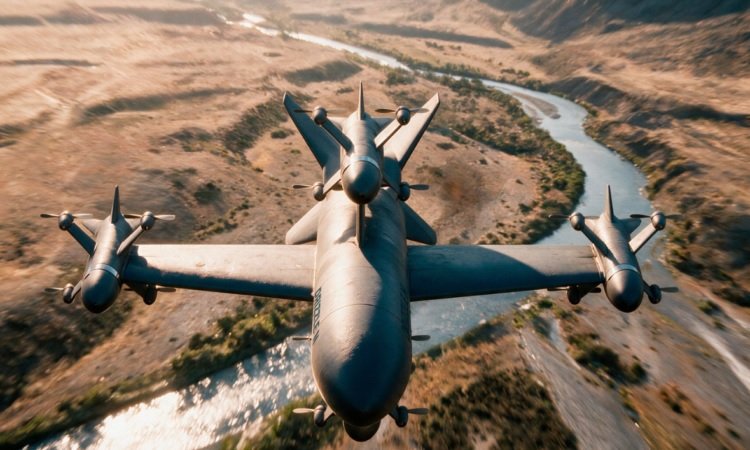
Europe
SAN JAVIER, MURCIA — Spanish technology company Indra has unveiled DRIZZLE, a new family of autonomous interceptor drones designed to counter mass attacks by unmanned aerial vehicles (UAVs) and protect infrastructure, military convoys and deployed forces. The system was presented at UNVEX 2026, held on September 16 and 17 at San Javier, Murcia. Indra describes DRIZZLE as a low-cost, expendable hard-kill counter-drone effector designed to provide a scalable response against low-cost drone threats. High-Speed Interceptor DRIZZLE is a compact and lightweight unmanned system capable of reaching speeds of more than 400 km/h. In its standalone configuration, it has an approximate range of 80 kilometres. Indra has developed the interceptor with an onboard processing system capable of analysing information from electro-optical (EO) and infrared (IR) sensors in real time. The system is designed to discriminate threats and lock onto targets with high precision during the terminal phase of an engagement. The company is also developing a radar capability for future versions of DRIZZLE to strengthen its detection capability. Mothership Extends Range to 130 Kilometres Indra has also developed a larger, expendable mothership drone capable of carrying several DRIZZLE interceptors. According to Indra, the mothership can fly at an altitude of 30,000 feet during the first 80 kilometres of a mission before releasing the smaller interceptors. After release, the DRIZZLE interceptors can travel another 50 kilometres, giving the overall system a range of approximately 130 kilometres. Multiple motherships can also operate together and release interceptors in rapid succession. Indra says this concept is intended to create a high density of interceptors capable of saturating an adversary's defences. The mothership platforms can also serve as attack vectors after releasing their interceptor payloads. Integration With Counter-Drone Systems DRIZZLE is designed to operate as part of existing counter-unmanned aircraft systems (C-UAS). It can provide a hard-kill layer against hostile drones and can also be used as an onboard self-protection system for ground vehicles and helicopters. Indra says the system incorporates advanced target tracking and selection functions along with navigation technology intended for operation in saturated environments. The company is developing the DRIZZLE family around a fungible and expendable concept, allowing the systems to be produced and used in quantity against low-cost drone attacks. The DRIZZLE unveiling is part of a wider group of new unmanned and counter-drone capabilities presented by Indra at UNVEX 2026, alongside its TARSIS drone family and SQUALL low-cost cruise missile.
Read More → Posted on 2026-09-18 12:45:52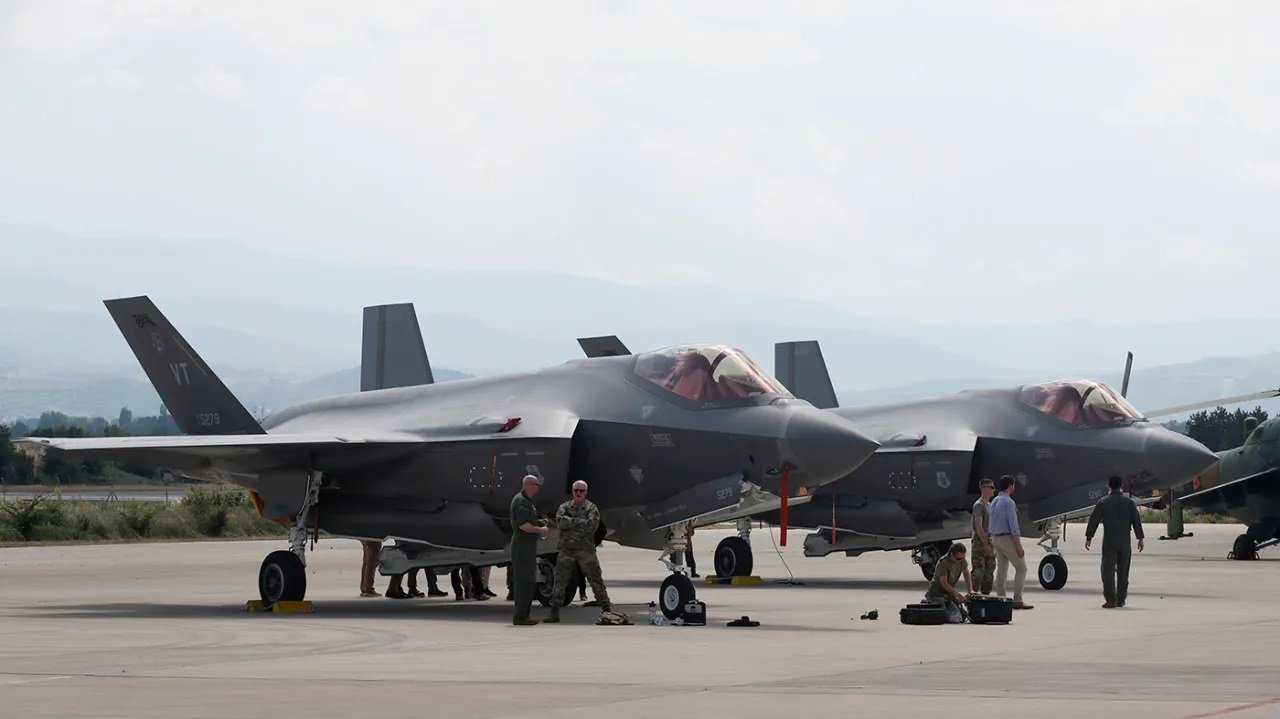
U.S
WASHINGTON — The U.S. Department of State has approved a possible $24.3 billion Foreign Military Sale to Saudi Arabia involving 48 F-35 Lightning II fighter jets and related equipment and services. The State Department notified Congress of the proposed sale under Transmittal No. 26-69 on September 17, 2026. Saudi Arabia has requested 48 conventional takeoff and landing F-35s, along with 49 Pratt & Whitney F135-PW-100 engines. Of these, 48 would be installed on the aircraft and one would be provided as a spare. The package includes spare parts, consumables, accessories, repair-and-return support, aircraft and munitions support equipment, and other logistics requirements. It also includes secure communications, precision navigation and cryptographic equipment, including AN/PYQ-10 simple key loaders and KIV-78 cryptographic appliques. Other elements include electronic warfare database support, classified and unclassified software, cartridge actuated and propellant actuated devices, technical documentation, transportation, ferry and refueling support, and engineering, technical and logistics services. Training and Support The proposed deal includes personnel training, training equipment, simulators and other training aids. It also provides support through the engine component improvement program, aircraft modifications and maintenance services, as well as studies, surveys and site surveys. According to the State Department, the sale would support U.S. foreign policy and national security objectives by strengthening the security of Saudi Arabia, described by the department as a major non-NATO ally and a force for political stability and economic progress in the Gulf. The department said the F-35 acquisition would strengthen Saudi Arabia’s homeland defense and ability to deter current and future threats. It would also improve interoperability with U.S., regional and NATO forces and enhance Saudi air-to-air and air-to-ground self-defense capabilities. The State Department said Saudi Arabia would have no difficulty absorbing the aircraft, equipment and services and that the proposed sale would not alter the military balance in the Middle East. It also said the implementation would not require additional U.S. government or contractor personnel in Saudi Arabia and would have no adverse impact on U.S. defense readiness. Lockheed Martin Aeronautics Company in Fort Worth, Texas, and Pratt & Whitney Military Engines in East Hartford, Connecticut, are the principal contractors. The U.S. government said it is not aware of any proposed offset agreement. Any such arrangements would be negotiated directly between Saudi Arabia and the contractors. The proposed transaction is now subject to the standard 30-day congressional review period. It remains a proposed Foreign Military Sale, and if finalized, the first F-35 deliveries would take several years.
Read More → Posted on 2026-09-18 12:54:25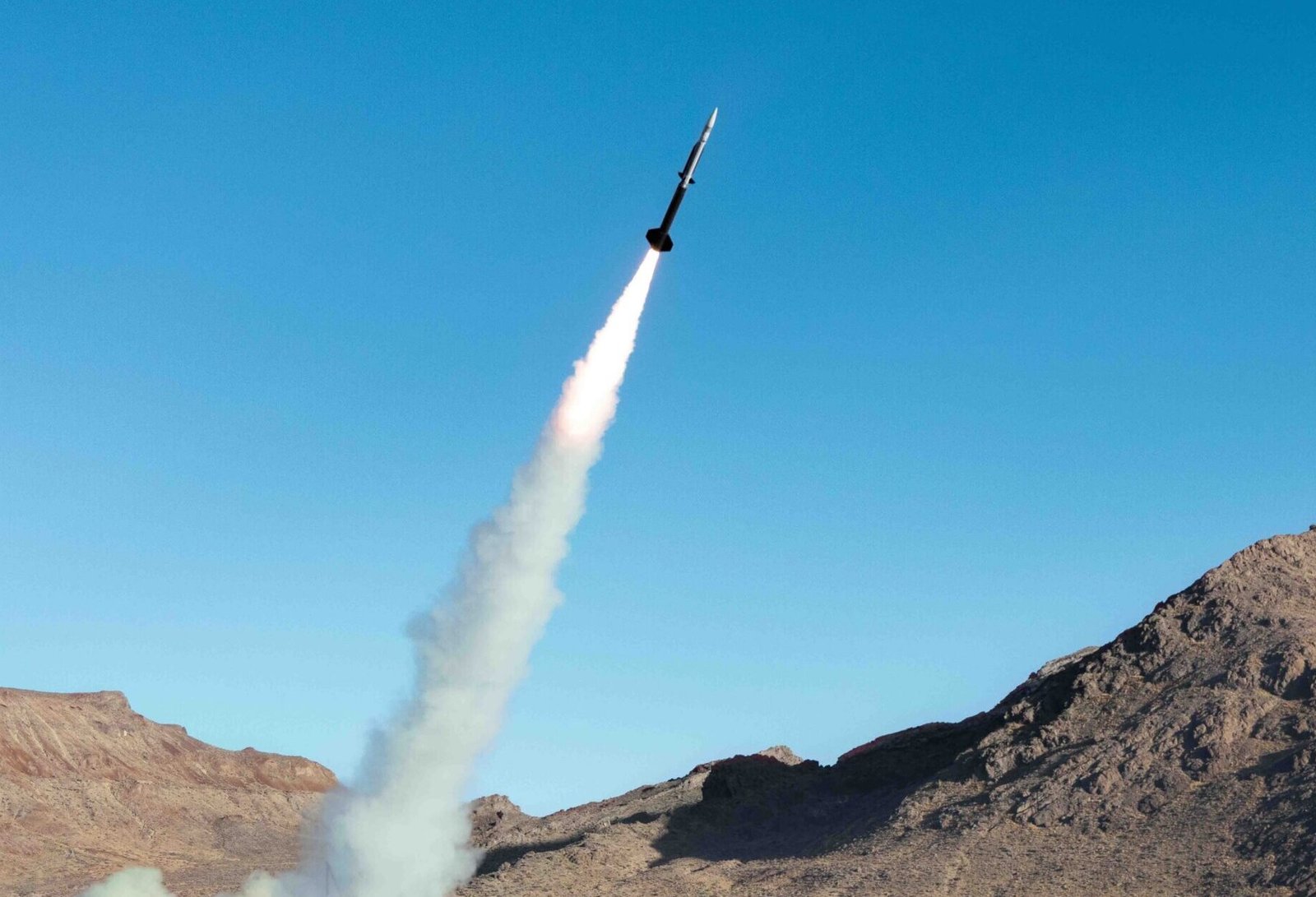
U.S
WASHINGTON — The U.S. Air Force Research Laboratory (AFRL) has added $16.4 million to an existing contract with Castelion Corp. for continued development of the company’s Blackbeard low-cost, mass-producible long-range strike weapon. The modification increases the value of the specific agreement from $20.9 million to $37.2 million. The work is funded through fiscal 2025 research allocations and will be conducted at Castelion’s headquarters in Torrance, California, through June 30, 2028. AFRL at Wright-Patterson Air Force Base manages the contract. Blackbeard Hypersonic Weapon Blackbeard is designed to fly at speeds above Mach 5 while maneuvering within the atmosphere. Castelion is developing two configurations: an air-launched version for tactical aircraft and a ground-launched version compatible with the U.S. Army’s M142 HIMARS launcher. Castelion was founded in 2022 by three former SpaceX engineers and has designed Blackbeard around manufacturing methods intended to support industrial-scale production rather than small production runs. Navy Advances Blackbeard Program The U.S. Army and Navy were among the first military services to support the weapon, issuing integration awards in October 2025. In February 2026, the Navy selected Blackbeard as its first candidate under the Multi-mission Affordable Capacity Effector (MACE) program, which seeks to field larger numbers of affordable, long-range strike weapons. The Navy then awarded Castelion a $105 million contract in April 2026 to integrate Blackbeard with the F/A-18E/F Super Hornet and support live-fire testing in the Indo-Pacific Command area of responsibility. In June 2026, the Navy placed a $23.4 million order for 50 early operational capability pre-production prototypes and 50 storage and shipping containers. In August 2026, it added nearly $90 million to advance Blackbeard toward early operational capability and a formal Program of Record, including design changes intended to support future sales to allied nations. On September 14, 2026, the Navy placed a production delivery order valued at up to $200 million for an initial lot of Blackbeard weapons. The order covers the manufacture, assembly, testing and delivery of fully functional tactical missiles, moving the weapon from prototype development into initial production. An initial obligation of about $43.65 million was funded through Navy weapons procurement accounts, with deliveries scheduled through September 2028. Production Expansion Congress increased MACE funding by more than $140 million in the fiscal 2026 defense appropriations act, more than doubling its base funding. Castelion is expanding production at Project Ranger, a 1,000-acre manufacturing campus in Rio Rancho, New Mexico. The facility is intended to support solid-rocket-motor production, testing and final assembly. The company has reported investment of more than $220 million to $250 million in the facility. Castelion’s longer-term production target is 500 Blackbeard weapons per year for the U.S. Department of Defense. The latest AFRL contract modification adds another U.S. military development effort to a Blackbeard program that is simultaneously being advanced by the Navy and Army.
Read More → Posted on 2026-09-18 13:02:01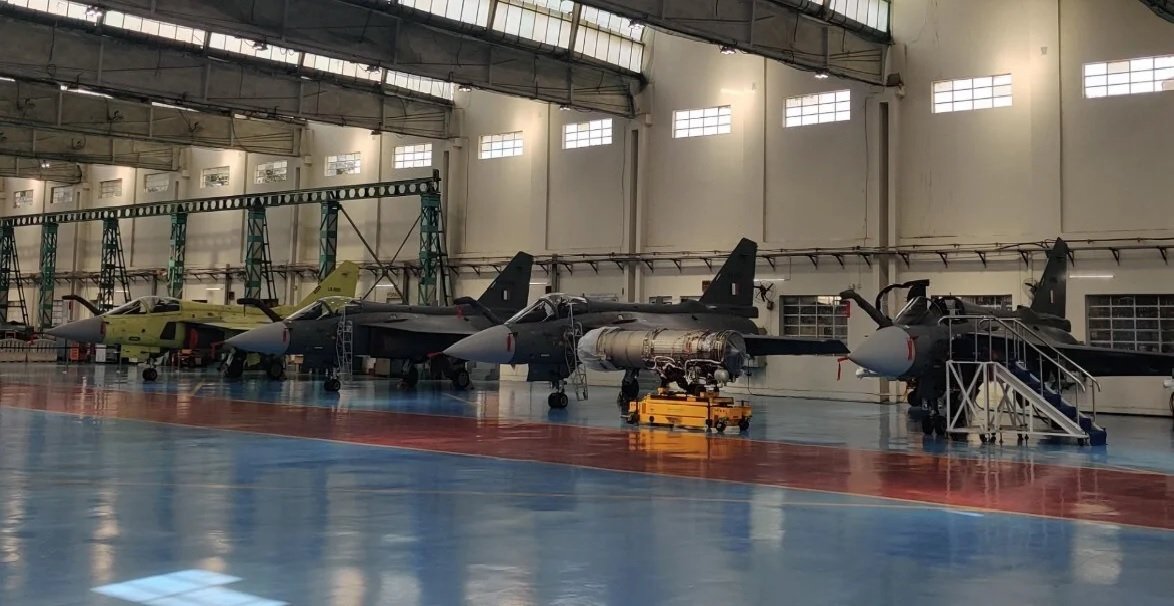
India
BENGALURU — Hindustan Aeronautics Limited (HAL) Chairman and Managing Director Ravi K has said that delays in the delivery of Tejas Mk1A fighter aircraft are mainly linked to a few remaining AESA radar issues, software changes and certification testing, rather than incomplete weapon integration. Ravi K said the programme is around 90-95% complete, with HAL having prepared about 27 Tejas Mk1A airframes. The AESA radar is also assessed at around 90-95% readiness, but further flight testing is required. Some accounts indicate that around 20-30 additional sorties may be needed as part of the process of identifying issues, applying software fixes and conducting repeat tests. Weapon Integration Largely Complete HAL has clarified that weapon integration is largely complete, including major firing trials. However, additional tests are required after missiles are fitted to verify how the aircraft and its structure behave during the relevant flight profiles. These tests are part of the standard certification process, with much of the remaining work involving software changes and validation. HAL is continuing to prioritise meeting the IAF's specified requirements before handing over the aircraft. Engine Supply and Production HAL has received 10 GE F404-IN20 engines from GE Aerospace. According to Ravi K, these engines are sufficient to support the delivery of 10 Tejas Mk1A aircraft by March 2027. GE has promised 12 additional engines by December 2026. Engine availability has been a long-standing factor affecting Mk1A production and deliveries under the 2021 contract for 83 aircraft, whose deliveries were originally scheduled to begin in March 2024. To address supply-chain delays, HAL is sending its personnel directly to GE's Tier-1 and Tier-2 supplier facilities to identify bottlenecks. HAL has also offered its own casting facilities to help suppliers accelerate component production. 180 Aircraft on Order The IAF has ordered 180 Tejas Mk1A aircraft through two contracts—83 aircraft in 2021 and another 97 aircraft in September 2025. Ravi K said HAL is working to resolve the remaining issues and is hopeful of beginning deliveries within the current financial year or by the end of the year, although he has not committed to a firm first-delivery date because of the remaining software and certification work. The Tejas Mk1A features upgraded avionics, an AESA radar, electronic warfare systems and expanded weapon options, including Astra and ASRAAM, compared with the earlier Tejas Mk1. Meanwhile, HAL has said that structural coupling work for the Tejas Mk2 is progressing, with ground testing planned to begin by February. Source : TOI
Read More → Posted on 2026-09-18 13:20:45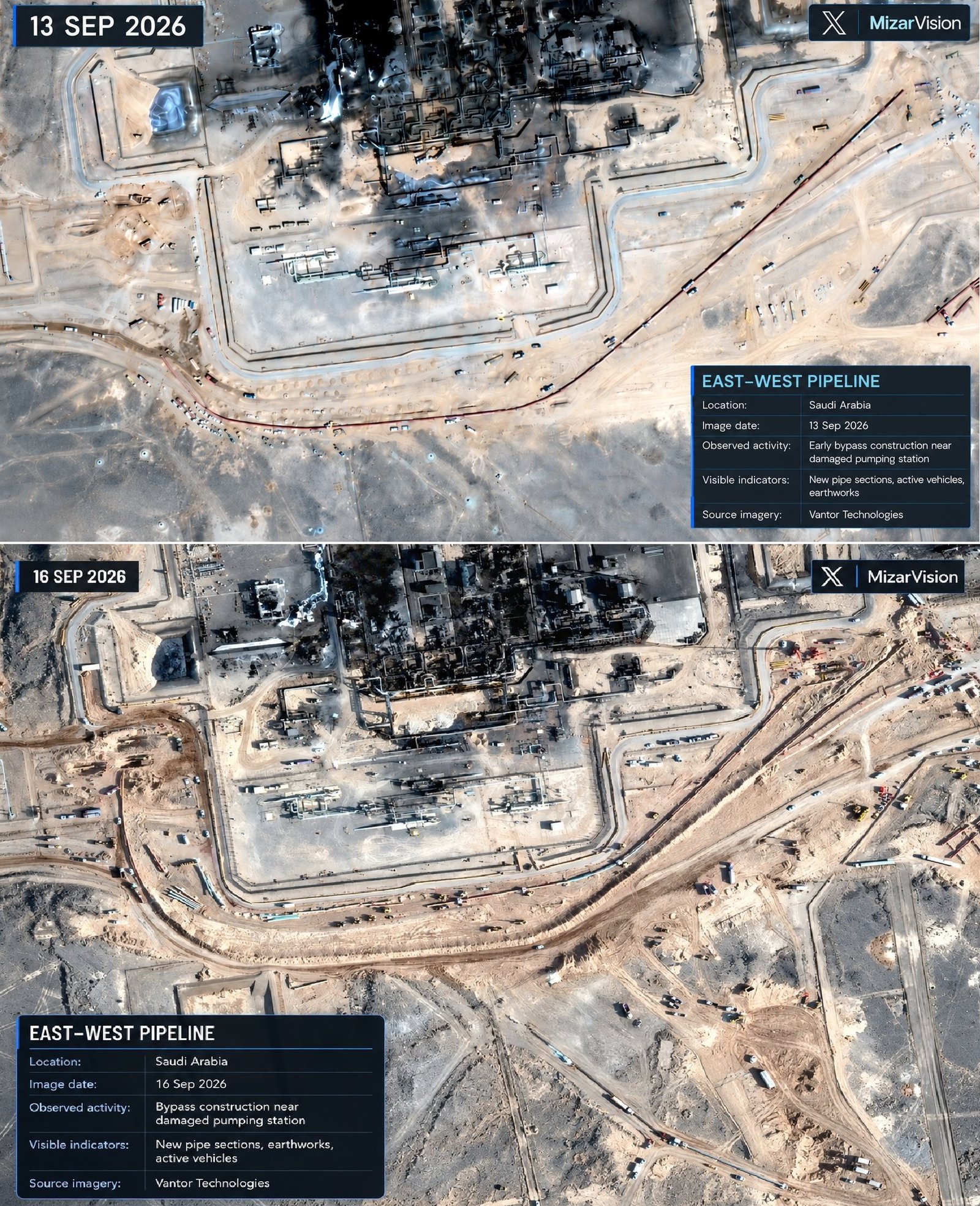
World
RIYADH, — Saudi Arabia is moving ahead with emergency work to restore crude oil flows through its East-West Pipeline after drone attacks damaged several pumping stations earlier this month. Satellite imagery captured by Vantor Technologies on September 16 shows Saudi crews constructing a temporary bypass around one of the damaged pumping stations. Workers appear to be laying and welding two new sections of pipeline that could allow crude to flow around the affected facility while permanent repairs continue. The imagery provides visual evidence of the ongoing construction activity. Reuters separately reported on September 17 that three pumping stations along the pipeline were damaged in the attack, increasing the number from two identified in earlier assessments. The attacks took place on September 10 and 11. Saudi Arabia subsequently shut down the East-West Pipeline as a precaution. Reuters reported that the attacks originated from Iraqi territory, while the Islamic Resistance in Iraq denied involvement and no group has claimed responsibility. Temporary bypass aimed at restoring flows The temporary bypass is intended to route crude around a damaged pumping facility rather than waiting for the complete repair of the original equipment. Reuters reported that industry and oil sources estimate that full repairs could take five to six weeks, while partial pipeline operations could resume earlier. Bloomberg separately reported that Saudi Aramco is working to bypass the damaged section and aims to restore about half of the pipeline's capacity within days. The exact progress and operational capacity of the temporary bypass have not been publicly detailed by Saudi Aramco or Saudi government representatives. East-West Pipeline is a major alternative export route The 1,200-kilometer (745-mile) East-West Pipeline, also known as Petroline, connects Saudi Arabia's eastern oil-producing and processing areas with Yanbu on the Red Sea coast. Saudi Aramco describes the pipeline as providing flexibility to export crude from both the eastern and western coasts of the Kingdom. According to Reuters, the pipeline has a capacity of about 7 million barrels per day and had been transporting around 4 million to 5 million barrels of crude per day in recent months, equivalent to roughly 4% to 5% of global oil supply. The system includes 11 pumping stations and two pressure-relief stations. The pipeline is particularly important because it provides Saudi Arabia with an alternative route to the Red Sea, reducing reliance on tanker shipments through the Strait of Hormuz. Saudi Arabia is also using other measures to maintain crude exports during the disruption. Reuters reported on September 18 that Saudi Aramco plans to increase crude exports from its Gulf port of Ras Tanura, with ship-to-ship transfers at Oman's Sohar port helping compensate for reduced exports from Yanbu. If the temporary bypass is completed and operates as intended, Saudi Arabia could restore part of the East-West Pipeline's crude flows before permanent repairs to the damaged pumping equipment are finished. Main Source : MizarVision
Read More → Posted on 2026-09-18 13:39:38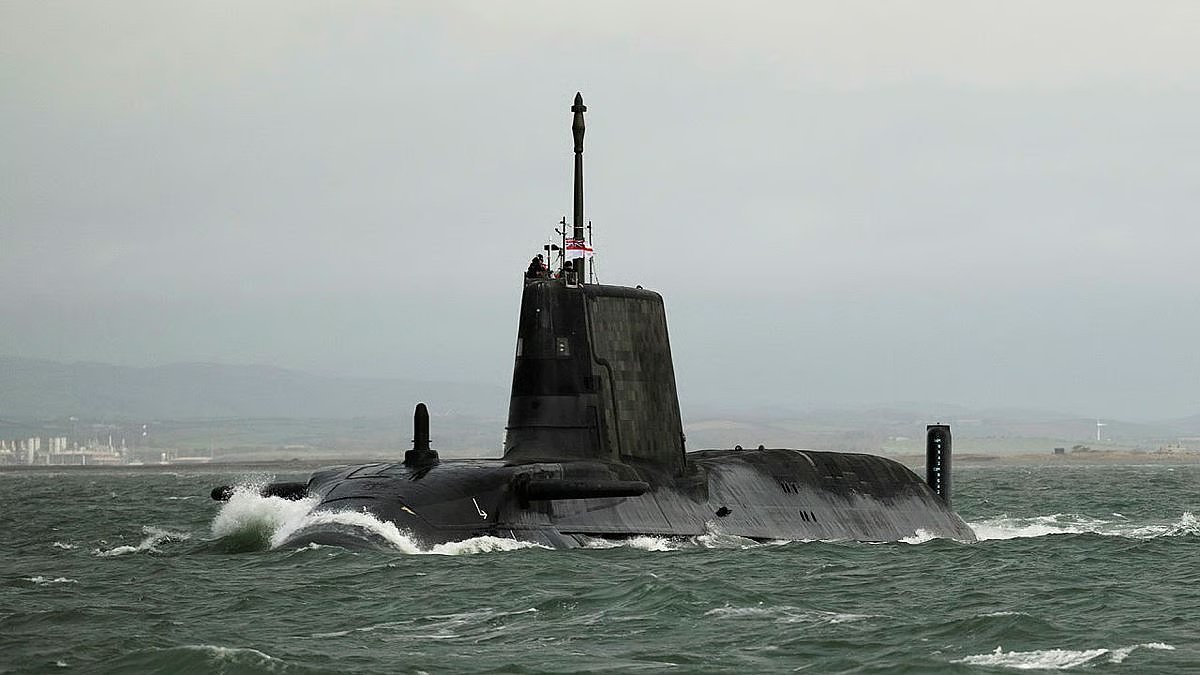
Europe
LONDON — The UK Ministry of Defence (MoD) has selected TKMS ATLAS UK to develop and supply the Next Generation Countermeasure (NGCM) system for the Royal Navy’s submarine fleet. The contract value has not been disclosed. However, the programme is expected to support 80 jobs in the UK. The NGCM capability delivery and deployment programme is scheduled to span 2025 to 2032. NGCM to Protect Current and Future Submarines NGCM will form part of the Royal Navy’s Underwater Defensive Aids Suite and is designed to protect current and future submarine classes against evolving underwater threats, including modern torpedoes. TKMS ATLAS UK, a subsidiary of Germany’s TKMS group based in Winfrith, Dorset, will lead the programme. The company will use a spiral development approach, allowing the system to receive staged upgrades after its initial deployment as new threats emerge. This is intended to keep the capability effective throughout the operational lives of the submarines using it. Babcock to Support Development and Integration TKMS ATLAS UK will work with Babcock International Group, which will provide countermeasure launcher technology and submarine integration expertise. Babcock already provides through-life support for the UK submarine fleet. The two companies have conducted more than three years of joint research and development in preparation for the NGCM programme. Their design is intended to support submarine availability while making future upgrades easier to integrate. TKMS ATLAS UK will draw on its UK research into torpedo countermeasures and expertise in hydro-acoustics, sonar, underwater communications, sensor engineering and systems integration. UK Underwater Defence Capability Dr Antoni Mazur, managing director of TKMS ATLAS UK, said the company was proud to have been selected and described the contract as reflecting its longstanding role in UK torpedo countermeasure research and development. He said NGCM would strengthen the underwater defence of the UK submarine fleet while creating opportunities for future growth and exports. Phil Craig, managing director of marine programmes at Babcock, said the company was pleased to partner with TKMS ATLAS UK and combine their complementary skills and expertise to deliver the NGCM capability for the Royal Navy. Chris Bamforth, head of submarine combat systems at the MoD, congratulated TKMS ATLAS UK on winning the NGCM contract and said the MoD looked forward to working with the company to deliver the capability for the UK submarine fleet. The programme will now move into delivery, platform integration, testing and progressive capability improvements. TKMS ATLAS UK said the adaptable design will strengthen sovereign UK capability in underwater systems and support security in the North Atlantic. The contract award was announced on September 17, 2026.
Read More → Posted on 2026-09-18 14:44:58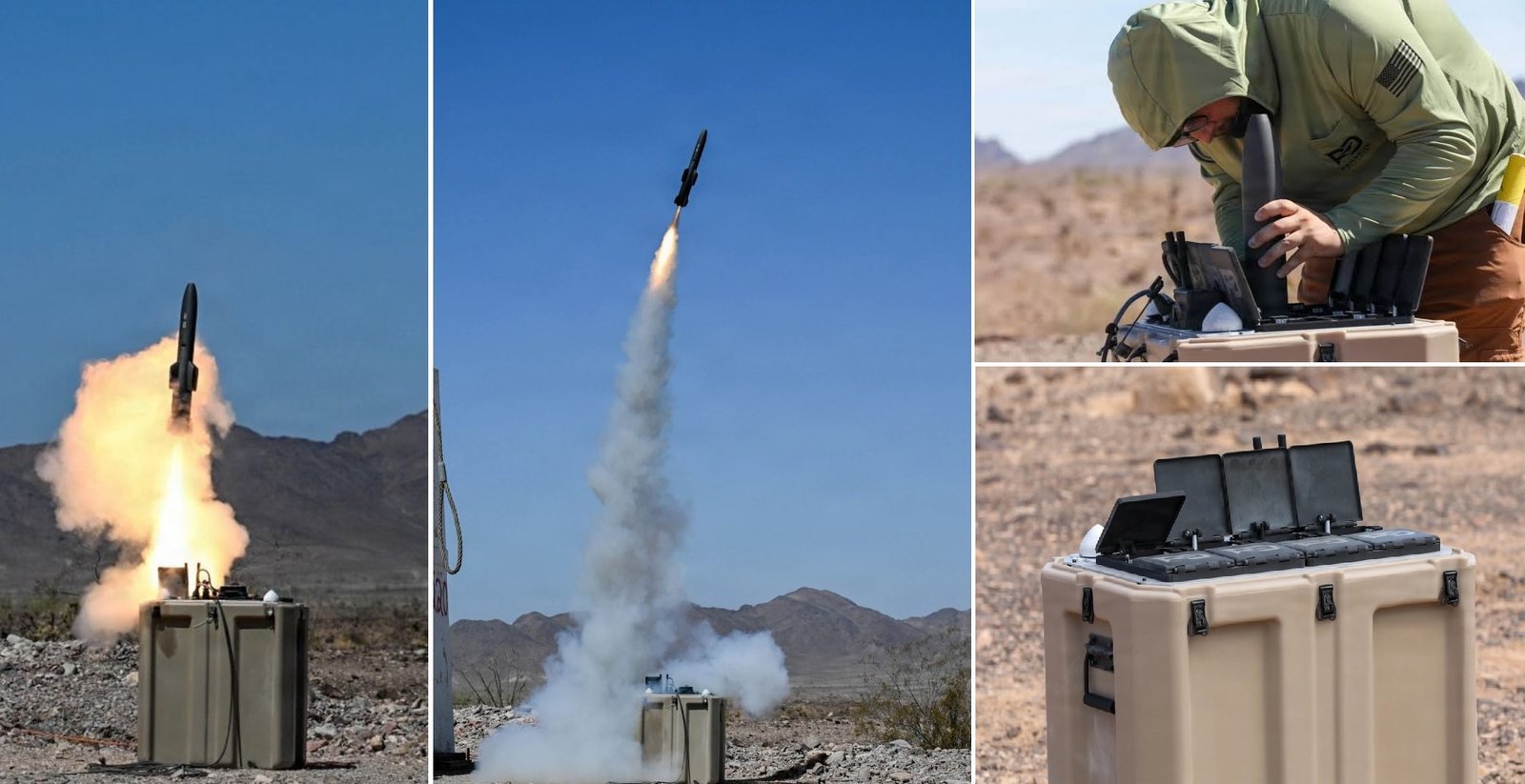
U.S
YUMA, Ariz. — U.S. counter-drone startup Perseus Defense has tested its low-cost Mk-III interceptor, also known as the Harpe, during the Falcon Peak 26.2 homeland-defense experiment at the U.S. Army’s Yuma Proving Ground in Arizona. The live-fire demonstration took place at Cibola Range Site 17 and involved U.S. Northern Command (NORTHCOM), the North American Aerospace Defense Command (NORAD), and Joint Interagency Task Force 401 (JIATF-401). Low-cost kinetic interceptor The Harpe is designed as a hit-to-kill kinetic interceptor that physically strikes small drones instead of relying on electronic jamming or spoofing. Perseus said the Mk-III costs approximately $2,500 to manufacture. The company is targeting a cost per engagement well below the $100,000-plus cost of some existing kinetic interceptors. The interceptor is approximately 61 centimeters (24 inches) long and has a stated 2-kilometer engagement range. It is designed to engage Group 1 and Group 2 small unmanned aircraft systems. The missile is launched from an eight-shot portable launcher weighing less than 36 kilograms (about 79–80 pounds). The launcher can receive external target-track data, allowing it to operate separately from the radar or sensor providing the track. Designed for difficult-to-jam drones The kinetic approach is intended to address drones that can be difficult to defeat through electronic warfare. Perseus specifically points to drones using fiber-optic links or preprogrammed waypoints, which do not depend on radio signals that can be jammed. During the Yuma demonstration, Perseus operated the launcher with what it described as Lattice-level integration, referring to Anduril Industries’ Lattice command-and-control software. The company previously demonstrated this capability during Operation Jailbreak at Fort Carson. Falcon Peak 26.2 Falcon Peak 26.2 is the fourth event in the Falcon Peak series and the first to be held at Yuma Proving Ground. The experiment runs from August 31 through September 25, 2026, following earlier events at locations including Eglin Air Force Base. The exercise brings together 21 defense industry participants and covers technologies for sensing, detection and tracking, artificial intelligence, command and control, semi-autonomous systems, airborne platforms and low-collateral defeat. The current iteration is also examining counter-small-UAS challenges relevant to the Southern Border. Military officials are evaluating systems based on factors including mobility, cost per shot, magazine depth and low-collateral defeat options for use around U.S. installations and populated areas. Growing focus on domestic counter-drone defense The U.S. military's focus on affordable counter-drone capabilities increased following a series of unauthorized drone sightings over U.S. installations. In December 2023, dozens of unidentified drones flew over Joint Base Langley-Eustis in Virginia, prompting the temporary relocation of F-22 fighter aircraft. Similar sightings were reported at other installations during 2024 and 2025. The Department of War established JIATF-401 in 2025 to accelerate counter-drone capabilities for U.S. forces and domestic installations. Perseus Defense Perseus Defense was founded in 2025 by Jason Cornelius and Steve Messinger, who studied aerospace engineering together at Penn State University. The company participated in Y Combinator's 2025 batch and has raised approximately $6.5 million in seed funding. The company is based in the Austin, Texas, area, with headquarters in Buda. Cornelius has experience with NASA programs, including work related to the Titan Dragonfly helicopter concept. Perseus previously demonstrated the Harpe during the 1st Cavalry Division's Golden Shield exercise at Fort Hood in April 2026, where it achieved radar-cued launches and fully active-guidance intercepts. The Yuma test forms part of the broader U.S. effort to evaluate lower-cost kinetic options for defending installations and border areas against small drones. Source : defence-blog
Read More → Posted on 2026-09-18 14:54:16
World
TEL AVIV — Israeli radar technology company Arbe Robotics has formally entered the counter-drone market with its new Alerion C-UAS Radar, a compact, high-resolution 4D imaging radar designed to detect and track small unmanned aerial systems (sUAS). The company announced Alerion on September 14, 2026, marking its expansion from automotive radar technology into the defense and homeland security sectors. Arbe is headquartered in Tel Aviv and is listed on Nasdaq and the Tel Aviv Stock Exchange under the ticker ARBE. Designed to Detect Low-Signature Drones Alerion detects the physical radar return of a drone rather than depending on radio-frequency emissions from the aircraft. This allows it to detect and track FPV, mini, autonomous and fiber-optic-controlled drones, including aircraft that do not use conventional RF command-and-control links. The radar is designed to provide continuous tracking from the initial detection of a drone through its final approach to a protected site. Arbe says it can maintain tracks when drones fly at low altitude, perform complex maneuvers or hover near trees, buildings and other ground clutter. The system is also designed to operate in daylight and darkness and in rain, fog, dust and smoke. 2,304 Virtual Channels Alerion uses a 48-transmit by 48-receive (48Tx/48Rx) architecture, producing 2,304 virtual channels. It generates 4D radar data covering range, azimuth, elevation and Doppler. According to Arbe, the high-resolution data helps distinguish small drones from birds, vehicles, buildings and vegetation, reducing false alarms. The tracking data can also provide cueing for electro-optical/infrared (EO/IR) cameras and counter-UAS effectors. Arbe designed Alerion to operate as the sensing layer of a multi-sensor C-UAS architecture, where its radar data can be combined with other sensors and command-and-control systems. Compact Solid-State Radar The Alerion uses a solid-state architecture with no moving parts and is based on Arbe's production-proven automotive radar technology. The radar measures 135 × 103 × 42 millimeters, consumes 28 watts and operates between -40°C and +70°C. Its modular design supports coverage from 120° to 360°. The system can be deployed on fixed infrastructure, tactical vehicles, portable and mobile systems, temporary sites and distributed perimeters, including applications involving critical infrastructure, borders, military bases and other protected facilities. Field Testing Completed Arbe said Alerion has completed field testing for defense applications and is currently being evaluated by counter-UAS system integrators in multiple countries. Arbe CEO Ram Machness said the company is applying the high-resolution sensing capabilities developed for automotive applications, including the ability to resolve small objects in dense clutter, to counter-drone defense. The company is scheduled to publicly showcase Alerion at the Counter-UAS Homeland Security Europe conference in London on September 23–24, 2026.
Read More → Posted on 2026-09-18 15:07:02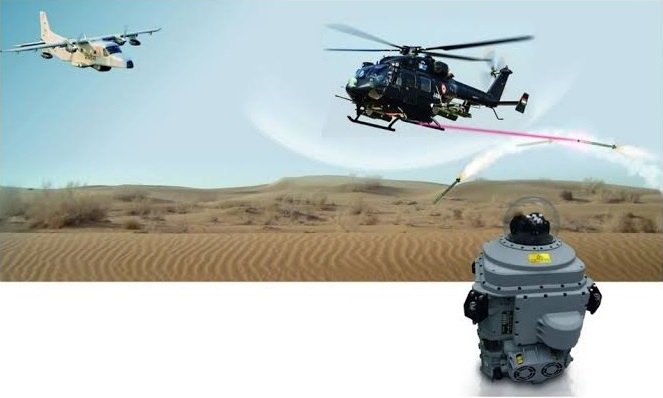
India
Bengaluru, September 18, 2026: Bharat Electronics Limited (BEL), the Navratna defence public sector undertaking under the Ministry of Defence, has signed an export purchase order agreement with Israel-based Elbit Systems Electro-Optics ELOP Ltd for the production and supply of sub-assemblies for Directed Infrared Countermeasure (DIRCM) systems. The agreement was signed on September 16, 2026, in Bengaluru by Rajnish Sharma, Director (Bengaluru Complex), BEL, and Shai Cohen, Senior Vice President, Elbit Systems. Senior officials from both companies were also present, including Anoop Kumar Rai, Director (Marketing), BEL; Giriraja N, Executive Director (Electronic Warfare & Avionics), BEL; Srinivasa Rao H P, General Manager, International Marketing Division, BEL; and Bnaya Ziv, Head of DIRCM Systems, Elbit Systems ELOP. BEL to Supply DIRCM Sub-Assemblies Under the agreement, BEL will manufacture and supply DIRCM system sub-assemblies to Elbit Systems ELOP. DIRCM is a laser-based infrared countermeasure system designed to protect aircraft against heat-seeking missiles, including man-portable air-defence systems (MANPADS). The system uses directed laser energy to interfere with the infrared seeker of an incoming missile. BEL lists DIRCM among its electronic warfare and defence products. The system is intended to provide protection to aerial platforms during flight phases including take-off, cruising and landing. The new export agreement adds to BEL's existing cooperation with Elbit Systems and expands its role in the supply of specialised defence electronics for international customers. BEL Secures Additional Orders Worth ₹648 Crore Separately, BEL announced that it has secured additional orders worth ₹648 crore since its previous disclosure on August 26, 2026. BEL published the order announcement on September 18. The new orders cover a range of defence electronics and related products and services. Major items include: Laser-based IR jammers Communication equipment Cybersecurity solutions Thermal imagers Transducers AI-based software solutions Transmit/Receive (TR) modules System upgrades Spares Related services BEL has not disclosed a customer-wise or individual order-value breakup for these contracts. The latest ₹648-crore order announcement follows BEL's earlier order disclosures during 2026, including ₹730 crore announced on August 26, ₹541 crore announced in August, and ₹847 crore announced on July 31. BEL's latest order inflow includes technologies spanning electronic warfare, communications, thermal imaging, cybersecurity and software, alongside upgrades, spares and services. The company is a major Indian defence electronics manufacturer supplying systems and equipment to the country's armed forces while also developing export business.
Read More → Posted on 2026-09-18 15:14:17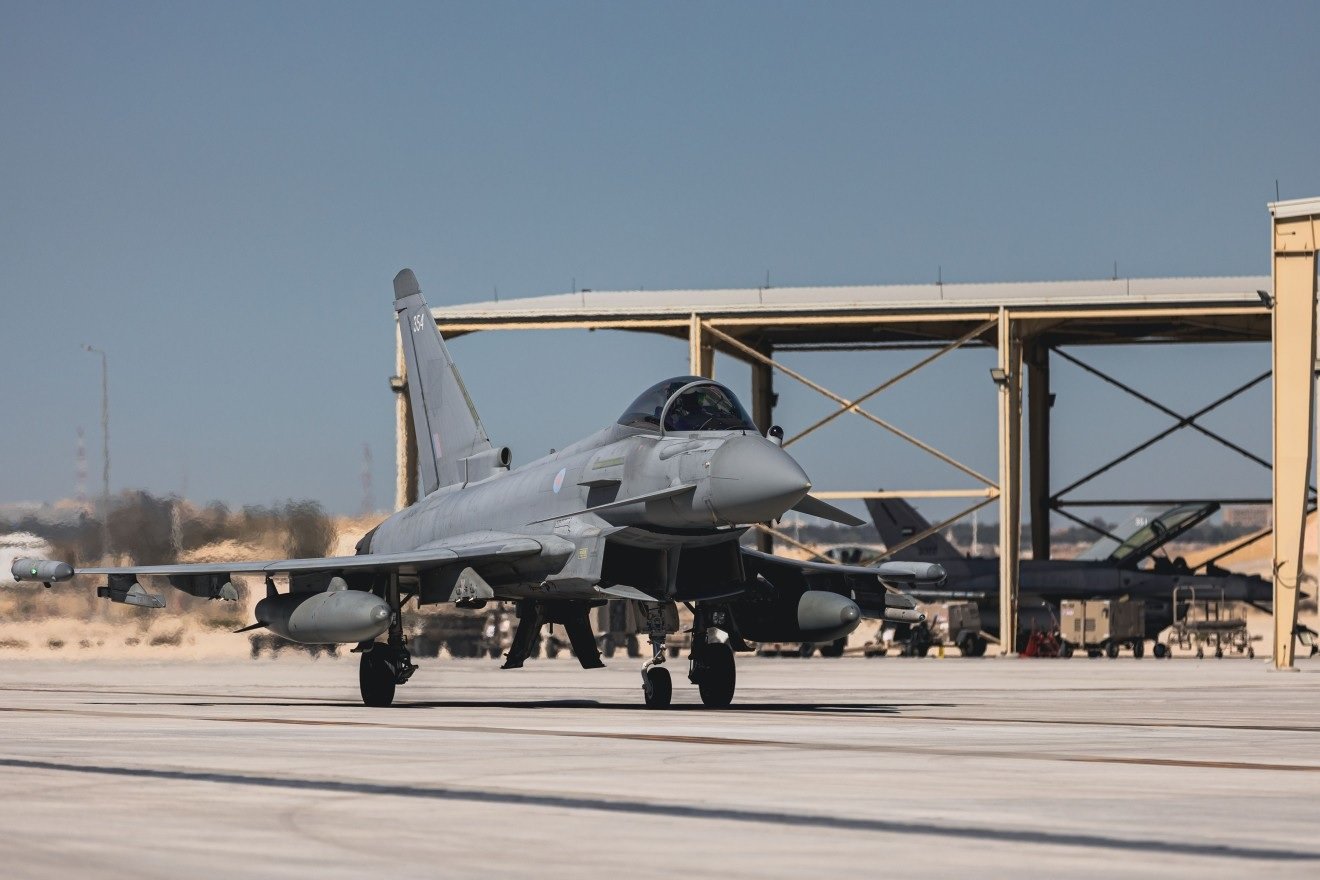
World
ROME, — An Italian Air Force Eurofighter Typhoon F-2000 was damaged during an overnight attack on King Fahd Air Base in Ta’if, Saudi Arabia, the Italian Defence Ministry said Friday. Italian Defence Minister Guido Crosetto confirmed that the aircraft was parked in a decentralized area of the base when it was hit. No Italian military personnel were involved or injured, and no other vehicles or infrastructure used by Italian forces were damaged. Crosetto said he followed the situation overnight in contact with General Luciano Portolano, Chief of the Defence Staff. He also requested further assessments from Portolano, Lieutenant General Giovanni Maria Iannucci, commander of the Joint Operational Command, and General Antonio Conserva, Chief of Staff of the Italian Air Force. The assessment will examine the security situation, the condition of Italian personnel and possible operational options. The Italian Defence Ministry has not disclosed the extent of damage to the F-2000 or whether the aircraft remains operational. Houthi attacks on Saudi Arabia The attack took place as Ta’if and other areas of Saudi Arabia have faced repeated alerts and attacks. Reports on the recent attacks have attributed the strikes to Houthi forces. The Saudi-led coalition has also reported Houthi launches involving ballistic missiles and drones targeting Ta’if, Abha and Khamis Mushait. The Italian F-2000 was hit while inside the King Fahd base during the overnight attack. Italy’s Task Force Air-Arabia Italy has maintained Task Force Air-Arabia at King Fahd Air Base as part of its regional deployment. The Italian Defence Ministry says the task force is involved in air defence and airspace surveillance in support of partner countries in the Gulf. An official Italian Defence Ministry update in September confirmed that the force operates from King Fahd Air Base. According to Italian Defence Ministry information, the national contingent includes about 400 Air Force personnel deployed across Saudi Arabia, Kuwait and Bahrain. Its Saudi Arabian component includes several specialized task groups. The Task Group Typhoon operates four Eurofighter F-2000A aircraft for assigned airspace defence. The Task Group Argo operates an E-550A CAEW aircraft for early warning, aerial surveillance and command-and-control functions. The Task Group Medal uses C-130J/KC-130J aircraft for tactical transport, operational support and possible medical evacuation missions. Previous damage to Italian aircraft in Kuwait The incident follows an earlier attack involving Italian aircraft at Ali Al Salem Air Base in Kuwait. Italian Eurofighter F-2000A aircraft have been deployed at Ali Al Salem as part of Task Force Air Kuwait, supporting surveillance and reconnaissance missions under Operation Prima Parthica/Inherent Resolve. The Italian Defence Ministry confirms the presence of Eurofighters and MQ-9A aircraft at the base. According to the information provided for the March 2026 incident, an Iranian missile and drone attack damaged Italian Eurofighters and destroyed an Italian MQ-9A Reaper. The aircraft damage was caused by fragments, while the MQ-9A was destroyed during the attack. The extent of damage to the Eurofighters and their subsequent operational status has not been fully detailed in the public information available. The latest incident in Saudi Arabia adds another case of Italian military aircraft being damaged while deployed at a fixed base in the Middle East. For the F-2000 at King Fahd Air Base, Italian authorities are still assessing the damage and possible operational measures.
Read More → Posted on 2026-09-18 15:22:20
Europe
ROME — Italy is preparing to deploy naval forces to protect the passage of Italian commercial vessels through the Bab al-Mandeb Strait, as security conditions around the key Red Sea shipping route deteriorate following advances by Yemen’s Ansarallah movement, also known as the Houthis. Italian Defence Minister Guido Crosetto said Rome would not wait for a broader European Union decision before taking steps to protect Italian merchant shipping. He said Italy has the naval capabilities needed to support the safe passage of its vessels and that delays could further affect the country’s economy. Crosetto said the Italian government would assess what action is required together with the government and Parliament. He stressed that any deployment would be intended to protect merchant vessels and restore commercial shipping through the strait. Bab al-Mandeb Shipping Route The Bab al-Mandeb Strait connects the Red Sea with the Gulf of Aden and provides a major maritime route between Europe and Asia. The narrow waterway is about 30 kilometers wide at its narrowest point and is a southern gateway to the Suez Canal. Historically, around 12% to 15% of global trade has passed through the area. The security situation has changed significantly following recent advances by Ansarallah along Yemen’s western Red Sea coast. The group has captured areas including the port of Mocha and strategically located islands, including Perim, also known as Mayyun, in the Bab al-Mandeb Strait. These territorial gains have increased its ability to influence maritime traffic in the area. The Italian Navy has already conducted an escort operation in the region. The frigate Carlo Bergamini, operating as part of the EU’s Operation Aspides, escorted the Italian merchant vessel Jolly Oro, owned by Ignazio Messina & C., during its northbound passage through Bab al-Mandeb. The Italian Navy said the operation was part of Aspides’ assigned tasks. Italian officials have indicated that the focus is on protecting commercial vessels rather than conducting offensive operations. Foreign Minister Antonio Tajani said the Italian ships involved would operate within the defensive framework of Operation Aspides. Saudi Oil Supply Disruptions The shipping concerns come as Saudi Arabia faces disruption to another important route for exporting crude oil to the Red Sea. Saudi Aramco has informed at least two European refining customers that they will receive no Saudi crude deliveries next month, according to a Bloomberg report cited by Reuters. The decision follows attacks that damaged the kingdom’s East-West Pipeline, which connects oil-producing areas in eastern Saudi Arabia with the Red Sea port of Yanbu. The approximately 1,200-kilometer pipeline is an important alternative route for moving Saudi crude toward the Red Sea without using the Strait of Hormuz. Saudi authorities shut the pipeline after drone attacks damaged several pumping stations. Saudi Arabia has been working to restore the pipeline. Reports indicate that part of its capacity could return within days, while restoring full operations could take several weeks. European refiners affected by the disruption have begun looking for alternative crude supplies. Italy's Economic Concerns The developments in Bab al-Mandeb are particularly important for Italy because a significant share of its trade uses the Suez Canal route. Reuters reported that about 40% of Italy’s trade passes through the canal. Italy’s planned naval response therefore focuses on maintaining access for its commercial vessels while the security situation around the Red Sea and Bab al-Mandeb remains uncertain. The government has not yet specified the final number of warships that would be deployed.
Read More → Posted on 2026-09-18 15:35:49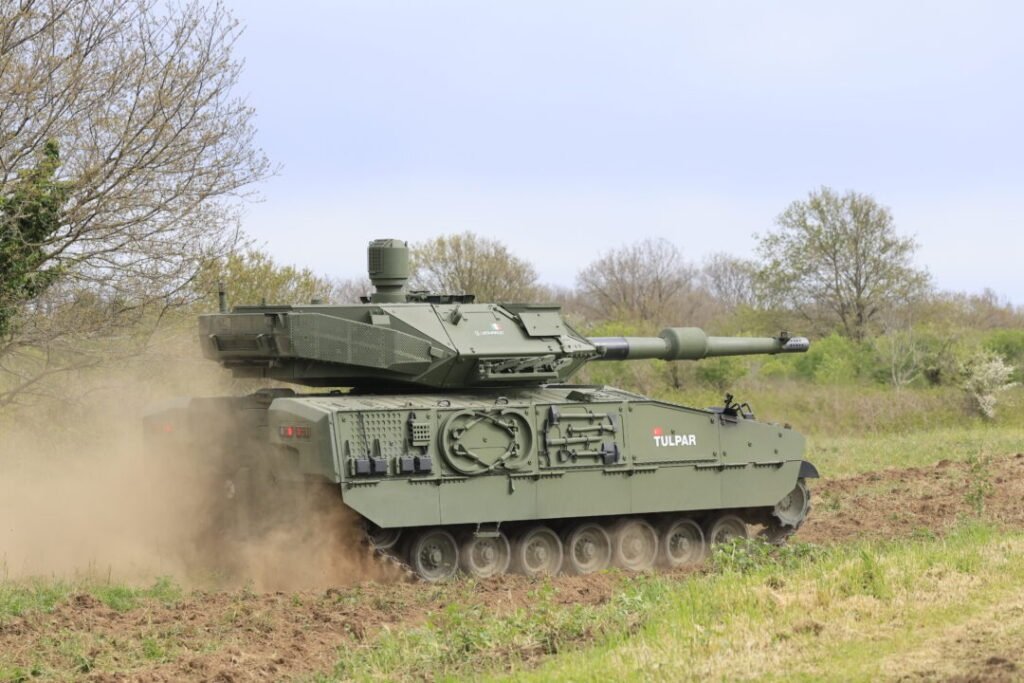
World
ROME, ITALY — Turkish land systems manufacturer Otokar and Italian defence group Leonardo have completed the integration and live-firing tests of the TULPAR medium tank equipped with Leonardo’s HITFACT MkII 120mm turret. The trials were conducted at Italy’s UTTAT Nettuno test range near Rome. The integration combines the firepower of a 120mm main battle tank gun with TULPAR’s tracked mobility, protection and modular architecture. Integration and Live-Fire Tests Before the firing trials, engineering teams from Otokar and Leonardo completed an integration programme covering the mechanical, electrical, electronic and software interfaces between the TULPAR platform and HITFACT MkII turret. The teams conducted functional checks, safety inspections and system validation to verify the performance, reliability and interoperability of the integrated system. The platform then underwent live-fire trials under both static and dynamic conditions. The tests covered different operational scenarios and assessed the weapon system, fire control system, weapon stabilisation and overall functionality. According to the two companies, the integrated weapon system met all planned test objectives. Otokar and Leonardo Statements Sedef Vehbi, Military Cluster Head at Otokar, said the programme demonstrates the TULPAR’s ability to integrate advanced large-calibre turret systems while providing the mobility, survivability and firepower required by modern armed forces. Vehbi also highlighted TULPAR’s modular architecture, which allows different mission-specific weapon systems to be integrated onto the platform. Luca Perazzo, Deputy Managing Director of Leonardo’s Defence Systems Business Area, said the successful trials demonstrate the technological capabilities and modularity of the HITFACT MkII turret. According to Perazzo, the HITFACT MkII is currently the only system featuring a 120mm smoothbore gun that provides main battle tank-level firepower while being suitable for integration on light and medium platforms. The turret can also use Vulcano 120 guided ammunition for precision engagements. Leonardo also offers the HITFIST family of medium-calibre turrets, including configurations equipped with the company’s 30mm X-GUN technology. HITFACT MkII Turret The HITFACT MkII is a lightweight, modular and fully digitalised turret equipped with panoramic electro-optical systems for the commander and gunner. It can be configured with either a 105/52mm rifled gun or a 120/45mm low-recoil smoothbore gun. The 120mm version can fire NATO-standard 120mm ammunition under STANAG 4385. Leonardo says the turret is qualified, in production and in operational service. It is designed to integrate a high-pressure main battle tank gun onto both wheeled and light tracked vehicles. For counter-unmanned aerial system missions, the turret can also be fitted with a HITROLE CUAS remote weapon station equipped with Leonardo’s Blaze 30×113 gun. The HITFACT MkII is already used on the Centauro II wheeled combat vehicle. TULPAR Medium Tank The TULPAR is Otokar’s next-generation modular tracked armoured combat vehicle. Its scalable architecture supports a gross vehicle weight range of 28 to 45 tonnes. The common platform can be configured for several roles, including medium tank, infantry fighting vehicle, fire support, air defence, mortar, recovery and medical evacuation. Otokar says the vehicle has been tested in demanding climatic and terrain conditions and provides high levels of ballistic and mine protection. Depending on configuration, TULPAR uses a 700–1,100 hp turbocharged diesel engine, with a maximum road speed of around 70 km/h and a range of approximately 500–600 km. International Market Interest Otokar and Leonardo first displayed the TULPAR equipped with the HITFACT MkII turret at the World Defense Show in Riyadh in 2024. The integrated TULPAR-HITFACT MkII configuration is also one of four finalists shortlisted by the Brazilian Army in its programme to replace its ageing Leopard 1A5 tank fleet. With the completion of the 2026 integration and live-fire trials, Otokar and Leonardo said they will continue exploring further cooperation in land combat systems and integrated solutions for potential customers worldwide.
Read More → Posted on 2026-09-18 15:40:31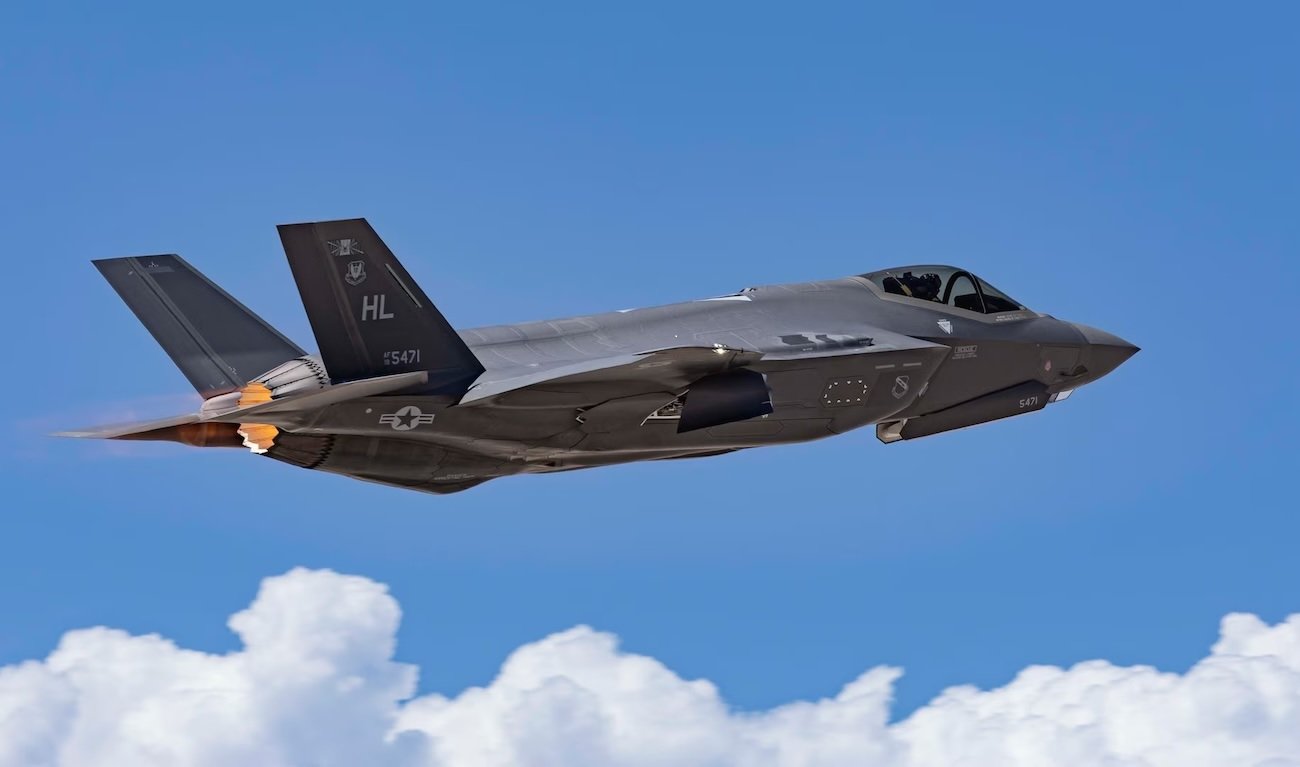
U.S
WASHINGTON — The Pentagon is investigating the disappearance of sensitive F-35 Lightning II components after a shipment traveling from Australia to the United States for repairs was diverted to Hong Kong this summer. The incident was first reported by POLITICO on September 18. The shipment was being transported by a commercial intermediary on behalf of Lockheed Martin, which manufactures the F-35 and manages its global spare-parts pool. The Pentagon has confirmed that some of the components are missing, while the reason for the diversion and the current location of the equipment remain unclear. There is currently no public evidence that China obtained or inspected the missing parts. F-35 Canopy Among Missing Components One of the components was an F-35 cockpit canopy, according to people familiar with the shipment. The canopy includes a thin transparent radar-absorbent layer that contributes to the aircraft's low-observable characteristics. Australia operates F-35s but does not currently have the capability to repair these canopies. As a result, unserviceable canopies are sent to the United States for repair through the F-35 program's multinational logistics network. The program uses commercial shipping providers to transport components between participating countries. Spare parts are held in a shared global pool owned by the U.S. Defense Department until they are installed on aircraft. Pentagon and Lockheed Martin Response The F-35 Joint Program Office said it is “aware of a shipment issue of unserviceable F-35 Lightning II components.” It said officials are working with U.S. authorities and industry partners to recover the equipment, investigate the incident and establish safeguards against similar problems. Lockheed Martin declined to discuss the specific shipment for security reasons. The company said it follows U.S. regulations for shipping aircraft components and maintains safeguards to protect the F-35 program and allied partners. The incident has also led to closed-door congressional briefings. Pentagon and State Department officials briefed congressional national-security staff beginning in June, with additional briefings expected. Earlier F-35 Spare-Parts Concerns The case has renewed attention on F-35 spare-parts accountability. A 2023 Government Accountability Office report found that more than 1 million F-35 spare parts, valued at more than $85 million, had been reported missing or lost over a five-year period. The GAO also found that the F-35 Joint Program Office did not independently track many of these parts, with contractors maintaining the records. Those earlier losses have not been linked to the Hong Kong incident. F-35 Costs The incident comes amid continued attention to F-35 program costs. Average flyaway prices for the latest production lots are approximately $92 million for the F-35A, $121.4 million for the F-35B and $110.8 million for the F-35C, according to F-35 Joint Program Office figures. Investigators are now seeking to establish why the shipment was diverted, who handled the components after they reached Hong Kong, where the missing parts are located and whether any sensitive technology was compromised. The F-35 Joint Program Office continues its recovery and investigation efforts.
Read More → Posted on 2026-09-19 13:34:26
U.S
WASHINGTON — The U.S. Navy has awarded Lockheed Martin Space a $76.56 million contract modification for continued design and development of the Trident II D5 Life Extension 2 (D5LE2) program. The $76,562,774 cost-plus-incentive-fee modification, designated P00032 under existing contract N0003024C0100, was announced on September 18, 2026. The work is being managed by the Navy’s Strategic Systems Programs (SSP) and is scheduled to continue through September 30, 2030. Lockheed Martin’s Titusville, Florida, facility is the primary contractor. About 51 percent of the work will be performed in Denver, Colorado, with additional work in Elkton, Maryland (9 percent), Montville, New Jersey (7 percent), Greeneville, Tennessee (6 percent), and Cape Canaveral, Florida (5 percent). The remaining work will be carried out at locations including Pittsfield, Massachusetts; Sunnyvale, California; Titusville, Florida; Mason, Ohio; Lancaster, Pennsylvania; Kings Bay, Georgia; Louisville, Kentucky, and other sites. The Navy is obligating the full $76.56 million from fiscal year 2026 weapons procurement funds. The contract was awarded on a sole-source basis under 10 U.S. Code 2304(a)(1), with Lockheed Martin being the only company to submit a proposal. SSP in Washington, D.C., is the contracting activity. D5LE2 to Support Future Submarines The Trident II D5 is the submarine-launched ballistic missile component of the U.S. nuclear triad. It entered service in 1990, while its first major life-extension program, D5LE, was completed in 2017. The D5LE2 program is intended to address aging components and keep the missile system viable through approximately 2084. The existing missile weighs about 130,000 pounds (59,000 kg), has a range of roughly 4,000 nautical miles (7,400 km) and reaches speeds reported to exceed Mach 20. It can carry different payload configurations, including W76 and W88 nuclear warheads. The missile currently operates aboard U.S. Ohio-class and UK Vanguard-class ballistic missile submarines. The D5LE2 is being developed for the replacement Columbia-class submarines of the U.S. Navy and the future Dreadnought-class submarines of the Royal Navy, making it a joint U.S.-UK modernization effort under the Polaris Sales Agreement. Earlier Contracts and Infrastructure The latest award follows a $383 million modification in January 2025 to begin D5LE2 design and development, followed by an $850 million modification announced in April 2026. Additional smaller contract modifications have also supported the program. Lockheed Martin is constructing an approximately 225,000-square-foot production facility in Titusville, which is expected to open in 2027. The Navy is also building a 130,000-square-foot Engineering Test Facility at Cape Canaveral Space Force Station. Groundbreaking took place in February 2026, with completion scheduled for January 2028. The approximately $166 million project was awarded to Walsh Federal and will support prototyping, testing and development of support equipment and flight hardware. Meanwhile, the Navy continues testing the existing Trident II D5LE system. Between September 17 and 21, 2025, four unarmed D5LE test flights were conducted from an Ohio-class submarine off Florida. The tests brought the total number of successful Trident II D5 flight tests to 197. Navy officials described the launches as scheduled tests that confirmed the continued reliability of the existing sea-based deterrent while D5LE2 development continues.
Read More → Posted on 2026-09-19 13:44:05
World
Moscow, — Russian flag carrier Aeroflot has signed a contract for the supply and long-term technical support of 90 domestically produced MC-21-310 medium-haul passenger aircraft. The agreement, signed in Moscow on Friday, is described as the largest contract in Russian civil aviation history for the supply and after-sales support of Russian-built passenger aircraft. The contract was signed by Aeroflot and three companies of the state-owned Rostec Corporation — the United Aircraft Corporation (UAC), United Engine Corporation (UEC) and leasing company Aviakapital-Service. Russian President Vladimir Putin took part in the ceremony via video link from Sheremetyevo Airport. Industry and Trade Minister Anton Alikhanov and Transport Minister Andrei Nikitin also attended. Under the agreement, the 90 MC-21-310 aircraft will be delivered between 2029 and 2032. Aeroflot is scheduled to receive 14 aircraft in 2029, 18 in 2030, 24 in 2031 and 34 in 2032. The order is in addition to an earlier 2023 contract for 18 MC-21 aircraft. Those aircraft are scheduled for delivery in 2027 and 2028, with the first eight expected in the fourth quarter of 2027 and the remaining 10 in 2028. Together, the two contracts cover 108 MC-21 aircraft. The comprehensive agreement includes the aircraft, flight and procedural simulators, training for pilots, flight attendants and technical personnel, maintenance software and 22 years of full after-sales technical support for all 108 aircraft from their respective delivery dates. MC-21-310 Aircraft The MC-21-310 is a narrow-body, medium-haul passenger aircraft with a maximum capacity of 211 passengers in a single-class configuration. In a typical two-class layout with around 175 seats, its stated maximum range is 3,830 km. The aircraft features a wider cabin and aisle, larger windows and increased overhead-bin space. The MC-21-310 is powered by the Russian-made PD-14 turbofan engine and uses domestically produced composite materials for its wing and tail. The fully localized version is expected to receive certification in 2027. Seventeen aircraft intended for Aeroflot are already at different stages of assembly at the Irkutsk Aviation Plant, according to the information provided. Aeroflot to Become Launch Operator Aeroflot will serve as the launch operator of the MC-21-310. The airline plans to begin training pilots, flight attendants and engineers for the aircraft. Aeroflot CEO Sergey Alexandrovsky said the airline is ready to train personnel for the new aircraft and welcomed Aeroflot's role as its launch operator. The first aircraft are planned for short domestic routes, including Moscow–St. Petersburg and Moscow–Nizhny Novgorod, where technical support can be provided. Rostec CEO Sergei Chemezov said production of each aircraft takes between 1.5 and two years and that the long-term order provides a clear production workload for moving toward steady serial production. UAC CEO Vadim Badekha said UAC plans a strategic partnership with Aeroflot for the introduction of the aircraft into service. UAC will also handle maintenance of the MC-21 fleet delivered to Aeroflot. The contract is part of Russia's broader programme to develop domestic civil aviation and reduce reliance on foreign-built passenger aircraft. The MC-21-310 is intended to become a core aircraft type for Aeroflot's medium-haul fleet in the coming years.
Read More → Posted on 2026-09-19 13:57:18
U.S
WASHINGTON — The United States has warned Japan, Germany and other allies that deliveries of some key missile and air-defense systems could face delays of up to five years as Washington works to rebuild its depleted munitions stockpiles, according to a Bloomberg report published September 18. The delays are linked to heavy U.S. weapons use during the ongoing war with Iran, which began on February 28, 2026, in operations involving the United States and Israel. U.S. Missile Stocks Under Pressure U.S. estimates indicate that the military has used more than half of some advanced Patriot missile variants, about one-third of its Tomahawk missiles, and nearly half of its precision-strike missiles and Terminal High Altitude Area Defense (THAAD) interceptors during the conflict. The Congressional Budget Office has estimated that the United States may have used as much as two-thirds of its missile-defense interceptor inventory since June 2025. A recent Pentagon inspector general report also identified strategic inventory shortfalls and production bottlenecks caused by the high rate of munitions use. U.S. officials are working to stockpile critical components, increase production and reduce manufacturing lead times. Japan and Germany Face Delivery Delays Japan is among the allies affected by the shortages. In April, Washington informed Tokyo that deliveries of about 400 Tomahawk missiles, originally scheduled through March 2028, could face delays of up to two years. Germany has requested faster deliveries of long-range Tomahawk cruise missiles and the ground-based Typhon launcher system. However, officials familiar with the matter told Bloomberg that Raytheon, an RTX company, is unlikely to fulfill Germany's Tomahawk order within the next five years because of depleted U.S. stocks. Some Eastern European countries have also experienced delays in deliveries of U.S.-made weapons systems. Ukraine's Patriot Requirements The shortages are also affecting Ukraine, which is seeking additional Patriot interceptors ahead of the winter. The Pentagon's need to replenish U.S. inventories is making rapid deliveries more difficult. European leaders are expected to press the U.S. administration for additional Patriot support for Ukraine during United Nations meetings in New York next week. U.S. President Donald Trump has previously discussed providing Ukraine with a less advanced version of the Patriot system or allowing European countries to manufacture the weapons under license. U.S. Industry Expands Production The U.S. defense industry is increasing production to rebuild inventories. Lockheed Martin plans to increase annual production capacity for PAC-3 MSE Patriot interceptors from about 600 to 2,000 units. RTX is also increasing Tomahawk production. However, the timing of deliveries to allies will depend on production capacity, existing orders and the Pentagon's priorities for rebuilding U.S. stockpiles. Saudi Arabia Seeks Additional Support Saudi Arabia has also asked allies, including the United States, for additional military support to counter Houthi attacks in Yemen. Washington has not confirmed whether it will provide additional assistance. Despite the shortages, the United States continues to supply Ukraine with weapons purchased by European allies through NATO and European Union mechanisms. The combination of heavy wartime weapons use, depleted inventories and limited production capacity is creating longer delivery timelines for several U.S.-made missile and air-defense systems.
Read More → Posted on 2026-09-19 14:08:36 U.S. Approves Potential $2.68 Billion Air Defense Package for Ukraine Including S-300 Clone Missiles
U.S
WASHINGTON — The U.S. State Department has approved a potential $2.68 billion Foreign Military Sale (FMS) to Ukraine for air defense upgrades, equipment and support services. The congressional notification was issued on September 18, 2026. The package includes S-300 Clone missiles, GAM-67 missiles, Range-Extended Air Defense Laser Guided Rocket missile systems, Improvised Transporter Erector Launcher 1.5 (I-TEL 1.5) systems, mobile launching system modification kits, RPS-202 counter-Unmanned Aircraft System radars and erectable mast trailers. It also covers major modifications and maintenance support, spare parts, consumables, accessories, repair and return support, software, publications, transportation, and U.S. government and contractor engineering, technical and logistics support. The State Department classified the items as non-major defense equipment. Principal contractors will be selected through competitive U.S. government procurements, and the proposed sale remains subject to standard congressional review. Funding for the Package If concluded, Ukraine will finance the purchase through a combination of European contributions and U.S. Foreign Military Financing (FMF) funds appropriated during the previous administration. The FMF funds used for the purchase will be counted as a U.S. capital contribution to the Ukraine Reconstruction Investment Fund on a 1:1 reimbursement basis. The fund was established under the U.S.-Ukraine minerals agreement. The State Department said the sale supports U.S. foreign policy and national security objectives by strengthening Ukraine's ability to address current and future threats. It also assessed that Ukraine can absorb the equipment and services into its armed forces. The sale would not require additional U.S. personnel in Ukraine, affect U.S. defense readiness or alter the basic military balance in the region. S-300 Clone Missile Development Public information about the S-300 Clone missile remains limited. Defense Express reported that it is a new missile intended for use with S-300 systems already operated by Ukraine. It is reportedly not a direct copy of the Soviet 5V55 missile, but a new design with improved performance and a more modern guidance system. The GAM-67 has also been described as a new development intended for medium-range air defense systems, including some Soviet-designed platforms. Work on replacements for Soviet-era weapons dates back to September 2024, when then-U.S. Defense Secretary Lloyd Austin said that the United States, together with several European defense companies, was working with Ukraine to develop and manufacture replacements for the S-300 surface-to-air missile system and R-27 air-to-air missile. In August 2026, retired U.S. Army Colonel Robert Hamilton, president of the Delphi Global Research Center, said a joint U.S.-Ukrainian effort was underway to upgrade existing S-300 interceptor missiles or develop a newer variant with improved capabilities. He said the project was expected to become operational near the end of 2026, with potential production of 100 to a couple of hundred missiles per year. Replacing Depleted Soviet-Era Missiles Before Russia's full-scale invasion in 2022, Ukraine had approximately 25 to 30 S-300PT/PS battalions in varying states of operational readiness. Depending on the variant and missile, these systems were designed to engage aircraft and cruise missiles at altitudes from about 25 meters to 27 kilometers and ranges of up to roughly 100 kilometers. Ukraine has since lost some launchers and radars in combat, while stocks of compatible Soviet-era missiles have been depleted. On April 8, 2022, then-Slovak Prime Minister Eduard Heger announced that Slovakia had provided Ukraine with an S-300PMU system that had been in Slovak service. Other partners, including Norway, have also allocated funds to help Ukraine obtain compatible missiles from third countries, but shortages have continued. The newly approved package is intended to address these gaps by providing new or upgraded missiles and equipment that can support Ukraine's existing S-300-based air defense infrastructure.
Read More → Posted on 2026-09-19 14:26:58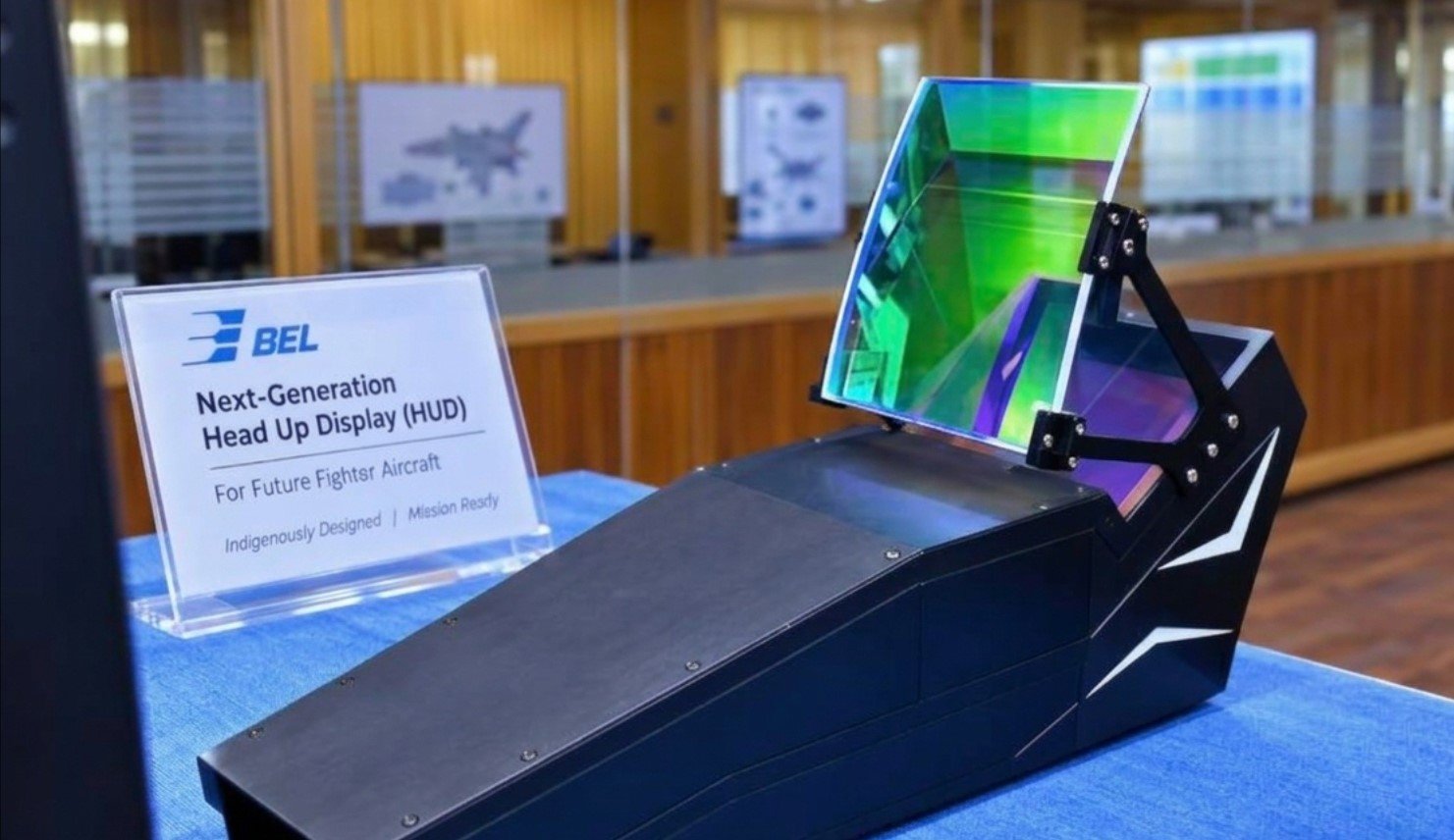
India
BENGALURU — Bharat Electronics Limited (BEL) has showcased a new-generation Head-Up Display (HUD) for fighter aircraft, offering a glimpse of the cockpit display technology being developed for future Indian combat aircraft. The specific unit displayed has not been officially identified as the HUD for the Tejas Mk2, but its capabilities are relevant to the aircraft's ongoing cockpit development. The displayed system uses a transparent optical combiner positioned in front of the pilot. The HUD projects flight and mission information into the pilot's forward field of view, allowing information to be viewed without requiring the pilot to look down at cockpit displays. BEL describes its HUD technology as providing collimated information superimposed on the outside view. BEL already supplies HUD technology for Indian light combat aircraft. Its listed HUD features include a 25-degree field of view, automatic brightness control, high reliability, compact size, built-in testing and readability in high ambient light conditions. BEL also lists a camera with automatic iris adjustment for different brightness levels. CSIR-CSIO Developing HUD Mk2 The connection with the Tejas Mk2 is possible because CSIR-Central Scientific Instruments Organisation (CSIR-CSIO) has a separate programme for the development and supply of HUD Mk2 units for the LCA Air Force Mk2 and TEDBF. CSIO's project records specifically identify this work as an ongoing development programme. CSIO's HUD Mk2 development involves technologies including a digital light-engine display, waveguide optical collimation, a wider field of view, electronic harmonisation, automatic dimming and a digital interface. The system is also designed to generate flight symbols internally, providing greater independence in displaying flight information. This development is separate from BEL's public confirmation of its own HUD products. Therefore, the specific BEL unit recently showcased cannot yet be identified as the production HUD for the Tejas Mk2. HUD Integration Part of Tejas Mk2 Development The Tejas Mk2 is being developed by the Aeronautical Development Agency (ADA), with Hindustan Aeronautics Limited (HAL) serving as the design and production partner. The aircraft is planned as a more advanced development of the Tejas family, with upgraded avionics and other new systems. ADA has also been progressing work on the Mk2 cockpit. According to the information provided, contracts issued in 2026 cover the aircraft's primary instrument panel and HUD mounting assembly, indicating that physical integration of the HUD remains part of the ongoing cockpit development. The Mk2 cockpit is expected to use a more modern digital architecture, with large-area displays and other updated human-machine interfaces. The HUD will provide the pilot with flight information while maintaining a forward view of the external environment. BEL's involvement in aircraft avionics is already established. In 2021, the company received an order from HAL for multiple airborne electronic systems for the LCA Tejas Mk1A programme, including equipment related to the Head-Up Display. BEL also reported in March 2026 that it had received additional orders covering several defence products, including head-up displays, although the announcement did not identify the aircraft or programme associated with the HUD order. For now, BEL has not officially confirmed that the newly showcased HUD is the production or qualification unit intended for the Tejas Mk2. The aircraft's final HUD configuration will depend on the ongoing development and integration process. The separate CSIR-CSIO HUD Mk2 programme, however, confirms that an advanced HUD capability is being developed specifically for the LCA Air Force Mk2 and TEDBF.
Read More → Posted on 2026-09-19 15:05:24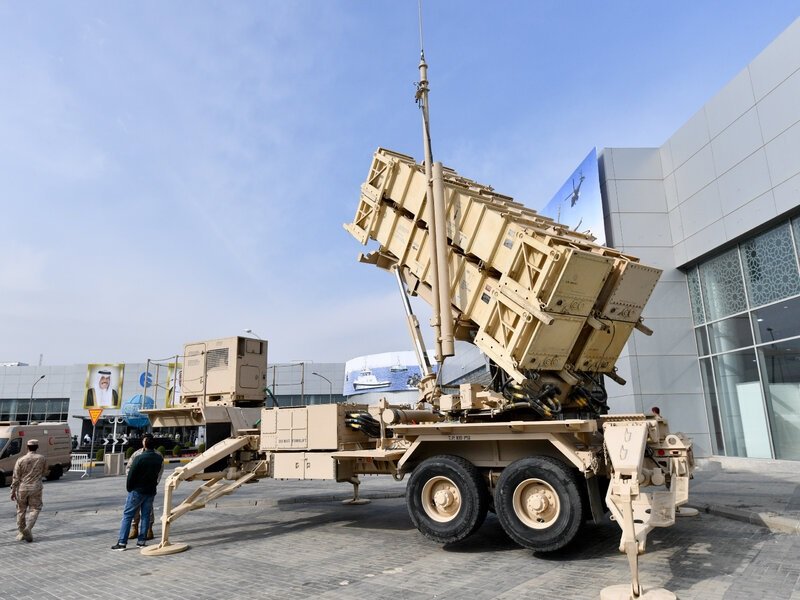
U.S
WASHINGTON — The U.S. military’s involvement in the conflict with Iran has cost approximately $43.6 billion through September 3, 2026, according to a new estimate from U.S. Central Command (CENTCOM) provided to congressional national security committees. The conflict began on February 28, when the United States and Israel launched airstrikes against Iran. The latest CENTCOM estimate is higher than the $38 billion cost estimated by the Congressional Budget Office (CBO) through August 1. Munitions Account for Most of the Cost CENTCOM estimates that $28.1 billion of the total has been spent replacing bombs, missiles and other munitions used during the conflict. A significant portion has gone toward air-defense interceptors fired by the Army’s Patriot and Terminal High Altitude Area Defense (THAAD) systems. The munitions bill increased by more than $6 billion in roughly one month from the CBO’s earlier estimate of $21.7 billion through August 1. The heavy use of interceptors has put pressure on U.S. and allied stockpiles. U.S. and NATO officials have reported severe shortages in Europe, while Saudi Arabia has also been facing reduced interceptor inventories. Operational and Equipment Costs The CENTCOM estimate includes about $11.2 billion in incremental operational costs and $4.3 billion to replace damaged or destroyed equipment, including combat aircraft and other military equipment. By service, the Air Force has incurred about $6.6 billion, mainly for fighter and bomber operations, airlift, transportation and base support. The Navy has spent about $2.2 billion on operations involving aircraft carriers and more than 20 warships. The Army has incurred about $1.6 billion for operational readiness and deployed personnel. More than 50,000 U.S. troops have been assigned to the mission in the region, according to CENTCOM. Base Damage Not Included The $43.6 billion figure does not include the cost of repairing or rebuilding U.S. military facilities damaged or destroyed by Iranian missile and drone attacks. Facilities in Bahrain, Kuwait, Qatar, the United Arab Emirates, Saudi Arabia, Iraq, Oman and Jordan have been affected. When additional logistical expenses such as fuel are included, some updated Defense Department estimates put the overall financial burden at approximately $45.1 billion. CBO Projects Further Costs The CBO previously estimated that the conflict would cost about $2 billion to $3 billion per month, depending on the intensity of fighting. It also said rebuilding depleted U.S. munitions stockpiles could take at least five years. Earlier estimates were lower. Defense Secretary Pete Hegseth told Congress in July that the cost was about $37.5 billion, while a Pentagon inspector general assessment covering an earlier period put the figure at $33.4 billion, excluding base-repair costs. Independent analyses earlier in the year had estimated the total cost at roughly $34 billion to $42 billion, depending on which additional expenses were included. U.S. Casualties and Stockpile Pressure The financial cost has been accompanied by military casualties. Public Defense Casualty Analysis System figures list 18 U.S. service members killed and more than 830 wounded since the conflict began. The fighting has also drawn munitions from U.S. stockpiles intended for other regions, including Europe and the Indo-Pacific, adding to the need for replenishment. The latest CENTCOM estimate was provided to Congress amid discussions over additional funding for military operations and the replacement of weapons used during the conflict.
Read More → Posted on 2026-09-19 15:22:54
U.S
WASHINGTON — President Donald Trump announced on September 18 that the United States has reached a new security agreement with Denmark and Greenland that would give Washington permanent control over Greenland’s security and allow a larger U.S. military presence on the Arctic island. The agreement does not transfer sovereignty over Greenland to the United States. Greenland remains a self-governing territory within the Kingdom of Denmark. Danish Prime Minister Mette Frederiksen said the planned agreement recognizes the sovereignty and territorial integrity of the Kingdom of Denmark and the Greenlandic people’s right to self-determination. The full text of the agreement has not yet been publicly released. Denmark and Greenland said the three governments are expected to sign it during the United Nations General Assembly in New York next week, after which it will require the necessary parliamentary procedures before entering into force. What the United States would gain According to Trump’s announcement and reporting on the agreement, the United States would gain a much stronger and more permanent security position in Greenland. The reported provisions include: Permanent U.S. security authority: Trump said Washington would have permanent control over Greenland’s security and “all other needs” related to it. Expanded military presence: Trump said the United States would immediately begin developing a larger military presence in appropriate parts of Greenland. Military access: The arrangement is intended to secure long-term U.S. military access, including basing and overflight rights. Additional installations: U.S. officials have indicated that the United States would be able to establish additional military facilities without Denmark or Greenland having the same approval authority over those installations, although the exact legal provisions remain unpublished. Exclusion of adversaries: Trump said U.S. adversaries would not be allowed to establish bases, maintain military forces or make sensitive investments in Greenland without U.S. approval. Protection of strategic infrastructure: The reported restrictions cover sensitive areas such as telecommunications, undersea cables, ports and critical infrastructure. Long-term continuity: Trump described the agreement as having no end date and said it would remain applicable even if Greenland eventually became independent. The United States already operates Pituffik Space Base in northern Greenland under the existing U.S.-Denmark defense relationship. The new arrangement would expand and make the American security role more permanent. Secretary of State Marco Rubio described the agreement as permanently securing U.S. interests in the Arctic and said Greenland would remain part of the strategic defense area of North America. Does the United States control Greenland? No, not in the sense of owning or governing Greenland. The agreement announced so far does not give the United States sovereignty over Greenland. Denmark retains sovereignty, while Greenland retains its existing self-government arrangements and its people’s right to self-determination. Denmark's prime minister specifically emphasized these points. However, the announced arrangement would give Washington an unusually extensive role in Greenland's security and military affairs. That distinction is important: territorial sovereignty and security control are not the same thing. The United States would not become Greenland's government or acquire ownership of the territory under the terms publicly described so far. The exact limits of U.S. authority cannot yet be established because the complete agreement has not been released. Who would control Greenland's minerals? The agreement does not currently establish that the United States will own Greenland's underground minerals. Greenland has significant mineral resources and has previously highlighted the importance of its critical minerals, but the publicly available descriptions of the new security agreement focus on preventing adversarial countries from making sensitive investments. They do not establish U.S. ownership of Greenland's mineral deposits. Therefore, it would be incorrect to say that the United States has acquired Greenland's rare-earth minerals or received ownership of the resources beneath the island. The agreement reportedly gives Washington a role in preventing certain adversaries from making sensitive investments in critical sectors, but who owns, develops and receives revenue from individual mineral projects will depend on Greenlandic and Danish law and the eventual investment arrangements. The final treaty text is needed to determine whether it contains additional provisions. What does Denmark give up? Denmark does not give up sovereignty over Greenland under the publicly announced framework. However, Denmark and Greenland would accept a substantially expanded U.S. security role. The reported arrangement would reduce their ability to prevent or block certain U.S. military activities and would place restrictions on potentially sensitive investments by countries regarded as U.S. adversaries. At the same time, Danish Prime Minister Mette Frederiksen said the agreement strengthens security in the Arctic and North Atlantic while recognizing Danish sovereignty and Greenlandic self-determination. What did Trump say? Trump used particularly strong language when announcing the agreement. He said the United States would “FOREVER” have the ability to do what is necessary to secure and defend Greenland and the United States. He also said no U.S. adversary could “EVER” establish a base, maintain a military presence or make sensitive investments in Greenland without U.S. approval. Trump called the arrangement an “Infinite Life” Agreement, saying that it has no end. He also said there would be “NO COST” to the United States and announced plans to develop a large U.S. military presence on the island. Trump also said the agreement finally addressed what he described as longstanding U.S. concerns about Greenland's strategic importance. Is this similar to U.S. control of Venezuela? The publicly announced Greenland agreement is not the same type of arrangement as taking political control of another country. There is no announced transfer of Greenland's sovereignty to Washington, and the Danish government continues to describe the arrangement as recognizing the Kingdom of Denmark's sovereignty and Greenland's right to self-determination. The significance of the agreement is instead the extent of the proposed U.S. security and military role. If the final treaty contains the powers described by the Trump administration, Washington would have a permanent security role and substantial military access while Denmark retains sovereignty. Because the treaty's complete text has not yet been released or ratified, the precise legal limits of U.S. authority remain uncertain. Existing U.S. presence The new agreement builds on a defense relationship that already allows the United States to operate in Greenland. The most important existing American facility is Pituffik Space Base in northern Greenland. A 1951 defense agreement, subsequently updated, already provides Washington with extensive military rights on the island. The new agreement would therefore represent an expansion and permanentization of the U.S. security role rather than the beginning of an American military presence from zero. The three governments are expected to sign the agreement during the upcoming UN General Assembly in New York. It will then face the required parliamentary procedures in Denmark and Greenland before it can enter into force.
Read More → Posted on 2026-09-19 16:33:43
U.S
WASHINGTON — The United States seized the domain almasirah.net, a news website operated by Yemen’s Houthi movement, in June 2021 as part of a wider U.S. law enforcement action against Iran-linked media and other websites. At the time, visitors to the domain were shown a federal seizure notice stating that the website had been seized by the U.S. government under a seizure warrant. The notice said the action was carried out by the Bureau of Industry and Security’s Office of Export Enforcement and the Federal Bureau of Investigation (FBI). Reuters also reported the seizure and identified Al-Masirah among the Houthi-linked websites affected. Al-Masirah, also known as Al-Masirah TV, is a media network affiliated with the Houthis, also known as Ansar Allah. Its website regularly carried reports on Houthi military activities, damage to people and property from attacks, the group's conflict with Saudi Arabia, and its positions on U.S. and Israeli military actions involving Iran. The seizure was part of a broader U.S. action announced by the Justice Department on June 22, 2021. The department said it had seized 33 websites used by the Iranian Islamic Radio and Television Union (IRTVU) and three websites operated by Kata’ib Hizballah, saying the domains were being operated in violation of U.S. sanctions. The Justice Department said the seizures were carried out pursuant to court orders. According to the Justice Department, IRTVU had been designated by the U.S. Treasury Department's Office of Foreign Assets Control (OFAC) in October 2020. The department said the 33 IRTVU domains were owned by a U.S. company and that the organization had not obtained an OFAC license before using the domains. The investigation involved the Commerce Department's Bureau of Industry and Security, its Office of Export Enforcement and the FBI. Reuters reported that several of the affected websites returned online through alternative domain names after the seizures. In the case of Al-Masirah, the network began using almasirah.com after the seizure of the .net domain. The 2021 operation also affected other Iran-linked media websites, including Press TV and Al-Alam. The U.S. Justice Department's official announcement, however, specifically described the 36 domains as those used by IRTVU and Kata’ib Hizballah; it did not list Almasirah.net individually in the release. Reuters separately reported the seizure notice displayed on the Al-Masirah domain. Al-Masirah's online presence continued through other domains and platforms after the seizure. Recent online material associated with the network also shows activity through other addresses, including masirahtv.net and almasirah.net.ye. The Almasirah.net seizure therefore dates to June 2021, rather than being a newly announced U.S. government action in September 2026. No new U.S. Justice Department announcement confirming a separate 2026 seizure of the same domain was found in the official records reviewed for this report.
Read More → Posted on 2026-09-20 12:06:38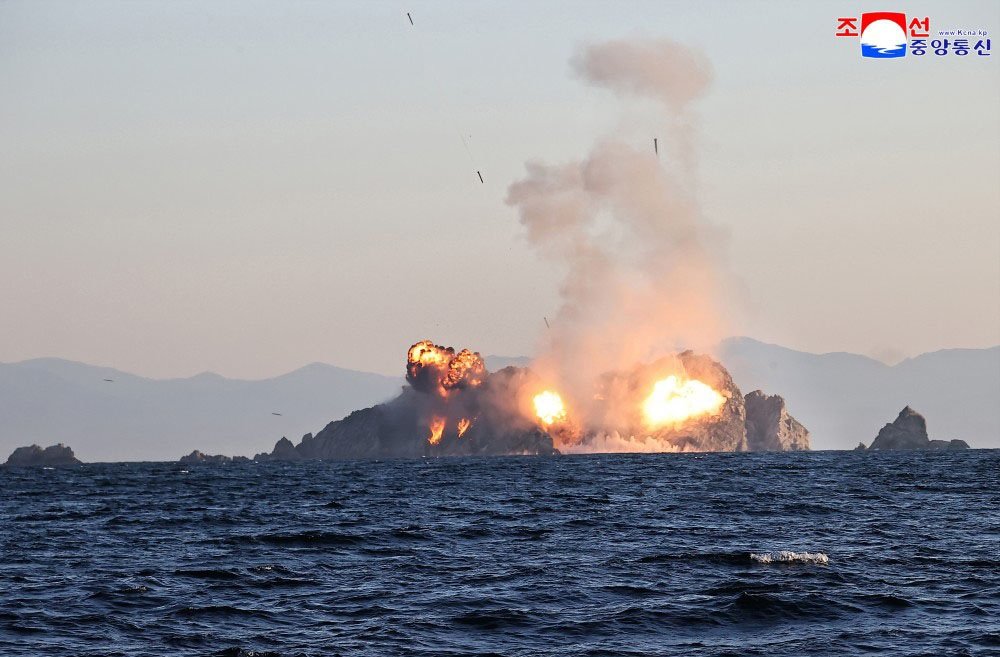
World
SEOUL — North Korea launched a short-range ballistic missile toward the Sea of Japan, also known as the East Sea, from its eastern coast on Sunday, according to Japanese and South Korean authorities. The launch took place at around 3:00 p.m. local time, with South Korean authorities identifying the Wonsan area as the launch location. Japan’s estimates indicated that the missile reached a maximum altitude of about 60 kilometers and traveled approximately 440 kilometers before falling into the Sea of Japan outside Japan’s exclusive economic zone (EEZ). South Korea’s Joint Chiefs of Staff (JCS) separately assessed the flight distance at about 450 kilometers. South Korean and U.S. intelligence authorities tracked the launch from its initial stage and shared information with Japan. Japan’s Prime Minister’s Office instructed authorities to gather and analyze information, ensure the safety of aircraft and vessels, and maintain readiness for possible contingencies. South Korea also convened a security meeting following the launch. Seoul condemned North Korea’s ballistic missile activity and called for an immediate halt to launches that violate United Nations Security Council resolutions. Japan also lodged a protest against North Korea. Japanese authorities said the missile fell outside Japan’s EEZ, and there were no confirmed reports of damage to aircraft or vessels. Second Projectile Launched Several hours after the first launch, North Korea fired another projectile from its eastern coast toward the East Sea. South Korea’s military detected the second launch but initially said detailed flight information was not available. Japan assessed that the second projectile also fell outside its EEZ. Later reporting indicated that South Korean authorities assessed the second launch as another ballistic missile, with the projectile traveling more than 600 kilometers. Launches Follow Recent Trilateral Exercise The launches came shortly after the conclusion of Freedom Edge 26, a trilateral military exercise involving South Korea, the United States and Japan. The exercise ended on September 11. North Korea had also launched multiple short-range ballistic missiles from the Wonsan area on September 12, one day after the exercise concluded. During the September 12 launches, South Korea said the missiles flew about 250 kilometers toward the East Sea. North Korean state media later reported that its military had conducted a coordinated firepower exercise involving missile and artillery units. North Korea has also carried out other missile-related activities in recent months. Japanese authorities have repeatedly assessed previous North Korean ballistic missile launches as falling outside Japan’s EEZ, while coordinating information with South Korea and the United States. Ballistic missile launches by North Korea are prohibited under multiple United Nations Security Council resolutions. South Korea said it would maintain strengthened surveillance and continue coordination with the United States and Japan following the latest launches.
Read More → Posted on 2026-09-20 12:24:50
India
BENGALURU, INDIA — Bengaluru-based xTerra Robotics, an IIT Kanpur-incubated deep-tech startup, has launched DHAV-Hy, a lightweight wheeled-legged quadruped robot designed for security, surveillance, industrial inspection and autonomous field operations. The robot has been designed, engineered and built in India. DHAV-Hy is the wheeled variant of the company's DHAV industrial quadruped platform, combining wheels for faster movement on open ground with legs for rough terrain, slopes, stairs and other areas where wheels may not be suitable. According to the company, DHAV-Hy has a maximum speed of 5 meters per second and can carry a 10 kg payload across all terrains. The wheeled variant has been under research and development for the past three months and is currently being piloted with industrial users for inspection applications. Introducing DHAV-Hy, our lightweight wheeled-legged quadruped platform.Built for speed, agility and terrain access across open ground, rough terrain, slopes and stairs.Built for security, surveillance and inspection.#DHAVHy #xTerraRobotics #FieldRobotics #MadeInIndia pic.twitter.com/j6MORBWXHK — xTerra Robotics (@xTerraRobotics) September 19, 2026 Robot capabilities Field demonstrations have shown DHAV-Hy performing high-speed runs, navigating rough natural terrain, climbing and descending slopes and stairs, handling hard-terrain transitions and recovering from sudden physical disturbances. The robot uses xTerra Robotics' in-house compact quasi-direct-drive (QDD) actuators. The DHAV architecture uses 12 actuators, three on each leg, for movement at the hip and knee joints. For perception and navigation, the platform integrates 360-degree environmental sensing using 3D LiDAR, stereo depth sensors and an RGB camera. Its onboard computing system includes an NVIDIA Jetson AI compute module and a quad-core Cortex-A76 locomotion computer. The robot uses a swappable lithium-ion battery pack with a smart battery management system. It supports ROS2 and provides Python and C++ APIs for software integration and custom development. Expanding India’s quadruped robotics Founded in 2023, xTerra Robotics was established by IIT Kanpur-linked co-founders including Aditya Rajawat, Amritanshu Manu, Avinash Bhashkar, Nimesh Khandelwal and Professor Shakti S. Gupta. The company previously introduced the SVAN M2 quadruped and has delivered units for research and industrial use. Its DHAV platform is aimed at security, surveillance, construction and industrial inspection. With DHAV-Hy, xTerra Robotics is expanding the DHAV platform with a hybrid mobility system intended to combine the speed of wheels with the terrain-handling capability of legs. Pre-sales conversations are open for both DHAV and DHAV-Hy.
Read More → Posted on 2026-09-20 12:56:02
U.S
WASHINGTON — The U.S. Space Force is seeking industry designs for highly maneuverable satellites that can be rapidly launched and used to approach, inspect and interact with objects in orbit. Space Systems Command (SSC) issued a Request for Information (RFI) on September 18 under the VICTUS program, which focuses on rapidly deploying satellites into orbit. The current effort is for market research and does not establish a budget or guarantee a follow-on contract. The Space Force is targeting the first satellites for launch in fiscal year 2029, subject to a broader acquisition strategy. Rapid-launch capability Under the baseline requirement, a mission-ready satellite would remain in storage at a contractor facility for up to two years and launch within 14 days of receiving a call-up order. The Space Force is also examining faster response options, including 36-hour and 12-hour launch windows for more demanding scenarios. These are currently stretch goals rather than firm requirements. Close-range orbital operations Once deployed, the spacecraft would need to approach a target to zero meters of separation for inspection or interaction. Potential targets include orbital debris and cooperative satellites. After completing an operation, the spacecraft must be able to move to another orbit and repeat the process. It would need enough fuel for more than a dozen major maneuvers across low Earth orbit (LEO), medium Earth orbit (MEO), and highly elliptical transfer paths toward geostationary orbit. Open architecture The Space Force wants the spacecraft to support sensors and payloads from different suppliers rather than being tied to one company's hardware. The RFI identifies Handle 2.0 as the open architecture standard for this purpose. The framework builds on earlier work by The Aerospace Corporation and is being matured under a contract awarded to Falcon ExoDynamics. RFI follows space-control weapons disclosure The RFI was issued three days after Air Force Secretary Troy Meink said at the Air, Space & Cyber Conference on September 15 that the United States has "on-orbit space-control weapons" capable of defending the Joint Force against hostile adversaries. Meink did not provide details about the weapons' design, number or launch dates. The September 18 RFI does not establish a connection between those weapons and the proposed rendezvous satellite program. Meink also said a prototype satellite designed to track moving targets was scheduled to launch in September and that space-based interceptors associated with the Golden Dome missile-defense effort were flight-ready. Builds on VICTUS HAZE The new effort follows the earlier VICTUS HAZE demonstration, which involved Rocket Lab's Puma satellite and True Anomaly's Jackal spacecraft. Rocket Lab launched its spacecraft after receiving about 17 hours' notice. The spacecraft then conducted rendezvous and proximity operations, including approaching and imaging the target. Lawrence Livermore National Laboratory provided an optical payload for tracking and imaging. Industry requirements Companies responding to the RFI do not need to submit formal proposals. SSC is seeking information about their security clearances, manufacturing facilities and flight heritage. Companies must demonstrate that they have had at least two satellites operating in LEO or one satellite operating in geostationary orbit since January 2021, with the required experience deadline extending to January 2027. Responses are due October 19 and must be limited to either a 15-page white paper or a 20-slide presentation. Submissions must also include a rough cost estimate covering engineering, hardware, software, testing and support. The Space Force said incomplete submissions will not be reviewed. The RFI is for market research only and does not represent a commitment to award a contract. Main Source : defence-blog
Read More → Posted on 2026-09-20 16:32:42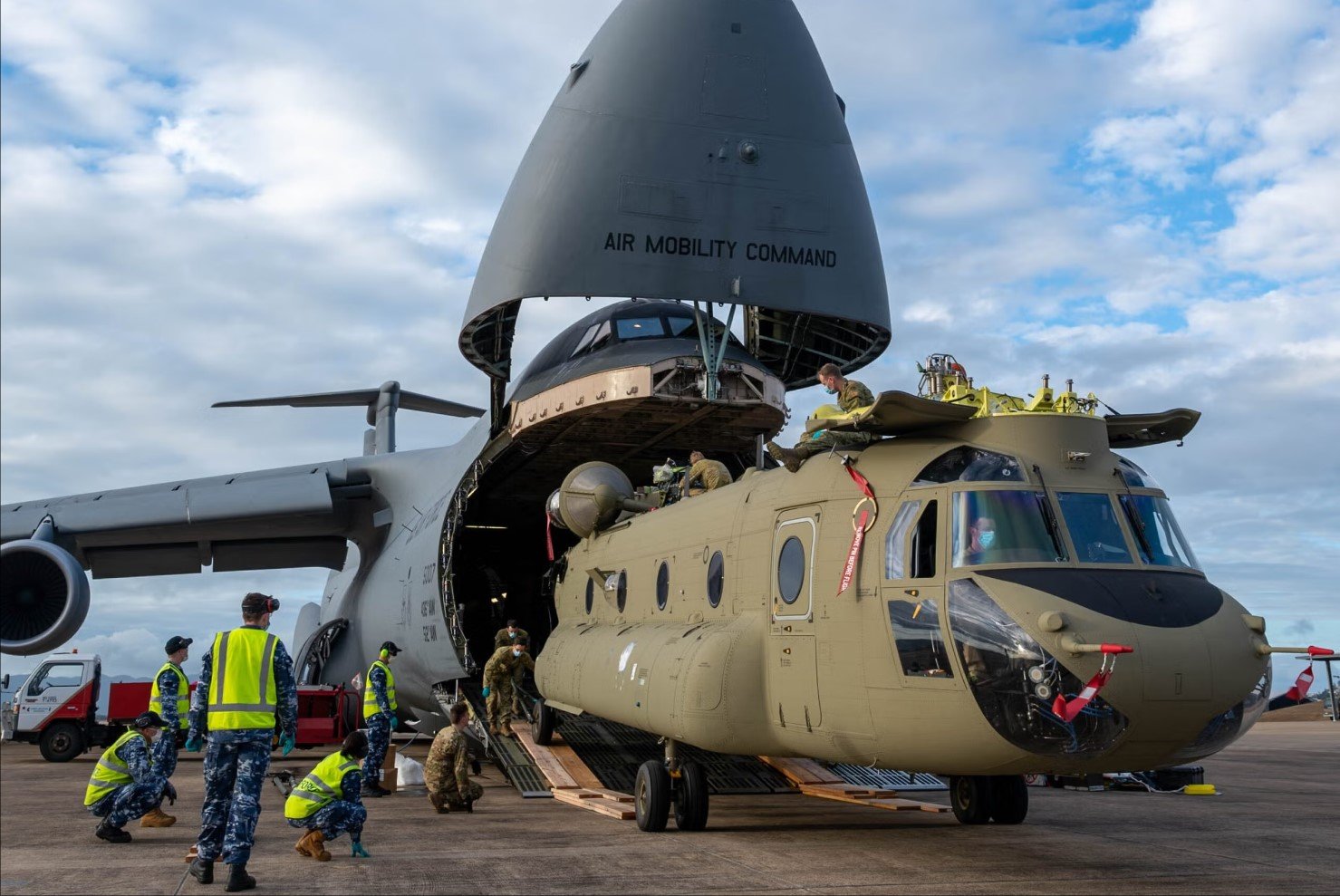
U.S
CAIRO — The United States has delivered the first new Boeing CH-47F Chinook heavy-lift helicopter to Egypt, beginning deliveries under a contract for 12 aircraft for the Egyptian Air Force. The U.S. Embassy in Cairo announced the delivery on September 17, describing it as another development in the expanding commercial and defense partnership between the United States and Egypt. The embassy congratulated Boeing, the U.S. Army and the Egyptian Ministry of Defense on the delivery. “Congratulations to Boeing, the U.S. Army and the Egyptian Ministry of Defense on the delivery of the new CH-47F Chinook helicopter—another concrete example of the expanding commercial and defense partnership between the United States and Egypt,” the embassy said. The first helicopter was publicly presented to the Egyptian Air Force during the El Alamein International Airshow, held from September 8 to 10, 2026, at El Alamein International Airport on Egypt’s Mediterranean coast. The U.S. Embassy did not provide details on the delivery schedule for the remaining aircraft or specific operational plans for the new helicopter. $426 million contract for 12 helicopters The current acquisition comes from a $426 million Foreign Military Sales contract awarded to Boeing by the U.S. Army in January 2023 to produce 12 new CH-47F Chinooks for Egypt. Boeing said at the time that deliveries were expected to begin in 2026 and that the aircraft would replace Egypt’s existing CH-47D fleet. The contract followed a May 2022 U.S. approval of a potential larger sale of 23 CH-47F helicopters and related equipment to Egypt. The Defense Security Cooperation Agency estimated the value of that possible package at $2.6 billion. The proposed package included engines, navigation systems, missile-warning equipment, machine guns, aircraft survivability equipment, training, spare parts and other support. The signed 2023 contract, however, covers 12 aircraft. Modernization of Egypt's Chinook fleet The CH-47F is the modern production version of Boeing's twin-rotor Chinook heavy-lift helicopter. It is designed for missions involving the transportation of troops, equipment and heavy cargo. Boeing says the CH-47F incorporates a fully integrated digital cockpit management system, the Common Avionics Architecture System and advanced cargo-handling capabilities. Egypt has operated Chinook helicopters for decades. Its existing fleet includes CH-47D aircraft, which are being replaced by the newer F-model under the current procurement. Boeing says Egypt currently operates 18 CH-47D Chinooks supporting its armed forces and disaster-relief efforts. The arrival of the first CH-47F therefore marks the beginning of Egypt's transition to the newer Chinook model. Once the remaining aircraft under the 12-helicopter contract are delivered, Egypt will have an expanded fleet of newer heavy-lift helicopters for missions including troop and cargo transport, humanitarian relief and emergency operations. The delivery also continues a long-standing Boeing-Egypt defense relationship. Boeing said the CH-47F contract continues more than four decades of cooperation with the Egyptian Air Force.
Read More → Posted on 2026-09-20 16:38:39
World
MOKHA, YEMEN — Experts from Iran’s Islamic Revolutionary Guard Corps (IRGC) have visited Houthi-held areas near the Bab al-Mandab Strait to discuss radar installations and oversee tunnel excavation, according to two Houthi military sources cited by Agence France-Presse (AFP) on September 19. The Iranian experts, who arrived from Hodeidah, made separate visits on Thursday and Friday. They inspected the Bab al-Mandab area, the port and airport of Mokha, and the Jabal Al-Nar military camp east of the city. According to the sources, the experts oversaw excavation work in the mountainous hills overlooking Mokha and the Bab al-Mandab Strait. They also discussed the installation of radar systems near Mokha and on Zuqar Island in the southern Red Sea. Separate Yemeni military sources reported that the Houthis have begun installing radar systems on mountain ridges overlooking the southern Red Sea and establishing positions on those ridges and Zuqar Island. The sources also said that four IRGC experts visited the port and airport of Mokha and the Bab al-Mandab area and met Houthi commanders from the missile force. The reported activities come after the Houthis captured key areas along Yemen’s western coast, including Mokha and positions near the Bab al-Mandab Strait. The strait connects the Red Sea with the Gulf of Aden and is an important international shipping route. The developments are also taking place as fighting continues around the Kahbub mountain area overlooking Bab al-Mandab. Yemeni government sources told AFP that clashes between Houthi forces and government forces have intensified in the area. Other reporting has also documented fighting around the Kahbub mountain range in recent days. The reported radar and tunnel work would add to the military infrastructure being established around positions overlooking the southern Red Sea. However, the details of the reported installations and their operational status have not been independently confirmed. The reports come amid a broader escalation in Yemen that has intensified since July, according to AFP, against the backdrop of the wider conflict involving Iran and the United States.
Read More → Posted on 2026-09-20 16:52:25
U.S
WASHINGTON — The U.S. Army has awarded Skyeton, Inc., the U.S. subsidiary of Ukrainian drone manufacturer Skyeton, a $10.64 million firm-fixed-price contract to provide Raybird unmanned aerial systems hardware and related services. The Army Contracting Command at Redstone Arsenal, Alabama, issued the contract following an online solicitation. Skyeton, based in North Las Vegas, Nevada, was the only company to submit a bid. The contract is expected to be completed by December 15, 2026. The number of systems to be delivered was not disclosed, while work locations and funding will be determined with each order. Raybird UAS The Raybird, also known as ACS-3, is a fixed-wing tactical unmanned aircraft designed mainly for long-endurance intelligence, surveillance, reconnaissance and target-acquisition missions. Ukrainian armed forces have operated the Raybird since 2018, and Skyeton reports that the platform has accumulated more than 350,000 combat flight hours. The internal-combustion-engine version has a flight endurance of more than 28 hours, a maximum range of more than 2,500 kilometers, an operating ceiling of up to 5,500 meters and a communications range of more than 220 kilometers, or unlimited range when using satellite communications. The aircraft uses a four-stroke, fuel-injected gasoline engine, can operate from -35°C to +55°C, and can be deployed in up to 25 minutes. It supports interchangeable payloads including multisensor EO/IR stabilized gimbals, synthetic-aperture radar and radio-frequency intelligence systems. Satellite communications were integrated into the platform in early 2026 to support longer-range data links. Skyeton has also tested a hydrogen-powered hybrid variant under combat conditions in Ukraine. U.S. Production Expansion The Army contract comes as Skyeton expands its U.S. manufacturing presence. In July 2026, the company announced an investment of more than $3.1 million to establish its first U.S. production plant in Fayetteville, North Carolina. Skyeton is converting a 28,500-square-foot former Black+Decker facility near Fayetteville Regional Airport. The facility is expected to create 162 jobs, with an average annual salary of $70,759. The project received a $500,000 performance-based grant from the One North Carolina Fund, while the City of Fayetteville and Cumberland County are providing about $243,000 in combined job-creation incentives. Skyeton CEO Rigoberto “Quito” Sáez said the facility is intended to strengthen the U.S. defense industrial base and create American jobs while bringing production closer to end users. International Operations Skyeton opened a production facility in Slovakia in July 2024. In July 2025, the company and British defense firm Prevail Partners established a joint venture, Skyeton Prevail Solutions, to manufacture and integrate Raybird systems for the UK and NATO markets. The $10.64 million contract represents a significant U.S. procurement of the Raybird platform as Skyeton expands its production and support operations in the United States and other international markets.
Read More → Posted on 2026-09-20 16:59:53
India
BENGALURU, — Bharat Electronics Limited (BEL) has showcased its X-Band Battery Multi-Function Radar (X-BMFR) to a visiting Japanese delegation, highlighting a key component of India’s Quick Reaction Surface-to-Air Missile (QRSAM) air-defence system. The X-BMFR is an X-band AESA radar with four fixed panels, each covering 90 degrees to provide continuous 360-degree coverage without mechanical rotation. BEL states that the radar has an 80-kilometre tracking range and uses Quad Transmit/Receive Modules (QTRMs). It also integrates an electro-optical tracking system for target identification and tracking. Mounted on an 8x8 high-mobility truck, the radar can conduct surveillance, target acquisition, tracking and threat prioritisation while moving. It also supports mid-course missile guidance through a two-way data link, along with Radio Communication on the Move (ROTM) and Satellite Communication on the Move (SOTM). Within the QRSAM system, the X-BMFR works with the C-band Battery Surveillance Radar (BSR), which has a stated detection range of 120 kilometres. Both radars provide 360-degree coverage, use QTRMs and incorporate Identification Friend or Foe (IFF) capability. The system is designed to engage multiple aerial targets, including aircraft, helicopters, unmanned aerial vehicles and cruise missiles. QRSAM was developed by the Defence Research and Development Organisation (DRDO) in collaboration with BEL and Bharat Dynamics Limited (BDL). A combat group combines a BMFR with a missile launcher carrying six canisterised missiles. The QRSAM missile has a stated range of approximately 25–30 kilometres and can engage targets at altitudes of up to about 10 kilometres. Its guidance system combines inertial navigation, two-way data-link updates and an active radar seeker for terminal guidance. The system supports search-on-the-move, track-on-the-move and fire-on-short-halt operations. Its components are designed for road, rail and air transport and for all-weather operation in plains, semi-desert and desert terrain, with electronic counter-countermeasures features. The demonstration to Japanese officials highlights BEL’s indigenous radar technology and its integration into a mobile air-defence system intended to protect armoured formations. The Ministry of Defence’s Defence Acquisition Council approved the procurement of three QRSAM regiments in July 2025, while BEL has also been preparing additional production capacity for the system.
Read More → Posted on 2026-09-20 17:11:46
World
KYIV, Ukraine — Ukrainian President Volodymyr Zelenskyy said on September 20, 2026, that Ukrainian forces used a domestically developed system called Pelican for the first time during overnight strikes on targets in the Moscow region. The operation targeted Russian energy and logistics infrastructure, including the Gazpromneft Moscow Oil Refinery in the Kapotnya district, about 15 kilometres from the Kremlin. Ukrainian sources and the General Staff reported damage to the AVT-6 primary crude-processing unit, another oil-processing unit and an isomerization unit. A large fire was reported at the refinery. The refinery processes about 11.6 million tonnes of crude oil annually and supplies around 40 percent of Moscow’s fuel, including aviation kerosene. Fire Point, the Ukrainian defence company behind several of the systems used in the operation, also reported that its FP-1 drones struck a warehouse complex operated by Modern Warehouse Technologies near Sofyino in Moscow Oblast. An industrial facility in Voronezh Oblast was also hit. Zelenskyy said the operation involved FP-1, RZ-100, MICH-2000, Palianytsia, Vendetta, Liutyi, Bars, Flamingo, Sichen and Pelican. He said the Security Service of Ukraine, Unmanned Systems Forces, Special Operations Forces, Defence Intelligence and the Foreign Intelligence Service participated. Russian officials confirmed fires at the refinery and logistics site and said large numbers of Ukrainian drones had been intercepted. Pelican and the FP-7 The Pelican name has been widely linked to Fire Point’s FP-7 tactical ballistic missile, although publicly available reporting has not conclusively established that the Pelican used in the Moscow-region operation was the FP-7. Some Ukrainian reporting has described the Pelican involved in the attack as an aircraft-type drone. Fire Point's published specifications describe the FP-7 as a ground-launched, solid-fuel ballistic missile with a payload of up to 150 kilograms, a range of up to 200 kilometres, a circular error probable of about 14 metres, a maximum speed of 1,500 metres per second, a flight altitude of up to 65 kilometres and a maximum flight time of 250 seconds. Some reports citing company representatives have mentioned a possible range of around 300 kilometres, depending on configuration. The FP-7 has been developed as a lower-cost Ukrainian strike system comparable in role to the U.S.-supplied ATACMS. The range of the FP-7 also creates a distinction concerning the Moscow refinery. Moscow is well beyond the missile's publicly stated 200-kilometre range from Ukrainian-controlled territory. Therefore, available information does not establish that an FP-7 ballistic missile directly struck the Kapotnya refinery. The operation involved several long-range drones and missiles, including Flamingo, as well as FP-1, Liutyi and other systems. Fire Point's Other Missile Programs Fire Point moved the FP-7 into military trials earlier in September 2026 after completing previous testing stages. Company executives had indicated that combat use could follow within weeks. The company is also developing the FP-7.X, an interceptor variant intended to counter incoming ballistic threats as part of the European-Ukrainian Freyja air-defense project. Another system, the longer-range FP-9 ballistic missile, remains in testing. Fire Point lists the FP-9 with a range of up to 855 kilometres and a warhead of up to 800 kilograms. It has not been reported in combat use. The September 20 operation was part of Ukraine's continuing long-range campaign against Russian energy and logistics infrastructure, as Kyiv expands its domestic weapons production and seeks to reduce reliance on Western long-range munitions.
Read More → Posted on 2026-09-21 12:40:01
India
NEW DELHI — India has successfully flight-tested the KAL long-range one-way attack drone, developed by Noida-based aerospace and defence company IG Defence, at the Pokhran Field Firing Range in Rajasthan. The drone was launched from a vehicle-mounted platform. The trial validated the integrated performance of its airframe, propulsion, avionics, navigation and mission systems. KAL Drone Specifications KAL is a long-range one-way attack drone, a category that also includes systems commonly described as loitering munitions or kamikaze drones. According to IG Defence, the system has: Range: Up to 1,000 kilometres Endurance: 7–8 hours Payload: Up to 50 kg Maximum take-off weight: Around 200 kg Cruise speed: About 160 km/h Top speed: Nearly 200 km/h Operating altitude: Up to 5,000 metres above mean sea level Operating temperature: -20°C to 60°C The drone is intended for precision strikes against designated targets, including infrastructure, radar sites and air-defence systems, depending on mission configuration and operational clearances. Navigation, Sensors and Communications KAL combines multi-band GNSS satellite navigation with an Inertial Navigation System (INS). IG Defence describes its navigation system as hardened against electronic warfare. The platform uses an encrypted RF datalink with SATCOM relay for beyond-line-of-sight communication. Its sensor suite includes a 4K day camera and a thermal electro-optical/infrared camera for day-and-night targeting. The drone is launched using an inclined rail with rocket-assisted take-off. GRID STRIKE Integration KAL is part of IG Defence's GRID STRIKE long-range precision-strike portfolio. It can be integrated with the company's GRID Battle Management System, an AI-powered C5ISRT architecture designed to coordinate unmanned platforms and battlefield data. Development and Production IG Defence first publicly disclosed Project KAL in March 2026, when the planned endurance was stated as three to five hours. The system was later displayed at the North Tech Symposium 2026 in Prayagraj in May. The company says major systems were developed in India. Production is planned at facilities in Ghaziabad, Uttar Pradesh, with a reported capacity of up to 100 units per month. IG Defence has also said that Gulf countries have shown interest in KAL. Any exports would be subject to the required Indian government approvals. Role of Long-Range Attack Drones Long-range one-way attack drones have become an important part of recent conflicts. Systems such as the Iranian Shahed-136 and Russian Geran-2 have been extensively used in the Russia-Ukraine conflict. Shahed-class systems have also appeared in Middle East operations and against maritime targets in the Red Sea. IG Defence founder and CEO Bodhisattwa Sanghapriya said the successful Pokhran trial is a milestone for the company's effort to develop a sovereign Indian capability in advanced long-range unmanned strike systems. He said recent conflicts have demonstrated the growing importance of such drones for precision strike and air-defence operations. IG Defence's Other Unmanned Systems Beyond KAL, IG Defence is developing interceptor drones, FPV combat drones, autonomous UAVs, counter-UAS systems, electronic warfare systems, AI-enabled swarm technologies, tactical robotics and logistics drones. The successful Pokhran trial provides a flight-test milestone for the company's indigenous long-range one-way attack drone programme.
Read More → Posted on 2026-09-21 12:47:58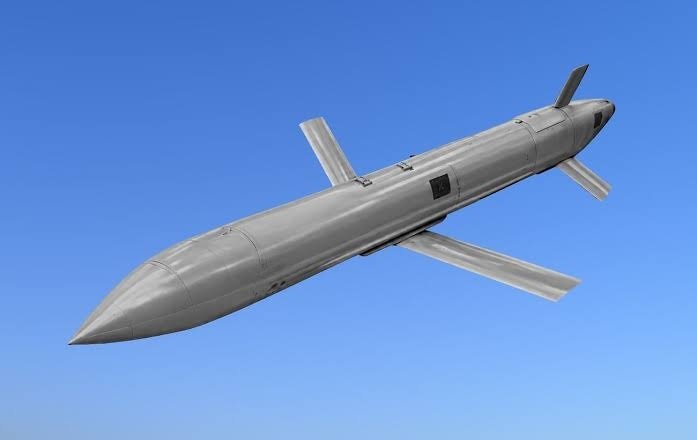
World
KYIV — Russia plans to produce up to 2,000 Dan-T missiles by the end of 2026 and as many as 14,000 in 2027, according to sources cited by RBC-Ukraine on September 21, 2026. The figures have not been independently confirmed. Earlier, Ukrainian military analyst Dmytro Putiata, known as Kriegsforscher, had estimated that around 10,000 Dan-T units could be produced in 2027. The reported production increase could add pressure on Ukraine’s air-defense network, which is already dealing with Shahed-type drones, cruise missiles and ballistic missiles. What is the Dan-T? The Dan-T is a jet-powered, air-launched munition that Russia says can operate autonomously after launch. According to Russian defense corporation Rostec, it uses a small jet engine, follows a “fire-and-forget” principle and has a flight mode intended to make detection and interception more difficult. Rostec also says it can fly at low altitude while following terrain and uses low-observable design features. These claims have not been independently verified. Rostec presented the Dan-T at the El Alamein International Airshow in Egypt on September 8, 2026. Its published specifications give a maximum take-off weight of about 268 kg, a warhead of about 130 kg, a maximum speed of 500 km/h, a claimed range of up to 450 km and an altitude of approximately 9 km. Guidance is described as inertial plus satellite navigation (GNSS/INS). Rostec lists the Yak-130, MiG-29, Su-57 and Mi-28N among possible carriers, along with certain foreign platforms. Ukrainian aviation expert Anatolii Khrapchynskyi has described the Dan-T as a modified version of the earlier Dan-M training target. The recovery parachute and Luneburg lens, which increases radar visibility during training, were removed, allowing the system to be used as a cruise-missile-type weapon. Khrapchynskyi estimates a range of up to 500 km from aircraft such as the Su-35 and about 250 km from ground-based systems. Other reporting associates its navigation with GLONASS. Open-source assessments have also discussed ground launchers on wheeled chassis, aircraft such as the Su-25SM3, Su-30SM, Su-34 and Su-57, Mi-28 helicopters and potentially ships as launch platforms. Work has reportedly included Kometa-16 anti-jamming antenna arrays and electro-optical terminal guidance for upgraded versions. Production scale is the main concern The main concern identified by RBC-Ukraine sources is the potential volume of Dan-T production. The weapon's reported speed and range, combined with large production numbers, could increase the workload on Ukrainian air defenses when used alongside other Russian weapons. The Dan-T has also been described in some assessments as similar to the S8000 Banderol, while being around 35% cheaper. The Banderol, developed by the Kronshtadt Group, has a reported range of about 500 km and a 150-kg warhead, and has been used from Orion heavy drones. Public estimates of its cost are around $100,000 per unit, although the exact price has not been officially confirmed. Russia is also increasing the use of turbojet-powered drones. Since late August, these have reportedly accounted for around 50–60% of drones in some Russian attacks, with plans cited to raise the proportion to 80% by November. Dan-T already appears in Ukrainian attack reports Ukraine's Air Force has begun listing “Banderol/Dan-T” among weapons used in Russian attacks. During the night of September 20–21, 2026, Russia launched 172 drones and other aerial weapons, including Shahed-type drones, Gerbera drones, Parodiya decoys and a Banderol/Dan-T. Ukraine reported intercepting or suppressing 147 drones and one Banderol/Dan-T. Similar references appeared in reports from September 18, although public Ukrainian tallies do not always distinguish between Banderol and Dan-T. The reported production plans come as Ukraine faces concerns over interceptor stocks, including Patriot PAC-3 missiles used against ballistic threats. The potential expansion of Dan-T production could therefore add another type of fast, jet-powered weapon to the range of threats Ukrainian air defenses must address. The exact production targets and full performance figures remain unconfirmed, with available information coming from Russian manufacturer statements, Ukrainian media reports citing military and expert sources, and open-source assessments.
Read More → Posted on 2026-09-21 13:12:43
Europe
FORT WORTH, Texas — Germany has formally accepted its first F-35A Lightning II fighter jet from Lockheed Martin, marking the start of deliveries under its order for 35 aircraft. German Defence Minister Boris Pistorius accepted the aircraft during a ceremony at Lockheed Martin’s production facility in Fort Worth, Texas, on September 18, 2026. The aircraft is designated 35+01 and carries production number MG-01. It completed its maiden flight at the same facility on September 8. Germany’s F-35A Programme Germany ordered 35 F-35As in December 2022 as part of efforts to modernise the Luftwaffe following Russia’s full-scale invasion of Ukraine. The approximately €10 billion programme includes the aircraft, engines, mission equipment, spare parts, training and support. The F-35As are primarily intended to replace Germany’s ageing Panavia Tornado fleet, including its role in NATO’s nuclear-sharing arrangement. Germany plans to achieve full operational capability with the F-35 fleet by 2029. Pistorius highlighted the F-35A’s low-observable characteristics, advanced sensors, electronic warfare capabilities and real-time data processing. He also noted its ability to share information with other platforms and improve interoperability with the 19 other F-35 partner nations. Initial Training in the United States The first eight German F-35As will remain in the United States for pilot and maintenance training. They are scheduled to move to Ebbing Air National Guard Base in Arkansas later this autumn. The first German F-35As are expected to arrive in Germany in the third quarter of 2027, with additional aircraft following through 2029. Büchel Base Upgrades Germany plans to operate the F-35As from Büchel Air Base in Rhineland-Palatinate, home to Tactical Air Wing 33. The German government is investing approximately €2 billion to prepare the base for the aircraft. The work includes upgrades to maintenance facilities, hangars, safety systems, digital networks, runways and taxiways, along with other infrastructure required for F-35 operations and the nuclear mission. Flight-operation infrastructure is expected to be ready in 2027. German Industry Joins F-35 Production German defence company Rheinmetall is also participating in the F-35 programme. Its facility in Weeze, North Rhine-Westphalia, manufactures the aircraft’s centre fuselage sections. Rheinmetall has a contract to produce more than 400 centre fuselage sections for F-35 aircraft operated by Germany and other countries, making German industry part of the programme’s global supply chain. F-35A Fleet The F-35A is designed for multi-domain operations, combining low-observable characteristics, sensor systems, electronic warfare capabilities, precision-strike functions and real-time data processing. More than 1,350 F-35s are in service across 20 nations, with additional aircraft operating or planned in Europe. The acceptance of 35+01 begins Germany’s transition from the Tornado to the F-35A. German pilot and maintenance training will continue in the United States before the aircraft begin operating from Germany.
Read More → Posted on 2026-09-21 13:36:50
India
BENGALURU — Bengaluru-based defence technology startup Vishwatronix has developed Pinaka, a compact 5-kilogram remote weapon station (RWS) designed primarily for integration with quadruped robots, commonly known as robot dogs. Compact remote weapon station The Pinaka RWS provides 360-degree rotation and can be fitted with firearms such as the IWI Tavor bullpup rifle. Its weapon mount has an elevation range from 33 degrees downward to 55 degrees upward, allowing the system to operate across uneven and hilly terrain.The lightweight design is intended for robotic platforms where size and weight are important considerations. Human-controlled operation Pinaka is designed to keep a human operator in control of the weapon. The system is not fully autonomous, and the final decision to fire remains with the soldier.The operator controls the station remotely using a joystick and receives a live video feed from integrated day and night vision sights. Vishwatronix has also developed a portable command-and-control station for remote operation. Stabilization and AI-assisted tracking To maintain weapon accuracy while the robotic platform is walking or running, Pinaka uses IMU motion sensors and high-resolution encoders to stabilize the weapon.The system also includes a laser rangefinder capable of measuring distances up to 1 kilometre. The range information is used to calculate the required firing angle.An AI-assisted target-tracking feature can automatically keep the weapon aimed at a moving target after the operator selects it on the video feed. This reduces the need for the soldier to manually track the target continuously with the joystick. Modular design Although initially highlighted for quadruped robots, Pinaka has a modular design that allows it to be integrated with different robotic and unmanned platforms. These include unmanned boats, drones and ground vehicles.Vishwatronix has also successfully integrated and tested a remote weapon mount on the Mahindra Armado, an indigenous light armoured vehicle. The system allows vehicle crews to operate the weapon remotely without stepping outside the protection of the vehicle. Initial production for Indian Army Vishwatronix has tested the Pinaka RWS across multiple environments and is currently manufacturing an initial batch of five systems for the Indian Army.The company has also indicated plans to expand the system for medium machine guns.Vishwatronix works in defence research and development, defence electronics, AI, robotics, embedded systems, UAVs and autonomous systems. Development of the Pinaka system was reported by Indian defence news accounts in August 2026, followed by further attention in September 2026 through updates detailing the 5-kilogram remote weapon station for quadruped robots.
Read More → Posted on 2026-09-21 13:48:58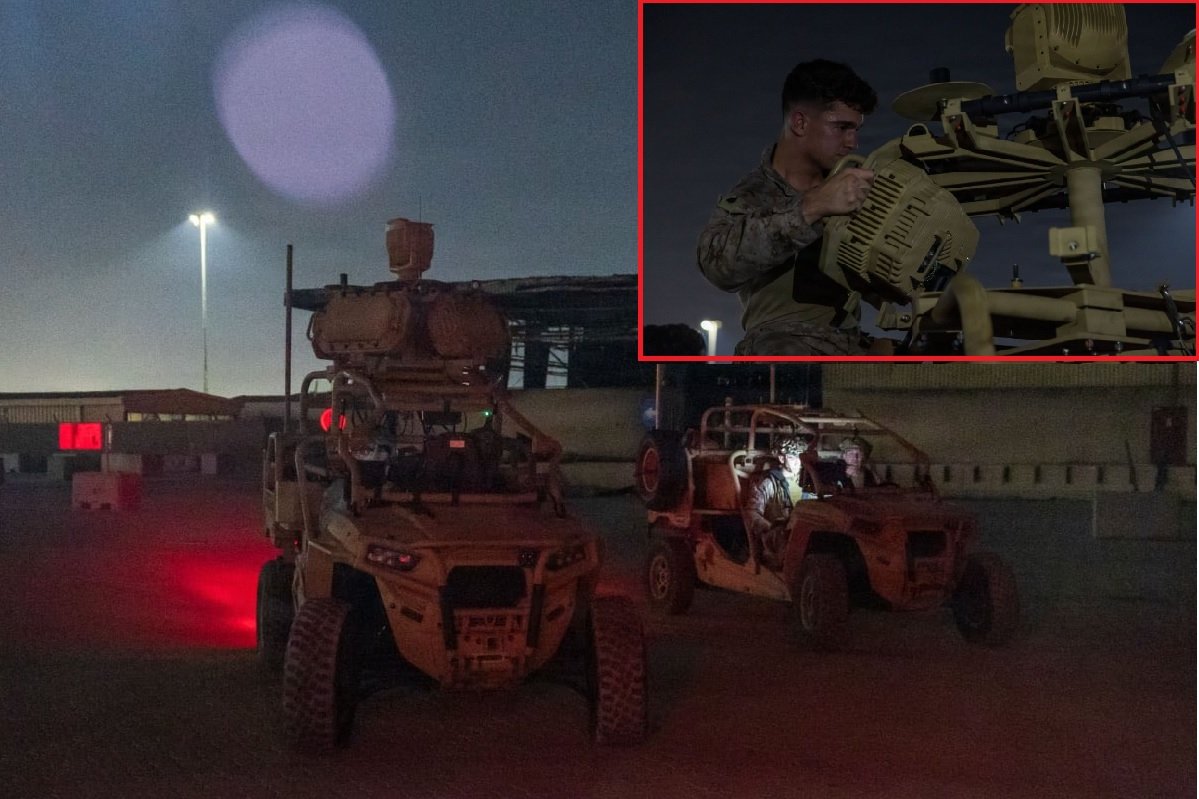
U.S
WASHINGTON — The U.S. Marine Corps has released photographs showing Marines with the 11th Marine Expeditionary Unit (MEU) operating a Light Marine Air Defense Integrated System (LMADIS) in the U.S. Central Command area of responsibility. The photographs were taken between September 2 and September 6, 2026, at an undisclosed location in the region. The images, credited to Lance Cpl. Nicole Stuart, show Marines driving the system and setting up its equipment. They were released publicly through Defense Visual Information Distribution System channels in mid-September. Mobile Counter-Drone System LMADIS is a mobile counter-unmanned aircraft system designed to detect, track, identify and defeat small unmanned aircraft. The system is built around two Polaris MRZR all-terrain vehicles. One vehicle serves as the command-and-control platform, while the second carries the electronic-warfare equipment. LMADIS uses radar and cameras/sensors to detect small unmanned aerial vehicles. Once a drone is identified, its electronic-warfare system can transmit radio-frequency signals to disrupt the communication link between the drone and its operator. Designed for Marine Expeditionary Units The lightweight configuration allows LMADIS to support the expeditionary operations of Marine units. Its compact design enables the system to be transported and operated from Marine Expeditionary Unit ships and flight decks, as well as ashore. The heavier version of the broader Marine Air Defense Integrated System (MADIS) is mounted on Joint Light Tactical Vehicles (JLTVs) and is intended for larger formations. LMADIS provides a lighter configuration for MEU operations. Previous Operational Use The LMADIS family gained operational attention in July 2019, when Marines from the 11th MEU, operating aboard the amphibious assault ship USS Boxer, used the system against an Iranian drone in the Strait of Hormuz. The drone approached to approximately 900 meters (1,000 yards) from the ship. Marines used electronic jamming to disrupt the drone's control link and bring it down. The 11th MEU is again operating with the Boxer Amphibious Ready Group during its current deployment, which began when the unit left the San Diego area in March 2026. The MEU consists of roughly 2,500 Marines. Growing Counter-Drone Requirement The latest deployment highlights the continued focus on counter-drone capabilities within Marine Expeditionary Unit operations. Marine units have noted that operating and training with counter-drone systems now accounts for a significant portion of their preparation. The September photographs provide a recent view of the 11th MEU operating LMADIS in the CENTCOM area, giving the unit a mobile capability to detect and counter small drones while operating both ashore and from naval platforms.
Read More → Posted on 2026-09-21 13:59:58
World
RIYADH — The Saudi Central Bank (SAMA) has confirmed that it is no longer a participating member of Project mBridge, a China-led blockchain-based platform designed for cross-border payments using central bank digital currencies (CBDCs). SAMA said its withdrawal followed the completion of its planned proof-of-concept exercise on May 13, 2025, and was consistent with its original testing timeline. The decision was not publicly announced at the time and became known after SAMA confirmed the details to the Financial Times in a report published on September 20, 2026. SAMA initially joined mBridge as an observing member in 2023 under the Bank for International Settlements (BIS). It later became a full participant in 2024, helping develop the platform’s minimum viable product and conducting its own proof-of-concept testing. People familiar with the matter told the Financial Times that it would be inaccurate to draw wider conclusions from Saudi Arabia’s withdrawal or directly link it to external pressure. One source said SAMA no longer wants to be publicly associated with the project but continues to engage with related work more discreetly. How mBridge works mBridge uses distributed ledger technology to allow participating central banks and commercial banks to settle cross-border transactions directly using digital versions of their national currencies. The system is intended to reduce transaction costs and settlement times while reducing reliance on intermediary currencies such as the U.S. dollar. The project was originally developed by the BIS Innovation Hub, Bank of Thailand, Hong Kong Monetary Authority, Digital Currency Institute of the People’s Bank of China and Central Bank of the United Arab Emirates. The BIS left the project in October 2024, saying the participating central banks were capable of continuing development independently. The BIS said its departure was not due to political considerations. U.S. concerns over alternative payment systems mBridge has attracted attention in Washington because alternative payment systems could reduce reliance on the U.S. dollar and traditional Western financial networks. U.S. officials have also raised concerns that such systems could potentially be used to reduce the effectiveness of sanctions. U.S. President Donald Trump has threatened countries pursuing alternatives to the dollar, particularly within the BRICS group, with tariffs of up to 100 percent. However, mBridge itself is not a BRICS project, and SAMA has not said that U.S. pressure caused its withdrawal. Saudi Arabia maintains close security ties with the United States while also expanding its economic relationship with China. The Saudi currency remains pegged to the U.S. dollar. mBridge continues after Saudi exit Saudi Arabia’s departure does not end the project. China, Hong Kong, Thailand and the United Arab Emirates remain the core participants. The Monetary Authority of Macao joined mBridge in 2026 and activated the system for participating banks on June 2. On its first day, three Macao banks completed 23 cross-border transactions involving trade settlement and remittances with mainland China, Hong Kong and the UAE. The transactions were valued at nearly 1.3 billion Macao patacas. Reports indicate that mBridge has processed tens of billions of dollars in transactions in recent periods, with a large share settled in digital yuan. The project is moving toward wider commercial use, including discussions about establishing an operating entity, possibly in Hong Kong. The Reserve Bank of India remains an observing member while separately developing its own capabilities for cross-border CBDC settlements. Saudi Arabia’s participation in mBridge has therefore ended following completion of its planned testing, while the remaining participants continue working toward broader use of the cross-border digital currency platform.
Read More → Posted on 2026-09-21 14:16:01
World
BEIJING — China has built full-size or near full-size mock-ups of U.S. and Japanese military aircraft and air-defense systems at a new test site in the Xinjiang desert near the Lop Nur range, according to recent commercial satellite imagery. The imagery, collected by Vantor, was analyzed by open-source researcher Brady Africk and published on September 20, 2026. It shows replicas of F-35 and F-16 fighter jets, a Patriot air-defense battery and Japan's E-767 airborne early-warning and control (AWACS) aircraft. New Test Site The test pad was constructed during the previous year. An image dated January 25, 2026, shows the F-35 replicas, E-767 and air-defense equipment. Additional imagery shows the E-767 mock-up under construction in November 2025 and fully assembled by February 2026. Some of the models have since been moved. Recent satellite imagery does not show visible damage to the newly identified targets. Japanese E-767 Among the Targets The E-767 is operated exclusively by the Japan Air Self-Defense Force, which has four aircraft. It provides long-range detection of air and sea targets, supports the coordination of friendly aircraft and performs command-and-control functions in the western Pacific. The inclusion of the E-767 alongside F-35 and F-16 fighters and Patriot air-defense equipment places several systems operated by the United States and its regional partners at the same test area. China's Earlier Mock Targets Full-size or near full-size replicas can be used to test sensor detection, train military personnel and evaluate precision-strike effects. China has maintained similar target ranges in its western deserts for years. Earlier satellite imagery has shown mock-ups resembling U.S. aircraft carriers and destroyers, with some mounted on rail systems that allow movement. Previous replicas of F-35 and F-22 fighters have also appeared at Chinese desert sites, with some showing damage consistent with weapons testing. An earlier E-767 replica was reportedly destroyed around 2022. China has also constructed full-scale replicas of Taiwan's Presidential Office Building and surrounding administrative structures at the Zhurihe training base in Inner Mongolia. Additional street layouts matching parts of central Taipei were later added for ground-force training scenarios. Purpose of the New Targets The latest Xinjiang site forms part of a broader network of Chinese desert ranges used for weapons testing and military training. Analysts say such mock-ups can be used to practice locating, identifying and engaging specific airborne and ground-based targets. The satellite imagery does not show visible evidence that the newly identified mock-ups have been subjected to live-fire testing. China has not issued an official statement explaining the purpose of the latest targets.
Read More → Posted on 2026-09-21 14:25:36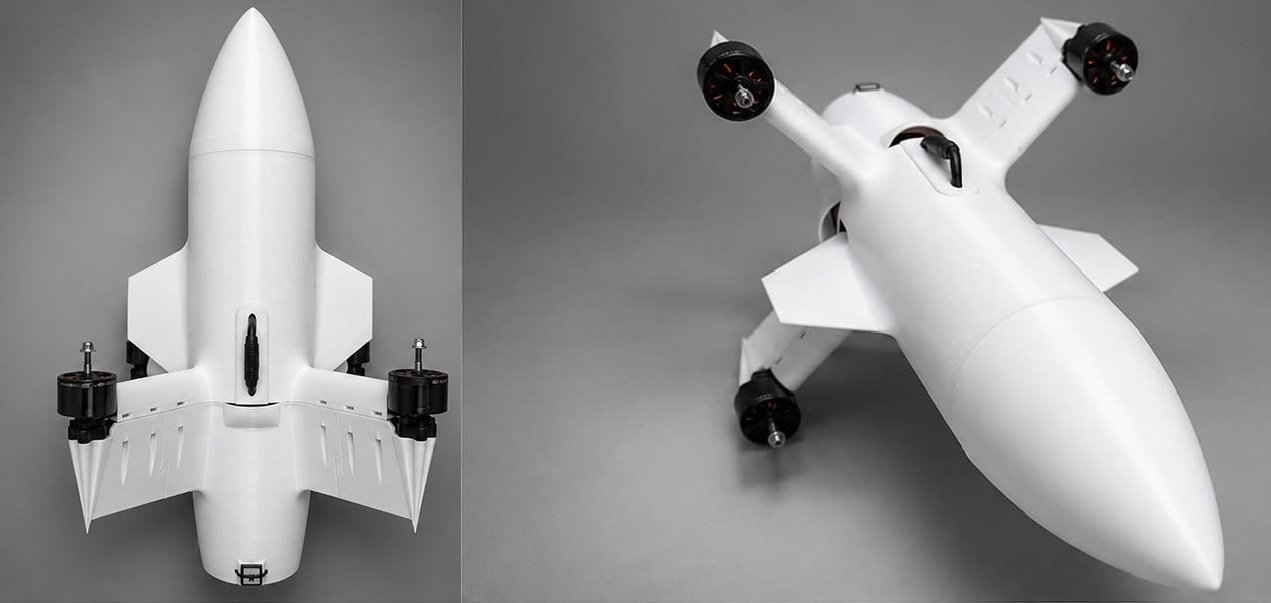
World
KYIV, Ukraine — Ukrainian defence company Vluchnyk has completed a full cycle of internal testing of its new Zorelit v5 interceptor drone, designed to engage high-speed aerial targets, including jet-powered attack UAVs. According to the company, the Zorelit v5 met its stated technical specifications during testing and is now ready for supply to military units. Stepan Radiboh, CEO of Vluchnyk LLC, said the company is ready to sign direct contracts with military units. He added that after the system completes codification, it will also be made available through Ukraine’s e-Points (e-Baly) system. Speed and Flight Performance The Zorelit v5 has a stated maximum speed of 416 km/h and a range of up to 47 kilometres on a single charge. At a cruising speed of around 200 km/h, the interceptor can remain airborne for approximately 17 minutes. The drone is designed to carry a warhead weighing between 300 and 600 grams. The manufacturer describes the Zorelit v5 primarily as an interceptor designed to engage targets directly along their flight paths. It is intended to counter reconnaissance UAVs, as well as Gerbera, Geran-2, Geran-3 and Geran-4 drones. The company states that the interceptor's speed allows it to engage targets travelling at approximately 300–350 km/h. AI-Assisted Guidance and SkyMap Integration The Zorelit v5 can be equipped with an automatic target detection and illumination system using artificial intelligence algorithms. The system also supports automatic terminal guidance during the final stage of the flight. Another option is integration with the SkyMap system. According to Vluchnyk, SkyMap can guide the interceptor toward the target area and calculate an interception trajectory while taking battery consumption into account. The drone can also be remotely controlled and transmit live video over the internet. In its standard configuration, the interceptor includes a camera gimbal, an ELRS control system with selectable operating frequency bands and a 2.5-watt video transmitter. Its warhead initiation board supports remote detonation and includes a physical safety pin. Developed From Zorelit v4 The Zorelit v5 was developed from the earlier Zorelit v4 interceptor. According to Vluchnyk, the previous model has already been used in combat, adopted for service and assigned a NATO Stock Number (NSN). The company said that some technical solutions proven during the combat use of the Zorelit v4 were carried over to the new v5 model. Vluchnyk also maintains a testing and tracking process for each interceptor. Before delivery, every unit undergoes a test flight. The company keeps video records of these tests and marks individual drones so that their specific assembly and components can be tracked. The Zorelit v5 is currently available for direct contracts with military units. The company says it will become available through the e-Points system after completing codification.
Read More → Posted on 2026-09-21 14:37:31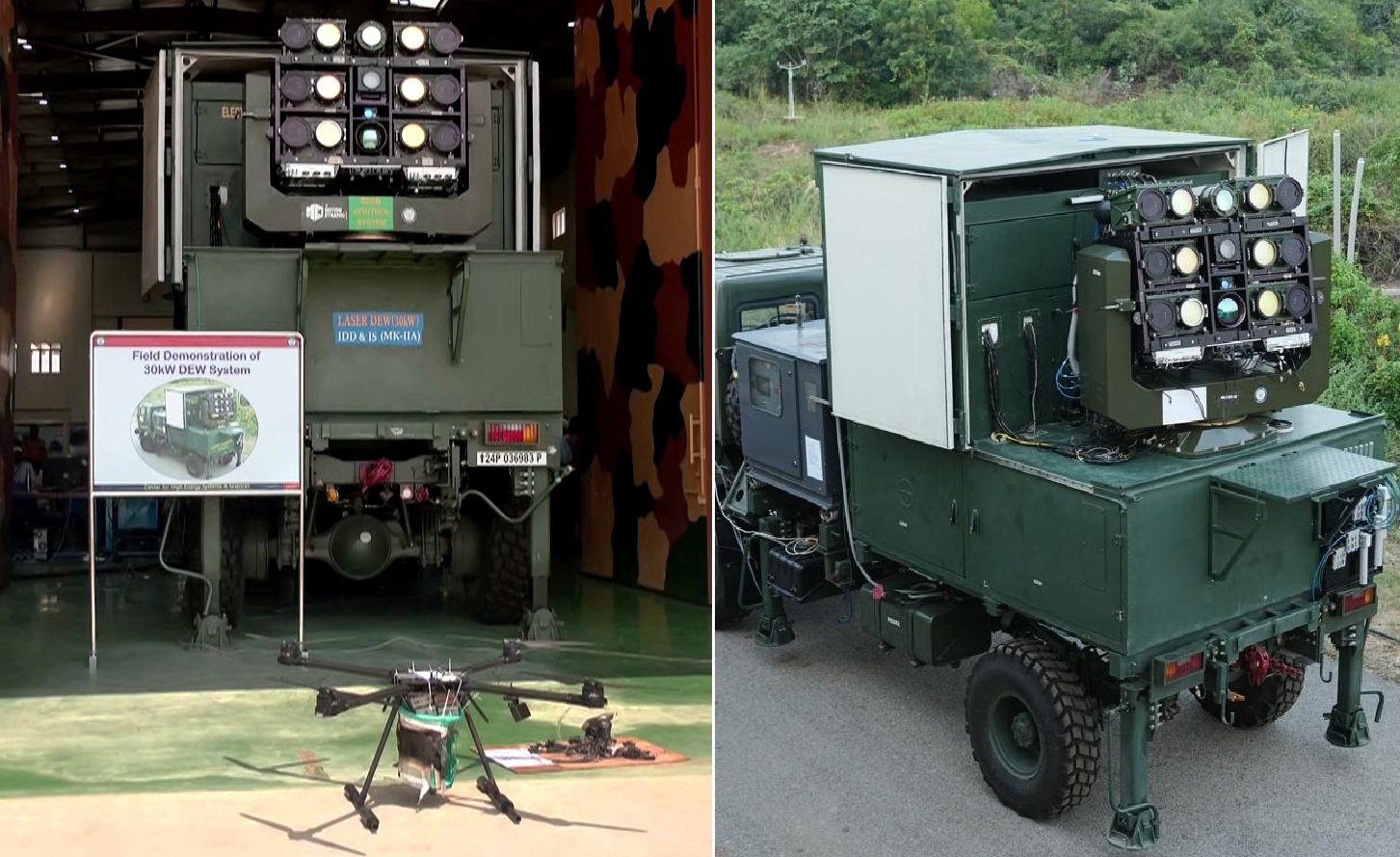
India
NEW DELHI, — The Defence Research and Development Organisation (DRDO) will begin the process of selecting an industry partner for its 30-kilowatt (kW) directed energy weapon (DEW) within the next six months. Dr B.K. Das, Director General of Electronics and Communication Systems at DRDO, said the organisation will issue an Expression of Interest (EoI) during this period to identify a production partner. The First-Off Production Model (FOPM) is expected within a year and will then undergo further tests and trials to verify its range and other user requirements. The truck-mounted 30 kW laser has been developed mainly for counter-drone operations. It uses electromagnetic energy for both soft kill, by disabling sensors or electronics, and hard kill, by physically damaging the target. The system can engage drone swarms, fixed-wing UAVs and surveillance sensors at ranges of up to 5 km. The weapon was primarily developed by DRDO's Centre for High Energy Systems and Sciences (CHESS), Hyderabad, in cooperation with other DRDO laboratories. It forms part of the Integrated Drone Detection and Interdiction System (IDD&IS) programme and is intended to contribute to the broader Sudarshan Chakra comprehensive air-defence framework. The system completed its final technology trials in August 2025. Earlier, during field trials at the National Open Air Range in Kurnool, Andhra Pradesh, in April 2025, it demonstrated engagements against fixed-wing drones, countered a multiple-drone attack and disabled surveillance sensors and antennae. DRDO has developed a series of directed-energy weapons with increasing power levels. The 2 kW system, with a range of about 1 km, has been combat-deployed along the Line of Control (LoC) and is already in production with partners including Bharat Electronics Limited (BEL), Adani and Astra. The 10 kW system has a range of approximately 1.5 to 2 km. The Defence Acquisition Council has issued Acceptance of Necessity for 10 to 12 systems under the IDD&IS Mk-2 programme. BEL and Larsen & Toubro are among the development and production partners for this version. The 30 kW system builds on this progression. In November 2025, CHESS had invited industry interest for technology transfer of the vehicle-mounted 30 kW laser, with a limited number of production licences planned. The latest EoI will focus on selecting an industry partner to take the system toward its production model. DRDO has involved private industry, MSMEs and start-ups in its directed-energy programme. The 30 kW laser is intended to provide a cost-effective counter-drone capability as part of a layered air-defence system. Further development is also planned toward 50–100 kW directed-energy systems and higher-power platforms for larger aerial targets.
Read More → Posted on 2026-09-21 15:06:16
World
KYIV, Ukraine — Russia has reduced its use of ballistic missiles against Ukraine since August while increasing attacks with jet-powered drones, according to a Bloomberg report published on September 21, 2026. The shift has raised concerns that Moscow may be conserving ballistic missiles for possible attacks on Ukraine’s energy and heating infrastructure during the coming winter. Ballistic missiles have caused some of the most severe damage to Ukraine’s power and heating facilities. Bloomberg reported that the lower use of ballistic missiles could indicate that Russia is building up reserves for the colder months, when Ukraine’s winter season typically begins in late October or early November. More Jet-Powered Drone Attacks Jet-powered drones of the Geran family, which are faster than earlier propeller-driven versions, have become more prominent in recent Russian attacks. Ukrainian officials and analysts have described their use as a way to place additional pressure on Ukraine’s air defenses. Ukraine continues to face a shortage of interceptor missiles for its U.S.-made Patriot systems, which are used against ballistic missile threats. President Volodymyr Zelensky has said Ukraine needs at least 300 Patriot interceptors for the winter, or about 100 missiles per month during the main winter period. Ukraine has signed agreements for larger long-term Patriot missile deliveries with support from partners and European financing, but most are not expected to arrive before the coming winter. Kyiv has therefore asked allies to transfer interceptors from their existing stocks. Ukraine Prepares for Winter Prime Minister Serhii Koretskyi has said the government is preparing for the worst-case scenario and has multiple contingency plans for the winter. Ukraine is repairing generating capacity, strengthening protection around key energy facilities, expanding decentralized power generation and stockpiling critical equipment such as transformers. European partners have also supplied generators and spare parts. Ukraine is expanding its network of “Points of Invincibility,” which have operated since late 2022. These facilities provide warmth, electricity for charging devices, mobile communications and hot meals during prolonged power or heating disruptions. Russia has conducted thousands of attacks against Ukraine’s energy system since the full-scale invasion. Ukrainian officials previously reported more than 5,700 attacks and more than 60 large-scale strikes against the energy sector. Last winter, major Ukrainian cities experienced prolonged power, heating and water outages during periods of severe cold. Civilians Prepare Ukrainians are also preparing for possible disruptions by buying firewood, generators, battery stations, warm clothing and other emergency supplies. Firewood prices have risen by roughly 70–80% over the past year amid increased demand. Some residents are considering relocating within Ukraine or abroad if conditions deteriorate significantly. A recent poll indicated that about 40% of Ukrainians would be prepared to relocate temporarily if living conditions worsen sharply. Russia has also continued to use combinations of drones, cruise missiles and ballistic missiles, which can place pressure on different layers of Ukraine’s air-defense network. As winter approaches, Ukraine is therefore increasing energy and civilian preparations while seeking additional Patriot interceptors. The reduction in Russian ballistic missile use since August has raised concerns that Moscow could be preserving some of its missile inventory for renewed attacks on Ukraine’s energy infrastructure during the colder months, although the reported shift does not by itself confirm that such stockpiling is taking place.
Read More → Posted on 2026-09-21 15:15:07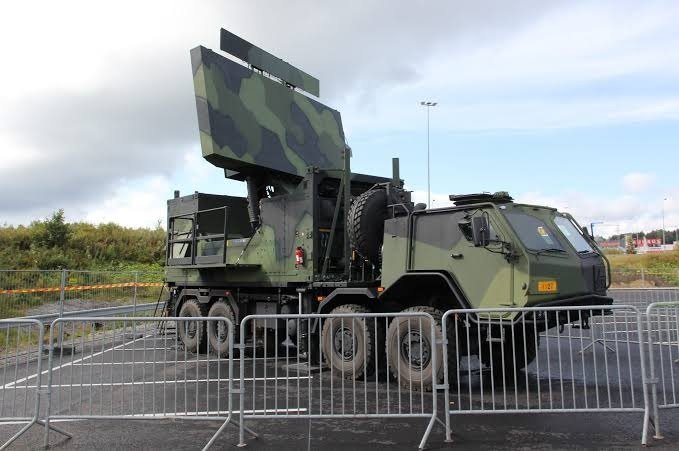
Europe
DUBLIN — Ireland has signed an acquisition order with France for five deployable long-range military radar systems manufactured by Thales, as part of a wider programme to strengthen the country’s air surveillance capability. The agreement was confirmed by Defence Minister Helen McEntee on September 18, 2026. The order was signed with France’s Ministry of the Armed Forces and its defence procurement agency, the Direction Générale de l’Armement (DGA). The overall Military Radar Programme is estimated to cost between €300 million and €500 million and has three main elements: land-based long-range primary radar, ground-based air defence systems including counter-drone capabilities, and maritime radar for naval ships. Five Thales Radars Ireland will receive five deployable Thales long-range radar systems. The precise model has not been publicly disclosed. Thales produces several long-range radar systems, including the Ground Master family. Delivery of the first systems is expected to begin in 2027, with the complete radar capability planned to be operational by the end of 2028. The locations of the five systems have not yet been made public, although strategic sites across Ireland have been examined. Building a Recognised Air Picture The primary radar systems are intended to allow Ireland’s Defence Forces to develop and maintain a complete recognised air picture of the country’s airspace. This capability is intended to provide information on aircraft operating in Irish airspace, including aircraft that are not transmitting identification signals. The Commission on the Defence Forces previously identified the development of a primary radar capability as an immediate priority. The ground-based air defence part of the programme is also progressing, including counter-unmanned aircraft systems. Some capabilities have already been introduced, while work on the maritime radar element is continuing. Minister McEntee said the acquisition keeps Ireland on track to establish a complete recognised air picture by the end of 2028 and represents further progress on a key recommendation of the Commission on the Defence Forces.
Read More → Posted on 2026-09-21 15:27:11
World
ALEPPO, Syria — A series of explosions struck a Syrian army ammunition depot near Al-Eis in southern Aleppo province early Monday, September 21, injuring four people and prompting authorities to close roads and evacuate nearby residents. The explosions began in the Al-Hadaba area west of Al-Eis and were followed by repeated secondary detonations. The continued blasts initially prevented ambulances and rescue teams from reaching the site. According to Syria’s Ministry of Emergency and Disaster Management, four civilians were injured. One suffered shrapnel injuries, two experienced temporary breathing difficulties, and another was injured in a traffic accident while attempting to leave the area. Three families living near the depot were also evacuated. Aleppo authorities placed security personnel on alert and closed the Aleppo-Damascus highway and other roads leading to the site as a precaution. Governor Azzam al-Gharib urged residents to remain indoors and avoid the area. Hospitals, ambulances and emergency teams were placed on standby. Military police were deployed to secure the site, while military engineering and civil defense teams began inspecting the area for unexploded ordnance and other hazardous materials. Authorities warned residents not to approach the location or return to evacuated areas until it is declared safe. The Syrian Defense Ministry said the incident caused property damage but no military fatalities and that an investigation was underway to determine the cause. Syrian authorities have not provided a final explanation for the explosions. There is currently no verified evidence that the explosions were caused by an Israeli military strike. Official Syrian statements have focused on the investigation and safety operations at the site rather than attributing the incident to an external attack. Reuters reported that the Al-Eis explosion was the fourth similar blast at a Syrian weapons storage facility this month.
Read More → Posted on 2026-09-21 15:35:02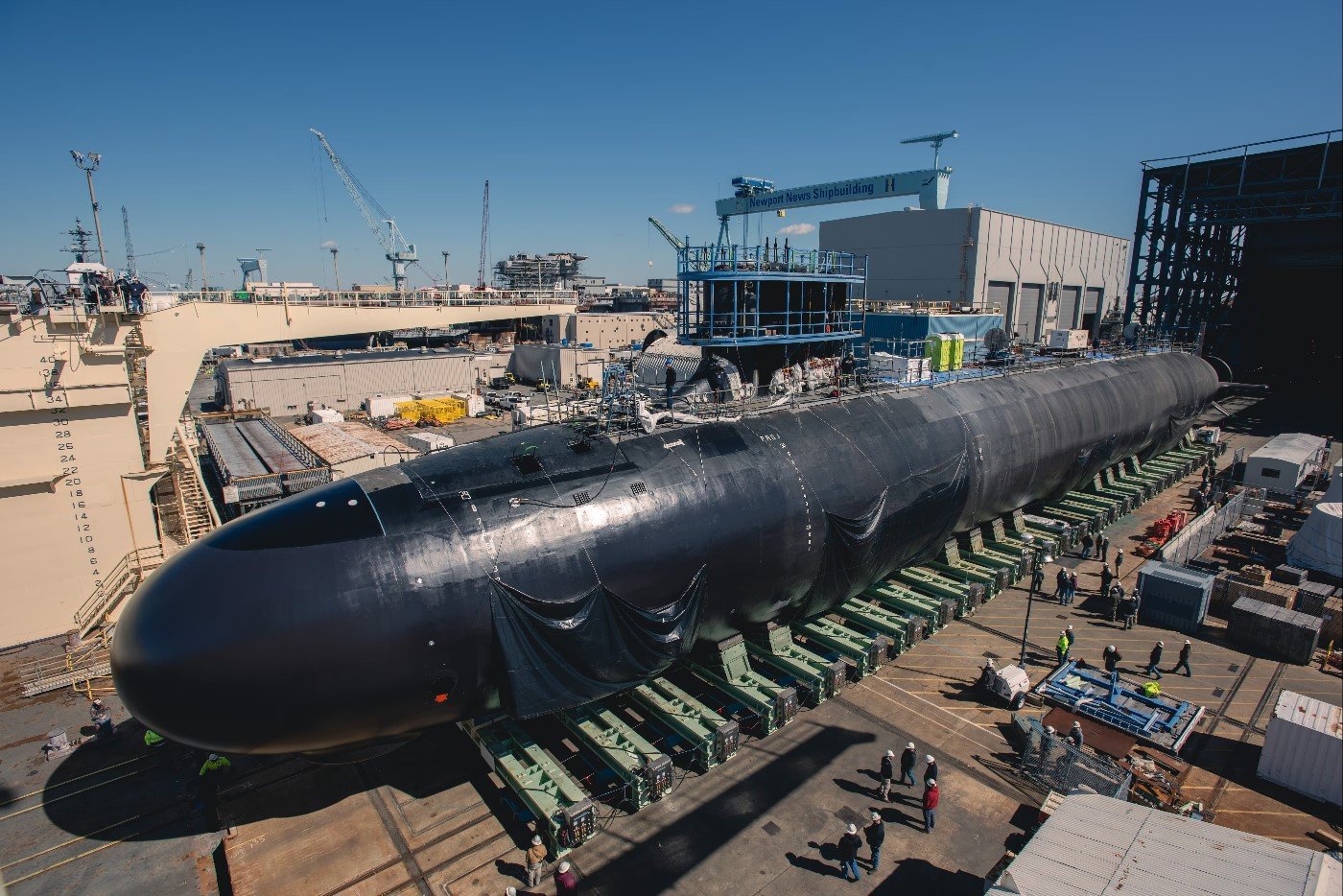
U.S
WASHINGTON — The U.S. Navy is implementing a four-pillar strategy to increase submarine production and reach its planned “1+2” production rate of one Columbia-class nuclear-powered ballistic missile submarine (SSBN) and two Virginia-class nuclear-powered attack submarines (SSNs) each year. Vice Adm. Robert “Rob” Gaucher, the Navy’s Director of Submarine Programs, outlined the strategy at the Combined Naval Event 2026 (CNE26) in the United Kingdom. Gaucher, who also serves as the Direct Reporting Portfolio Manager for Submarines and Program Acquisition Executive for Undersea Warfare, is often referred to as the Navy’s “sub tsar.” Chief of Naval Operations Adm. Daryl Caudle said in May that the Navy expects to reach the higher production rate around 2032. The Navy’s May 11 shipbuilding plan identified the 1+2 rate as its top industrial-base priority. Gaucher is pursuing a faster timeline, targeting delivery of the lead Columbia-class submarine, USS District of Columbia (SSBN-826), in 2028, one Columbia per year by 2030 and two Virginia-class submarines per year by 2031. The submarine programs rely mainly on General Dynamics Electric Boat in Groton, Connecticut, and Huntington Ingalls Industries’ Newport News Shipbuilding in Newport News, Virginia. The Navy plans to build 12 Columbia-class submarines, while the Virginia class has a planned total of 70 boats, with 44 additional submarines currently being built or planned. Because both classes use the same shipyards, workforce and facilities, Gaucher said they cannot be managed separately. “You can’t look at Virginia and Columbia in a vacuum because you’re sharing workforce, it’s the same shipyard, you’re sharing footprint,” he said. Four Pillars of the Strategy 1. Locking in submarine designs Gaucher has ordered a “pencils down” approach for Virginia-class design changes. Changes will generally be allowed only when required for safety or critical operational needs, such as a major acoustic-signature problem. Major modifications or new equipment require his approval, while routine construction adjustments remain delegated to working-level personnel. The approach is particularly important during the transition between the later Virginia-class variants, Blocks VII and VIII. 2. Focusing the main shipyards on major work Electric Boat and Newport News are being encouraged to focus on module outfitting, hull assembly and final testing. More component assembly is to be moved outside the two main shipyards so that major modules can arrive more fully outfitted and ready for integration. 3. Expanding the wider industrial base The Navy is also expanding its supplier network to increase capacity and reduce pressure on the two prime shipyards. Gaucher highlighted Rhoads Industries in Pennsylvania, Austal USA in Alabama and BAE Systems in Jacksonville. Rhoads Industries has a long-term agreement with Electric Boat valued at about $2.5 billion, covering steel fabrication, structural assembly and outfitting through 2035. Austal has also expanded its Mobile, Alabama, facilities to support production and outfitting of command-and-control modules and other sections for Virginia- and Columbia-class submarines. 4. Designing SSN-X for producibility The fourth pillar focuses on the future SSN-X attack submarine. The Navy is considering how to balance combat capability with the time, cost and complexity required to build each submarine. Gaucher said that, at a certain point, having two submarines with fewer additional features could be preferable to spending significantly more time and money on one submarine with additional capability. Gaucher has said his immediate focus is on the second and third pillars—improving production at the main shipyards and expanding the wider industrial base. The Navy is also working on workforce growth, supply-chain resilience and advanced manufacturing methods, including additive manufacturing. The scale of the challenge is illustrated by Virginia-class production. Earlier boats required roughly 13 million man-hours, while more recent Block IV and Block V submarines require about 70 million man-hours. The four-pillar strategy is intended to address these industrial constraints and help the Navy move toward its target of producing one Columbia-class and two Virginia-class submarines annually.
Read More → Posted on 2026-09-21 15:57:04
India
NEW DELHI — The Ministry of Defence (MoD) has signed a ₹586 crore contract with Pune-based Accurate Industrial Controls Private Limited for the supply of indigenously developed Auxiliary Power Units (APUs) for the Indian Army’s T-72 and T-90 main battle tanks. The agreement was signed in New Delhi on September 21, 2026, in the presence of Defence Secretary Rajesh Kumar Singh. The APUs provide an alternate source of electrical power for critical tank systems, including the fire control system, firing circuit, gun stabilisation system and other ancillary equipment when the main engine is switched off. According to the Ministry, the units are externally mounted on the rear or side of the tanks. The APUs typically provide 10–12 kW of power and have a silent runtime capability of at least six hours. They are designed to operate in temperatures ranging from -50°C to 45°C, supporting operations in both high-altitude and desert environments. By allowing essential systems to operate without running the main engine, the APUs can reduce fuel consumption, engine wear and noise. This can help tank crews maintain critical systems during surveillance operations, while also reducing the need to keep the main engine running. The procurement has been carried out under the Make-II category, which supports industry-led research and development. The Defence Ministry said the contract represents a step towards the indigenisation of critical sub-systems for armoured platforms and supports the government’s Aatmanirbharta and Viksit Bharat @2047 objectives. The contract adds to efforts to increase domestic production of defence equipment and reduce dependence on imported critical components for the Indian Army’s armoured fleet.
Read More → Posted on 2026-09-21 16:03:00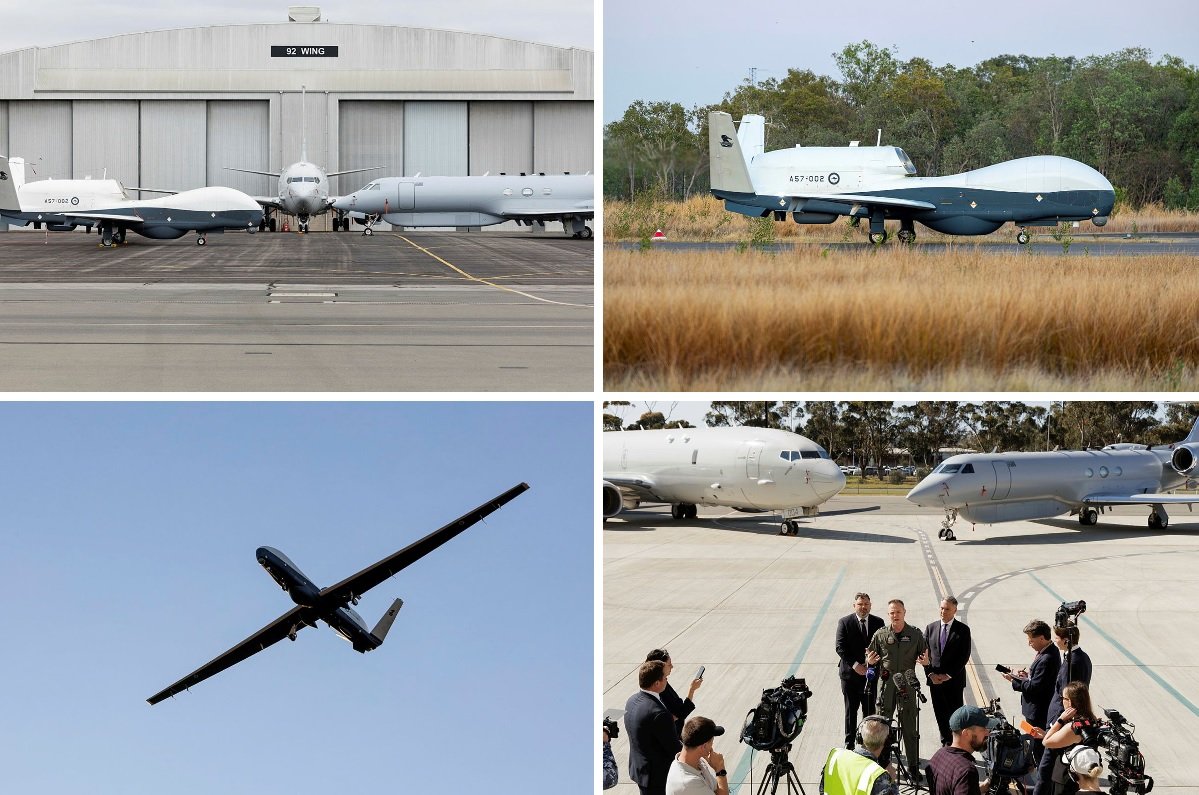
World
CANBERRA — The Royal Australian Air Force (RAAF) has achieved Initial Operational Capability (IOC) for both the MQ-4C Triton and MC-55A Peregrine, expanding Australia’s long-range intelligence, surveillance and reconnaissance (ISR) capabilities. The Australian Department of Defence announced the milestones on September 22, 2026, following extensive operational testing and evaluation. MQ-4C Triton Enters Operational Service The MQ-4C Triton, supported by Northrop Grumman Australia, will provide persistent long-range ISR across Australia’s primary area of military interest. The aircraft are based at RAAF Base Tindal in the Northern Territory, while Number 9 Squadron, based at RAAF Base Edinburgh in South Australia, operates the system. Northrop Grumman Australia supports operations from both locations. Australia is acquiring four Tritons through a cooperative program with the U.S. Navy. The first aircraft arrived in July 2024, followed by the second and third in May 2025. The fourth remains in production and is scheduled for delivery in 2028. New Triton facilities at Tindal were delivered under a A$355.7 million project and opened earlier in 2026. Triton to Work With Poseidon and Peregrine The Triton is part of the broader 2026 National Defence Strategy investment in complementary crewed and uncrewed aircraft. It will operate alongside the RAAF’s P-8A Poseidon maritime patrol aircraft and MC-55A Peregrine to support persistent surveillance, intelligence collection, maritime patrol and electronic warfare. Australia received its 14th and final P-8A Poseidon in May 2026, completing the fleet used for maritime patrol, anti-submarine warfare and anti-surface warfare. The first two P-8As have received Increment 3 Block 2 enhancements. The remaining 12 aircraft will receive the upgrades in Australia with support from Boeing Defence Australia and local industry partners. The work will be conducted at the newly opened A$200 million Deep Maintenance and Modification Facility at RAAF Base Edinburgh. The 14 Poseidons are based at Edinburgh and operated by Numbers 11, 12 and 292 Squadrons. MC-55A Peregrine Achieves IOC The MC-55A Peregrine has also achieved IOC after completing operational testing and evaluation. The aircraft is an airborne intelligence, surveillance, reconnaissance and electronic warfare platform based on the Gulfstream G550 airframe and extensively modified by L3Harris. Australia has received three of four Peregrines, with the fourth and final aircraft expected later in 2026. The fleet is based at RAAF Base Edinburgh and operated by Number 10 Squadron. Edinburgh Becomes Key ISR Hub The concentration of the Triton, Poseidon and Peregrine fleets at RAAF Base Edinburgh is increasing South Australia’s role in Australia’s air intelligence and surveillance enterprise. South Australia’s defence industry generated A$2 billion in economic activity in the last financial year, according to the Australian Government. Acting Prime Minister and Defence Minister Richard Marles said South Australia is becoming an important hub for advanced Defence capabilities and highly skilled Australian jobs. The Albanese Government is investing approximately A$5.5 billion over the decade to enhance the Australian Defence Force’s air ISR and maritime patrol and response capabilities, with further opportunities expected for Australian industry. Chief of Air Force Air Marshal Stephen Chappell credited military personnel, public servants and defence industry partners for bringing the new systems into service. He said the Triton’s IOC represents an important step in delivering persistent, long-range maritime surveillance and strengthening Australia’s air intelligence, surveillance and reconnaissance capability.
Read More → Posted on 2026-09-22 12:04:32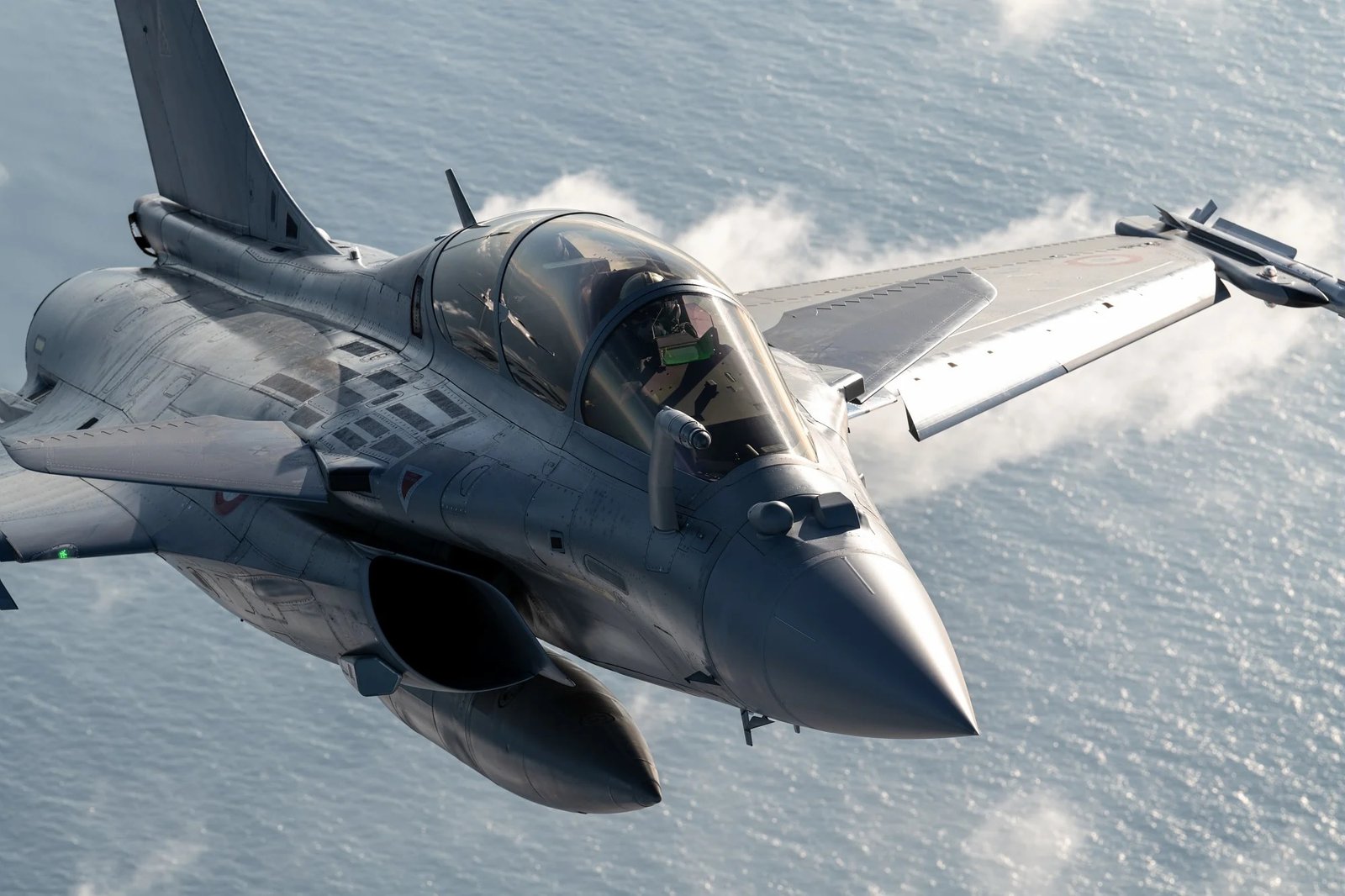
Europe
SAINT-CLOUD, France — Dassault Aviation has successfully flight-tested two new sovereign artificial intelligence (AI) algorithms aboard the Rafale fighter jet as part of its effort to introduce controlled and supervised AI into the aircraft’s cockpit. One algorithm was developed by Dassault Aviation’s engineering teams, while the second was developed in partnership with Thales and its cortAIx AI entity. Dassault said both algorithms have reached a level of maturity that makes them candidates for future Rafale upgrades. The systems are designed to assist pilots, not operate the aircraft autonomously. They are intended to help crews process information and support decision-making while keeping the human pilot in control. Developing AI for military aircraft requires high-quality real and simulated operational data, specialised aviation expertise and the ability to run algorithms on embedded airborne computers. These systems must operate within strict constraints involving size, power and reliability. AI Development for Rafale F5 The two algorithms form part of Dassault’s wider AI strategy for the Rafale, which covers aircrew assistance, collaborative operations with unmanned systems and predictive maintenance. The technology is particularly relevant to the planned Rafale F5 standard, which is being developed to expand cooperation between the fighter, drones and other networked military platforms. Dassault has also partnered with Harmattan AI on embedded AI and electronic-warfare applications. In a flight test earlier in 2026, an unmanned aircraft equipped with the jointly developed NAMIB electronic-warfare payload detected, identified and geolocated a radar target several dozen kilometres away before passing its coordinates to a Rafale F4 for a simulated engagement. The collaboration with Thales and cortAIx follows a strategic partnership signed in November 2025 covering controlled and supervised AI for manned and unmanned aircraft, including observation, situation analysis, decision support, planning and operational control. A separate partnership with Harmattan AI, announced in January 2026, aims to accelerate the integration of controlled autonomy into future air-combat systems, including the Rafale F5 and associated unmanned combat aircraft systems. The latest flight tests demonstrate Dassault Aviation’s progress in integrating sovereign AI capabilities into the Rafale while keeping these functions under human supervision.
Read More → Posted on 2026-09-22 12:13:48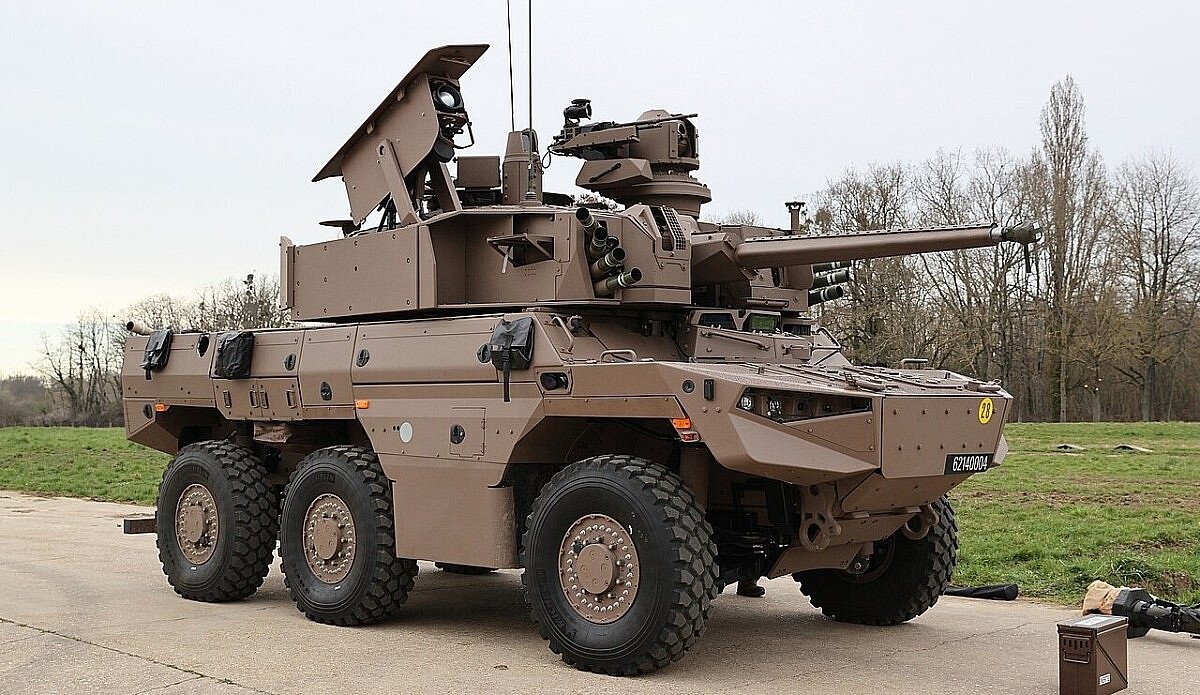
Europe
PARIS — The French Army has begun receiving Jaguar armored reconnaissance and combat vehicles in the R3 configuration, the fully operational standard developed under France’s SCORPION modernization program. According to the French defense procurement agency DGA, 21 R3-standard Jaguars had been delivered to French forces by September 4, 2026, with deliveries beginning during the summer. The DGA and French Army qualified the R3 configuration as “bonne de guerre” (fit for war) on April 8, while operational use was authorized on July 20, 2026. Akeron MP Missile Integration The main improvement in the R3 configuration is the full integration of the Akeron MP (formerly MMP) medium-range anti-tank missile, supplied by MBDA. The missile can engage targets at ranges of up to 4 kilometers. According to manufacturer data, its tandem warhead can penetrate more than 1,000 mm of armor. It also supports beyond-line-of-sight engagement and in-flight retargeting. Two missiles are carried ready to fire on the turret, with additional missiles stored inside the vehicle. The 25-tonne, six-wheeled Jaguar also carries a 40 mm cannon using telescoped ammunition supplied by CTA International and a remotely operated 7.62 mm machine gun for close-range defense. The vehicle is equipped with the SCORPION Combat Information System (SICS), allowing it to share tactical information in real time with other SCORPION platforms, including the Griffon and Serval. Production and Fleet Upgrade The Jaguar was developed by a temporary partnership of KNDS France, Arquus and Thales, with final assembly at KNDS France’s facility in Roanne. Safran provides the optical and sighting systems, while CTA International supplies the 40 mm cannon and MBDA the Akeron MP system. The Jaguar is replacing the AMX-10RC, ERC-90 Sagaie and VAB variants equipped with HOT anti-tank missiles. Its protection includes a survival-cell architecture for its three-person crew and protection against mines and improvised explosive devices. France has ordered 300 Jaguars for seven armored cavalry regiments. Deliveries are planned through 2030, with the complete fleet expected to be operational by 2035. Jaguars already delivered under earlier standards will not be replaced. Instead, KNDS France is upgrading them to the R3 configuration, with the retrofit campaign scheduled for completion by the end of 2027. Service and Program Cost The Jaguar entered French Army service in 2022 under an earlier configuration that already provided mobile firing capability from its digital turret. The 1st Foreign Cavalry Regiment was the first unit to operate the vehicle and deployed six Jaguars to Estonia in 2024 as part of a NATO mission. The broader SCORPION program is valued at approximately €11 billion, including around €2 billion for the 300 Jaguars. The Jaguar’s unit cost has increased from an initial target of about €3 million to approximately €6 million. R3 qualification trials were conducted by the DGA’s land systems testing center in Bourges and Angers. KNDS France has not disclosed how many additional R3 Jaguars will be delivered before the end of 2026 or provided a more detailed retrofit schedule beyond the end-2027 target.
Read More → Posted on 2026-09-22 12:31:19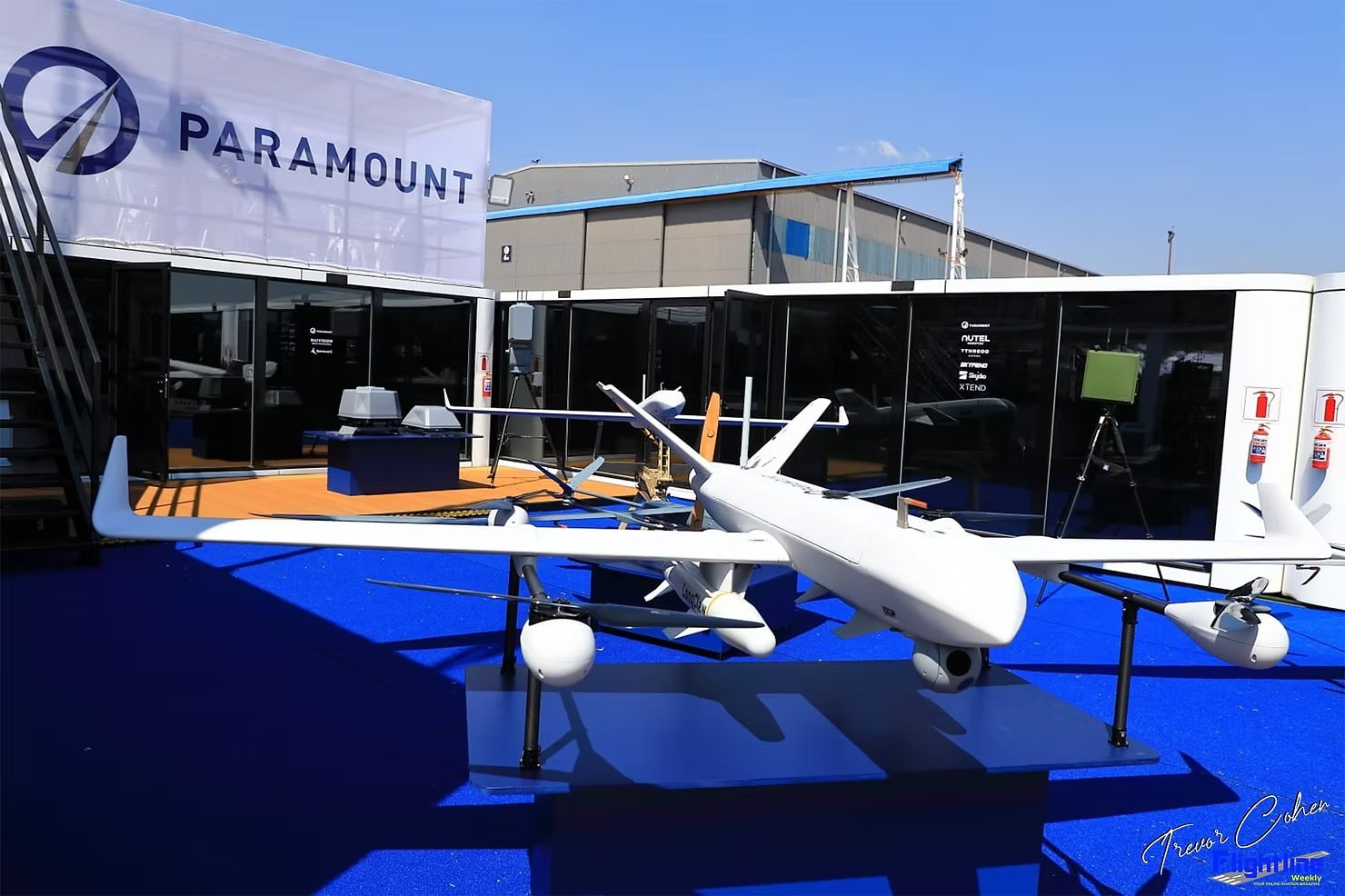
World
PRETORIA, South Africa — South African defence company Paramount Aerospace Systems has unveiled its new V-Raven fixed-wing vertical take-off and landing (VTOL) unmanned aerial vehicle (UAV) at the Africa Aerospace and Defence (AAD) 2026 exhibition at Air Force Base Waterkloof near Pretoria. The exhibition was held from 16 to 20 September 2026 and attracted 287 exhibitors from 33 countries, according to Defence and Military Veterans Minister Angie Motshekga. The V-Raven has been developed from Paramount’s earlier N-Raven programme, which was first shown in 2021 as a catapult-launched swarming system. The original N-Raven weighed 41 kg, had a cruise speed of about 180 km/h and an endurance of roughly two hours. Later versions reached 55 kg and had a range of up to 100 km. Unlike the N-Raven, the V-Raven does not require a catapult or runway. Its VTOL design allows it to be launched and recovered from remote or dispersed locations without fixed infrastructure. Sello Ntshiele of Paramount Aerospace Systems said the V-Raven was developed for modern African operating conditions, including vast operating areas, remote terrain and dispersed threats. He said the aircraft is intended to provide longer-range surveillance while remaining a flexible and reusable system. Two power versions The V-Raven uses a common airframe in petrol-powered and electric versions. Both have a 3.6-metre wingspan, 2.1-metre fuselage length and 65 kg maximum take-off weight. The petrol-powered version provides up to eight hours of endurance, a range of up to 1,200 km, a cruise speed of about 140 km/h and a communications link of up to 150 km from the ground station. The electric version offers up to two hours of flight time and a maximum range of 250 km. The initial focus is on intelligence, surveillance and reconnaissance (ISR). The baseline configuration carries an electro-optical sensor for day-and-night surveillance, supports automatic target tracking and can use interchangeable electro-optical and infrared sensors. Paramount is also developing a light-attack version capable of carrying precision-guided glide munitions. At AAD 2026, the V-Raven was displayed with Rheinmetall’s LongClaw glide bomb. The armed configuration will undergo systems integration, ground testing and flight trials before becoming available. The company has identified areas such as the Sahel and northern Mozambique as examples of operating environments for the V-Raven, particularly where conventional airfields are limited or unavailable. Paramount said the V-Raven represents the next stage of the programme, with a common airframe that can support different mission configurations as operational requirements change. The immediate priority remains the ISR configuration, with light attack as a further development path.
Read More → Posted on 2026-09-22 12:55:16
World
KYIV — A Ukrainian hacking collective known as Ukrainian Militant has claimed that it obtained a large collection of Russian naval technical documents during a cyber operation it calls “Poseidon.” The group says the material covers around 70 Russian naval projects, including submarines, surface ships, navigation systems, sonar and marine robotics. The group announced the operation around September 20, 2026, and released screenshots and samples of documents that it says came from Russian defense-industrial organizations. Some of the documents are reportedly marked “secret” or “top secret,” with materials dated as recently as 2026. Documents Cover Submarines and Surface Ships According to Ukrainian Militant, the leaked material relates to scientific, engineering, testing and operational work supporting Russian naval construction and modernization. The projects identified by the group include the Project 949AM Antey nuclear-powered submarines, Project 636.3 Varshavyanka diesel-electric submarines and Project 955M, associated with the Borei-A ballistic missile submarine program. The released material also concerns surface ships from Projects 22350, 20386, 23550, 11711, 23770 and 23900. The documents are described as containing information on the placement of onboard equipment, cable connections, information interfaces, structural and functional diagrams, technical requirements, operating procedures, testing methods, accuracy and reliability specifications, and acceptance documentation. One of the examples cited by the group is documentation related to the Simfoniya-PM navigation system, including testing material from 2026. Focus on Navigation and Underwater Systems A significant part of the reported archive concerns naval navigation and underwater technologies. The material covers inertial navigation, radio navigation, sonar or hydroacoustics, integrated control systems, digital hydrography, mapping and marine robotics. Some of the documents concern autonomous navigation systems for submarines and underwater vehicles. Such systems are designed to support navigation without relying solely on satellite positioning signals. Ukrainian Militant identified several systems and development programs in the released material, including Simfoniya, Simfoniya-PM, Chardash-22350, KAMA-NS-VK, Sprut-N1, Priliv, 14Ts217, AKNG/PNG-23820 and ISU NK-23550. The group also listed prospective research and development programs including Kasatka, Veter, Bering, Dirizhor, Poligon, Andromeda, Arkhivarius, Almukantarat and Seagull-M (Sigal-M). Documents dated between 2024 and 2026 have reportedly appeared among the released samples, including material concerning the Andoga-M2 navigation complex for Project 636.3 submarines. Russian Defense Organizations Named The hackers said the documents are connected to several Russian organizations involved in naval design, navigation and underwater technologies. These include the Rubin Central Design Bureau for Marine Engineering, Malachite Marine Engineering Bureau, Elektropribor Central Research Institute, Okeanpribor concern, Elara, the Vega concern and the State Research Navigation and Hydrographic Institute (GNINGI). The reported documents also provide information on cooperation between contractors, research and development activities, testing programs and the status of individual projects. Full Scope of the Breach Not Independently Verified The claim that the operation compromised information from 70 naval projects has not been independently verified in full. The open-source intelligence organization InformNapalm has examined screenshots and individual documents released by Ukrainian Militant and confirmed the existence and authenticity of some documents showing details of Russian military-related organizations. However, the group has not received the complete archive from the hackers because of operational-security restrictions. As a result, the full size of the stolen data, the exact number of affected projects and the depth of the reported network penetration cannot currently be independently established. The reported breach comes amid a series of cyber operations targeting Russia's defense sector. In November 2025, Ukrainian-linked hackers also claimed to have obtained classified material associated with Russia's PAK DA strategic bomber and Su-57 fighter programs. Ukrainian Militant has primarily published information about Operation Poseidon through its Telegram channel, while Ukrainian and independent media outlets have reported on the claims using the group's statements and released document samples.
Read More → Posted on 2026-09-22 13:04:10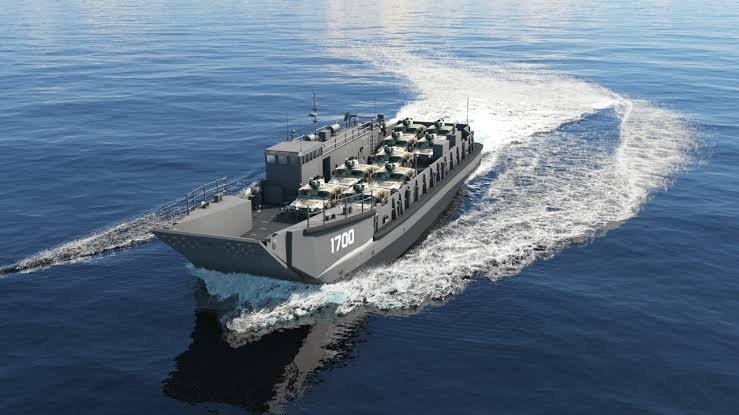
India
NEW DELHI — The Indian Navy has issued a Request for Information (RFI) for the procurement of six Landing Craft Utility (LCU) Mk V vessels from Indian shipyards under the government’s Make in India initiative. The vessels are planned to strengthen the Navy’s amphibious operations, troop and equipment transport, island logistics, Exclusive Economic Zone (EEZ) patrol, search and rescue (SAR), and Humanitarian Assistance and Disaster Relief (HADR) capabilities across the Indian Ocean Region. According to the RFI, each LCU Mk V will be approximately 85 metres long with a displacement of around 1,500 tonnes, with a 15% variation allowance. The vessels will use diesel propulsion and must achieve a maximum speed of at least 15 knots. They are required to have an endurance of approximately 4,500 nautical miles, operate in Sea State 3 and survive conditions up to Sea State 7. The planned service life is 30 years. For amphibious operations, each vessel must be capable of carrying at least four Main Battle Tanks (MBTs), four BMP infantry fighting vehicles and 190 fully equipped troops. The LCUs will support ship-to-shore movement and the movement of heavy equipment to remote island territories. The Mk V vessels are larger and have significantly greater endurance than the Navy’s existing LCU Mk IV class. The Navy operates eight Mk IV vessels, designed and built by Garden Reach Shipbuilders and Engineers (GRSE). The Mk IV ships are about 62.8 metres long, have a displacement of roughly 830–1,001 tonnes, a maximum speed of 15 knots and an endurance of around 1,500 nautical miles at 12 knots. The Mk IV vessels can transport main battle tanks, armoured vehicles and up to 160–216 personnel and are primarily associated with amphibious, beaching, search-and-rescue and disaster-relief operations, including missions around the Andaman and Nicobar Islands. The new LCU Mk V requirement therefore calls for a longer-range and larger platform capable of supporting both military and non-combat maritime missions. The RFI seeks responses from Indian shipyards and vendors, in line with the Navy’s emphasis on indigenous design and construction. The RFI does not yet publicly specify the final procurement timeline, cost or shortlisted builders.
Read More → Posted on 2026-09-22 13:34:25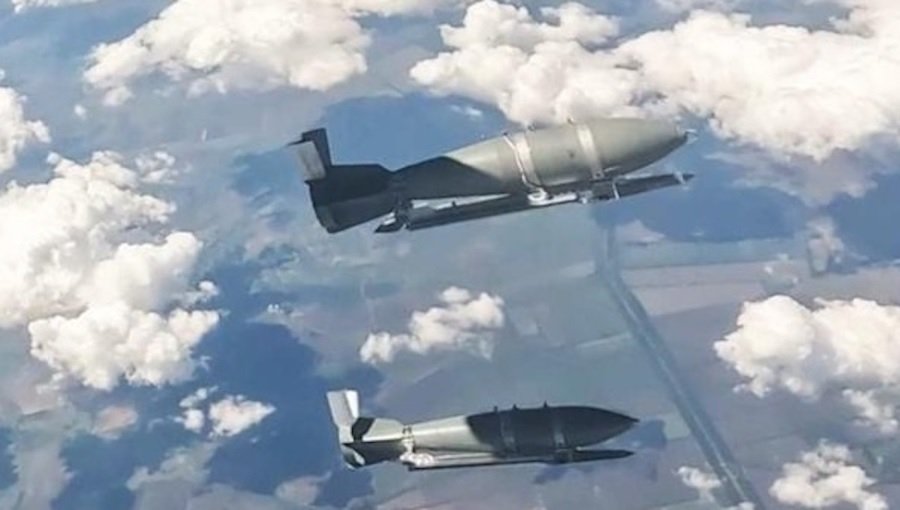
World
KYIV — Russian Aerospace Forces used a record 8,766 FAB bombs fitted with UMPK glide-and-correction kits against targets in Ukraine during August 2026, according to Ukrainian military data compiled by the OSINT group Oko Gora. The figure equals an average of about 283 bombs per day during the 31-day month. It was the highest monthly total recorded since Russia's full-scale invasion began in February 2022. Ukrainian monitoring recorded about 8,266 uses in June and approximately 8,300–8,385 in July, showing a continued increase in Russian use of glide bombs. The August rate was also higher than the estimated U.S. daily rate during Operation Epic Fury, the U.S.-led air campaign against Iran earlier in 2026. Estimates based on available data put U.S. guided aerial bomb use during the first 38 days of the operation at about 8,000–9,000, or roughly 211–237 bombs per day. However, Russia's current rate remains below the level recorded during the 2003 U.S.-led invasion of Iraq, when coalition forces used approximately 500 air-dropped bombs per day during the intensive combat phase. UMPK allows older bombs to become glide weapons The UMPK (Unified Gliding and Correction Module) is a bolt-on system that adds folding wings, control surfaces and satellite-guidance equipment to Soviet-era FAB free-fall bombs. The system can be fitted to bombs including the FAB-250, FAB-500, FAB-1500 and FAB-3000, as well as some thermobaric and cluster variants. The Su-34 is the primary launch aircraft, while Su-35 and Su-30 aircraft have also been reported using the weapons. According to Ukrainian sources, the basic UMPK-equipped FAB has a range of about 60–65 kilometers, while the UMPK-PD extended-range version can reach up to 95 kilometers. Later variants with larger wings and other modifications have been reported with ranges exceeding 100 kilometers, while jet-powered versions have been assessed at still greater distances. The system uses inertial navigation with satellite correction, including the Kometa-M receiver system. By allowing the aircraft to release the weapon from a distance, UMPK-equipped bombs can reduce the aircraft's exposure to Ukrainian short-range air defenses. Russia rapidly expands production Western defense assessments indicate that Russia ordered about 40,000 UMPK kits in 2024 and more than 70,000 in 2025. The use of more than 8,000 kits in August alone suggests that Russian production or availability during 2026 could reach 100,000 or more kits, although some weapons may have come from earlier stocks. The U.S. approach has relied heavily on large precision-weapon inventories accumulated over decades. By 2020, the Pentagon had received approximately 371,000 JDAM conversion kits in the referenced total. Including SDB I and SDB II, annual procurement reached as high as 50,000 kits, while the average over 28 years was about 17,000 JDAM non-extended-range and SDB kits per year. Public figures for the U.S. inventory of JDAM-ER kits remain unavailable. Russia's UMPK program instead combines rapidly expanding kit production with large stocks of older Soviet-era bombs. The result has been a sustained increase in the number of guided glide bombs used against Ukrainian positions during 2025 and 2026.
Read More → Posted on 2026-09-22 13:57:47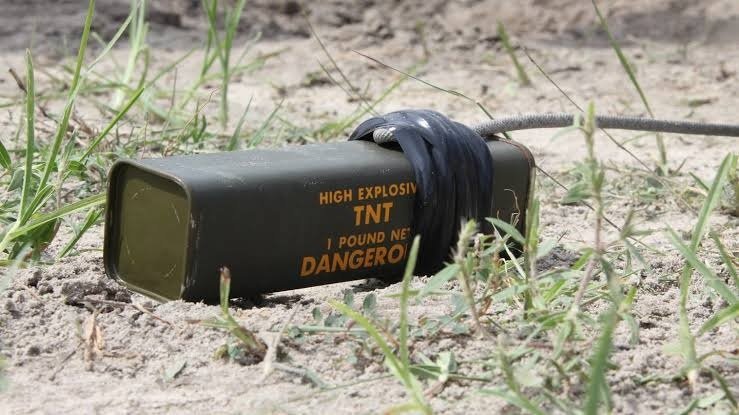
World
PORI, Finland — The United States has provided $20 million in financial support for a new TNT (trinitrotoluene) production facility being built in Noormarkku, Pori, on Finland’s west coast. A cornerstone ceremony was held on September 15, 2026, for the facility, which is being developed and will be operated by Finnish explosives manufacturer Oy Forcit Ab. The plant is being built to increase TNT production capacity in Europe and supply the needs of Finland and NATO, while also supporting Finland’s long-term assistance to Ukraine. TNT is used in artillery and mortar ammunition and other military applications. €200 Million Project The total investment in the project is estimated at around €200 million. Construction began in summer 2026 after the City of Pori issued the first-phase building permits. Work started with fencing an approximately 50-hectare site, while foundation work for the first buildings is now under way. Production is planned to begin in 2028, and the project remains on schedule. The facility is expected to create about 70 jobs. Forcit has already started recruiting for key positions, with broader recruitment planned for 2027. Once operational, the facility will become the second large-scale TNT production plant in the European Union, alongside an existing plant in Poland. Finnish Defence Minister Antti Häkkänen said the facility was being built to meet the critical needs of Finland and NATO. “Strengthening our defence industrial base contributes to our overall defence and creates jobs as well as prosperity,” Häkkänen said. He added that Finland has discussed possible participation in the project with other allied countries and described the US contribution as “yet another demonstration of the deep defence cooperation between our countries.” Long-Term TNT Supply The Finnish Defence Forces have signed a procurement agreement with Forcit covering TNT supplies for 2028–2037. Earlier estimates placed the value of the procurement, excluding VAT, at around €189 million to €255 million, depending on the procurement requirements. Forcit CEO Joakim Westerlund said the facility would strengthen Finland’s national security of supply and the capability of its defence industry amid increased demand for explosives across Europe. The project was initially announced by the Finnish Ministry of Defence in January 2025. Forcit is responsible for both the investment and future operation of the facility. The plant is located approximately 15–20 kilometres from central Pori. Additional approvals, including environmental and chemical-safety permits, remain in process. At the September 15 cornerstone ceremony, a time capsule containing a charter document, newspapers from the day, a guest list and current coins was placed in the foundation stone. Speakers included Employment Minister Matias Marttinen, Pori Mayor Lauri Inna and Forcit CEO Joakim Westerlund. The Pori facility is intended to expand European explosives production capacity and provide a more secure long-term TNT supply for Finland, NATO and Ukraine.
Read More → Posted on 2026-09-22 14:03:54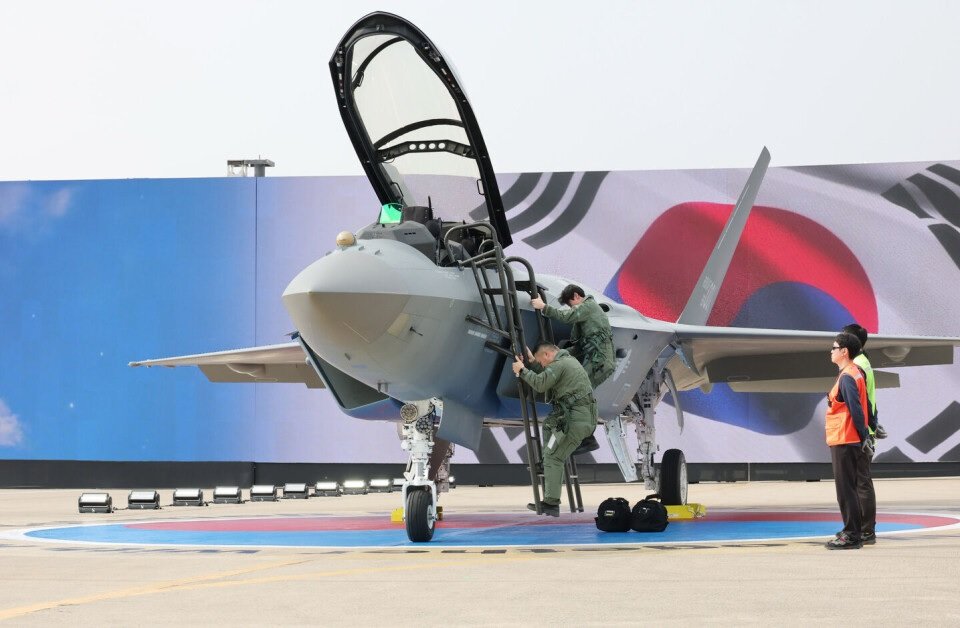
World
SEOUL, — South Korea has delivered the first mass-produced KF-21 Boramae fighter to the Republic of Korea Air Force (ROKAF), marking the transition of the indigenous fighter program from development and testing to production and operational introduction. The aircraft, designated No. 001, was handed over at Korea Aerospace Industries’ (KAI) facility in Sacheon, South Gyeongsang Province. Major Han Jae-seok of the 156th Fighter Squadron signed the acceptance documents and piloted the aircraft to its new base at Yecheon Air Base. During the delivery flight, the KF-21 was escorted by an FA-50, TA-50 and T-50 Golden Eagle. The delivery came about four years and two months after the first KF-21 prototype's maiden flight on July 19, 2022. The first prototype was rolled out in April 2021, mass production began in June 2024, and the first production aircraft rolled out in March 2026 before completing its acceptance procedures. KF-21 Development and Testing The KF-21 is a 4.5-generation multirole fighter developed by KAI. The aircraft is about 16.9 meters long, has an 11.2-meter wingspan, a maximum speed of Mach 1.8, and a maximum takeoff weight of around 25.6 metric tons. Its payload capacity is up to 7.7 tons. The fighter is powered by two General Electric F414-GE-400K afterburning turbofan engines, assembled in South Korea by Hanwha Aerospace, and equipped with the domestically developed Hanwha Systems APY-016K AESA radar. Six prototypes completed approximately 1,600 flight tests covering around 13,000 test conditions, including aerial refueling and air-to-air weapons testing. The KF-21 received combat suitability certification in May 2026 and completed system development in June 2026. The program originated from a South Korean indigenous fighter initiative launched in 2001 under then-President Kim Dae-jung. Full system development began in December 2015 in partnership with Indonesia. The Korean name Boramae means “young hawk.” First KF-21 Squadron The 156th Fighter Squadron, part of the 16th Fighter Wing, was reactivated on June 1, 2026, to become the first ROKAF unit to operate the KF-21. The squadron previously operated F-4E Phantom fighters before being deactivated in 2012. Initial KF-21 pilots and maintenance personnel have completed specialized training and will now prepare the aircraft for service. Air Force Chief of Staff Gen. Son Sug-rag said the handover marked the point at which responsibility for the KF-21 moves from the program's policymakers and developers to the Air Force. He called on personnel operating the aircraft to take pride and responsibility in managing the new fighter. 120 KF-21s Planned South Korea plans to introduce 120 KF-21s in two production blocks. Block I will consist of 40 aircraft focused on air-to-air capabilities, with deliveries planned through 2028. Block II will add 80 aircraft with expanded air-to-ground capabilities, including long-range missiles, with deliveries planned through 2032. The ROKAF plans to formally declare the KF-21 operational in the second half of 2027. The aircraft is intended to gradually replace the country's aging F-5 fleet and become a core element of its future fighter inventory. South Korea's proposed 2027 defense budget includes about 3.3 trillion won for KF-21 mass production, up from 1.4 trillion won in the current year, supporting both the initial production batch and preparations for follow-on production.
Read More → Posted on 2026-09-22 14:07:01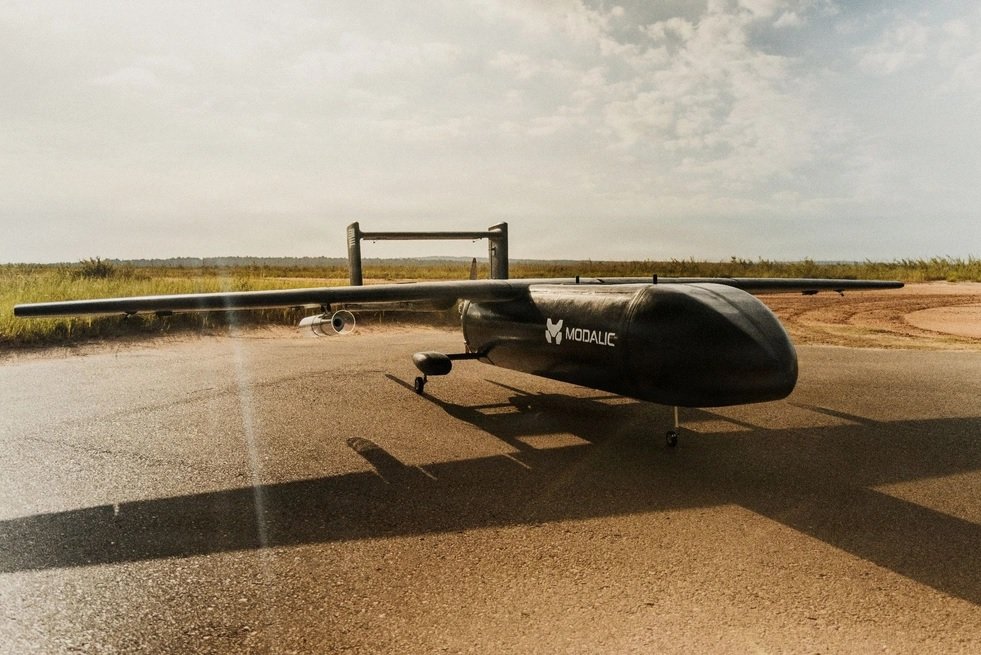
U.S
FORT BRAGG, N.C. — The U.S. Army’s XVIII Airborne Corps tested an autonomous drone “mothership” capable of launching smaller drones while airborne during the Scarlet Dragon 26-3 experimentation exercise at Fort Bragg, North Carolina. Held from September 11 to 17, 2026, the exercise brought soldiers and defense companies together to test emerging technologies against large numbers of unmanned aircraft. Modalic Mothership Tested The Autonomous Swarm Mothership, developed by defense technology company Modalic, successfully launched a rack of smaller drones while in flight. The Army tested whether soldiers and defensive networks could track the parent aircraft, distinguish it from the smaller “daughter” drones and identify the larger threat as multiple aerial contacts appeared on radar. Modalic also presented its production version, called Chariot. Company co-founder and CEO Zack Fishbein said on September 16 that the aircraft weighs 200 pounds (91 kg) and can carry a payload of up to 100 pounds (45 kg). Flight testing of the Chariot is scheduled to begin in November. Counter-Drone Network Tested Scarlet Dragon 26-3 used coordinated drone swarms involving 25 to 100 aircraft to stress the Army’s counter-drone systems. Rather than testing individual systems separately, soldiers evaluated how sensors, artificial intelligence, electronic warfare, autonomous systems, battle-management software and traditional air-defense weapons worked together against saturation attacks. “The Scarlet Dragon exercise has become a validation exercise in the dirt with Soldiers doing integrated, real-world operational-type tasks,” said Col. Tom Monahan, director of the XVIII Airborne Corps’ Joint Innovation Outpost. According to an XVIII Airborne Corps report published by the U.S. Department of War on September 21, the exercise focused on protecting command posts, logistics nodes, air-defense positions and maneuver forces from large numbers of small unmanned aircraft. Col. Rob Kenny, the Corps’ chief of fires, said the testing showed that no single sensor can solve the counter-drone problem alone. Radar, acoustic detection, autonomous technologies and other sensors need to provide information to command-and-control systems that can rapidly distribute targeting data. Other Technologies Tested The exercise also evaluated a dual-mode air-ground light tactical vehicle built on an off-road utility terrain vehicle chassis. It was tested for its ability to transition between ground movement and flight without a runway or fixed infrastructure, with potential applications in reconnaissance, resupply and casualty evacuation. At Holland Drop Zone, soldiers also launched coordinated swarms of small unmanned aircraft from a single location to test their ability to self-organize and fly in formation. Scarlet Dragon is a recurring XVIII Airborne Corps exercise that brings soldiers and industry together to test emerging technologies. The September event was the third iteration in the current cycle, following exercises in December 2025 and earlier in 2026. An August event at the Joint Innovation Outpost brought more than 50 companies to evaluate counter-drone sensors. The Army has not announced whether it will procure Modalic’s mothership or when any of the tested systems could enter service. The XVIII Airborne Corps plans to continue testing the technologies during Scarlet Dragon 27-1 in April 2027, ahead of the larger Summit Strike exercise scheduled for September 2027 at Fort Drum, New York.
Read More → Posted on 2026-09-22 14:15:01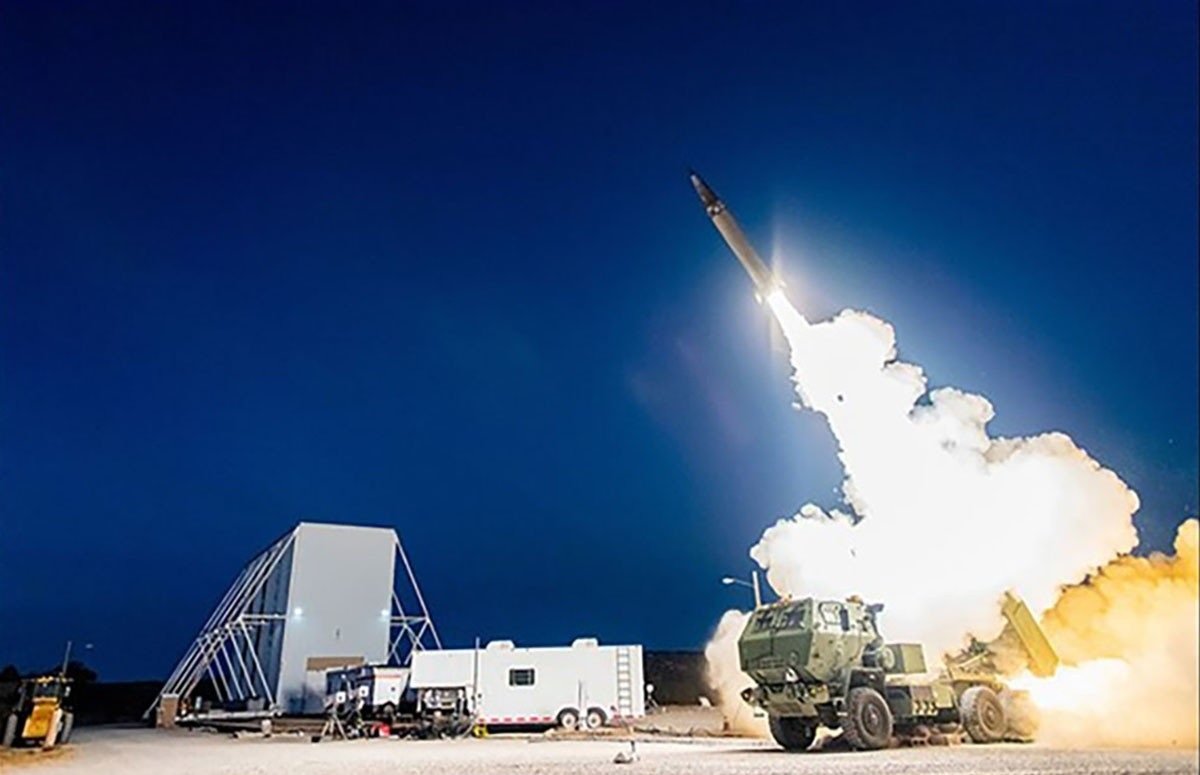
U.S
DALLAS — The U.S. Army has awarded Lockheed Martin Missiles and Fire Control an indefinite-delivery, indefinite-quantity (IDIQ) contract valued at up to $1.2 billion for the production and continued development of the Precision Strike Missile (PrSM) Increment 2. The contract covers initial procurement, follow-on production and continued system development. Work will be carried out at Lockheed Martin facilities and across its U.S. industrial base, with completion estimated for September 13, 2031. Specific quantities and work locations will be determined through individual orders. The PrSM is designed to replace the MGM-140 ATACMS and is compatible with M142 HIMARS and M270A2 MLRS launchers. Increment 1, already in service with the U.S. and Australian armies, provides precision strikes against stationary targets at ranges exceeding 499 kilometers. PrSM Increment 2 adds a multimode seeker combining radio-frequency (RF) and infrared/electro-optical (IR/EO) technologies. This allows the missile to engage moving land and maritime targets, expanding its mission set beyond the stationary targets addressed by Increment 1. Two Flight Tests in 2026 PrSM Increment 2 completed its first flight test in March 2026, followed by a second demonstration in August. During the August test, a missile launched from a HIMARS deployed its protective covers and successfully engaged a moving maritime target while collecting flight data. The Army said the Fiscal Year 2026 flight campaign also validated performance against moving maritime and relocatable land targets. Additional Increment 2 flight tests are scheduled for 2027. According to Lockheed Martin, technologies from its Strigo family of solutions have informed aspects of the Increment 2 guidance package. The PrSM has a stated maximum range exceeding 499 kilometers, a speed above Mach 3.5 and sub-meter accuracy. It carries a 91-kilogram high-explosive fragmentation warhead and uses a solid-propellant rocket motor designed to meet Insensitive Munition (IM) safety standards. Two PrSM missiles can fit in each launch pod. Lockheed Martin is also expanding PrSM manufacturing capacity with a goal of quadrupling overall production output while continuing development of additional increments. Dave Griser, vice president of Precision Fires Launchers and Missiles at Lockheed Martin, said the contract marks an important step toward moving PrSM Increment 2 from flight testing into production. The PrSM is intended to provide the Army with a long-range precision-fire capability against time-sensitive and moving targets on land and at sea.
Read More → Posted on 2026-09-22 15:11:01
Space & Technology
BROOMFIELD, Colo. — The Pentagon has selected Katalyst Space to develop and launch a robotic spacecraft that will assemble a large-format space-based solar power system in low Earth orbit and transmit electricity back to Earth. The project is being carried out under the Advanced Scalable Growth Architecture for Robotic Deployment (ASGARD) program and is funded through the Operational Energy Capability Improvement Fund (OECIF). Katalyst announced the selection on September 21. NEXUS to Assemble Solar Power System in Orbit Katalyst will use its NEXUS multi-mission robotic spacecraft for the mission. The spacecraft is designed for mobility, manipulation and autonomous operations in space. NEXUS will carry modular power-generation and power-beaming tiles being developed by the U.S. Naval Research Laboratory (NRL). After reaching low Earth orbit, NEXUS will use its robotic arms to assemble the tiles into a large-format power-beaming system. The assembled system will collect solar energy, convert it into radio-frequency microwave energy and transmit the energy to a receiving station on Earth. The orbital assembly approach is intended to overcome the volume limitations of individual launch vehicles. Large power-beaming structures can exceed the space available inside a single launch vehicle, so separate components can instead be launched and assembled after reaching orbit. Katalyst said the system is designed to be resupplied, expanded and scaled over time. The company's longer-term vision is to increase the capability from kilowatts toward megawatts of power. Intended Operational Applications OECIF focuses on developing energy technologies for future military operations. According to Katalyst, space-based power generation could provide electricity to remote operational locations and areas where electrical grids are constrained or disrupted, without depending on fuel supplies or conventional terrestrial infrastructure. The technology is also intended to provide resilient power for on-orbit missions and could have applications in disaster areas or other locations where terrestrial power infrastructure is unavailable or damaged. NRL Power-Beaming Research The ASGARD effort builds on NRL's previous work on solar-to-microwave power conversion. NRL previously flew a Photovoltaic Radio-frequency Antenna Module (PRAM) experiment aboard the U.S. Air Force's X-37B spaceplane to study solar-to-microwave conversion in orbit. NRL has also conducted a ground demonstration in which 1.6 kilowatts of power was transmitted across approximately one kilometer using microwaves. ASGARD will combine this power-conversion work with robotic assembly capabilities to demonstrate the construction and operation of a larger power-beaming system in orbit. Katalyst's Expanding Robotic Spacecraft Work Katalyst Space was founded in 2020 and is developing autonomous robotic spacecraft for operations in orbit. Its NEXUS platform is intended for tasks involving spacecraft mobility, manipulation, docking and servicing. The company is also developing the LINK robotic spacecraft. LINK launched on July 3, 2026, aboard a Northrop Grumman Pegasus XL rocket and is being used for a mission involving NASA's Neil Gehrels Swift Observatory. A program kickoff event for ASGARD was held at Katalyst's Broomfield, Colorado, facility on September 2, 2026. Katalyst and the Pentagon have not disclosed the contract value or launch date for the ASGARD mission. The next major work will involve development of the NEXUS spacecraft and the NRL power-beaming tiles.
Read More → Posted on 2026-09-22 15:17:28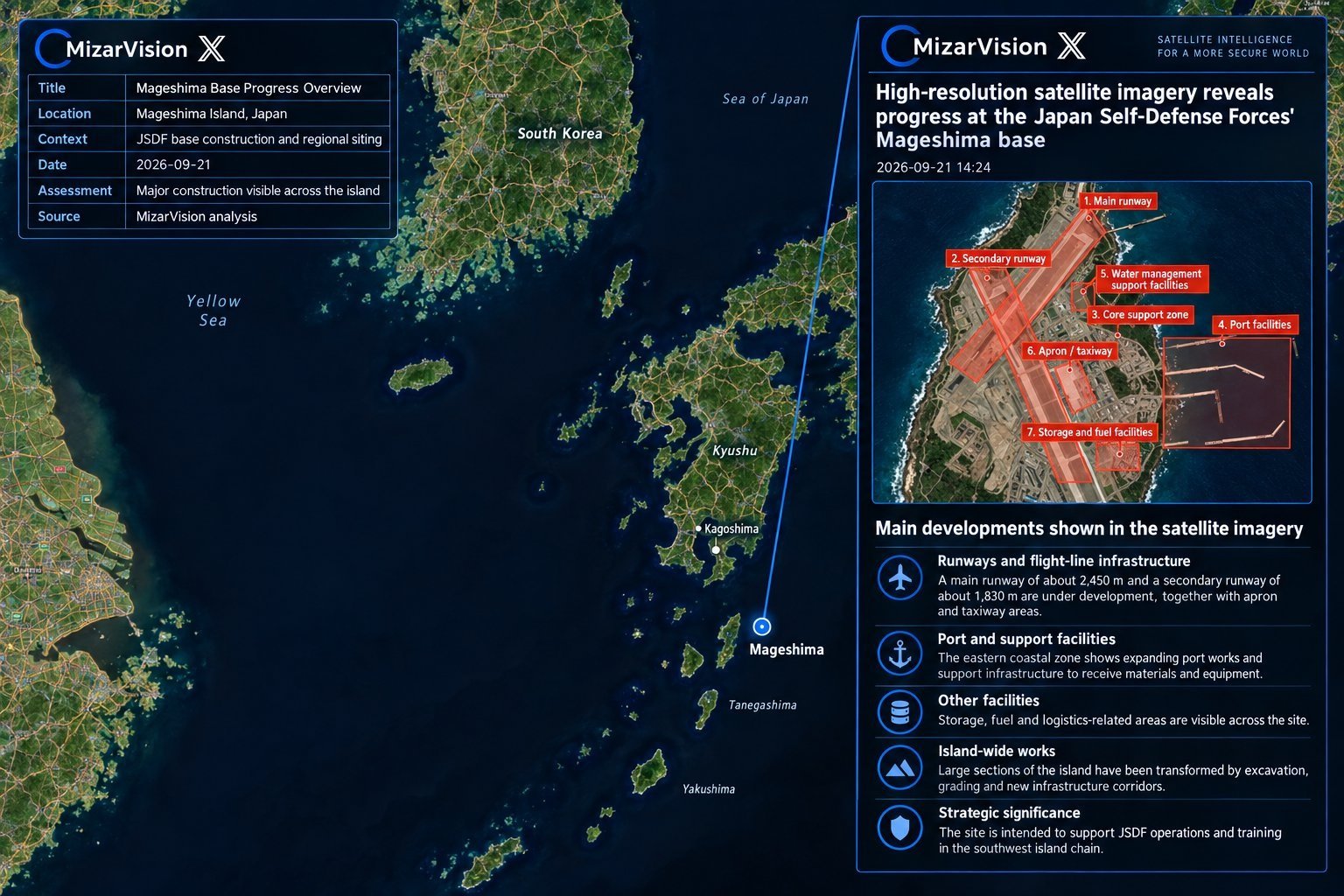
World
TOKYO — High-resolution satellite imagery captured on September 21, 2026, shows continued construction of the Japan Self-Defense Forces (JSDF) military base on Mageshima Island, south of Kyushu in Kagoshima Prefecture. The imagery, analyzed by independent OSINT @MizarVision, shows progress across several sections of the planned facility, including the main and secondary runways, taxiways, aircraft aprons, port facilities, logistics areas, and fuel and storage zones. Large parts of the previously uninhabited island have been reshaped through extensive excavation and grading. Construction is also continuing along the eastern coast, where maritime support facilities, including port and pier infrastructure, are being developed. High-resolution satellite imagery dated September 21, 2026, provides a detailed look at the continuing construction of the Japan Self-Defense Forces’ new base on Mageshima Island, south of Kyushu.I identified significant progress across several key areas of the site, including… pic.twitter.com/PblfNUWYQw — MizarVision (@MizarVision) September 22, 2026 Major Military Facility Mageshima is an 8.2-square-kilometer island in the Osumi Islands, about 10 kilometers west of Tanegashima and part of Nishinoomote City. The island measures approximately 4.5 kilometers north to south and 2.7 kilometers east to west. The Japanese government purchased the island in 2019 for 16 billion yen ($146 million) for development as a military facility. Full-scale construction began on January 12, 2023. The planned base will support JSDF operations and training in Japan’s southwestern islands. It will also become a permanent location for Field Carrier Landing Practice (FCLP) by U.S. Navy carrier-based aircraft, replacing the current training location at Iwo Jima (Iwoto), about 1,360 kilometers from Japan’s main islands. The facility is also planned to support Air Self-Defense Force F-35B operations and training, as well as logistics and other regional response missions. Planned infrastructure includes a 2,450-meter main runway, an approximately 1,830-meter secondary crosswind runway, taxiways, aprons, hangars, an air traffic control tower, port and pier facilities, fuel and ammunition storage, and other support areas. Living facilities are also being prepared, although most personnel and their families are expected to live on nearby Tanegashima and commute by boat. Construction Schedule The air traffic control tower was completed by the end of 2025. Aerial observations earlier in 2026 showed further development of the main runway, extensive grading and continuing pier and coastal construction. The project was originally expected to be completed around 2027, but the completion target has been extended to the end of March 2030. Reported factors behind the delay include weather affecting the sea transport of workers and construction materials, labor shortages and site-related challenges. The Defense Ministry has also proposed extending fishing restrictions around the eastern part of Mageshima and offered additional compensation to local fishing cooperatives. MizarVision’s latest imagery is consistent with earlier public reports and updates from Japan’s Kyushu Defense Bureau, which regularly publishes information on the project. The continuing construction reflects Japan’s broader effort to strengthen defense infrastructure and operational capabilities across the Nansei, or southwestern, island chain.
Read More → Posted on 2026-09-22 15:29:33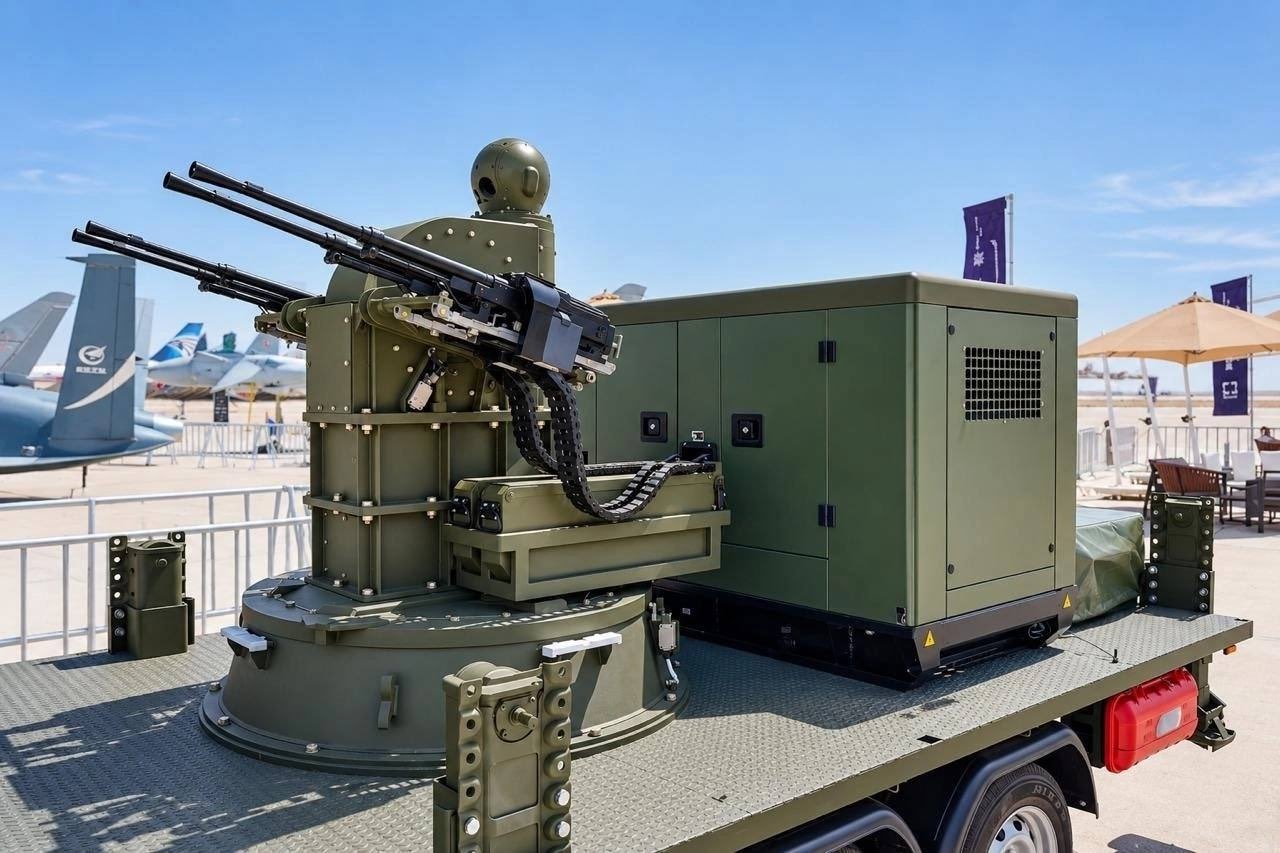
World
MOSCOW — Russia’s state defense corporation Rostec has delivered another batch of its automated Zubr short-range air-defense systems to the Russian Ministry of Defense. The systems are designed to counter small and maneuverable unmanned aerial vehicles (UAVs) and loitering munitions. Automated Drone Detection and Tracking The Zubr was developed by Rostec’s High-Precision Systems holding. According to Rostec, the system can independently detect and track drones, with the operator required to authorize the final engagement. The system consists of a command post, an integrated radar and four combat modules. Each module has an electro-optical targeting system and is armed with four 7.62 mm PKT or PKTM machine guns. Some reports have also identified the GShG-7.62. A complete Zubr system can bring up to 16 machine-gun barrels against an aerial target. Short-Range Air Defense The integrated radar can detect both large and small aerial targets at ranges of up to 1.5 kilometers and supports round-the-clock operation. Rostec says the Zubr is intended to protect critical infrastructure and other important facilities from low-flying, small aerial targets. It can operate independently or as part of a layered air-defense network, including alongside larger systems such as the Pantsir. Combat Deployment Rostec delivered the first batch of Zubr systems to the Russian military in January 2026, after which they were placed on combat duty to protect infrastructure. Reports from mid-2026 said the systems had destroyed dozens of drones while deployed at administrative and fuel-and-energy facilities. Rostec said combat use has confirmed the system’s effectiveness. Rostec industrial director Bekhan Ozdoev said the Zubr provides continuous detection and automatic tracking of drones of different sizes. The company has also highlighted its rapid deployment and field-maintenance capabilities, including operation from remote or minimally equipped positions. Development and Export The Zubr was first publicly associated with testing and display activities in 2024, including equipment observed at the Kapustin Yar test range and appearances linked to Army-2024. Development was reported to be at an advanced stage by late 2024. An export version designated TKB-1167 “Bizon” was showcased earlier in September 2026 at the El Alamein International Airshow in Egypt. Rostec has not disclosed the number of systems included in the latest delivery or their exact deployment locations.
Read More → Posted on 2026-09-22 15:42:39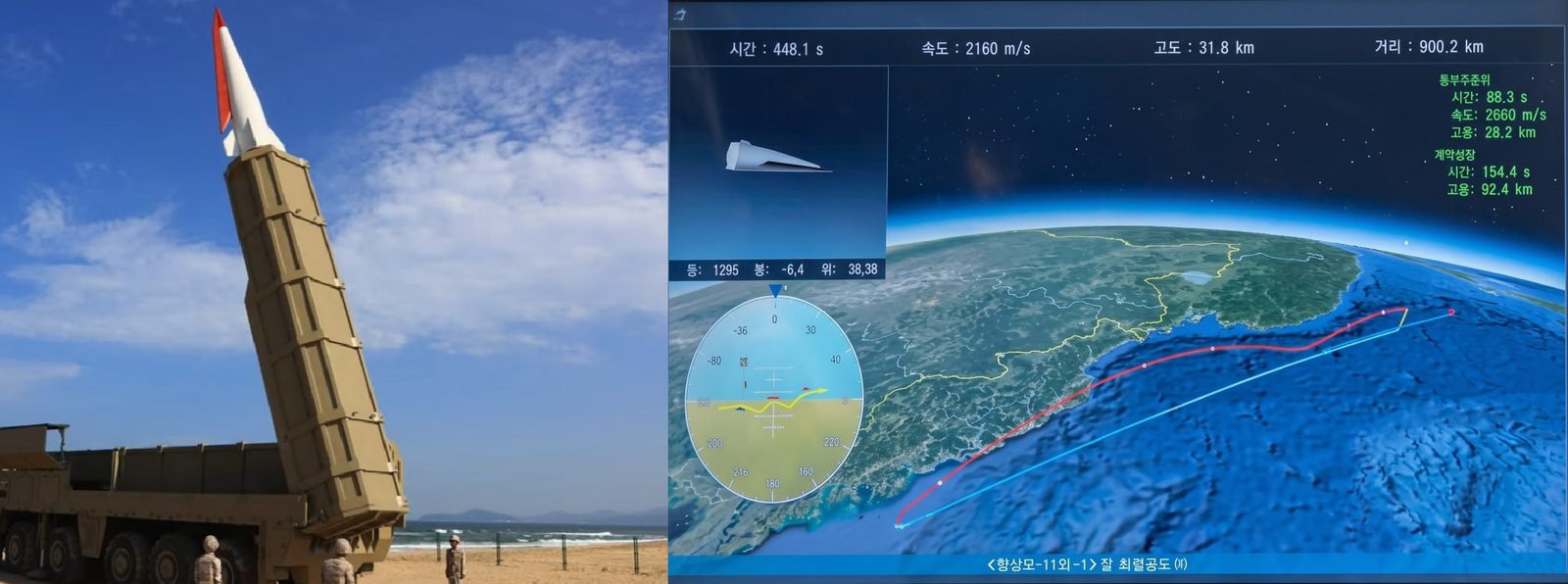
World
WONSAN, North Korea — North Korea has tested the Hwasongpho-11Ma-1, a solid-fueled short-range ballistic missile equipped with a maneuverable hypersonic glide vehicle (HGV). The September 20, 2026, test provided new information about the missile's design, flight profile and launcher. Hwasong-11 Family The Hwasongpho-11Ma-1 belongs to the Hwasong-11 family, known in Western designations as the KN-23 series. It builds on earlier Hwasong-11 variants that use a single-stage solid-propellant booster. The earlier Hwasong-11Ma, also known as the Hwasong-11E, was first publicly displayed at North Korea's Defence Development-2025 exhibition in October 2025 and was later shown during military parades. Hypersonic Glide Vehicle The missile combines a Hwasong-11-series airframe with a wedge-shaped, finned glide vehicle. After the booster burns out, the glide vehicle separates and uses aerodynamic lift to continue toward its target rather than following a conventional ballistic trajectory. Small control surfaces near the rear allow the vehicle to change direction and altitude. Flight-path information released by North Korea also showed a pull-up maneuver during the later part of the flight. This lower and maneuverable flight profile can make the trajectory less predictable than that of a conventional ballistic missile. Flight-Test Data North Korean state media released the following figures from the September 20 test: Speed: 2,146 meters per second, approximately Mach 6.3 Altitude: 35.8 kilometers Flight time: 446.1 seconds Displayed distance: 908.2 kilometers South Korean tracking of related launches recorded ranges of approximately 450 kilometers and more than 600 kilometers, with peak altitudes of about 60 to 70 kilometers. The difference between the North Korean display and external tracking means the 908.2-kilometer figure is a North Korean-reported flight figure, rather than an independently confirmed range. Missile and Launcher Open-source estimates for the Hwasong-11 family place its overall length at roughly 7.3 to 9.8 meters, diameter at about 0.9 meters, and launch mass at around 3,400 kilograms. The Hwasongpho-11Ma-1 uses a six-axle wheeled TEL carrying the missile inside a launch container. Earlier Hwasong-11 variants have also been displayed on eight- and ten-wheeled launchers capable of carrying two missiles. Its solid-fuel propulsion allows rapid preparation for launch, while the mobile launcher allows the system to be relocated before or after firing. Development of Hypersonic Technology North Korea began testing hypersonic glide-vehicle technology with the Hwasong-8 in September 2021. The technology was later applied to systems including the Hwasong-12B and solid-fueled Hwasong-16B. The Hwasong-11Ma-1 represents the application of this technology to a shorter-range, solid-fueled missile platform. North Korean descriptions have presented the system as intended for ultraprecision strikes against targets hundreds of kilometers away and for improving the ability to penetrate missile defenses. The combination of a mobile solid-fuel missile, a maneuverable glide vehicle and a lower flight profile is the main feature distinguishing the Hwasongpho-11Ma-1 from conventional ballistic missiles in the Hwasong-11 family.
Read More → Posted on 2026-09-22 15:59:19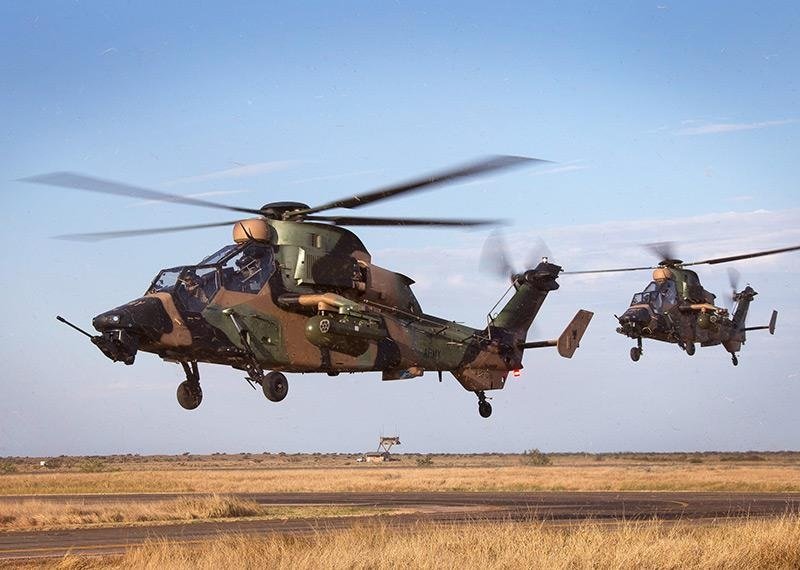
World
DARWIN, — The Australian Army has concluded flying operations of its Tiger Armed Reconnaissance Helicopter (ARH Tiger) in Darwin, ending around two decades of service and marking the transition to the AH-64E Apache attack helicopter. Tiger Service Ends After Two Decades The 1st Aviation Regiment marked the retirement with a family open day, a formal dinner and a ceremonial flyover of Darwin. Commander Army Aviation Major General David Hafner AM CSC said the end of Tiger operations was a significant moment for the regiment as it continues its relocation to Townsville and develops Australia's attack helicopter capability around the Apache. The ARH Tiger entered Australian service in 2004. It combined the reconnaissance role of the unarmed Kiowa with the armed role of the Bushranger version of the Iroquois. The two-seat helicopter provided intelligence, surveillance, reconnaissance, electronic warfare and strike capabilities on a single platform. Australia operated 22 Tigers, mainly based with the 1st Aviation Regiment at Robertson Barracks in Darwin. The retirement follows the planned 20-year service life of the Tiger and reflects the changing threat environment, including advanced air defence systems, precision weapons and uncrewed platforms. Apache Transition Underway The AH-64E Apache is replacing the Tiger under Project LAND 4503. Australia is receiving 29 Apaches, with six already delivered and the complete fleet expected by the end of 2029. Deliveries began in September 2025, with the first aircraft arriving at RAAF Base Townsville. The Apache is expected to provide improved firepower, networking and interoperability for future Army operations. Australian Apache crews conducted their first live-fire activities in July 2026 during Exercise Possum Guns in Townsville, using the 30mm chain gun, rockets and Hellfire missiles. Regiment Relocates to Townsville The 1st Aviation Regiment's headquarters and 161 Reconnaissance Squadron relocated to Townsville in 2025, while 162 Reconnaissance Squadron continued Tiger operations from Darwin until their conclusion. Boeing Defence Australia is providing sustainment support under a multi-year contract. The Australian Government has also invested in infrastructure upgrades at Townsville to support the Apache capability and the regiment's relocation. The conclusion of Tiger flying operations in Darwin closes the aircraft's operational chapter with the Australian Army as the 1st Aviation Regiment continues building its attack aviation capability around the Apache in Townsville.
Read More → Posted on 2026-09-23 11:49:53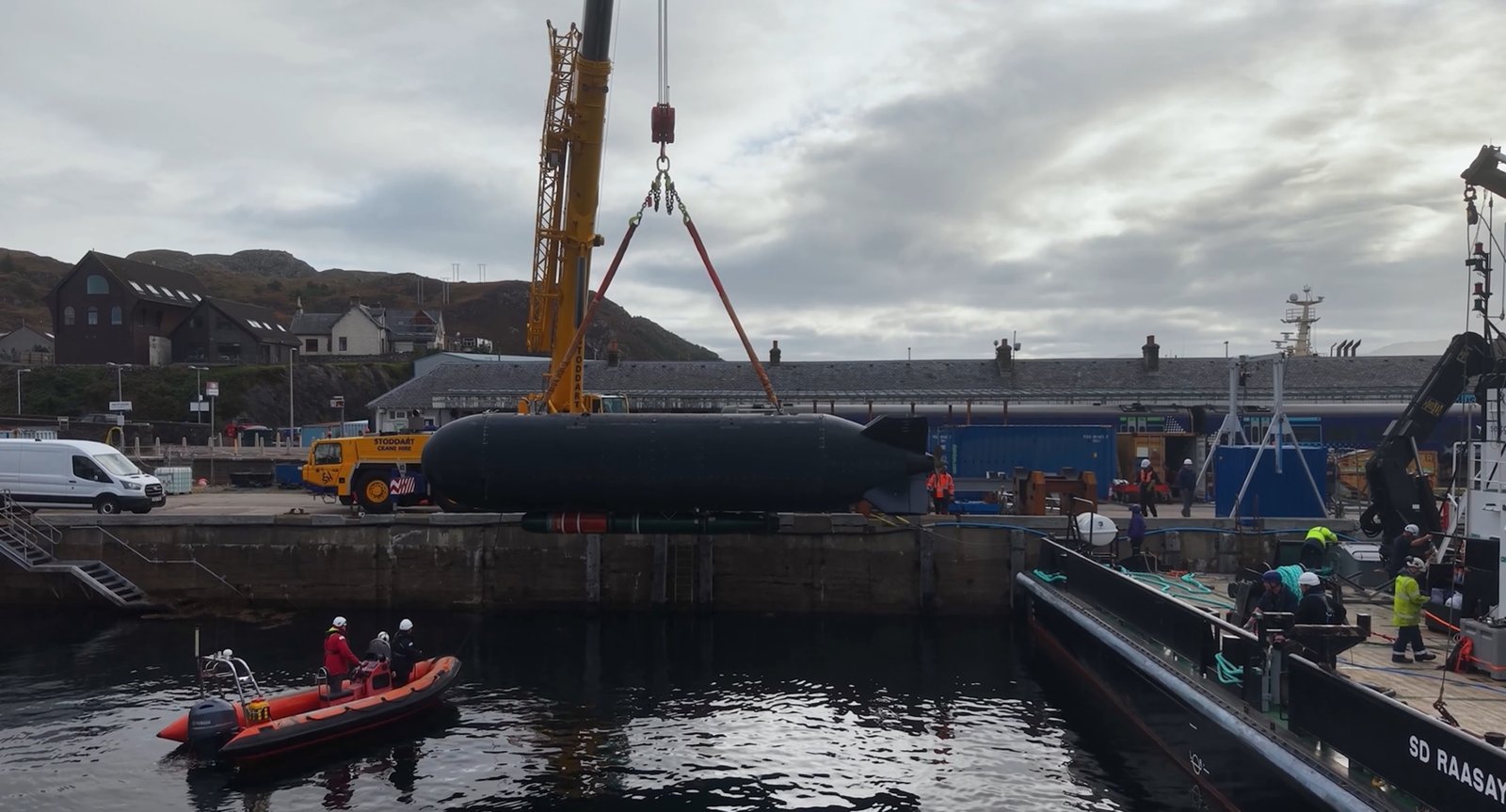
World
SCOTLAND — The U.S. Navy and Royal Navy have successfully conducted a proof-of-concept launch of a U.S. Mk 48 heavyweight torpedo from the Royal Navy’s XV EXCALIBUR uncrewed underwater vehicle (XLUUV). The test took place on September 13, 2026, at the British Underwater Test & Evaluation Centre (BUTEC) in Scotland. It was conducted under Project Broadsword and Trial Iron as part of AUKUS Pillar 2, which covers cooperation on advanced military capabilities. The launch was the first time either the United States or United Kingdom had launched a heavyweight torpedo from an uncrewed underwater vessel rather than a crewed submarine, according to the UK government. 📰 U.S. NAVY UPDATE: U.S. Navy and Royal Navy Successfully Test Fire Torpedo from Unmanned Undersea Vehicle📍WASHINGTON – On September 13, 2026, the U.S. Navy and the Royal Navy successfully conducted the proof-of-concept launch of an exercise U.S. Mk 48 Heavyweight Torpedo… pic.twitter.com/lVB4wYSwC0 — Office of the Chief of Naval Operations (@USNavyCNO) September 22, 2026 Mk 48 Launched From XV EXCALIBUR The Mk 48 is the U.S. Navy’s standard heavyweight torpedo and is used as a submarine-launched weapon against surface ships and submarines. The launch platform, XV EXCALIBUR, is a 12-meter, 19-tonne XLUUV built by Plymouth-based MSubs under the Royal Navy’s Project CETUS. The Royal Navy describes Excalibur as an experimental platform for testing autonomous systems, military payloads and missions. Excalibur does not have conventional torpedo tubes. During the trial, the Mk 48 was carried externally beneath the vehicle and released from a cradle. Interoperability Demonstrated The demonstration validated the mechanical, electrical and software connections needed to operate a U.S. weapon from a British autonomous underwater vehicle. U.S. Chief of Naval Operations Adm. Daryl Caudle described the test as a historic first for allied undersea warfare and said it demonstrated the potential for greater interchangeability of weapons, payloads and mission architectures between allied platforms. Vice Adm. Robert Gaucher, Director of Submarine Programs, said the demonstration was an early step toward adding strike capabilities to autonomous undersea systems and highlighted the role of AUKUS Pillar 2 in improving interoperability. Rapid Development The project was approved in February 2026 by the Department of the Navy Rapid Capabilities Office (DONRCO), with the demonstration completed in less than seven months. The effort involved DONRCO, OPNAV N97, the Royal Navy, Defense Innovation Unit, Naval Undersea Warfare Center Keyport and industry partners. DONRCO co-managed the project with the Navy’s Direct Reporting Portfolio Manager for Robotic and Autonomous Systems. Vice Adm. Seiko Okano, director of DONRCO, said the project uses a modular, software-defined and open-systems approach to combine allied hardware with commercial technology rather than waiting for development of a single bespoke platform. The Department of the Navy established the Rapid Capabilities Office in August 2025 with a mandate to deliver solutions to operational problems within a zero-to-three-year timeframe. Next Phase: Project CUTLASS The next phase will be Project CUTLASS, which will use the Anduril Dive-XL uncrewed underwater vehicle. CUTLASS will focus on further payload integration, command-and-control data architecture and tactical employment scenarios as the United States and United Kingdom continue developing uncrewed undersea capabilities. The Excalibur test provides an initial demonstration of integrating a U.S. heavyweight torpedo with an allied uncrewed underwater platform, supporting the wider AUKUS effort to develop interoperable autonomous undersea systems.
Read More → Posted on 2026-09-23 12:05:47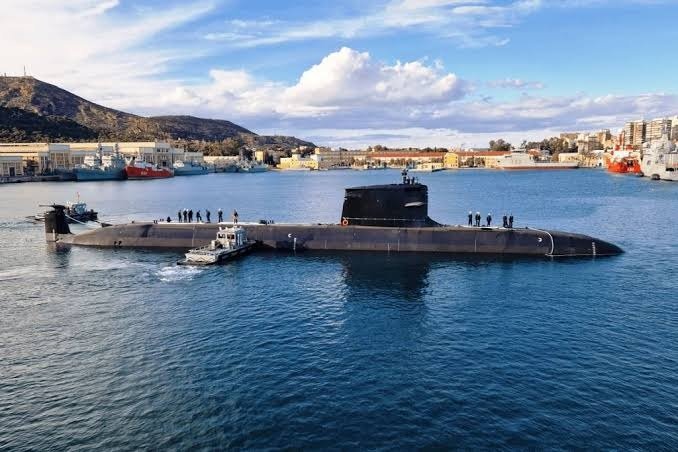
Europe
Cartagena, Spain — Spanish state-owned shipbuilder Navantia has completed testing of the Air Independent Propulsion (AIP) system installed in a dedicated section of the S-83 Cosme García, the third submarine of the Spanish Navy’s S-80 class. The trials began in June 2026 after the system was installed and verified in its actual onboard configuration. Testing was conducted at Navantia’s specialized IPS3 facility in Cartagena. The AIP section is about 12 metres long and weighs approximately 400 tonnes. Following the successful tests, the section will be joined to the rest of the submarine’s pressure hull. The tests were conducted under conditions designed to reproduce submarine operations, including diving depth and forward speed. Navantia also demonstrated the system’s ability to generate power for battery charging across different operating conditions. The testing is expected to help optimize the schedule for the S-83’s upcoming Harbour Acceptance Trials (HAT). BEST AIP System The S-80 uses Navantia’s third-generation Bio-Ethanol Stealth Technology (BEST) AIP system. Instead of storing hydrogen onboard, the system produces hydrogen when required from liquid bioethanol. During operation, bioethanol is processed to extract hydrogen, which is then supplied to a Proton Exchange Membrane (PEM) fuel cell to generate electricity while the submarine is submerged. The system also uses liquid oxygen. Navantia says the system can allow S-80 submarines to remain submerged for up to three weeks, extending underwater endurance compared with conventional submarines that rely on lead-acid batteries and need to surface or snorkel to recharge. The technology involves several Spanish and international industrial partners. Abengoa developed the bioethanol processor, Collins Aerospace provided the naval fuel-cell technology, and Bionet worked on the carbon-dioxide disposal system designed to dissolve exhaust gases into seawater without producing bubbles that could compromise stealth. Navantia Chairman Ricardo Domínguez said the successful testing demonstrates the technological maturity of the system and the Spanish industry’s ability to develop and deliver complex technologies. S-80 Program Progress The S-80 program covers four conventional submarines for the Spanish Navy. The boats are approximately 80 metres long, have a diameter of about 7 metres and a submerged displacement of around 3,000 tonnes. They feature advanced combat systems and sensors and are designed for a core crew of 32 sailors, with accommodation for up to eight additional personnel. The AIP system had previously completed Factory Acceptance Tests (FAT) ashore and demonstrated its ability to recharge the batteries of the S-81 Isaac Peral, the first submarine of the class. The S-82 Narciso Monturiol is undergoing harbour and sea trials, while the S-83 Cosme García and S-84 Mateo García de los Reyes remain under construction at Cartagena. The completion of the S-83 AIP trials marks another major step in the integration of the propulsion system before the submarine proceeds to its next stages of construction and testing.
Read More → Posted on 2026-09-23 12:13:33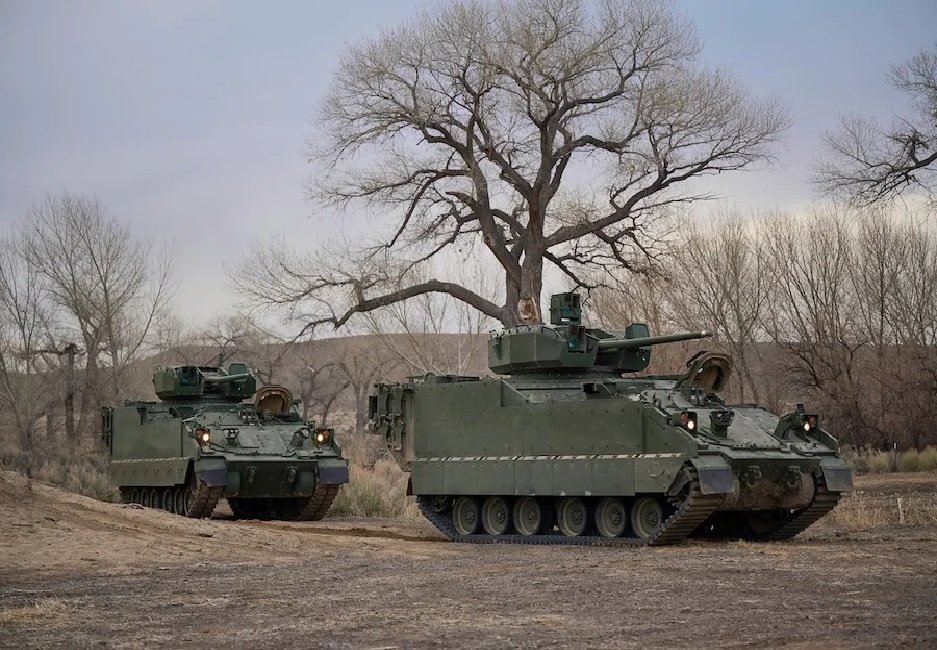
U.S
FORT CAVAZOS, Texas — BAE Systems has delivered two AMPV 30 Infantry Fighting Vehicle prototypes to a U.S. Army unit for evaluation under the service’s Transformation in Contact (TiC) 2.0 initiative. The prototypes arrived at the 1st Cavalry Division at Fort Cavazos, Texas, in April 2026 and were publicly announced by BAE Systems on September 22. The company funded the project with $17 million from its own Internal Research and Development (IRAD) funds and completed development in six months. Field Evaluation The vehicles are being evaluated by soldiers from the 2nd Battalion, 5th Cavalry Regiment. Testing includes field exercises and live-fire trials to assess how the AMPV 30 performs against capabilities identified by soldiers as important for modern battlefield operations. The Army has not established a formal requirement for the AMPV 30, and it has not committed to purchasing the configuration. The vehicles are a company-funded development effort and are not part of a program of record. 30mm Firepower and New Systems The AMPV 30 uses the existing AMPV tracked chassis with BAE Systems’ common top plate and a Kongsberg Medium Caliber Turret. The remotely operated turret is already in production for the U.S. Marine Corps’ Amphibious Combat Vehicle and is equipped with a 30 mm Mk 44 Bushmaster II cannon. The crew operates the weapon from inside the armored hull. The prototypes also feature: Counter-unmanned aircraft system (C-UAS) capabilities to address drone threats. A cross-platform target handoff system that allows vehicles to share targeting information. A 360-degree camera system that provides crews with visibility around the vehicle without leaving the armored hull. Modular Design The AMPV has a modular, open architecture that allows different mission equipment to be integrated. BAE Systems says its common top plate can support mission equipment packages and is adaptable to more than 30 different turret systems. The two AMPV 30s bring the number of turreted AMPV prototypes funded by BAE Systems over the past two years to eight. “Our mission was speed and innovation, and we delivered beyond expectations,” said Bill Sheehy, vice president of BAE Systems’ Ground Maneuver futures. He said the effort demonstrated the company’s ability to integrate new design solutions in a time-effective and more cost-efficient way for the Army. Next Phase The AMPV family is being used by the Army to replace older M113 vehicles in several support roles. The AMPV 30 concept explores adding direct-fire capability, counter-drone functions and improved connectivity while retaining the existing chassis and modular design. The Army expects two additional AMPV 30 prototypes in early 2027. Those vehicles are planned to undergo a rotation at the National Training Center at Fort Irwin, California, for further evaluation.
Read More → Posted on 2026-09-23 12:34:18
World
BRNO, CZECH REPUBLIC — Honeywell Aerospace’s engineering team in Brno has successfully integrated the main subsystems of a hydrogen fuel-cell power source designed to generate and supply electricity for an aircraft. The milestone is part of Project NEWBORN, a European initiative focused on developing a megawatt-class hydrogen-electric propulsion system for low-emission aviation. Project NEWBORN Launched in 2023, Project NEWBORN is supported by the European Union through the Clean Aviation Joint Undertaking. The project has a total cost of about €44 million, including approximately €33.3 million in EU funding, and involves 18 companies and research organizations from 10 European countries. The project aims to develop an aerospace-qualified hydrogen fuel-cell propulsion system. It targets an overall propulsion-system efficiency of 50 percent by the end of 2026. The technology is designed around scalable 1 MW modules that can be combined to exceed 3 MW. The project is intended to support future applications in CS-23 aircraft with up to 19 seats around 2030, followed by larger regional aircraft around 2035. Hydrogen Power System Integration The latest milestone combined hydrogen fuel cells with electrical and supporting systems into a single working power source. Engineers tested the integrated system for: Electrical functionality Leak tightness Fluid operating parameters Communication between subsystems Control algorithms Protection mechanisms Further testing will focus on expanding the system’s power range while improving its stability and resilience. Honeywell developed a dedicated test platform at the ÚJV Řež research and engineering facility near Prague. The platform can reproduce various aircraft functions and includes power-generation, fluid-distribution, electrical and control, safety and heat-rejection systems. European Industry Collaboration Project NEWBORN's development covers hardware, software, modelling, simulation and integration work. PowerCell supplied the aviation-grade proton exchange membrane fuel-cell technology. Fraunhofer and Test-Fuchs contributed elements of the electrical power source and related technologies. Siemens Industry Software, KU Leuven, Friedrich-Alexander-Universität Erlangen-Nürnberg and CIRA supported modelling, simulation and integration analysis. PowerCell has also validated its 300 kW fuel-cell stack, with multiple stacks able to be combined to reach megawatt-level power. “Project NEWBORN is not only a demonstration of new technology, but also proof that European industry, universities and research organisations can jointly pursue ambitious technological visions and turn them into functioning systems,” said Miroslav Matoušek, NEWBORN project coordinator at Honeywell Aerospace. Ondřej Kotaba, chief technology expert and technical leader of the NEWBORN project at Honeywell Aerospace, said the development involves interconnected technologies covering air supply and conditioning, hydrogen management, thermal management, electrical power distribution, power electronics, control, communications and safety monitoring. Next Phase in Italy Following the integration work in Czechia, the hydrogen power source will be transported to Gorizia, Italy, for the next phase. There, it will be connected to battery systems supplied by Pipistrel and a megawatt-class electric propulsion system jointly developed by the University of Nottingham, Honeywell Aerospace and Pipistrel. During the planned ground demonstration, the hydrogen fuel cells and batteries will supply electricity to the electric motor that drives an aircraft propeller. The integrated system is targeted to reach Technology Readiness Level 4 by the end of the current project phase in 2026. The project is being developed through cooperation between European industry, universities and research organizations, with key development work and intellectual property retained in Europe.
Read More → Posted on 2026-09-23 12:47:20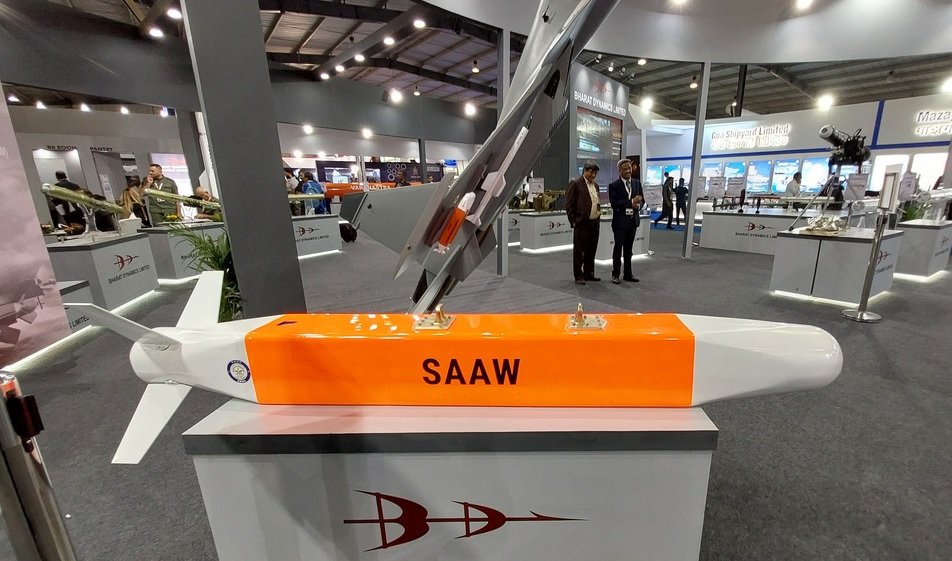
India
New Delhi, The Ministry of Defence (MoD) has signed a contract worth ₹810.79 crore with Bharat Dynamics Limited (BDL) for the procurement of 160 Satellite Smart Anti-Airfield Weapons (SAT-SAAW) along with associated equipment for the Indian Air Force (IAF). The contract was signed in New Delhi on Wednesday in the presence of Defence Secretary Rajesh Kumar Singh. The procurement has been placed under the Buy (Indian-Indigenously Designed, Developed and Manufactured) category. SAT-SAAW for IAF SAT-SAAW is an air-to-ground precision-guided glide bomb designed and developed by the Defence Research and Development Organisation (DRDO). The weapon is intended to engage enemy airfield targets from a long stand-off range. The weapon can be launched from aircraft platforms including the SEPECAT Jaguar, BAE Hawk and Su-30MKI. Available specifications state that the weapon weighs 125 kg and measures 1.85 metres in length. Its range is stated at 90–100 km depending on release conditions. The weapon uses an onboard navigation system for precision guidance. Its stated accuracy is less than 7 metres using inertial navigation and GPS, while accuracy is stated as less than 3 metres when equipped with a seeker. As a glide weapon, SAT-SAAW does not rely on a conventional propulsion system to reach its target. It uses the launch aircraft's release conditions to glide toward the target. 60% Indigenous Content The Ministry of Defence stated that the SAT-SAAW system will have 60 per cent indigenous content. The programme also includes the indigenisation of key sub-systems, including the Initial Measurement Unit (IMU), Long Impact Delay Fuse and Twin Store Carrier. The procurement under the Buy (Indian-Indigenously Designed, Developed and Manufactured) category is intended to support domestic design, development and manufacturing of the weapon system. Deliveries From 2027-28 BDL is scheduled to deliver the 160 SAT-SAAW systems and associated equipment during the financial years 2027-28 and 2028-29. The Ministry of Defence said the induction of SAT-SAAW will enhance the operational capability of the Indian Air Force, support continued unhindered operations and strengthen the country's overall defence preparedness.
Read More → Posted on 2026-09-23 13:00:32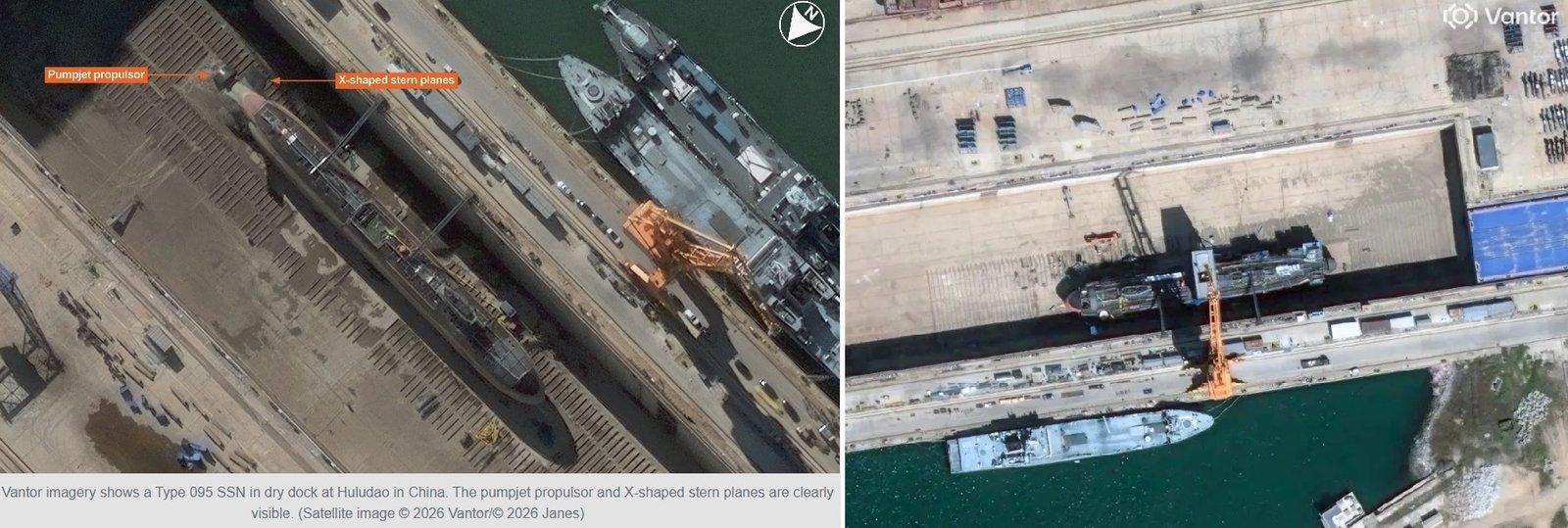 Satellite Imagery Reveals New Chinese Nuclear-Powered Submarine Under Construction at Bohai Shipyard
World
HULUDAO, China — New commercial satellite imagery has revealed a nuclear-powered attack submarine under construction at China’s Bohai Shipyard in Huludao. Defense analysts have assessed the submarine as the prospective Type 095, although China has not officially confirmed its designation. New Satellite Imagery The War Zone reported that Vantor imagery captured on September 18, 2026, provides a clearer view of the submarine. Janes analysed a separate Vantor image from September 1 and assessed the vessel as a Type 095 nuclear-powered attack submarine. However, the submarine’s exact identity remains unconfirmed, as China has not publicly identified the vessel. Pumpjet Propulsion and X-Shaped Tail The submarine is estimated to be approximately 120 metres (394 feet) long based on commercial satellite imagery. One of its most notable features is a pumpjet propulsor, which encloses the propulsion components inside a shroud. The system is associated with reduced acoustic signatures and improved efficiency at higher underwater speeds. China already uses pumpjet propulsion on its upgraded Type 093B nuclear-powered attack submarines. The submarine also has an X-shaped stern-plane arrangement, replacing the cruciform configuration used on earlier Chinese nuclear submarines, including the Type 093B. The X-tail can provide improved manoeuvrability and control and may reduce hydrodynamic noise in some operating conditions. This is the first known X-tail configuration observed on a Chinese nuclear-powered attack submarine. The vessel also has a streamlined sail with no visible fairwater planes. Possible Missile Launch Section The September 1 imagery showed an open rectangular section behind the sail. Some observers have suggested that it could accommodate a vertical launch system (VLS) for anti-ship and land-attack cruise missiles. However, naval analyst Alex Luck cautioned that satellite imagery alone cannot establish the purpose of the opening. It could instead be associated with access to the reactor compartment or other construction work. In the September 18 imagery, the section is covered by a structure. Unidentified Bow Openings The latest imagery also shows at least two large circular openings side-by-side in the bow, ahead of the sail. Their purpose remains unclear. They could be associated with launch systems or components of the submarine’s sonar suite, but the available imagery does not provide enough information to confirm their function. China Developing Multiple New Submarines China is developing several new submarine designs simultaneously. In 2024, information emerged about the Type 041, also known as the Zhou-class, a hybrid submarine. Another unidentified submarine design with a proportionally very small sail was observed at the Jiangnan Shipyard in Shanghai in 2026. An earlier submarine observed at Bohai in February 2026 was estimated to be about 110–115 metres long. Analysts have suggested that the February vessel may have been an earlier or one-off prototype, while later submarines launched at Bohai and Jiangnan could represent more complete versions of the new attack-submarine design. Part of China's Nuclear Submarine Expansion U.S. Navy officials have said China is shifting construction emphasis from diesel-electric submarines toward nuclear-powered platforms. The prospective Type 095 attack submarine and Type 096 nuclear-powered ballistic-missile submarine are expected to incorporate new reactors, improved sensors, advanced weapon systems and reduced acoustic signatures. These next-generation submarines are projected to enter service in the late 2020s and through the 2030s. China currently operates the world’s second-largest fleet of nuclear-powered submarines after the United States. The Type 095 designation and the exact functions of several features visible in the satellite imagery remain unconfirmed.
Read More → Posted on 2026-09-23 13:47:48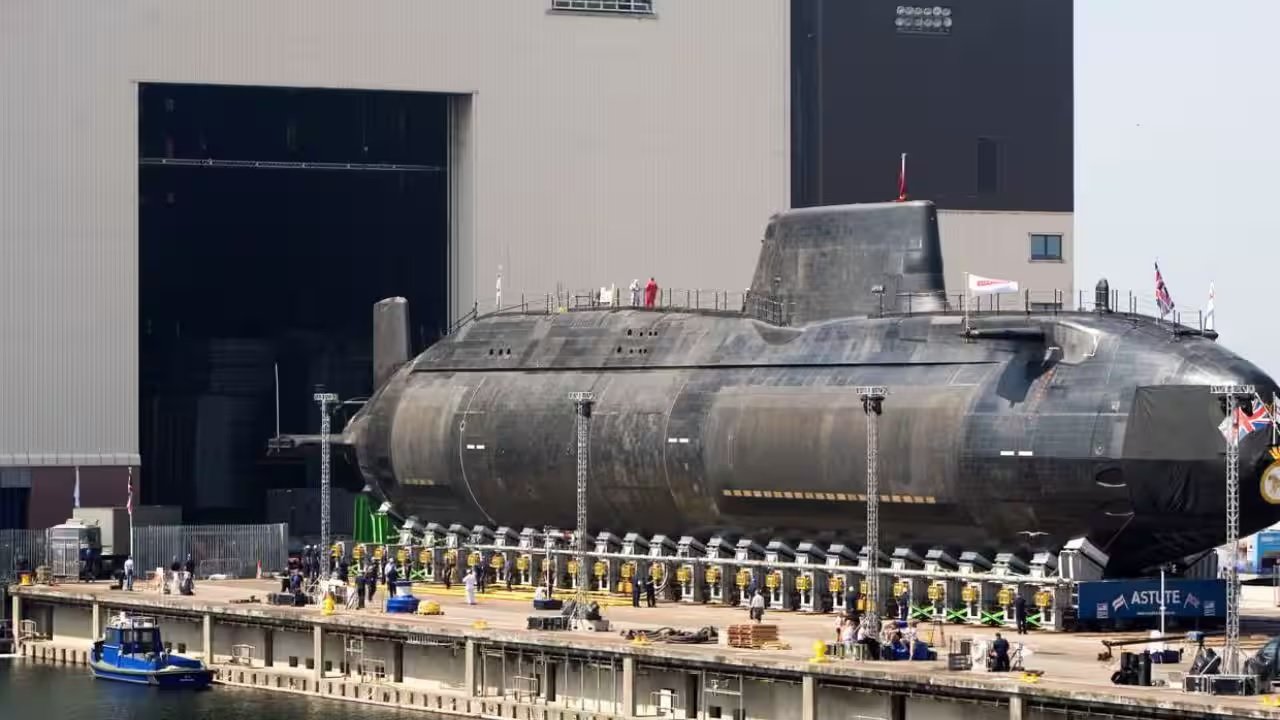
Europe
LONDON — The United Kingdom plans to invest approximately £6 billion during the current Spending Review period to expand its nuclear submarine industrial capacity and establish a production rate of one SSN-AUKUS attack submarine every 18 months. The plan, outlined in the Defence Nuclear Enterprise 2026 Annual Update to Parliament, is designed to allow Britain to build SSN-AUKUS submarines alongside the four-boat Dreadnought-class ballistic-missile submarine programme. Expanding Production Capacity The investment will focus on BAE Systems’ submarine shipyard at Barrow-in-Furness, Rolls-Royce Submarines’ Raynesway facility near Derby, and specialist suppliers across the submarine supply chain. At Raynesway, construction has begun on the Primary Components and Operations Facility. The site is also receiving improved access infrastructure and advanced prototyping facilities to support a larger engineering and manufacturing workforce. At Barrow, the concept design for SMITE2, a new submarine propulsion testing facility, was completed in early 2026. The facility will provide additional engine and machinery assessment capacity required for the planned 18-month production cycle. Preparatory work at Ramsden Dock is also progressing. The wider modernisation programme includes digital design systems, advanced production technologies and new training centres. Investment is also being directed to companies involved in propulsion systems, electrical switchgear and precision engineering to expand their capacity and meet higher demand. SSN-AUKUS Production Timeline The SSN-AUKUS is a nuclear-powered, conventionally armed attack submarine being developed by the UK, Australia and the United States under the AUKUS partnership. British submarines will be built at Barrow, while Australia will build its own submarines at Osborne Naval Shipyard in South Australia. Rolls-Royce will manufacture the nuclear reactors for the UK and Australian fleets at Raynesway. The UK plans to operate up to 12 SSN-AUKUS submarines, which will eventually replace the Royal Navy’s seven-boat Astute-class fleet. The exact number of British boats to be ordered has not yet been finalized, with a decision expected before the programme’s Detailed Design and Long Lead phase ends in 2028. Steel cutting for the first British SSN-AUKUS submarine is planned for 2027, with entry into Royal Navy service targeted for the late 2030s. Contracts worth approximately £4 billion have already been placed for early submarine design and production infrastructure. New Submarine Production Alliance Britain is also establishing a Submarine Production Alliance involving the Ministry of Defence, BAE Systems, Rolls-Royce Submarines and Babcock. The group will help coordinate the concurrent submarine programmes and support the planned continuous production rate. The investment is intended to expand the UK's shipbuilding, reactor manufacturing and specialist supply-chain capacity while supporting production of both future attack submarines and the country's nuclear deterrent fleet.
Read More → Posted on 2026-09-23 13:57:09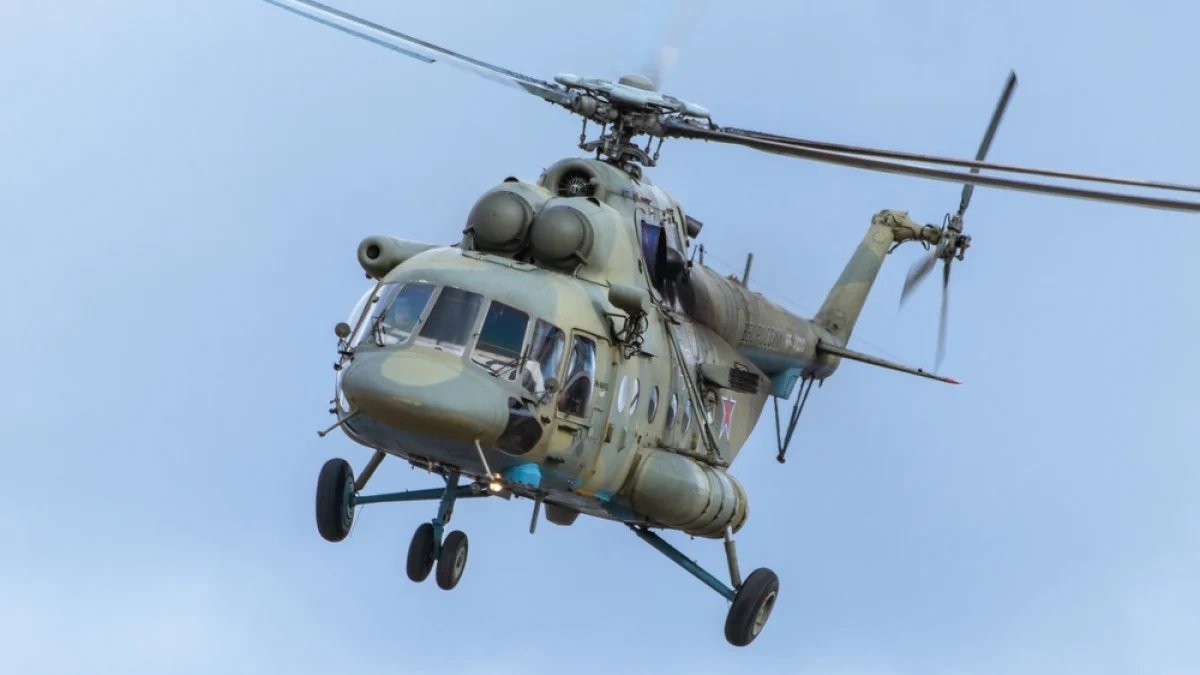
Europe
WARSAW, Poland — A Russian Mi-8 military helicopter briefly entered Polish airspace on Wednesday, September 23, prompting Poland to scramble fighter aircraft and place ground-based forces on standby. According to the Operational Command of the Polish Armed Forces, the incident occurred at 11:08 a.m. local time north of the town of Braniewo, near Poland’s border with Russia’s Kaliningrad region. The helicopter was flying from the Kaliningrad region when it crossed into Polish airspace. The aircraft entered Polish territory to a maximum depth of approximately 300 meters and remained in Polish airspace for 42 seconds before returning toward the Kaliningrad region. Polish military radar systems tracked the helicopter throughout the incident. In response, Polish fighter aircraft were scrambled, while ground forces and air-defense assets remained on standby. The Operational Command said the nature of the incident indicated that Russia was again testing the readiness of Poland’s air-defense system. It added that Polish air-defense crews continue to maintain round-the-clock surveillance and remain ready to secure the country’s airspace. Russia has not publicly commented on the incident. Reuters reported that the Russian Embassy in Warsaw did not immediately respond to a request for comment. The helicopter incident came as Poland was already operating with increased air-security measures because of Russian attacks on Ukraine. Earlier on September 23, Poland deployed military aircraft and increased the readiness of air-defense and radar assets. Civilian flight operations at Rzeszów and Lublin airports were also temporarily suspended at the military’s request to provide freedom of action for military aviation. Poland has also increased security at several border crossings with Ukraine. The crossings identified in reports include Dorohusk, Zosin, Budomierz, Korczowa, Medyka and Krościenko. Military personnel were deployed at the crossings, with measures intended to allow faster evacuation if an air threat occurs. The Mi-8 incident adds to the heightened air-security situation Poland has maintained amid the ongoing war in Ukraine and recent Russian aerial attacks near the Polish border.
Read More → Posted on 2026-09-23 14:05:09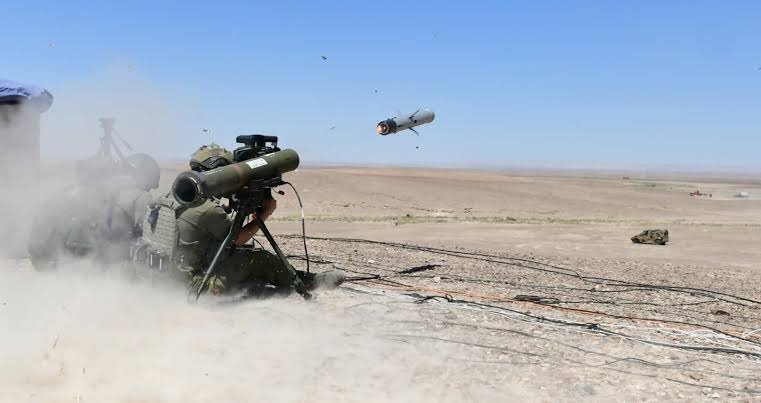
U.S
RESTON, Va. — Rafael Systems Global Sustainment (RSGS), the U.S.-based subsidiary of Israel’s Rafael Advanced Defense Systems, has been awarded an Other Transaction Agreement (OTA) through the Aviation & Missile Technology Consortium (AMTC) to pursue U.S. qualification of the SPIKE SR shoulder-launched missile. The agreement, announced on September 22, 2026, covers the adaptation, integration and testing of the missile to meet specific U.S. military requirements. RSGS and Rafael will also support further development of advanced capabilities. The companies have not disclosed the agreement’s value or the expected qualification timeline. SPIKE SR Missile The SPIKE SR is a portable, fire-and-forget precision missile designed for dismounted infantry. It weighs about 10 kilograms (22 pounds) and has a range of roughly 2,000 meters. The missile uses electro-optical guidance to engage stationary and moving targets in daylight and infrared conditions. It is equipped with a tandem HEAT warhead and can reach operational readiness in less than six seconds from power-up. Rafael has designed the system for relatively simple operation, allowing infantry units to use it with limited training. The SPIKE SR is part of the wider SPIKE family, which is in service with 46 countries, including 22 NATO members. RSGS Statement LTG (Ret.) Joe Anderson, CEO of RSGS, said the agreement represents an important step in advancing the SPIKE SR capability for U.S. warfighters. He said the company is supporting the U.S. defense community by adapting a lightweight, accurate and highly mobile precision missile to the operational needs of close-combat forces. Earlier U.S. Army Evaluation The U.S. Army previously evaluated the SPIKE SR during the Expeditionary Warrior Experiment (AEWE) in January 2021. Soldiers conducted live-fire tests against both static and moving targets. Army evaluators provided positive feedback on the missile’s weight, lethality and ease of use compared with equipment then in service. However, the evaluation did not result in a production contract. Building on 2025 Agreement The new OTA builds on a Cooperative Research and Development Agreement (CRADA) signed in March 2025 between RSGS, Rafael and the Army’s Combat Capabilities Development Command Aviation & Missile Center (DEVCOM AvMC). The agreement covered the evaluation, future enhancements and U.S. adaptation of several SPIKE systems, including the SPIKE LR2, SPIKE SR, SPIKE ER2 and SPIKE Firefly loitering munition. As part of the broader effort, the U.S. Army has been comparing SPIKE missiles with existing U.S. systems, including the FGM-148 Javelin and AGM-114 Hellfire, to evaluate how the technology could complement existing battlefield capabilities. U.S. Qualification Effort The AMTC is managed by Advanced Technology International and works with DEVCOM AvMC and Army Contracting Command–Redstone Arsenal to support aviation and missile technology development through Other Transaction Agreements. The new agreement moves the SPIKE SR into a further phase of U.S.-specific adaptation, integration and qualification testing. It does not itself represent a disclosed production contract.
Read More → Posted on 2026-09-23 14:35:51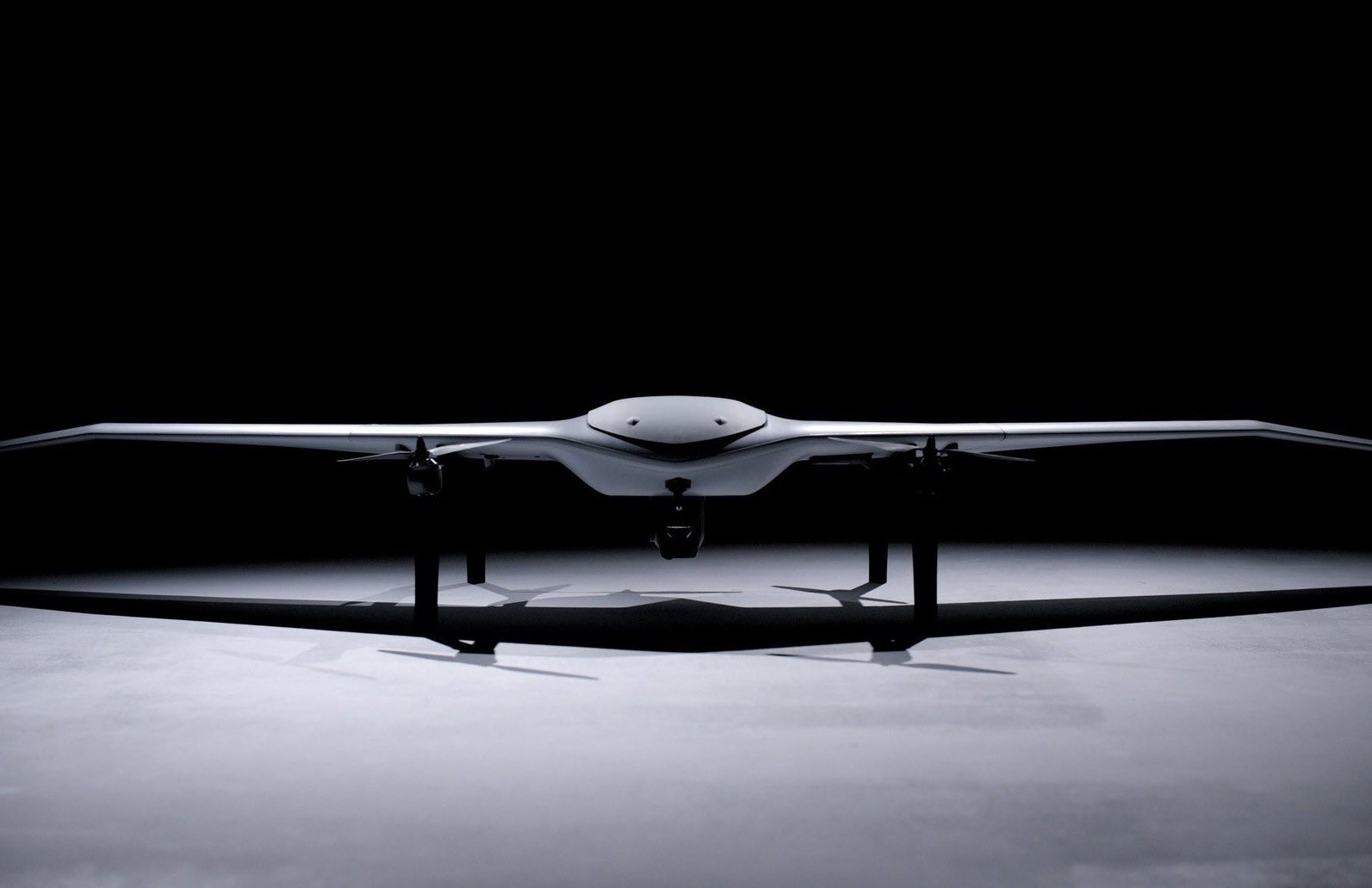
Europe
AMSTERDAM — Dutch unmanned systems manufacturer DeltaQuad has launched the Evo-LE, a fully electric fixed-wing vertical takeoff and landing (VTOL) unmanned aerial vehicle designed for long-endurance intelligence, surveillance and reconnaissance missions. The company announced the UAV around September 22, 2026, targeting defense, security and industrial applications. Designed for Long-Endurance Missions The Evo-LE is designed for intelligence, surveillance, target acquisition and reconnaissance (ISTAR), border surveillance, remote-area monitoring, search and rescue, and communications relay missions. The UAV has an endurance of up to eight hours and a maximum flight range of 480 kilometers (298 miles), depending on payload configuration, flight profile and operating conditions. Its secure radio communications range is up to 120 kilometers (75 miles). The aircraft has a maximum takeoff weight of 13 kilograms (29 pounds) and can carry payloads weighing up to 1.5 kilograms (3.3 pounds). Redesigned for Higher Endurance DeltaQuad says the eight-hour endurance is not simply the result of using a larger battery. The Evo-LE features higher energy-density batteries, a dual-battery configuration, a redesigned electrical architecture and an upgraded VTOL propulsion system. Mark van Schie, DeltaQuad’s Head of Product, said: “Achieving this level of endurance required changes across the entire platform, rather than simply increasing battery capacity.” Reinforced Airframe The Evo-LE uses the reinforced DeltaQuad Block 3 airframe, constructed from composite materials. It includes dust and rain protection and a heated pitot tube designed to prevent ice buildup. Updated landing gear struts are designed to detach during a hard landing to help protect the main fuselage. An automatic landing gear system also provides sensors with an unobstructed field of view during flight. Its VTOL capability allows the UAV to operate from confined or remote locations without a runway. The longer endurance can reduce the need for frequent system rotations during extended missions. Navigation and Communications For operations in electronic warfare environments, the Evo-LE can be equipped with a 4/8-array CRPA anti-jamming system for satellite navigation. An optional visual navigation system is also available for areas where GPS is heavily disrupted or denied. Secure communications options include mesh and phased-array broadband radios with AES-256 encryption. The aircraft uses Auterion Tactical Stack avionics, supporting autonomous navigation and a ruggedized ground-control setup. Surveillance Payloads The Evo-LE can carry surveillance payloads such as the NextVision Raptor, which provides stabilized RGB and thermal imaging for long-range tracking and target acquisition. The UAV is part of the DeltaQuad Evo family and shares the Block 3 airframe with the standard Evo. While the standard Evo prioritizes payload flexibility with a payload capacity of up to 3 kilograms, the Evo-LE uses dual batteries as standard and is optimized for endurance. DeltaQuad describes the Evo-LE as offering the longest endurance of any fully electric fixed-wing VTOL platform in the sub-15-kilogram class. The system is available to order.
Read More → Posted on 2026-09-23 14:39:26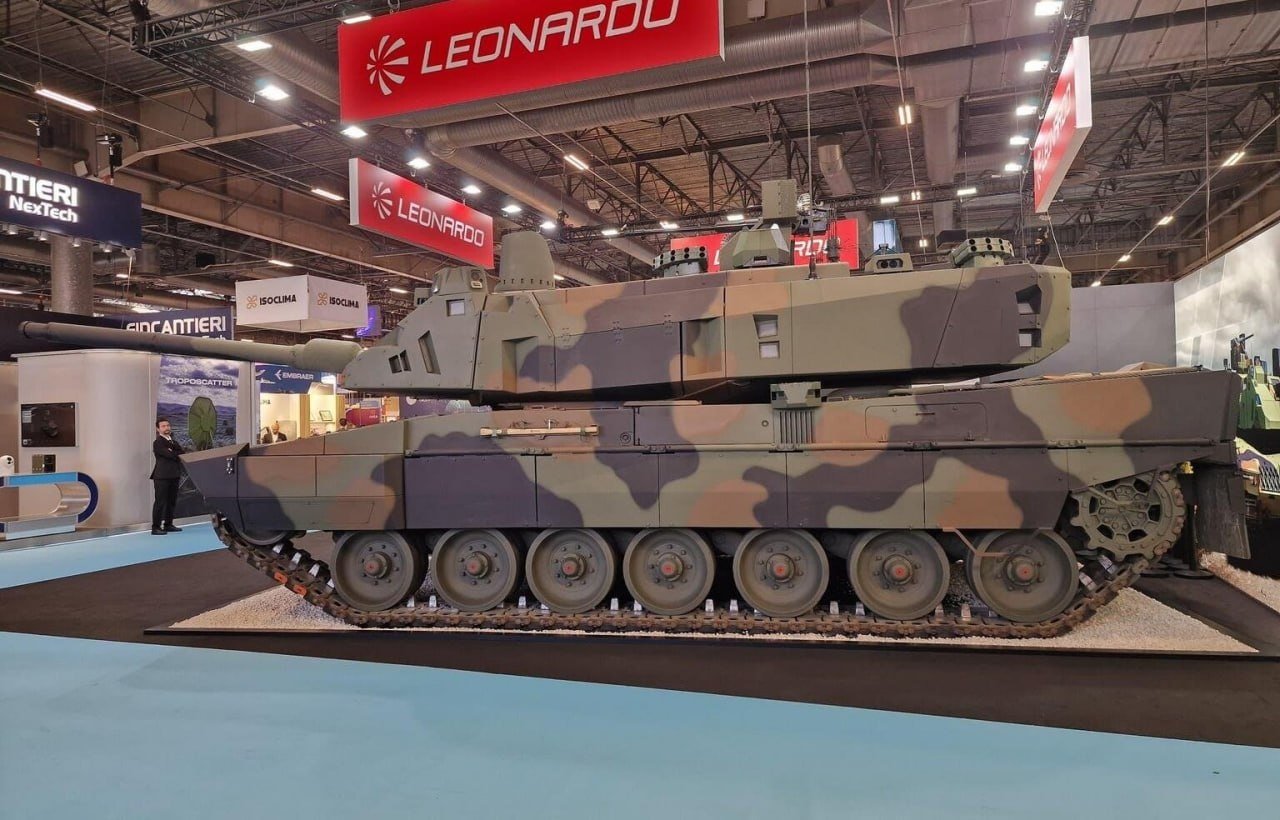
Europe
ROME — Italy has started the procurement of new New Main Battle Tanks (NMBT) and specialized vehicles based on the same platform under a programme worth €5.14 billion. The procurement procedure, identified as BD0D09994D, was published on September 21 in the database of Italy’s National Anti-Corruption Authority (ANAC). The Italian Ministry of Defense is the contracting authority. NMBT Programme The programme is intended to modernize Italy’s heavy armored vehicle fleet and eventually replace the ageing C1 Ariete main battle tanks. Earlier requirements called for approximately 132 new tanks, along with specialized vehicles based on the same platform. The programme is planned to continue into the 2030s, with some procurement documents indicating overall completion by 2038. The NMBT is being developed by Leonardo Rheinmetall Military Vehicles (LRMV), a 50:50 joint venture established in 2024 by Italy’s Leonardo and Germany’s Rheinmetall. Based on the KF51 Panther The NMBT draws on Rheinmetall’s KF51 Panther development, but the Italian vehicle is being developed as a separate platform according to Italian Army requirements. The demonstrator displayed at Eurosatory 2026 used a Leopard 2A4 hull with a new turret. LRMV said this configuration is not intended for the production version. The final tank is expected to use a new chassis with improved mobility and protection. Armament and Capabilities According to Leonardo, the NMBT will feature a 120 mm L55 smoothbore gun with an automatic loader carrying 20 ready-to-use rounds. The design also allows for a future upgrade to a 130 mm gun. Additional weapons will include: A 12.7 mm machine gun A remotely controlled weapon station with a 30×113 mm cannon Capability to engage drones The tank will also be able to use loitering munitions and control reconnaissance UAVs. The crew will consist of three personnel, with space for a fourth operator. Protection and Mobility The NMBT is planned to have a combat weight of up to 69.5 tonnes, a maximum speed of up to 70 km/h and a range of approximately 450 km. Its protection will combine passive armor and active protection systems designed to counter anti-tank threats and drones. Production Timeline Leonardo CEO Roberto Cingolani said the first NMBT prototypes are expected to be delivered in 2029–2030. The timeline is one to two years later than earlier projections, with Cingolani citing the greater technical complexity of the main battle tank programme compared with the parallel Armoured Combat System (A2CS) programme. The current procurement covers 132 main battle tanks and an undisclosed number of specialized vehicles. These are expected to include recovery, engineering and bridge-laying variants. Earlier planning documents referred to at least 140 support vehicles, although the latest procurement notice does not disclose the final number. The NMBT programme is being developed alongside the A2CS programme, which uses Rheinmetall’s KF41 Lynx platform and is intended to replace Italy’s older Dardo infantry fighting vehicles. Together, the programmes form a major part of Italy’s planned modernization of its tracked armored vehicle fleet. Main Source : militarnyi
Read More → Posted on 2026-09-23 14:54:12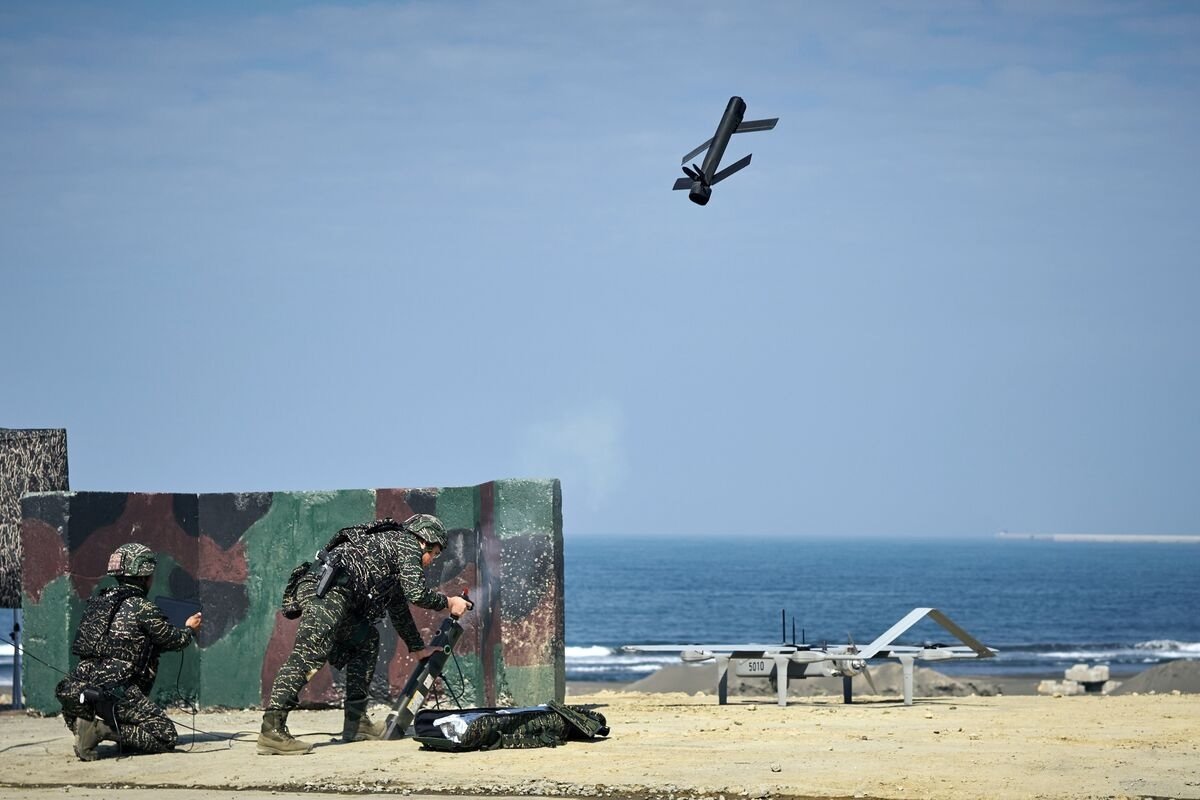
World
PINGTUNG, Taiwan — Taiwan’s armed forces completed a three-day joint precision-munitions live-fire exercise at the Jiupeng training area in Pingtung County from September 16 to 18, 2026. The drills marked the first time multiple types of attack drones were integrated into joint combat operations involving the Army, Navy, Air Force and Coast Guard. President Lai Ching-te inspected the exercise on September 18. He said the integration of several types of attack drones with conventional weapons showed that Taiwan’s military was accelerating efforts to strengthen its overall combat capabilities. He also said the exercise demonstrated Taiwan’s ability to defend its sovereignty and contribute to regional peace and stability. Joint Kill Chain The forces practiced a complete “find-fix-finish” kill chain, using shipborne radars, Air Force battle-management systems, mobile radar vehicles, drones and a battlefield network to detect, identify and allocate targets before carrying out precision strikes. The exercise covered joint air defense, counter-strike operations, sea-air coordination, coastal strikes and nearshore defense under conditions linked to Taiwan’s defense plans. Weapons and systems involved included the U.S.-supplied M142 HIMARS, Hsiung Feng II and Hsiung Feng III anti-ship missiles, Tien Kung III surface-to-air missiles, Land Sword II, and Patriot systems. Reports also identified Switchblade drones, Altius 600M loitering munitions and Taiwan’s indigenous Chien Hsiang loitering munition among the unmanned systems involved. However, Taiwan’s official statements did not provide a complete list of the drone types. A decommissioned frigate, Lan Yang, was used as a maritime target during part of the exercise, while Coast Guard vessels participated in training for wartime joint operations. Chinese Military Activity Taiwan’s Ministry of National Defense also reported Chinese military activity during the exercise. It said a Chinese military drone flew from Taiwan’s southwestern airspace toward waters off Taitung between about 12:05 a.m. and 6 a.m. on September 18 to monitor the exercise. Taiwanese forces tracked the aircraft using aircraft, ships and land-based systems. Trump-Xi Meeting The exercise took place days before the scheduled September 24 meeting between U.S. President Donald Trump and Chinese President Xi Jinping in Washington. Taiwan continues to receive U.S. arms under Washington’s commitments to help the island maintain a sufficient self-defense capability. Beijing continues to claim Taiwan as part of its territory and opposes U.S. arms sales to Taipei. The Jiupeng exercise demonstrated Taiwan’s ongoing effort to integrate unmanned systems with conventional precision-strike weapons and improve joint command-and-control among its military services.
Read More → Posted on 2026-09-23 15:03:48
World
ANKARA — Turkish defence company Roketsan announced on September 23 that its KARAOK short-range anti-tank guided missile successfully struck an aerial target for the first time. Roketsan released video footage on X showing the missile being launched from a turret mounted on a light tactical pickup truck and intercepting a drone designed to resemble a Shahed-type one-way attack drone. The test expands the KARAOK's demonstrated capability beyond its original role against ground targets. Roketsan CEO Murat İkinci said the successful test broadened the system's operational scope and that the company is continuing to integrate different capabilities into its systems to address changing requirements in the field. KARAOK is a man-portable, fire-and-forget anti-tank weapon designed to be operated by a single soldier from a shoulder-fired tube. The complete system weighs less than 16 kilograms, has a 125 mm diameter and a range exceeding 2,500 metres. It uses an imaging infrared seeker for day-and-night operation and carries a tandem high-explosive anti-tank warhead. The missile supports both direct-attack and top-attack modes and can engage stationary and moving ground targets. For the latest test, KARAOK was installed on a vehicle-mounted turret instead of being operated from the shoulder. The vehicle configuration allows the missile to be aimed and fired from the platform and provides a setup more similar to a mobile air-defence system. The use of anti-tank missiles against drones has become increasingly visible during the war in Ukraine. Ukrainian forces have used systems such as Stugna-P against aerial targets, while the improvised STASH system combines U.S.-made AGM-114 Hellfire missiles with RADA radars for air-defence missions. The U.S. Javelin also has limited capability against slow, low-flying aircraft, while Hellfire missiles have been used against UAVs in addition to their anti-armour role. The KARAOK's guidance technology helps explain its potential for such applications. Its imaging infrared seeker and terminal guidance system are designed to track moving targets, although the missile was originally developed for ground combat. KARAOK entered service with the Turkish military in 2022. Roketsan began developing the system around 2016, and it uses a hybrid dual-stage rocket motor that allows firing from enclosed spaces. The missile has also attracted international interest. Malaysia became KARAOK's first foreign customer, selecting it to replace the Russian-made Metis-M anti-tank system. The contract covers 18 launchers and associated missiles, with the first deliveries planned for early 2026. Roketsan has not yet stated whether the turret-mounted anti-drone configuration demonstrated in the latest test will become a standard product or remain an experimental configuration.
Read More → Posted on 2026-09-23 15:25:35
Space & Technology
REDONDO BEACH, Calif. — The U.S. Space Force has awarded Impulse Space a $28 million contract for a future space domain awareness mission scheduled to launch no earlier than 2029. Under the agreement, a government-provided launch will place an Impulse Space Mira spacecraft into low Earth orbit (LEO). The spacecraft will host a government-furnished optical payload developed by MIT Lincoln Laboratory to support monitoring of objects in geostationary orbit (GEO), approximately 36,000 kilometers above Earth. Mira to provide a maneuverable observation platform Mira is designed for precise orbital maneuvering and uses a chemical propulsion system. Impulse Space says the spacecraft can provide up to 850 meters per second of delta-v when carrying a 100-kilogram payload. This maneuverability will allow the spacecraft to reposition the hosted optical sensor and change its viewing geometry while conducting space domain awareness activities. The mission is intended to support the detection, tracking and characterization of objects in orbit. The optical payload for the mission will be supplied by the U.S. government and built by MIT Lincoln Laboratory. Funding includes $19.75 million APFIT award The contract is being funded in part through a $19.75 million award from the Accelerate the Procurement and Fielding of Innovative Technologies (APFIT) program for fiscal year 2026. The award is sponsored by U.S. Space Command. The APFIT program is intended to accelerate the procurement and transition of innovative technologies into operational use. For this mission, the funding supports procurement of the Mira spacecraft. Mira has already flown three missions Impulse Space's Mira spacecraft has completed three missions in low Earth orbit. The company has also demonstrated the vehicle's maneuvering capabilities through proximity operations. Earlier in September, two Mira spacecraft from the LEO Express 2 and LEO Express 3 missions conducted a targeted flyby and approached to within approximately 200 meters of each other. Impulse Space used its own guidance, navigation and control software for the operation. The company says Mira has demonstrated both long-duration and rapid engine burns, giving operators different maneuvering options for missions in orbit. Part of Impulse Space's expanding government work The new Space Force award adds to Impulse Space's growing portfolio of U.S. government contracts. The company was selected in July for a position in the National Security Space Launch Phase 3 Lane 1 program for its Helios upper stage. It has also received additional work from the Space Force's Space Safari program for the VICTUS SALO 2 and VICTUS SALO 3 missions. Impulse Space, founded by Tom Mueller, is based in Redondo Beach, California. On September 16, the company announced a $308 million extension to its Series D funding round, bringing the total Series D round to $808 million. The company said the additional funding would support product development, workforce growth and expansion of its facilities and capabilities. The planned 2029 mission will use Mira's maneuverability to host an optical sensor in LEO and support Space Force space domain awareness activities focused on objects operating in GEO.
Read More → Posted on 2026-09-23 15:34:20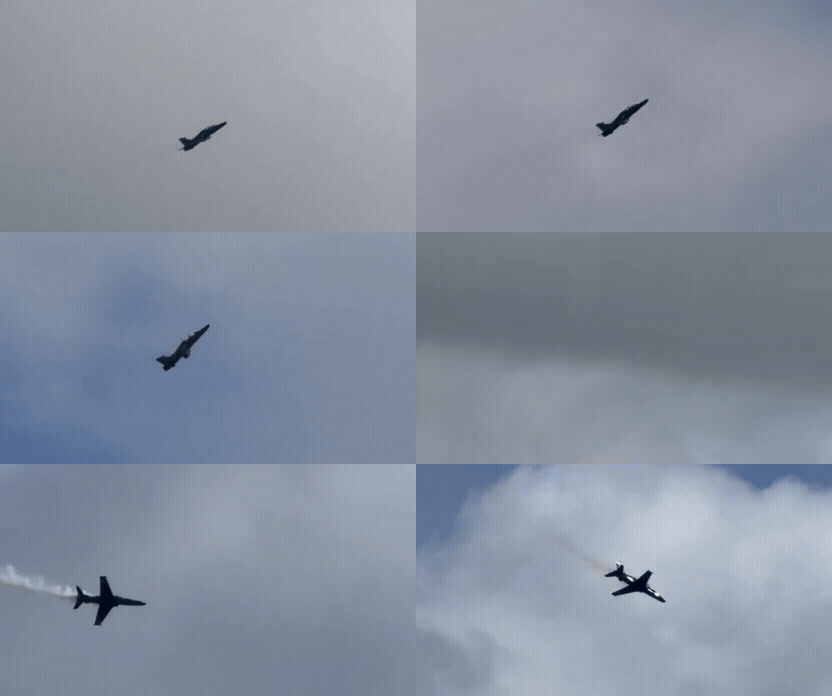
Europe
ANGLESEY, WALES — An RAF Hawk T2 advanced jet trainer crashed shortly after takeoff from RAF Valley on Anglesey on Wednesday afternoon, 23 September 2026. Both pilots ejected from the aircraft and landed safely by parachute. They were later treated for minor injuries. The crash occurred in the Pencarnisiog area, roughly a mile inland from RAF Valley. Witnesses reported seeing flames from the aircraft during its climb before it pitched up sharply, rolled and descended into a field. The crash caused a large fire and black smoke. Emergency services, including North Wales Police, North Wales Fire and Rescue Service, the Welsh Ambulance Service, a Helimed air ambulance and a Coastguard helicopter, responded to the scene. Police said there were no reports of injuries or wider damage on the ground. An RAF spokesperson confirmed that an incident involving a Hawk T2 flying from RAF Valley had occurred near Anglesey and said an investigation was underway. Defence Secretary Wes Streeting also said an investigation was in progress and that his thoughts were with the pilots. The Hawk T2 is a two-seat advanced jet trainer built by BAE Systems and powered by a Rolls-Royce/Turbomeca Adour Mk.951 turbofan. RAF Valley's No. 4 Flying Training School uses the aircraft to train pilots for frontline aircraft including the Eurofighter Typhoon and F-35B. The RAF previously grounded its Hawk T2 fleet in January 2023 following an engine-related incident at Valley. Senior RAF officials have also previously raised concerns about the aircraft's availability and engine reliability. The RAF has been working on plans for a successor to the Hawk T2. The cause of Wednesday's crash has not yet been released. An investigation will determine the circumstances that led to the accident and whether any aircraft or engine issue was involved.
Read More → Posted on 2026-09-23 15:43:05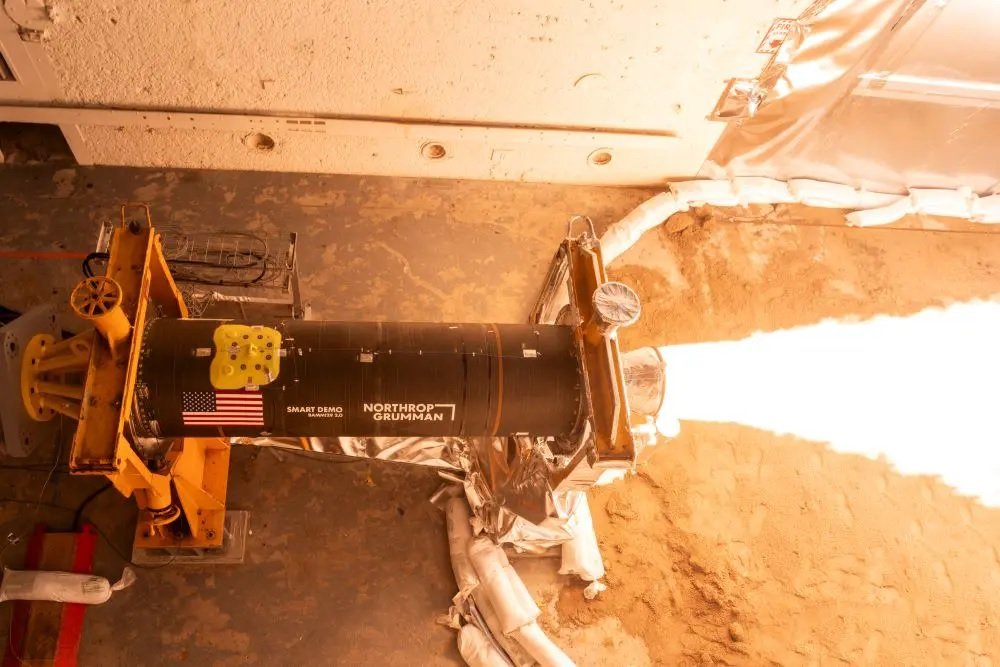
U.S
ROCKET CENTER, West Virginia — Northrop Grumman plans to increase annual solid rocket motor production from more than 13,000 units to 25,000 by 2029, as the company expands capacity to meet rising demand for U.S. and allied missile systems. The company has invested more than $2 billion in solid rocket motor and munition technologies over the past several years. The investment has supported facility modernization, new manufacturing capacity, automation, advanced propellants and data-driven production processes across its U.S. network. Expansion Across Key Sites Northrop Grumman's expansion covers four strategic sites in Utah, Maryland and West Virginia. At the Allegany Ballistics Laboratory in Rocket Center, West Virginia, tactical solid rocket motor capacity has doubled since 2021. The company expects capacity to reach three times its earlier level by early 2027. The site also has a new 113,000-square-foot Missile Integration Facility, a highly automated digital factory designed to shorten strike missile delivery times while maintaining manufacturing quality. It can support production of up to 300 strike missiles annually. In Elkton, Maryland, Northrop Grumman plans to triple production capacity by 2030. A new 57,000-square-foot Propulsion Innovation Center is part of a broader $100 million investment at the 550-acre Propulsion Systems & Controls campus. The facility houses about 250 engineers working on tactical missile and hypersonic propulsion and increases on-site solid rocket motor design and manufacturing capacity by 25 percent. The company's Utah facilities are also being expanded, including plans to double large solid rocket motor production capacity. Northrop Grumman says there is additional room for growth beyond the planned 2029 production rate. More Propellant and Missile Support Northrop Grumman currently produces about 30 million pounds of solid rocket propellant each year, with annual capacity expected to approach 50 million pounds by 2028. The company has delivered more than 1.3 million tactical solid rocket motors over more than seven decades. It supplies propulsion systems for missile defense interceptors and long-range strike weapons and is prepared to support primary and second-source production for programs including the Standard Missile family, Precision Strike Missile (PrSM) and PAC-3 MSE. Northrop Grumman also manufactures the interceptor shell core, aft bulkhead and heatshield assemblies for the Terminal High Altitude Area Defense (THAAD) system. The company is also introducing highly loaded grain designs that allow more propellant to fit within a given volume. The designs are engineered to withstand high internal forces while maintaining controlled and predictable combustion. The expansion is aimed at increasing production of critical missile components and strengthening capacity across the U.S. defense industrial base as demand for missile defense and precision-strike systems increases.
Read More → Posted on 2026-09-24 13:42:17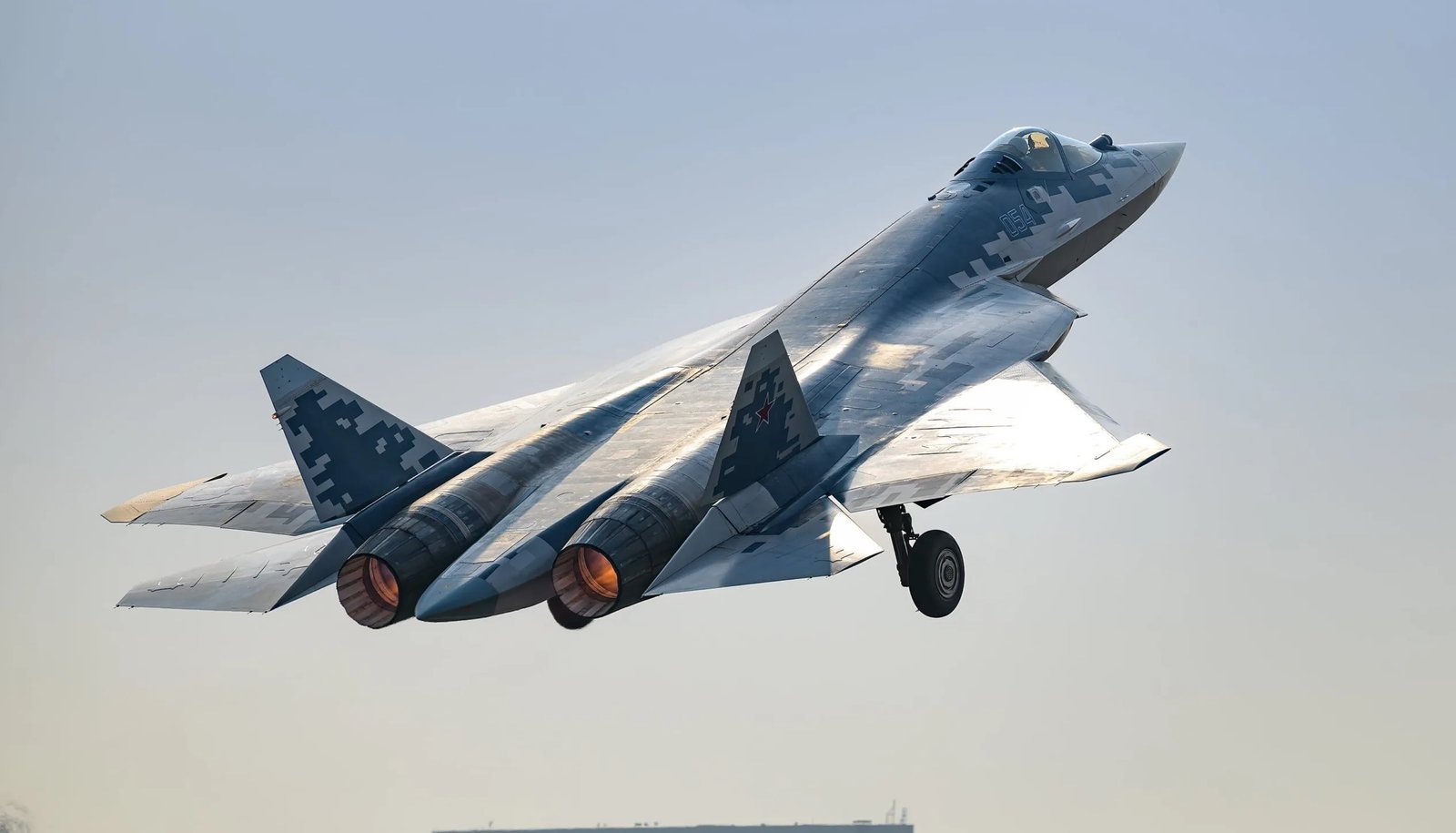
World
MOSCOW, — The Russian Aerospace Forces have received a new batch of Su-57 fifth-generation multirole fighter jets in an updated technical configuration, according to the United Aircraft Corporation (UAC), part of the Rostec state corporation. The latest Su-57s feature changes to their armament and onboard systems, including expanded capabilities to employ newly developed air-to-air weapons. A Su-57 pilot involved in the acceptance process said the updated configuration expands the range of missions the aircraft can perform. According to Rostec, the Su-57 has undergone significant development compared with earlier aircraft, with changes based in part on operational experience from the ongoing special military operation. Earlier upgrades have included modifications to onboard systems such as the electro-optical complex and expanded weapons integration options. Before delivery, the newly built aircraft completed a full cycle of factory testing. Russian Ministry of Defense pilots then evaluated the fighters in different operating modes. After completing the tests and acceptance process, the aircraft flew to their assigned home airfields. The Su-57 is designed as a multirole frontline aircraft capable of engaging air, ground and sea targets. It is intended for around-the-clock operations, including in adverse weather and electronic warfare environments. The September delivery is the second announced delivery of Su-57s in the new technical configuration in 2026, following an earlier batch delivered in February. Rostec did not disclose the exact number of aircraft included in the latest batch. UAC CEO Vadim Badekha said fulfilling the state defense order for Su-57s and other operational-tactical aircraft remains a priority. He added that UAC specialists, together with other Rostec companies, are continuing to improve production processes to maintain the required aircraft production rates. The Su-57 program continues to receive upgrades to its avionics, sensors and weapons, while UAC is also conducting development work on the Izdeliye 177 fifth-generation engine. The aircraft first flew in 2010 and entered service with the Russian Aerospace Forces in 2020.
Read More → Posted on 2026-09-24 13:48:37
U.S
WASHINGTON — After decades of development and testing, high-energy laser weapons are moving into operational use with the U.S. military. The systems are being used against drones in the Middle East and along the U.S. southern border, while new production contracts are supporting wider deployment. Laser Systems in the Middle East U.S. forces have deployed directed-energy systems in the Middle East to counter drones and protect military assets and personnel. The U.S. Navy’s High Energy Laser with Integrated Optical-dazzler and Surveillance (HELIOS) is installed aboard the Arleigh Burke-class destroyer USS Preble. The roughly 60-kilowatt system can use its laser to damage or destroy targets and can also use lower energy to dazzle sensors. U.S. forces have also used directed-energy systems more broadly in the U.S. Central Command area. However, available official reports do not identify specific Iranian drone interceptions near the Strait of Hormuz as confirmed HELIOS engagements. Laser Used Against Drones on Southern Border The U.S. Army has also begun using high-energy lasers against cartel-linked drones along the southern border. In late August 2026, personnel from Joint Task Force Southern Border, operating under U.S. Northern Command in support of Customs and Border Protection, used the Army Multipurpose High Energy Laser (AMP-HEL) to defeat three hostile unmanned aircraft over two nights in the Rio Grande Valley area of Texas. Military officials said the drones posed a physical threat to U.S. personnel and partners and were associated with activities including illicit human smuggling and surveillance. USNORTHCOM later reported that AMP-HEL had defeated 11 cartel-linked drones. Multiple laser systems are now deployed along the border, with military authorities coordinating operations near civilian airspace. $464.8 Million Production Contract The Army's move toward large-scale production came on September 2, 2026, when it awarded AeroVironment a $464.8 million Other Transaction Agreement under the Enduring-High Energy Laser (E-HEL) program. The Army described the agreement as its first production contract for a high-energy laser weapon system. AeroVironment will deliver dozens of LOCUST X3 systems over the next several years. The LOCUST X3 is a 30-kilowatt-class laser designed to counter Group 1 through Group 3 unmanned aircraft systems. The systems can be mounted on vehicles such as the Joint Light Tactical Vehicle or operated from fixed and semi-fixed positions. AeroVironment has reported engagement costs of less than $5 per shot, with the system's firing capacity largely dependent on available electrical power rather than a supply of physical interceptors. Familiar Controls for Operators LOCUST-based systems use Xbox-style gaming controllers for operator control. The familiar interface is intended to reduce training requirements and make operation easier for service members already familiar with similar controls. Advantages and Limitations High-energy lasers offer several advantages for counter-drone missions. They can engage targets at the speed of light and can fire repeatedly as long as sufficient electrical power is available. This can provide a lower-cost option against drones that might otherwise require expensive kinetic interceptors. However, laser systems also have limitations. Their performance can be affected by weather conditions such as rain, fog and dust. They also need to maintain the laser beam on a target for a period of time and require sufficient power and cooling. For these reasons, directed-energy weapons are being developed to complement rather than completely replace conventional air-defense interceptors. Moving From Testing to Fielding The U.S. military has continued testing higher-power directed-energy systems. Recent demonstrations have included laser engagements from the aircraft carrier USS George H.W. Bush and a cruise-missile shoot-down test at White Sands Missile Range, New Mexico, in June 2026. The Department of Defense is also pursuing higher-power laser systems in the 150- to 500-kilowatt range for more demanding threats, including cruise missiles.
Read More → Posted on 2026-09-24 14:08:33
World
BEIJING/TEHRAN — Chinese suppliers sent about 1,300 shipments of dual-use components to Iran’s Defense Ministry during the first six months of 2026, according to Iranian customs records reviewed by The Wall Street Journal. The shipments included electronics, GPS devices, electric motors, aircraft-engine parts and other components that have civilian applications but can also be used in drones and missile guidance systems. Customs records covering January 2025 through June 2026 showed thousands of similar shipments to Iran’s Defense Ministry and Iranian companies. Several shipments were classified as defense imports under Article 119 of Iran’s customs regulations, making them exempt from standard Iranian tariffs. Air Cargo Increased The shipments continued during the conflict between Iran and the United States. After an April U.S. naval blockade restricted maritime trade, Iran increased air-cargo links with China. Mahan Air, an Iranian airline under U.S. sanctions, increased flights from Beijing, Shanghai and Guangzhou to Tehran. Flight-tracking data showed about four flights per week at the beginning of March, rising to around 27 per week by late April. In the first week of September, Mahan Air operated 39 flights from China to Iran, with many focused on cargo. The airline did not respond to the Journal’s request for comment. One Chinese shipment arrived in Tehran on June 17, the day the United States and Iran agreed to a 60-day truce. Two days later, more than a dozen additional shipments arrived carrying more than $6 million worth of components that could be used in drones. Chinese suppliers also delivered about 300 tonnes of chemical compounds to Iran’s Defense Ministry shortly before the war began in late February. The reported materials included chemical precursors associated with weapons production and ballistic-missile propellant. Reported Satellite Imagery The Journal also reported that Chinese entities supplied Iran with high-resolution satellite imagery of the Muwaffaq Salti Air Base in Jordan before and after an Iranian ballistic-missile strike on July 17. The attack killed three U.S. soldiers, according to the report. Chinese officials have rejected claims that Chinese companies provided satellite imagery for targeting U.S. forces. China-Iran Trade China remains the main buyer of Iranian oil despite U.S. sanctions. The Journal reported that Iran uses trading arrangements involving Chinese companies, banks and other channels to receive value from oil exports and purchase Chinese goods, including military-related equipment. The findings were reported ahead of a meeting between Chinese President Xi Jinping and U.S. President Donald Trump in Washington. Beijing has rejected allegations that it is fueling the conflict, saying China controls exports of dual-use goods, follows international trade rules and does not recognize unilateral U.S. sanctions against Iran. Iranian officials did not respond to the Journal’s requests for comment. The U.S. has previously sanctioned Chinese and Hong Kong entities accused of helping Iran obtain military-related components. Because many of the reported items are dual-use products, they can move through commercial supply chains rather than conventional arms-transfer channels.
Read More → Posted on 2026-09-24 14:14:03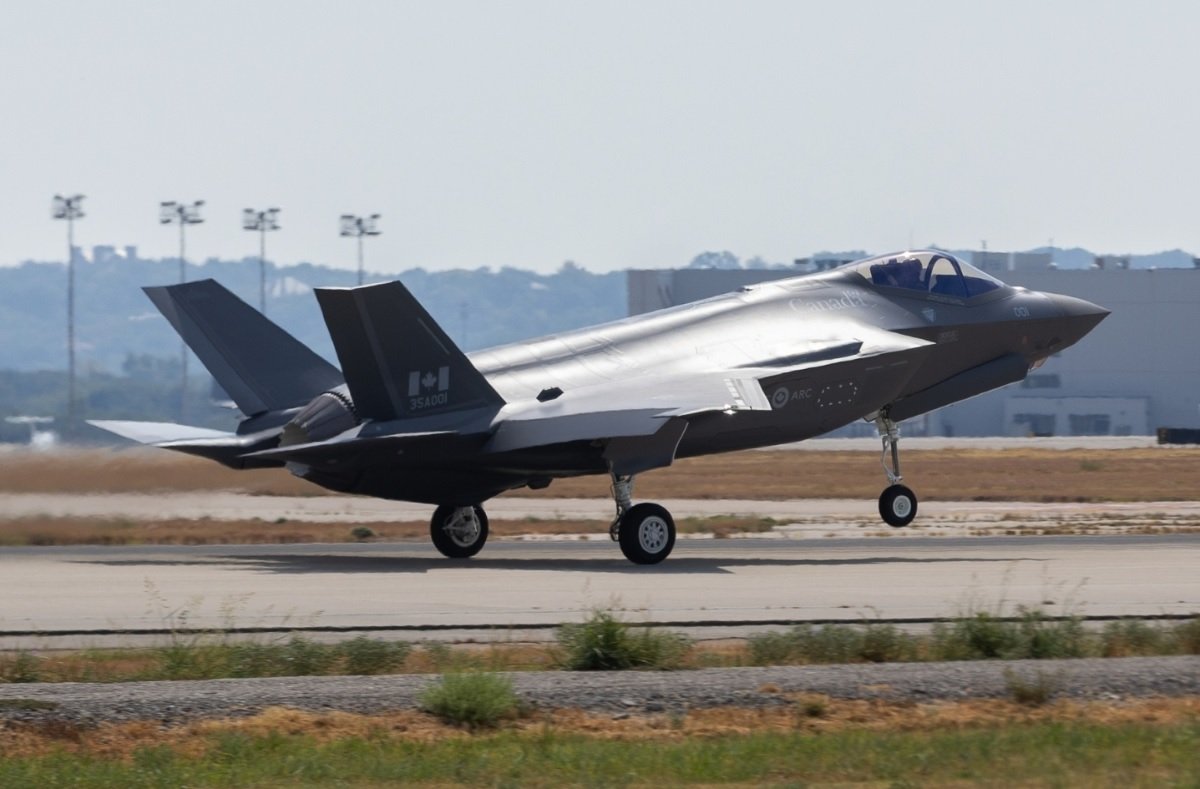
World
FORT WORTH, TEXAS — Canada’s first F-35A Lightning II fighter jet completed its maiden flight on September 23, marking a major milestone for the Royal Canadian Air Force (RCAF) as Ottawa continues its review of the broader F-35 procurement program. The aircraft, construction number AR-1, took off from Lockheed Martin’s production facility at Naval Air Station Joint Reserve Base Fort Worth, Texas. It flew for approximately 90 minutes, accompanied by an F-35C serving as a safety chase aircraft. AR-1 will be designated CF-35A once it enters RCAF service. Photos from the flight show the aircraft already carrying full Canadian markings, including “RCAF-ARC” lettering on the air intakes, a Canadian roundel similar to those on the CF-188 Hornet, the word “Canada” behind the cockpit and a low-visibility Canadian flag on the tail. The flight took place without a formal ceremony or announcement from Lockheed Martin, the RCAF or the Prime Minister’s Office. The RCAF later confirmed that the flight had occurred. This contrasted with the public ceremony held in February to mark the start of AR-1’s final assembly. F-35 Procurement Under Review Canada finalized its plan to acquire 88 F-35A aircraft in December 2022, with the purchase formally announced in January 2023. The initial program was estimated at about C$19 billion and was intended to replace the aging CF-18/CF-188 fleet. The overall project budget later increased to C$27.7 billion, covering aircraft, training, equipment, sustainment and infrastructure. Canada has ordered 16 aircraft and begun funding long-lead components for another 14. The CF-18 fleet is scheduled to remain in service until 2032. Prime Minister Mark Carney ordered a review of the broader F-35 purchase in March 2025 amid trade tensions with the United States. The review remains ongoing and is examining operational requirements, industrial benefits, strategic partnerships and possible alternatives. One option under consideration is reducing the F-35 order below 88 aircraft and operating a mixed fleet that could include Saab Gripen E fighters, with Saab proposing Canadian production. Training and Future Deliveries The procurement review has not stopped production or preparations for the initial Canadian aircraft. Canada has been a partner in the F-35 program since 2002, and the RCAF has established its first CF-35A training squadron at Luke Air Force Base, Arizona. The first eight Canadian F-35As are scheduled to remain in the United States for pilot training in 2026–2027. The first aircraft is expected to arrive in Canada in 2028, with initial operational capability planned for 2029–2030 and full operational capability targeted for 2032–2034. More than C$5.2 billion in F-35-related contracts have been awarded to over 110 Canadian companies. Separately, the Canadian government has identified Saab’s GlobalEye, based on the Bombardier Global 6500, as a leading contender for a new airborne early warning aircraft. If selected, the aircraft would be assembled in Montreal. The maiden flight of AR-1 marks the first flight of a Canadian F-35A while Ottawa continues to determine the future size and structure of its fighter fleet.
Read More → Posted on 2026-09-24 14:28:27
World
BAKU — Azerbaijan has added Turkey’s SİVRİSİNEK (Mosquito) intelligent loitering munition to its military inventory. Developed by Turkish defense company Baykar, the system has been observed in Azerbaijani Army colors. Reports indicate that the SİVRİSİNEK has been deployed with the Nakhchivan Separate Combined Arms Army. Nakhchivan is an Azerbaijani exclave separated from the country's mainland by Armenian territory and bordering Turkey and Iran. 1,000-Kilometer Range The SİVRİSİNEK is designed as a long-endurance, runway-independent loitering munition. Baykar offers the system in two configurations: UM: Maximum take-off weight of 76 kg, endurance exceeding 9 hours and an operational range of approximately 1,000 km. UMX: Maximum take-off weight of 78 kg, endurance exceeding 8 hours and an operational range of approximately 900 km. It adds an AI-assisted electro-optical camera. Both versions have a 3.8-meter-long fuselage, 3.2-meter wingspan and 0.8-meter height. They use an internal-combustion engine driving a two-blade propeller and are launched by catapult, eliminating the need for a runway. The system carries a 20 kg warhead, operates at an altitude of about 4,000 feet, has a 10,000-foot service ceiling, cruises at approximately 55 KIAS and has a maximum speed of around 70 KIAS. AI-Based Swarm Capability SİVRİSİNEK is designed to operate in coordinated swarms. Multiple units can communicate during flight and share detected targets in real time. The system also supports AI-based visual navigation when GNSS signals are unavailable or jammed. The UMX variant uses an electro-optical camera for additional guidance and target detection. The system can operate alongside other Baykar platforms, including the K2, Bayraktar TB2, TB3 and AKINCI. Communication ranges are listed at more than 10 km for the UM and more than 80 km for the UMX. April 2026 Swarm Test Baykar first demonstrated SİVRİSİNEK in a swarm flight test on 17 April 2026 at its Flight Training and Test Center in Keşan, in the Edirne region of Turkey. During the demonstration, 10 SİVRİSİNEK units operated beneath five K2 Kamikaze UAVs. The drones flew in formations including right echelon, line, V and Turan before conducting coordinated dives toward designated coordinates. Bayraktar TB2, TB3 and AKINCI UAVs monitored the operation from higher altitude. The demonstration showed AI-supported swarm autonomy, coordinated operations and visual navigation without GNSS. Presented at SAHA 2026 SİVRİSİNEK was publicly introduced at the SAHA 2026 defense exhibition in Istanbul from May 5–9, 2026. During the exhibition, Baykar CEO Haluk Bayraktar stated that systems including SİVRİSİNEK would be manufactured jointly at factories in Azerbaijan. The reported entry of SİVRİSİNEK into Azerbaijani Army service adds another Turkish unmanned system to Azerbaijan's inventory, following the country's earlier use of Bayraktar TB2 drones during the 2020 Nagorno-Karabakh conflict. Some reports have also referred to SİVRİSİNEK by its earlier internal designation, YIHA-III.
Read More → Posted on 2026-09-24 17:22:31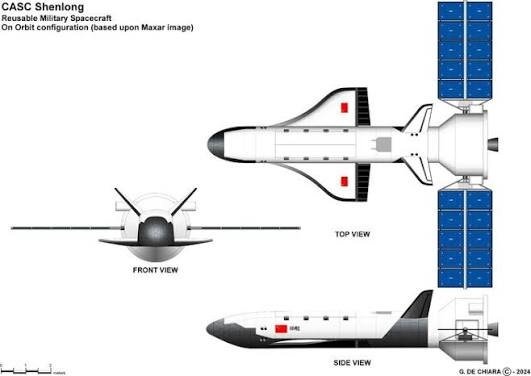
Space & Technology
BEIJING — China’s secretive reusable spaceplane has released and recaptured the same small satellite twice during its current mission, according to orbital tracking data analyzed by astrophysicist Jonathan McDowell. McDowell published a timeline on September 23 using data from the U.S. Space Force tracking network. The spaceplane, unofficially known as Shenlong, is on its fourth mission after launching on February 6, 2026, aboard a Long March 2F rocket from the Jiuquan Satellite Launch Center in northwestern China. Repeated Satellite Operations The satellite involved is cataloged by the U.S. military as 2026-024H. The tracked sequence was: June 21: Shenlong released the satellite. July 12: The spaceplane approached and recaptured it. Analysts believe an onboard robotic arm may have been used. Late August: Shenlong released the same satellite again and moved several thousand kilometers away. September 10: The spaceplane began another rendezvous and closed the distance to the satellite. September 13: Shenlong recaptured the satellite for the second time. Commercial tracking company LeoLabs detected the satellite near Shenlong on June 22 and assessed with high confidence that it had been released from the spaceplane. During the September operation, U.S. tracking systems briefly recorded what appeared to be another object. McDowell assessed that it was likely a duplicate tracking entry for the same satellite rather than a new spacecraft. RPO Capabilities The maneuvers are part of rendezvous and proximity operations (RPO), which involve a spacecraft approaching and operating near another object in orbit. RPO capabilities can support civilian activities such as satellite inspection, servicing and repair. The same technology can also allow a spacecraft to approach, inspect or physically interact with another satellite, making such operations closely monitored by military analysts. Shenlong has demonstrated similar activities before. Comparable release-and-recovery operations were observed during its second mission from August 2022 to May 2023 and its third mission from December 2023 to September 2024. Shenlong and the X-37B China has not officially released detailed technical specifications, mission objectives or the formal name of the spaceplane program. The name Shenlong, meaning “Divine Dragon,” is an unofficial designation used by external observers. The spacecraft launches vertically on a rocket and returns by landing horizontally on a runway. This has led to comparisons with the U.S. Space Force’s X-37B, whose missions are also largely classified. However, their publicly observed orbital activities differ. The Secure World Foundation has noted that the X-37B has not been observed conducting rendezvous operations with another object during its public missions and generally operates at different orbital altitudes from many active satellites. Earlier Shenlong missions lasted two days in 2020, 276 days during its second mission and 266 days during its third mission. The current mission remains underway. Earlier flights have been associated with a runway at Lop Nur in northwestern China. According to the Secure World Foundation, China has not registered the Shenlong missions or their released objects with the United Nations under the Registration Convention. Independent tracking networks therefore remain the main public source of information about the classified spaceplane and its activities in orbit. Main Source : defence-blog
Read More → Posted on 2026-09-24 17:29:23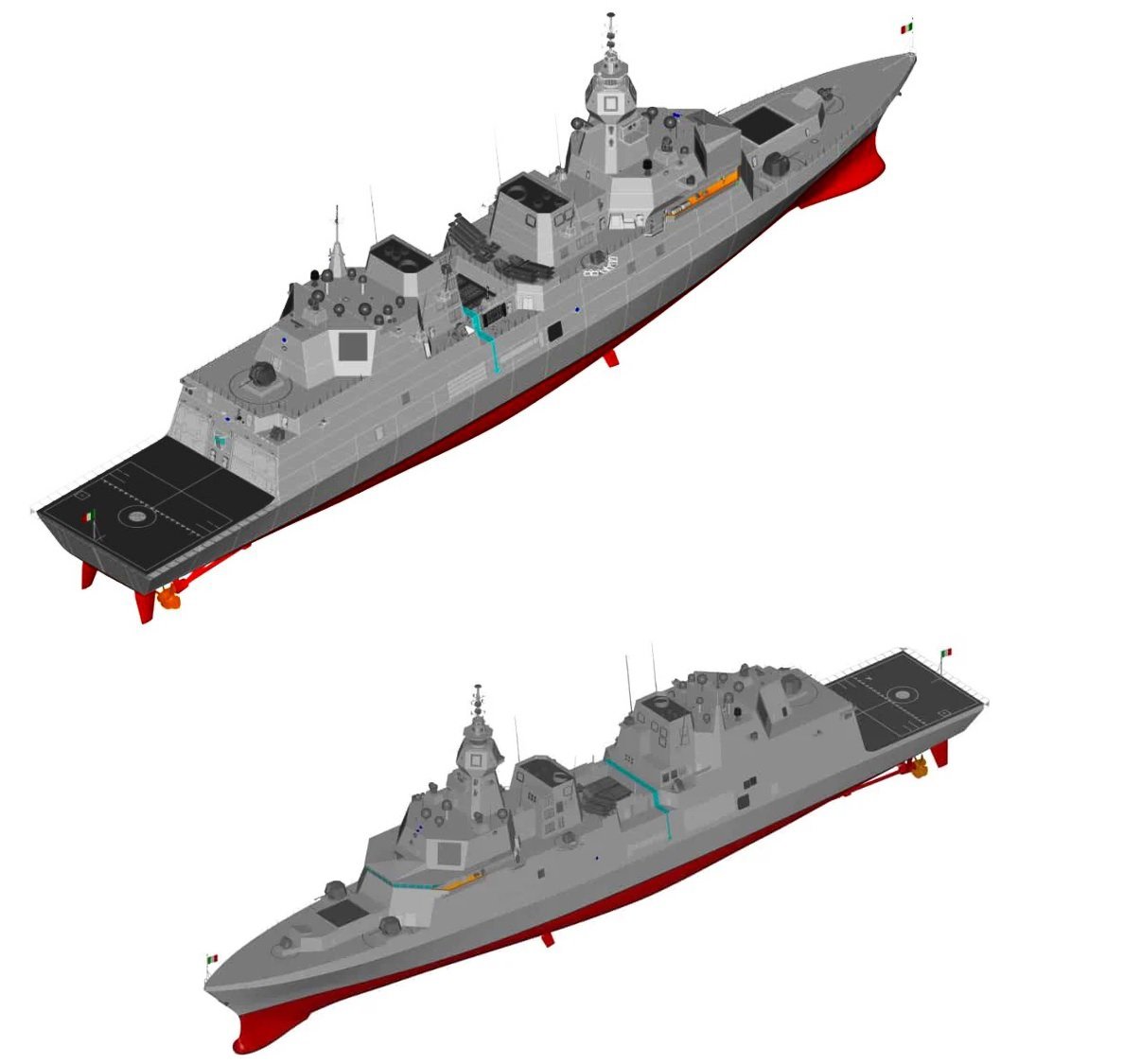
Europe
ROME — Orizzonte Sistemi Navali (OSN), a joint venture owned 51% by Fincantieri and 49% by Leonardo, has signed a contract worth approximately €3.7 billion with OCCAR for the development and production of two next-generation DDX destroyers for the Italian Navy. About €1.3 billion of the contract is in options. The agreement covers development, production, logistic studies and Initial In-Service Support (ISS). The contract officially launches the DDX programme, which is intended to replace and evolve Italy’s Horizon-class destroyers. OSN will place sub-supply contracts with its parent companies in the coming weeks. Fincantieri’s share will be approximately €1.8 billion, including about €800 million in options, while Leonardo’s portion will be approximately €1.7 billion, including about €480 million in options. Fincantieri will act as the system integrator, while Leonardo will develop the combat system. DDX Destroyer Specifications Each DDX destroyer will be 180 metres long, have a displacement of 13,500 tonnes, a range of 4,000 nautical miles and accommodate 251 crew members. The first ship is scheduled for delivery in 2033, with the second planned for 2035. The ships are being designed for complex maritime operations, with high levels of digitalisation, automation and integration between sensors, weapons, command-and-control systems and platform-management systems. The combat architecture is also designed to support interoperability and information sharing with multinational forces. Planned platform innovations include a DC power sub-network with energy storage, an integrated stabilisation and steering system, new methods for calculating thermal and electrical balances, and further development of the Ship Management System. Navis Sapiens Digital Architecture Fincantieri is developing the ships under its Navis Sapiens concept. The digital architecture will collect and correlate data from onboard systems to support operational decisions, technical management and through-life support. The open and scalable architecture is designed to support future upgrades. The ships will also connect with shore facilities through a Fincantieri Digital Ecosystem, linking them with a Digital Naval Base for data sharing, predictive maintenance and digital logistics support. At 15 knots, the ships will be able to manage unmanned underwater and surface assets through their digital backbone while optimising propulsion and electrical consumption. Air and Missile Defence Leonardo’s combat system will be centred on the new-generation SADOC 5 C5I system. The ships will also feature a high-power, fully digital S-band AESA radar and an MBDA weapon system. These systems are intended to provide Integrated Air and Missile Defence (IAMD) against missile, ballistic and hypersonic threats. The combat architecture is also being developed for multi-domain interoperability linked to Leonardo’s Michelangelo project. Fincantieri CEO and General Manager Pierroberto Folgiero, Leonardo CEO and General Manager Lorenzo Mariani, and OSN CEO Giovanni Sorrentino highlighted the programme’s importance for Italy’s naval capabilities, industrial supply chain, technological development and cooperation between Italian industry, the Italian Navy and OCCAR. The sub-supply agreements between OSN and its parent companies are classified as related-party transactions of greater significance and are being handled under the applicable regulatory procedures and exemptions for jointly controlled subsidiaries. The DDX programme will now move forward with the development and production of the two destroyers, with deliveries planned for 2033 and 2035.
Read More → Posted on 2026-09-24 17:33:56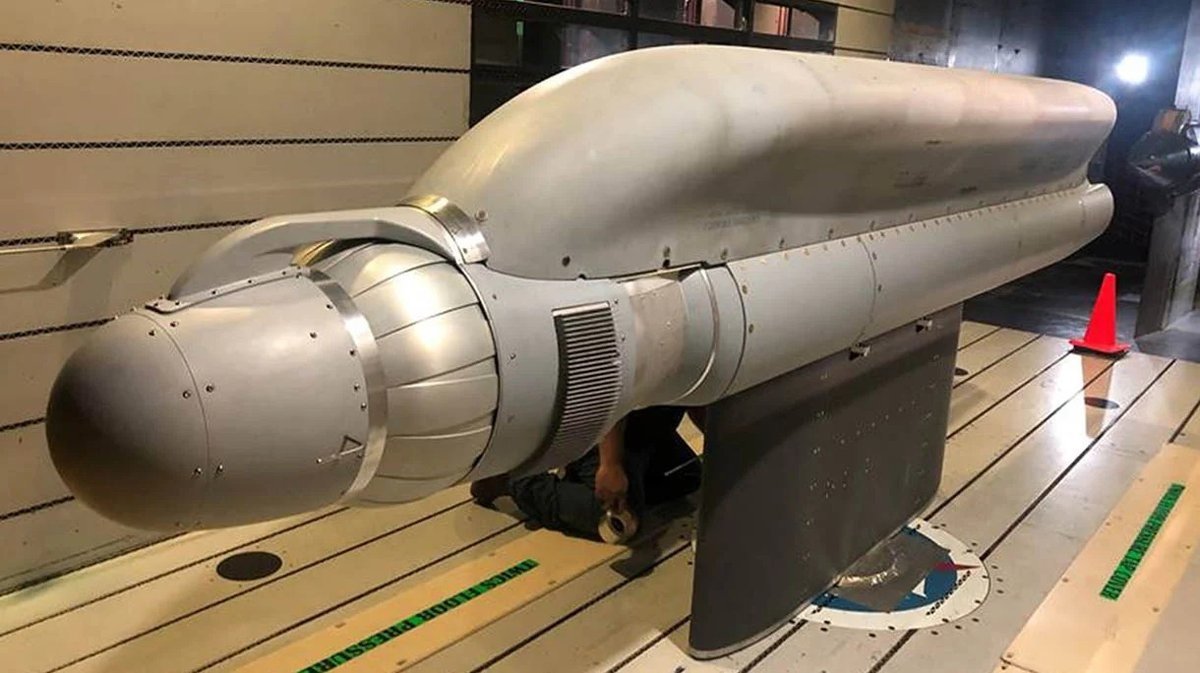
U.S
WASHINGTON — The U.S. Navy has awarded L3Harris Technologies an $876.4 million contract modification to continue development of the Next Generation Jammer Low Band (NGJ-LB) system for the EA-18G Growler electronic attack aircraft operated by the U.S. Navy and Royal Australian Air Force (RAAF). Contract Expands NGJ-LB Development The new award builds on a $587.4 million contract awarded in August 2024 for the engineering and manufacturing development phase of the NGJ-LB. The latest modification covers continued development, non-recurring tooling and equipment, associated labor, system demonstration test pods, cybersecurity and system security development, logistics, testing and evaluation, and software support for both U.S. and Australian forces. Work is scheduled to be completed in fiscal year 2031. The modification is undefinitized, allowing work to begin before the final terms and price are settled. It uses a cost-plus-incentive-fee structure and was not competitively awarded. Naval Air Systems Command at Patuxent River, Maryland, is the contracting activity. U.S. and Australian Funding At the time of the award, the U.S. Navy obligated about $3.65 million to $3.7 million from its fiscal 2026 research, development, test and evaluation budget. The Australian government provided $23 million in cooperative funds, giving it the larger share of the initial funding obligation. About 43% of the work will be performed at L3Harris’s facility in Salt Lake City, Utah. Other work will take place in Alabama, Pennsylvania, New Jersey, Colorado, California, New York and Texas, while 3.4% of the effort will be performed in Australia. Low-Band Electronic Warfare The EA-18G Growler is a modified F/A-18F Super Hornet designed for electronic warfare, including jamming enemy radar and communications. The aircraft has traditionally used the AN/ALQ-99 tactical jamming pod, which was first introduced in the 1970s. The Navy is replacing the legacy system with a family of Next Generation Jammer pods covering different frequency bands. RTX’s Raytheon produces the AN/ALQ-249 mid-band variant, which is already deployed with the fleet. L3Harris is developing the low-band variant to address lower-frequency search radars. According to L3Harris, the NGJ-LB is designed to provide high-power jamming from standoff ranges, engage multiple targets and provide 360-degree coverage. Its software-based architecture is also intended to support updates against current and emerging threats. Industry Partners Support Program The NGJ-LB supply chain is also expanding. In July 2026, CPI Aerostructures received a $13.6 million contract from L3Harris to manufacture airborne pod structures for operational prototypes and additional test units. CPI said it had delivered its first test article. Honeywell Aerospace joined the program in June 2025, while Marotta Controls announced contracts in September 2026 to support the NGJ-LB, including technology for the turbine speed-control system used in the pod’s ram-air-turbine power-generation assembly. The NGJ-LB is being developed as a cooperative U.S.-Australian program. The latest $876.4 million modification will support continued development, testing, security and production-related work as the system moves toward eventual fielding on U.S. Navy and Royal Australian Air Force EA-18G Growlers.
Read More → Posted on 2026-09-24 17:58:29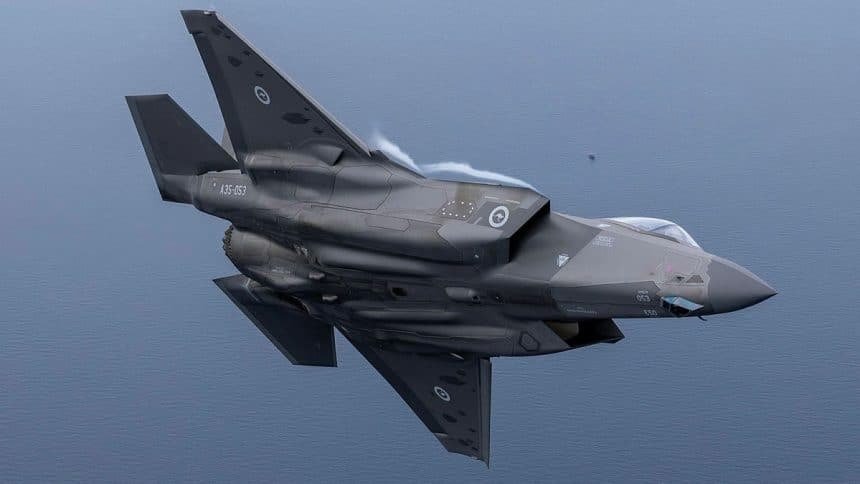
World
WASHINGTON / CANBERRA — The United States and Australia are investigating how two unserviceable components from an Australian F-35 fighter jet were diverted to Hong Kong while being shipped to the United States. F-35 Parts Diverted During Shipment The shipment left Australia in late May 2026 and included a cockpit canopy and weapons-bay door from a Royal Australian Air Force F-35. The components contained radar-absorbing material associated with the aircraft’s stealth features. The parts were being sent to the United States for inspection, possible repair or disposal because Australia does not currently have facilities to repair the specialized F-35 canopies. The components were transported by a commercial intermediary on behalf of Lockheed Martin, the F-35’s primary contractor. Reports identified the carrier as UPS. The shipment stopped in South Korea before being routed to Hong Kong. The reason for the diversion remains unclear. Chinese Government Took Possession According to people briefed on the matter cited by Bloomberg, the Chinese government later took possession of the components and has not returned them. Hong Kong is a special administrative region of China. The diversion was first reported by Politico on September 18, 2026. The Pentagon’s F-35 Joint Program Office confirmed that it was tracking a “shipment issue” involving unserviceable F-35 Lightning II components. The office said it was working with US authorities and industry partners to recover the parts, investigate the incident and introduce safeguards against similar incidents. Australia Assisting Investigation Australian Defence Minister Richard Marles confirmed the incident on September 22. He said Australia was examining what happened on its side and assisting the United States and Lockheed Martin. Marles said there was a “sense of comfort” that the components were not considered sensitive equipment or sensitive parts. He added that the matter would ultimately be managed by the United States and Lockheed Martin. Lockheed Martin said it handles aircraft-part shipments in accordance with US Defense Department regulations and continues to cooperate with the US government. The company has not disclosed further details about the shipment. China’s Foreign Ministry and its embassy said they were not aware of the incident. US and Australian authorities have not publicly suggested that Beijing deliberately diverted the shipment. F-35 Global Supply Chain Australia operates 72 F-35s and maintains a spare-parts warehouse at Williamtown, north of Sydney, which serves as an Asia-Pacific hub for the F-35 program. The F-35 program uses a shared global pool of spare parts involving the United States and partner countries. The international supply network includes multiple countries, making logistics and tracking more complex. Previous F-35 Parts Tracking Concerns The incident also comes amid previous concerns about F-35 spare-parts tracking. A 2023 US Government Accountability Office report found that more than 1 million F-35 spare parts valued at over $85 million had gone missing over a five-year period. The GAO identified inadequate tracking visibility as a major factor behind the discrepancies. US State Department and Pentagon officials have briefed congressional staff on national security committees about the latest diversion. Investigations are continuing in the United States and Australia as authorities work to recover the components and determine how the shipment was redirected to Hong Kong.
Read More → Posted on 2026-09-24 18:06:27
Europe
WARSAW, POLAND — Polish authorities are investigating a fire at a Starlink satellite communications ground station in Wola Krobowska, about 40 kilometers south of Warsaw, after indications emerged that the fire may have been deliberately started. Fire damages power equipment The fire broke out shortly after 9 p.m. on September 23. The property owner reported that antennas were on fire. Firefighters from the Grójec district received the alert at about 21:07 and sent three units to the site. Firefighters found flames involving the housing of a power distribution box covering about three square meters. The fire was extinguished with one stream of water, and firefighting operations ended at about 3:19 a.m. No injuries were reported. The fire damaged the power distribution unit connected to the antennas and a power generator. Possible arson under investigation Preliminary information indicated that the distribution unit may have been deliberately set on fire. An unofficial report said a bottle containing a flammable substance was found near the damaged equipment. However, investigators are also examining the possibility of an electrical short circuit. Lightning was ruled out based on the weather conditions at the time. Poland’s Deputy Prime Minister and Digital Affairs Minister Krzysztof Gawkowski said there were strong indications that the fire was an act of arson intended to disrupt the station and internet access for institutions, including the Ukrainian military. Gawkowski said the method was consistent with a pattern associated with Russian services, but responsibility has not been confirmed. Security agencies join investigation Police took control of the site, while Poland’s Internal Security Agency (ABW) and Central Bureau of Investigation (CBŚP) were notified and became involved. The District Prosecutor’s Office in Grójec has opened an investigation. Authorities are reviewing monitoring footage and securing other evidence while considering sabotage among the possible causes. Role of the Starlink station The Wola Krobowska facility is part of the ground infrastructure connecting Starlink’s satellite network with terrestrial systems. Together with a similar facility near Kaunas, Lithuania, it supports connectivity across Central and Eastern Europe, including Ukraine. The site contains around a dozen white spherical antennas, each about two meters in diameter, and is surrounded by a metal fence. The connectivity is used by Ukrainian military and critical institutions. Exatel, Poland’s state-owned telecommunications company, is associated with the location. Exatel said it leases the land and provides data-transmission services there but does not own or operate the satellite infrastructure. The company said none of its equipment was damaged and its network services were not affected. Station returns to operation The station has since returned to full operation, and authorities have not reported a major regional internet outage. The investigation remains ongoing as authorities determine whether the fire was caused by deliberate arson, an electrical failure, or another factor. No perpetrator or foreign government has been officially identified.
Read More → Posted on 2026-09-24 18:09:15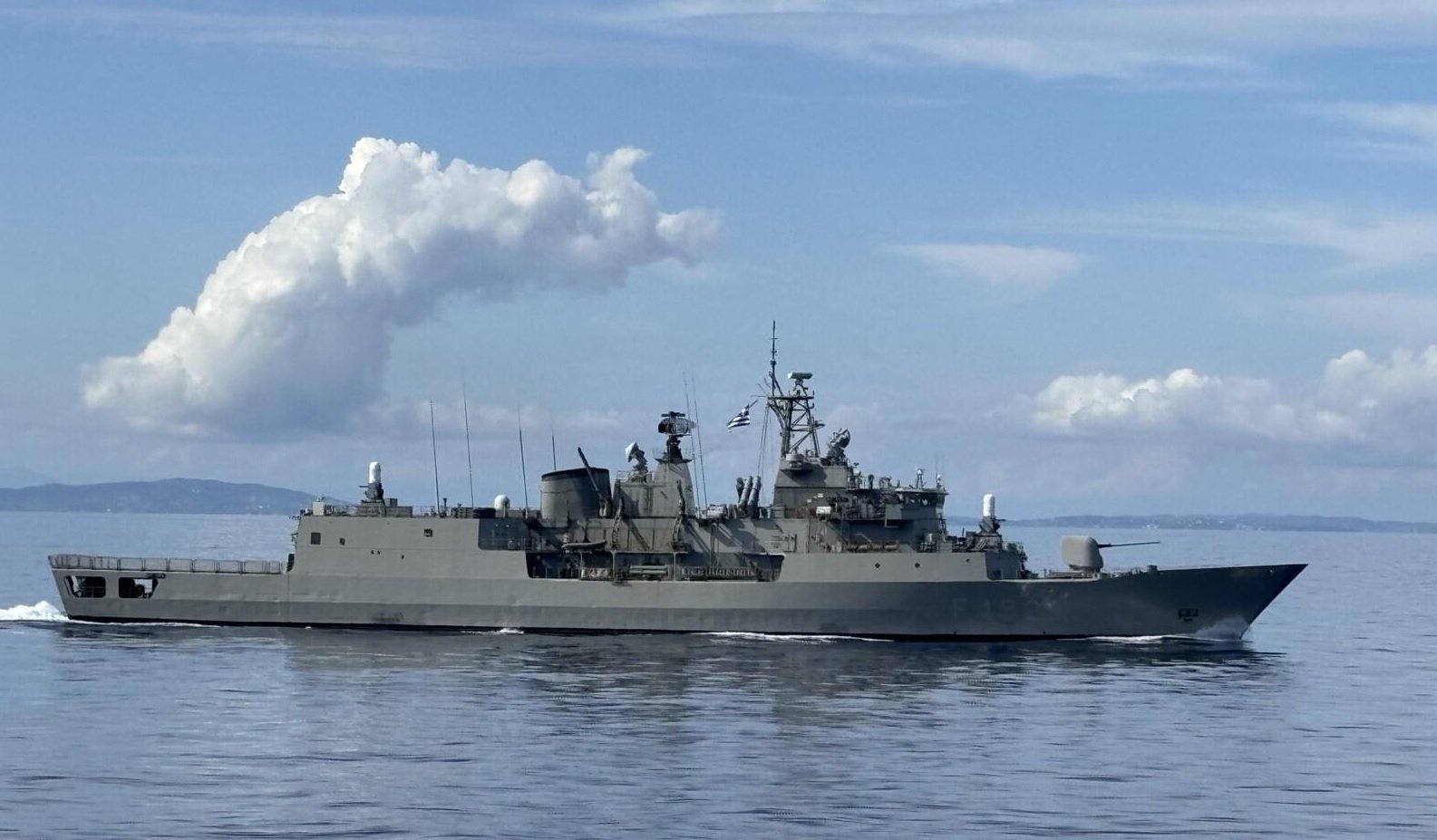
World
ATHENS, GREECE — The Hellenic Navy and Hellenic Aerospace Industry (HAI) have selected Terma’s SCANTER 6002 surveillance radar for the mid-life modernization of Greece’s four MEKO 200 HN (Hydra-class) frigates. Radar to Integrate With Centaur and TACTICOS HAI will integrate the SCANTER 6002 with its Centaur counter-unmanned aircraft system (C-UAS). The radar will also interface with the Thales TACTICOS combat management system. The integration will allow radar detection data to be shared through the Centaur system and TACTICOS, giving operators a unified picture of activity around the frigates. Centaur provides passive detection and electronic jamming capabilities and has already been used operationally, including during Operation Aspides in the Red Sea, where it successfully intercepted and neutralized drones. SCANTER 6002 Capabilities The X-band SCANTER 6002 is designed to detect and track small, low-signature air and surface targets while also monitoring surface traffic and the lower airspace around a vessel. The radar uses GaN (gallium nitride) solid-state technology, advanced digital signal processing, high spatial resolution and automatic adaptation to sea and land clutter. It also includes an AI-based classifier to help operators distinguish small drones from other targets. These features are designed to support operations in both coastal and open-water environments while reducing operator workload. Part of Hydra-Class Modernization The radar selection is part of the wider mid-life modernization program for the four Hydra-class frigates. The program includes the installation of the latest TACTICOS combat management system and other sensors, with the modernization intended to extend the ships’ operational capability into the 2030s. Kyriakos Enotiadis, Director of the Electronics Plant Directorate at HAI, said the integration of SCANTER 6002, Centaur and TACTICOS will provide information for counter-UAS operations while improving the frigates’ wider situational awareness. Martin Jentsch, Terma’s Sales Director for Naval Sales, said the combination of the radar and Centaur will provide real-time information across the counter-drone chain. The SCANTER 6002 has also been fitted to the 12 Arafura-class offshore patrol vessels of the Royal Australian Navy and selected for new anti-submarine warfare frigates of the Netherlands and Belgium, as well as Canada’s Arctic and offshore patrol ships. The modernization brings together the Hellenic Navy, HAI, Thales and Terma to improve the frigates’ ability to detect and respond to small air and surface threats.
Read More → Posted on 2026-09-25 13:55:37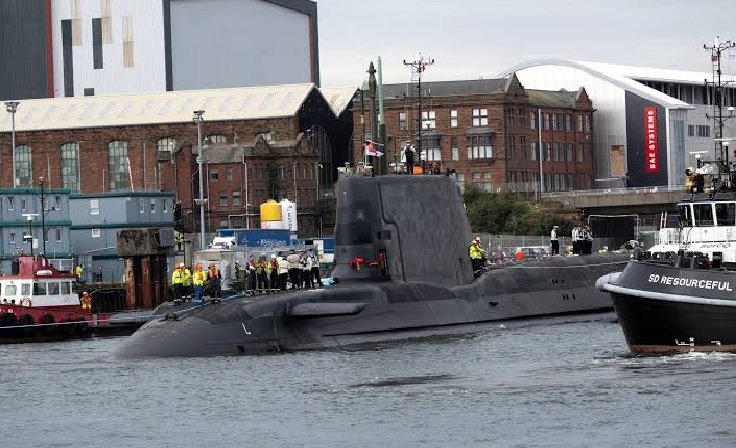
Europe
BARROW-IN-FURNESS, UK — The Royal Navy’s newest nuclear-powered attack submarine, HMS Agamemnon (S124), has departed BAE Systems’ shipyard in Barrow-in-Furness to begin sea trials. The sixth of seven Astute-class submarines left the shipyard on September 24, 2026, following a planned two-day operation through the yard’s basins, docks and locks before passing through the narrow Walney Channel into the Irish Sea. She is now heading toward HM Naval Base Clyde, where further trials, crew training and preparations for operational service will take place. HMS Agamemnon, known by her crew as “Awesome Aggie,” is conventionally armed and nuclear-powered. The submarine has a displacement of around 7,400 tonnes, measures 97 metres in length and is designed to operate for long periods underwater. Her Rolls-Royce nuclear reactor does not require refuelling during her service life, while onboard systems can generate air and drinking water. The submarine is designed for anti-submarine warfare, intelligence gathering, precision strike and support for maritime task groups. She is equipped with six 21-inch torpedo tubes and will carry Spearfish heavyweight torpedoes and Tomahawk land-attack cruise missiles, which can strike targets at ranges of more than 1,000 miles. Astute-class submarines can also support Royal Marines operations and contribute to the UK's continuous at-sea nuclear deterrent. Long construction and testing programme Construction of HMS Agamemnon began when her keel was laid on 18 July 2013. She was christened in April 2024 and launched in October 2024. King Charles III formally commissioned the submarine into the Royal Navy on September 22, 2025, during a ceremony in Barrow. In October 2025, she completed a three-day trim dive in a deepened shipyard basin to test her watertight integrity, ballast systems, stability and centre of gravity. Further testing continued at Barrow involving her roughly 100-strong crew and industry teams before the submarine's departure for sea trials. First Sea Lord General Sir Gwyn Jenkins said the submarine's move to sea was an important step toward joining the fleet and highlighted the importance of the Royal Navy's submarine force to UK and NATO defence. Final Astute-class submarine The seventh and final Astute-class submarine, HMS Achilles, is at an advanced stage of construction at Barrow. The Astute class will eventually be replaced by the planned SSN-AUKUS nuclear-powered attack submarines. Current plans call for construction of the first UK SSN-AUKUS submarine to begin in 2027, with the first boat expected to enter Royal Navy service in the late 2030s. The UK’s Defence Nuclear Enterprise supports more than 47,000 jobs across the country, including major employment in Barrow linked to submarine design, construction and support. HMS Agamemnon is the sixth Royal Navy vessel to carry the name Agamemnon, which comes from the mythological King Agamemnon of Mycenae. Her sea trials will now test the submarine and its systems at sea before she progresses toward operational service with the Royal Navy's submarine force.
Read More → Posted on 2026-09-25 13:59:52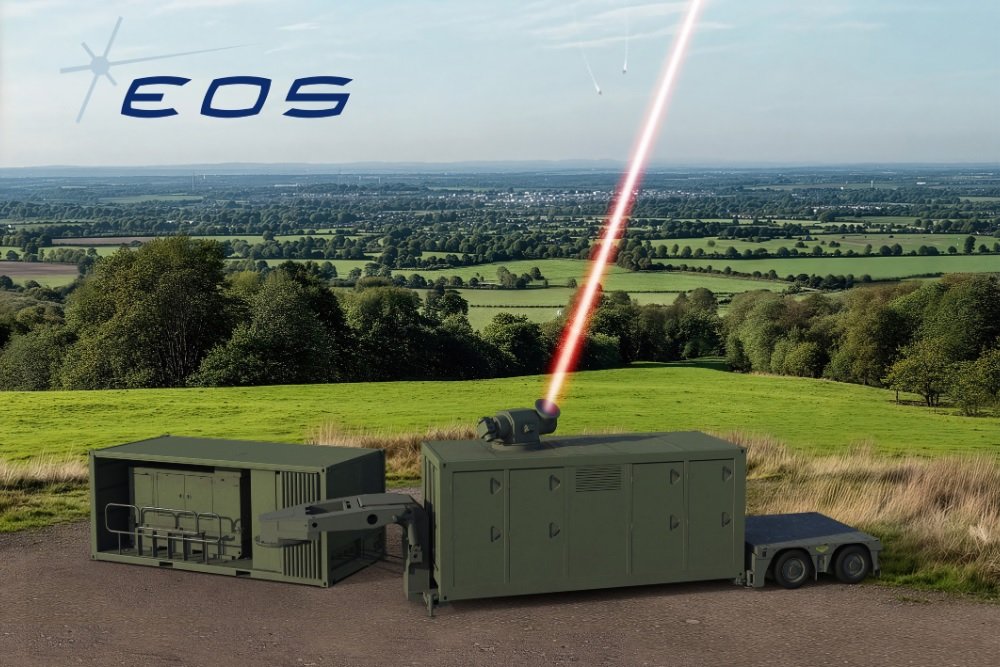
World
THE HAGUE — The Netherlands Ministry of Defence is working with Australian defence company Electro Optic Systems (EOS) to develop the Apollo High Energy Laser Weapon System into an operational counter-drone capability. Dutch State Secretary for Defence Derk Boswijk signed a Letter of Intent with EOS this week. The Dutch Ministry of Defence announced the agreement on September 24, with EOS confirming it on September 25. Under the agreement, the Netherlands and EOS will explore the development of Apollo into a fully operational weapon system and examine the establishment of a production facility in the Netherlands, supported by a Dutch-led European supply chain. EOS intends to conduct development and production in the country, potentially making the Netherlands its European base. If development is successful, Dutch Defence intends to purchase a number of systems. Apollo laser capabilities The Apollo is a scalable high-energy laser system with power levels from 50 kW to 150 kW. EOS says it can engage more than 20 Group 1 unmanned aircraft per minute. The system has a stated hard-kill range of approximately 50 metres to 3 kilometres and an optical sensor-denial range of about 15 kilometres. When connected to external electrical power, it can conduct effectively unlimited engagements, while its internal power system supports more than 200 engagements. Apollo is designed for mobile deployment and can be packaged in a 20-foot ISO container. It can also integrate with NATO command-and-control and integrated air-defence systems. Follows €71.4 million Dutch order The new cooperation builds on a €71.4 million export contract secured by EOS in 2025 for a 100 kW-class high-energy laser system from a European NATO member, later identified as the Netherlands. The contract covers production, spare parts, training and documentation, with delivery activities planned between 2025 and 2028. Initial production was linked to EOS's facility in Singapore. EOS has indicated that the Dutch system could receive its first components as early as mid-2027, with full delivery around 2028. Growing global laser development Several countries are developing high-energy lasers for counter-drone and air-defence missions. The United States is advancing systems including RTX's HELWS and Lockheed Martin's ATHENA/IFPC-HEL. Israel is deploying Rafael's Iron Beam, while the United Kingdom is developing DragonFire. Germany has demonstrated 100 kW-class laser systems on Boxer armoured vehicles and naval platforms. Turkey has tested ASELSAN's ALKA and GÖKBERK, while China has developed systems including Silent Hunter and LY-1. In India, DRDO's 30 kW Mark-II(A) laser has completed military trials and is moving toward industrial production. Laser weapons can reduce the need for conventional ammunition, but their effectiveness remains dependent on factors including electrical power, cooling, atmospheric conditions and line of sight. The Netherlands-EOS agreement is the next step toward developing the Apollo into an operational Dutch counter-drone capability while establishing potential local production and a European supply chain.
Read More → Posted on 2026-09-25 14:06:27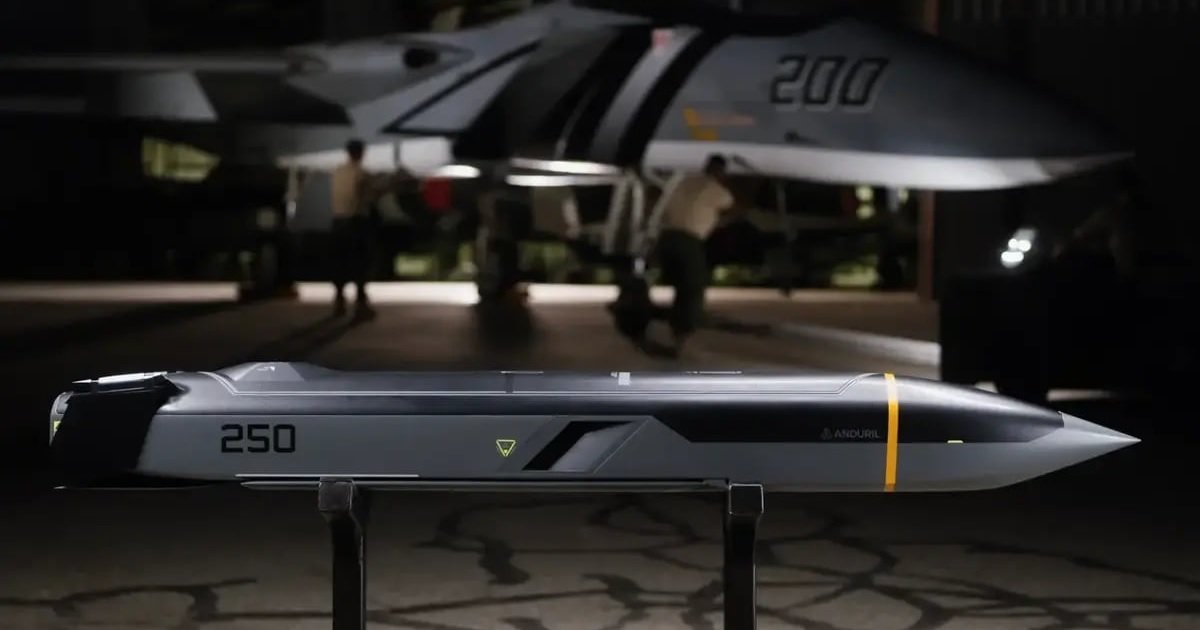
Europe
RIGA, LATVIA — Latvia is planning to acquire Barracuda long-range cruise missiles from U.S. defense technology company Anduril Industries as part of efforts to strengthen its long-range strike capability. Latvian President Edgars Rinkēvičs confirmed the plan after visiting Anduril in the United States and meeting its founder, Palmer Luckey. Rinkēvičs said he looked forward to completing the missile acquisition and expanding defense-industry cooperation between Latvia and Anduril. Latvia and Anduril have not disclosed the number of missiles, purchase cost, delivery schedule or specific Barracuda variant planned for the Latvian military. Barracuda to Extend Latvia's Strike Range The Barracuda family was unveiled by Anduril in September 2024 and consists of three turbojet-powered, subsonic cruise missiles: the Barracuda-100, Barracuda-250 and Barracuda-500. The Barracuda-500 is the largest variant and can carry a warhead of more than 45 kilograms (99 pounds), with a stated range of up to 926 kilometers (575 miles). The three variants share more than 90 percent of their components. Anduril says the Barracuda family is designed to reduce production costs and manufacturing time, estimating that the missiles cost about 30 percent less and can be produced in roughly half the time of comparable cruise missiles. The missiles can be launched from fighter aircraft, helicopters, cargo aircraft, ships and ground launchers. According to Anduril, multiple Barracuda missiles can also operate together during a mission, with some missiles able to perform scouting or decoy roles while others conduct strikes. Latvia currently has ATACMS as its longest-range strike system on order. The country is acquiring ATACMS missiles together with six HIMARS launchers under a U.S.-approved 2023 agreement. ATACMS has a range of about 300 kilometers (186 miles). A Barracuda-500 would therefore provide Latvia with a strike range roughly three times longer. Anduril Expands Barracuda Production The Latvian plans come as Barracuda production expands. In May 2026, the U.S. Department of War signed a framework agreement under which Anduril will provide at least 1,000 surface-launched Barracuda-500M missiles annually for three years, with deliveries scheduled to begin in 2027. In July 2026, Poland's state-owned defense group PGZ signed an agreement with Anduril to assemble and later produce the Barracuda-500M at Military Aviation Works No. 2 in Bydgoszcz. PGZ said European production could allow other EU countries to purchase the missile through the EU's SAFE defense loan program. Cooperation With Origin Robotics Rinkēvičs's U.S. visit also included cooperation involving Latvia's domestic defense industry. During the visit, a memorandum of understanding was signed involving Anduril and Riga-based Origin Robotics, which develops military drones and autonomous systems. Origin Robotics' BLAZE is an autonomous counter-drone interceptor that uses radar and AI-supported cameras to locate and engage hostile drones. BLAZE systems have been delivered to Latvia, Estonia and Belgium, and Origin Robotics has a multi-year supply framework with the Latvian armed forces. The companies plan to explore integrating BLAZE with Anduril's Lattice command-and-control platform. Joint testing and demonstrations are planned in Latvia to assess the combined systems. The Barracuda acquisition and cooperation with Origin Robotics would give Latvia two additional areas of defense capability: longer-range strike systems and autonomous counter-drone technology. However, the final details of the missile purchase and the cooperation agreements have not been publicly released.
Read More → Posted on 2026-09-25 14:19:39
U.S
COLORADO, USA — Ukrainian electronic warfare (EW) developer Unwave took part in trials under the U.S. Drone Dominance program at Fort Carson, Colorado. Following the testing, U.S. officials requested the company’s continued support for the program, according to statements Unwave provided to the Ukrainian military outlet Militarnyi. The trials were held from August 24 to September 2, 2026, with 14 drone manufacturers and three electronic warfare developers participating. The tests were designed to create battlefield-like conditions and assess how unmanned aircraft perform against electronic warfare systems and during live engagements. Scenarios included protection of stationary and mobile assets and infrastructure from unmanned threats. The Drone Dominance program is a Pentagon effort to accelerate the selection, procurement and delivery of strike drones to U.S. forces, with plans to acquire more than 200,000 unmanned aerial systems by 2027. The Fort Carson Gauntlet II evaluation also included testing related to electronic warfare, deep-strike and close-quarters missions. Four EW systems demonstrated Unwave demonstrated four systems during the trials. Vikha: A tactical-operational EW complex operating from 300 MHz to 3.2 GHz, with more than 100 watts of power and a directional suppression range of over 300 meters. Boombox: A portable multi-channel system weighing 11–25 kg. It operates in the 0.4–1 GHz, 1.9–2.7 GHz and 5.8 GHz bands and provides a 50-meter protective radius against FPV drones. Shatro: Designed for installation on vehicles and military equipment. It has 50–100 watts of channel power and covers the 0.2–5.8 GHz range. Choven-2: A localized multi-channel system that can suppress FPV drones within 70 meters and Mavic-type quadcopters from 50 meters. It can also be mounted in a vehicle roof-box configuration. Earlier NATO testing Unwave had earlier participated in the NATO Baltic Trust 26 exercise in Latvia. The company said its EW system was the only system able to successfully jam a drone during a counter-UAV test and subsequently received a special commendation from the exercise organizers. The exercise brought together 650 participants from 24 countries and represented the final stage of NATO's UAV countermeasure testing program. Founded in 2023, Kyiv-based Unwave develops and integrates electronic warfare and counter-drone systems, with its products designed to operate independently or as part of a wider counter-UAS ecosystem. Its participation in both NATO and U.S. testing provides the company with opportunities to demonstrate its systems in multinational military environments.
Read More → Posted on 2026-09-25 14:30:49
India
NEW DELHI — The Indian Navy has issued a Request for Proposal (RFP) for a new Indigenous Harbour Defence System (IHDS) to strengthen surveillance and protection of four major naval bases — Mumbai, Karwar, Kochi and Visakhapatnam. The proposed system is intended to replace the existing Integrated Underwater Harbour Defence and Surveillance System (IUHDSS). The IUHDSS was designed by Israel Aerospace Industries (IAI) ELTA and was introduced as part of efforts to strengthen harbour security following the 26/11 Mumbai attacks. The first system in India was commissioned at Kochi in July 2015 and combined coastal surveillance radars, electro-optical sensors and sonar systems for detecting and tracking surface and underwater threats. Large Sensor Network According to the RFP requirements, the new IHDS will include five high-power radars, 13 sonars and five electro-optical/infrared (EO/IR) suites across the four locations. At the centre of the system will be a Command and Control (C2) system capable of processing and tracking more than 600 surface targets and over 50 subsurface tracks simultaneously. The network is designed to provide continuous surveillance of both the surface and underwater areas around the naval bases. Underwater Detection The sonar component will provide 360-degree coverage for underwater surveillance. The RFP specifies detection ranges of 500–700 metres for combat divers, 1 kilometre for Swimmer Delivery Vehicles (SDVs), and 1.5 kilometres for midget submarines. These capabilities are intended to strengthen protection against underwater threats approaching naval harbour facilities. Radar and Electro-Optical Surveillance The system will also use X-band radars with an instrumented detection range of at least 150 kilometres. The EO/IR suites are required to combine Medium-Wave Infrared (MWIR), Short-Wave Infrared (SWIR) and high-definition day cameras. The RFP specifies the ability to detect small boats at distances of up to 20 kilometres. VTOL UAV Integration The new harbour defence architecture will also include Vertical Take-Off and Landing (VTOL) unmanned aerial vehicles (UAVs). The UAVs are required to have an operational range of 20–25 kilometres and an endurance of two hours. They will form part of the surveillance network and provide an additional aerial observation capability for investigating detected activity. The overall procurement is part of the Indian Navy's effort to develop indigenous harbour defence capabilities, with the selected Indian contractor expected to integrate the radar, sonar, EO/IR and UAV components into a single surveillance and command system. The new IHDS is therefore planned as a multi-layered system combining surface, underwater and aerial surveillance to protect important Indian naval bases and the high-value assets operating from them.
Read More → Posted on 2026-09-25 14:35:35
Europe
BERLIN — U.S.-based Earth observation company Planet Labs has opened a new 5,700-square-meter satellite manufacturing facility in Berlin’s Mitte district. The facility, operated by Planet Labs GmbH, will produce the company’s Pelican satellites and expand its manufacturing capacity in Europe. Production is scheduled to begin this autumn, with the first satellite expected to be completed before the end of 2026. The plant is designed to eventually produce up to 60 satellites per year, roughly doubling Planet’s overall Pelican production capacity. Manufacturing will continue at the company’s San Francisco headquarters. Pelican satellites are in the 300-kilogram class and are designed for high-resolution Earth observation, with the next-generation spacecraft offering approximately 30-centimeter resolution. Planet announced the Berlin facility in September 2025. The company has completed the facility handover and cleanroom fit-out within 12 months. The expansion will add about 70 employees to Planet’s existing workforce of nearly 150 people in Berlin. Planet has operated in Germany since 2015, following its acquisition of German Earth observation company RapidEye. Berlin already serves as the company’s European center for engineering, mission operations, data processing and business functions. Planet co-founder and CEO Will Marshall said the company has built and successfully launched 688 satellites over 15 years, and that the new facility brings its satellite manufacturing capability to Berlin. The first satellites produced at the Berlin facility are scheduled to launch in early 2027 aboard an Isar Aerospace Spectrum rocket from the Andøya Space complex in Norway. The planned mission would be the first time a German-built Pelican satellite is launched on a German-built launch vehicle. The Berlin facility is part of Planet’s expansion of localized satellite production in Europe and supports the company’s growing Earth observation operations in the region.
Read More → Posted on 2026-09-25 14:39:52
U.S
WASHINGTON — Chinese satellite imagery and geospatial data have helped Iran improve its ability to target U.S. military bases and ships in the Middle East, according to recent U.S. intelligence assessments described by officials familiar with the findings. The intelligence support has been linked to Iran’s improved targeting accuracy in recent months, including a July 17 ballistic missile attack on Muwaffaq Salti Air Base in northeastern Jordan that killed three U.S. service members and wounded four others. Satellite imagery linked to Jordan strike Four sources familiar with the U.S. assessments told CNN that high-resolution satellite imagery obtained by Iran from Chinese entities before and after the attack helped Iranian forces target the Jordanian base with a level of accuracy that U.S. officials believe was greater than Iran’s previous capability. The missiles struck a housing area where U.S. troops were sleeping. The three service members killed were Army Sgt. Angel S. Rampersad, 28, of Ozone Park, New York; First Lt. Tyler James Feehan, 25, of Ewa Beach, Hawaii; and Pvt. Isabella Gonzales, 19, of Carrollton, Texas. Four other service members were wounded and medically evacuated. Iran later released high-resolution images showing damage at the base. Publicly available commercial satellite imagery also showed damage to more than 20 structures across three areas of the facility. Muwaffaq Salti is an important U.S. military location in the region, hosting a range of aircraft and supporting U.S. operations in the Middle East. CNN reporting from July also described the base as a major regional hub for U.S. military operations. Data also used to track ships U.S. officials said Chinese geospatial information has also improved Iran’s ability to monitor ships operating around the Strait of Hormuz. According to officials familiar with the assessments, the information provides Iranian forces with a better picture of U.S. escort operations and helps them determine when vessels reach particular positions in the waterway. One tactic involves launching relatively unsophisticated heat-seeking drones at selected points along shipping routes. The drones cannot be guided after launch, but more accurate information about the location and movement of ships can improve the timing of an attack. During one U.S. escort operation, American forces were reported to have intercepted more than a dozen Iranian missiles and nearly 20 drones while dealing with roughly 60 targets around the strait. The Strait of Hormuz remains a strategically important waterway for regional maritime traffic, and the U.S. Treasury has separately taken action against Iranian networks connected to activities involving vessels transiting the strait. Chinese and Russian assistance The satellite information is described as only one part of Iran’s improving military capabilities. U.S. officials have also pointed to technical assistance from China and Russia that has helped Iran improve guidance systems for existing missiles and drones. Iran's own combat experience has also contributed to changes in its targeting capabilities, according to the assessments. The exact role of the Chinese government remains unclear. U.S. officials have not established whether Beijing directly authorized the transfer of satellite information or whether Chinese private companies provided the imagery without direct government direction. Chinese officials have rejected the allegations and have demanded evidence from Washington. Beijing has said its commercial cooperation with Iran complies with international law. U.S. sanctions Chinese satellite companies The Trump administration has also taken action against Chinese entities accused of providing satellite imagery that could support Iran's military activities. In May, the administration sanctioned MizarVision, Earth Eye and Chang Guang, according to the information provided by U.S. officials. Earlier U.S. actions have also targeted China- and Hong Kong-based entities connected to procurement networks supporting Iran's military programs. The U.S. Treasury has publicly confirmed sanctions against Chinese and Hong Kong-based networks involved in supporting Iran's weapons procurement. Earlier reporting also indicated that Iran's Islamic Revolutionary Guard Corps Aerospace Force acquired a Chinese-built satellite known as TEE-01B from Earth Eye Co. in late 2024. The satellite was reportedly used to monitor U.S. military sites in the region. U.S. bases face continuing attacks The improved Iranian targeting comes as U.S. forces have faced repeated missile and drone attacks across the Middle East. A Pentagon inspector general report cited in the assessments found that Iranian strikes had damaged or destroyed hundreds of structures at U.S. bases in Kuwait, Bahrain, Qatar, the United Arab Emirates, Saudi Arabia, Iraq, Oman and Jordan since the conflict escalated. The attacks have forced U.S. Central Command to adjust the positioning of personnel and storage facilities in response to the continuing threat from drones and missiles. The U.S. assessments therefore describe Iran's improved targeting as the result of several factors, including access to foreign satellite and technical assistance, battlefield experience and improvements to its existing missile and drone systems. However, the extent of direct Chinese government involvement in providing satellite intelligence remains unresolved.
Read More → Posted on 2026-09-25 14:50:43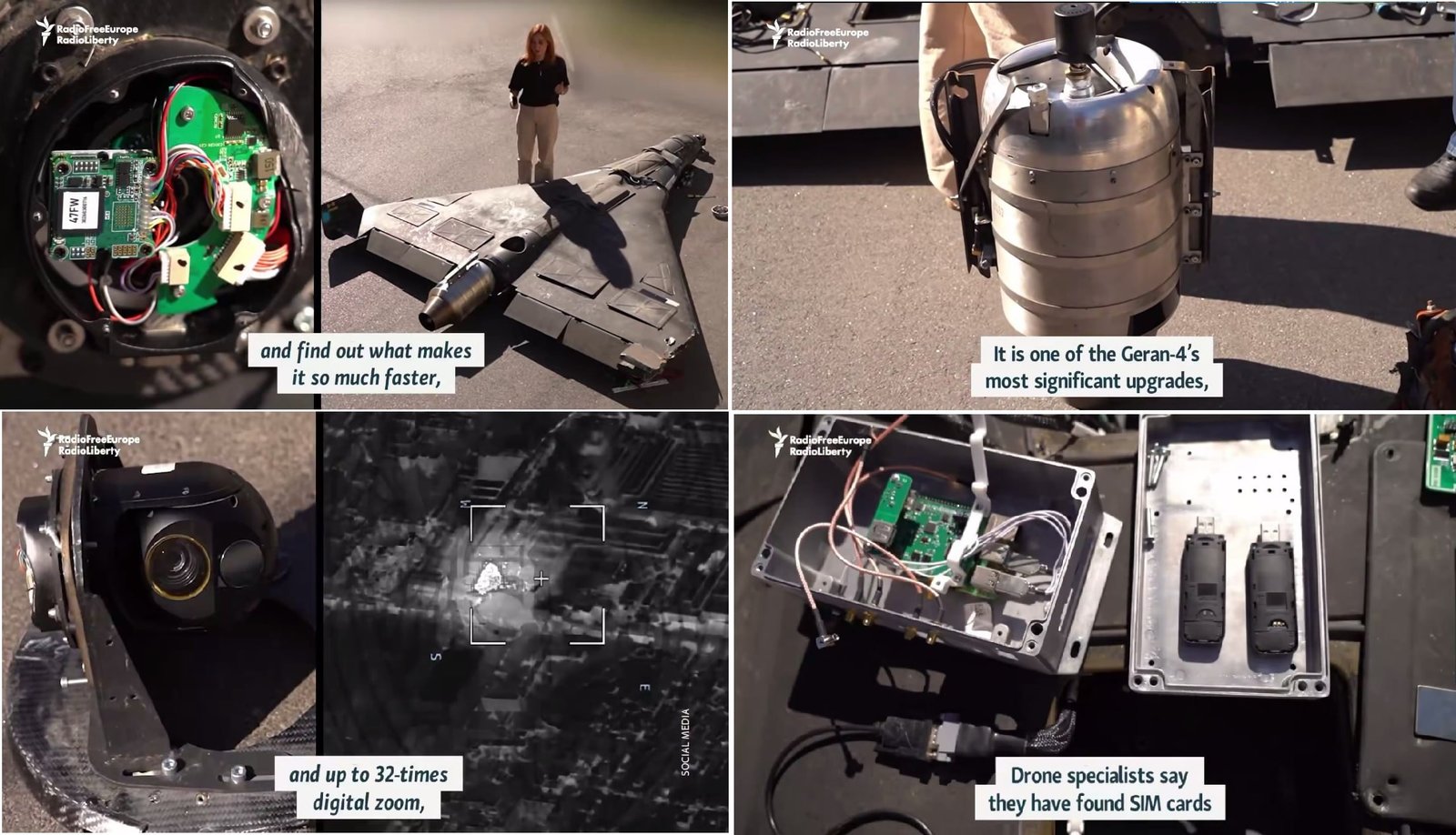
World
KYIV, — Russia’s Geran-4 jet-powered strike drone has been examined by Ukrainian journalists and technical specialists in an investigation published by Schemes, the investigative project of Radio Free Europe/Radio Liberty (RFE/RL), on September 24. The examination of recovered wreckage provides details about the drone’s engine, optical system, communications, navigation equipment and foreign-made electronics. Chinese-Made Jet Engine The Geran-4 uses a turbojet engine instead of the piston engine used by earlier Geran variants. Specialists identified a Chinese-made TG-2000 engine in the examined drone, with a reported service life of about 30 hours. The drone can reach speeds of around 450–500 km/h and an altitude of up to 8 kilometers. Its assessed range can exceed 700 kilometers under the reported conditions. Earlier Ukrainian assessments also identified Chinese Telefly LX-WP-160 and TF-TJ2000A engines in Geran-4 airframes. The examined drone was produced at Russia’s Alabuga special economic zone in Tatarstan, where investigators found Chinese markings and a technician’s note indicating that the engine was serviceable. Day, Night and Infrared Camera The newer Geran-4 configuration has a dedicated camera compartment in its nose. The electro-optical system provides daylight, night and infrared channels, with 10x optical zoom and up to 32x digital zoom. The camera allows operators to observe terrain and receive visual information during flight. Its housing carries Russian factory markings, including the designation “Mini-Sandwich.” 300-Kilometer Communications System The drone is equipped with a Chinese-made mesh modem supporting radio and video communications. The reported communications range is up to 300 kilometers. The system can transmit real-time video and allow operators to adjust the drone’s route. It can also operate as a signal repeater, allowing drones to relay communications through the network. The examined aircraft also contained two GSM modems. Previous examinations of similar systems found SIM cards associated with Ukrainian, Russian, Belarusian, Kazakh and European mobile operators. A 16-channel CRPA antenna is also fitted to reduce the effectiveness of electronic warfare against the drone’s navigation and communications systems. Foreign Electronics The examination found that the Geran-4 continues to use foreign-made electronic components. Texas Instruments components from the United States were identified on the onboard computer, while most of the other foreign components were reported to be Chinese. Warhead and Airframe The Geran-4 can carry a warhead of up to 90 kilograms. Earlier Ukrainian Defence Intelligence assessments described a reinforced airframe measuring about 3.5 meters long with a 3-meter wingspan. The combination of jet propulsion, 450–500 km/h speed, high-altitude flight, a multi-mode camera, real-time video transmission and long-range mesh communications distinguishes the Geran-4 from earlier piston-powered Geran drones. The September 24 Schemes investigation provides a detailed look at how these systems are integrated into the Russian-produced strike drone.
Read More → Posted on 2026-09-25 15:51:48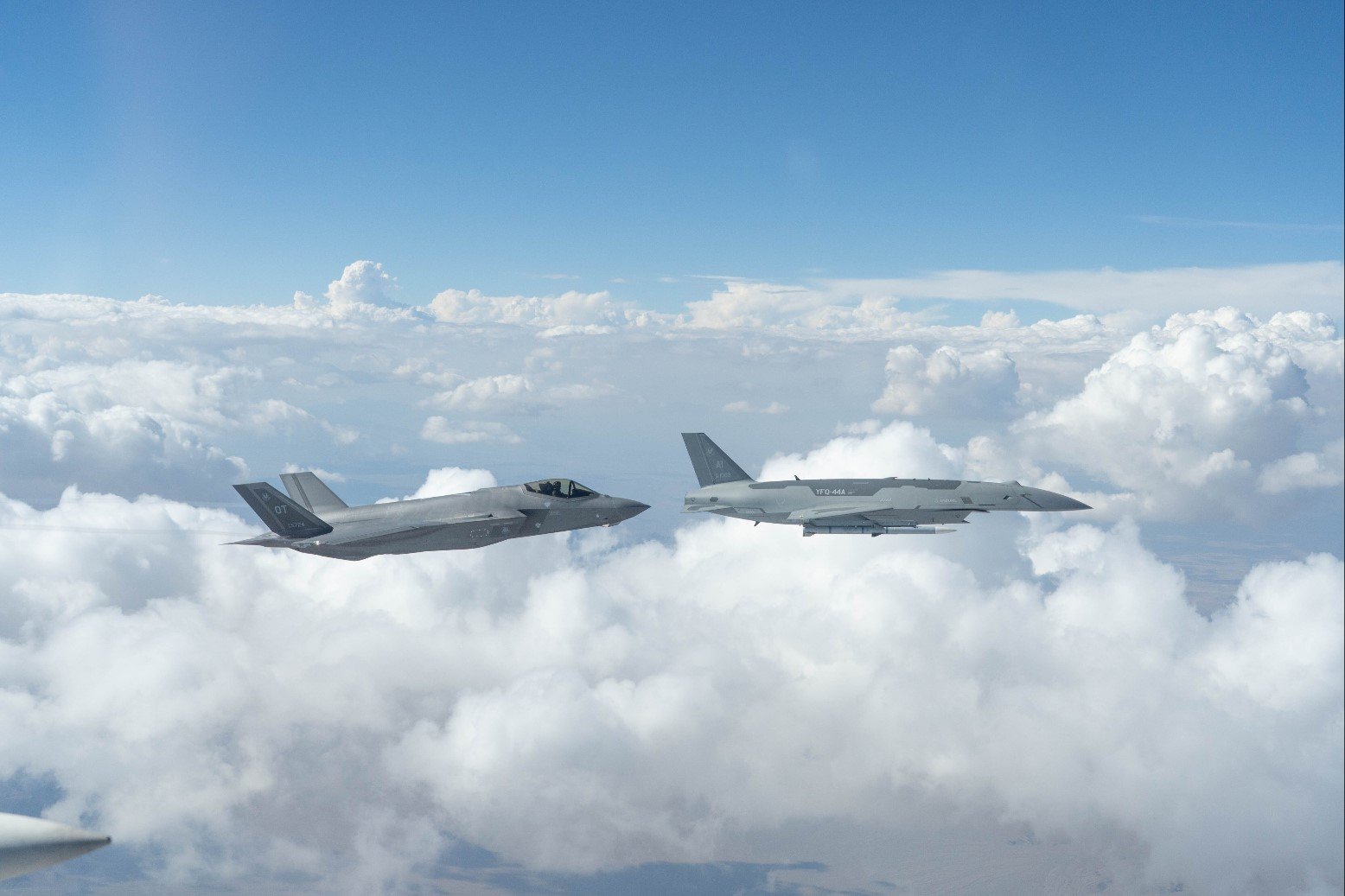
U.S
CREECH AIR FORCE BASE, Nev. — The U.S. Air Force has received its first two Collaborative Combat Aircraft (CCA) at Creech Air Force Base, Nevada, marking a new phase in the service’s effort to integrate uncrewed, semi-autonomous aircraft into future combat operations. Anduril delivered its YFQ-44A Fury to the Air Force’s Experimental Operations Unit in August, while General Atomics delivered the YFQ-42A Vengeance last week. Both aircraft will support operational experimentation led by Air Combat Command to determine how CCAs can operate alongside crewed aircraft in contested environments. The Air Force has moved the aircraft into the hands of operators at an early stage so Airmen can help develop tactics, operating procedures and requirements for the new aircraft. “Putting CCA in the hands of Airmen is how we build the operational future of this program,” said Secretary of the Air Force Troy Meink. He added that the Fury and Vengeance deliveries demonstrate the service’s focus on speed, competition and cost-effective combat capability. Air Force Chief of Staff Gen. Ken Wilsbach also welcomed the aircraft to the Experimental Operations Unit, saying Airmen are looking forward to evaluating their capabilities. Operational testing at Creech The Experimental Operations Unit is evaluating how small teams can operate CCAs from distributed and austere locations. The testing includes examining aircraft operations, sortie generation and the support requirements needed to operate the platforms away from traditional air bases. This work is being conducted as part of the Air Force’s Agile Combat Employment approach. A July exercise at Creech examined how the aircraft could be serviced and relaunched in a realistic operational environment, including refueling and weapons-handling activities. The Air Force is also using the operational experimentation to identify future requirements for training, sustainment, manpower and infrastructure as the CCA program moves toward larger-scale fielding. Recent weapons test The arrival of the two aircraft follows several recent CCA milestones. In July, the Air Force conducted a live-fire test involving the YFQ-44A, which fired an AIM-120 at a digital target over the Mojave Desert. The test followed earlier evaluations of weapons carriage and data-link integration. The Air Force also conducted a second Agile Combat Employment exercise involving CCAs in July, further examining how the aircraft could be operated in distributed conditions. Production of Fury and Vengeance The Air Force selected Anduril and General Atomics in 2024 to develop the first CCA Increment 1 prototypes. On June 17, 2026, the Department of the Air Force awarded contracts for the first-generation CCA aircraft and mission-autonomy software. The aircraft were initially designated YFQ-44A and YFQ-42A during development. In September, the Air Force officially named the aircraft FQ-44 Fury and FQ-42 Vengeance. The service has entered production for both designs rather than selecting only one aircraft. The Air Force has said it plans to field 500 combat-ready semi-autonomous systems by 2032, with a longer-term objective of approximately 1,000 CCAs across multiple increments. For now, the focus at Creech is on learning how the aircraft can be operated, supported and integrated with crewed combat aircraft. The results from this operational experimentation will help shape how future CCA units are organized, trained, equipped and employed for air superiority and other combat missions.
Read More → Posted on 2026-09-25 15:59:25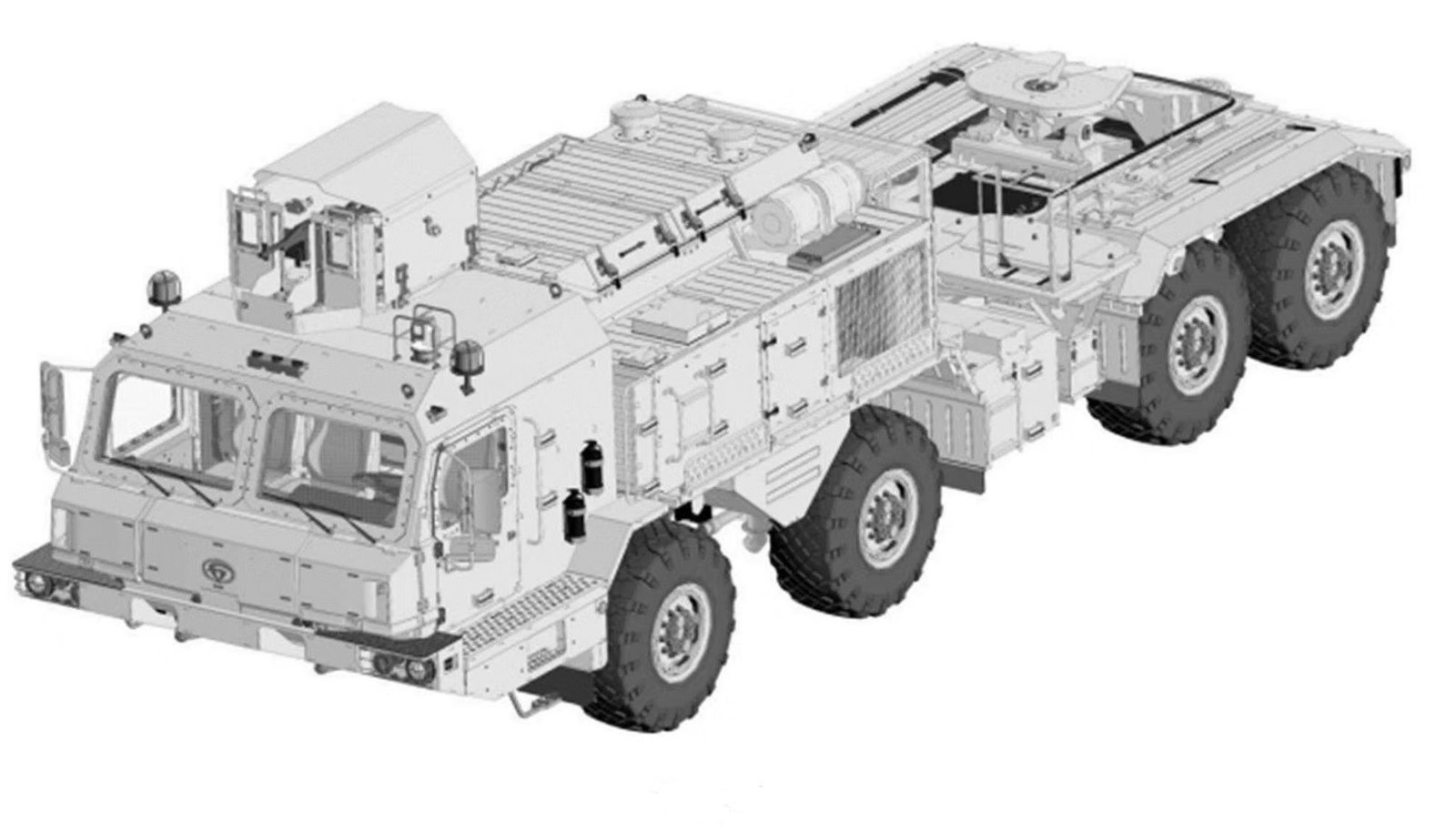
World
MOSCOW, — Specialists at Russia’s Bryansk Automobile Plant (BAZ), part of the Almaz-Antey defense group, have patented an armored high-mobility tractor designed to tow heavy-duty semi-trailers. The patent, RU 2870257 C1, “Tractor Unit,” was filed by BAZ on December 25, 2025, and registered and published by Russia’s Federal Institute of Industrial Property (FIPS) on September 18, 2026. Armored cabin and machine-gun turret According to the patent, the vehicle uses a four-axle chassis with a fifth-wheel coupling for towing heavy semi-trailers. It has a fully armored frame-and-panel cabin, with a roof-mounted slewing ring, hatch and turret designed to carry a machine gun. The patent does not specify the weapon's model or caliber. A separate engine compartment is located behind the cabin. It has a welded rectangular-steel-tube frame enclosed by a hood, protective panels, doors and access hatches. Thermal and visual protection The design includes several measures to reduce the vehicle’s thermal signature. Heat shields are fitted around the cabin running boards, steering system hydraulic oil tank cover, batteries, air filters and engine-compartment walls. The spark-arresting mufflers also have external heat shields. Additional armor-steel panels protect transmission components and chassis wheel wells. For camouflage, the vehicle has clamps for attaching camouflage nets and mounts for securing natural vegetation. The patent also lists a filtration and ventilation system, a winch, a spare-wheel removal mechanism, and main and auxiliary fuel tanks. Production status not confirmed BAZ is known for producing heavy wheeled chassis and tractor units associated with Russian S-300, S-350, S-400, S-500 and Tor-M2 systems, as well as radar and electronic-warfare equipment. However, the patent does not confirm that a prototype has been built, serial production has started, or that the armored tractor has entered Russian military service. It establishes the vehicle's patented design and intended role as a protected, high-mobility tractor for towing heavy semi-trailers.
Read More → Posted on 2026-09-25 16:06:36
India
BENGALURU — Bengaluru-based deep-tech startup Strider Robotics has demonstrated the pulling capability of its M3 autonomous quadruped robot by towing a Honda Amaze passenger car. During the demonstration, the Honda Amaze's engine was switched off and the driver's seat was empty. Two passengers remained inside the vehicle, while one operated the handbrake during the test as a safety measure. The demonstration was conducted under controlled conditions and was described by Strider Robotics as a Technology Readiness Level 6 (TRL 6) achievement. The company said the M3 has more than 80 percent indigenous content, including its actuators. 🚨 Bengaluru-based Strider Robotics (@strider_robots) just demonstrated their M3 quadruped's ability to pull a Honda Amaze. The car had two passengers (one holding the handbrake for safety). Nobody was in the driver's seat and the engine was switched off.TRL 680% indigenous pic.twitter.com/Br4Eyvu9FL — Runtime (@RuntimeBRT) September 25, 2026 Designed for Industrial Applications The M3 is the latest platform in Strider Robotics' M-series of quadruped robots. The standard configuration is designed to carry around 20 kg, while the robot has also been tested with a 40 kg payload in separate trials. The robot is designed for industrial inspection, material handling and asset monitoring in environments where wheeled or tracked systems can face difficulties. Its targeted sectors include oil and gas, power plants, mining, infrastructure and automotive manufacturing. Strider Robotics is also developing an AI-powered, hardware-agnostic software platform for inspection, navigation, mission planning and industrial analytics. From IISc Research to Commercial Deployment Strider Robotics was incorporated in 2024 as a spin-off from the Stochastic Robotics Lab (StochLab) at the Centre for Cyber-Physical Systems, Indian Institute of Science (IISc), Bengaluru. The underlying research began around 2015 at IISc and IIT Madras. The company is incubated at ARTPARK, the AI and robotics innovation hub at IISc. The company has begun field pilots with a major oil and gas company and an automotive manufacturer as it moves toward commercial deployment. IISc has also identified Strider Robotics as a startup working on quadruped robots. The M3 demonstration adds a vehicle-towing test to the company's reported development work as it prepares its quadruped platform for industrial applications.
Read More → Posted on 2026-09-25 16:11:26
World
PARIS — France will send soldiers, radar systems and defence equipment to Saudi Arabia to protect the strategic Yanbu oil terminal on the Red Sea, French President Emmanuel Macron announced on Thursday. Speaking during a prime-time interview with TF1 and France 2, Macron said the deployment had been finalised in coordination with Saudi authorities. He stressed that the French mission would be defensive and would not involve French forces in the conflict. “We are going to send military assets, meaning soldiers, radars, and defence systems to protect this site,” Macron said. He added that the deployment was “not to involve ourselves in any conflict, but to protect the site.” Yanbu’s strategic importance Yanbu is a major Saudi oil storage, refining and export centre. It is connected to the East-West Pipeline, also known as Petroline, which stretches more than 1,200 kilometres and has a capacity of up to 7 million barrels per day. The Red Sea export route has become more important after disruptions around the Strait of Hormuz linked to the regional conflict. Recent attacks have also affected the pipeline and oil flows to Yanbu. On the same day as Macron’s announcement, Saudi Arabia reported intercepting six ballistic missiles launched toward the Yanbu and Taif areas. Yemen’s Houthi movement has claimed attacks against Saudi energy infrastructure, including facilities linked to Saudi Aramco in Yanbu. Details of French deployment remain unclear Macron did not specify how many French personnel would be sent, which radar and defence systems would be deployed, or when they would arrive. He also did not confirm whether Rafale fighter jets would be included. Macron said France already has aircraft in the region and would assess requirements according to developments. The French deployment is intended to protect the Yanbu facility rather than involve French forces in offensive operations. Macron also said France was continuing diplomatic efforts to reopen the Strait of Hormuz, including talks with Iranian and Omani officials. Separately, during the interview, Macron described the security situation in Europe as worrying and said hostile acts had increased in recent weeks. He also denied reports that U.S. intelligence had warned French authorities about a possible Russian drone attack launched from the sea against southern France.
Read More → Posted on 2026-09-25 16:23:28
U.S
NEW YORK — U.S. President Donald Trump has given final approval for Ukraine to receive licenses to produce interceptor missiles for the Patriot air defense system. Ukrainian President Volodymyr Zelensky confirmed the decision following his meeting with Trump in New York on the sidelines of the United Nations General Assembly. Zelensky said Trump told him during the meeting that he had made the final decision and that specific agreements were already in place. Zelensky did not provide details on when production would begin or which Patriot interceptor variants would be covered by the licenses. Decision follows months of negotiations The approval follows months of discussions between Washington and Kyiv. On July 31, Trump said the United States had not yet made a decision, citing the need for caution over transferring sensitive Patriot technology for production outside the United States. In early September, U.S. Secretary of State Marco Rubio said negotiations were still continuing and warned that establishing the required manufacturing infrastructure could take several years. Ukraine has also held direct talks with U.S. Patriot manufacturers. In July, Zelensky met representatives of RTX (Raytheon), which produces the PAC-2/GEM-T interceptor family, and Lockheed Martin, which manufactures PAC-3 interceptors. According to Reuters, establishing facilities and beginning mass production of components could take between three and seven years after a licensing agreement is signed. The exact production timeline for Ukraine has not yet been announced. Ukraine seeks missiles for immediate needs The licensing agreement will not immediately solve Ukraine's shortage of Patriot interceptors. Kyiv is continuing negotiations with allies for regular deliveries of ready-made missiles. Ukraine also plans to purchase around 1,000 Patriot missiles using credit financing from the European Union. At the same time, Ukraine is developing its own anti-ballistic missile capability under the FREYJA program with European partners. The Patriot system remains a key part of Ukraine's air defenses against ballistic missiles. Germany and Japan have previously received licenses to produce Patriot-related interceptors, making Ukraine the latest country to receive such authorization.
Read More → Posted on 2026-09-25 16:29:41
India
NEW DELHI — Russia has renewed its offer of the Izdeliye 177S turbofan engine for the Indian Air Force’s Su-30MKI fleet during President Vladimir Putin’s visit to New Delhi in September 2026. The proposal is part of discussions surrounding India’s planned Super Sukhoi modernisation programme. The IAF operates around 260 Su-30MKI fighters, currently powered by the AL-31FP engine. It produces about 12,500 kgf (123 kN) of afterburning thrust and 7,700–7,800 kgf (around 76 kN) of dry thrust. Hindustan Aeronautics Limited (HAL) has extended the engine’s Total Technical Life from 2,000 to 2,500 flying hours, with the first engine under the life-extension programme delivered to the IAF in January 2026. According to Russian information, the Izdeliye 177S produces around 14,500 kgf (142 kN) of afterburning thrust and 9,000 kgf (88 kN) of dry thrust. Its afterburning thrust is about 16 percent higher than the AL-31FP. The manufacturer also states a 6,000-hour service life and claims about 7 percent lower fuel consumption. The 177S is described as dimensionally compatible with the AL-31FP installation, with similar weight and inlet diameter. This could allow the engine to be integrated into existing Su-30MKI aircraft without major structural modifications, subject to technical evaluation. The Super Sukhoi programme, estimated at about $11 billion, is expected to initially cover 84 aircraft, with the remaining fleet to be upgraded later. The modernisation is planned to include AESA radars, new avionics, improved electronic-warfare systems and weapons integration. The higher-thrust engine is being considered to help compensate for the additional weight and power and cooling requirements of the new systems. Technology transfer remains a key issue. HAL already manufactures and overhauls the AL-31FP at its Koraput facility. For the 177S, India is seeking substantial technology transfer and local manufacturing capabilities, including access to important engine technologies such as hot-section metallurgy and digital engine controls. India has not yet made a final decision on the engine. The selection will depend on technical performance, reliability, integration requirements, lifecycle costs and the actual scope of technology transfer offered by Russia.
Read More → Posted on 2026-09-25 16:36:31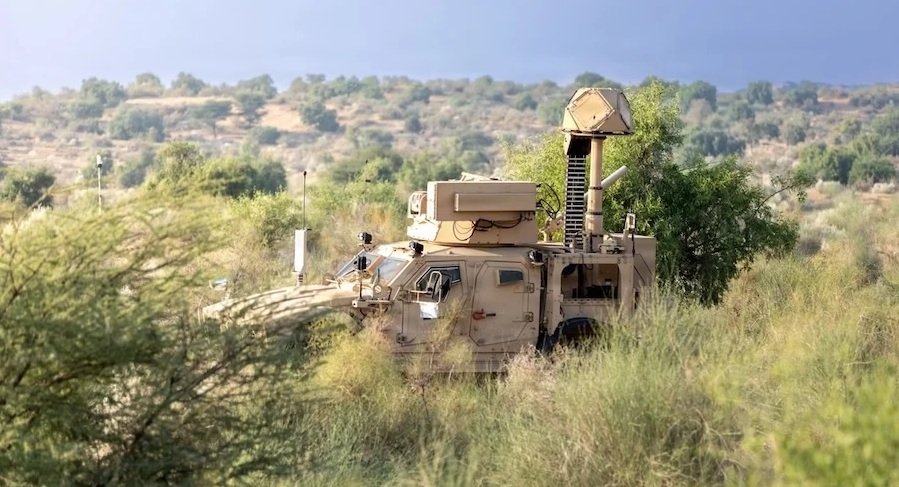
World
BIKANER, RAJASTHAN — U.S. Army soldiers from the 11th Airborne Division demonstrated the Mobile Low, Slow, Small Unmanned Aircraft Integrated Defeat System (M-LIDS) to Indian Army personnel during Yudh Abhyas 2026 at the Mahajan Field Firing Range in Rajasthan. The M-LIDS remained under U.S. control during the demonstration. Indian troops observed its components and discussed counter-drone tactics with their U.S. counterparts but did not operate the system. M-LIDS combines sensors, command-and-control equipment, electronic warfare tools and kinetic options mounted on mobile tactical vehicles. It is designed to detect, track, identify and defeat small, low and slow unmanned aircraft systems. The system uses a Ku-band radar, along with electro-optical and infrared sensors, while the Forward Area Air Defense Command and Control system combines sensor information into a local air picture. Operators can then select responses that may include electronic warfare or kinetic options. During the exercise, U.S. soldiers practiced setting up and linking the system, establishing an air picture, tracking potential threats and selecting an appropriate response. Its mobile design allows it to reposition with the forces it is protecting. The heat, dust and open terrain of Rajasthan also provided conditions for the personnel and equipment during the training. “Defeating the small UAS threat is not a single-nation fight; it requires interoperable forces that can share information, integrate capabilities, and act as one,” said Chief Warrant Officer 3 Mark Giauque, the division’s air and missile defense systems integrator. He said the ability to detect, identify and defeat enemy UAS would be important for maintaining freedom of maneuver and protecting forces. Yudh Abhyas 2026 Yudh Abhyas 2026 is the 22nd edition of the annual U.S.-India bilateral exercise. It began on September 15 and is scheduled to end on September 28. For the first time, the exercise is being held simultaneously at the Mahajan Field Firing Range in Rajasthan and the Auli training area in Uttarakhand. About 600 soldiers from each country are participating. The U.S. contingent comes from the 1st Infantry Brigade Combat Team of the 11th Airborne Division, based in Alaska, while the Indian contingent is led by the 14 Infantry Division. Alongside the counter-drone training, U.S. and Indian artillery crews conducted combined training with M777 lightweight howitzers, including live fire, rapid movement to alternate positions and shoot-and-scoot drills. The wider fire-support training also involved India’s Pinaka multi-barrel rocket launcher and Dhanush guns. Other activities covered aviation, maneuver, medical and force-protection tasks. The M-LIDS demonstration focused on observation, information sharing and counter-drone tactics, while the M777 training involved combined U.S.-Indian crews. It was the first reported deployment of M-LIDS to India as part of the exercise. Training will continue through September 28, including mountain warfare, cold-weather operations, command-post exercises and combined live-fire events at the two exercise locations.
Read More → Posted on 2026-09-26 11:10:16
U.S
VIRGINIA BEACH, Va. — The U.S. Navy has formally established the Robotic and Autonomous Systems Warfighting Development Center (RASWDC) at Joint Expeditionary Base Little Creek-Fort Story, Virginia, creating a dedicated organization for integrating robotic and autonomous systems into fleet operations. The Secretary of the Navy and Chief of Naval Operations formally established RASWDC on September 24. The center operates as an Echelon 3 warfighting development center under U.S. Fleet Forces Command and will focus on robotic and autonomous systems across the air, surface and undersea domains. RASWDC will serve as the Navy's fleet-facing operational integration point for testing, training, doctrine development and tactics involving robotic and autonomous systems. Chief of Naval Operations Adm. Daryl Caudle said the center will help provide sailors with the advanced training and specialized doctrine needed to integrate these systems into operations, training and deployments. Working with the RAS acquisition office RASWDC will work alongside the Direct Reporting Portfolio Manager for Robotic and Autonomous Systems (DRPM RAS), established in August 2026. DRPM RAS, currently led in an acting capacity by Christopher Miller, has authority for acquisition, requirements implementation, budgeting, technical standards and fielding of robotic and autonomous systems. While DRPM RAS focuses on acquiring and fielding the systems, RASWDC will focus on how they are used by the fleet. Testing, experimentation and training will provide feedback to developers and program managers to help refine future capabilities. RASWDC will also work with the Rapid Capabilities Office and Fleet Introduction Operating System to coordinate training, logistics, maintenance, software, doctrine, networks and other support for new systems. Three core missions RASWDC has three main missions: training sailors, developing warfighting concepts, and testing emerging technology under realistic conditions. The center will develop tactics, techniques, procedures and standards based on operational experience. It will also develop command relationships and authorities for autonomous systems, building on the Enhanced Mission Command Framework and Directed Autonomy Levels. New systems will be tested at sea, under operational stress, against simulated threats and in degraded or denied communications environments. Systems that perform successfully can move forward, while those that do not can be improved, redirected or stopped. Rear Adm. Melvin Smith leads the center Rear Adm. Melvin R. Smith has been designated the inaugural commander of RASWDC and the supported commander responsible for establishing the organization. Smith, who previously served as commander of Submarine Group Two, is leading a phased near-, mid- and long-term implementation plan covering the command's structure, mission relationships and resource requirements as it moves toward full operational capability. Smith said the center brings the Navy's autonomous efforts across the air, surface and undersea domains together at Little Creek, with a focus on educating warfighters, equipping the fleet with systems that perform in operational environments and developing tactics for their use. RASWDC will not replace existing Warfighting Development Centers, Type Commanders, Systems Commands or operational commands. Instead, it will coordinate with them to incorporate emerging requirements and share lessons learned across the fleet. A ribbon-cutting ceremony for the center was held September 24 at Joint Expeditionary Base Little Creek-Fort Story, attended by Adm. Caudle and Rear Adm. Smith.
Read More → Posted on 2026-09-26 11:22:23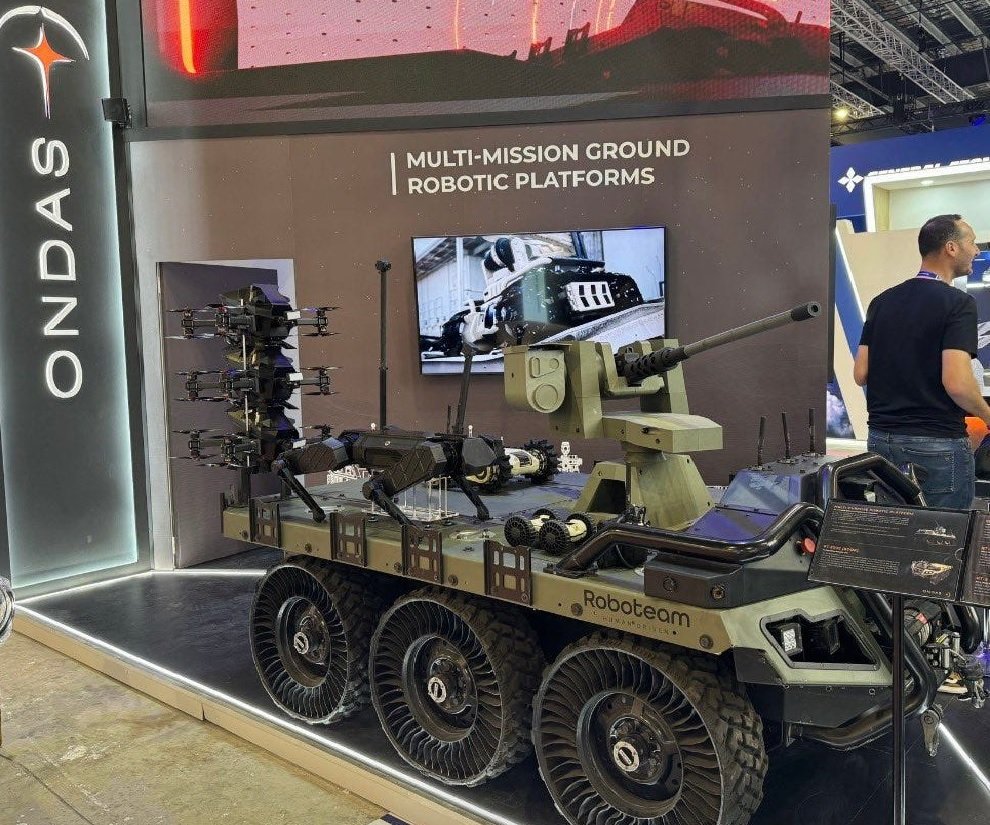
U.S
WEST PALM BEACH, Florida — U.S. defense technology company Ondas Inc. (Nasdaq: ONDS) has acquired three Israeli defense technology companies — Insignito, Ottopia Defense, and Caribou Labs — for an initial $56 million. The deal will be paid in cash or Ondas common stock and includes potential earnout payments of up to $32 million through 2028 if the companies meet specified performance milestones. This could bring the maximum total consideration to $88 million. Ondas said the initial $56 million represents less than three times the three companies' expected combined 2027 revenue. The acquisitions expand Ondas's capabilities in passive acoustic drone detection, remote control and communications for unmanned systems, and GPS-denied navigation. Three companies add specialized technologies Insignito provides passive acoustic technology to detect, classify, track and locate drones using their sound signatures. Its DUMBO system has been deployed in conflict zones and uses real-time signal processing, acoustic modeling, artificial intelligence and proprietary algorithms. It is designed for threats including small FPV drones, low-altitude threats, autonomous platforms, RF-silent systems and fiber-optic-controlled drones. Insignito also develops WaveGuide, which models the acoustic detectability of aircraft for mission planning, Silent Propellers technology for reducing unmanned aircraft noise, and Banshee, an acoustic-enabled drone interception capability under development. Ottopia Defense develops software for remote control and communications between unmanned platforms, operators and command centers. Its technology manages video, telemetry, mission data and commands across available communications channels in bandwidth-constrained or degraded environments. It combines AI-enabled autonomy, ultra-low-latency teleoperation and intelligent networking, including one-to-many operations in which operators can supervise multiple unmanned systems. Ondas plans to integrate Ottopia's technology into its unmanned ground vehicles, including the Iron Wave platform. Caribou Labs specializes in navigation and communications for environments where GNSS/GPS signals and digital infrastructure are disrupted. Its technologies provide GPS-independent positioning, timing, identification and communications for electronic-warfare environments. Ondas said the technology is already deployed in active conflict environments and has a pipeline of customer opportunities. Ondas expands autonomous defense capabilities Ondas said the acquisitions support its systems-of-systems strategy by combining sensing, communications, navigation and autonomy across aerial and ground platforms. The company plans to integrate the new technologies into its counter-UAS systems, unmanned ground vehicles and other autonomous platforms. The company said the acquisitions will expand its technology stack across detection, connectivity, navigation, autonomy and mission execution, while creating additional commercial revenue opportunities and supporting larger defense programs. Ondas Chairman and CEO Eric Brock said the acquisitions are intended to make autonomous systems more capable, resilient and scalable in contested environments. As part of the transactions, Ondas approved equity incentive awards for 37 newly hired employees, including restricted stock units representing 2,979,063 shares and stock options for 80,000 shares with an exercise price of $7.72 per share. Ondas has also expanded its presence in Israel through previous acquisitions, including Gate Technologies and Aran Defense. The three transactions were announced on September 23, 2026.
Read More → Posted on 2026-09-26 11:33:58Search
Top Trending in 24 Hours
-
 US Army Reserve Assessing Support Units for Southern Command Amid Cuba-Focused Planning
-
 U.S. Defense Tech Firm Ondas Acquires Three Israeli Companies in $56 Million Deal to Expand Autonomous Capabilities
-
 U.S. Navy Establishes Robotic and Autonomous Systems Warfighting Development Center at Little Creek
-
 Trump Rejects Iran’s Seven-Day Ceasefire Proposal, Expects Strikes to Resume After Midterms
-
 U.S. Army Demonstrates M-LIDS Counter-Drone System to Indian Troops During Yudh Abhyas 2026
-
 Northrop Grumman’s Cygnus XL Raises International Space Station Altitude by 1.5 Miles Ahead of Crew-13
-
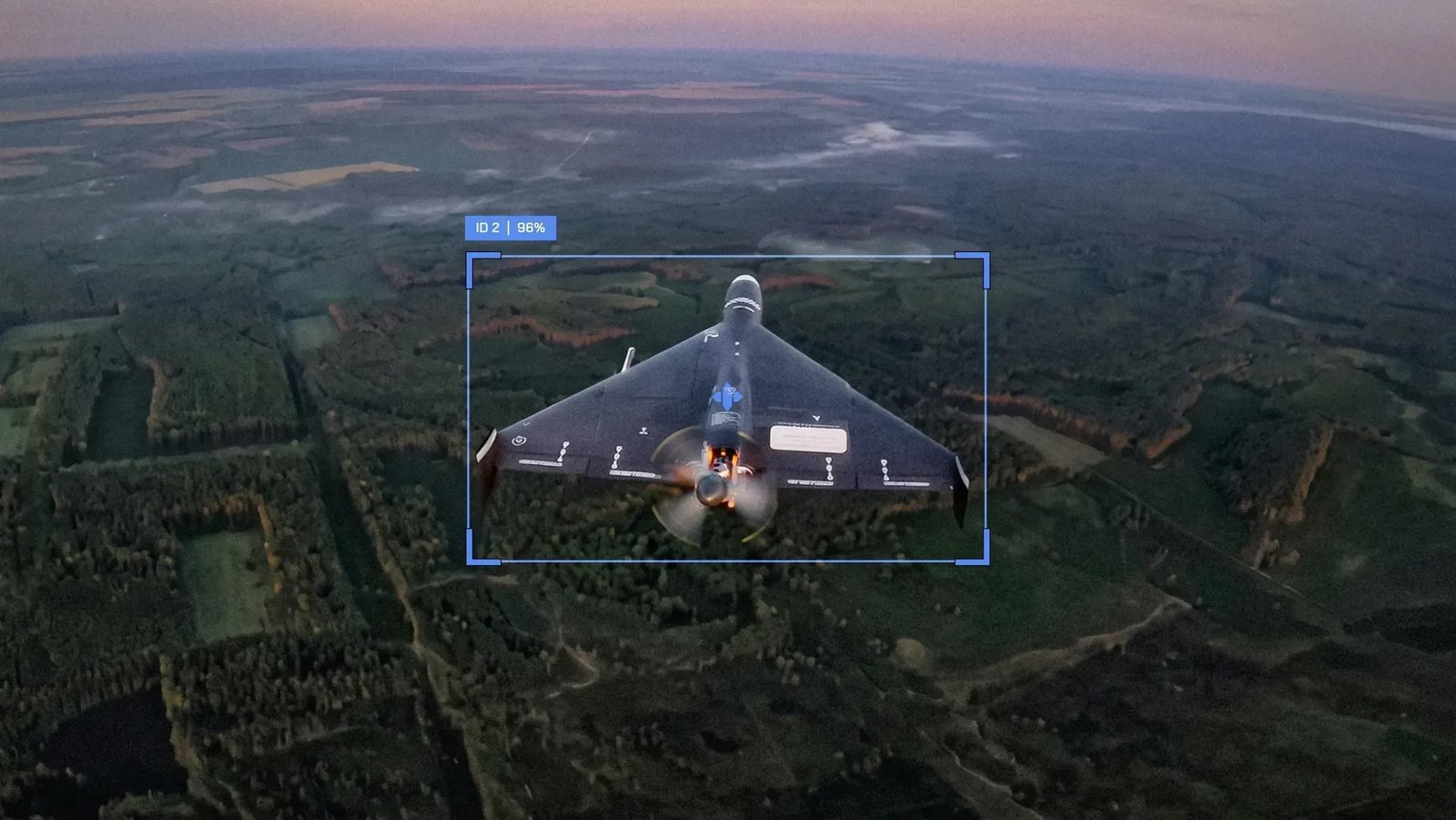 UK Becomes First International Partner to Access Ukraine’s Avengers Labs AI Platform
-
 Ukraine’s MAUL Evacuation Robot Gets Key Upgrades From Frontline Feedback, Not AI
Top Trending in 4 Days
-
 China’s Secretive Shenlong Spaceplane Repeatedly Releases and Recaptures Satellite
-
 From Lab to Battlefield: U.S. Military Confirms Use of Laser Weapons Against Drones in the Strait of Hormuz and Along Southern Border
-
 UK Air Force Hawk T2 Trainer Aircraft Crashes Near Valley After Takeoff, Both Pilots Eject Safely
-
 U.S. Space Force Awards Impulse Space $28 Million Contract for 2029 Orbital Surveillance Mission
-
 US and Australia Investigate F-35 Components Diverted to Hong Kong
-
 Russia Aerospace Forces Receives New Batch of Su-57 Fighters With Updated Technical Configuration
-
 France to Send Troops, Radars and Defence Systems to Protect Saudi Arabia’s Yanbu Oil Terminal
-
 U.S. Approves Patriot Missile Production License for Ukraine Following Trump-Zelensky Meeting