CANBERRA — Australia’s dependence on U.S.-made missiles is facing renewed scrutiny as the Iran conflict puts pressure on American munitions inventories and raises concerns about the timing of weapons deliveries to allies.
The issue is particularly important for Australia because several major elements of its long-range strike and air-defence capabilities depend on U.S.-supplied weapons. Analysts and former military officials have argued that Canberra needs to accelerate domestic production to reduce the risks created by dependence on overseas supply.
U.S. missile inventories under pressure
A Center for Strategic and International Studies (CSIS) analysis found that U.S. forces had used more than 1,000 Tomahawk missiles during the first 39 days of the Iran conflict. CSIS said several key U.S. munitions had been heavily used and that rebuilding inventories to pre-war levels could take between one and four years.
Charles Edel, CSIS Australia Chair, said the conflict was placing significant pressure on U.S. stockpiles and could extend the time required to replenish them. He warned that this could increase the risk of delays to missile deliveries for allies such as Australia.
The pressure is not limited to Tomahawk. Edel identified other systems affected by the increased demand, including THAAD interceptors, Patriot missiles, SM-6 missiles, Joint Air-to-Surface Standoff Missiles and Precision Strike Missiles.
CSIS has also assessed that the reduced U.S. inventories could affect the ability to supply allies while Washington works to rebuild its own stocks.
Australia’s U.S. missile orders
Australia has an order for roughly 220 Tomahawk cruise missiles, making the availability of U.S. production capacity an important issue for Canberra.
The United States is now moving to expand Tomahawk production. On August 17, the U.S. Navy awarded Raytheon a $22.9 billion, seven-year contract designed to increase annual Tomahawk production from about 60 missiles to more than 1,000.
The production increase is intended to strengthen the U.S. supply of the long-range missile for American forces and allies. However, rebuilding inventories after heavy wartime expenditure will take time.
Australia has also announced a major acquisition of the AIM-260 Joint Advanced Tactical Missile. On August 6, the Australian government said it would invest almost A$736 million in the weapon through the U.S. Foreign Military Sales system. Australia will be the first country outside the United States to operate the AIM-260.
The missile will initially be integrated with Australia’s F/A-18F Super Hornets, followed by the F-35A Lightning II and EA-18G Growler. The Australian government has not publicly provided all details of the final missile quantity in its August 6 announcement.
Concerns over a potential Indo-Pacific conflict
Australian coalition defence spokesperson James Paterson has warned that conflicts in Ukraine, Gaza and Iran have contributed to pressure on global munitions supplies.
Paterson said Australia could face serious limitations in a high-intensity Indo-Pacific conflict because of limited stocks of strike weapons and interceptors, as well as limited domestic production capacity.
Maritime security specialist Jennifer Parker has similarly argued that countries dependent on another nation for critical war stocks face a structural supply risk because the producing country would have to meet its own requirements first.
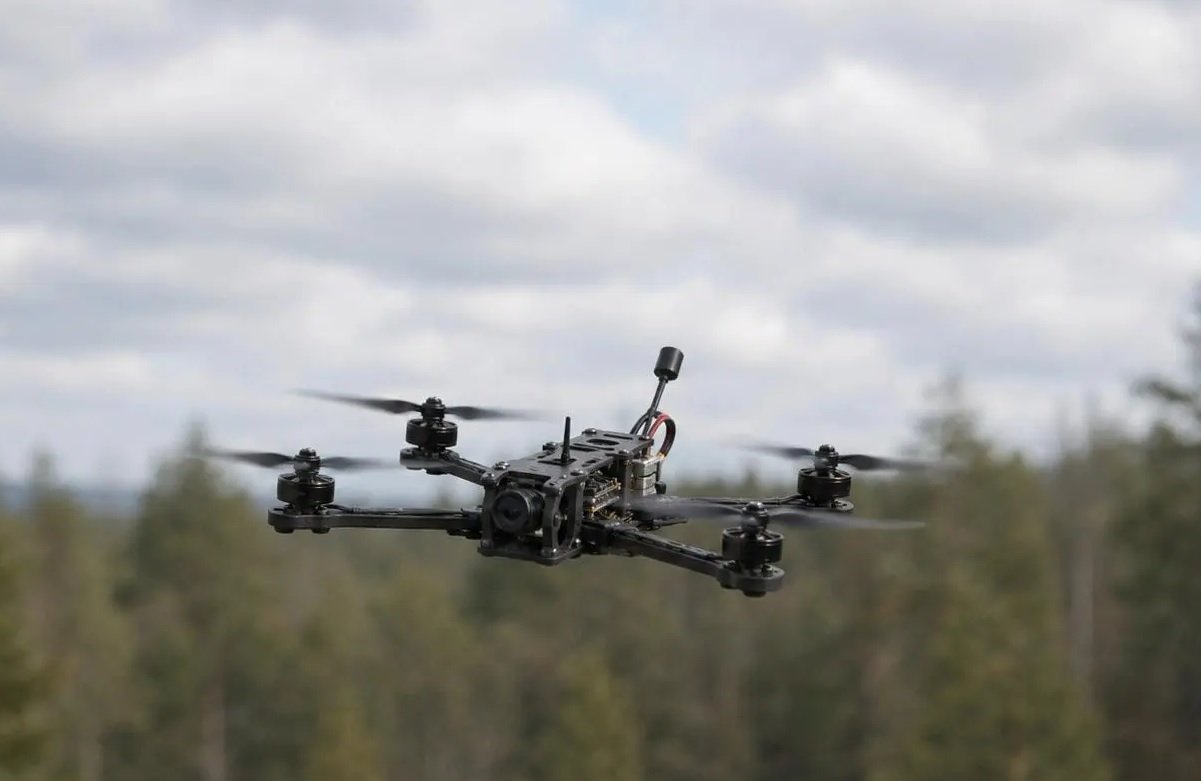
Former U.S. military officials have also urged Australia to develop additional domestic capabilities that could reduce its dependence on foreign suppliers. Mark Montgomery, a former director of operations at U.S. Pacific Command, has specifically advocated greater Australian production of military underwater drones for surveillance, mine detection and other roles.
Canberra expands domestic missile production
Australia has been rebuilding its domestic guided-weapons industry through the Guided Weapons and Explosive Ordnance Enterprise.
The Australian government has committed up to A$36 billion over the next decade to the broader guided-weapons and explosive-ordnance effort. The program is intended to develop domestic manufacturing capacity and strengthen Australia's position within allied supply chains.
Australia's guided-weapons plan includes establishing missile production facilities and increasing local manufacture of missile components. The government has also been working with international defence companies to establish production and maintenance capabilities inside Australia.
Kongsberg Defence Australia is developing a manufacturing and maintenance facility in the Newcastle Airport precinct for the Naval Strike Missile and Joint Strike Missile. The Australian government announced an A$850 million partnership with Kongsberg in 2024 to manufacture and maintain the two missile systems in Australia.
Lockheed Martin Australia is also involved in local assembly of Guided Multiple Launch Rocket System missiles, adding another element to Australia's effort to establish a domestic guided-weapons industrial base.
A key objective of the program is not simply to assemble imported weapons, but to develop sustainable domestic manufacturing and supply chains. Australia's official guided-weapons plan notes that establishing a new high-technology weapons industry requires sustained investment and time.
Production speed remains a concern
The expansion of Australian production is intended to reduce dependence on overseas supplies, but the current transition will take years.
The Iran conflict has highlighted the difference between purchasing missiles from an established foreign production line and having sufficient domestic capacity to replace weapons during a major conflict.
CSIS has assessed that U.S. inventories of several important weapons will take years to rebuild after the Iran campaign. The same weapons are also relevant to a potential Western Pacific conflict, making production capacity and stockpile depth important issues for the United States and its allies.
For Australia, the immediate challenge is therefore twofold: maintaining access to U.S. weapons while accelerating domestic production.
The government has continued to pursue both approaches, combining purchases from the United States with investments in Australian manufacturing. The expansion of local missile production is intended to strengthen Australia's own supply resilience while also contributing to the wider allied industrial base.
The pressure created by the Iran conflict has brought greater attention to the importance of missile stockpiles, production capacity and delivery timelines as Australia prepares for potential high-intensity operations in the Indo-Pacific.
——— End of Article ———