WASHINGTON, — The U.S. Army has awarded Heaviside Industries Inc. a firm-fixed-price, indefinite-delivery/indefinite-quantity contract worth up to $99 million for the procurement, fielding, upgrades and sustainment of the company’s MOTH spectrum analyzer. The contract was announced in the Department of War’s contracts listing on August 27.
The contract is scheduled to run through August 27, 2031. Heaviside Industries, based in Marina del Rey, California, received the award after the Army solicited bids online and received 99 proposals. Work locations and funding will be determined through individual orders. The contracting activity is the Army Contracting Command at Aberdeen Proving Ground, Maryland.
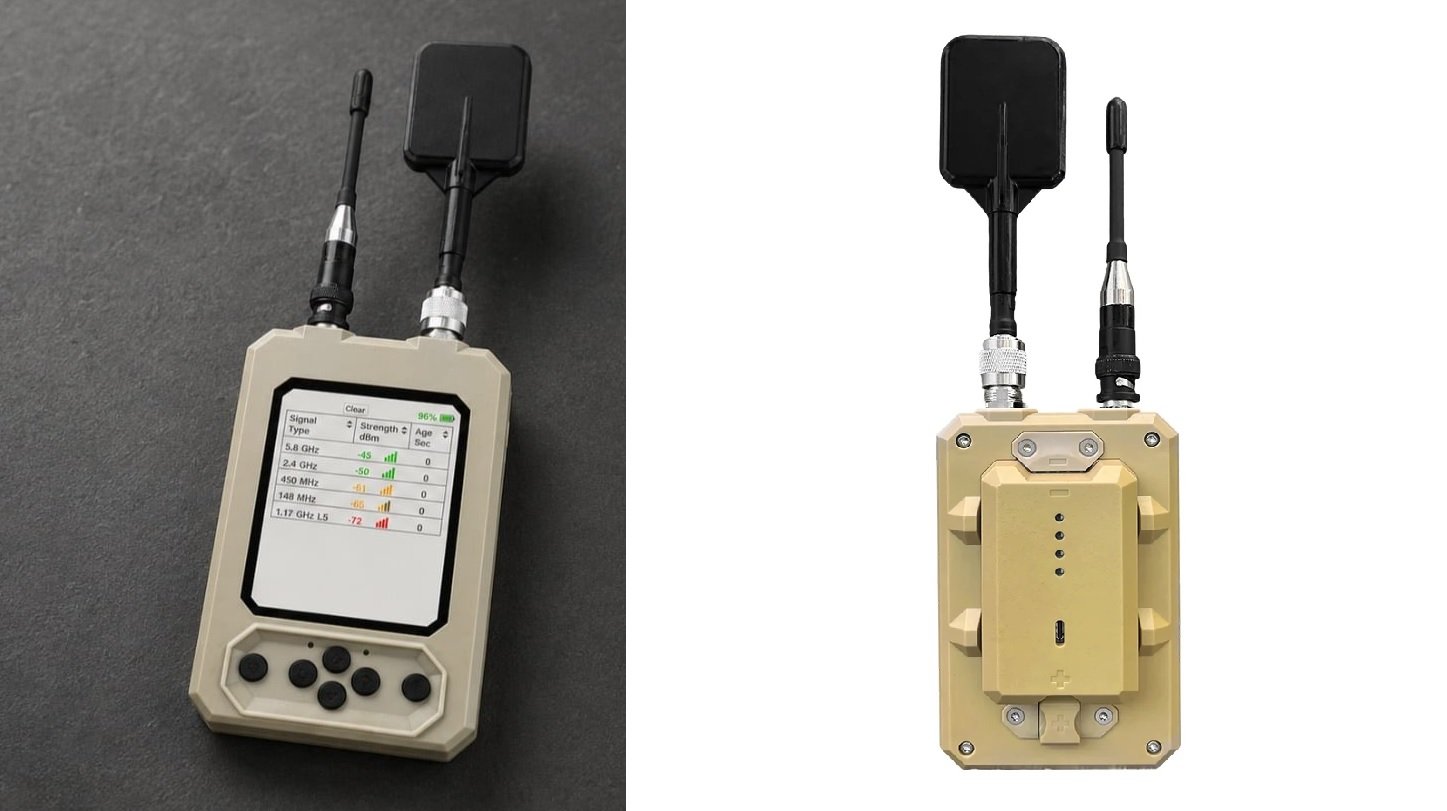
The MOTH is a compact, ruggedized tactical spectrum analyzer designed to provide soldiers with awareness of radio-frequency signals. It covers frequencies from 5 MHz to 6 GHz, allowing operators to detect radio-frequency activity associated with drones, radios and other communications equipment.
The device weighs 0.99 pounds with its battery installed and measures 5.78 by 3.3 by 1.8 inches. It can be used as a handheld device or carried on a soldier’s vest. The MOTH has a 2.79-inch LCD display with 240 by 320 pixel resolution, built-in GPS, vibration notifications and a direction-finding mode. It also provides a real-time signal oscillation display.
The MOTH can scan its frequency range five times per second and has a listed battery life of up to 12 hours from its 25.2 Wh battery. The device is rated IP67 for protection against dust and water and is specified to operate between 14 and 131 degrees Fahrenheit.
The analyzer also supports integration with the Android Team Awareness Kit (ATAK), a digital situational-awareness system used by U.S. military personnel. The MOTH has a stated Technology Readiness Level of 9 and is NDAA compliant. Heaviside says the device is designed and manufactured in the United States.
The MOTH is intended to support soldiers operating in environments where identifying radio-frequency activity is important. Soldier Systems Daily reported in July that the device can be used by Cyber Electromagnetic Activities personnel for identifying signals and obtaining line-of-bearing information, including in counter-drone applications. The publication also noted that the system is designed to be simple enough for use by personnel who may not have specialized electronic-warfare training.
The MOTH is also commercially available. Lumenier lists the unit at $4,950 and says the package includes the spectrum analyzer, two lithium batteries, a USB-C charger, a custom vest pouch, a protective Pelican case, and low- and high-band antennas.
The Army contract covers more than the initial purchase of the equipment. It also includes fielding, upgrades and sustainment, allowing the service to procure additional MOTH systems and receive support over the contract period through 2031.
The award gives the Army a procurement mechanism for deploying the compact spectrum analyzer through individual orders rather than specifying a single quantity of systems in the initial contract announcement. The Department of War did not disclose the number of MOTH units that will ultimately be purchased under the $99 million contract ceiling.
——— End of Article ———