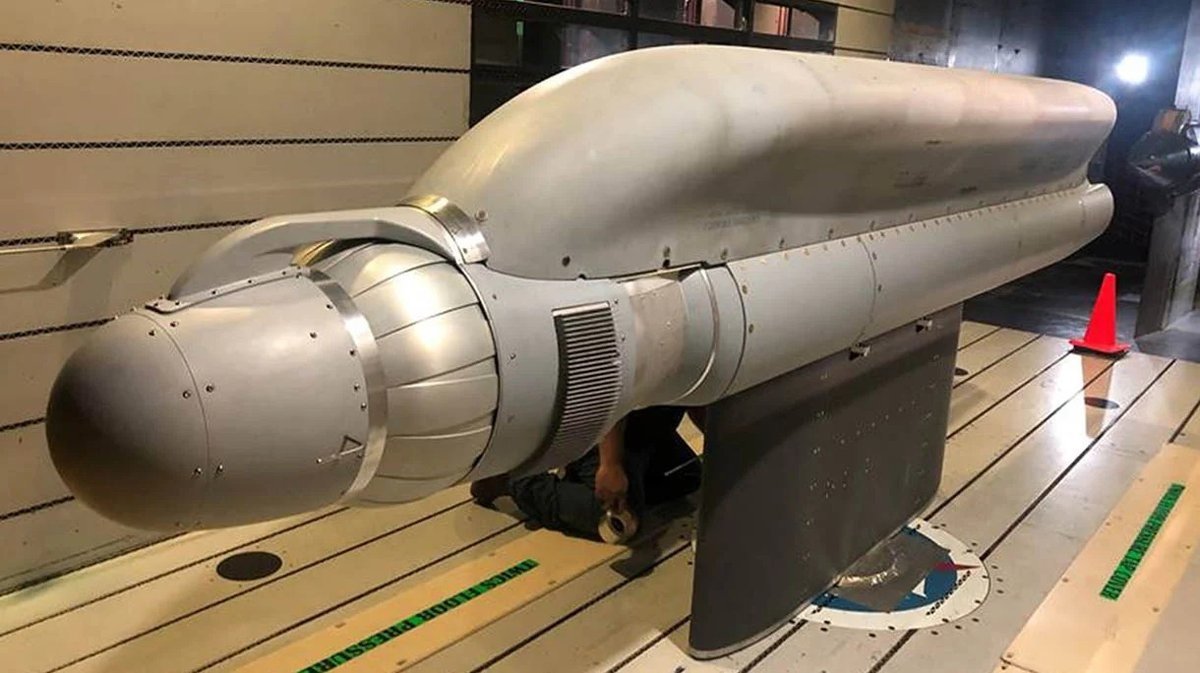
WASHINGTON — The U.S. Navy has awarded L3Harris Technologies an $876.4 million contract modification to continue development of the Next Generation Jammer Low Band (NGJ-LB) system for the EA-18G Growler electronic attack aircraft operated by the U.S. Navy and Royal Australian Air Force (RAAF).
Contract Expands NGJ-LB Development
The new award builds on a $587.4 million contract awarded in August 2024 for the engineering and manufacturing development phase of the NGJ-LB.
The latest modification covers continued development, non-recurring tooling and equipment, associated labor, system demonstration test pods, cybersecurity and system security development, logistics, testing and evaluation, and software support for both U.S. and Australian forces. Work is scheduled to be completed in fiscal year 2031.
The modification is undefinitized, allowing work to begin before the final terms and price are settled. It uses a cost-plus-incentive-fee structure and was not competitively awarded. Naval Air Systems Command at Patuxent River, Maryland, is the contracting activity.
U.S. and Australian Funding
At the time of the award, the U.S. Navy obligated about $3.65 million to $3.7 million from its fiscal 2026 research, development, test and evaluation budget.
The Australian government provided $23 million in cooperative funds, giving it the larger share of the initial funding obligation.
About 43% of the work will be performed at L3Harris’s facility in Salt Lake City, Utah. Other work will take place in Alabama, Pennsylvania, New Jersey, Colorado, California, New York and Texas, while 3.4% of the effort will be performed in Australia.
Low-Band Electronic Warfare
The EA-18G Growler is a modified F/A-18F Super Hornet designed for electronic warfare, including jamming enemy radar and communications.
The aircraft has traditionally used the AN/ALQ-99 tactical jamming pod, which was first introduced in the 1970s. The Navy is replacing the legacy system with a family of Next Generation Jammer pods covering different frequency bands.
RTX’s Raytheon produces the AN/ALQ-249 mid-band variant, which is already deployed with the fleet. L3Harris is developing the low-band variant to address lower-frequency search radars.
According to L3Harris, the NGJ-LB is designed to provide high-power jamming from standoff ranges, engage multiple targets and provide 360-degree coverage. Its software-based architecture is also intended to support updates against current and emerging threats.
Industry Partners Support Program
The NGJ-LB supply chain is also expanding.
In July 2026, CPI Aerostructures received a $13.6 million contract from L3Harris to manufacture airborne pod structures for operational prototypes and additional test units. CPI said it had delivered its first test article.
Honeywell Aerospace joined the program in June 2025, while Marotta Controls announced contracts in September 2026 to support the NGJ-LB, including technology for the turbine speed-control system used in the pod’s ram-air-turbine power-generation assembly.
The NGJ-LB is being developed as a cooperative U.S.-Australian program. The latest $876.4 million modification will support continued development, testing, security and production-related work as the system moves toward eventual fielding on U.S. Navy and Royal Australian Air Force EA-18G Growlers.
——— End of Article ———