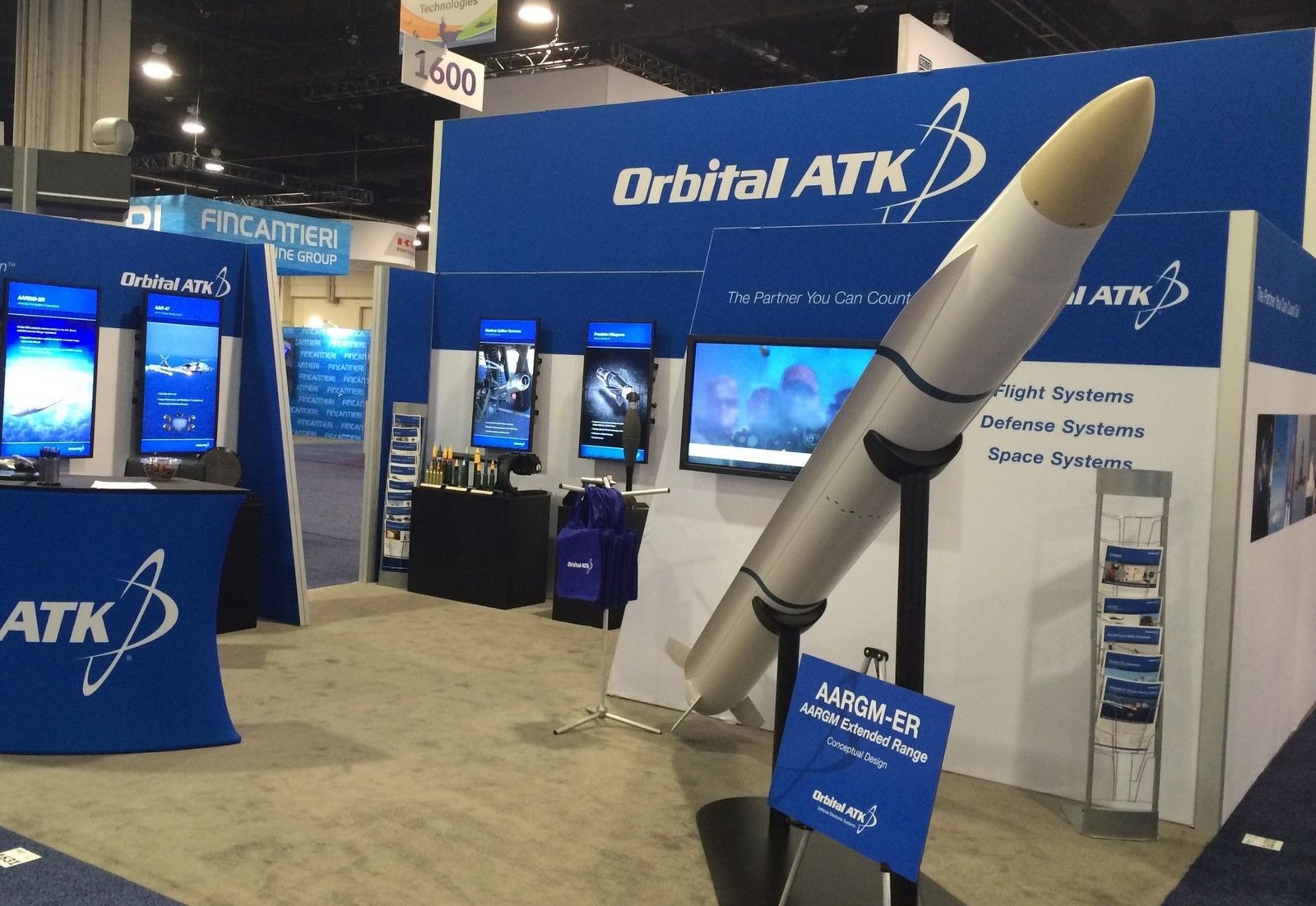
TOKYO — Japan’s Ministry of Defense has included the U.S.-made AGM-88G Advanced Anti-Radiation Guided Missile-Extended Range (AARGM-ER) in its fiscal 2027 budget request. Procurement is planned to begin in 2027 as Japan seeks to strengthen its ability to counter adversary integrated air-defense systems, particularly amid increased Chinese military activity.
The Ministry submitted a record 8.89 trillion yen (about $55.6 billion) defense budget request on August 31, 2026. The final budget is expected to be decided by the end of December.
The AARGM-ER would be the first anti-radiation missile of this type operated by the Japan Air Self-Defense Force (JASDF) since its establishment. JASDF Chief of Staff Gen. Yuhiro Morita said the missile can be carried by the F-35A and F-35B and described it as a supersonic air-launched anti-radar missile capable of reducing an adversary’s air-defense capability and supporting anti-ship attacks.
AARGM-ER capabilities
Developed by Northrop Grumman, the AARGM-ER is designed for Suppression and Destruction of Enemy Air Defenses (SEAD/DEAD) missions. It can target fixed radar installations, mobile surface-to-air missile systems, command posts and other elements of an integrated air-defense network.
The missile uses a multi-mode guidance system combining GPS/inertial navigation, passive anti-radiation homing and a terminal millimeter-wave active radar seeker. This allows it to continue attacking a target even if its radar is switched off.
The AARGM-ER was initially developed for the U.S. Navy’s F/A-18E/F Super Hornet and EA-18G Growler and was later expanded to the F-35A, F-35B and F-35C. Its redesigned airframe allows internal carriage on the F-35A and F-35C, while a new rocket motor provides greater range and speed and an upgraded warhead improves its overall capability.
Open-source assessments have placed its range at around 300 km, roughly twice that of the earlier AARGM, although the exact performance remains classified. The missile is supersonic.
Japan expands long-range strike capabilities
Japan’s AARGM-ER procurement is part of a wider effort to expand its stand-off and air-defense suppression capabilities. Japanese combat aircraft previously had a predominantly defensive weapons focus, limiting their ability to attack radar sites, surface-to-air missile systems and command posts.
The JASDF is also conducting flight testing of a new long-range air-launched cruise missile on the F-2 fighter. Recent observations showed an air-launched variant of the upgraded Type 12 surface-to-ship missile (SSM-2) being tested by an F-2 assigned to a specialized testing unit near Gifu Air Base.
The exact specifications of the air-launched variant remain classified. The ground-launched version of the upgraded Type 12 is estimated to have a range of 1,000 to 1,500 kilometers.
The fiscal 2027 budget request also includes ASM-3 Kai missiles with anti-ship and air-to-air capability, additional F-35 fighters, low-cost cruise missiles and various unmanned systems. Several quantities and costs remain listed as item requests pending updated national security strategy documents.
If approved, the AARGM-ER will give the JASDF a dedicated capability to suppress and destroy enemy air-defense systems while becoming part of Japan’s broader effort to strengthen stand-off strike and air-defense capabilities.
——— End of Article ———