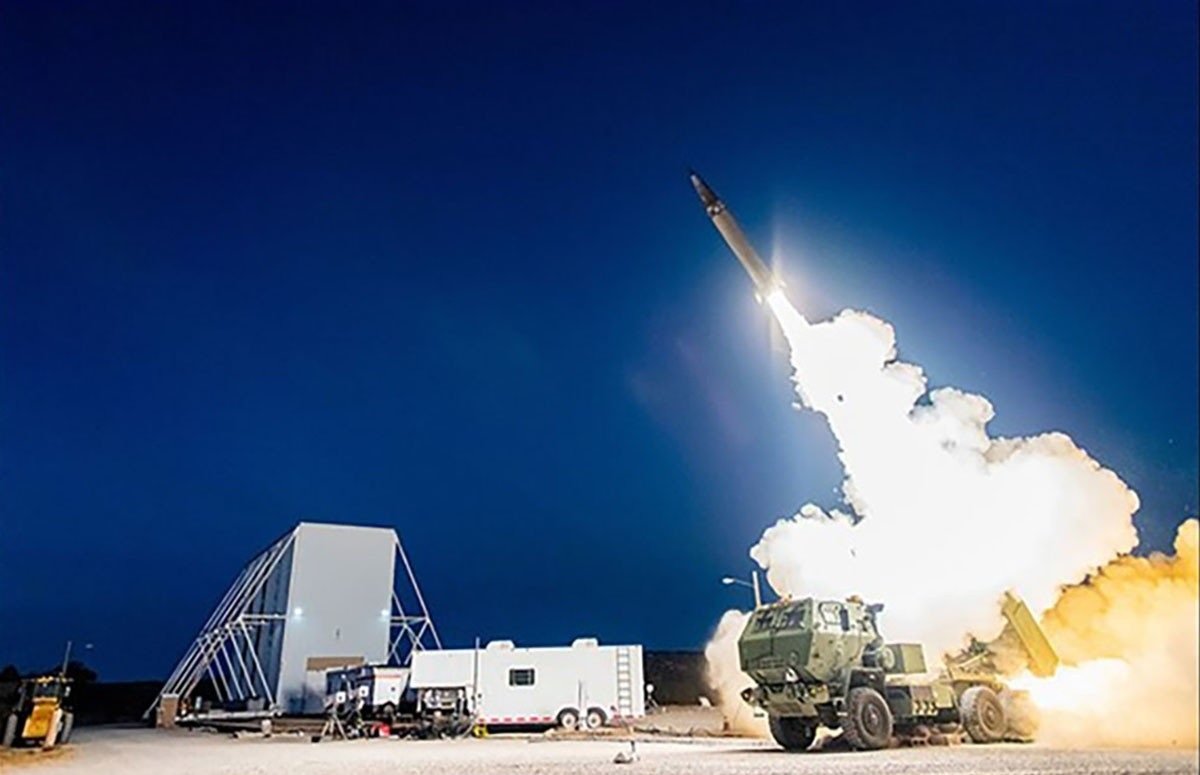
DALLAS — The U.S. Army has awarded Lockheed Martin Missiles and Fire Control an indefinite-delivery, indefinite-quantity (IDIQ) contract valued at up to $1.2 billion for the production and continued development of the Precision Strike Missile (PrSM) Increment 2.
The contract covers initial procurement, follow-on production and continued system development. Work will be carried out at Lockheed Martin facilities and across its U.S. industrial base, with completion estimated for September 13, 2031. Specific quantities and work locations will be determined through individual orders.
The PrSM is designed to replace the MGM-140 ATACMS and is compatible with M142 HIMARS and M270A2 MLRS launchers. Increment 1, already in service with the U.S. and Australian armies, provides precision strikes against stationary targets at ranges exceeding 499 kilometers.
PrSM Increment 2 adds a multimode seeker combining radio-frequency (RF) and infrared/electro-optical (IR/EO) technologies. This allows the missile to engage moving land and maritime targets, expanding its mission set beyond the stationary targets addressed by Increment 1.
Two Flight Tests in 2026
PrSM Increment 2 completed its first flight test in March 2026, followed by a second demonstration in August. During the August test, a missile launched from a HIMARS deployed its protective covers and successfully engaged a moving maritime target while collecting flight data.
The Army said the Fiscal Year 2026 flight campaign also validated performance against moving maritime and relocatable land targets. Additional Increment 2 flight tests are scheduled for 2027.
According to Lockheed Martin, technologies from its Strigo family of solutions have informed aspects of the Increment 2 guidance package.
The PrSM has a stated maximum range exceeding 499 kilometers, a speed above Mach 3.5 and sub-meter accuracy. It carries a 91-kilogram high-explosive fragmentation warhead and uses a solid-propellant rocket motor designed to meet Insensitive Munition (IM) safety standards. Two PrSM missiles can fit in each launch pod.
Lockheed Martin is also expanding PrSM manufacturing capacity with a goal of quadrupling overall production output while continuing development of additional increments.
Dave Griser, vice president of Precision Fires Launchers and Missiles at Lockheed Martin, said the contract marks an important step toward moving PrSM Increment 2 from flight testing into production.
The PrSM is intended to provide the Army with a long-range precision-fire capability against time-sensitive and moving targets on land and at sea.
——— End of Article ———