BENGALURU, — Bengaluru-based aerospace startup Aspera Industries has unveiled ‘Eureka’, an autonomous amphibious aircraft designed to transport cargo faster than sea freight while targeting costs lower than conventional air freight. Founder and CEO Khushi Mittal announced the aircraft publicly on August 29.
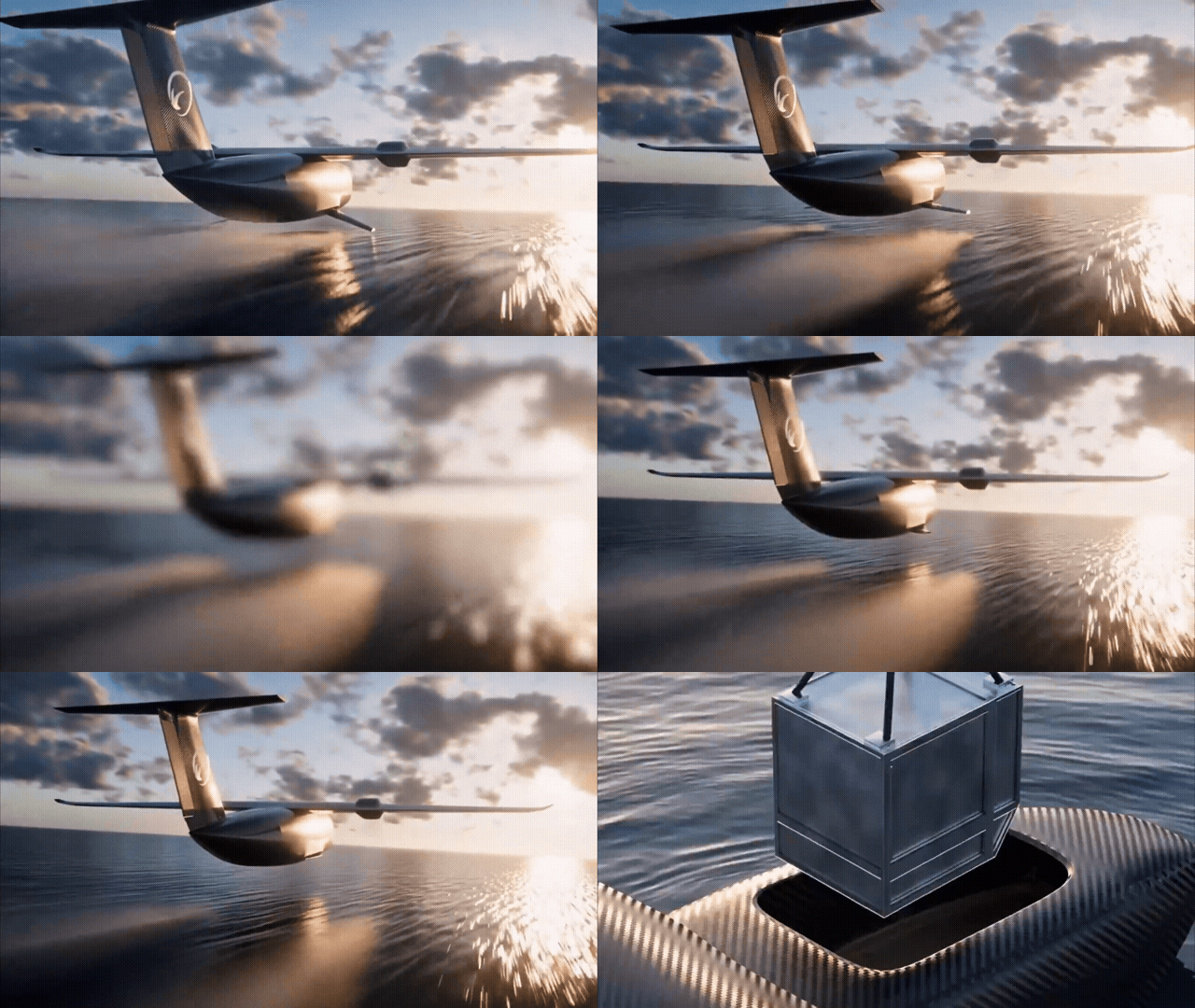
Eureka is designed to take off and land on water as well as flat land without a pilot onboard. It has a stated payload capacity of 1,000 kg, a range of 2,000 km and a planned operating altitude of 6,500 feet above mean sea level.
Aspera was founded in 2025 by Mittal and focuses on purpose-built, long-range aircraft for aerial logistics. The company has raised $750,000 in seed funding from Inuka Capital and aims to manufacture aircraft in India that can compete with boats on cost while delivering cargo much faster.
Designed to Use Water as a Runway
Aspera's concept is based on using water as a natural runway, reducing dependence on conventional airport infrastructure. Mittal noted that 150 of the world's 193 countries have a coastline, while many cities, ports and industrial centres have developed around water. The company also points to the fact that about 71% of Earth's surface is covered by water.
The aircraft uses a carbon-fibre body and replaces the traditional stepped hull used by older seaplanes with retractable hydrofoils. Aspera says stepped hulls created aerodynamic drag during flight, while the retractable hydrofoils are designed to assist water operations and retract during flight.
Targeting Lower Cargo Costs
Around 80% of world trade is transported by sea, according to figures cited by Mittal. Sea freight can take weeks, leading factories and supply chains to maintain three to six weeks of buffer stock. Mittal said flying a tonne of cargo currently costs about 20 times more than shipping it by sea.
Aspera is targeting a delivery cost of less than $1 per tonne-kilometre for the initial aircraft and expects the figure to fall below 50 cents per tonne-kilometre at larger fleet scale.
The company's longer-term goal is to manufacture large numbers of efficient aircraft in India and reduce the cost of air cargo to a level where flying becomes a practical option for urgent, perishable and high-value goods.
Eureka is the company's first publicly announced aircraft under this plan and is intended to reduce cargo delivery times from several weeks to hours.
——— End of Article ———