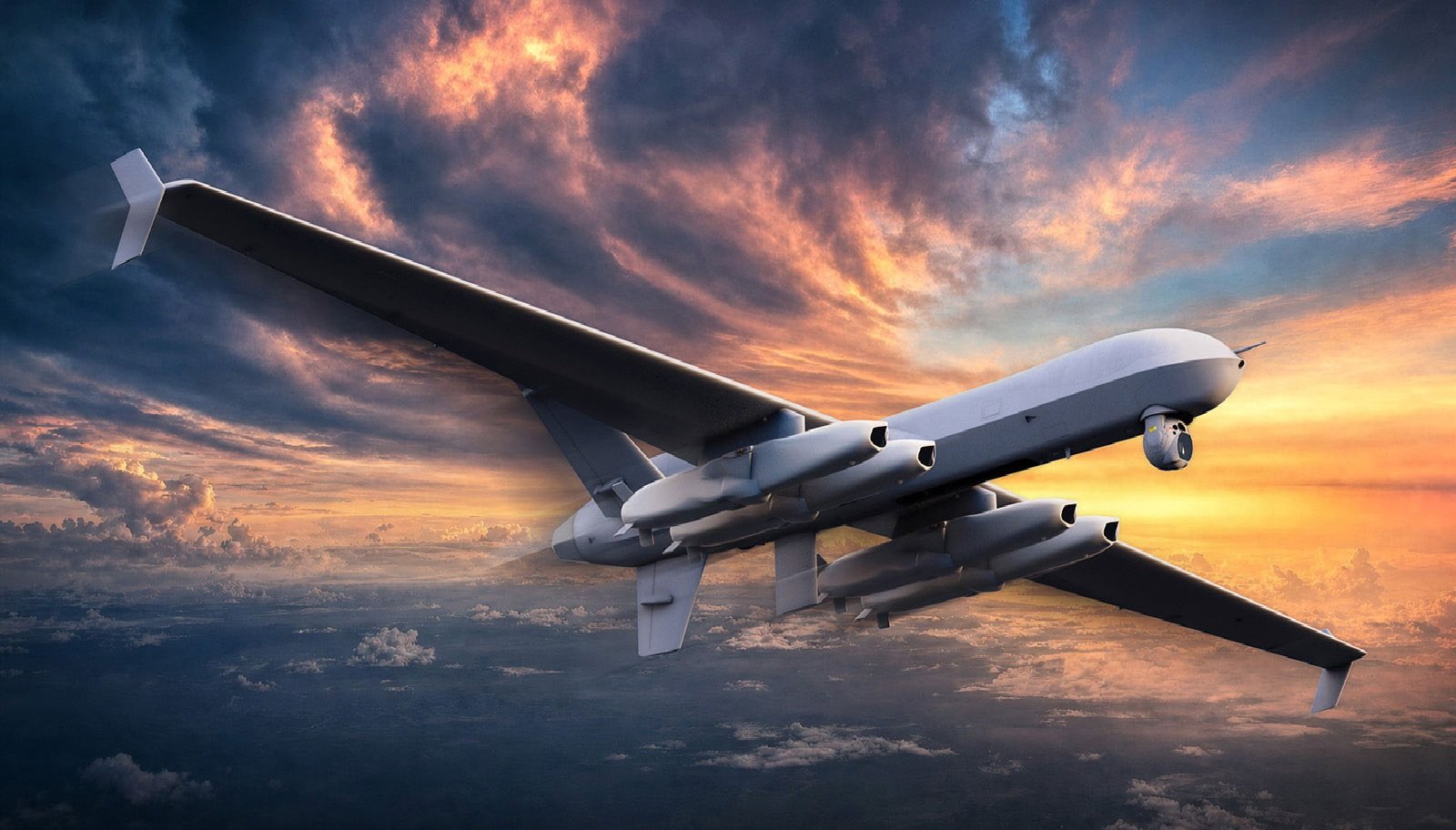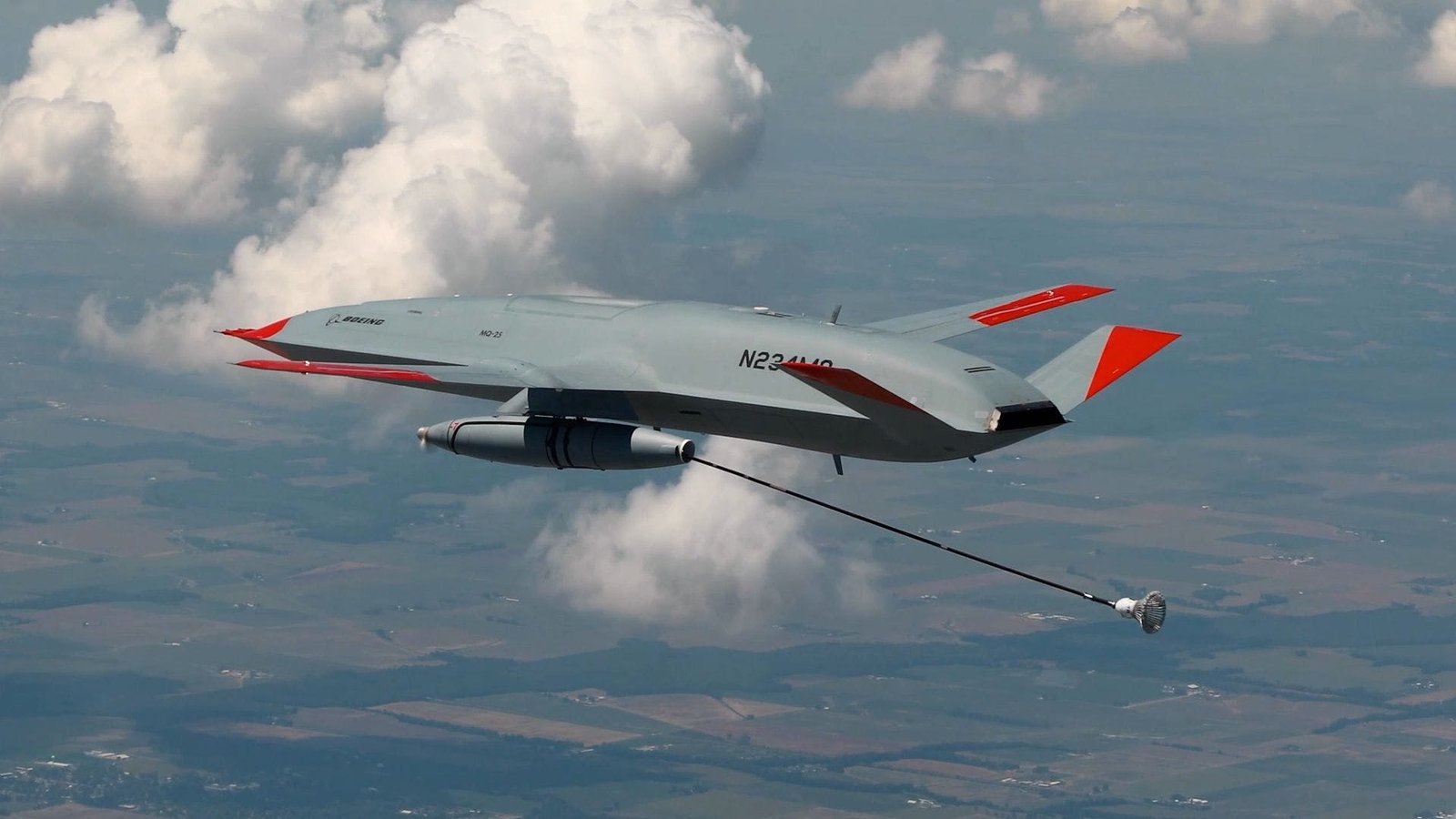
WASHINGTON — The U.S. Navy has awarded Boeing a $562 million fixed-price incentive contract to begin low-rate initial production (LRIP) of the MQ-25A Stingray, the service’s first carrier-based unmanned aerial refueling aircraft.
The contract covers three Lot 1 aircraft and advance procurement funding for long-lead components for three additional Lot 2 aircraft. Initial Lot 1 deliveries are expected to begin in 2029.
“Awarding this first LRIP contract marks a pivotal transition from development to operational reality and is a testament to the focused effort of our joint government and industry teams,” said Capt. Daniel Fucito, program manager for Unmanned Carrier Aviation at PMA-268. He said the MQ-25A will provide the reach, lethality and survivability needed for future operations.
From Development to Production
The production award follows the Navy’s Milestone C decision in May 2026, approved by Acting Secretary of the Navy Hung Cao, which cleared the MQ-25A to enter production and deployment.
The decision followed the first flight of a production-representative MQ-25A on April 25, 2026, at Boeing’s facility in Mascoutah, Illinois.
The MQ-25A program began with Boeing’s initial development contract in August 2018. The Lot 1 award brings the total number of MQ-25A aircraft under contract with Boeing to 14, including development, test and initial production aircraft. Lot 2 is planned for award in 2027, with Lot 1 production also supporting validation of the design, manufacturing processes and supply-chain readiness.
The Navy’s program of record calls for 76 aircraft, including 67 production aircraft and nine test platforms. The test fleet consists of four Engineering Development and Manufacturing (EDM) aircraft and five System Demonstration Test Articles (SDTA). Seven test aircraft are currently in production.
Boeing is conducting MQ-25A production at its St. Louis operations and a dedicated 300,000-square-foot facility at MidAmerica St. Louis Airport in Mascoutah, Illinois.
Unmanned Tanker for Carrier Air Wings
The MQ-25A’s primary mission is aerial refueling. The role is currently performed in part by manned F/A-18E/F Super Hornets using external fuel tanks and refueling pods in the “buddy-tanking” configuration.
The Navy says Super Hornets assigned to tanker duties use 20 to 30 percent of their flight hours, increasing airframe wear and reducing the number of aircraft available for training and strike missions.
The MQ-25A uses the Cobham Aerial Refueling Store, the same probe-and-drogue refueling system used by Super Hornets. It is designed to refuel F/A-18s, F-35C Lightning IIs and E-2D Advanced Hawkeyes.
The Stingray is designed to deliver at least 14,000 pounds of fuel at 500 nautical miles and can also conduct intelligence, surveillance and reconnaissance (ISR) missions.
The aircraft has a 75-foot wingspan when unfolded and 31.3 feet when folded for carrier deck stowage. It is powered by a Rolls-Royce AE 3007N turbofan.
Preparing Carriers for Unmanned Aircraft
The MQ-25A is intended to routinely launch, recover and operate from aircraft carriers alongside manned aircraft.
To support unmanned aviation, the Navy has been installing Unmanned Air Warfare Centers (UAWCs) aboard its Nimitz-class carriers. These facilities house the MD-5 Ground Control Station, used to control MQ-25A missions.
The USS George H.W. Bush (CVN-77) received the first test installation in 2024, while the USS Theodore Roosevelt (CVN-71) became the first carrier equipped with an operational, deployable UAWC earlier in 2026. The USS Ronald Reagan (CVN-76) is among the carriers scheduled to receive the same upgrade.
The Navy views the MQ-25A as a template for integrating unmanned aircraft into carrier aviation. The control networks, deck-handling procedures and communications infrastructure developed for the Stingray are intended to support future unmanned systems, including Collaborative Combat Aircraft (CCA).
The new contract marks the MQ-25A’s transition from development and testing into initial production, with the Navy targeting 2029 for the first Lot 1 deliveries.
——— End of Article ———