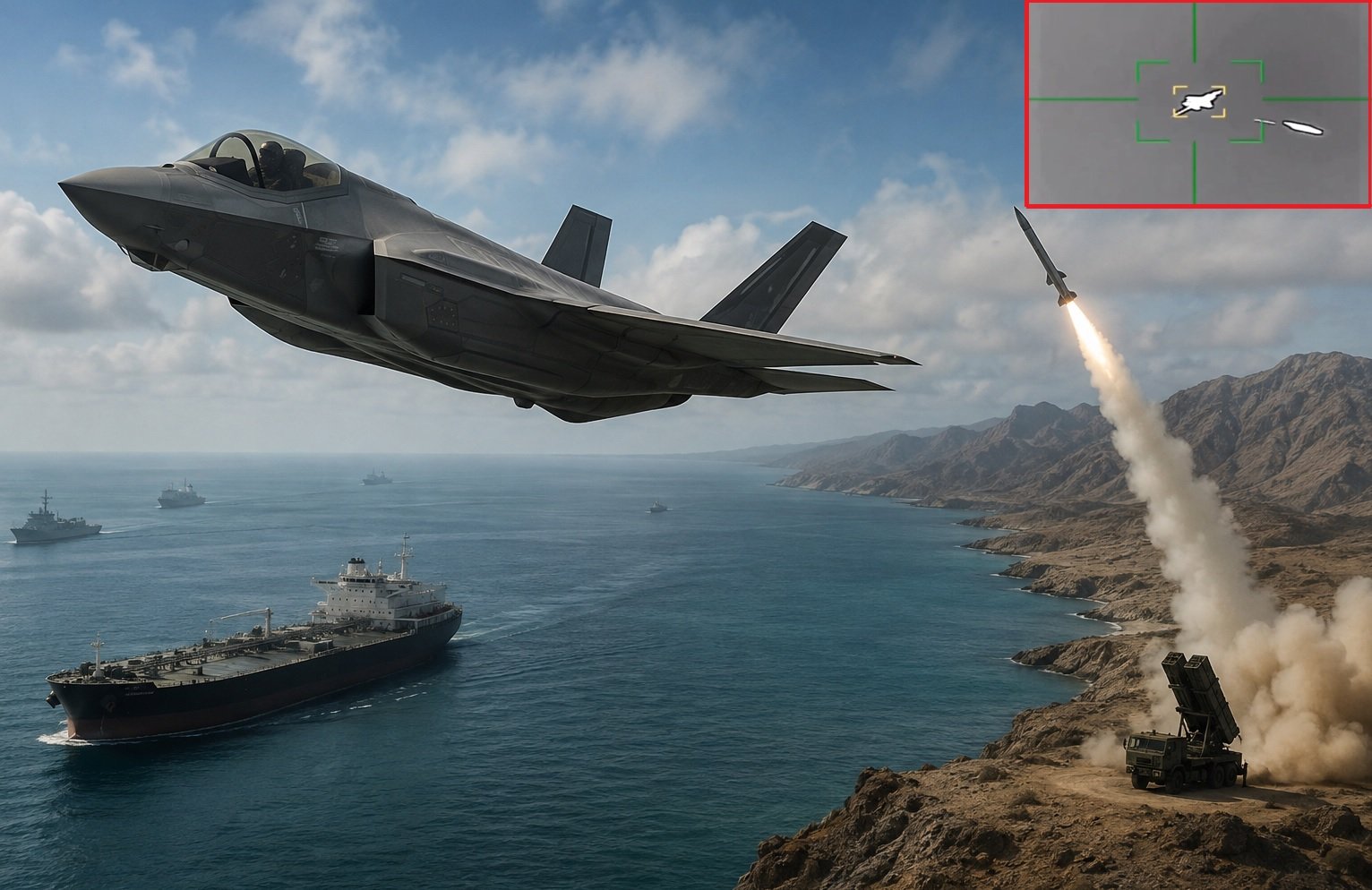
WASHINGTON — An Iranian surface-to-air missile was launched in recent days toward a U.S. F-35 fighter jet operating over the Strait of Hormuz, according to a U.S. official cited by Axios. The aircraft was providing air cover for ships transiting the strategic waterway.
The missile did not come close enough to threaten the F-35, and there was no reported damage to the aircraft or injury to its pilot. The specific Iranian air-defense system involved has not been publicly identified by U.S. officials.
The incident has become part of a wider U.S. assessment that Iran is rebuilding radar, air-defense and anti-ship missile capabilities around the Strait of Hormuz.
U.S. Considers Limited Strikes
U.S. Central Command (CENTCOM) has reportedly developed a plan for periodic, limited strikes against Iranian military capabilities around the strait.
According to Axios, the proposal is intended to prevent Iran from rebuilding systems that could threaten commercial shipping, U.S. Navy ships and American aircraft operating in the area. The plan has the support of Defense Secretary Pete Hegseth and was sent to the White House for consideration several days ago. Chairman of the Joint Chiefs of Staff Gen. Dan Caine was also briefed on the proposal.
The plan had not received final approval from President Donald Trump before the latest exchange of fire. The administration had previously been reluctant to approve additional strikes because of concerns about further escalation with Iran.
Strait of Hormuz Remains a U.S. Military Focus
The F-35 incident comes after months of U.S. military operations aimed at reducing Iran's ability to threaten commercial vessels in and around the Strait of Hormuz.
CENTCOM has previously said its forces conducted strikes against Iranian air-defense systems, coastal radar sites, anti-ship missile capabilities, command-and-control networks and other military assets connected to threats against commercial shipping.
The U.S. military has also supported commercial vessel movements through the waterway. The White House said on August 28 that nearly 1,500 commercial vessels had moved through the strait under U.S. protection, although those figures were provided by the White House and were not part of the Axios report.
Recent Iranian Missile Attack Could Affect Trump's Decision
The White House is also considering the situation following a separate Iranian ballistic missile attack on U.S. positions in Jordan, according to Axios.
The attack followed a U.S. strike against Iranian forces that were preparing to launch rockets carrying sea mines into the Strait of Hormuz. President Trump subsequently said the United States would respond to the Iranian attack.
The latest developments could therefore influence the administration's earlier reluctance to authorize the proposed limited strikes.
No Final Decision Announced
The U.S. government has not publicly announced that President Trump has approved the proposed campaign of periodic strikes described by Axios.
The immediate concern for CENTCOM is Iran's reported effort to restore radar, air-defense and anti-ship missile capabilities that could threaten ships and U.S. military aircraft operating around the Strait of Hormuz. The recent launch of a surface-to-air missile toward the F-35 is being treated by U.S. officials as one indication of that rebuilding effort.
CENTCOM has previously stated that keeping the Strait of Hormuz open for commercial traffic remains a major operational objective.
——— End of Article ———