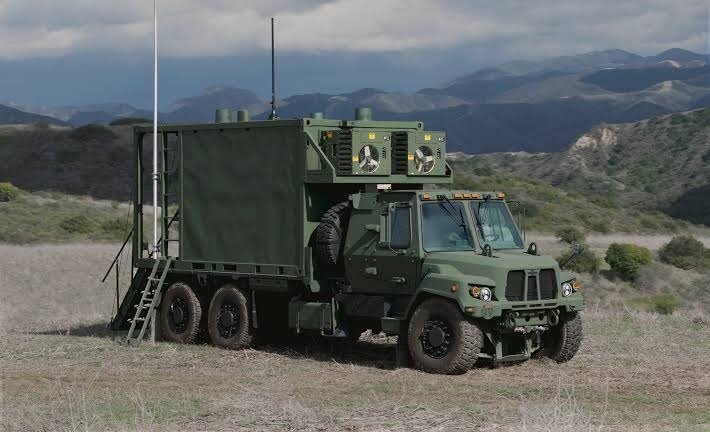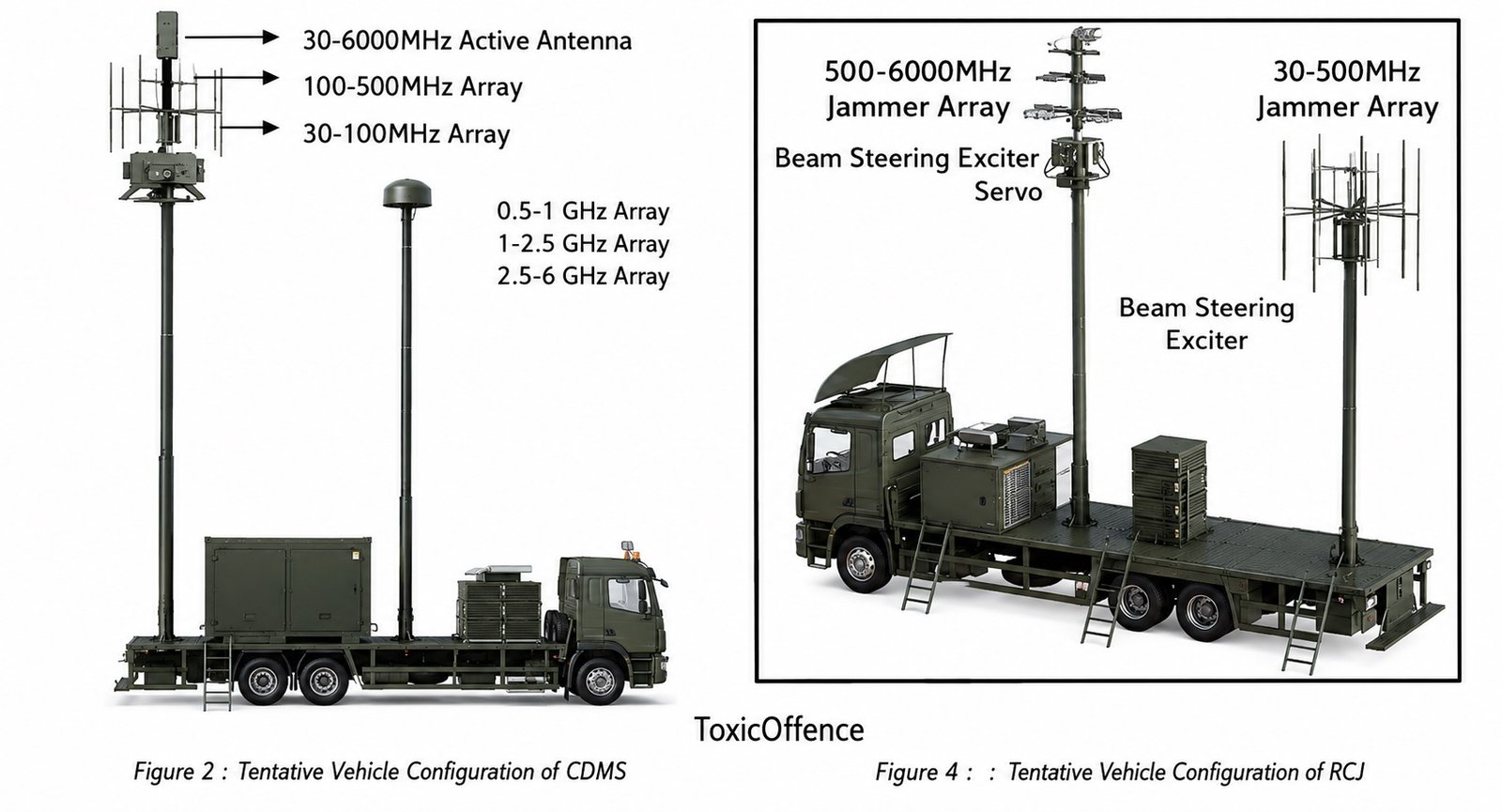
HYDERABAD — The Defence Research and Development Organisation’s (DRDO) Defence Electronics Research Laboratory (DLRL) is developing a vehicle-mounted jammer designed to counter cognitive radio-based military communication systems. Three units of the new system are currently under development.
According to the project details, each jammer will provide 360-degree detection and jamming coverage across a frequency range of 30 MHz to 6 GHz. The system is designed to operate at ranges of up to 20 km.
A key feature of the jammer is its response time of less than 5 microseconds. This capability is intended to allow the system to track and jam radios that rapidly change their operating frequencies, including systems capable of frequency hopping at up to 2,000 times per second.
The jammer is being developed as a mobile electronic warfare system. The complete system can be deployed from its vehicle in less than one hour, allowing it to be used for tactical operations and relocated when required.
Delivery and testing of the three units are scheduled to be completed within 21 months. Following completion, the units will be evaluated for their ability to detect and disrupt cognitive radio threats within the specified frequency band and operational range.
DLRL’s Role in Electronic Warfare
DLRL, based in Hyderabad, is one of DRDO’s laboratories working on electronic warfare technologies for the Indian armed forces. Its work covers areas including communications intelligence (COMINT), electronic support measures (ESM), electronic countermeasures (ECM), digital receivers and jamming systems.
DRDO’s technology roadmap specifically lists smart jamming against software-defined radios (SDRs) and cognitive radio-based military communication radios as an electronic warfare development area assigned to DLRL.
Cognitive radios can adapt their transmission characteristics according to the surrounding electromagnetic environment. This can include changing operating frequencies, making them more difficult to counter with conventional jamming approaches. The new system is therefore focused on responding to rapidly changing communication signals.
DRDO describes electronic warfare as the use of electromagnetic energy to determine, exploit, reduce or prevent hostile use of the electromagnetic spectrum. Electronic countermeasures include jamming and deception intended to prevent or reduce an adversary’s effective use of the spectrum.
The development of the vehicle-mounted jammer adds to DLRL’s existing work in mobile electronic warfare systems and digital signal-processing technologies. DRDO has also established dedicated system integration and evaluation facilities at DLRL for testing communication and non-communication electronic warfare systems.
The three systems under development will provide an opportunity to evaluate the jammer against cognitive radio-based communication threats and assess its performance across the specified frequency band and range.
——— End of Article ———