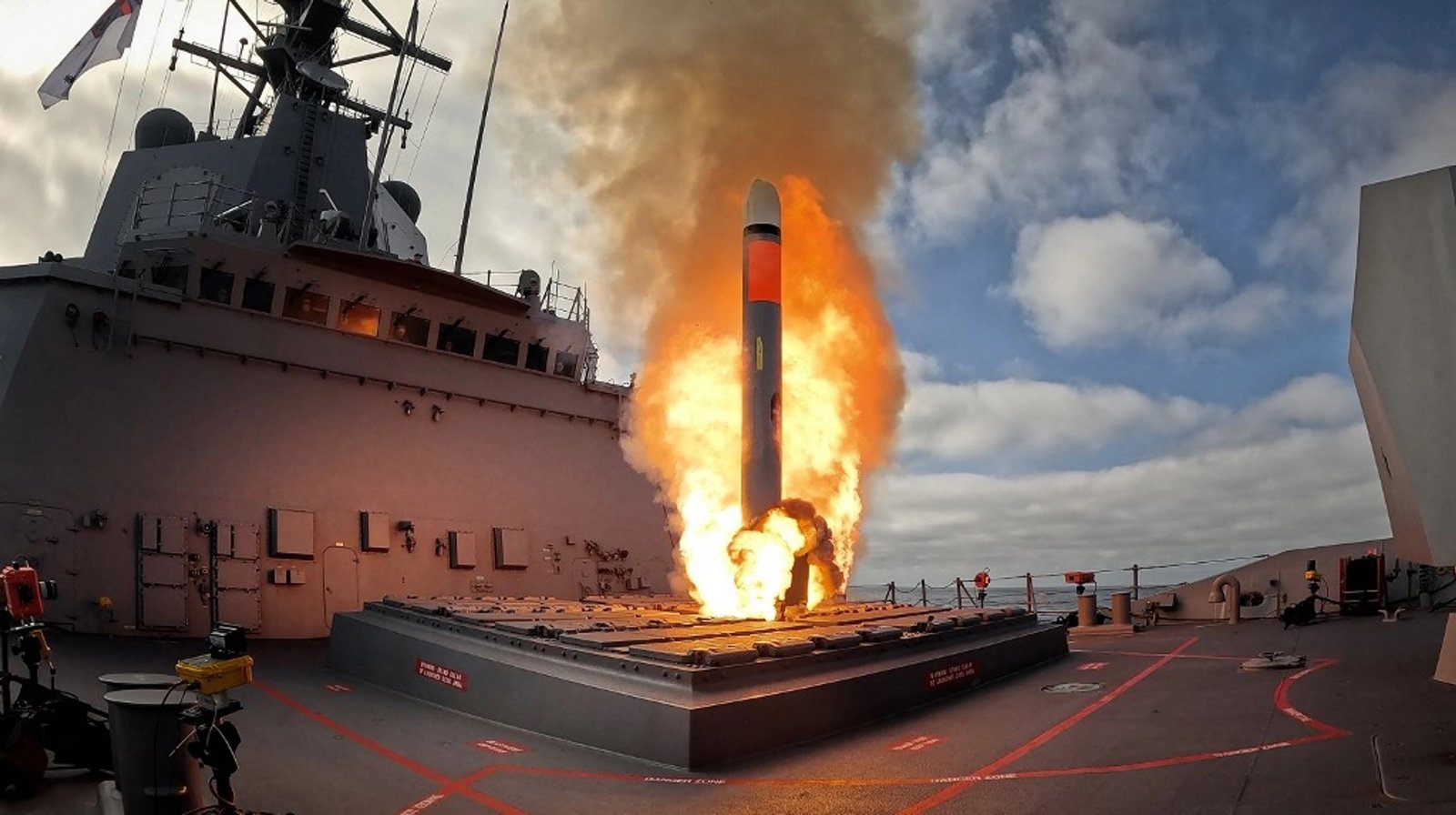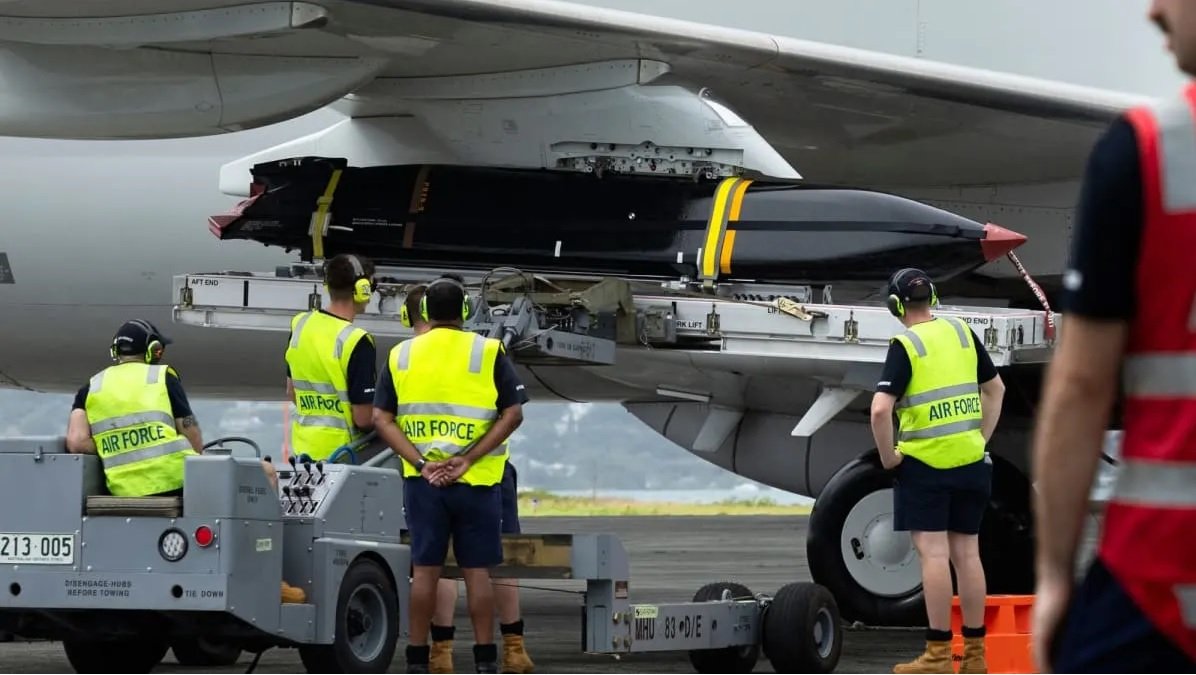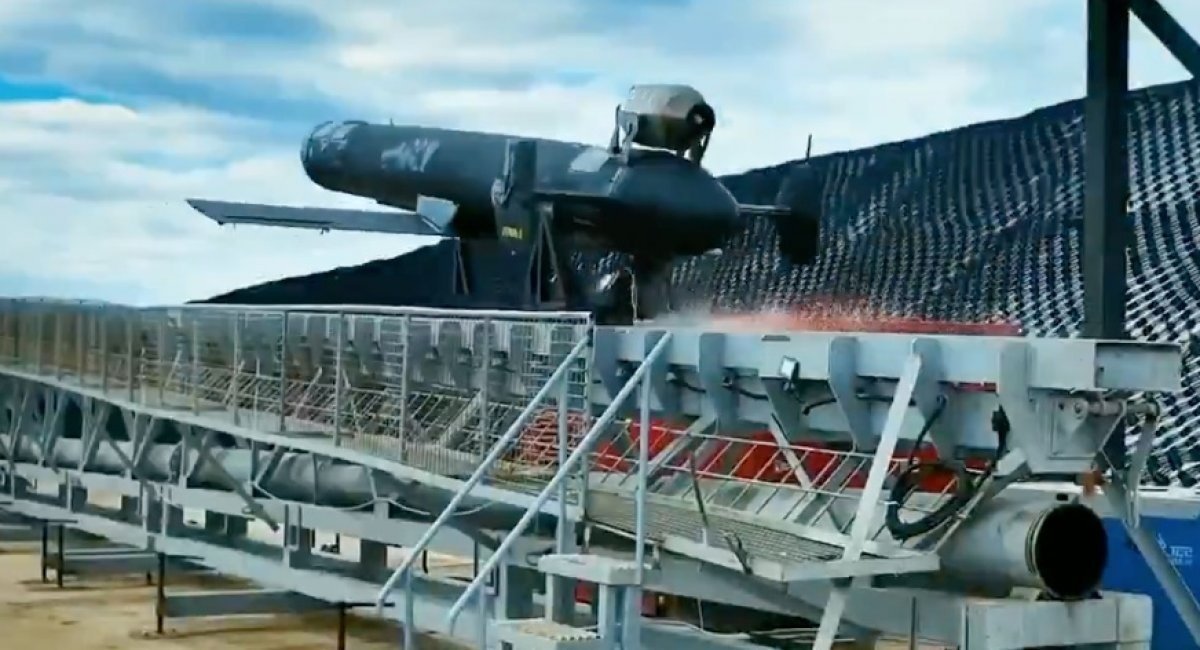
KYIV — Russia is increasing production of low-cost, jet-powered strike weapons, including the Geran-5 drone and S8000 Banderol cruise missile. Both systems use Chinese components and are estimated to cost around $100,000 each, far below the more than $2 million cost of high-end U.S. Tomahawk cruise missiles.
The new weapons are designed to provide greater speed and strike capability than Russia's earlier propeller-driven Geran drones while remaining relatively inexpensive to produce.
Geran-5
The Geran-5 was first identified in combat use in early January 2026. According to Ukraine's Main Intelligence Directorate (GUR), it has a maximum takeoff weight of about 850 kg, a cruising speed of 450–600 km/h, endurance of roughly two hours and a range of up to 950 km. It can operate at altitudes up to 6 km, although recorded use has been between 200 meters and 3 km.
The drone carries a warhead of about 90 kg and uses a conventional fixed-wing design with a tubular fuselage. It is approximately 6 meters long, with a 5.5-meter wingspan, and uses carbon fiber over an aluminum and steel structure.
Power comes from a Chinese Telefly TF-TJ2000A turbojet engine producing about 200 kg of thrust. Its equipment includes the Kometa-M12 satellite navigation system with a 12-element anti-jamming antenna, inertial navigation, a flight controller and Tracker V3 telemetry equipment using a Raspberry Pi-style computer with 3G/LTE modems.
A Chinese Xingkai Tech XK-F358 mesh modem provides communication through a daisy-chain network between drones. GUR has also identified U.S.-made microchips from Texas Instruments, CTS Corporation and Monolithic Power Systems, along with at least one chip from Germany's Infineon Technologies.
S8000 Banderol
The S8000 Banderol, developed by Russia's Kronshtadt Group, was publicly detailed by Ukrainian intelligence in 2025. It is about 5 meters long, has a 2.2-meter wingspan and a range of up to 500 km.
The missile cruises at around 520–560 km/h, with a maximum speed of approximately 650 km/h. It carries an OFBCh-150 high-explosive fragmentation warhead weighing 114.3 kg, including about 50 kg of explosives.
The Banderol is powered by a commercially available Chinese Swiwin SW800Pro turbojet engine and combines inertial and satellite navigation. Its main launch platform is the Orion (Inokhodets) UAV. It has also been tested or used from Mi-28 helicopters, while ground-launched versions have been observed.
Ukrainian sources estimate its cost at $50,000–$150,000, consistent with the roughly $100,000 estimate.
Chinese Components and Production
Investigations of wreckage recovered in Ukraine have identified Chinese engines, navigation equipment, communications systems, carbon-fiber materials and other dual-use components in Russian weapons. Some Western-made electronics have also been identified despite sanctions.
Reports indicate that Russia is producing hundreds of jet-powered Geran variants each month. One reported target included approximately 1,200 Geran-4 and 800 Geran-5 drones in a single month, while Banderol production has been reported at up to 120 missiles per month.
China has stated that it does not provide lethal weapons to either side and maintains controls on dual-use exports. Western and Ukrainian investigations have nevertheless identified supply routes through third countries that allow components to reach Russian production networks.
Impact on Air Defense
The higher speed of jet-powered drones gives Ukrainian air defenses less time to detect and engage them compared with slower propeller-driven drones. Ukraine has improved its ability to intercept older Geran systems, but the faster variants can require more capable and expensive air-defense systems.
The low cost of the Russian weapons creates an economic challenge when expensive interceptors are used against them.
The development also has implications beyond Ukraine. Russia, Iran and North Korea exchange military technology and production experience, while combat-tested developments from the war in Ukraine can potentially influence military programs elsewhere, including those of Iran and North Korea.
The combination of low cost, higher speed, improved navigation and access to foreign components is allowing Russia to expand production while Ukraine and its partners continue adapting their air defenses and efforts to restrict sanctions-evasion supply networks.
——— End of Article ———