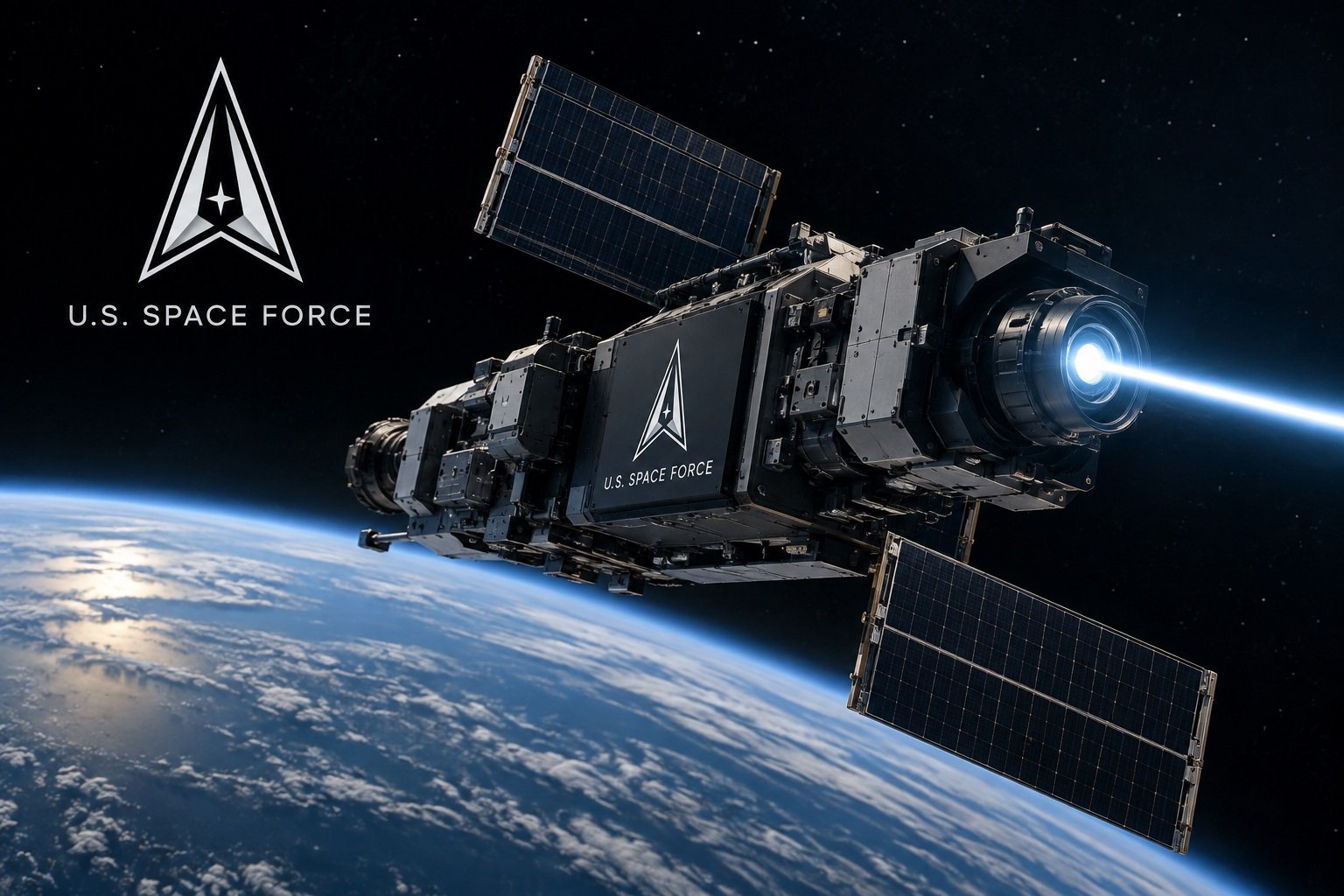
NATIONAL HARBOR, Md. — The United States has publicly confirmed for the first time that it has deployed on-orbit space control weapons capable of defending the Joint Force against hostile adversary action.
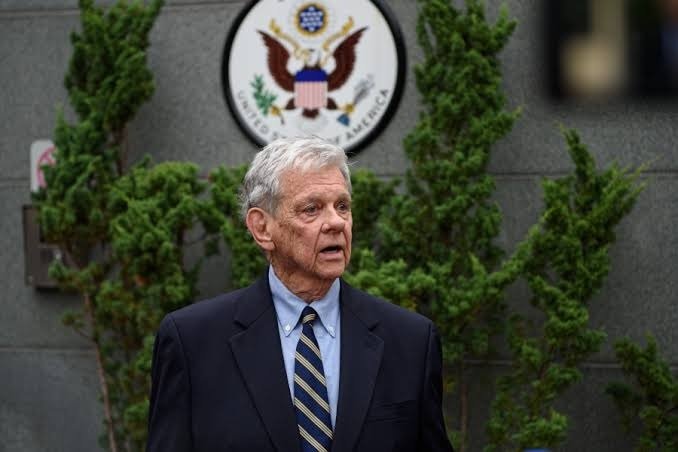
Secretary of the Air Force Dr. Troy Meink made the disclosure during his opening keynote at the Air & Space Forces Association’s annual Air, Space & Cyber Conference in National Harbor, Maryland.
“Today, we continue to ensure we remain ready to meet the challenges of evolving threats wherever they exist. This is why the United States now has on-orbit space control weapons capable of defending the joint force against hostile adversary action,” Meink said.
Meink said the wording was intentional and “very well thought out.” However, he did not reveal the type of weapons, how many are in orbit, when they were deployed, their technical specifications, testing status or the targets they could engage.
He said maintaining U.S. dominance in both air and space is important for military and economic security. Meink also pointed to space capabilities developed by China and Russia over more than a decade and said the United States must be able to operate freely in space and respond when threatened.
Space Force Explains Space Control
The U.S. Space Force confirmed the operational status of the systems and explained that space control includes missions designed to contest and control the space domain.
These missions can use kinetic and non-kinetic means to affect adversary capabilities and can support both offensive and defensive operations under the direction of combatant commands.
Kinetic systems physically affect a target, while non-kinetic capabilities can include electronic warfare, cyber operations or directed-energy effects. The U.S. government has not confirmed which type of system is included in the newly acknowledged deployment.
Officials have stated that the systems comply with international law, including the 1967 Outer Space Treaty and the Law of Armed Conflict.
What the Outer Space Treaty Allows
The Outer Space Treaty prohibits countries from placing nuclear weapons or other weapons of mass destruction in Earth orbit, on celestial bodies or elsewhere in outer space. It also prohibits military bases, installations, weapons testing and military maneuvers on the Moon and other celestial bodies.
The treaty does not specifically prohibit conventional weapons in Earth orbit, including conventional space-control systems.
The announcement has nevertheless renewed debate over the legal and strategic implications of deploying weapons in orbit. Russia has stated that space should remain free of weapons, while China has opposed the weaponization of outer space.
Other Space Force Programs
Meink also provided updates on Space Force programs connected to the Golden Dome missile-defense effort.
The Space-Based Interceptor program has moved from initial contracts toward flight-ready hardware in less than one year. The Space Force is using a prize competition to examine affordability and scalability, with a potential initial capability by 2028.
The first launches of satellites for the Space-Based Air-Moving Target Indication (AMTI) constellation are scheduled for September. The systems are intended to track air-moving targets and support broader missile-defense and long-range targeting requirements. SpaceX holds contracts supporting related national-security space launches.
The disclosure follows years of U.S. efforts to develop capabilities for protecting space assets against growing threats. Previous U.S. officials have discussed low-debris counterspace capabilities, while Space Force leaders have increasingly described space as a warfighting domain.
Meink presented the latest developments as part of a broader effort to modernize the Air Force and Space Force and increase combat power more quickly and affordably in response to changing threats, including artificial intelligence and autonomous systems.
The announcement ends a period of deliberate public ambiguity over whether the United States had operational weapons deployed in orbit, although the exact capabilities and number of the systems remain undisclosed.
——— End of Article ———